
Bali tourist attractions
Known for
Hindu temples, volcanic peaks and rice terraces on Indonesia's island
Must-see landmarks
Uluwatu Temple, Tanah Lot and the Sacred Monkey Forest Sanctuary
Best time to visit
April to October, the dry season
Days needed
7 to 10 days to cover the south coast, Ubud and the highlands
The 9 tourist attractions to see in Bali
Tanah Lot, Uluwatu Temple and Besakih Temple lead the tourist attractions in Bali. This guide ranks the 9 sights worth your time, then adds free things to do and visitor FAQs.
1. Tanah Lot
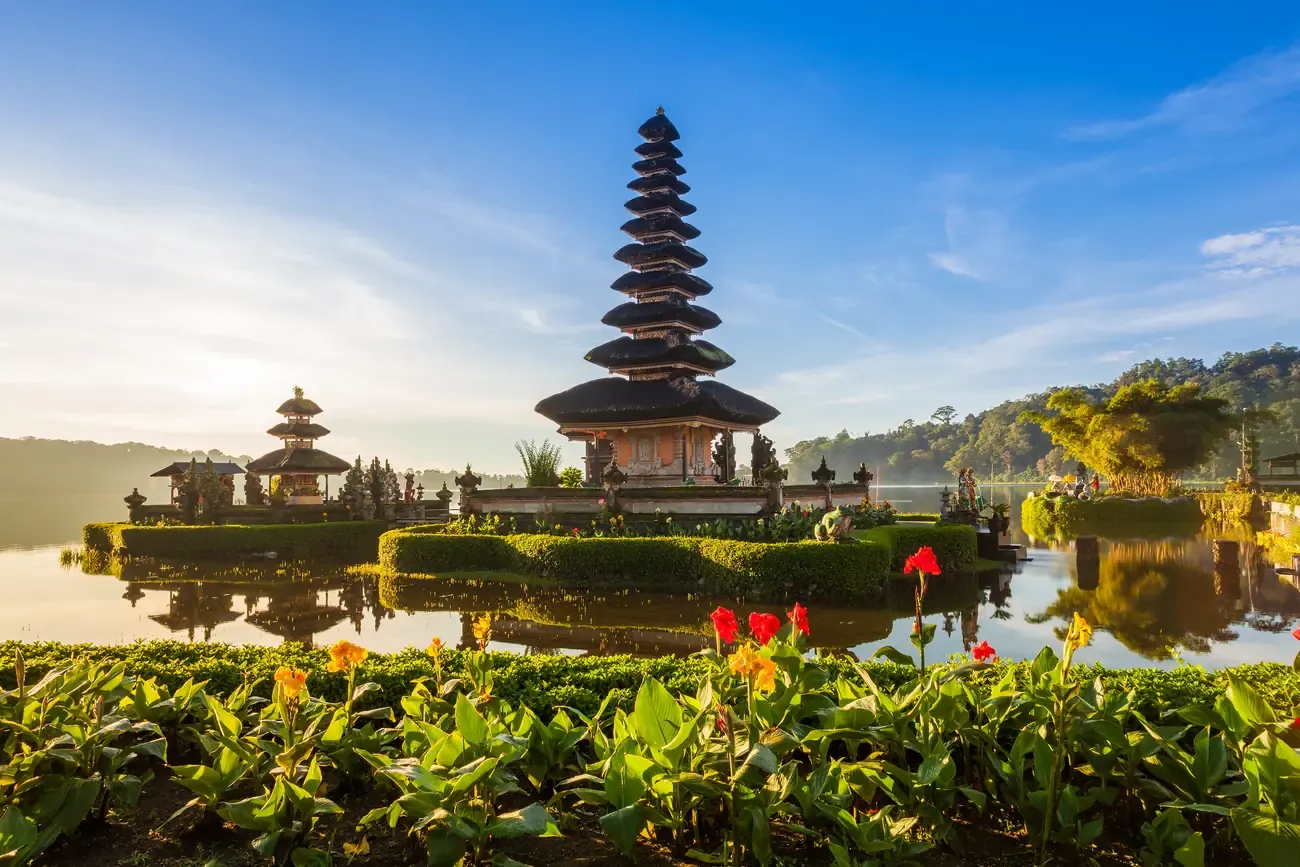
One of Bali's great sea temples sits on a wave-battered rock off the island's southwest coast near Beraban, appearing to float at high tide and reachable on foot across a stone causeway once the sea retreats. Holy sea snakes are said to guard it from a cave at the base, where priests offer blessings at a freshwater spring, and the west-facing setting turns the shrine into a silhouette that draws the island's biggest sunset crowds.
Location: Beraban, Tabanan Regency, southwest Bali coast
Access: Ticketed area entry; the walk out to the base depends on the tide.
2. Uluwatu Temple
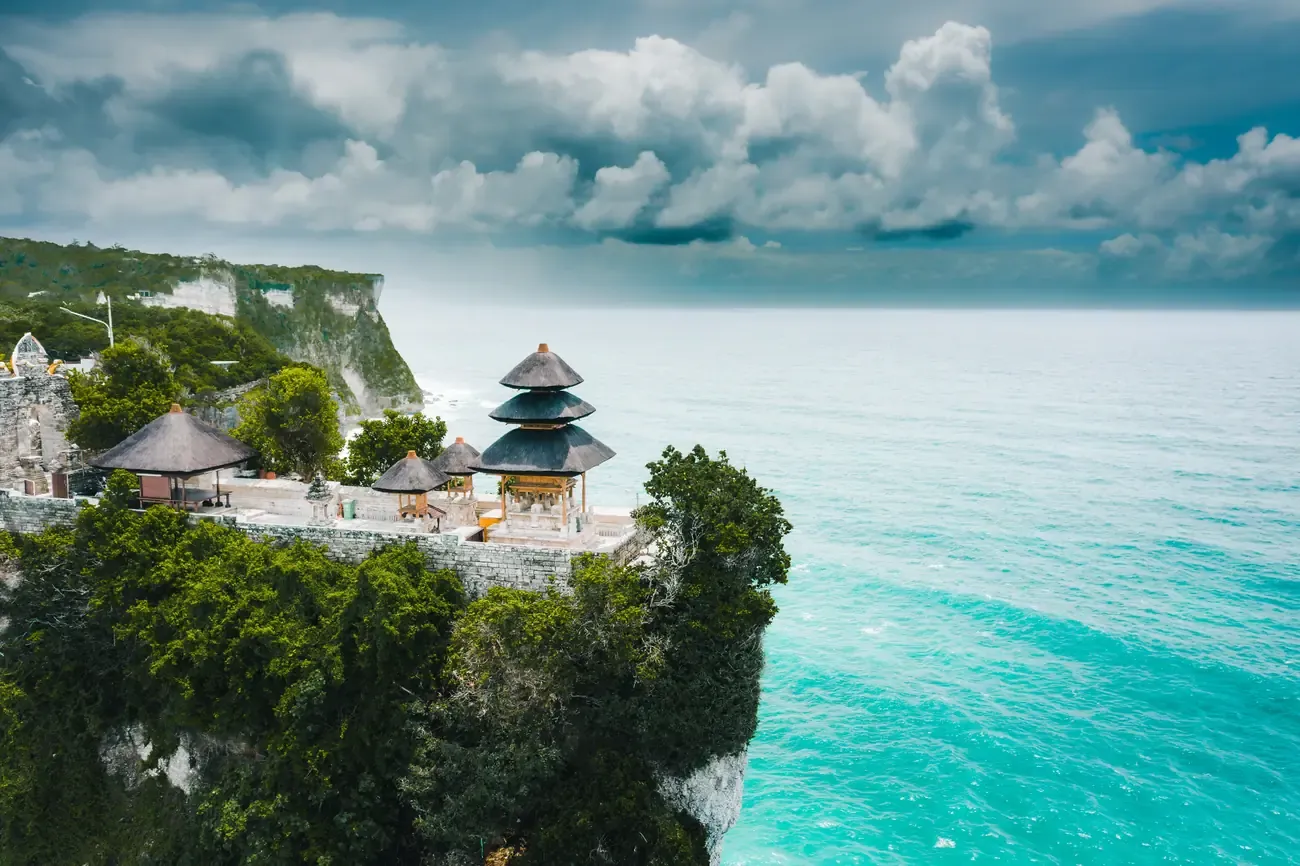
High on a sheer sea cliff above the Indian Ocean on Bali's southern Bukit Peninsula, Uluwatu is one of the island's six directional temples, believed to guard against evil spirits. Its split gates and pavilions look out over a long stretch of coast, macaques patrol the walls, and every evening a Kecak fire dance is staged on a clifftop platform as the sun drops behind the sea.
Location: Pecatu, Bukit Peninsula, Badung Regency, southern Bali
Access: Ticketed; a sarong and sash are provided at the entrance and required inside. The sunset Kecak dance is a separate paid performance.
3. Besakih Temple
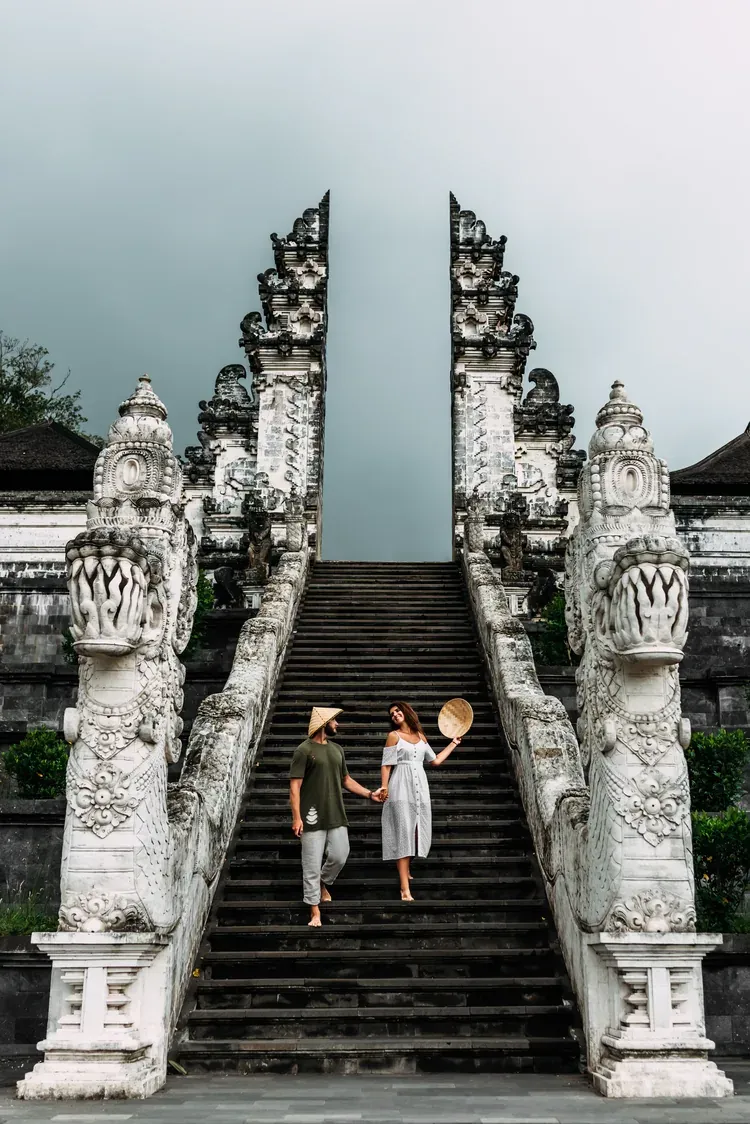
The Mother Temple of Bali climbs the southwestern slope of Mount Agung at about 1,000 metres, dozens of clan, public and state temples terraced up the volcano around Pura Penataran Agung, whose split gate and long stairway are the image of Balinese Hinduism. Worship on this site goes back more than a thousand years, and when Agung erupted in 1963 the lava flows passed close by and spared the complex. Tickets are sold at the visitor area below the temples and include a sarong and the shuttle up the hill; ceremonies have right of way, and processions arrive almost daily.
Elevation: about 1,000 m · Central temple: Pura Penataran Agung
Location: Besakih village, Karangasem, eastern Bali
Access: Ticketed; a sarong and the uphill shuttle come with the ticket
4. Ubud Palace
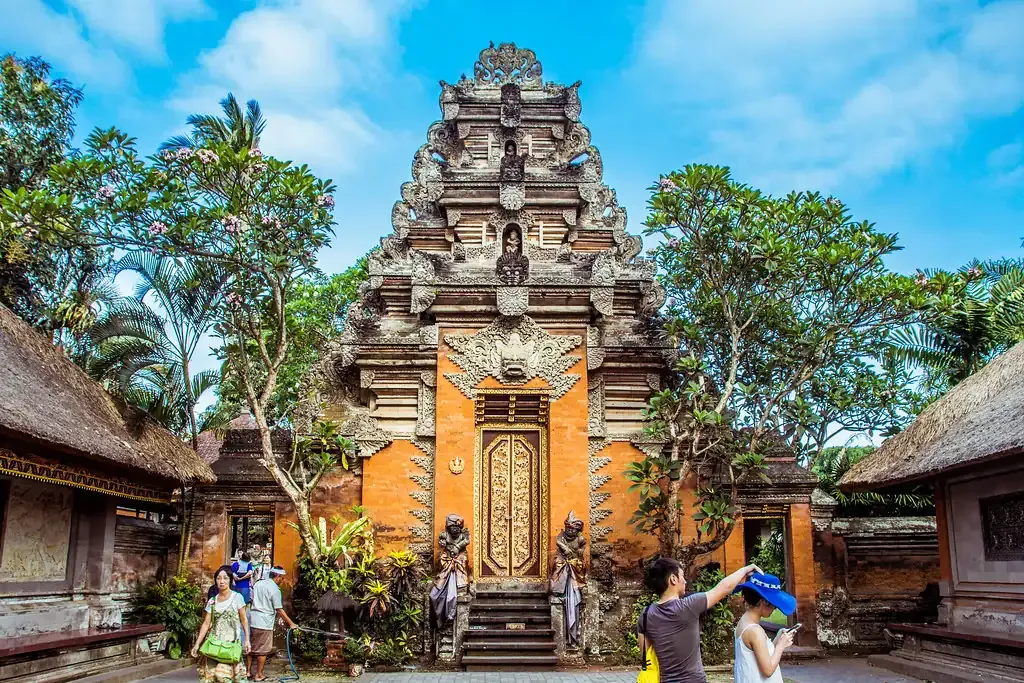
Puri Saren Agung, the seat of Ubud's royal family, stands at the crossroads of the town's main street in the cultural heart of Bali's central highlands. Its carved stone gateways and garden courtyards, built in the early 19th century under Tjokorda Putu Kandel, open to visitors by day, while traditional Balinese dance fills the front courtyard most evenings. The Ubud Art Market trades crafts directly across the road.
Location: Jalan Raya Ubud, central Ubud, Gianyar Regency
Access: Free to enter the courtyards by day; the evening dance performances are ticketed.
Photo: "Ubud Palace" by inspiring! (CC BY-SA).
5. Pura Tirta Empul
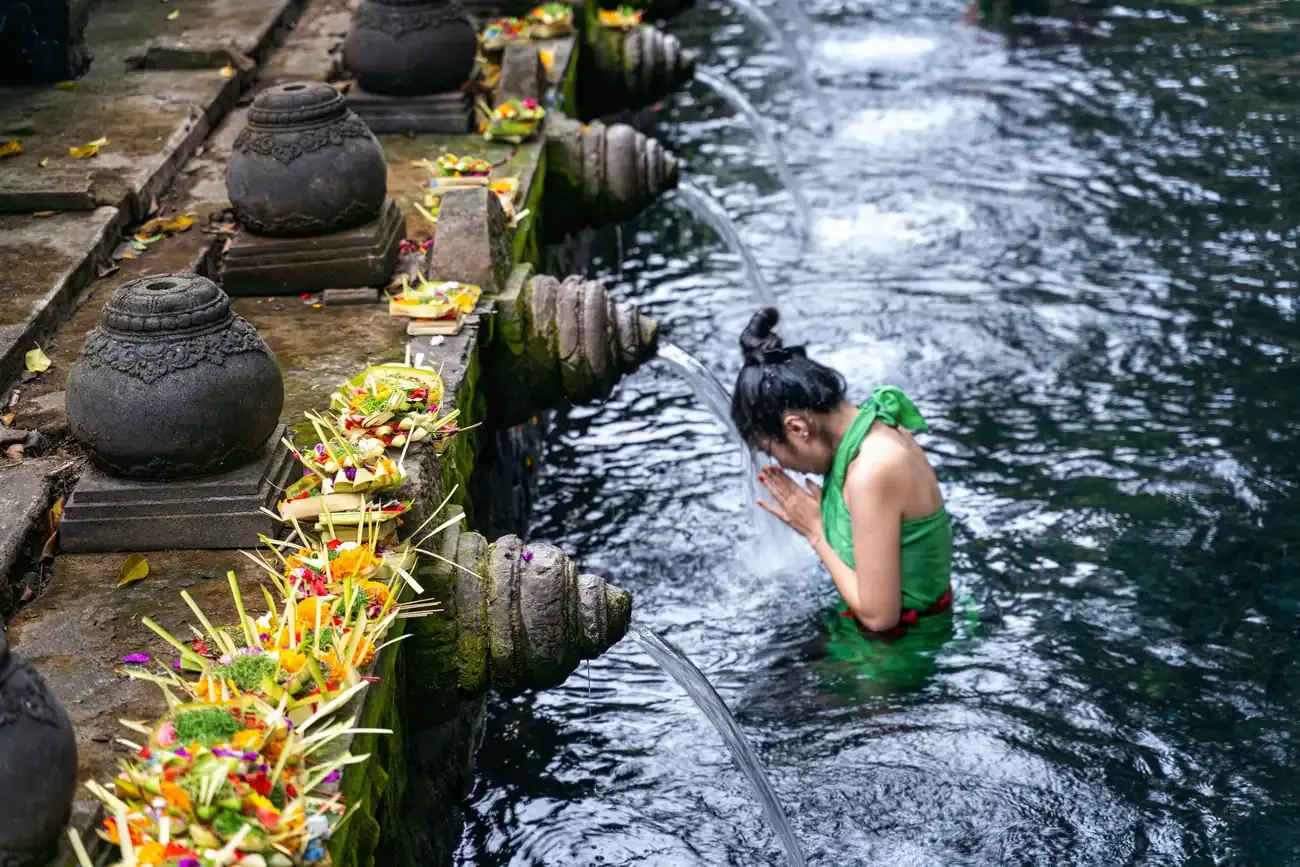
Bathers queue along a row of carved stone spouts for the melukat purification ritual at this holy spring temple in Tampaksiring, north of Ubud, founded in the 10th century over water still channelled for cleansing rites today. Beyond the bathing pools, walled courtyards hold shrines and a sacred spring that feeds the whole complex, and fresh offerings are laid across the temple each day.
Location: Tampaksiring, Gianyar Regency, central Bali
Access: Ticketed; admission includes a sarong and sash. Joining the bathing pools uses the changing rooms and lockers at the entrance.
6. Kelingking Beach (Nusa Penida)
The limestone headland that curls off Nusa Penida like a resting dinosaur is the most photographed cliff in Indonesia, and the ridge viewpoint looks about 180 metres straight down onto a ribbon of white sand. Nusa Penida is a separate island: fast boats cross from Sanur in about 45 minutes, and the drive to the southwestern coast takes another 45. From the ridge, a steep dirt path with bamboo handrails drops to the beach; the way down takes half an hour or more, the climb back far longer in the heat, and the water below is a no-swim zone with heavy surf.
Island: Nusa Penida · Boat from Sanur: about 45 minutes
Location: Southwestern coast of Nusa Penida, Klungkung
Access: Entrance and parking fees at the viewpoint; the path down is at your own risk
7. Tegallalang Rice Terraces
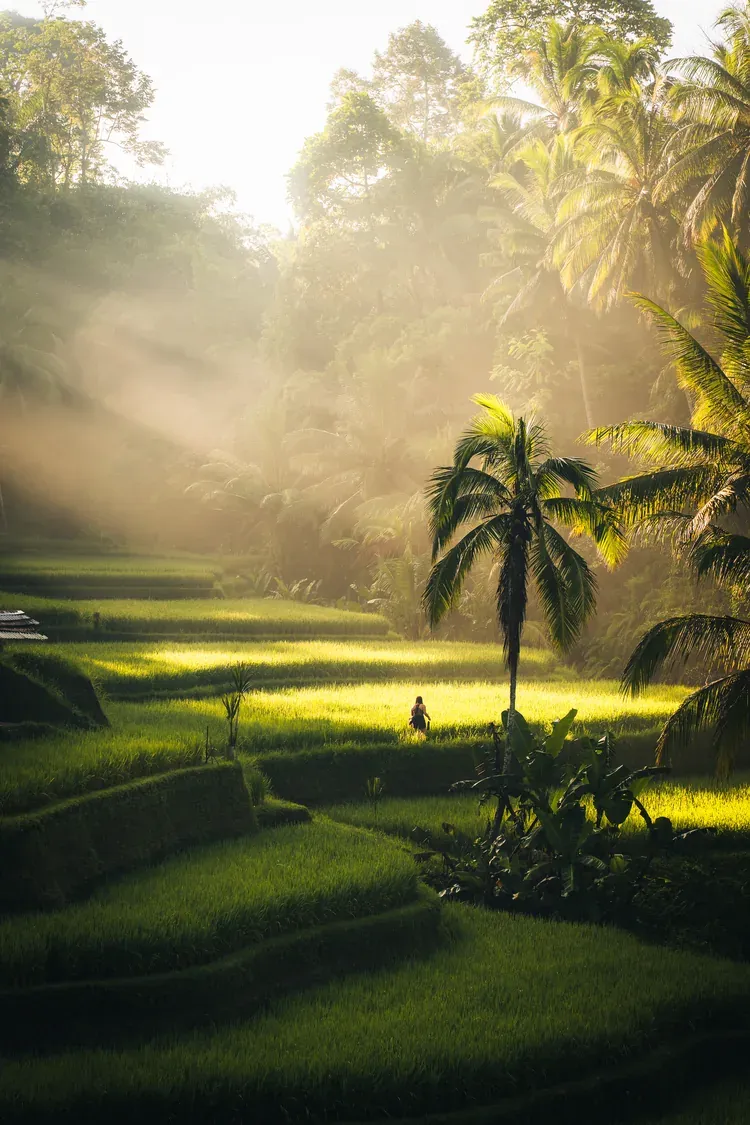
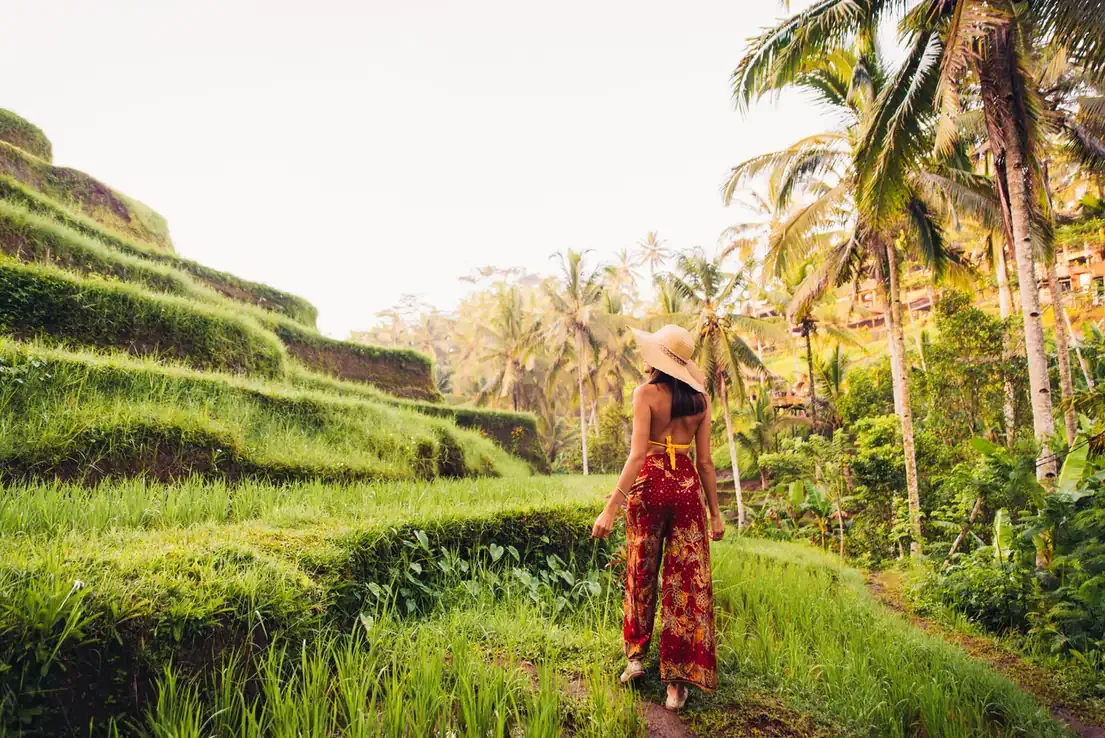
Sculpted paddies step down a river valley just north of Ubud, watered by the centuries-old subak system, a cooperative Balinese network of canals and weirs shared between farming villages. Narrow paths cross the terraces for a small farmer donation, passing palm-shaded huts and, on the far slopes, rope swings that charge their own fee. Early morning brings the clearest light over the valley and the fewest tour buses.
Location: Tegallalang, north of Ubud, Gianyar Regency
Access: Small farmer donations along the terrace paths; swings and viewpoints charge separately.
8. Goa Gajah
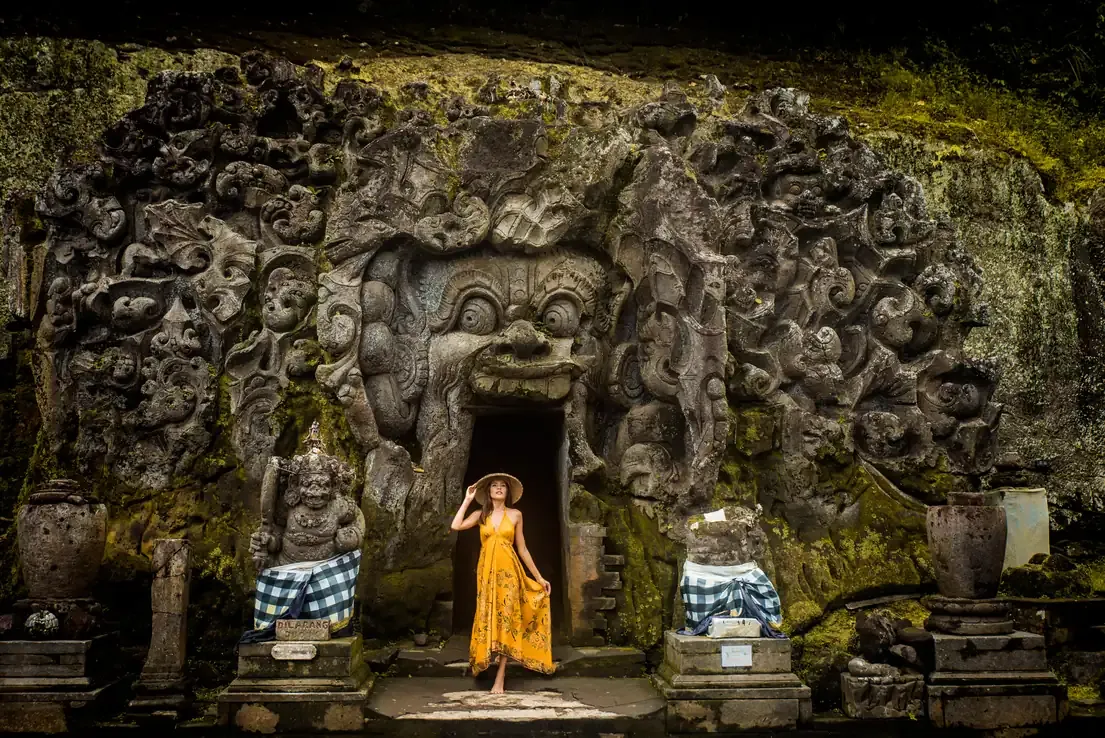
A monstrous face carved into the rock marks the mouth of this cave sanctuary near Bedulu, east of Ubud, its entrance dated to between the 9th and 11th centuries and rediscovered by archaeologists in 1923. A Ganesha statue sits in the dim interior, and outside a bathing pool holds carved figures pouring water from stone pitchers, set among banyan trees and rice fields in the valley below.
Location: Bedulu, near Ubud, Gianyar Regency, central Bali
Access: Ticketed; a sarong is provided at the gate and required to enter.
9. Sacred Monkey Forest Sanctuary
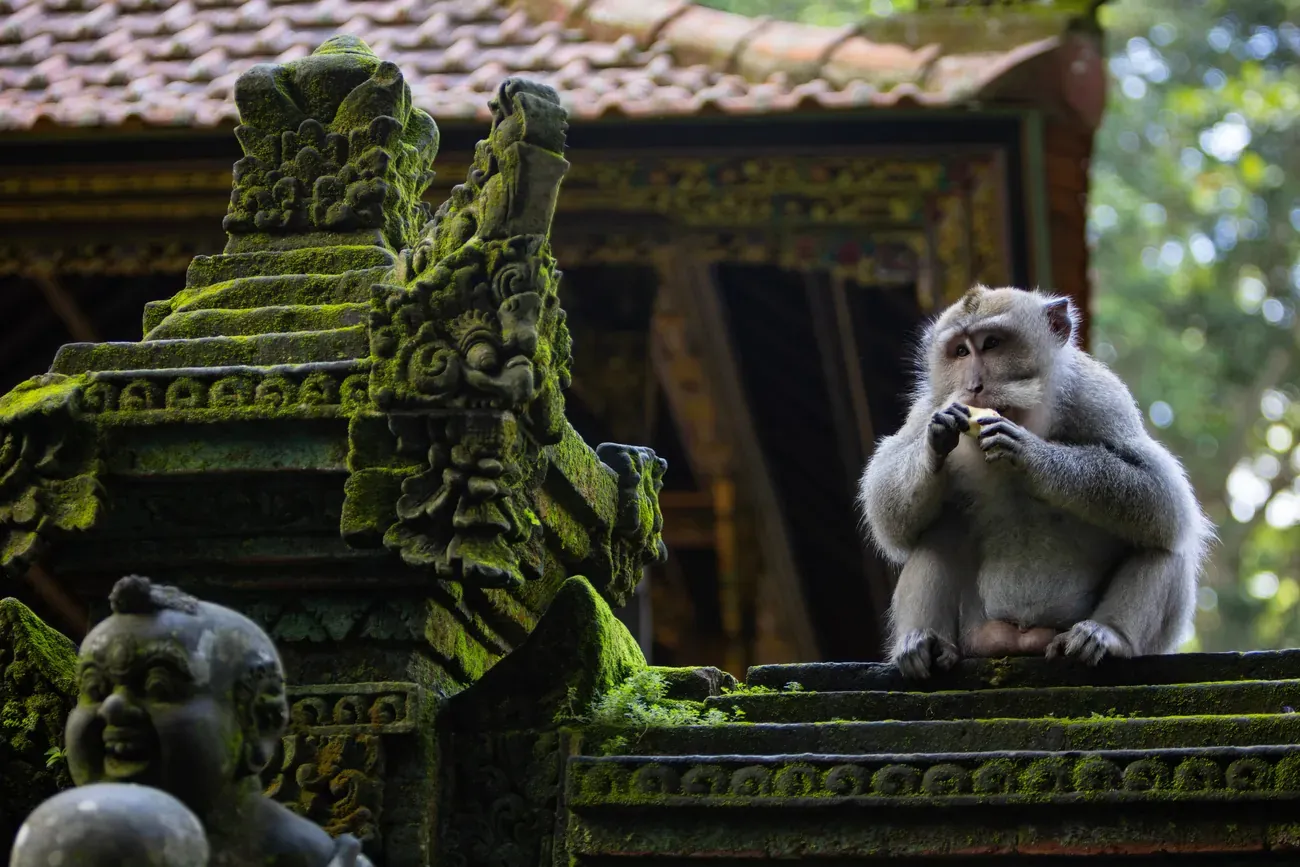
More than 1,260 long-tailed macaques roam this forest sanctuary and temple complex in Padangtegal, at the southern edge of central Ubud, their troops centred on a moss-covered holy spring temple hidden among the trees. Paved paths wind past carved stone gateways and a ravine crossed by a footbridge, through dense canopy managed by the local village. Visitors are asked to keep sunglasses, food and loose bags out of reach of the monkeys.
Location: Padangtegal, central Ubud, Gianyar Regency
Access: Ticketed entry to the sanctuary.
Free things to do in Bali
Kuta Beach
Bali's original tourist beach is free and open around the clock, its wide sand used for surfing lessons by day and sunset watching every evening; sunbeds and lessons are the only things that cost extra.
Campuhan Ridge Walk
A paved ridge trail climbs out of central Ubud between two river valleys, free to walk at any hour and calmest at sunrise before the midday heat sets in.
Ubud Art Market
Stalls at Ubud's covered market sell woven bags, carvings and textiles with no entry charge and no obligation to buy; mornings trade fresh produce before the craft vendors take over.
Puputan Badung Square
Denpasar's central park commemorates the 1906 stand against Dutch colonial forces with three white statues, its lawns free at any hour and busiest with local families in the early evening.
Sanur Beach
A calm, reef-protected beach on Bali's east coast, free to walk or swim along its paved promenade, popular for cycling and sunrise rather than Kuta's surf and sunset crowd.
Why Bali deserves your time
Bali packs volcanoes, rice terraces, surf beaches and thousands of temples onto a single island in Indonesia's mostly Muslim archipelago, its Hindu traditions setting it apart from every neighbouring island. Temple ceremonies, market trading and rice farming continue alongside a tourism economy built up over decades, the two running side by side rather than one crowding out the other.
Temples, terraces and a volcanic spine
Thousands of temples, from village shrines to the clifftop grandeur of Uluwatu and the sea-bound silhouette of Tanah Lot, mark the Balinese Hindu calendar of ceremonies. Behind the coast, Mount Agung and Mount Batur rise as active volcanoes, their slopes terraced with rice paddies fed by a centuries-old subak irrigation system; the Jatiluwih terraces further west, built on the same system, were UNESCO listed in 2012.
From Ubud's hills to the southern beaches
Ubud sits inland among rice fields and forest, its palace, market and galleries built around Balinese arts and craft. The south coast around Kuta, Seminyak and Uluwatu holds the island's surf breaks, beach clubs and the biggest concentration of hotels, while Nusa Penida, a short boat ride from Sanur, adds cliffs and coral reefs offshore. Denpasar, the provincial capital, keeps the working administrative centre away from the resorts.
When to go and how long to stay
The dry season from April to October brings the clearest skies for beach days and volcano sunrise treks, while the wetter months from November to March still allow travel between showers. Around 6.3 million international visitors arrived in 2024, and a week to ten days lets a first trip cover the south, Ubud and at least one day trip without rushing between them.
Getting around a driving island
Bali has no island-wide public transport network, so a rental car, scooter or a driver hired by the day covers the distances between regions. Roads through Kuta, Seminyak, central Denpasar and the approaches to Ubud and the east congest heavily at peak times, so journeys often take longer than the distance alone suggests. Bali is one of more than 17,000 islands in Indonesia, and its temples and rice terraces rank high among the must-see tourist attractions in Asia.