
Tourist attractions in Bangkok
Known for
Golden temples, street food stalls and the Chao Phraya river
Must-see landmarks
The Grand Palace, Wat Pho and Wat Arun
Best time to visit
November to February, before the hot of April and the rains in May
Free to visit
Lumphini Park, Sanam Luang and Chao Phraya riverside promenades
Bangkok's top 10 tourist attractions
Here are the tourist attractions in Bangkok worth planning around, starting with Wat Arun, Grand Palace and Erawan Shrine. The 10 top sights come first, then free things to do and visitor FAQs.
1. Wat Arun
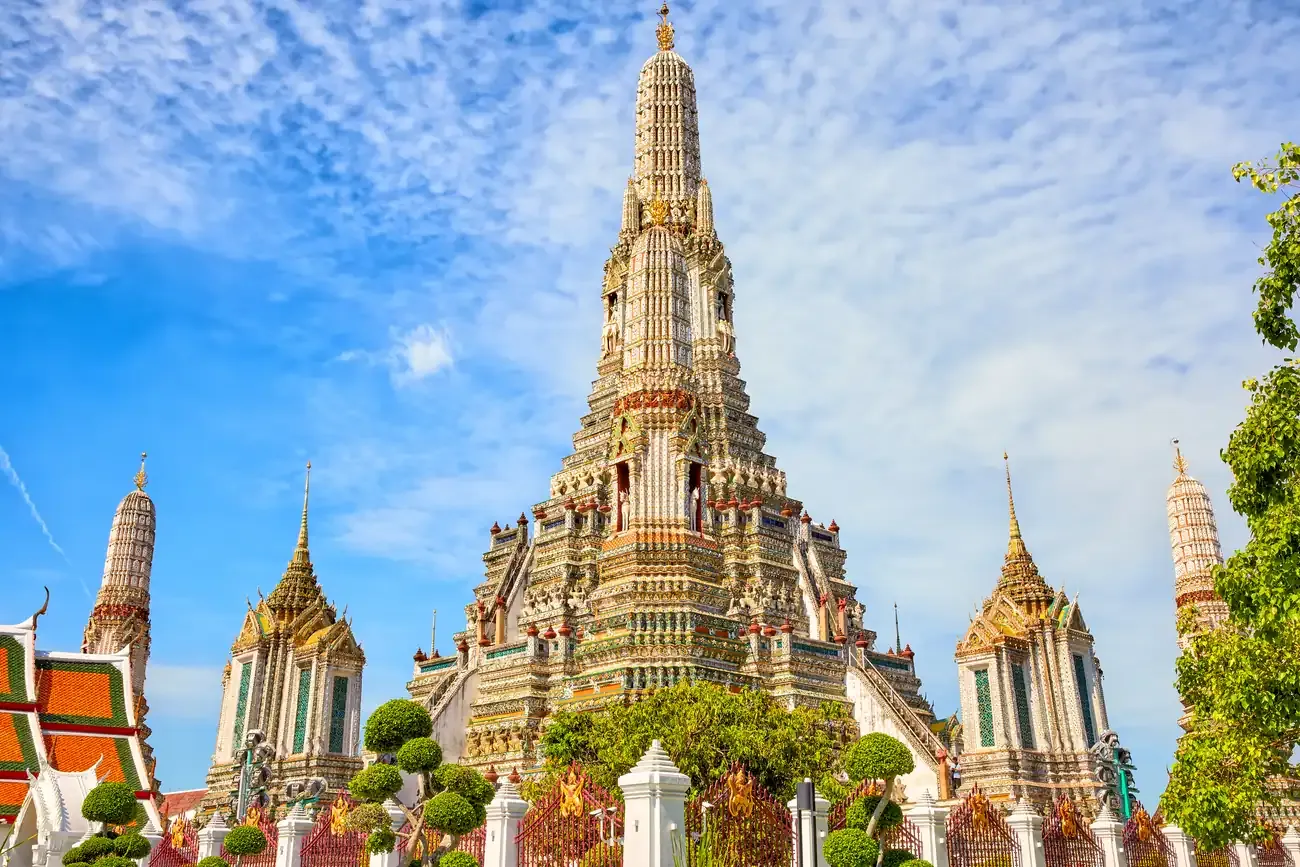
The Temple of Dawn stands on the Thonburi bank of the Chao Phraya, directly across the water from Wat Pho. A temple has occupied the site since the Ayutthaya period, when it was called Wat Chaeng, and it briefly held the Emerald Buddha after the capital moved to Thonburi. King Rama III began the great prang that gives the temple its outline, and the work was finished in the reign of King Rama IV. The tower rises past 80 metres, its tiers faced in white stucco, seashells and broken Chinese porcelain that catches the low light at either end of the day. Rows of stone demons and kinnara figures carry the terraces above the riverside courtyard.
Location: Wat Arun, Bangkok Yai, on the Thonburi side of the Chao Phraya River
Access: Ticketed, open daily from 08:00 to 18:00
2. Grand Palace
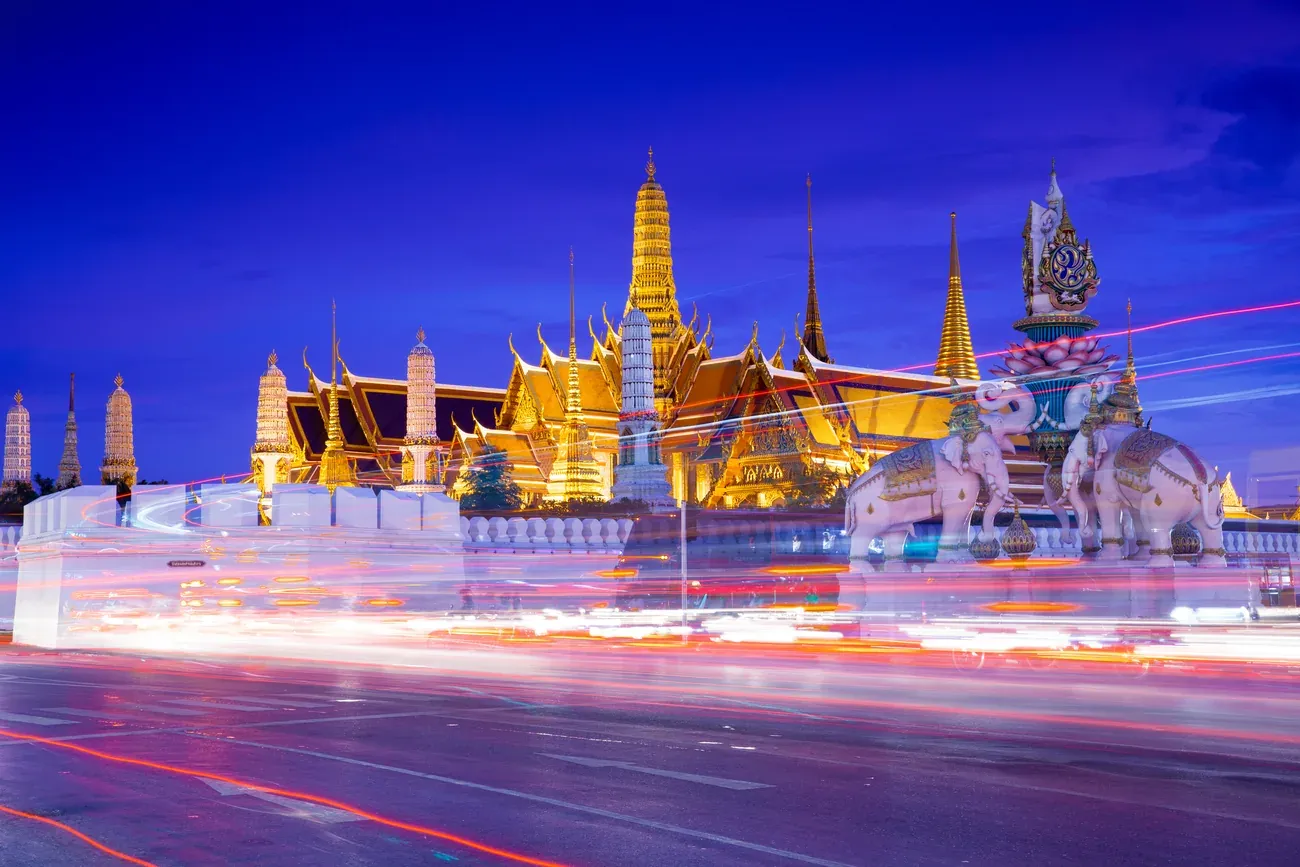
King Rama I laid out this walled complex in 1782 as the residence of the kings of Siam and the seat of the court, and it has anchored the old city ever since. Wat Phra Kaew stands inside the same walls, the royal chapel raised to house the Emerald Buddha, whose robes are changed with the summer, rainy and cool seasons. Gilded chedis, porcelain-clad prangs and ranks of yaksha guardians fill the courtyards, and the ticket also covers the Queen Sirikit Museum of Textiles on the grounds. Covered shoulders and knees are required, and the palace publishes its own list of clothing that will not be admitted.
Style: Thai and Western
Location: Na Phra Lan Road, Phra Nakhon
Access: Ticketed, open daily from 08:30 to 16:30, tickets sold until 15:30
3. Erawan Shrine
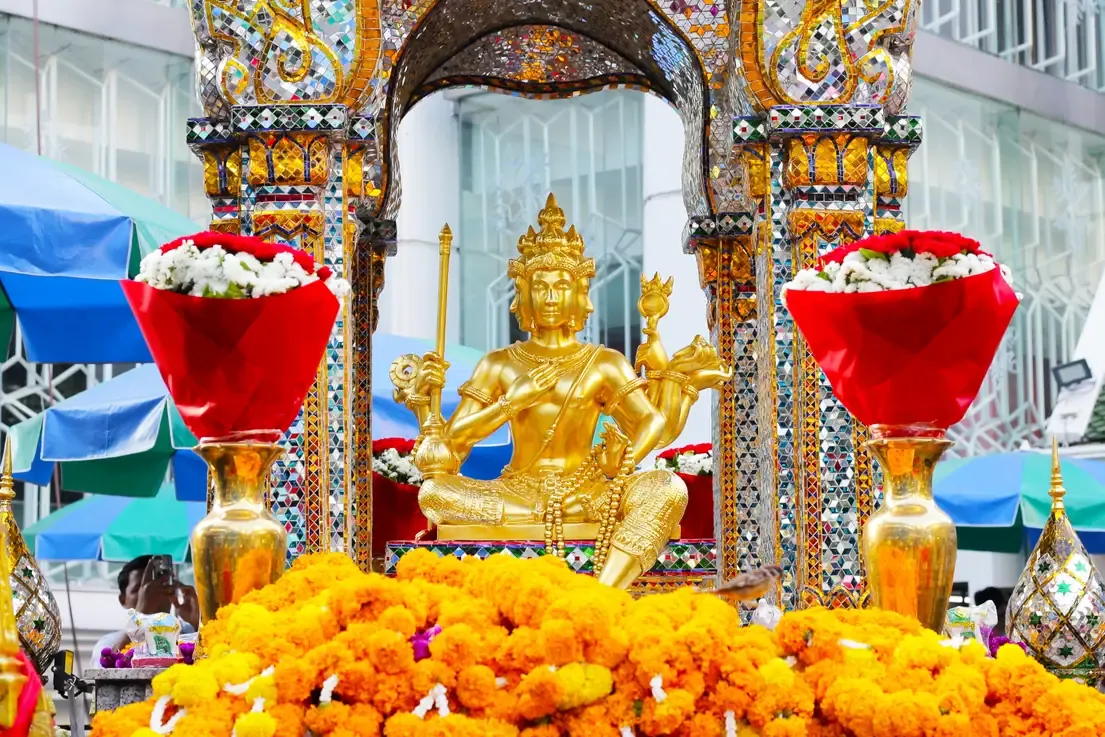
A four-faced image of Phra Phrom, the Thai form of Brahma, stands at the Ratchaprasong crossroads in front of the Grand Hyatt Erawan Hotel, hemmed in by shopping malls and office towers. The shrine was put up in 1956 after a run of mishaps during the building of the original Erawan Hotel, and the gilded plaster figure was installed that November. Each face looks towards one of the four directions, and worshippers work their way around the enclosure in turn with garlands, incense and carved wooden elephants. Troupes of classical dancers perform commissioned pieces of thanksgiving beside the railing, so the shrine is busy from early morning until late.
Location: Ratchaprasong intersection, Ratchadamri Road, Lumphini, Pathum Wan
Access: Free to visit, open every day
4. Giant Swing
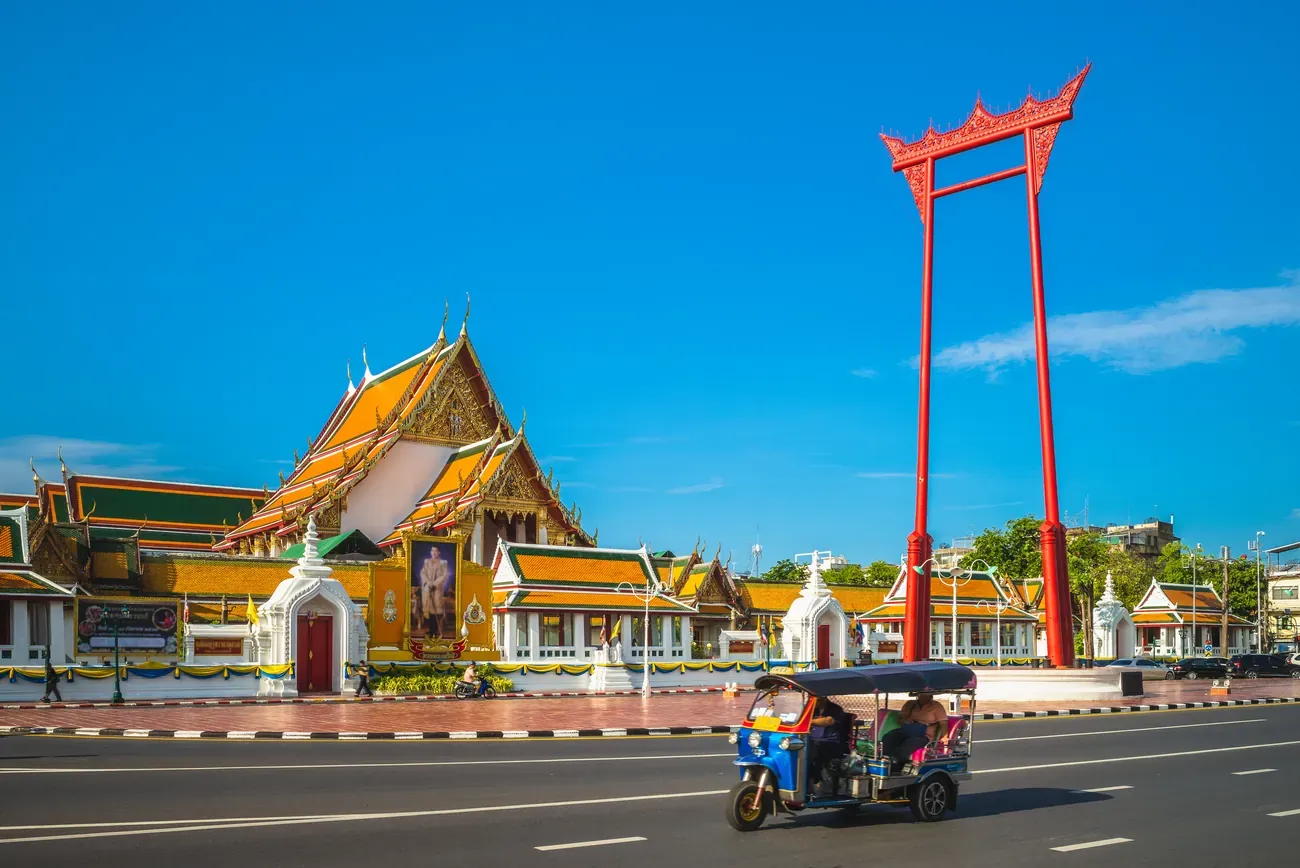
Two red teak pillars rise more than 21 metres from a white pedestal shaped like a lotus, in the square in front of Wat Suthat. King Rama I raised the swing when he pushed the new capital eastwards, setting Brahmin shrines and temples around it and marking the centre of the city. It was built for the swing ceremony of Triyampawai, an observance drawn from an ancient Hindu epic, and the frame joining the two capitals is carved and painted red along its whole length. The pillars standing today are a rebuild from September 2007, cut from golden teak trunks brought from Phrae, and an inscribed stone at the base sets out the history of the structure.
Location: Sao Chingcha, Phra Nakhon, in the square before Wat Suthat
Access: Free to view, standing in the open square at any hour
5. Amulet Market
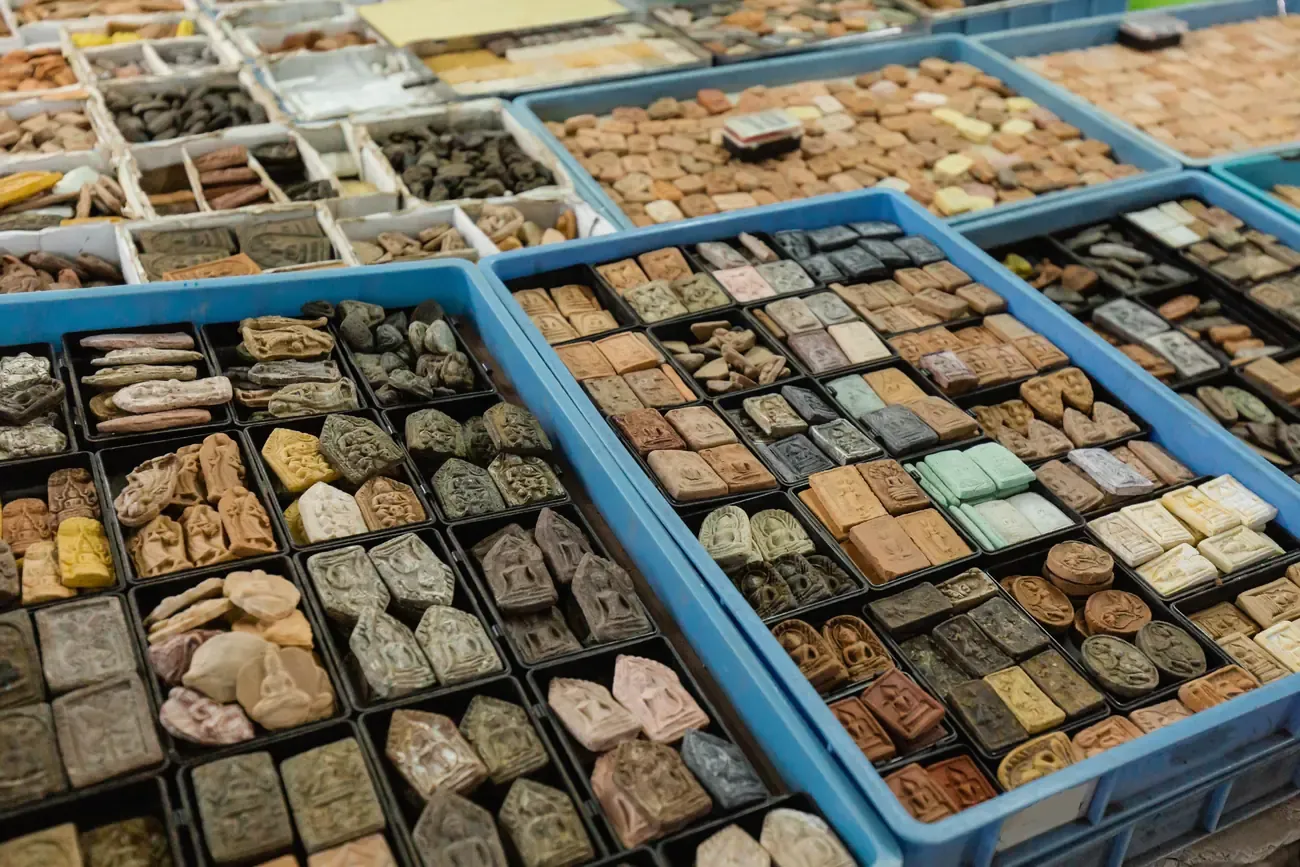
Stalls of Buddhist amulets fill the lanes off Maharat Road between Wat Mahathat and the river, spilling into the alleys behind Tha Phra Chan pier. Traders lay out thousands of small clay, metal and resin tokens in glass cases and plastic trays, and buyers work through them with jewellers' loupes, judging each one by its mould, the temple it came from and the monk credited with blessing it. Older pieces are handled as collectors' items as much as objects of devotion. Fortune tellers, second-hand book sellers and food carts trade along the same stretch, and the lanes are at their busiest in the middle of the day.
Location: the lanes off Maharat Road at Tha Phra Chan, Phra Nakhon
Access: Free to walk through, with stall hours set by the individual traders
6. Chatuchak Weekend Market
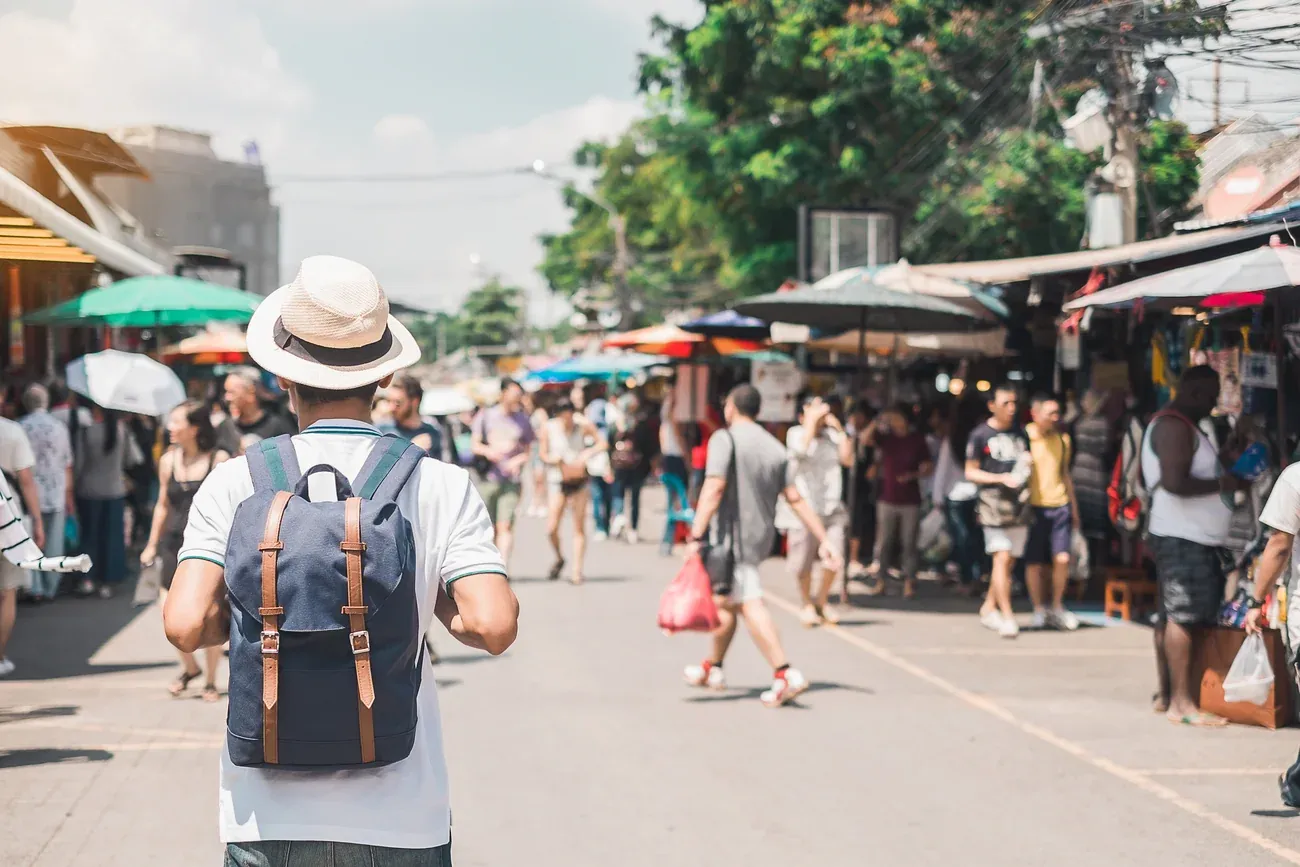
The largest weekend market in the world covers 35 acres beside Chatuchak Park in the north of the city, with more than 15,000 stalls in 27 numbered sections and around 200,000 visitors every Saturday and Sunday. The trade began at Sanam Luang in 1942 and moved here in stages until 1983; the clock tower in the middle went up in 1987 and is the landmark for finding your way. Sections group clothing, ceramics, antiques, plants, pets and street food, and the plant sections also open on Wednesday and Thursday. Mo Chit on the BTS and Chatuchak Park and Kamphaeng Phet on the MRT all open onto the market.
Open: Saturday and Sunday; plant sections also Wednesday and Thursday
Location: Kamphaeng Phet 2 Road, Chatuchak, at Mo Chit BTS
Access: Free to enter
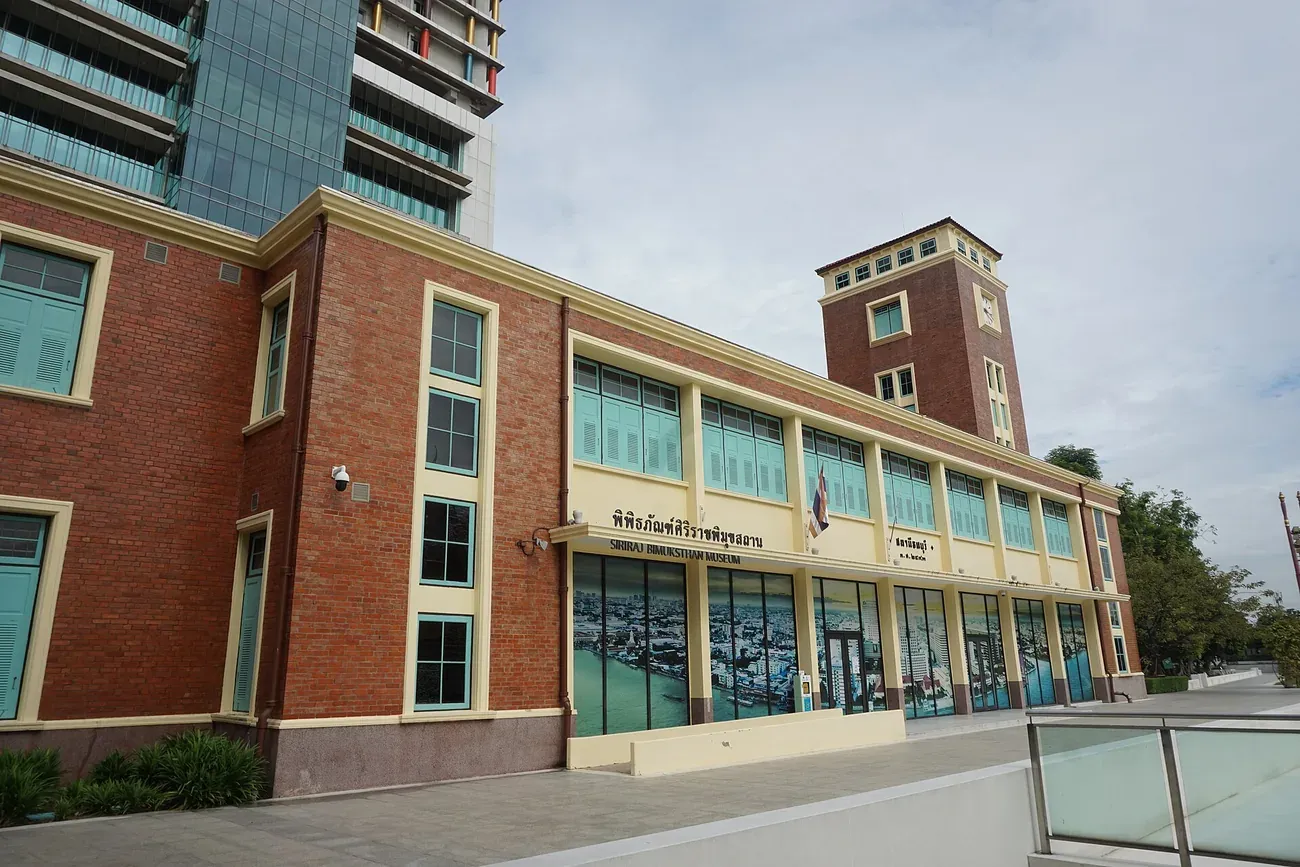
7. Siriraj Medical Museum
A cluster of small museums is spread through the wards and teaching buildings of Siriraj Hospital, on the Thonburi bank of the river. The forensic medicine room named after Songkran Niyomsane sits alongside galleries of pathology, anatomy, parasitology and prehistory, each grown out of the teaching collections of the Siriraj Faculty of Medicine. Preserved specimens, skeletal material and case evidence are laid out as study objects rather than curiosities. In a separate building nearby, Siriraj Bimuksthan sets the hospital's own story against the archaeology of the Thonburi railway terminus.
Location: 2 Wang Lang Road, Siriraj, Bangkok Noi
Access: Ticketed, open Wednesday to Monday from 10:00 to 17:00, closed on Tuesdays and public holidays
Photo: "The Siriraj Bimuksthan Museum building at Siriraj Hospital, Bangkok" by Athikhun.suw (CC BY-SA 4.0).
8. Wat Pho (Temple of the Reclining Buddha)
Wat Phra Chetuphon, better known as Wat Pho, fills the block between Sanam Chai and Maharat roads just south of the Grand Palace. Its viharn was built around a gilded reclining Buddha 46 metres long and 15 metres high, the soles of its feet inlaid with mother-of-pearl in 108 auspicious signs. The rest of the compound is a walled grid of chedis, cloisters of seated Buddha images and stone Chinese figures brought back as ship ballast. Marble panels in the walls record treatises on medicine and astrology, inscriptions UNESCO added to its Memory of the World register, and the traditional medical school here still teaches Thai massage.
Location: Sanam Chai Road, Phra Borom Maha Ratchawang, Phra Nakhon
Access: Ticketed, open daily from 08:00 to 19:30
9. Wat Saket and the Golden Mount
The Golden Mount is an artificial hill on the edge of the old city, the only real rise in central Bangkok. King Rama IV began the chedi on the model of the Golden Mount at Ayutthaya, King Rama V saw it finished, and the structure, named Suwanbanphot, stands 77 metres tall. A stair of 320 steps spirals up past bells and small shrines to a terrace that opens onto Rattanakosin and the rooftops of Phra Nakhon, ending at the chedi that enshrines relics of the Buddha brought from India. Wat Saket itself is an Ayutthaya-period foundation, rebuilt and renamed under King Rama I, and it honours the relics with a seven day celebration each Loi Krathong.
Location: 344 Chakkraphatdiphong Road, Pom Prap Sattru Phai
Access: Ticketed, open daily from 07:00 to 19:00
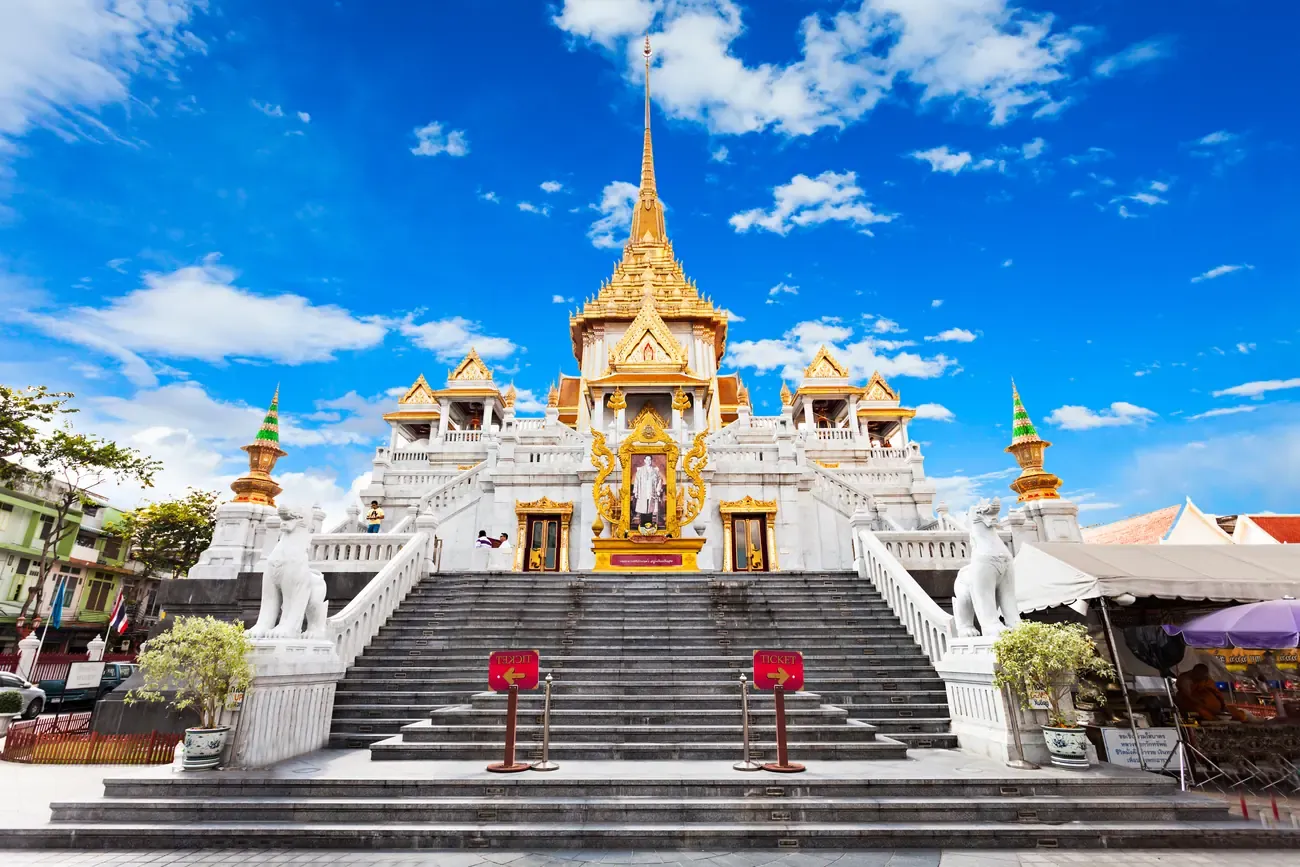
10. Chinatown (Yaowarat Road) and Wat Traimit
Yaowarat Road has been the spine of Bangkok's Chinese quarter since King Rama I moved the community downriver in 1782. Gold shops and Chinese shrines line the road by day, and after dark the pavements fill with street food carts and the neon signs come on. Side lanes such as Sampeng and Talat Noi keep the older trades, from fabric wholesalers to motor parts workshops. At the Hua Lamphong end stands Wat Traimit, once called Wat Sam Chin, whose Phra Maha Mondop enshrines the solid gold Buddha Phra Phuttha Maha Suwanna Patimakon, hidden under plaster until it cracked in 1955.
Location: Yaowarat Road, Samphanthawong, with Wat Traimit on Charoen Krung Road
Access: Free to walk; Wat Traimit is ticketed and open daily from 08:00 to 17:00
What to do in Bangkok for free
Lumphini Park
The whole park is free to enter and walk, from the lakeside paths to the open lawns; the paddle boats and kayaks on the lake are a paid rental. Early morning and early evening bring out joggers and outdoor tai chi groups.
Sanam Luang
The vast royal ground beside the Grand Palace is free and open to the public between ceremonies, used for royal cremations and state occasions, with a flea market setting up on its surrounding streets most evenings.
City Pillar Shrine
Bangkok's founding pillar, erected by Rama I in 1782 opposite the Grand Palace, stands in a free shrine where locals stop daily to pray and leave flowers.
Nagaraphirom Park
This small riverside park by Tha Tien Pier is free and gives one of the best views of Wat Arun across the water, especially at sunset, without paying the temple's own entrance fee.
Why Bangkok is worth visiting
Bangkok grew from a river-trading village into Siam's capital in 1782, when King Rama I built the Grand Palace on the eastern bank of the Chao Phraya and raised Wat Phra Kaew inside its walls to house the Emerald Buddha. That founding core, Rattanakosin, still holds the temples and palaces that give the city its skyline of gilded spires, now surrounded by a modern metropolis of malls, skytrains and street food that never quite goes quiet. The Grand Palace, Wat Pho and Wat Arun open almost every list of tourist attractions in Thailand, and the ruined capital of Ayutthaya is close enough for a day trip north.
Neighbourhoods to know
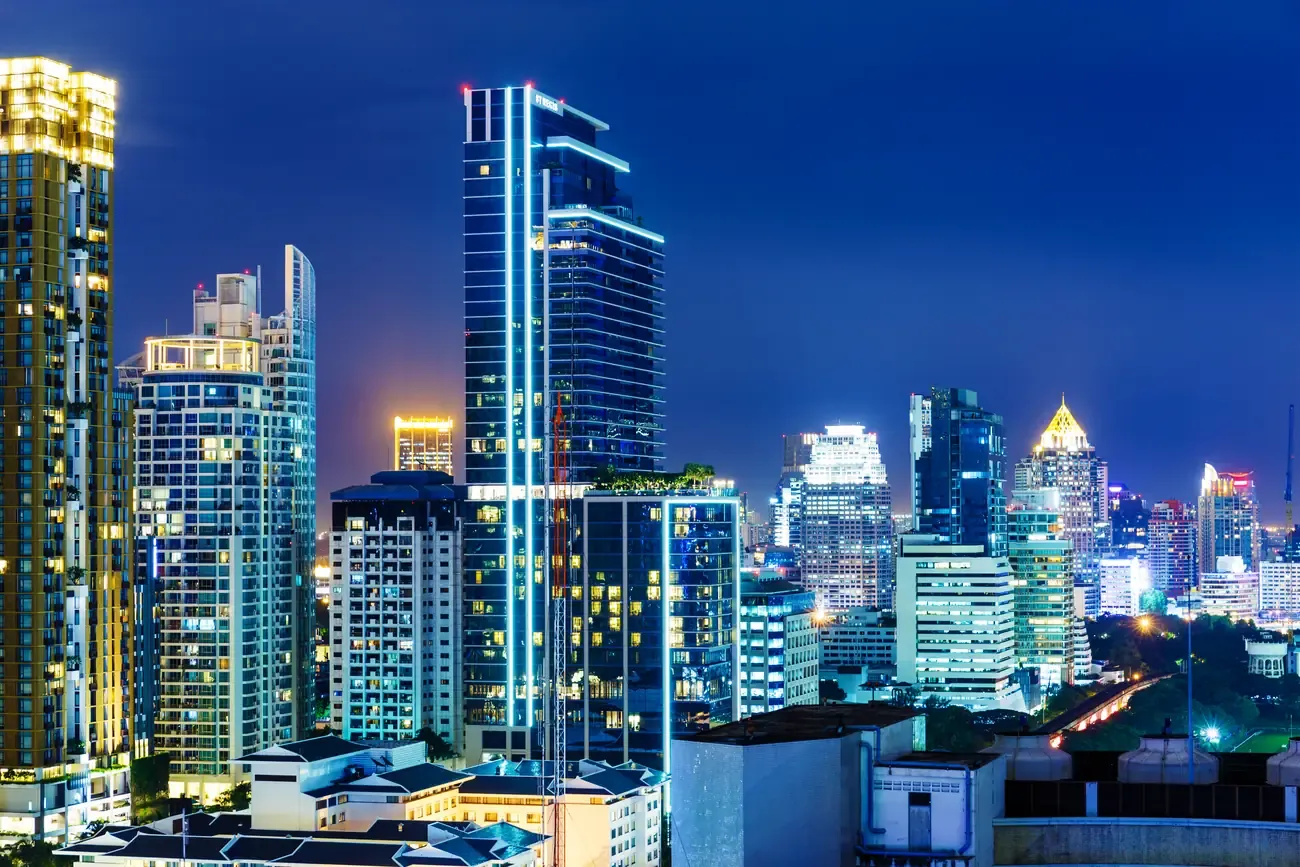
Rattanakosin keeps the Grand Palace, Wat Pho and the National Museum inside its old city walls. Yaowarat and Phahurat form Chinatown, a dense grid of gold shops, Chinese temples and food stalls. Silom and the riverside mix office towers with night markets, while Sukhumvit runs the length of the BTS Sukhumvit line through shopping malls, restaurants and nightlife.
When to go and for how long
The cool season from November to February is driest and most comfortable for temple hopping. The hot season builds through March and peaks in April, and the rainy season runs from mid-May to October, with September usually the wettest month and short afternoon downpours rather than all-day rain. Three to four full days cover the main sights at an easy pace.
Getting around
The BTS Skytrain and MRT subway cover the newer districts quickly and cheaply, while the Chao Phraya Express Boat threads the river past Rattanakosin and Chinatown, avoiding the road traffic Bangkok is known for. Tuk-tuks and metered taxis fill the gaps, though a taxi in gridlock can take far longer than the same trip by rail or river.