
Thailand tourist attractions
Known for
Gilded Buddhist temples, the brick ruins of two old capitals, limestone islands on two coasts and food eaten in the street
Must-see cities
Bangkok, Chiang Mai and Phuket
World Heritage
9 UNESCO sites, from Ayutthaya and Sukhothai to the Dong Phayayen and Khao Yai forest complex
Best time to visit
November to February, the cool dry season; March and April are the hottest and the rains run from May to October, although the Gulf coast reverses that
Tourist attractions in Thailand not to miss
The tourist attractions in Thailand start with the Grand Palace, Wat Arun and Wat Pho. After the 10 ranked sights come the cities worth a stop, 12 more landmarks, local dishes, 14 hidden gems and visitor FAQs.
Iconic cities in Thailand
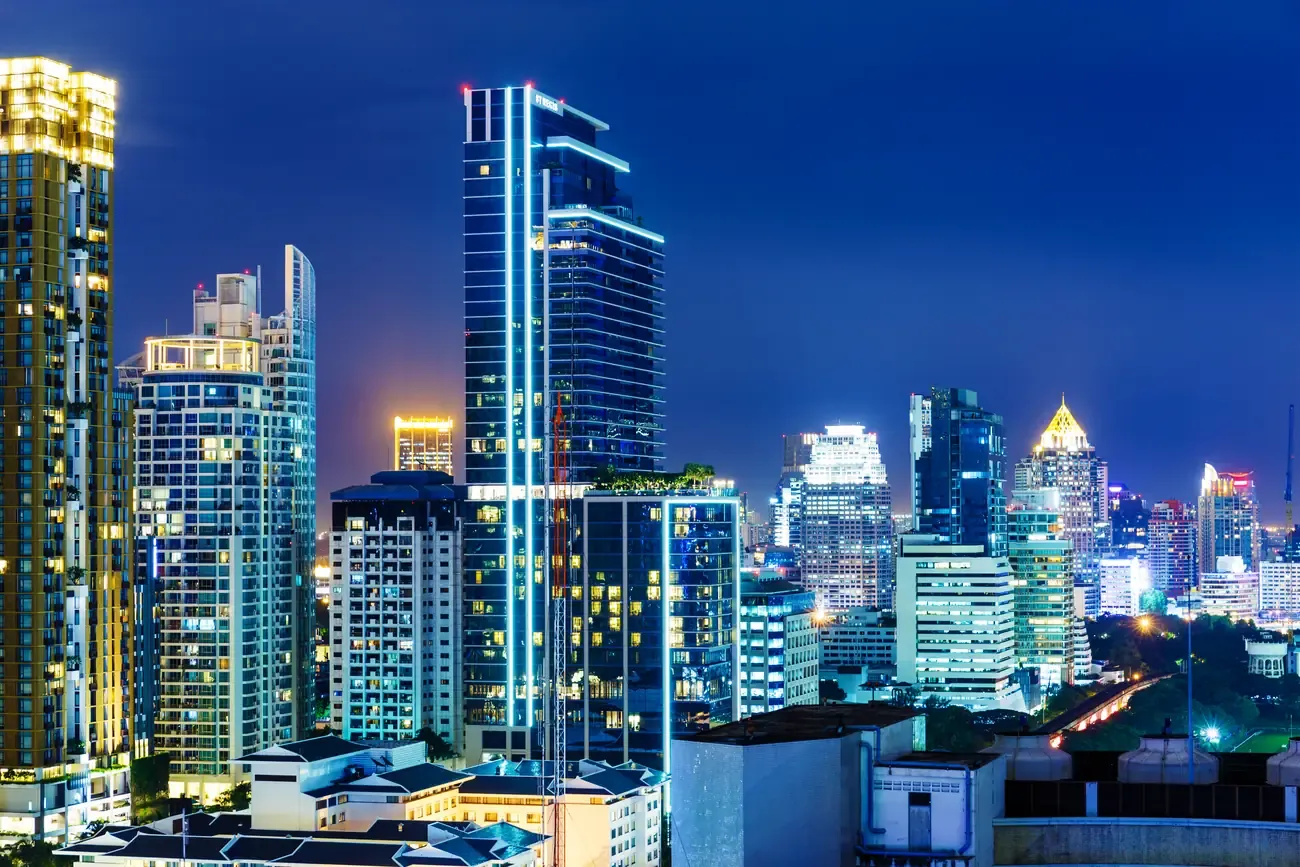
Bangkok
Explore Bangkok in detail. The capital since 1782 and the entry point for almost every trip, with the palace and the great river temples on one bank and a night market and skytrain city built around them.
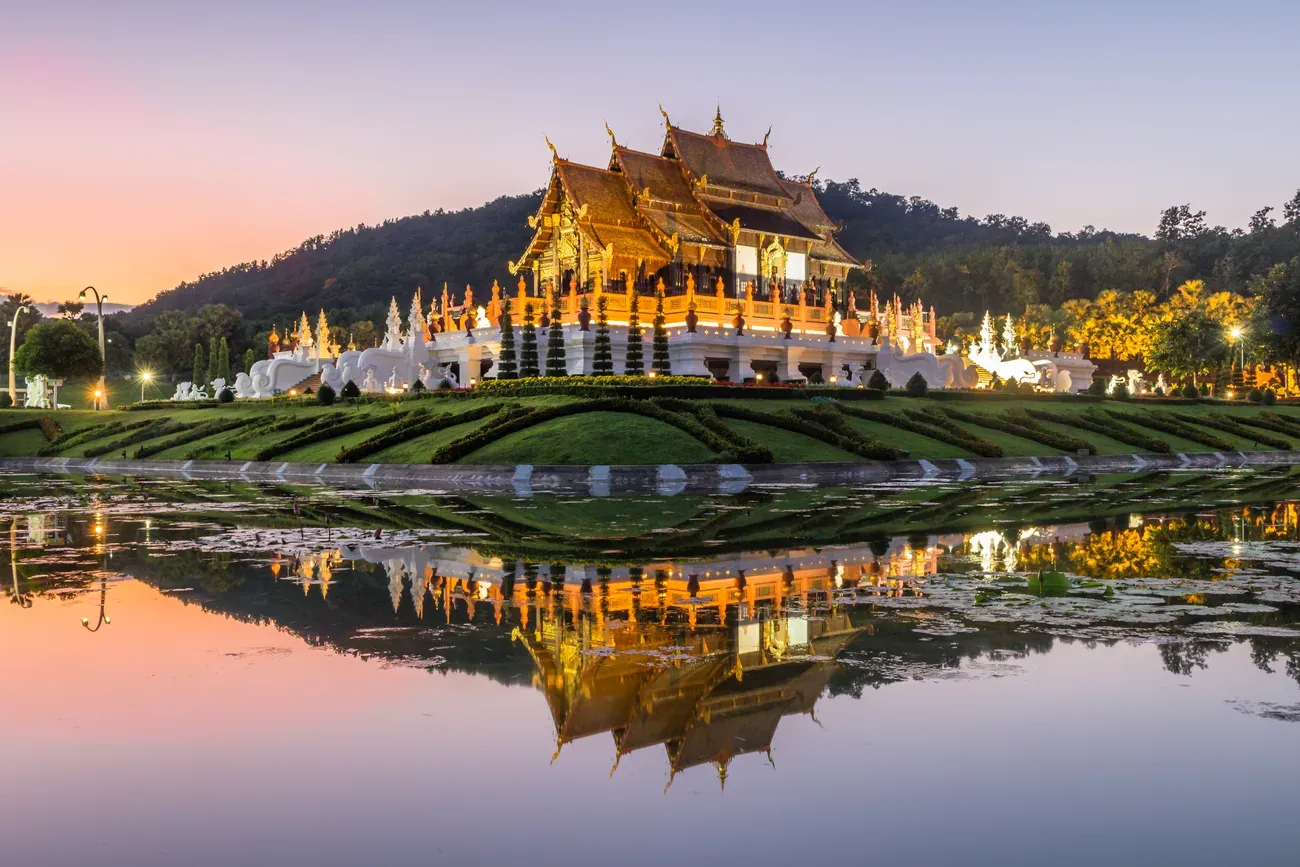
Chiang Mai
Explore Chiang Mai in detail. The old Lanna capital, founded in 1296 and still inside its moat, with mountain temples above it and the coolest weather in the country between November and February.
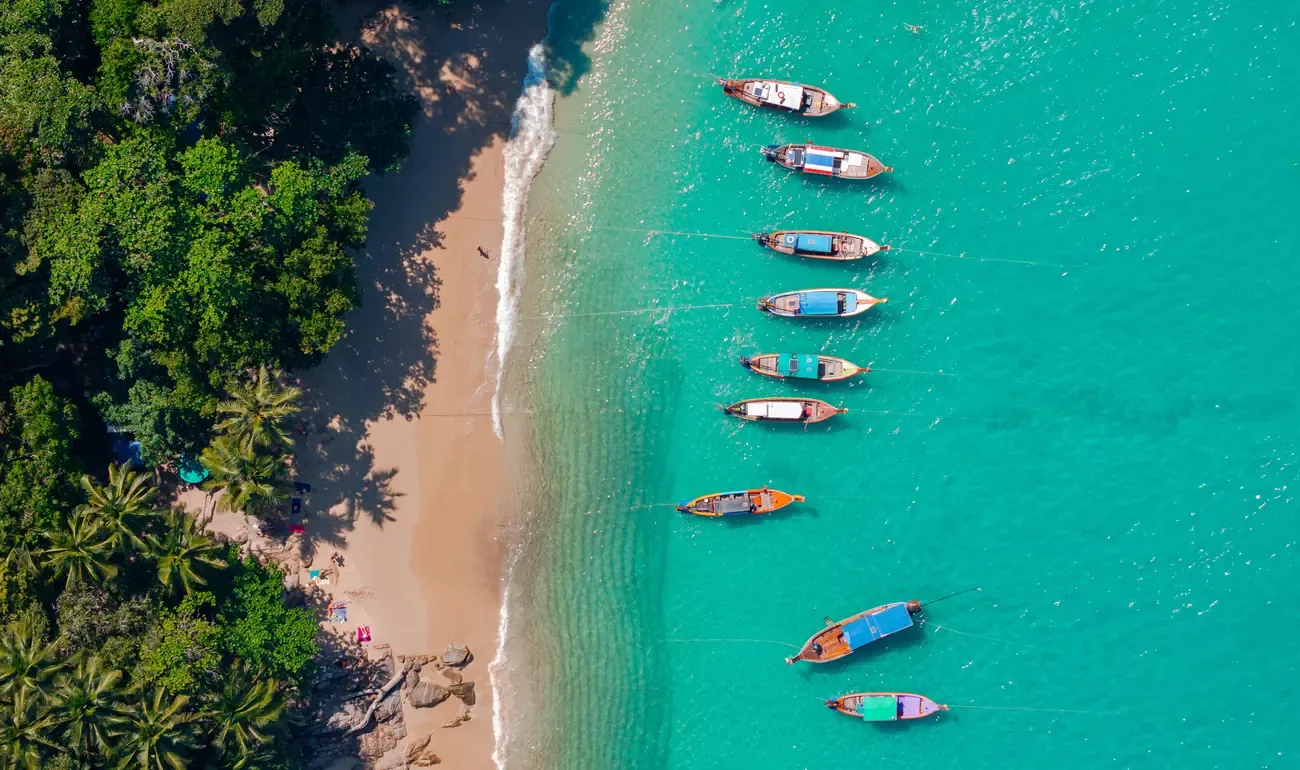
Phuket
Explore Phuket in detail. The largest island in Thailand and the busiest base on the Andaman coast, with Sino-Portuguese shophouses in the old town and boats out to the limestone bays.
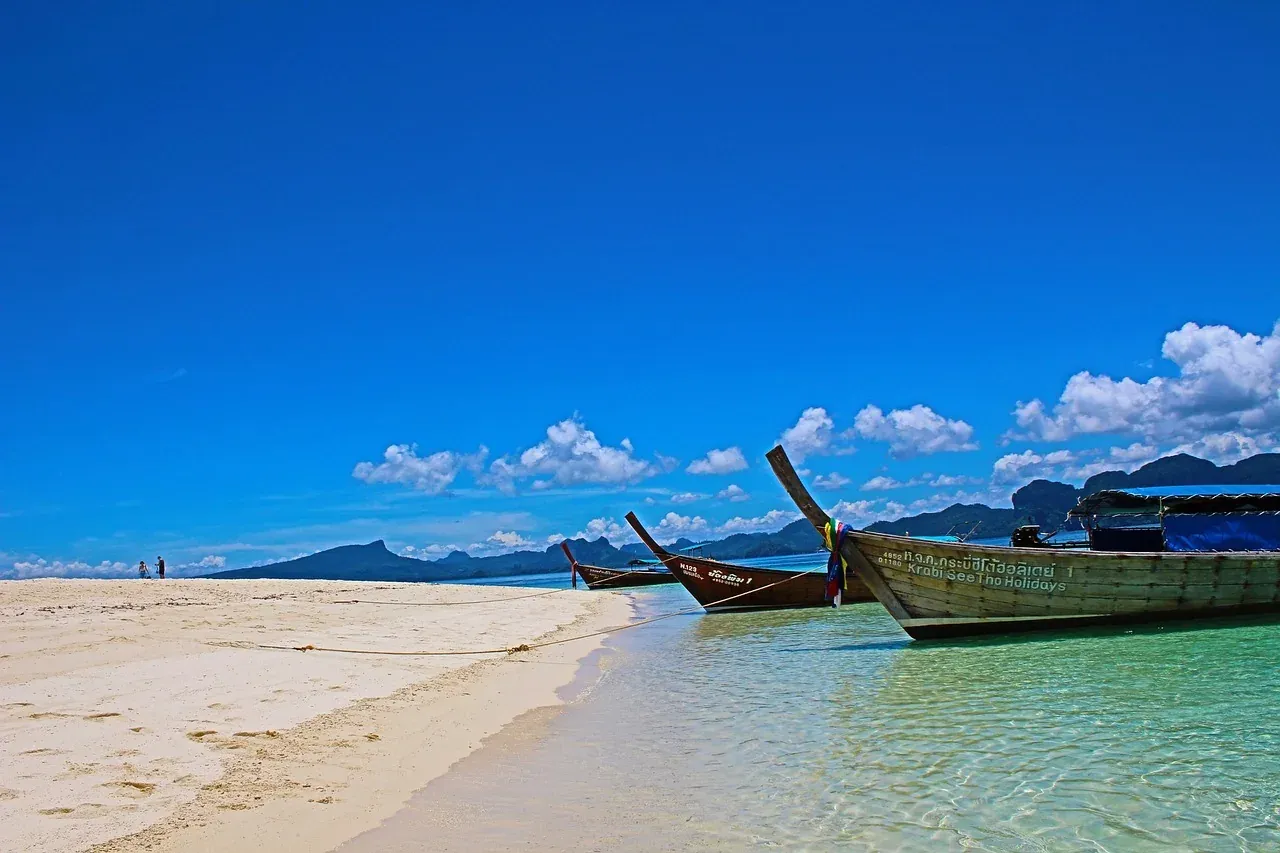
Krabi
Mainland province of karst cliffs and beaches facing the Andaman Sea, and the closest base to Railay and the Phi Phi Islands. Rock climbers come for the limestone, everyone else for the longtail boats.
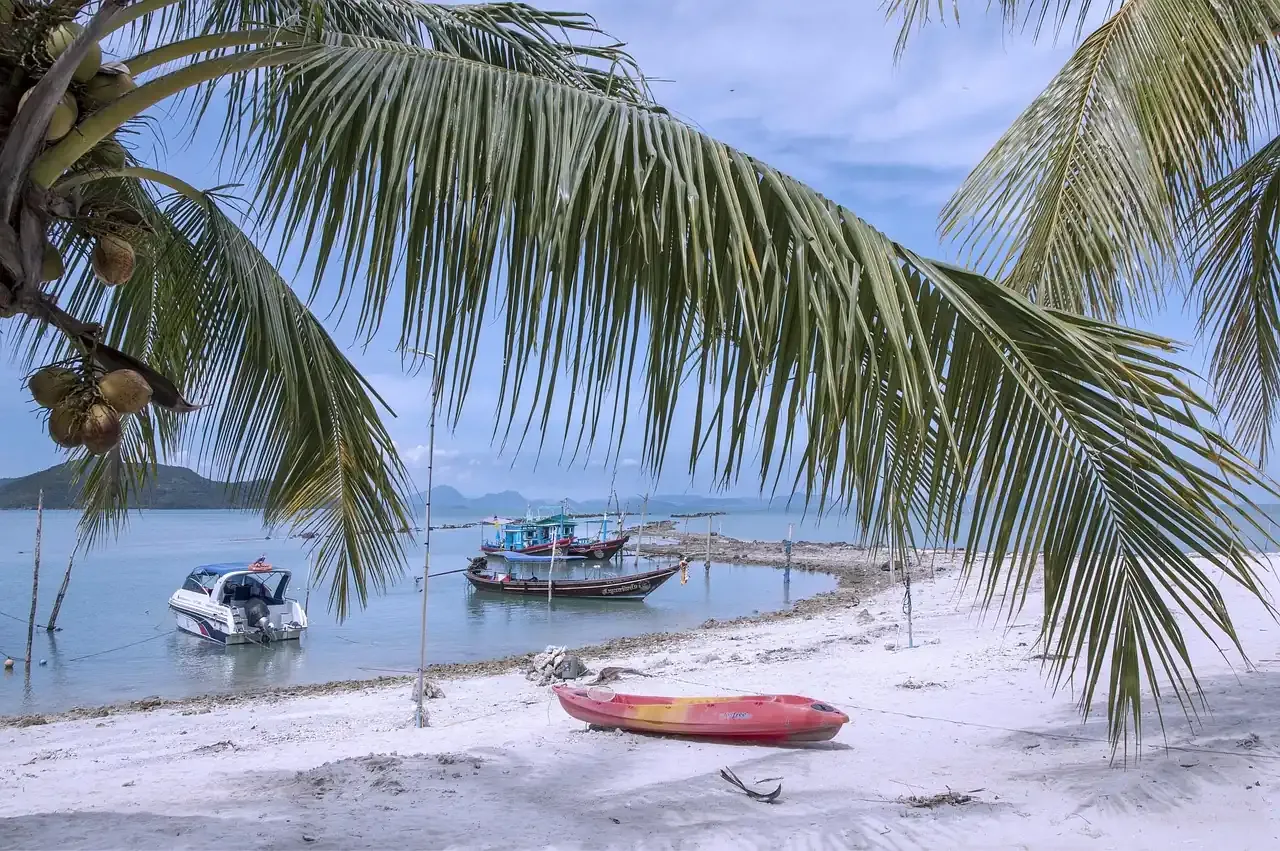
Ko Samui
The main island of the Gulf coast, where the seasons run the other way round and the driest months fall between May and October. Ang Thong marine park lies a boat ride offshore.
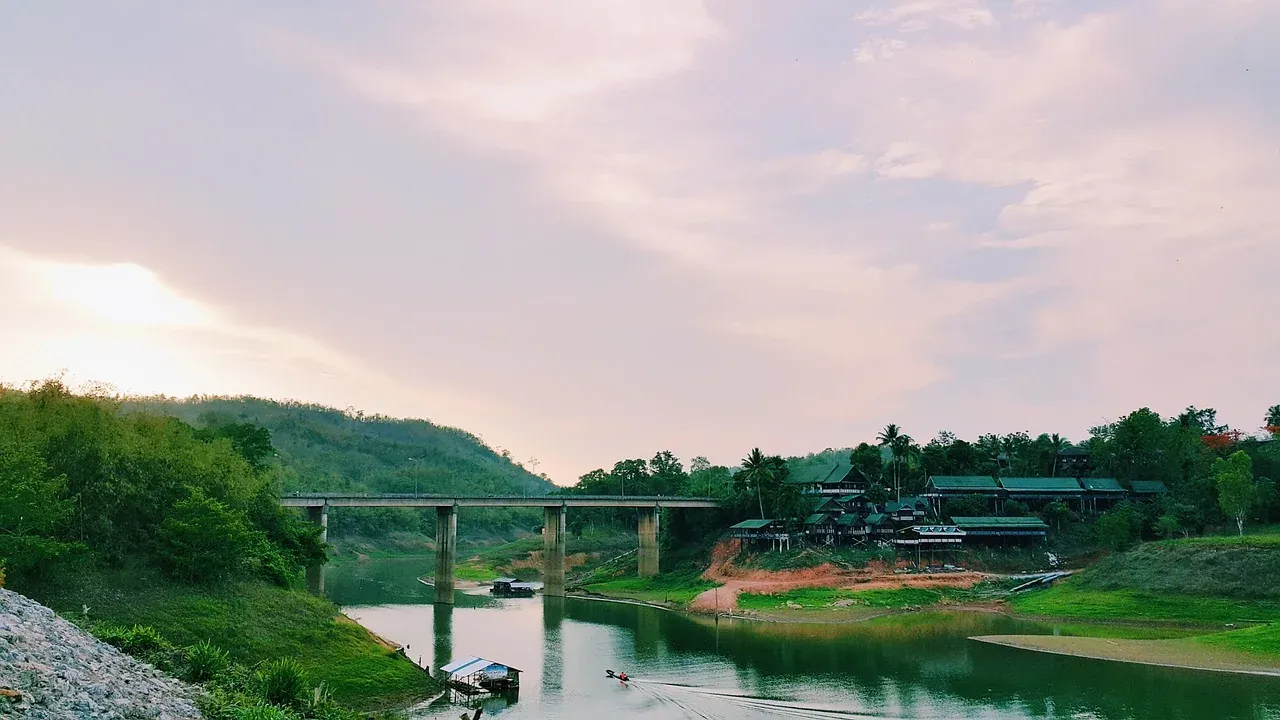
Kanchanaburi
West of Bangkok on the River Kwai, where the wartime Burma Railway, the tiered waterfalls of Erawan and the limestone hills of the Tenasserim range sit within an hour of each other.
1. Grand Palace
Rama I laid out this walled complex beside the Chao Phraya in 1782, when the capital moved across the river, and it stayed the residence of the kings of Siam until the court left in 1925. State functions and royal ceremonies are still held inside the walls. The outer palace holds Wat Phra Kaew, built to house the Emerald Buddha, and the throne halls behind it set Siamese tiered roofs on European facades. More than eight million people pass through in a year, so an early start helps.
Built: from 1782 · Style: Rattanakosin
Location: Phra Nakhon, on Rattanakosin island in Bangkok
Access: Ticketed for foreign visitors, covering Wat Phra Kaew and the Queen Sirikit Museum of Textiles in the same compound, and a dress code that rules out sleeveless tops and shorts
2. Wat Arun
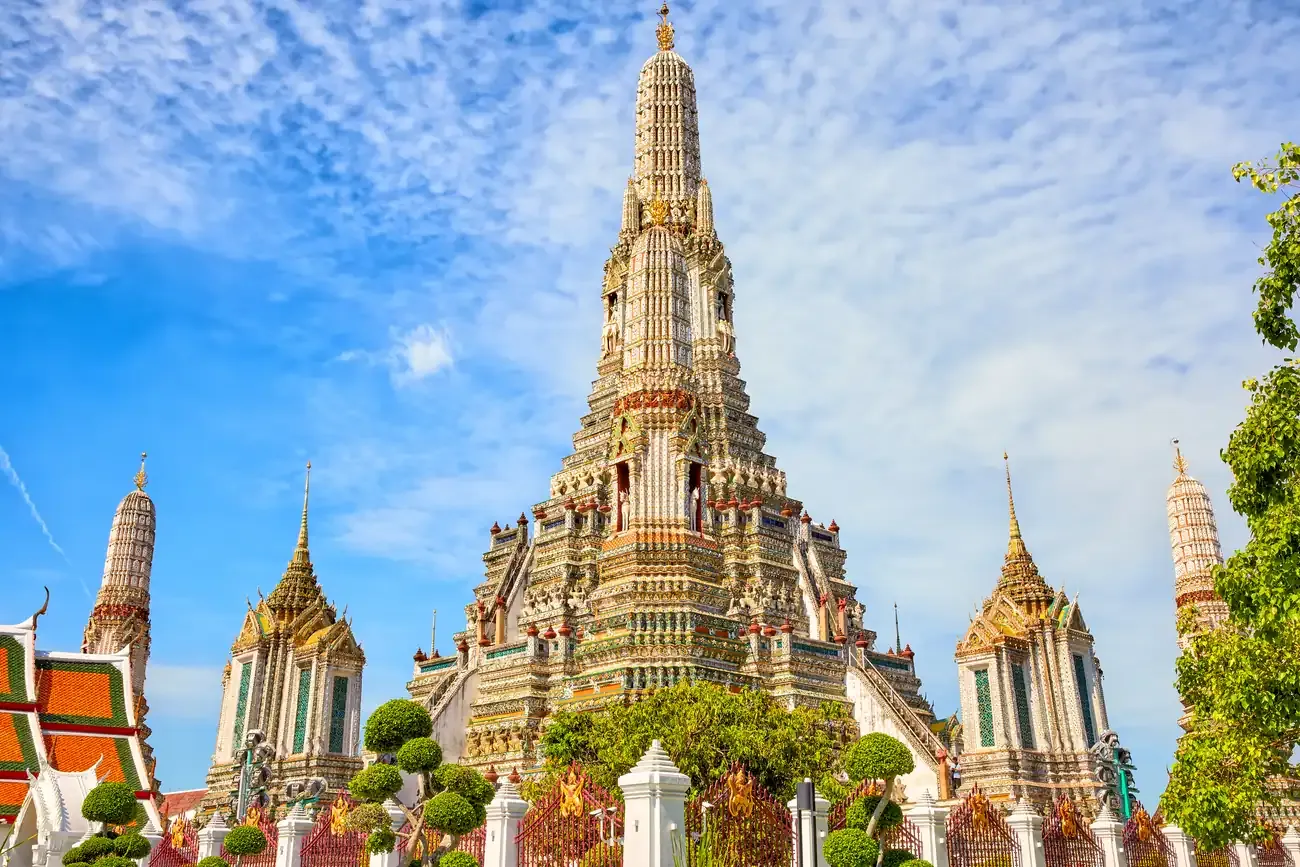
The Temple of Dawn stands on the Thonburi bank, opposite the palace, and takes its name from Aruna, the Hindu deity of the rising sun. A temple stood here by the seventeenth century, but the silhouette everyone photographs is later: Rama II planned to raise the central prang to 70 metres and the work, carried on under Rama III, finished in 1851. Chinese porcelain and seashells set into the stucco give the surface its glitter at close range, and a trident crowns the spire.
Built: prang completed in 1851 · Style: Rattanakosin, on a Khmer-derived prang plan
Location: Bangkok Yai, on the west bank of the Chao Phraya in Bangkok
Access: Ticketed, and the river crossing from Tha Tien is part of the visit
3. Wat Pho
Officially Wat Phra Chetuphon, this is one of the oldest temples in Bangkok and the first of the six highest-grade royal temples. Rama I rebuilt it from 1788 on a marshy site next to his new palace, and some of his ashes are enshrined here. It holds the largest collection of Buddha images in the country, among them a reclining figure 46 metres long. The instructional inscriptions and illustrations set around the cloisters made it an early school for the public, and it is still where Thai massage is taught.
Rebuilt: from 1788 · Heritage: inscriptions on the UNESCO Memory of the World Register
Location: Phra Nakhon, immediately south of the palace in Bangkok
Access: Ticketed, with the massage school working inside the grounds
4. Ayutthaya
Ramathibodi I founded the city in 1351 and it grew into the capital of a kingdom that traded with Persia, China and Europe until a Burmese army destroyed it in 1767. What survives is a field of brick prangs, headless Buddha images and the three chedis of Wat Phra Si Sanphet, spread across an island where three rivers meet. The park is close enough to Bangkok for a day, and a bicycle covers the distances between temples better than a coach does.
Founded: 1351 · Heritage: Historic City of Ayutthaya, UNESCO listed in 1991
Location: Phra Nakhon Si Ayutthaya province, north of Bangkok
Access: Ticketed at the main temple compounds, which are managed by the Fine Arts Department
5. Sukhothai
The name means dawn of happiness, and this was the capital of a kingdom of the thirteenth and fourteenth centuries whose script and Buddha images shaped everything Thai that followed. The walled rectangle measures about two kilometres by one and a half, and the park counts 193 ruins over roughly 70 square kilometres, including the royal palace and twenty-six temples. Wat Mahathat is the largest, its seated Buddha framed by rows of brick columns and lotus-bud towers reflected in the ponds.
Period: thirteenth to fourteenth century · Heritage: listed by UNESCO in 1991 with its associated historic towns
Location: Sukhothai province, in north central Thailand
Access: Ticketed by zone, and the Fine Arts Department maintains the park
6. Doi Suthep
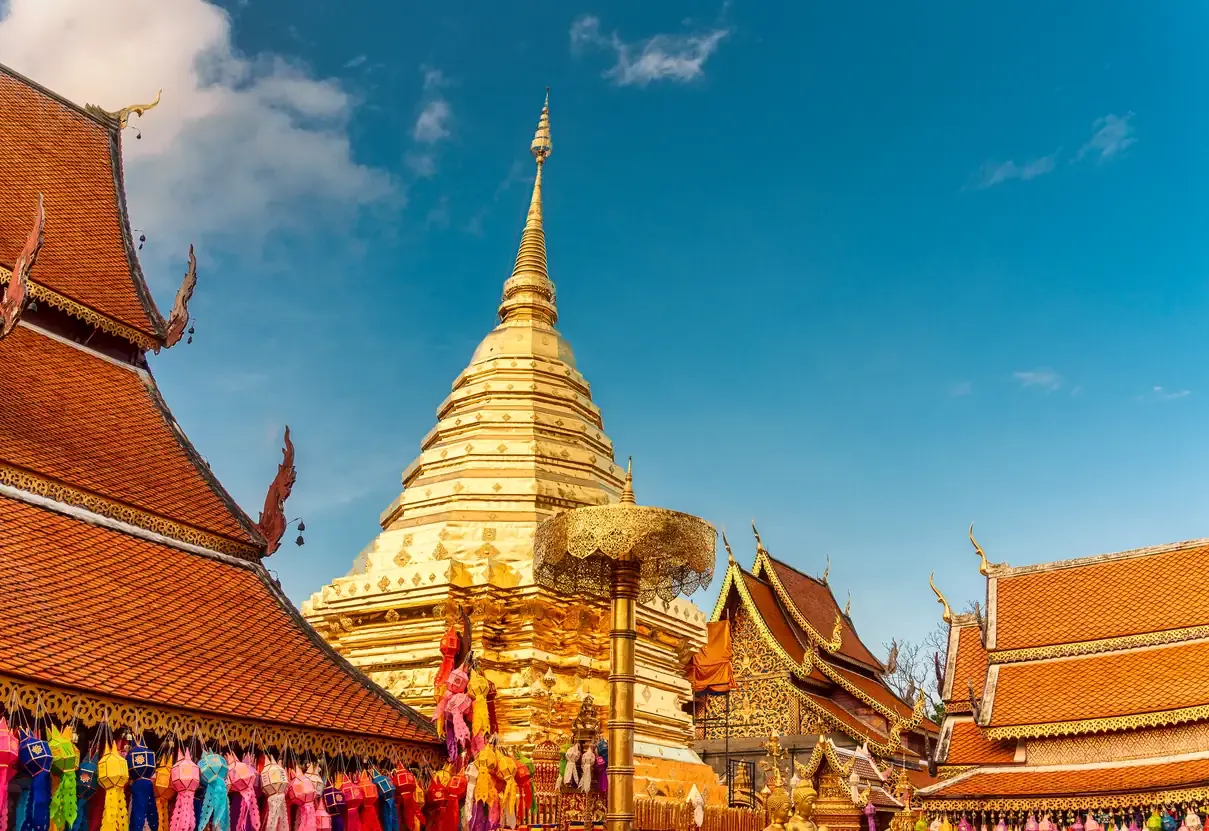
Wat Phra That Doi Suthep sits at 1,073 metres on the mountain that gives it its name, fifteen kilometres from the centre of Chiang Mai, and the terrace at the top looks straight down over the city and its plain. The first stupa is said to have been raised in 1383, the golden chedi at the heart of the cloister still draws pilgrims from across the north, and a road up the mountain was only cut in 1935. Cloud often sits below the terrace in the early morning.
Founded: stupa dated to 1383 · Style: Lanna
Location: Doi Suthep, above Chiang Mai in northern Thailand
Access: Ticketed for foreign visitors, reached by a stairway or a funicular from the car park
7. Wat Rong Khun
Better known as the White Temple, this is not an old monument at all but a privately owned art project in the shape of one. Chalermchai Kositpipat, a national artist born in the province, designed and built it and opened it to visitors in 1997, and construction has continued ever since. The frame is concrete under a wooden roof, finished in whitewash studded with mirrored glass so that it flashes in the sun. A bridge over a field of reaching hands leads to the entrance, and the murals inside are just as unorthodox.
Architect: Chalermchai Kositpipat · Opened: 1997
Location: Pa O Don Chai, outside Chiang Rai in northern Thailand
Access: Ticketed for foreign visitors
8. Phi Phi Islands
Six islands in the Andaman Sea sit between Phuket and the Krabi coast, and the two that matter to visitors are very different. Phi Phi Don carries the villages, the piers and the accommodation; uninhabited Phi Phi Le holds the cliffs and the beaches, Maya Bay among them. Ferries, speedboats and longtail boats run out from Krabi town and from the Phuket piers. Maya Bay, Loh Samah Bay and Lo Ko Bay close every year from 1 August to 30 September so the reefs can recover from the season.
Protected: part of Hat Noppharat Thara and Mu Ko Phi Phi National Park
Location: Krabi province, in the Andaman Sea
Access: Ticketed as a national park, with the annual bay closure through August and September
9. Phang Nga Bay
Four hundred square kilometres of shallow water between Phuket and the mainland, studded with limestone towers that were hills when the sea was lower and it was possible to walk from Phuket to Krabi around ten thousand years ago. Caves, collapsed cave systems and rock shelters with prehistoric paintings run along the cliffs, and a stilt village stands under them at Ko Panyi. The needle of Ko Tapu is the one every boat stops at, since a Bond film used the bay in 1974.
Protected: Ao Phang Nga National Park, declared in 1981
Location: Phang Nga province, between Phuket and the mainland
Access: Ticketed as a national park, and reached by boat or sea kayak
10. Damnoen Saduak Floating Market
Rama IV ordered the Damnoen Saduak canal dug between 1866 and 1868 to link the Mae Klong and the Tha Chin, and villagers cut some two hundred side canals off it. Water trade faded once roads arrived in 1967, and the Tourism Authority of Thailand turned what was left into an attraction in 1971. What runs today is frankly a show, with paddled sampans of fruit and noodles for the cameras, but it is the best known floating market in the country and the canal behind it is real enough.
Opened: canal cut 1866 to 1868 · Revived: as a visitor attraction from 1971
Location: Damnoen Saduak district, Ratchaburi province, southwest of Bangkok
Access: Trading starts at dawn and thins by mid-morning, with boat rides arranged at the piers
Other iconic sights in Thailand
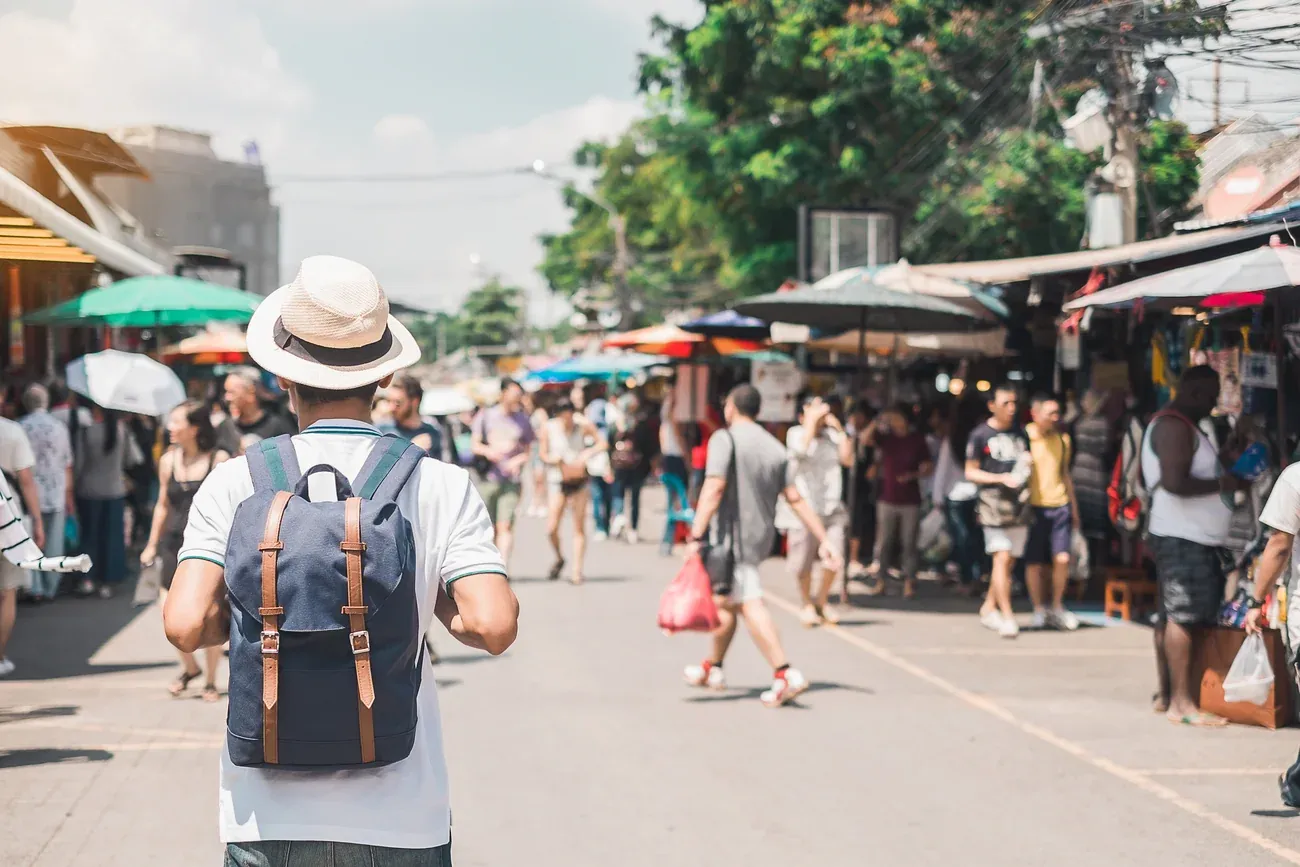
Chatuchak Weekend Market
The largest market in the country, with more than 15,000 stalls across 27 sections and upwards of 200,000 visitors every weekend.
Location: Chatuchak, northern Bangkok
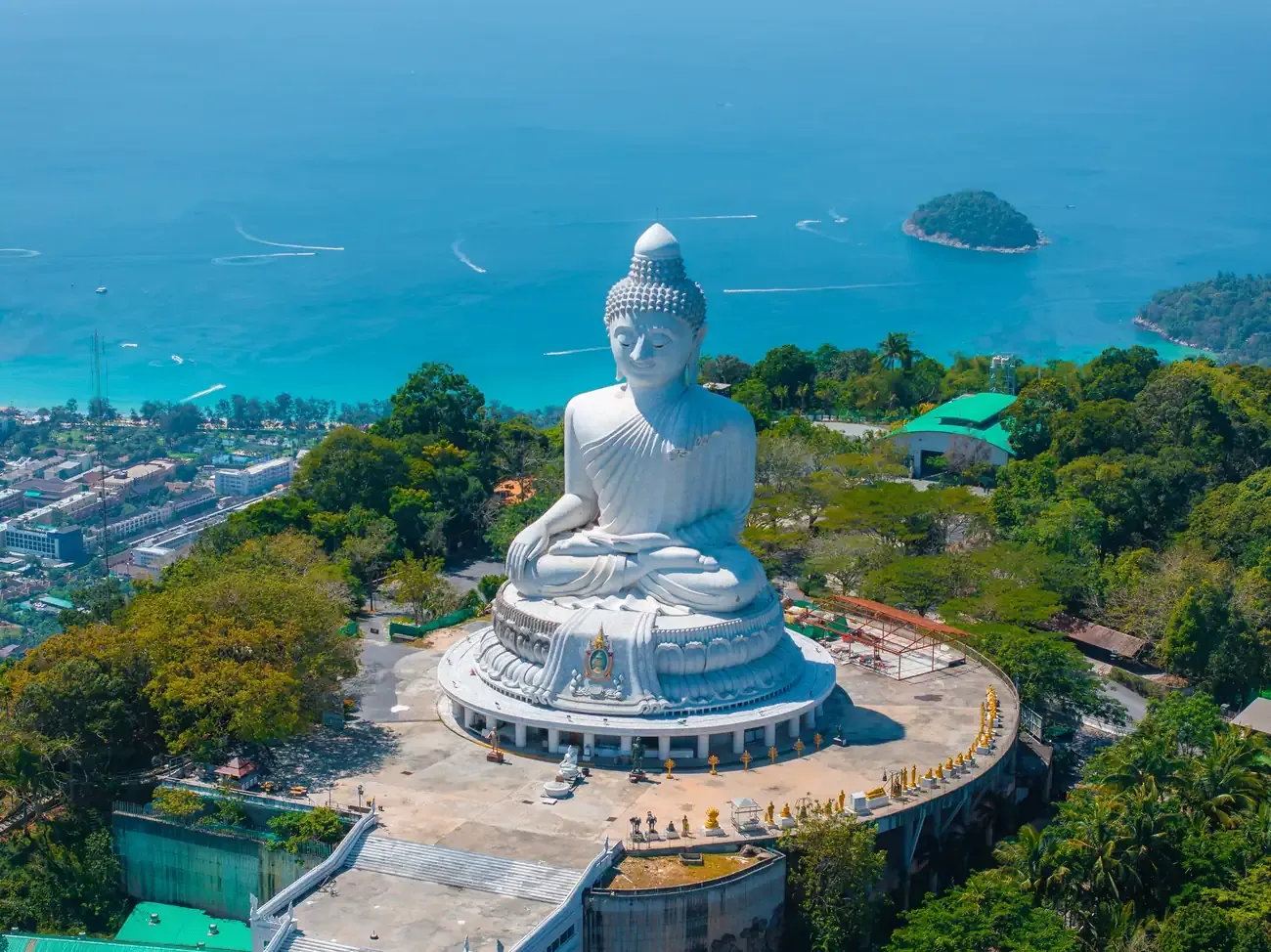
Big Buddha Phuket
A seated Buddha 45 metres tall, faced in Burmese white marble, raised on Nakkerd Hill since 2004 and visible from much of the island.
Location: Nakkerd Hill, above Chalong, Phuket
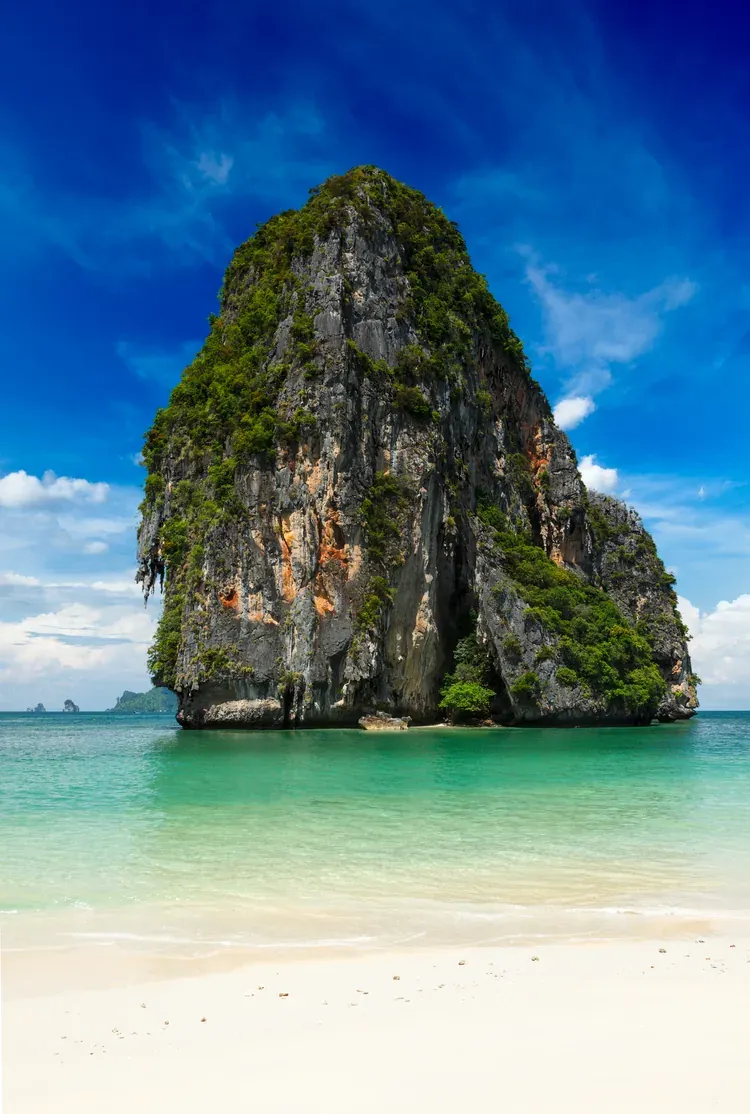
Railay Beach
A peninsula reachable only by boat, because limestone walls cut it off from the road. Those same walls bring the climbers.
Location: Between Ao Nang and Krabi town, Krabi province
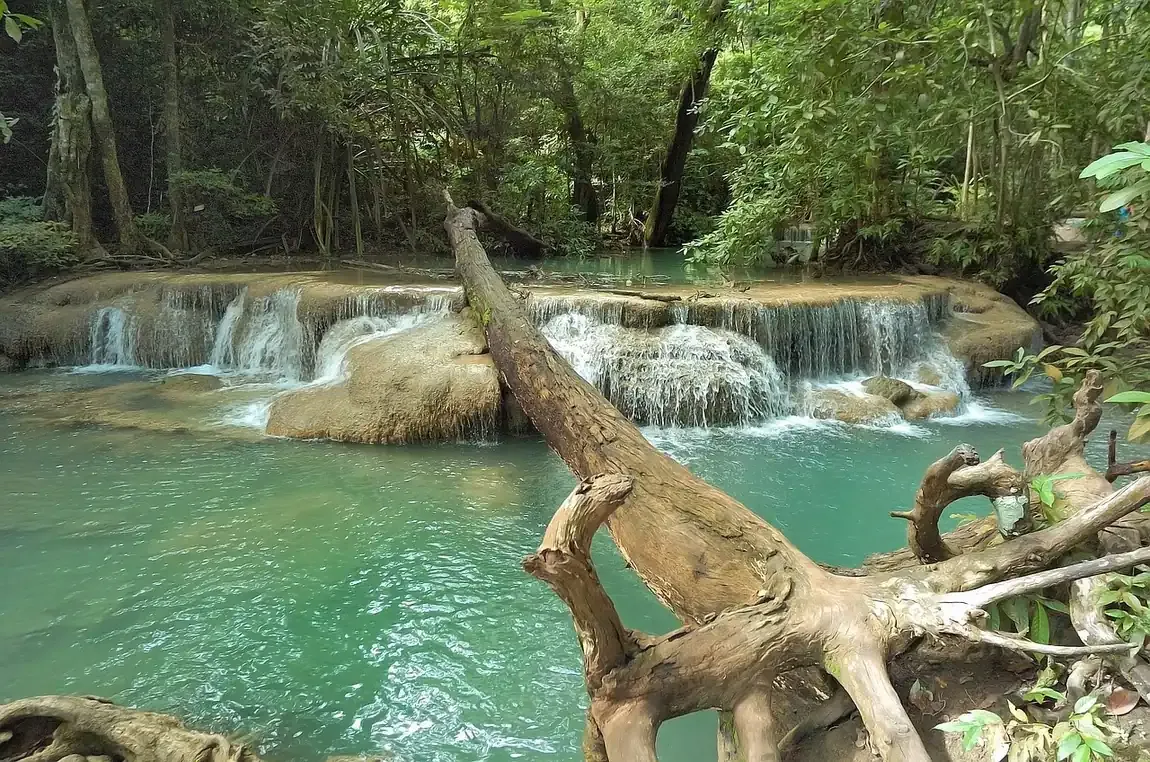
Erawan National Park
Seven tiers of emerald pools named after the three-headed elephant of Hindu myth, with a trail from the visitor centre up the first six.
Location: Si Sawat district, Kanchanaburi province
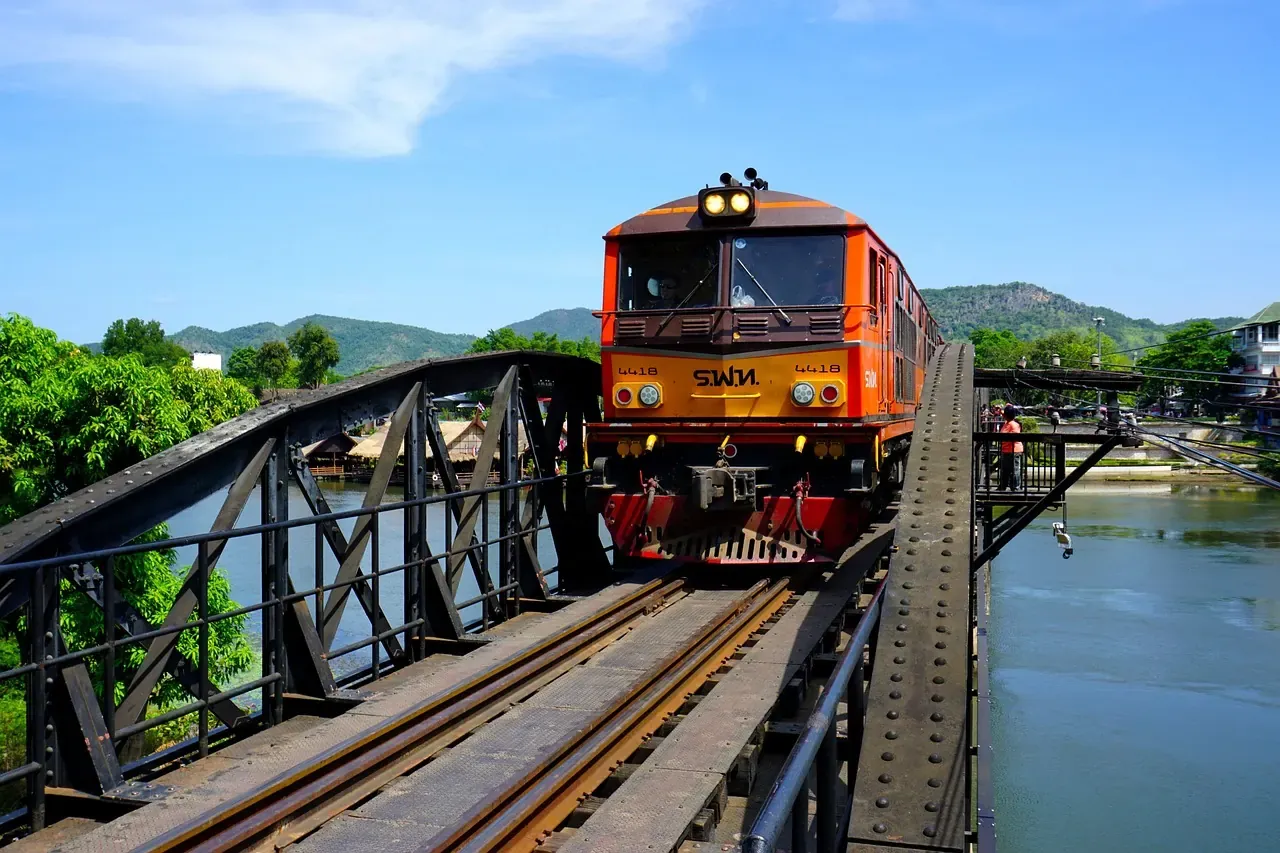
Bridge over the River Kwai
The crossing on the wartime Burma Railway, a 415 kilometre line towards Myanmar built between 1940 and 1943 with forced labour.
Location: Kanchanaburi, on the Khwae Yai river
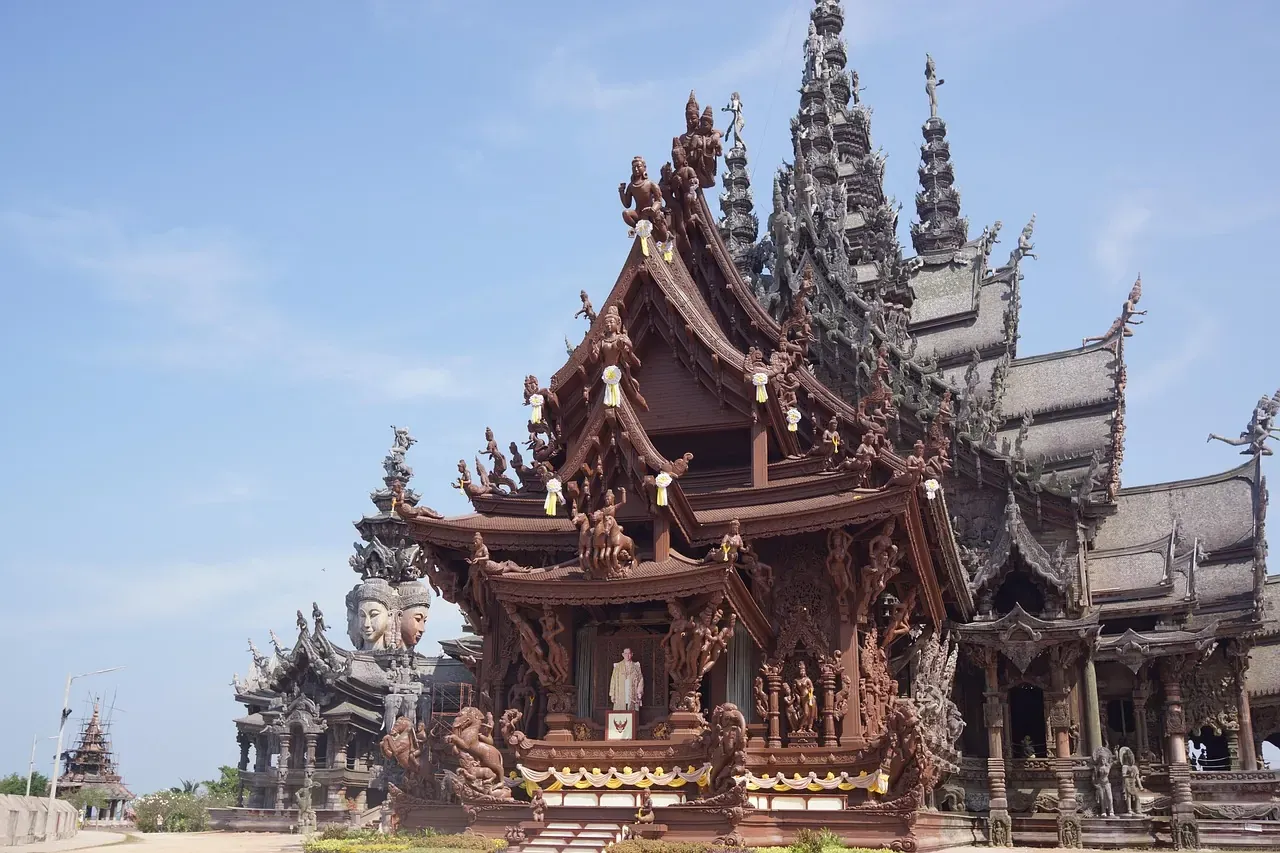
Sanctuary of Truth
An all-timber temple and palace begun in 1981 and still unfinished, its tallest spire 105 metres up, visited in hard hats.
Location: Naklua, Pattaya, Chonburi province
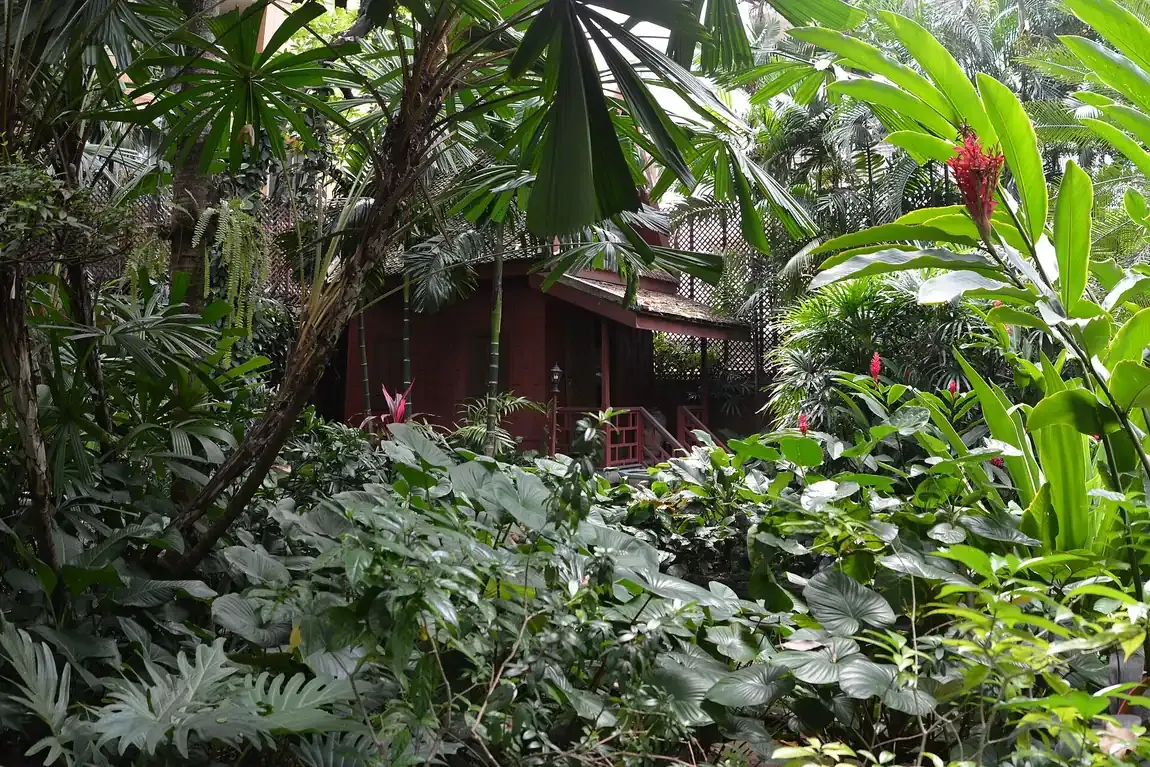
Jim Thompson House
A teak house assembled in 1959 by the American who revived the Thai silk trade, kept as a museum of his Asian art collection.
Location: Soi Kasemsan 2, Pathum Wan, Bangkok
Photo: "Building at Jim Thompson House" by Don Ramey Logan (CC BY-SA 3.0).

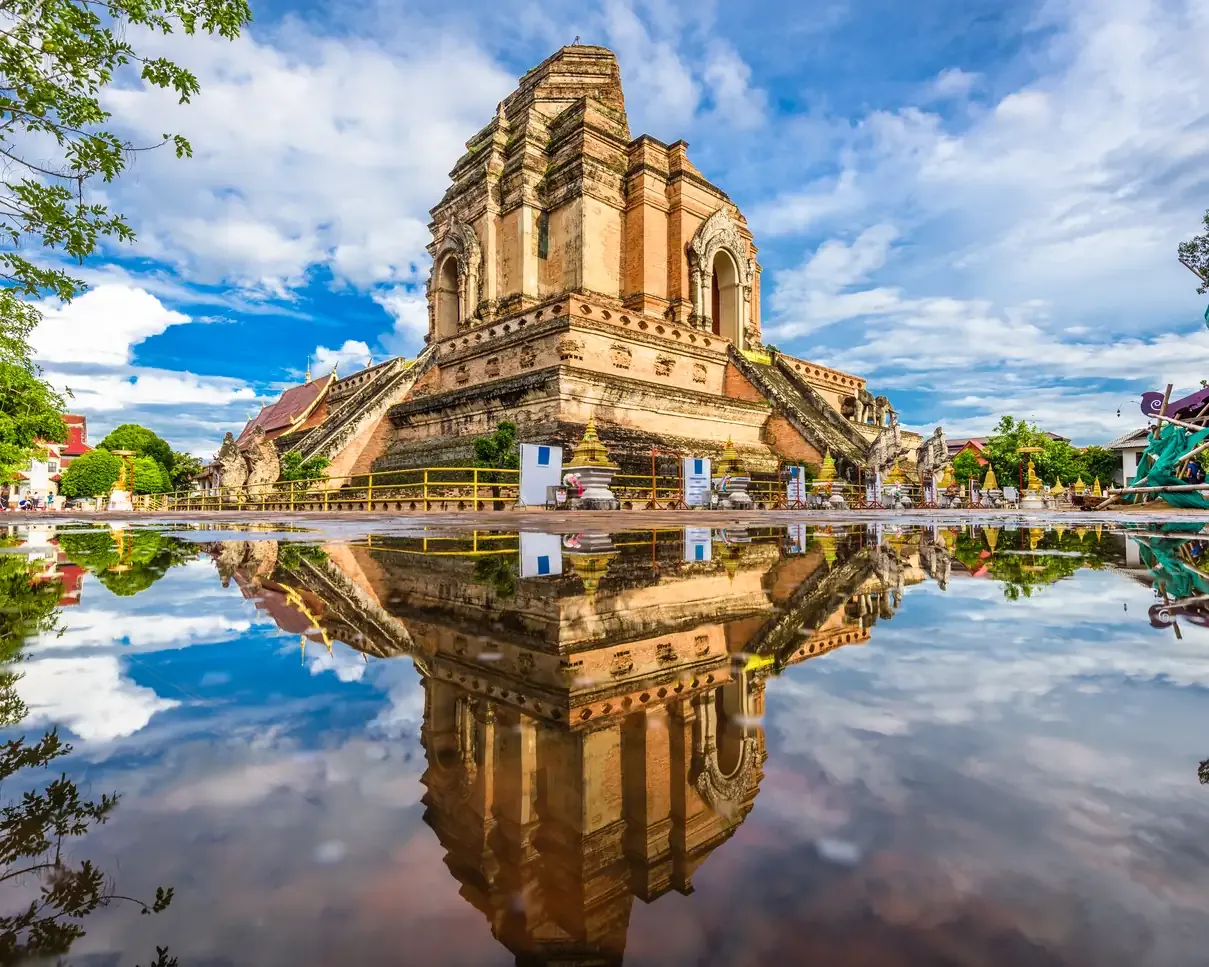
Wat Chedi Luang
The great chedi reached 82 metres under Tilokaraj and held the Emerald Buddha from 1468, until an earthquake took its top off in 1545.
Location: Phra Sing, inside the old walls of Chiang Mai
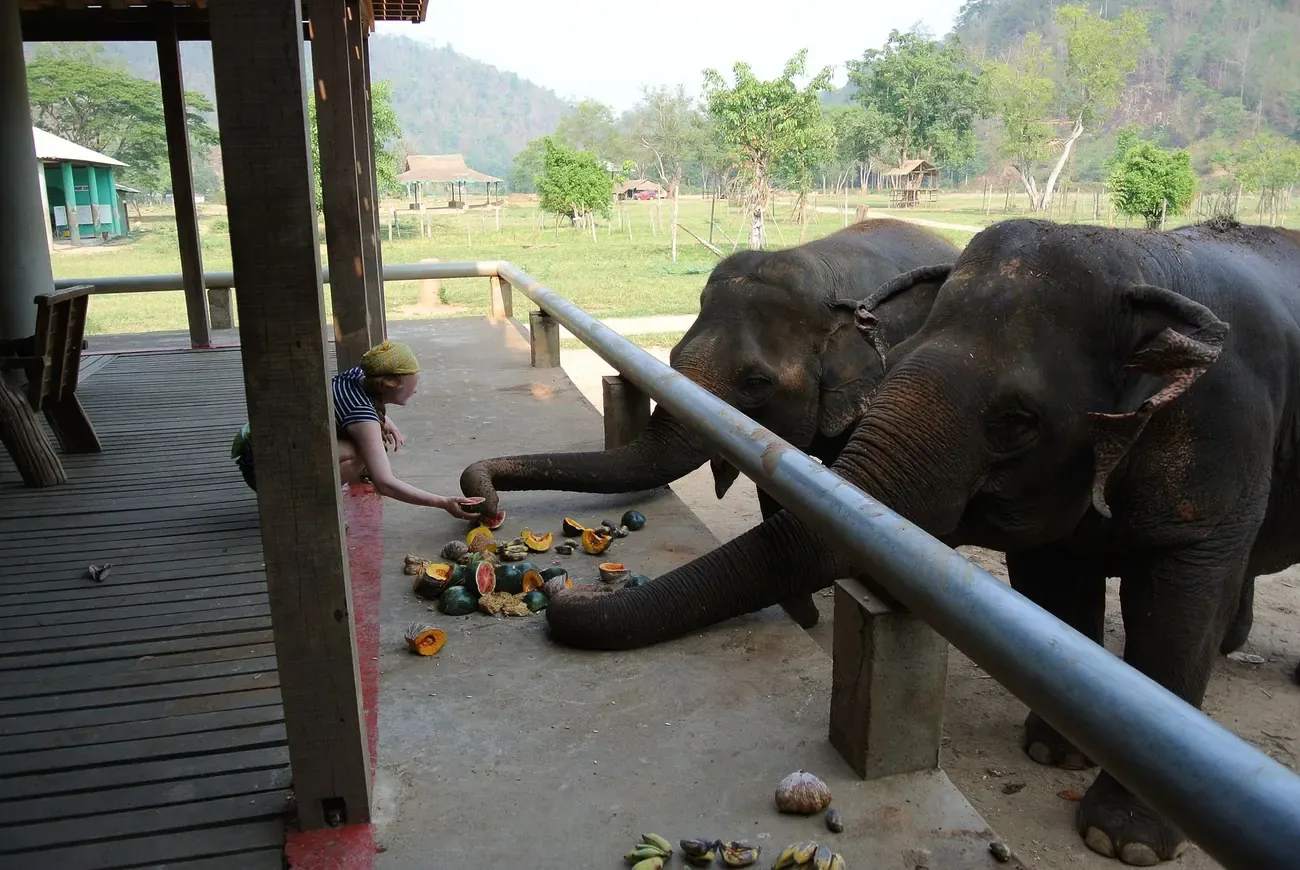
Elephant Nature Park
A rescue and rehabilitation centre founded by Sangduean Chailert for elephants taken from street begging, riding and circus work.
Location: Mae Taeng district, north of Chiang Mai
Photo: "Feeding elephants Elephant Nature Park" by Adbar (CC BY-SA 3.0).

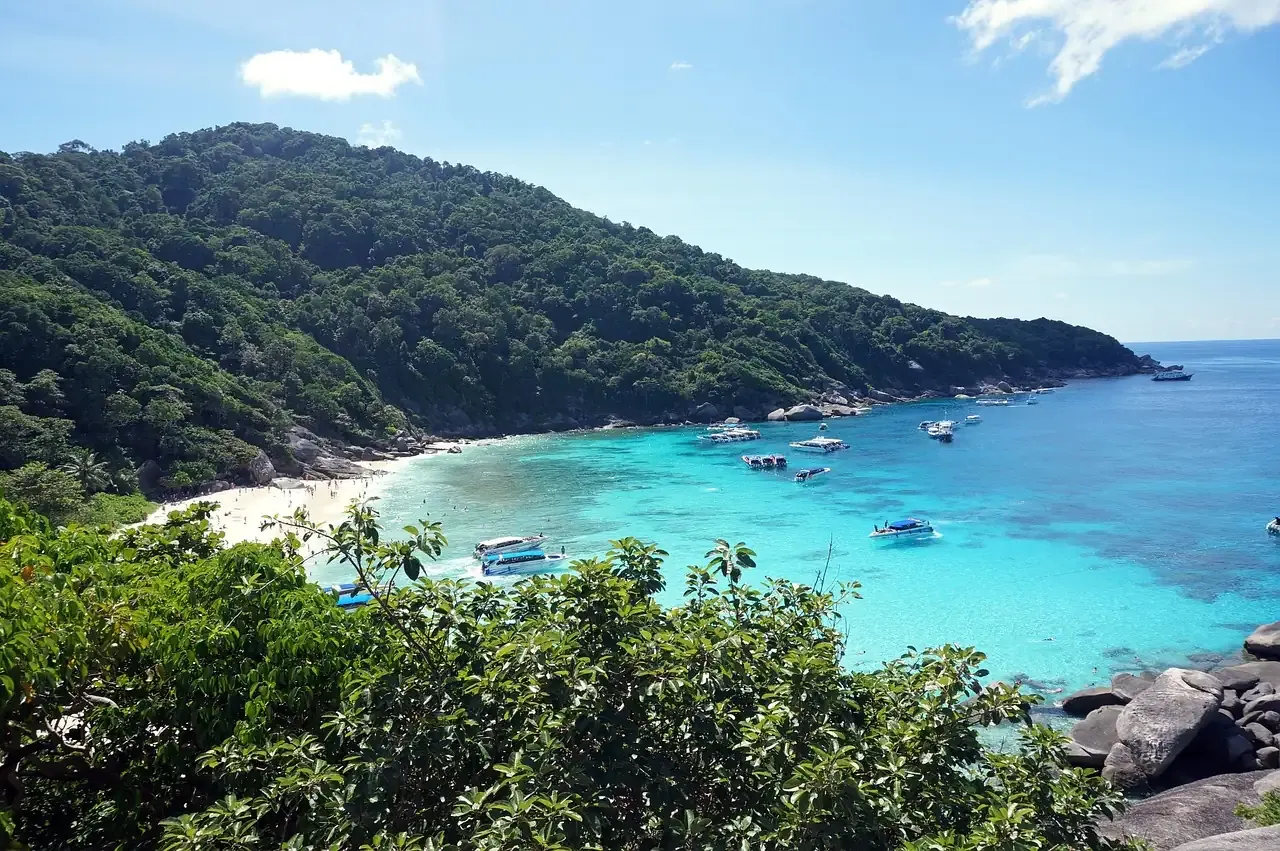
Similan Islands
Granite boulders and clear water on an archipelago protected since 1982 and closed every year from mid-May to mid-October for the monsoon.
Location: Phang Nga province, in the Andaman Sea
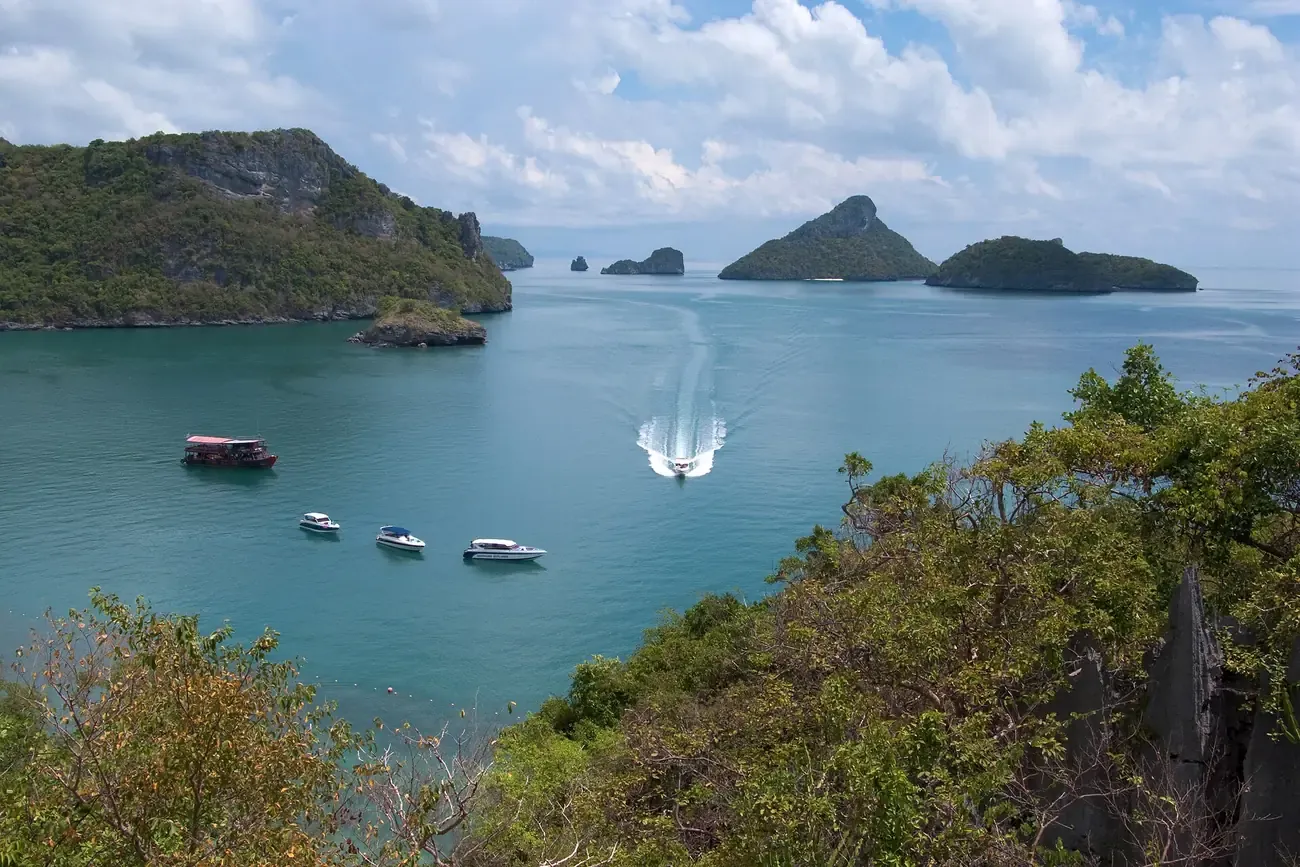
Ang Thong National Marine Park
Forty-two islands over about 102 square kilometres, protected since 1980 and a Ramsar wetland since 2002, reached by boat from Ko Samui.
Location: Surat Thani province, in the Gulf of Thailand
Photo: "Mu Ko Ang Thong, Bay, Thailand" by Vyacheslav Argenberg (CC BY 4.0).

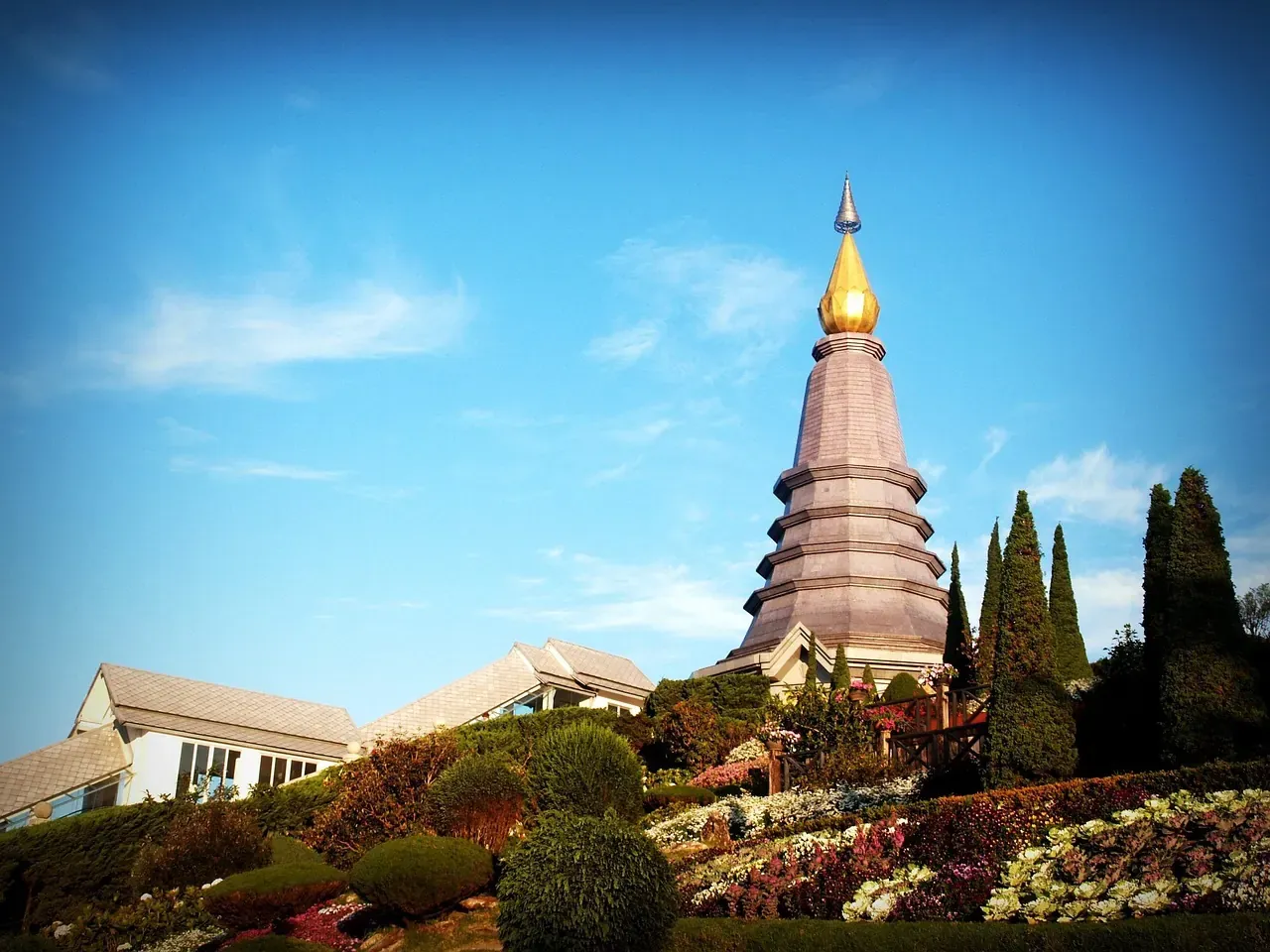
Doi Inthanon
The highest mountain in Thailand at 2,565 metres, with twin royal pagodas below the summit and around 500 bird species in the park.
Location: Chom Thong district, Chiang Mai province
Traditional food in Thailand
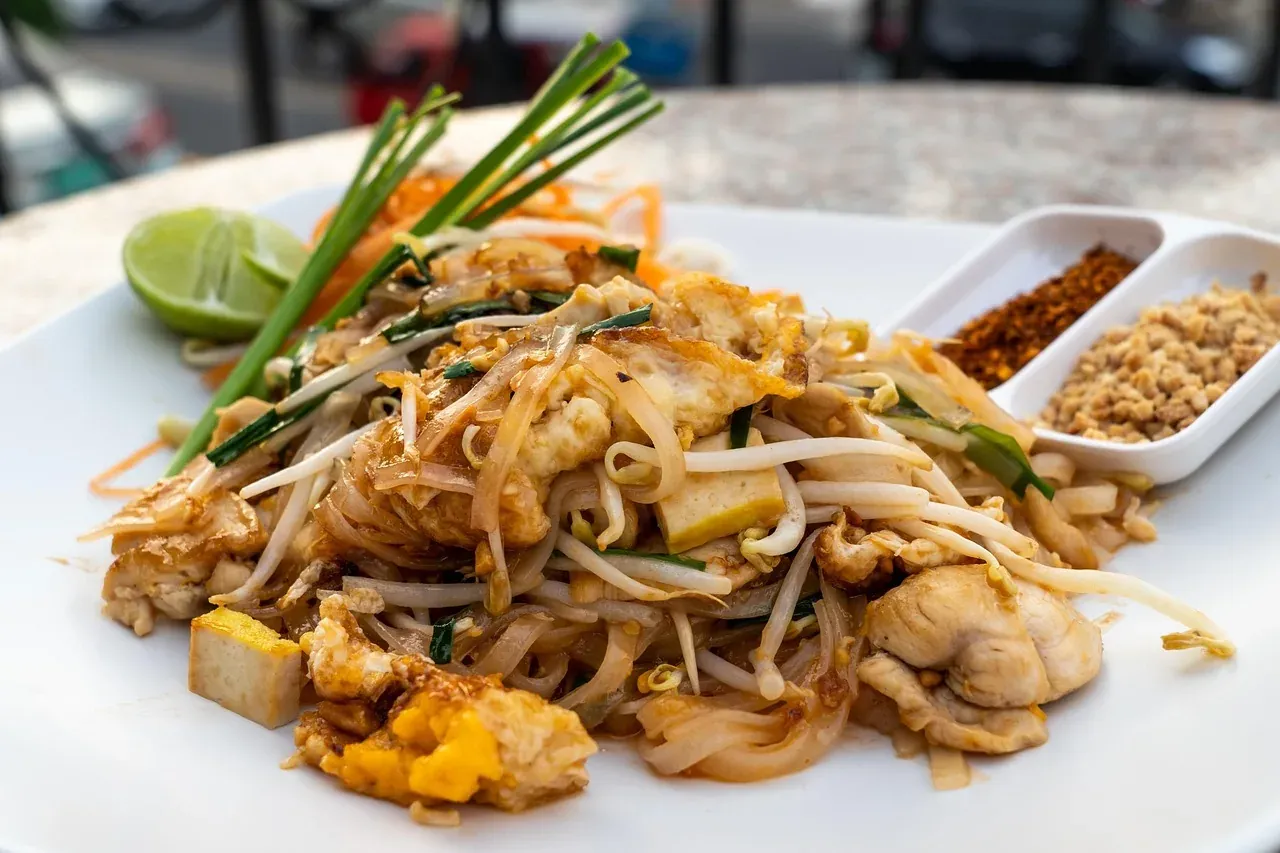
Pad thai
Rice noodles stir-fried in a wok with egg, bean sprouts, spring onion, peanuts and a squeeze of lime, usually with prawns. The street dish every visitor eats first, cooked to order at stalls all over the country.
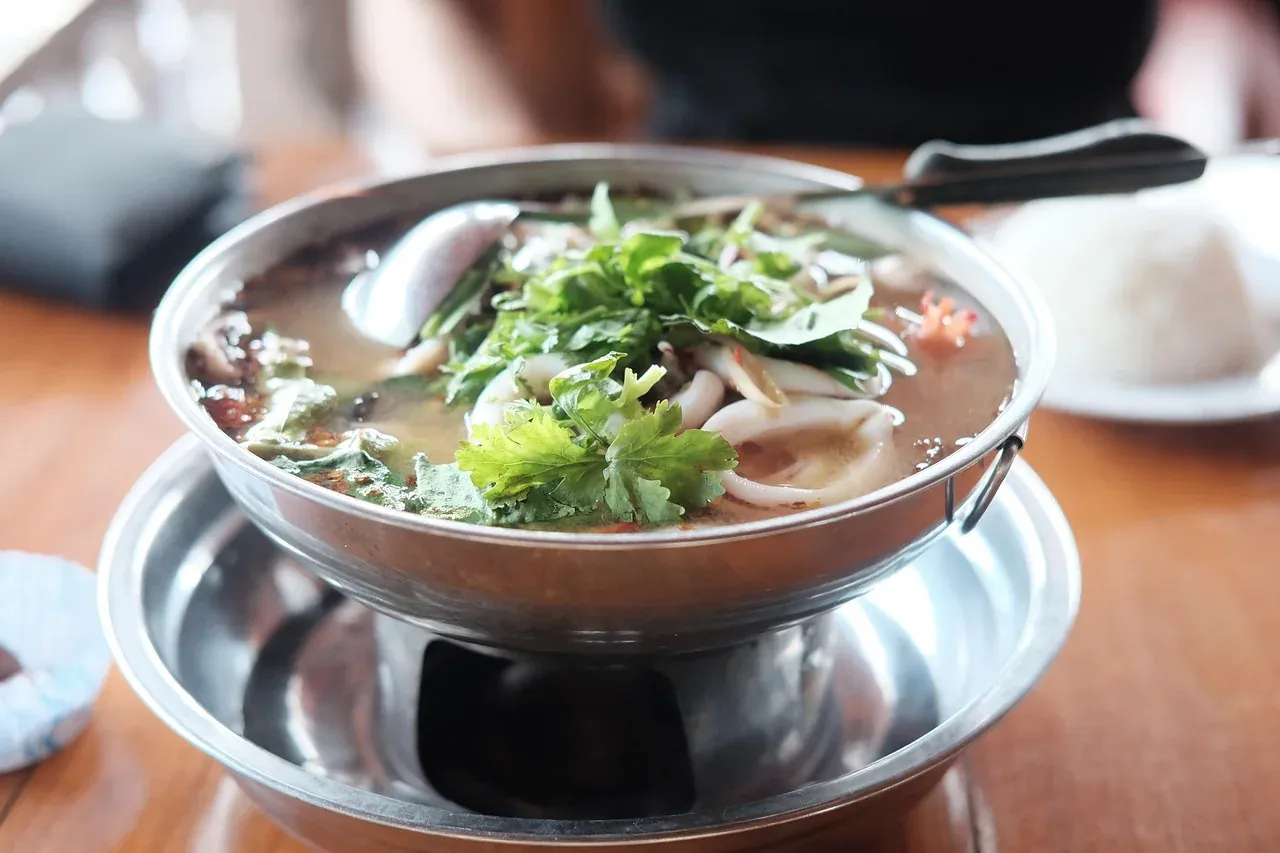
Tom yam kung
The hot and sour prawn soup that gives the whole tom yam family its name, built on lemongrass, galangal, kaffir lime leaf, chilli and fish sauce. It comes clear or in a creamy version.
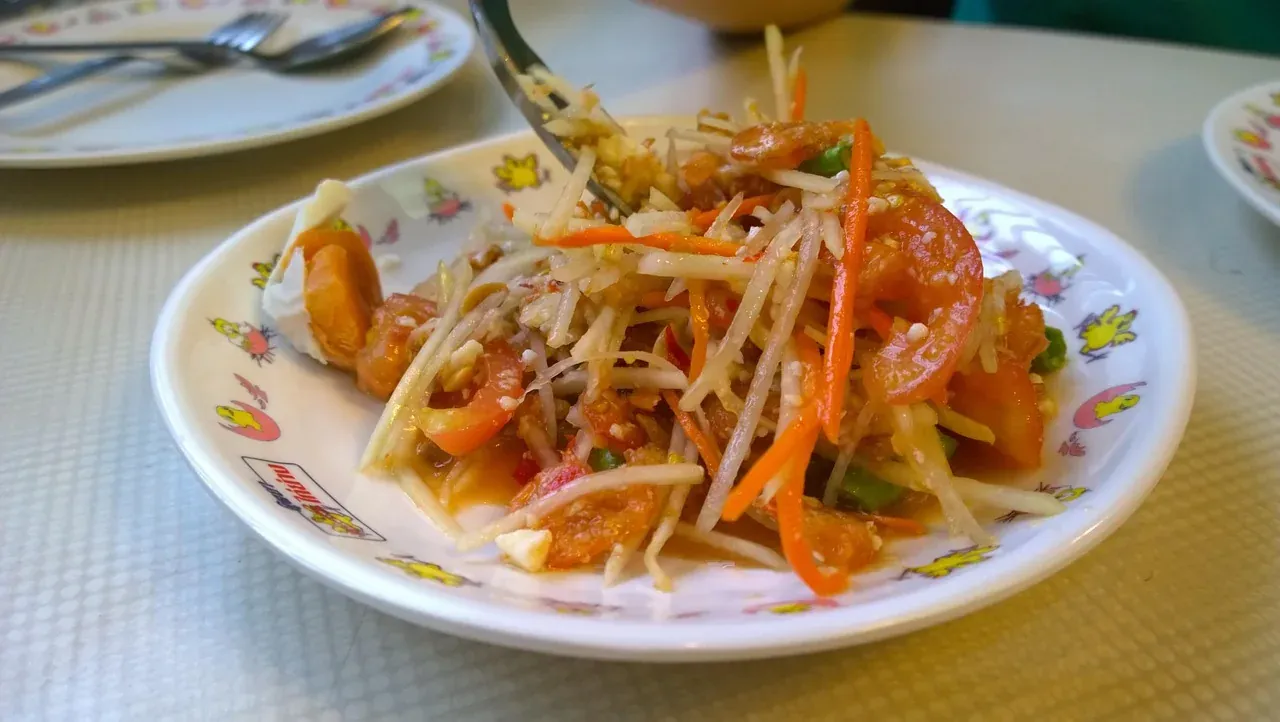
Som tam
Shredded unripe papaya pounded in a mortar with lime, chilli, garlic, fish sauce and palm sugar. It belongs to the Lao and Isan kitchen of the northeast and spread from there across the country, eaten with sticky rice.
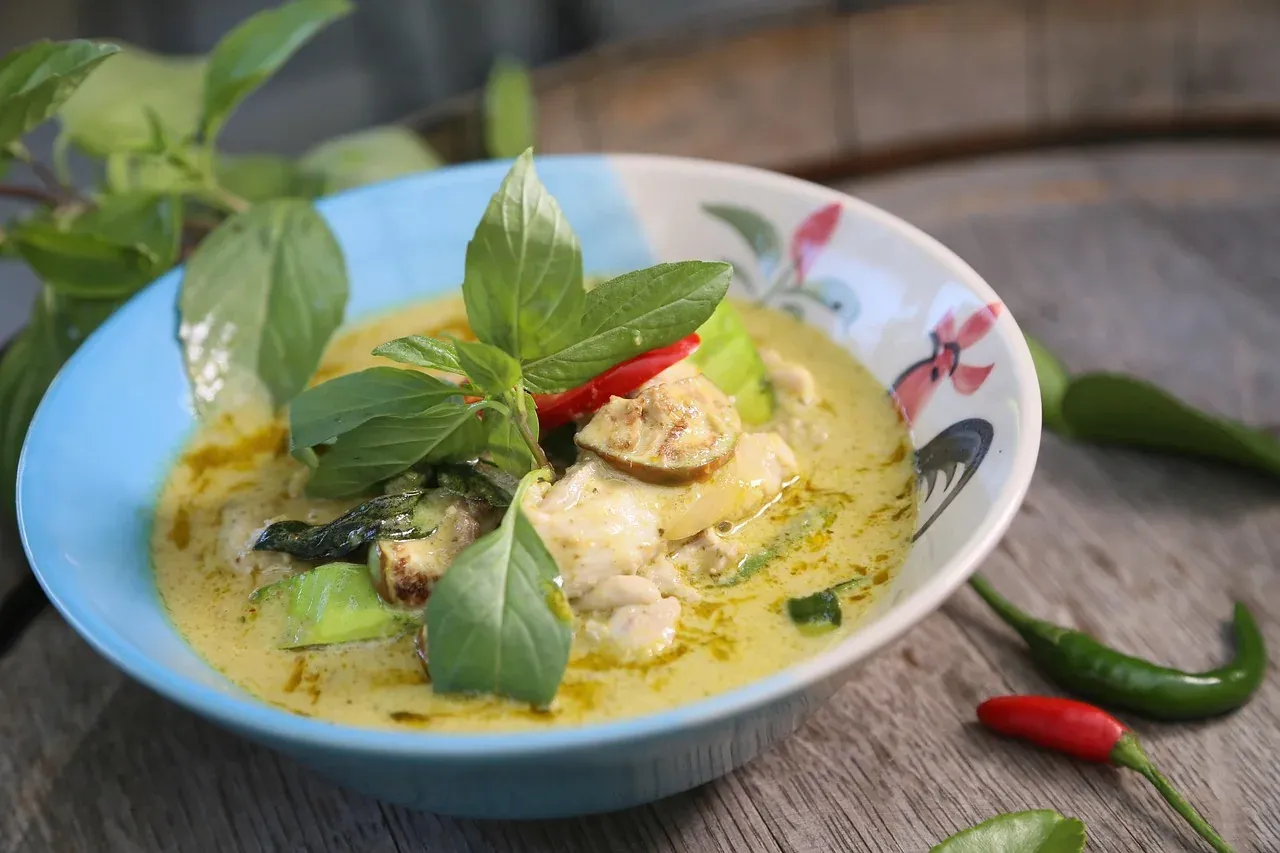
Kaeng khiao wan
Green curry, from central Thailand, where green chillies pounded into the paste give it both its colour and its name. Coconut milk, Thai basil and pea aubergines round it out, and it is served with rice or roti.
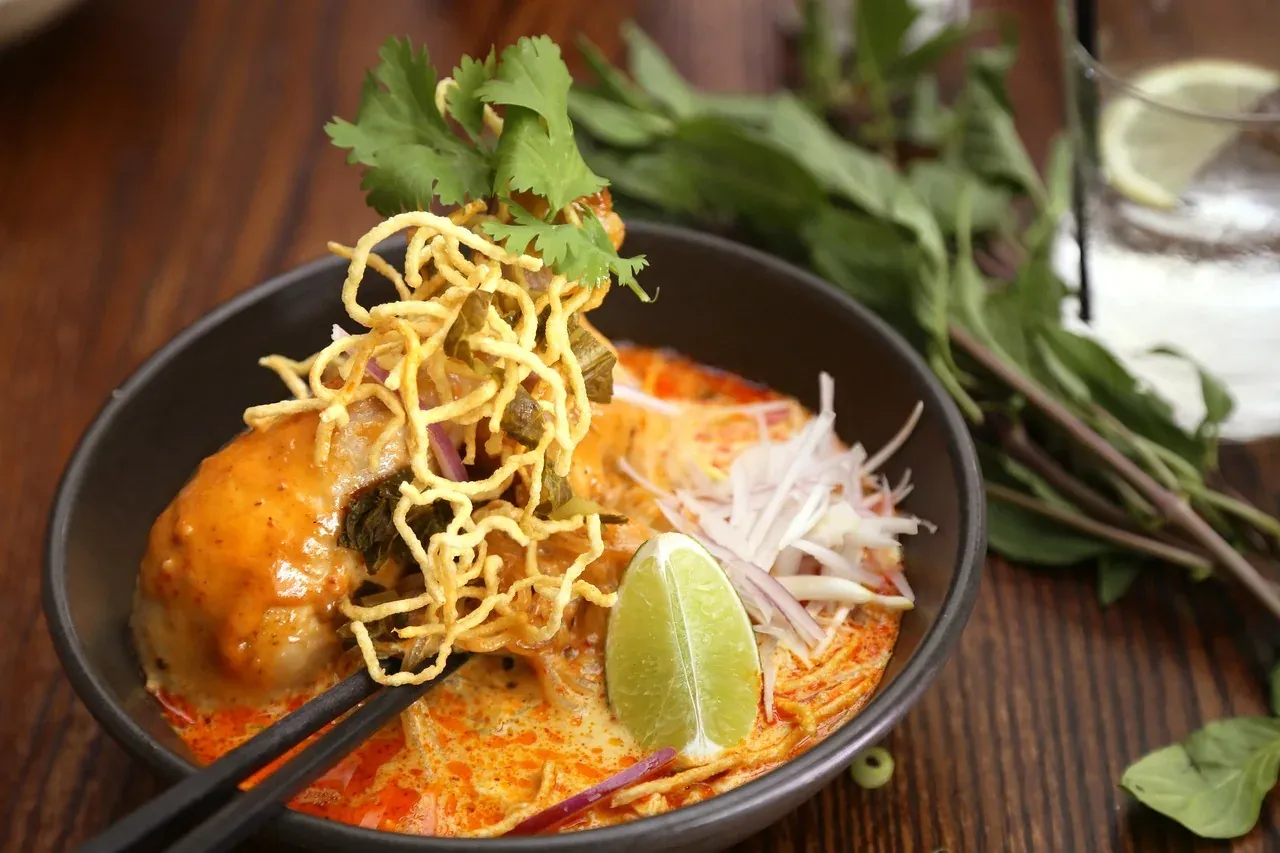
Khao soi
A northern curry noodle soup thought to have come with Chin Haw Muslim traders on the caravan routes. Soft wheat noodles sit in coconut curry broth under a nest of crisp fried ones, with pickled mustard greens alongside.
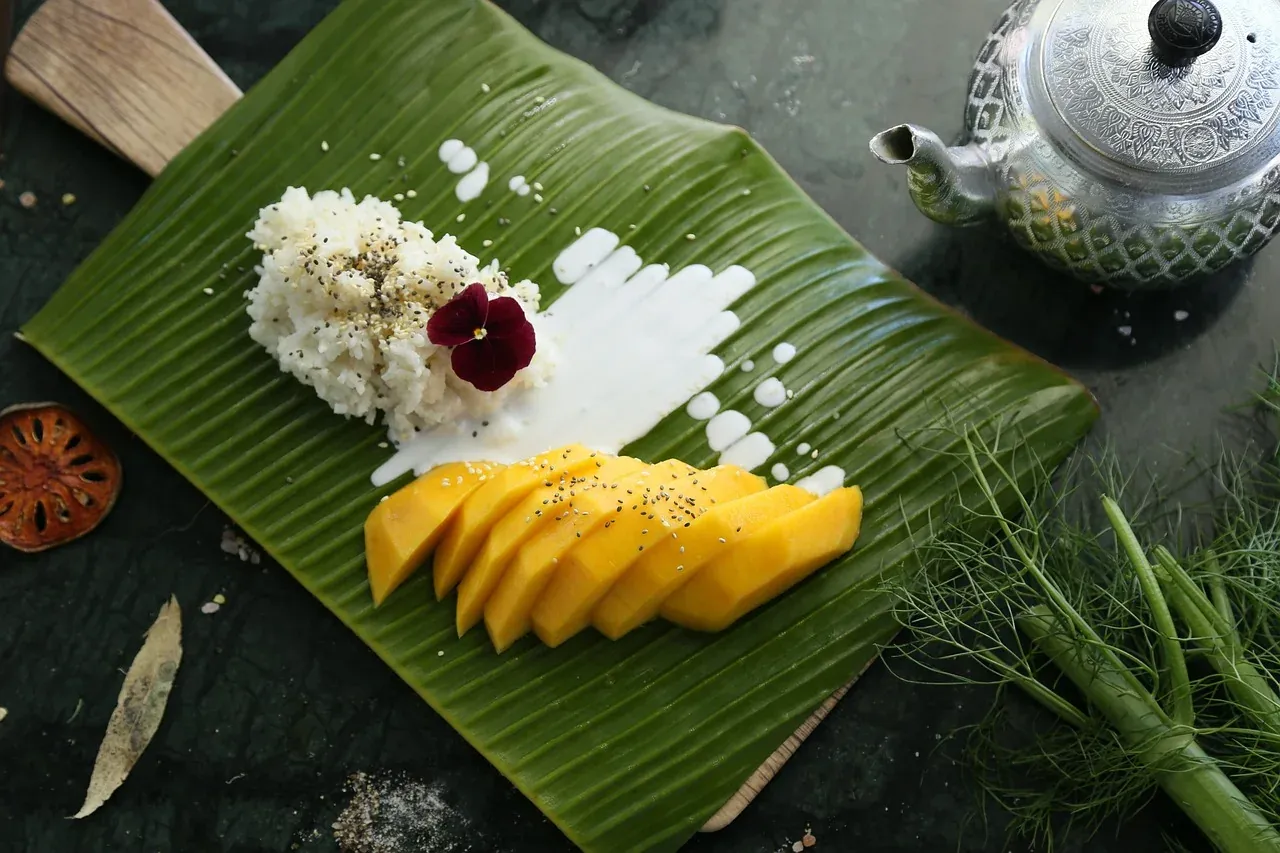
Khao niao mamuang
Mango with sticky rice, the dessert of the hot season, when glutinous rice steamed and soaked in sweetened coconut milk is served beside slices of ripe mango.
Unusual temples in Thailand
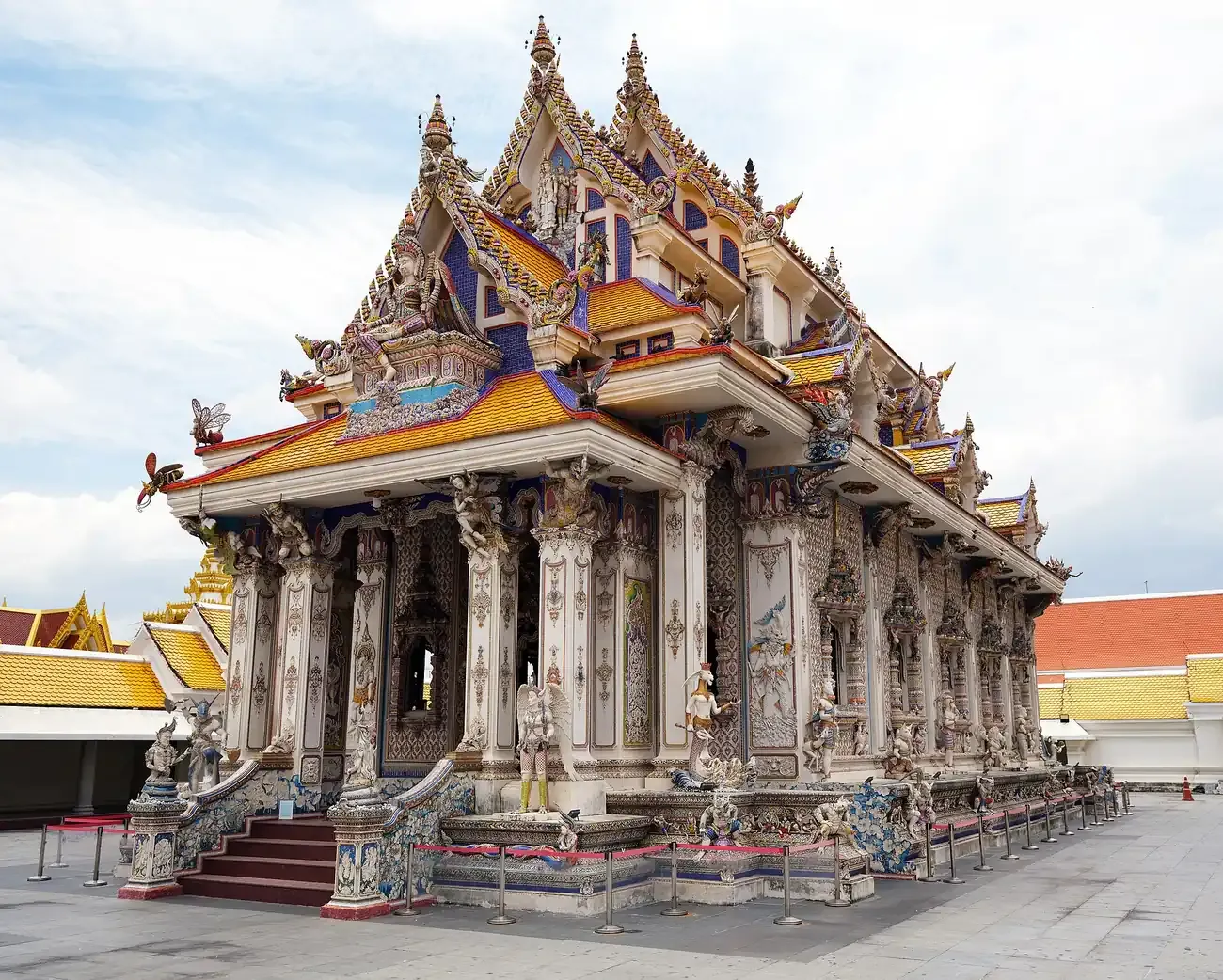
Wat Pariwat
A riverside temple in Yan Nawa whose ubosot is crusted with modern figures, from Hindu gods to footballers and cartoon characters.
Location: Rama III Road, Yan Nawa, Bangkok
Photo: "Wat Pariwat Bangkok Thailand" by Don Ramey Logan (CC BY 4.0).

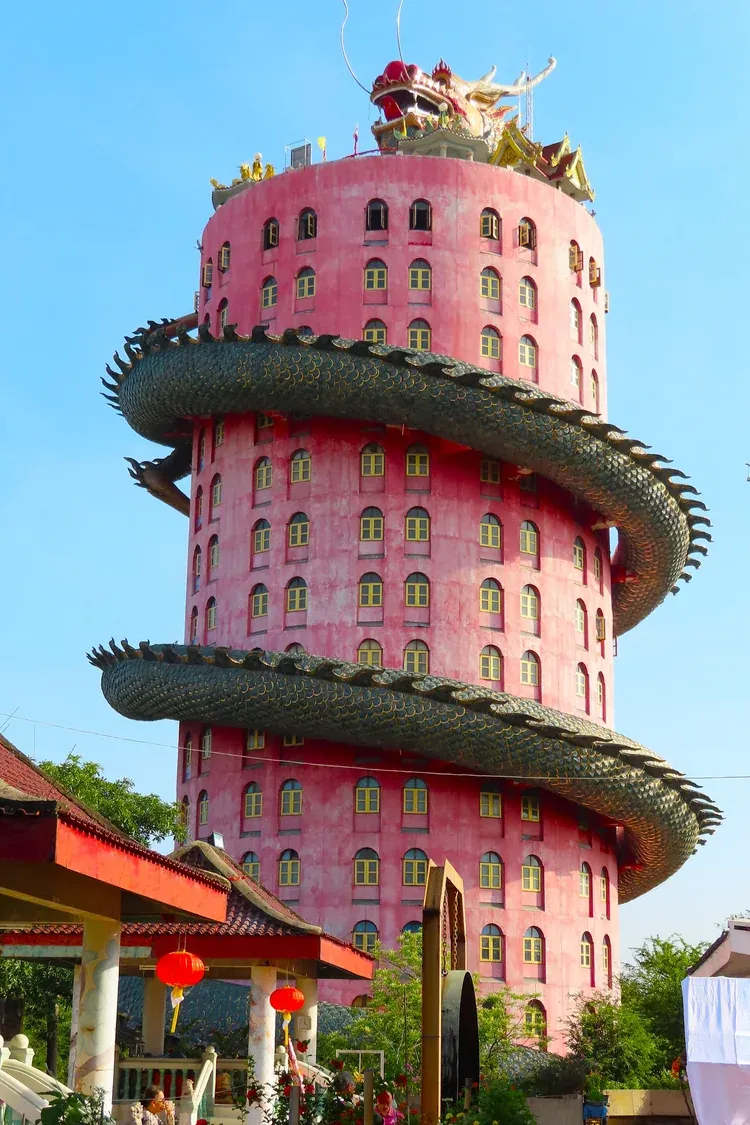
Wat Sam Phran
A seventeen-storey pink cylinder with a red and green dragon coiled the whole way up it, hollow inside and registered as a temple in 1985.
Location: Sam Phran district, Nakhon Pathom province, west of Bangkok
Photo: "Wat Samphran" by DiverDave (CC BY-SA 4.0).

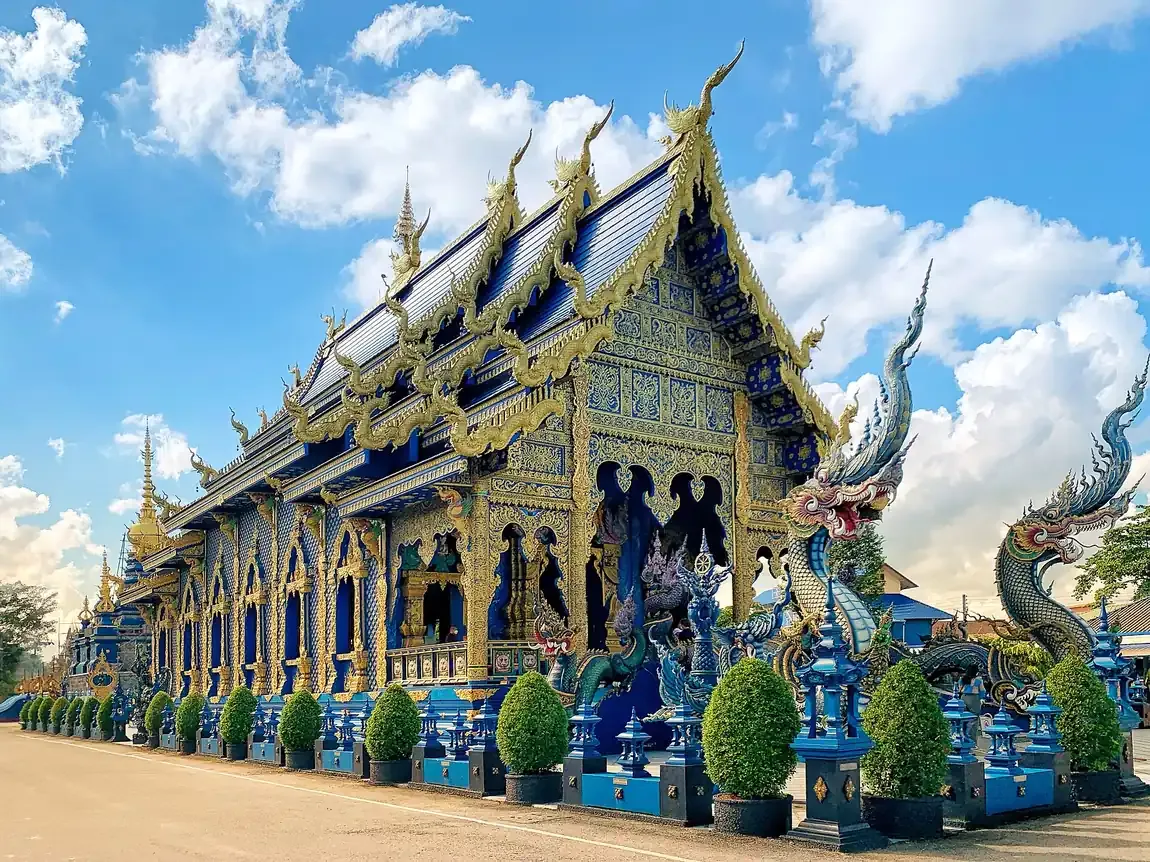
Wat Rong Suea Ten
The Blue Temple, a modern Lanna design finished in sapphire and gold by a student of the artist behind the White Temple down the road.
Location: Rim Kok, Chiang Rai, northern Thailand
Photo: "Wat Rong Suea Ten, Blue Temple, Chiang Rai" by Chainwit. (CC BY-SA 4.0).

Ancient sites away from the crowds in Thailand
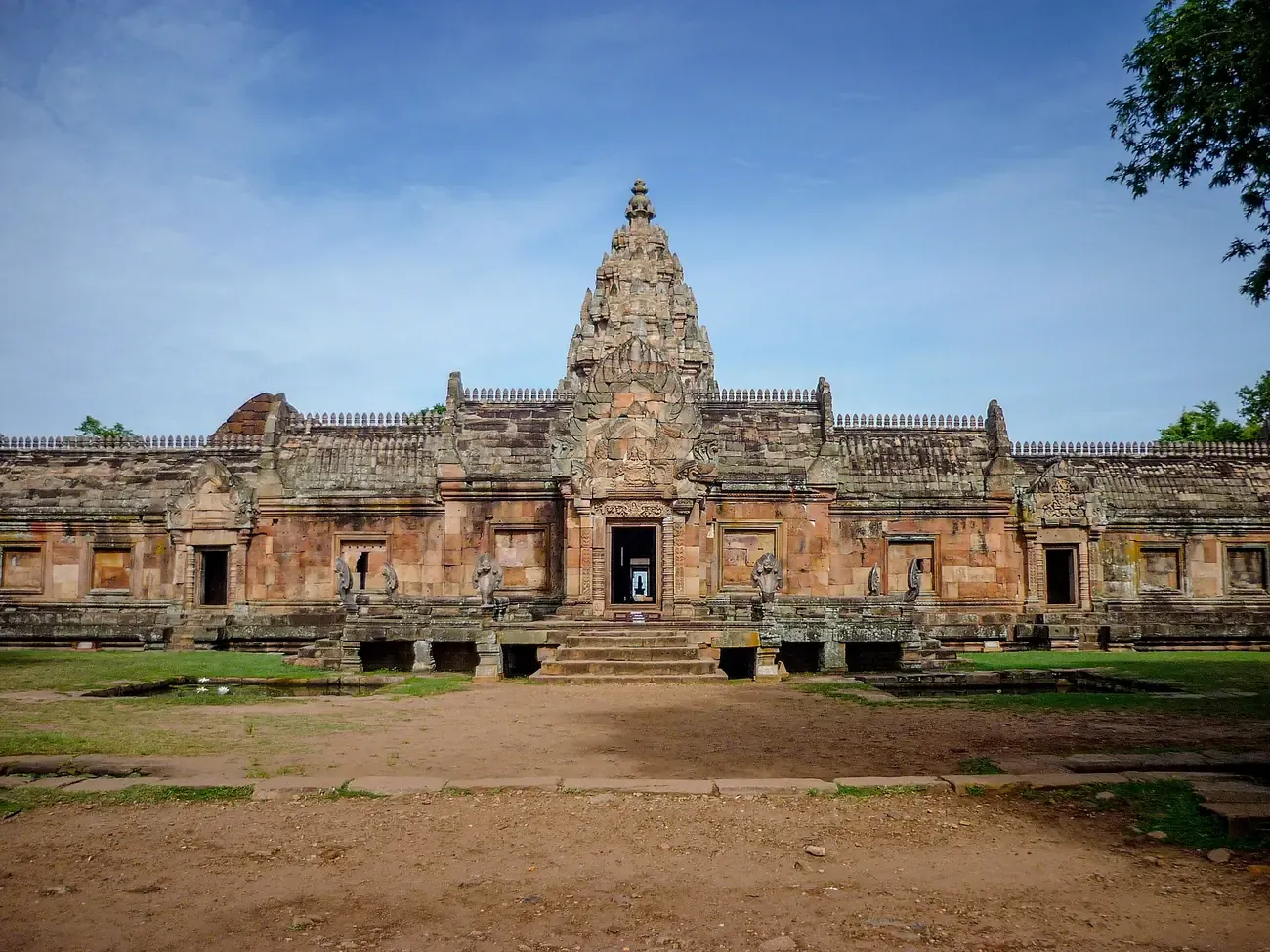
Phanom Rung
A Khmer sanctuary of sandstone and laterite built between the tenth and thirteenth centuries on the rim of an extinct volcano, 402 metres up.
Location: Chaloem Phra Kiat district, Buri Ram province, in Isan
Photo: "Phanom Rung Buriram Thailand" by Philip Nalangan (CC BY-SA 4.0).

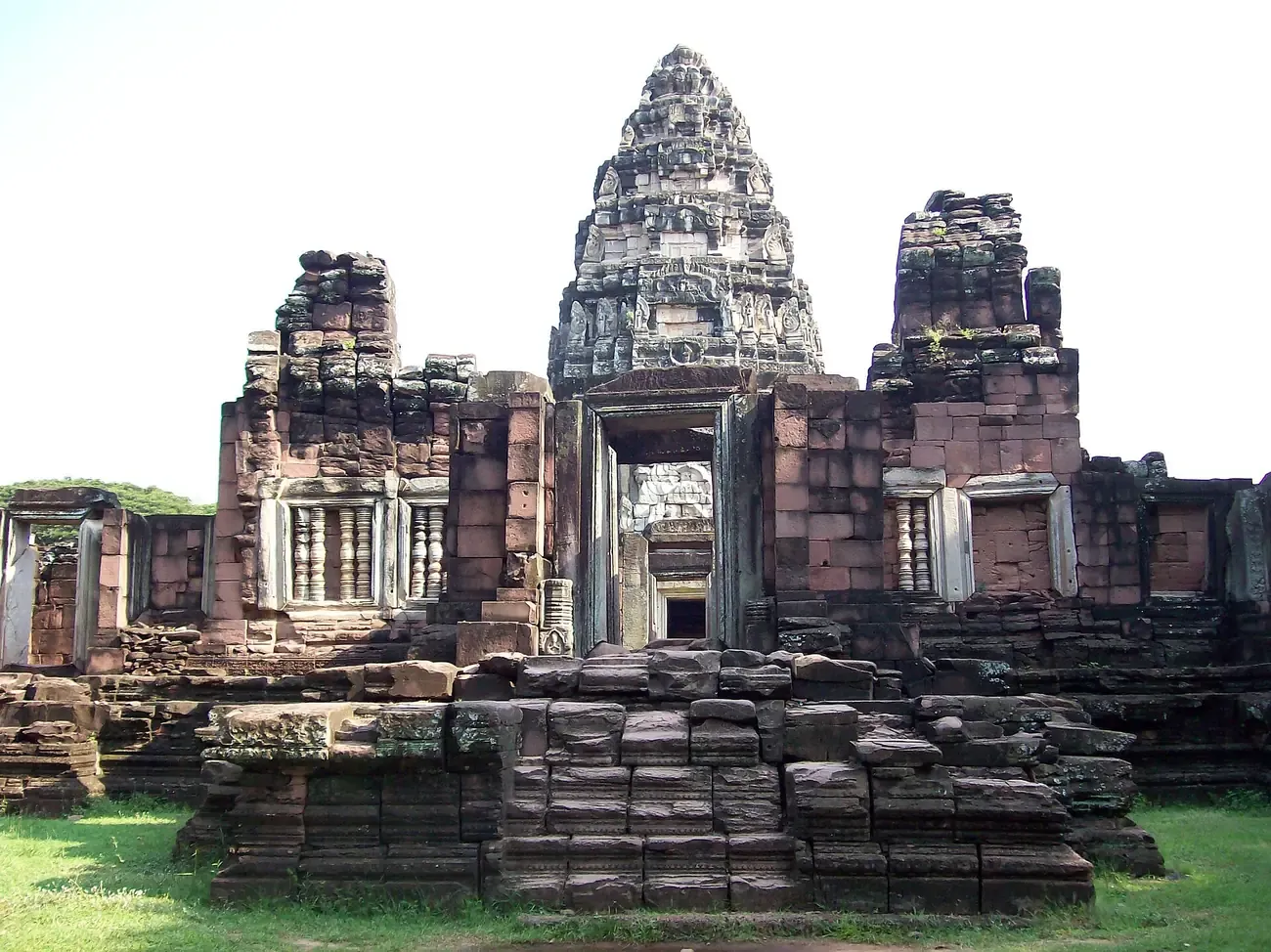
Phimai Historical Park
Prasat Phimai is the largest Khmer temple in Thailand, laid out as a Mahayana Buddhist sanctuary in a town that mattered under the empire.
Location: Phimai, Nakhon Ratchasima province, in Isan
Photo: "Phimai Historical Park Thailand" by Philip Nalangan (CC BY 4.0).

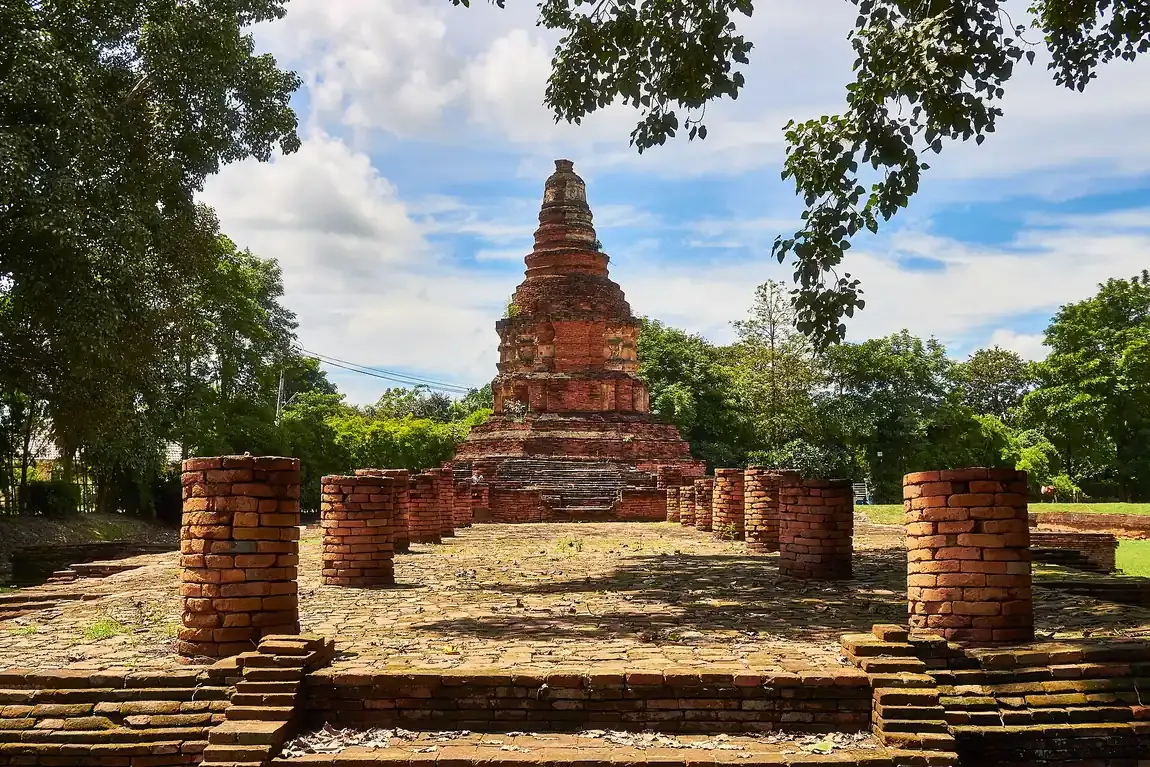
Wiang Kum Kam
King Mangrai built this capital on the Ping before he founded Chiang Mai. The river flooded it and it lay buried for seven centuries.
Location: Saraphi district, on the edge of Chiang Mai
Photo: "Wiang Kum Kam" by Mathew Schwartz (CC BY-SA 4.0).

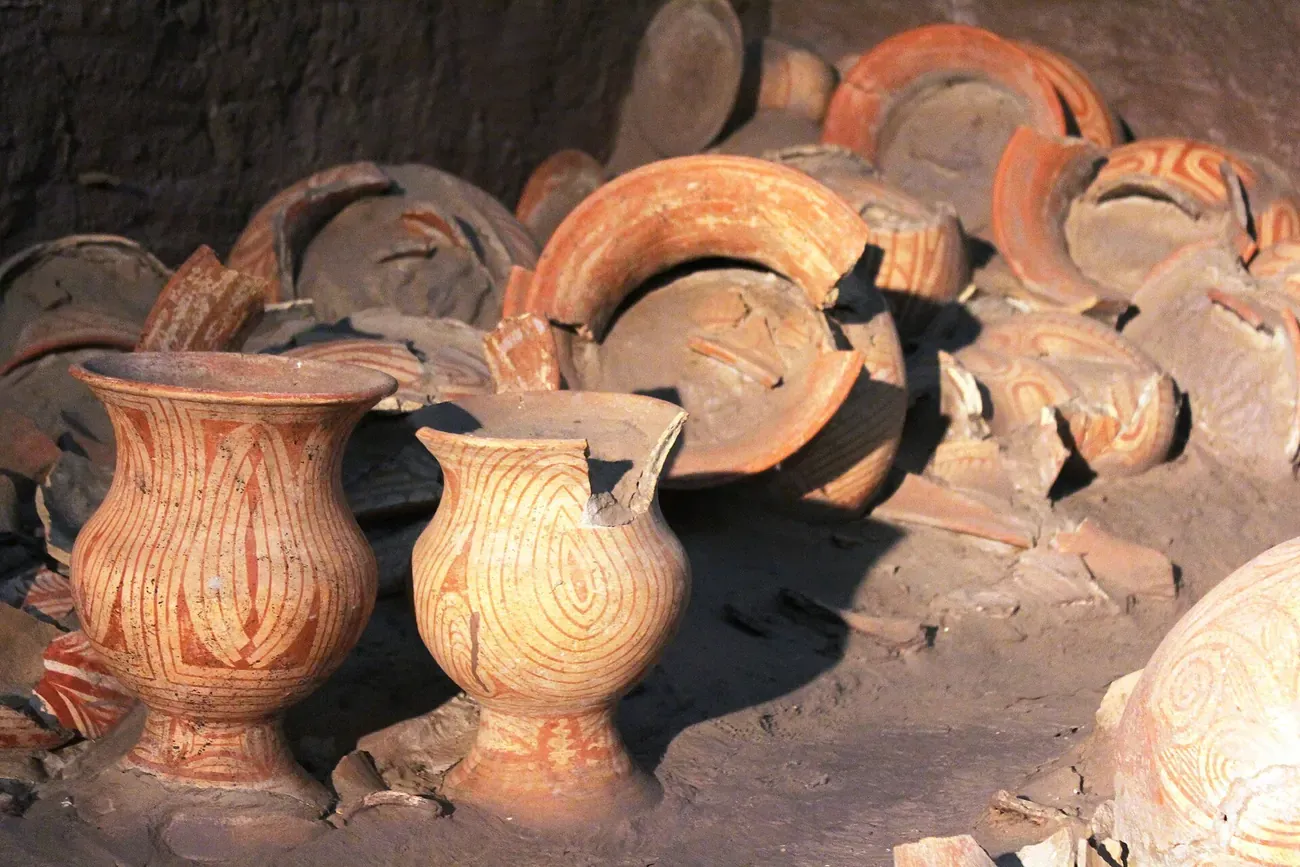
Ban Chiang
Red-painted pottery found here in 1966 opened up the prehistory of mainland Southeast Asia, and the site has been UNESCO listed since 1992.
Location: Nong Han district, Udon Thani province, in Isan
Photo: "Ban Chiang Museum Excavation" by Kiwiodysee (CC BY-SA 3.0).

National parks and wild country in Thailand
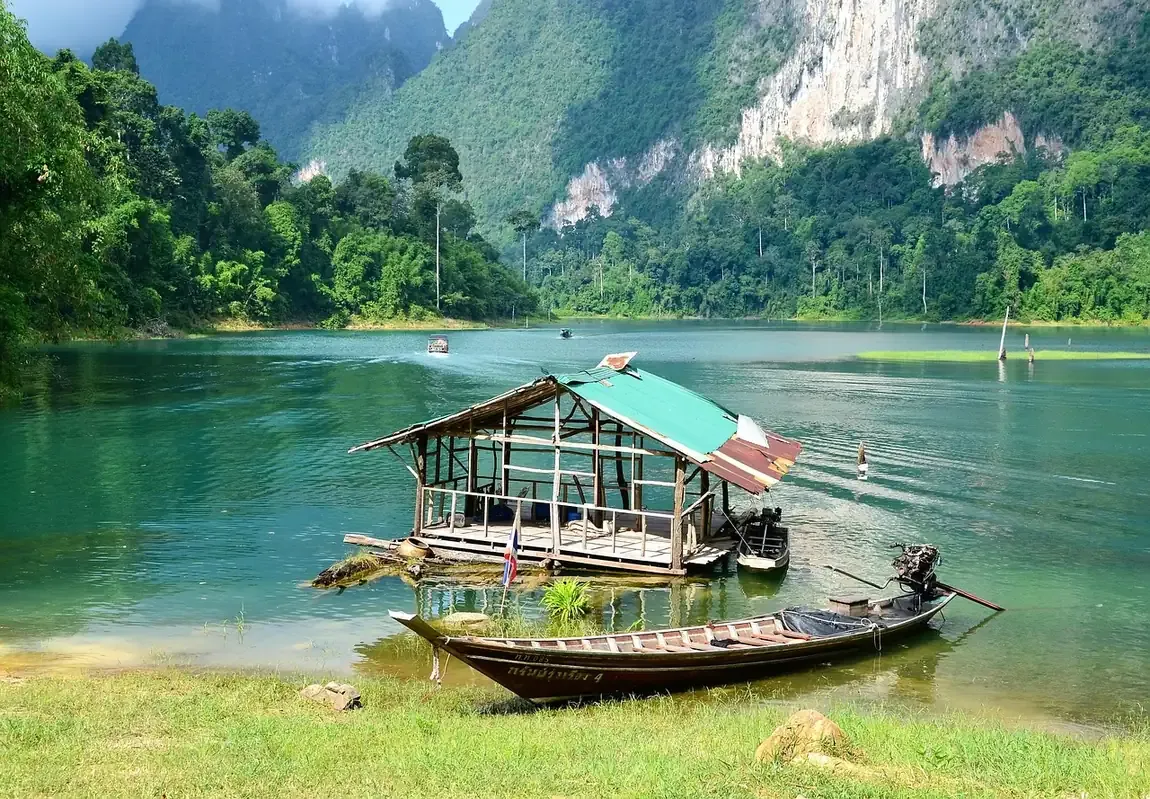
Khao Sok National Park
The largest stretch of old rainforest in southern Thailand, with limestone towers rising from Cheow Lan Lake and raft houses moored beneath them.
Location: Surat Thani province, on the isthmus of southern Thailand
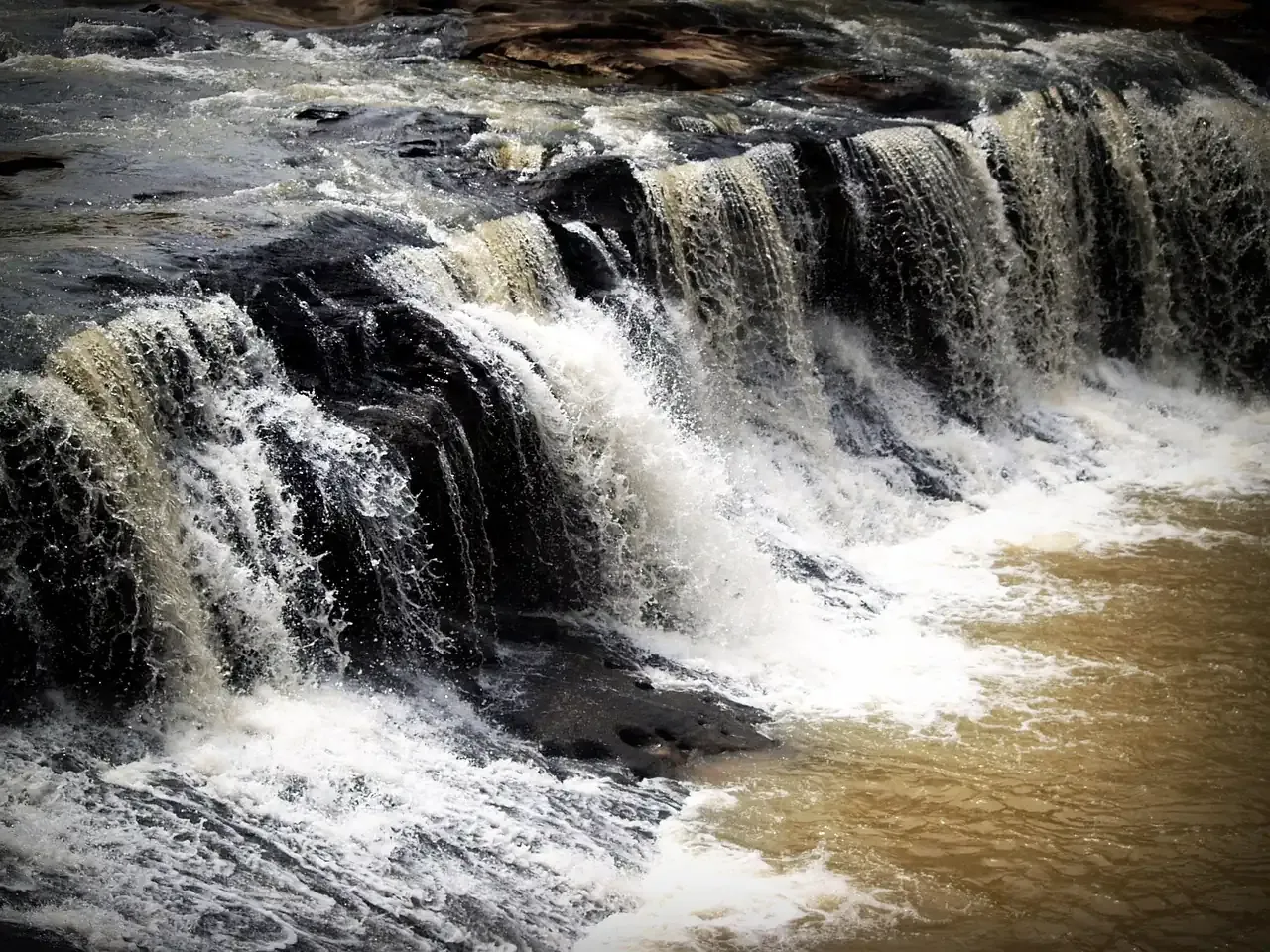
Khao Yai National Park
Declared in 1962 as the first national park in the country, and part of the UNESCO-listed Dong Phayayen forest complex, with waterfalls and wild elephants.
Location: Nakhon Ratchasima province, northeast of Bangkok
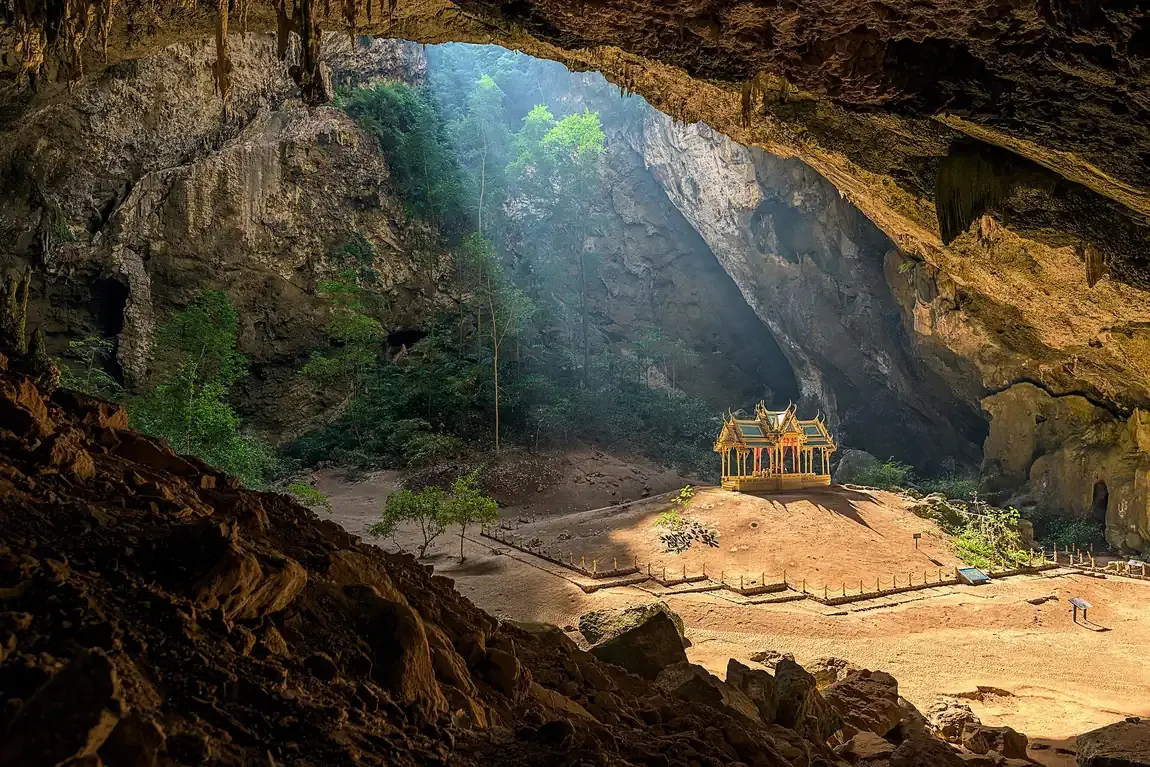
Khao Sam Roi Yot National Park
The first coastal national park, from 1966, where daylight falls on a royal pavilion built inside Phraya Nakhon Cave for a visit in 1890.
Location: Kui Buri district, Prachuap Khiri Khan province
Photo: "Phra Thi Nang Khuha Kharuehat, Phraya Nakhon Cave" by BerryJ (CC BY-SA 4.0).

More places to discover in Thailand
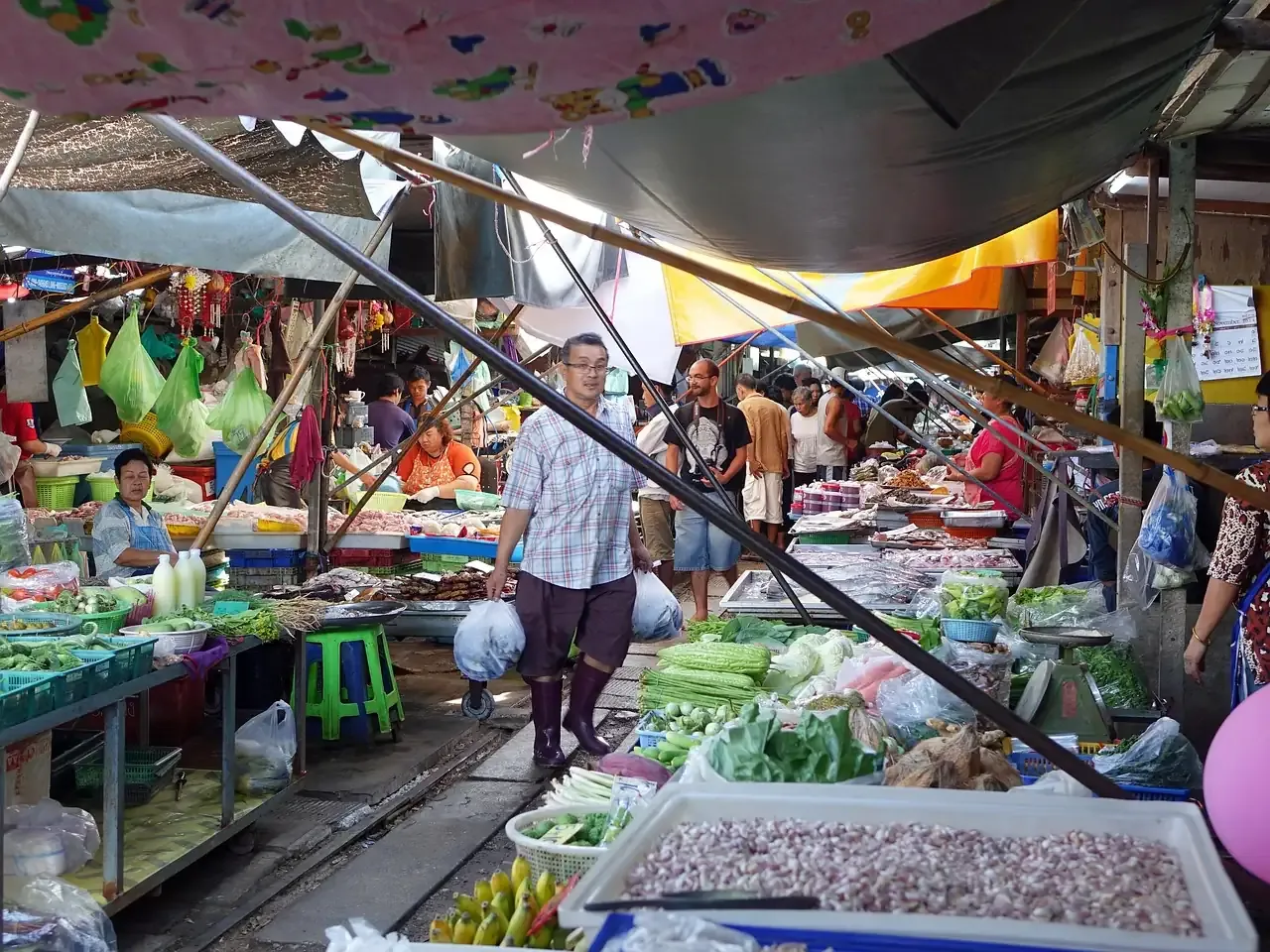
Maeklong Railway Market
Fresh seafood is laid out on the track itself, and the awnings are pulled back every time a train works its way through the stalls.
Location: Samut Songkhram, southwest of Bangkok
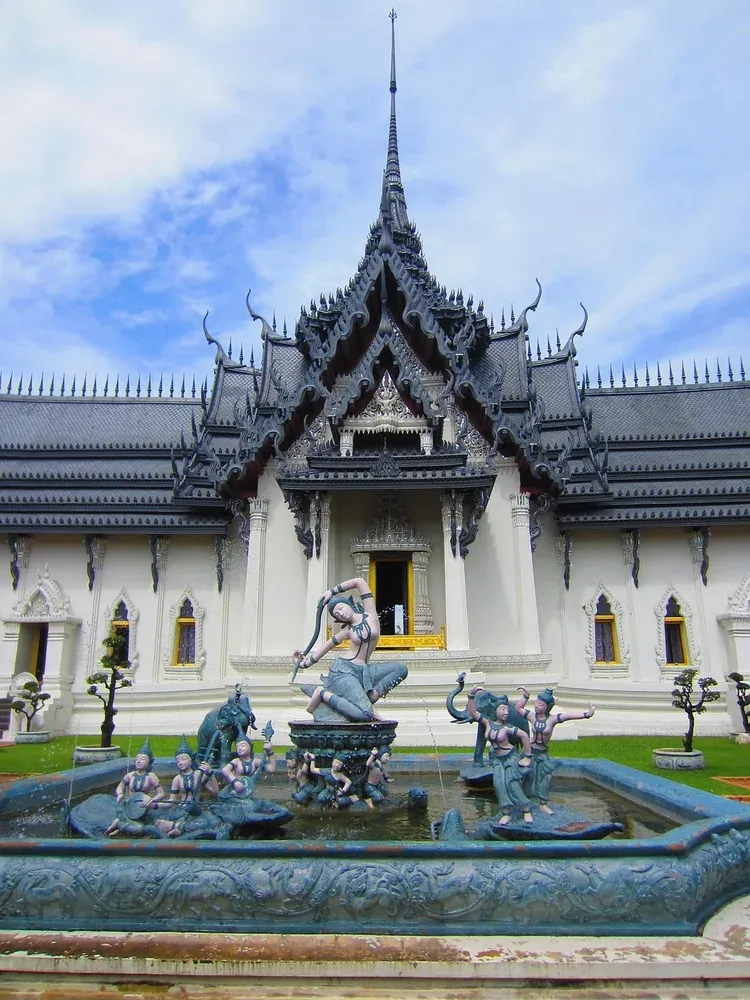
Ancient Siam
A museum park laid out in the shape of the country, with 116 replicas and reconstructions of Thai monuments placed roughly where the originals stand.
Location: Bang Pu, Samut Prakan province, southeast of Bangkok
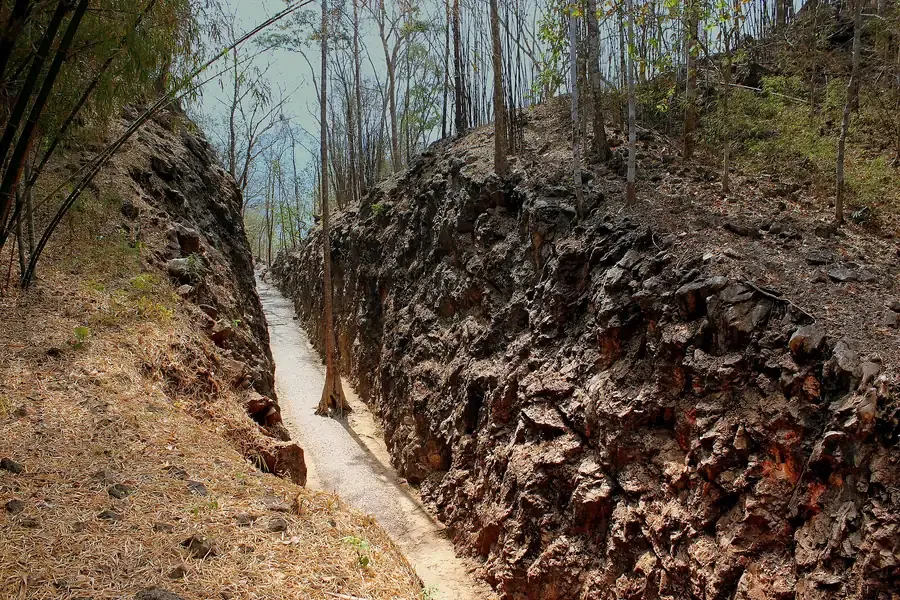
Hellfire Pass
A cutting on the wartime Burma Railway, dug by hand by prisoners of war and conscripted labourers, with a memorial museum above the trail.
Location: Sai Yok district, Kanchanaburi province
Photo: "Hellfire Pass on the Death Railway" by calflier001 (CC BY-SA 2.0).

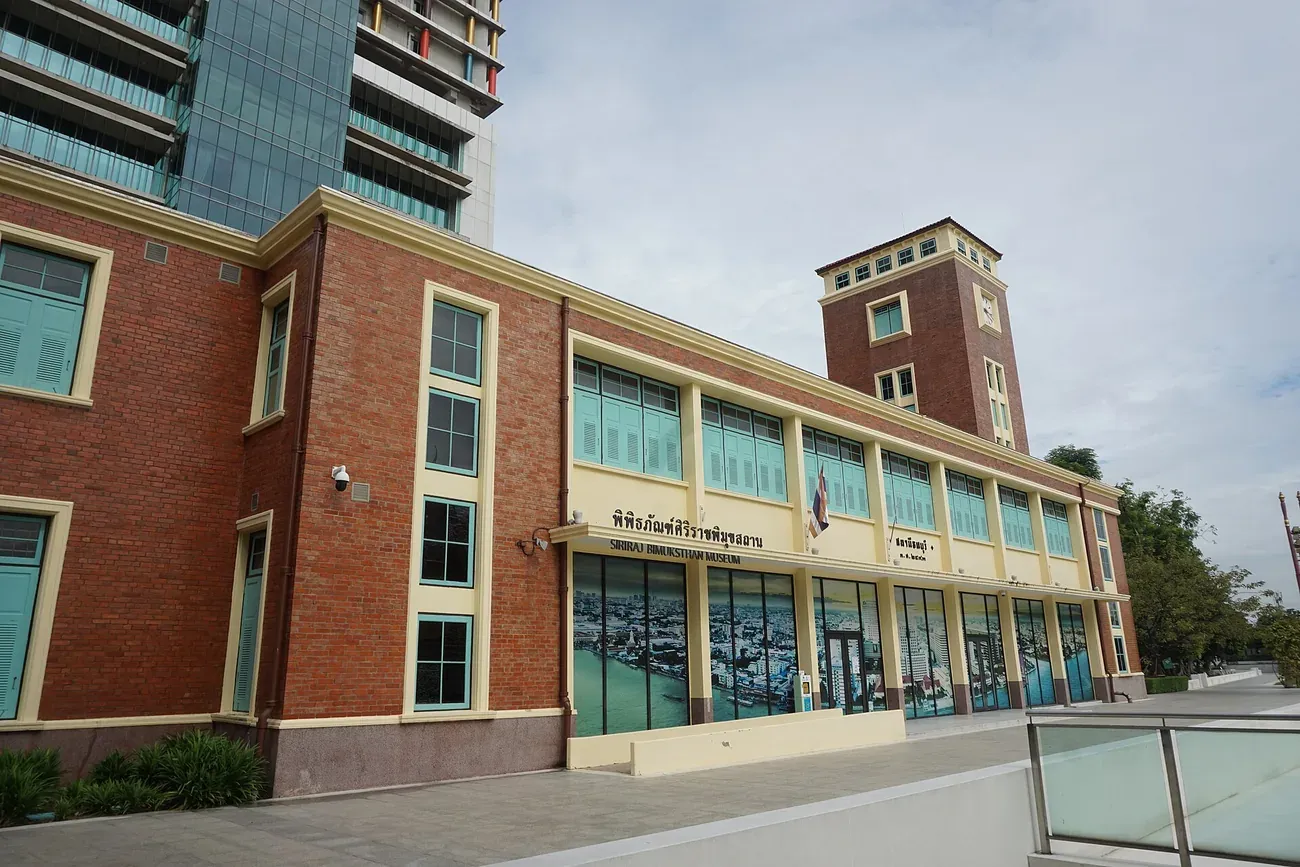
Siriraj Medical Museum
Seven small museums of anatomy, pathology, forensics and parasitology inside a teaching hospital, nicknamed the Museum of Death.
Location: Bangkok Noi, on the Thonburi bank in Bangkok
Is Thailand worth visiting
Few countries make it this easy to change scenery. Thailand runs from mountains on the Burmese border to islands in two different seas, and the country holds nine UNESCO World Heritage sites, among them the ruined capitals of Ayutthaya and Sukhothai, the prehistoric cemetery of Ban Chiang and three protected natural areas. The newest, the temple of Wat Phra Mahathat in Nakhon Si Thammarat, was added in 2026.
Regions differ more than the map suggests. The north is Lanna country, cooler and hillier, with its own script, food and temple architecture. The northeast, Isan, is closer to Laos in language and cooking. The centre holds the old kingdoms and the capital, and the south splits between an Andaman coast and a Gulf coast whose rainy seasons fall at opposite ends of the year, so somewhere is always dry.
Timing is the one thing worth planning around. November to February is the cool season, dry and busy; March and April bring the heat, with April the hottest month; the rains run from May to October and are heaviest in September. Ko Samui and the Gulf islands reverse that pattern entirely, with their dry peak between May and October.
Then there is the food, which is reason enough on its own, and it changes from region to region. Thailand shares land borders with Cambodia, Laos, Malaysia and Myanmar, which makes it the usual hub for a longer run of tourist attractions and things to do in Asia.