
Athens tourist attractions
Known for
Ancient ruins and Byzantine churches
Must-see landmarks
Acropolis, Parthenon, Ancient Agora and the Temple of Olympian Zeus
Best time to visit
April to June and September to October
Days needed
Three to four full days
Tourist attractions in Athens not to miss
Athens' tourist attractions start with Acropolis and the Parthenon, Acropolis Museum and Plaka. The 11 top sights are ranked below, followed by 29 hidden gems, free things to do, upcoming events, tickets and visitor FAQs. The 11 sights are numbered on the free tourist map of Athens, with the hidden gems and a walking route.
1. Acropolis and the Parthenon
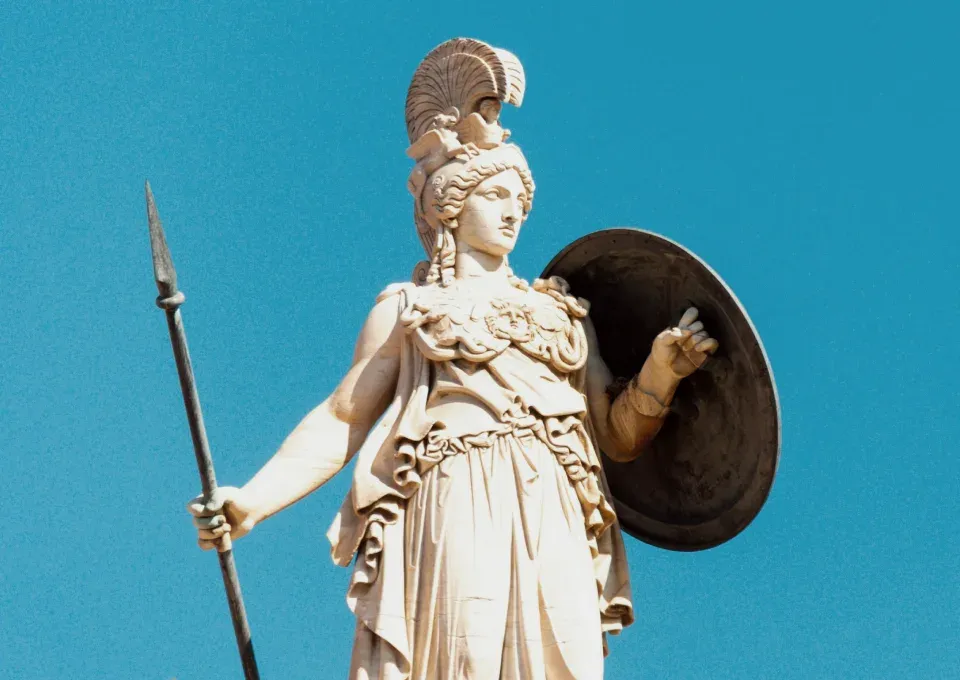
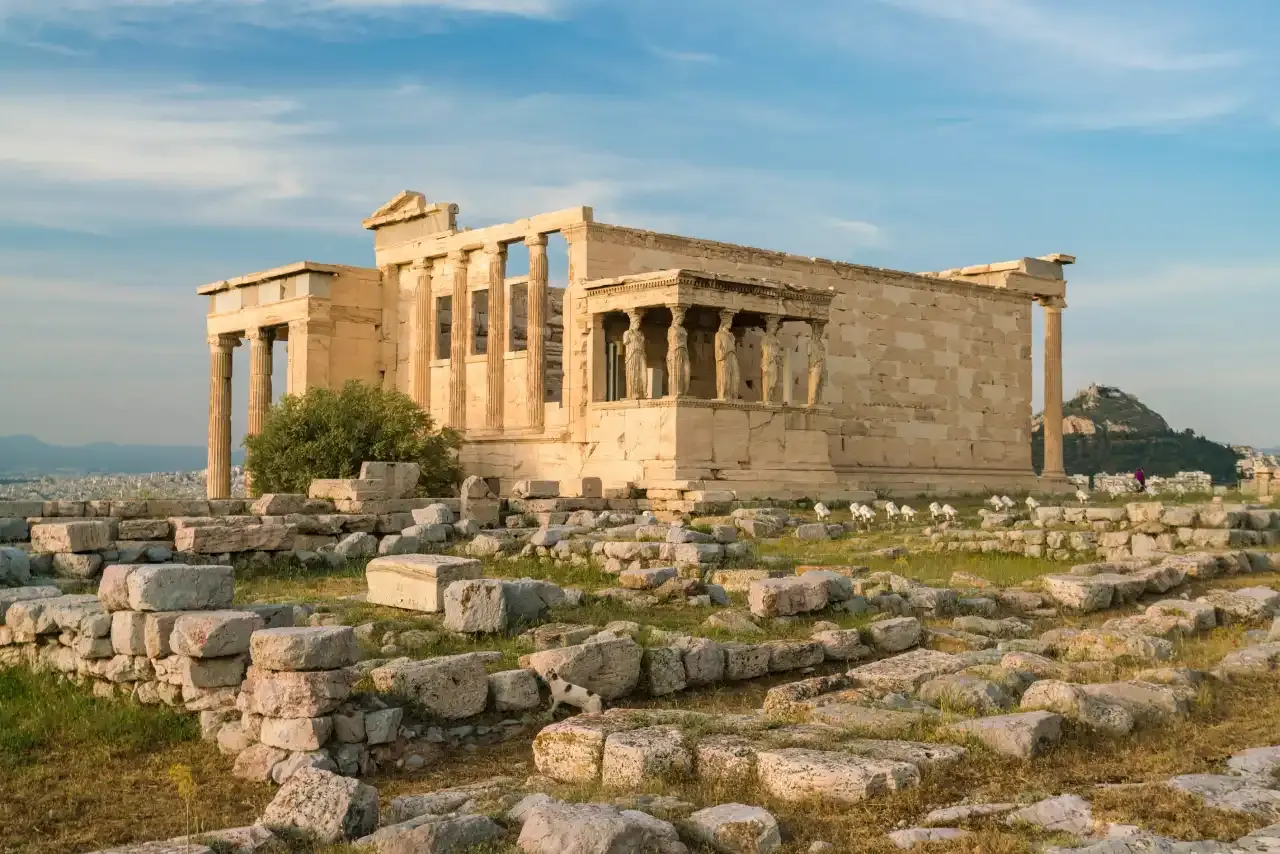
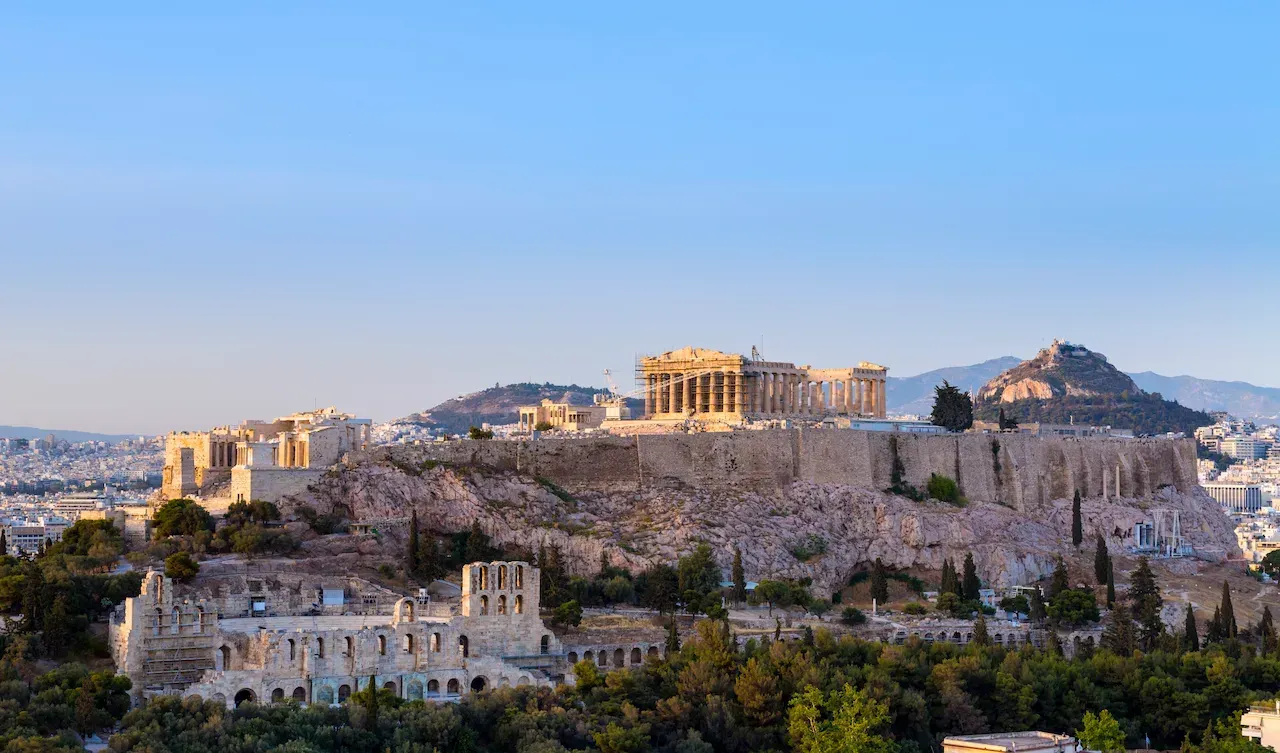
Athens grew around this limestone rock, and the marble on top has framed the city ever since. The Parthenon, raised for Athena in the fifth century BCE, still holds the summit. Beside it stand the Erechtheion, where six sculpted maidens carry the Porch of the Caryatids, and the Propylaea, the monumental gateway visitors climb through. The Odeon of Herodes Atticus is cut into the south slope below, closed for restoration since July 2026.
Architect: Ictinus and Callicrates · Style: Doric
Location: Acropolis hill, Dionysiou Areopagitou, Athens
Access: Timed entry, open 08:00 to 20:00 in summer and to 17:00 in winter · Tickets and tours
2. Acropolis Museum
Built at the foot of the south slope over an excavated neighbourhood that shows through glass floors, the museum gathers what was found on the rock above. A ramp lined with finds from the slopes leads to the Archaic gallery, where painted korai and the pediments of the first temples stand in daylight, and to the five original Caryatids from the Erechtheion. The top floor turns to align with the Parthenon in the windows and carries the frieze at its true length, original blocks alongside plaster casts of the pieces held in London.
Architect: Bernard Tschumi with Michael Photiadis · Opened: 2009
Location: Dionysiou Areopagitou 15, Athens
Access: Ticketed, separate from the Acropolis site · Tickets and tours
3. Plaka
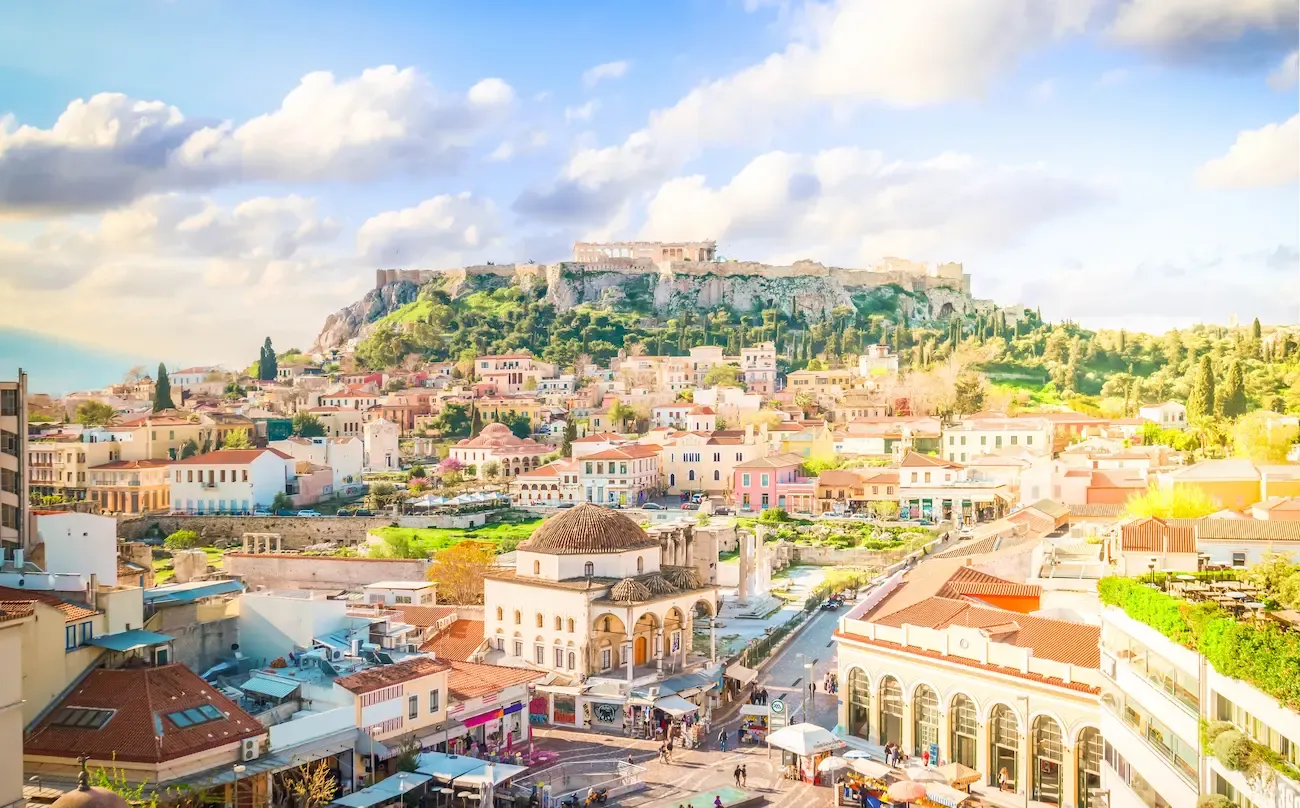
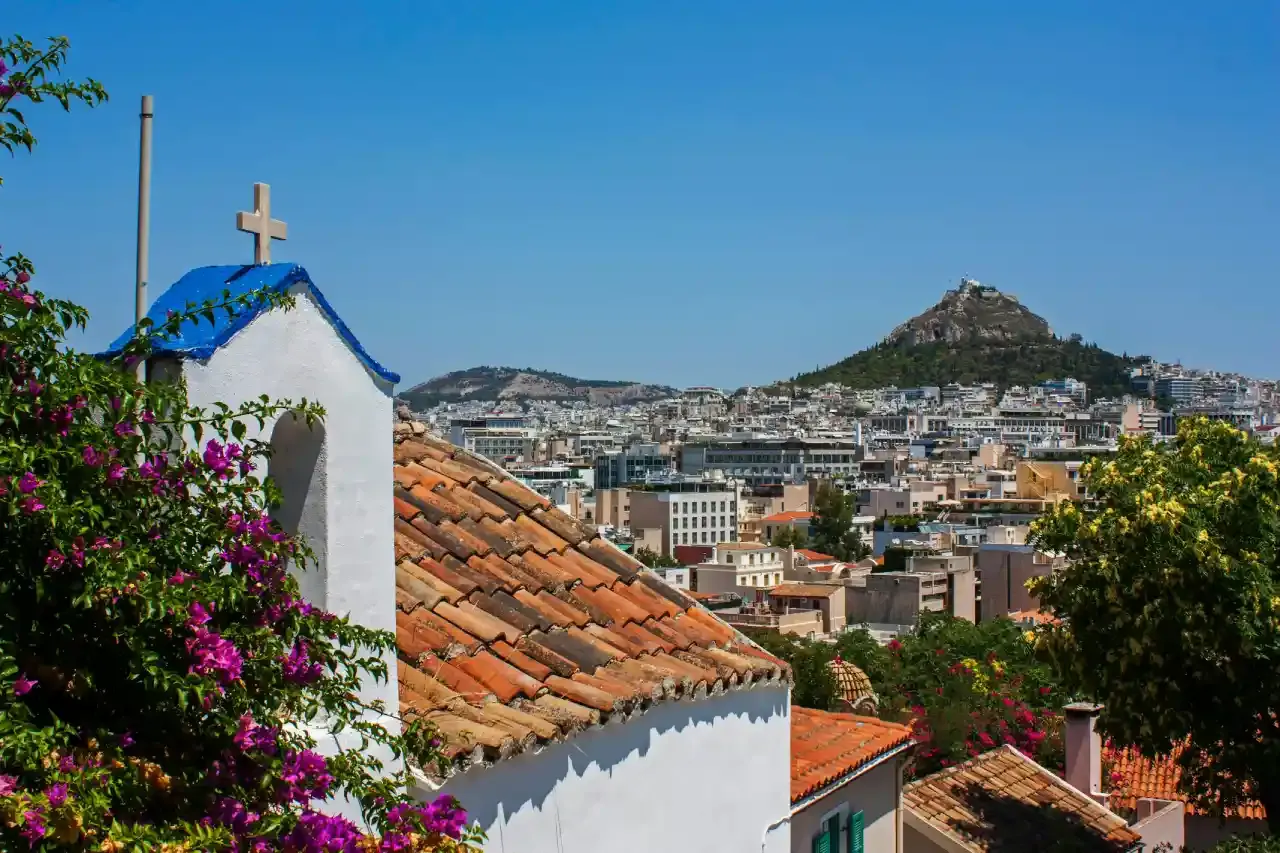
The oldest inhabited quarter of Athens climbs the north slope of the Acropolis on the footprint of the ancient city. Pedestrian lanes thread between neoclassical houses, courtyard gardens and small Byzantine churches, with tavernas spilling onto the pavement. The lanes themselves cost nothing to wander, though the museums and ancient sites tucked among them charge their own admission. Mornings are the calmest time to walk it.
Location: Between Syntagma, Monastiraki and the Acropolis slope, Athens
Access: Free to walk at any hour
4. Ancient Agora
This was the civic heart of the ancient city, where the assembly, the law courts and the market met and Socrates argued with anyone who would listen. The Temple of Hephaestus stands almost intact on the western rise, the best preserved Doric temple in Greece, and the rebuilt Stoa of Attalos runs along the eastern side. Redevelopment has closed the Adrianou gate, so entry and exit run through the Thiseio Square gate.
Style: Ancient Greek
Location: Adrianou 24, entrance at Thiseio Square, Athens
Access: Ticketed, open 08:00 to 19:30 in summer and to 16:30 in winter · Tickets and tours
5. Temple of Olympian Zeus
Fifteen Corinthian columns stand on a platform east of the Acropolis, with a sixteenth lying in pieces where it fell. Work began in the sixth century BCE under Peisistratos and stopped for centuries, until Hadrian finished the temple in 131 CE and installed a colossal statue of Zeus inside it. The scale is the point: nothing else the Athenians attempted covered as much ground.
Style: Corinthian
Location: Vasilissis Olgas Avenue, Athens
Access: Ticketed, open 08:00 to 20:00 in summer and to 15:00 in winter · Tickets and tours
6. National Archaeological Museum
The largest archaeological collection in Greece fills a neoclassical building north of the centre, gathering finds from the whole country rather than from Athens alone. The gold Mask of Agamemnon and the shaft grave treasures of Mycenae draw the crowds, and the galleries beyond hold Cycladic figurines, monumental kouroi, the bronze Artemision god pulled from the sea, and the frescoes of Akrotiri.
Location: 44 Patission Street, Athens 106 82
Access: Ticketed, open 08:00 to 20:00 Wednesday to Monday and from 13:00 on Tuesday · Tickets and tours
7. Anafiotika
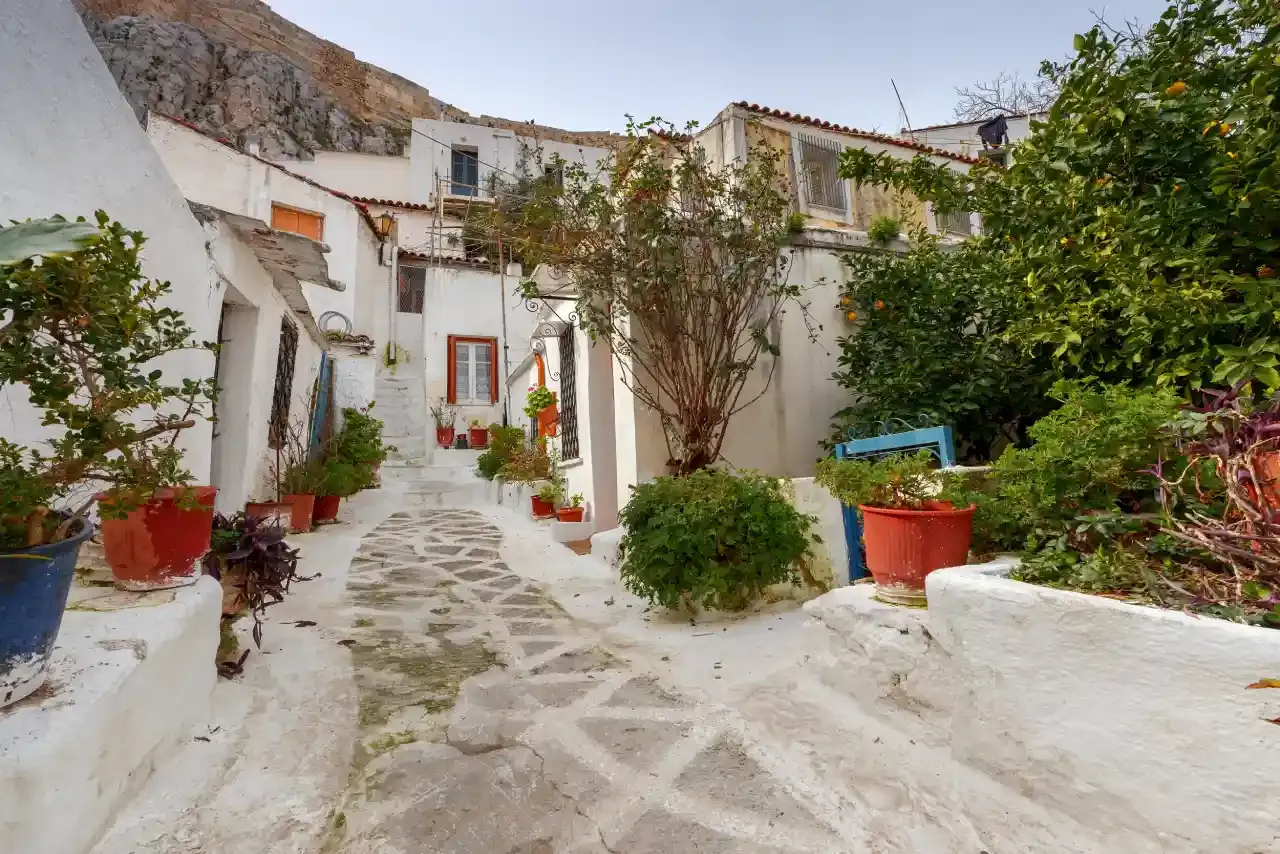
Builders from the island of Anafi came to work on the new royal palace in the nineteenth century and put up a village on the north slope of the Acropolis in the style of home. Whitewashed houses survive along stepped lanes barely wide enough for two people, with bougainvillea over the doorways. There is no gate and no ticket, and people live here, so quiet feet are appreciated. The rock of the Acropolis rises directly above the rooftops.
Location: North slope of the Acropolis, above Plaka, Athens
Access: Free to walk at any hour
8. Lycabettus Hill
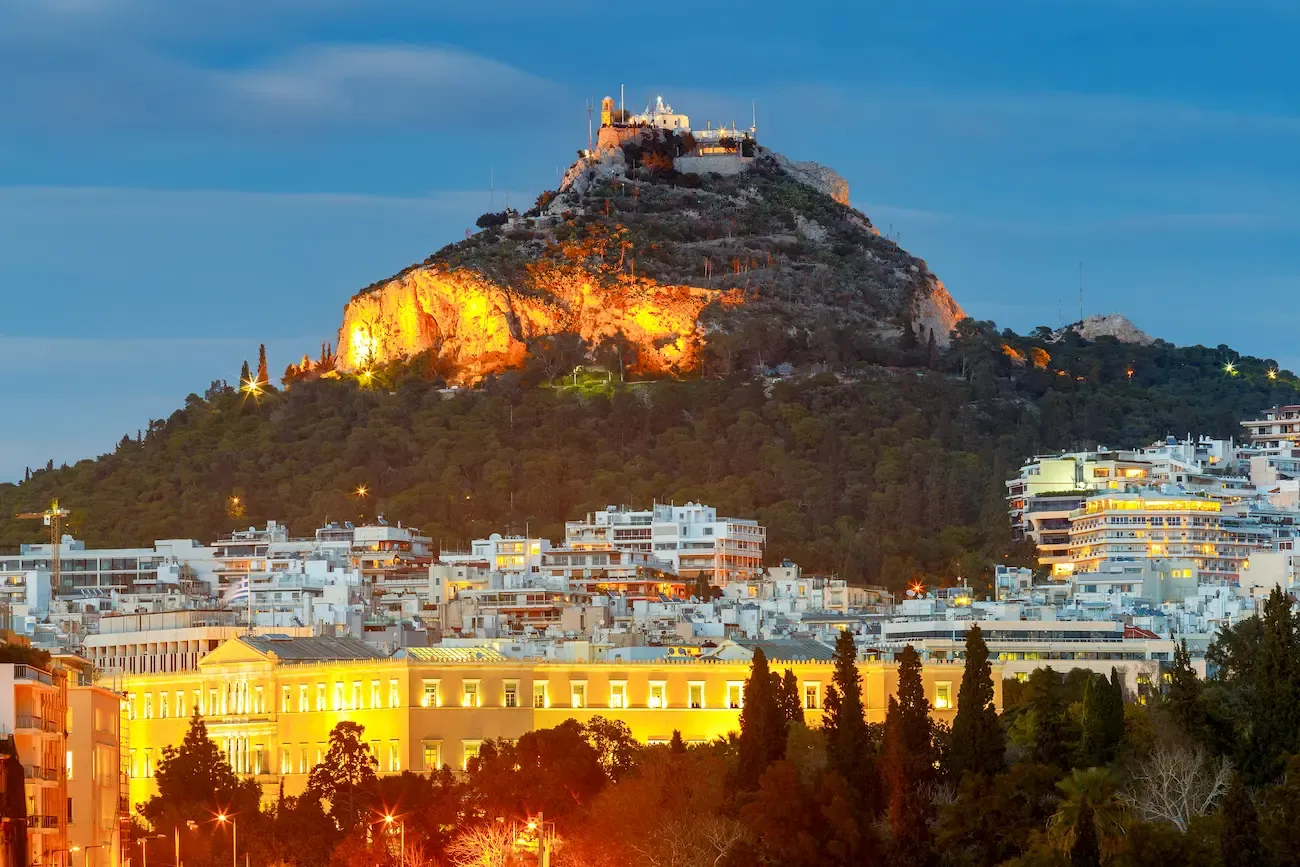
The highest point in central Athens rises out of Kolonaki as a steep cone of pines, with the white chapel of Agios Georgios at the top. Marked paths climb from Aristippou and Kleomenous streets in about half an hour and open onto a terrace that takes in the whole basin, the Acropolis below and the sea beyond Piraeus on clear days. A restaurant and a cafe terrace sit just below the chapel, and sunset draws a crowd.
Location: Kolonaki, Athens
Access: Free on foot at any hour, the funicular to the summit is ticketed
9. Theatre of Dionysus
Greek drama began on this slope. The tragedies of Aeschylus, Sophocles and Euripides and the comedies of Aristophanes were first staged here at the festival of the City Dionysia. What survives is largely the Roman remodelling: curved stone tiers, a paved orchestra, and a front row of marble thrones carved for priests and officials, with a frieze of Silenus figures fronting the stage.
Style: Ancient Greek
Location: Dionysiou Areopagitou, south slope of the Acropolis, Athens
Access: Ticketed on the Acropolis and Slopes ticket, open 08:00 to 20:00 in summer and to 17:00 in winter · Tickets and tours
10. Roman Agora
Julius Caesar and Augustus paid for this square, built east of the older Agora when Roman Athens wanted a larger and better ordered market. The Gate of Athena Archegetis still frames the western entrance with four Doric columns, and rows of column stumps mark the colonnades that ran around the courtyard. The Fethiye Mosque occupies the northern side and opens to visitors on Wednesdays and Sundays.
Location: Dioskouron, Plaka, Athens
Access: Ticketed, open 08:00 to 20:00 in summer and to 15:00 in winter · Tickets and tours
11. Hadrian's Library
Hadrian gave Athens this walled complex in 132 CE, and it held far more than books: a colonnaded courtyard around a pool, lecture halls, and rooms where papyrus rolls sat in wall niches. A row of Corinthian columns from the western facade still stands along Areos Street, and the foundations of a Byzantine church occupy the middle of the courtyard.
Style: Ancient Roman
Location: Areos Street, Monastiraki, Athens
Access: Ticketed, open 08:00 to 20:00 in summer and to 15:00 in winter · Tickets and tours
Athens tourist attractions tickets and tours
Upcoming events in Athens

Candlelight: Οι Τέσσερις Εποχές του Βιβάλντι
Candlelight: Οι Τέσσερις Εποχές του Βιβάλντι comes to Εθνικό Ιστορικό Μουσείο-Μέγαρο Παλαιάς Βουλής on 13 November at 19:00.

Candlelight: Μότσαρτ vs. Μπετόβεν
Candlelight: Μότσαρτ vs. Μπετόβεν comes to Parnassos Literary Society on 20 November at 19:00.
Dr Feelgood
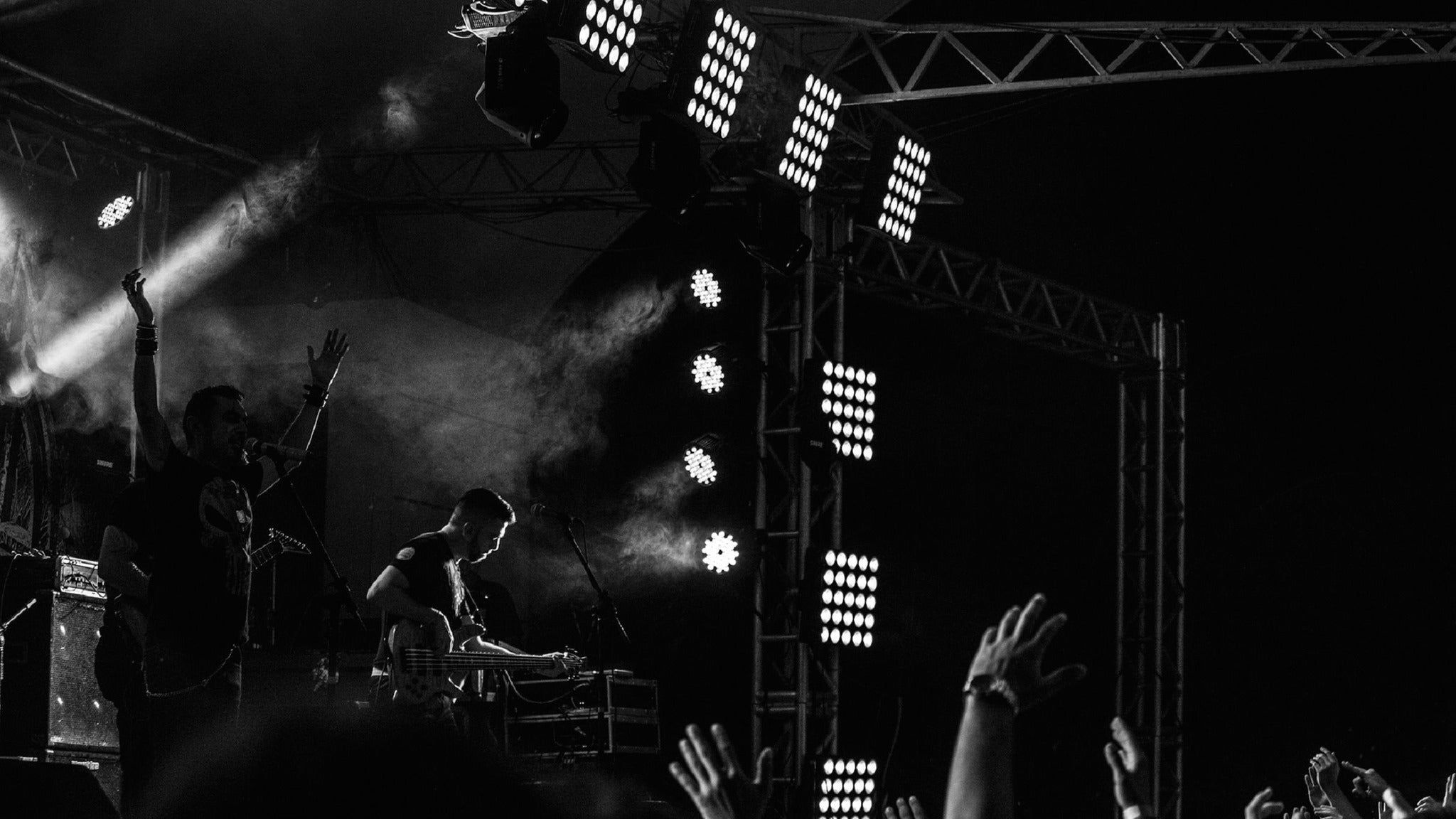
The British pub rock band Dr Feelgood plays Architektoniki Club Live Stage on 12 February 2027 at 21:30, a live night from the long running rhythm and blues act.
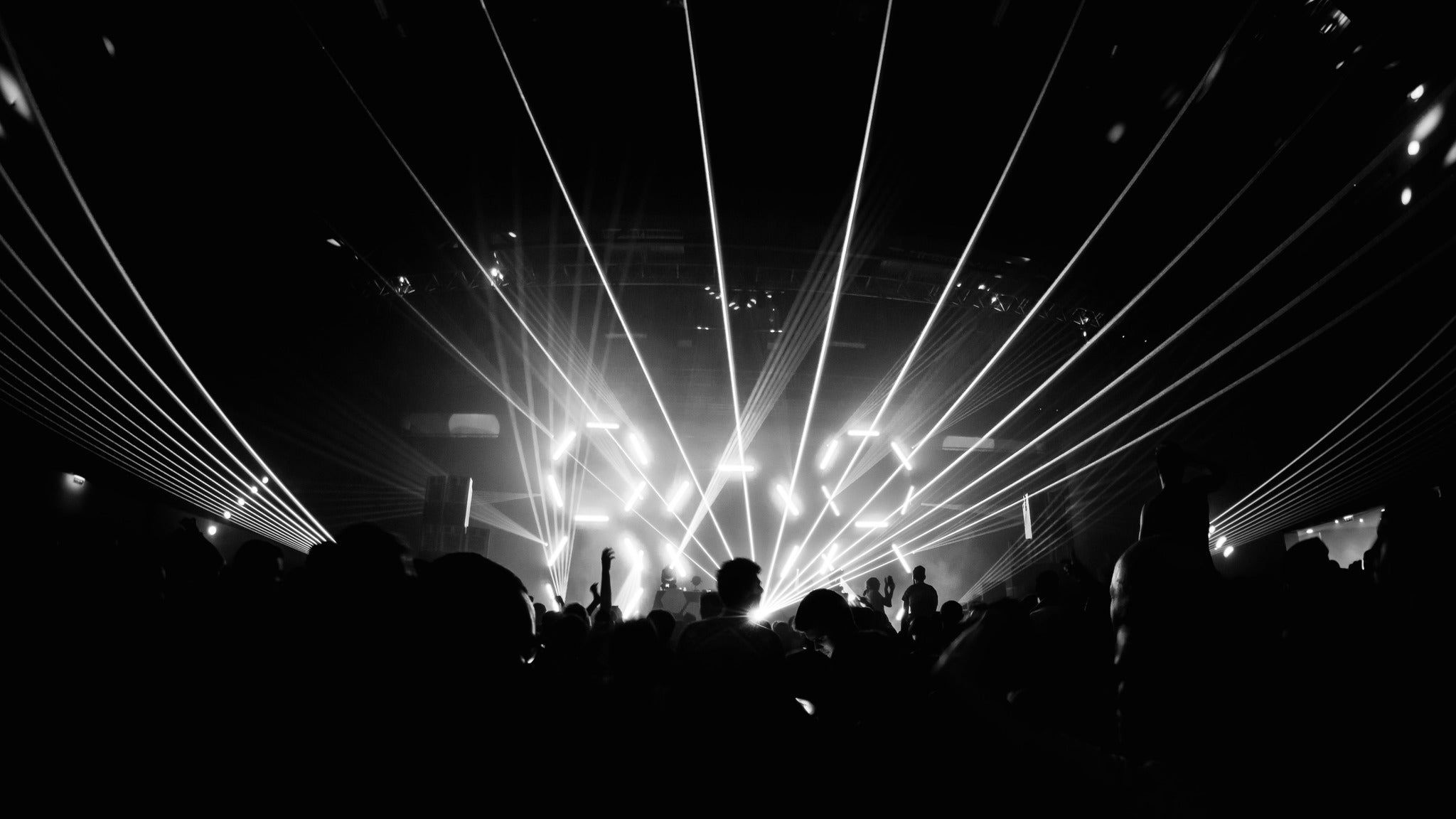
Mojito Challenge Greece 2027: Imael Angel - First Time In Greece
Mojito Challenge Greece 2027: Imael Angel - First Time In Greece plays Architektoniki Club Live Stage on 27 February 2027 at 21:00.
Free attractions to visit in Athens
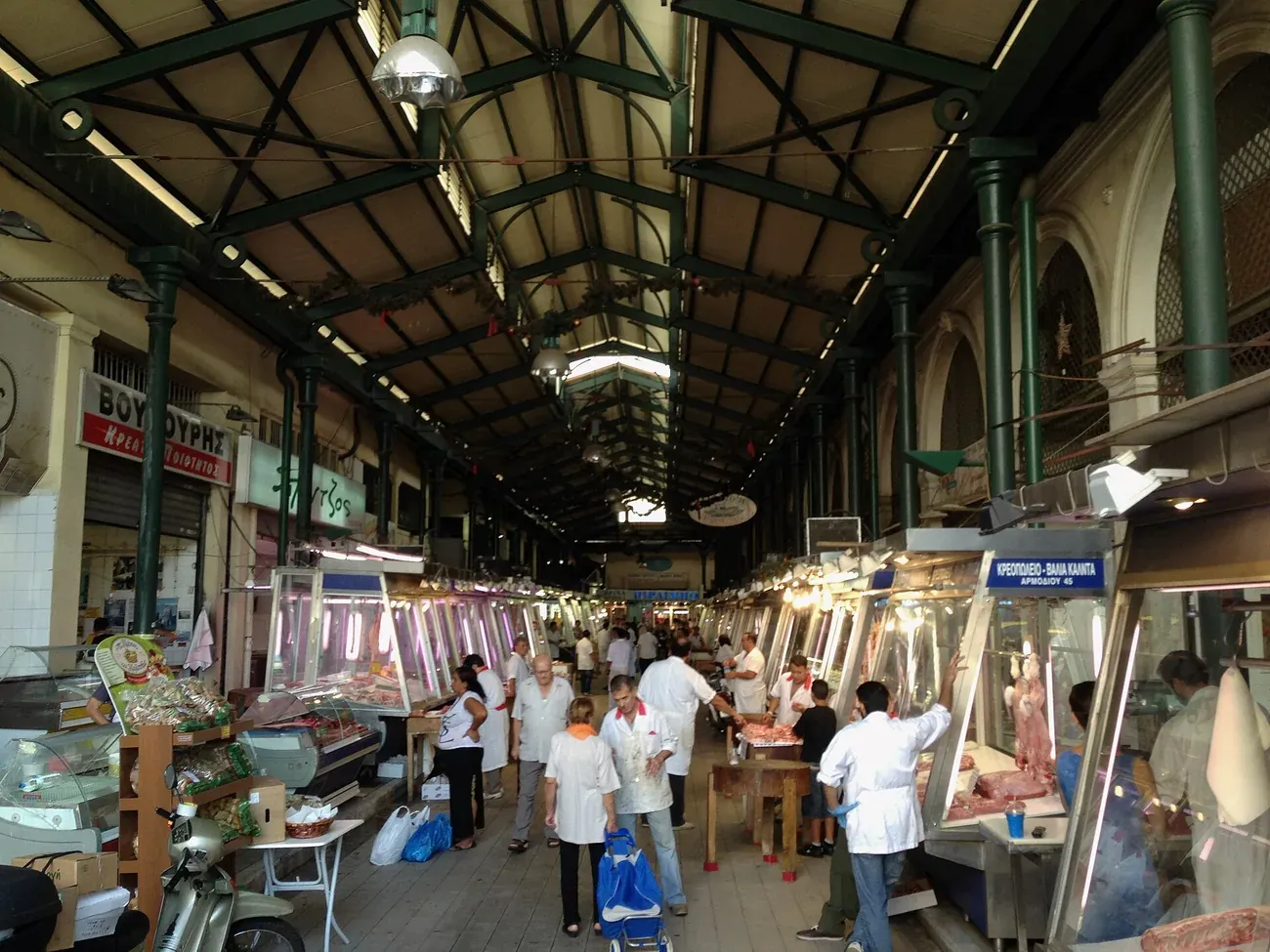
Varvakios Central Market
Walking through the covered halls of Athens' municipal food market costs nothing, and browsing the fish, meat and spice stalls needs no ticket. Mornings are the busiest and most atmospheric time to visit, before the counters begin closing for the day in the early afternoon.
Photo: "Central Market of Athens" by athenswalk (CC0).
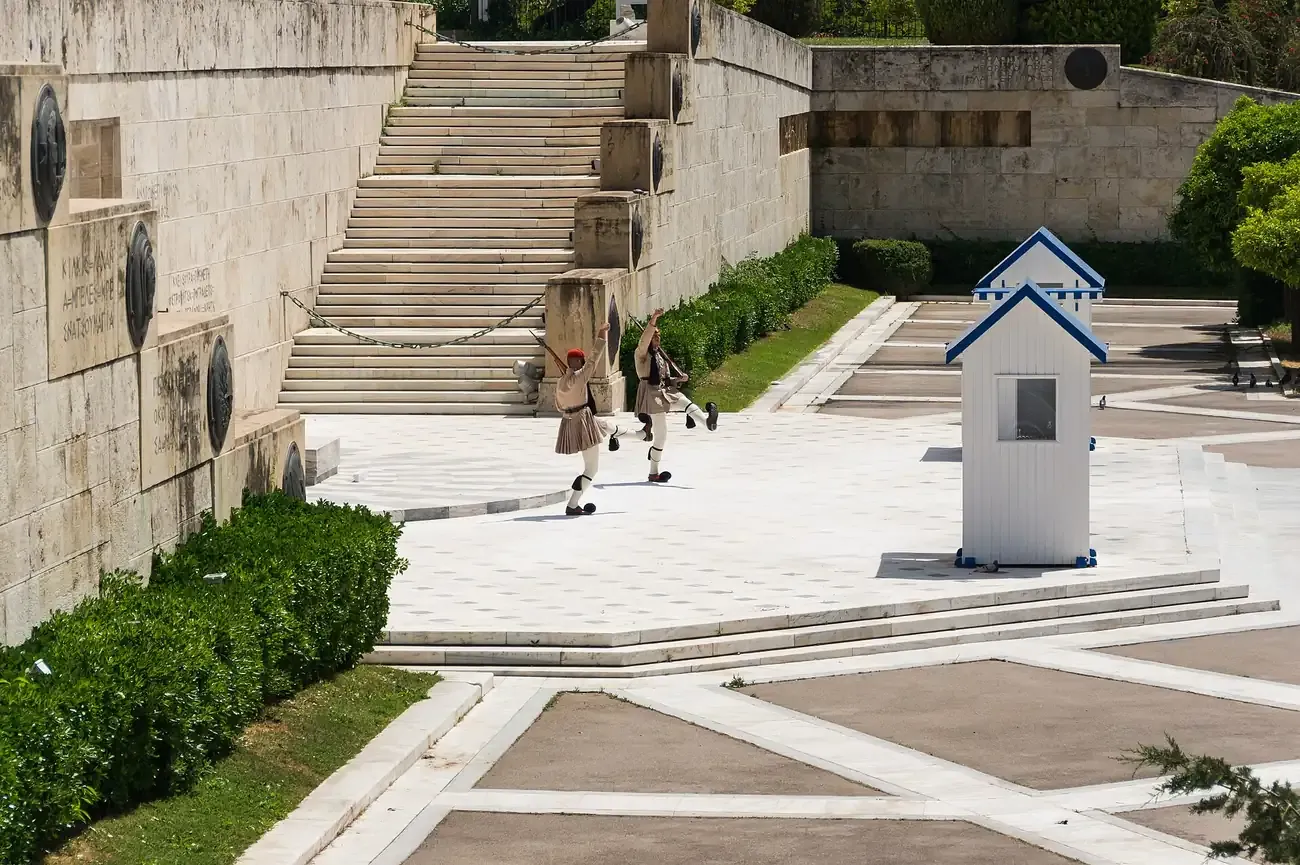
Syntagma Square
The Evzone presidential guards change formation on the hour outside Parliament, with a fuller ceremonial parade on Sundays at 11:00, free to watch from the square at any time.
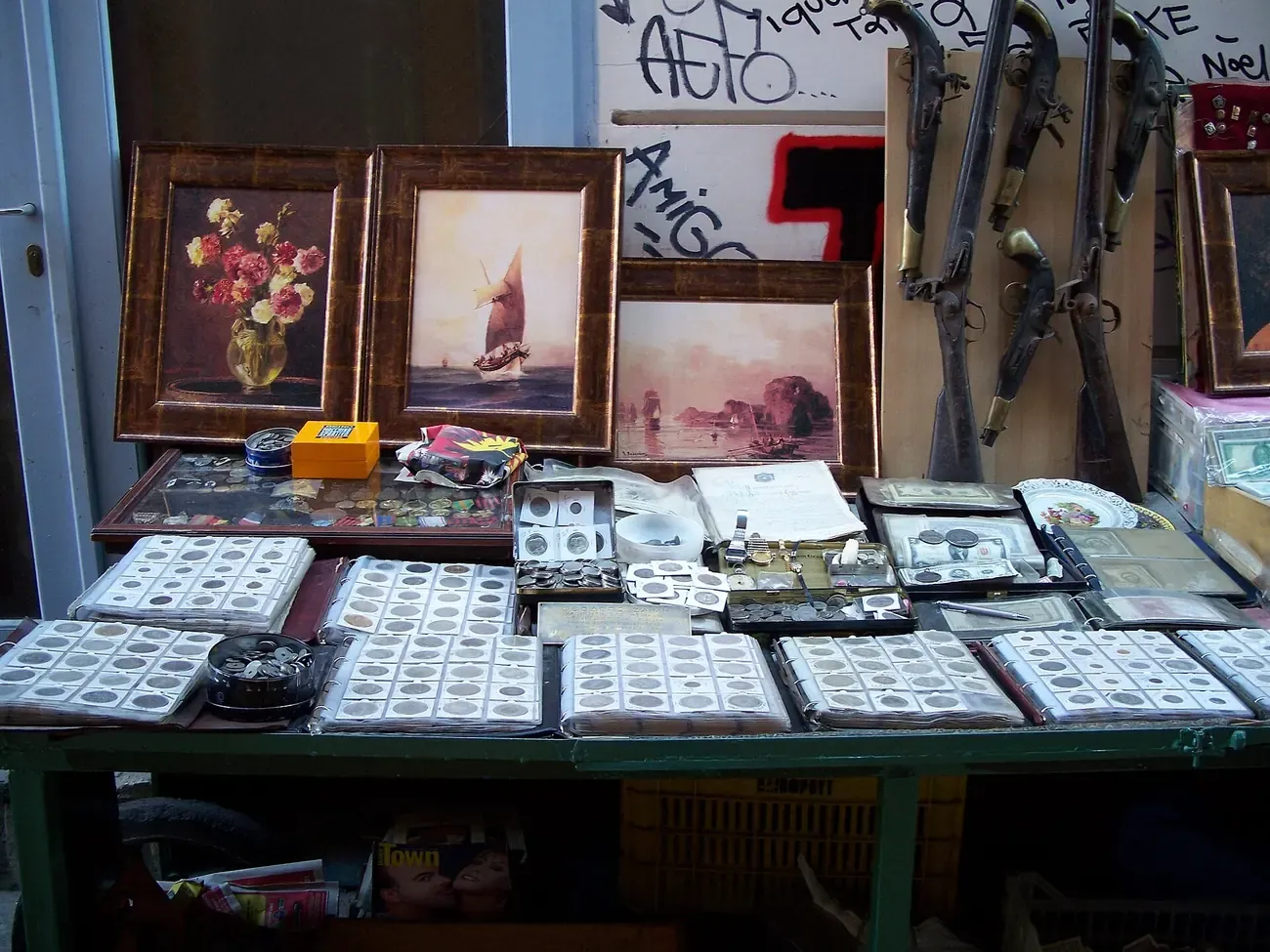
Monastiraki Flea Market
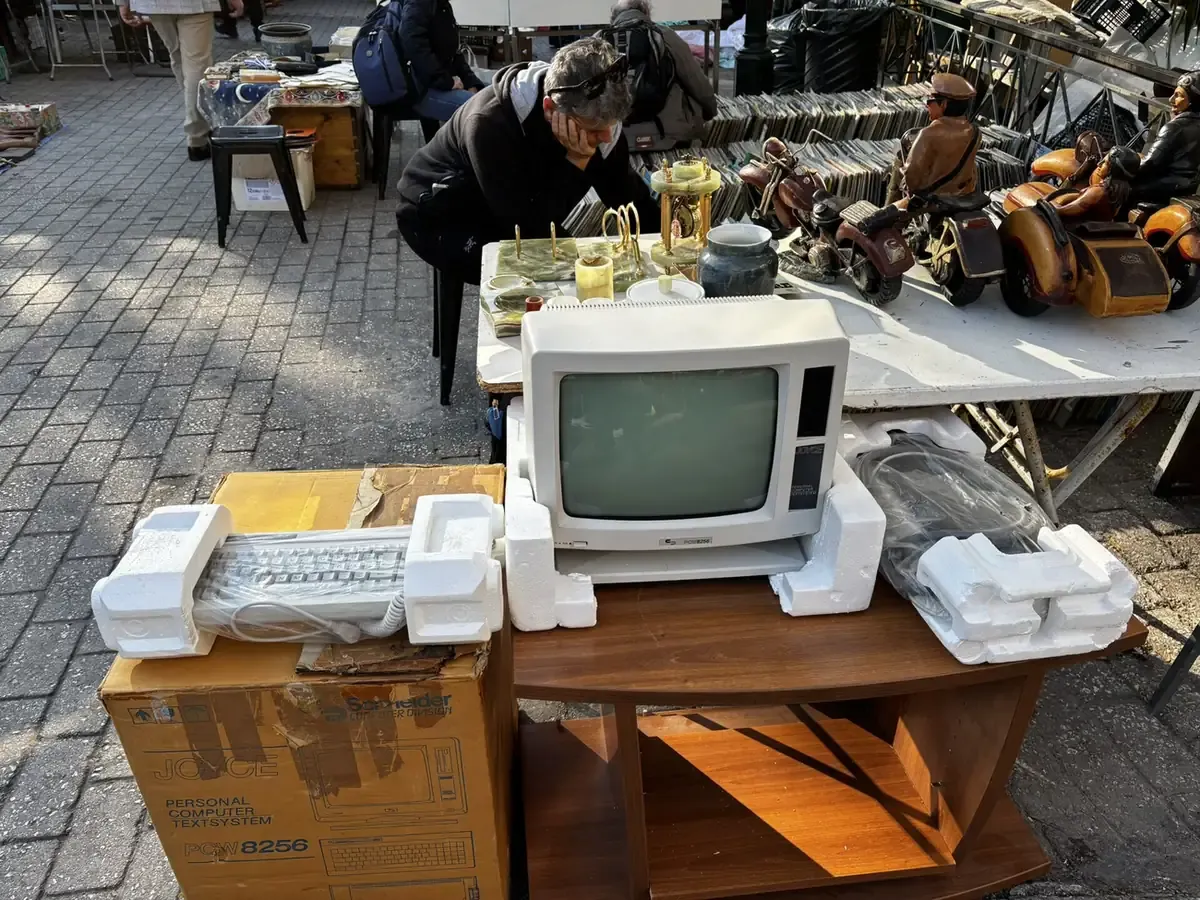
Antique dealers, record stores and secondhand stalls fill the streets around Monastiraki and Avissinia squares, an open air market that costs nothing to browse and is liveliest on Sunday mornings.
Photo: "Antiques stall at the Monastiraki flea market" by Badseed (CC BY-SA 3.0).
Philopappos Hill
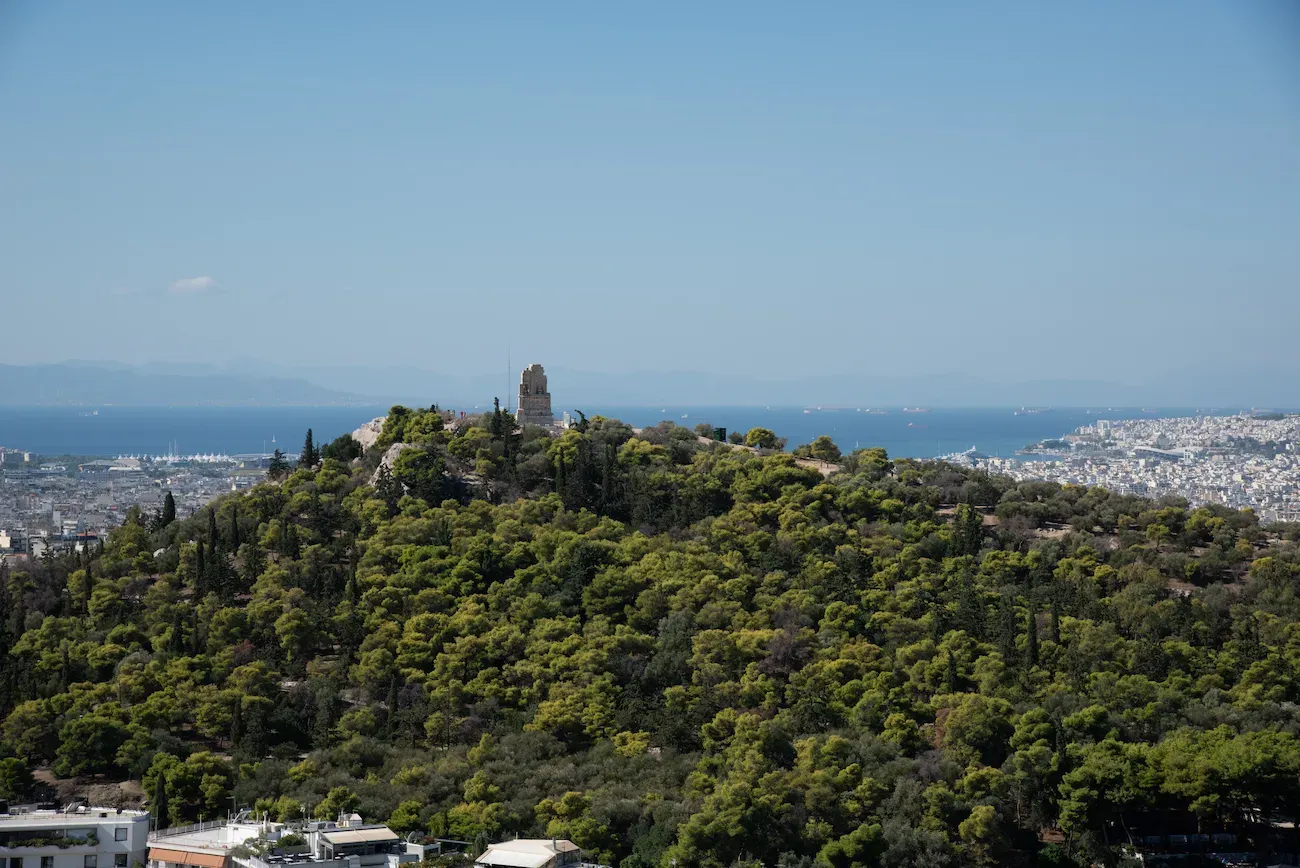
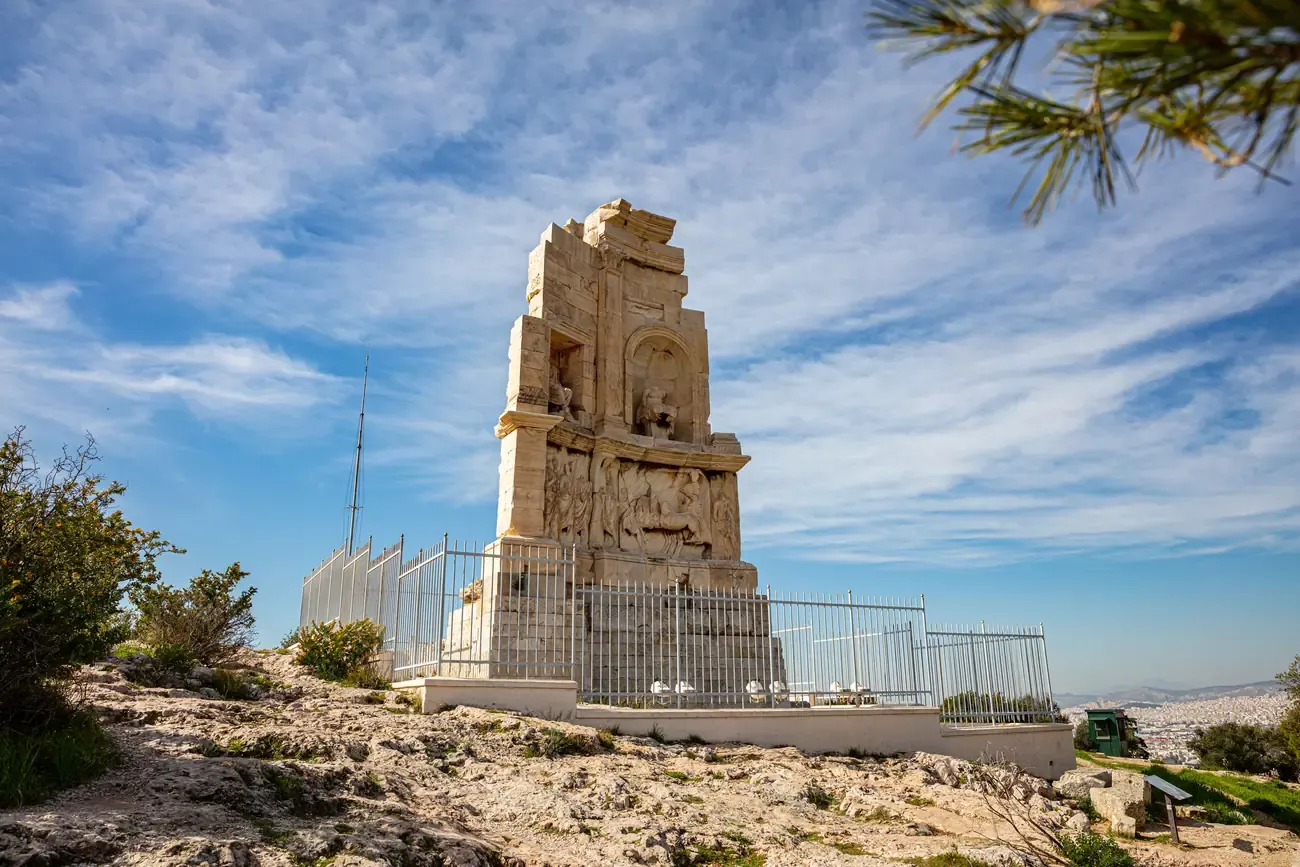
The hill opposite the Acropolis carries the Monument of Philopappos and the Pnyx, the meeting place of ancient Athens' democratic assembly, open at all hours with no ticket or gate.
National Garden
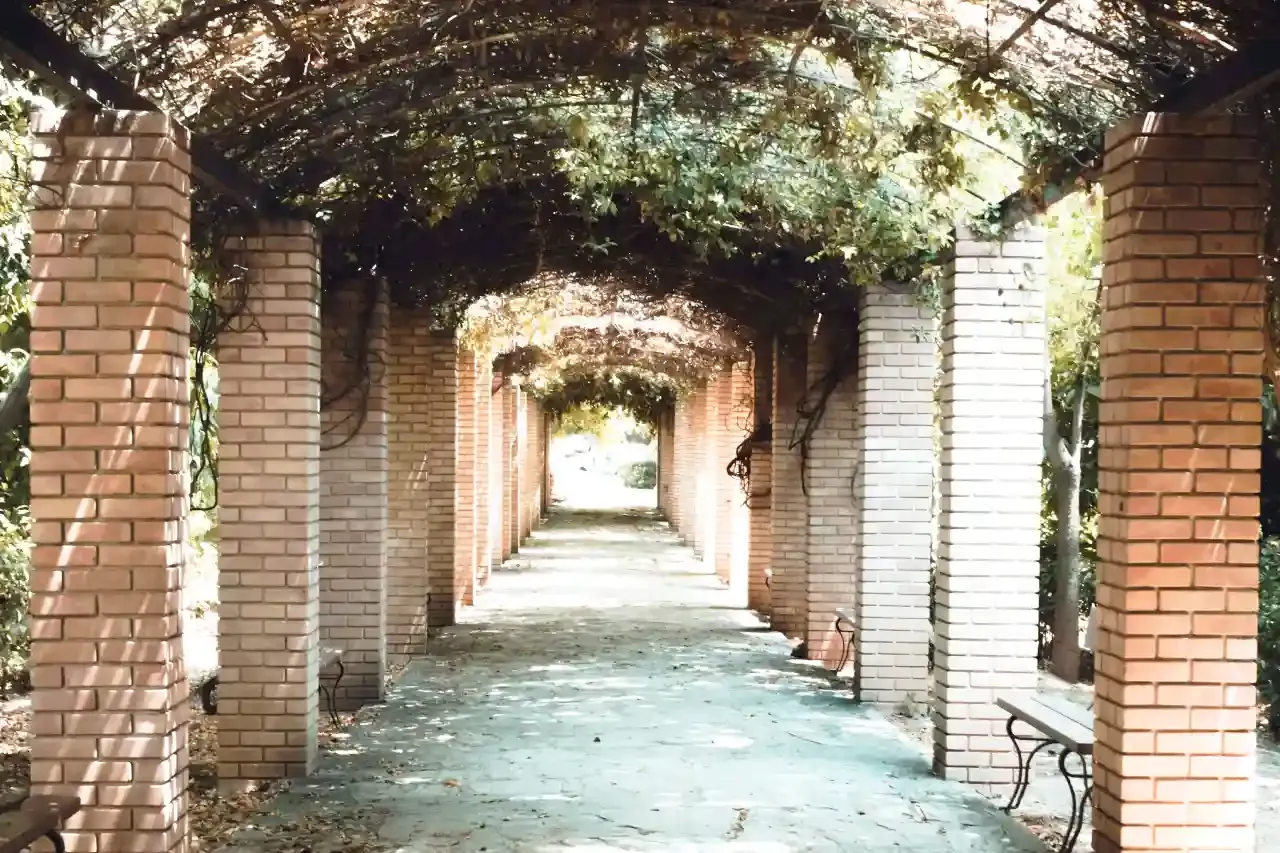
The former royal gardens behind the Greek Parliament spread shaded paths, a small zoo and duck ponds across the city centre, open from sunrise to sunset with no admission charge.
Areopagus
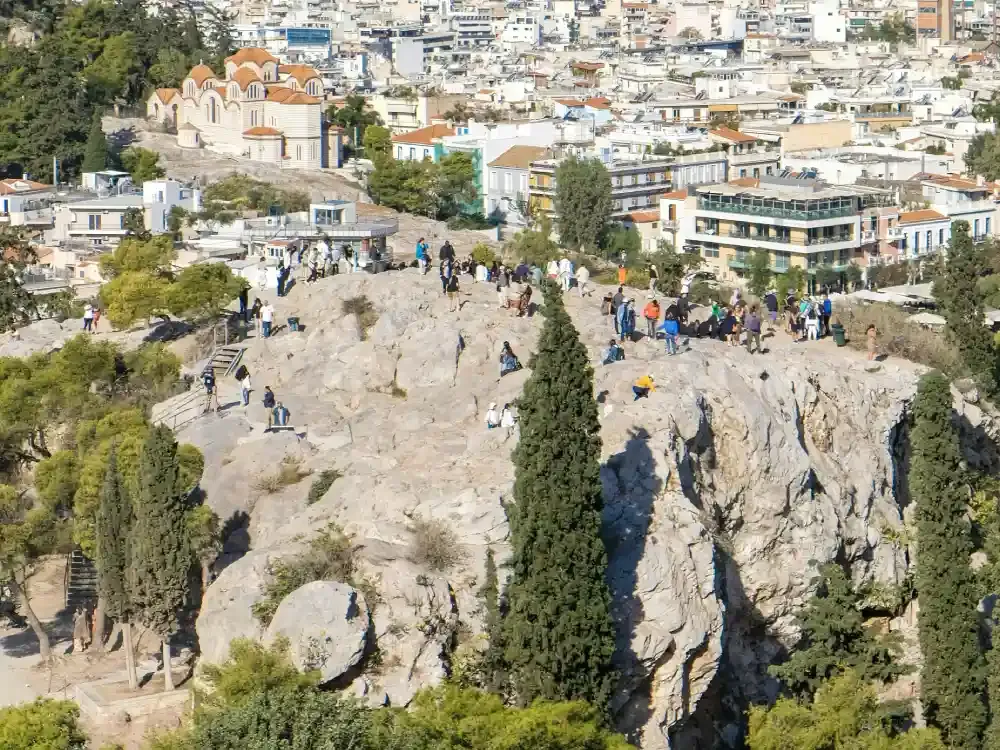
The smooth marble outcrop beside the Acropolis entrance costs nothing to climb at any hour, unlike the archaeological site it borders. Worn steps lead to a platform with a wide view over the Ancient Agora, quietest well after sunset once the tour groups have moved on.
Syntagma Metro Station
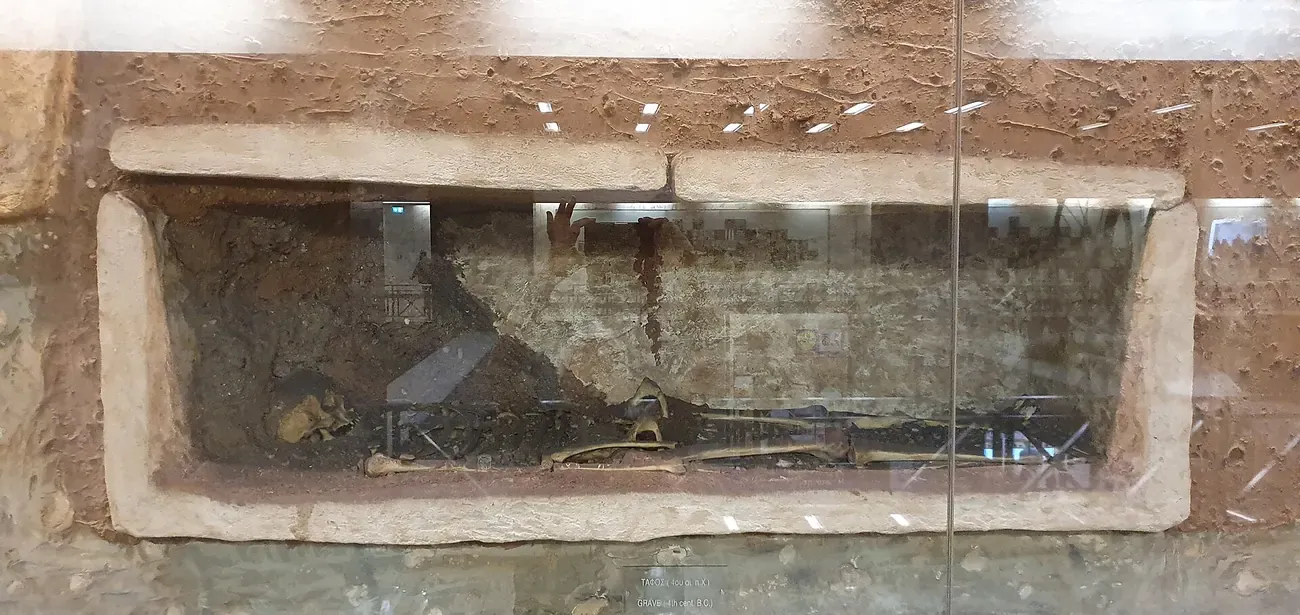
Excavations for the Athens Metro uncovered a cross section of the city's history, now displayed for free in the station concourse: a Roman era bath, ancient graves and pottery spanning the Neolithic to the Byzantine period. No metro ticket is needed, since the display sits in the concourse before the barriers.
Strange museums and single exhibits in Athens
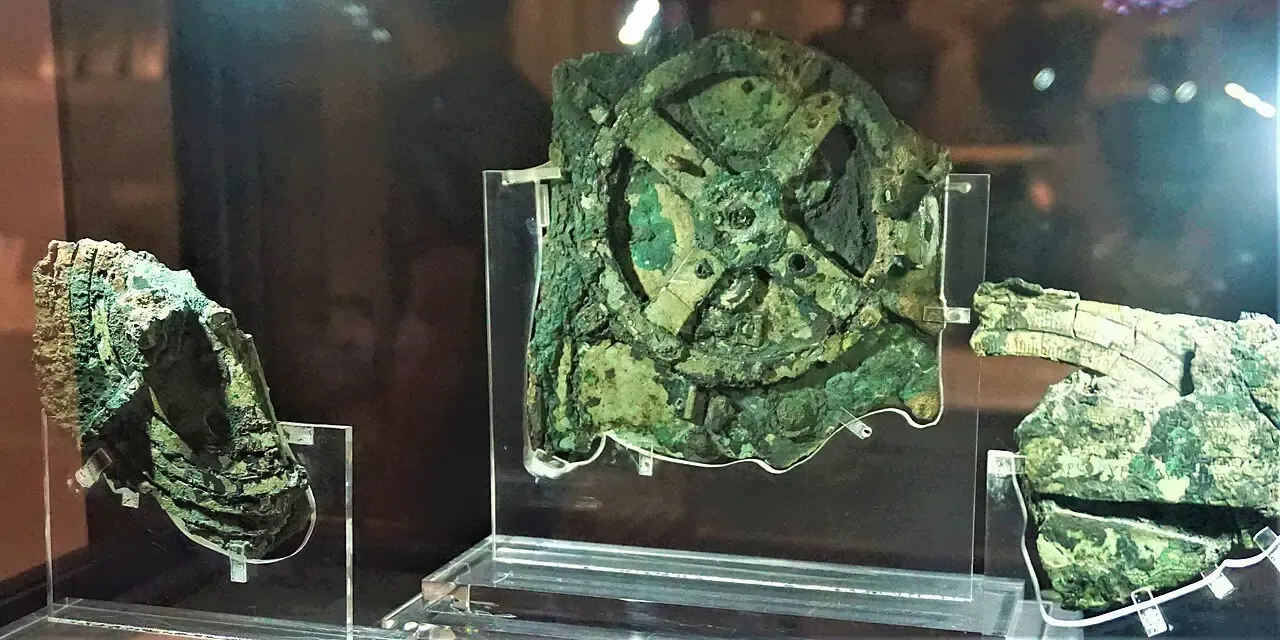
Antikythera Mechanism
A corroded bronze gearbox raised from a shipwreck in 1901, geared to track the sun and moon and to predict eclipses.
Location: National Archaeological Museum, 44 Patission Street, Athens
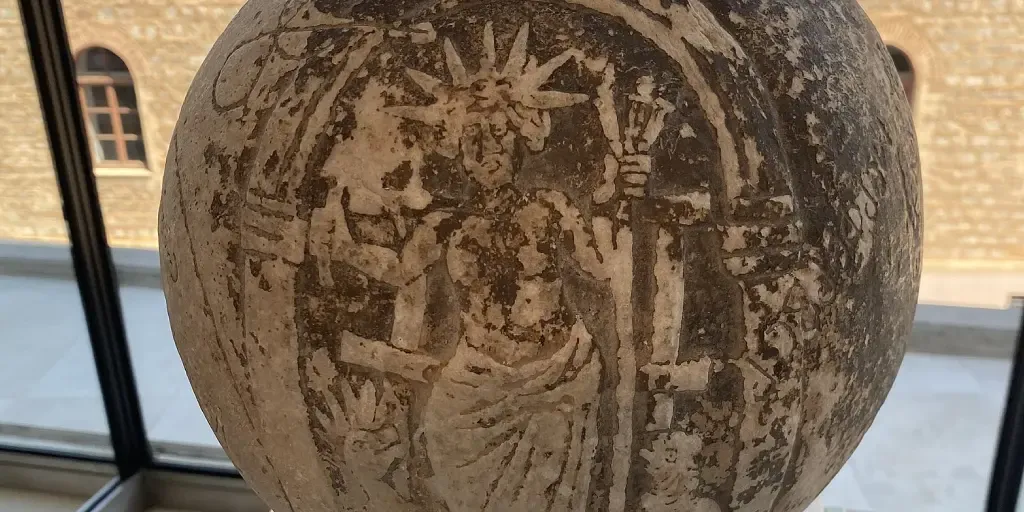
Magic Sphere of Helios
A marble ball carved with Helios, zodiac signs and symbols nobody has fully explained, unearthed at the Theatre of Dionysus.
Location: 15 Dionysiou Areopagitou, Athens
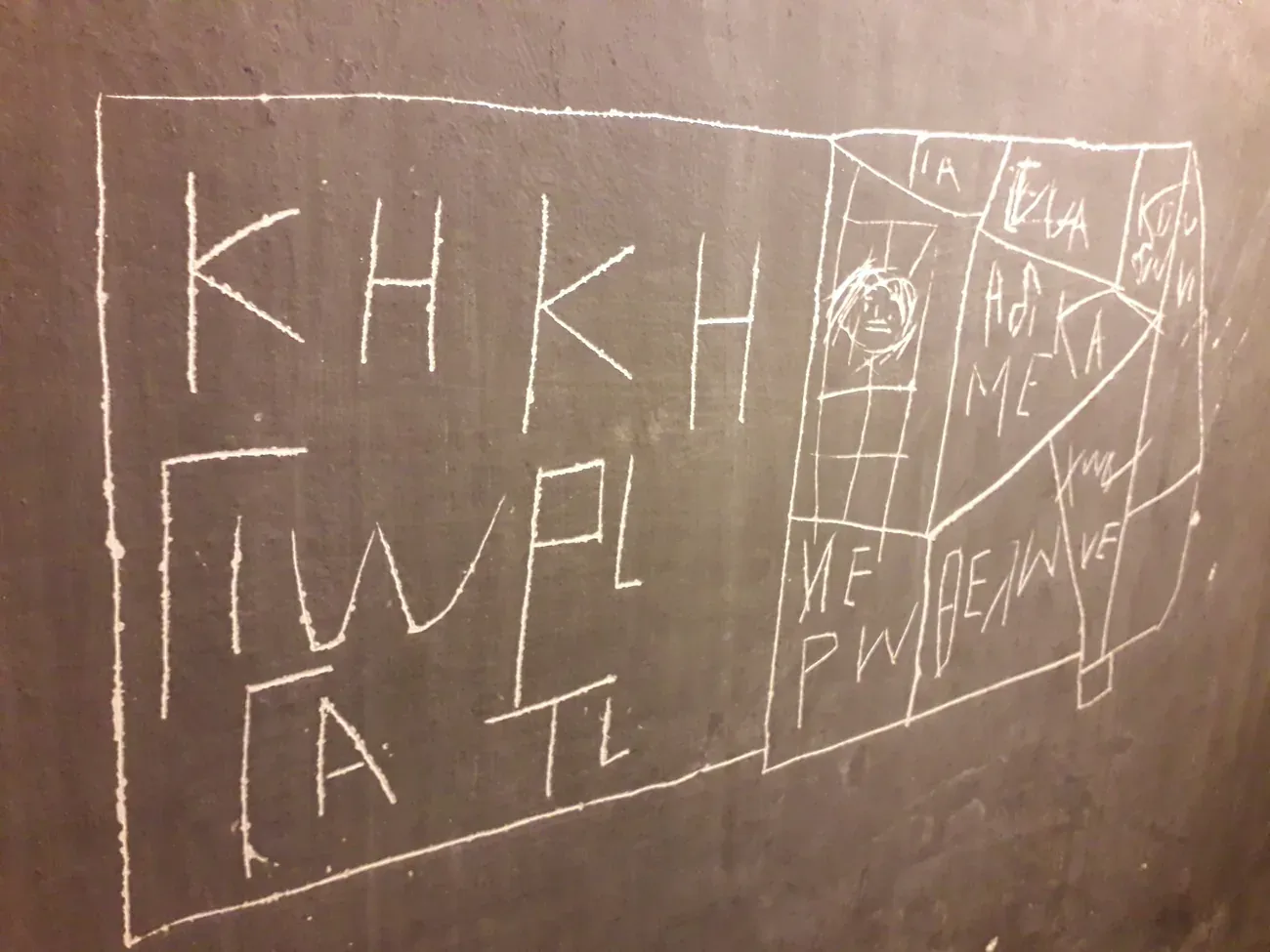
Korai 4
Cells under a former insurance building where the occupying secret police held prisoners, their messages still scratched into the walls.
Location: 4 Korai Street, Athens
Photo: "Prisoner graffiti at the Korai 4 memorial site" by Catlemur (CC BY-SA 4.0).
Ancient Athens hiding in plain sight
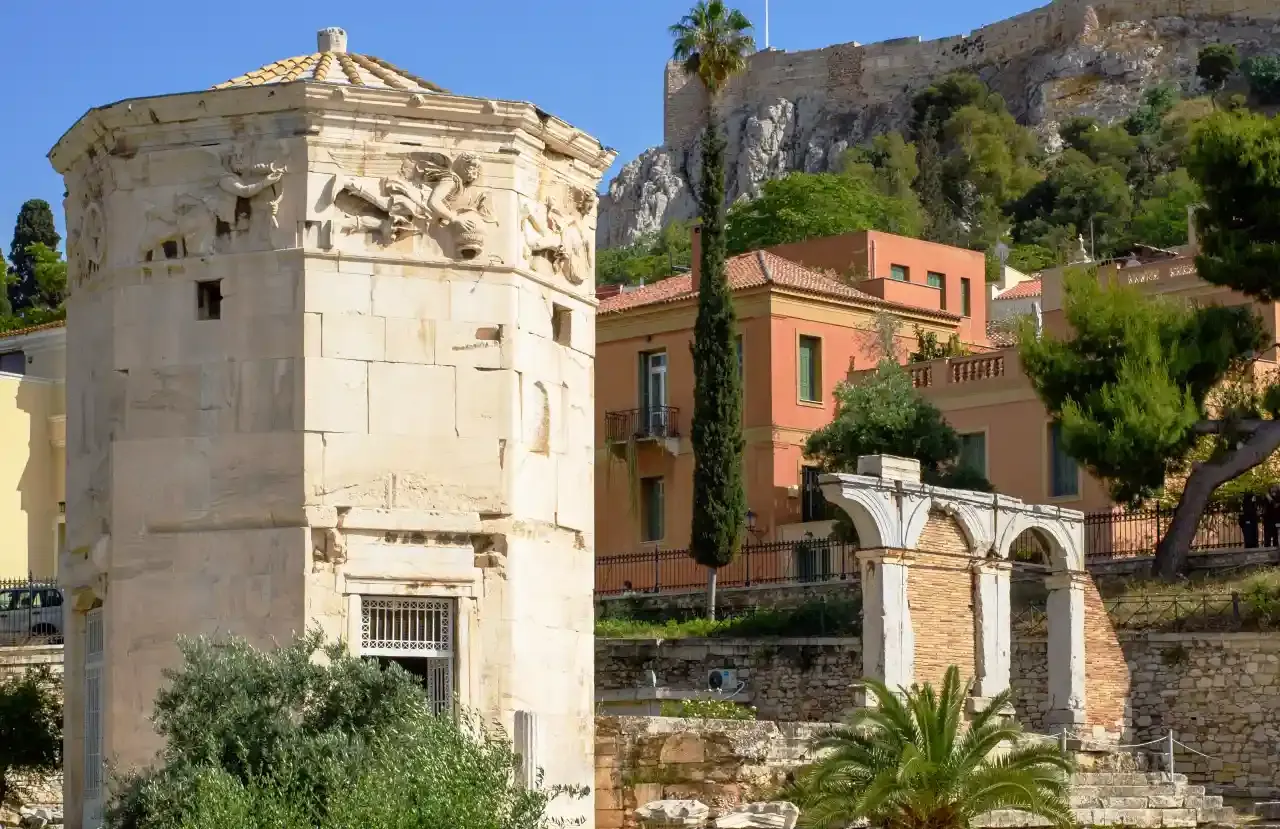
Tower of the Winds
An octagonal marble tower that worked as a weather station, with sundials, a water clock and eight carved wind gods.
Location: Inside the Roman Agora, Aiolou Street, Athens
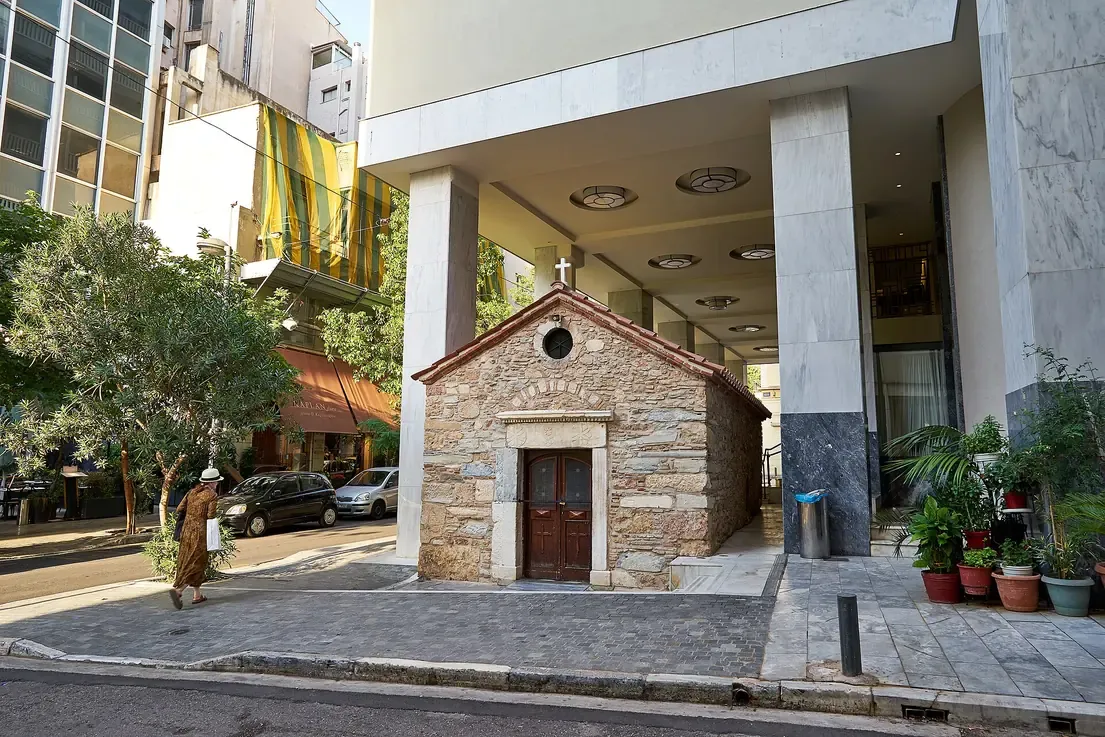
Agia Dynamis
A tiny Byzantine chapel swallowed by a 1930s ministry building, which was raised on pillars over it rather than knock it down.
Location: Mitropoleos 15, Athens
Photo: "The Church of Agia Dynami on Pentelis Street" by George E. Koronaios (CC0).
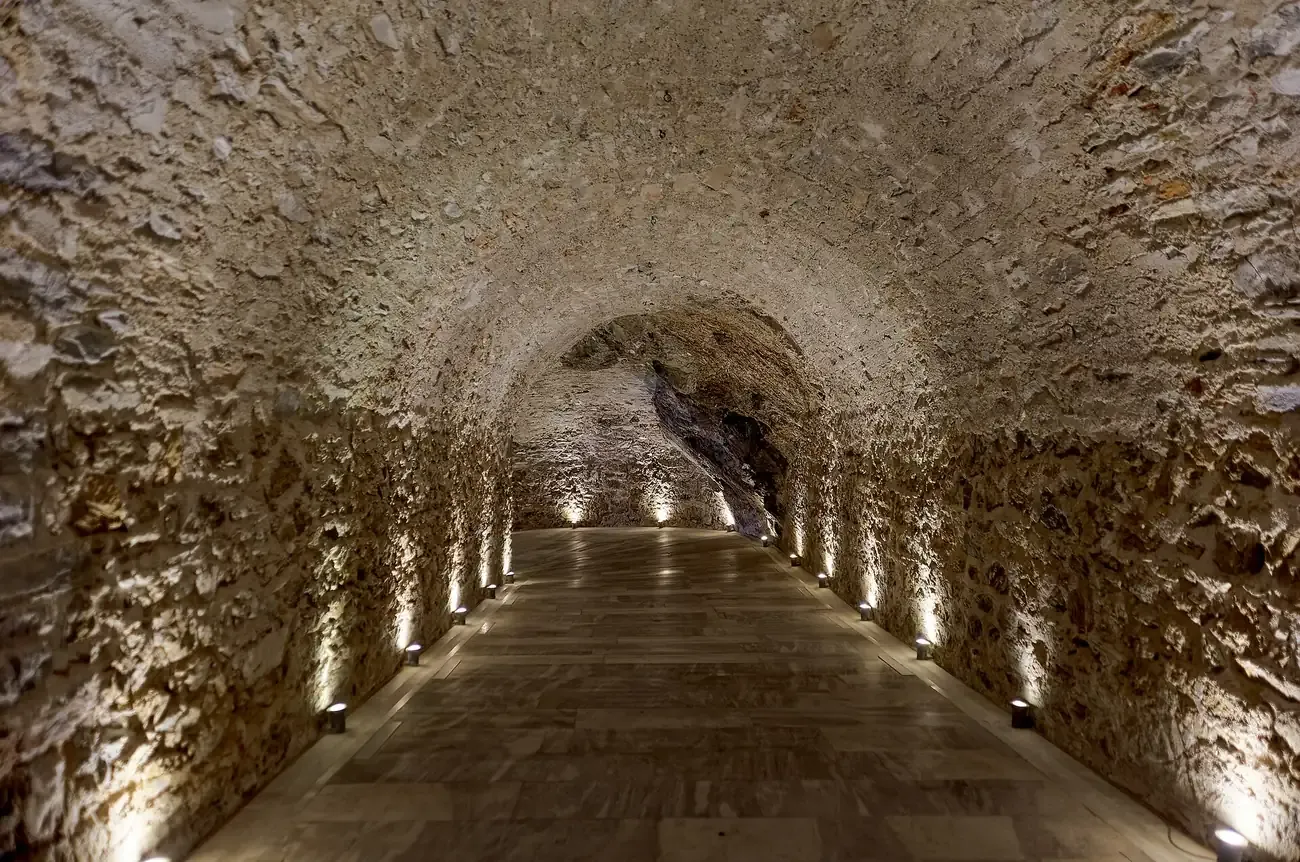
Panathenaic Stadium Passage
A vaulted ancient tunnel under the marble stadium, the diodos, used by competitors to reach the track.
Location: Panathenaic Stadium, Vasileos Konstantinou Avenue, Athens
Photo: "The tunnel at the Panathenaic Stadium" by Jakub Hałun (CC BY 4.0).
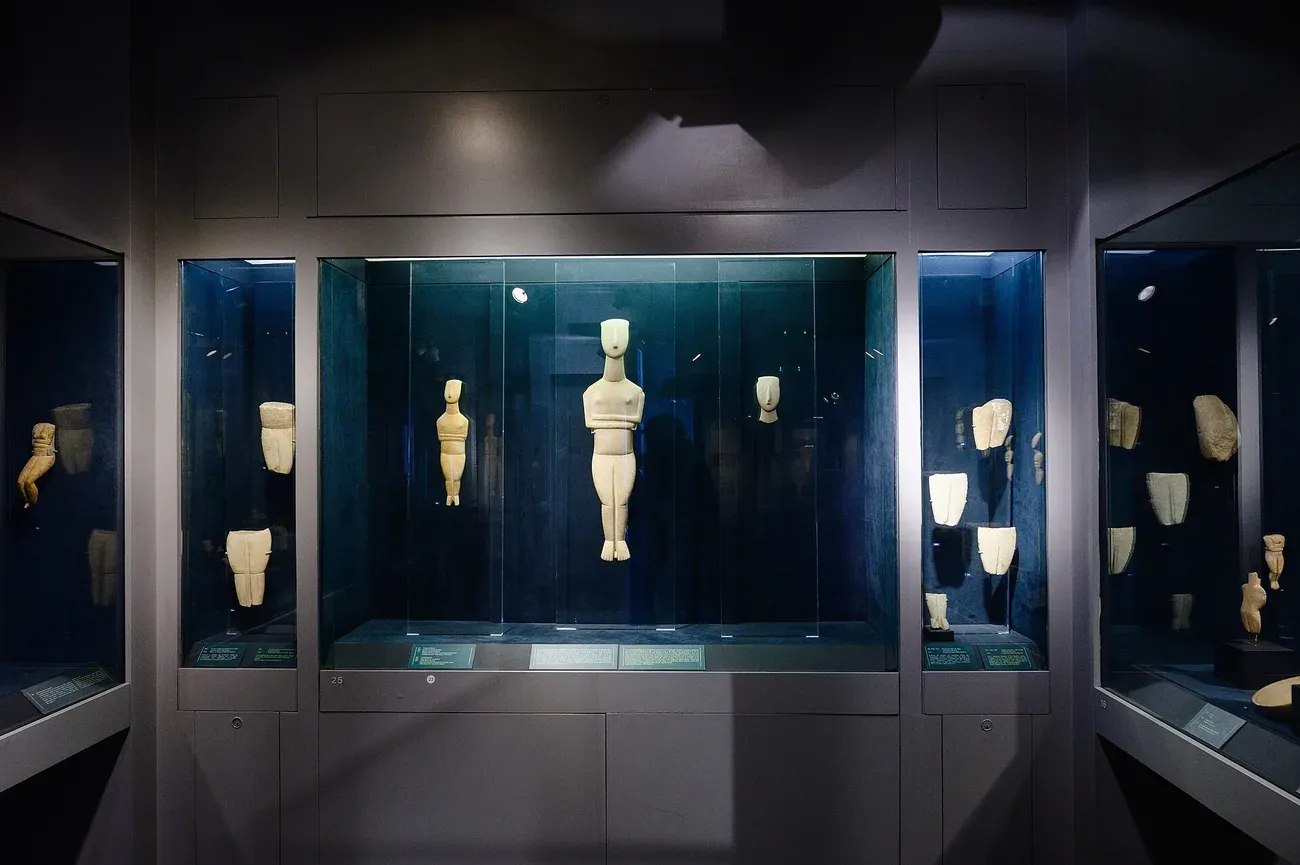
Museum of Cycladic Art
Slim marble figurines from the Aegean islands, five thousand years old and an open influence on Brancusi and Modigliani.
Location: 4 Neophytou Douka Street, Athens. Website
Photo: "Cycladic idols in the main hall of the Museum of Cycladic Art" by Zde (CC BY-SA 4.0).
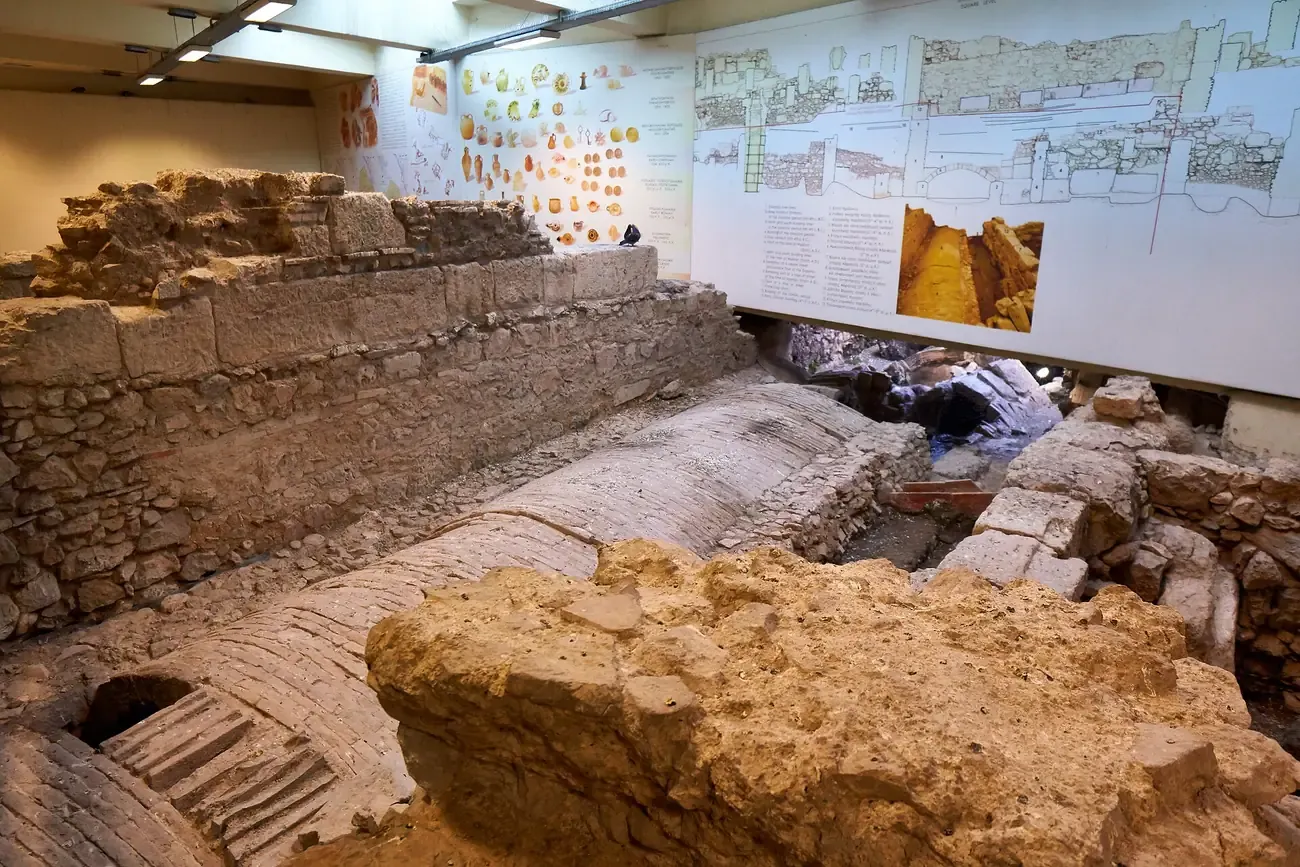
Monastiraki Metro Excavations
An active dig beside the platform, where the bed of the Eridanos river and ancient walls lie exposed under the station.
Location: Monastiraki metro station, Athens
Photo: "The vaulted riverbed of the Eridanos at Monastiraki metro station" by George E. Koronaios (CC0).
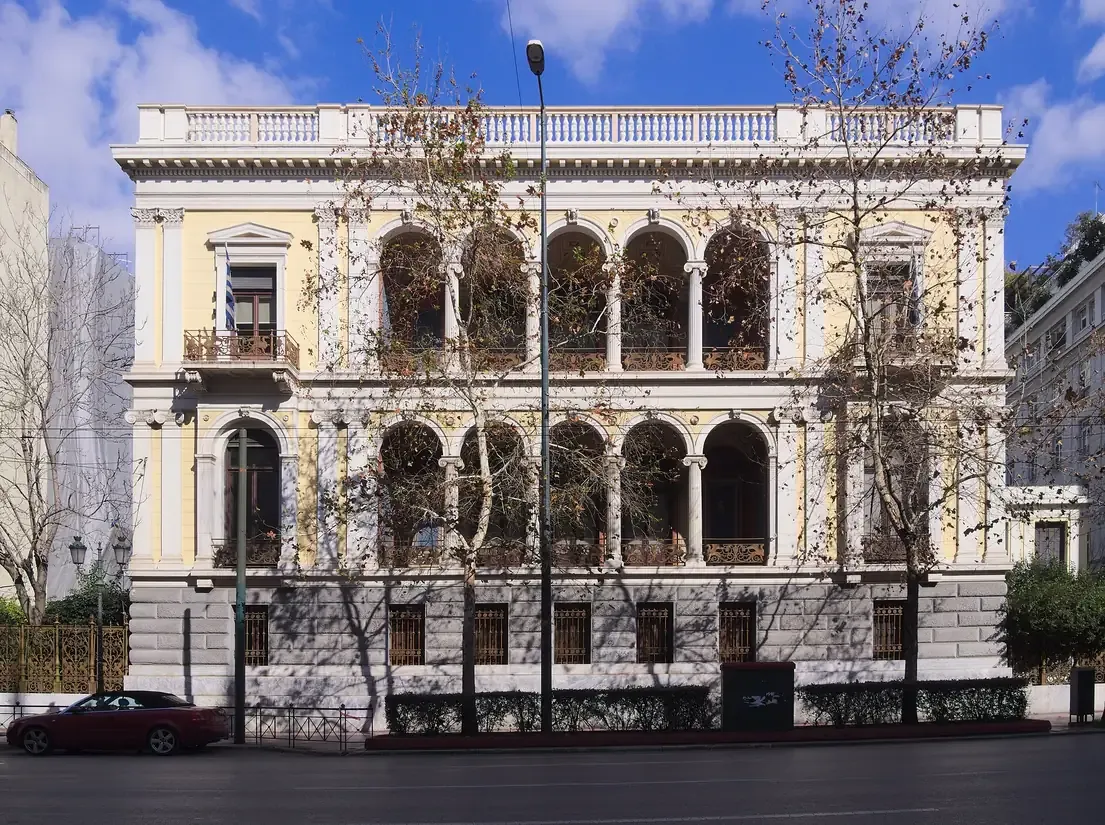
Numismatic Museum
Greek coins from antiquity onward, shown inside the painted mansion that Heinrich Schliemann built for himself.
Location: 12 Eleftheriou Venizelou Street, Athens. Website
Photo: "The Iliou Melathron, home of the Numismatic Museum of Athens" by C messier (CC BY-SA 4.0).
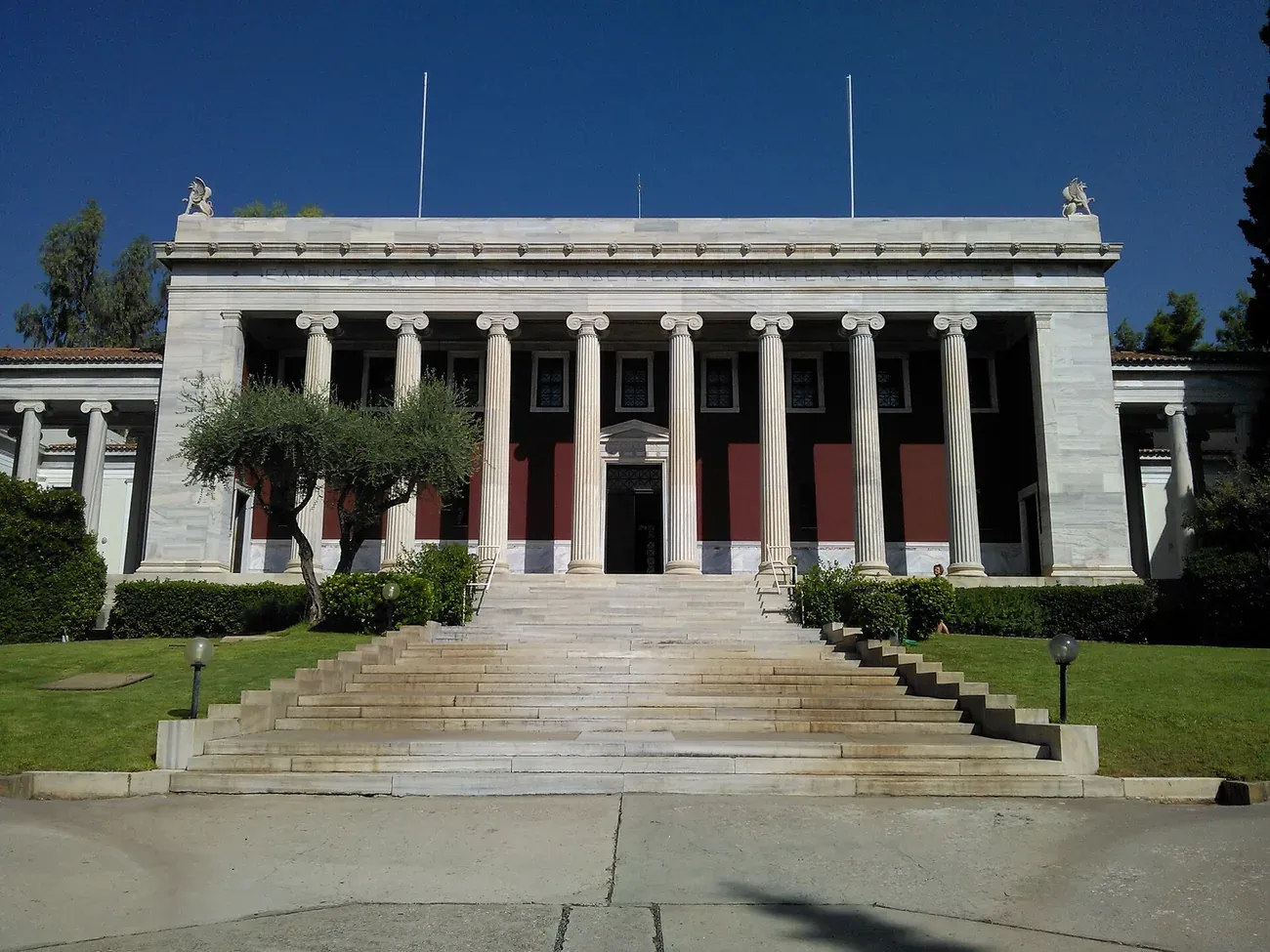
Gennadius Library
A marble fronted library of rare books on Greece, from illuminated manuscripts to travellers' accounts, on the American School grounds.
Location: Souidias 61, Athens
Photo: "The Gennadius Library, Athens" by Neosmyrnian (CC BY-SA 4.0).
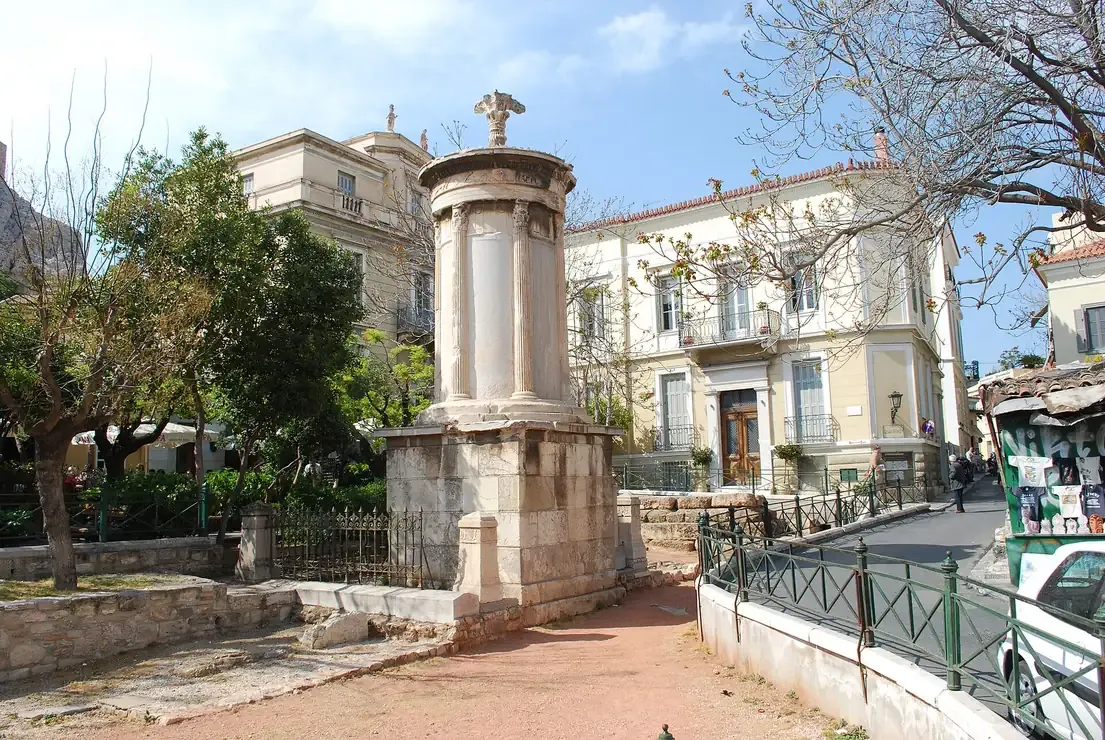
Choragic Monument of Lysicrates
A slender marble rotunda raised in the fourth century BCE to display a drama prize, and an early external use of Corinthian columns.
Location: Lysicrates Square, Epimenidou 3, Athens
Photo: "The Choragic Monument of Lysicrates in Plaka" by Jean Housen (CC BY 3.0).
Sculpture and memorials across Athens
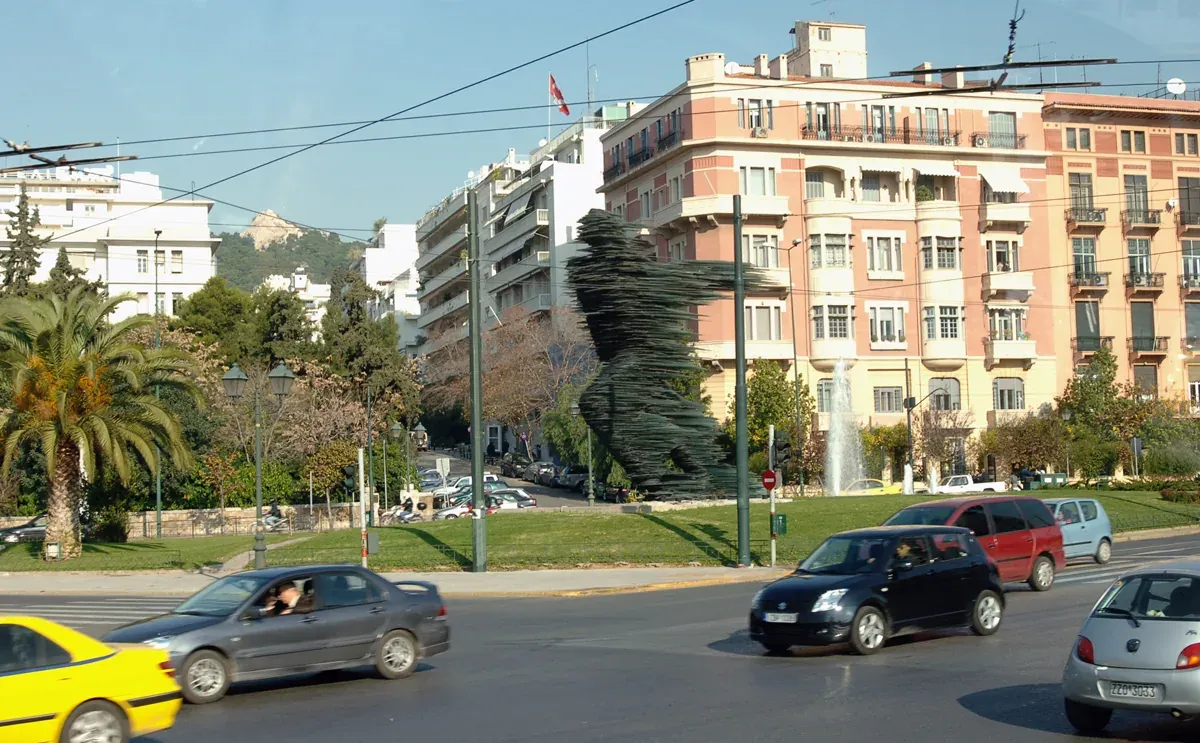
Dromeas (The Runner)
A running figure assembled from stacked sheets of green glass, catching the light beside a busy avenue.
Location: Megalis tou Genous Scholis Square, Athens
Photo: "The Runner glass sculpture in Athens" by Валерий Дед (CC BY 3.0).
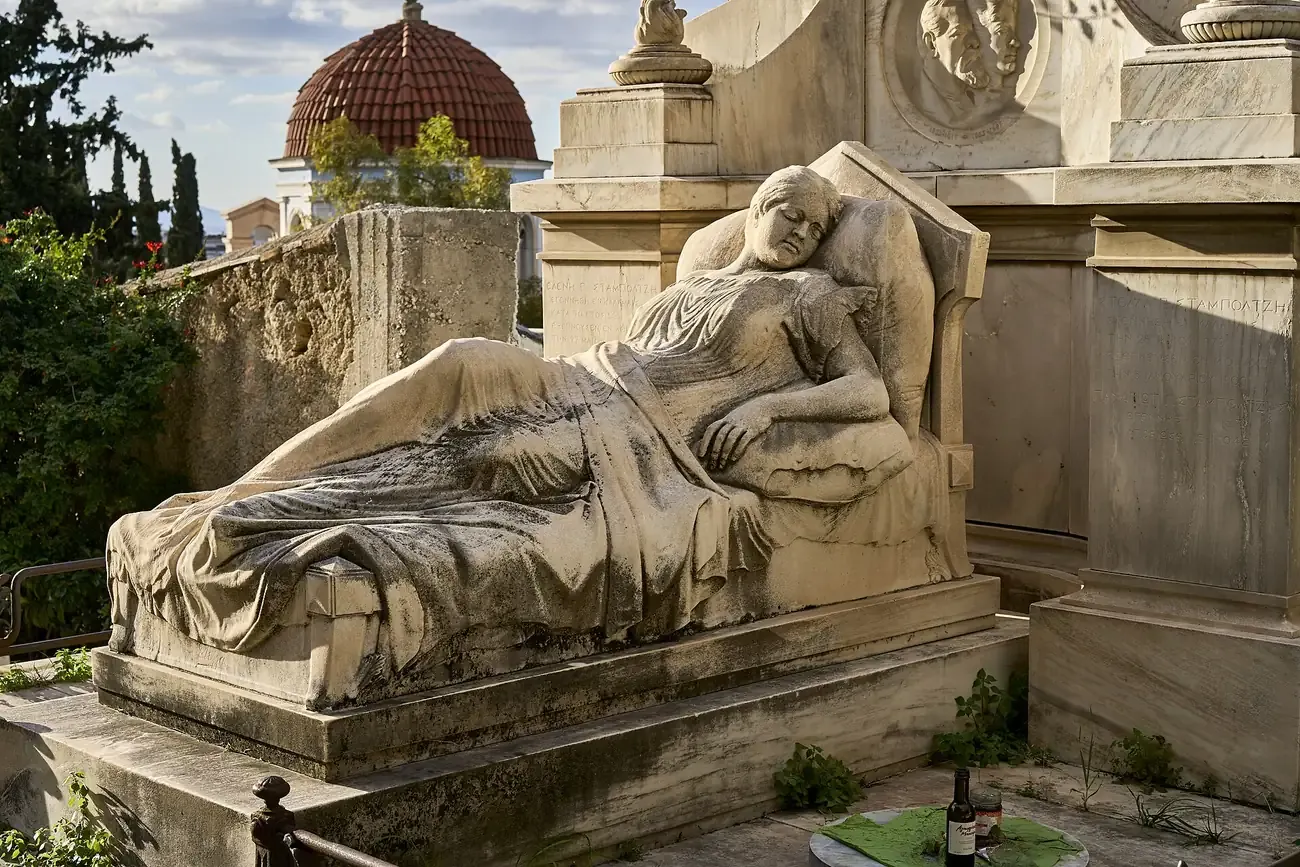
First Cemetery of Athens
Marble tombs and sculpted portraits of the founders of the modern Greek state, laid out as a quiet garden of monuments.
Location: 3 Logginou Street, Athens. Website
Photo: "Funerary statue of Stella Stampoltzis at the First Cemetery of Athens" by George E. Koronaios (CC BY-SA 4.0).
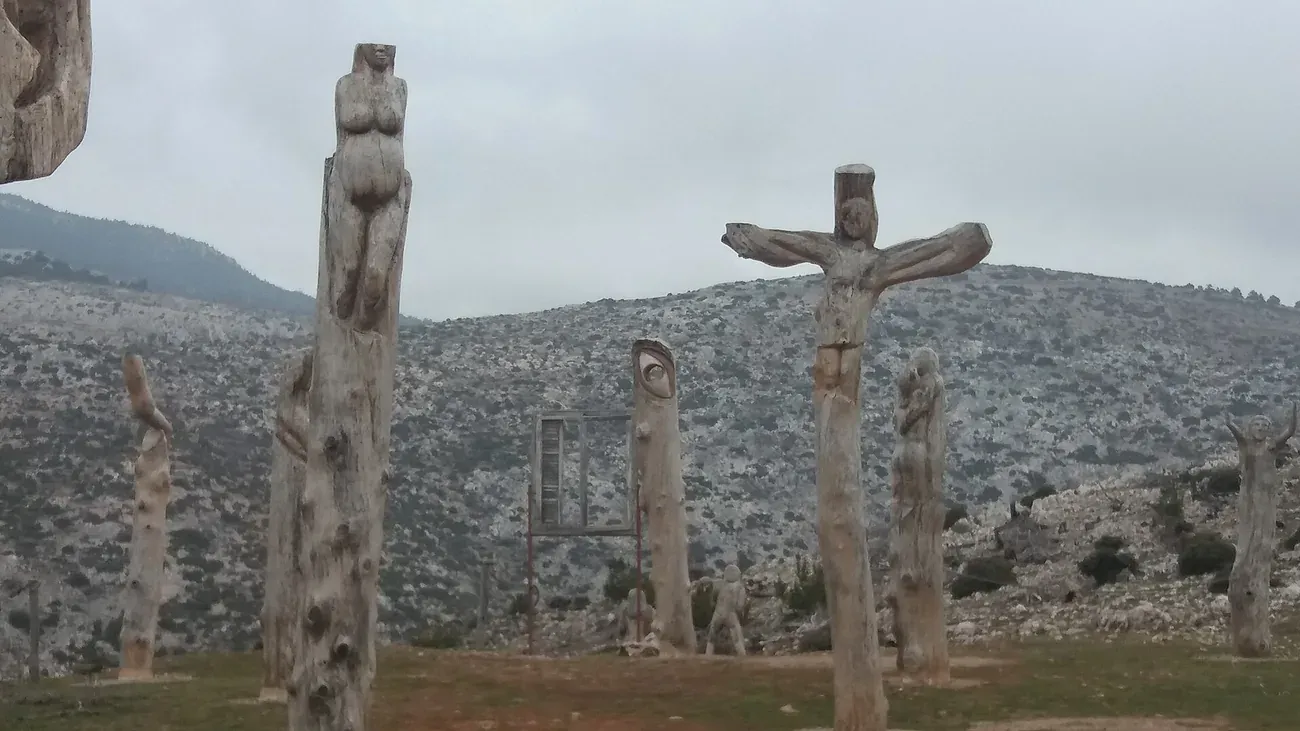
Park of Souls
Carved wooden figures standing in the pines outside an abandoned sanatorium on Mount Parnitha, north of the city.
Location: Parthinos, Acharnes, north of Athens
Photo: "Park of Souls on Mount Parnitha" by Μαρία Τσιπούρα (CC BY-SA 4.0).
Byzantine and Ottoman layers of Athens
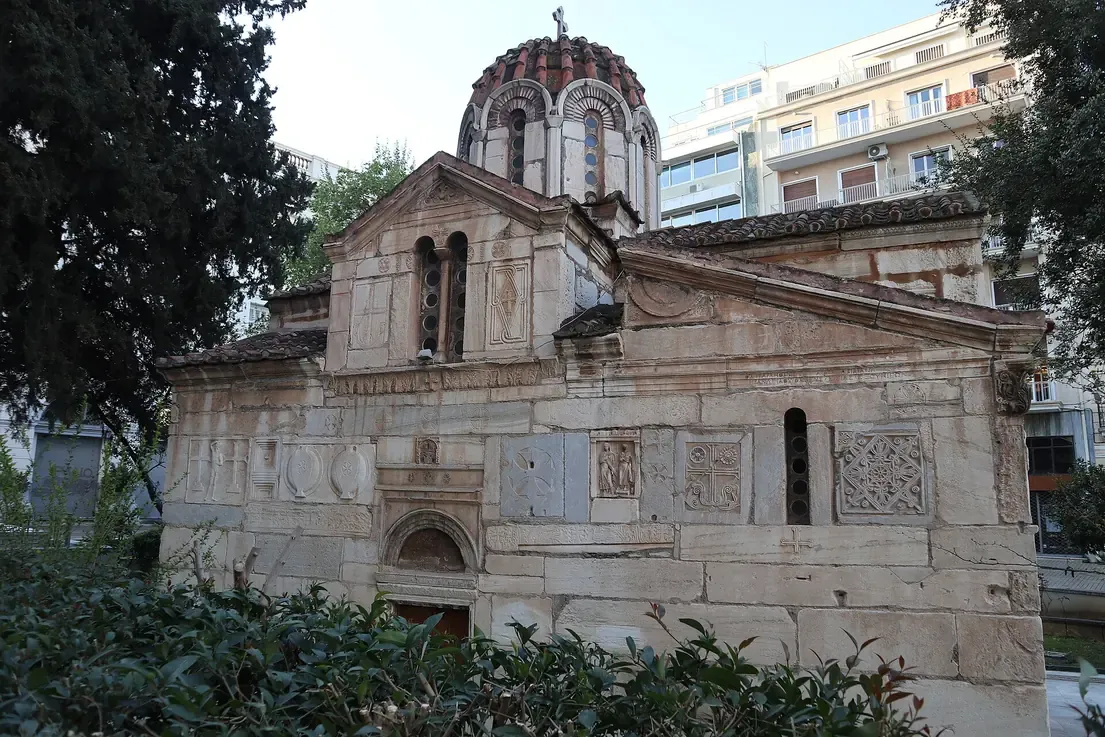
Little Metropolis Church
A small Byzantine church built almost entirely from recycled ancient marble, its walls a collage of carved reliefs and inscriptions.
Location: Mitropoleos Square, Agias Filotheis 5B, Athens
Photo: "The Byzantine church of Agios Eleftherios, Panagia Gorgoepikoos (Little Metropolis) in Athens" by George E. Koronaios from Athens, Greece. (CC BY-SA 4.0).
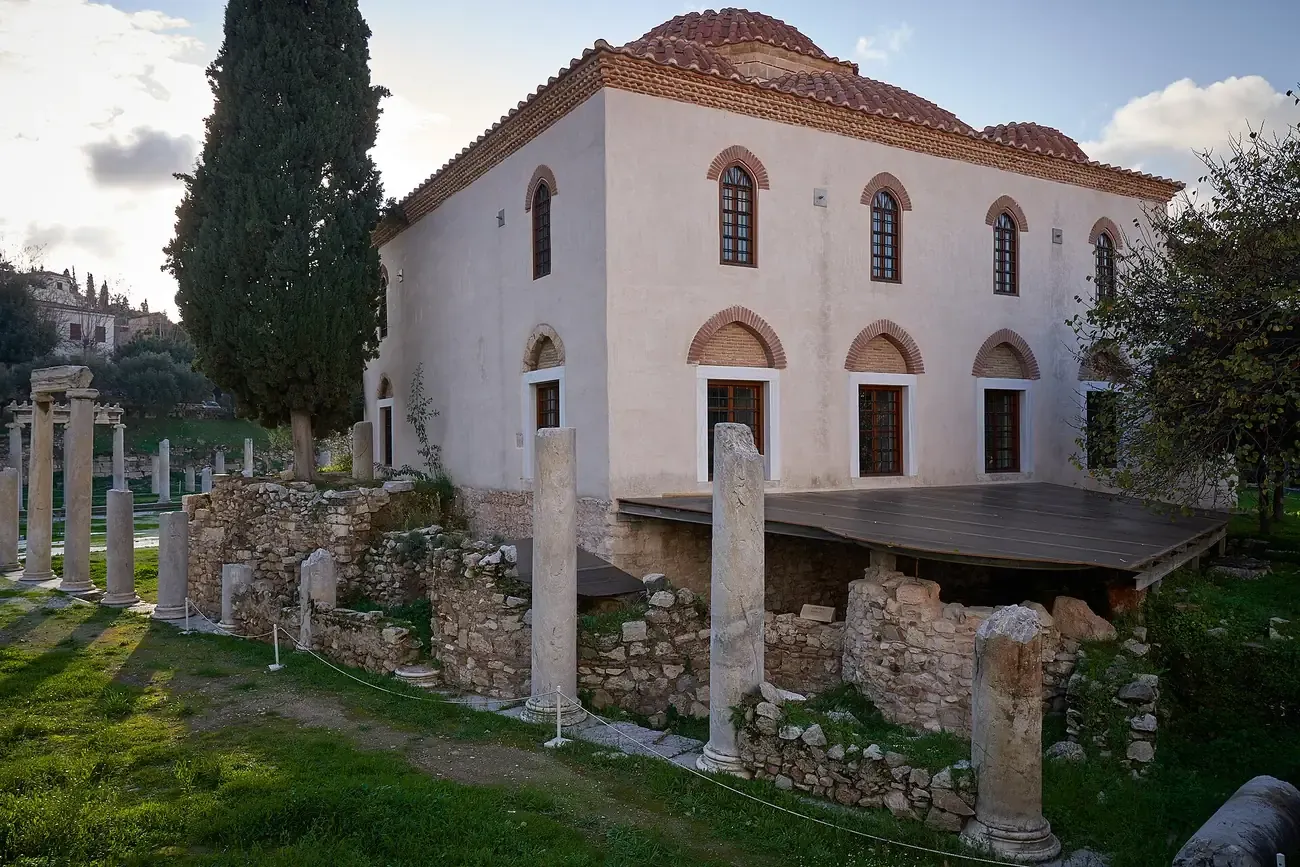
Fethiye Mosque
The Ottoman mosque raised over an early Christian basilica inside the Roman Agora, open to visitors on Wednesdays and Sundays.
Location: 6 Panos Street, inside the Roman Agora, Athens
Photo: "Remains of a Christian Basilica under the Fethiye Mosque" by George E. Koronaios (CC BY-SA 2.0).
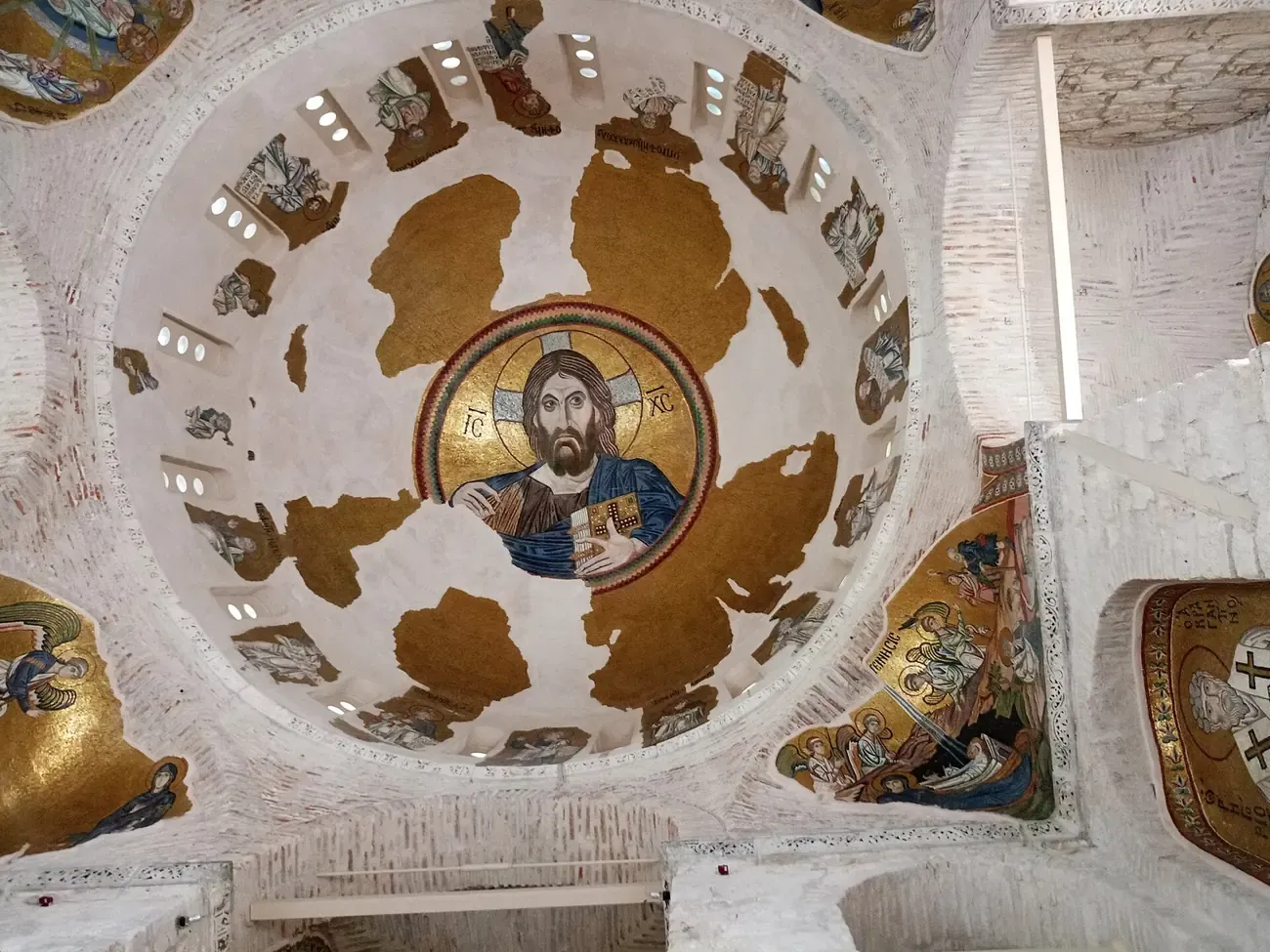
Daphni Monastery
Gold ground mosaics of the eleventh century fill this World Heritage monastery church, free to enter and closed on Tuesdays.
Location: Leoforos Athinon, Chaidari, west of Athens
Photo: "Pantokrator mosaic in the church of the Monastery of Daphni" by Giovanni Dall'Orto (CC BY-SA 2.5 it).
More places to discover in Athens
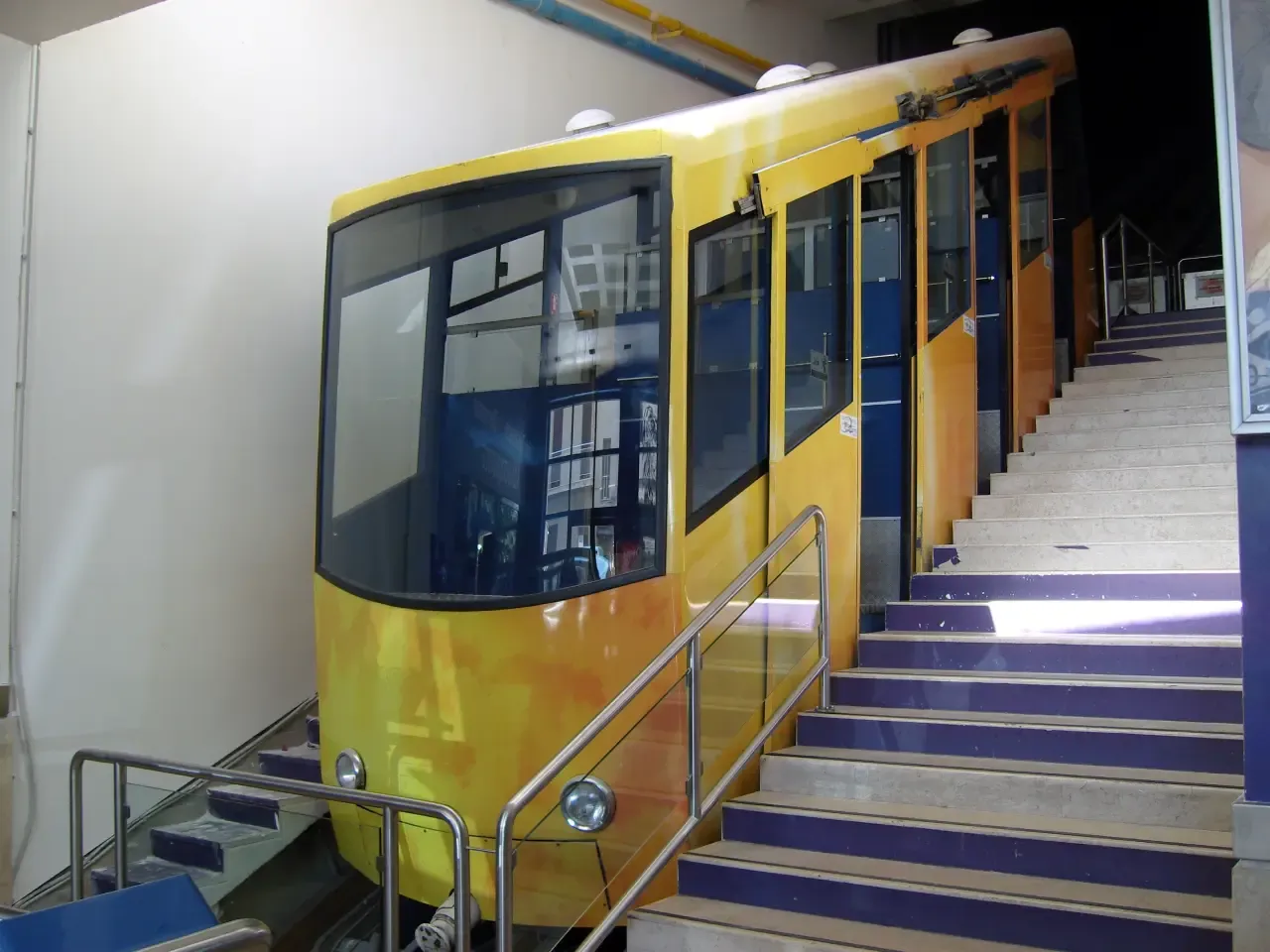
Lycabettus Funicular
A tunnel railway climbing inside the hill to the summit chapel, running since 1965 from a small station in Kolonaki.
Location: Aristippou 1, Kolonaki, Athens
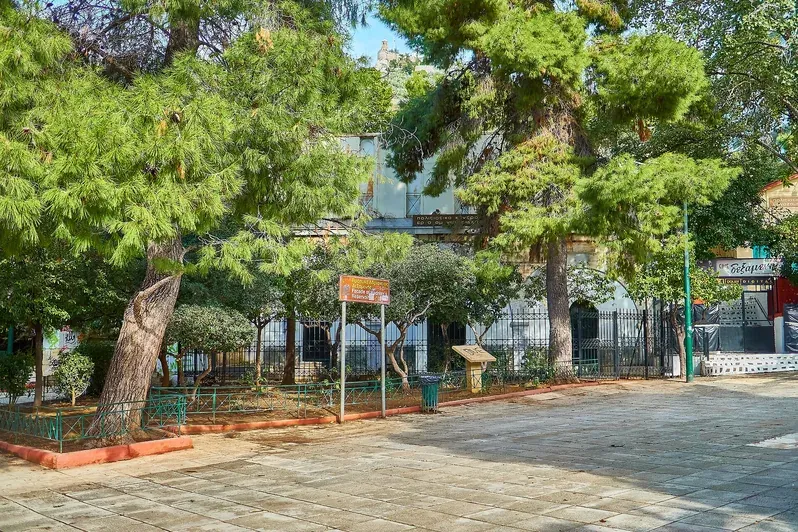
Hadrian's Reservoir
A Roman reservoir cut for Hadrian's aqueduct, now hidden beneath an open air cinema on a quiet Kolonaki square.
Location: Dexameni Square, Kolonaki, Athens
Photo: "View of the remains of Hadrian's Reservoir in Kolonaki" by George E. Koronaios (CC0).
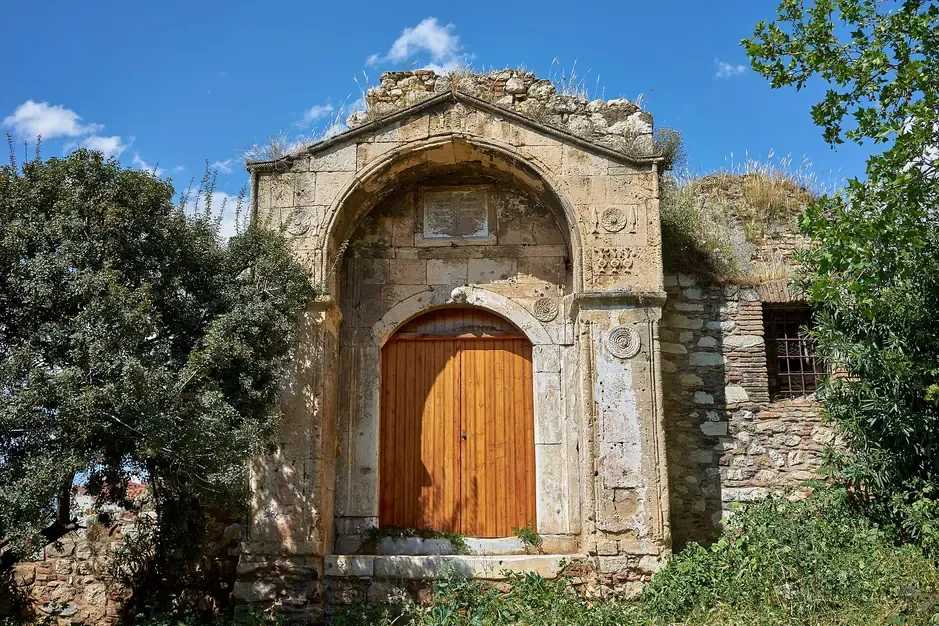
Old Madrasa of Athens
A lone Ottoman gateway is all that survives of the theological school that later served as a prison beside the Roman Agora.
Location: Pelopida and Aiolou, Plaka, Athens
Photo: "Remains of an Ottoman Medrese in Athens" by George E. Koronaios (CC BY-SA 4.0).
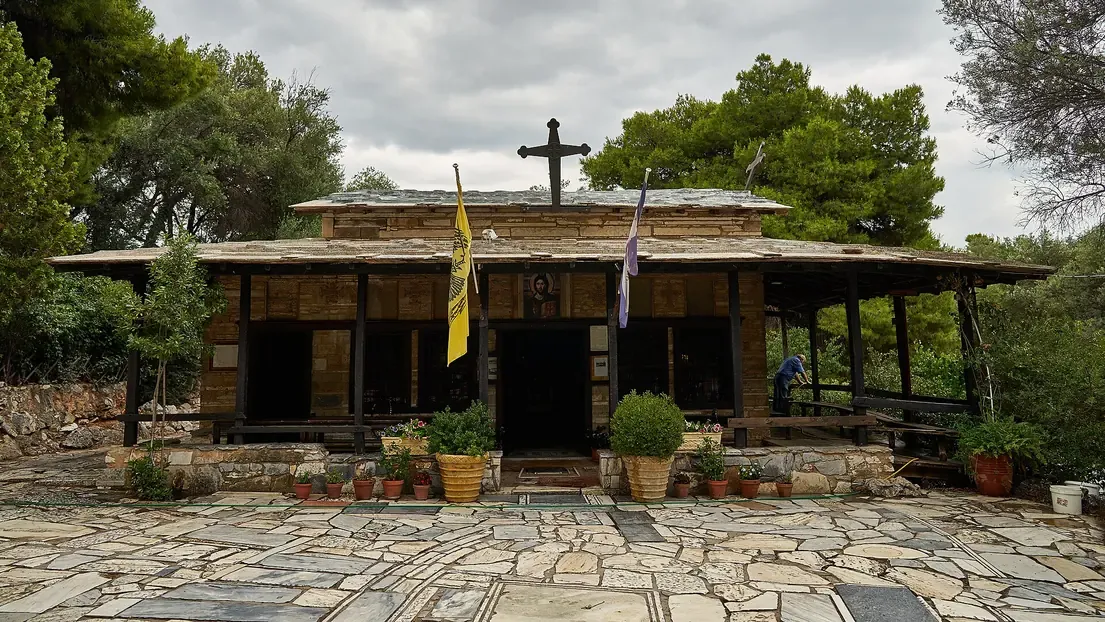
Agios Dimitrios Loumbardiaris
A wood roofed Byzantine chapel among the pines below Philopappos hill, reworked by the architect Dimitris Pikionis in the 1950s.
Location: Apostolou Pavlou and Dionysiou Areopagitou, Athens
Photo: "The Church of Saint Demetrius Loumbardiaris" by George E. Koronaios (CC BY-SA 4.0).
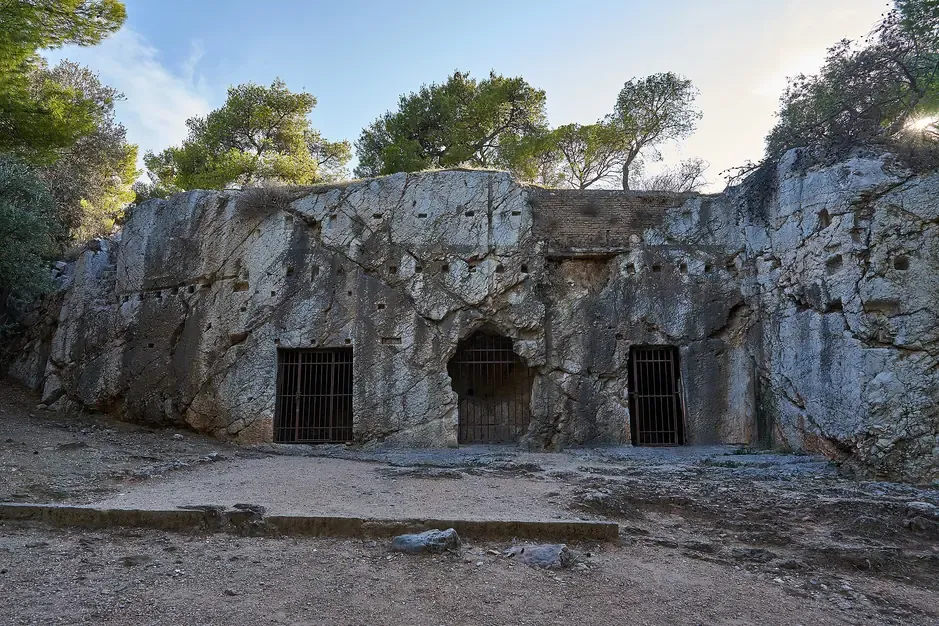
Caves of Filopappou Hill
Rock cut chambers on the hill facing the Acropolis, used to hide museum antiquities during the Second World War.
Location: Filopappou Hill, Athens
Photo: "The so-called Prison of Socrates on Philopappos Hill" by George E. Koronaios (CC0).
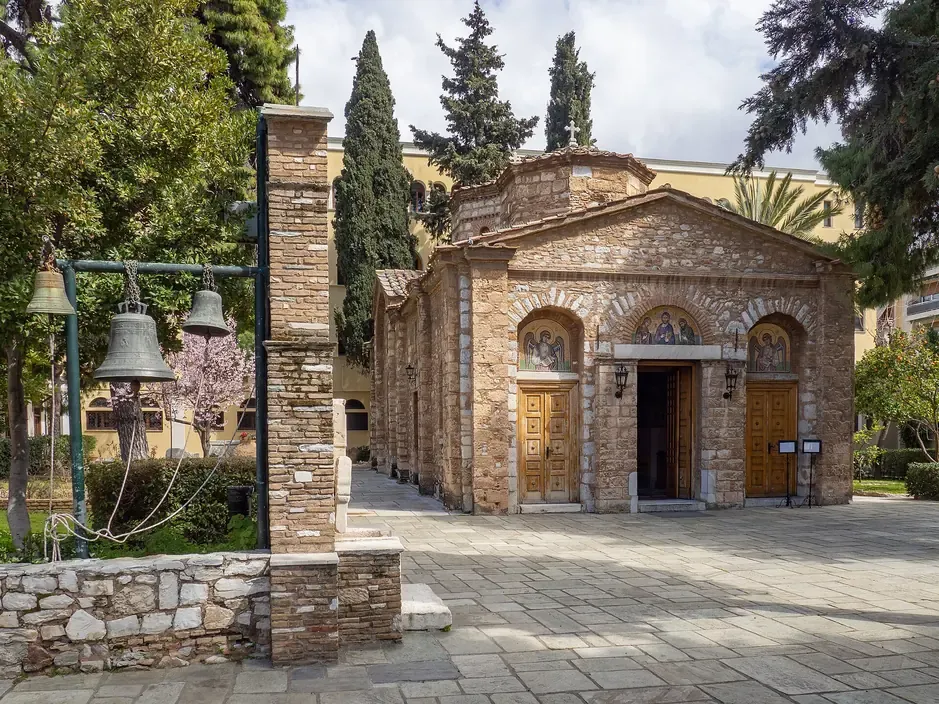
Petraki Monastery
A working monastery behind high walls in Kolonaki, keeping a Byzantine church of the tenth century and eighteenth century frescoes.
Location: 3 Evzonon Street, Athens
Photo: "Petraki Monastery church and courtyard" by C messier (CC BY-SA 4.0).
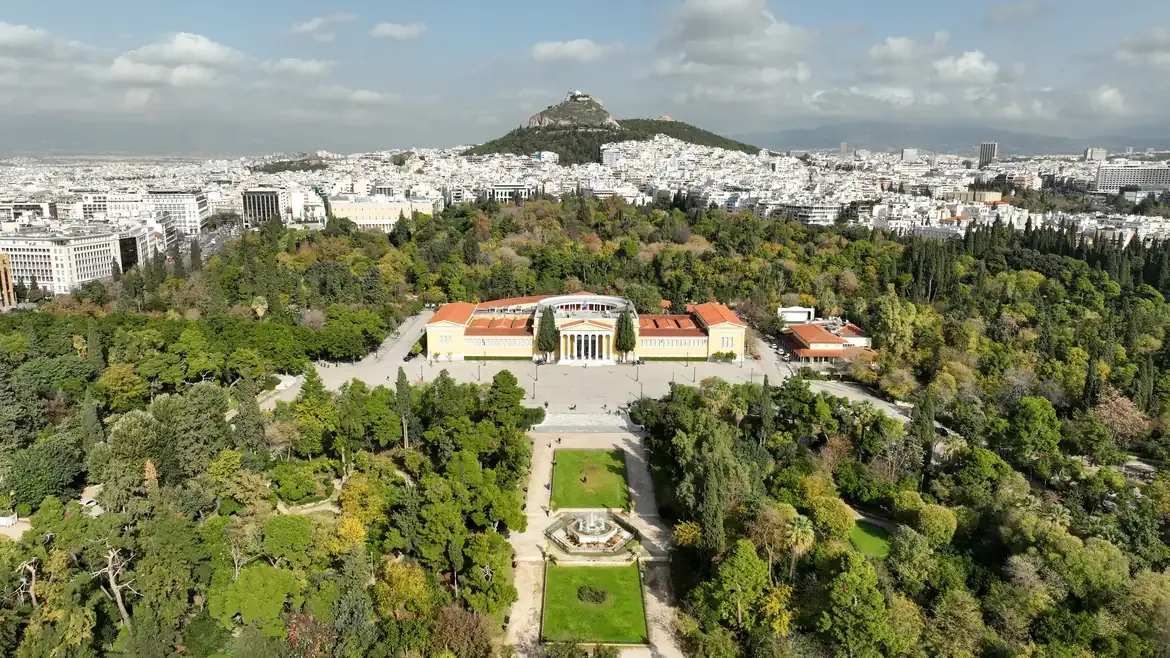
Zappeion
A neoclassical hall built for the revival of the Olympic Games, ringed by gardens between the National Garden and the Olympieion.
Location: Vasilissis Olgas Avenue, Athens. Website
Lesser-known spots in Athens
Wax Museum of Andreas Syggros
Rows of wax models of skin and venereal diseases, kept as a teaching collection inside a working dermatology hospital.
Location: Syggros Hospital, 5 Ionos Dragoumi, Athens
Roman Tomb in Zara
A Roman tomb displayed behind glass in the basement of a Zara store, left where the works for the shop found it.
Location: 32 Stadiou Street, Athens
Kafeneio Oraia Ellas
One of the oldest coffee houses in the city, opened in 1839 and long a meeting room for Athenian writers and politicians.
Location: Mitropoleos 59, Monastiraki, Athens
Diporto
A cellar taverna with no sign, reached through two wooden doors by the central market and serving a handful of dishes from barrels.
Location: Sokratous 9 and Theatrou, Athens
Gestapo Interrogation Memorial
A preserved cellar on Merlin Street marking the building where the occupying secret police interrogated members of the resistance.
Location: 6 Merlin Street, Athens
More Athens travel guides
Athens on a Sunday
Plan what to do in Athens on a Sunday, from the Monastiraki flea market to the 11:00 guard parade and the shops that stay open.
Free things to do in Athens
The list of free things to do in Athens covers the hills, the guard, a free day on foot and what only looks free.
Free museum days in Athens
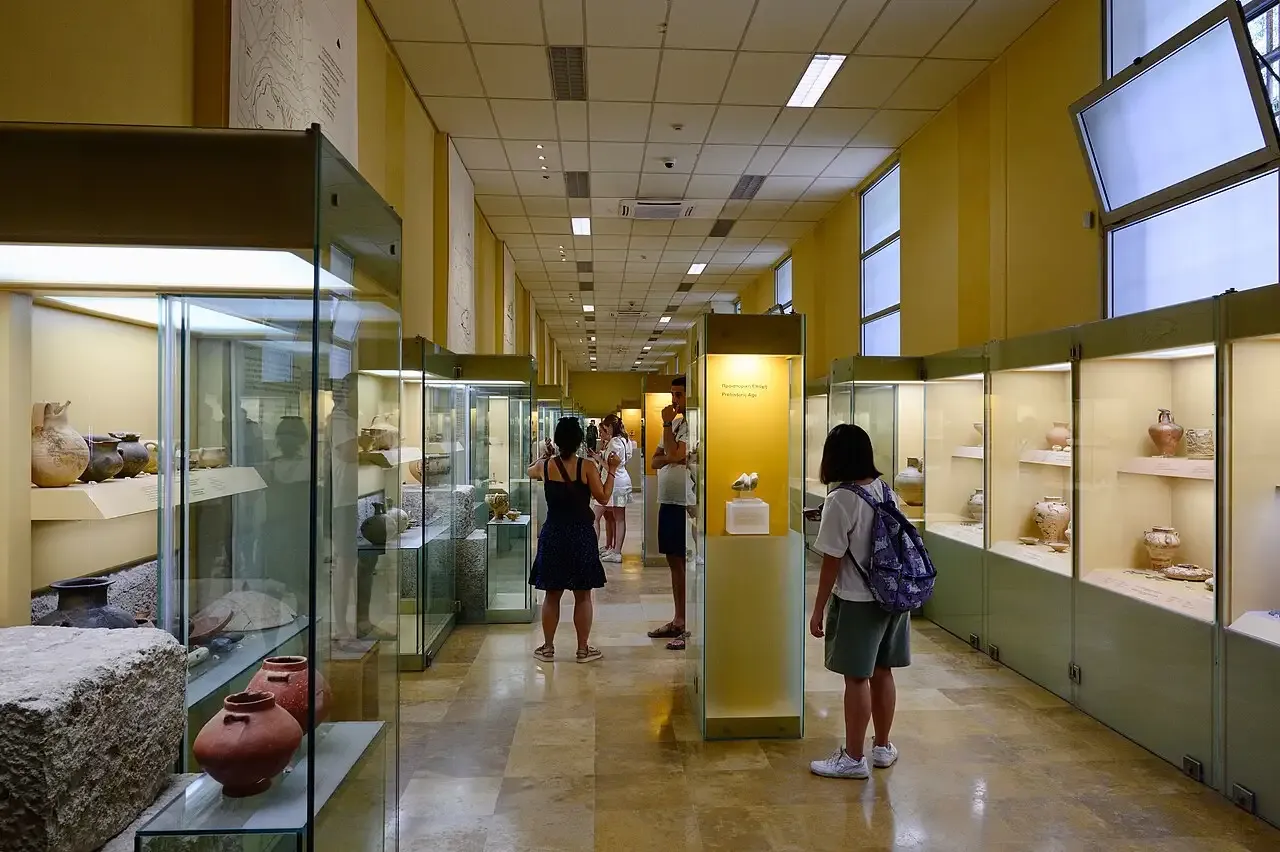
The guide to free museums in Athens lists every free entry day for 2026-2027 and who gets in free all year.