
Tourist attractions in Antalya
Known for
Kaleici's Ottoman old town, layered Roman and Seljuk ruins
Must-see landmarks
Hadrian's Gate, the Fluted Minaret, the Old Harbour and Karaalioglu Park
Best time to visit
April to May and October to November, once the summer heat eases
Getting around
Kaleici on foot, the AntRay tram and buses for the rest of the city
The main tourist attractions in Antalya, ranked
For a first visit, the tourist attractions in Antalya come down to Hadrian's Gate, Yivli Minare (Fluted Minaret), Old Harbour (Kaleiçi Marina) and 6 more sights ranked below, plus free things to do and visitor FAQs.
1. Hadrian's Gate
Three arched bays open through the old city wall on the eastern edge of Kaleiçi, raised in AD 130 in the name of the Roman emperor Hadrian and built entirely of white marble apart from the columns. Domed vaults cover each of the openings. A tower stands at either end: the southern one, the Julia Sancta Tower, is contemporary with the gate itself, while the northern tower keeps an ancient base under Seljuk masonry higher up. The gate stood walled up and unused for centuries until excavation brought it back to light in 1882, and it works again as a way into the old town.
Location: Atatürk Caddesi, on the eastern edge of Kaleiçi.
Access: Free, with no ticket and no gate. The passage stays open at any hour and is lit after dark.
2. Yivli Minare (Fluted Minaret)
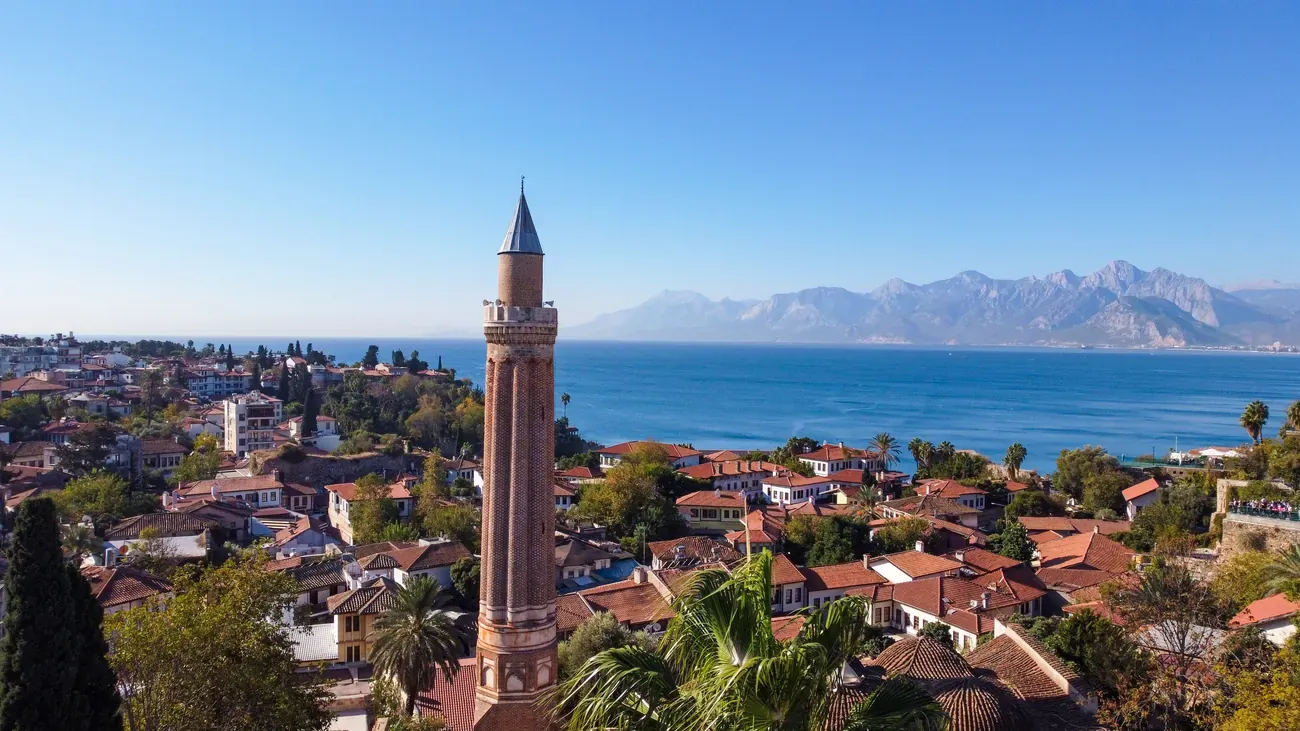
The city's best known silhouette rises at the head of Kaleiçi, a brick minaret grooved into eight flutes and banded with dark blue tile, raised under the Seljuk sultan Alaeddin Keykubad I and climbed by ninety steps to its balcony. The prayer hall behind it was rebuilt in 1373 by Mübarizüddin Mehmed Bey and roofed with six domes, taken as the oldest surviving example of the multi-domed mosque plan in Anatolia. Around it stand a Mevlevi lodge that now serves as a Ministry of Culture exhibition hall, a medrese and two tombs.
Style: Anatolian Seljuk
Location: Kalekapısı, beside the clock tower at the northern entrance to Kaleiçi.
Access: Free. The mosque is in daily use for prayer, so the interior suits a visit outside prayer times.
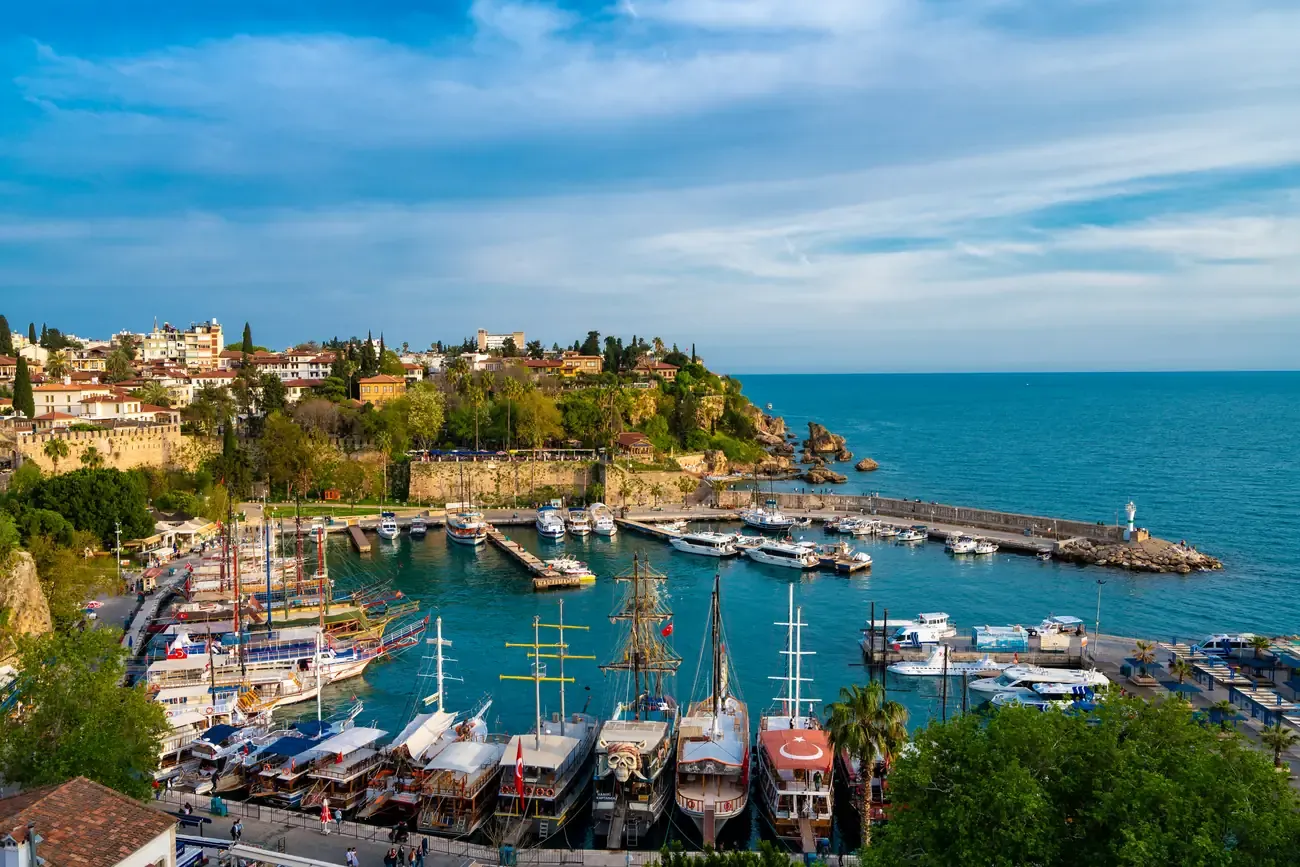
3. Old Harbour (Kaleiçi Marina)
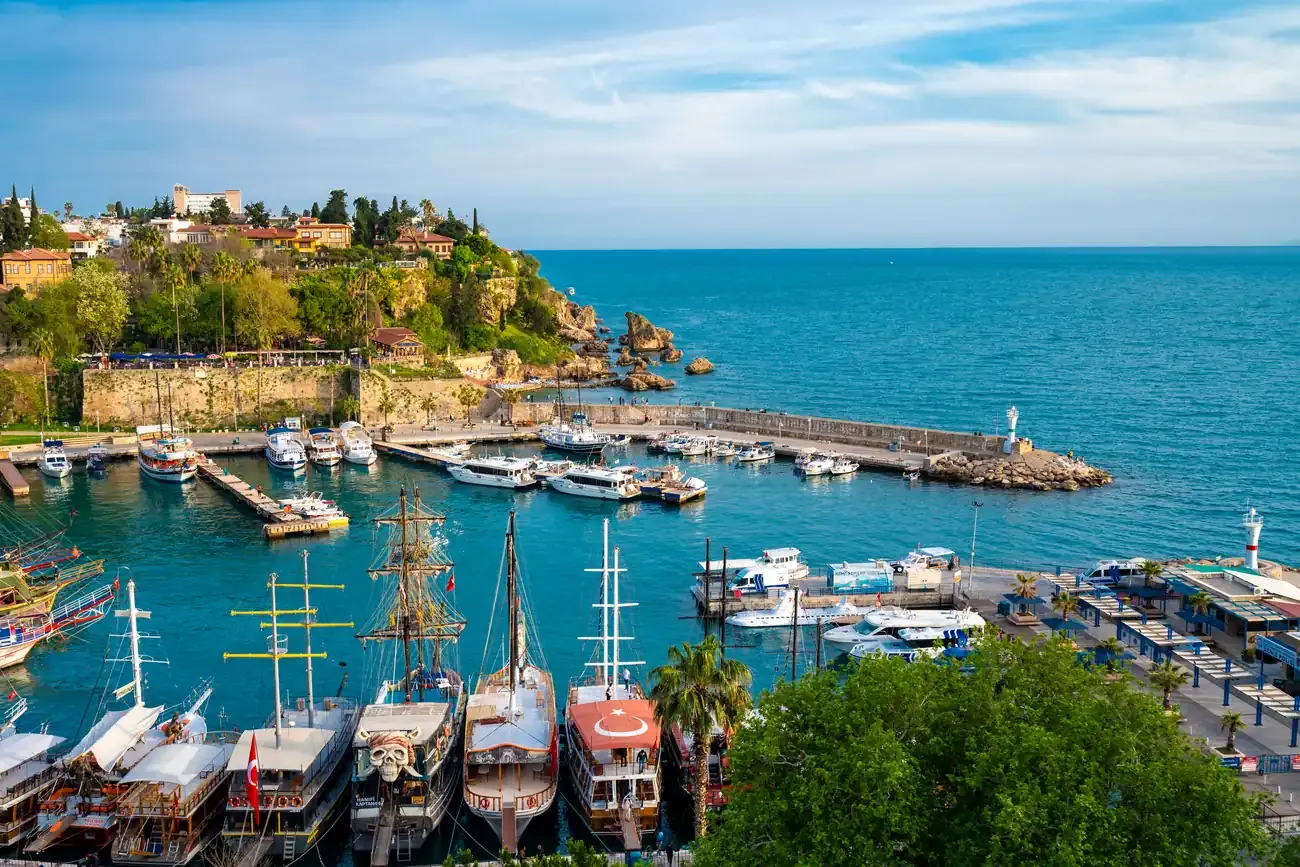
A half circle of water cut into the cliff below the old town, formed as a natural harbour in the Hellenistic period with a mouth 110 metres across, and the port that served Roman Attaleia for centuries afterwards. It works today as a marina, its quays lined with cafes and with wooden gulets that run coastal trips out past the breakwater. The stone jetty gives the clearest view back at the walls of Kaleiçi stacked above the water, and the lanes down to it start from the clifftop by Hidirlik Tower.
Location: below the walls of Kaleiçi, reached on foot from İskele Caddesi.
Access: Free to walk the quays and the breakwater at any hour. Boat trips and restaurant tables carry their own charge.
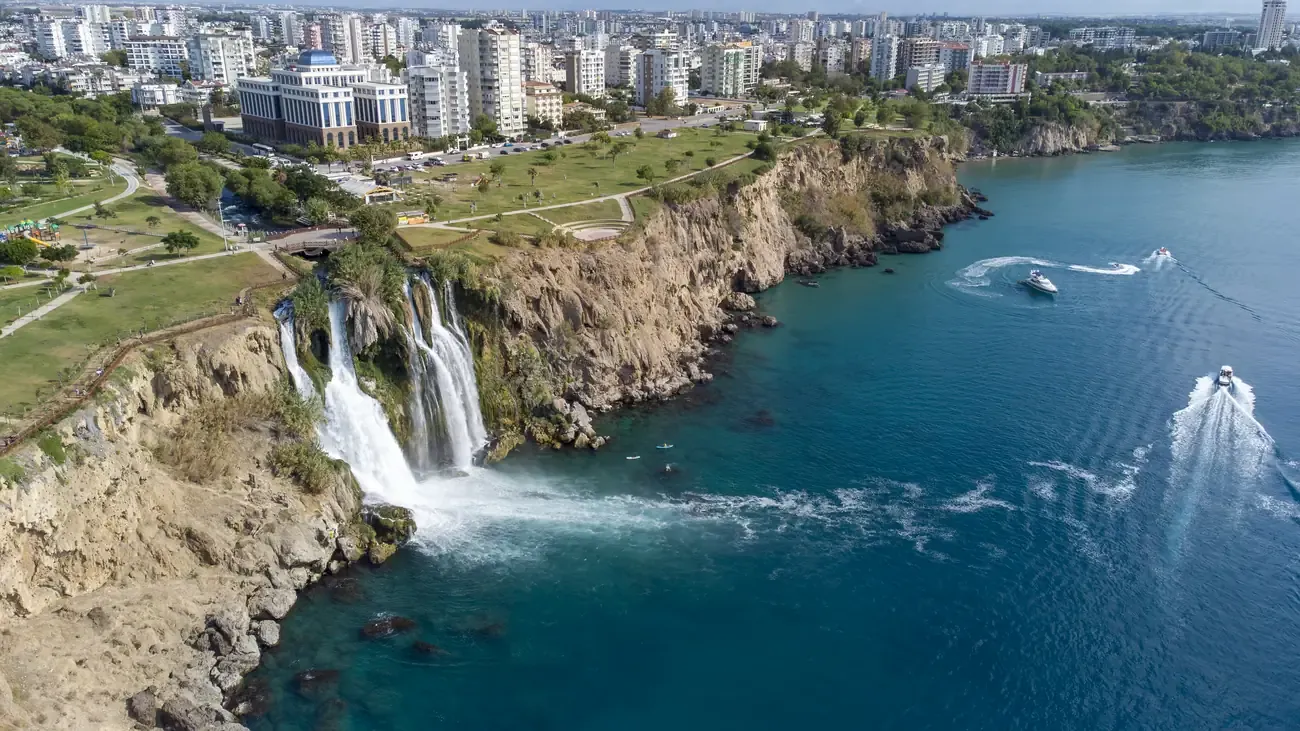
4. Düden Waterfalls
The Düden river surfaces from the limestone north of the city and drops twice before it reaches the sea. The Upper Düden falls in Kepez, twelve kilometres out, tumble some 15 metres into a shaded pool inside a park with a path behind the curtain of water. Downstream the river crosses the plateau of Lara and, at the Lower Düden falls, pours 40 metres straight off the travertine cliff into the Mediterranean. The clifftop park above gives the view for free, and in summer boats from the Old Harbour sail along the coast to sit under the spray.
Height: Lower falls 40 m, upper falls about 15 m
Location: Lower falls at Düden Park, Lara; upper falls in Kepez
Access: Lower falls free from the park; the upper falls park and the boat trips are ticketed
5. Kesik Minare (Şehzade Korkut Mosque)
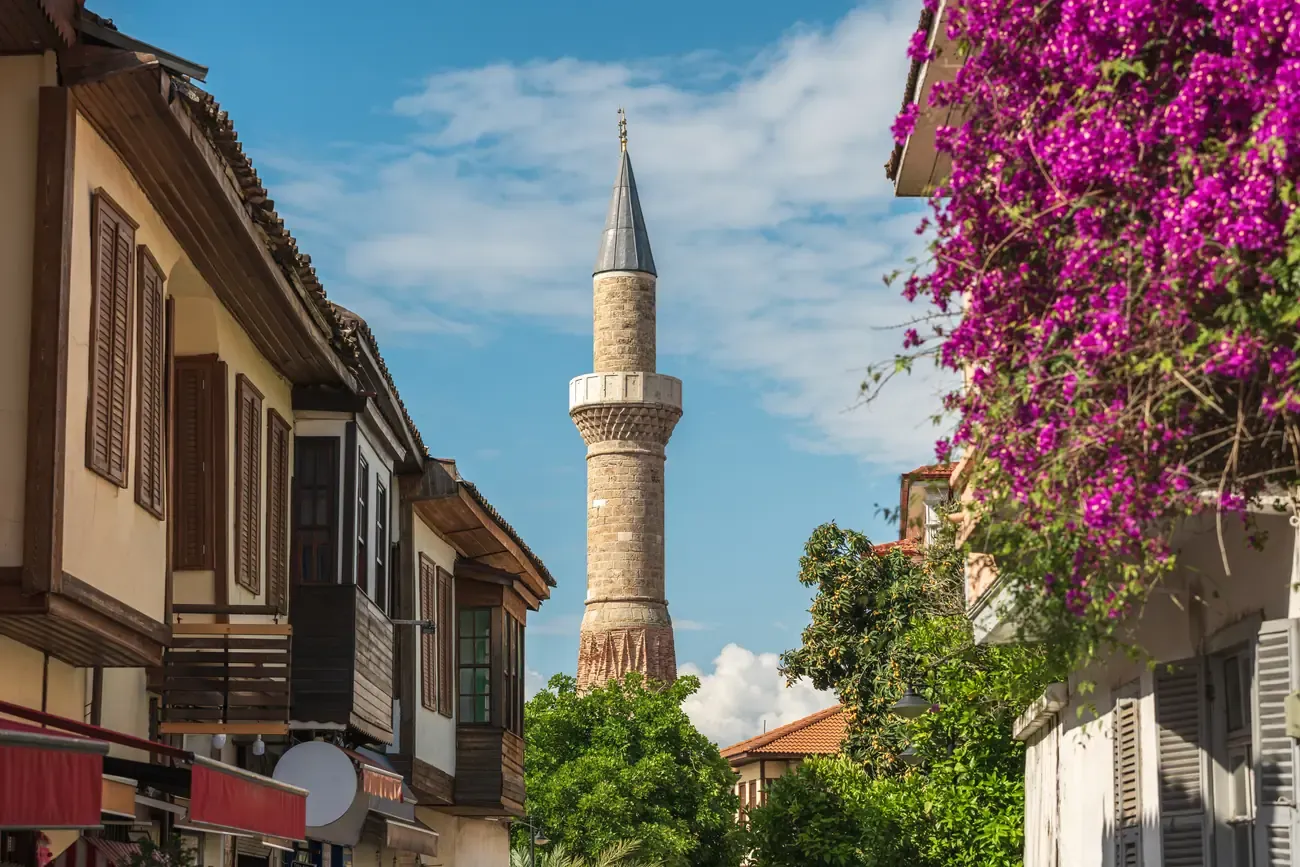
One shell in the middle of Kaleiçi carries seven periods of the city. A Roman temple gave way to the Byzantine church of Panhagia, which became a mosque and was rebuilt in the time of Şehzade Korkut, son of Sultan Bayezid II, whose name the building now carries. A fire at the end of the 19th century gutted it and took the wooden cap off the minaret, leaving the stump behind the popular name. Restoration work began in 2017 and the building returned to worship in 2022, 126 years after the fire closed it, with carved fragments recovered on site laid out in the courtyard.
Style: Byzantine and Ottoman
Location: Kılınçarslan Mahallesi, in the southern half of Kaleiçi.
Access: Free. It serves as a working mosque and as a monument at the same time.
6. Antalya Ethnographic Museum
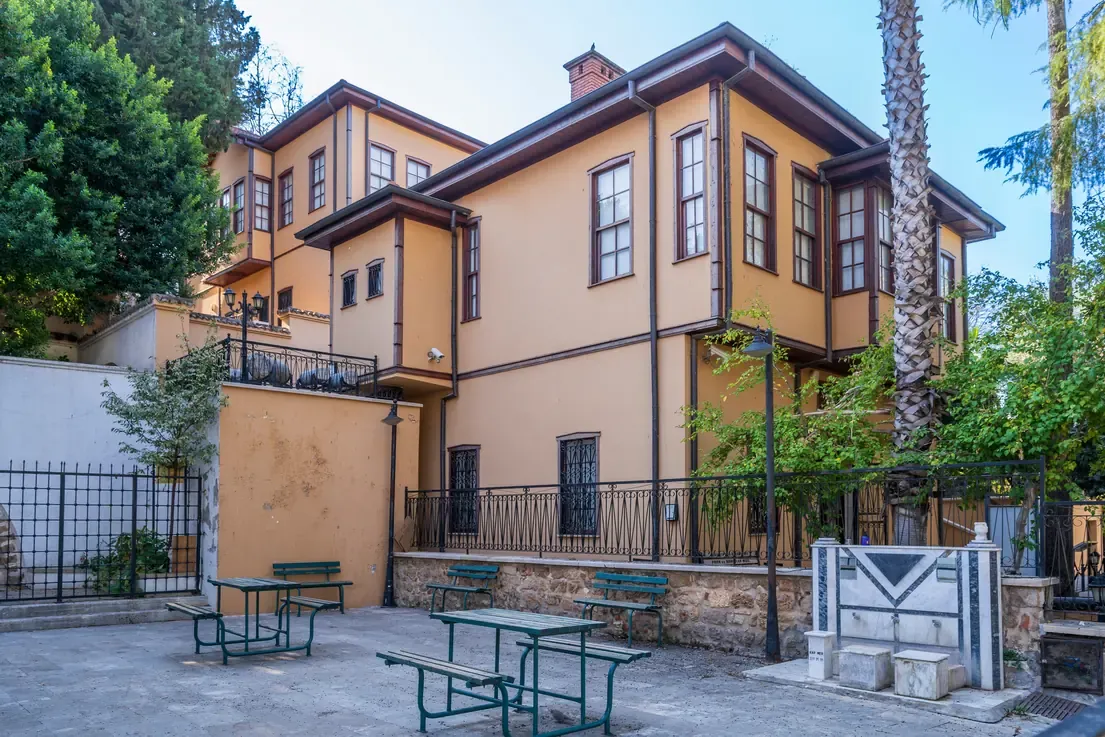
Two 19th century mansions on a lane above the harbour hold the city's ethnographic collection, divided between a lower and an upper konak. The lower house shows finds from the Kaleiçi excavations and Seljuk tilework on its first floor, with Ottoman weapons, household objects and calligraphy above. The upper house is arranged as the rooms of an Ottoman Antalya household, alongside displays on the Yörük, the nomadic herders of the Taurus range. Inscriptions, cannon and Seljuk and Ottoman gravestones stand in the garden between the two.
Location: Kılınçarslan Mahallesi, Mermerli Banyo Sokak 17, Kaleiçi.
Access: Free to enter and open every day. Hours and contact details sit on the Ministry of Culture museum portal.
7. Hidirlik Tower
A two storey Roman block of squared stone carrying a round drum on top stands at the southwestern corner of the Kaleiçi walls, fourteen metres tall and generally read as a monumental tomb of the first or second century. The cliff behind it falls straight to the sea, which is what makes the ground around it the standing sunset spot of the old town. The city council finished an excavation and viewing terrace project here in 2026, so the walk now passes glass panels set over what the dig turned up, among it a colonnaded Roman street running towards Hadrian's Gate and an early Byzantine chapel floor.
Location: the western edge of Karaalioğlu Park, at the end of Hıdırlık Sokak.
Access: Free. The tower and the terrace beside it stand in the open, with no ticket booth.
8. Karaalioğlu Park
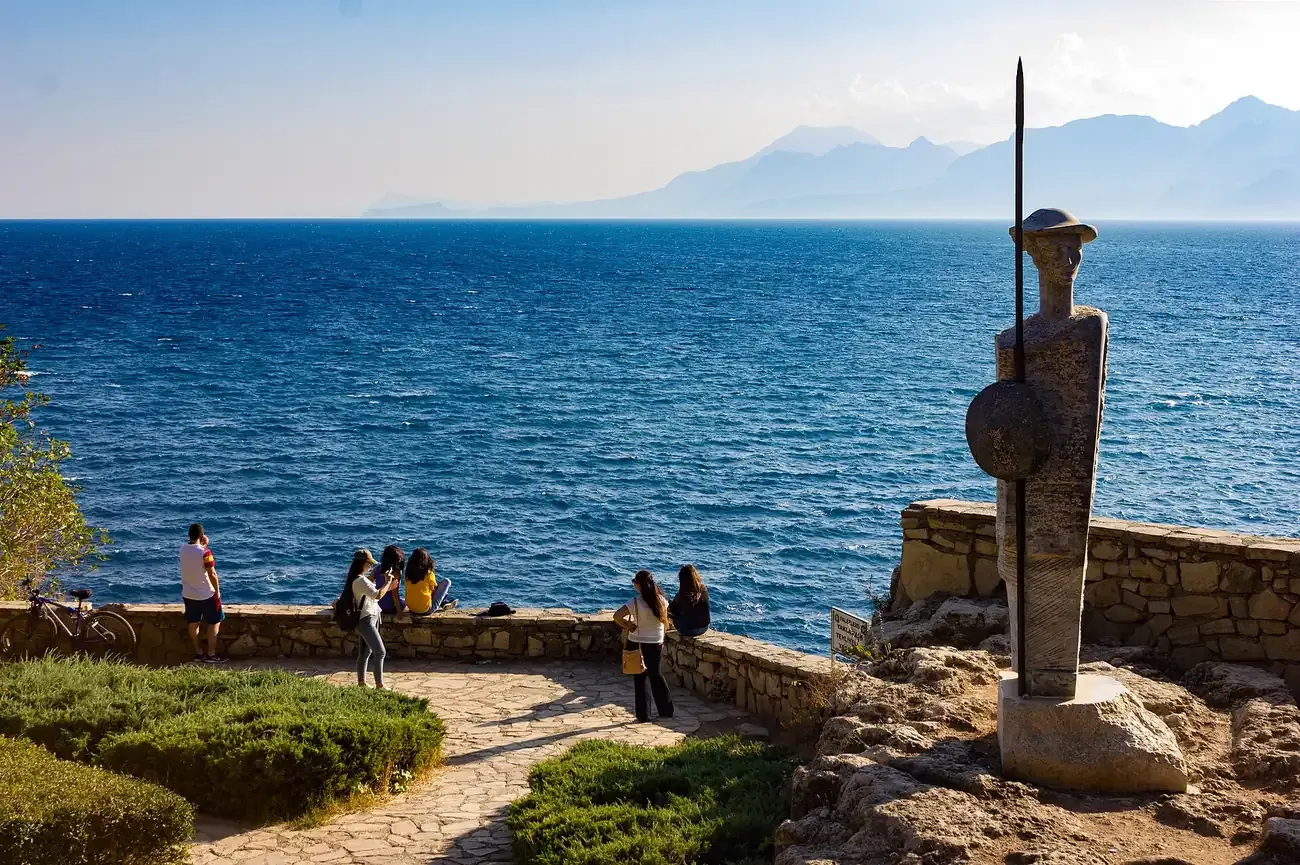
Fourteen hectares of clifftop south of the old town, laid out between 1940 and 1945 to a design by the architect Necmettin Ateş and named İnönü Parkı at the time. Palms line the terraces, gazebos sit out on the parapet where the ground drops away to the water, and the Beydağları close the view west across the bay. Hidirlik Tower marks the northwestern corner, tea gardens run along the main promenade, and the whole clifftop fills in the hour before sunset.
Architect: Necmettin Ateş
Location: south of Kaleiçi, along the clifftop above the Mediterranean.
Access: Free to walk through end to end, as a public city park.
Photo: "The sea view from Karaalioglu Park, Antalya" by Bestalex (CC BY-SA 4.0).
9. Antalya Aquarium
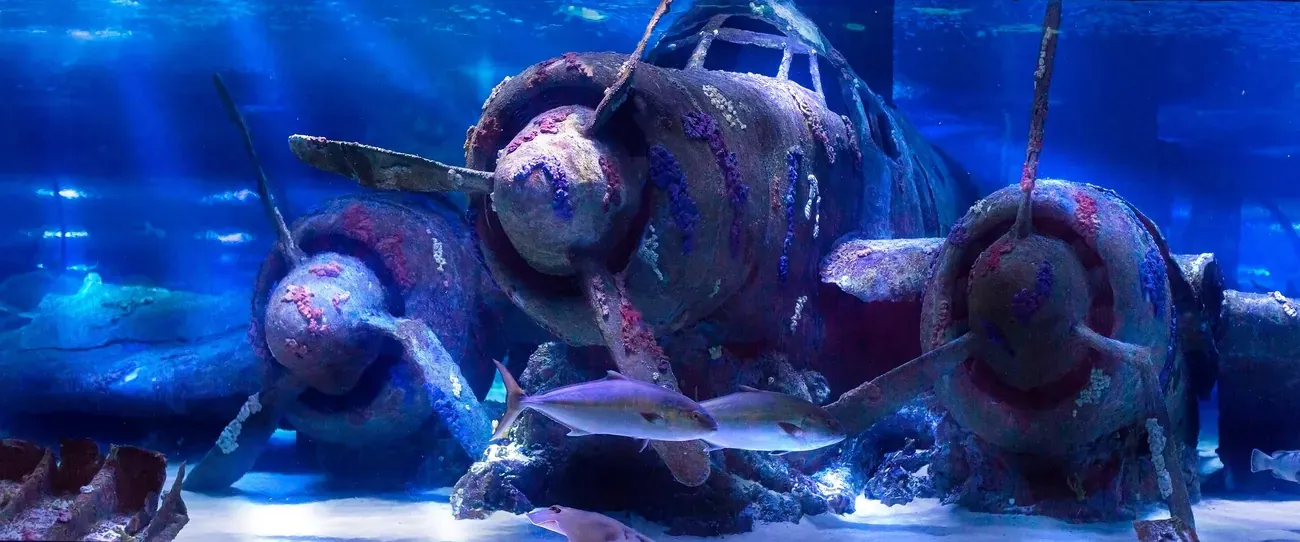
The aquarium complex on the Konyaaltı side of the city opened in 2012, and its centrepiece is the tunnel: 131 metres long and three metres wide, the longest tunnel aquarium anywhere, with sharks and rays passing over a sunken plane laid on the floor of the tank. Forty themed tanks follow the water from the Mediterranean to the tropics. The same building keeps Snow World and Ice Museum, a chamber of real snow for a break from the heat, a wax museum of world figures and WildPark, a hall of reptiles, insects and tropical animals. Konyaaltı Beach and the Beach Park are a short walk away.
Opened: 2012 · Tunnel: 131 m
Location: Dumlupınar Bulvarı, Konyaaltı
Access: Ticketed; Snow World, the wax museum and WildPark are separate or combined tickets
Free landmarks and viewpoints in Antalya
Konyaalti Beach
The pebble shoreline and its seafront promenade are free public space, with sunbeds and umbrellas at the beach clubs along the sand rented separately.
Ataturk House Museum
The villa where Mustafa Kemal Ataturk stayed during his visits to Antalya in 1930 and 1935 is free to enter, open every day.
Antalya Clock Tower
This Ottoman-era tower marking the entrance to Kaleici costs nothing to see and doubles as the old town's best-known meeting point.
Why Antalya deserves your time
Antalya took its name from Attalos II of Pergamon, who founded a naval base here in the 2nd century BC on a stretch of coast that otherwise offered no safe harbour. Roman, Byzantine, Seljuk and Ottoman rulers each left their mark on the walled old town that followed, and Kaleici's lanes, city walls and restored merchant houses still trace that layered history above the water.
A city built on layers
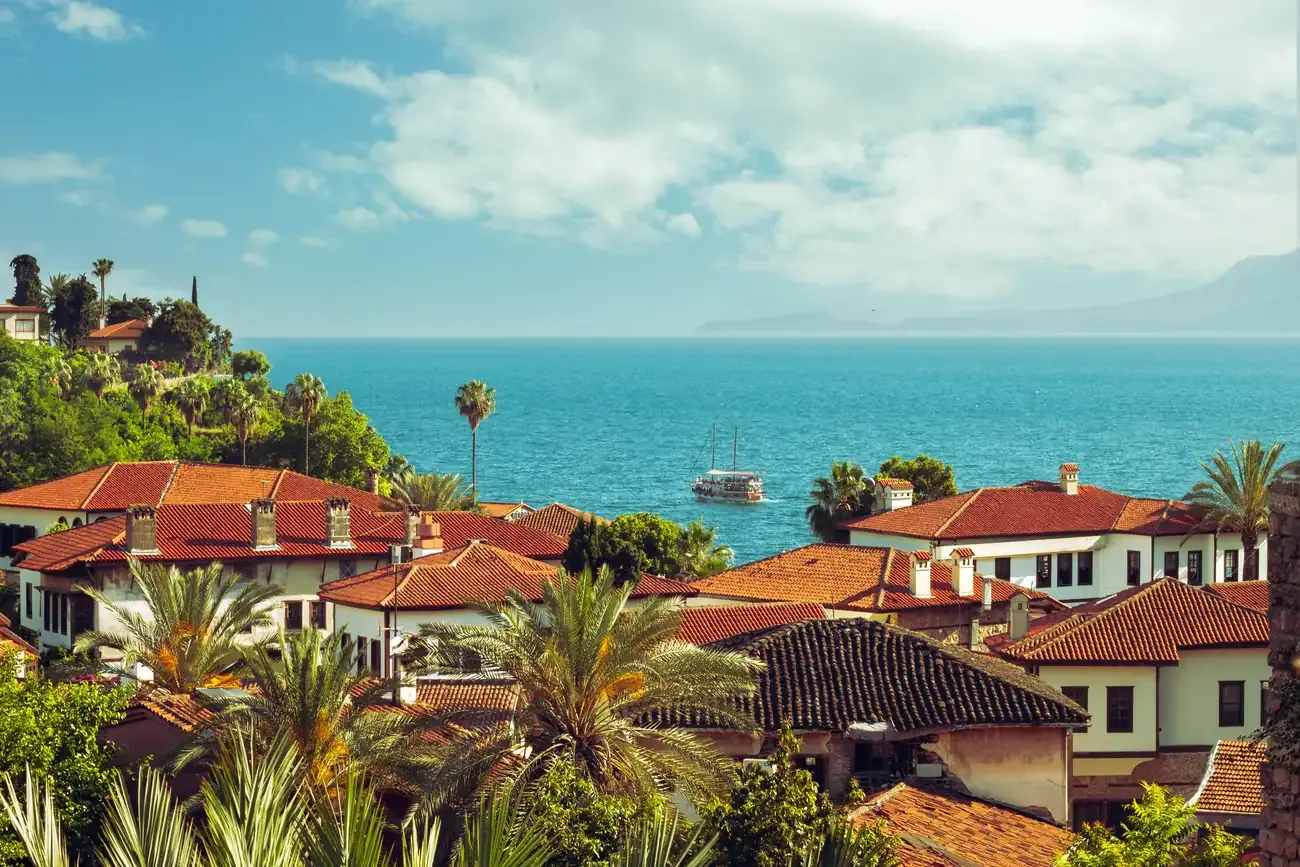
Kaleici, the old town within Antalya's ancient walls, packs a Roman harbour, a Seljuk minaret and mosque, and Ottoman houses turned guesthouses and cafes into a few minutes' walk of each other. Outside the walls, the modern city fans out along the coast, with Konyaalti's pebble beach to the west and the Duden Waterfalls and Lara Beach to the east.
Beyond the old town
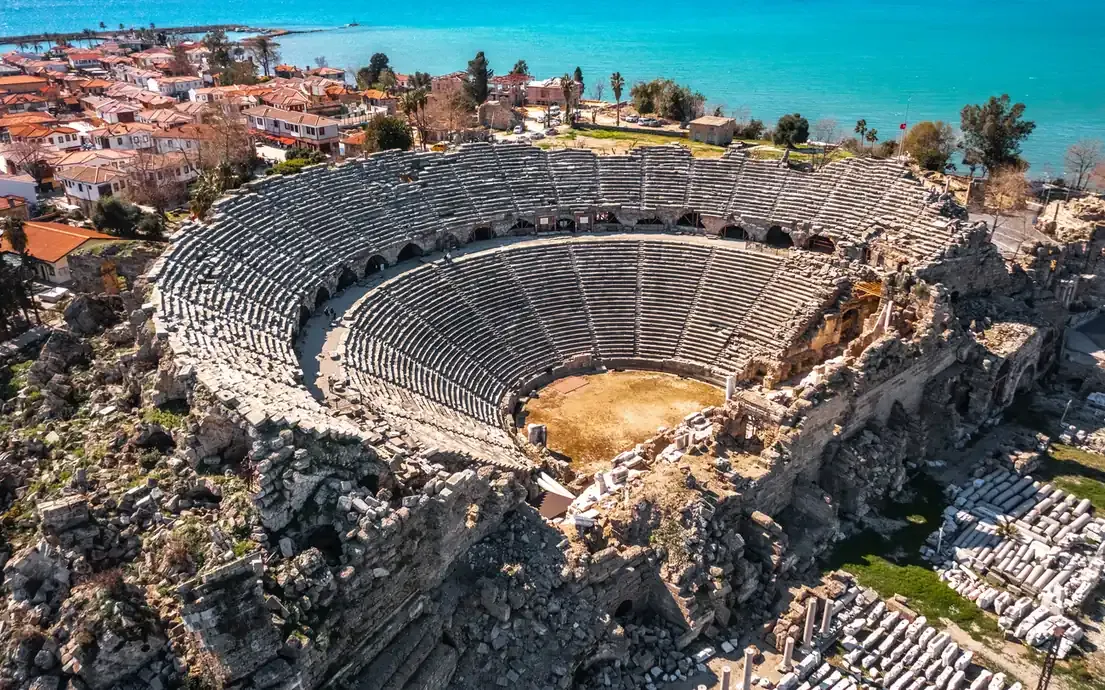
Antalya works as a base for the wider region as much as a destination in its own right. Roman theatres at Aspendos and Side, the ruined streets of Perge and the mountain fortress of Termessos all sit within a couple of hours' drive, and package resorts line the coast in both directions, from Belek to Kemer. Longer trips usually pair the coast with the travertine terraces of Pamukkale or the rock valleys of Cappadocia, the two inland tourist attractions in Turkey that UNESCO listed in 1988 and 1985.
When to go and for how long
Summers are hot and dry, with average highs near 35°C in July and August. Spring and autumn bring warm days without the peak heat, the better season for sightseeing. Two to three days cover Kaleici and a beach or waterfall outing at an easy pace, with more time needed to add a day trip to the ancient sites further along the coast.
Getting around
Kaleici is small enough to explore entirely on foot, its gates, minaret and harbour all within a few minutes of each other. For the rest of the city, the AntRay tram and a network of buses run on the contactless AntalyaKart, while dolmus minibuses cover the nearby coastal towns the tram does not reach.