
Tourist attractions in Turkey
Known for
Byzantine domes and Ottoman mosques; Greek and Roman cities
Must-see cities
Istanbul, Antalya, Izmir and Ankara
Best time to visit
Spring and autumn on the coasts, which are hot and dry in summer
World Heritage
22 UNESCO sites, from the historic areas of Istanbul to Gobekli Tepe
Top 15 tourist attractions in Turkey
Hagia Sophia, Cappadocia and the Blue Mosque top the tourist attractions in Turkey. Below, 15 sights are ranked in order, followed by the cities worth a stop, 7 more landmarks, tickets, local dishes, 10 hidden gems and visitor FAQs.
Must-see cities in Turkey
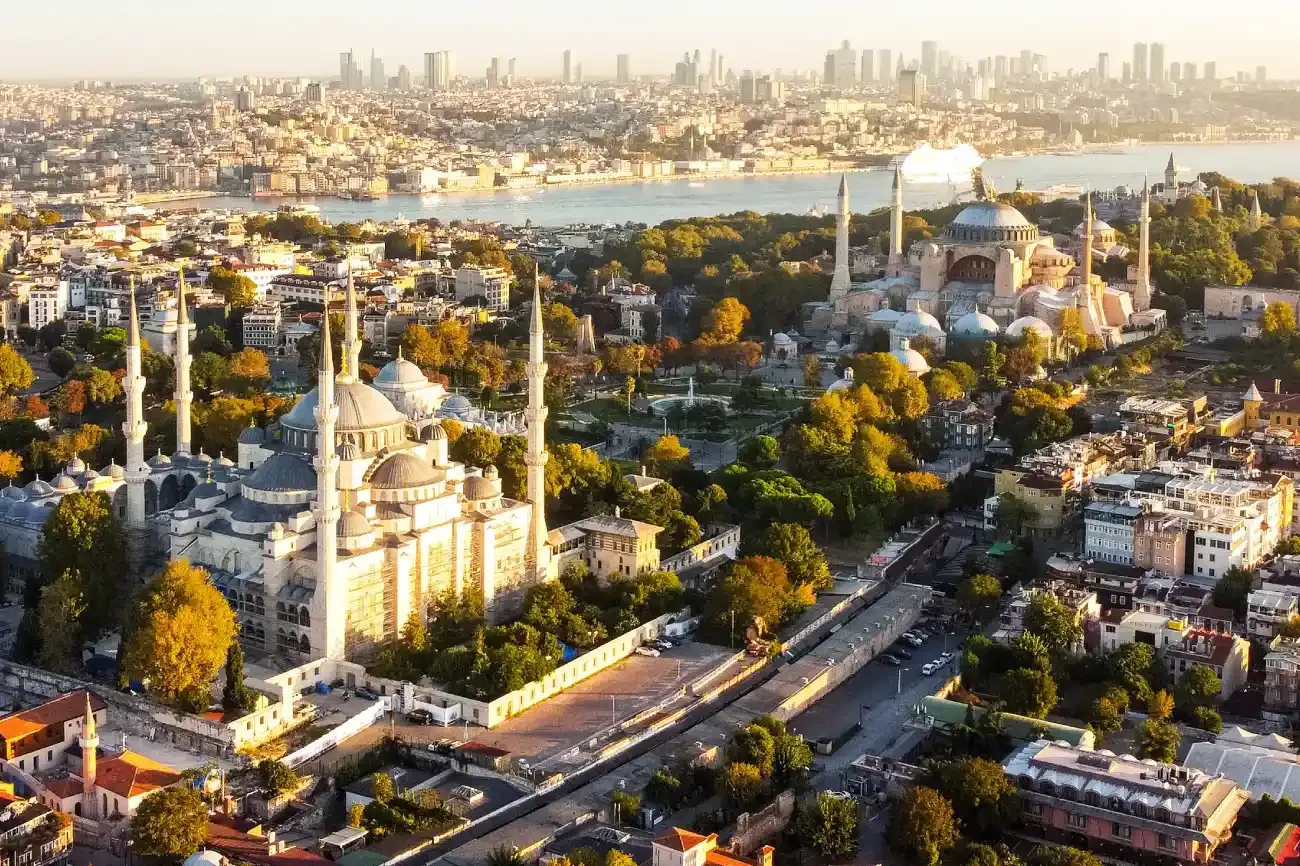
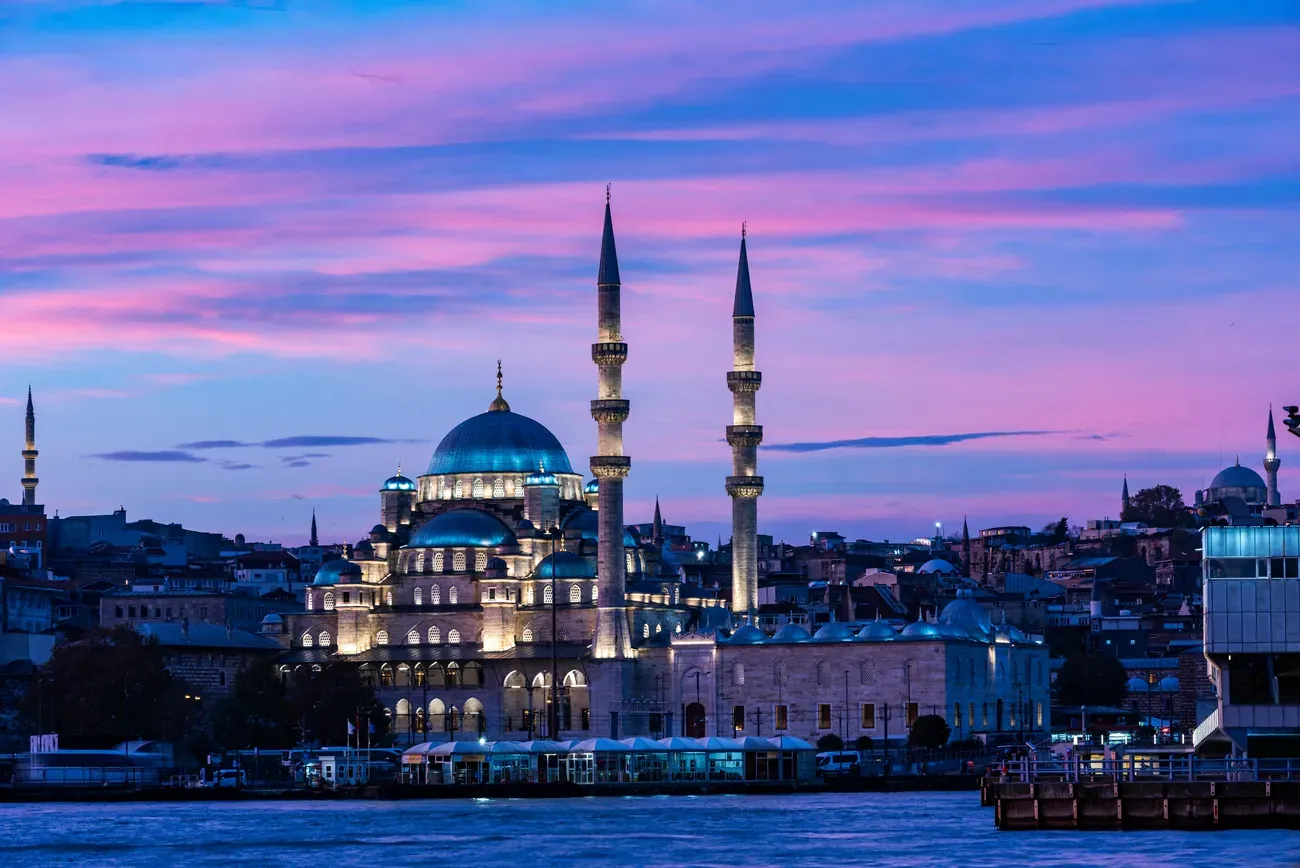
Istanbul
Must-see tourist attractions in Istanbul. The largest city in the country and the former capital of both the Byzantine and the Ottoman empires, and the only major city in the world to straddle two continents.
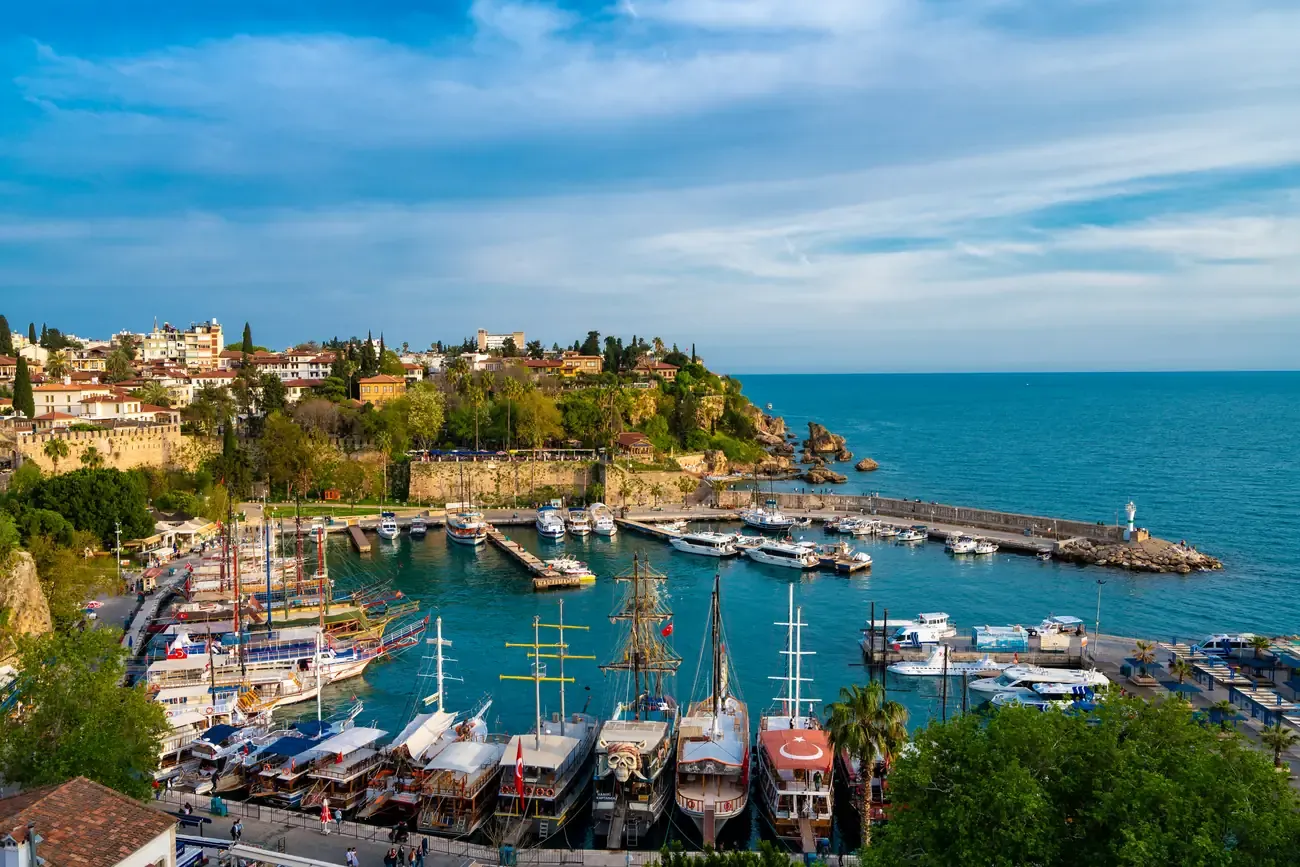
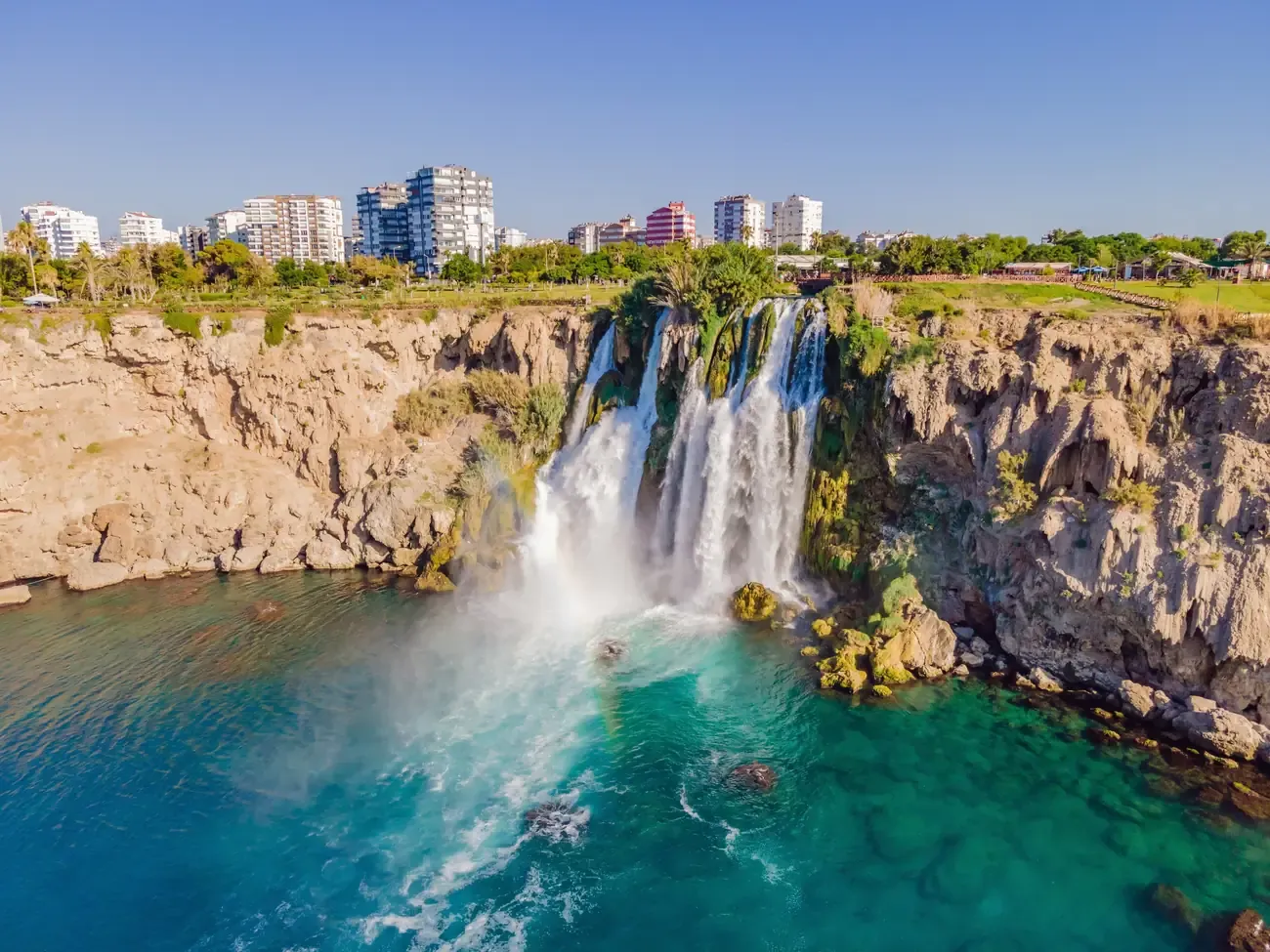
Antalya
Must-see tourist attractions in Antalya. The fastest growing city in the country and the hub for the beach resorts of the Mediterranean coast, with the walled quarter of Kaleici above its old harbour.
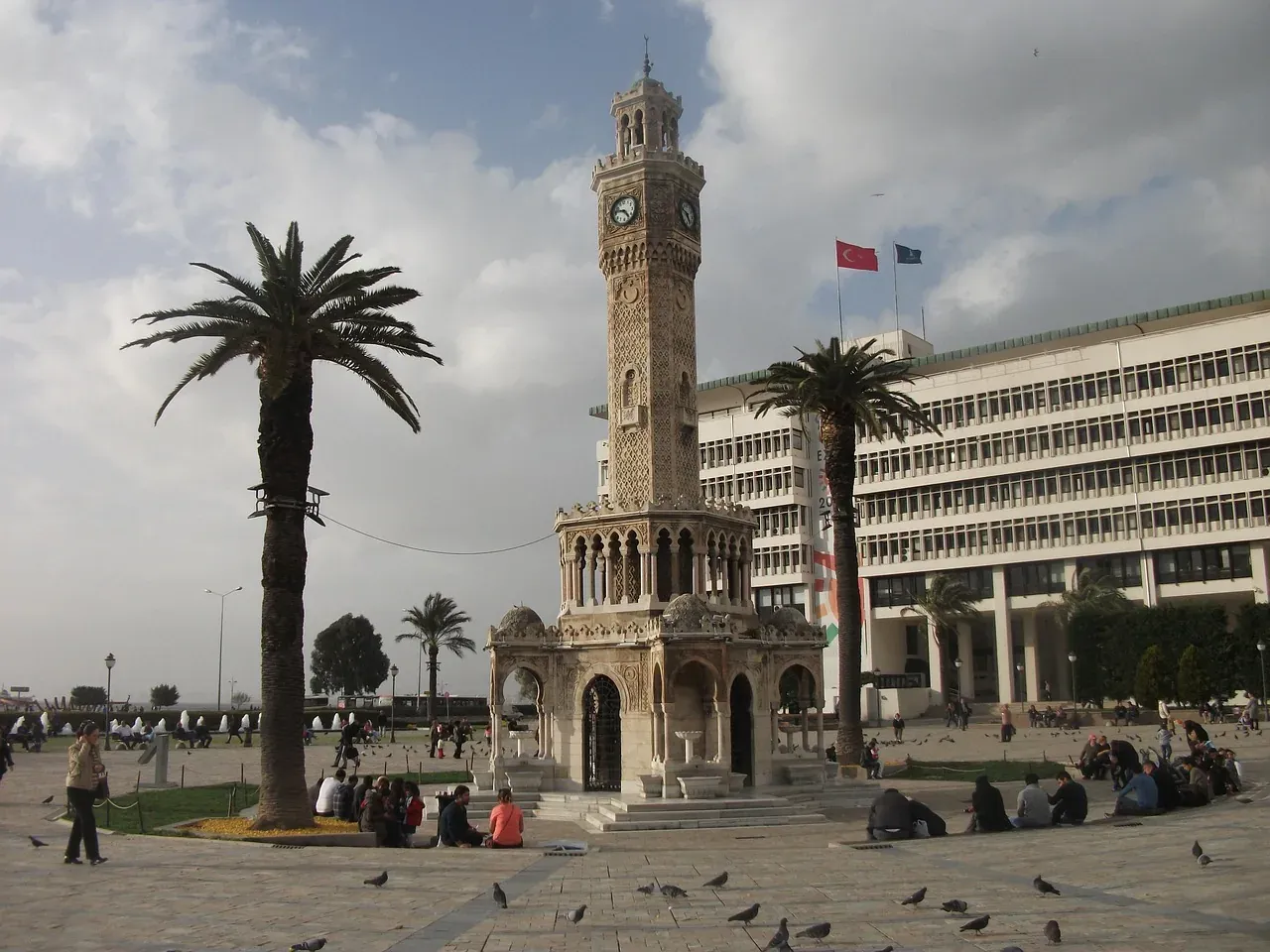
Izmir
The third most populous city in Turkey and the largest metropolitan area on the Aegean, and the usual base for Ephesus and Pergamon. The clock tower on Konak Square is its main landmark and sits on the municipal emblem.
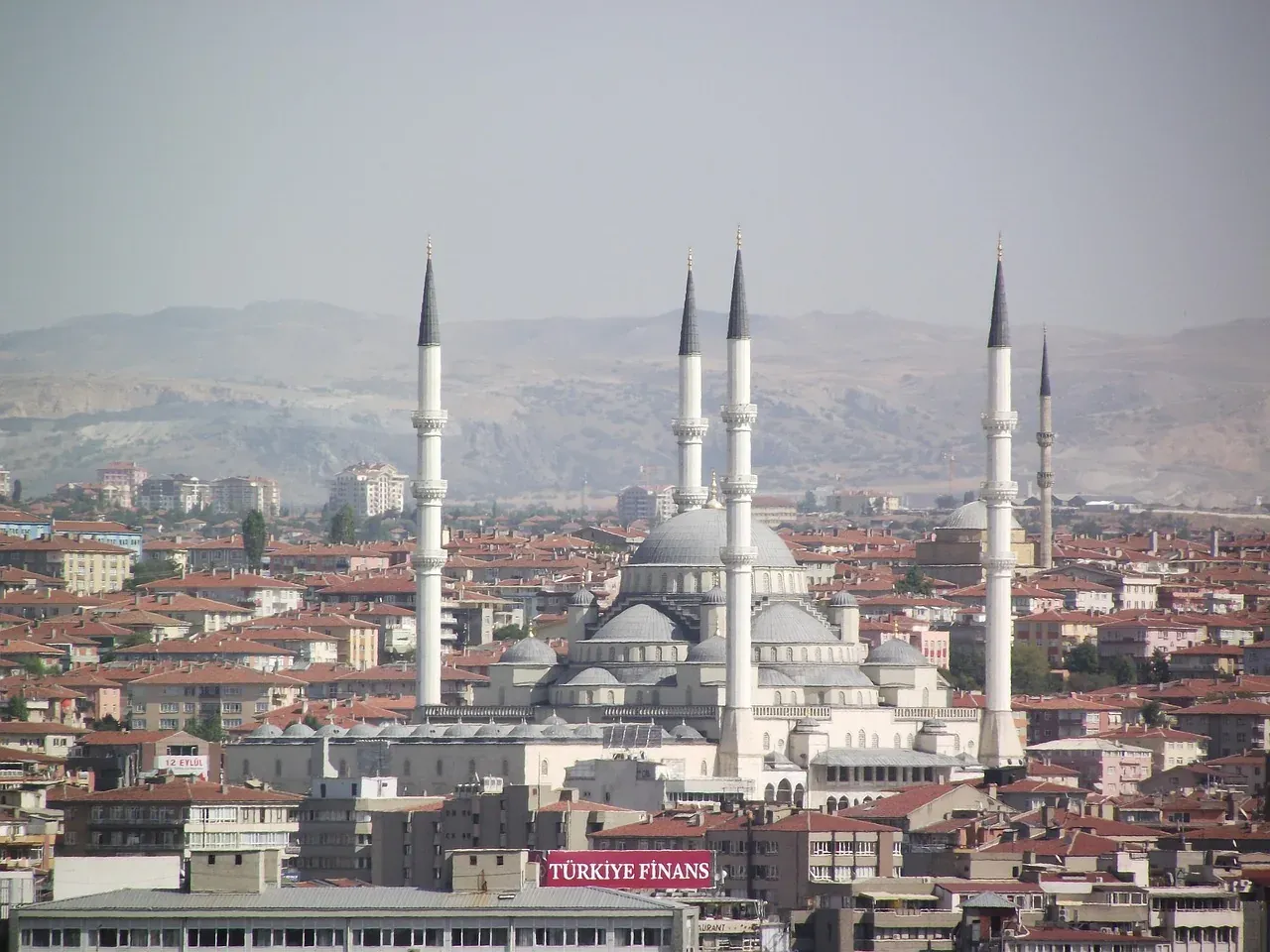
Ankara
The capital and the second largest city, out on the central Anatolian steppe. Anitkabir, the mausoleum of Mustafa Kemal Ataturk, and the Museum of Anatolian Civilizations beside the citadel are what most visitors come for.
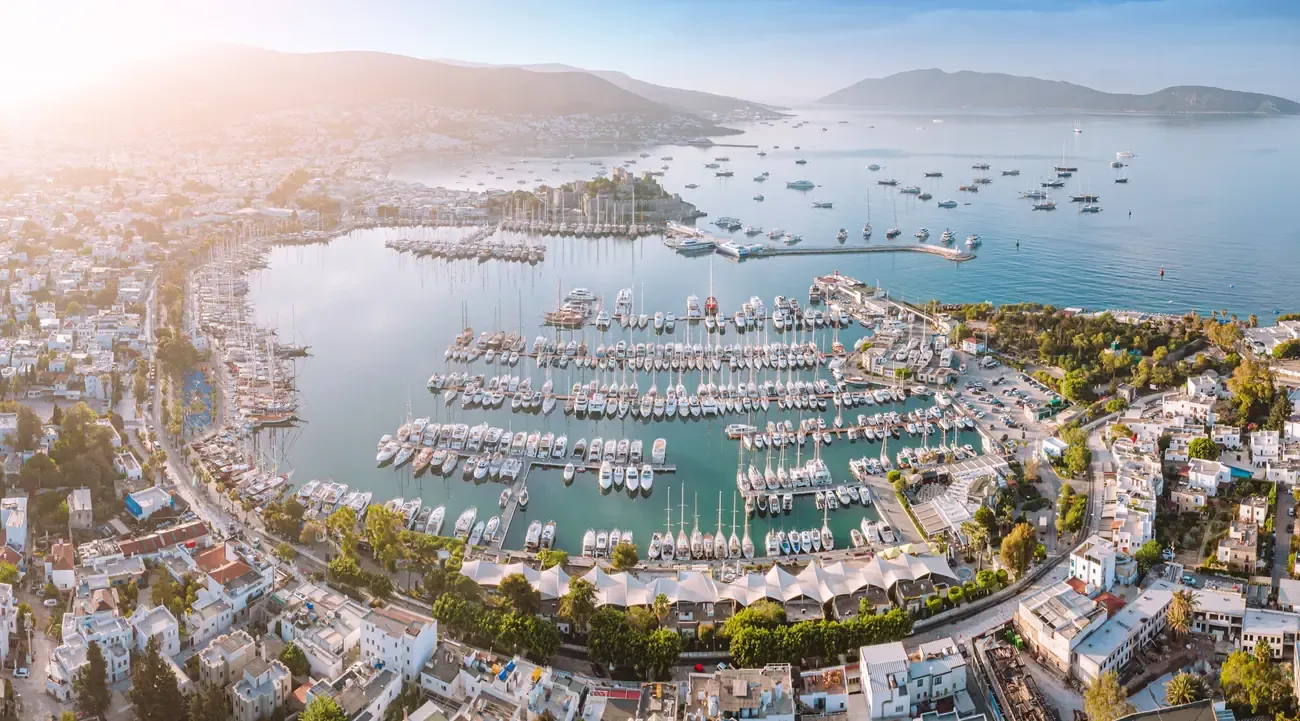
Bodrum
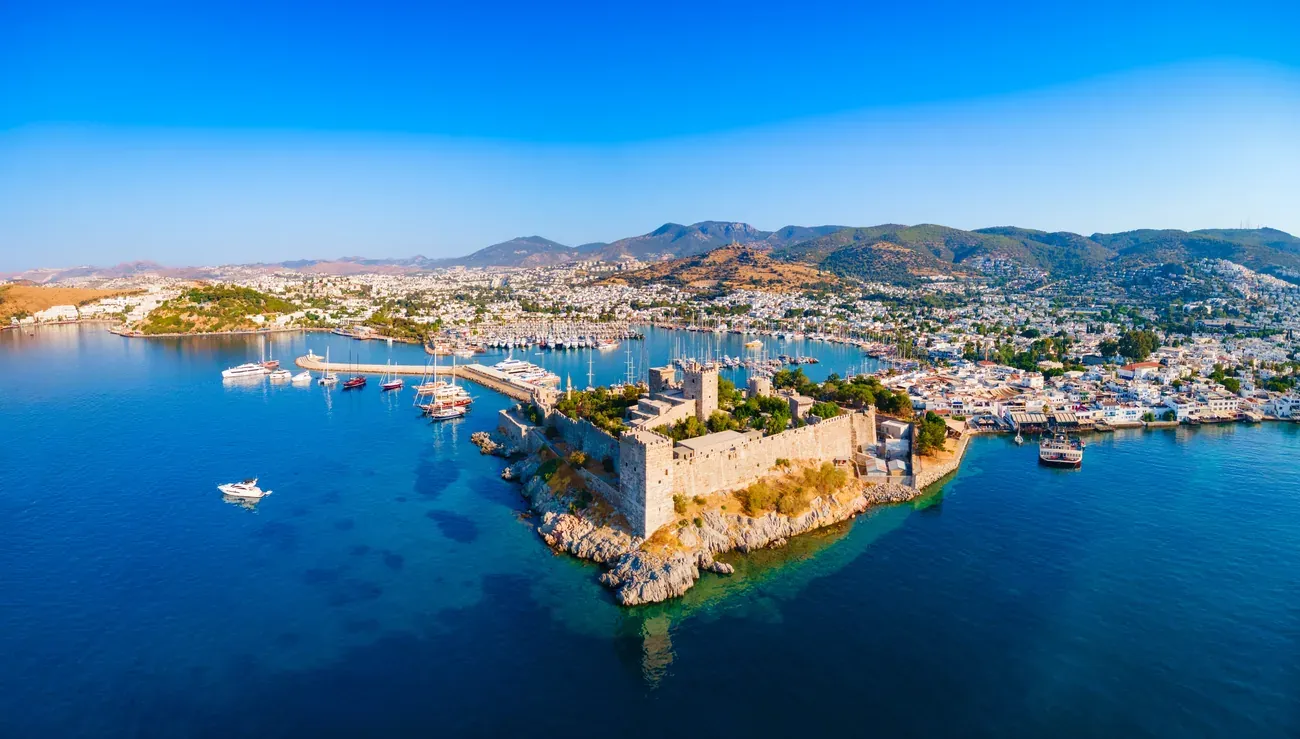
Must-see tourist attractions in Bodrum. A coastal town on the southern Aegean that turns into a crowded city in season, with the Castle of St Peter on its headland and the site of the Mausoleum at Halicarnassus in the streets behind.
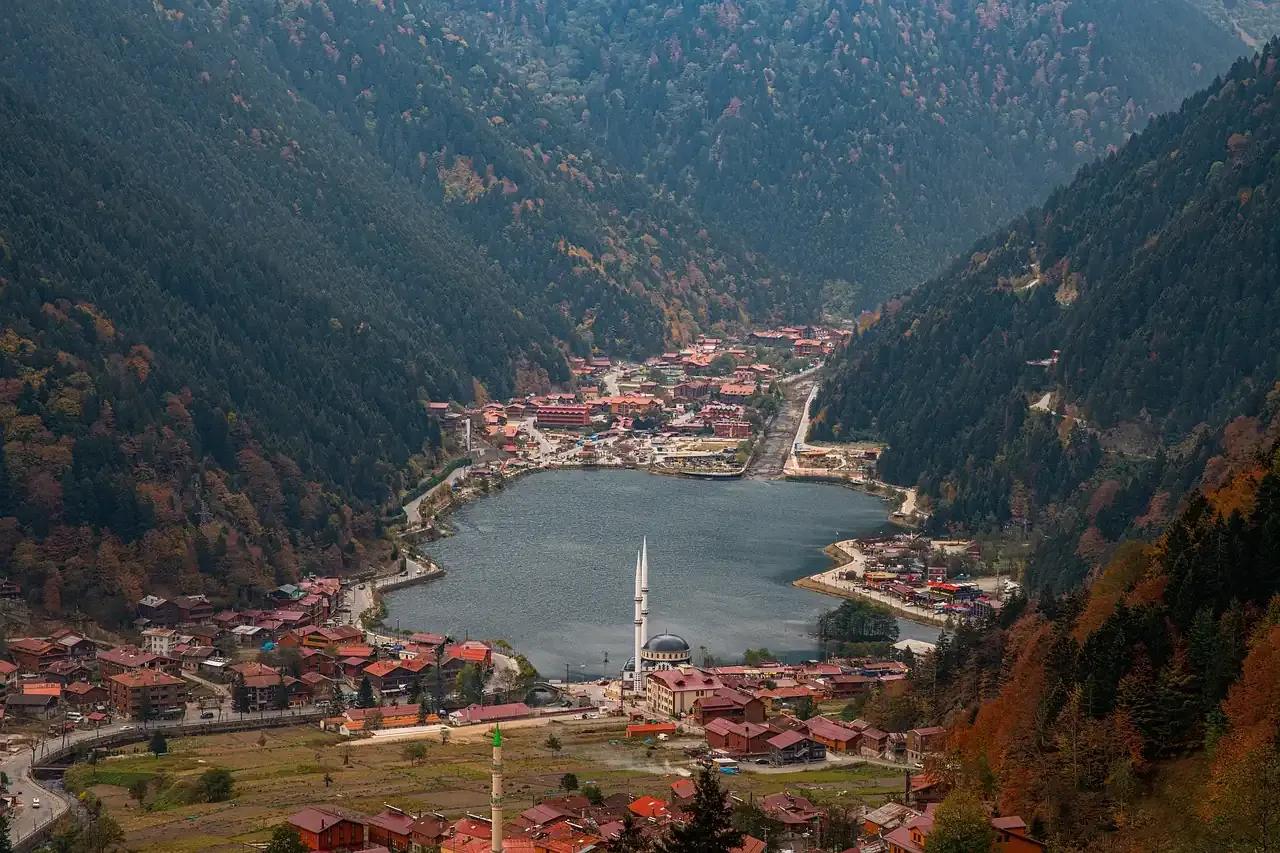
Trabzon
The gateway to the Turkish northeast, on the Black Sea coast. Sumela Monastery clings to a cliff in the Altindere valley, and the lake and village of Uzungol lie in the mountains further inland.
1. Hagia Sophia
The building most travellers picture when they think of Turkey sits on the first hill of the old city, where the Sea of Marmara, the Bosphorus and the Golden Horn meet. It went up as the cathedral of Constantinople and was finished in 537, and its pendentive dome was among the first of its kind. Minarets, tombs and calligraphic roundels came with the Ottoman centuries, the republic ran it as a museum from 1935, and it returned to worship in 2020. Visitors follow a route on the upper gallery, where the Byzantine mosaics survive.
Style: Byzantine, with Ottoman additions · Completed: 537 · Heritage: UNESCO listed in 1985 with the Historic Areas of Istanbul
Location: Sultanahmet, in the historic core of Istanbul
Access: Ticketed for visitors and open every day
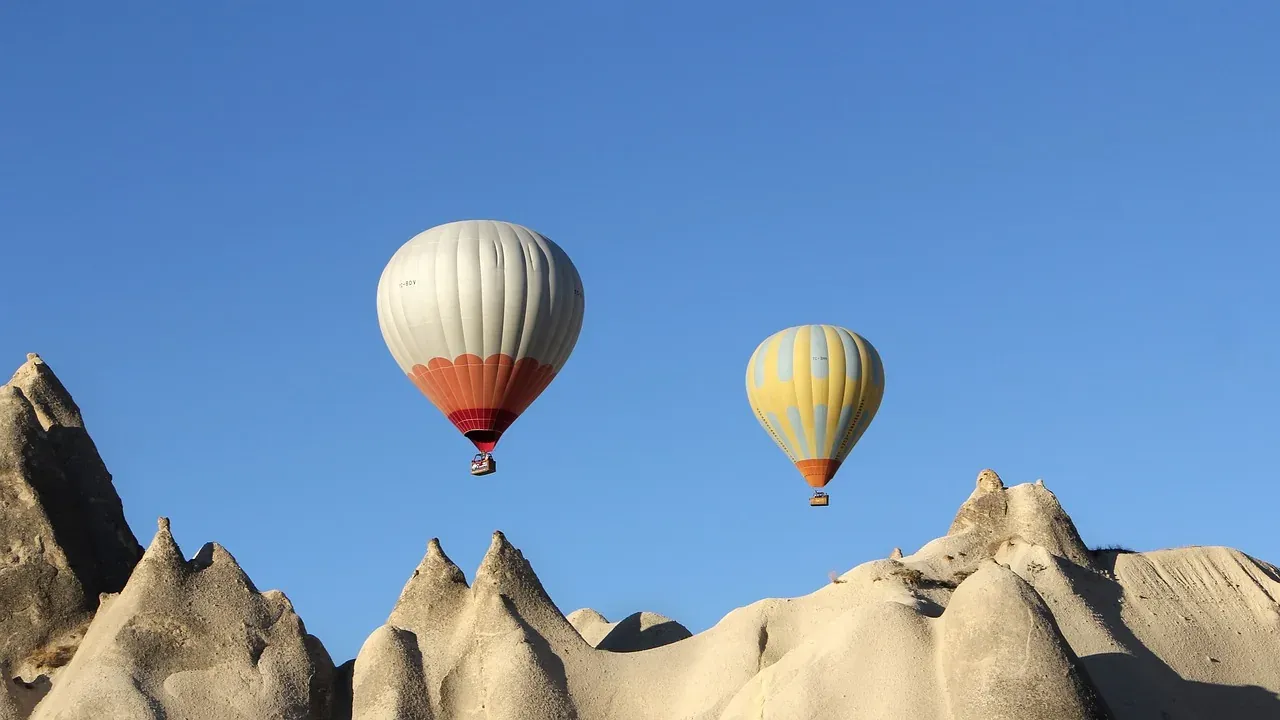
2. Cappadocia
Anatolia's strangest landscape lies on the central plateau between Nevsehir, Urgup and Avanos, where erosion cut a volcanic tableland into ridges, valleys and the tapering pinnacles called fairy chimneys. People hollowed the soft tuff into cells, churches, troglodyte villages and the underground cities of Kaymakli and Derinkuyu, one of the largest cave-dwelling complexes anywhere. Rock-cut sanctuaries in the Goreme valley carry some of the finest post-iconoclastic Byzantine painting. Balloon flights at dawn are the signature image, but the valleys reward walking just as well.
Heritage: Goreme National Park and the Rock Sites of Cappadocia, UNESCO listed in 1985
Location: Nevsehir province, central Anatolia
Access: Ticketed at the Goreme Open Air Museum, which opens every day
3. Blue Mosque
Ahmed I put his imperial mosque directly across the square from Hagia Sophia and had it built between 1609 and 1617, which is why the two silhouettes face each other in every photograph of the old city. The nickname comes from the Iznik tiles that line the interior, lit through arched stained-glass windows and a wrought-iron chandelier over the prayer hall. Six minarets and a cascade of half domes carry the exterior. The shrine beside it holds the tombs of Ahmed I and his wife Kosem Sultan.
Style: Ottoman · Built: 1609 to 1617
Location: Sultanahmet Square, Istanbul
Access: A working mosque, so visiting pauses around each of the five daily prayers, with shoulders and legs covered, a scarf over the hair for women and shoes off at the entrance
4. Topkapi Palace
From the 1460s until Dolmabahce was finished in 1853 this hillside complex above the Bosphorus was the administrative centre of the Ottoman Empire and the main residence of its sultans. The plan runs outward through four linked courtyards, from the Gate of Salutation past the council chamber and the tiled rooms of the Harem to terraces above the point where the Golden Horn meets the strait. The Directorate of National Palaces runs it as a museum and library, with the imperial kitchens, the treasury and the relic collection among the busiest rooms.
Style: Ottoman · Court seat: 1460s to 1853 · Heritage: Within the Historic Areas of Istanbul, UNESCO listed in 1985
Location: Sarayburnu, above the Bosphorus in Istanbul
Access: Ticketed
5. Pamukkale and Hierapolis
Calcite-laden springs emerge from a cliff almost 200 metres above the Curuksu plain and have built a white shelf of terraced basins that Turkish calls Pamukkale, the cotton castle. The Attalid kings of Pergamon founded the spa town of Hierapolis at the top at the end of the second century BC, and Rome rebuilt it after the earthquake of 60 AD into the baths, monumental arch, nymphaeum, theatre and long necropolis that spread across the ridge today. Walking the travertines barefoot is part of the visit, and the site keeps a thermal pool among fallen columns.
Period: Hellenistic and Roman · Heritage: Hierapolis-Pamukkale, UNESCO listed in 1988
Location: Pamukkale, Denizli province
Access: Ticketed, with the site open every day
6. Ephesus
The best-preserved classical city on the Aegean stands inland from the modern town of Selcuk, on ground that has been settled since the seventh millennium BC. Silt from the Kaystros river kept pushing the coastline west, so the city and its harbours moved several times before Lysimachos refounded it in the fourth century BC and Rome made it a provincial capital. Marble streets run downhill past terrace houses, a theatre cut into the slope and the two-storey facade of the Library of Celsus, commissioned in the 110s AD as a tomb for a Roman proconsul and finished under Hadrian.
Period: Greek and Roman · Heritage: UNESCO listed in 2015
Location: Selcuk, Izmir province
Access: Ticketed, with the site open every day
7. Grand Bazaar
One of the largest and oldest covered markets in the world spreads over 61 roofed streets and more than 4,000 shops on a site of some 30,700 square metres, and it still takes between 250,000 and 400,000 people a day. Trades keep to their own lanes in a layout inherited from the guilds, so jewellers cluster in one avenue, carpet dealers in another, and leather, lamps and ceramics in others again. Painted vaults run over the main avenues, and the stone bedestens at the centre are the oldest part of the whole quarter.
Style: Ottoman · Scale: 61 streets and more than 4,000 shops
Location: Beyazit, Fatih, Istanbul
Access: A working market rather than a museum, so it follows shop hours
8. Basilica Cistern
Justinian's engineers roofed this reservoir in the sixth century, and it is the largest of several hundred ancient cisterns buried under Istanbul. It lies about 150 metres southwest of Hagia Sophia, so most visitors reach it in the same morning. Rows of columns quarried from older buildings hold up brick vaults over a floor now kept with shallow water, walkways thread between the shafts, and two Medusa heads reused as bases sit in a far corner, one lying on its cheek and the other inverted. Restoration work reopened the chambers with new lighting.
Style: Byzantine · Built: Sixth century, under Justinian I
Location: Sultanahmet, Istanbul
Access: Ticketed
9. Bosphorus
The strait that splits Istanbul between Europe and Asia is the reason the city exists. It links the Black Sea to the Sea of Marmara, forms one of the continental boundaries between the two landmasses and is the narrowest strait in the world used for international navigation, which is why tankers, tugs and commuter ferries share the same water. Wooden mansions, fortresses and imperial mosques line both banks, and the cheapest way to see them is a scheduled ferry, since services run across to the Asian side and on up the strait through the day.
Links: The Black Sea and the Sea of Marmara · Divides: Europe from Asia
Location: Istanbul, between Thrace and Asia Minor
Access: Free to watch from either shore, with ferry and cruise crossings ticketed
10. Galata Tower
The cone-capped stone tower on the hill across the Golden Horn was built by the Genoese in the middle of the fourteenth century, when Galata was their walled colony beside Byzantine Constantinople, and it stood at the highest point of walls that have otherwise almost disappeared. The Ottomans used it as a dungeon and later as a fire lookout, earthquakes and fires forced repeated repairs, and a restoration completed in 2020 stripped out the later concrete additions and the cafeteria. It reopened as a museum, and the balcony under the roof runs the whole way round.
Style: Genoese medieval · Built: Mid-fourteenth century · Restored: 2020
Location: Beyoglu, Istanbul
Access: Ticketed, open every day
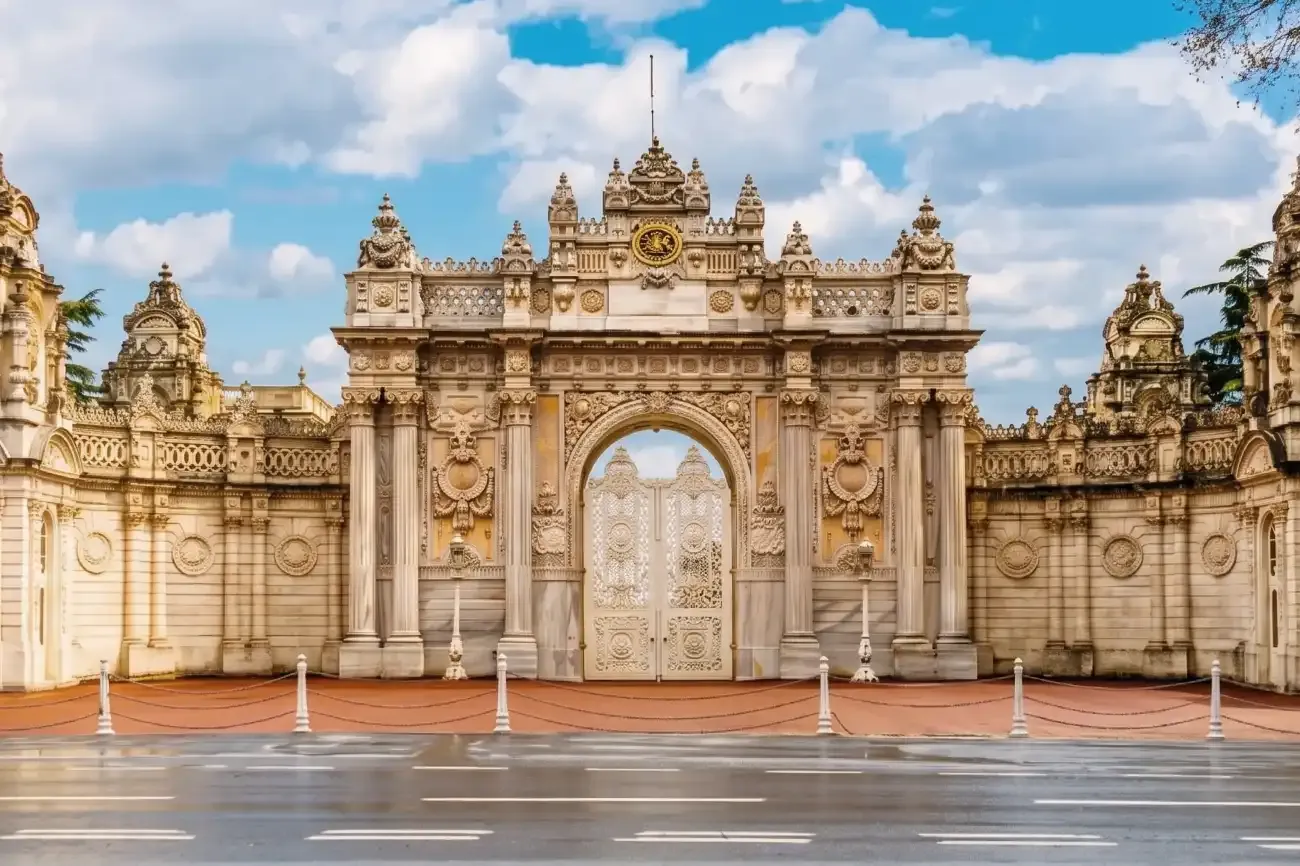
11. Dolmabahce Palace
The name means filled garden, and it fits: the inlet here worked as a natural harbour until it was filled in from the seventeenth century for an imperial garden. Abdulmecid I had the old wooden waterfront palace pulled down and this one raised in its place between 1843 and 1856, a single block covering 14,595 square metres of shoreline. Six sultans and the last caliph lived in it before the empire ended, it served as a presidential residence until 1949, and it opened as a palace-museum with its original furnishings in 1984.
Architect: Karabet and Nikogos Balyan · Style: Ottoman plan with Baroque and Rococo decoration · Built: 1843 to 1856
Location: Besiktas, on the European shore of the Bosphorus in Istanbul
Access: Ticketed, and closed on Mondays
12. Suleymaniye Mosque
The largest Ottoman mosque in Istanbul crowns the third hill, and the terrace in front opens one of the widest views over the Golden Horn. An inscription fixes 1550 as the foundation year and 1557 as the inauguration. Suleiman the Magnificent commissioned it and the imperial architect Mimar Sinan designed it. A kulliye grew around it, with colleges, a public kitchen and a hospital, and an enclosed cemetery behind the qibla wall holds two octagonal mausoleums.
Architect: Mimar Sinan · Style: Ottoman · Founded: 1550, inaugurated 1557 · Heritage: Within the Historic Areas of Istanbul, UNESCO listed in 1985
Location: Suleymaniye, in the Fatih district of Istanbul
Access: Still in daily use for prayer, so the hall closes to visitors at each call, and modest dress applies
Photos: "Suleymaniye Mosque exterior view" by Ihsan Deniz Kilicoglu (CC BY-SA 3.0), "Mezquita de Soliman, Estambul" by Diego Delso (CC BY-SA 4.0), and two interior views by Dosseman (CC BY-SA 4.0).


13. Gobekli Tepe
Circles of T-shaped limestone pillars stand on a ridge overlooking the Harran plain, and the place was in use from around 9500 BC to at least 8000 BC. Arms, belts and carved wild animals turn many of the pillars into figures, which puts them among the oldest known megaliths anywhere. The mound rises 15 metres over eight hectares, with houses, quarries and rock-cut cisterns around the enclosures. A survey in 1963 took the limestone blocks for a cemetery; Klaus Schmidt saw what they were in 1994 and dug here from the next year.
Period: Pre-Pottery Neolithic · Heritage: UNESCO listed in 2018 · Scale: A tell 15 metres high across eight hectares
Location: Dagetegi, 15 kilometres northeast of Sanliurfa
Access: Ticketed, with the site open every day
Photos: "Gobeklitepe Panorama" by Spica-Vega Photo Arts (Banu Nazikcan) (CC BY-SA 4.0), three views of the enclosures by Immanuelle (CC BY-SA 4.0), and "Gobekli Tepe Building F in 2014" by Dosseman (CC BY-SA 4.0).


14. Mount Nemrut
Antiochos I of Commagene had a monumental tomb cut near the summit of this 2,150 metre peak in the eastern Taurus, then buried it under a tumulus of crushed rock. Three terraces ring the mound. The eastern one keeps most of its work: the king, the country goddess Commagene, Zeus-Orosmasdes, Apollo-Mithras and Herakles-Artagnes seated on thrones ten metres high, guardian eagles and lions at either end, and an inscription of 223 lines behind them. Heads that fell from the statues now lie at the foot of the rows.
Period: First century BC, under Antiochos I of Commagene · Heritage: UNESCO listed in 1987 · Altitude: 2,150 metres
Location: Karadut, in Adiyaman province
Access: Ticketed and open every day, with hours that shift with sunrise and sunset
15. Kaleici old town
The old quarter of Antalya sits inside its ancient walls on a cliff above the harbour, and it is where the city began. Roman, Byzantine, Seljuk and Ottoman work stands within a few streets of each other. Hadrian's Gate went up in the name of the emperor who passed through in 130 and was later absorbed into the walls, which leaves it the one entrance gate still standing. The grooved brick minaret of the Yivli Minare mosque, blue tile showing in places, has become the recognised symbol of the city.
Period: Roman walls with Seljuk and Ottoman rebuilding · Landmarks: Hadrian's Gate and the Yivli Minare mosque
Location: Kaleici, the historic centre of Antalya
Access: Free to walk at any hour, with the mosques and museums inside on their own schedules
Famous places to see in Turkey
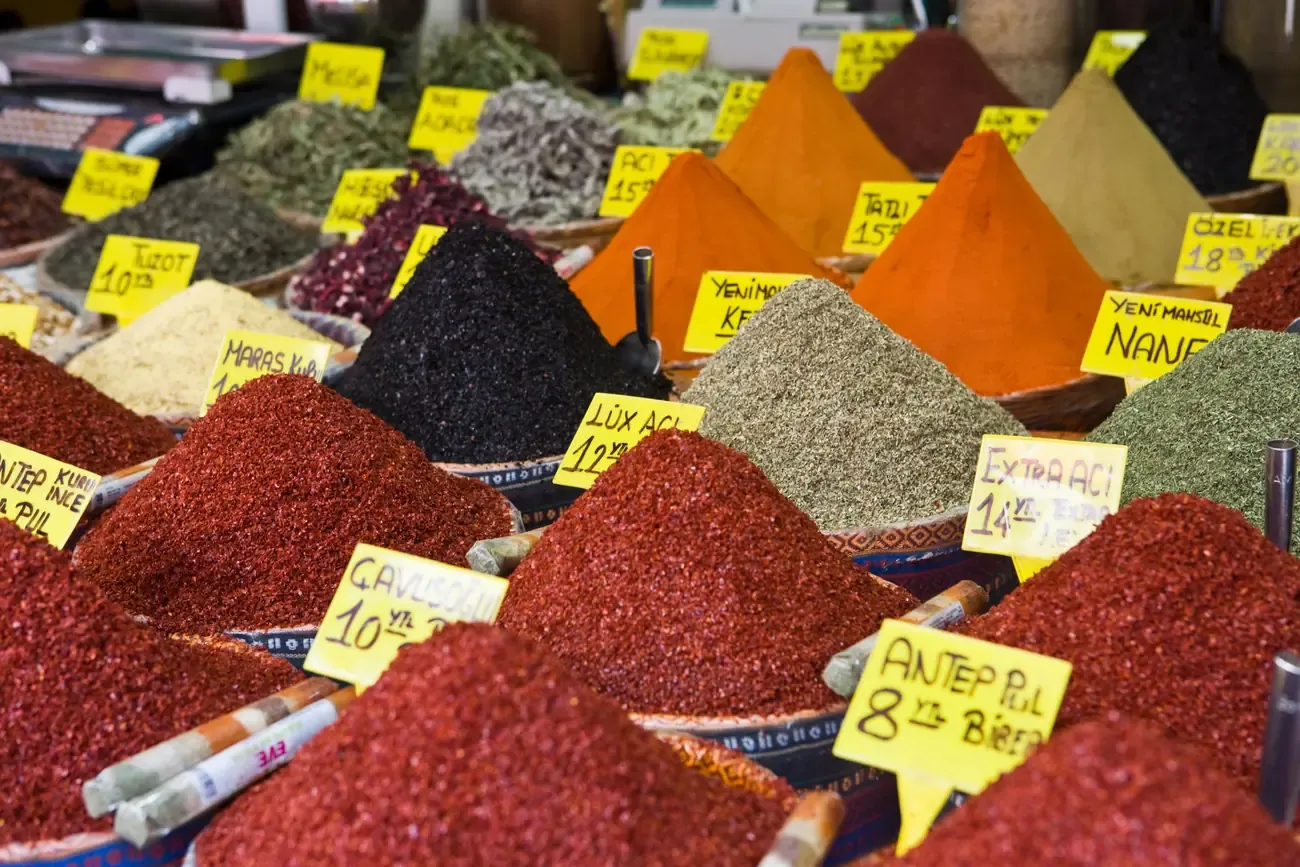
Spice Bazaar
One of the largest bazaars in the city, and the best known covered market after the Grand Bazaar.
Location: Eminonu, Fatih, Istanbul
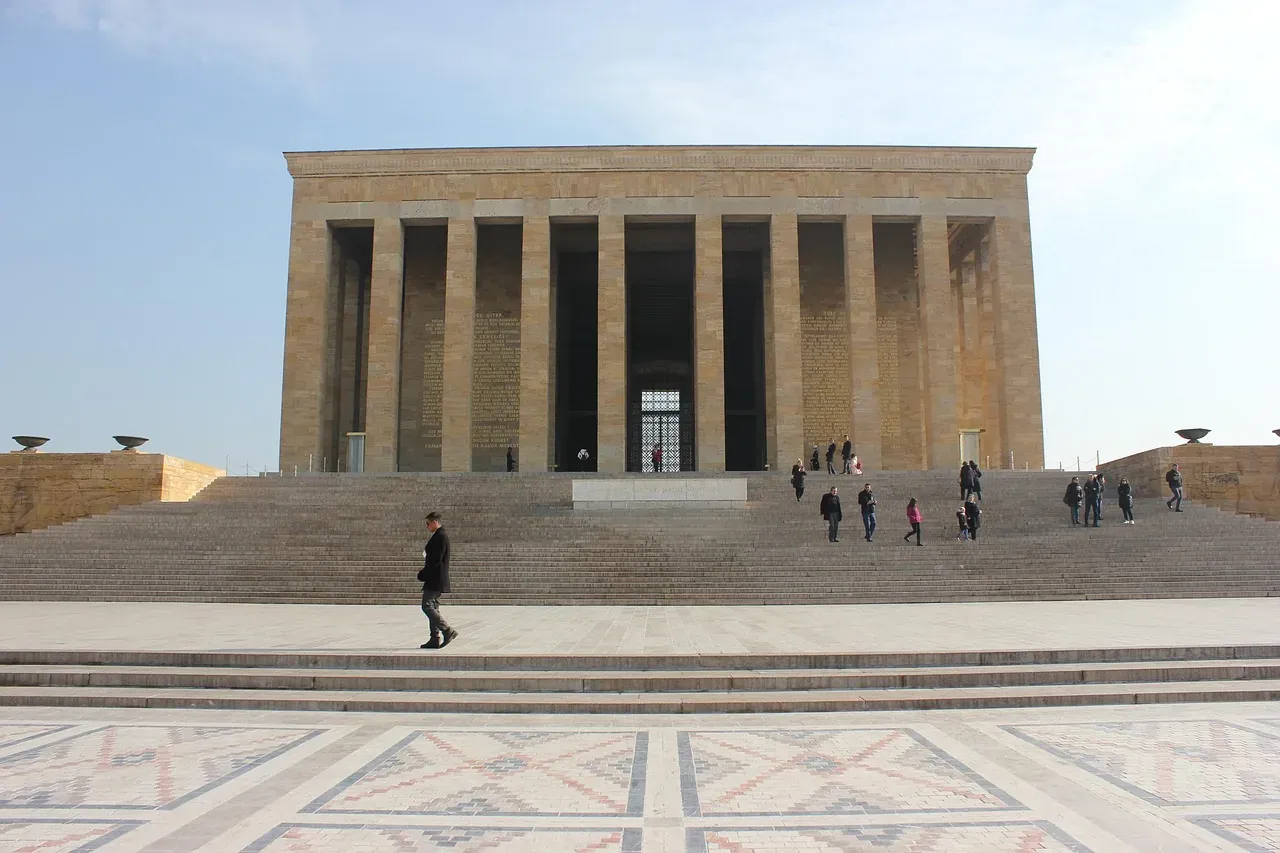
Anitkabir
The mausoleum of Mustafa Kemal Ataturk, designed by Emin Onat and Orhan Arda and built between 1944 and 1953.
Location: Cankaya, Ankara
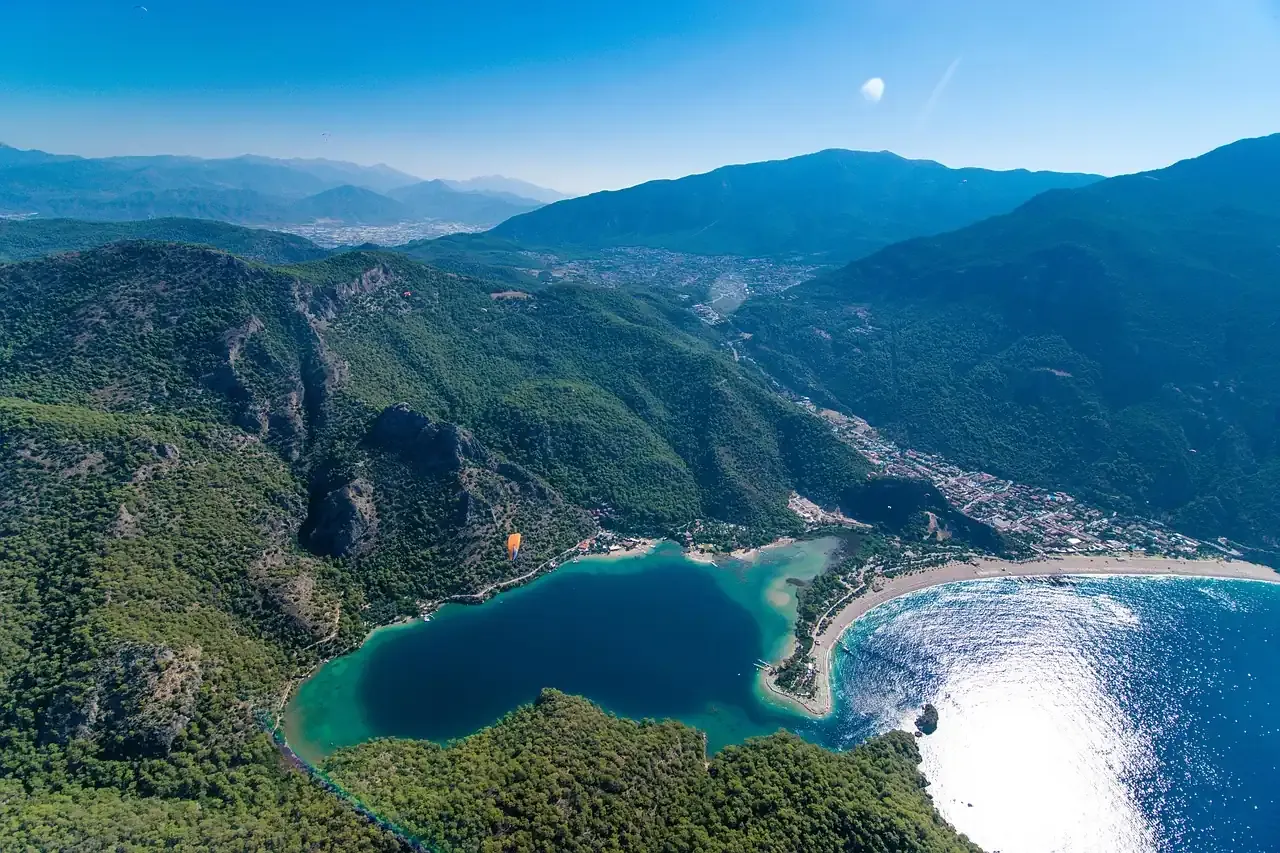
Oludeniz
A lagoon and sand spit where the Aegean meets the Mediterranean, 14 kilometres south of Fethiye under Mount Babadag.
Location: Fethiye, Mugla province
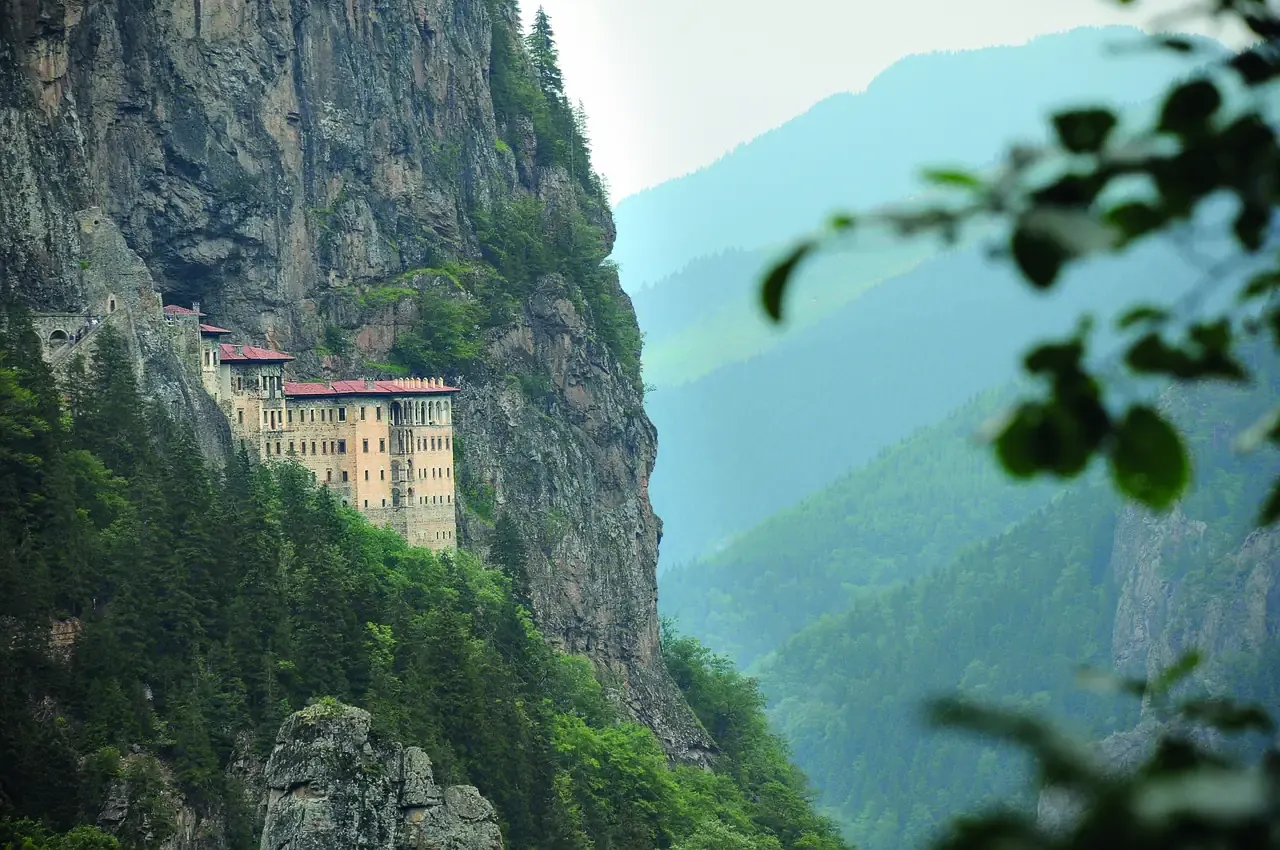
Sumela Monastery
A former Greek Orthodox monastery fixed to the cliffs of the Altindere valley, in use until the population exchange of 1923.
Location: Macka, Trabzon province
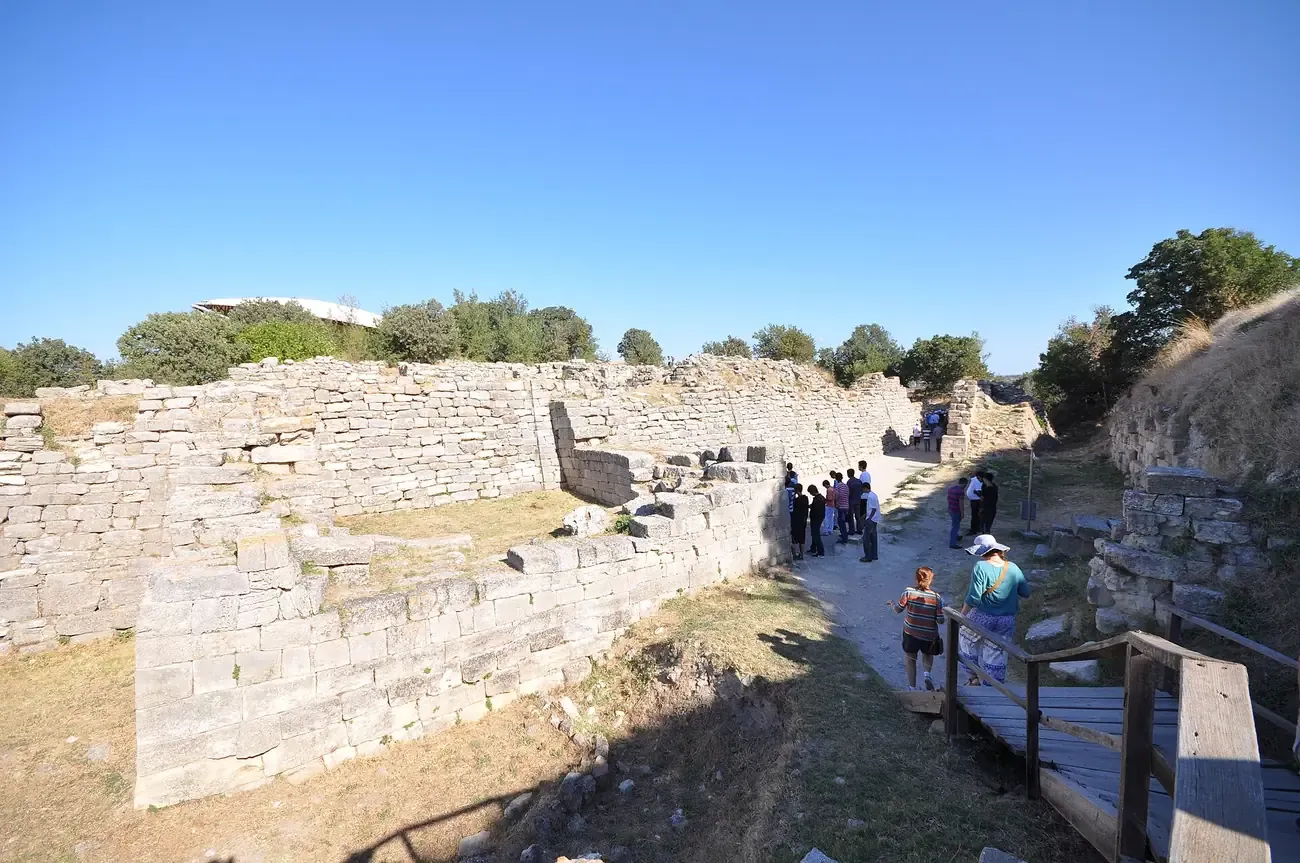
Troy
Nine layers on the mound of Hisarlik record more than 3,000 years of settlement, 4.8 kilometres from the Dardanelles.
Location: Tevfikiye, Canakkale province
Photo: "Legendary walls of Troy" by Jorge Lascar (CC BY 2.0).
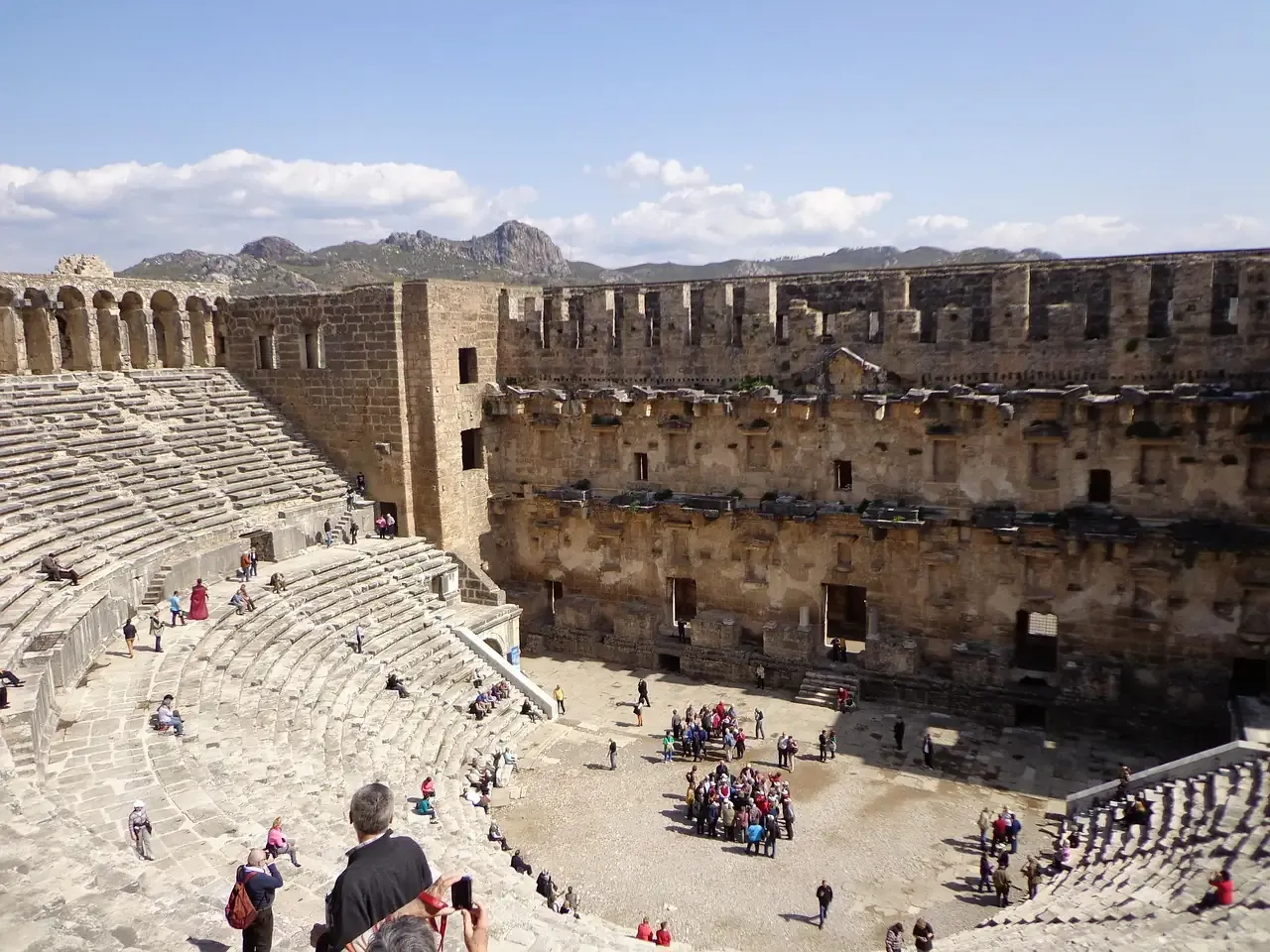
Aspendos Theatre
The architect Zenon built this Roman theatre for 15,000 spectators between 138 and 164 AD, and it still hosts summer festivals.
Location: Serik, Antalya province
Bodrum Castle
The Knights of St John began the Castle of St Peter in 1402, and the Underwater Archaeology Museum has occupied it since 1964.
Location: Bodrum, Mugla province
Other Turkey tourist attractions to book
What to eat in Turkey
Adana kebap
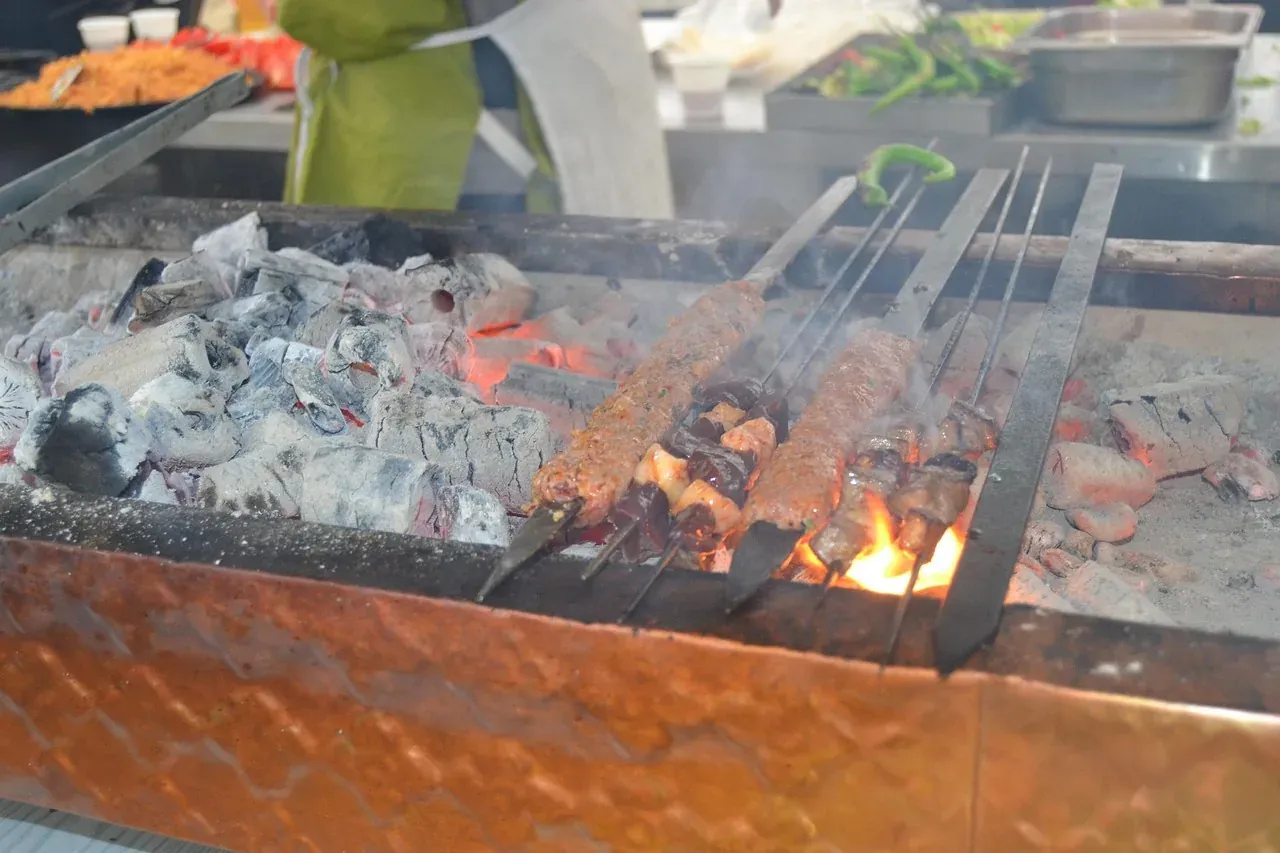
Hand-minced meat pressed onto a wide flat skewer and grilled over charcoal, named after the southern city where the recipe started life as kiyma kebabi.

Lahmacun
A thin, crisp round of bread baked under minced meat, onion, tomato, pepper and parsley, then rolled up around salad and squeezed with lemon.
Pide
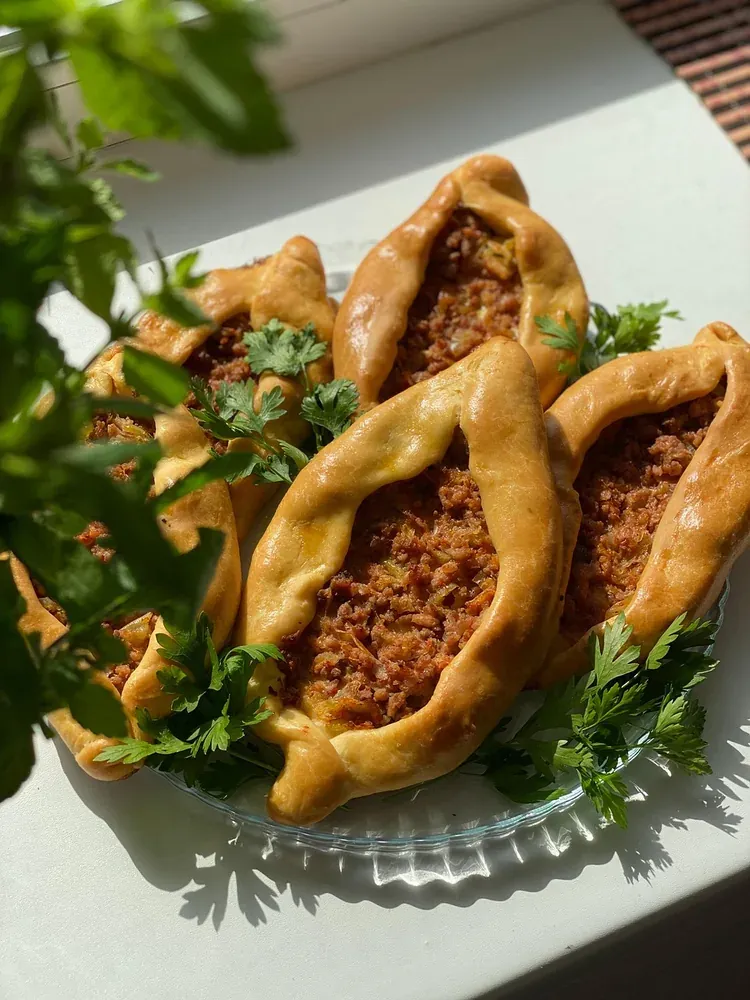
A boat of thicker dough baked with larger pieces of meat, and sometimes cheese or egg. Kin to lahmacun, and probably related to pizza by way of the word itself.
Baklava
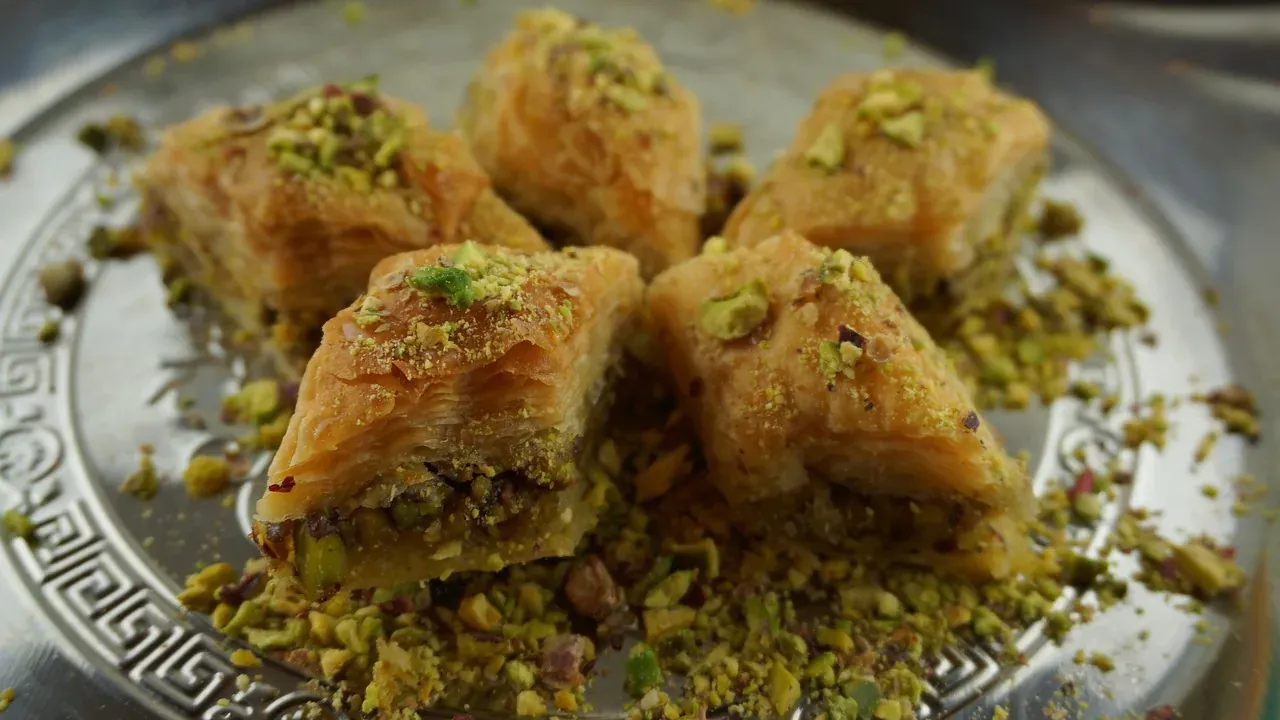
Layered filo with finely chopped nuts, sweetened with syrup. Gaziantep is the town Turks argue for, largely because of the pistachios grown around it.
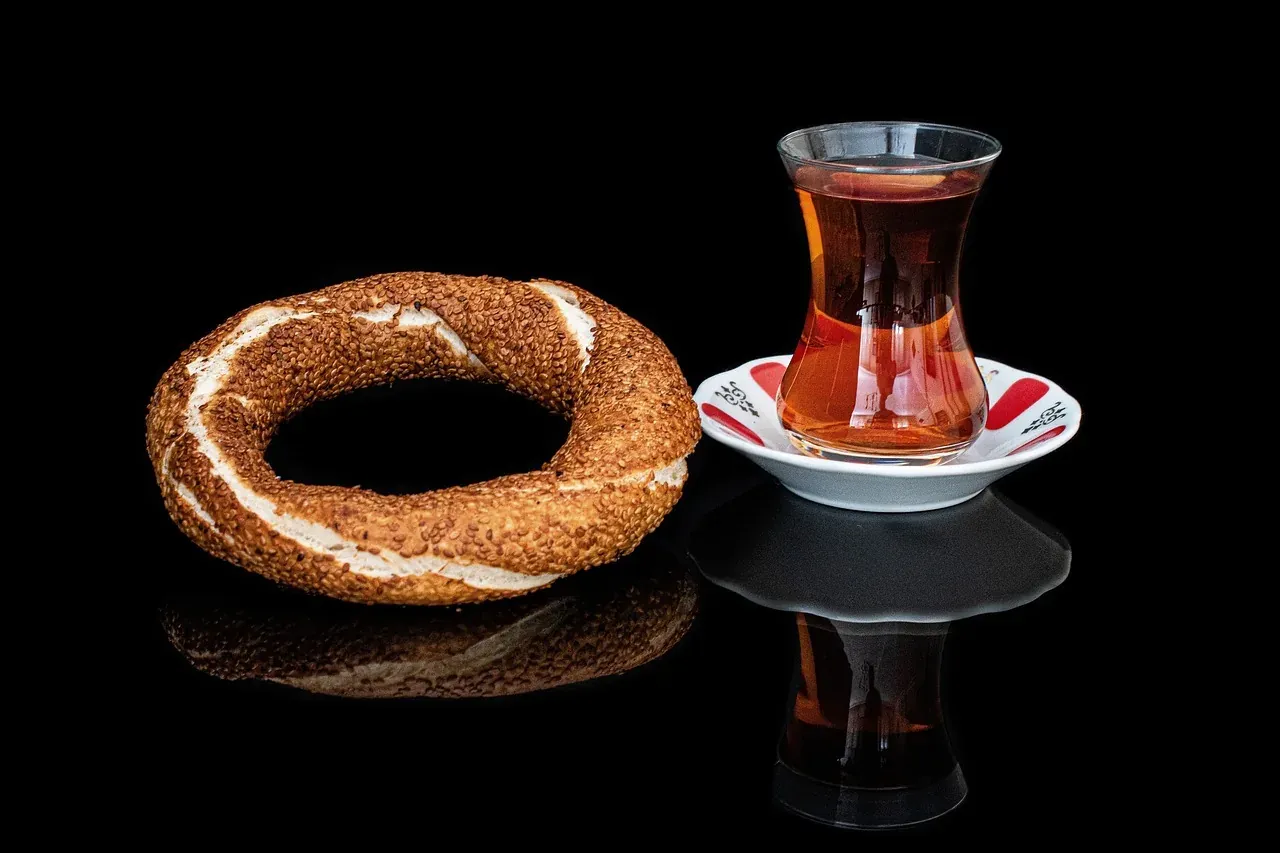
Simit
A sesame-crusted ring of bread sold from street trolleys almost everywhere, at almost any hour. With white cheese it turns into breakfast on the move.
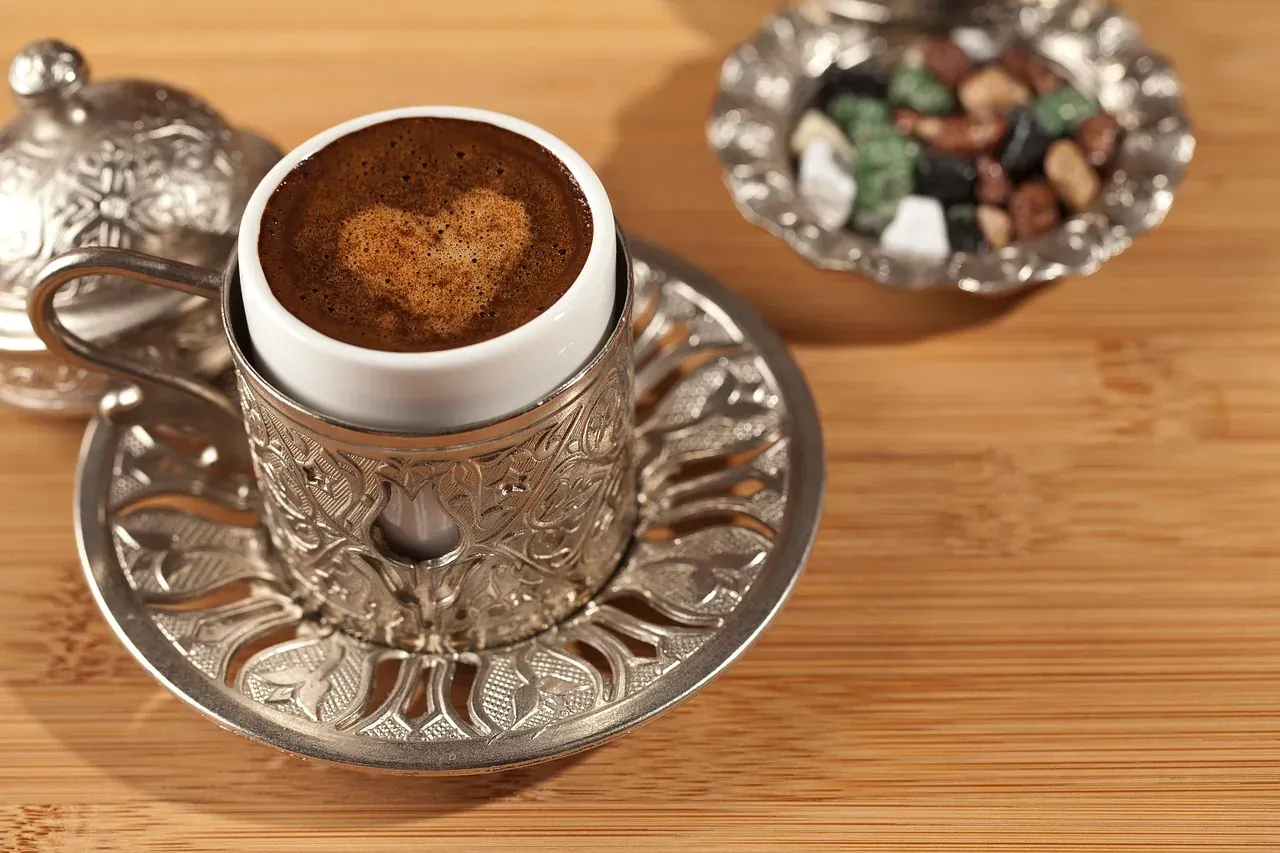
Turkish coffee
Finely ground beans brewed unfiltered in a cezve and poured into small cups, grounds and all. Order it sade, orta or sekerli depending on how much sugar you want.
Ancient stones and old walls in Turkey
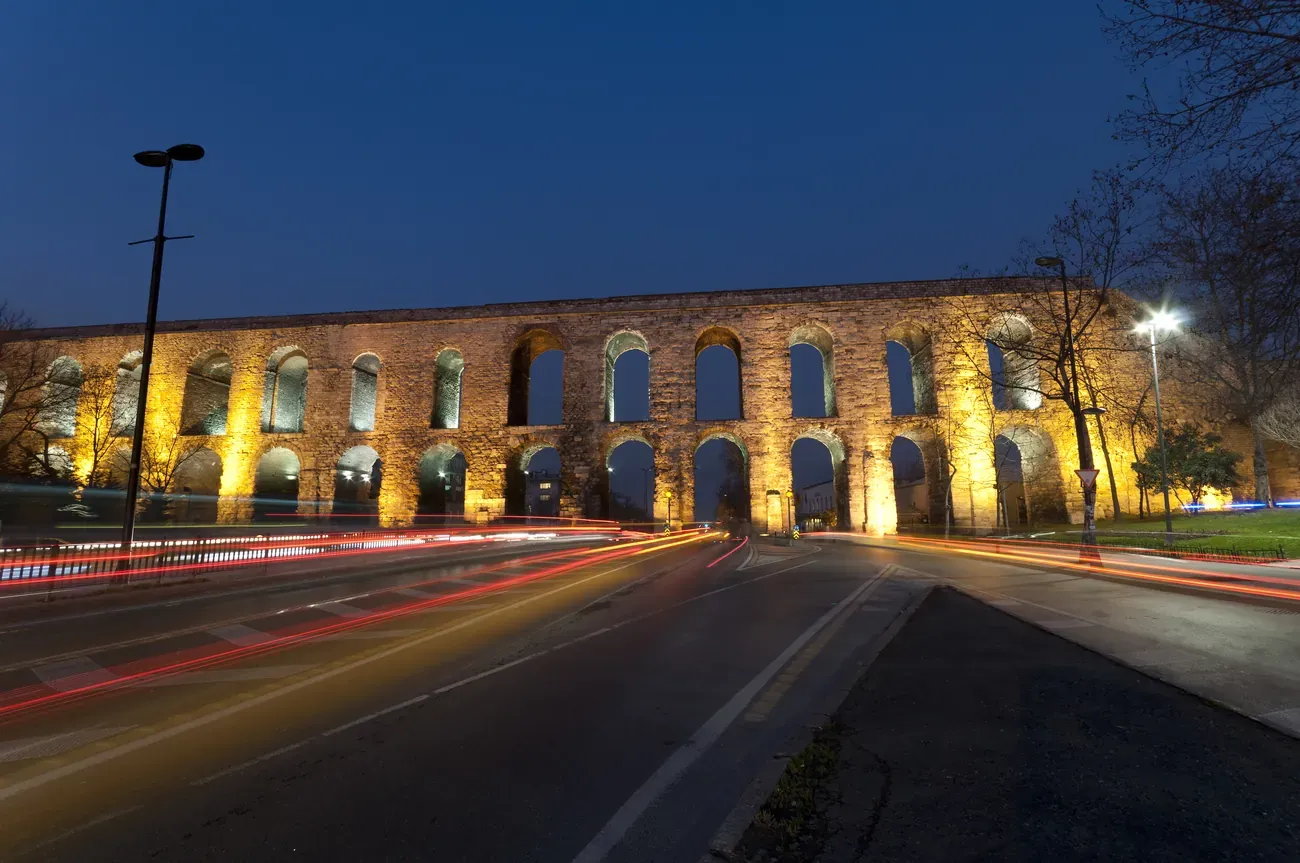
Aqueduct of Valens
Two tiers of arches stride across a city boulevard, finished in 373 to carry water into Constantinople.
Location: Fatih, Istanbul
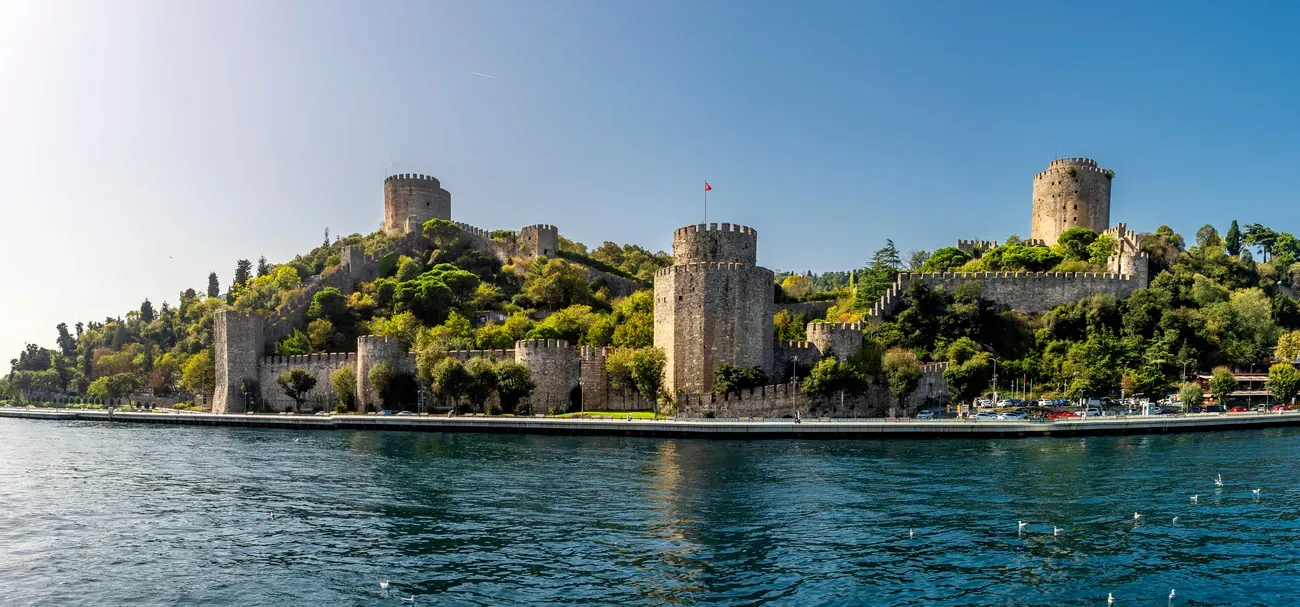
Rumelihisari
Mehmed II threw up this fortress on the European bank in 1452 to close the strait before the siege of Constantinople.
Location: Sariyer, on the Bosphorus in Istanbul
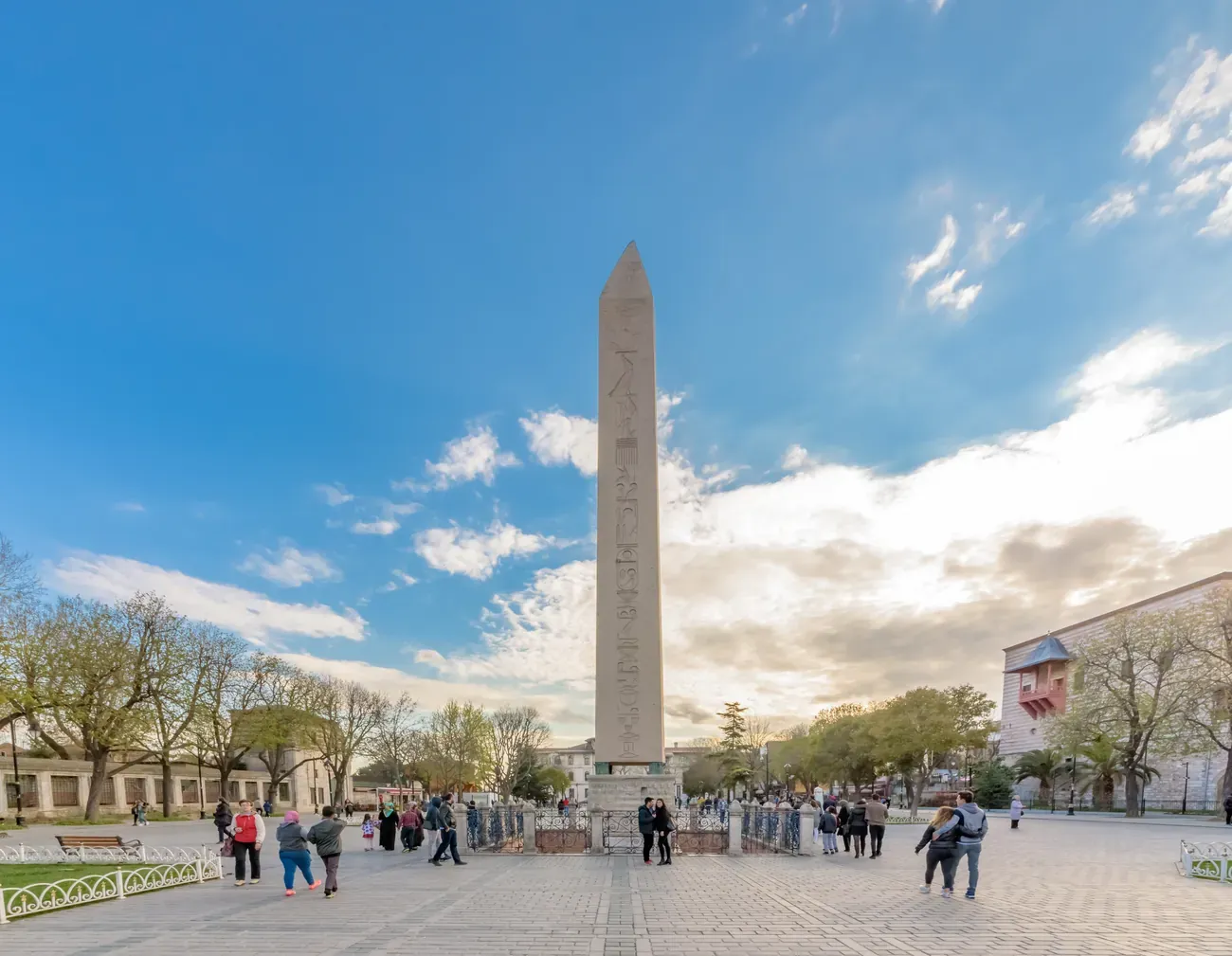
Obelisk of Theodosius
An Egyptian obelisk cut for Thutmose III, shipped west and re-erected in the Hippodrome by Theodosius I in the fourth century.
Location: Sultanahmet, Istanbul
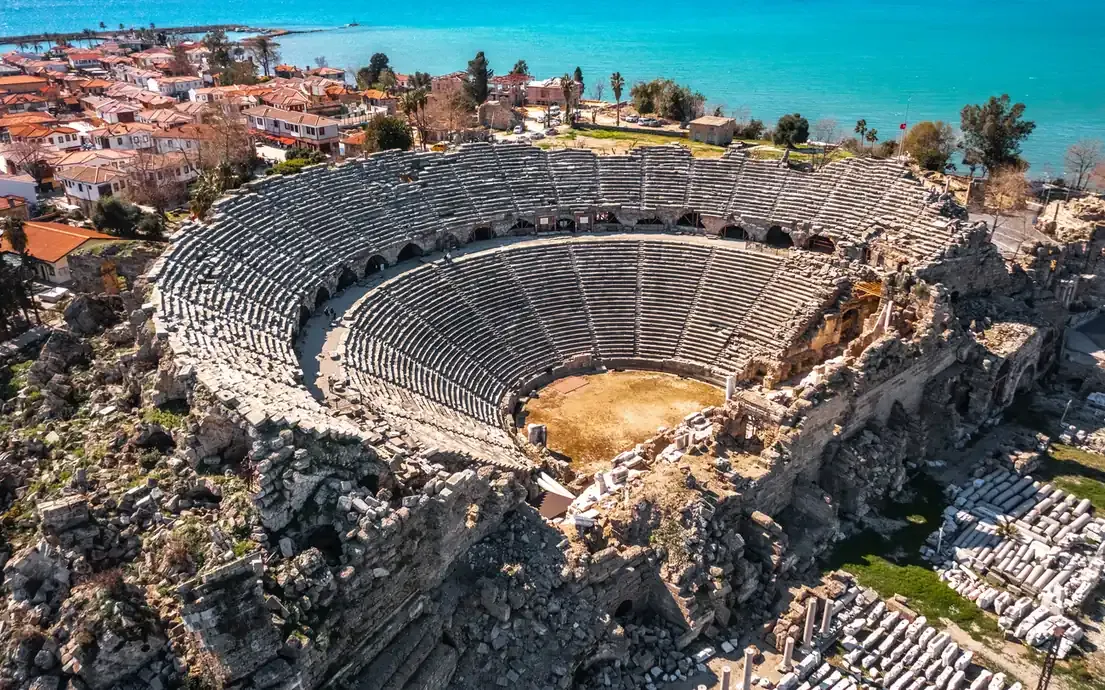
Theatre of Side
A Roman theatre for thousands sits among the temples and colonnades of a harbour town on the Mediterranean.
Location: Side, Antalya province
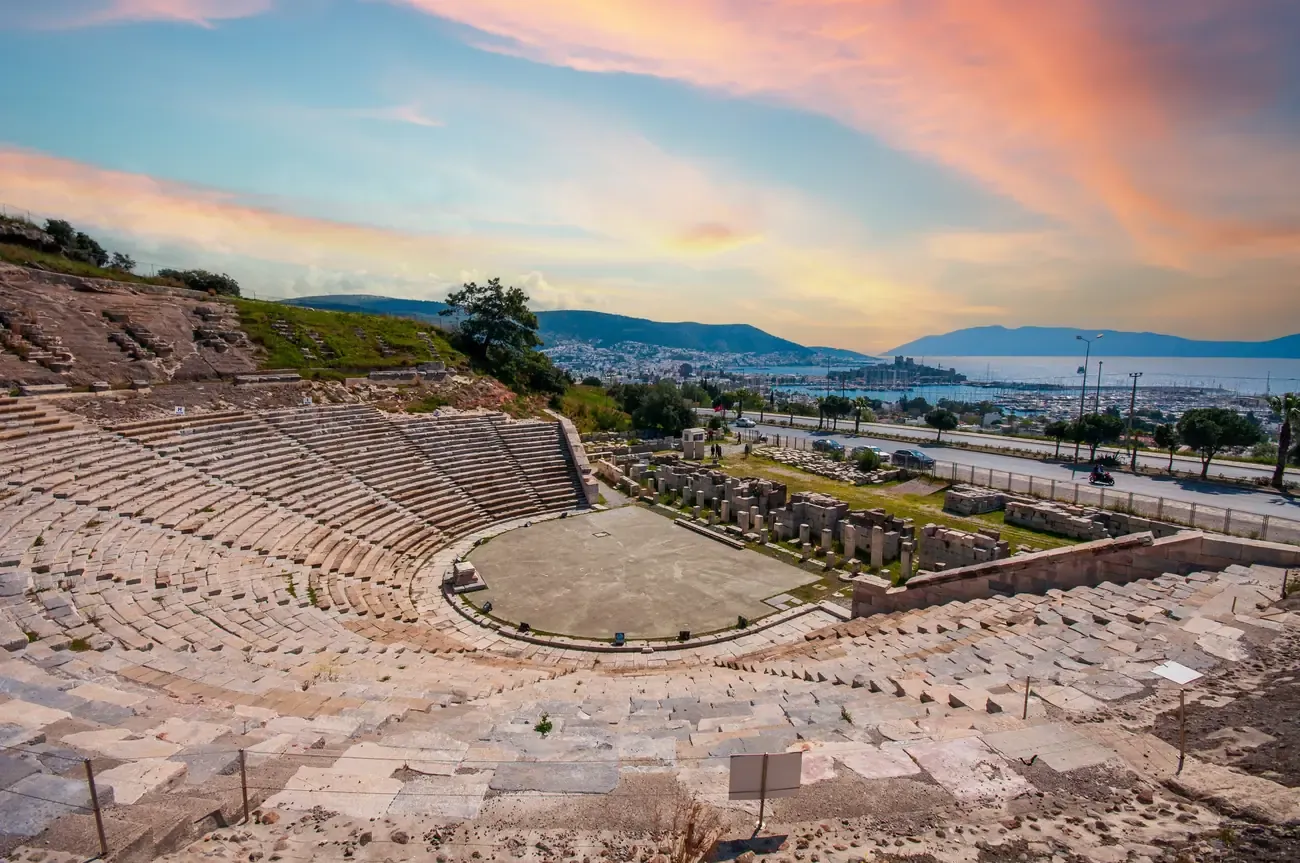
Theatre of Halicarnassus
Rows cut into the hillside above the bay in the city of Mausolus, whose tomb gave every language the word mausoleum.
Location: Bodrum, Mugla province
Hidden gems in Turkey
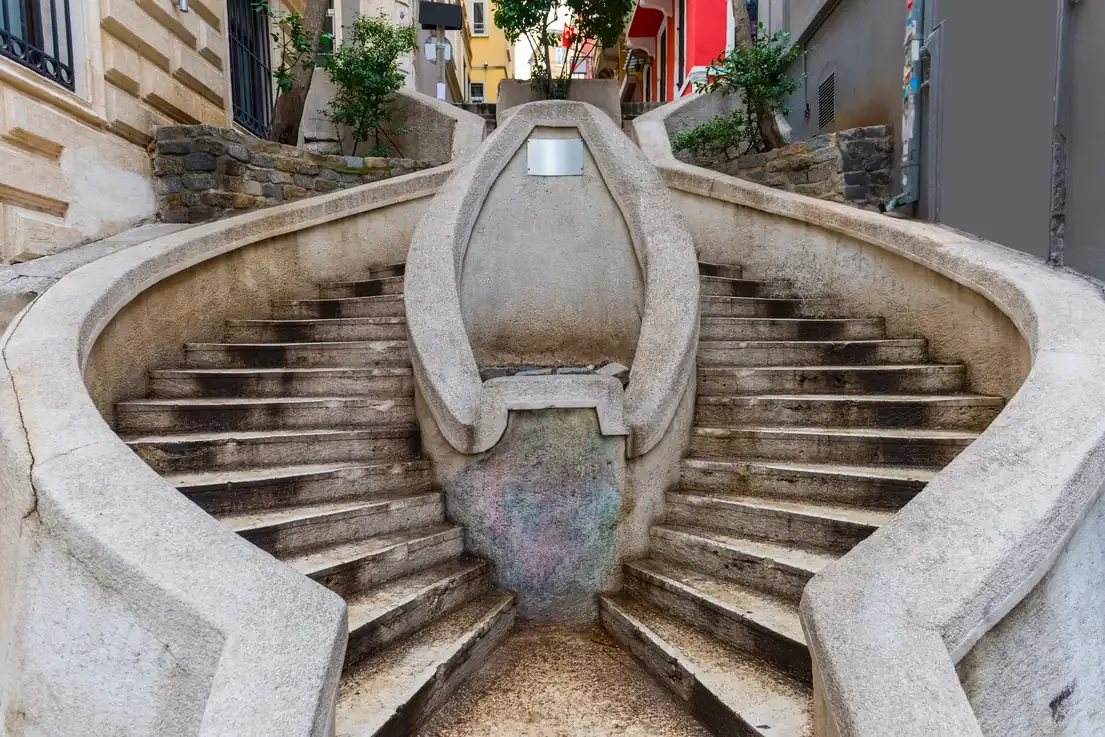
Camondo Stairs
A nineteenth-century stairway that curves back on itself in double horseshoes on the old banking street of Galata.
Location: Bankalar Caddesi, Beyoglu, Istanbul
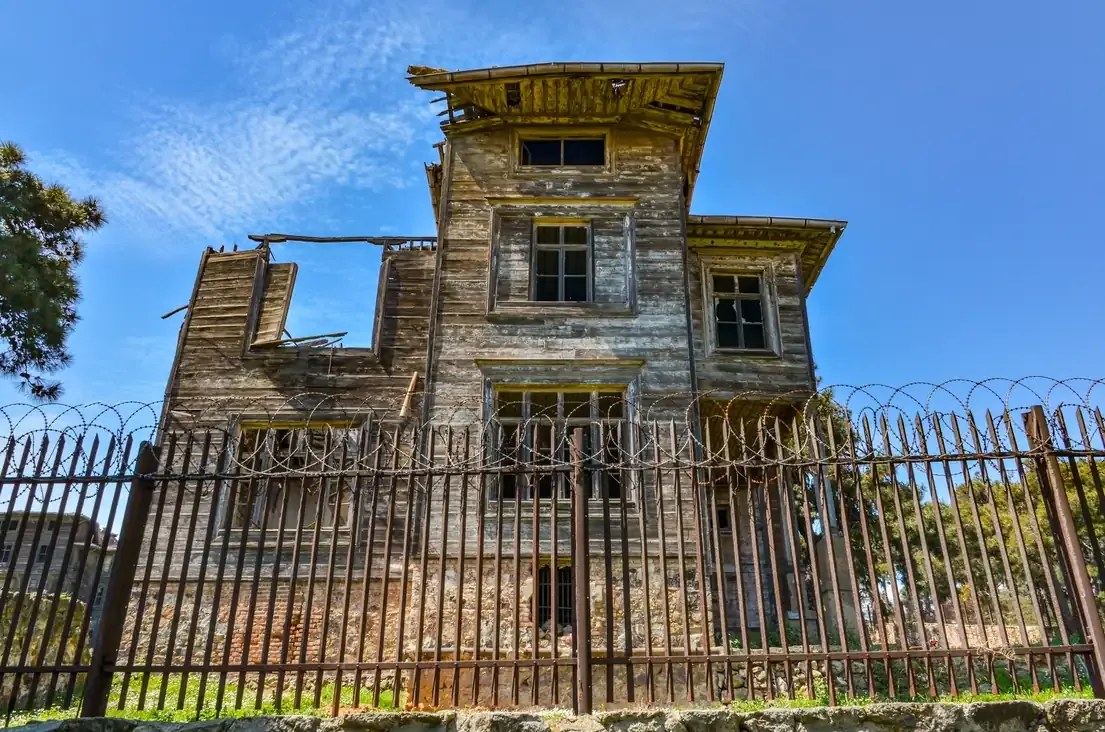
Prinkipo Orphanage
Reckoned the largest wooden building in Europe, empty since 1964 and slowly greying above the pines of Buyukada.
Location: Buyukada, Princes' Islands, Istanbul
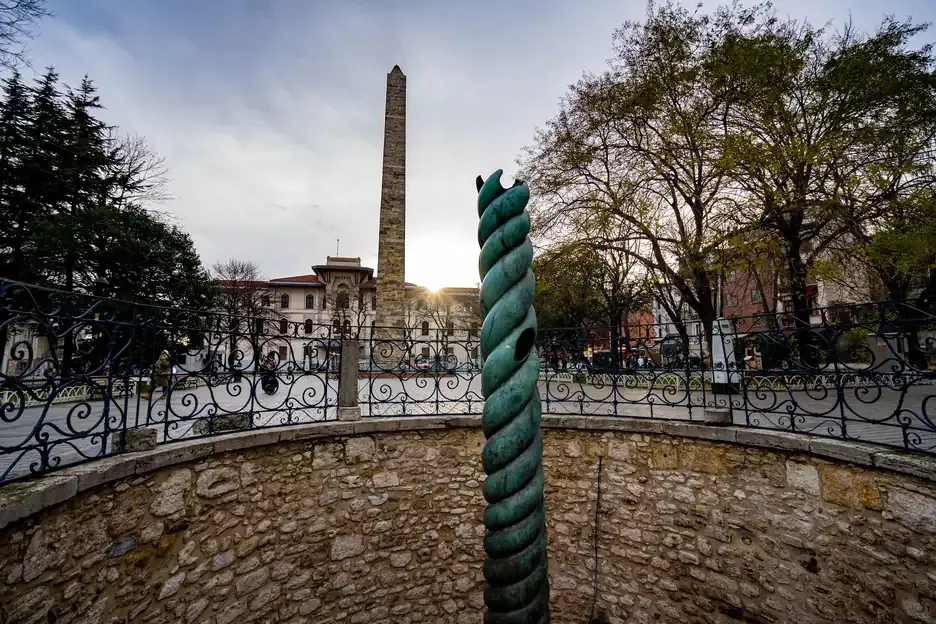
Serpent Column
Bronze from a Greek tripod at Delphi, moved here by Constantine in 324 to mark the defeat of Persia at Plataea.
Location: Sultanahmet, Istanbul
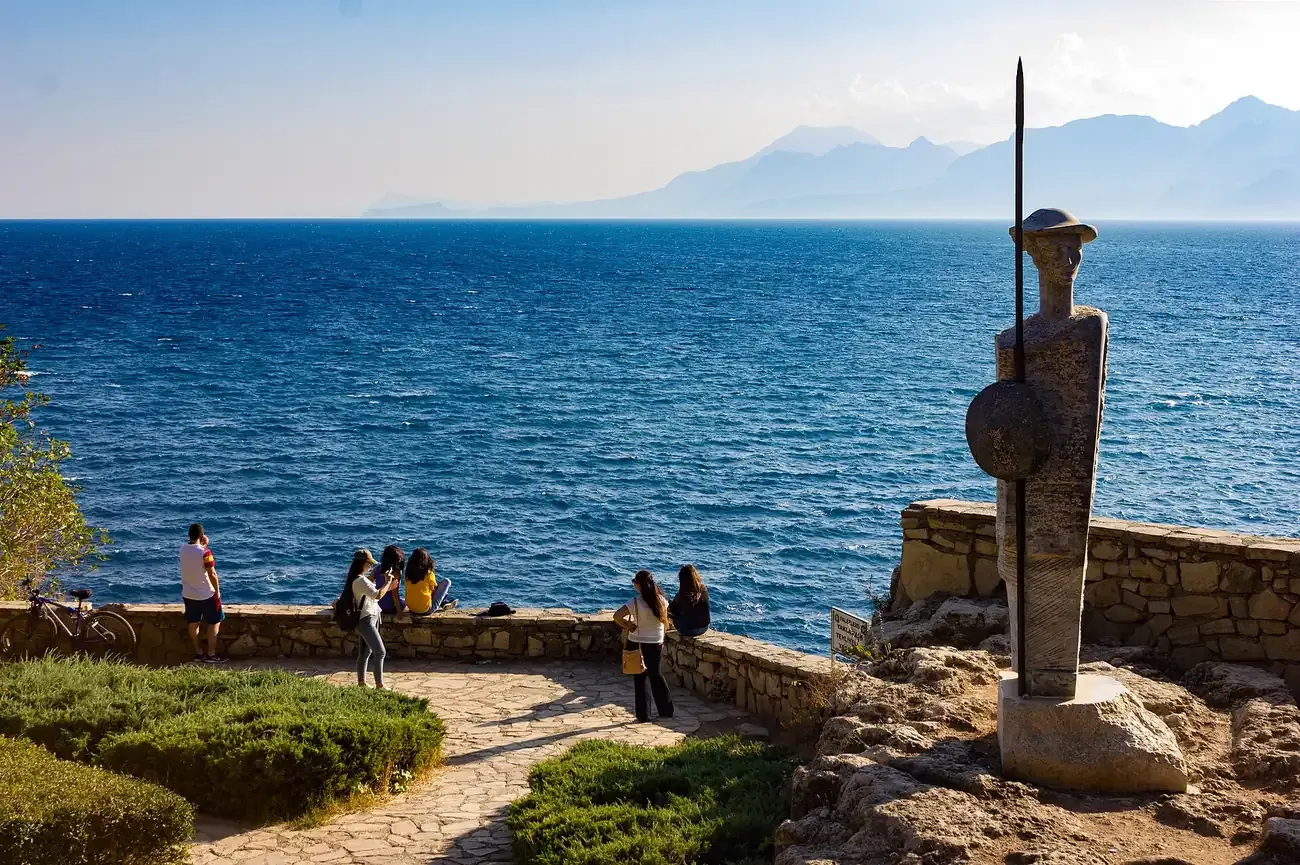
Karaalioglu Park
A clifftop park south of the old town, with the Hidirlik Tower at one end and the gulf spread out below.
Location: Kaleici, Antalya
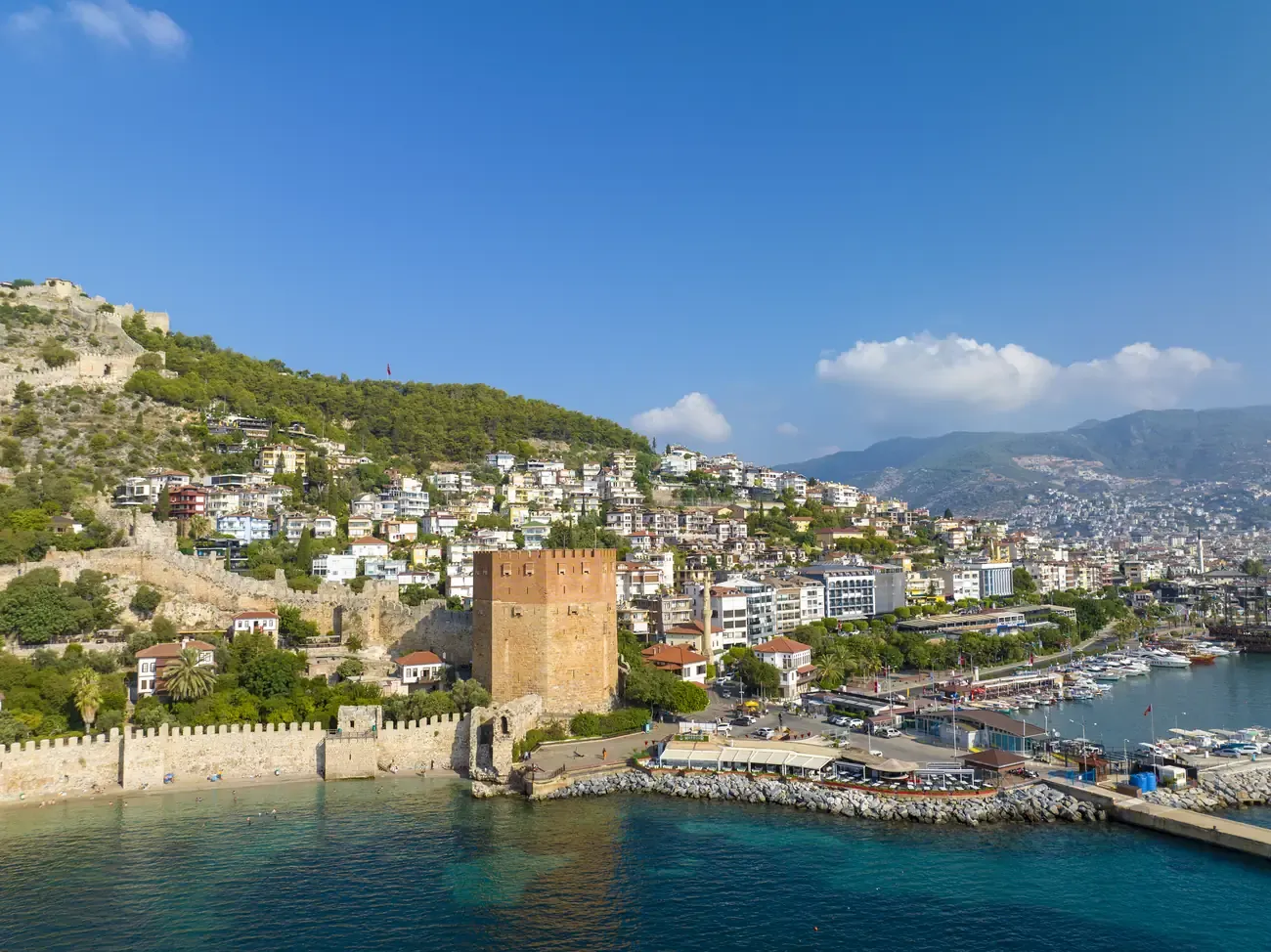
Alanya Castle
A Seljuk fortress wraps a rocky headland between two beaches, with the Red Tower guarding the shipyard below.
Location: Alanya, Antalya province
Why visit Turkey
Few countries pack this much variation into one border. Turkey holds 22 UNESCO World Heritage sites, and they run from the Byzantine and Ottoman core of Istanbul to the T-shaped pillars of Gobekli Tepe, raised by hunter-gatherers in the tenth millennium BC. Between those two ends sit Greek and Roman cities on the Aegean, Seljuk portals in Konya, Armenian and Georgian churches in the eastern valleys, and half-timbered towns such as Safranbolu and Sirince.
Geography does the rest. The country covers just over 750,000 square kilometres, with roughly 10,000 plant species, a third of them growing nowhere else. The Black Sea coast is rainy enough for temperate rainforest, the Aegean and Mediterranean shores are hot and dry in summer, and the eastern interior turns bitterly cold in winter, so the season shapes the itinerary more than the map does.
Most trips split between the two. Antalya anchors the Mediterranean side, where Roman theatres and harbour towns stand within an hour or two of the beaches, and Izmir does the same job on the Aegean. Cappadocia and Pamukkale cover the interior. Turkish cooking changes as you move, from the olive oil and wild herbs of the Aegean to the spice and lamb of the southeast, which is reason enough to keep travelling. Istanbul straddles the Bosphorus as the only major city set on two continents, which makes Turkey a natural bridge into the wider list of the tourist attractions in Europe.