
Tourist attractions in Phuket
Known for
Sino-Portuguese streets, Buddhist temples and Andaman Sea's beaches
Must-see landmarks
Old Phuket Town, Wat Chalong, the Big Buddha and Promthep Cape
Best time to visit
December to March, in the dry season, before the rains
Getting around
Songthaew trucks, the Phuket Smart Bus, tuk-tuks and taxis
Phuket's top 7 tourist attractions
For a first visit, the tourist attractions in Phuket come down to Old Phuket Town, Wat Chalong, Phuket Big Buddha and 4 more sights ranked below, plus free things to do and visitor FAQs.
1. Old Phuket Town
Old Phuket Town is the Sino-Portuguese heart of the island, where fortunes made in tin mining raised rows of pastel shophouses along Thalang Road and the short lane of Soi Romanee. Chinese lanterns, gilded shutters and arcaded walkways line the streets, and museums and mansions such as Chinpracha House and the Thai Hua Museum sit among them. Every Sunday evening Thalang Road closes to traffic for the Lard Yai walking market of food stalls, crafts and buskers.
Location: Thalang Road and the lanes around it, central Phuket Town
Access: Free to wander the streets; the museums and old mansions charge their own admission
Photos: "Sino-Portuguese shophouses on Thalang Road, Phuket" by CEphoto, Uwe Aranas (CC BY-SA 4.0); "Phuket Old Town clock tower" by Mussi Katz (CC0); "Colourful shophouses in Old Phuket Town" by Christophe95 (CC BY-SA 4.0).
2. Wat Chalong
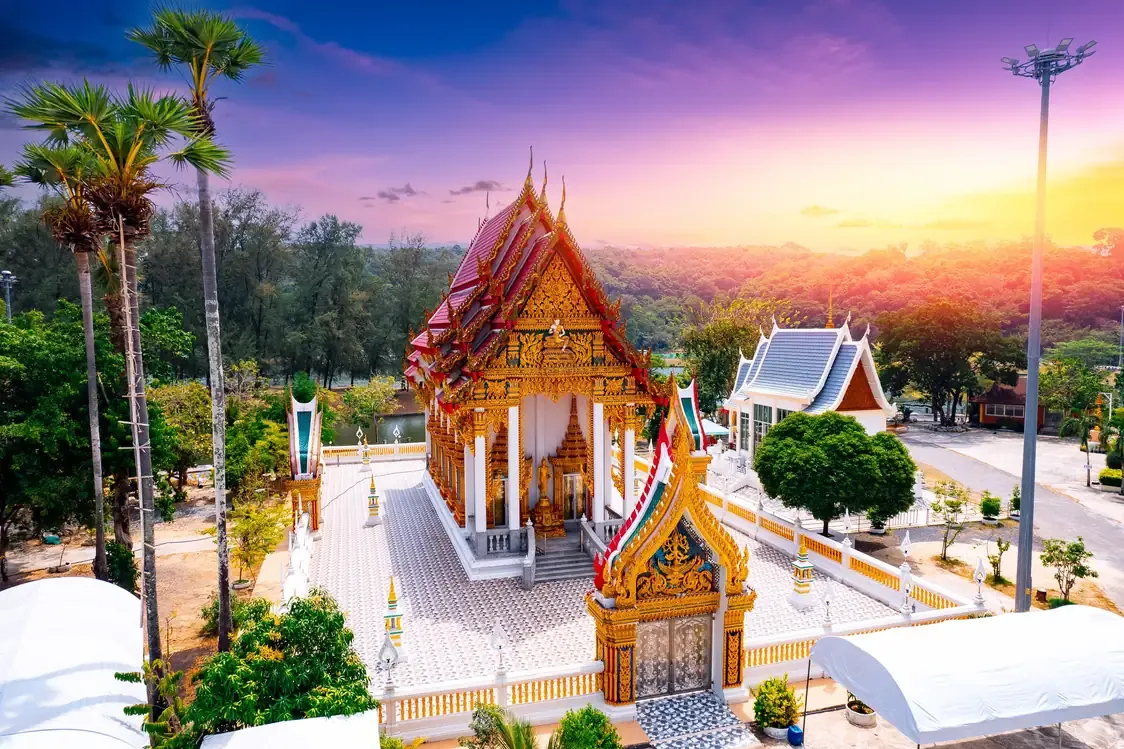
Wat Chalong is Phuket's largest and most visited temple, a working monastery whose ornate ordination hall and tiered red roofs draw a steady stream of worshippers. Its tall Grand Pagoda enshrines a fragment of bone honoured as a relic of the Buddha, reached by stairs that pass painted murals of his life. The grounds also remember the monks who guided the district through an uprising in 1876, and gilded and marble halls stand among manicured gardens.
Location: Chalong, southern Phuket
Access: Free; donation boxes stand by the altars
Photos: "Wat Chalong ordination hall, Phuket" by CEphoto, Uwe Aranas (CC BY-SA 4.0); "View of Wat Chalong" by Christophe95 (CC BY-SA 4.0).
3. Phuket Big Buddha
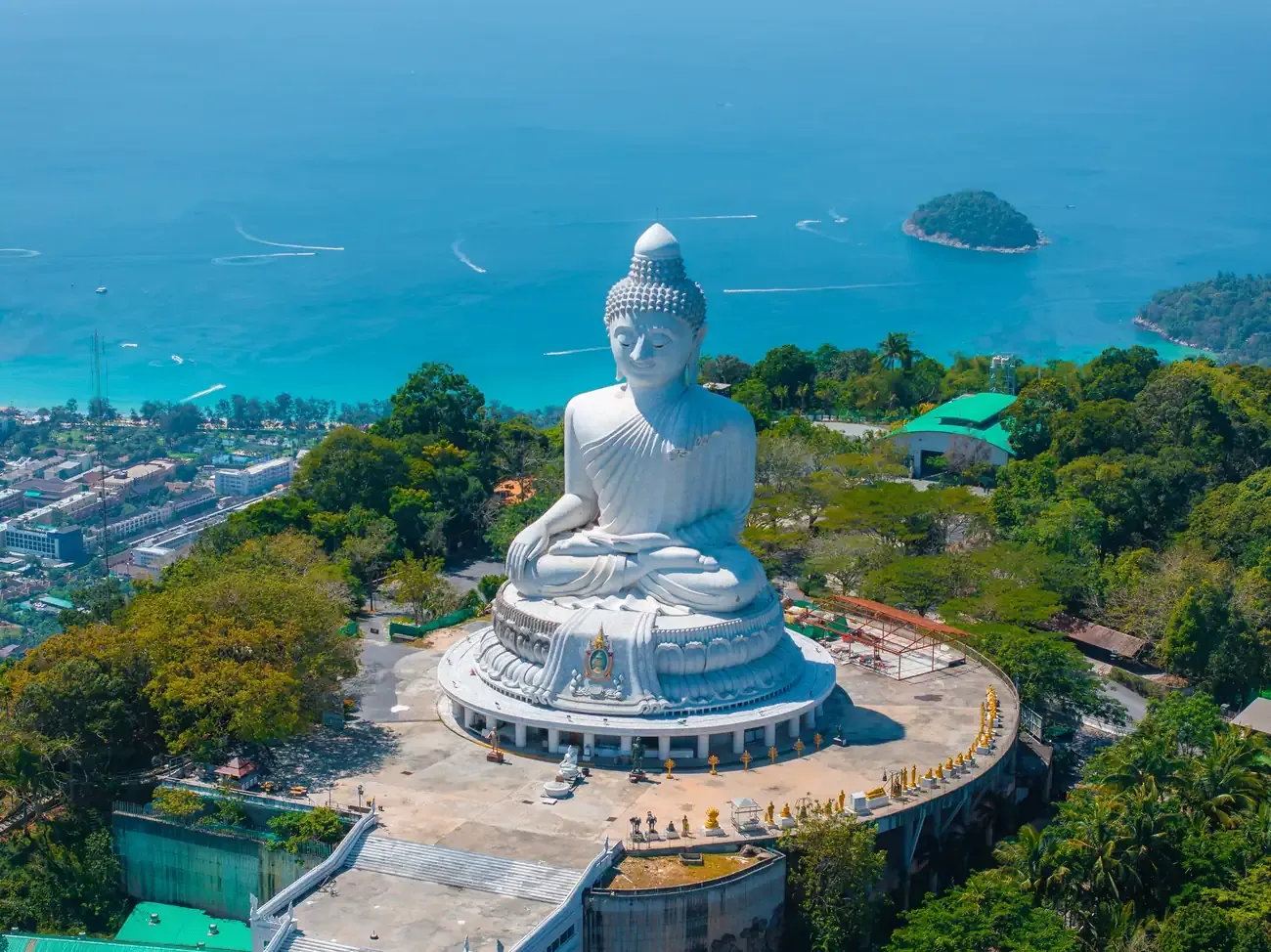
The Phuket Big Buddha crowns Nakkerd Hill with a seated figure some 45 metres tall, clad in white marble that gleams above the south of the island. Its official name is Phra Phutta Ming Mongkol, and construction began around 2002, gaining pace after the 2004 tsunami and funded entirely by donations from locals and visitors. A naga staircase climbs to a terrace with sweeping views over Chalong Bay, Kata and the surrounding hills.
Location: Nakkerd Hill, between Chalong and Kata
Access: Free entry; donations fund the ongoing work
Photos: "The Big Buddha of Phuket" by Mussi Katz (CC0); "Big Buddha of Phuket" by CEphoto, Uwe Aranas (CC BY-SA 4.0); "Big Buddha of Phuket with royal emblem" by Christophe95 (CC BY-SA 4.0).
4. Promthep Cape
Promthep Cape marks the southernmost point of Phuket, a rocky headland where sugar palms lean over the Andaman Sea and a whitewashed lighthouse stands above the shore. Most evenings crowds gather on the terrace to watch the sun drop toward the horizon, one of the island's classic sunset spots. A shrine lined with hundreds of elephant figures sits nearby, left as offerings, and paths lead down toward small stalls and the rocks below.
Location: Southern tip of Phuket, near Rawai
Access: Free at any hour
Photos: "Sunset at Promthep Cape, Phuket" by Phuket@photographer.net (CC BY 2.0); "Promthep Cape, Phuket" by Christophe95 (CC BY-SA 4.0); "Shrine at Promthep Cape, Phuket" by ADwarf (Public domain).
5. Patong Beach
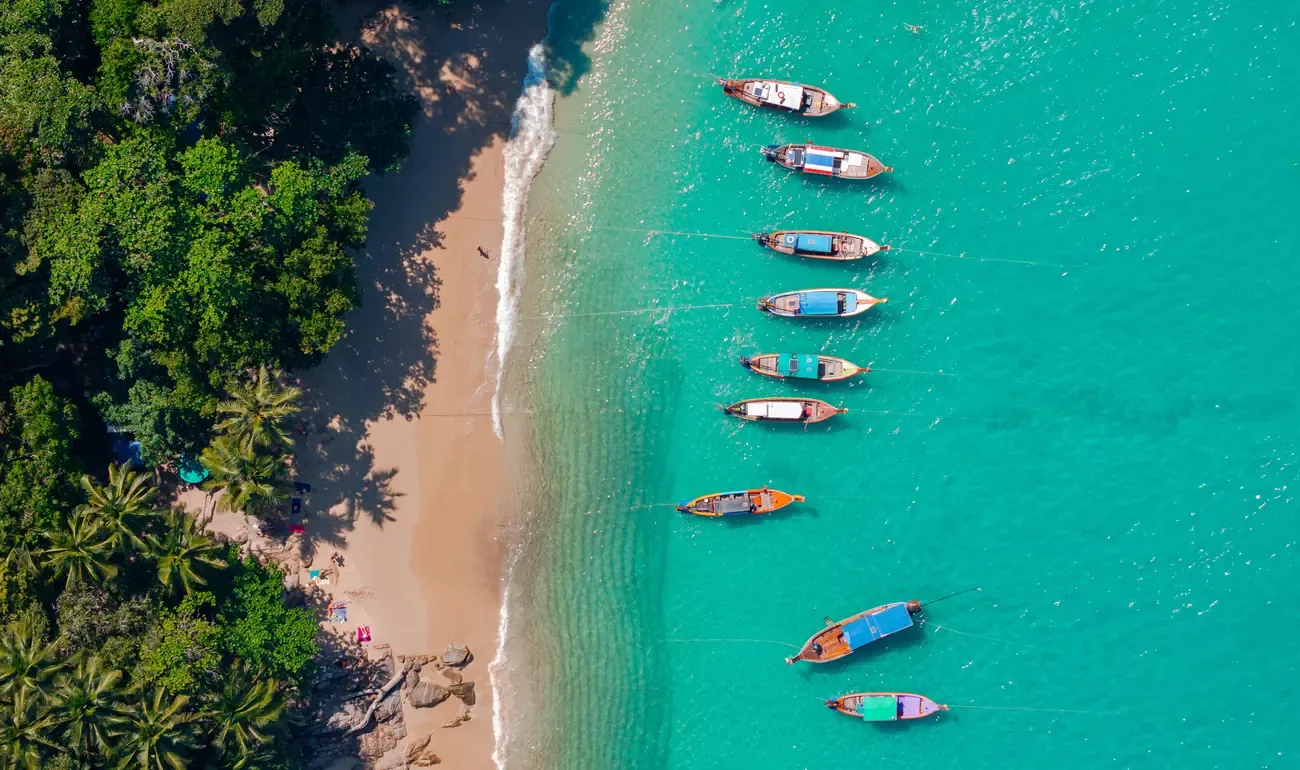
Patong Beach is Phuket's busiest and liveliest beach resort, a wide arc of sand ringed by green hills on the west coast. Sun loungers, umbrellas and watersports fill the shore by day, while parasailers drift above the bay and longtail boats wait at the water's edge. After dark the resort hands over to Bangla Road, a pedestrian strip of bars, clubs and street food, and the calmer sands of Kata and Karon lie a short drive south.
Location: West coast of Phuket, Kathu district
Access: Free public beach; sunbeds, umbrellas and watersports are rented separately
Photos: "Longtail boats at Patong Beach, Phuket" by กสิณธร ราชโอรส (CC BY-SA 4.0); "Parasailing at Patong Beach at dusk" by scott paul riefler (CC BY-SA 4.0).
6. Phi Phi Islands (day trip)
The Phi Phi Islands rise from the Andaman Sea as a cluster of limestone cliffs and hidden bays, reached on a day trip by boat from Phuket's piers. Boats take in Maya Bay, the turquoise cove made famous by the film The Beach, along with the emerald water of Pileh Lagoon and snorkelling stops among the reefs. The islands lie in neighbouring Krabi Province, and Maya Bay closes to landings every August and September for ecological recovery.
Location: Krabi Province, roughly two hours by boat from Phuket
Access: Reached by boat tour from Phuket's piers
7. Phang Nga Bay (day trip)
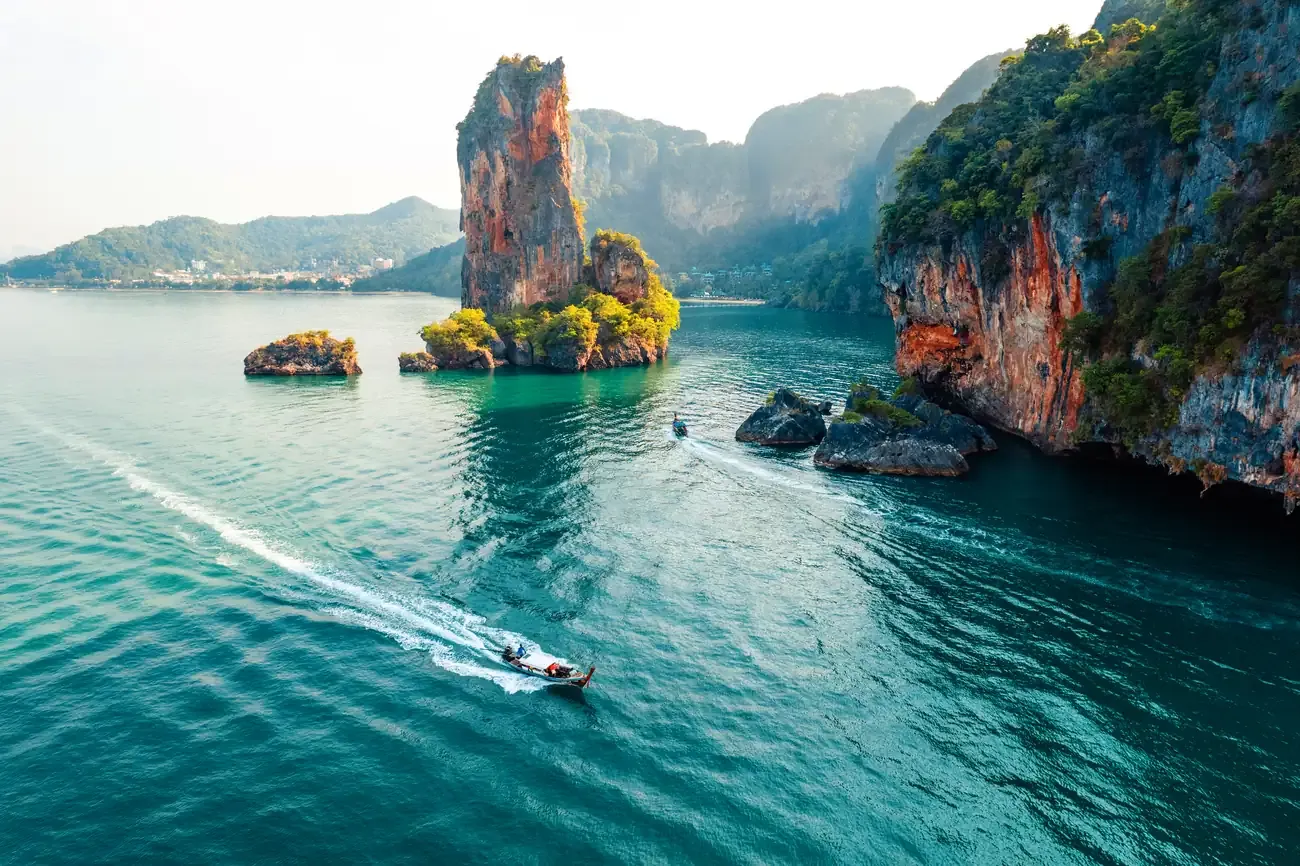
Phang Nga Bay scatters limestone karsts and sea caves across a national park north of Phuket, its still green water threaded by longtail boats and sea canoes. Boat trips reach Ko Tapu, the slender offshore spire known as James Bond Island since it appeared in The Man with the Golden Gun in 1974, and pass the stilt houses of the Ko Panyi village beneath a towering cliff. The bay lies in Phang Nga Province, a short drive and boat ride from the island.
Location: Ao Phang Nga National Park, Phang Nga Province
Access: Reached by boat tour from Phuket's piers
Free landmarks and viewpoints in Phuket
Rang Hill (Khao Rang)
The hilltop park above Old Town is free around the clock, its terrace giving the widest view over Phuket Town and the coast on either side.
Jui Tui Chinese Temple
Stepping inside this small Chinese shrine on Ranong Road costs nothing, with a donation box by the altar the sole ask; incense coils and painted deities fill the small interior.
Shrine of Serene Light
Locals leave small stacks of coins on the stone lions guarding this shrine's entrance rather than paying at a booth; there is no charge to step into the courtyard and see its murals.
Naka Weekend Market
Wandering this market's rows of stalls costs nothing, and only the food, drinks and goods on sale come with a price tag; it fills a southern corner of Phuket Town on weekend nights.
Sunday Walking Street (Lard Yai)
Every Sunday evening, Thalang Road closes to traffic for a free street market of food stalls, crafts and buskers running through the heart of Old Town.
Saphan Hin
This free seafront park at the end of Phuket Road draws locals for sport and a stroll past the Tin Mining Monument, with open lawns and views over the bay.
Why Phuket is worth visiting
Phuket rose from a scatter of tin-mining villages into one of Thailand's best known beach destinations, its fortune built first on ore dug from the hills and later on the resorts that ring its Andaman coast. Chinese immigrants who came to work the mines left behind the shophouses, shrines and temples that still define Old Phuket Town, a legacy that today sits alongside dive boats, beach clubs and busy sunset crowds. Boats leave the island piers for Phang Nga Bay and the Phi Phi Islands, the two Andaman names on any shortlist of tourist attractions to visit in Thailand.
Neighbourhoods to know
Old Phuket Town holds the Sino-Portuguese heart of the island, its shophouse streets busiest on Sunday evenings when Thalang Road turns into a walking market. Patong is Phuket's busiest and liveliest beach resort, built around its bay and Bangla Road's nightlife. Kata and Karon offer calmer beaches a short drive south, while Rawai and Chalong, further south again, keep fishing piers close to the Big Buddha and Wat Chalong. Quieter resorts line the northwest coast at Kamala, Surin and Bang Tao.
When to go and for how long
The dry season runs from December to March, with the least rain and reliable sunshine, and temperatures stay high year round with an annual average high around 32°C. The wet season runs April to November, September the wettest month, though showers are usually short afternoon downpours rather than lasting all day. Four to five days allow time for Old Town, a beach base and a boat trip to the outer islands.
Getting around
Phuket has no rail transit, and its sights are spread across an island of hills and bays, so most visitors rely on wheels. Blue songthaew trucks run fixed routes between Phuket Town and the main beaches through the day, the Phuket Smart Bus links the airport to the west coast resorts, and tuk-tuks, taxis and ride-hailing apps cover point-to-point trips and late nights out.