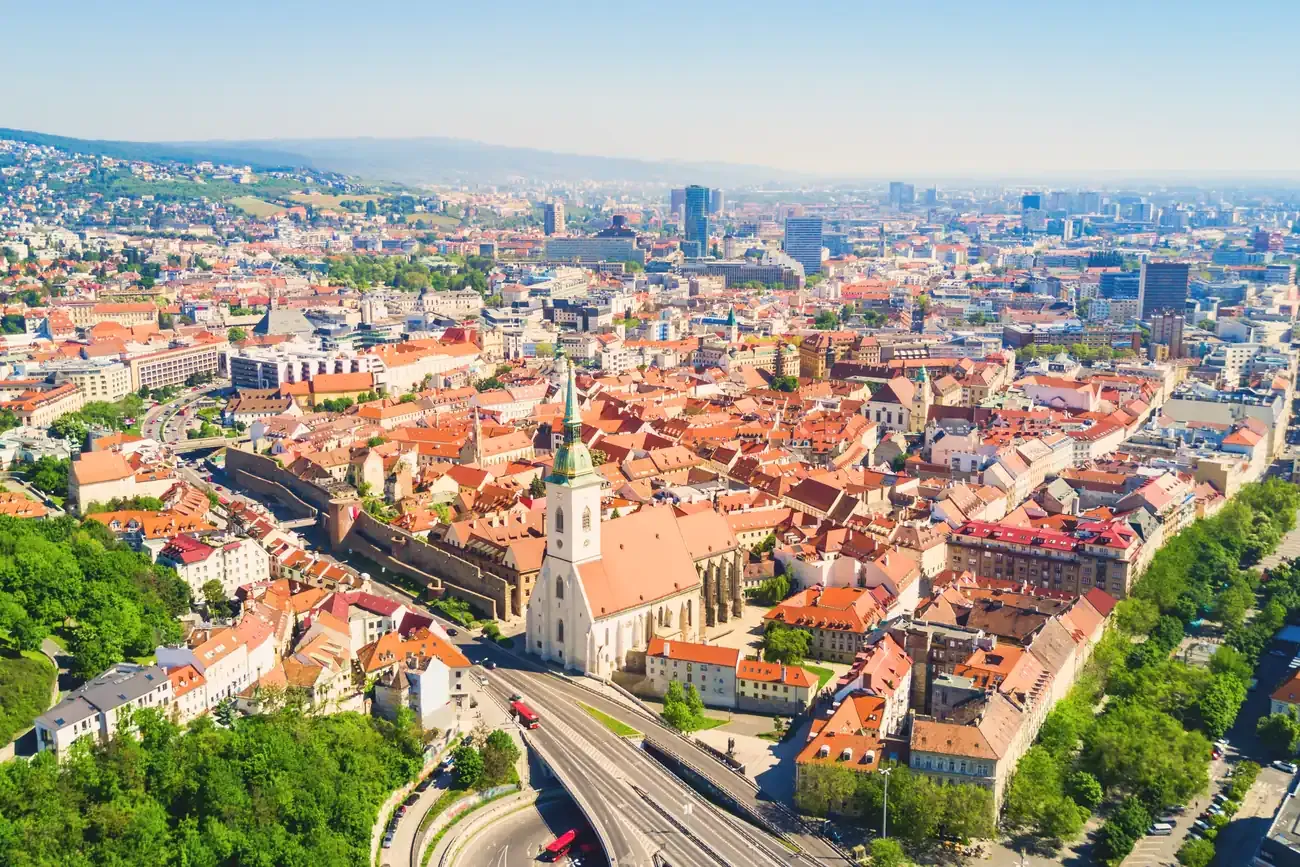
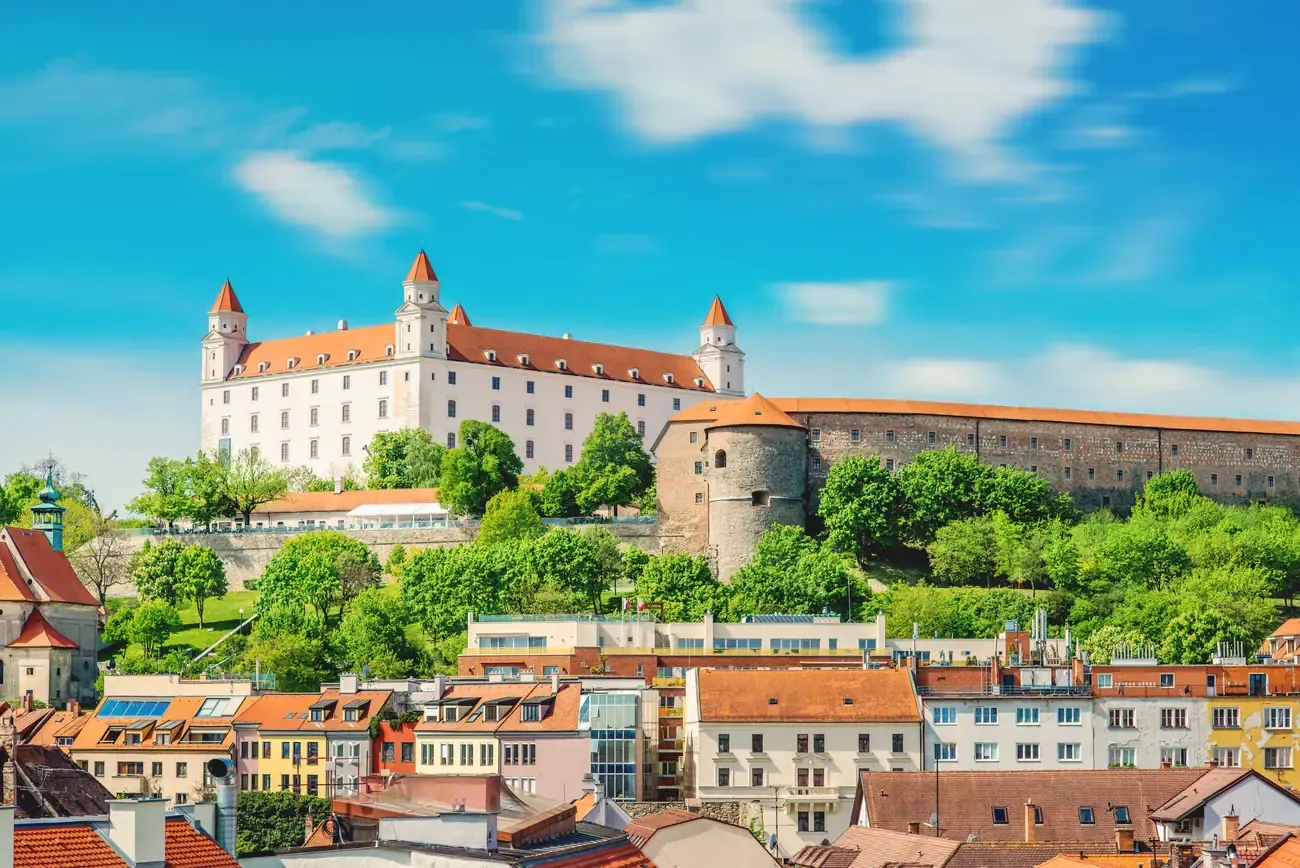
Bratislava packs an imperial past into one of Europe's smallest capitals. Its Gothic cathedral crowned Hungarian kings for three centuries, from 1563 to 1830, and its old town streets still cluster tightly around the hill where the castle has stood ever since. The whole historic centre is compact enough to explore without ever needing public transport. Bratislava is the only capital in the world bordering two other countries, Austria and Hungary, which makes it an easy add-on to a wider run of must-see tourist attractions in Europe.
A crossroads of empires
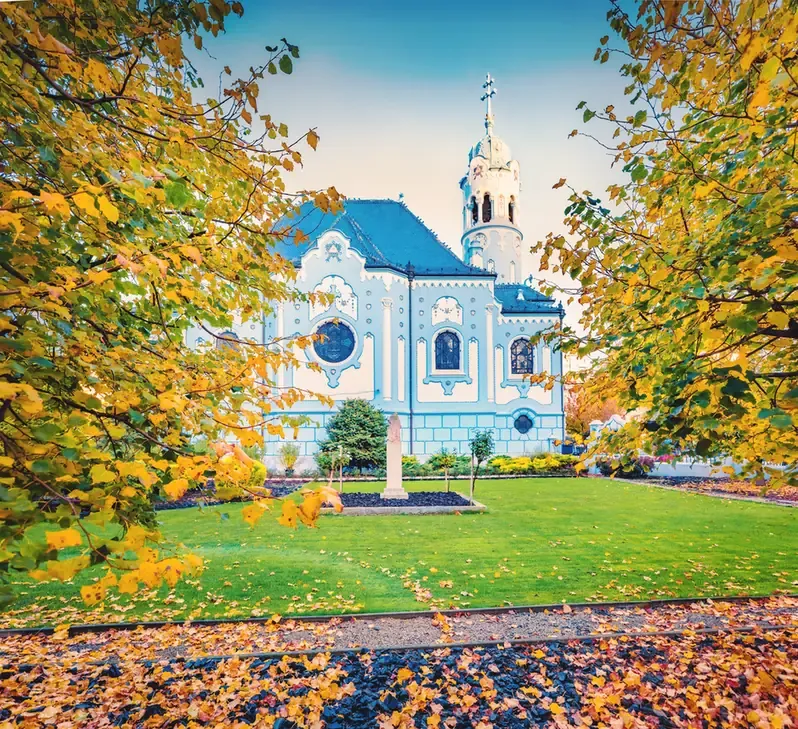
For three centuries under the Habsburgs, Bratislava, then called Pressburg, hosted coronations at St Martin's Cathedral while the royal court itself sat in Vienna. Hungarian, German and Slovak communities shared the streets long before the twentieth century's wars and communist rule reshaped the city; today the layers surface in the mix of Gothic, Baroque and Art Nouveau facades packed into the old town.
Old town and beyond
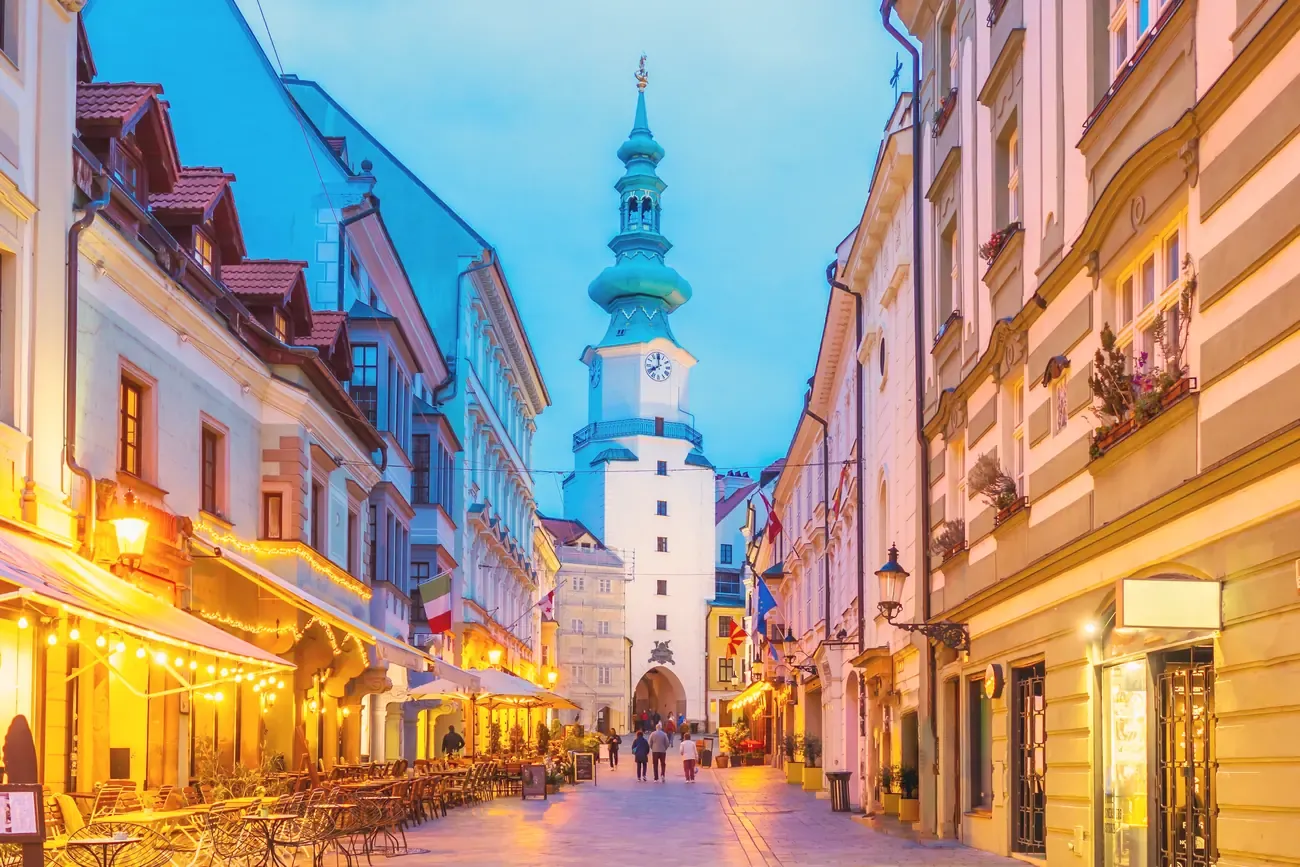
The old town fits inside its former walls, from Michael's Gate down to the Danube embankment, with the castle hill rising just to the west. Across the river, the Petržalka housing estate shows the city's communist era architecture at its most extensive, while villages in the Small Carpathians just north of the centre grow the wine sold in old town cellars. Devín Castle, where the Danube meets the Morava, makes an easy half day trip from the centre.
When to go and for how long
April to June and September bring mild weather and thinner crowds than midsummer. Two to three days suit most visitors: enough for the castle, the old town's squares and churches, and a half day at Devín Castle, with a spare afternoon free for the wine villages or a day trip to Vienna.
Getting around
Bratislava's old town is entirely walkable, with the castle the only real climb of the day. Trams and buses cover the rest of the city, including the Petržalka estate across the river and the airport on its eastern edge, and no metro system complicates the network.