
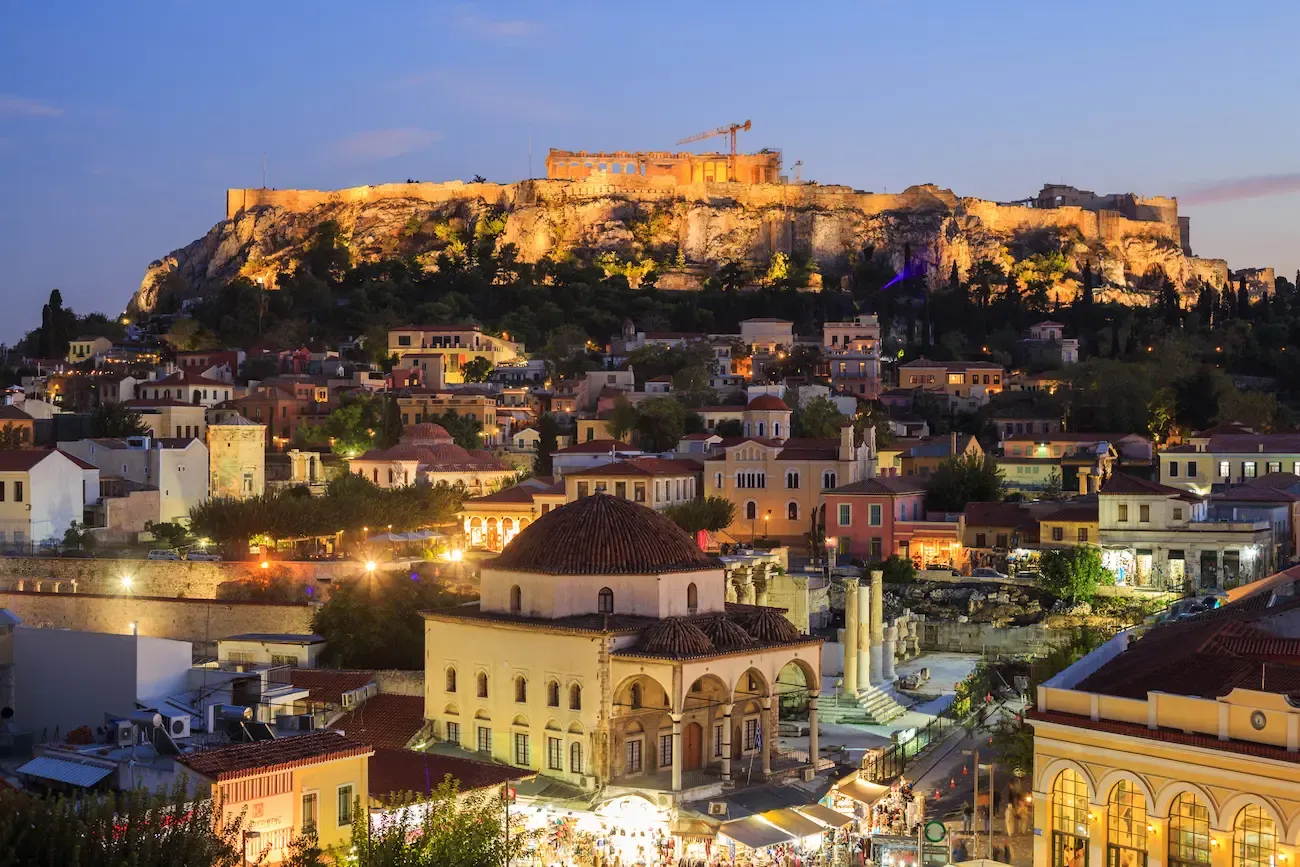
Is Athens safe for tourists
Yes. Violent crime against visitors is rare in Athens, and most trips pass without trouble. The real risk is pickpocketing on the metro and in crowded squares, plus summer heat, wildfire alerts and strike days that can change plans at short notice.
What the travel advisories say
The two travel advisories that English-speaking visitors read most often both treat Greece as a normal destination. The United States travel advisory for Greece sits at Level 1, "Exercise normal precautions", the lowest of its four levels. The State Department issued that level on 23 October 2025 and last updated the country page on 19 February 2026.
The UK travel advice for Greece from the Foreign, Commonwealth and Development Office lists no part of Greece where it advises against travel. Its guidance was still current on 5 October 2026, with the last update dated 11 August 2026.
The two texts agree on the main points. Thefts of passports, wallets and bags happen on the metro and in crowded tourist places, especially in central Athens. Strikes and demonstrations are frequent, sometimes called with little notice, and some have turned violent around the big central squares.
On terrorism, the British advice carries the same general warning it gives for many European countries, and Greek authorities have stepped up security at some prominent sites, including tourist areas. None of this stops ordinary sightseeing, but it is worth reading both pages again in the week before departure.
Where pickpockets work in Athens
Pickpocketing is the crime most visitors to Athens will hear about, and both advisories single out the metro. Thieves work where people stand close together and look at something else, so a few places deserve full attention.
Line 1 and the central interchanges. Line 1, the old overground railway between Piraeus and Kifisia, crosses the centre and meets the other metro lines at Attiki, Omonia and Monastiraki. Trains and platforms there fill up with day-trippers, cruise passengers and commuters, and that crowding is what thieves look for.
The airport train and metro. The State Department warns travelers not to leave bags unattended on the Athens Airport train. Arriving visitors are tired, loaded with luggage and busy with phones, which makes them easy targets on the first ride into town.
Train doors. The American advice describes a common tactic in which one person causes a commotion or pushes, while another lifts a wallet or phone. Thieves often strike as the doors open and then step off into the crowd, so standing away from the doors helps.
Café tables and busy squares. The city's visitor site warns against leaving a phone lying on a café table, where it can be snatched in seconds. Syntagma and Monastiraki squares draw the biggest crowds.
A few habits cover most of the risk. Wear a backpack on the front in crowded carriages, split cash and cards between two places, and keep the passport in the hotel safe with a photo of its main page on the phone. Withdraw cash from well-lit ATMs in busy streets rather than from machines in quiet corners at night.
Areas to avoid in Athens, and when
Most of central Athens is busy and ordinary at any hour. A handful of areas have visible drug use or regular protests, and the right answer depends on the time and the date rather than a blanket ban.
| Area | Omonia Square and side streets |
|---|---|
| By day | Busy transport hub, fine to cross |
| At night | Quieter side streets feel rough |
| What to know | The city's visitor site lists open drug use around the square. Stick to main streets after dark. |
| Area | Keramikos and Metaxourgeio |
|---|---|
| By day | Galleries, cafés, a residential mix |
| At night | Patchy, with some empty blocks |
| What to know | Also on the visitor site's list of drug use areas. Choose lively streets and use a taxi late. |
| Area | Pedion tou Areos park |
|---|---|
| By day | Large park with families and joggers |
| At night | Best avoided |
| What to know | Listed for drug use. Walk around it rather than through it after dark. |
| Area | Exarchia |
|---|---|
| By day | Student district with street art, bookshops and cheap tavernas |
| At night | Lively bars, generally calm |
| What to know | Demonstrators often gather here, and police sometimes use tear gas. Avoid it on strike and protest days, especially 17 November and 6 December. |
| Area | Syntagma Square |
|---|---|
| By day | Parliament, the guard ceremony, the main transport hub |
| At night | Busy until late |
| What to know | The main stage for marches. On protest days, walk around the square and check metro station closures. |
For a first stay, Plaka, Koukaki, Makrygianni, Syntagma and Kolonaki are the usual quiet bases. They sit close to the Acropolis or the main museums, stay busy into the evening and keep residents on the streets late. People who drink in Exarchia or eat in Psirri can head back to any of them on foot along the main streets or by taxi.
Is Athens safe at night
Athens keeps late hours. Tavernas fill late in the evening, bars stay open past midnight and the streets around Monastiraki, Psirri and Plaka stay crowded well into the night, which makes walking between them feel normal.
The quieter risk at night is getting home. The metro runs from about 5 am to midnight, with Lines 2 and 3 running until 2 am on Fridays and through the night on Saturdays. After that, a licensed yellow taxi is the simplest option. The Free Now app and the UberTaxi service in the Uber app both send yellow cabs, and the British advice recommends these apps or pre-arranged transport.
The same advice covers drinks and groups. Visitors should keep an eye on each other's drinks so nobody spikes them, save the hotel location in a maps app before going out, and avoid leaving a friend to walk back alone. Dark side streets around Omonia, Metaxourgeio and the park at Pedion tou Areos are better avoided late, while the lit main streets of the historic centre stay full of people.
Common scams in Athens
Free bracelet or rose
Someone ties a string bracelet on a wrist or hands over a flower as a "gift".
A demand for money follows, often with a group standing close.
A firm no and walking on, with hands kept free, ends it.
Taxi without the meter
All licensed Athens taxis have meters, and the driver should switch the meter on when the ride starts.
Licensed taxis must also accept cards, shown by a sticker on the rear window.
Booking through Free Now or UberTaxi avoids most disputes.
Inflated bar or restaurant bill
A friendly stranger suggests a bar, then the bill arrives far higher than expected.
By law, restaurants must provide an itemised bill, so visitors can ask for one and check each line.
A receipt also helps if a dispute goes to the tourist police.
Distraction on the metro
One person drops something, blocks the door or starts an argument.
An accomplice uses the moment to open a bag or lift a phone.
Any sudden scuffle near the doors is the signal to hold bags tight.
Petition or survey
A person with a clipboard asks for a signature for a good cause.
While the visitor writes, a second person checks pockets, or a donation request follows.
Walking past without stopping is the easiest answer.
Heat, wildfires, strikes and traffic
Crime is not the only thing that changes a trip to Athens. July and August bring heatwaves, and the Acropolis and other open-air sites offer little shade. Visitors plan hill sites for the first hours after opening, carry water and keep the middle of the day for museums.
Greece has a high risk of wildfires from April to October. The British advice asks travelers to allow emergency alerts on their phones, because the Greek government sends emergency warnings to phones by location. The setting sits under notifications on most phones, and the 112 Greece account on X posts updates during fires and floods.
Strikes can stop buses, trains, ferries and flights, sometimes with very little notice. Demonstrations often gather around Syntagma, and some dates come back every year: 1 May (Labour Day), 17 November (the Polytechnic anniversary) and 6 December. On those days, walking around the squares and checking transport before setting out saves time.
Traffic is the last everyday risk. Drivers do not always stop at pedestrian crossings, and a green walking signal can still let cars turn right across the crossing. Looking both ways before stepping out, even on green, is a habit worth keeping.
What to do if something is stolen
The first thirty minutes after a theft matter most. Visitors block cards through their bank's app or hotline straight away, then change passwords on any stolen phone using another device.
Next comes a police report, which most insurers ask for before they pay a claim. The tourist police answer on 1571 in English, French and German, and the general police line is 100. At the airport, the airport police take reports directly. Asking for a copy of the report, with its number, makes the insurance claim easier later.
A stolen passport means contacting the traveler's own embassy, which can replace it or issue an emergency document. American citizens can reach the United States Embassy at 91 Vasilisis Sophias Avenue, on +30 210 720 2414, or on +30 210 729 4444 after hours.
For maps, directions to a police station or an alternative route on a strike day, the Athens tourist office page lists the two information points. One sits in Syntagma Square and the other on the arrivals level at the airport, the first place many visitors notice a missing wallet.
Emergency numbers in Athens
| Service | Number |
|---|---|
| European emergency number (police, fire, ambulance) | 112 |
| Police | 100 |
| Tourist police (English, French, German) | 1571 |
| Ambulance | 166 |
| Fire brigade | 199 |
| Hospitals and pharmacies on duty | 14944 |
| Airport police | +30 210 353 6919 |
The city's visitor site keeps a list of Athens safety tips and emergency numbers. Calling 999 from a British mobile in Greece also connects to the Greek emergency services.