
Is Park Güell free?
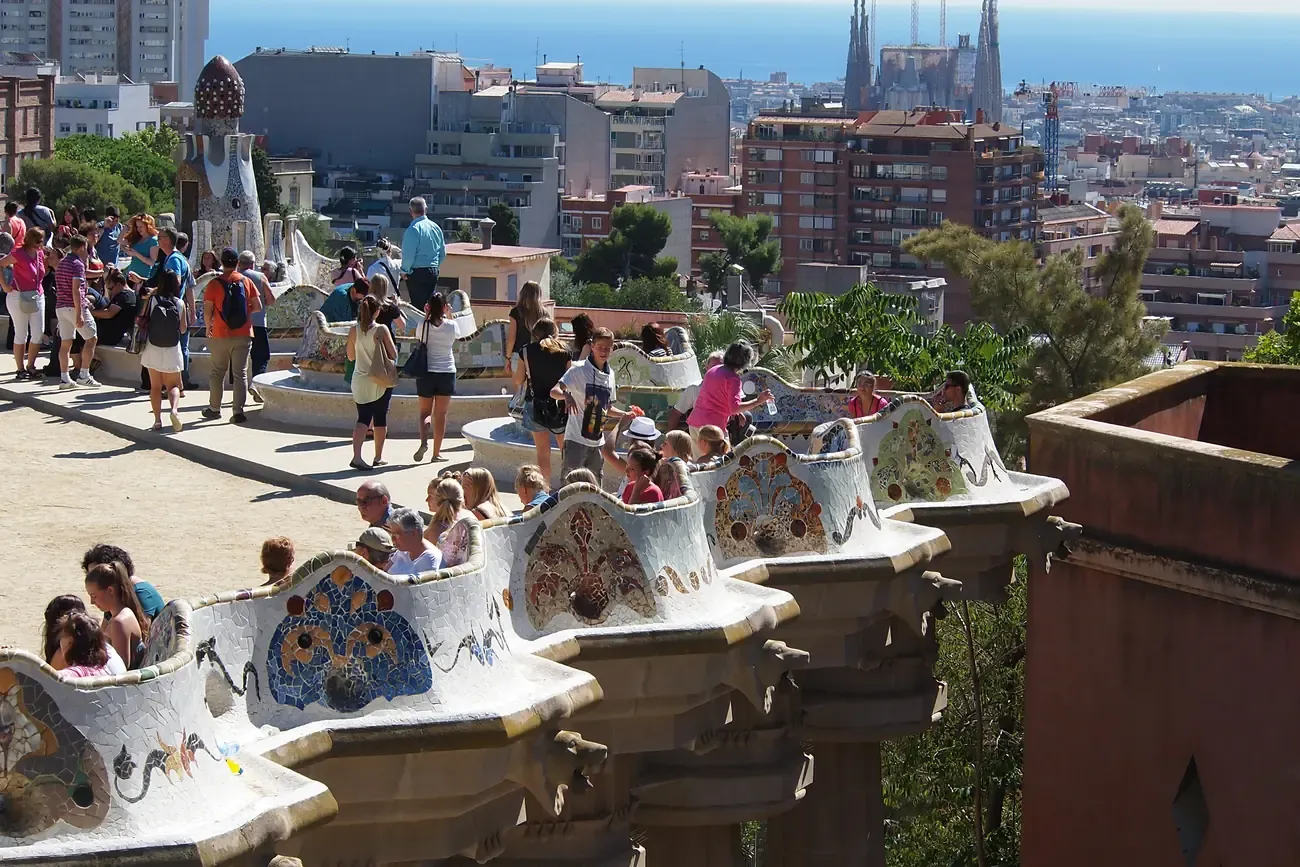
No. Visitors need a timed ticket for the whole park. Free entry is reserved for registered Barcelona residents, who use the park's own Passi Verd booking, and a few local groups. Barcelona's other sights fill the guide to things to do in Barcelona.
Photo: "View Park Guell Sagrada" by Danbu14 (CC BY-SA 3.0).
Who gets into Park Güell free
Free entry to Park Güell is kept for people who live in Barcelona, and the park's own rules for residents and citizens set out who qualifies and when. Everyone else, including visitors from the rest of Spain, books the same timed ticket.
| Visitor | Free? | Condition |
|---|---|---|
| Visitors to Barcelona | Not free | Timed ticket for the whole park, bought online in advance |
| Barcelona residents with the Passi Verd | Free ticket (book) | Same-day booking with an ID number checked against the city register |
| Residents of the six neighbourhoods around the park | Always free | Personal card for La Salut, Vallcarca-Penitents, El Coll, El Carmel, Can Baró and Baix Guinardó |
| Pupils of the five local schools | Always free | Access card issued through the school |
| Early morning and evening windows | Free at set times | 07:00-09:30 and 18:00-22:00 in November and December, for residents and Passi Verd holders only; visitors are not admitted |
| Spanish and Catalan residents from outside Barcelona city | Not free | Same timed ticket as any visitor |
How Park Güell went from free to ticketed
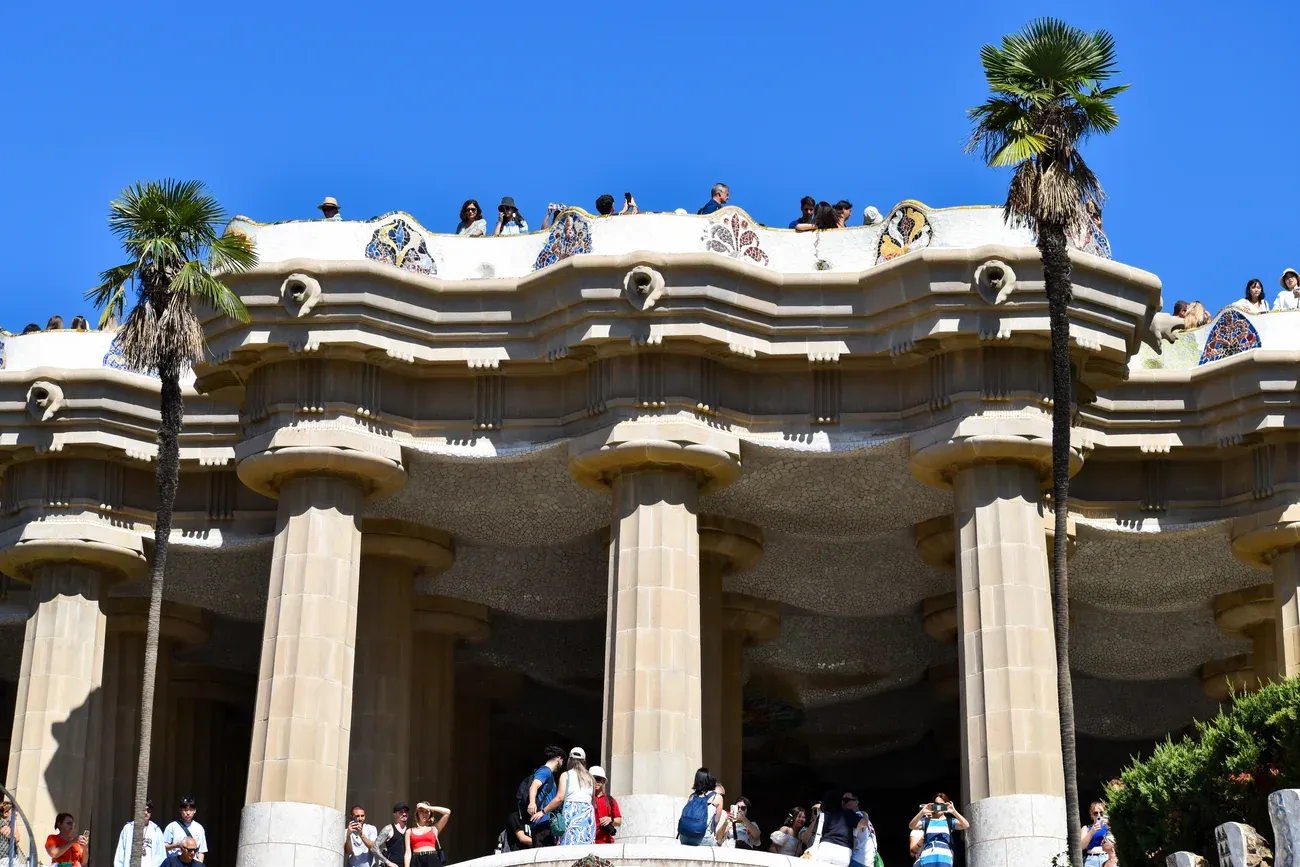
Photo: "Terrace of Parc Güell, Barcelona, Spain" by Julian Lupyan (CC0 1.0).
For most of the century after it opened as a municipal park in 1926, Park Güell cost nothing to enter. That changed in October 2013, when Barcelona City Council began charging for the Monumental Zone, the area around the Dragon Stairway, the Hypostyle Room and the mosaic bench on the terrace above. The first paid day was 25 October 2013, and the woods and upper paths stayed open to anyone for almost seven more years.
On 1 July 2020 a new management model brought the whole site under regulated access, and the visitor ticket now covers all 12 hectares, as the park's page on the regulated area explains. Forum threads and blogs that describe a free zone were written before that date and no longer apply. Tips about registering on the Gaudir Més programme are out of date too: free resident entry now runs through the Passi Verd, which checks every booking against Barcelona's municipal register.
What the visitor ticket covers
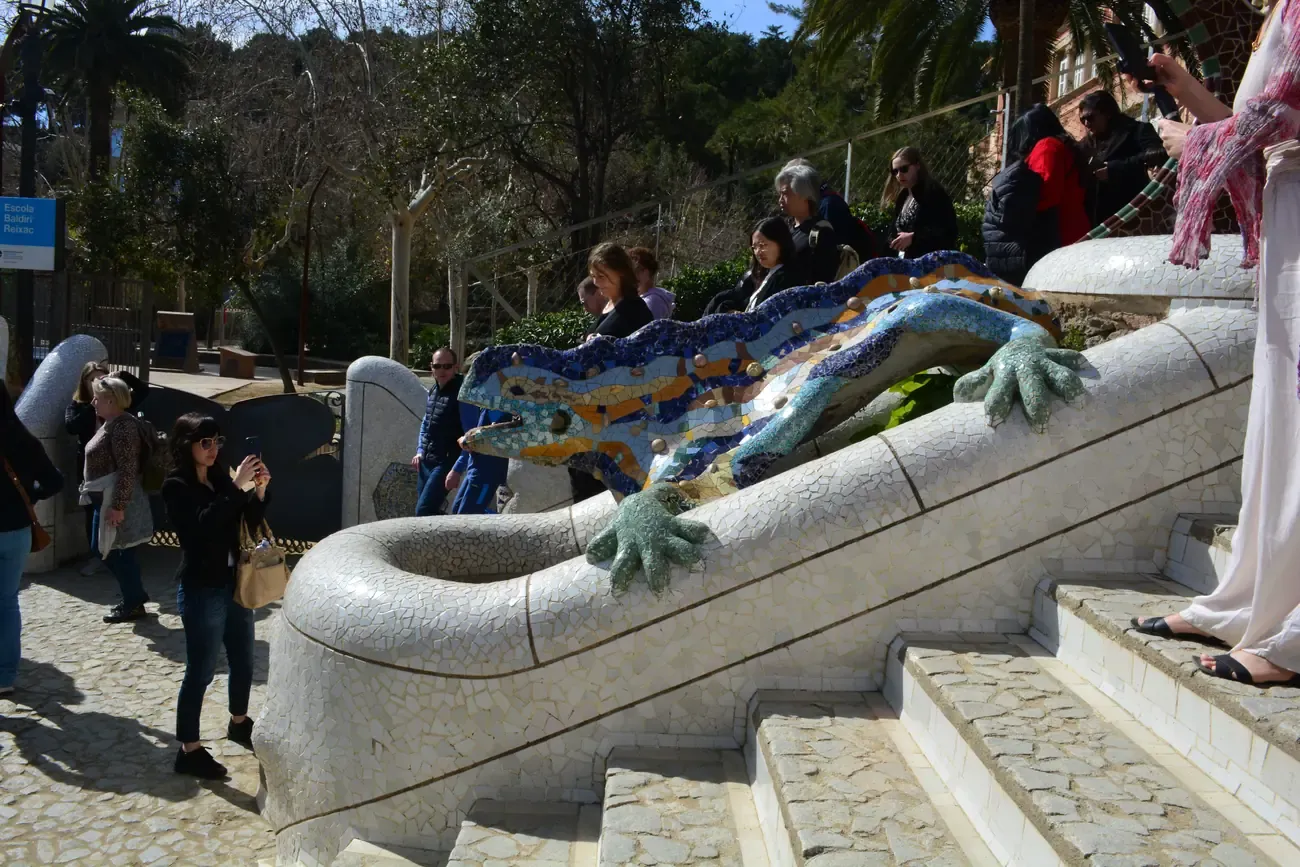
Photo: "Park Güell - main steps and Drac 03" by Joe Mabel (CC BY-SA 4.0).
The visitor ticket opens the whole park: the Dragon Stairway, the Hypostyle Room, the Nature Square terrace, the Austria Gardens and the wooded viaducts higher up the hill. Each ticket carries a date and a time slot. In November and December the first slot is 09:30 and the last is 17:30, and entry is allowed up to 30 minutes after the slot begins. Once inside there is no time limit, though the average visit lasts about an hour, and leaving ends the visit because there is no re-entry. The park's access regulations set out these rules.
Sales open up to three months ahead. According to the park's visitor FAQs, each ticket carries the visitor's name, which must match an ID, and it cannot be cancelled, although the date or slot can be changed up to the day before if there is space. The park also closes on days of strong wind or heavy rain, with the notice posted on its home page the same day. Two buildings sit outside the standard ticket: the Gaudí House Museum and the Porter's Lodge, run by the city history museum, each need a combined ticket.
More of Barcelona for free
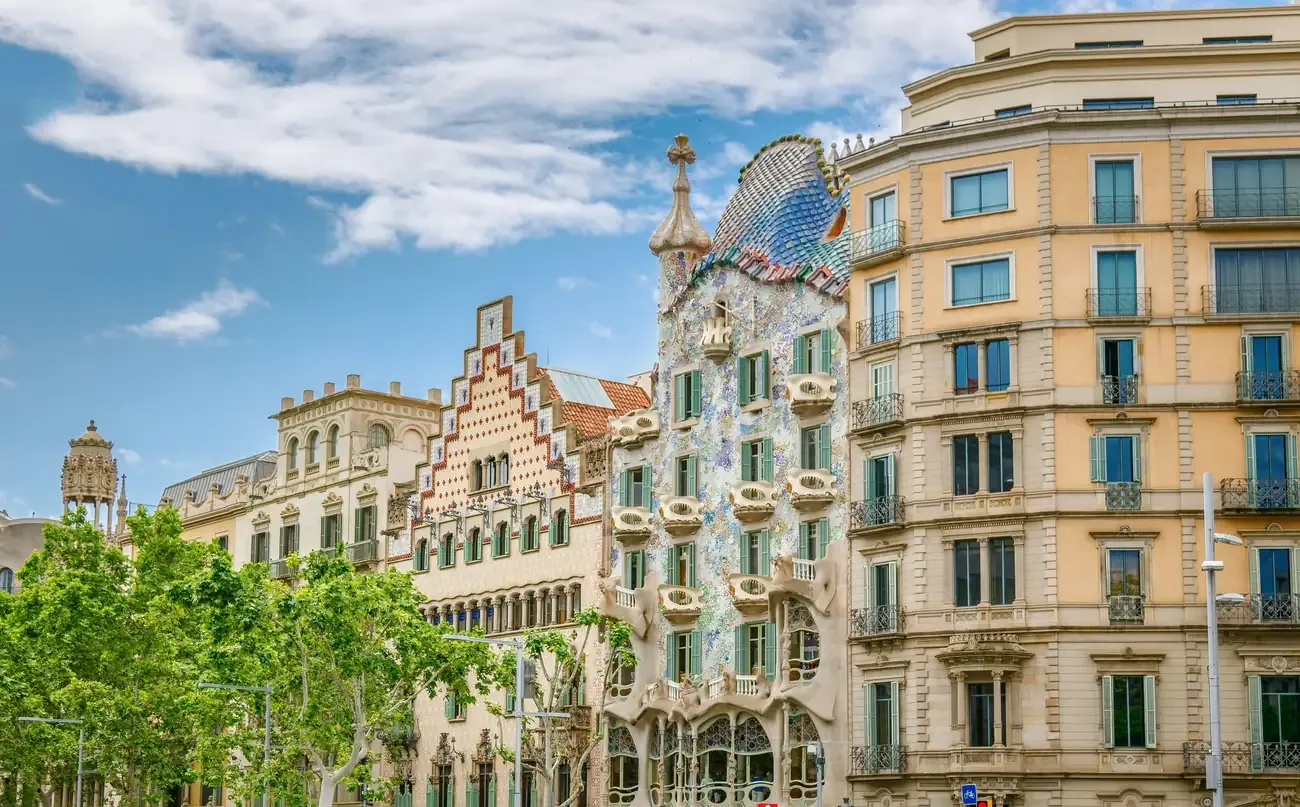
Free tourist attractions in Barcelona
Beaches, Gothic lanes, Modernista facades and city parks cost nothing, and several museums waive their fee at set times.
The guide to free tourist attractions in Barcelona checks each place against the rules of the people who run it.
Free viewpoints in Barcelona
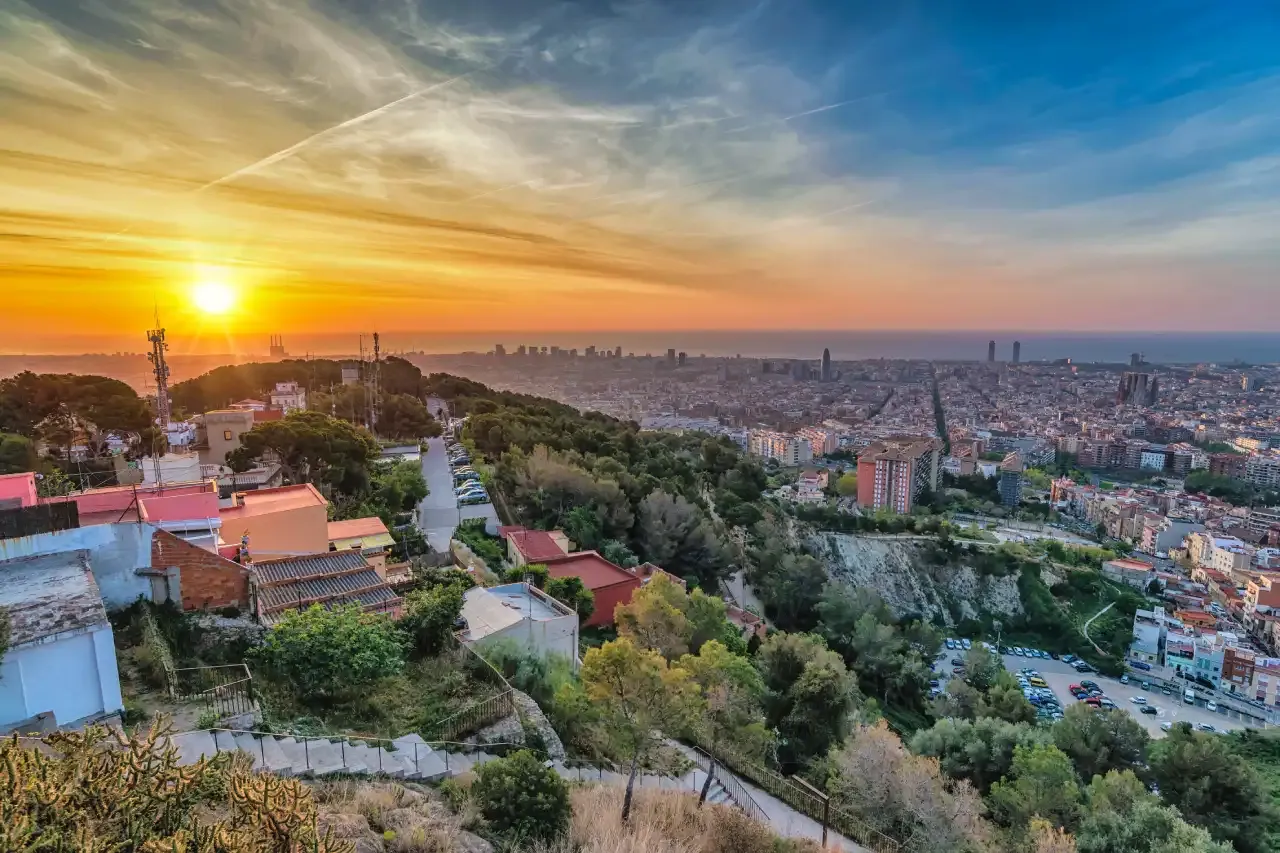
The Bunkers del Carmel, on the hill east of Park Güell, look over the same coastline and the Sagrada Família without a ticket.
The list of free viewpoints in Barcelona covers the other open hilltops and terraces, with the best time of day for each.
Park Güell tickets
Three ways to visit Park Güell: a timed entry ticket, a guided tour, or entry combined with the Gaudí House Museum.
Works at Park Güell in 2026 and 2027
Park Güell is in the middle of a long round of improvement works. In May 2026 BSM, the municipal company that manages the park, announced a programme of drainage, sewerage, lighting and Wi-Fi works across the site, expected to last about 18 months. The BSM note on the works explains that they run in phases so that the park can stay open with as little disruption as possible.
As of 2 November 2026, the park's Disruptions to visits page lists two closed routes in the upper, wooded part: the path from Coll del Portell to the Forat del Vent stairway, and the one from Casa Trias to the Upper Viaduct. The Monumental Zone is not affected, and no change to visiting hours has been announced. The closures move as each phase ends, so the page is worth checking the day before a visit. A separate water project, which includes Gaudí's cistern under the Hypostyle Room, is due to finish in late 2027.
Free views and Gaudí near Park Güell
On the same ridge, east of the park, the Turó de la Rovira holds the Bunkers del Carmel, a former anti-aircraft battery with a full sweep over the city to the sea. The city history museum treats the hilltop as a free-access space, and its page on the Turó de la Rovira covers the site and the small museum rooms. Those rooms open from 10:00 to 14:00 on Wednesday, Friday, Saturday and Sunday between October and May. The hilltop is fenced at night and in winter it closes in the late afternoon, so it suits a daytime visit rather than sunset. The climb from either side is steep.
Lower down in Gràcia, Casa Vicens, Gaudí's first house, shows its tiled facade to anyone walking along Carrer de les Carolines, though the interior is paid. The village squares of Gràcia, among them Plaça del Sol and Plaça de la Virreina, lie between Lesseps and Diagonal and make an easy free stop on the way back to the centre.
Planning a visit
The park admits about 700 people every half hour, and on 2 November its home page warned that tickets for the same day were running low, so booking several days ahead is the safer plan. In November and December the first slot, at 09:30, leaves the most daylight for the walk up to the viaducts. The last slot is at 17:30, and from 18:00 the park belongs to residents, so an evening visit is not possible with a ticket at this time of year.
Ticket holders can use the gate at Carretera del Carmel 23, beside the coach park and taxi rank, which the park recommends for visitors with reduced mobility. The other visitor gates are on Carrer de Larrard and at the top of the escalators on Avinguda del Santuari de Sant Josep de la Muntanya. The best-known gate, on Carrer d'Olot, works as an exit.
Metro line L3 to Lesseps leaves a walk of about 20 minutes to the escalator gate. Vallcarca looks closer on the map, but the park advises against it because the Baixada de la Glòria escalators are out of service. Buses H6 and D40 stop on Travessera de Dalt, about 10 minutes on foot.
Palau Güell is a different place altogether: the mansion Gaudí built near La Rambla, with its own ticket and its own free-entry days.