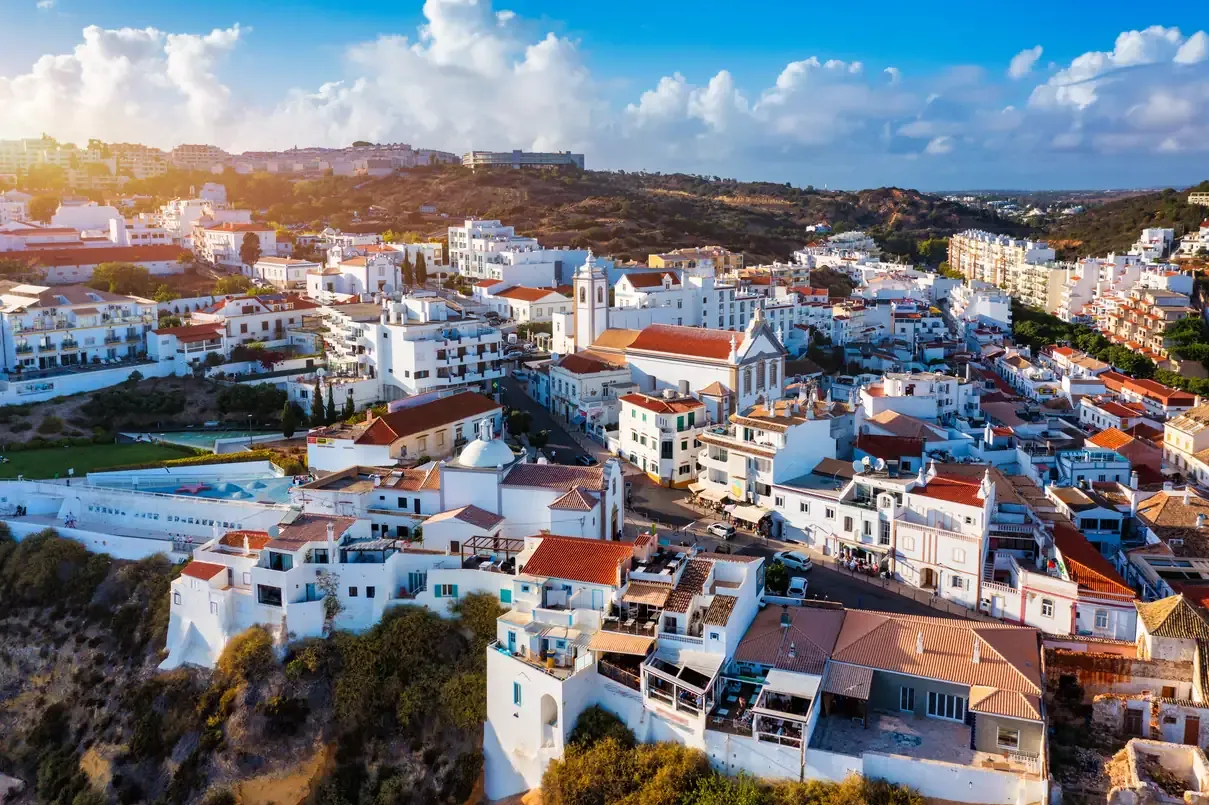
Albufeira grew from a small fishing settlement on Portugal's southern coast into the Algarve's busiest holiday town, its name tracing back to the Arabic al-Buħayra, the lagoon, from the centuries when the region lay under Moorish rule. Following the Reconquista, the town fell to the forces of Afonso III in 1249. The 1755 earthquake and the tsunami that followed devastated the waterfront: the town's own museum records 293 houses standing before the disaster and only four left afterwards, with the tsunami sweeping away the seven streets of the old Santa Ana quarter. Albufeira stayed a modest fishing community for two more centuries before tourism took hold from the 1960s onward, and the resort is today one of the most visited towns on the Algarve coast.
Old town and Strip, two different nights out
Life in Albufeira splits between two areas. The Zona Velha, the old fishing quarter around Praia dos Pescadores, keeps its narrow lanes, small churches and seafood restaurants. East of it, Areias de São João, known locally as the Strip, runs along Avenida Sá Carneiro with bars and open air clubs that stay busy well past midnight.
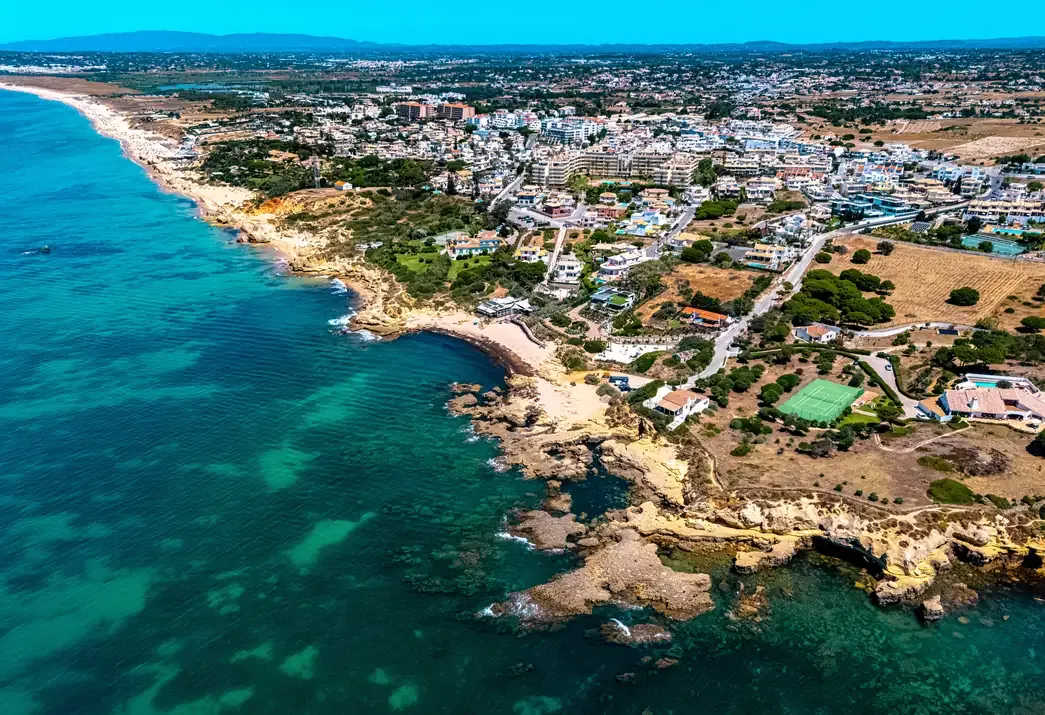
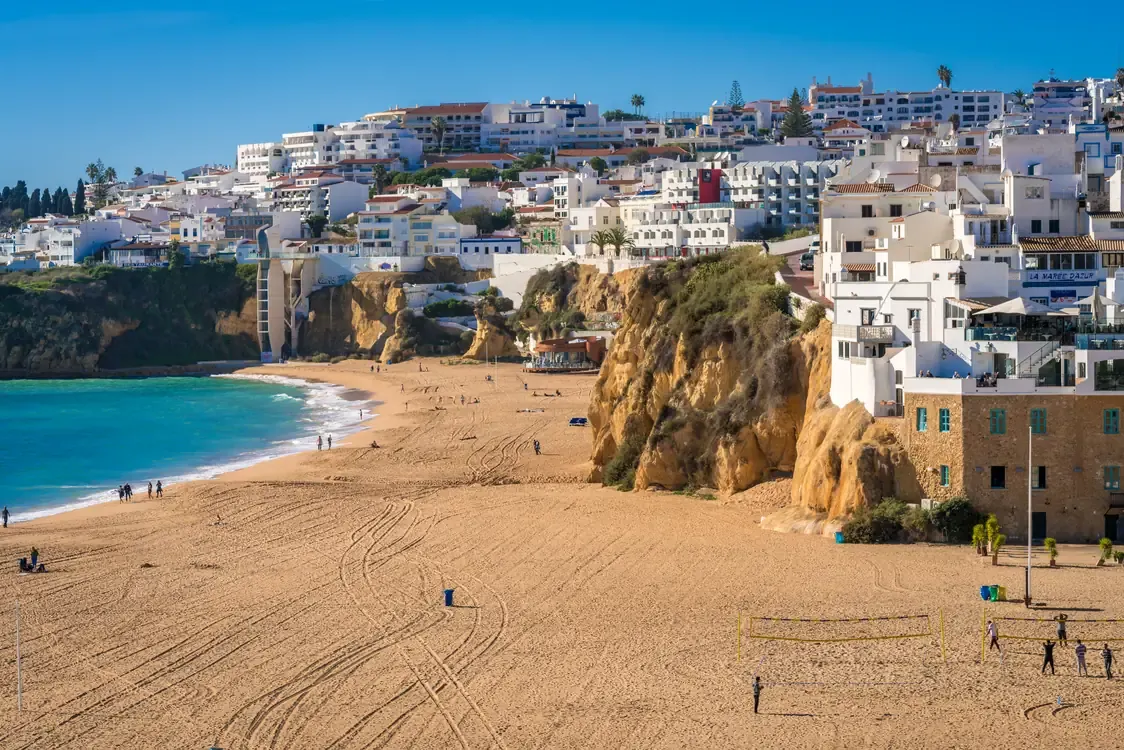
A coastline built for beaches
The municipality counted 25 Blue Flag beaches along its coast for the 2026 season, plus a flag for the marina, from the sheltered Praia dos Pescadores in town to the cliff-backed São Rafael, Coelha and Falésia further along. Each stretch has its own character, from quiet coves reached down a stairway to long open sands lined with beach bars. The same coast runs west to the sea stacks and grottoes of Ponta da Piedade at Lagos, one of the tourist attractions to visit in Portugal that pulls travellers beyond the resorts.
When to go and how long to stay
April to June and September to October bring warm weather without July and August's peak heat and crowds. A single day covers the old town, the main beach and the marina; staying two or three nights allows time to work along the coast toward Olhos de Água or to take a boat trip to the sea caves further west.
Getting around
The old town and seafront are entirely walkable, and local buses cover the beaches and hotel strips further out. Taxis are easy to find in the centre, and Faro Airport, the gateway to the whole Algarve, lies to the southeast; there is no direct bus from the airport itself, so travellers change onto an EVA Bus service in Faro.