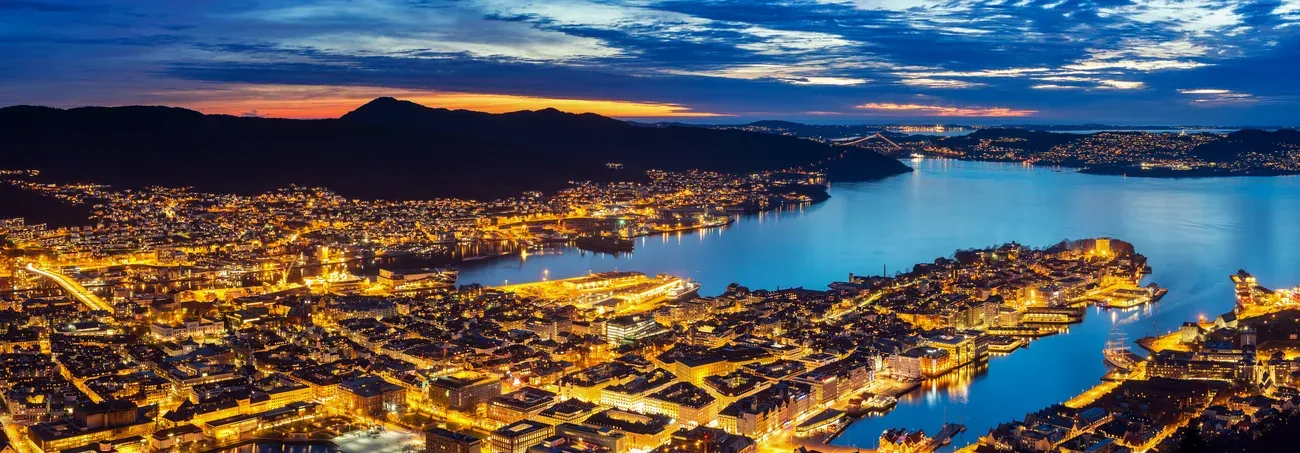
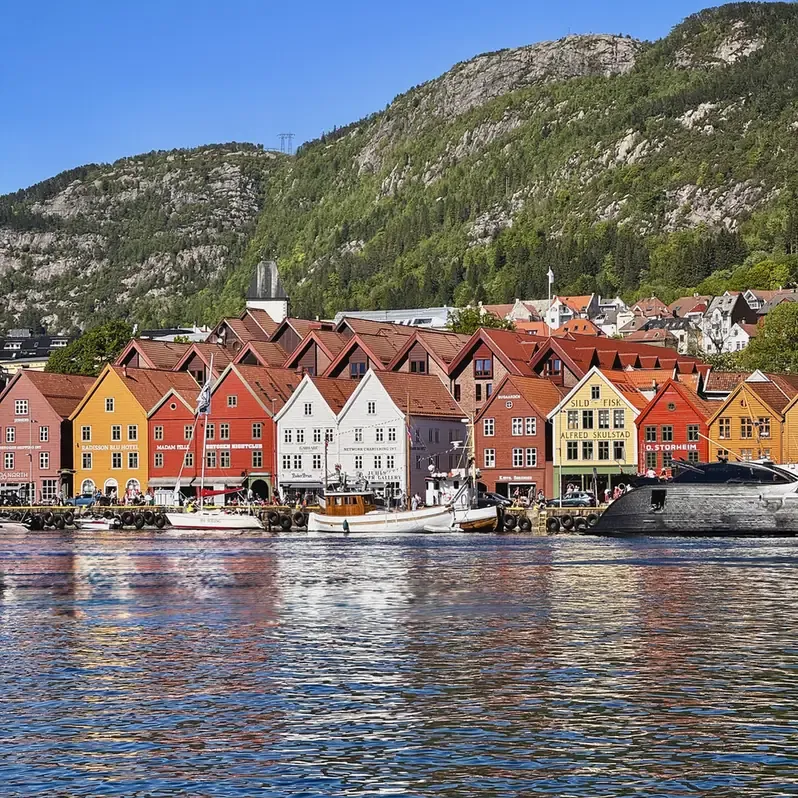
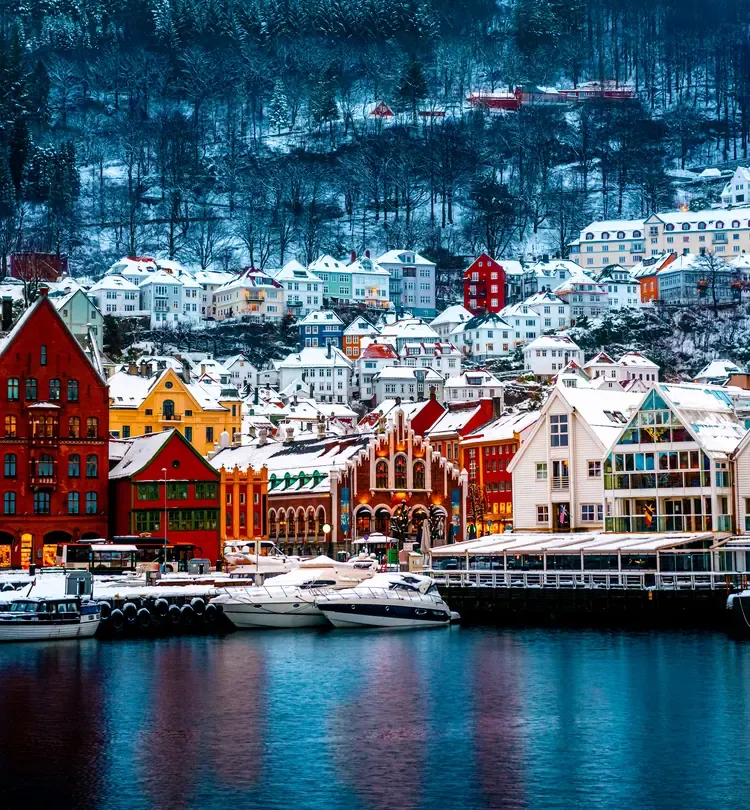
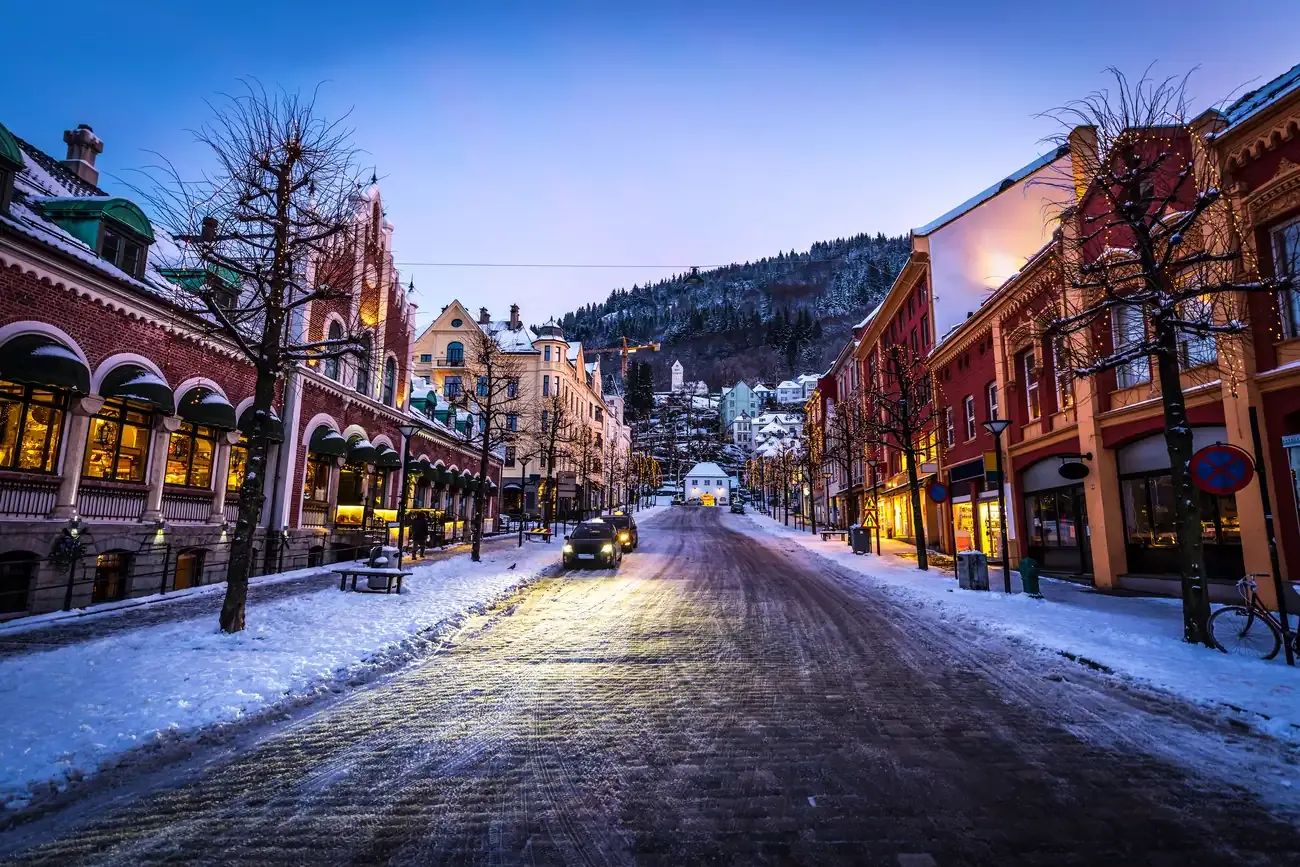
Bergen is Norway's second-largest city and the country's gateway to its western fjords, built where a deep harbour reaches inland between seven surrounding mountains. Wooden houses climb the hillsides above the water, and the funicular up Mount Fløyen puts the whole layout on display in six minutes. Its Hanseatic Bryggen wharf is a UNESCO World Heritage Site, and the surrounding fjords rank among the most dramatic tourist attractions to visit in Europe.
A city shaped by water and mountains
Vågen, the old harbour, splits the centre between Bryggen's Hanseatic wharf on one side and the fish market and Torgallmenningen on the other, with the Nordnes peninsula reaching out past the aquarium to open water. Steep streets climb in almost every direction, and heading downhill from any of them usually leads back to the centre.
Beyond downtown
South of the centre, reached by the Bybanen light rail, Fantoft's rebuilt stave church and Troldhaugen, composer Edvard Grieg's lakeside home, make an easy half-day away from the harbour. Bergen is also the usual starting point for cruises and day trips into the Sognefjord and Hardangerfjord.
When to go and how long to stay
Most visitors come between May and September, when the longer days suit walking the centre and riding up Fløyen; a rain jacket is worth packing whatever the forecast says, since Bergen's weather can turn quickly. A single day covers Bryggen, the fortress and the funicular at an easy pace, and a second allows time for the fish market, the art museums or a trip out to Fantoft or Troldhaugen.
Getting around
The centre is compact enough to walk between Bryggen, the fish market and Torgallmenningen in minutes, while the Bybanen light rail reaches the outer districts and Fantoft. Bergen Airport at Flesland lies south of the city, connected to the centre by the light rail and airport buses rather than by train.