
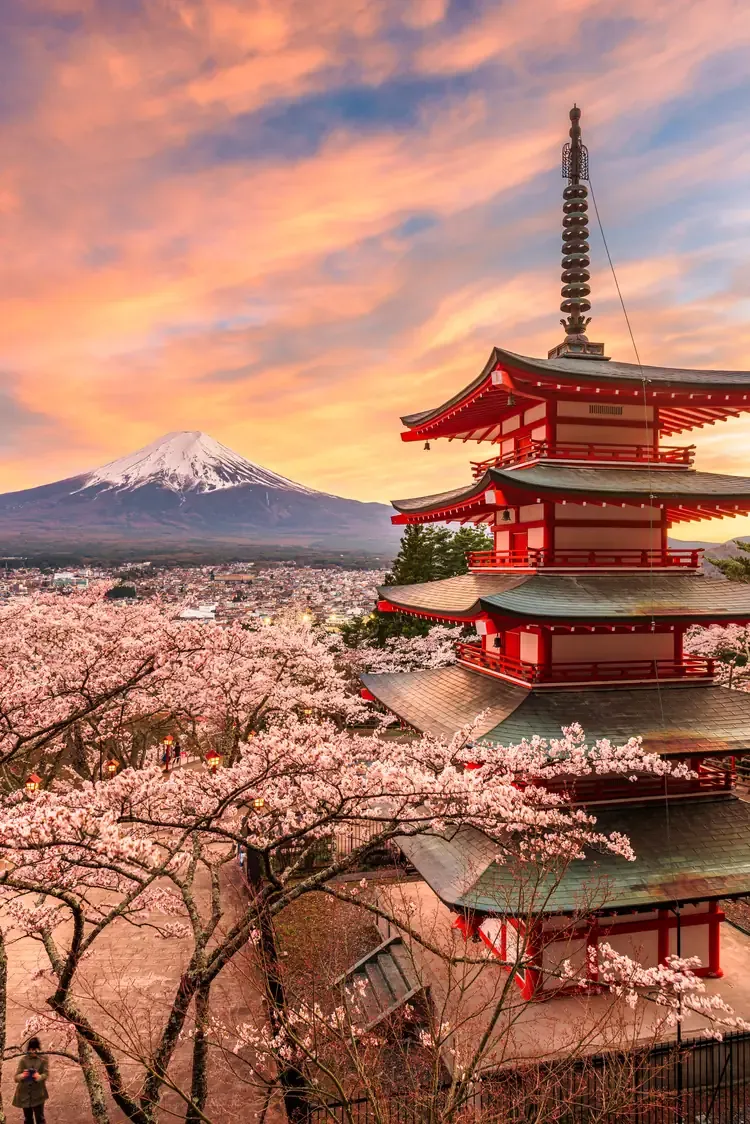
Kyoto tourist attractions
Known for
Imperial capital of Zen temples, vermilion shrines and the Gion district
Must-see landmarks
Fushimi Inari Taisha, Kiyomizu-dera and Kinkaku-ji
Best time to visit
Late March-early April for cherry blossoms; November for autumn colour
UNESCO World Heritage since 1994
17 temples, shrines and a castle across Kyoto, Uji and Otsu
The 11 tourist attractions to see in Kyoto
Here are the tourist attractions in Kyoto worth planning around, starting with Fushimi Inari-taisha, Kiyomizu-dera and Kinkaku-ji. The 11 top sights come first, then free things to do and visitor FAQs.
1. Fushimi Inari-taisha
The head shrine of some 30,000 Inari shrines across Japan, Fushimi Inari draws crowds to the Senbon Torii, a tunnel of thousands of vermilion gates that winds up 233 metre Mount Inari. Each gate is donated by a business praying for prosperity, and the fox statues along the paths are seen as messengers of Inari, the Shinto deity of rice. Most visitors turn back at the dense lower tunnel, but the full loop to the summit takes two to three hours and grows quieter with every step.
Location: 68 Fukakusa Yabunouchi-cho, Fushimi-ku, Kyoto.
Access: Free, and the mountain paths stay open around the clock, so early morning and late evening are the calmest times to walk the torii.
2. Kiyomizu-dera
Perched halfway up Mount Otowa in the Higashiyama hills, Kiyomizu-dera has drawn pilgrims to its Kannon deity for more than 1,200 years. Its vast wooden veranda juts out over the slope on tall pillars joined without a single nail, framing the city beyond. Below the main hall, the three channels of the Otowa waterfall are each said to grant a different blessing, though drinking from all three is thought greedy. The temple is one of Kyoto's UNESCO World Heritage sites and a fixture of almost every first visit.
Location: 294 Kiyomizu 1-chome, Higashiyama-ku, Kyoto.
Access: Ticketed, with the grounds and stage open daily; the Sannenzaka lanes lead down into Higashiyama.
3. Kinkaku-ji
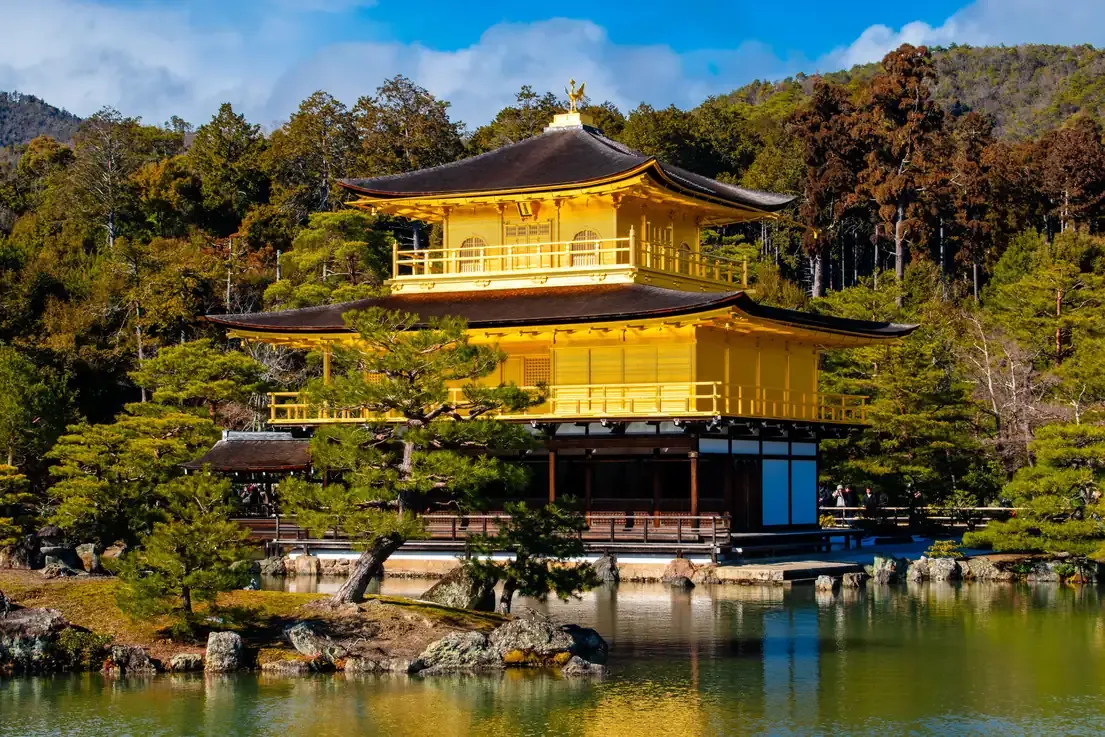
The Golden Pavilion, formally named Rokuon-ji, sits at the edge of a mirror pond in northwest Kyoto, its top two storeys sheathed in gold leaf that doubles in the still water of Kyoko-chi. Built as a shogun's retirement villa in 1397, the pavilion was burned down by a young monk in 1950 and faithfully rebuilt in 1955. It anchors a Zen stroll garden laid out to be admired from a circuit of paths, and forms part of the same UNESCO listing as Kiyomizu-dera.
Location: 1 Kinkakujicho, Kita-ku, Kyoto.
Access: Ticketed, open daily from morning to late afternoon.
4. Nijo Castle
Tokugawa Ieyasu built this castle in 1603 as his Kyoto residence, and it was here in 1867 that the last shogun handed power back to the emperor. The Ninomaru Palace is the reason to come: a national treasure of linked halls whose sliding doors were painted by the Kano school with pines, tigers and hawks, and whose corridors are the nightingale floors that squeak to warn of anyone approaching. The Honmaru Palace inside the inner moat reopened in 2024 after eighteen years of restoration. The Ninomaru Garden and the plum and cherry groves complete the walk.
Founder: Tokugawa Ieyasu · Built: 1603 · Heritage: UNESCO World Heritage Site, listed 1994
Location: Nijojo-cho, Nakagyo, at Nijojo-mae station
Access: Ticketed; the Honmaru Palace needs a separate admission
5. Arashiyama Bamboo Grove
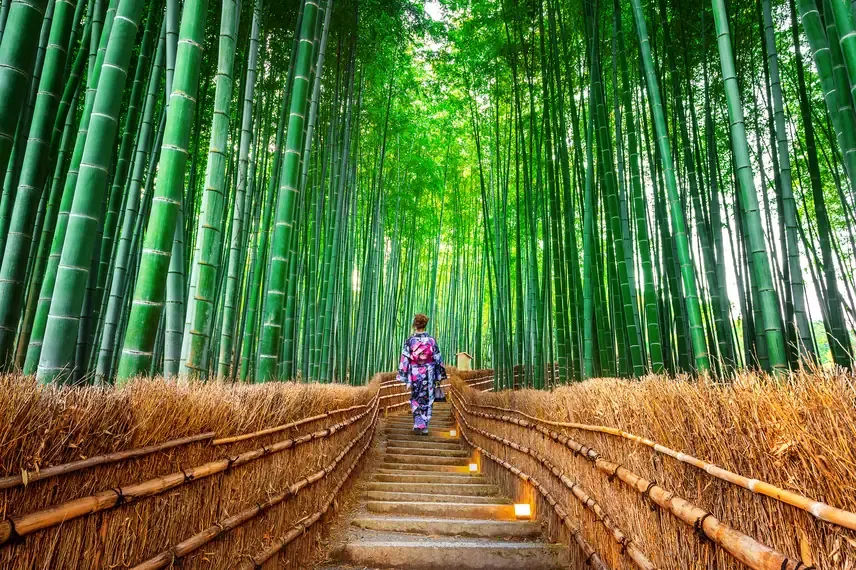
In the hills of western Kyoto, a short path threads through a dense corridor of towering bamboo whose stalks filter the daylight into a green haze and creak softly in the wind. The grove backs onto Tenryu-ji, a Zen temple whose 14th century pond garden is best reached through its side gate, and the wooden Togetsukyo Bridge crosses the Oi River a few minutes away. The walk itself is short and heavily photographed, so arriving before the day trip crowds is the only way to have it feel quiet.
Location: Sagano, Ukyo-ku, western Kyoto.
Access: Free to walk at any hour; the temple gardens that back onto it charge separate admission.
6. Gion and Hanamikoji
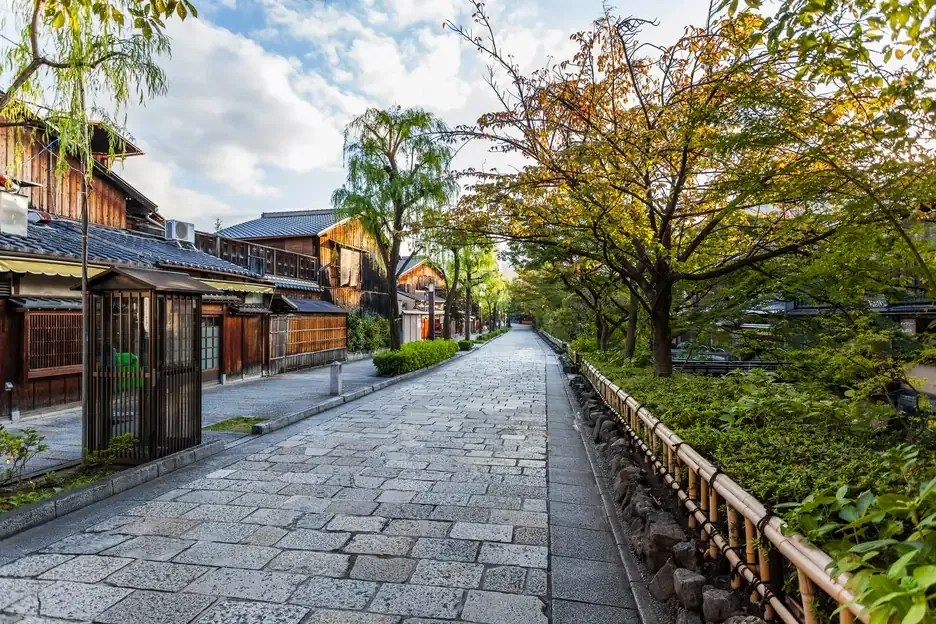
Gion is Kyoto's historic geisha quarter, where wooden ochaya teahouses line Hanamikoji street and the geiko and maiko who train in traditional dance, music and conversation still hurry between evening engagements. The willow lined Shirakawa canal a few streets north is one of the prettiest corners of the district, especially at dusk. Walking the lanes costs nothing; only a seat inside a teahouse or a booked performance carries a price, and the quarter is at its most atmospheric once the lanterns come on.
Location: Gion, Higashiyama-ku, Kyoto.
Access: Free to wander; teahouse visits and geiko performances are private and booked separately.
7. Nishiki Market
Known as Kyoto's Kitchen, Nishiki Market has traded from the same narrow covered arcade for around four centuries, growing from a fish market into a run of roughly 390 metres of stalls. Vendors sell Kyoto pickles, skewered seafood, tea, sweets, knives and other local specialities, many in single portions small enough to try on the move. The arcade runs one block north of Shijo street in central Kyoto and is busiest around midday, when the lane can slow to a shuffle.
Location: Nakauoya-cho, Nakagyo-ku, Kyoto.
Access: Free to walk; only what is bought at the stalls costs anything.
8. Ryoan-ji
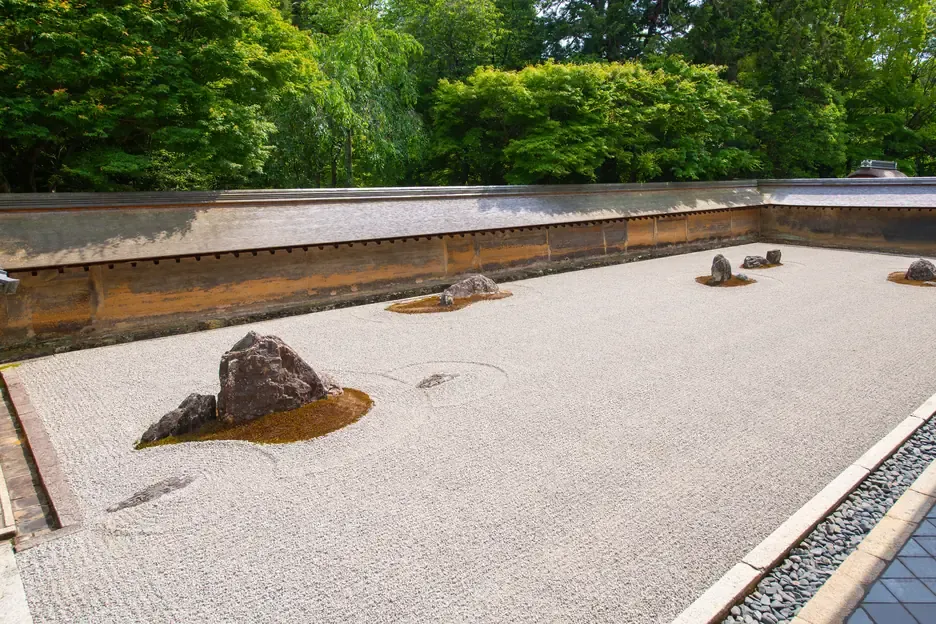
Ryoan-ji holds Japan's most famous Zen rock garden, a rectangle of raked white gravel set with fifteen stones arranged so that at least one is always hidden from any single vantage point. Laid out in the late 15th century and viewed from the veranda of the abbot's hall, the garden is left deliberately spare to invite contemplation rather than explanation. Beyond it, a large mirror pond and wooded grounds make the wider temple a calm counterpoint to the crowds at Kinkaku-ji nearby.
Location: 13 Ryoanji Goryonoshitacho, Ukyo-ku, Kyoto.
Access: Ticketed, open daily with shorter hours in winter.
9. Yasaka Shrine
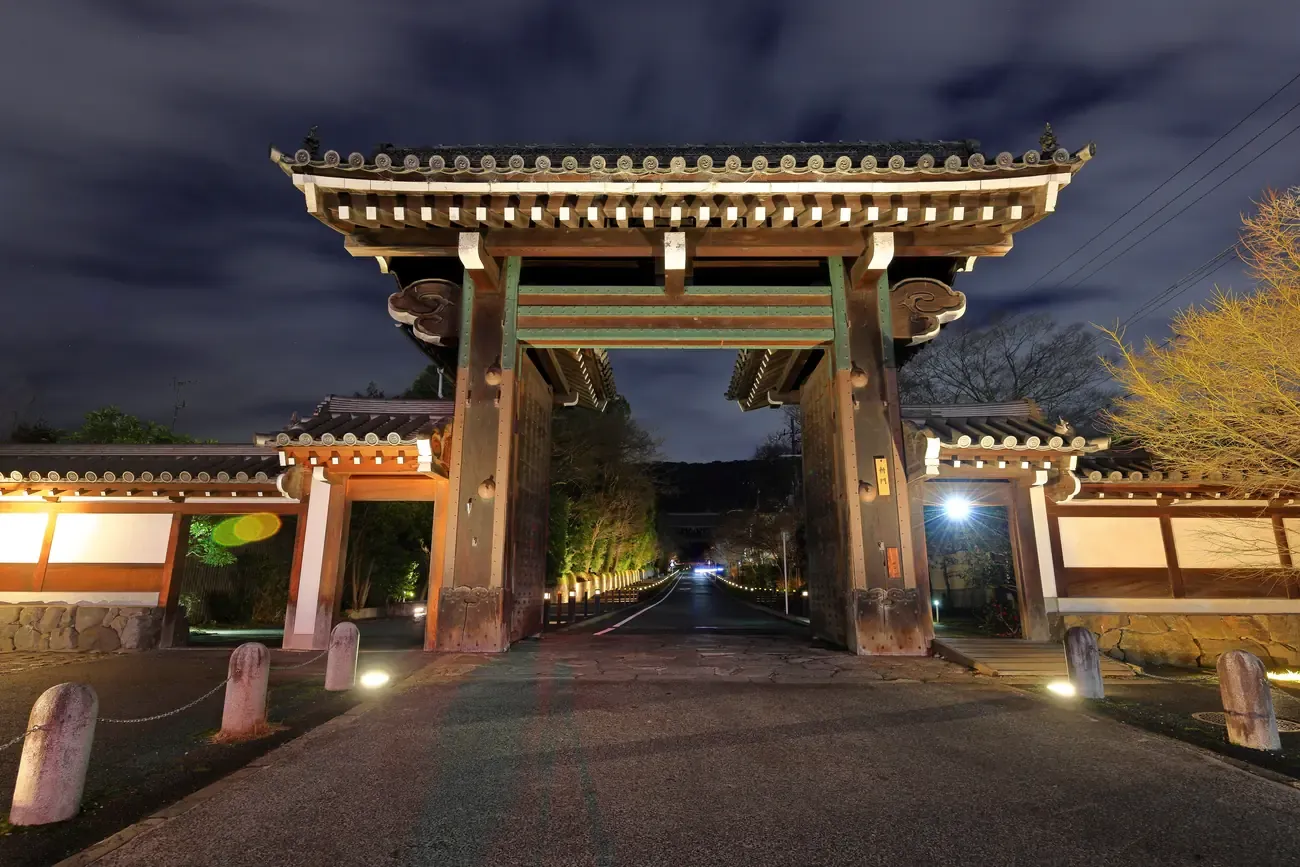
Standing where Shijo street meets Gion, Yasaka Shrine has guarded this corner of Kyoto for well over a thousand years, its founding placed by tradition at either 656 or 876. Its vermilion gate and lantern hung grounds are free and open around the clock, and every July the shrine stages the portable shrine processions of the Gion Matsuri, one of Japan's great festivals. Behind it, Maruyama Park spreads around a celebrated weeping cherry that is lit after dark each spring.
Location: 625 Gionmachi Kitagawa, Higashiyama-ku, Kyoto.
Access: Free and open around the clock; the July festival processions are free to watch from the street.
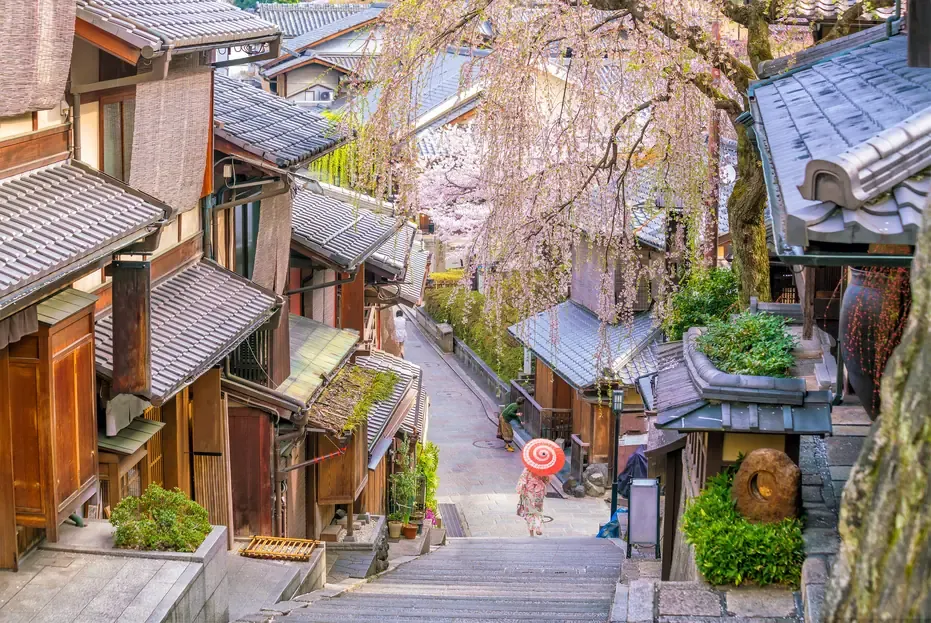
10. Sannenzaka and Ninenzaka
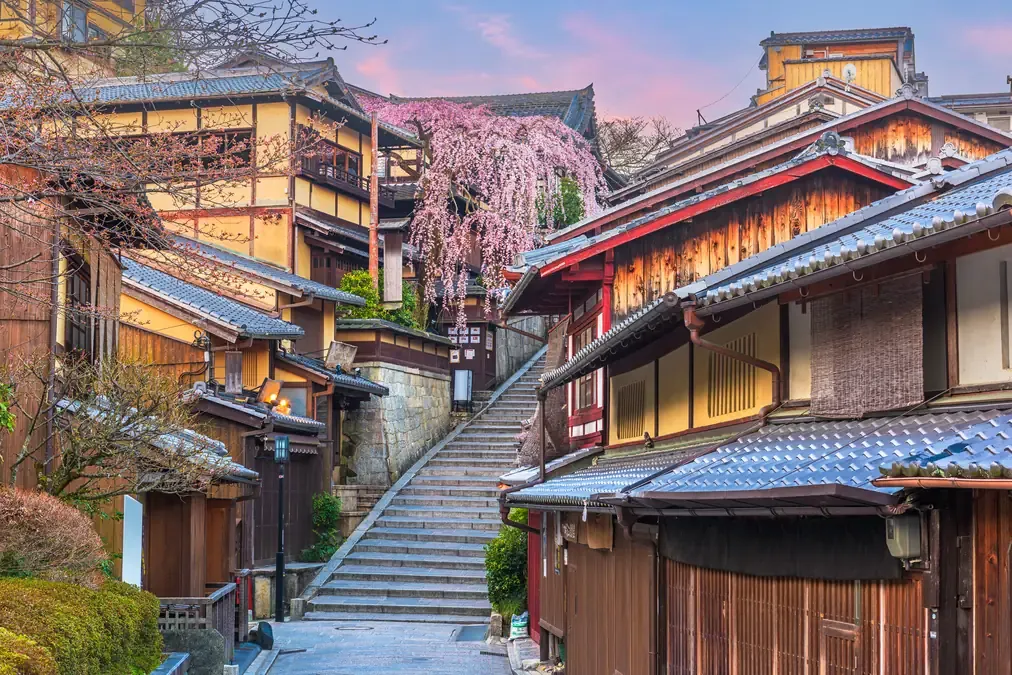
These two stepped stone lanes have carried visitors up and down the Higashiyama hillside toward Kiyomizu-dera since the Heian period, and have been protected as a preservation district since 1976. Their slopes are lined with wooden machiya shops and teahouses selling Kiyomizu-yaki ceramics, sweets and crafts, framed by cherry trees that draw crowds in spring. Local legend warns that a stumble on the steps brings years of bad luck, so the busy lanes reward careful footing, and evenings thin the crowds once the tour buses leave.
Location: Higashiyama-ku, between Kiyomizu-dera and Yasaka Shrine, Kyoto.
Access: Free to wander at any hour; the shops keep their own daytime hours.
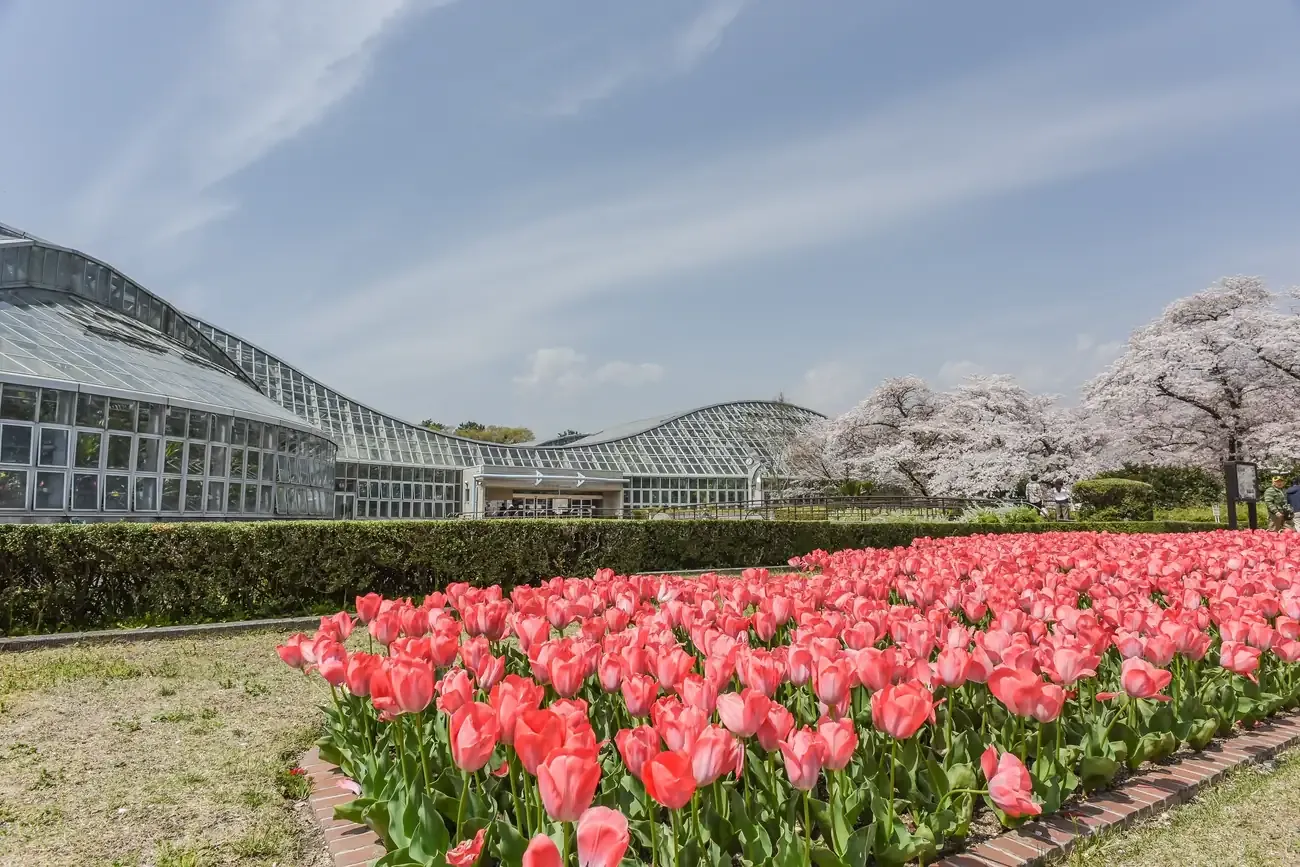
11. Kyoto Botanical Garden
Opened in 1924, the Kyoto Botanical Garden is one of Japan's oldest public gardens, laying out more than 12,000 plant species across broad lawns beside the Kamo River in the north of the city. Some 500 cherry trees carry the spring, hydrangeas and roses follow in summer, and a large conservatory keeps tropical and desert collections under glass year round. Overlooked beside the city's famous temples, it makes a quiet green half day, with Kitayama subway station right at the north gate.
Location: Shimogamo Hangi-cho, Sakyo-ku, Kyoto.
Access: Ticketed, open daily except over the New Year period; last entry is an hour before closing.
What to do in Kyoto for free
Philosopher's Path
The canal-side path between Ginkaku-ji and Nanzen-ji costs nothing to walk in either direction and stays open around the clock, though its cherry trees draw large crowds in late March and early April.
Maruyama Park
A green park behind Yasaka Shrine is free and open around the clock, its centrepiece a weeping cherry tree lit up after dark each spring.
Kyoto Imperial Palace
The former imperial residence is free to enter with no reservation needed. It closes Mondays, or the following Tuesday when Monday is a holiday, from 28 December to 4 January, and occasionally for court functions.
Nanzen-ji
The temple's grounds and its Meiji era brick aqueduct cost nothing to see, while the Sanmon gate's upper floor, the Hojo garden and the sub-temples charge their own separate admission.
Nishi Honganji
This UNESCO listed temple's grounds and halls are free to enter, a short walk from Kyoto Station, with several of its structures ranked as National Treasures.
What makes Kyoto special
Kyoto served as Japan's imperial capital from 794 until the Meiji Restoration moved the seat of government to Tokyo in 1868, and the city was spared the aerial bombing that levelled much of wartime Japan. That accident of history left it with the country's densest concentration of temples, shrines, palaces and traditional machiya townhouses, still laid out on the grid plan its 8th century planners copied from the Chinese capital of Chang'an.
Neighbourhoods to know
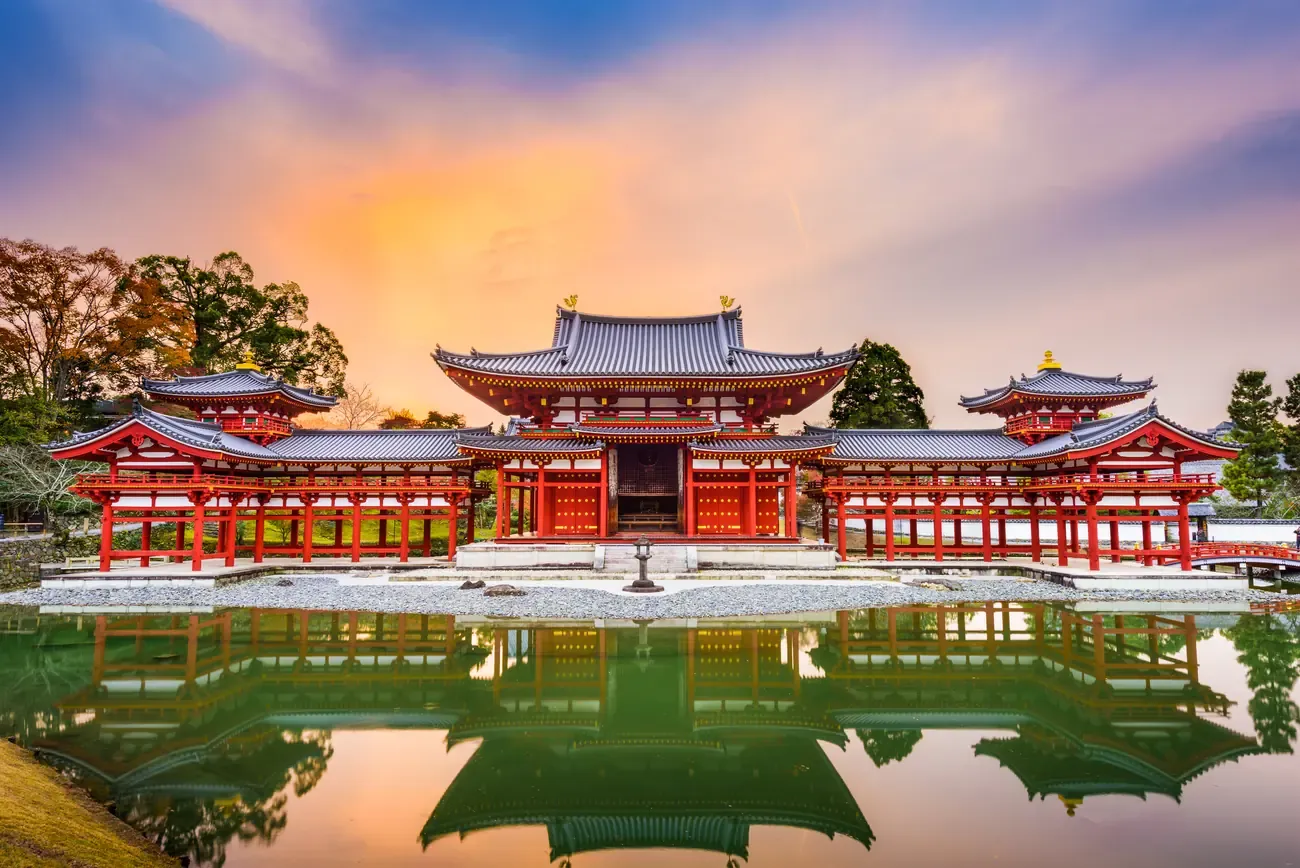
Higashiyama, on the eastern hills, strings Kiyomizu-dera, Sannenzaka and Gion together along preserved lanes. Arashiyama, to the west, pairs the bamboo grove with Tenryu-ji and the Oi River. Kinkaku-ji and Ryoan-ji's rock garden sit in the northwest, while central Kyoto around Kyoto Station holds Nishiki Market and Nijo Castle. South of the centre, Fushimi is both shrine town and sake-brewing district, and Uji, a short train ride further south, keeps Byodo-in's Phoenix Hall beside the tea fields that supply Kyoto's matcha.
When to go and for how long
Cherry blossoms peak from late March to early April and autumn colour reaches the temples through November, the two busiest and most beautiful windows of the year, while midsummer brings heat, humidity and the month-long Gion Matsuri festival. Three to four days cover the main temples and districts at a comfortable pace, and the city logged some 56 million visitors in 2024, so reaching popular sights early in the day helps.
Getting around
Two subway lines, the north-south Karasuma and the east-west Tozai, cross beneath the centre, while Kyoto City Buses reach most temples the subway does not. The Keihan Main Line serves Fushimi Inari and Gion, the Keifuku (Randen) tram and Hankyu Kyoto Line reach Arashiyama, and JR trains run out to Uji for Byodo-in. A rechargeable IC card such as ICOCA covers trains, subways and buses across the network. Those same lines carry on to Nara, Osaka and Himeji, so Kyoto works as a base for a good share of the tourist attractions in Japan that sit in the Kansai region.