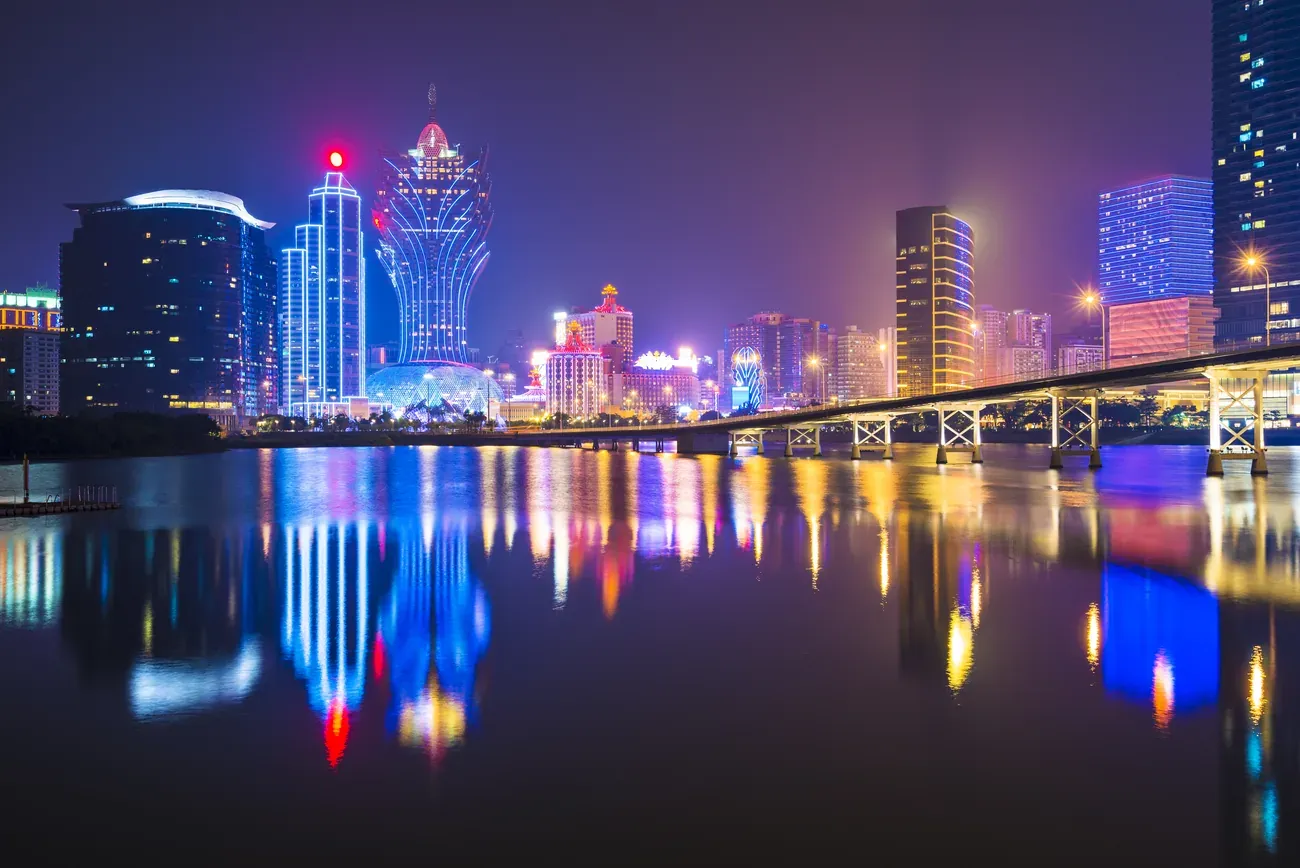
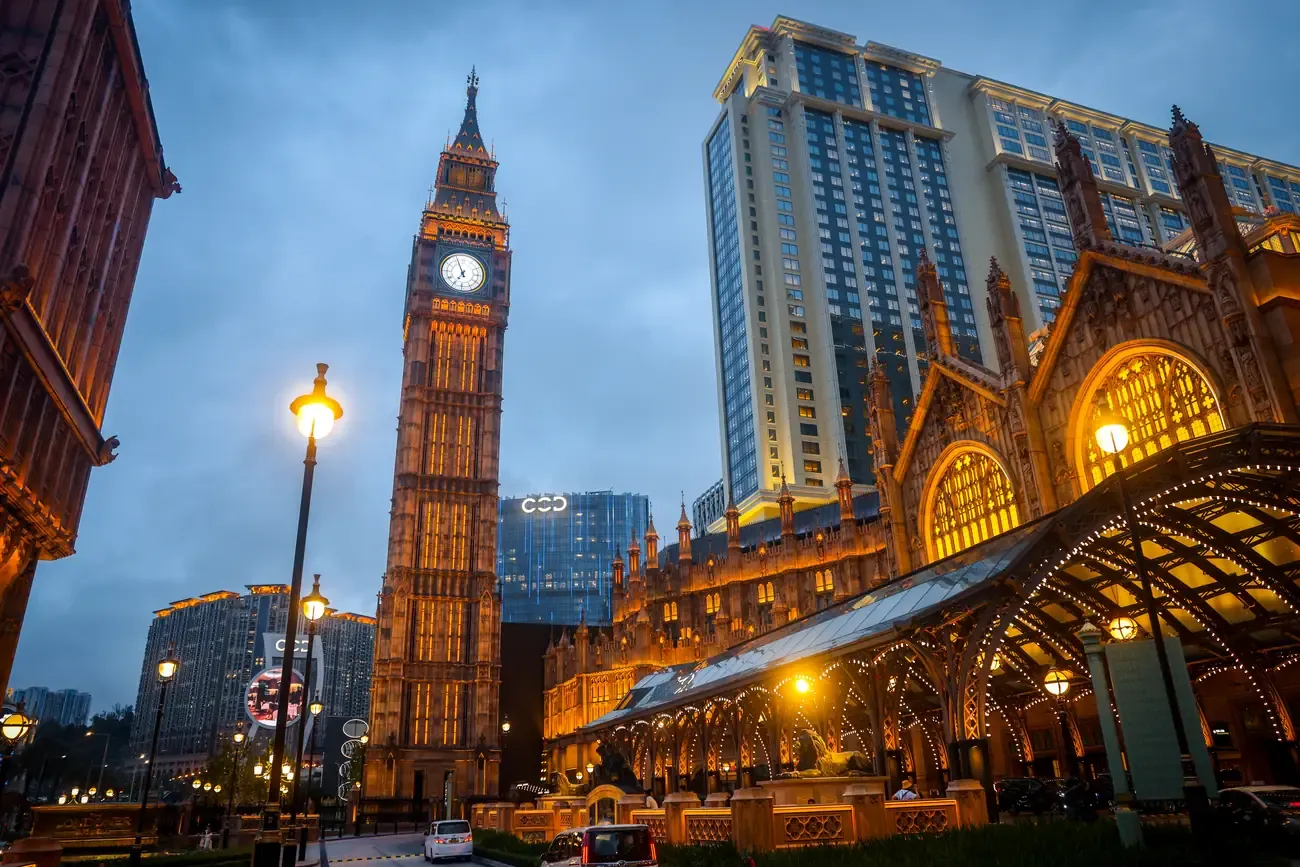
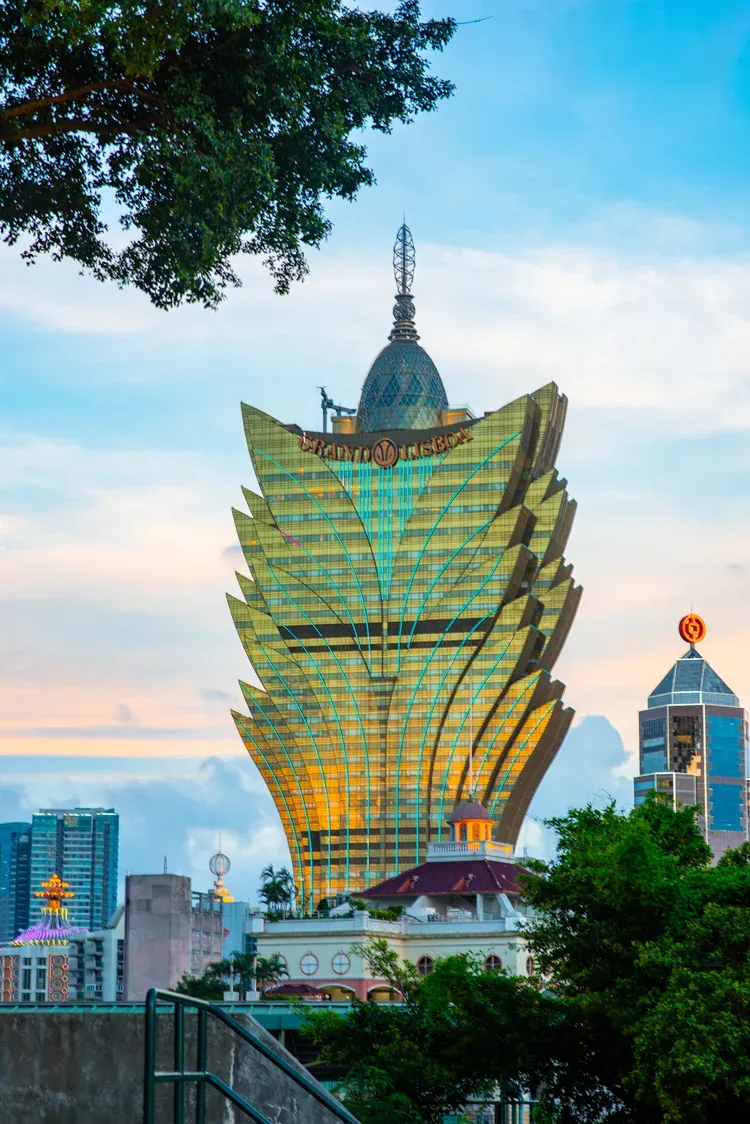
Macau packs four centuries of Portuguese rule and a runaway casino economy onto a peninsula roughly the size of a large park, then adds the islands of Taipa and Coloane, joined by the reclaimed land of the Cotai Strip where the resorts keep growing. Gaming revenue built the skyline visible from the ferry, and casinos remain the industry that defines the territory today: the Cotai Strip's malls, canals and theming are free to wander, gaming floors are open to visitors 21 and over with photography barred at the tables, and free shuttle buses link the resorts to the ferry terminals and the border gate. Away from the neon, the historic centre keeps a Portuguese-Chinese townscape recognised by UNESCO, its bakeries filling trays with almond cookies and pork jerky for the crowds who cross the border for the day.
Districts to know
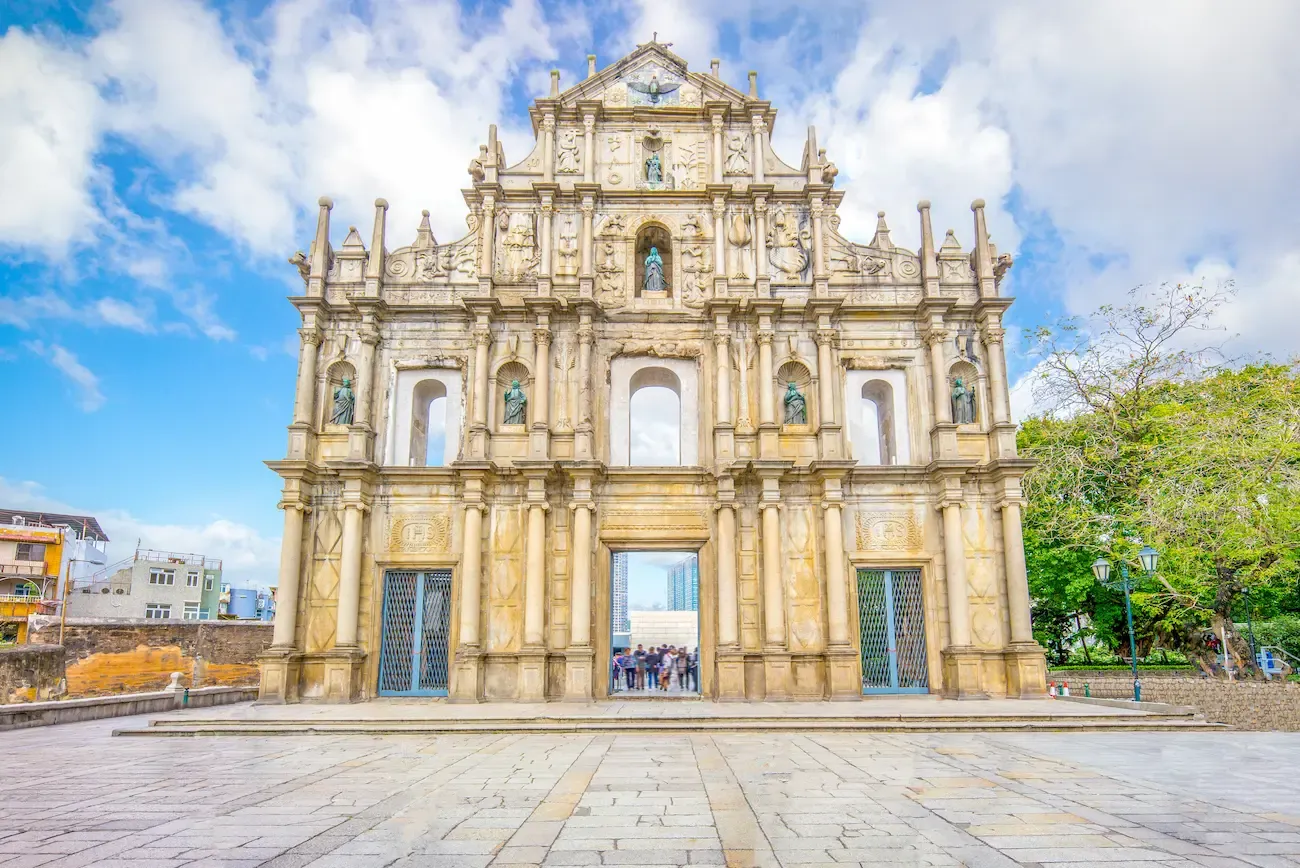
The historic Peninsula holds the UNESCO core around Senado Square and the Ruins of St Paul's, walkable in a single day. Taipa Village keeps a fishing-town scale of narrow lanes and bakeries. Cotai, the strip of reclaimed land between Taipa and Coloane, carries the newest casino resorts. Coloane, the southernmost island, stays the quietest, its beaches and chapel furthest from the crowds.
When to go and for how long
October to December brings the clearest, driest weather, once the summer typhoon season has passed; a Signal 8 typhoon shuts casinos, ferries and public transport across the territory. Two to three full days cover the historic Peninsula and a visit to the Cotai resorts at a comfortable pace, with a fourth day useful for Taipa and Coloane villages.
Getting around
The historic Peninsula is compact enough to cover on foot between Senado Square, the Ruins of St Paul's and Monte Fort. Cotai and the outer islands sit a bus or taxi ride away, not a walk, though every major resort runs a free shuttle bus network from the ferry terminals and the border gate straight to its own casino floor. Macau was administered by Portugal until December 1999, the last European territory in Asia to be handed over, and its historic centre is a compact stop on a longer tour of the tourist attractions in Asia.