What makes Manchester unique
Manchester grew rich on cotton and canals, and Marketing Manchester, the city's tourism board, still calls it the birthplace of the Industrial Revolution. The Duke of Bridgewater's canal, opened in 1761 to shift coal from Worsley, was the first canal built in Britain, and the Liverpool Road station beside it became the world's first railway station in 1830. Manchester carries that same energy into music and football, home to two Premier League clubs and bands running from Joy Division to Oasis.
Neighbourhoods to know
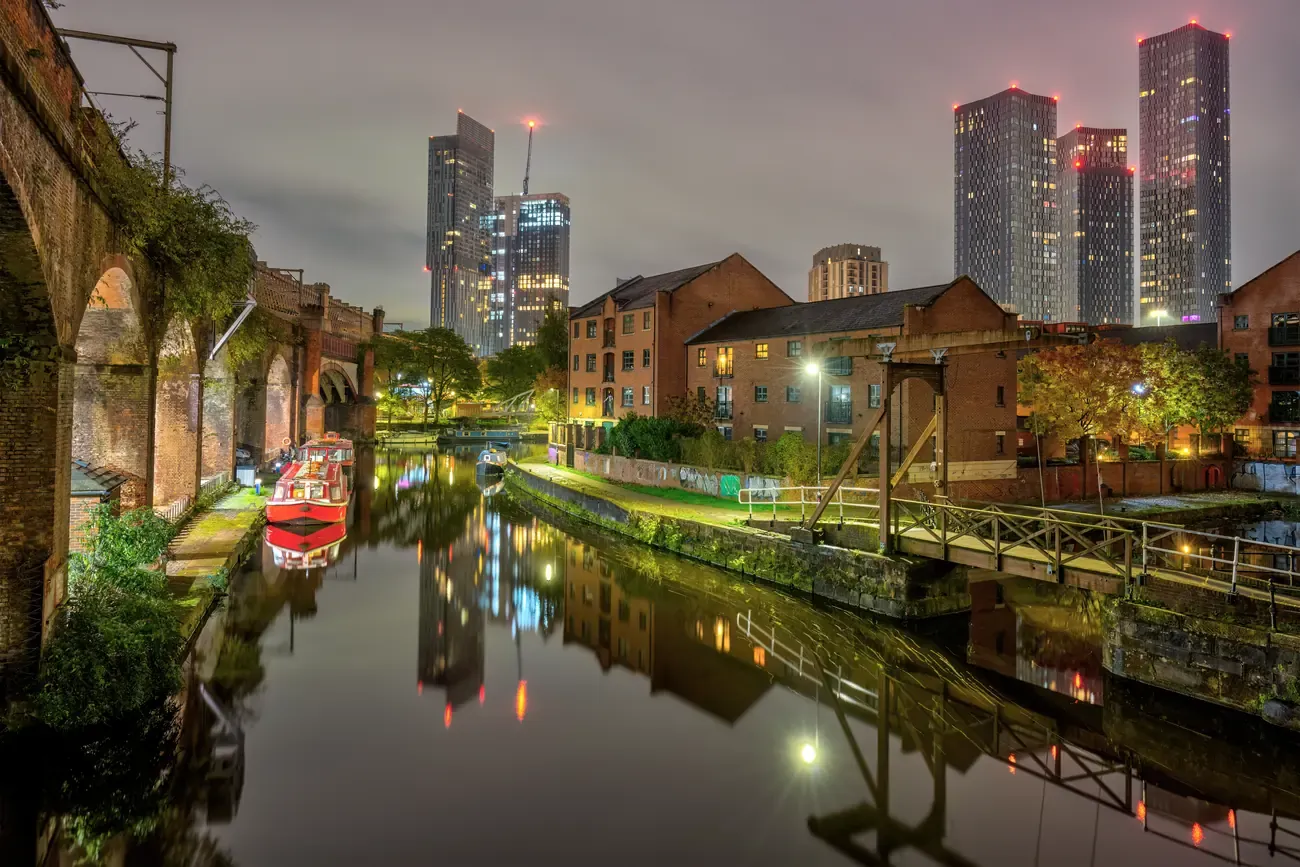
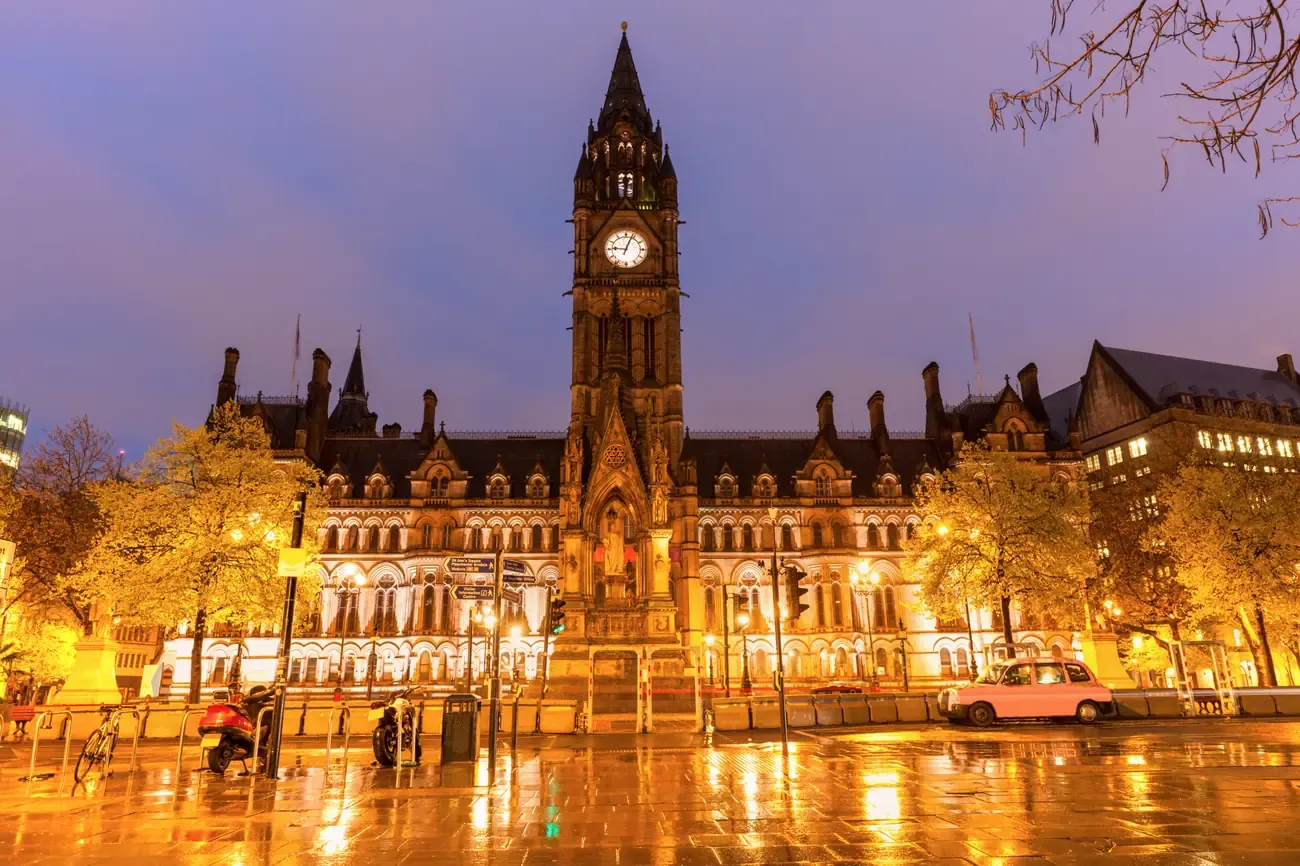
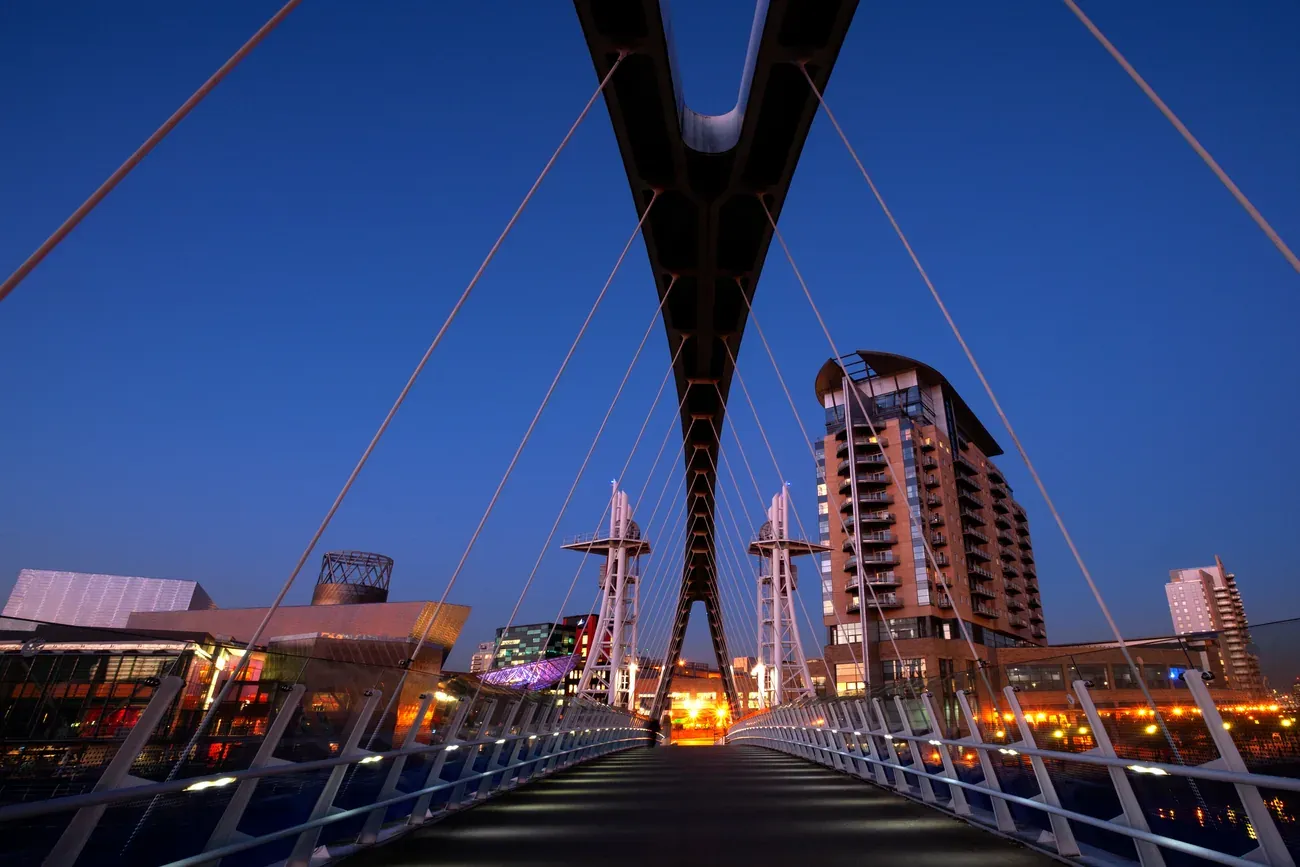
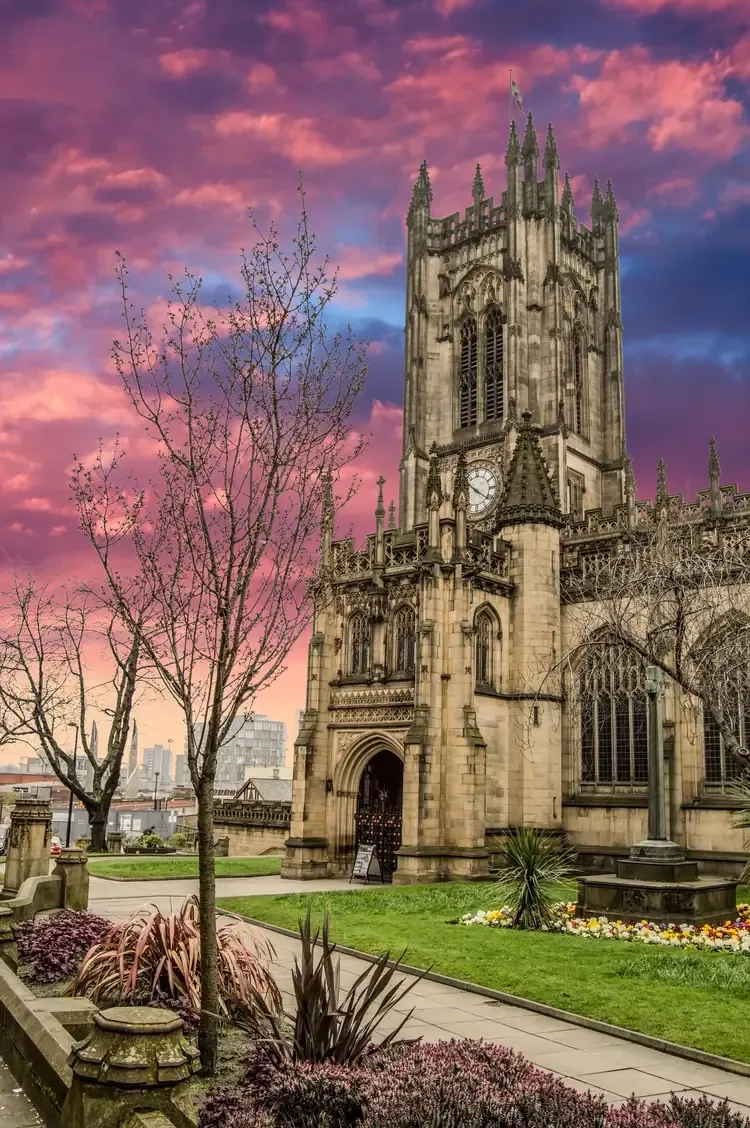
The medieval core around the cathedral and Chetham's gives way east to the Northern Quarter, a warren of independent shops, street art and former Victorian warehouses centred on Afflecks and Stevenson Square. St Peter's Square and Spinningfields hold the civic and business district, with the Town Hall currently closed for restoration until spring 2027. Castlefield, at the south-western edge of the centre, keeps the Roman fort and the canal basins that made it Britain's first Urban Heritage Park, and Salford Quays, a short tram ride further out, gathers MediaCityUK, the Lowry and Imperial War Museum North around the water.
When to go and how long to stay
Two to three days cover the centre's cathedral, libraries, galleries and Castlefield at an easy pace, with spring and summer bringing outdoor concerts to Wythenshawe Park and Castlefield Bowl. A third or fourth day allows time for Salford Quays, Old Trafford or a longer look at the free museums that fill the city centre.
Getting around
The compact centre is easily walkable between the cathedral, the Northern Quarter, St Peter's Square and Castlefield. The Metrolink tram network fans out beyond it to Salford Quays, Old Trafford and the suburbs, and Manchester Piccadilly and Manchester Victoria stations connect the city to the rest of the country by rail. Those main lines reach many of the main tourist attractions in the United Kingdom in a few hours.