
Tourist attractions in San Diego
Known for
Pacific waterfront, Navy heritage and Balboa Park's museums and zoo
Must-see landmarks
Balboa Park, the San Diego Zoo and the USS Midway Museum
Free to visit
Balboa Park's plazas and gardens and the Gaslamp Quarter's streets
Days needed
3 to 4 days to cover downtown, Balboa Park and the coast
Top 11 tourist attractions in San Diego
For a first visit, the tourist attractions in San Diego come down to Balboa Park, San Diego Zoo, SeaWorld San Diego and 8 more sights ranked below, plus free things to do, upcoming events and visitor FAQs.
1. Balboa Park
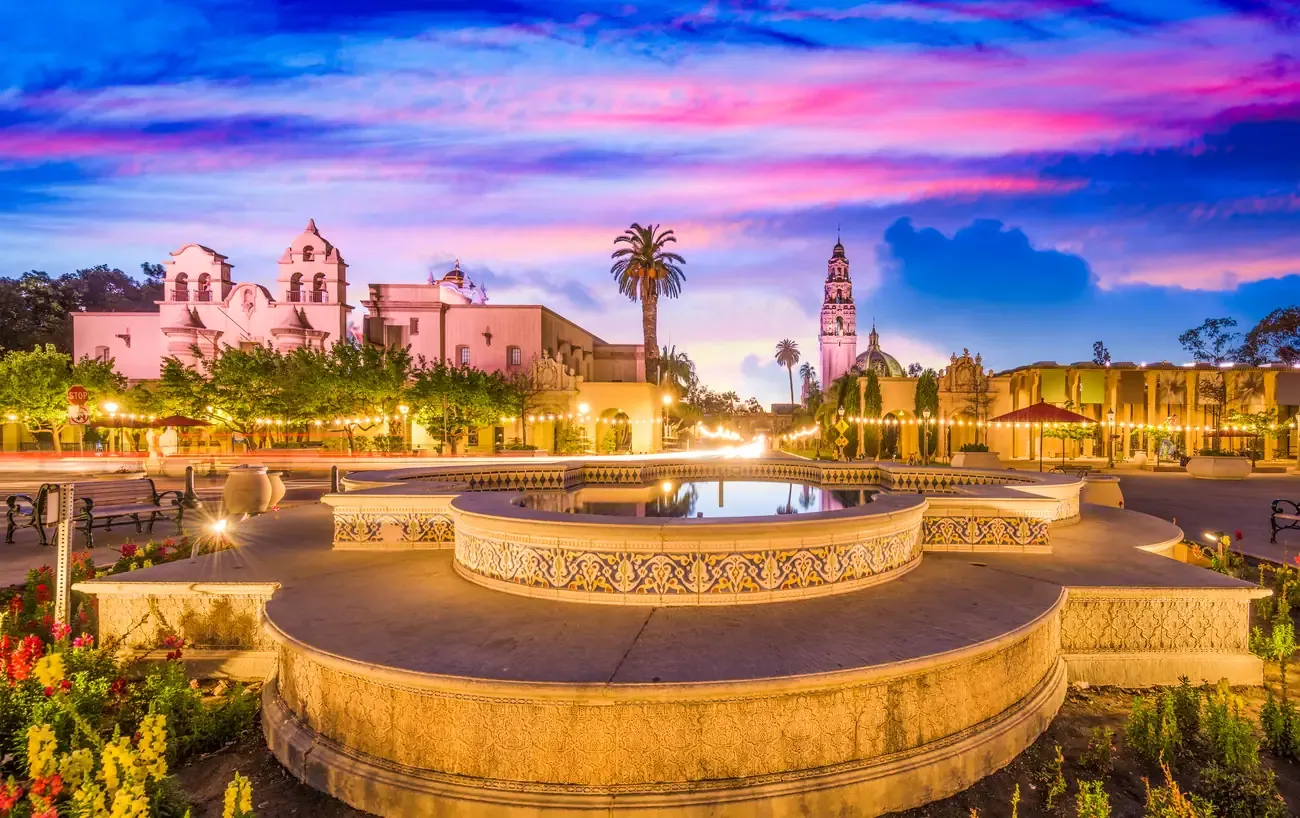
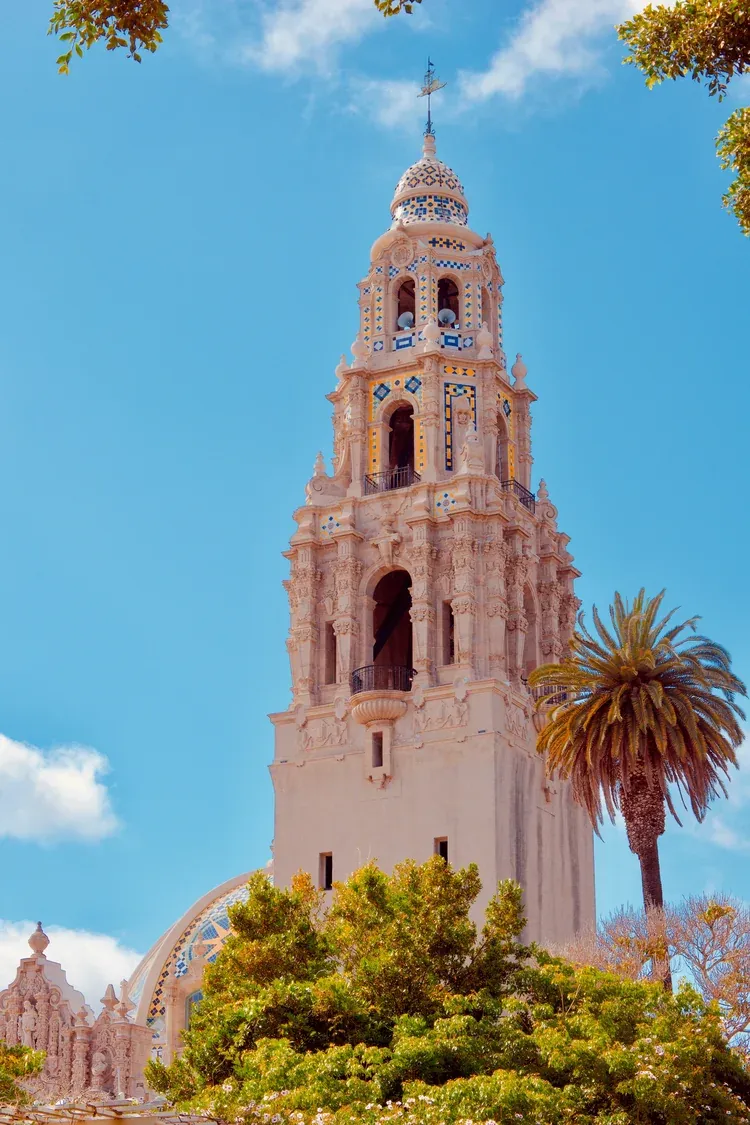
Seventeen museums and cultural institutions share the 1,200 acres of Balboa Park, one of the largest urban cultural parks in the United States. The ornate facades along El Prado were built for the 1915 Panama-California Exposition and stayed standing afterwards, so the walk between institutions carries as much of the visit as the collections inside.
Style: Spanish Colonial Revival · Heritage: National Historic Landmark District
Location: 1549 El Prado, San Diego
Access: Free, with the grounds open around the clock and no gate at any entrance; the Botanical Building and the Timken Museum of Art stay free too, while the other museums keep their own hours, listed on the park's own site.
2. San Diego Zoo
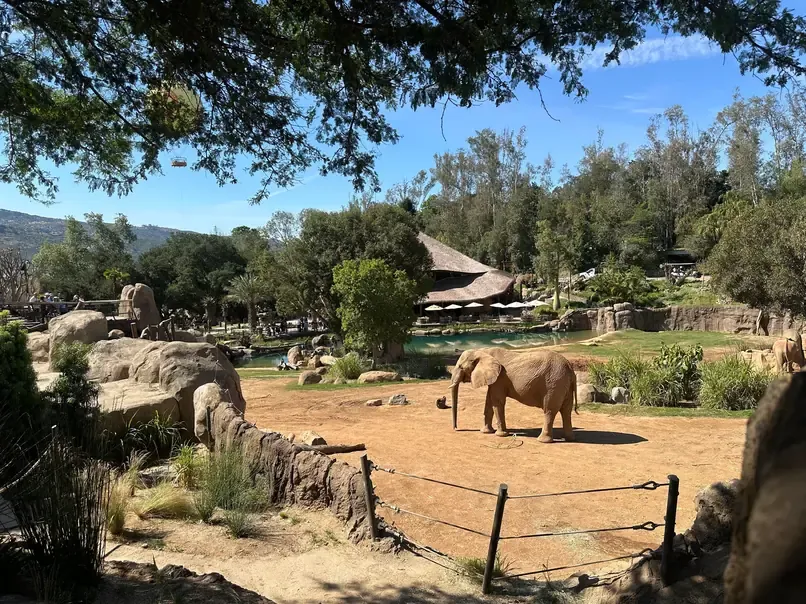
The zoo began with animals left behind by the 1915 Panama-California Exposition and opened the following year on land leased from the city inside Balboa Park. It was an early adopter of open-air, cage-less enclosures built to imitate natural habitat, an approach the San Diego Zoo Wildlife Alliance, the non-profit behind it, carries over to its inland Safari Park. Slopes and bridges link the sections, so a full circuit involves a fair amount of climbing.
Location: 2920 Zoo Drive, San Diego
Access: Ticketed, opening daily at 9 in the morning with closing times that shift through the year; Rapid 215 and Route 7 buses stop at the gate, and parking on site is charged.
3. SeaWorld San Diego
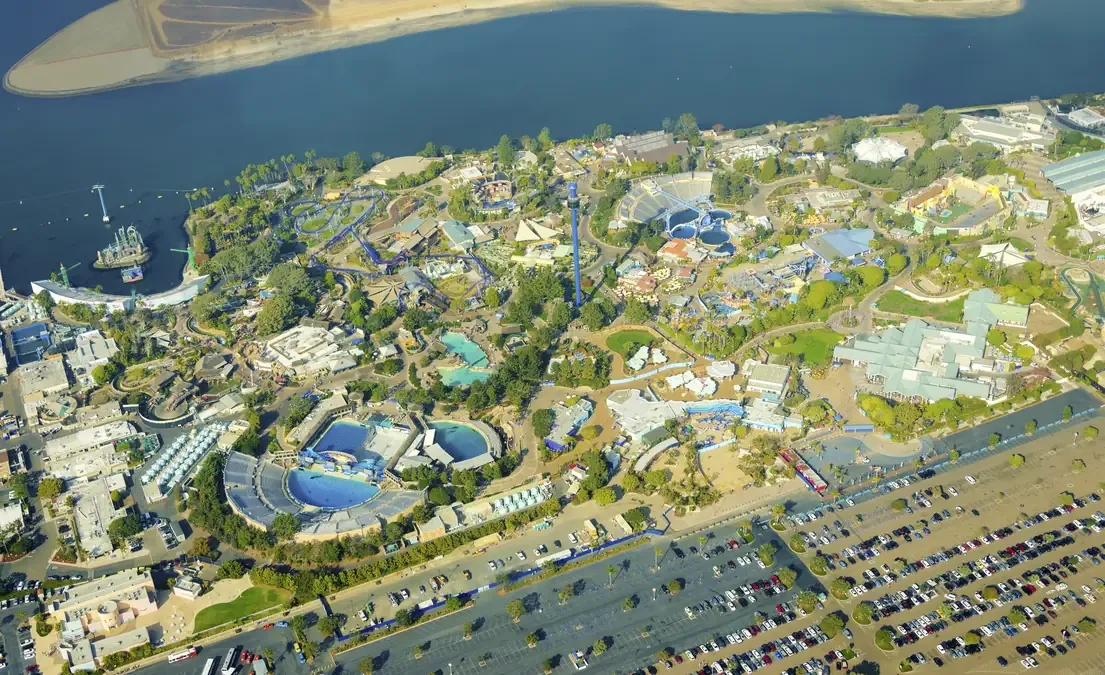
The original SeaWorld opened on the shore of Mission Bay in March 1964 and has grown from 21 acres to 189. The theatrical orca shows are gone: since 2017 the killer whales appear in Orca Encounter, a documentary style presentation on how they hunt, communicate and raise calves, alongside habitats for dolphins, sea lions, otters, penguins and sharks. The ride side has grown too, with Emperor, a dive coaster that hangs riders face down before a 143 foot drop, and Arctic Rescue, a straddle coaster themed on the park's rescue work, which has aided stranded seals, sea lions and seabirds off this coast for six decades.
Opened: 1964 · Area: 189 acres
Location: 500 Sea World Drive, Mission Bay
Access: Ticketed; parking is paid separately
4. USS Midway Museum
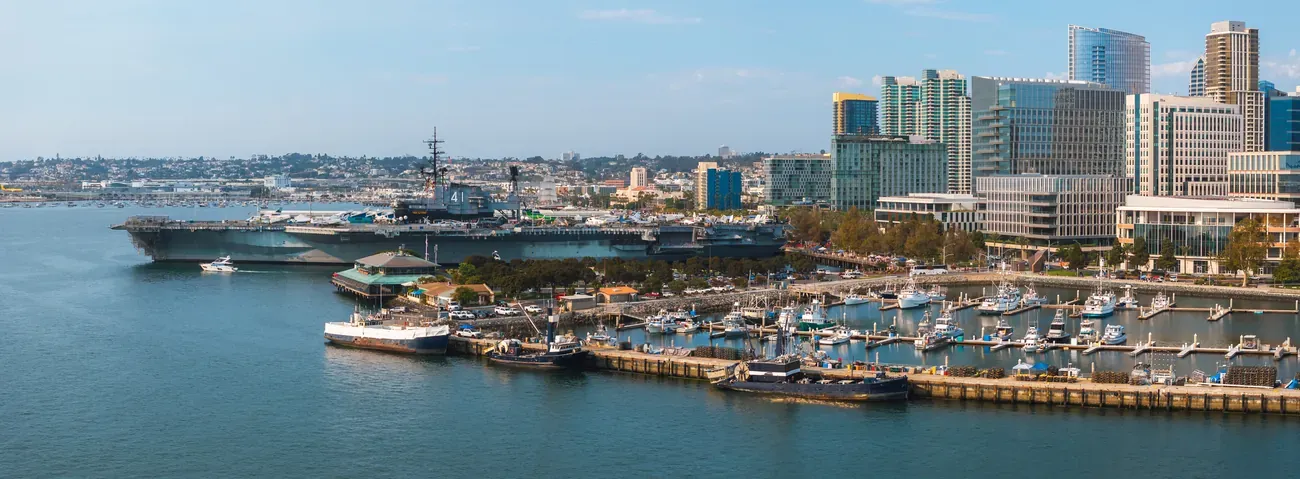
Commissioned in 1945 as the largest ship in the world, the carrier stretches 1,001 feet along the downtown waterfront and once carried a crew of up to 4,500. It opened as a museum in 2004, and the route now runs from the flight deck and its parked aircraft down through the hangar deck to the cramped compartments below, with docent-led tours covering life aboard.
Location: Navy Pier, North Harbor Drive, San Diego
Access: Ticketed, open every day from 10 in the morning until 5 in the afternoon, last admission at 4; the museum closes on Thanksgiving and Christmas Day.
5. Maritime Museum of San Diego
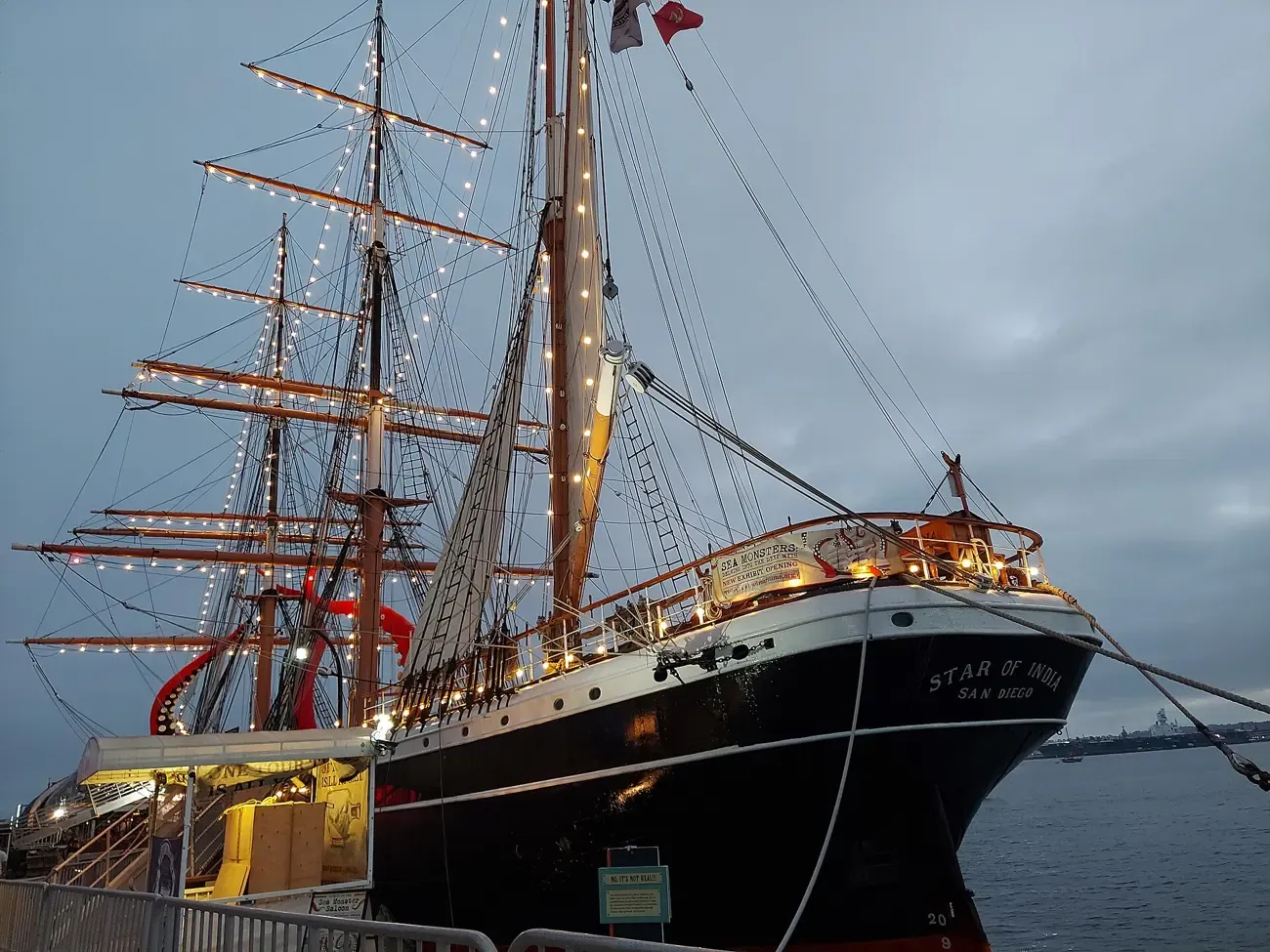
Established in 1948, this museum floats rather than stands: its collection is a line of historic vessels moored along the Embarcadero. The centrepiece is the iron-hulled Star of India, launched in 1863 and described by the museum as the world's oldest active sailing ship, berthed alongside the 1898 steam ferry Berkeley and San Salvador, a working replica of a 16th century Spanish galleon.
Location: 1492 North Harbor Drive, San Diego
Access: Ticketed, with general admission covering the moored fleet and the exhibits aboard it; harbour cruises and sailing days are arranged separately.
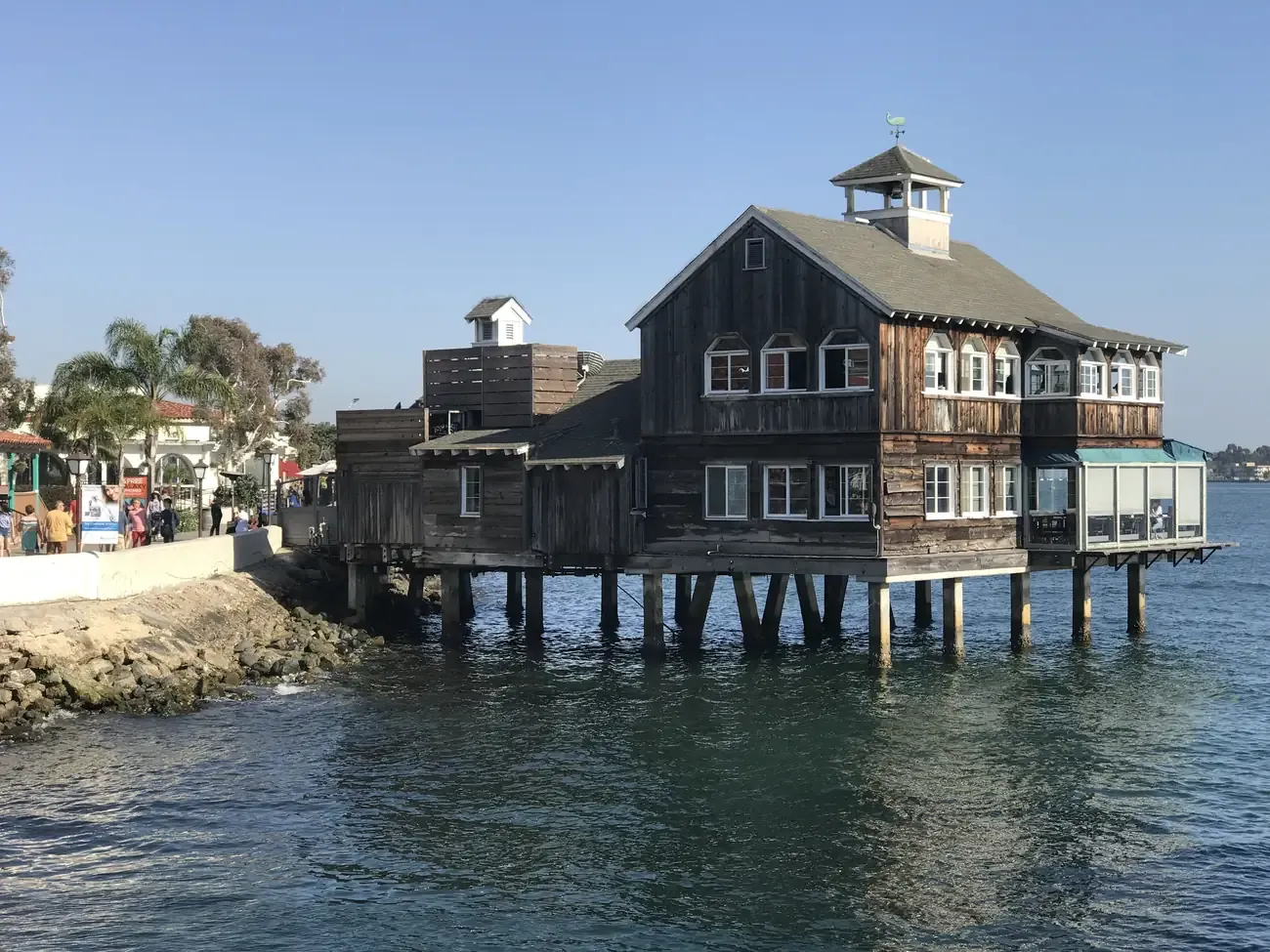
6. Seaport Village
Built on reclaimed harbour land beside the convention centre, Seaport Village was laid out car-free, with winding paths in place of streets. Low buildings in a jumble of styles from Victorian to traditional Mexican hold boutiques, galleries and cafes, though the waterfront promenade is what most people come for, a flat walk with the bay traffic on one side and the downtown towers behind.
Location: 849 West Harbor Drive, San Diego
Access: Free, with no gate between the promenade and the bay; the individual shops and restaurants keep their own hours.
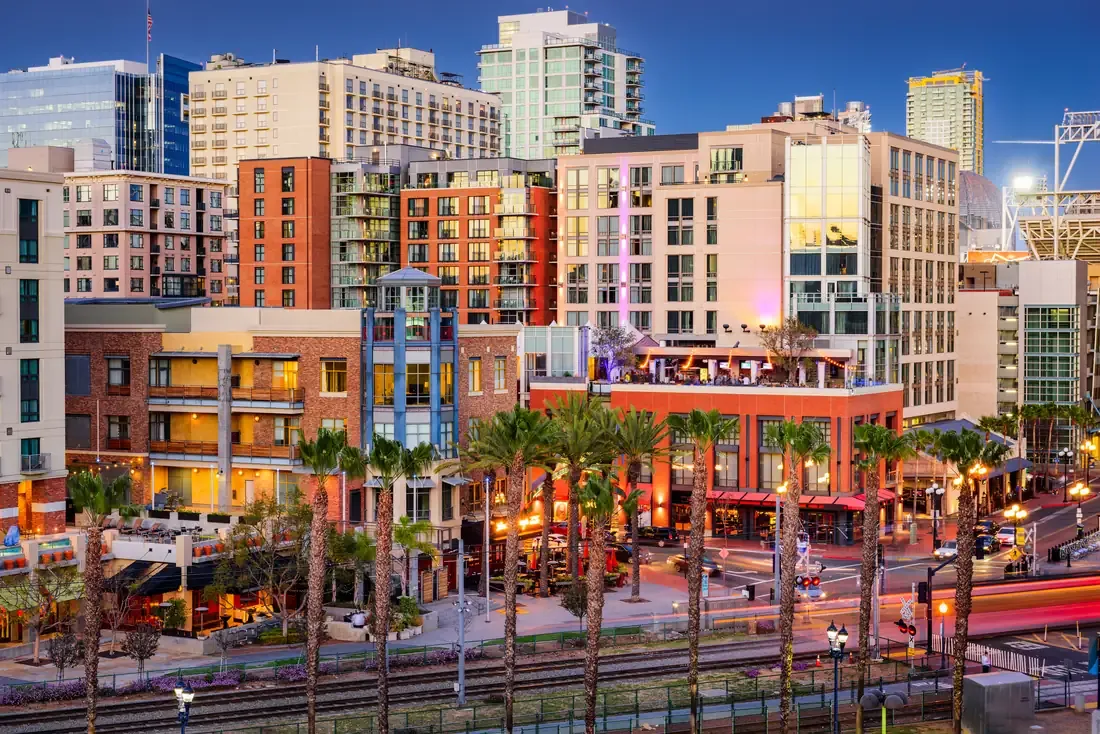
7. Gaslamp Quarter
Alonzo Horton bought the waterfront land that became this district in 1867, and the Victorian-era blocks that went up afterwards now form a historic district on the National Register of Historic Places. More than ninety heritage buildings survive between Broadway and Harbor Drive, most of them working as restaurants, bars and music venues, which makes the quarter noisier after dark than at any other hour.
Location: Fourth to Sixth Avenue, downtown San Diego
Access: Free to walk at any hour; Petco Park sits one block away in East Village, so match days fill the streets.
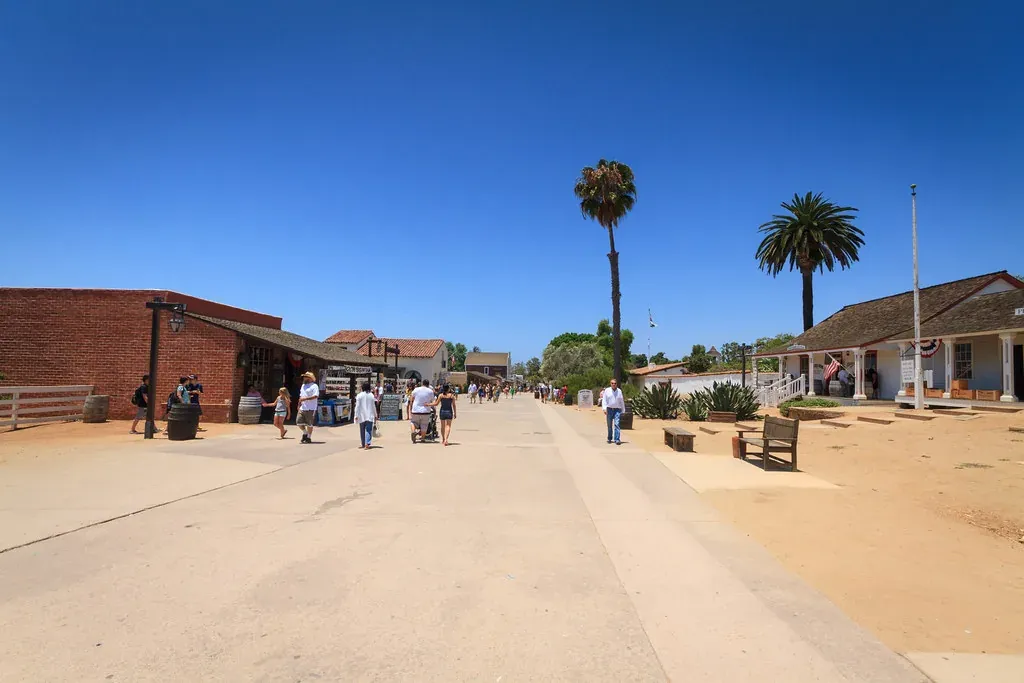
8. Old Town San Diego State Historic Park
California's first Spanish settlement was founded here in 1769, and the state park now preserves the plaza and the adobe and timber buildings around it as they stood between 1820 and 1870, through the Mexican Rancho period and the American frontier years that followed. Living history programmes run through the day, and several of the old shopfronts still trade as candle makers, sweet shops and general stores.
Location: 4002 Wallace Street, San Diego
Access: No ticket for the plaza and the streets; the visitor centre and museums open from 10 until 5, with the schedule on California State Parks.
Photo: "Old Town San Diego State Historic Park" by Numinosity by Gary J Wood (CC BY-SA).
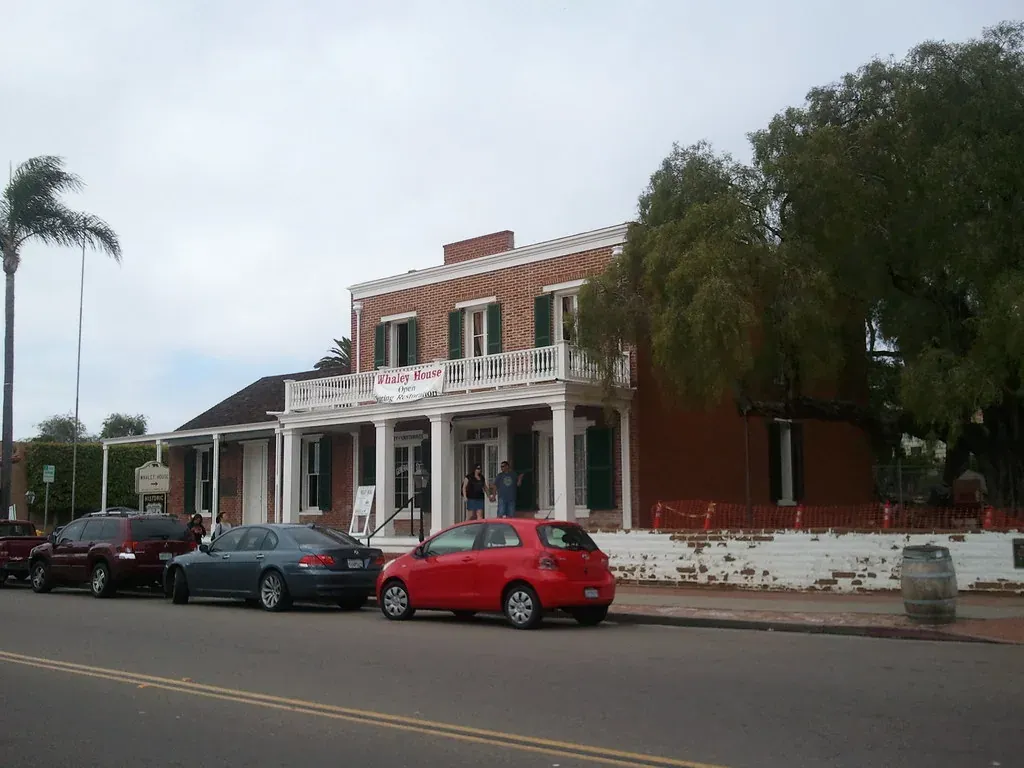
9. Whaley House
Thomas Whaley broke ground on this Greek Revival brick house in 1856, on a plot in Old Town that had served as the town gallows. Over the following decades the building held his family, a general store, San Diego's first commercial theatre and the county courthouse, a run of uses that gave the place its layered history and the ghost stories the operator now leans on.
Style: Greek Revival
Location: 2476 San Diego Avenue, San Diego
Access: Ticketed; the daytime self-guided visit runs from 10 until half past four with no reservation needed, while evening tours are booked ahead.
Photo: "Whaley House, San Diego" by tkksummers (CC BY-SA).
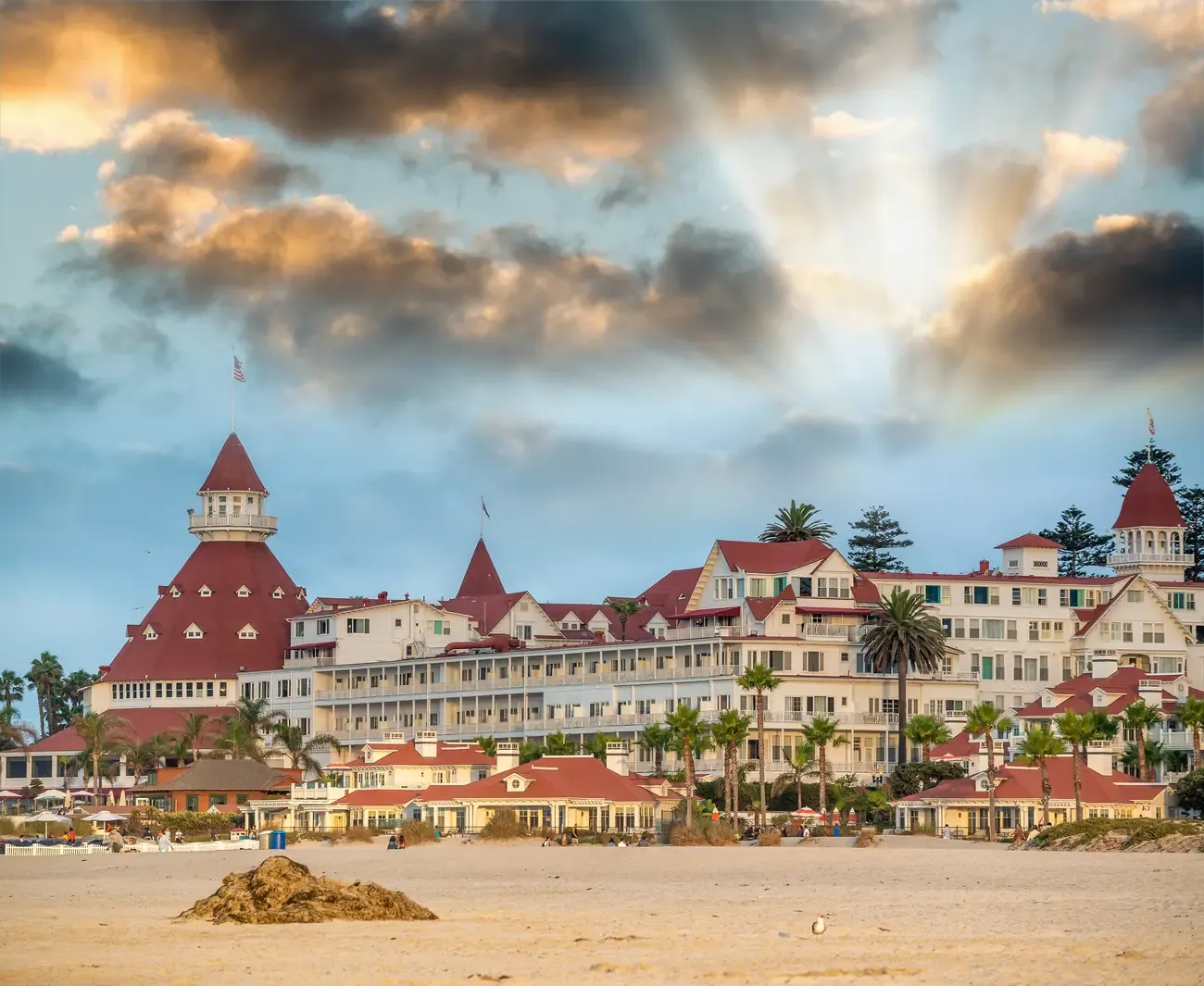
10. Hotel del Coronado
Elisha Babcock and Hampton Story opened this beachfront resort on Coronado in 1888, when it was the largest resort hotel in the world, and it survives as a rare example of a vanished American genre, the wooden Victorian beach resort. L. Frank Baum stayed here repeatedly between 1904 and 1917 while writing Oz books, and designed the crown-shaped chandeliers hanging in the pillarless Crown Room.
Architect: Reid & Reid · Heritage: National Historic Landmark since 1977
Location: 1500 Orange Avenue, Coronado
Access: No admission ticket for the building; rooms, restaurants and shops run as the resort's own business.
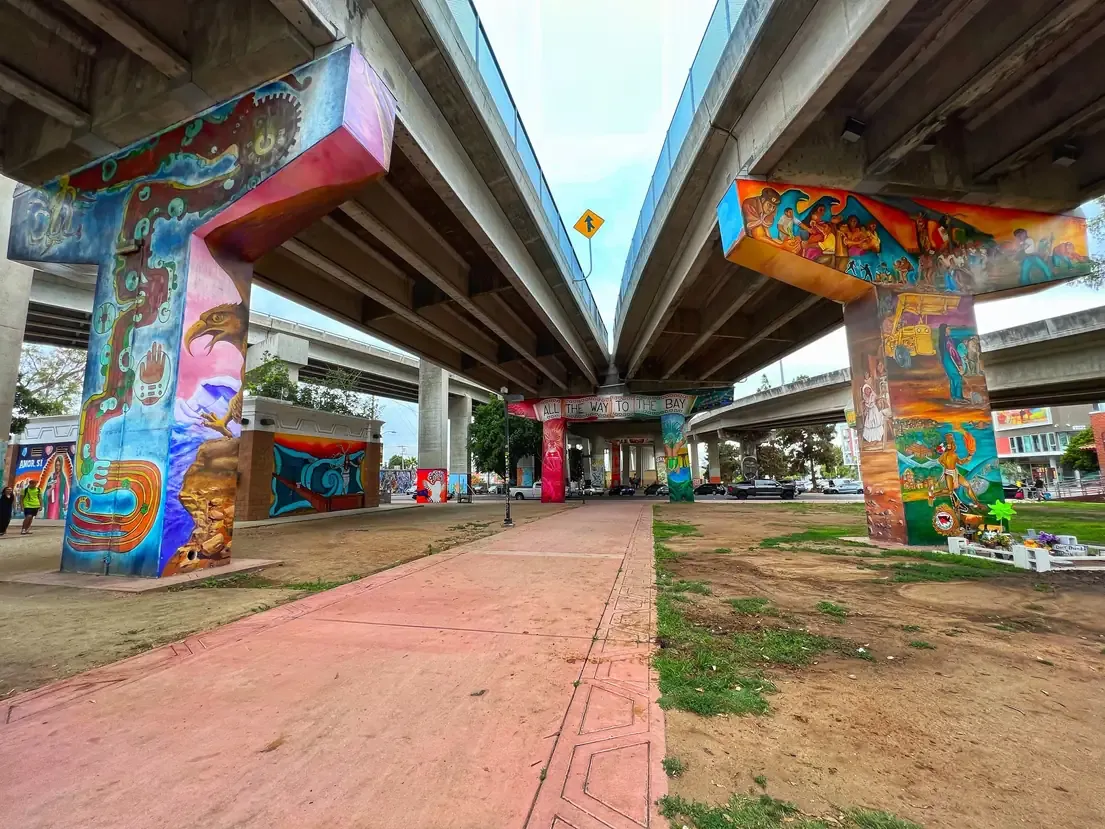
11. Chicano Park
In April 1970 residents of Barrio Logan and Chicano movement activists occupied the ground under the Coronado Bridge to stop a highway patrol station being built on it, and held out against police and bulldozers until the land was handed over as a park. Artists then turned the bridge pillars into one of the largest collections of outdoor murals in the country, painting the movement, Mexican history and local faces across the concrete.
Heritage: National Historic Landmark since 2016
Location: 1949 Logan Avenue, San Diego
Access: Free and open, with the murals visible from the paths under the bridge; the Chicano Park Museum and Cultural Center nearby keeps its own hours.
Upcoming events in San Diego
Cardinals
Cardinals plays Voodoo Room at the House of Blues San Diego on 28 September at 19:00.
Billy Strings
Billy Strings plays Pechanga Arena San Diego on 28 September at 19:30.

Oh, Mary! (Touring)
Oh, Mary! (Touring) plays San Diego Civic Theatre on 29 September at 19:00.

Club América vs. Cruz Azul
Club América vs. Cruz Azul comes to Snapdragon Stadium on 1 October at 19:30.

Emergency Intercom Live
Emergency Intercom Live plays Balboa Theatre on 1 October at 20:00.

San Diego Toreros Womens Volleyball vs. Denver Pioneers Womens Volleyball
What to do in San Diego for free
La Jolla Cove
Walking the railing above La Jolla Cove and watching its resident sea lions is free; snorkelling gear rentals and boat tours from operators nearby are the paid options.
Belmont Park
Belmont Park's boardwalk, arcade games and beachfront shops are free to browse; the rides themselves, including the wooden Giant Dipper, carry their own admission.
San Diego Central Library
The Central Library downtown is free and open to anyone, its dome-topped reading room and rooftop garden looking out over the East Village.
Spreckels Organ Pavilion
Free organ concerts fill Balboa Park's Spreckels Organ Pavilion every Sunday afternoon, played on an instrument its own society says has the distinction of being the largest open-air musical instrument in the world, gifted to the city in 1915 by the Spreckels brothers.
Sunset Cliffs Natural Park
No ticket is needed to walk the sandstone bluffs of Sunset Cliffs Natural Park above the Pacific, popular at sunset and, on the right swell, for watching cliff divers below.
Waterfront Park
Downtown's Waterfront Park spreads lawns and splash fountains in front of the County Administration Center, with no gate and no ticket between the street and the grass.
Mission Beach Boardwalk
The Mission Beach boardwalk runs free along the sand past surf shops and snack stands, connecting north to Pacific Beach without a turnstile in between.
Why visit San Diego
What makes San Diego unique
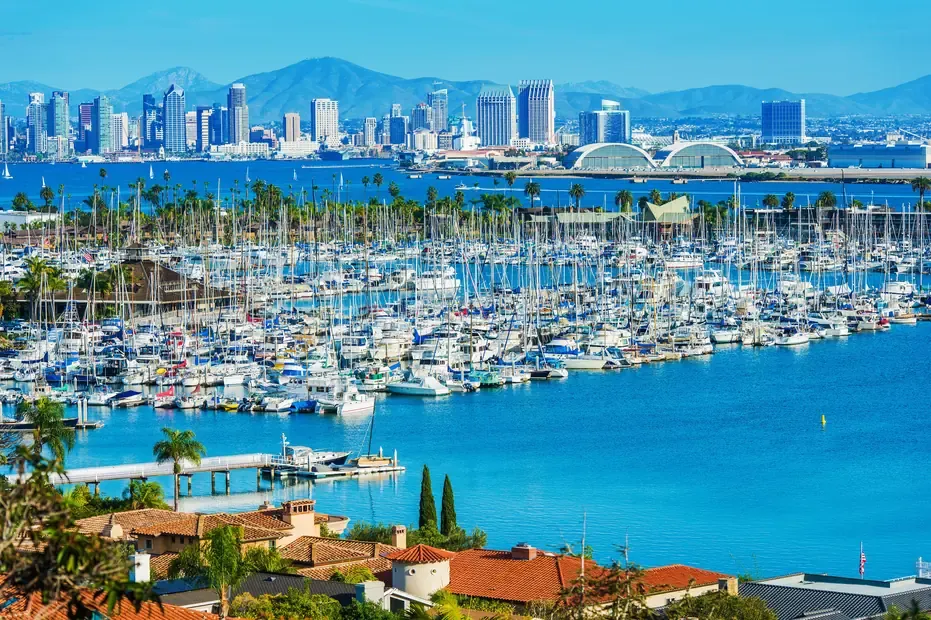
San Diego traces its start to 1769, when Spanish missionaries founded the first European settlement in California at what is now Old Town, on land long inhabited by the Kumeyaay. The Navy has anchored the city's economy since the early 20th century, and its Pacific Fleet still shares the harbour with cruise ships and pleasure boats. A mild, dry climate keeps outdoor life at the centre of daily routine, from the cliffs of La Jolla to the boardwalks of Mission Bay.
Neighbourhoods to know
Downtown gathers the Gaslamp Quarter's nightlife and the Embarcadero's museum ships around Petco Park, with Balboa Park and the trendy streets of Hillcrest just northeast. Old Town keeps the city's Spanish and Mexican-era roots at the foot of Mission Valley's shopping strip, while Coronado, reached by bridge or ferry across the bay, is technically its own city. La Jolla to the north pairs upscale shopping with coastal bluffs, and Mission Beach and Pacific Beach share a single boardwalk built for bikes, surfboards and crowds.
When to go and how long to stay
March through May and September through November bring the warmest, clearest days. May and June often bring a marine layer of coastal cloud that lingers into late morning, a pattern the National Weather Service attributes to the gap between cool ocean water and warming land and that locals call May Gray and June Gloom. Three to four days cover the waterfront, Balboa Park and the coast at a comfortable pace, with more time worth setting aside for a day trip to the Zoo Safari Park in Escondido, an 1,800 acre wildlife park with more than 3,000 animals across over 293 species.
Getting around
Downtown, the Gaslamp Quarter and Balboa Park form a walkable core, and the San Diego Trolley links downtown to Old Town and south to the Mexican border at San Ysidro. Beyond the trolley lines the region sprawls, and most visitors heading to La Jolla, the northern beaches or the Zoo Safari Park rely on a car or rideshare. Mild weather through the whole year and the murals painted on the bridge pillars at Chicano Park since 1973 put the city among the main tourist attractions in the United States that sit outside the obvious stops.