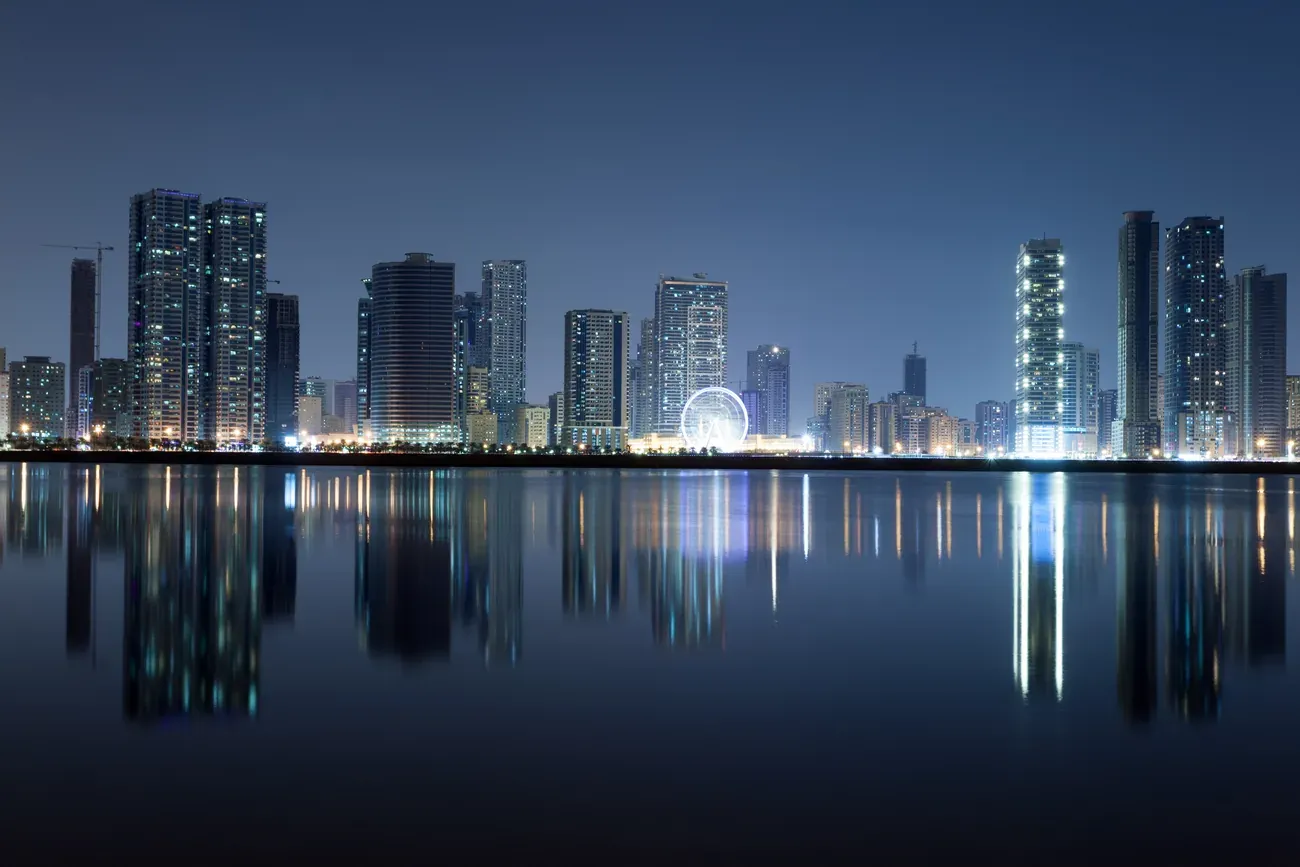
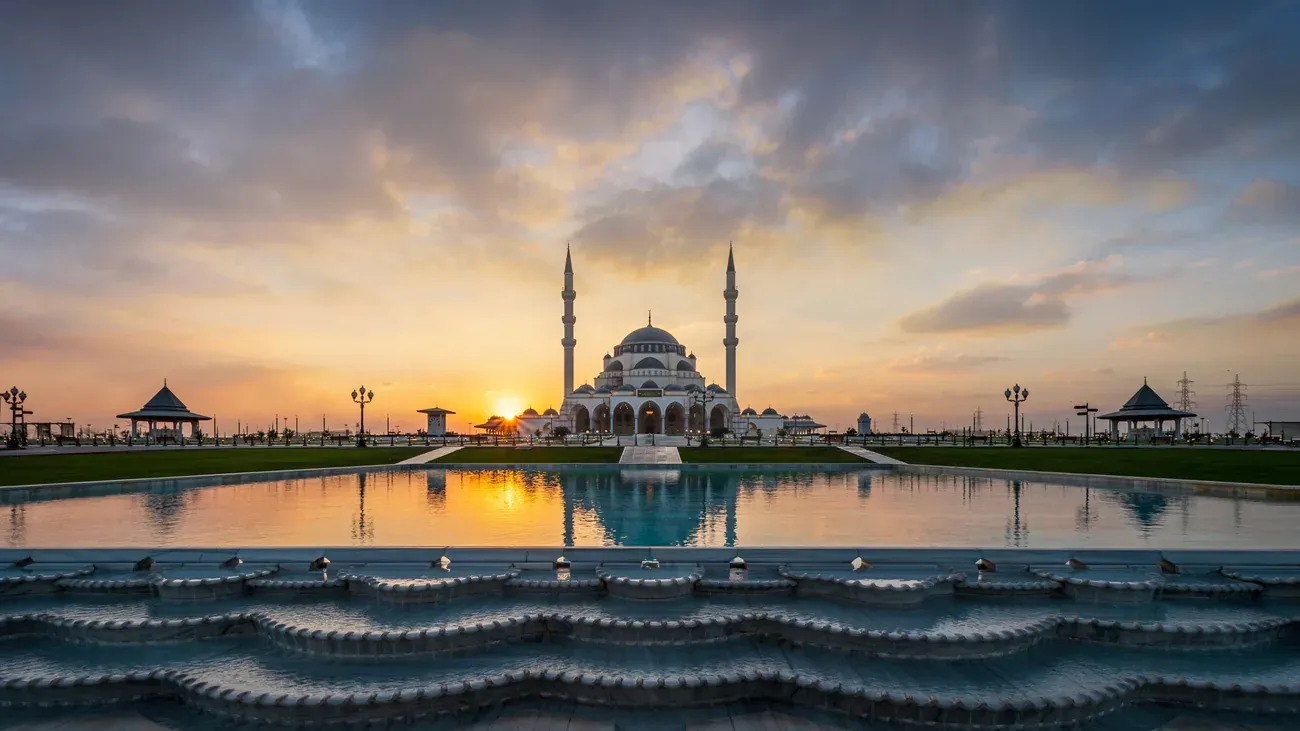
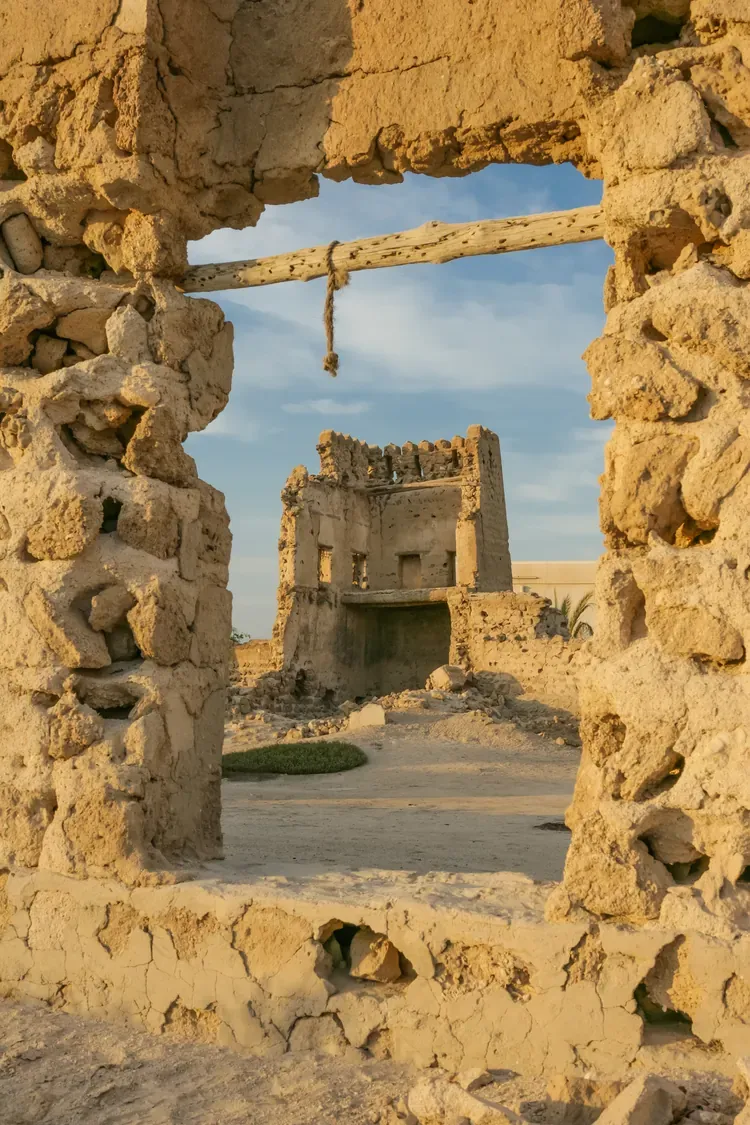
Sharjah is the UAE's third largest emirate and its cultural capital, a title UNESCO made official in 1998 and followed with Capital of Islamic Culture in 2014 and World Book Capital in 2019. It keeps a more conservative, alcohol-free character than its larger neighbour Dubai, trading skyscrapers for coral stone forts, house museums and a corniche wrapped around Khalid Lagoon.
A city built on culture
By the federal government's own count, Sharjah holds nearly a quarter of all the museums in the UAE, most of them clustered in the Heart of Sharjah. The House of Wisdom, a library built to mark the World Book Capital year, holds more than 100,000 books beneath a cantilevered roof on the road out toward the airport, open free to anyone who walks in.
Neighbourhoods to know
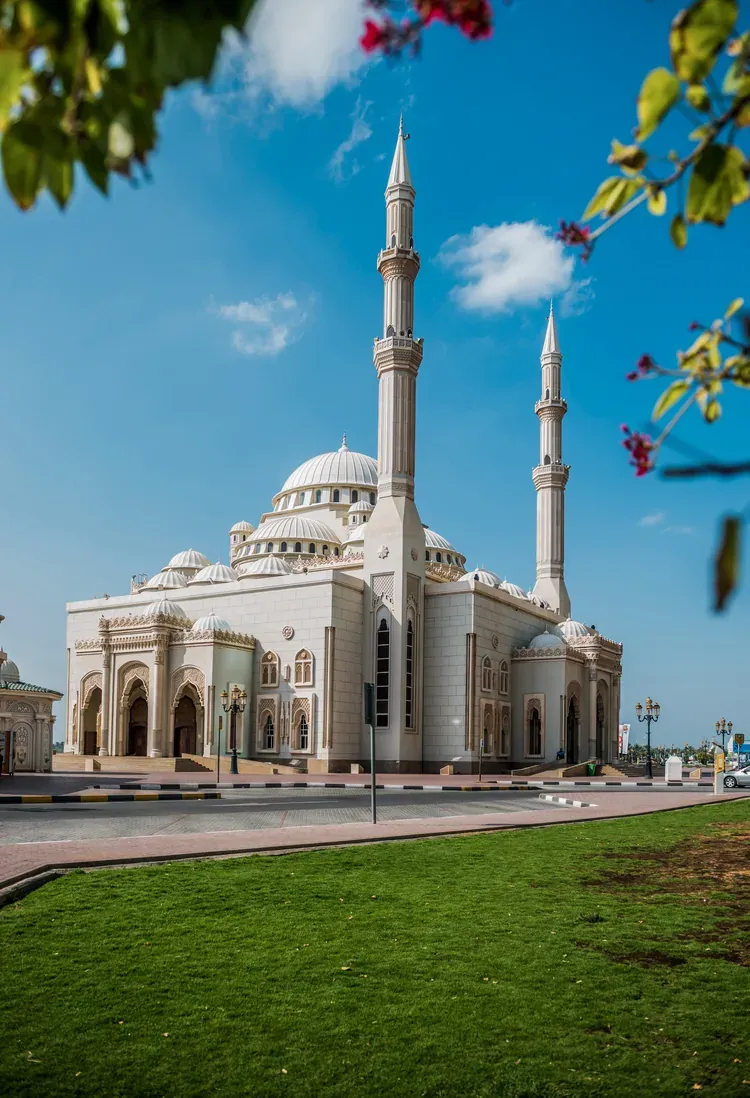
The Heart of Sharjah is the old town by the creek, its coral stone lanes holding the fort, the Islamic civilisation museum and the covered souqs. South along Khalid Lagoon, Al Majaz Waterfront and Al Qasba form a newer waterfront district of parks, canals and evening promenades, while the Al Khan Corniche further west carries the aquarium, and a footbridge behind Al Noor Mosque leads out to Al Noor Island.
When to go and for how long
Cooler, drier months from November to March suit walking between the lagoon and the Heart of Sharjah; the summer heat pushes outdoor time to early morning and evening. A single day covers the walking route above, and a second allows Al Noor Island, the aquarium or a day trip into Dubai.
Getting around
The Heart of Sharjah is walkable end to end, and the lagoon promenade links its waterfront sights on foot. Regular buses and taxis connect Sharjah with Dubai, arriving at Al Jubail bus station beside Central Souq, and Sharjah International Airport sits a short drive from the centre. That short hop into Dubai ties Sharjah into the coastal run of tourist attractions to visit in the United Arab Emirates.