
Tourist attractions in the United Arab Emirates
Known for
Record-breaking towers, malls and theme parks on the coast
Must-see cities
Dubai, Abu Dhabi and Sharjah
UNESCO World Heritage
Cultural Sites of Al Ain, Faya palaeolandscape and Wadi Wurayah
Best time to visit
Late October to mid-March, with highs near 27C and lows near 15C
The 12 tourist attractions to see in the United Arab Emirates
Here the tourist attractions in the United Arab Emirates are ranked, led by Burj Khalifa, the Sheikh Zayed Grand Mosque and the Dubai Mall. After the 12 sights come the cities worth a stop, 12 more landmarks, local dishes, 14 hidden gems and visitor FAQs.
Must-see cities in the United Arab Emirates
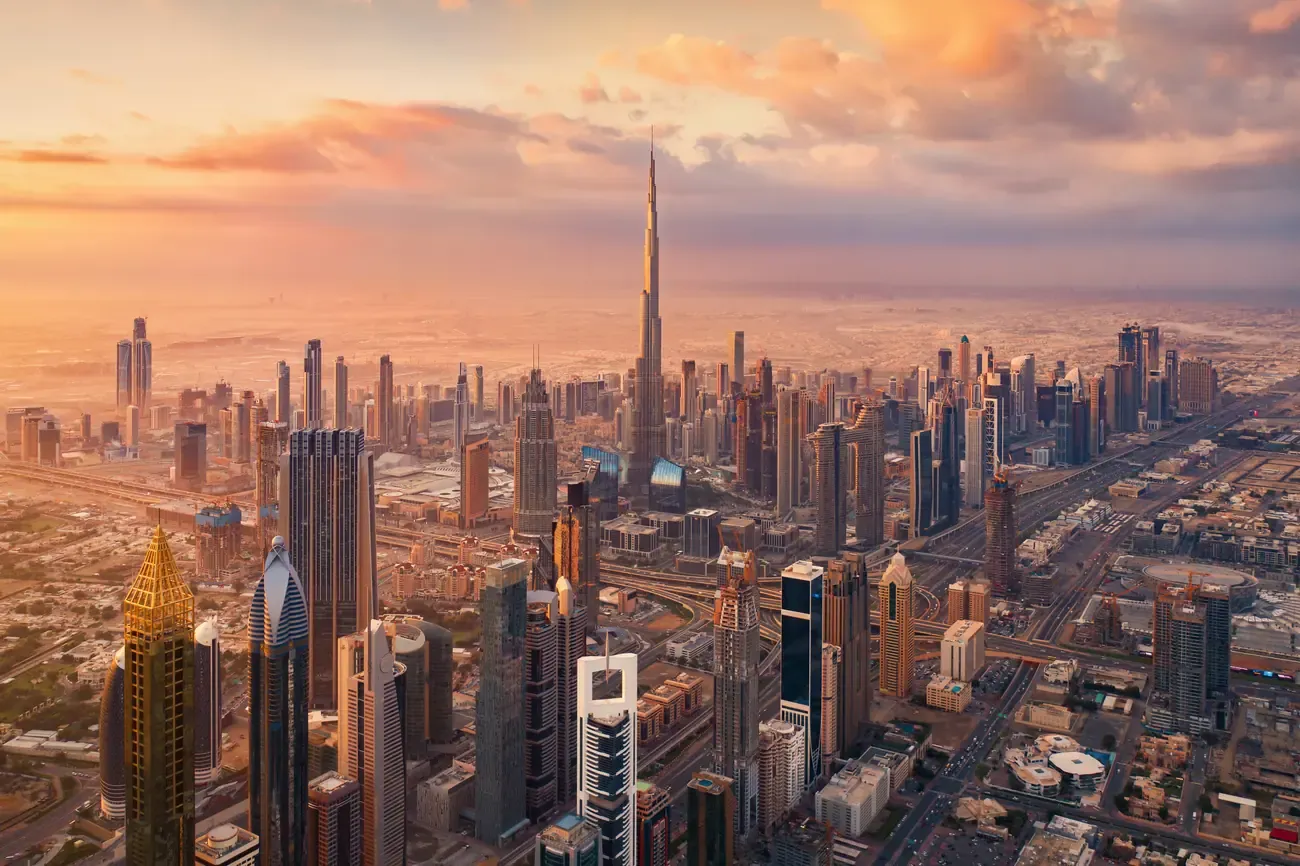
Dubai
Explore Dubai in detail. The city of the tower, the mall and the fountain, with a trading creek and a wind-tower quarter still behind them and open desert an hour out.
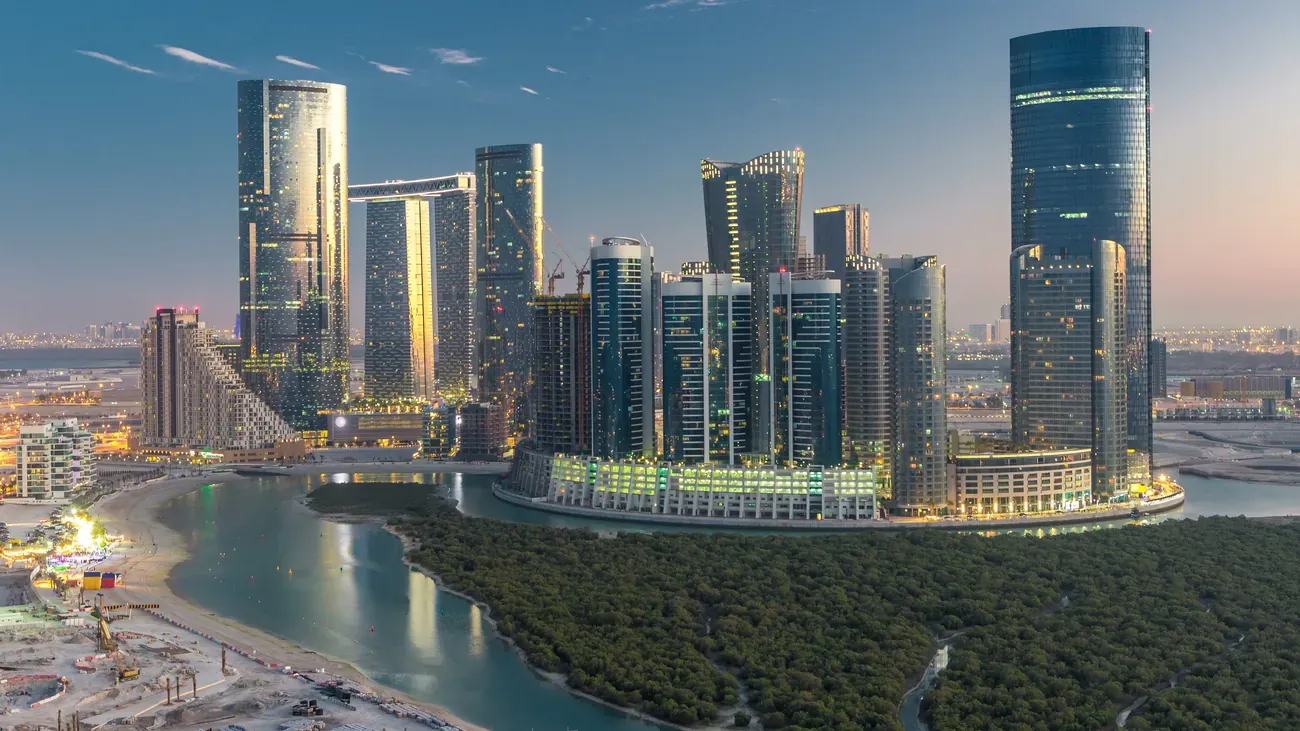
Abu Dhabi
Explore Abu Dhabi in detail. The capital, spread across islands, with the grand mosque at its gate, museums rising on Saadiyat and the theme parks of Yas next door.
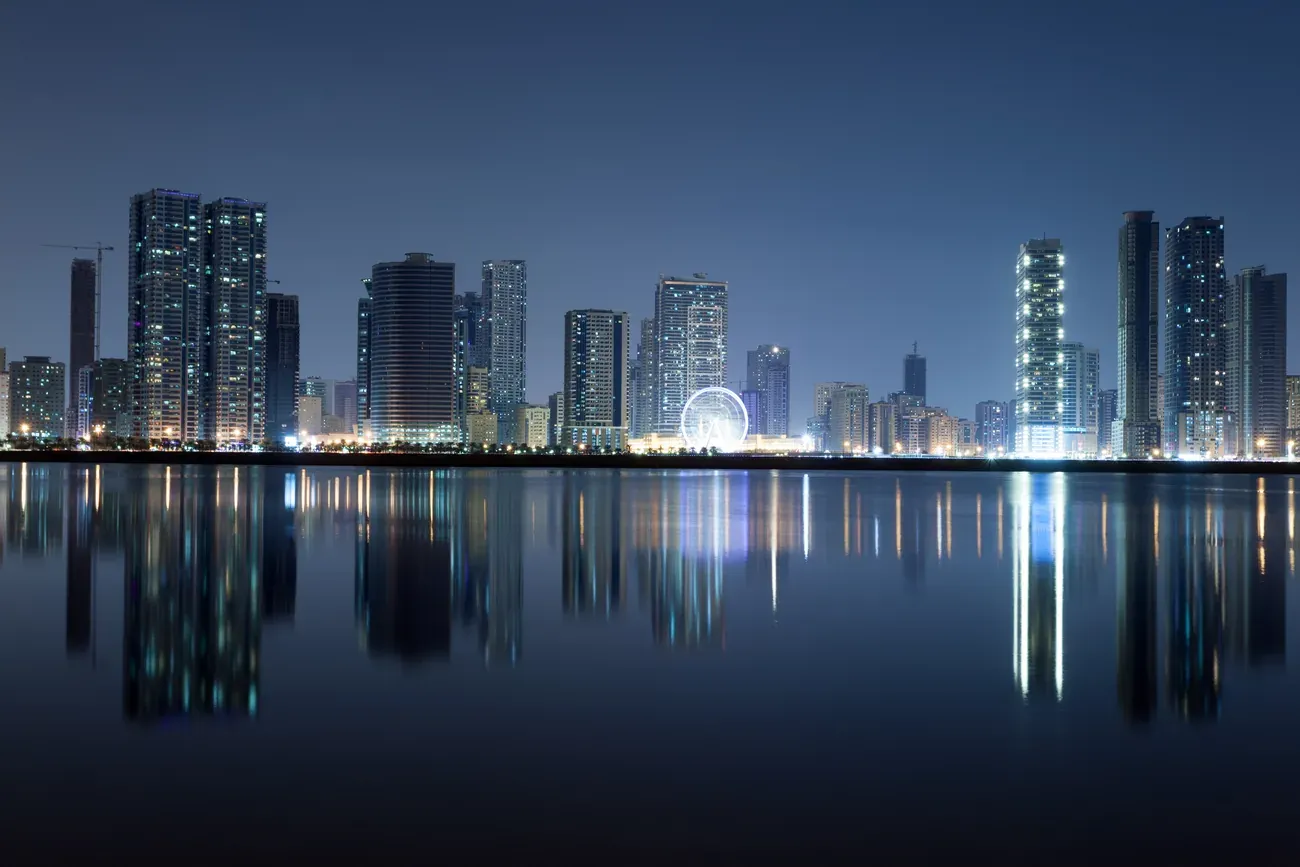
Sharjah
Explore Sharjah in detail. The third city of the federation and the one that kept its museums, with Islamic art on the creek, an arts quarter in the old houses and the aviation museum of the 1932 airport.
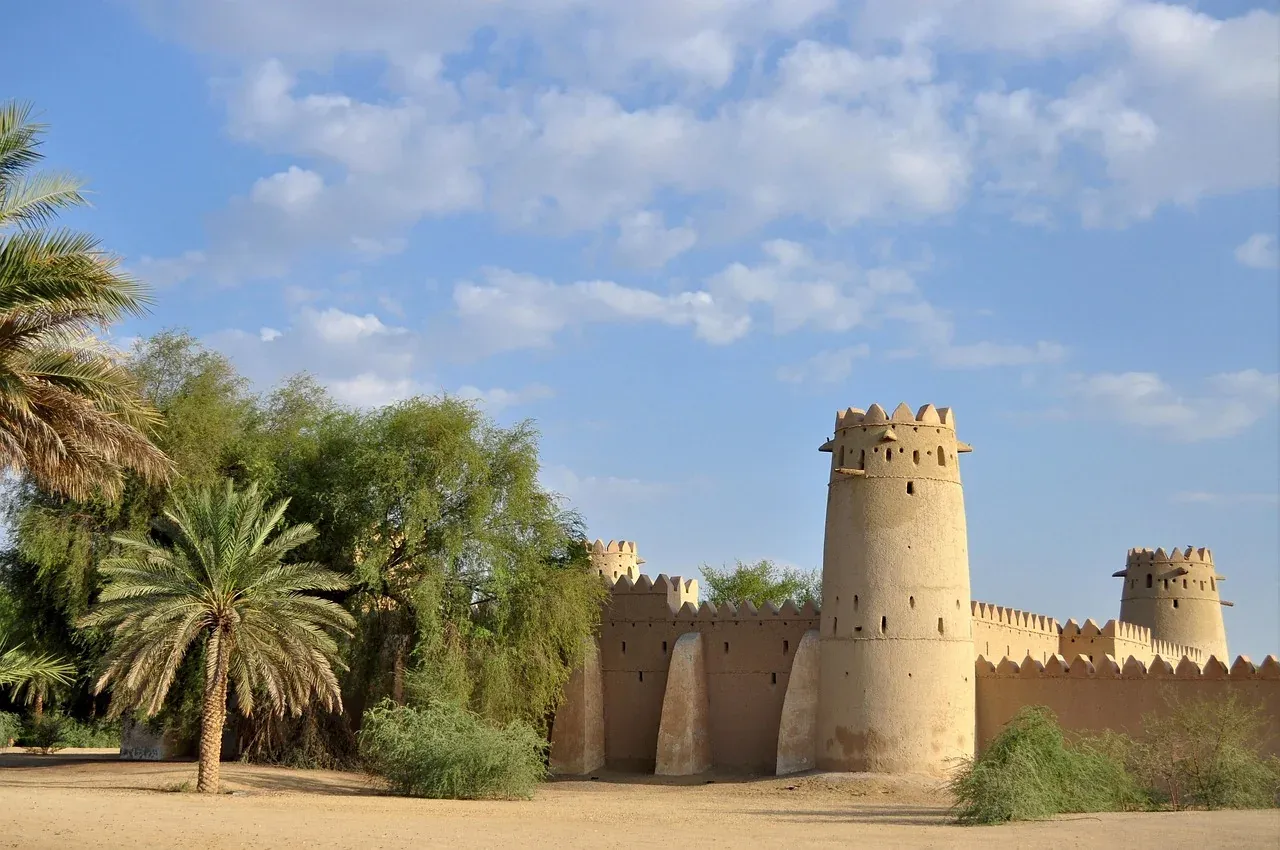
Al Ain
The garden city inland on the Omani border, built around oases and forts, with the Bronze Age tombs that brought the country its first UNESCO listing on its northern edge.
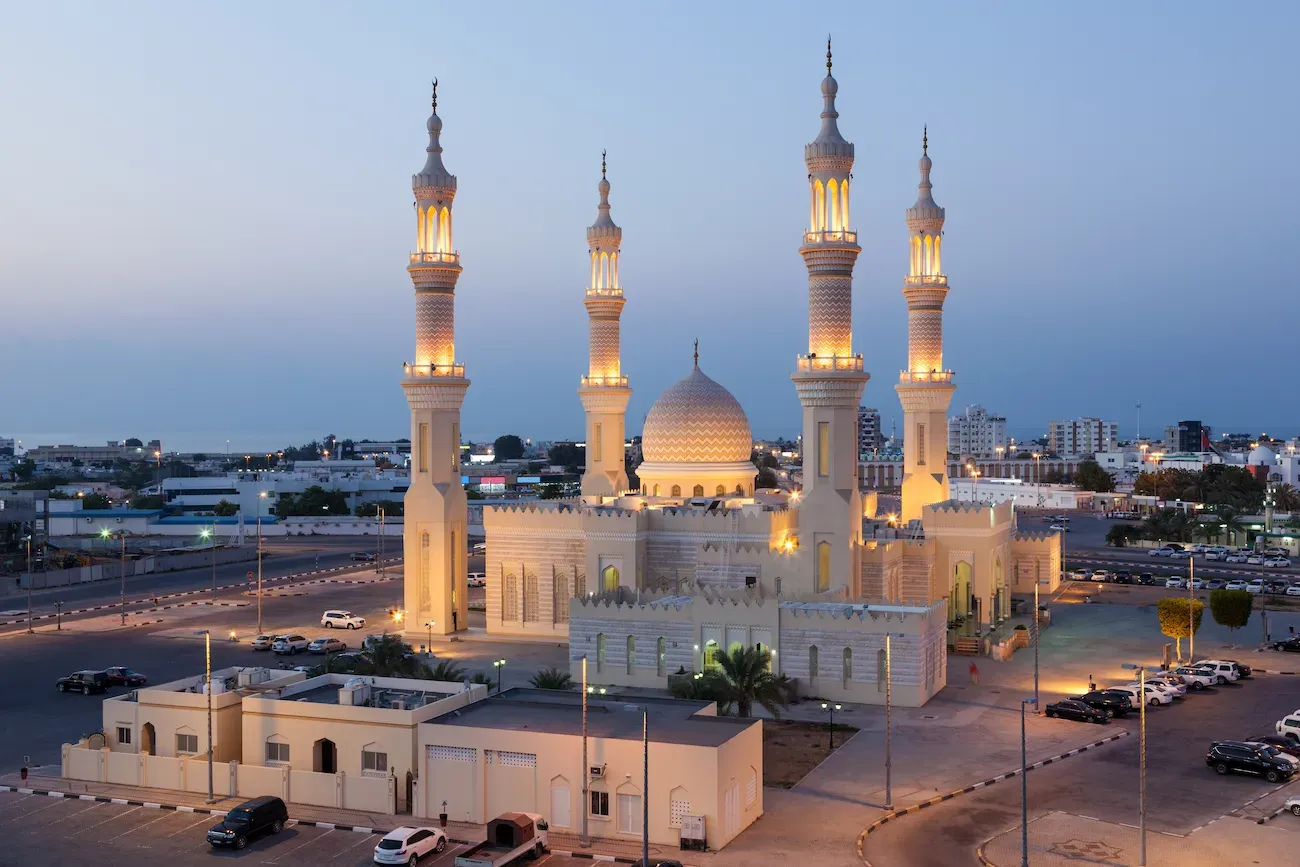
Ras Al Khaimah
The northern emirate, where the Hajar mountains rise to the highest ground in the country and an abandoned pearling town of coral stone stands on the coast south of the city.
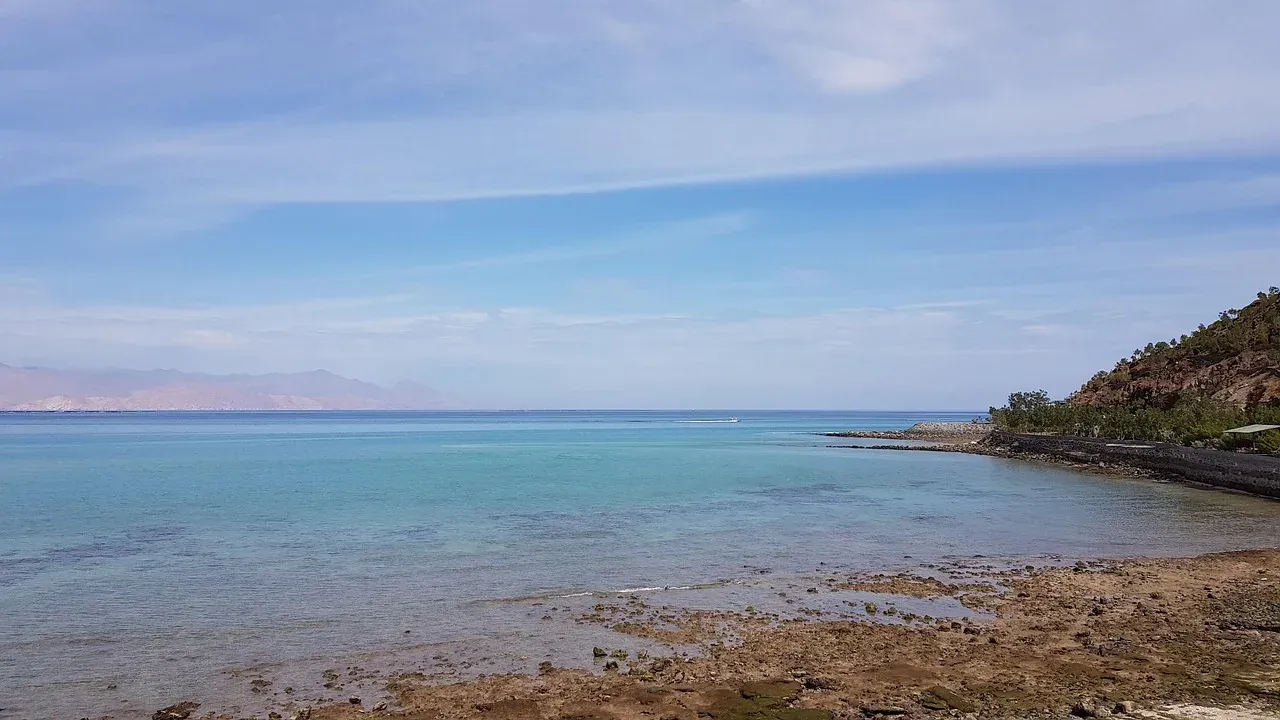
Fujairah
The only emirate facing the Gulf of Oman, with diving off the east coast, a sixteenth-century fort above the old town and the oldest mosque in the country up the road at Al Bidya.
1. Burj Khalifa
Nothing else in the Gulf announces itself like this. Skidmore, Owings and Merrill drew a tower shaped like a desert flower, three wings stepping back as it climbs, and it has held the record for the tallest building in the world since it became fully operational in 2011. It was called Burj Dubai until the morning of the opening, when the ruler renamed it for the president who had helped pay for it.
Architect: Skidmore, Owings and Merrill · Opened: 4 January 2010 · Height: 828 metres to the roof
Location: Downtown Dubai, in the emirate of Dubai
Access: Ticketed, with timed entry to the observation decks
2. Sheikh Zayed Grand Mosque
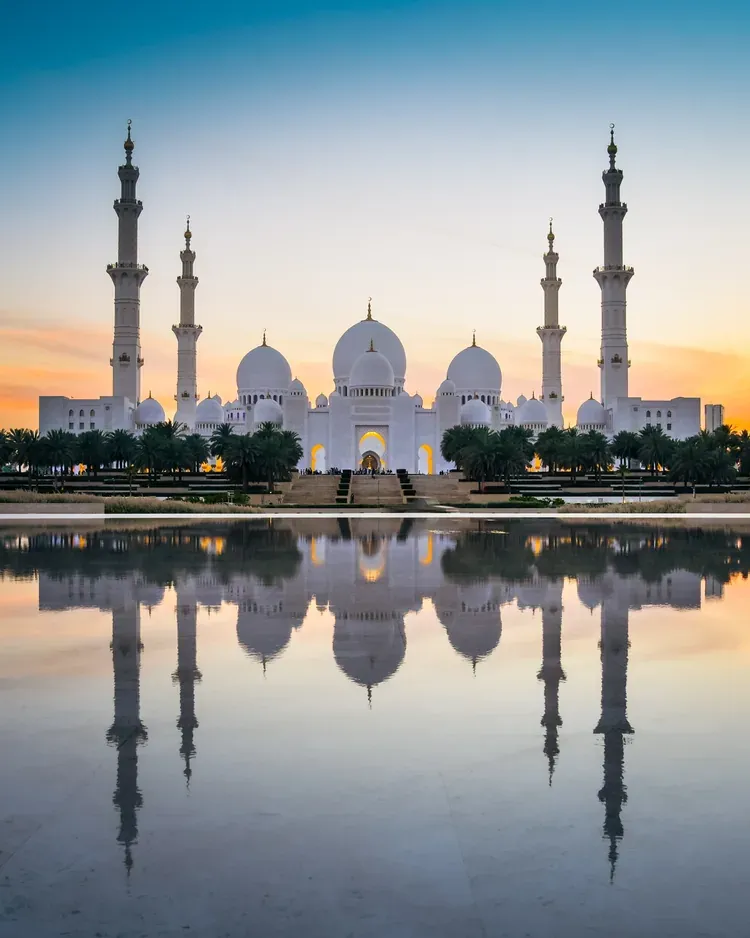
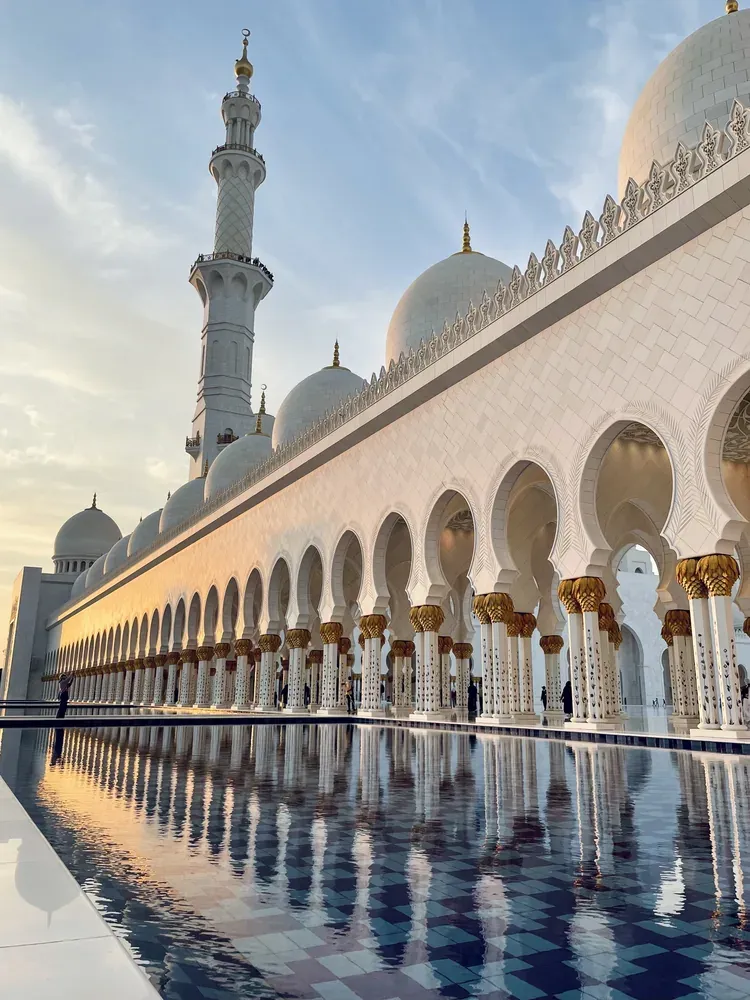
The largest mosque in the country took thirteen years to build and was inaugurated in December 2007. Sheikh Zayed bin Sultan Al Nahyan wanted the crafts of the whole Islamic world under one roof, and he is buried in the courtyard. Under the 82 domes are more than a thousand columns, gilded chandeliers and the largest hand-knotted carpet ever made. The white marble complex covers over twelve hectares.
Built: 1994 to 2007 · Design: led by the Syrian architect Youssef Abdelke
Location: Al Maqta, at the entrance to Abu Dhabi island
Access: Visitors pre-book an online access pass, and Friday has its own visiting hours around prayers
3. Dubai Mall
Even people who dislike shopping end up here, because this is the way in to the tower, the aquarium and the terraces above the fountain. It opened in November 2008 with about a thousand retailers and now counts more than 1,200 shops. Emaar recorded 105 million visits in 2023, which made it the most visited building of its kind anywhere. An aquarium tank stands three storeys high behind the walkways.
Opened: 4 November 2008 · Visits: 105 million in 2023
Location: Downtown Dubai, beside the Burj Khalifa
Access: Open to the public, with the aquarium, the rink and the tower decks ticketed separately
4. Burj Al Arab
The sail on the horizon at Jumeirah is a hotel, standing on an artificial island 280 metres off the beach and joined to the mainland by a private curving bridge. Tom Wright, of the British consultancy Atkins, gave it the outline of a dhow sail and a translucent fibreglass screen that shields the interior from the sun by day and takes coloured light at night. A helipad sits 210 metres up.
Architect: Tom Wright, Atkins · Opened: 1999 · Interiors: under restoration by Tristan Auer
Location: Umm Suqeim, off Jumeirah Beach in Dubai
Access: Seen from the public beach at Umm Suqeim; the bridge is for guests with a booking
5. Palm Jumeirah
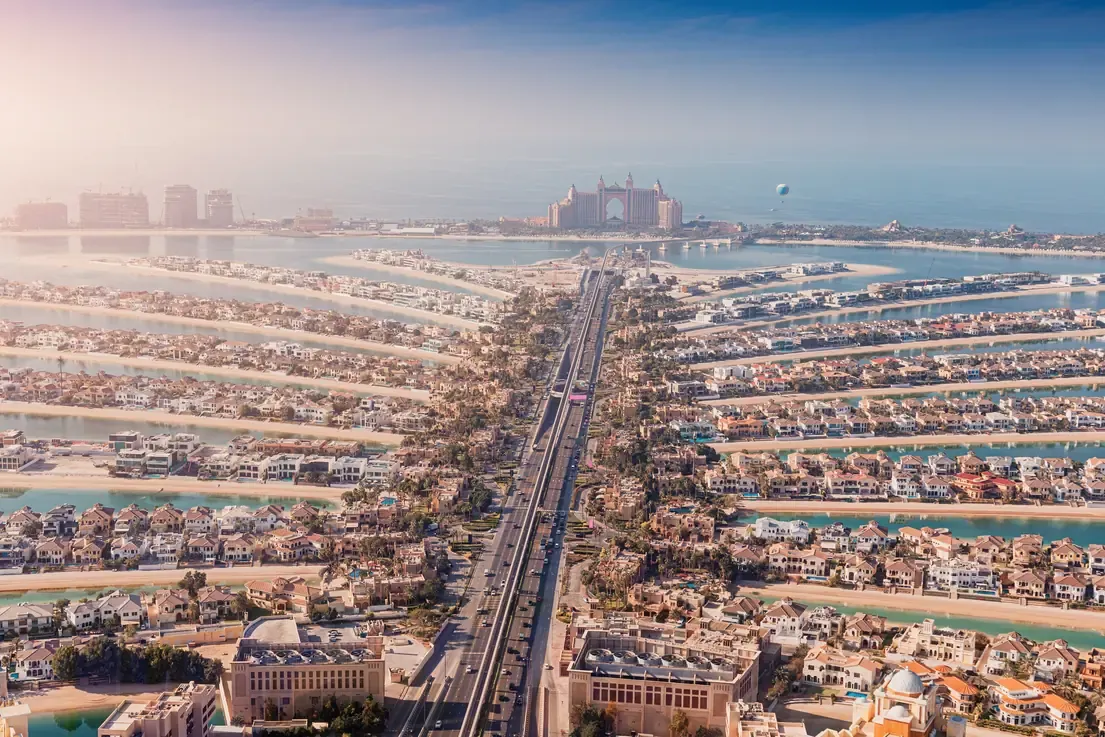
Dredgers began stacking rock and sand off the Jumeirah coast in June 2001 and kept at it until a palm tree appeared on the map. The trunk carries the roads and towers, the fronds hold villas and the outer crescent the resorts. Van Oord, the Dutch company that later built The World Islands, did the work, and more than 25,000 people now live on it.
Built: reclamation from June 2001 · Residents: more than 25,000 as of 2022
Location: Off the Jumeirah coast in Dubai
Access: Open, with a monorail running 5.4 kilometres up the trunk to Atlantis
6. Louvre Abu Dhabi
France lent the name until 2047 and Jean Nouvel built the rest, a low white town of galleries under a dome of 7,000 tonnes pierced so that sunlight drops through in what the museum calls a rain of light. Water runs between the buildings. The collection is hung by chronology rather than by civilisation, so pieces from different worlds share a room. It opened in November 2017.
Architect: Jean Nouvel · Opened: 11 November 2017 · Galleries: 8,000 square metres
Location: Saadiyat Cultural District, Abu Dhabi
Access: Ticketed
Photos of Louvre Abu Dhabi by Francesco Bini: exterior, covered courtyard and galleries (CC BY-SA 4.0).
7. Dubai Fountain
The lake at the foot of the tower is flat water for most of the day and then, after dark, it becomes the largest choreographed fountain in the world. WET Design, the company behind the Bellagio fountains in Las Vegas, laid 275 metres of jets that throw water as high as 152 metres, lit by 6,600 lights and 25 coloured projectors. It was inaugurated in May 2009 and reopened in October 2025 after its base was rebuilt.
Designer: WET Design · Opened: 8 May 2009
Location: Burj Lake, Downtown Dubai
Access: Shows run after dark from the lakeside promenade and the bridge
8. Ferrari World Abu Dhabi
Yas Island collects theme parks the way other places collect museums, and the first of them opened under a red roof in November 2010 as the first Ferrari park anywhere. Formula Rossa, the launched coaster that runs out of the building and back, held the record for the fastest roller coaster in the world from that year until Falcon's Flight opened. Mission Ferrari arrived in January 2023.
Opened: 4 November 2010 · Setting: Yas Island, beside the Yas Marina Circuit
Location: Yas Island, Abu Dhabi
Access: Ticketed, and the park is mostly indoors
Photos: "Ferrari World Abu Dhabi" by Alberto-g-rovi and again (CC BY-SA 3.0).
9. Museum of the Future
A silver ring stands on a green mound beside Sheikh Zayed Road, and the Arabic curling across its skin is a poem about the future written by the ruler of Dubai. Those letters are the windows; there are no others. Seven floors opened in February 2022 and each takes a different run at what comes next, from an orbital station to a library of engineered species.
Opened: 22 February 2022 · Floors: seven
Location: Financial District, on Sheikh Zayed Road in Dubai
Access: Ticketed, with timed entry
10. Dubai Frame
Zabeel Park holds a gilded rectangle 150 metres high and 95 wide, and the point of it is the view through: the old city and its creek on one side, the towers of the new one on the other. Fernando Donis won the competition that produced the design in 2009 and has said since that he was denied credit for it. It opened in January 2018 and takes only 200 visitors an hour, in groups of twenty.
Opened: January 2018 · Height: 150 metres
Location: Zabeel Park, Dubai
Access: Ticketed, with timed entry
11. Qasr Al Watan
The presidential palace is a working seat of government rather than a residence, and part of it has been open to visitors since March 2019. Cabinet meetings and state receptions still happen in the same building. The Great Hall sits under a dome 37 metres across, hung with a chandelier of 350,000 crystal pieces, and the library holds more than 50,000 books on the history of the country.
Completed: 2017 · Opened to visitors: 11 March 2019
Location: Ras Al Akhdar, Abu Dhabi
Access: Ticketed
12. Jebel Jais
An hour inland from the Gulf the ground rises into the Hajar mountains, bare grey limestone with almost no soil on it, and a road hairpins 36 kilometres up. The summit at 1,934 metres stands on the Omani side of the border, while the highest ground in the Emirates lies just west of it at 1,892 metres. Viewing platforms near the top look straight down the canyons.
Height: 1,892 metres at the highest point in the country · Range: north-western Hajar
Location: Ras Al Khaimah, on the border with Oman
Access: Open, with a paved road, parking and platforms near the top
Photos: "View of the mountains, Jebel Jais, Ras al Khaimah" by Tashmetova808 and a second view (CC BY-SA 4.0).
Famous places to see in the United Arab Emirates
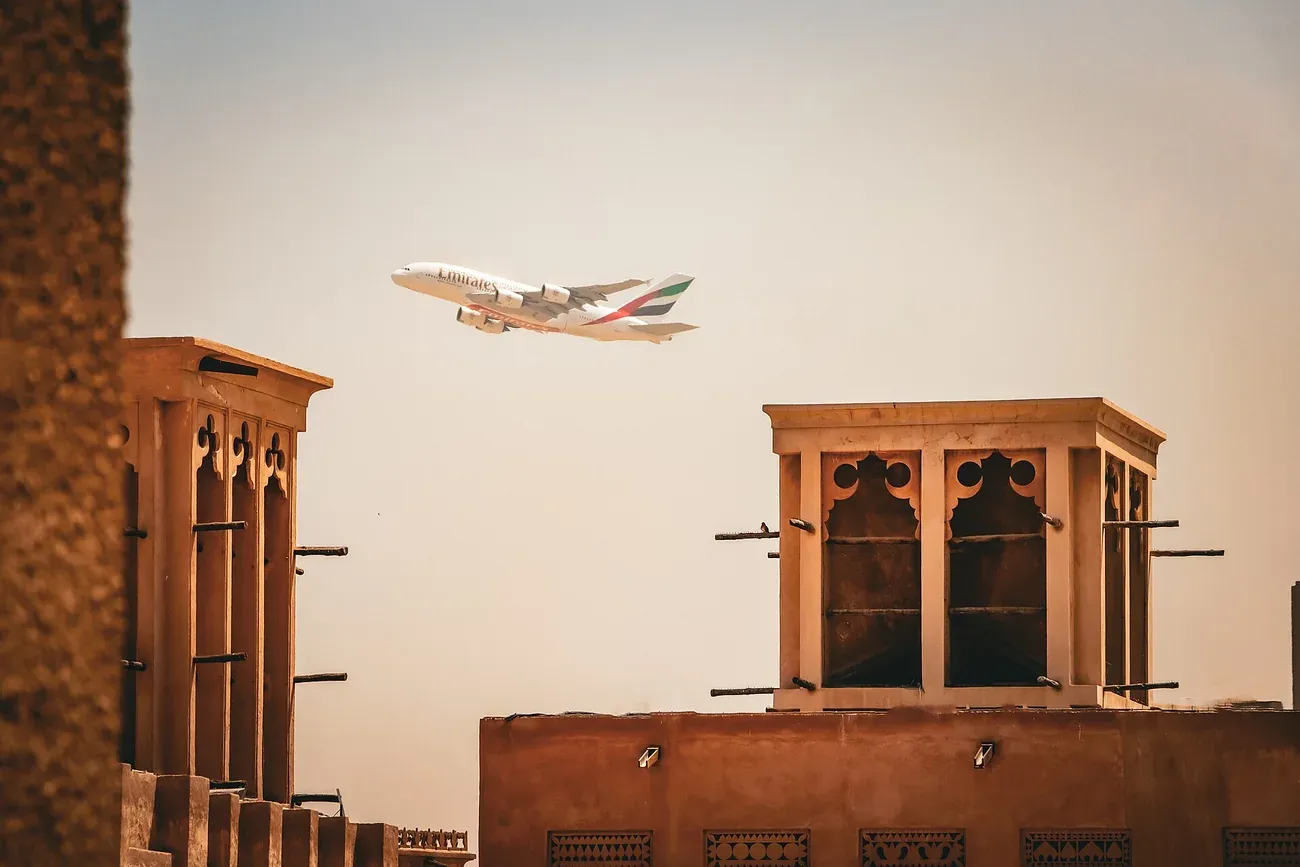
Al Fahidi Historical Neighbourhood
Coral and gypsum houses under wind towers, built from the 1890s by Persian merchants from Bastak and saved after a demolition order in 1989.
Location: Bur Dubai, beside the creek in Dubai
Photo: "Al Fahidi Historical Neighbourhood, Dubai" by Delta.jpg (CC BY-SA 4.0).
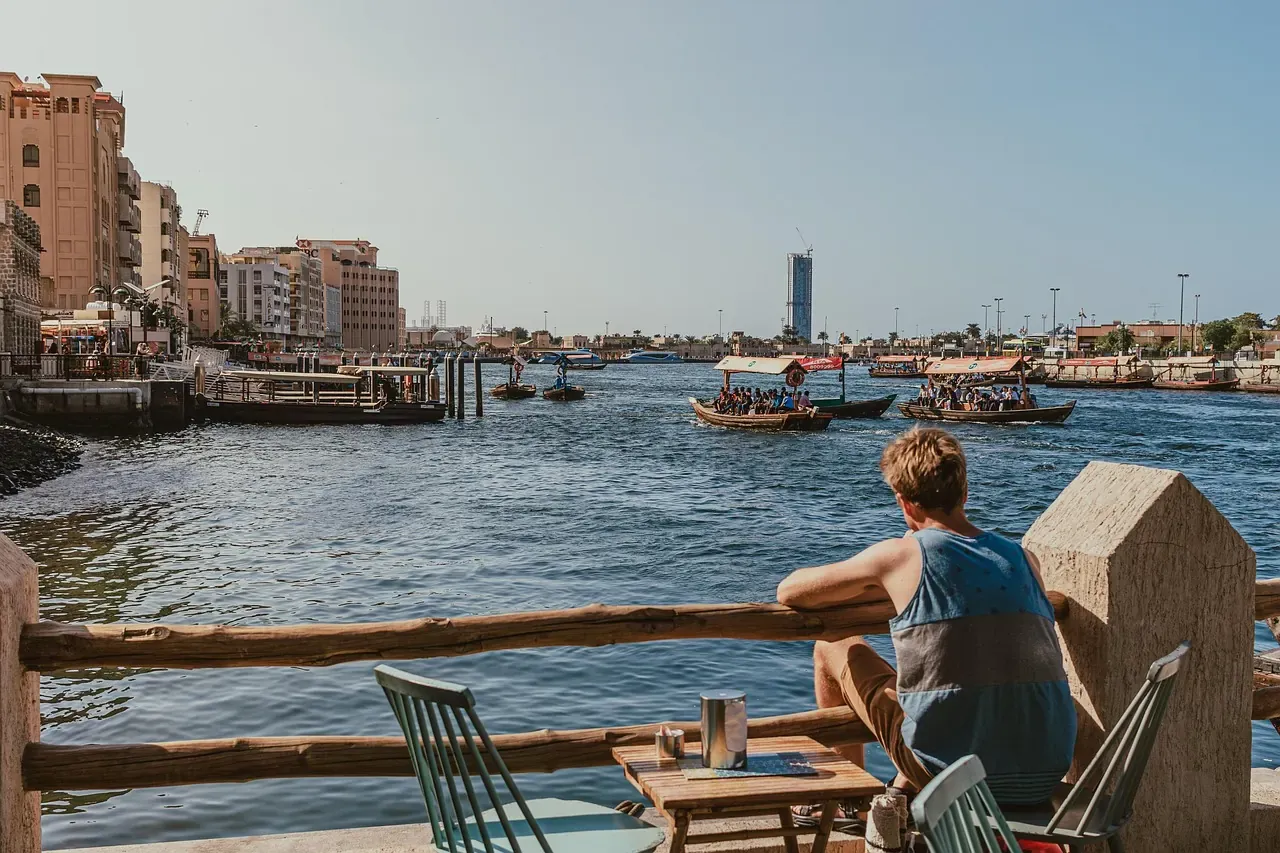
Dubai Creek
The saltwater inlet that made the city, fourteen kilometres of it, still crossed by wooden abras between the souks of Deira and Bur Dubai.
Location: Between Deira and Bur Dubai
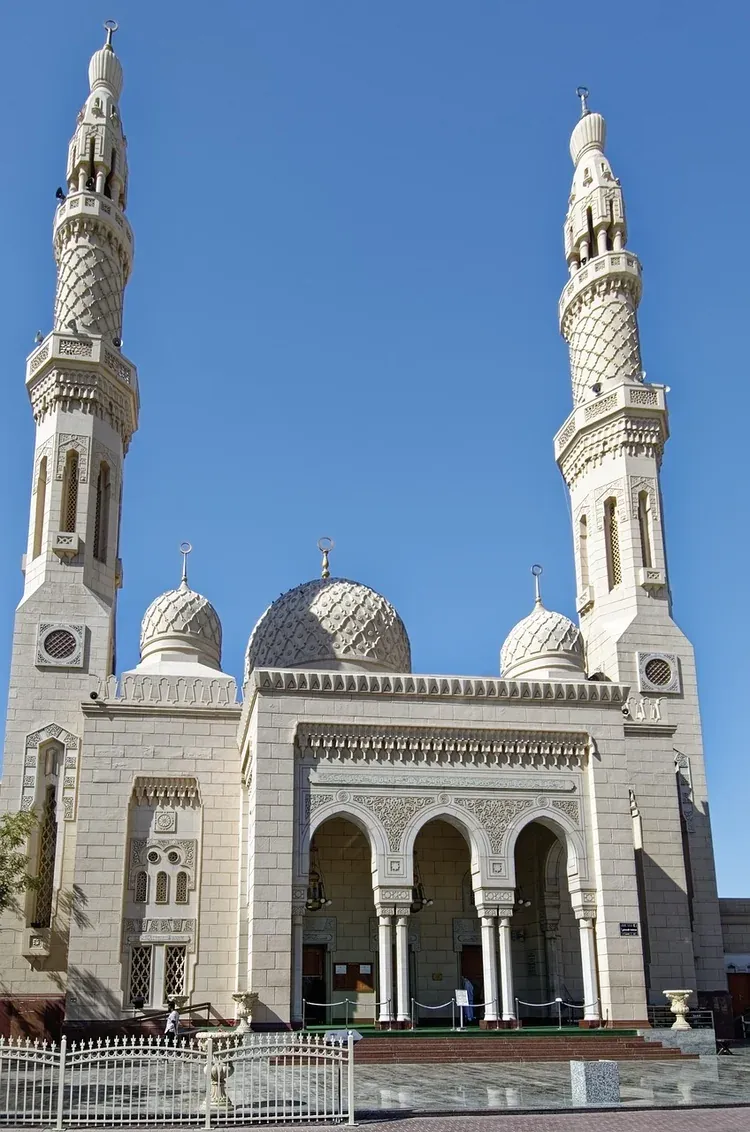
Jumeirah Mosque
Opened in 1979 in Fatimid and Mamluk styles, and one of the few mosques in Dubai that non-Muslims may enter, on a guided visit.
Location: Jumeirah Beach Road, Dubai
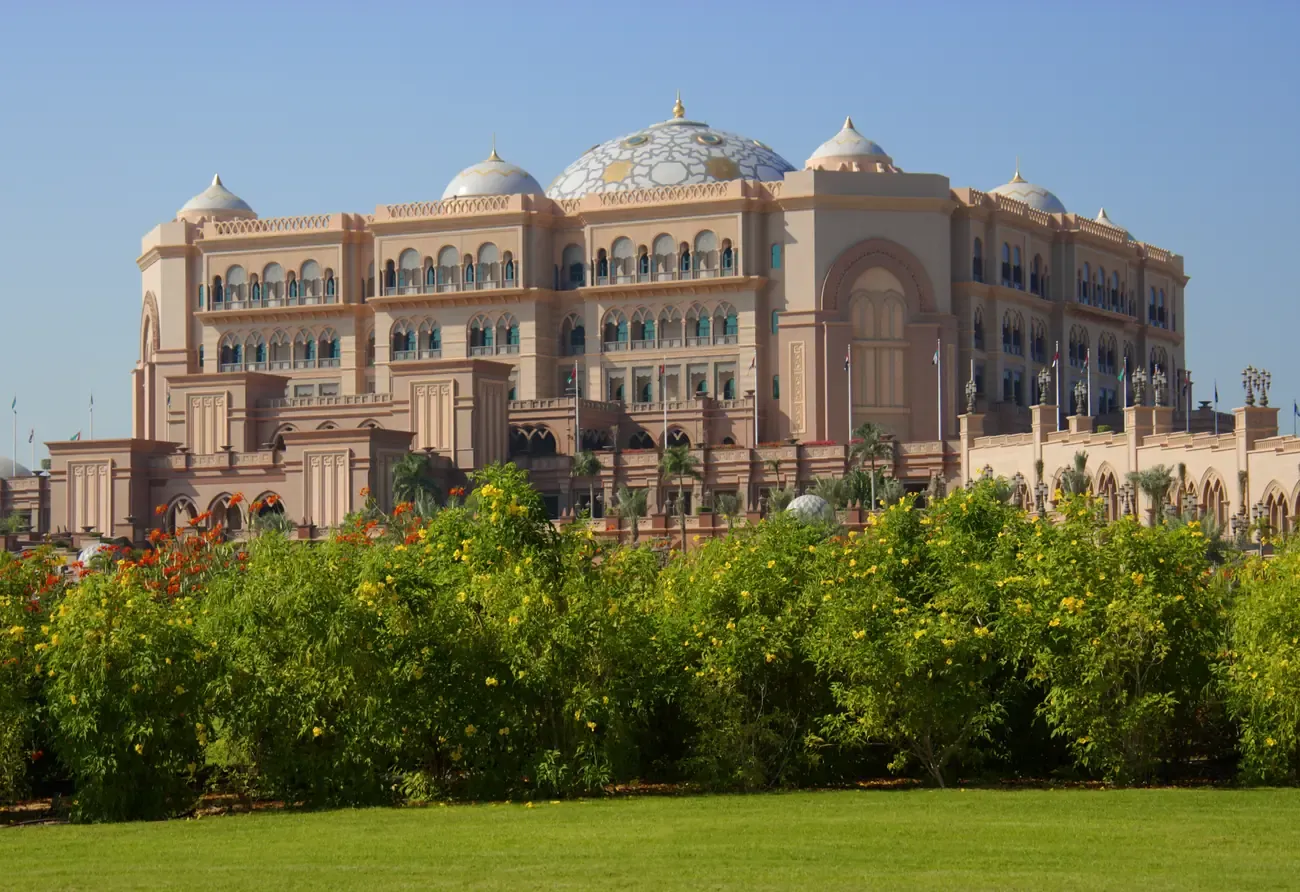
Emirates Palace
A hotel with a central dome and 114 smaller ones in sand-coloured stone, designed by WATG around Islamic geometry and opened in 2005.
Location: Ras Al Akhdar, on the Corniche in Abu Dhabi
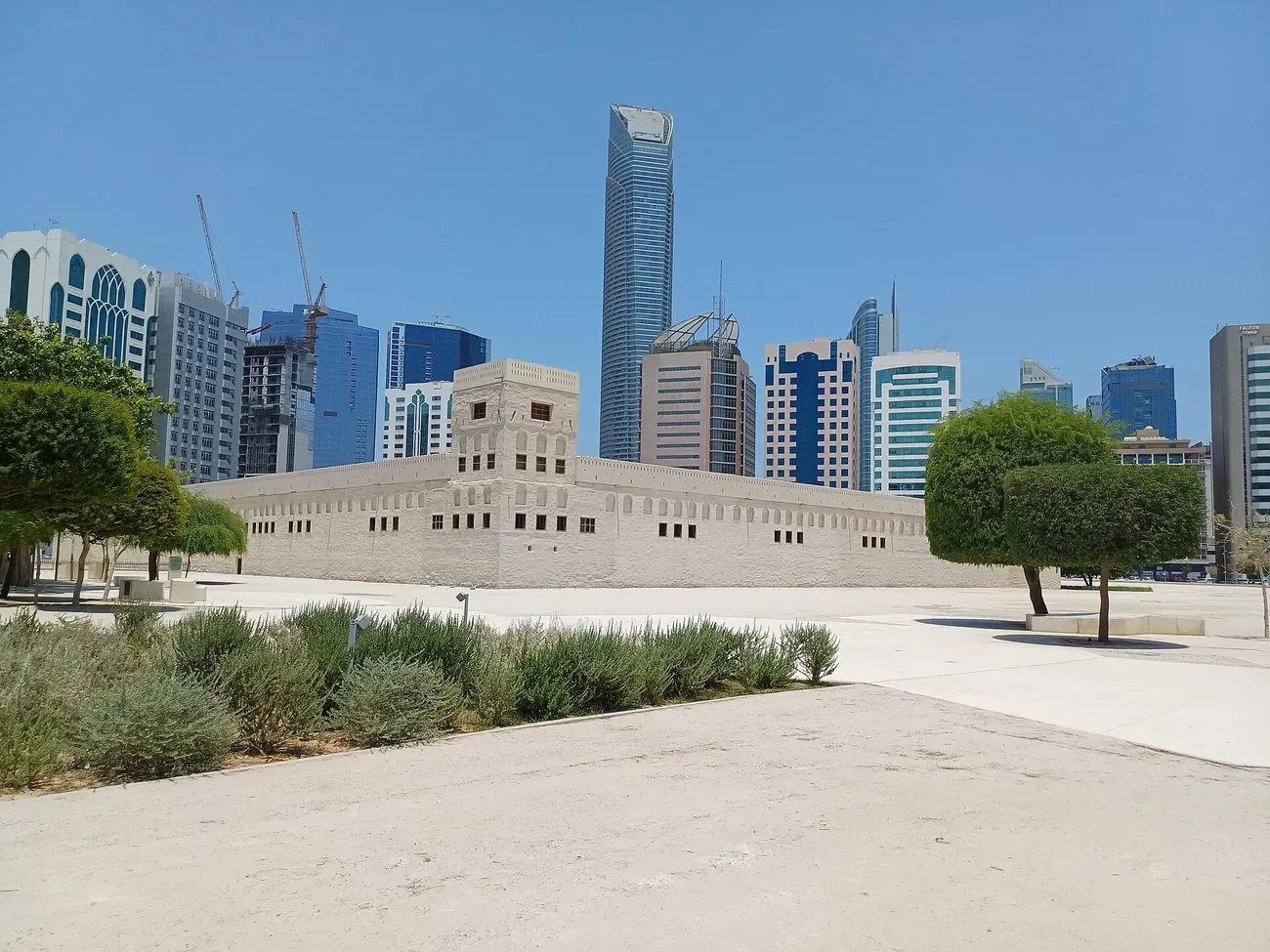
Qasr Al Hosn
The oldest stone building in the capital, begun in 1761 as a watchtower over the island's only freshwater well and later the ruler's home.
Location: Al Hosn, central Abu Dhabi
Photo: "Qasr al-Hosn" by Radoslaw Botev (CC BY 3.0 PL).
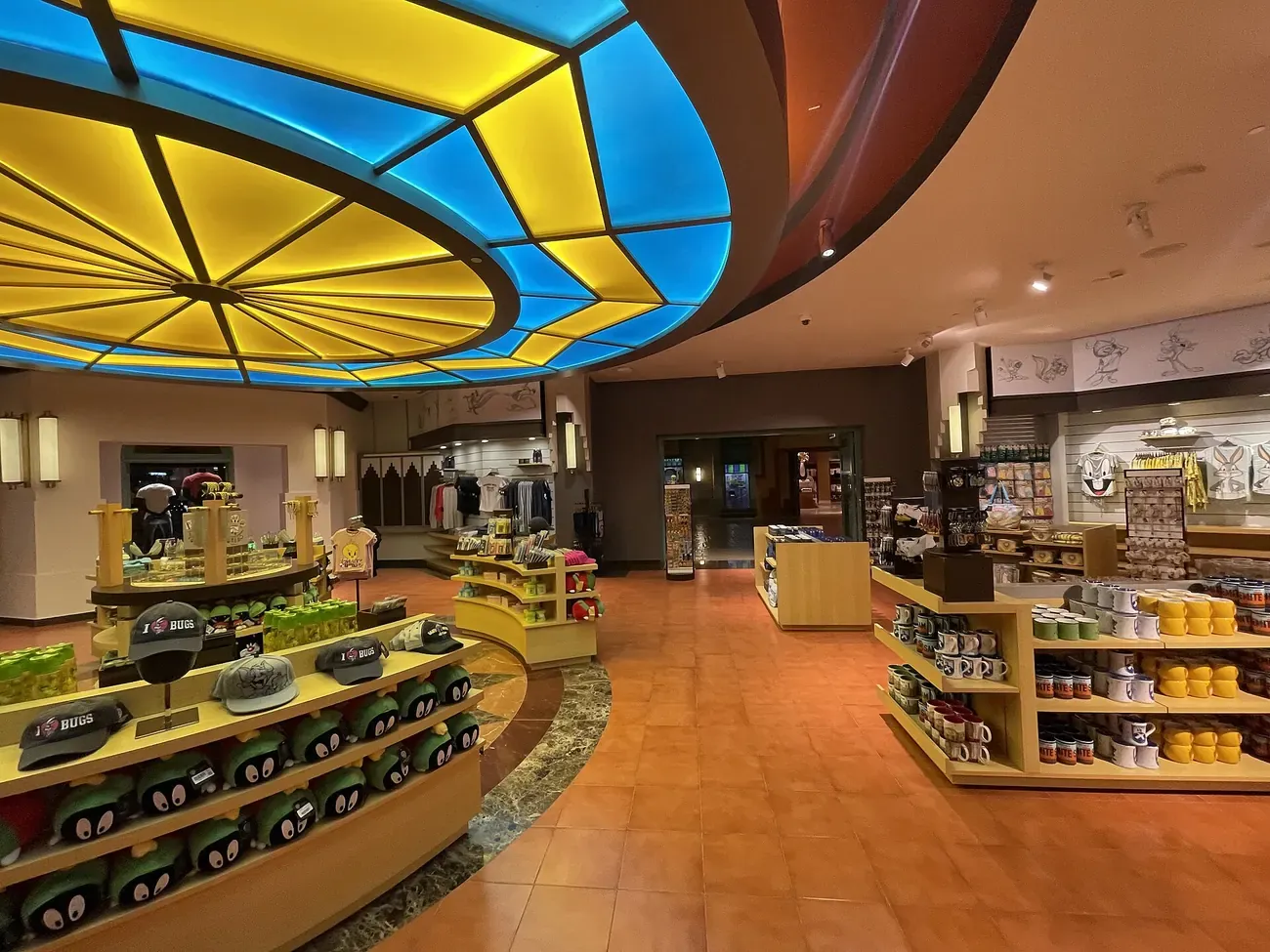
Warner Bros World Abu Dhabi
An indoor park with 29 rides and shows built around Looney Tunes, Tom and Jerry, Batman and Scooby-Doo, developed by Miral on Yas Island.
Location: Yas Island, Abu Dhabi
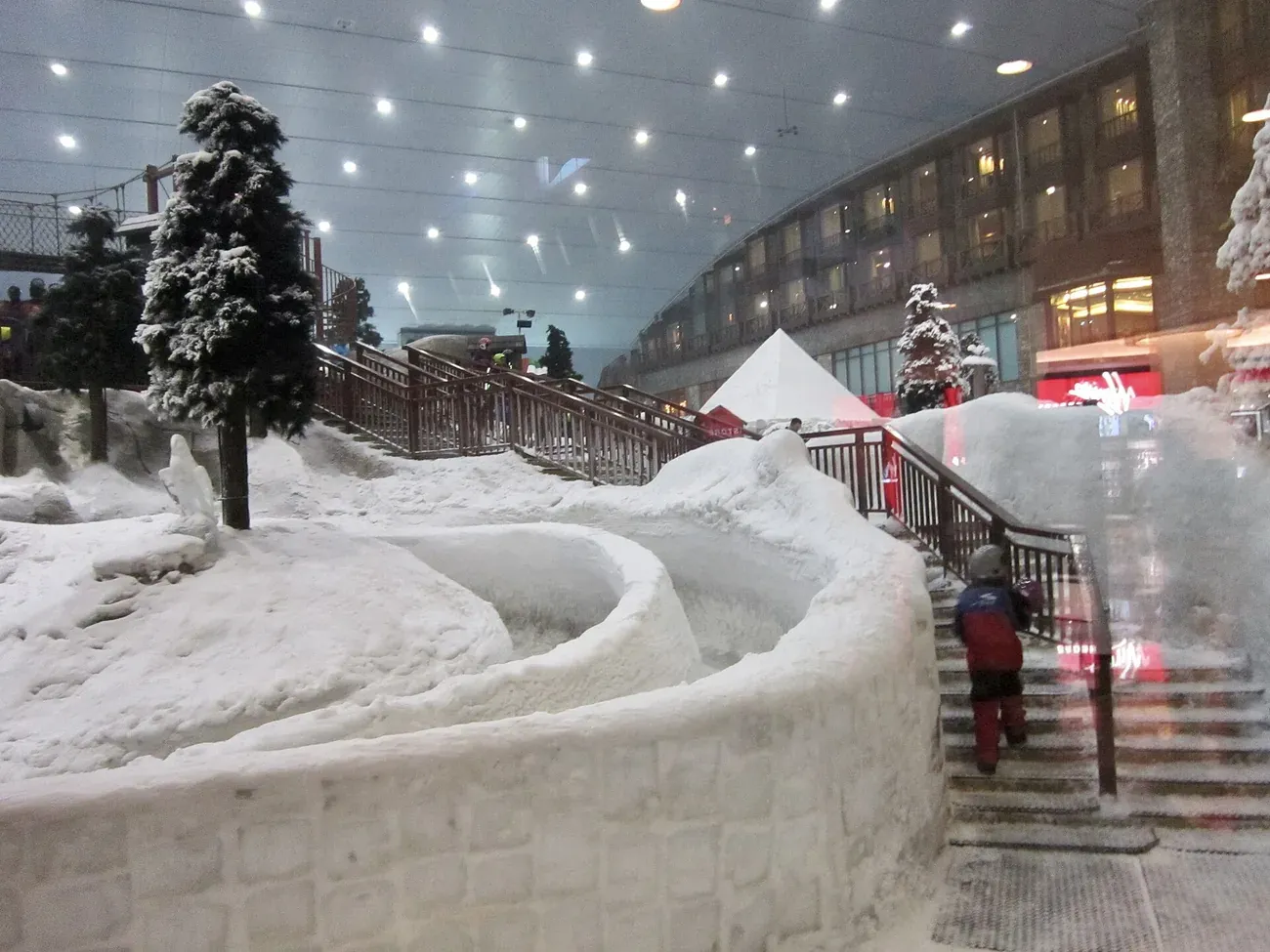
Ski Dubai
An indoor resort inside Mall of the Emirates held between minus one and two degrees, with five slopes and the first indoor black run.
Location: Mall of the Emirates, Al Barsha, Dubai
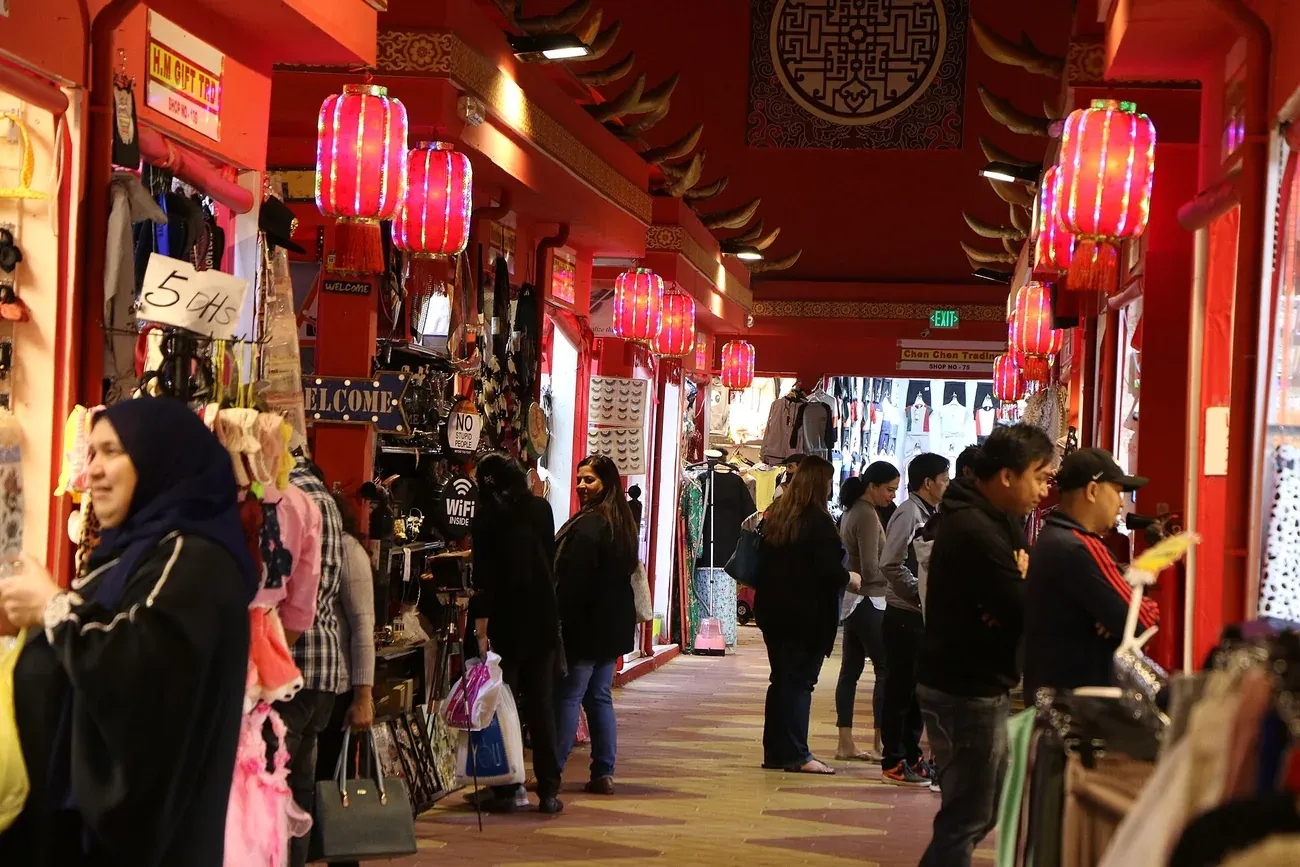
Global Village
Country pavilions with stalls, food and shows, open only in the cool months. The next season starts in October 2026.
Location: Sheikh Mohammed Bin Zayed Road, Dubai
Photo: "Streets of Global Village" by Naseernaranat (CC BY-SA 4.0).
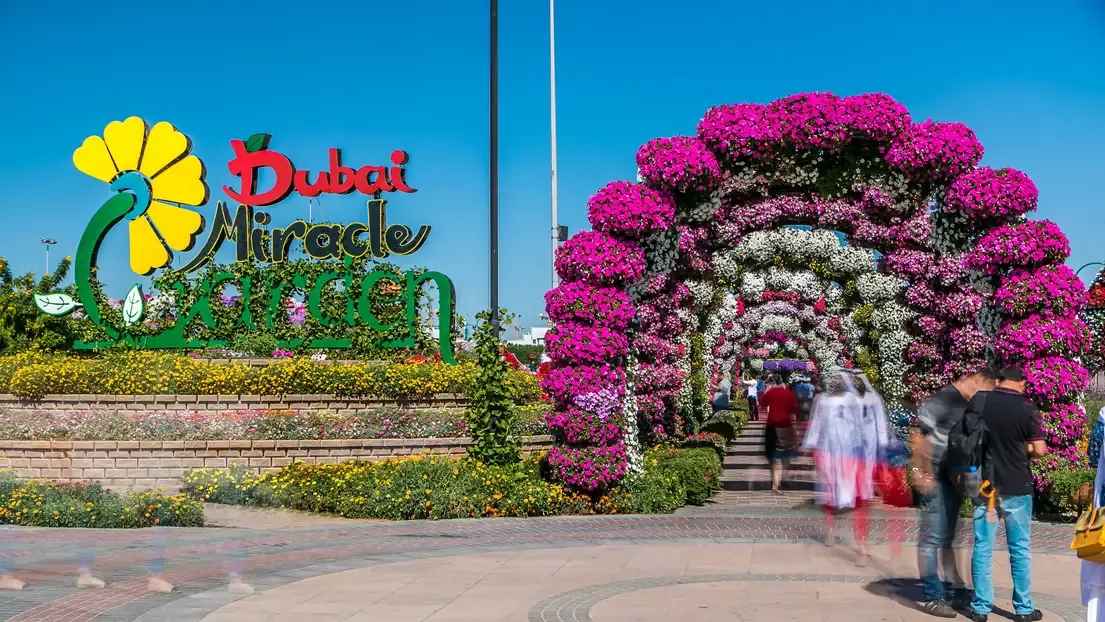
Dubai Miracle Garden
Over 72,000 square metres of flower beds shaped into arches, castles and a full-size aircraft. The garden opens seasonally, so check before travelling.
Location: Al Barsha South, Dubailand, Dubai
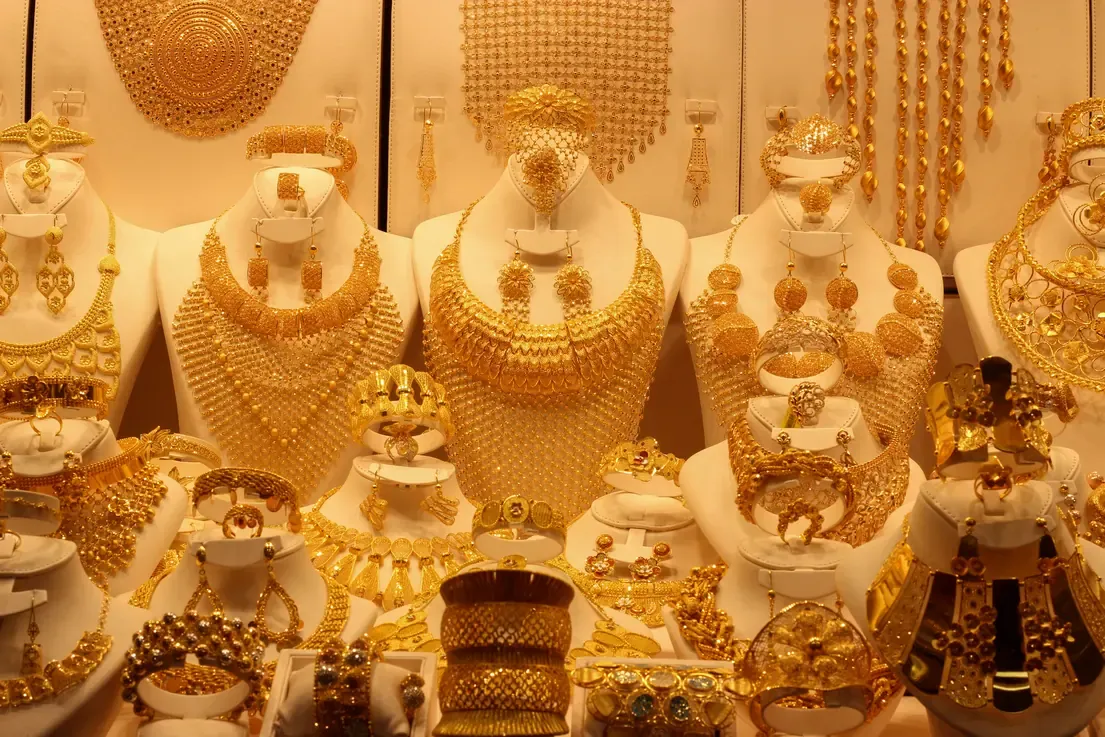
Dubai Gold Souk
Rows of shopfronts in Deira stacked with gold and jewellery, described as the largest indoor gold market in the world.
Location: Deira, north of Dubai Creek
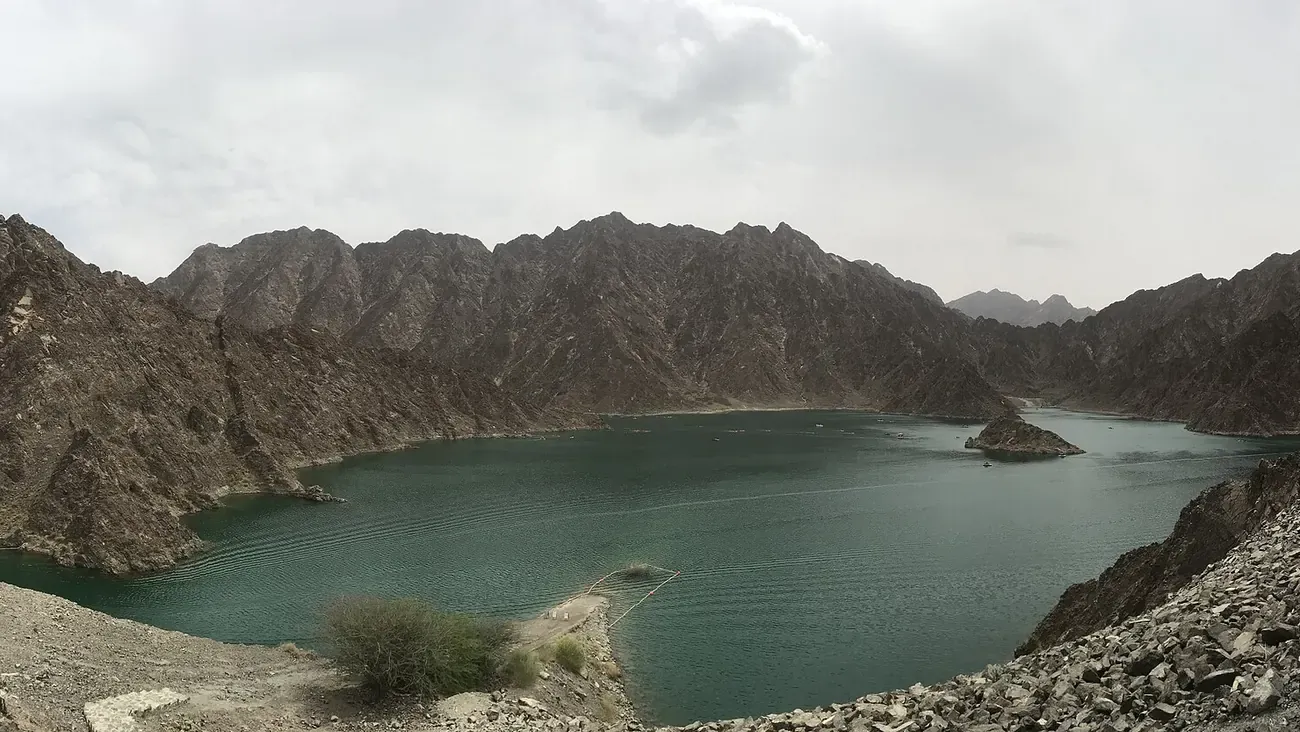
Hatta
An exclave of Dubai in the Hajar mountains, transferred from Oman around 1850, with a dam reservoir below the peaks and a rebuilt heritage village.
Location: Hatta, 134 kilometres east of Dubai
Photo: "Hatta Dam" by Gokul Venugopal (CC BY-SA 4.0).
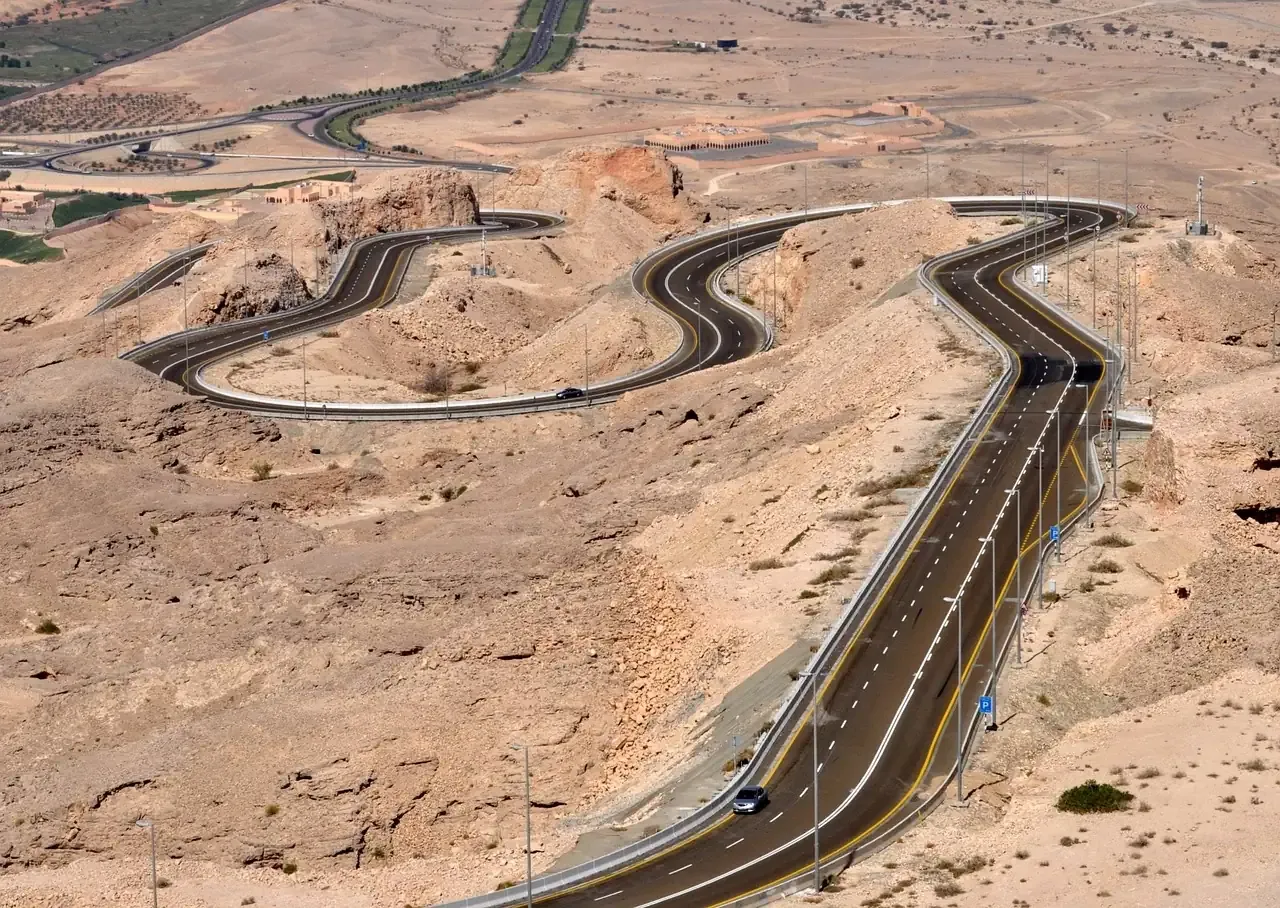
Jebel Hafeet
A mountain on the Omani border above Al Ain, climbed by a road of switchbacks, with Bronze Age beehive tombs scattered at its foot.
Location: South of Al Ain, in the emirate of Abu Dhabi
What to eat in the United Arab Emirates
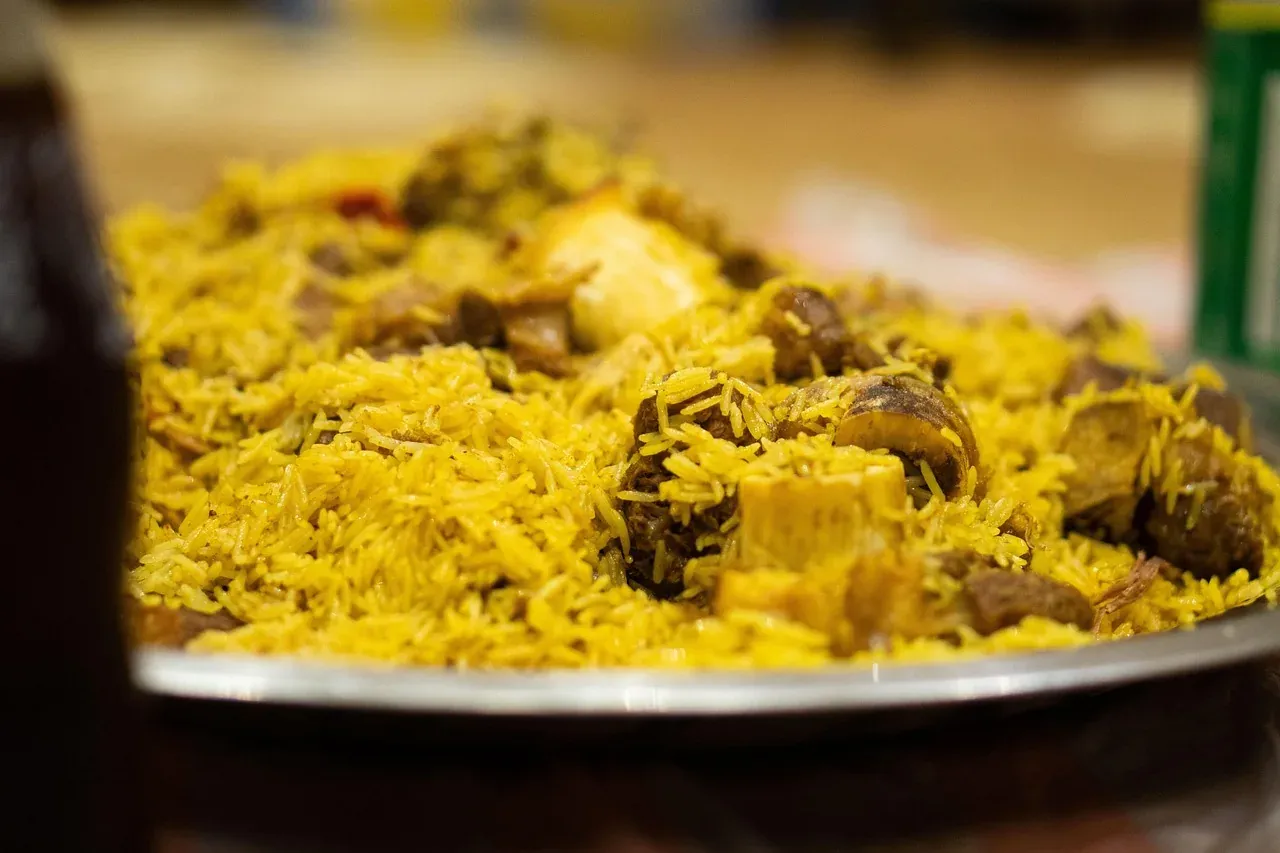
Machboos
Rice cooked in one pot with meat or fish, dried lime, cinnamon and saffron, then served in a mound with the meat on top. Emiratis call it machboos; the same preparation is kabsa across the rest of Arabia.
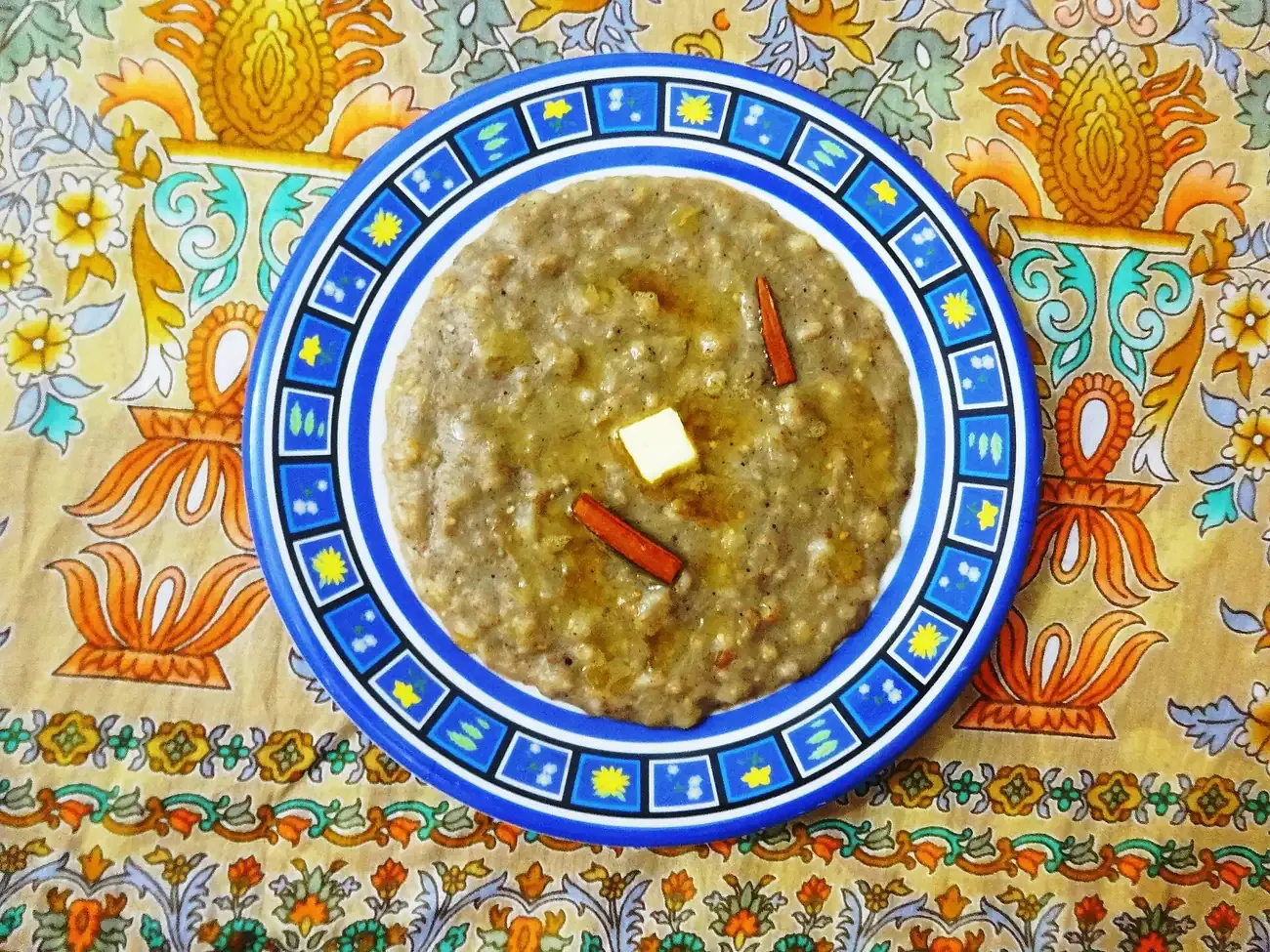
Harees
Wheat and meat simmered for hours and beaten to a smooth porridge, finished with ghee. It belongs to Ramadan, to weddings and to Eid, and it is judged on texture alone.
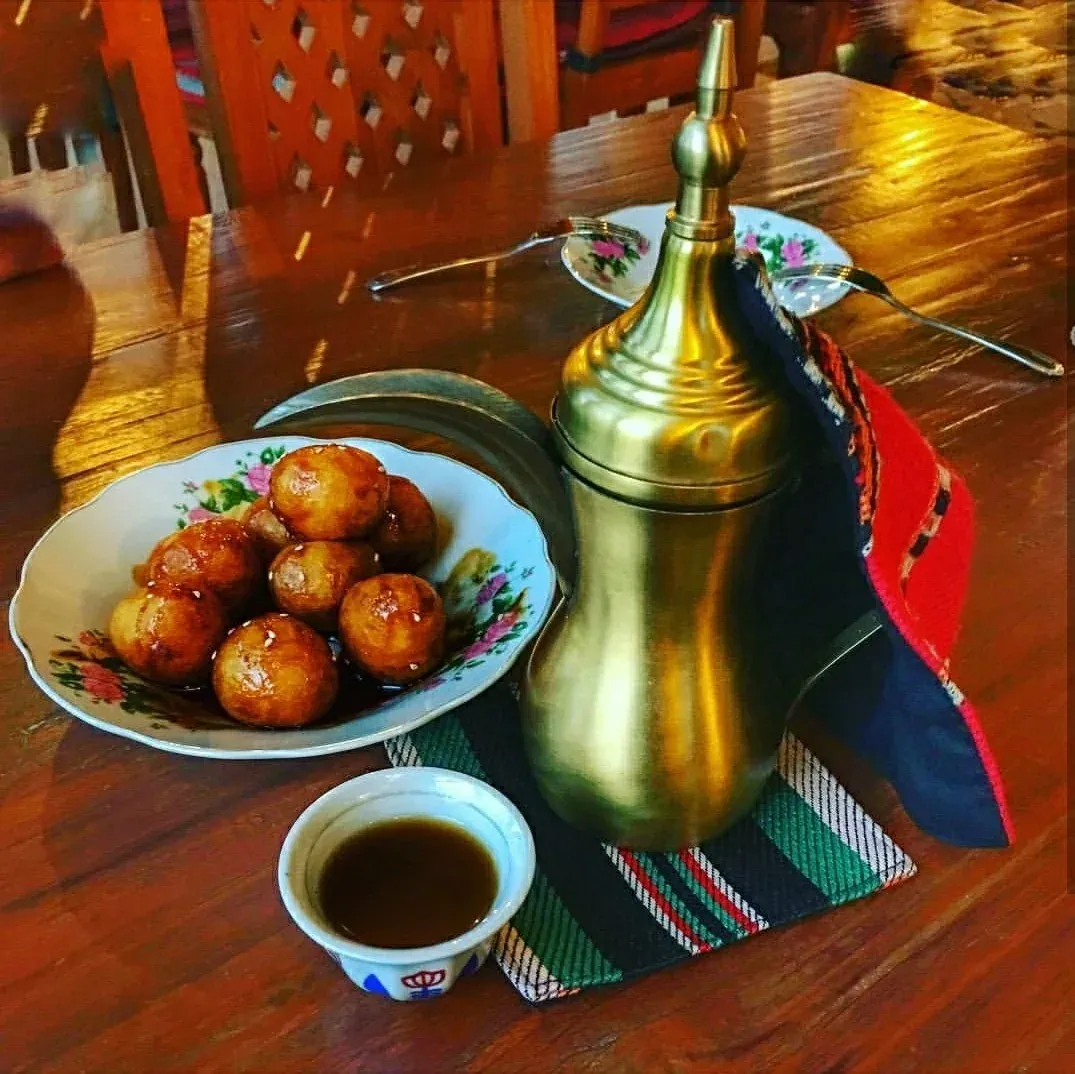
Luqaimat
Dumplings of yeasted batter fried until the crust cracks, then soaked in date syrup and scattered with sesame. The dessert that turns up at every Emirati gathering and in the Ramadan tents.
Photo: "Luqaimat" by Wikiemirati (CC BY-SA 4.0).

Balaleet
Vermicelli sweetened with cardamom, saffron and rose water and served under a thin savoury omelette. It is breakfast, and it is the country's best argument for eating sugar and eggs together.
Photo: "Balaleet plate, 2018" by Droodkin (CC BY-SA 4.0).

Gahwa and dates
Coffee brewed pale with cardamom, poured from a long-spouted dallah into small handleless cups and drunk with dates. With camel milk, these are the old staples of the peninsula.
Museums worth the detour in the United Arab Emirates


.JPG)
.JPG)


.jpg)


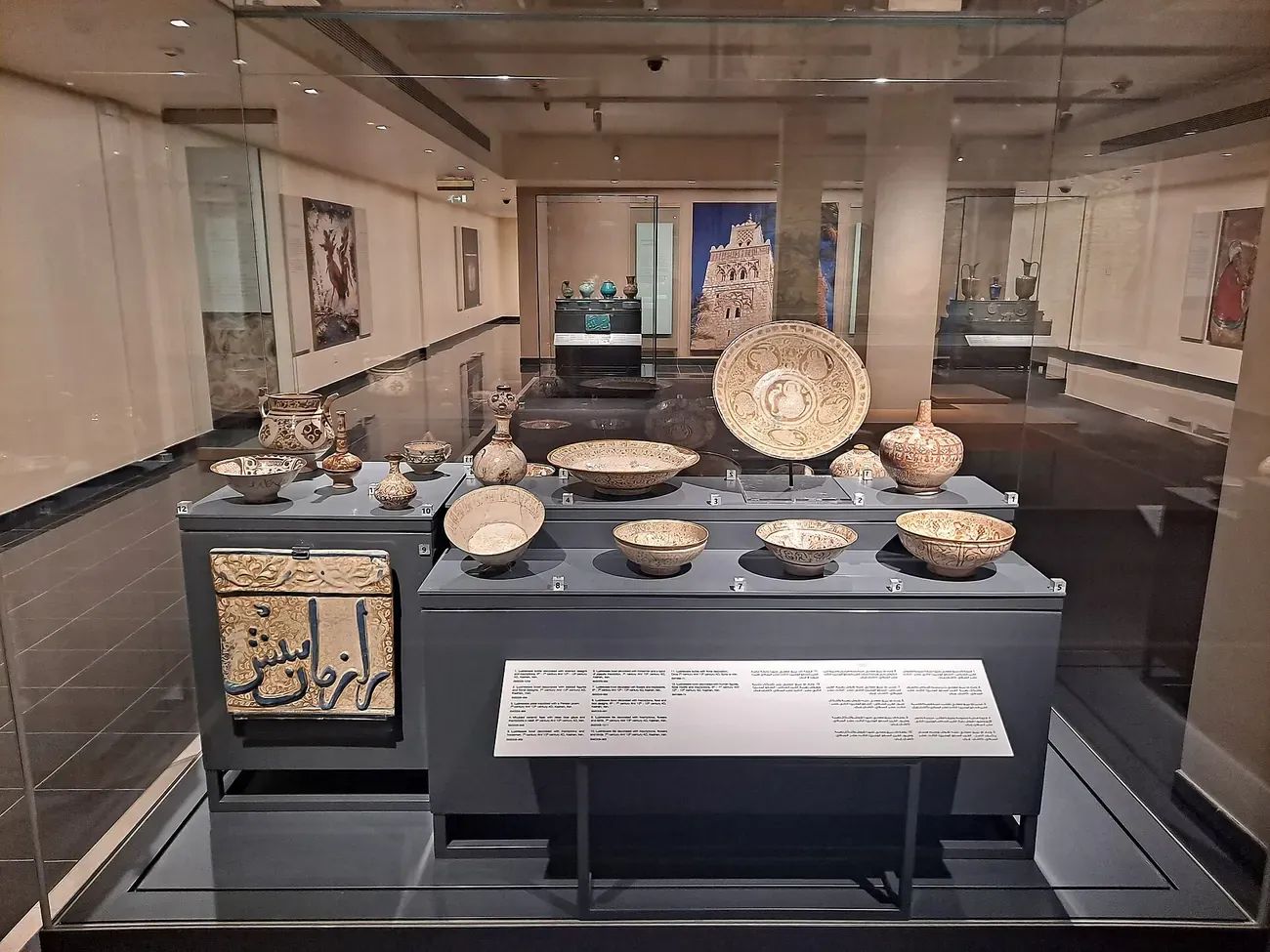
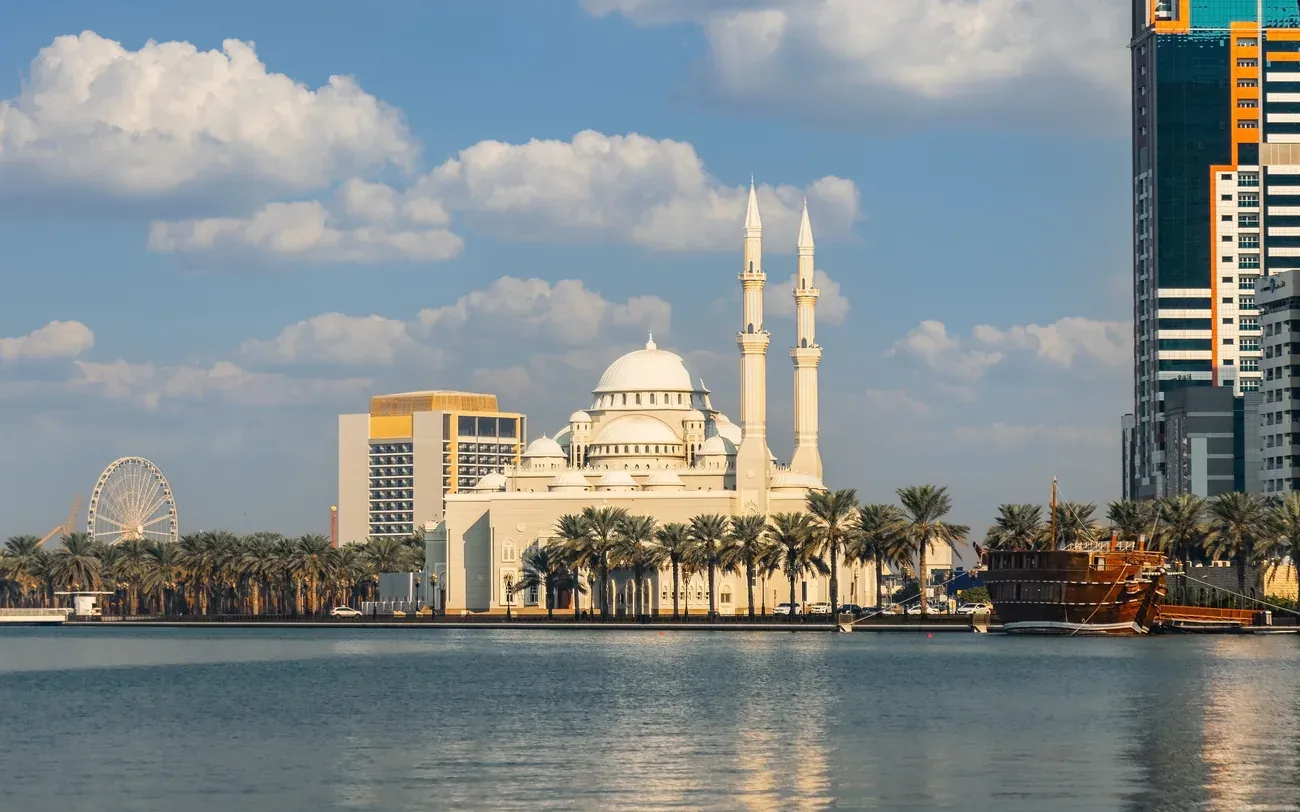
Sharjah Museum of Islamic Civilization
A converted souq on the creek holds more than 5,000 objects, from calligraphy and coins to scientific instruments, under a golden dome.
Location: Al Majarrah, on the corniche in Sharjah

Al Mahatta Museum
Imperial Airways stopped here from 1932 on the route to India, and the rest house and hangar now hold the aircraft that used it.
Location: Al Mahatta, central Sharjah
Photo: "Heron and Comet nose, Al Mahatta Aviation Museum, Sharjah" by Alan Wilson (CC BY-SA 2.0).
.jpg)
Ancient sites in the United Arab Emirates
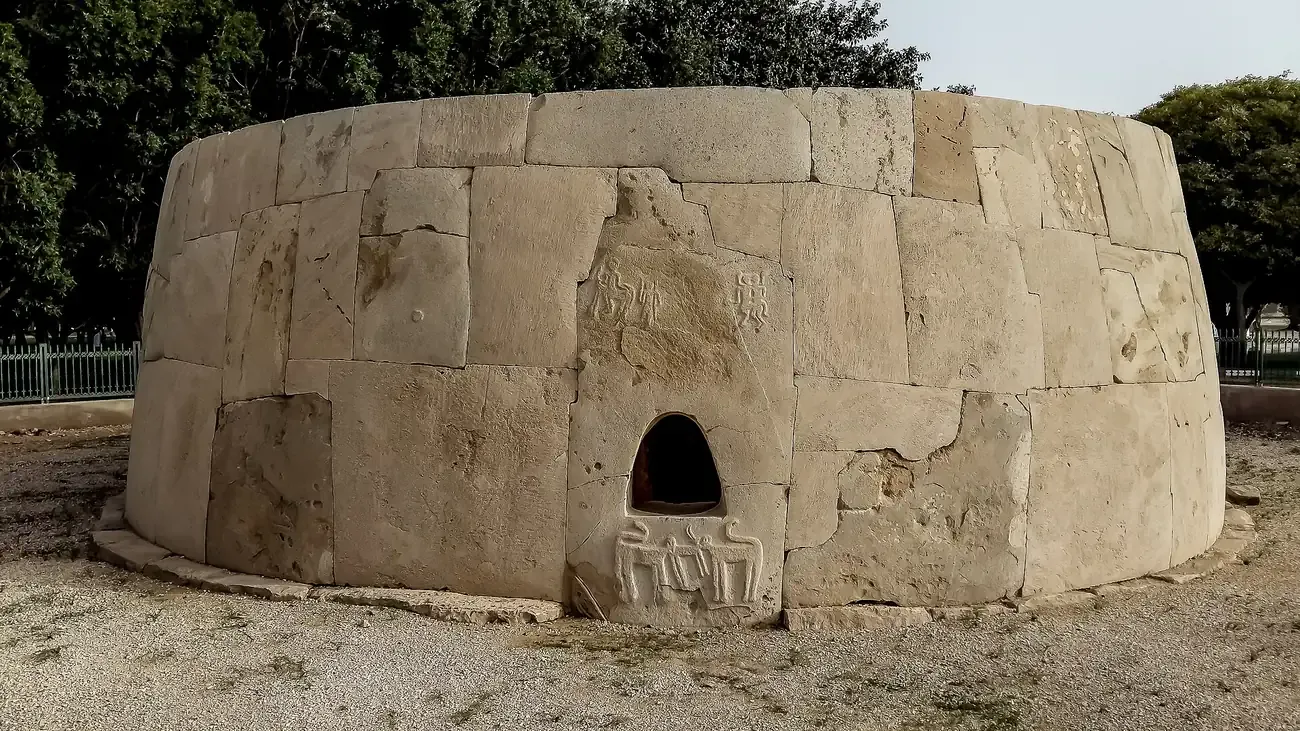
Hili Archaeological Park
The largest Bronze Age site in the country, with a round tomb twelve metres across rebuilt from its own stones and an Iron Age falaj.
Location: Hili, north of Al Ain
Photo: "Hili Grand Tomb" by Sunilkumar Nair (CC BY-SA 4.0).

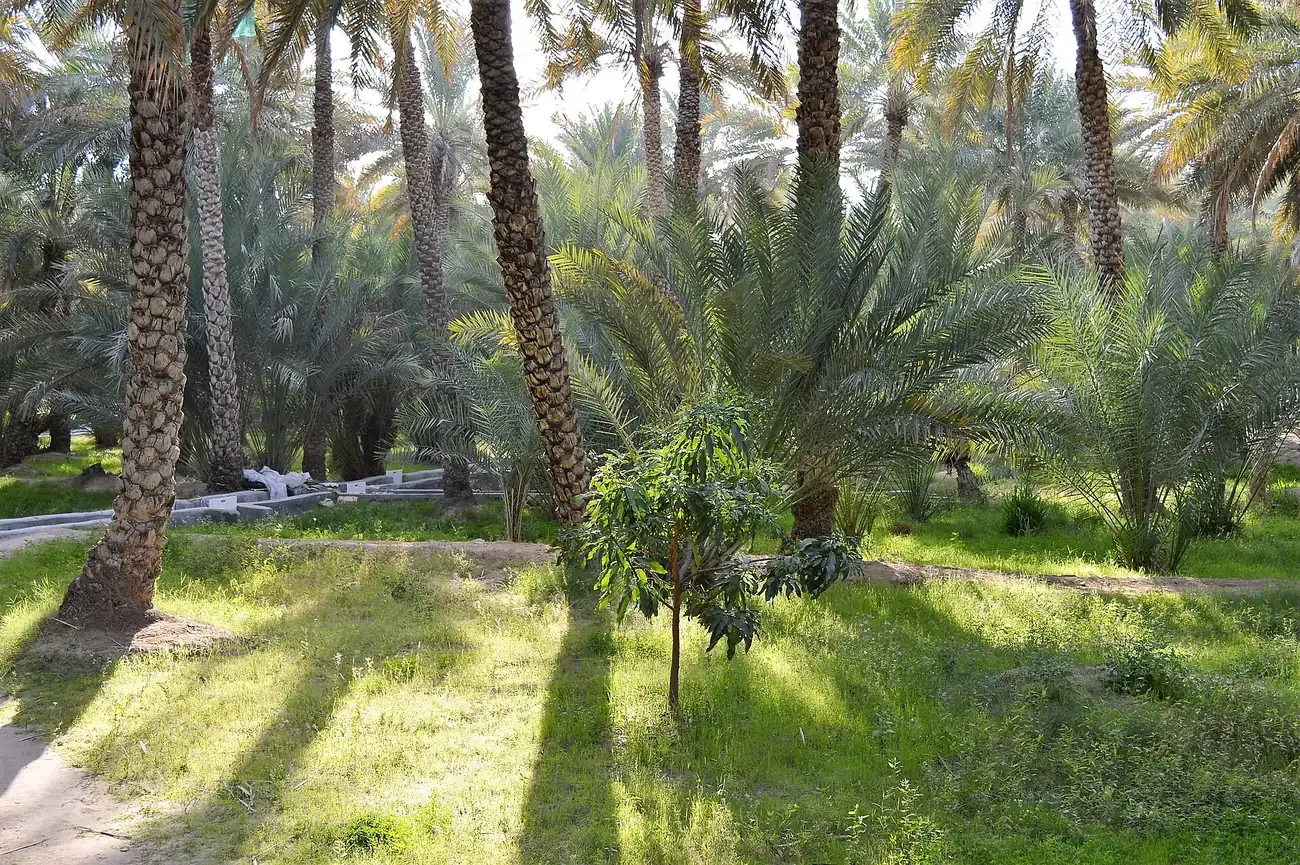
Al Ain Oasis
More than 147,000 date palms in walled plots, watered by falaj channels that have run for some four thousand years and still do.
Location: Al Mutawaa, central Al Ain
Photo: "Al Ain Oasis, a UNESCO World Heritage site" by Rankin73 (CC BY-SA 4.0).

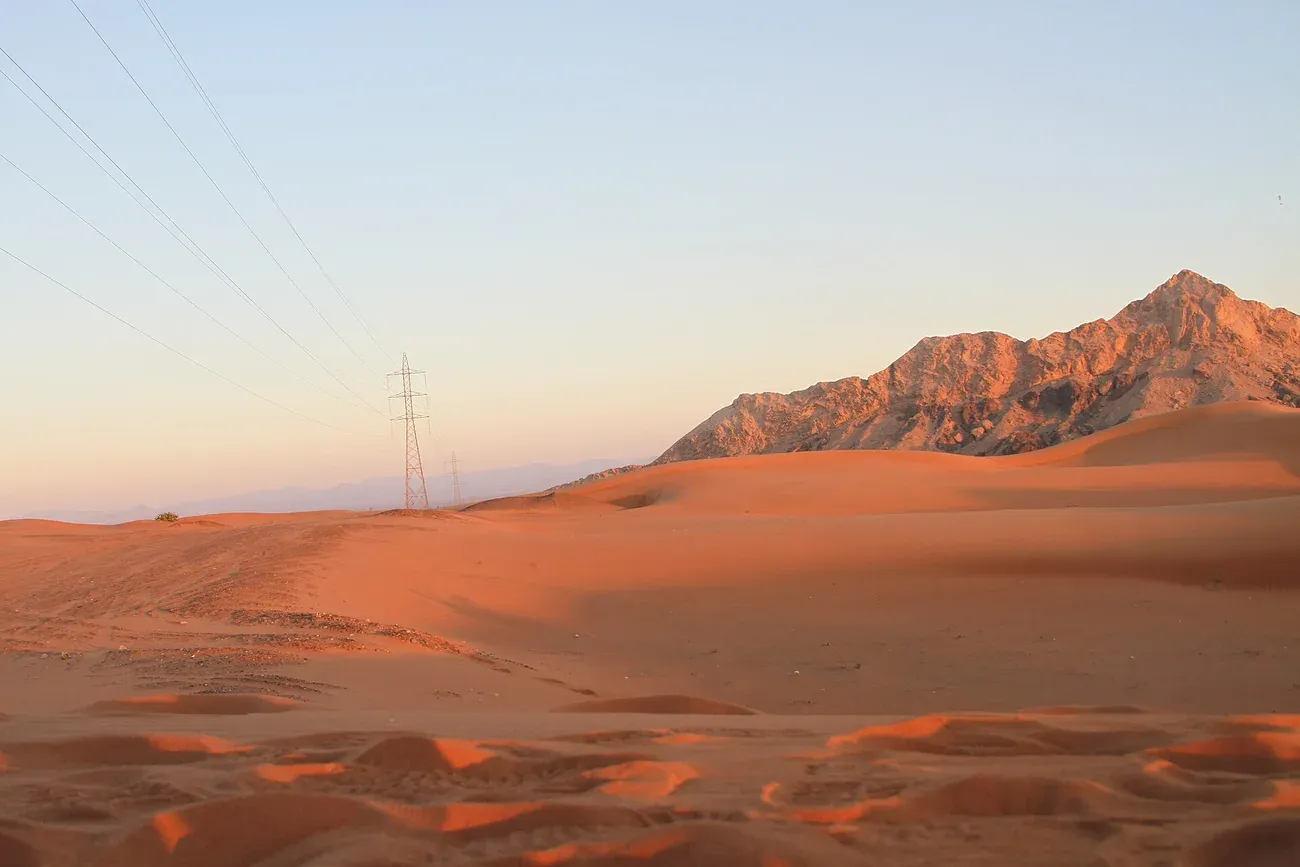
Mleiha
Tombs and a fort spanning the Neolithic to the eve of Islam, next to the Faya palaeolandscape that UNESCO listed in 2025.
Location: Mleiha, south of Dhaid in the emirate of Sharjah
Photo: "Fossil Rock, United Arab Emirates" by Satish at nomadic-me (CC BY-SA 3.0).

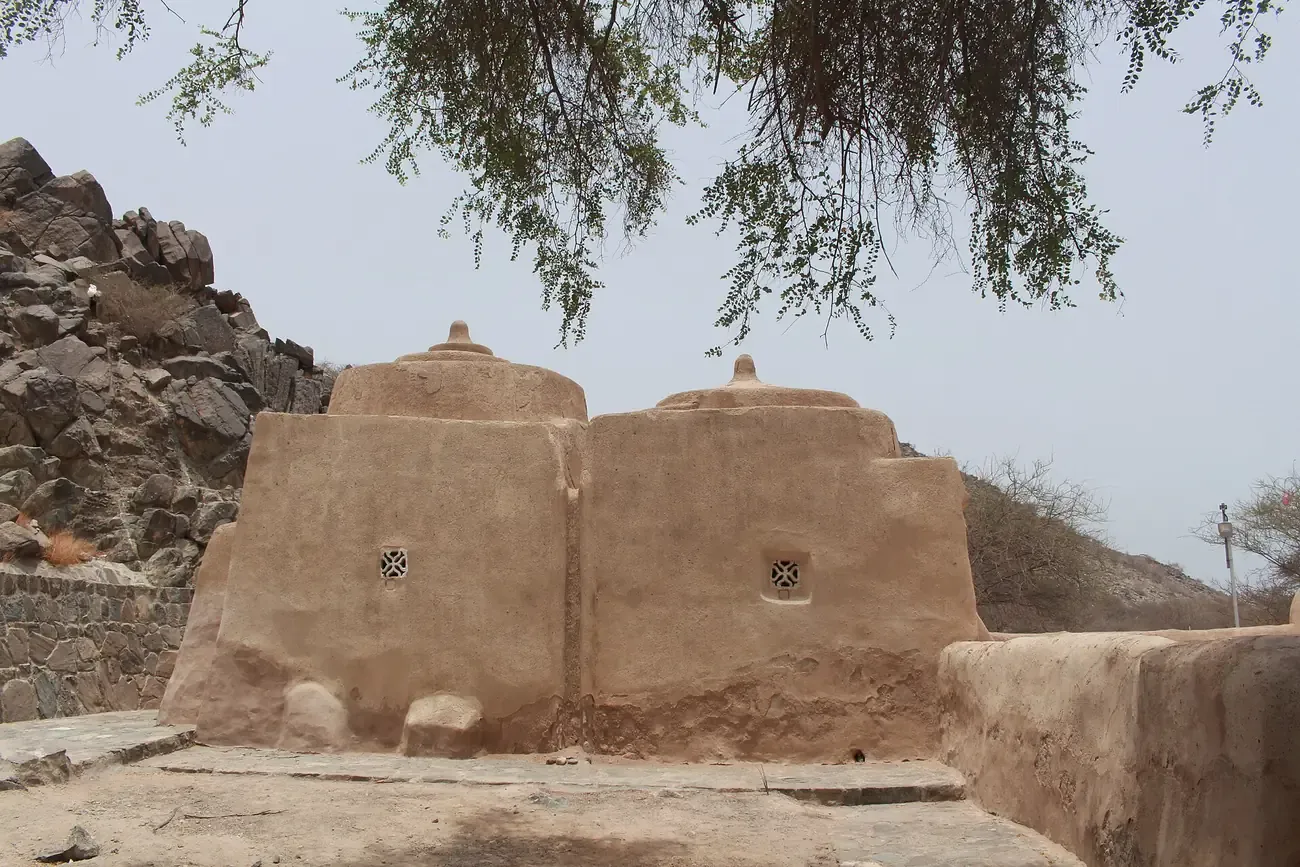
Al Bidya Mosque
Four low domes over a chamber of mud and stone built without any wood, about five centuries old and the oldest mosque in the country.
Location: Al Bidya, north of Fujairah city
Photo: "A look at the mosque from the side" by Maryam589 (CC BY-SA 4.0).

Old forts in the United Arab Emirates
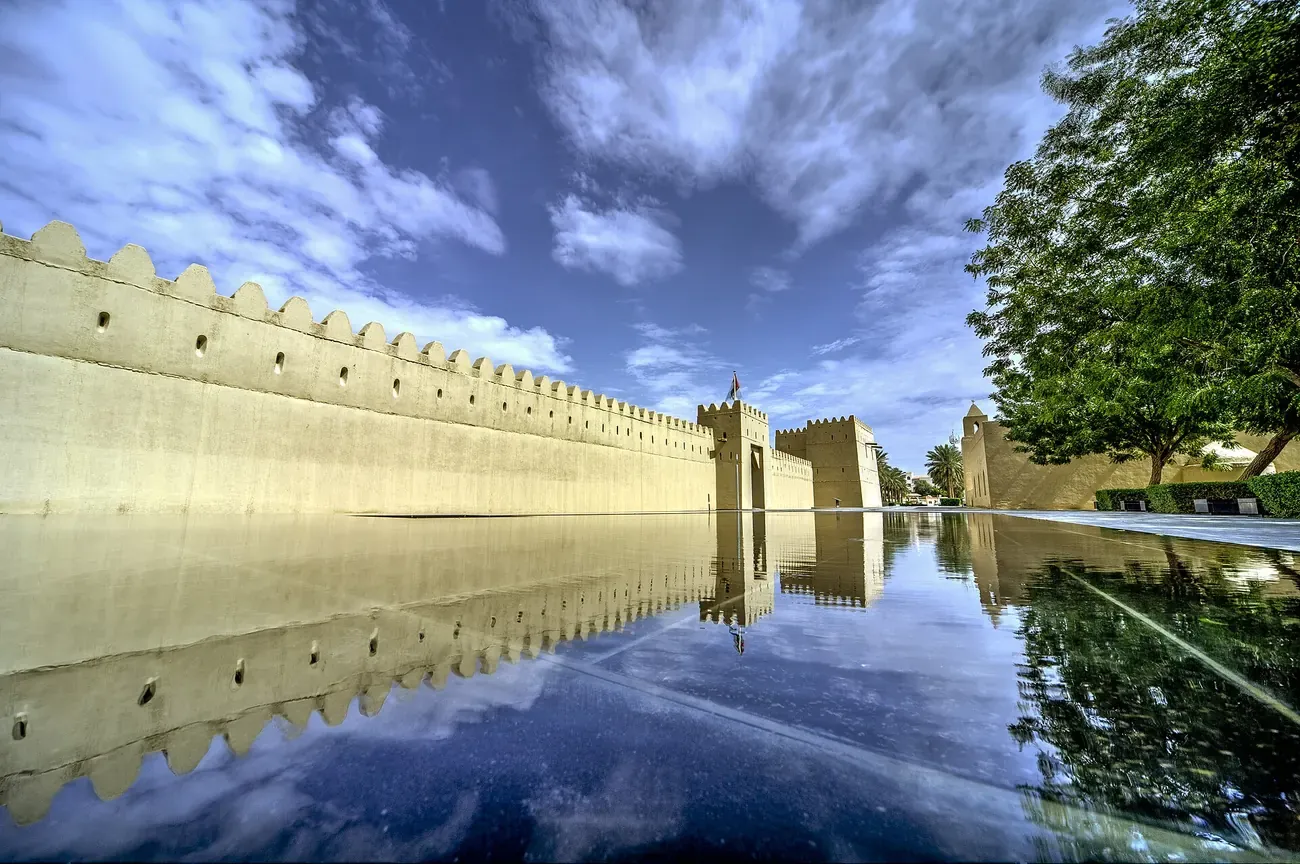
Qasr Al Muwaiji
Sheikh Khalifa was born inside this square fort, where his father governed the Eastern Region. It reopened as a museum about them in 2015.
Location: Al Muwaiji, western Al Ain
Photo: "Qasr Al Muwaiji" by Michael Peter Glenister (CC BY-SA 4.0).

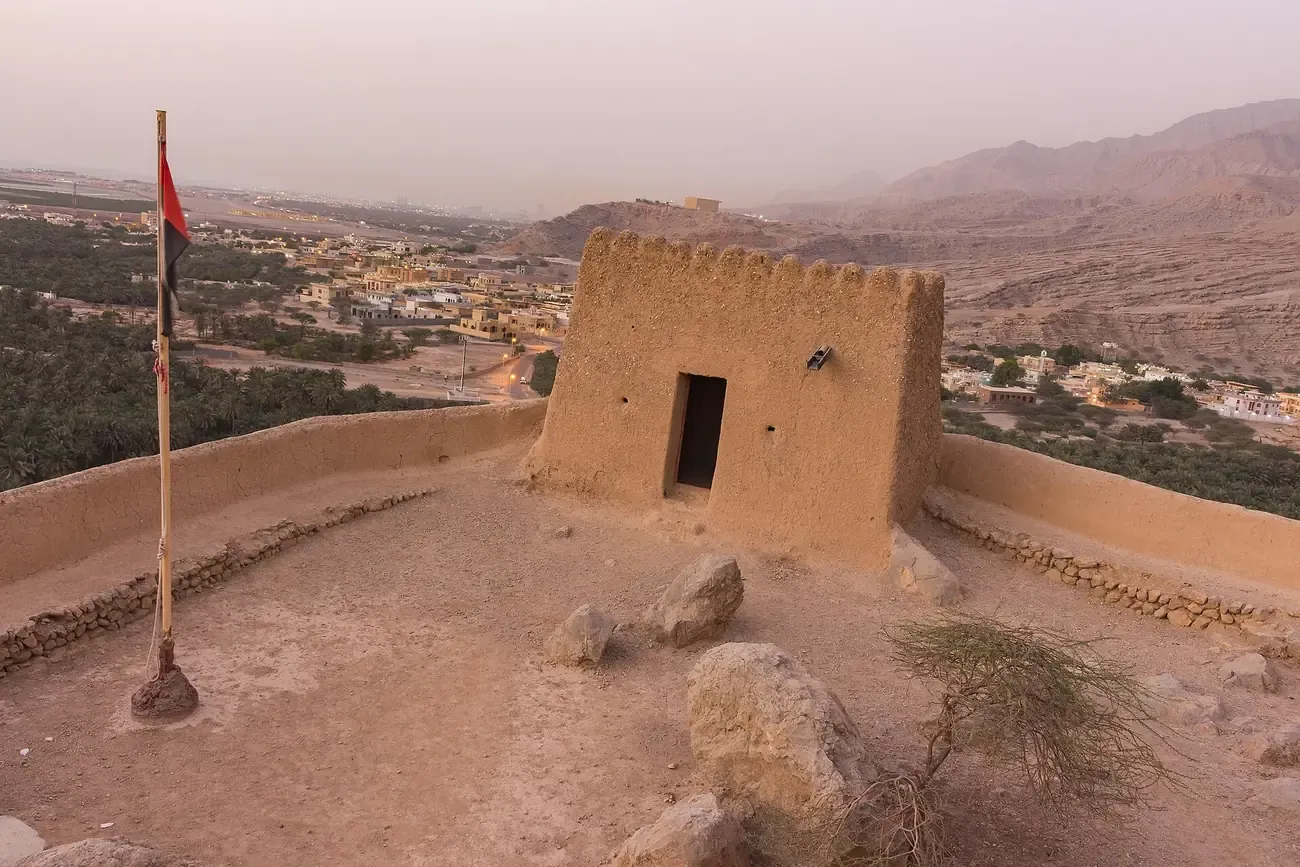
Dhayah Fort
The highest hilltop fort in the country and the last position to hold out against a British expedition in 1819, up a stair.
Location: Dhayah, north of Ras Al Khaimah city
Photo: "Another view from atop Dhayah Fort" by Ansari M Joshi (CC BY-SA 4.0).

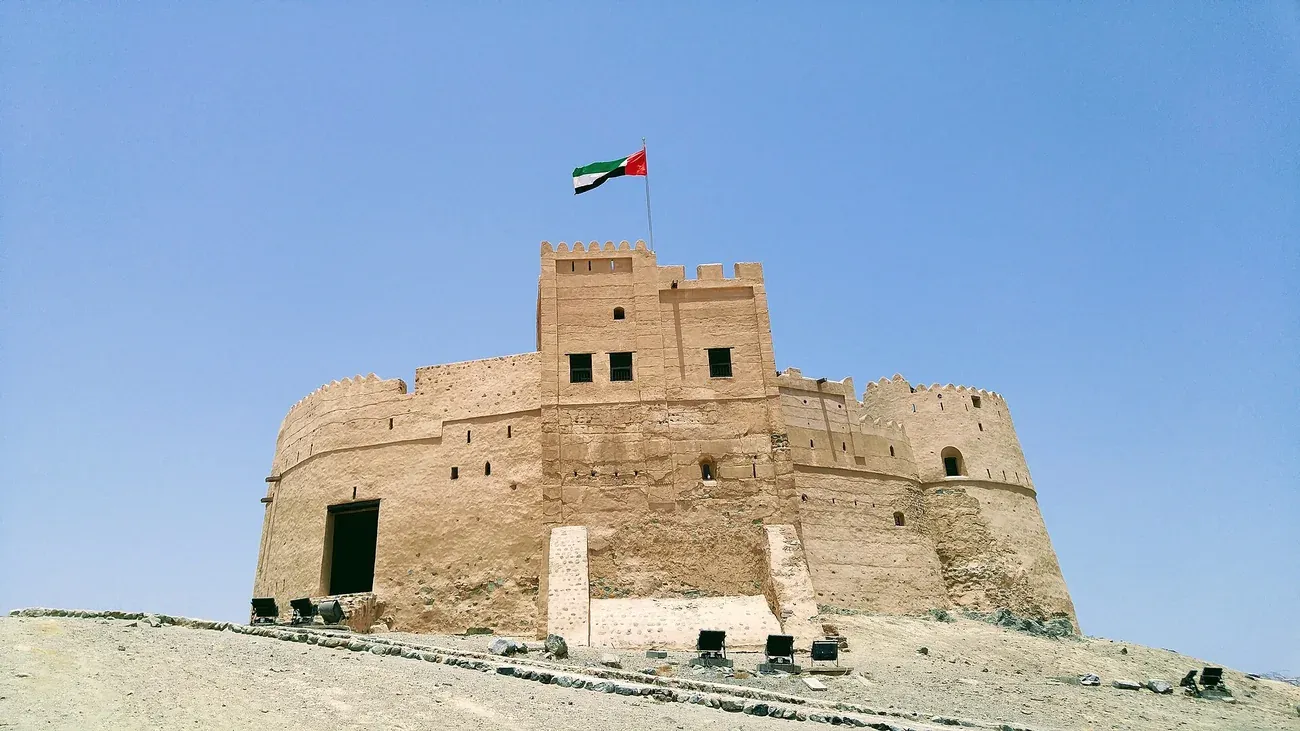
Fujairah Fort
Three round towers and a square one on a rock above the old town, dating from the sixteenth century and among the country's oldest.
Location: Old Fujairah, near the city centre
Photo: "Fujairah fort" by Cenpellegrini (CC BY-SA 4.0).

Secret spots in the United Arab Emirates
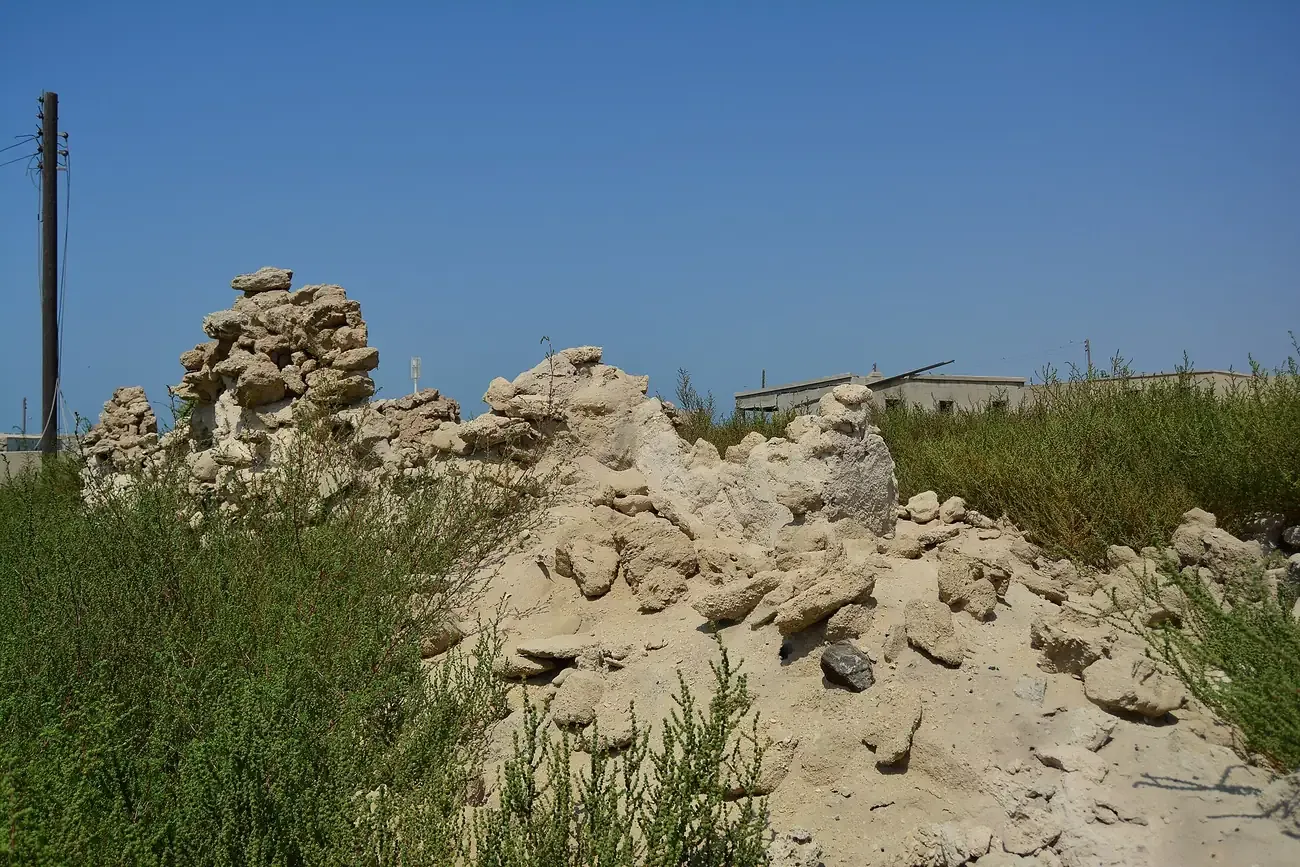
Al Jazirah Al Hamra
A pearling town of coral-stone houses left empty when its tribe moved to Abu Dhabi, now a heritage village and reputed locally to be haunted.
Location: South of Ras Al Khaimah city
Photo: "A crumbled down wall from an ancient house in Jazirat Al Hamra" by Sanjana Biju (CC BY-SA 4.0).

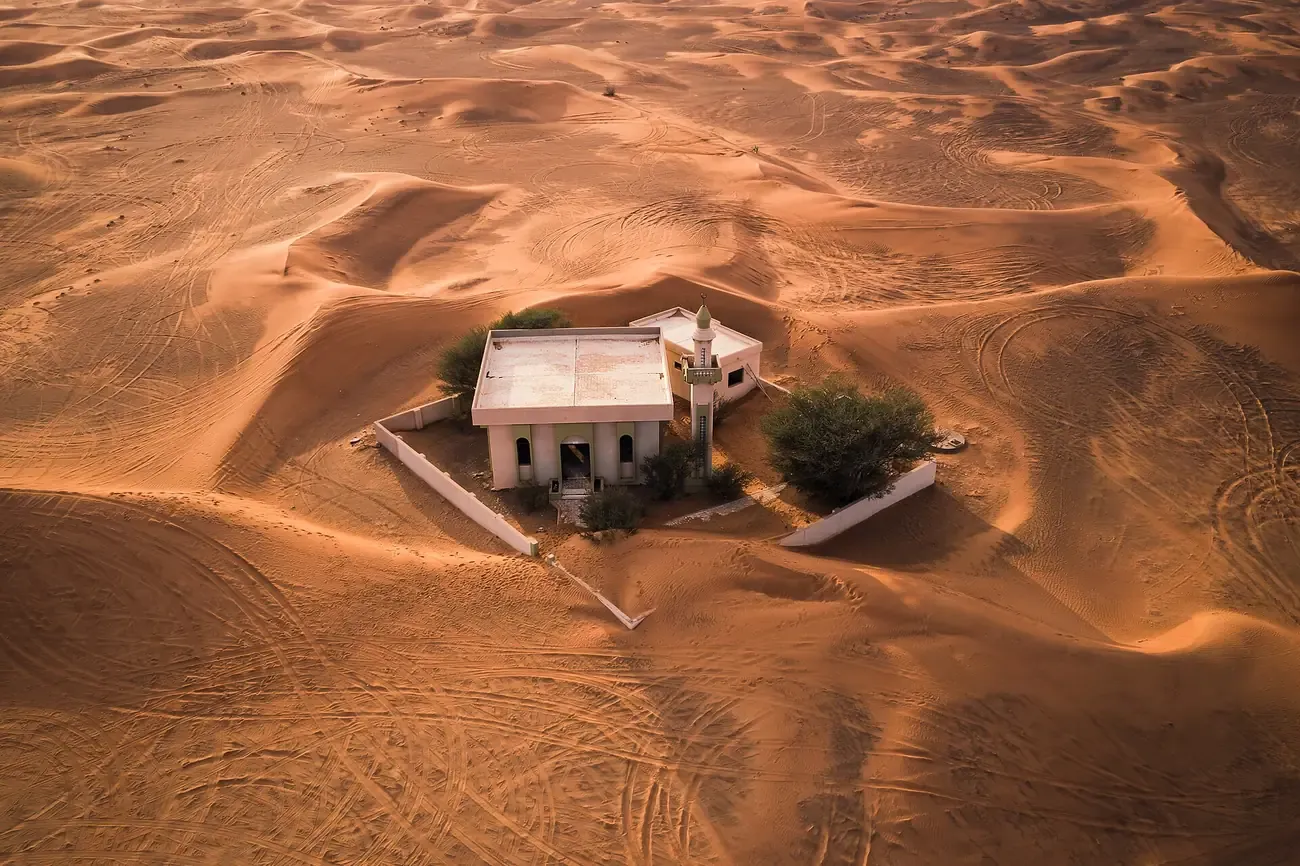
Al Madam ghost village
A short street of houses and a mosque abandoned decades ago and now half swallowed by the dunes that kept moving over them.
Location: South of Al Madam, emirate of Sharjah
Photo: "The Mosque, Al Madam" by James Kerwin Photographic (CC BY 2.0).
.jpg)
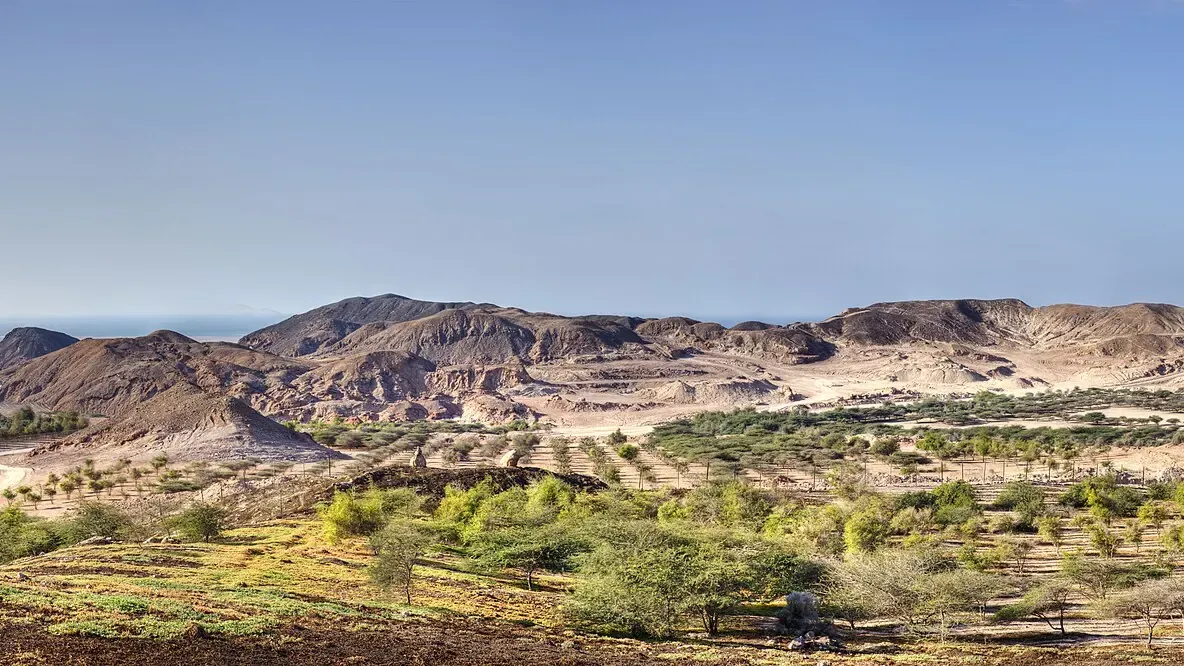
Sir Bani Yas
The largest natural island in the country, given over since 1977 to a reserve where oryx and gazelle roam free among several million planted trees.
Location: Off Jebel Dhanna, western Abu Dhabi
Photo: "Sir Bani Yas Island Panorama" by Ismail Alghussein (CC BY-SA 3.0).

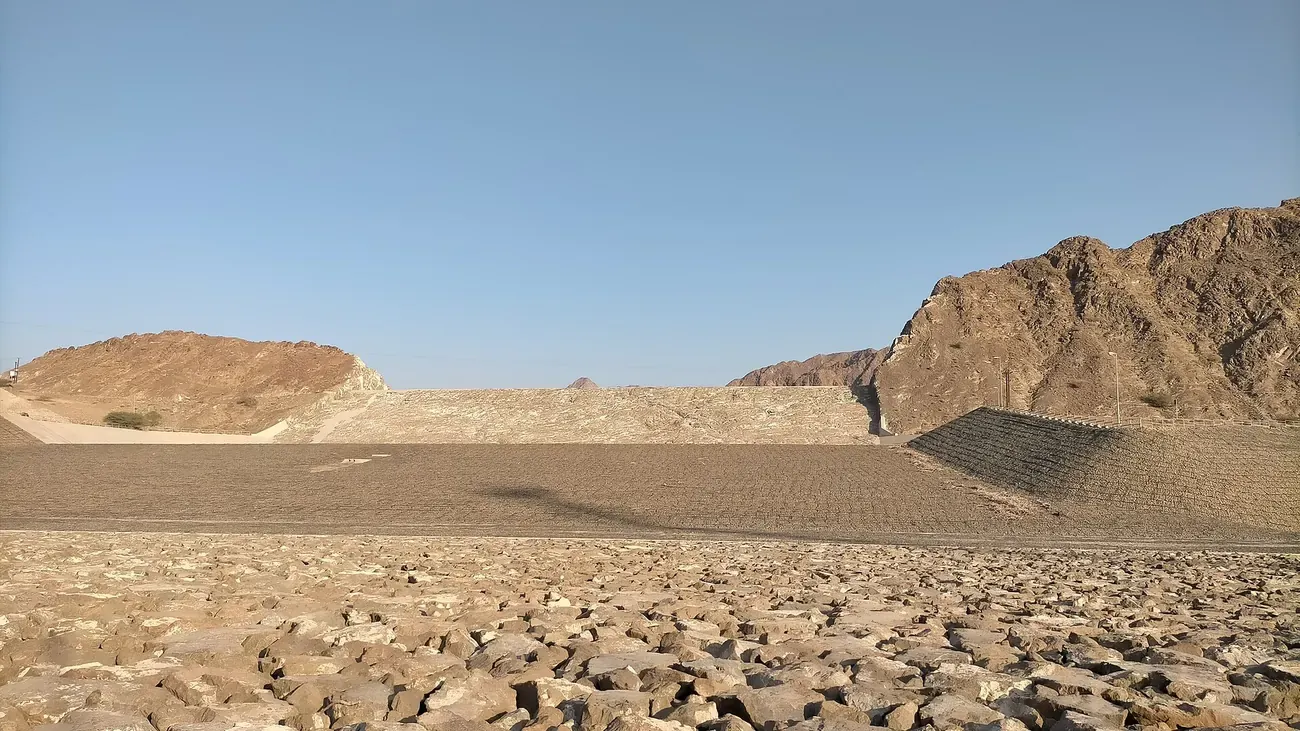
Wadi Wurayah
A mountain valley of pools and a waterfall, the first protected mountain area in the country and a UNESCO site since 2026.
Location: Between Masafi, Khor Fakkan and Bidiyah, in Fujairah
Photo: "Spillway of the Wadi Wurayah Dam" by IbrahimKumar (CC BY-SA 4.0).

What makes the United Arab Emirates worth visiting
The country is a federation of seven emirates, and the two everyone books are the two that built upwards. Dubai and Abu Dhabi sit ninety minutes apart on the same coast and hold most of the record-breakers, from the tallest building in the world to the largest mosque in the country and a Louvre under a perforated dome.
The other five reward the drive. Sharjah kept the museums and the old houses, Ras Al Khaimah has the Hajar mountains and the highest ground in the Emirates, and Fujairah faces a different sea altogether, the Gulf of Oman, with reefs off its beaches. Inland, Al Ain lives around its oases and forts. All three UNESCO World Heritage sites in the country are out here rather than in the two big cities: the Cultural Sites of Al Ain, the Faya palaeolandscape in Sharjah and Wadi Wurayah in Fujairah.
Timing decides how much of it is bearable. Late October to mid-March is the pleasant half of the year, with highs around 27C and lows near 15C, and rain falls on only a handful of days. July averages 35C to 37C on the coast with humidity to match, which is when the outdoor attractions shut for the season and the indoor ones fill up.
Distances are short and the roads are good, so a week can take in both cities, a mountain and a desert without much time in transit. Dubai's airport ranks among the busiest in the world for international passengers, so the Emirates are a natural stopover on any tour of the main tourist attractions in Asia.