
Tourist attractions in Singapore
Known for
Hawker centres, futuristic gardens and a multicultural downtown
Must-see landmarks
Marina Bay Sands, Gardens by the Bay and the Merlion
World Heritage
Singapore Botanic Gardens, UNESCO listed since 2015
Days needed
3 to 4 days for the main sights
Top 9 tourist attractions in Singapore
Singapore's tourist attractions start with Marina Bay Sands, Gardens by the Bay and Merlion. The 9 top sights are ranked below, followed by free things to do, upcoming events and visitor FAQs.
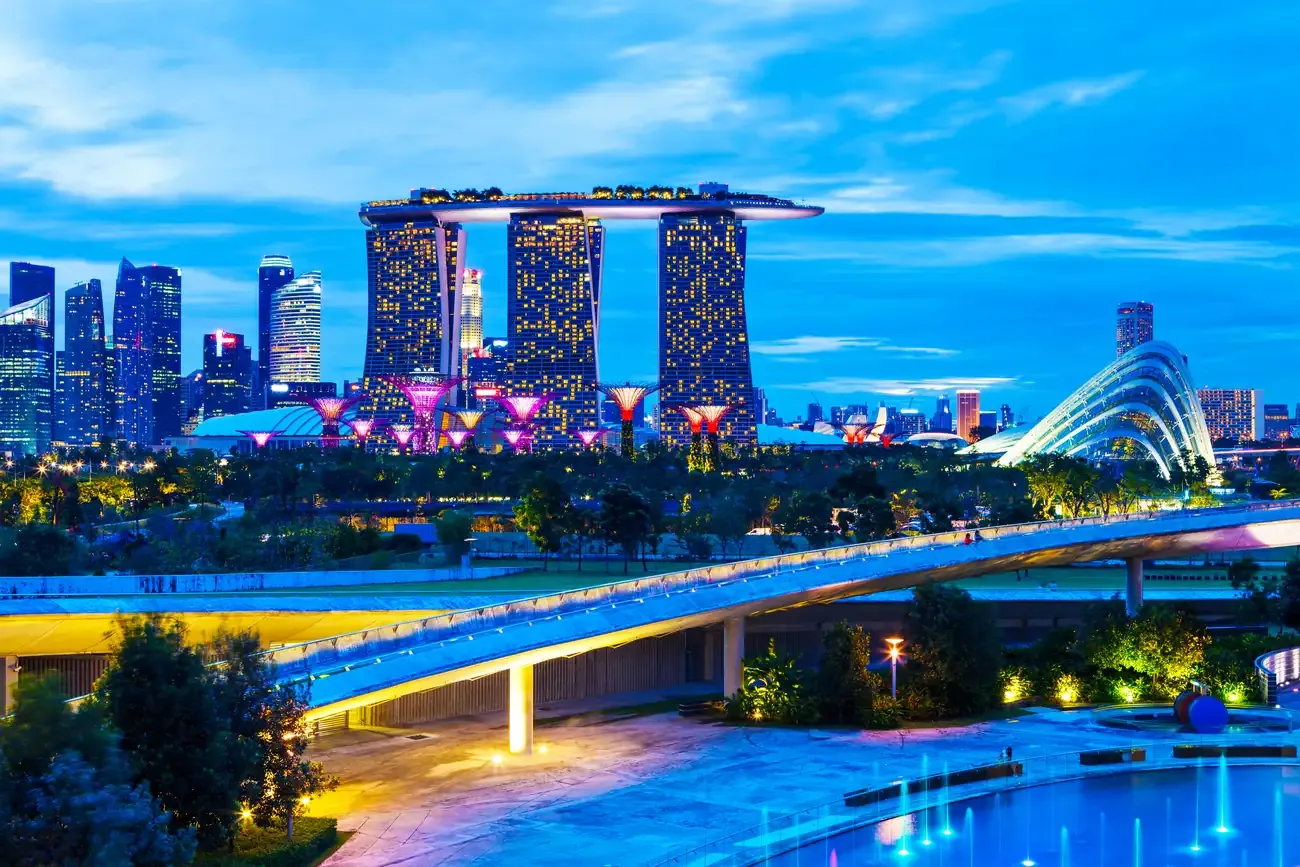
1. Marina Bay Sands
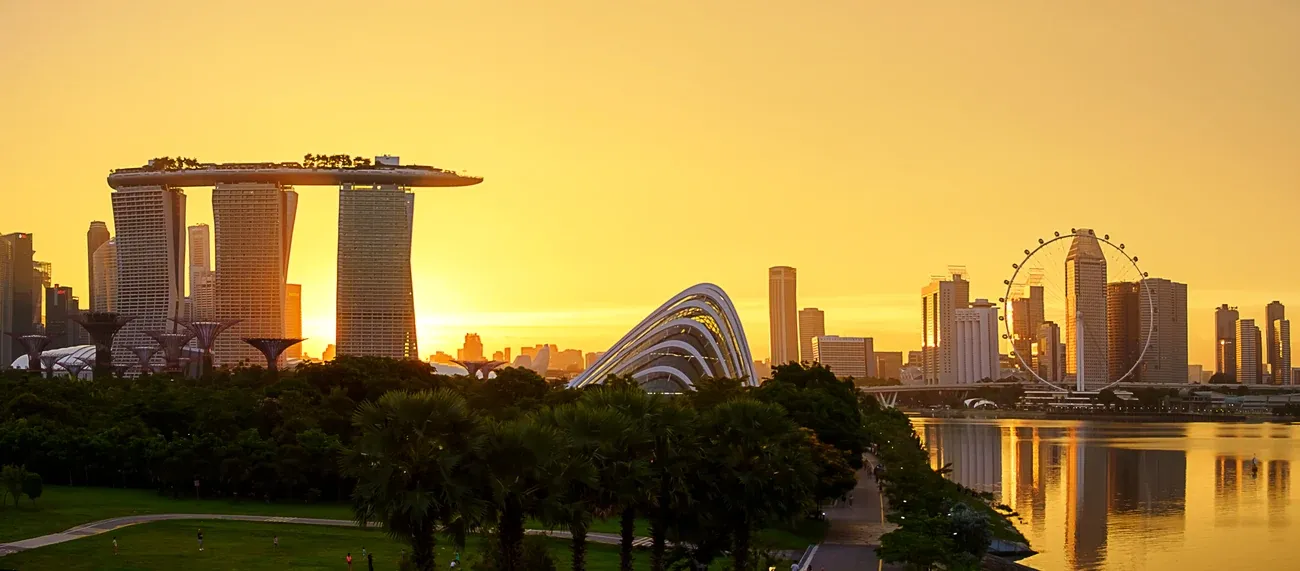
Marina Bay Sands rises over the waterfront as three curved towers crowned by a boat-shaped SkyPark that stretches across their rooftops, an integrated resort designed by architect Moshe Safdie that opened in 2010. Beneath the towers sit a luxury hotel, a vast shopping galleria, a casino, theatres and the lotus-shaped ArtScience Museum, all reached from the city by the double-helix Helix Bridge over the bay.
Architect: Moshe Safdie · Opened: 2010
Location: Bayfront Avenue, Marina Bay
Access: The Bayfront promenade and Event Plaza are free to walk at any hour; the rooftop SkyPark Observation Deck on level 56 is ticketed, with last entry at 20:50.
2. Gardens by the Bay
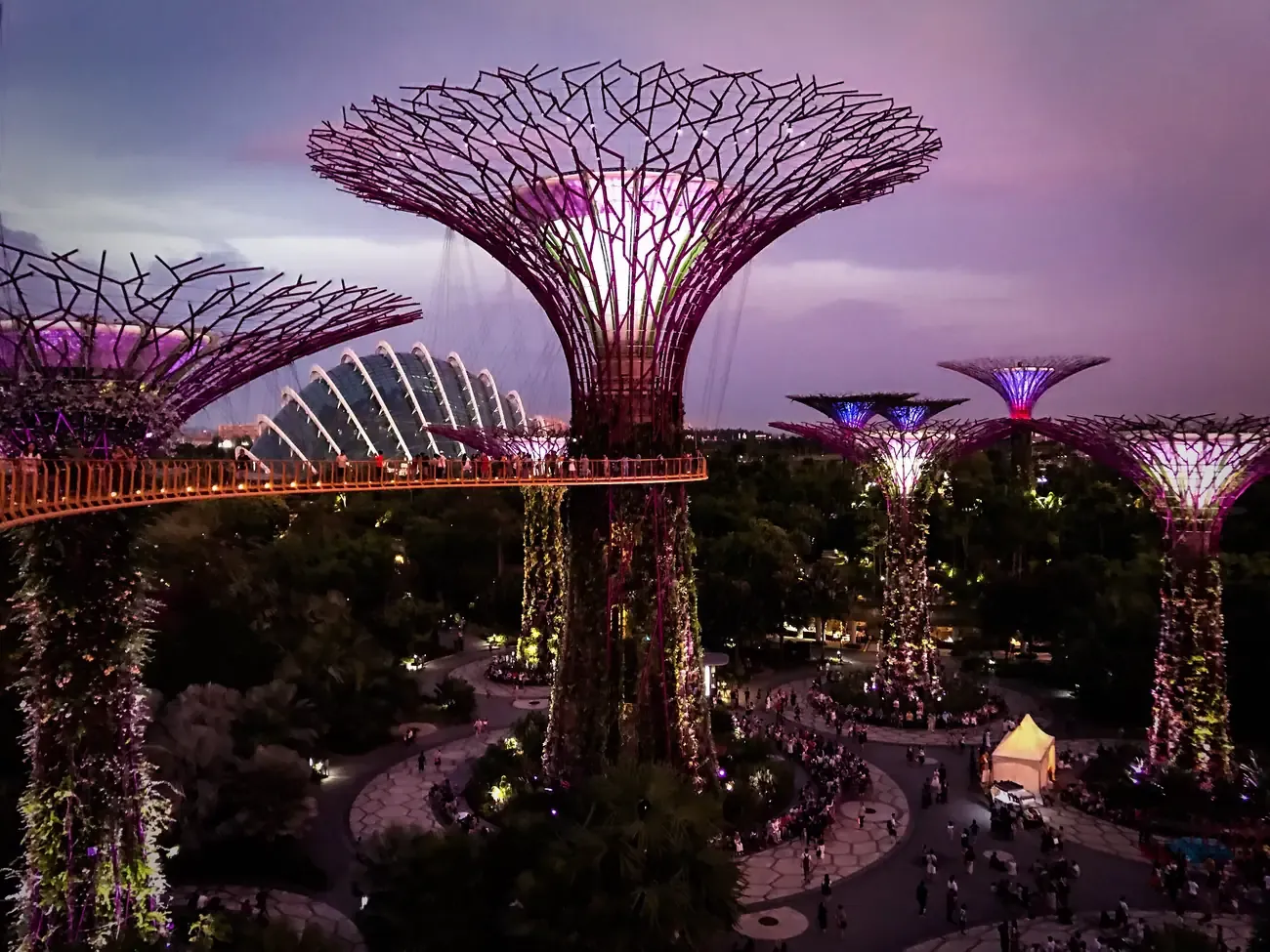
Gardens by the Bay wraps the reclaimed land beside Marina Bay in a futuristic park of themed horticulture that opened in 2012. Its signature Supertree Grove raises steel tree-towers hung with ferns and climbers that light up after dark for the free Garden Rhapsody sound and light show, while two cooled glass conservatories recreate a misty highland forest and a dry Mediterranean climate under one skyline.
Opened: 2012
Location: 18 Marina Gardens Drive, Marina Bay
Access: The Outdoor Gardens and Supertree Grove are free, open daily from 05:00 to 02:00; the Cloud Forest and Flower Dome conservatories, the OCBC Skyway and the Supertree Observatory charge separate admission.
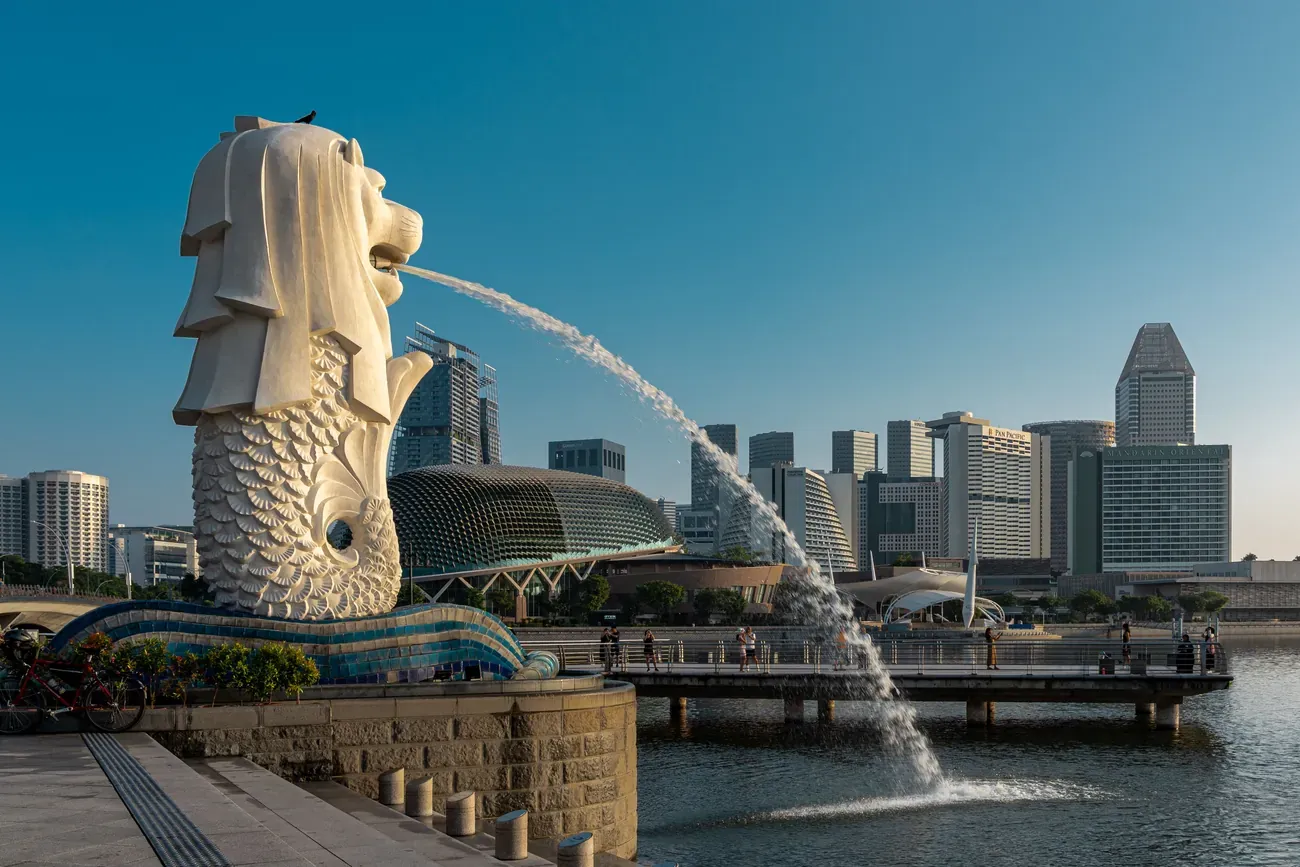
3. Merlion
The Merlion is Singapore's half-lion, half-fish emblem, an 8.6 metre statue that spouts water into Marina Bay from a small waterfront park in front of the old Fullerton Hotel. Unveiled in 1972, the creature joins the lion of the city's Malay name, Singapura, to the fish that recalls its origins as a fishing village, and it was moved to this spot after the Esplanade Bridge blocked its first view of the river mouth.
Unveiled: 1972
Location: Merlion Park, 1 Fullerton Road
Access: Free to visit, in an open waterfront park.
4. Sentosa
Singapore's resort island lies half a kilometre off the southern shore, linked to VivoCity by the Sentosa Express monorail, a free boardwalk and a cable car from Mount Faber. Resorts World holds Universal Studios Singapore and the Singapore Oceanarium, opened in 2025 in place of the S.E.A. Aquarium at three times its size. Beyond the theme parks come the Skyline Luge, the Wings of Time show over the sea and three beaches; at Palawan Beach a rope bridge crosses to an islet billed as the southernmost point of continental Asia. Fort Siloso, the old coastal battery, is free.
Area: 4.7 km² · Renamed Sentosa: 1972
Location: Sentosa Island, south of HarbourFront
Access: Free on foot along the Sentosa Boardwalk; the monorail, the cable car and each attraction are ticketed
5. Buddha Tooth Relic Temple and Museum
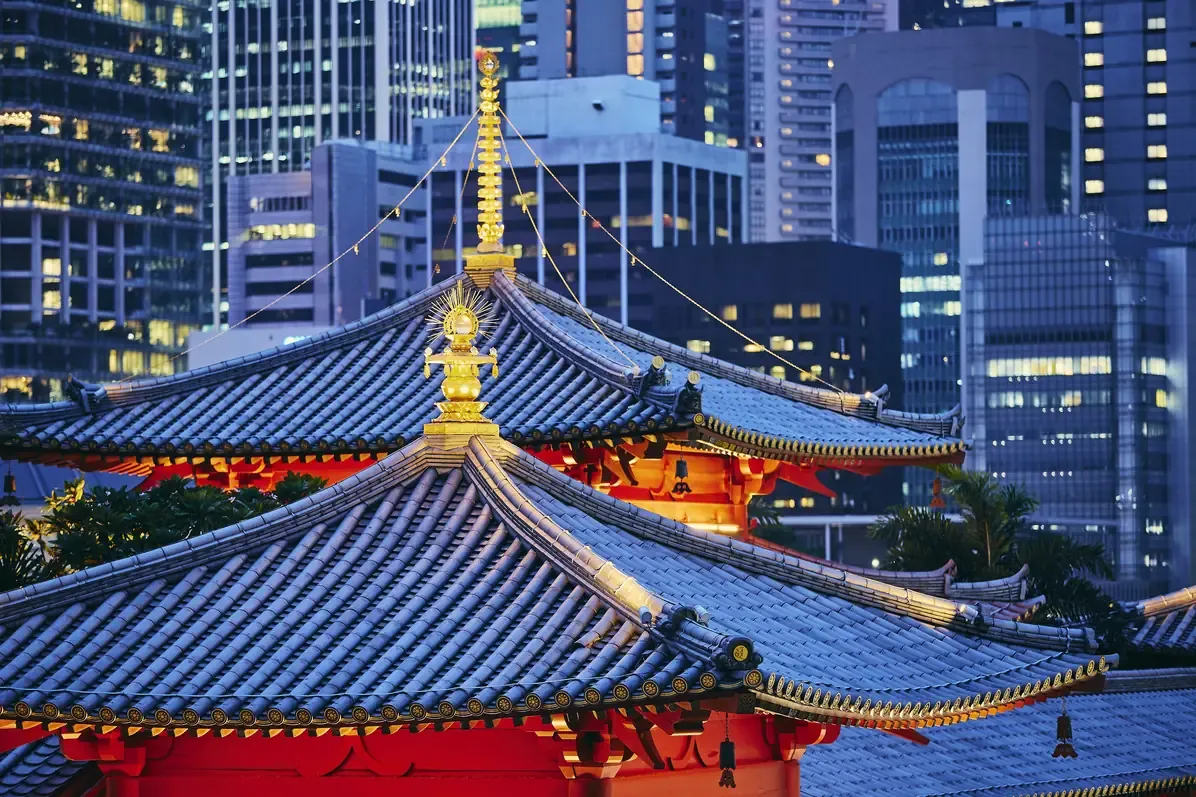
In the heart of Chinatown, the Buddha Tooth Relic Temple rises in a deep red, Tang dynasty style completed in 2007. It is said to house a tooth relic of the Buddha, kept in a gold stupa on an upper floor, and it stacks galleries of Buddhist art and artefacts below a calm rooftop garden built around a large prayer wheel that visitors are welcome to turn.
Opened: 2007
Location: 288 South Bridge Road, Chinatown
Access: Free entry; visitors cover their shoulders and knees before entering the main hall.
6. Sri Mariamman Temple
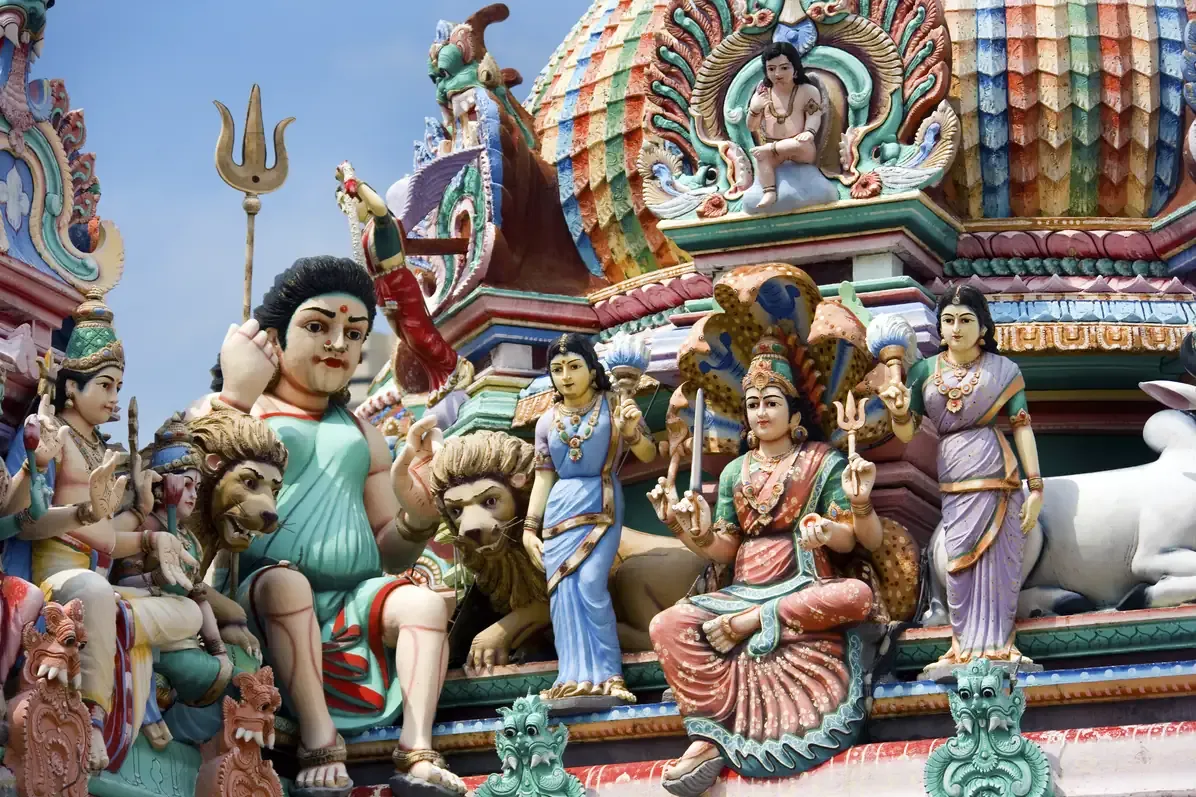
Sri Mariamman is Singapore's oldest Hindu temple, a National Monument founded in 1827 on South Bridge Road, a few doors from the Buddhist and Taoist shrines of Chinatown. Its Dravidian gopuram tower rises over the shophouses in a riot of brightly painted deities, the boundary wall is topped with rows of sculpted sacred cows, and the inner halls honour the goddess Mariamman, long invoked for protection against illness.
Style: Dravidian · Founded: 1827
Location: 244 South Bridge Road, Chinatown
Access: Free entry; visitors remove their shoes and dress modestly.
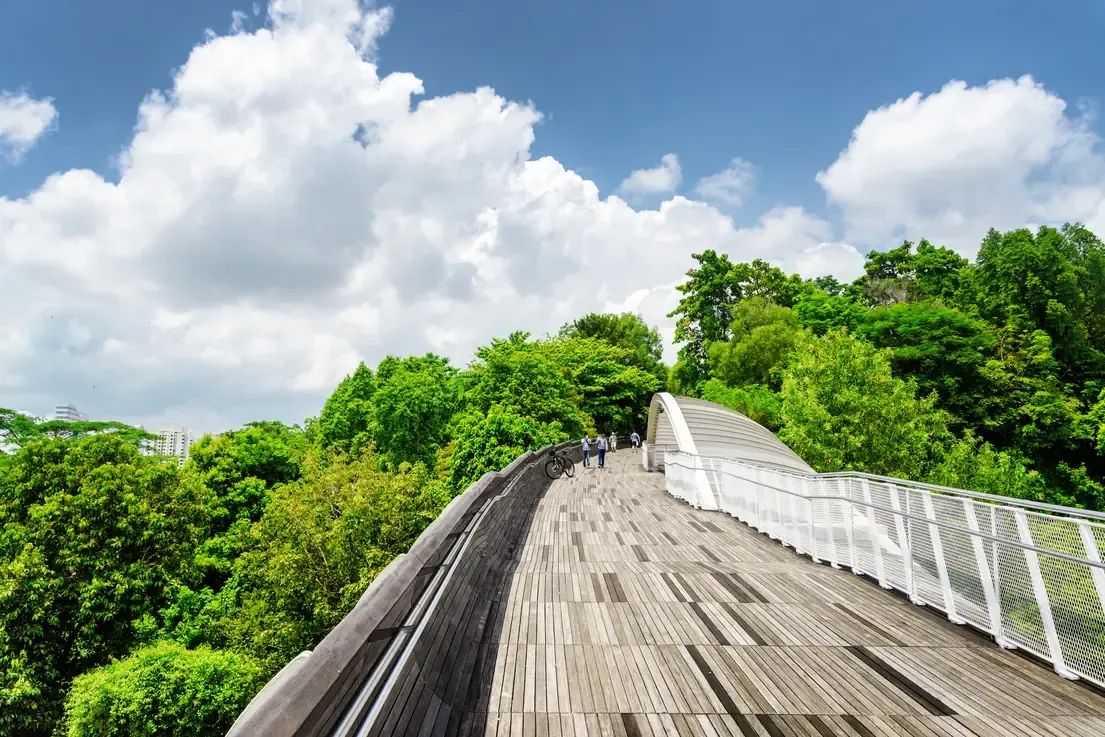
7. Henderson Waves
Henderson Waves is a sculptural pedestrian bridge on the Southern Ridges trail, its curving timber ribs rising and falling in a run of waves high above Henderson Road. Opened in 2008, the deck links the wooded slopes of Mount Faber Park and Telok Blangah Hill Park, and its sheltered alcoves draw walkers and photographers, most of all after sunset when the ribs are lit from within.
Opened: 2008
Location: Southern Ridges, above Henderson Road
Access: Free to cross, on an open public trail.
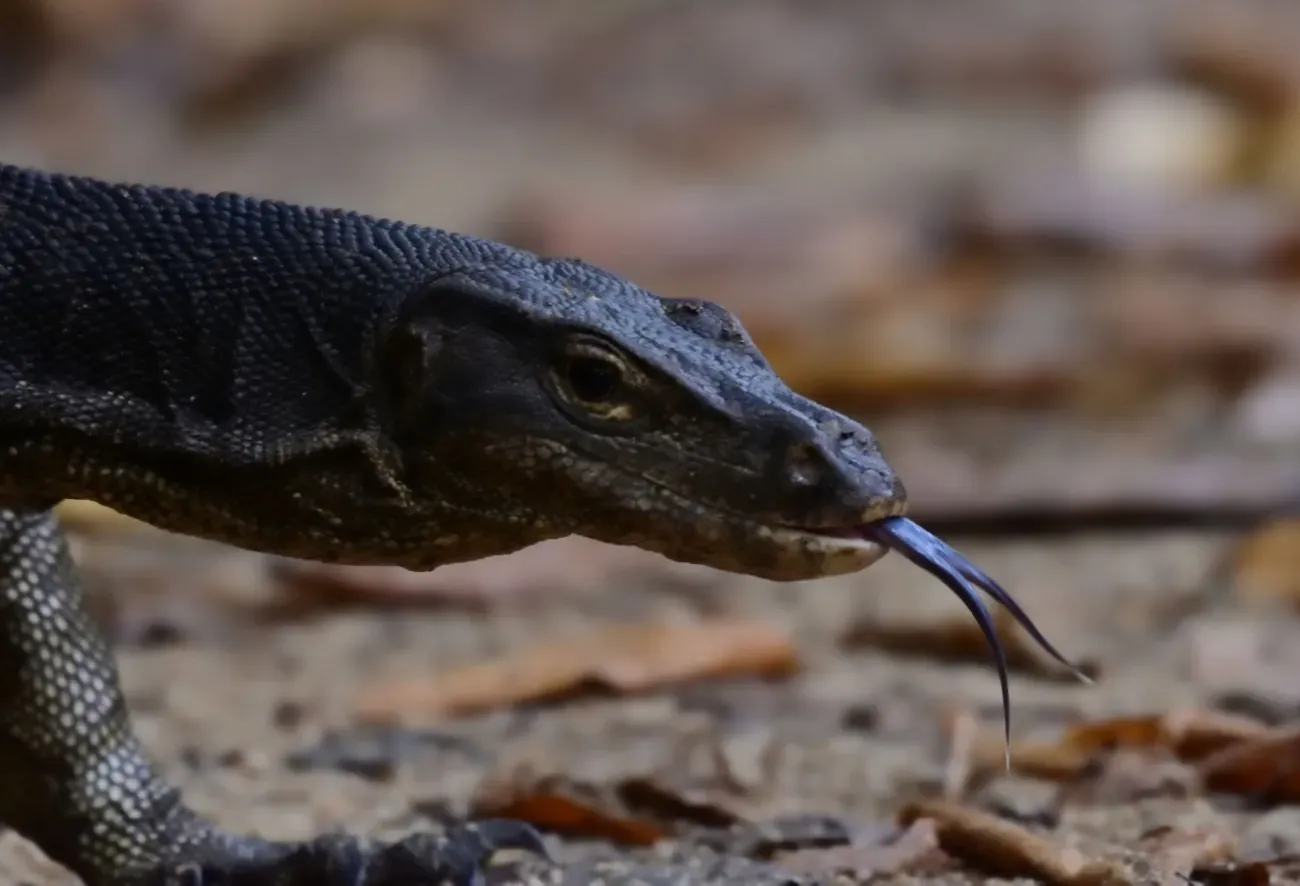
8. Sungei Buloh Wetland Reserve
Sungei Buloh Wetland Reserve protects a stretch of mangroves, mudflats and ponds on Singapore's northwestern coast, laced with boardwalks and hides. It is the island's best known refuge for wetland wildlife, from mudskippers and monitor lizards to the migratory shorebirds that pause here on their long journey along the East Asian flyway through the autumn and winter months.
Location: 301 Neo Tiew Crescent
Access: Free; open daily from 07:00 to 19:00, with last entry at 18:30.
9. Kong Meng San Phor Kark See Monastery
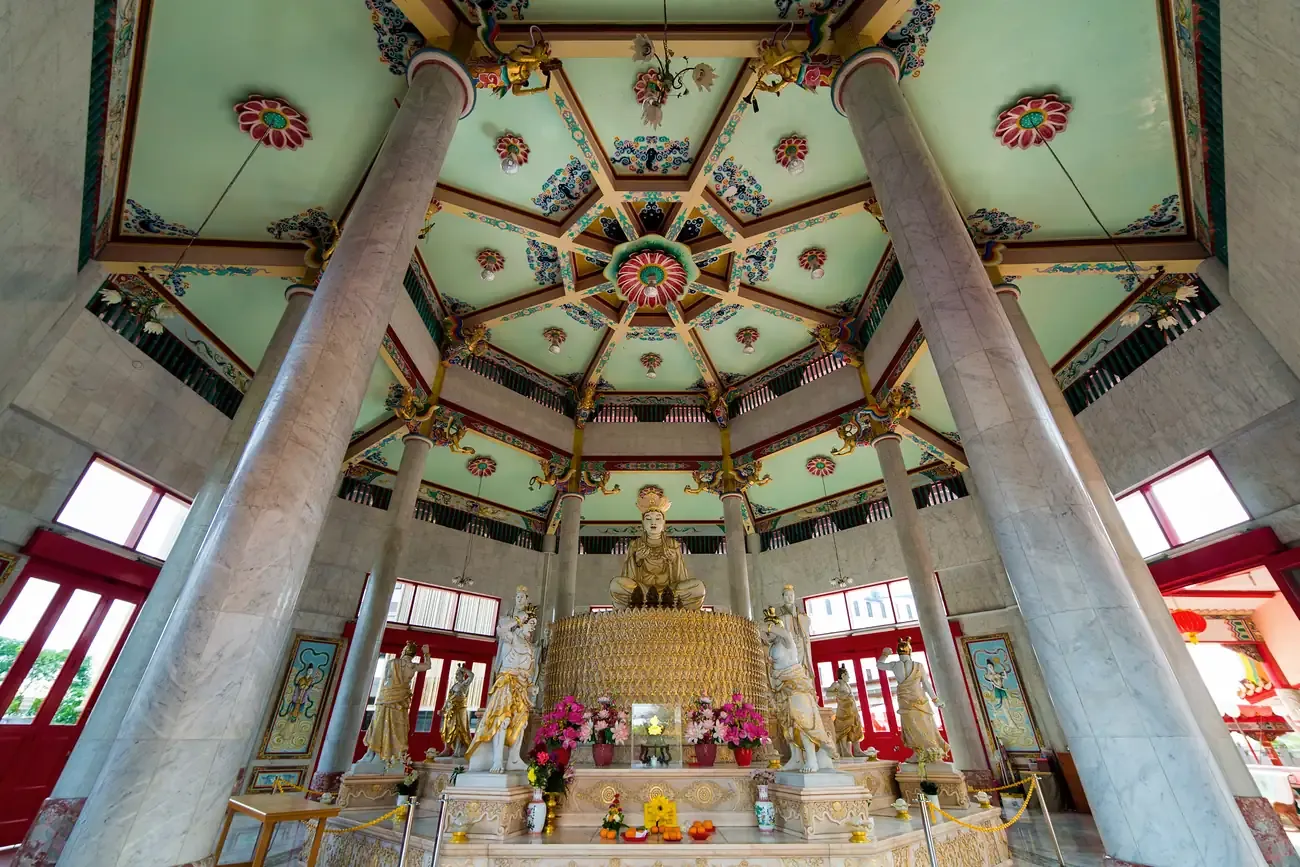
Kong Meng San Phor Kark See, also known as Bright Hill, spreads prayer halls, pavilions and pagodas across a large hillside site in central Singapore. The Buddhist complex draws worshippers to its ornate shrine halls, a hall lined with tens of thousands of small Buddha images and quiet lotus ponds, and it remains a working monastery and centre of Buddhist study rather than a ticketed attraction.
Location: 88 Bright Hill Road
Access: Free; the grounds open daily and the shrine halls from 08:00 to 16:00.
Upcoming events in Singapore
ONE OR EIGHT Special SHOW CASE 2026 in ASIA -V8- in Singapore
ONE OR EIGHT Special SHOW CASE 2026 in ASIA -V8- in Singapore plays Victoria Theatre on 21 October at 19:30.
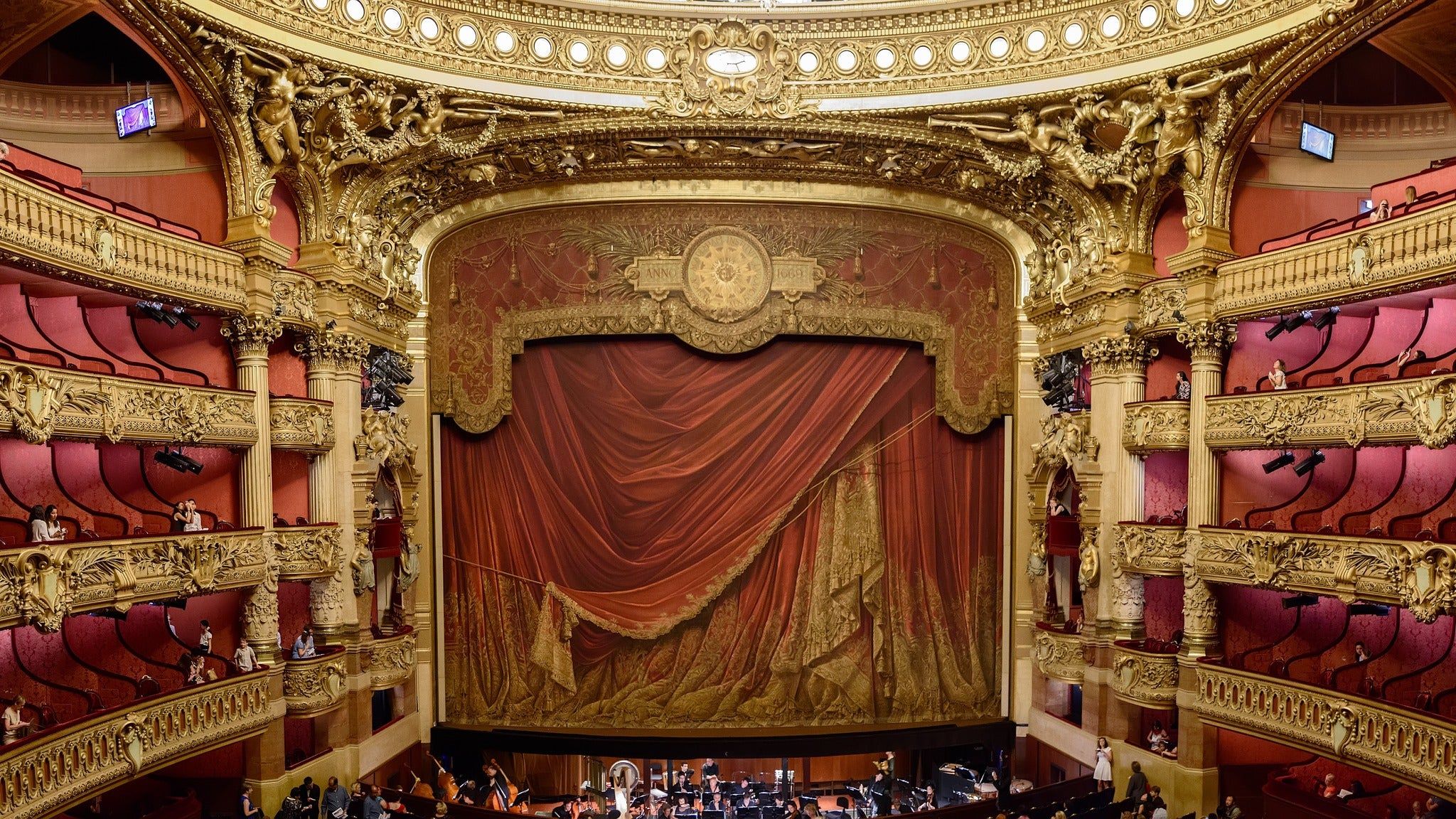
“Revue Show” by OSK Nippon Revue Company
“Revue Show” by OSK Nippon Revue Company plays Singtel Waterfront Theatre, Esplanade on 23 October at 19:30.

Bundle A - Match 1 & 3
Bundle A - Match 1 & 3 comes to National Stadium on 13 November at 00:00.

Singapore vs Paraguay
Singapore vs Paraguay comes to National Stadium on 13 November at 20:00.

Kanan Gill: Not This Again
Kanan Gill brings his stand-up show to Drama Centre Theatre on 9 December at 20:00.

PGL CS 2 Major Singapore 2026
PGL CS 2 Major Singapore 2026 comes to Singapore Indoor Stadium on 10 December at 17:00.
Free attractions to visit in Singapore
Singapore Botanic Gardens
General admission is free for everyone, every day. The National Orchid Garden inside sells its own ticket, open 08:30 to 19:00 with last entry at 18:00.
Clarke Quay
The restored riverside godowns are free to walk through at any hour; the bars, restaurants and river cruises inside charge separately.
Jewel Changi Airport's Rain Vortex
The indoor waterfall inside the airport's Jewel building, free to view from the surrounding mall, streams down 40 metres and is billed by its operator as the world's tallest indoor waterfall.
Why visit Singapore
What makes Singapore unique
Singapore separated from Malaysia to become a fully sovereign city-state on 9 August 1965, and rebuilt itself almost from scratch into one of Asia's wealthiest ports. Chinese, Malay, Indian and expatriate communities share the same small island, each with its own temples, food and streets, and decades of tightly planned greening have layered rainforest-dense parks and gardens into the middle of a dense financial capital.
Neighbourhoods to know
Chinatown and the Colonial District hold the oldest temples, shophouses and civic buildings. Marina Bay gathers the newest skyline, from Marina Bay Sands to Gardens by the Bay. Kampong Glam centres on Sultan Mosque and its Arab Street shops, and Little India runs a few streets further north. Katong and Joo Chiat keep Peranakan shophouses and home cooking east of the centre, while Tiong Bahru pairs 1930s Art Deco blocks with independent cafes.
When to go and for how long
Singapore is tropical year round, with little change in temperature from month to month, according to the Meteorological Service Singapore. The Northeast Monsoon brings the heaviest rain from November to January, so the months outside that window tend to suit sightseeing best. Three to four days cover the main sights at a steady pace.
Getting around
The MRT network reaches most neighbourhoods directly, with buses filling the gaps and taxis or ride-hailing apps easy to flag for the rest. A few rules catch first-time visitors out: the sale and import of chewing gum has been restricted since 1992, e-vaporisers are banned outright, and eating or drinking is not allowed on board buses or MRT trains. Singapore sits at the southern tip of the Malay Peninsula, about one degree north of the equator, and is a common first stop on a tour of the best tourist attractions in Asia.