
Tourist attractions in Toledo, Spain
Known for
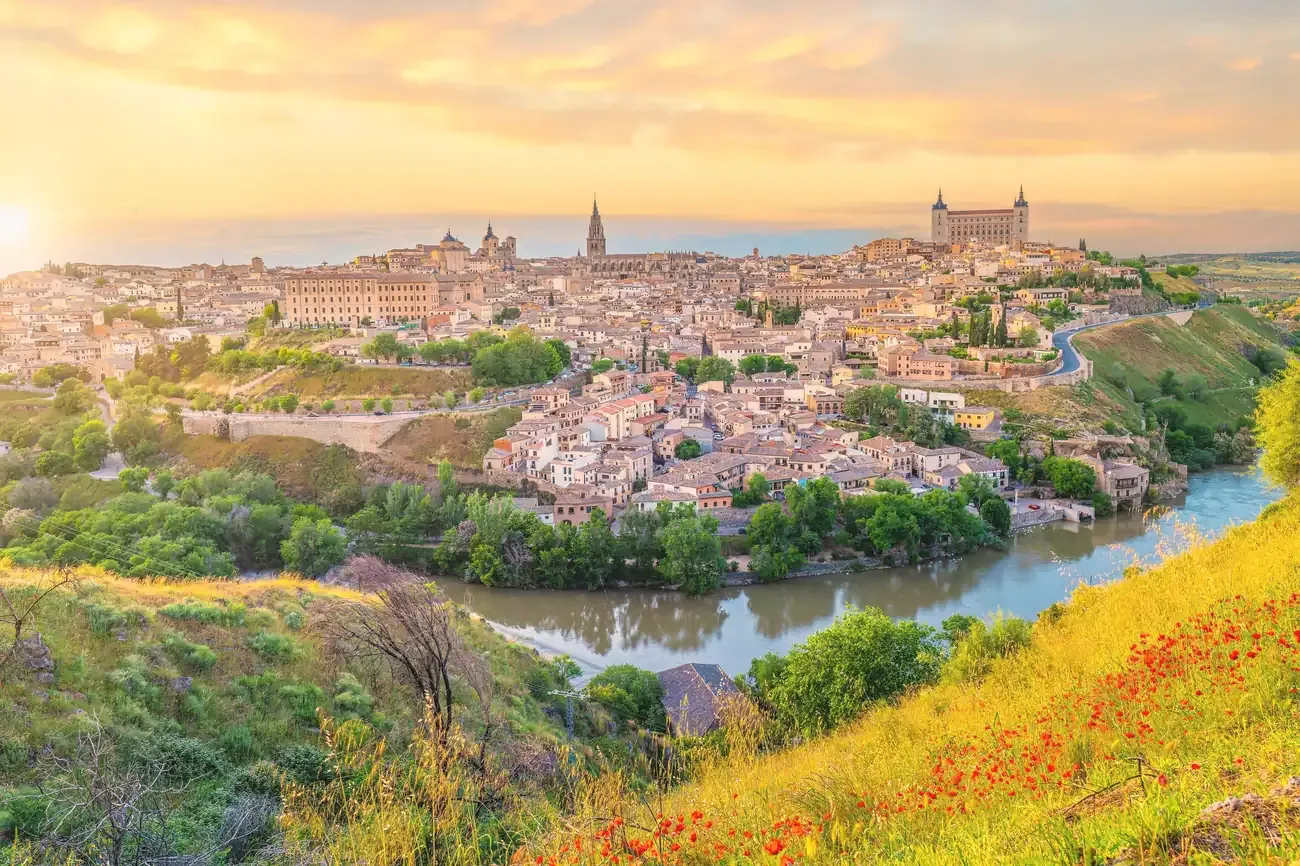
A walled hill city on a rocky outcrop in a bend of the Tagus
Must-see landmarks
Toledo Cathedral, the Alcázar and Santo Tomé
Days needed
A full day covers the walled old town on foot
World Heritage
Historic city centre, UNESCO World Heritage listed since 1986
The 9 tourist attractions to see in Toledo, Spain
Toledo Cathedral, Alcázar de Toledo and Iglesia de Santo Tomé lead the tourist attractions in Toledo, Spain. This guide ranks the 9 sights worth your time, then adds 9 hidden gems, free things to do and visitor FAQs.
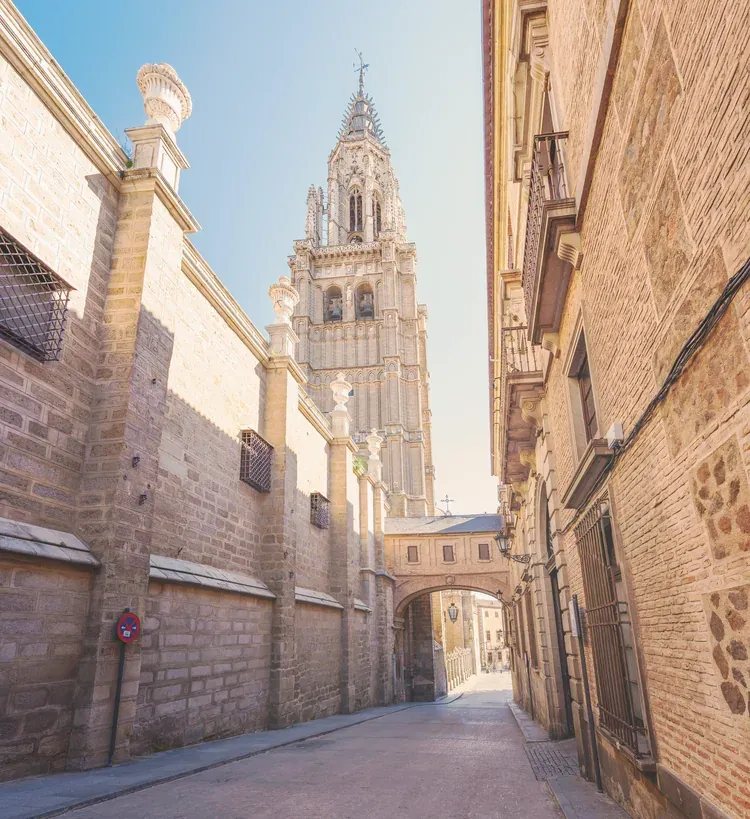
1. Toledo Cathedral
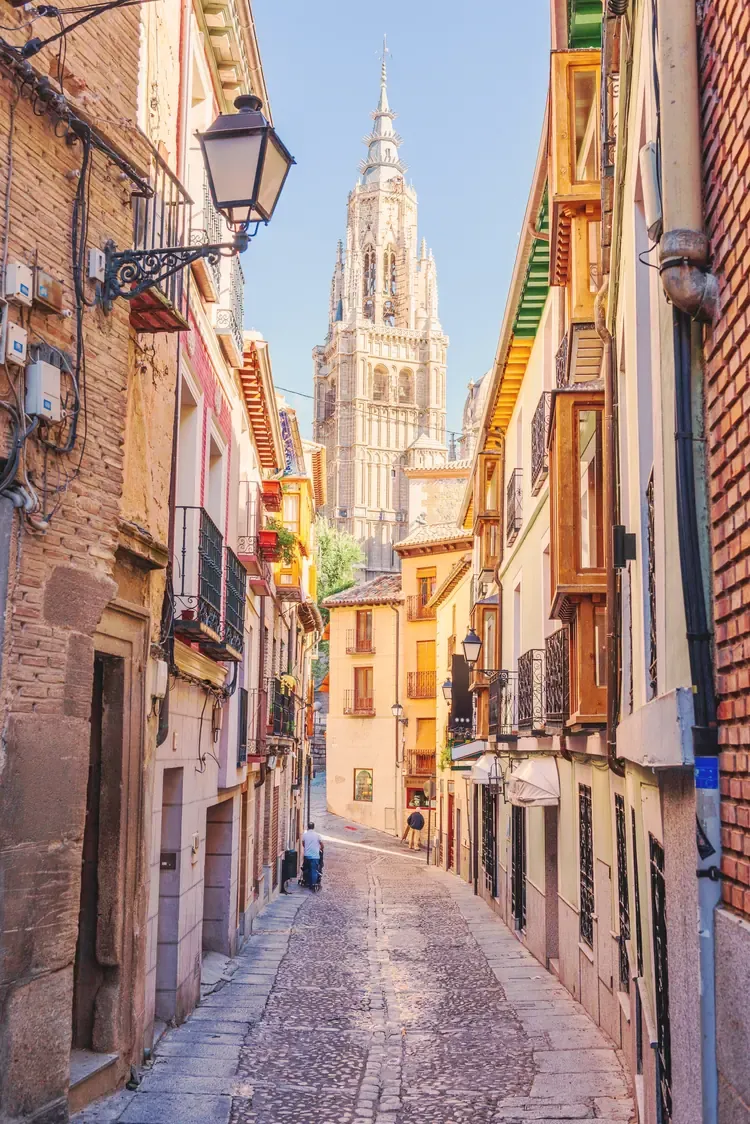
Begun in 1226 and shaped across more than two centuries, the Primatial Cathedral is the seat of the Spanish church and dominates the roofline of the walled town. The master mason Petrus Petri laid out its five naves and the forest of piers that carries them. Behind the high altar, Narciso Tome cut an opening through the vault so that daylight falls on the Baroque Transparente, and the sacristy hangs El Greco's El Expolio.
Architect: Petrus Petri · Style: Gothic
Location: Calle Cardenal Cisneros, 1, 45002 Toledo
Access: Ticketed. Cultural visits run Monday to Saturday from 10:00 to 18:30 and Sunday from 14:00 to 18:30.
2. Alcázar de Toledo
Four corner towers and a severe stone facade crown the highest point of the old town, a silhouette that announces Toledo from every approach. Charles V turned an earlier Muslim citadel into a royal palace, and the building has been raised again after fire and siege more than once. It now holds the Museo del Ejercito, whose galleries trace Spanish military history around the excavated foundations of the fortresses that stood here before.
Location: Calle de la Union, s/n, 45001 Toledo
Access: Ticketed and closed on Mondays, with last admission at 16:30. Two galleries covering the Bourbon Restoration and the 20th century are shut for renovation.
3. Iglesia de Santo Tomé
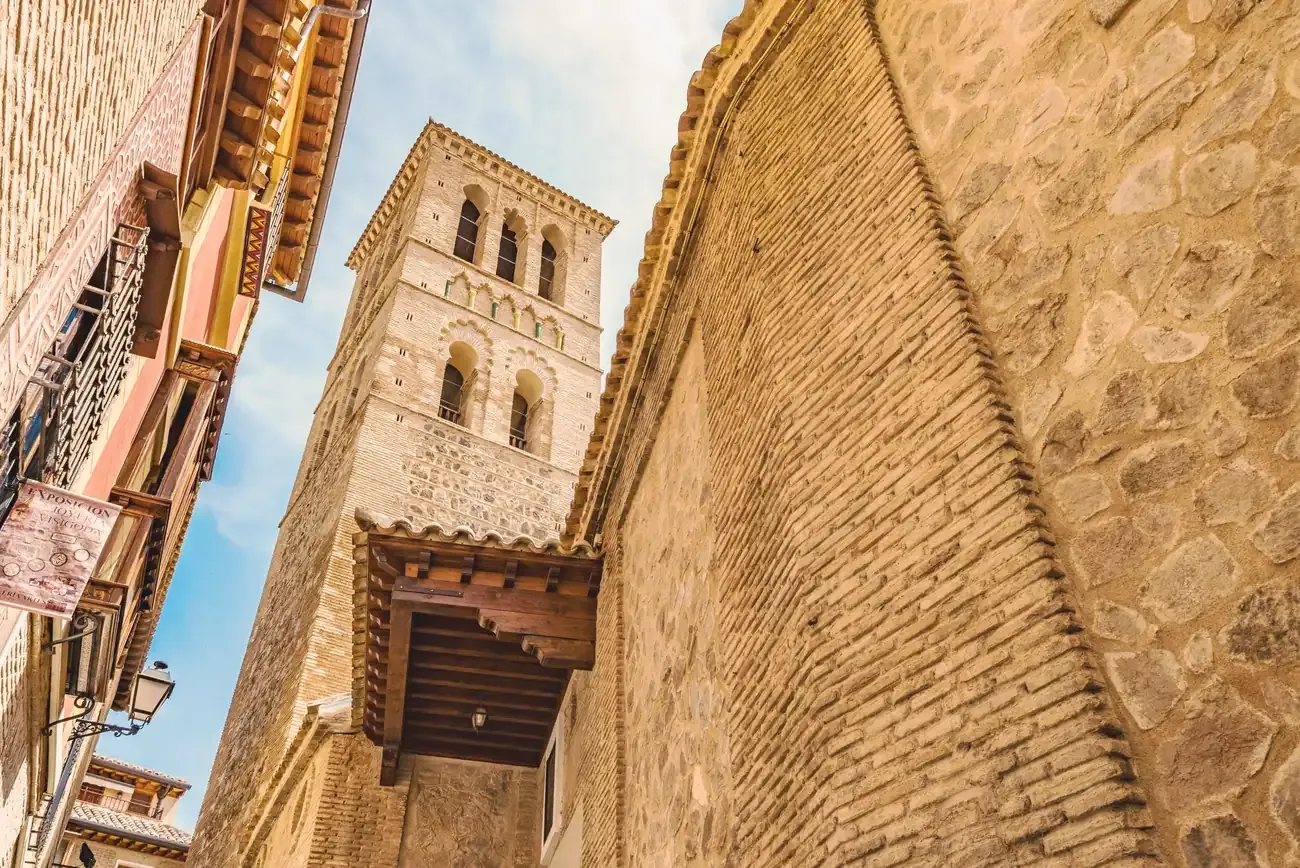
A brick Mudejar tower raised in the early 14th century marks a small parish church that draws visitors for a single canvas. El Greco painted The Burial of the Count of Orgaz for this building between 1586 and 1588, and it still hangs in the chapel it was made for, lit so that the earthly mourners below and the opening heaven above read as one continuous scene.
Style: Mudejar
Location: Plaza del Conde, 45002 Toledo
Access: Ticketed. The church is one of the seven monuments covered by the Toledo Monumental bracelet.
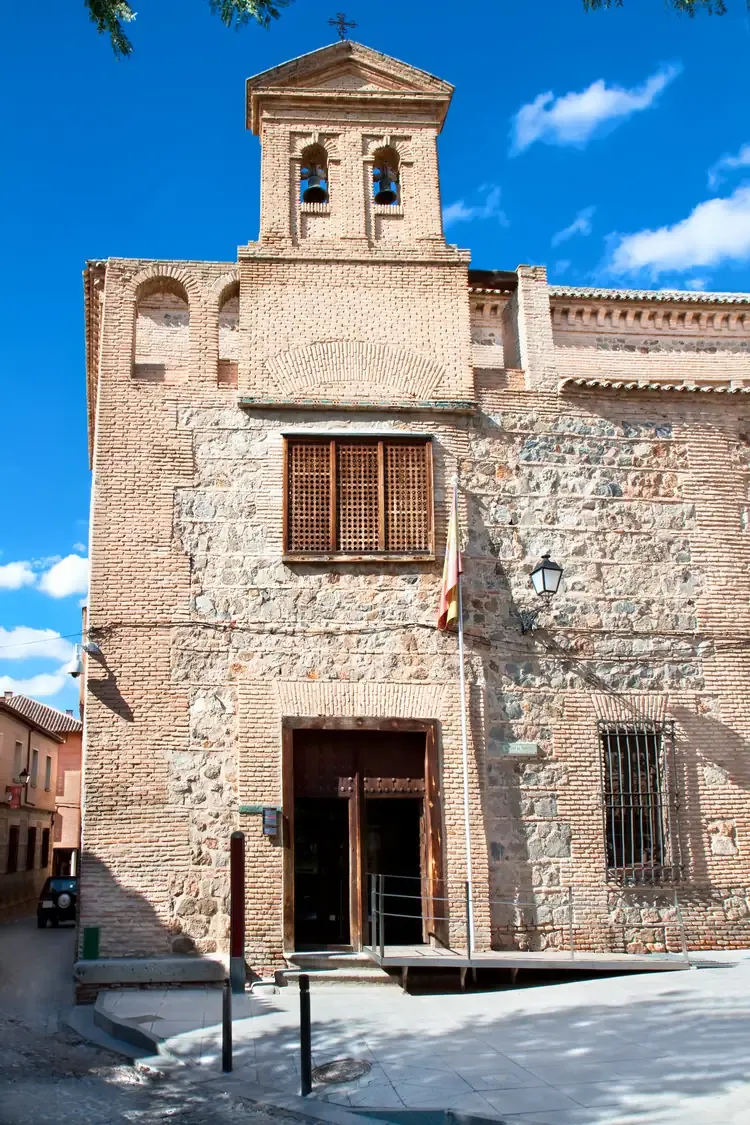
4. Sinagoga del Tránsito
Samuel Levi, treasurer to Peter I of Castile, had this synagogue built in 1357, and its prayer hall keeps one of the finest Mudejar interiors in Spain. Carved plasterwork runs in bands below a coffered cedar ceiling, mixing Hebrew psalms with Arabic motifs and the arms of Castile. The building now houses the Museo Sefardi, whose collection follows Jewish life in the peninsula from antiquity to the expulsion.
Style: Mudejar
Location: Calle Samuel Levi, s/n, 45002 Toledo
Access: Ticketed and closed on Mondays. Open Tuesday to Saturday from 9:30 to 20:00, Sunday and holidays from 10:00 to 15:00.
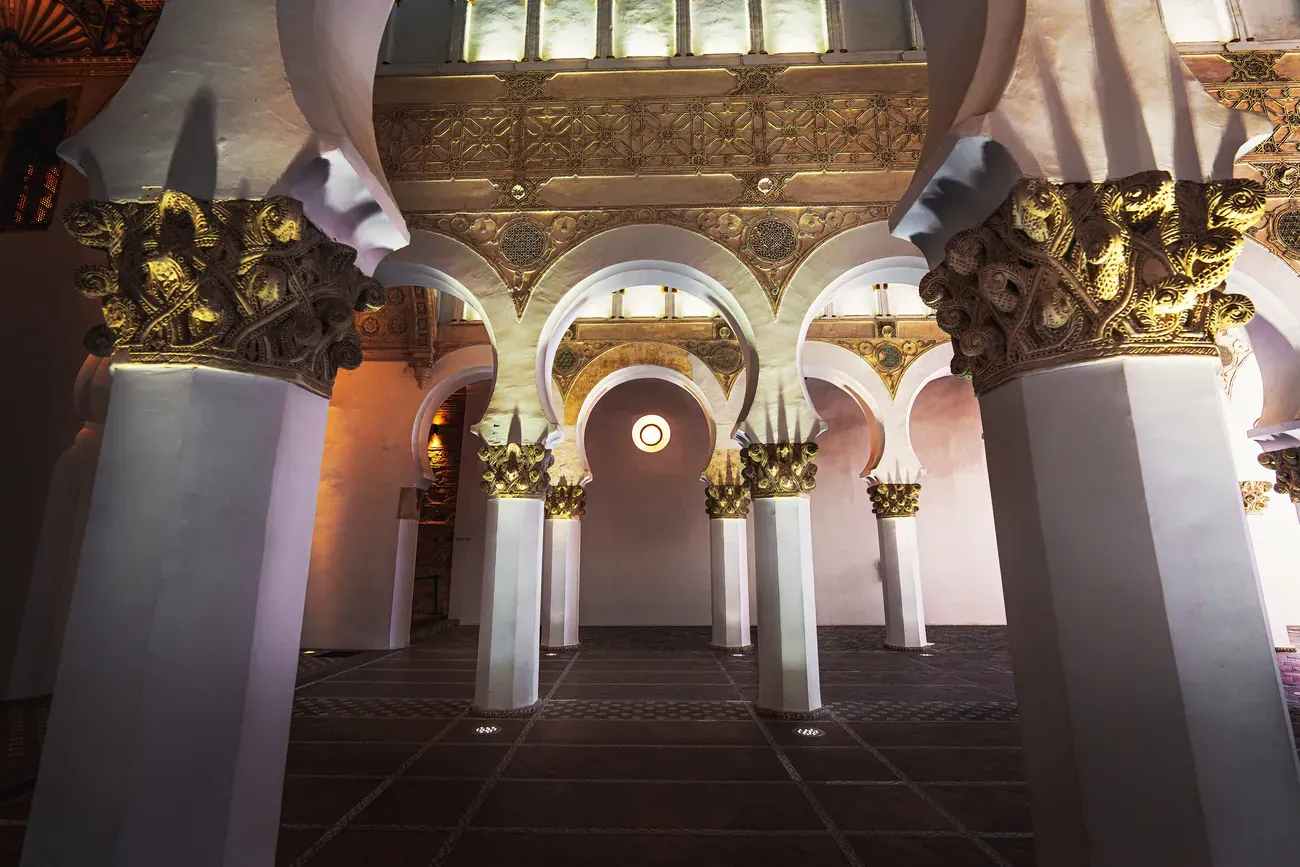
5. Sinagoga de Santa María la Blanca
Built around 1180 as the Great Synagogue of Toledo, this is the older of the two that survive in the Jewish quarter. Five naves of horseshoe arches rest on octagonal pillars, every capital carved with a different design of pine cones and interlacing bands, the whole interior lime washed to a startling white. It passed to Christian use after 1405 and has been kept since as a monument rather than a working church.
Style: Mudejar
Location: Calle de los Reyes Catolicos, 45002 Toledo
Access: Ticketed, and included in the Toledo Monumental bracelet.
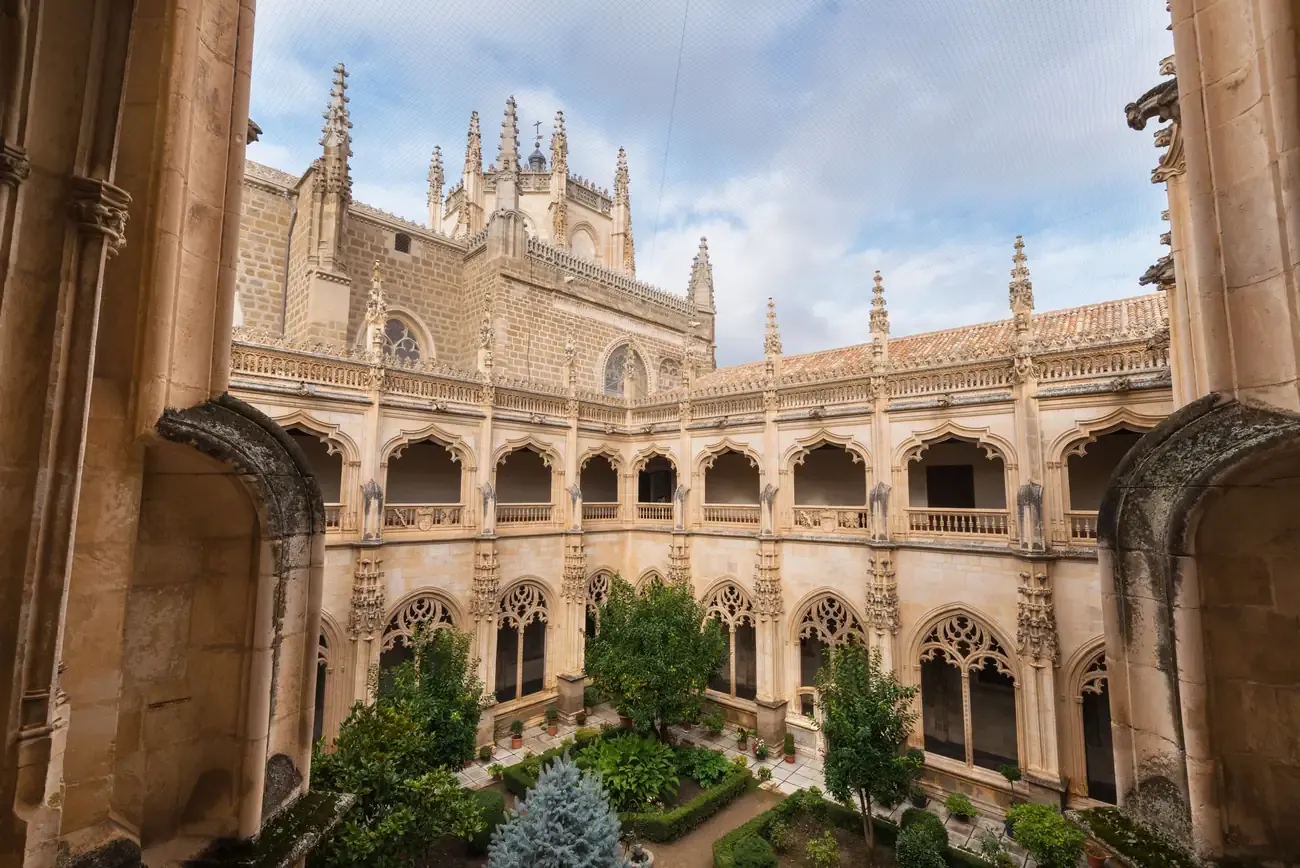
6. Monasterio de San Juan de los Reyes
The Catholic Monarchs raised this Franciscan house to mark their victory at the Battle of Toro in 1476, and intended it as their own burial place before Granada changed their plans. Juan Guas designed a church of extravagant Isabelline stonework, with royal emblems repeated across the walls. The two storey cloister, restored after damage by Napoleonic troops, is the quieter pleasure, its upper gallery carved with saints under Mudejar ceilings.
Architect: Juan Guas · Style: Isabelline Gothic
Location: Calle de los Reyes Catolicos, 45002 Toledo
Access: Ticketed, and included in the Toledo Monumental bracelet.
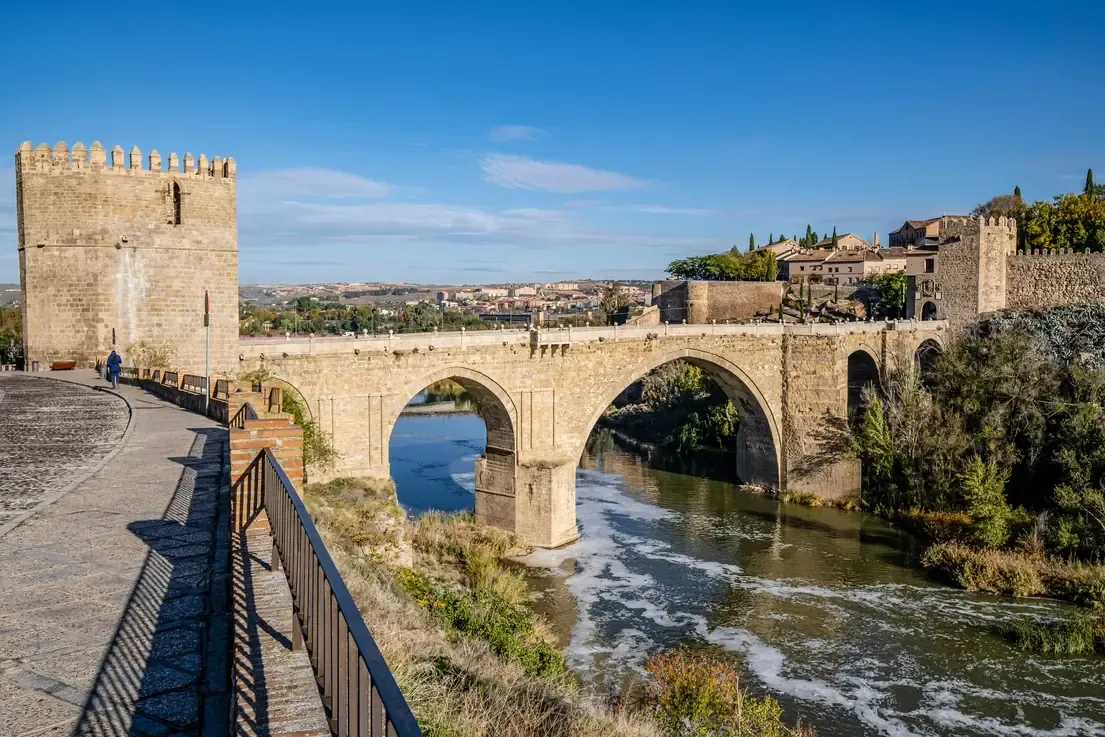
7. Puente de San Martín
The western gate to the city crosses the Tagus on five pointed arches, with a broad central span carried high above the water. Two hexagonal towers guard the ends, rebuilt under Archbishop Pedro Tenorio in the late 14th century, and the deck still walks visitors into the old town the way it once carried merchants arriving from Extremadura. The gorge below is quieter here than on the eastern side of the city.
Style: Medieval
Location: Puente de San Martin, 45002 Toledo
Access: Free. The bridge is a public crossing and costs nothing to walk at any hour.
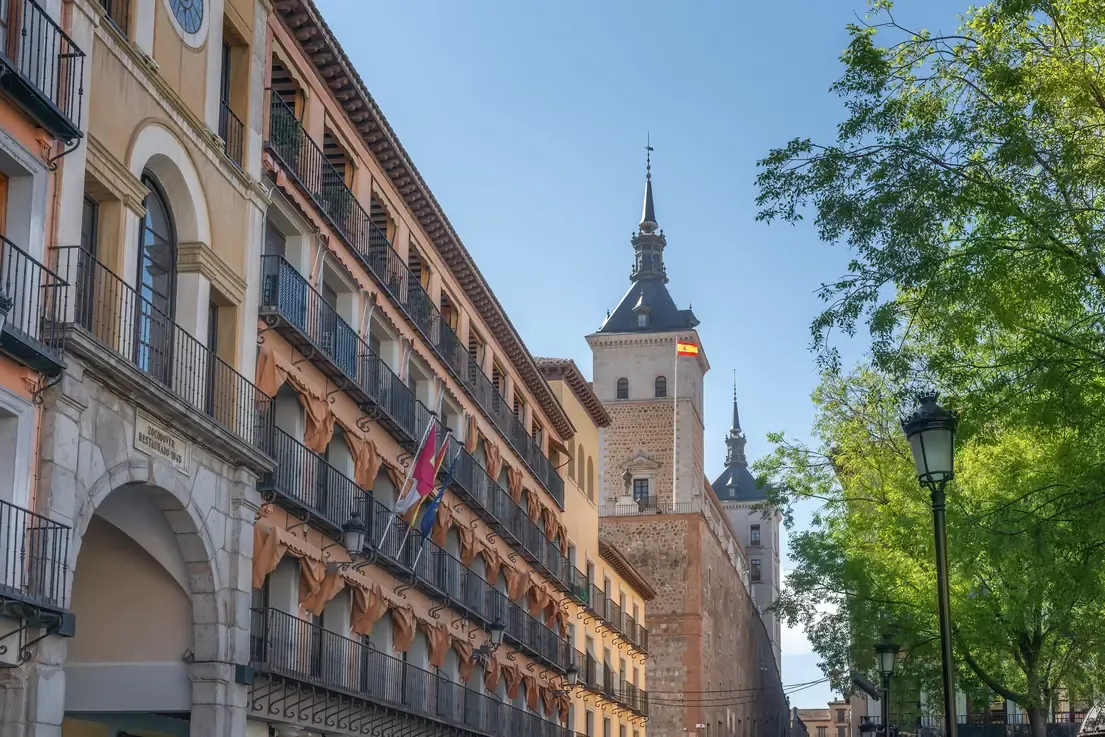
8. Plaza de Zocodover
Toledo's triangular main square took its name from the Arabic market that stood here, and it has been the meeting point of the walled town ever since. Arcaded facades close two sides, cafe terraces fill the middle, and the Arco de la Sangre opens at the eastern corner onto the steep lanes running down to the river. Most walking routes through the old town begin or end on this slope.
Location: Plaza de Zocodover, 45001 Toledo
Access: Free. The square is open ground at every hour and costs nothing to cross or sit in.
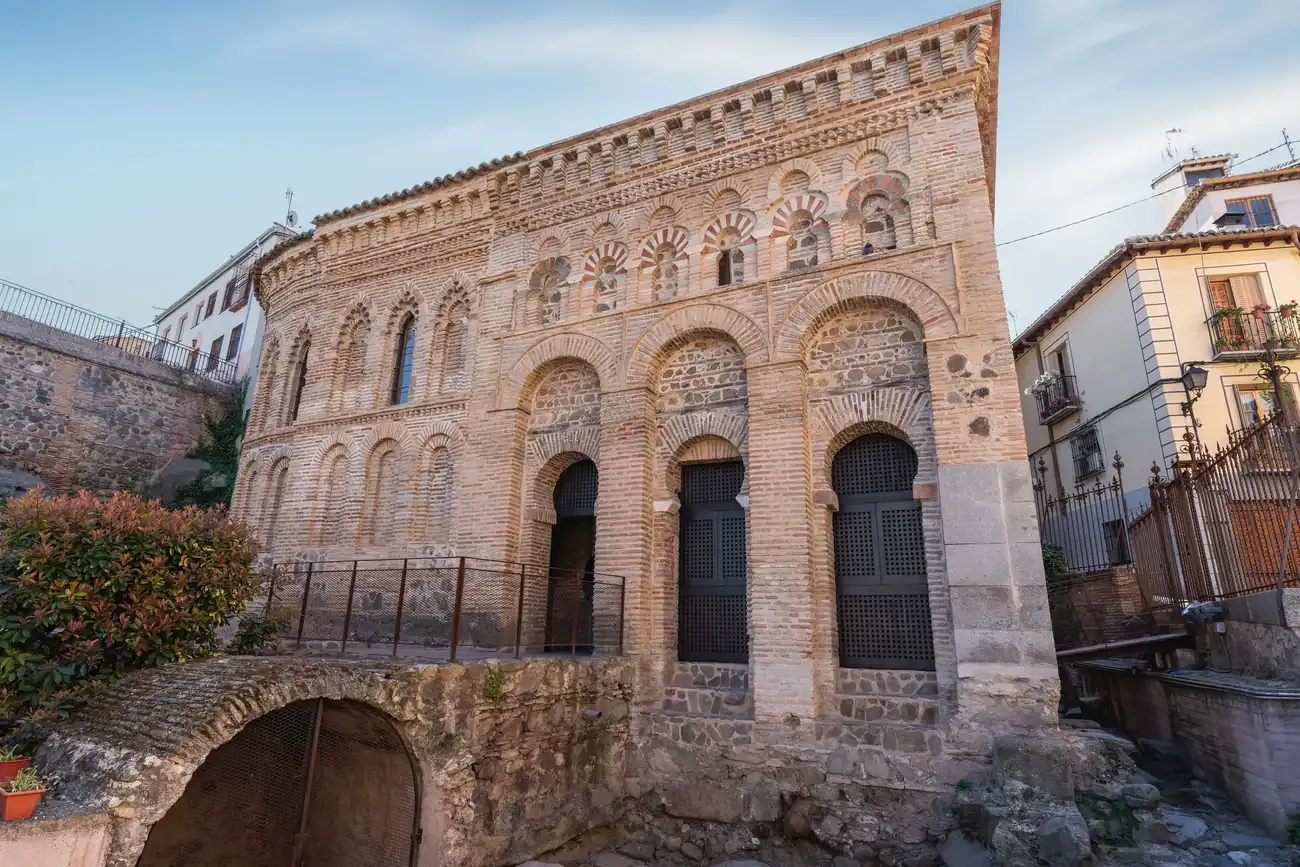
9. Mezquita del Cristo de la Luz
One of the oldest buildings standing in Toledo, this small mosque went up in the 10th century in the Caliphal style of Cordoba. Nine vaults cover the prayer hall and no two are cut alike, a display of geometry in a room barely eight metres square. After the Christian conquest a Mudejar apse was added at the east end, leaving a building that reads as mosque and church at once, set in a garden above the northern gate.
Style: Caliphal
Location: Calle Cristo de la Luz, 22, 45002 Toledo
Access: Ticketed, and included in the Toledo Monumental bracelet.
Free things to do in Toledo
Puerta de Bisagra
Toledo's monumental gate into the old town, its two courtyards and the imperial shield facing Madrid, costs nothing to walk through or photograph at any hour of the day or night.
Puente de Alcántara
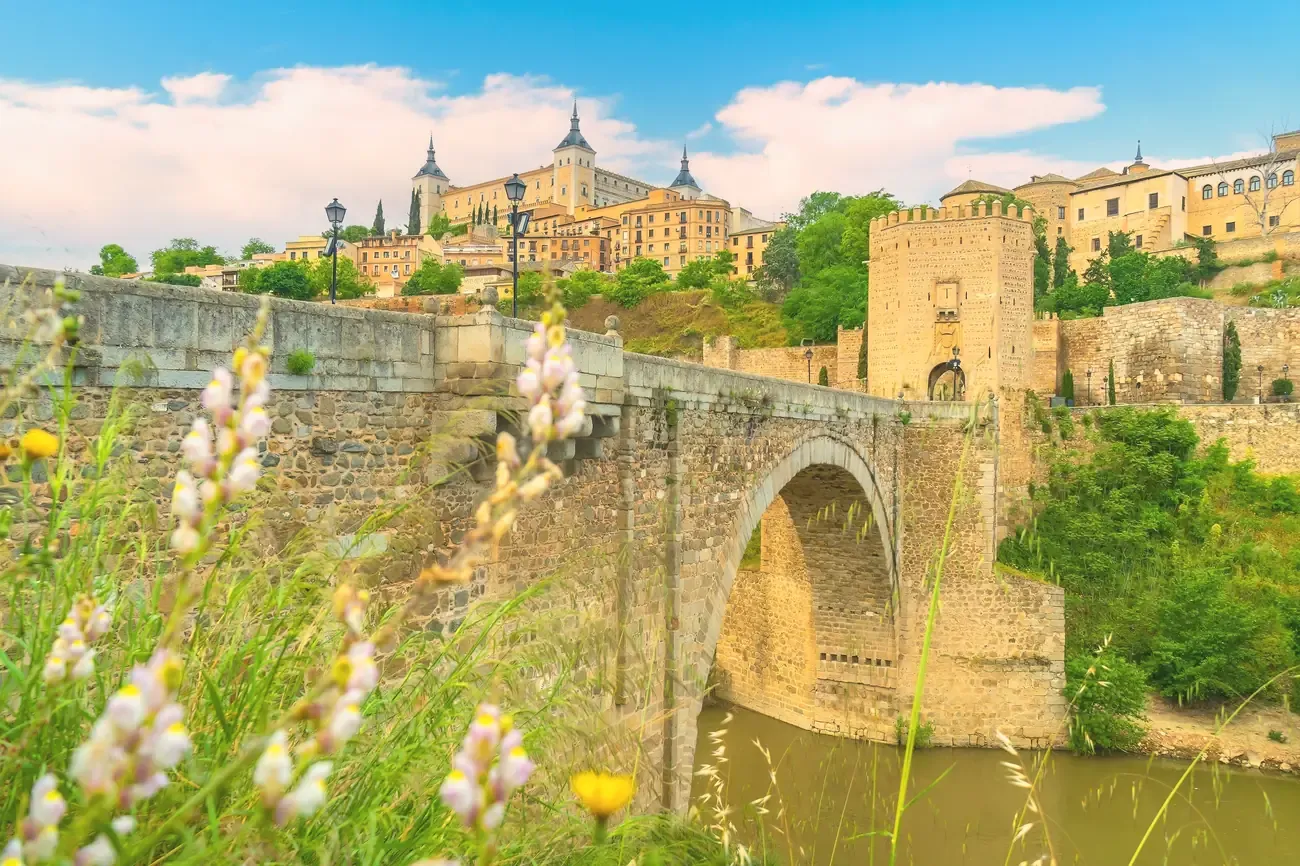
The eastern bridge over the Tagus is free to cross on foot, and the far bank below the modern parador gives one of the clearest free views of the Alcázar rising above the gorge.
Mirador del Valle
This roadside terrace on the far bank of the Tagus frames the classic view of Toledo's skyline at no charge, reached by a short bus ride or a walk across the river and up the hillside.
Museo de Santa Cruz
This former hospital charges no admission at all while renovation work continues, with the Temporary Exhibitions Hall, Carranza Room and Covarrubias Cloister open to visitors, Monday to Saturday and Sunday morning.
Layers of history in Toledo
Museo de la Tortura
A private collection of Inquisition era instruments, displayed with panels on how the tribunals that used them actually worked.
Location: Calle de Alfonso XII, 24, Toledo
Roman Circus of Toledo
The grassed remains of a Roman chariot racing circus, laid out beyond the walls in the first century and kept today as a public park.
Location: Avenida de Carlos III, 15, Toledo
Pozo Amargo
A well on a stepped lane below the cathedral, tied to the legend of a Jewish woman whose tears turned its water bitter.
Location: Bajada Pozo Amargo, 45002 Toledo
Museo del Greco
The only museum devoted to the painter, built in 1911 around a house and garden in the old Jewish quarter. Website
Location: Paseo del Transito, s/n, 45002 Toledo
More hidden corners of Toledo
Roman Baths of Toledo
A stretch of Roman bathing rooms that resurfaced in 1986 during building work and is now preserved below street level.
Location: Plaza Amador de los Rios, 3, 45001 Toledo
The Smallest Window in the World
A palm sized opening in the wall of the Cason de los Lopez, billed as the smallest window in the world.
Location: Calle Silleria, 45001 Toledo
Cave of Hercules
A vaulted chamber under a former church, tied to the legend of a sealed cave that each Visigothic king added a lock to.
Location: Callejon de San Gines, 3, 45001 Toledo
Monument to the Eagle of Toledo
A tribute to Federico Martin Bahamontes, the climber nicknamed the Eagle of Toledo and the first Spaniard to win the Tour de France.
Location: Calle de Venancio Gonzalez, 13, 45001 Toledo
Iglesia de los Jesuitas
A Baroque church begun in 1629 whose twin towers open the widest rooftop view over the walled town.
Location: Plaza Padre Juan de Mariana, 1, 45002 Toledo
What makes Toledo special
Perched on a rocky outcrop wrapped by a bend in the Tagus, about 70 km south of Madrid, Toledo has been rebuilt by every civilisation that held it: a Roman municipium, capital of the Visigothic kingdom, a stronghold of the Umayyad emirate of Córdoba, and after the Christian conquest of 1085, a city where Christian, Jewish and Muslim communities lived and built side by side for centuries. UNESCO calls it the city of the three cultures and listed the entire walled centre as a World Heritage Site in 1986.
Inside the walls
The old town packs a cathedral, a former royal fortress, two synagogues and a Mudéjar mosque into a tangle of stepped lanes barely wider than a cart. The Judería, the old Jewish quarter around the synagogues of El Tránsito and Santa María la Blanca, sits toward the western edge of the peninsula, closest to the Puente de San Martín; the Casco Histórico around the cathedral and Zocodover forms the commercial heart, busiest around the middle of the day.
When to go
Spring and autumn keep the stone streets shaded and the crowds thinner than the height of summer, when the Castilian plateau's heat can be intense with little shade inside the old town. Many visitors come on a single day trip from Madrid, but the streets empty out noticeably once the coach groups leave in the late afternoon, which is when the old town feels most like itself.
Getting around
Toledo's centre is built for walking, not driving: the cobbled lanes inside the walls are largely closed to private cars, and parking is scarce. From the bus and train stations at the foot of the hill, it is a steep climb up to Zocodover, and local buses, including line 5, run up to the square regularly for anyone who would rather skip the hill. El Greco painted The Burial of the Count of Orgaz for the church of Santo Tomé between 1586 and 1588 and it still hangs there, one of the works that keeps Toledo on most lists of tourist attractions to visit in Spain.