
Como tourist attractions
Known for
The Duomo, the Tempio Voltiano and grand villas along the Lake Como
Must-see landmarks
Como Cathedral, Villa Olmo and the Como-Brunate funicular
Best time to visit
April to June and September, before and after the summer crowds
Days needed
One day for the historic centre, plus a half day for a boat trip on the lake
1. Como Cathedral
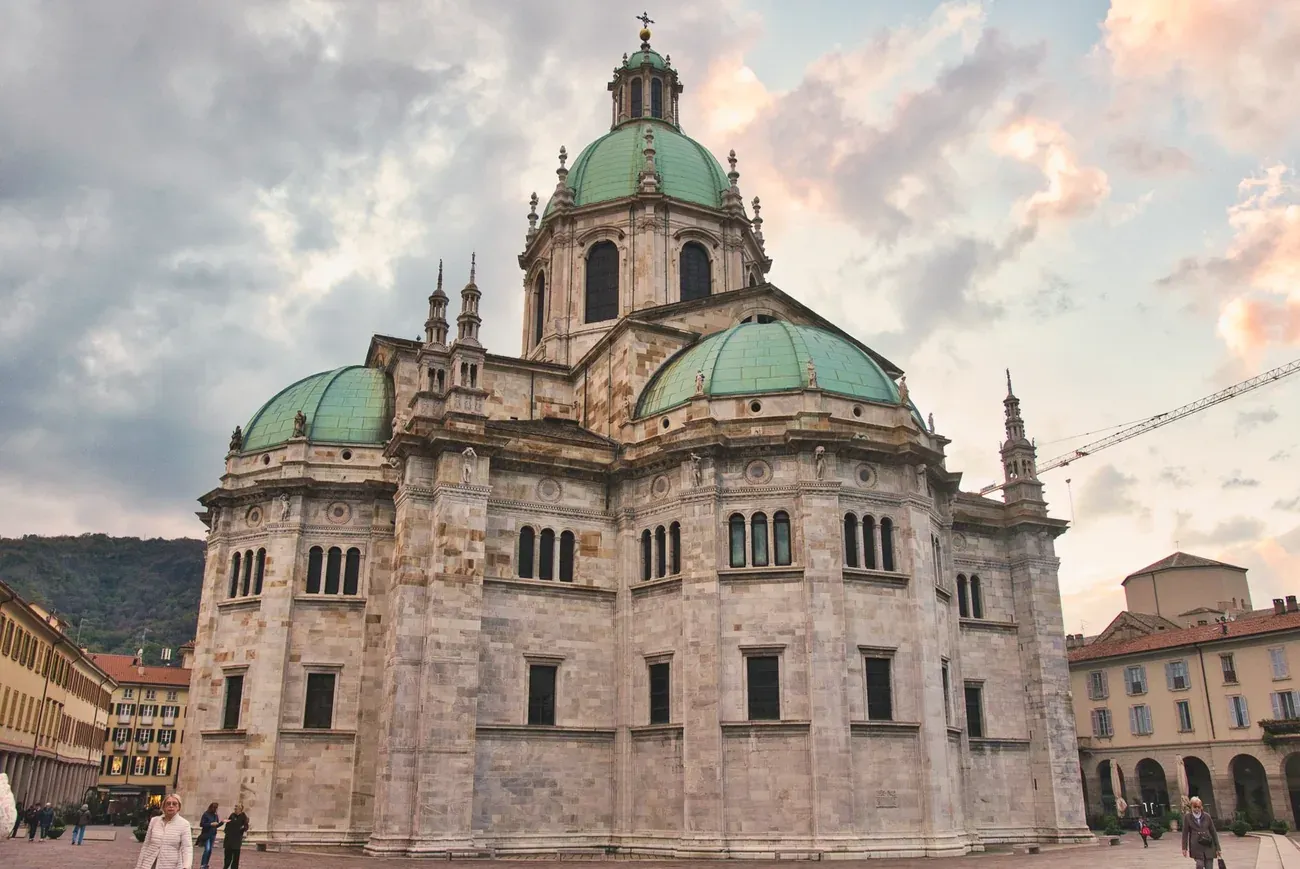
Como Cathedral took almost four centuries to build: work began in 1396 on the site of the Romanesque church of Santa Maria Maggiore and ended in 1770, when the dome designed by Filippo Juvarra was completed. The marble facade, raised between 1457 and 1498, frames its main portal with statues of Pliny the Elder and Pliny the Younger, both born in Como. Inside hang tapestries woven in the late 16th century in Ferrara, Florence and Brussels, alongside paintings by Bernardino Luini and Gaudenzio Ferrari. The Broletto, the town hall of 1215, stands against its facade.
Location: Piazza del Duomo, Como
Access: Free entry to the nave; a ticket covers the transept, sacristies and balconies
2. Lungolago and Piazza Cavour
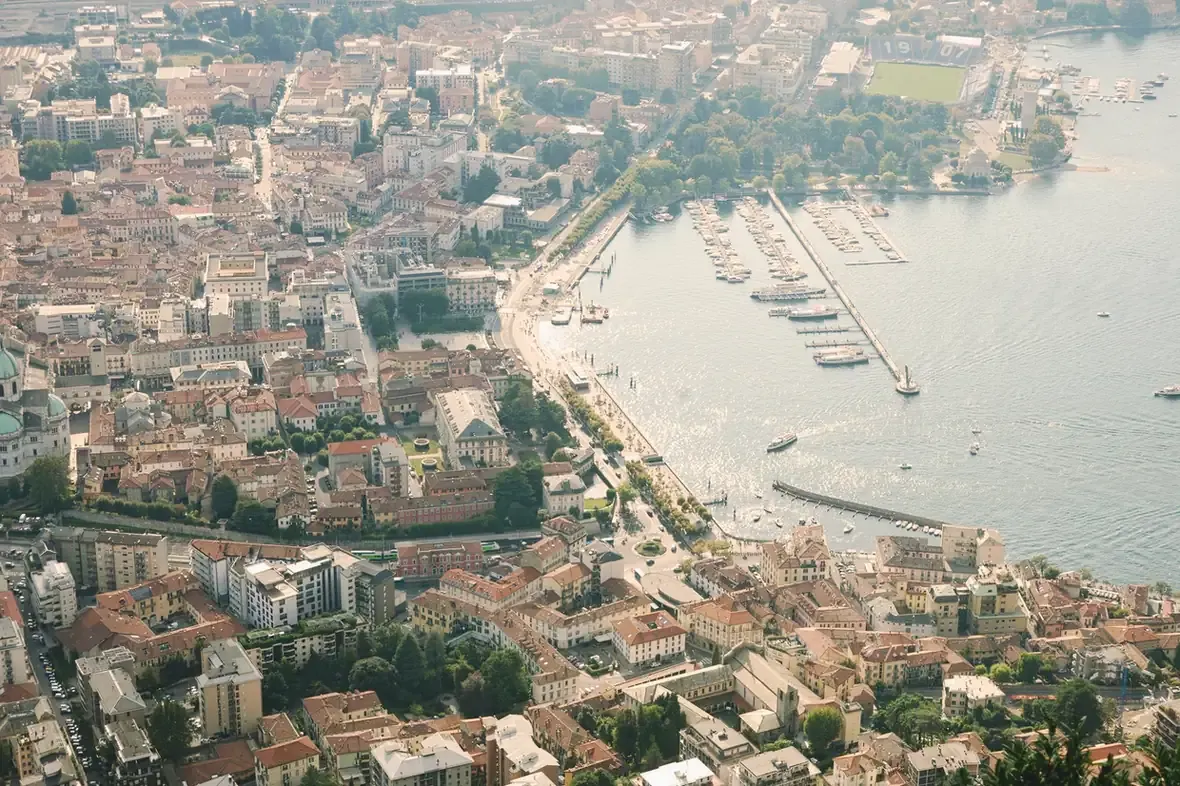
Piazza Cavour is where the old town opens onto the water, a broad square of cafes facing the main boat piers, with the wooded slope of Brunate rising across the bay. From here the lungolago runs west past the Tempio Voltiano, the Monumento ai Caduti and the gardens of Villa Olmo, and east along Viale Geno to the fountain off Villa Geno, a flat walk with the lake alongside all the way. Just off the square, the Diga Foranea breakwater leads out over the water to Life Electric, the steel sculpture dedicated to Alessandro Volta.
Location: Piazza Cavour and Lungo Lario Trento, Como
Access: Free, open at all hours
3. Como-Brunate Funicular
The Como-Brunate funicular has climbed the hillside east of the city since 1894, driven by steam until the line switched to electric traction in 1911. The track is 1,084 metres long, its first 130 metres in a tunnel, and the ride takes about 7 minutes, with the two cars leaving Como and Brunate at the same time. Once out of the tunnel, the view opens over the rooftops, the dome of the Duomo and the first basin of the lake. There is an optional intermediate stop at Carescione.
Location: Piazza Alcide De Gasperi, Como (valley station)
Access: Ticketed; runs daily from 6:00 to midnight; closed for planned works from 9 to 27 November 2026
4. Brunate and the Faro Voltiano
Brunate sits about 500 metres above Como at the top of the funicular, a hillside village of villas and lanes with views over the city, the lake and, on clear days, the Alps. Paths lead up from the funicular station to the San Maurizio district and the Faro Voltiano, a 29 metre lighthouse tower raised in 1927 for the centenary of Alessandro Volta's death, whose tricolour light can be seen across the lake at night. The tower itself is closed for maintenance in 2026, but the viewpoints around it remain open to walkers.
Location: Brunate, above Como
Access: Free to walk; the funicular ride is ticketed
5. Villa Olmo
Villa Olmo is the grandest of the neoclassical villas on Como's own shore, begun in 1782 for Marquis Innocenzo Odescalchi as a summer residence and completed to designs by the architect Simone Cantoni. It takes its name from an elm that stood on the estate when work began. The facade looks over a formal garden that runs down to the lake, the end point of the lakefront walk from Piazza Cavour, about 25 minutes away. The city of Como bought the estate in 1924 and now uses the villa for exhibitions and events.
Architect: Simone Cantoni · Style: Neoclassical
Location: Via Simone Cantoni 1, Como
Access: Free entry to the gardens; the villa's rooms open on set days and for exhibitions
6. Tempio Voltiano
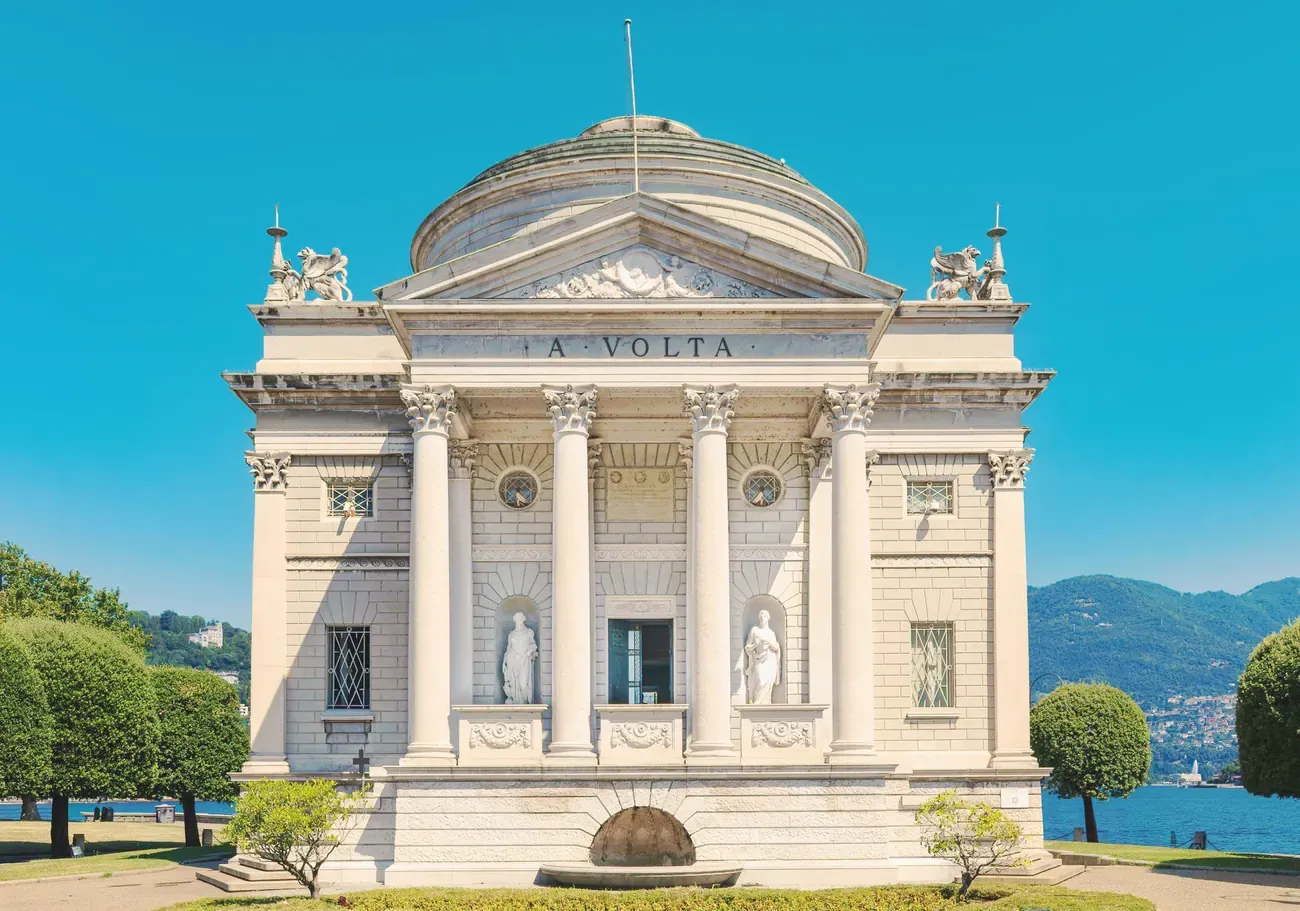
The Tempio Voltiano honours Alessandro Volta, the Como-born physicist whose voltaic pile of 1800 was the first battery to produce a continuous electric current. Architect Federico Frigerio designed it as a small neoclassical temple with echoes of the Pantheon, paid for by the cotton industrialist Francesco Somaini, and it opened on the lakefront in 1928. The idea dated back to 1899, when a fire destroyed much of a Volta exhibition held in the city. The surviving collection fills it today: original instruments, letters and personal belongings.
Architect: Federico Frigerio · Style: Neoclassical
Location: Viale Guglielmo Marconi, Como
Access: Ticketed; closed on Mondays
7. Lake Como by boat
Lake Como fills a deep Y-shaped basin carved by an ancient glacier: it is the third-largest lake in Italy and, at more than 400 metres, one of the deepest in Europe. Como sits at the foot of its south-western branch, and the public ferries and faster hydrofoils of the lake's navigation service leave from the piers on Piazza Cavour for Cernobbio, the Tremezzina shore and Bellagio, where the three branches meet. Seen from the water, the villas and gardens along the shore show the side they were built to present.
Location: Ferry piers, Piazza Cavour, Como
Access: Ticketed; timetables change with the season
8. Basilica di San Fedele
The Basilica di San Fedele stands on the square that was Como's medieval corn market, a Romanesque church dating from around 1120 that replaced a 7th-century church of Sant'Eufemia. The relics of the martyr Saint Fidelis were brought here in 964, and for a time it was the city's main church. The facade was rebuilt in neo-Romanesque style in 1914 and the leaning bell tower was pulled down and replaced in the early 1900s, but the Lombard Romanesque choir and a portal carved with dragons, probably salvaged from Sant'Eufemia, are far older.
Location: Piazza San Fedele, Como
Access: Free outside services
9. Basilica di Sant'Abbondio
Sant'Abbondio stands outside the old walls on the site of a 5th-century church built by Bishop Amantius for relics of Saints Peter and Paul, and it was the seat of Como's bishops until the early 11th century. Benedictine monks rebuilt it in Romanesque style between 1050 and 1095, when Pope Urban II consecrated it. Its twin bell towers rise midway along the nave, and the apse keeps a cycle of mid-14th-century frescoes. Restorations from 1863 rebuilt the north tower and marked the outline of the earlier church on the floor.
Location: Via Regina Teodolinda, Como
Access: Free outside services
10. Casa del Fascio
Giuseppe Terragni's Casa del Fascio is a landmark of Italian modern architecture: a white block 33.2 metres square and exactly half as tall, built between 1933 and 1936 behind the apse of the Duomo. Its four facades are all different, balancing solid walls against open frames, and glass doors on the ground floor lead into the atrium. Built as the local Fascist Party headquarters, it has housed the Guardia di Finanza since 1957. Terragni's earlier Novocomum apartment block of 1929, on the lakefront by the stadium, makes a short walk through Como's rationalist architecture.
Architect: Giuseppe Terragni · Style: Rationalism
Location: Piazza del Popolo, Como
Access: Exterior only; the building houses offices, with occasional guided openings of the atrium
Free landmarks and viewpoints in Como
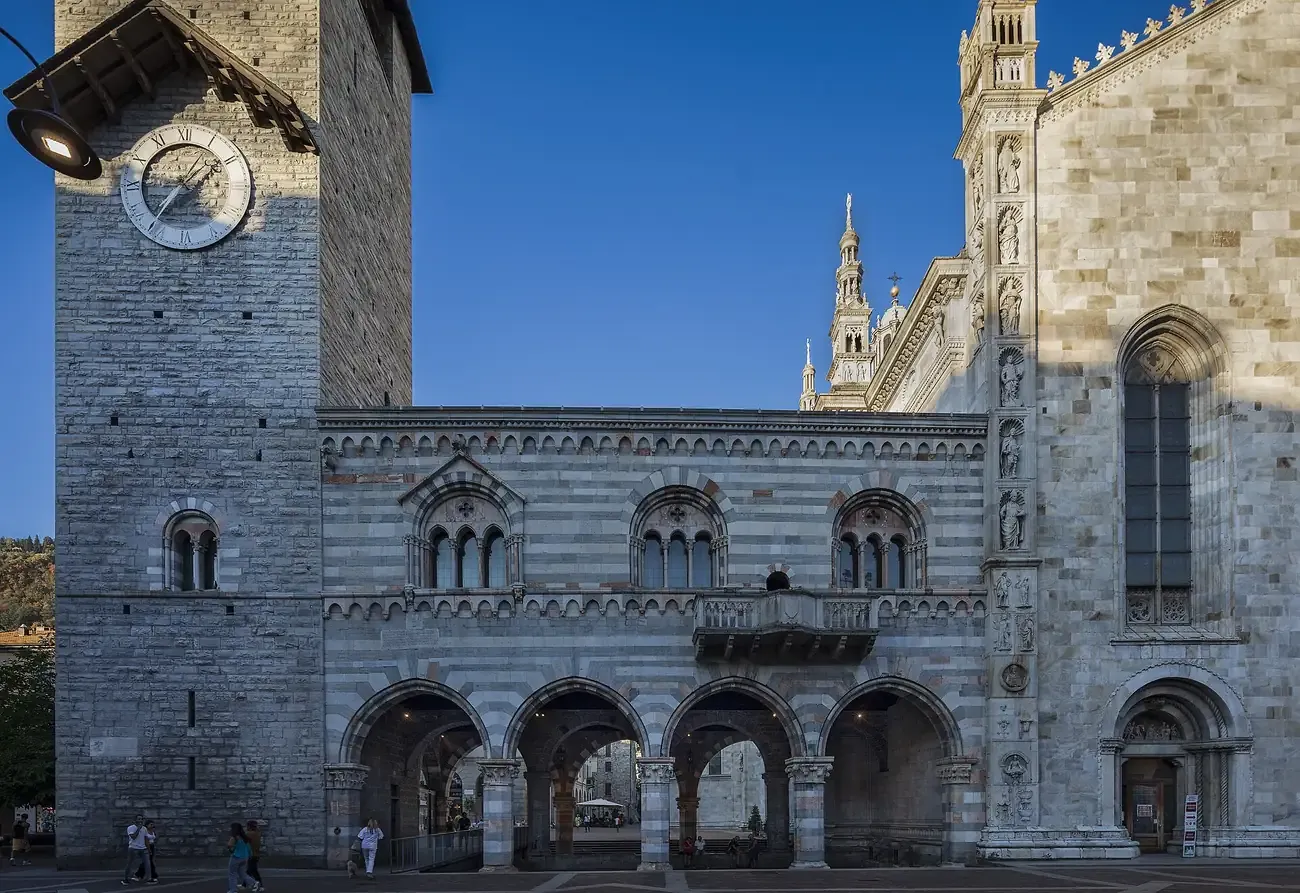
Broletto
The medieval town hall's marble loggia and arcades facing Piazza del Duomo cost nothing to admire from outside; exhibitions held inside carry their own admission.
Photo: "Broletto, Como" by Maurizio Moro5153 (CC BY-SA 4.0).
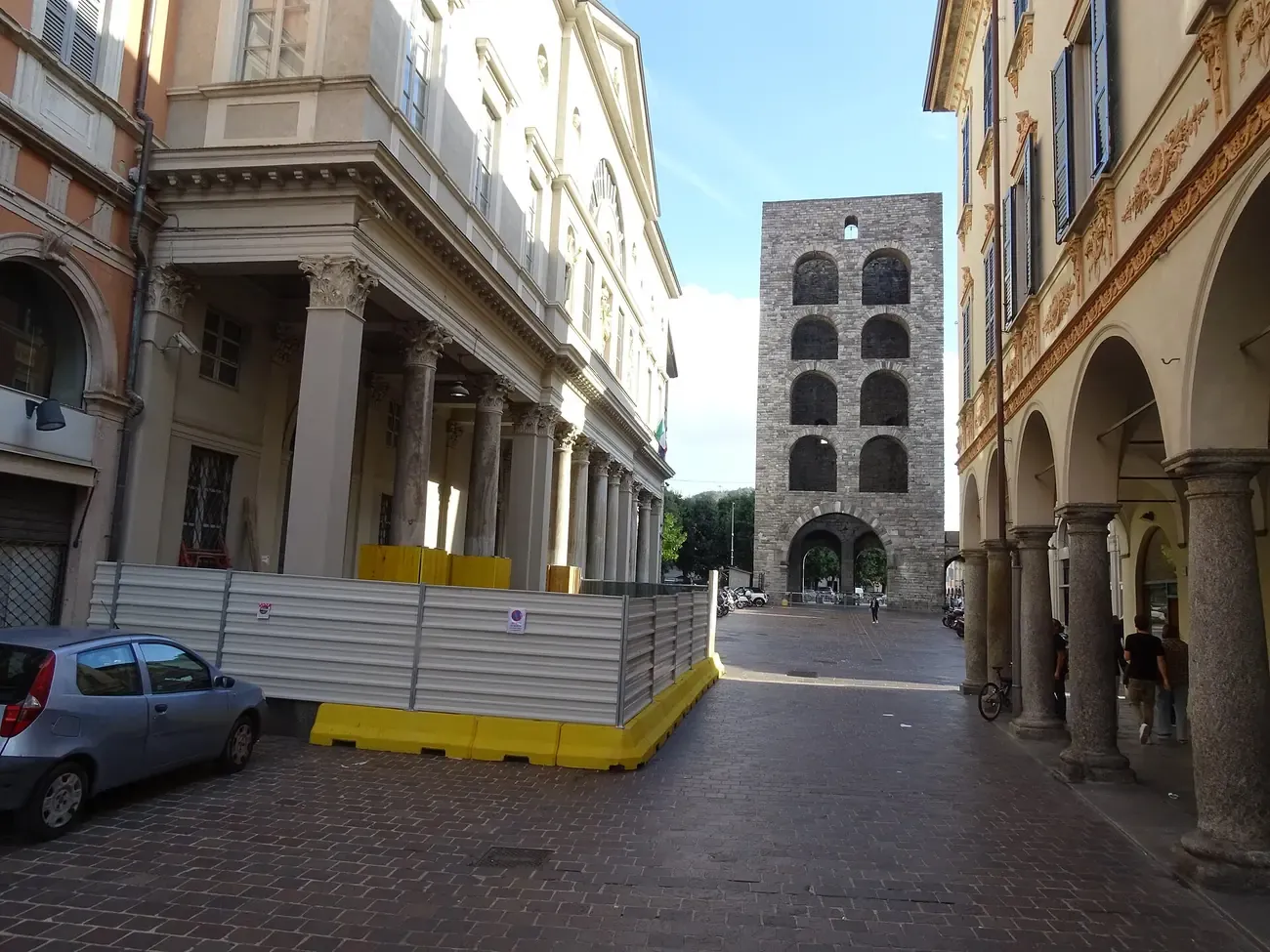
Porta Torre
Como's medieval city gate stands in the open air at any hour, free to walk past or through, surrounded by the old town's shops and its weekly market.
Photo: "Porta Torre, Como" by Marimari52 (CC BY-SA 4.0).
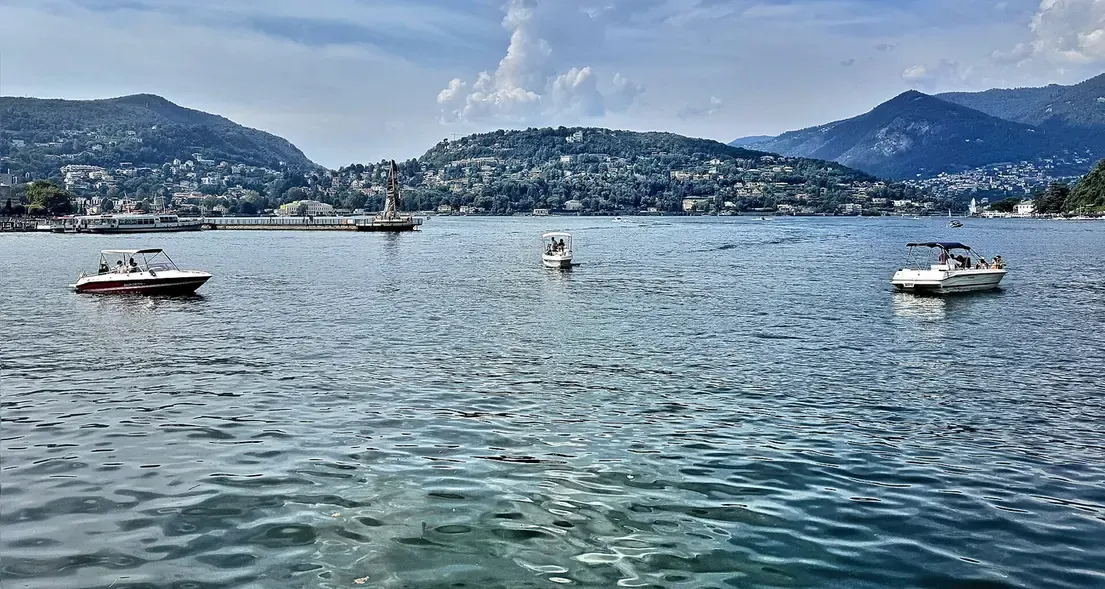
Life Electric
This steel sculpture honouring Alessandro Volta stands at the tip of the harbour pier, free to reach on foot at any hour, with no ticket or opening hours to plan around.
Photo: "First basin of Lake Como with the Diga Foranea, Como" by Fabioarg (CC BY-SA 4.0).
Museums, ruins and hidden corners of Como
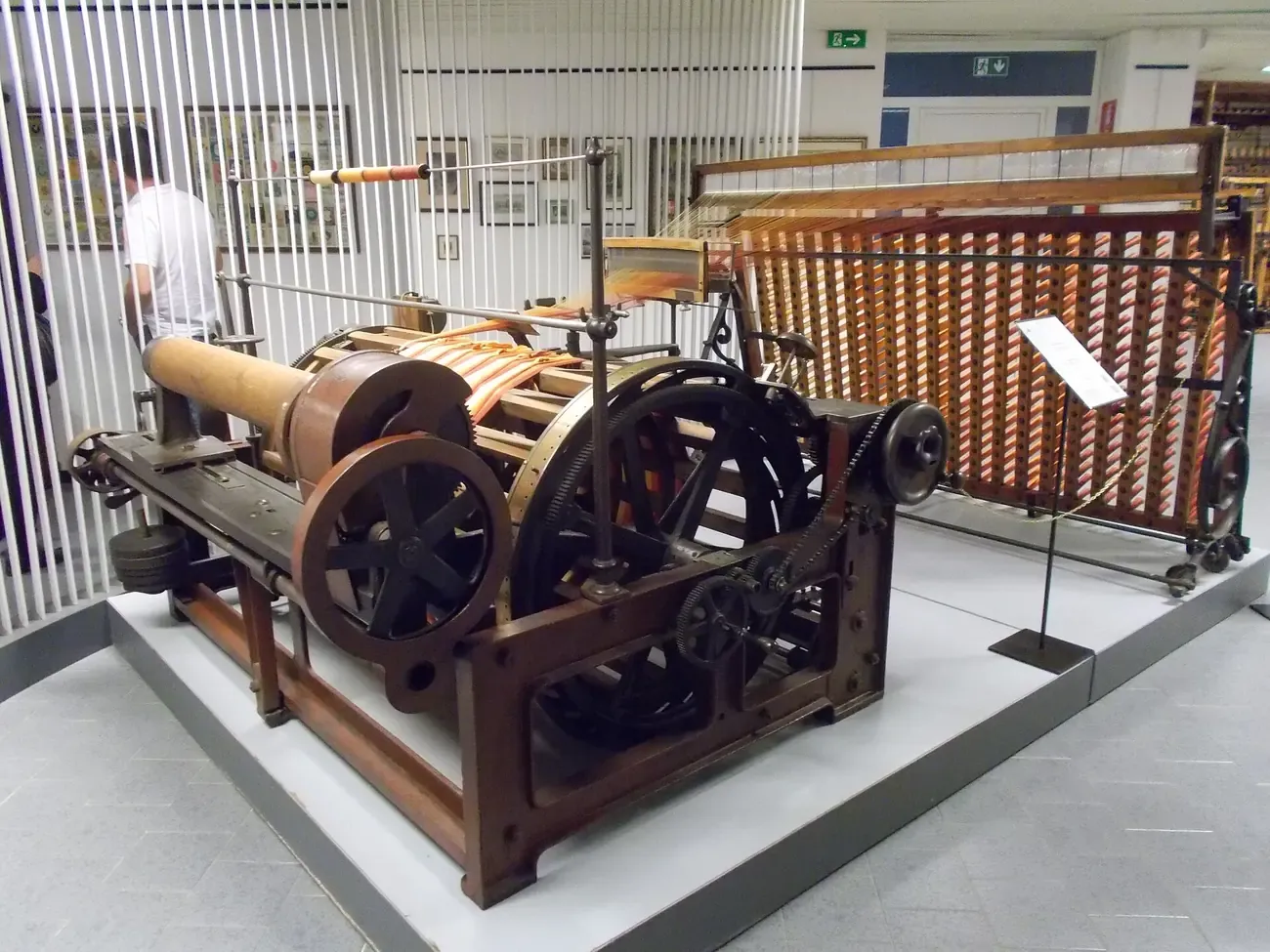
Museo della Seta
Looms, printing blocks and pattern archives trace Como's silk industry from silkworm to finished fabric, the trade that made the city a European silk capital.
Location: Via Castelnuovo 9, Como
Photo: "Sectional warping machine, Museo della Seta, Como" by Gloriangela (CC BY-SA 4.0).
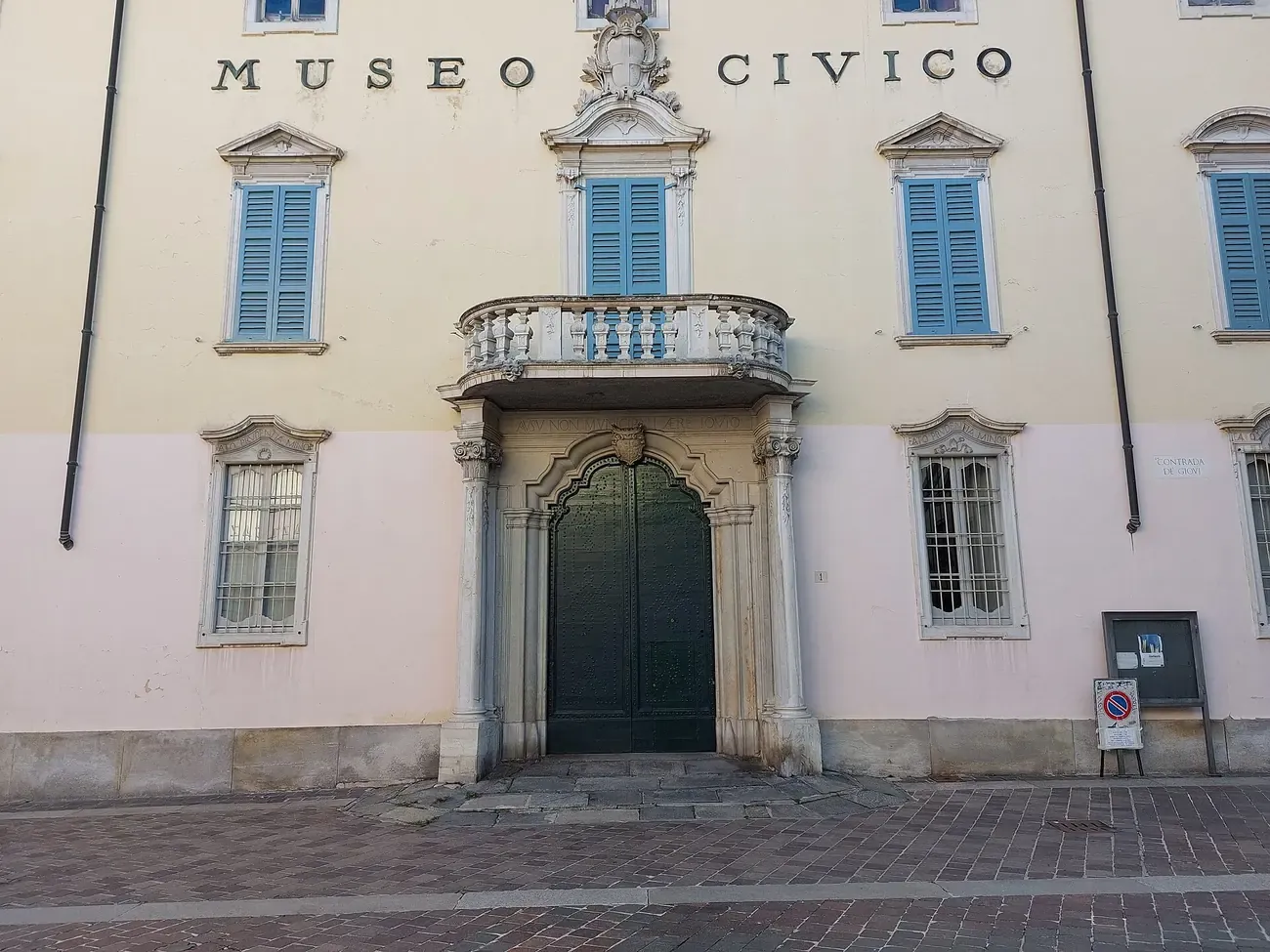
Pinacoteca Civica and Museo Archeologico Giovio
Palazzo Volpi's art gallery holds Romanesque sculpture from Sant'Abbondio and Paolo Giovio's portraits of famous men; Palazzo Giovio has shown the city's archaeology since 1897.
Location: Via Diaz 84 and Piazza Medaglie d'Oro 1, Como
Photo: "Museo Archeologico Paolo Giovio, Como" by Ysogo (CC BY-SA 4.0).
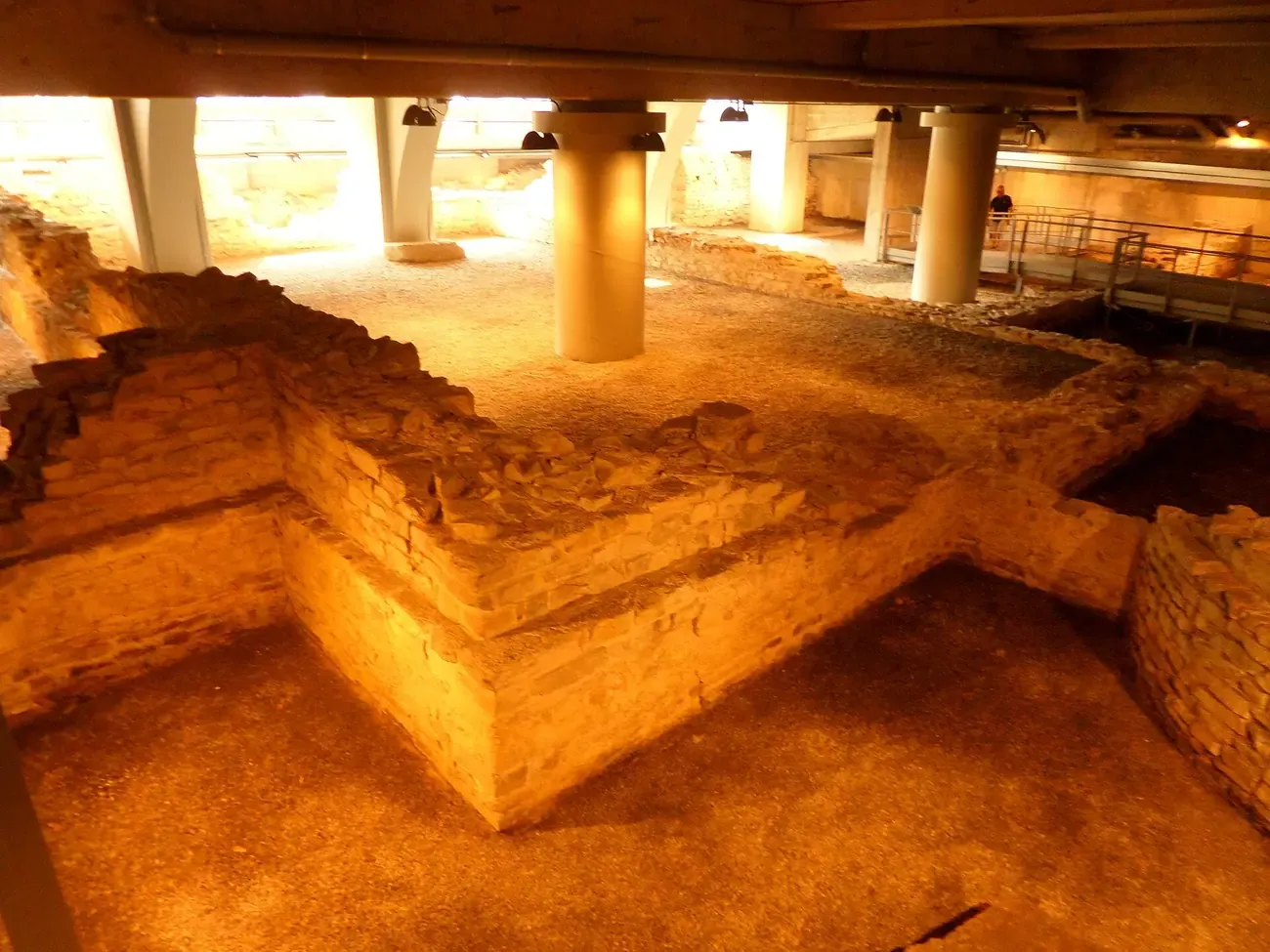
Roman Baths of Como
Ruins of public baths from 1st-century Comum lie beneath a car park, seen from raised walkways beside two small rooms of excavation finds.
Location: Viale Lecco 9, Como
Photo: "Roman baths of Como" by Riccardo Ortelli (CC BY-SA 4.0).
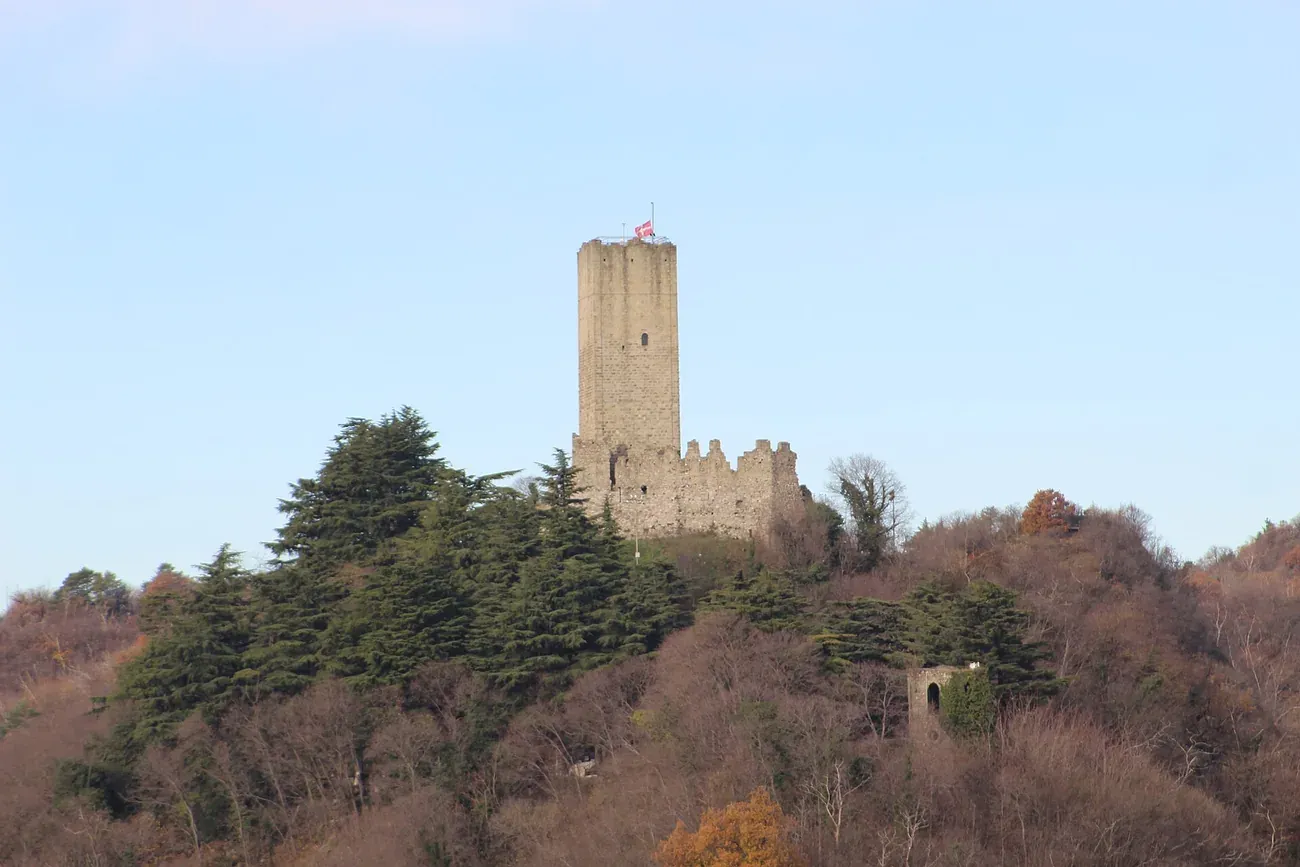
Castello Baradello
A 27 metre tower on a hill above the city, the survivor of a fortress Barbarossa restored in 1158 and Charles V dismantled in 1527.
Location: Via Castel Baradello, Como
Photo: "Castello Baradello from Monte Goi, Como" by Ottantafame (CC BY-SA 4.0).
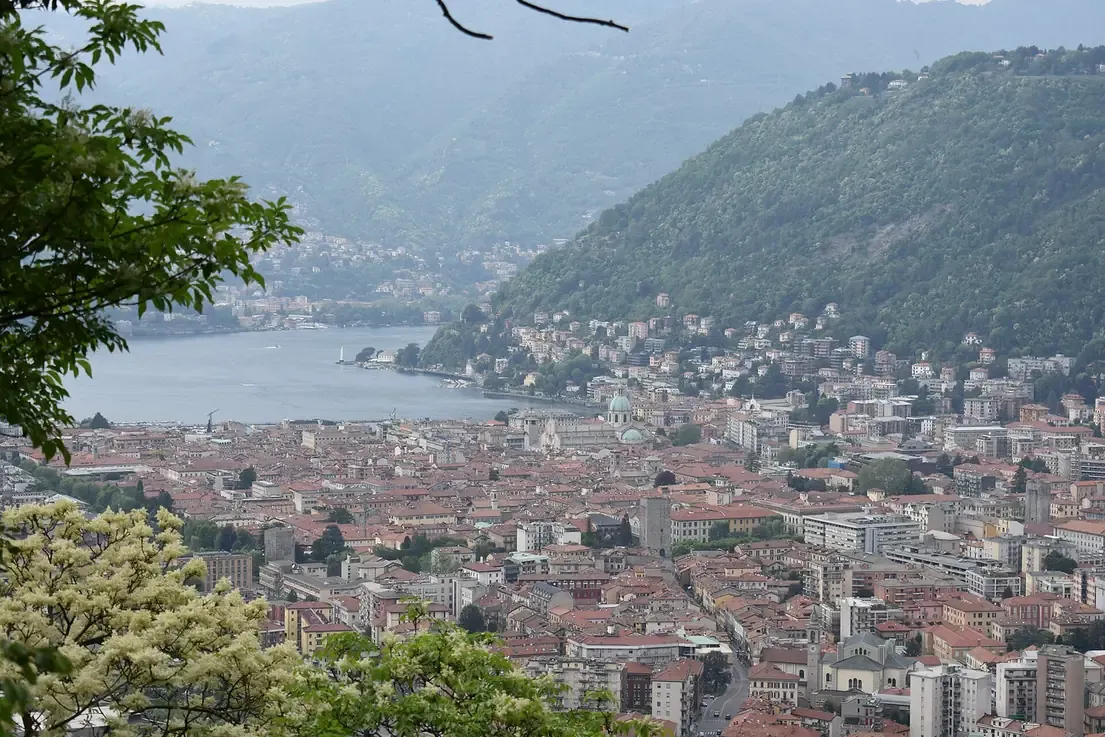
Parco Spina Verde and the Scala del Paradiso
A regional park on the wooded ridge above Como that crosses into Switzerland, where the Scala del Paradiso and other trails follow old smugglers' paths.
Location: Spina Verde ridge, west of Como
Photo: "Como from the Spina Verde park" by Uppa66 (CC BY-SA 4.0).
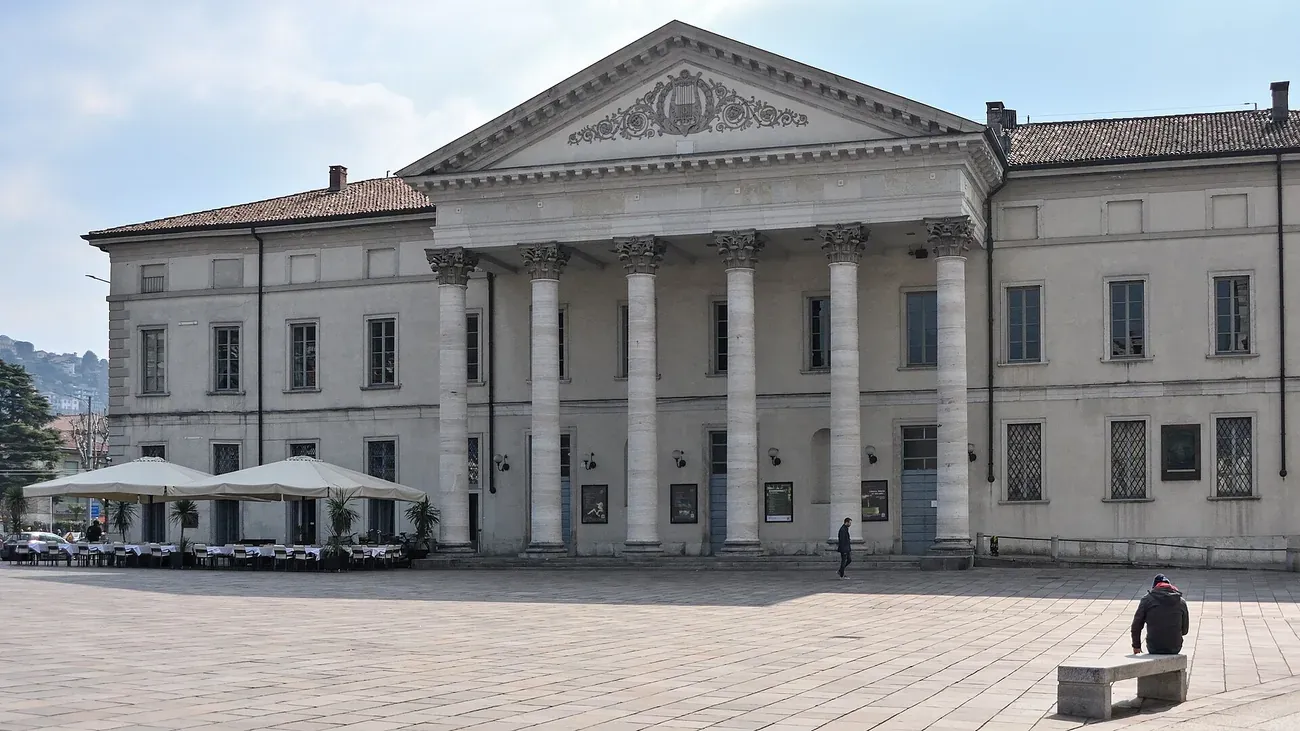
Teatro Sociale
Como's opera house, designed by Giuseppe Cusi and opened in 1813 on the site of a medieval castle; Paganini and Liszt both performed here.
Location: Via Vincenzo Bellini 3, Como · Website
Photo: "Teatro Sociale, Como" by Lorenzo Gaudenzi (CC BY-SA 4.0).
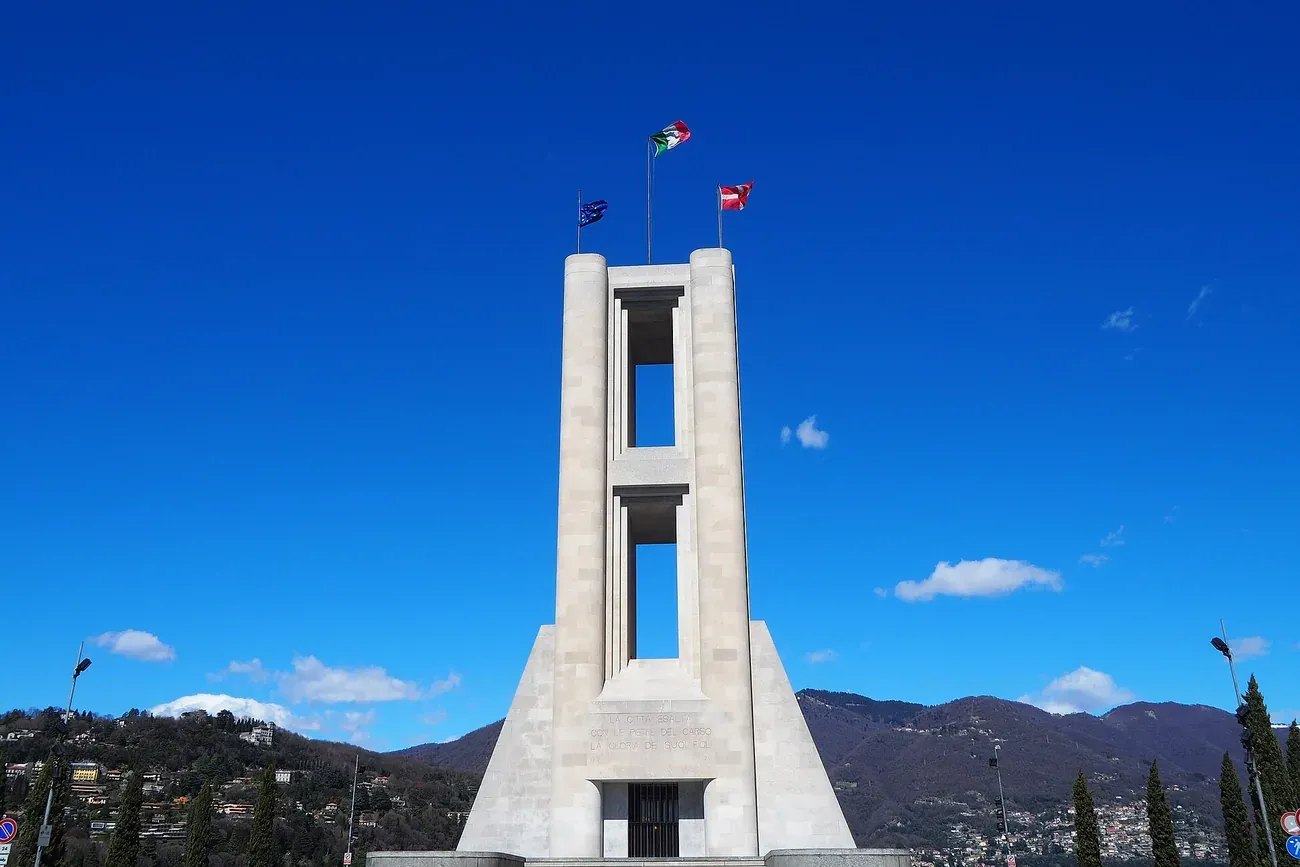
Monumento ai Caduti
A 30 metre stone tower in the lakefront gardens, completed in 1933 by Giuseppe Terragni from a 1914 sketch by the futurist architect Antonio Sant'Elia.
Location: Viale Puecher, Como
Photo: "Monumento ai Caduti, Como" by SteTaglia (CC BY-SA 4.0).
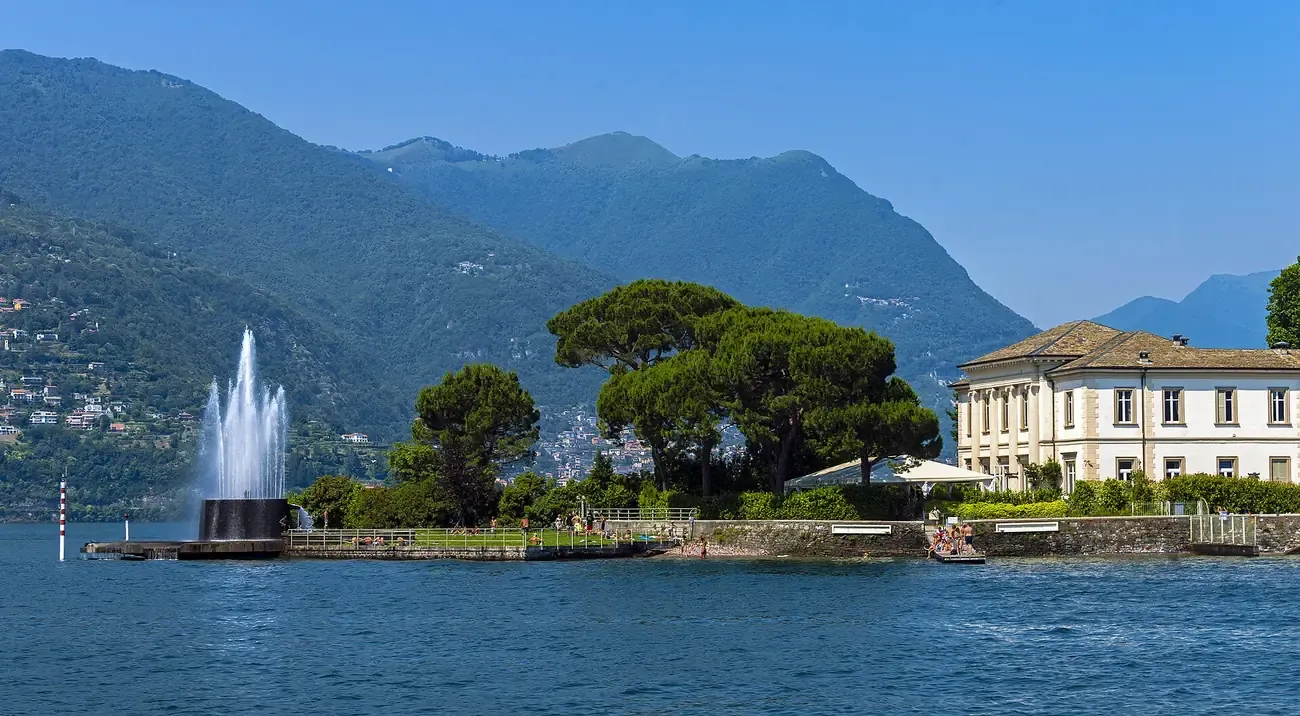
Villa Geno
A late neoclassical villa by Giacomo Tazzini on the point closing the eastern lakefront, with a fountain rising from the water offshore.
Location: Viale Geno, Como
Photo: "Villa Geno and fountain from a ferry on Lake Como" by Daniel Case (CC BY-SA 3.0).
Villas and villages on Lake Como
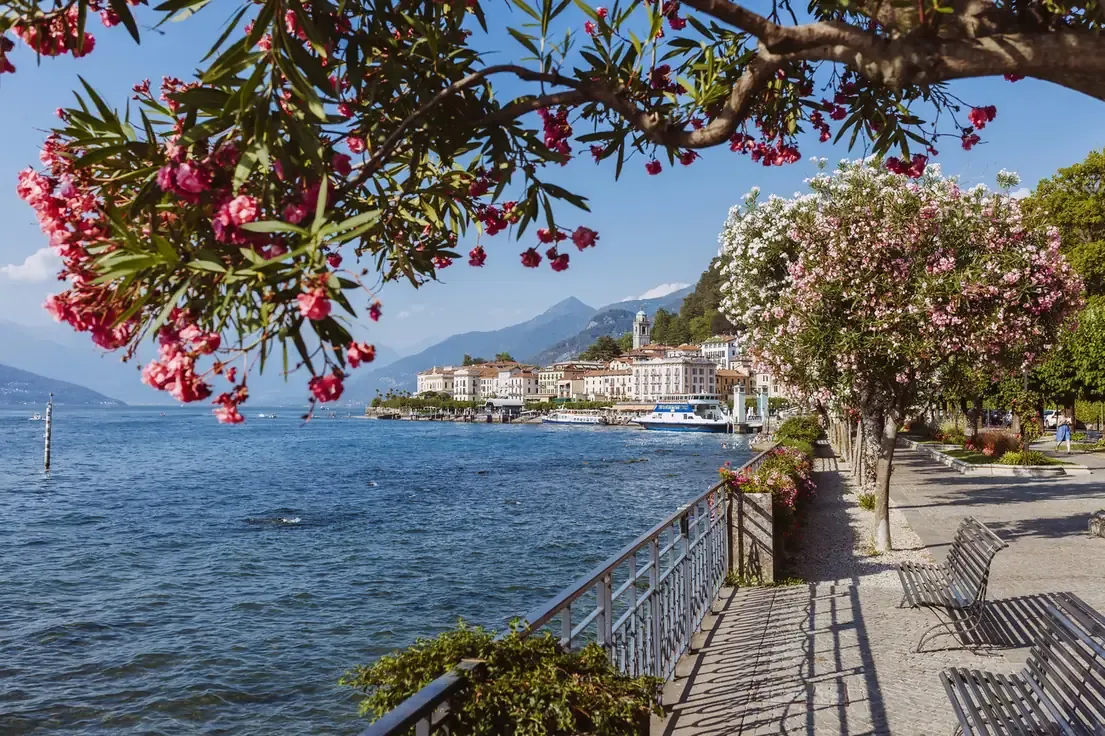
Bellagio
The village on the point where the lake's three branches meet, its stepped lanes climbing from the waterfront, with Villa Melzi's gardens nearby.
Location: Bellagio, reached by ferry from Como
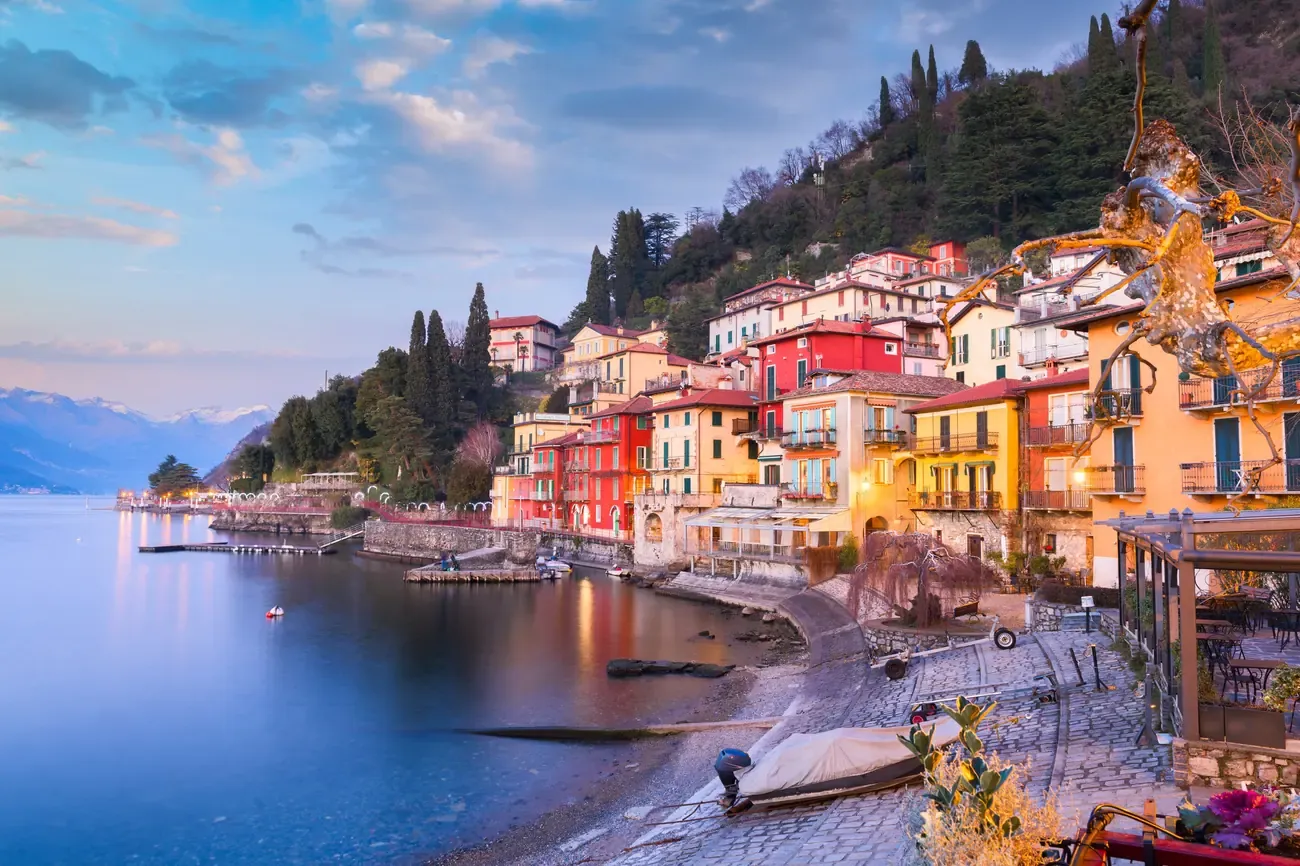
Varenna
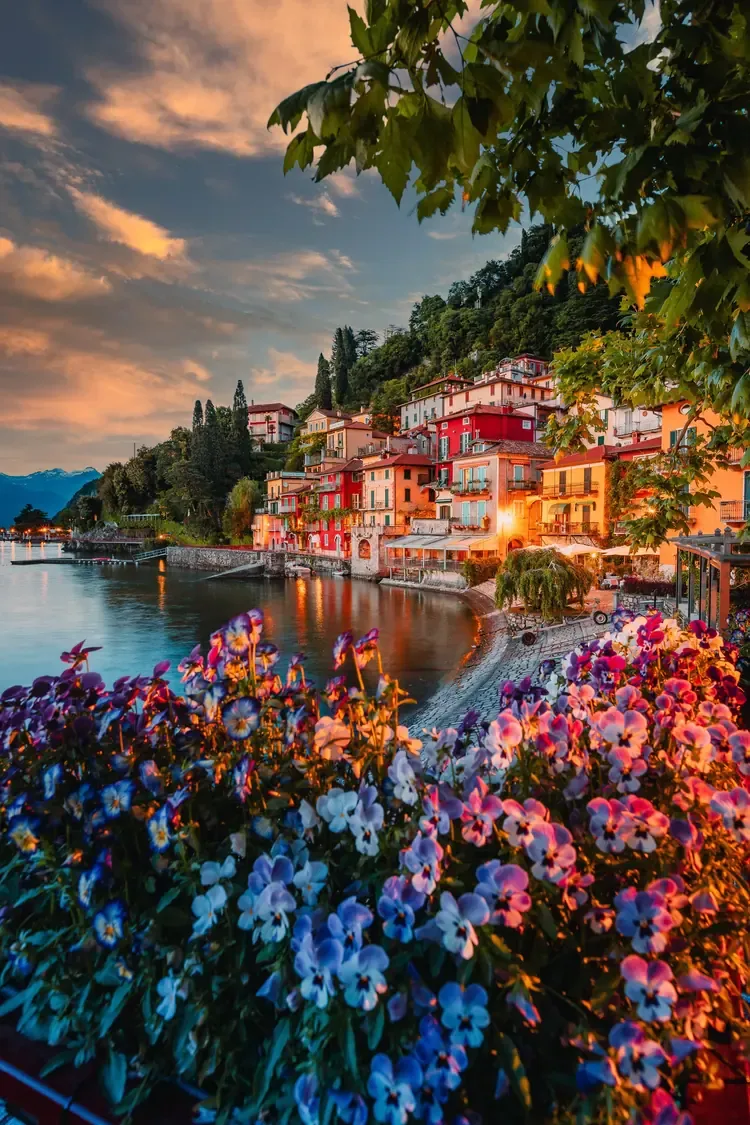
A village on the eastern shore, by tradition founded by fishermen in 769, with Villa Monastero's gardens and the Castello di Vezio above.
Location: Varenna, eastern shore of Lake Como
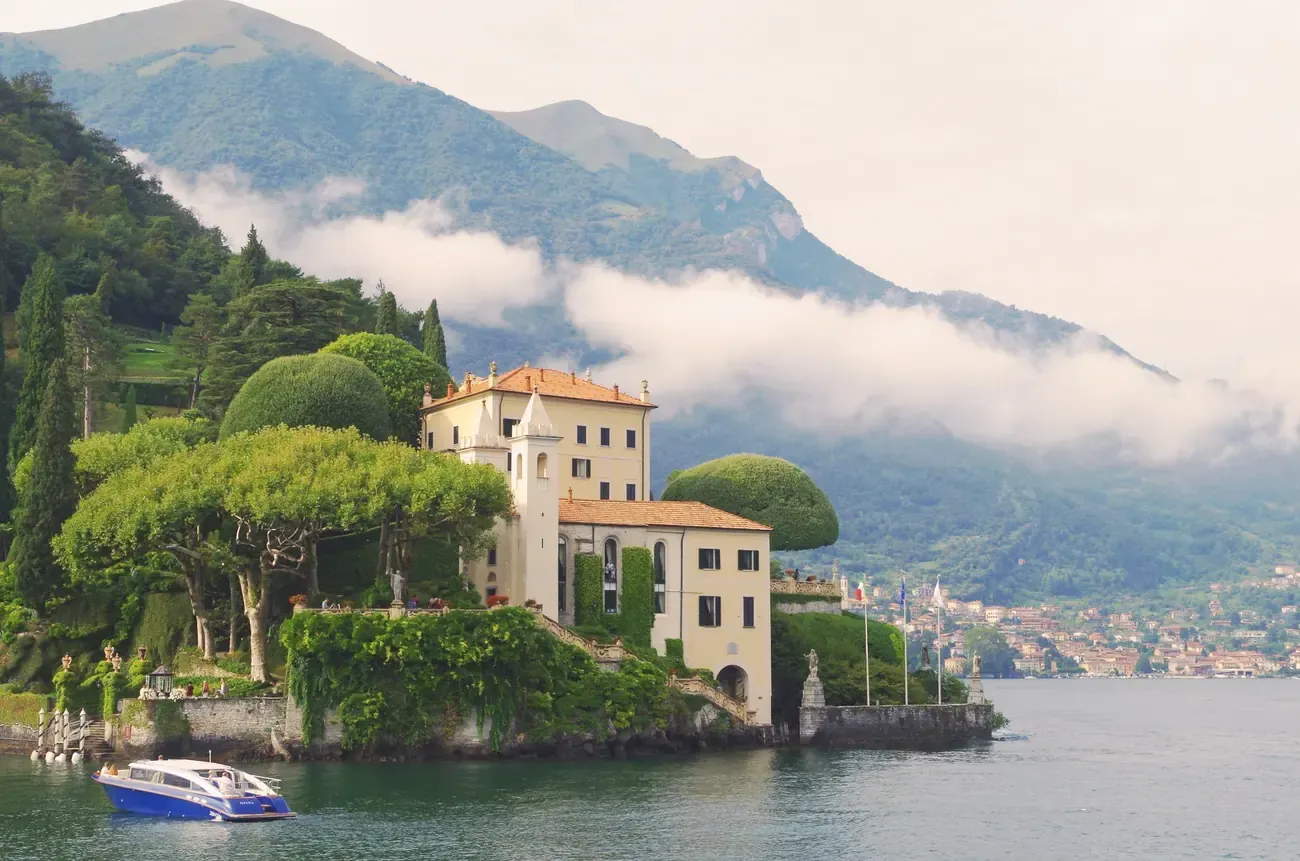
Villa del Balbianello
Cardinal Durini turned a Franciscan convent on the Dosso d'Avedo point into this villa in 1787; terraced gardens and Guido Monzino's expedition museum remain.
Location: Lenno, Tremezzina · Website
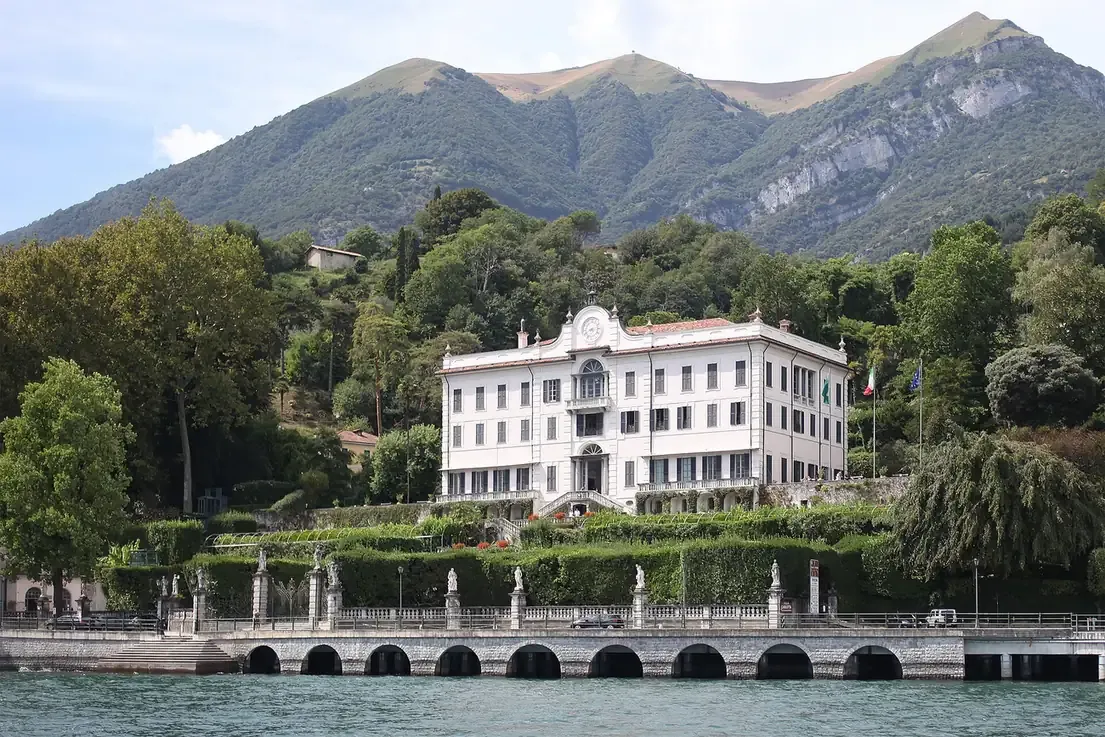
Villa Carlotta
Built by the Clerici marquises in the late 17th century, now a museum of works by Canova, Thorvaldsen and Hayez above a botanical garden.
Location: Tremezzo, Tremezzina · Website
Photo: "View of Villa Carlotta, Tremezzo, Lake Como" by Paolobon140 (CC BY-SA 4.0).
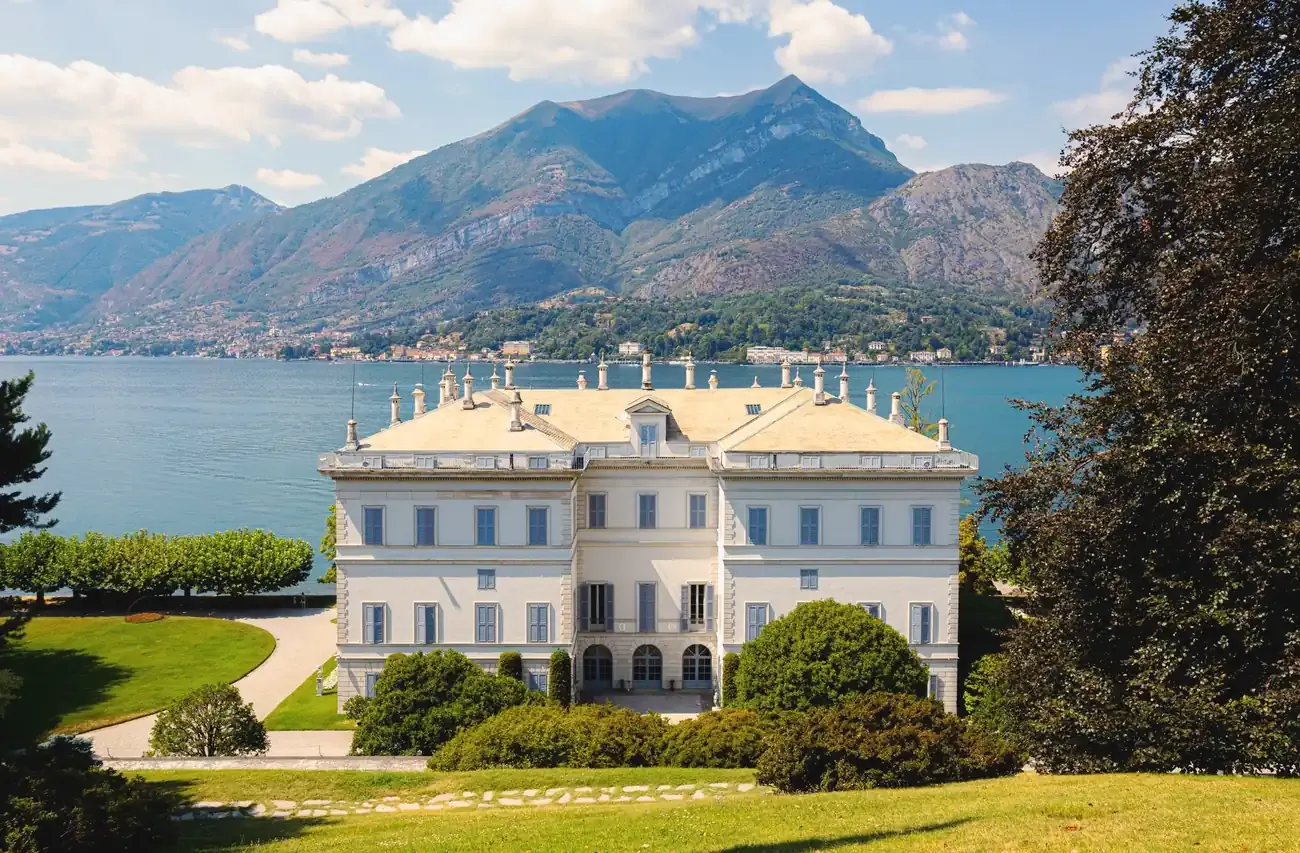
Villa Melzi d'Eril
A neoclassical villa built from 1808 to 1810 by Giocondo Albertolli for Francesco Melzi d'Eril, with lakeside gardens, a chapel and an orangery.
Location: Bellagio · Website
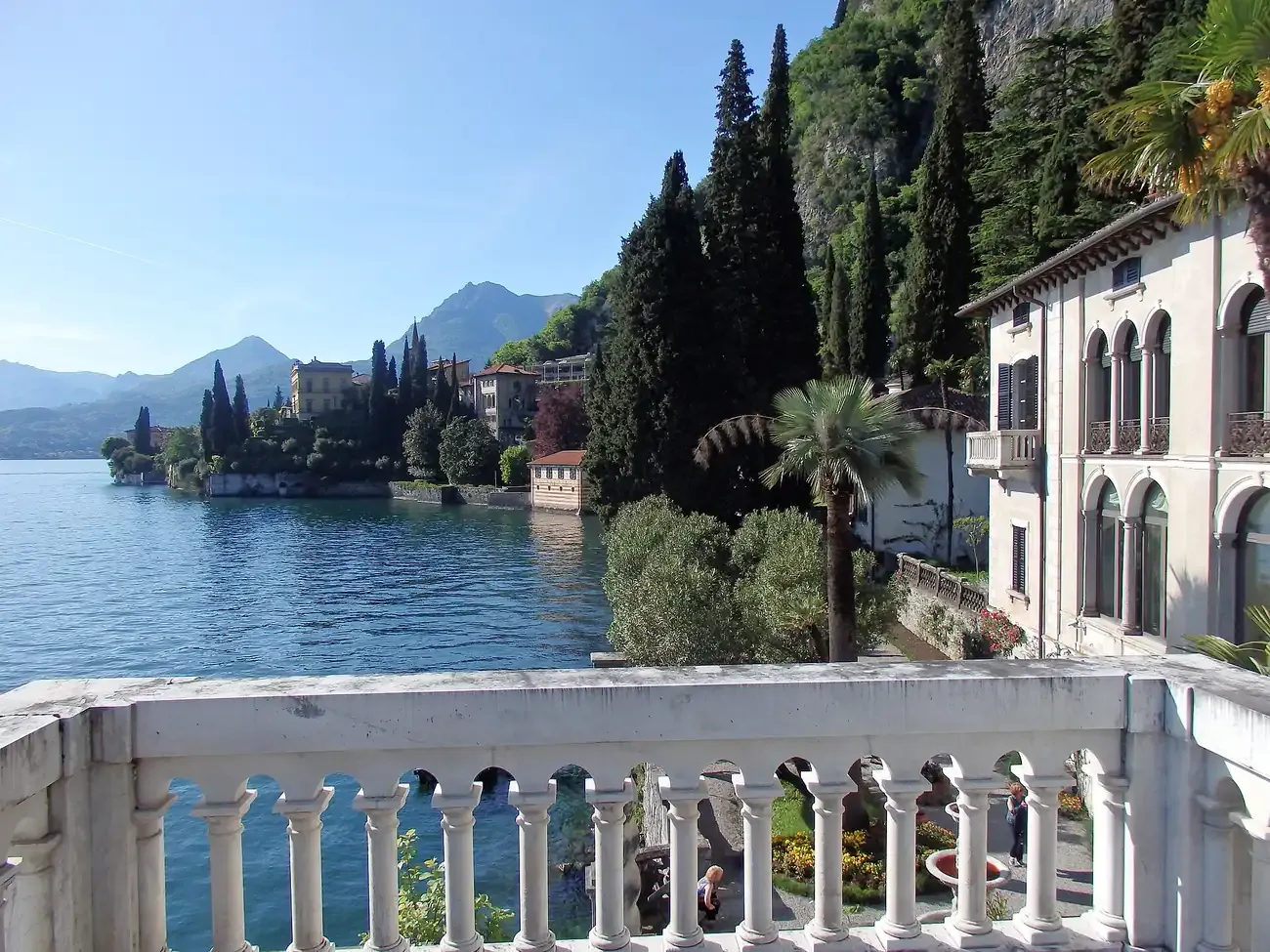
Villa Monastero
A former Cistercian convent turned into a residence after 1569, now a house museum with a botanical garden that runs along the shore towards Fiumelatte.
Location: Varenna · Website
Photo: "Terrace of Villa Monastero, Varenna" by Nemo bis (CC BY-SA 3.0).
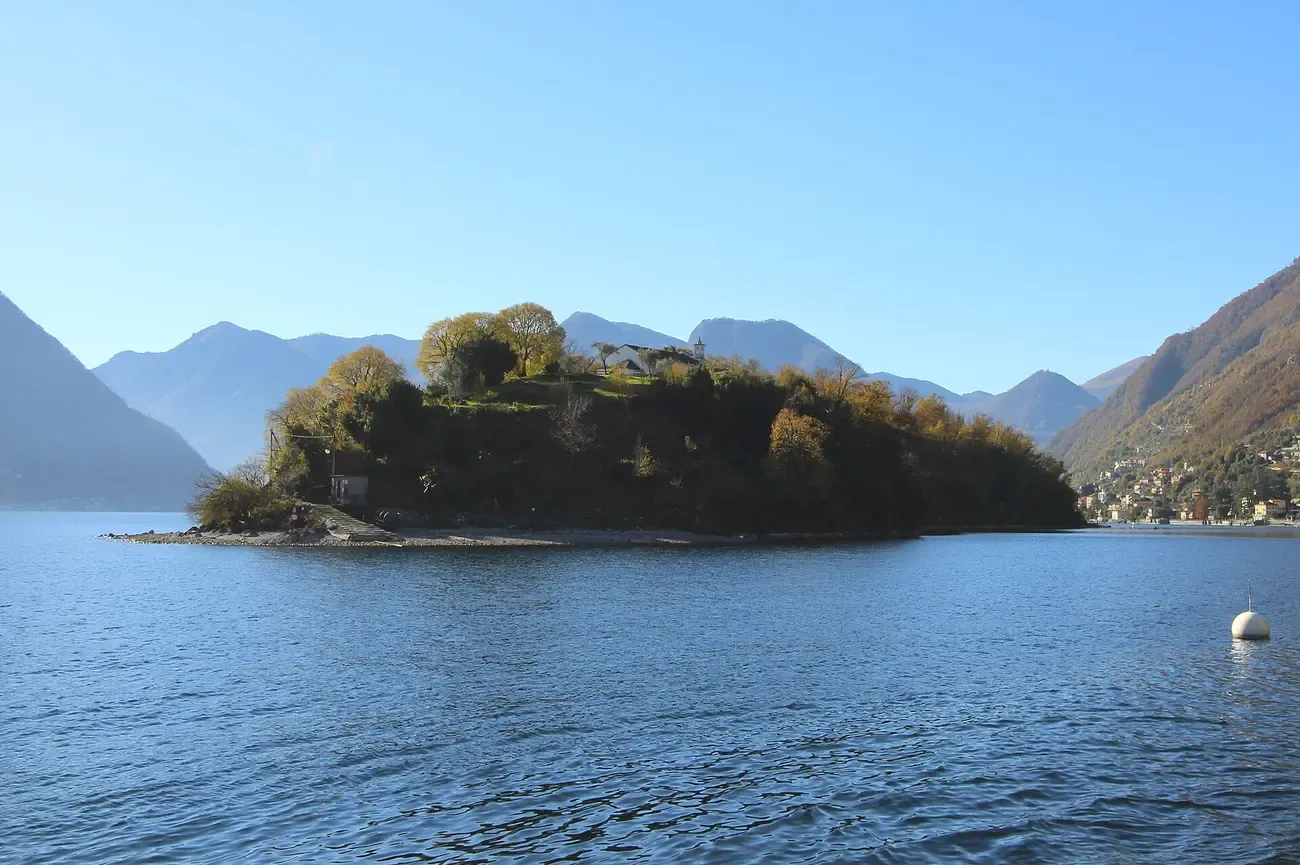
Isola Comacina
A wooded island off the western shore, a Roman stronghold into the 580s, razed by Como in 1169; ruins and three 1939 artists' houses remain.
Location: Off Ossuccio, Tremezzina
Photo: "Isola Comacina, Lake Como" by LigaDue (CC BY-SA 4.0).
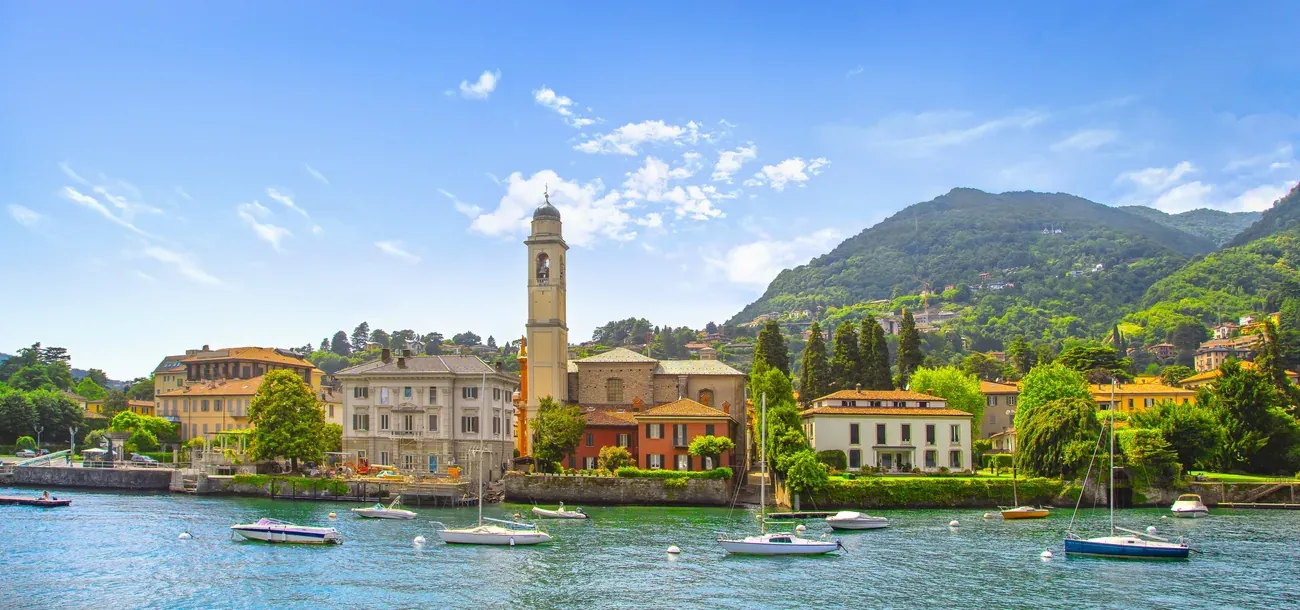
Cernobbio
The first lakeside town north of Como, 2 kilometres away, home to the Villa d'Este hotel, the Villa Erba exhibition centre and the Ambrosetti Forum.
Location: Cernobbio, by ferry or bus from Como
Why Como deserves your time
Como sits at the foot of the lake that carries its name, a small city that has drawn visitors since Roman times for the same reason it does now: the water, the hills around it and an old town still built at a walkable, human scale. It was the birthplace of Pliny the Elder and Pliny the Younger, and of Alessandro Volta, whose invention of the battery the city marks everywhere from a neoclassical temple to a steel sculpture on the water.
A city shaped by silk and the lake
Como's wealth was built on silk, and the Museo della Seta still traces that history, from silkworm to finished fabric. The lake itself remains the main reason to come, and the walk along the lungolago from Villa Olmo to Villa Geno is the easiest way to take it in, past the Tempio Voltiano and the boat piers of Piazza Cavour.
Boat trips up the lake
Regular ferries leave Como's piers for villages further up the water. Bellagio sits where the lake forks, its gardens at Villa Melzi and Villa Serbelloni among the best known on the water. Varenna, across on the eastern shore, keeps Villa Monastero and a quieter pace. Cernobbio, the closest of the three, is known for Villa d'Este, a 16th-century palace turned lakefront hotel.
When to go and how to get around
April to June and September bring milder crowds than midsummer, when the lakefront and the ferries fill up. A single day covers the historic centre on foot; add a half day for Brunate or a boat trip up the lake. Trains run into Como from Milan to the south, making the city an easy day trip as well as a base of its own, and the Como-Brunate funicular is the way up to the hillside village above the rooftops. For travellers visiting Italy's tourist attractions on a longer route, the lake pairs naturally with Milan and the rail lines onward to Venice.