
Tourist attractions in Italy
Known for
Roman ruins, Renaissance art, opera and culinary traditions
Must-see cities
Rome, Florence, Venice and Milan
Best time to visit
April to June and September to October, for mild weather
World Heritage
62 UNESCO properties, from the centre of Rome to the Dolomites
Top 12 tourist attractions in Italy
The tourist attractions in Italy start with the Colosseum, the Leaning Tower of Pisa and the Trevi Fountain. After the 12 ranked sights come the cities worth a stop, 12 more landmarks, tickets, local dishes, 23 hidden gems and visitor FAQs.
Iconic cities in Italy
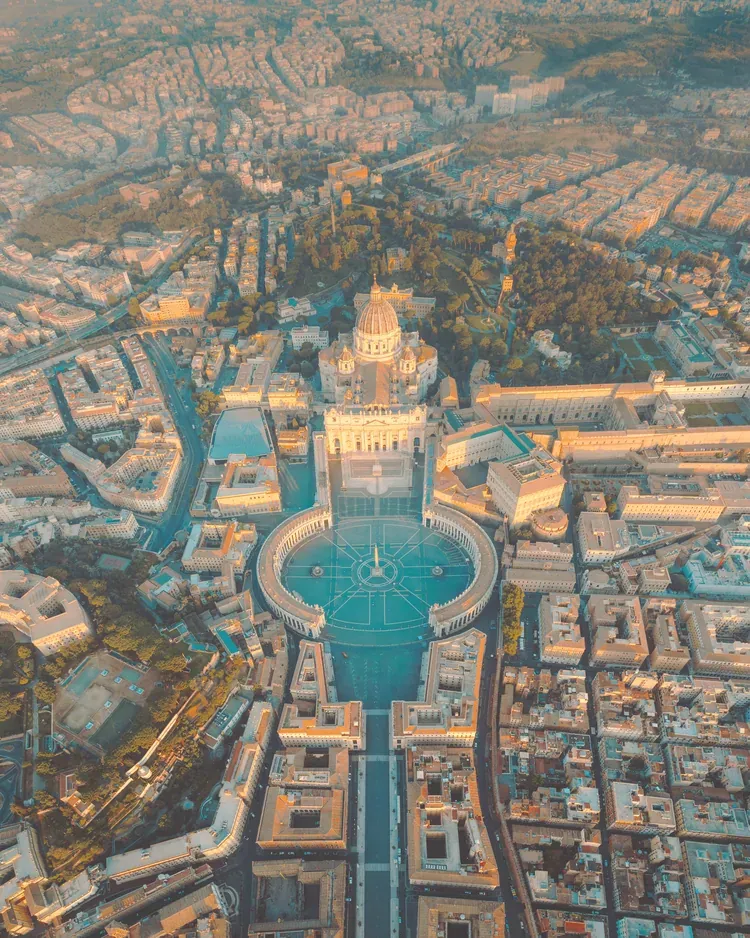
Rome
Explore Rome in detail Ancient forums, Baroque squares and the Vatican across the Tiber.
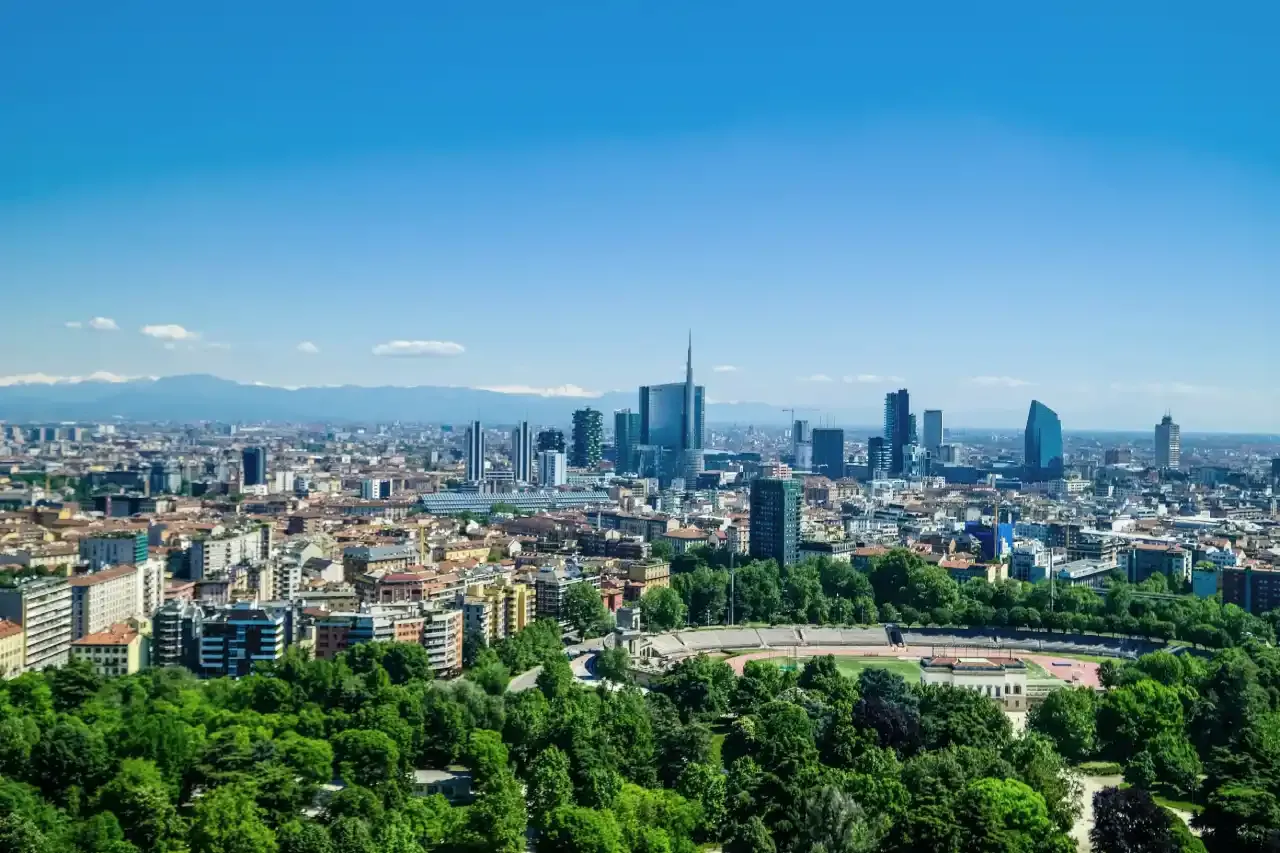
Milan
Explore Milan in detail Gothic marble, La Scala and the shop windows of the fashion district.
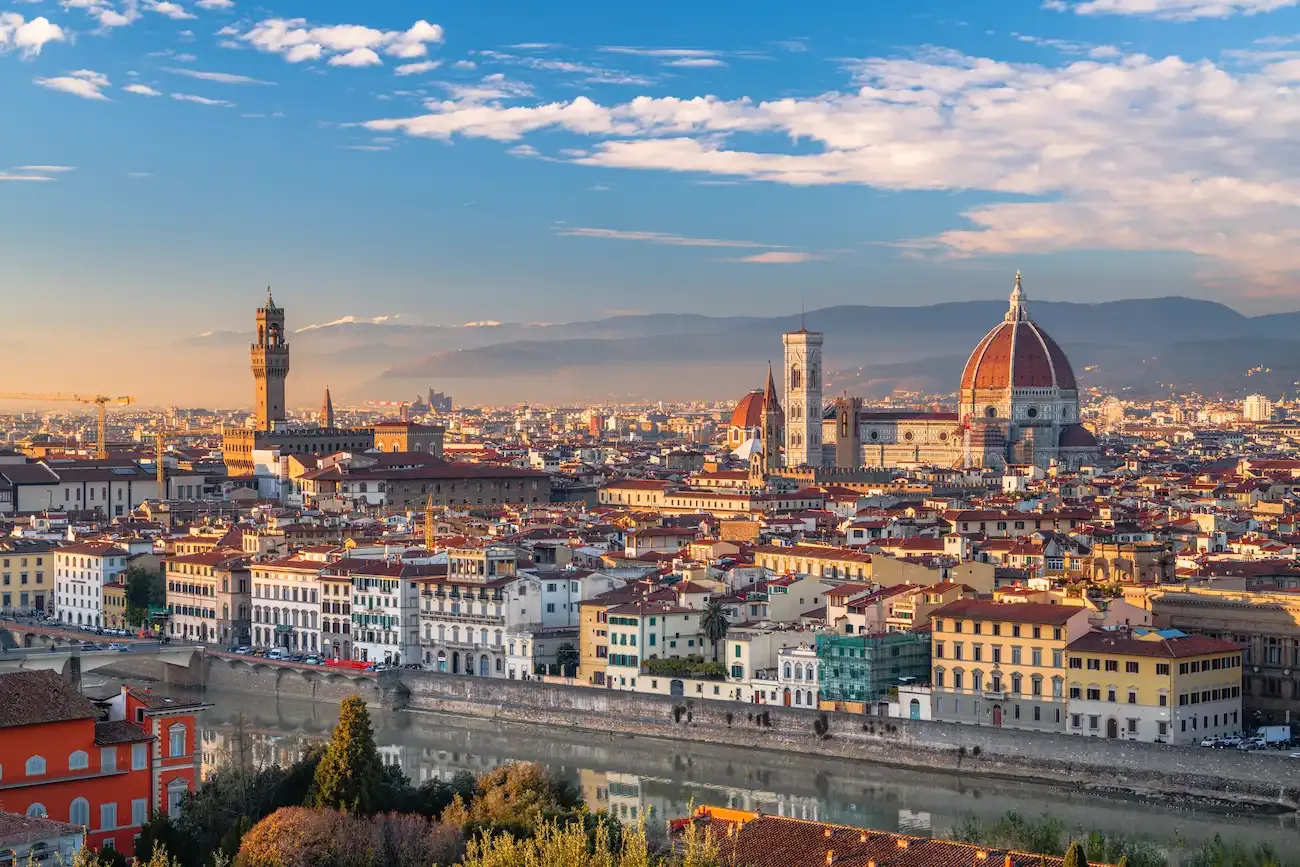
Florence
Explore Florence in detail The Renaissance concentrated into one walkable historic centre.
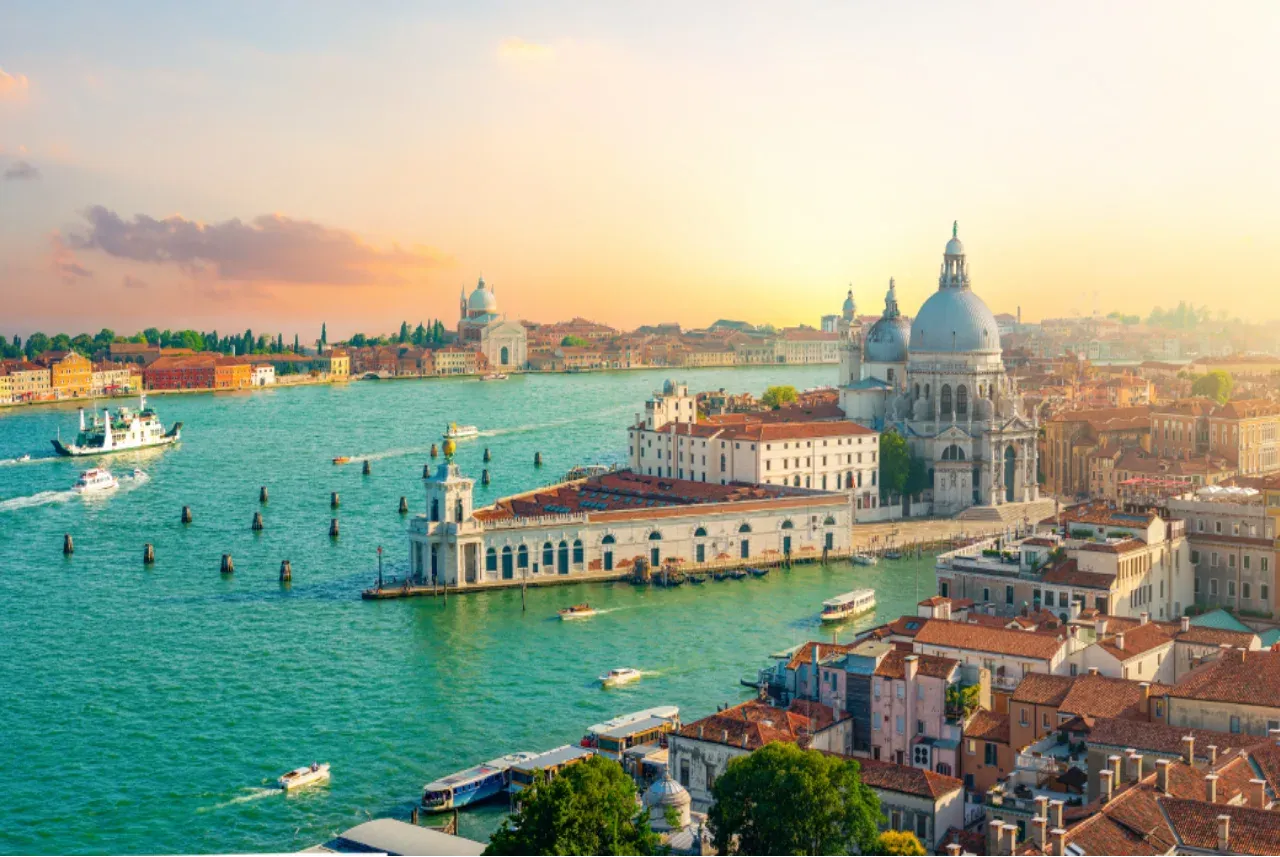
Venice
Explore Venice in detail Canals, gondolas and a lagoon full of quieter islands.
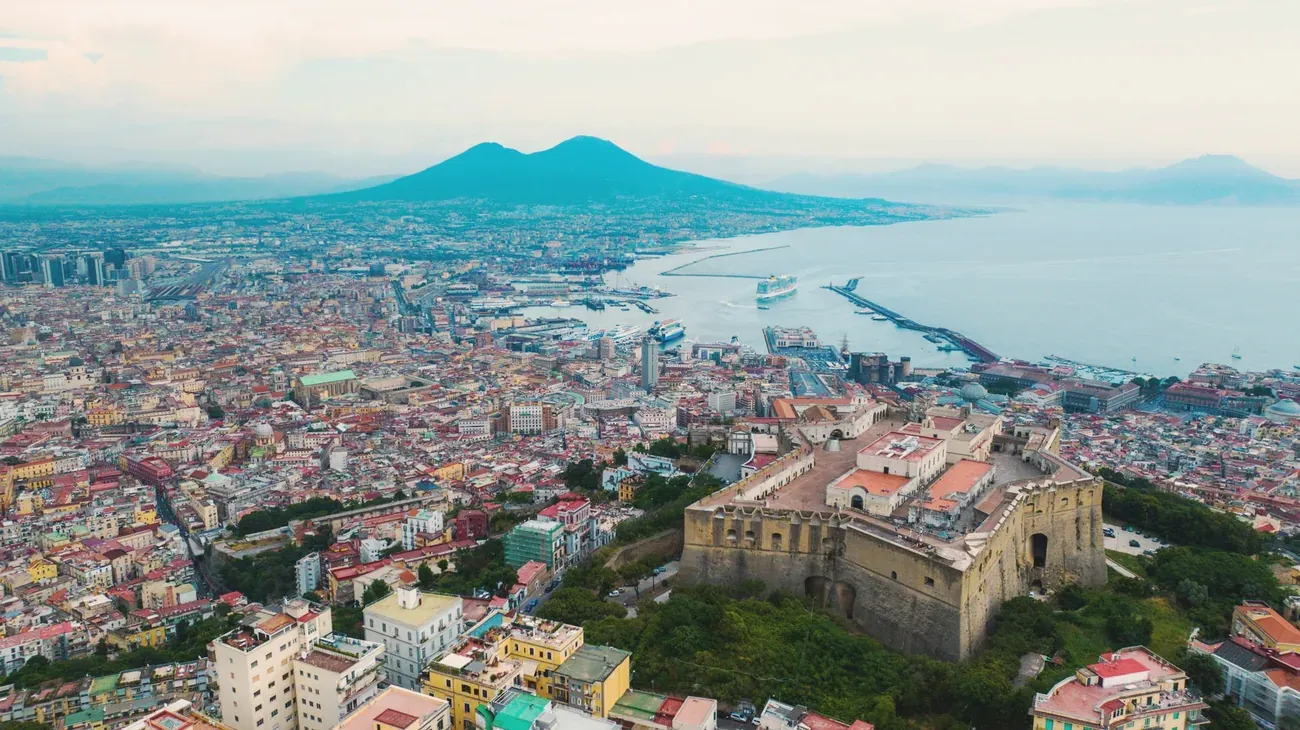
Naples
Explore Naples in detail Raucous streets, serious archaeology and the original pizza.
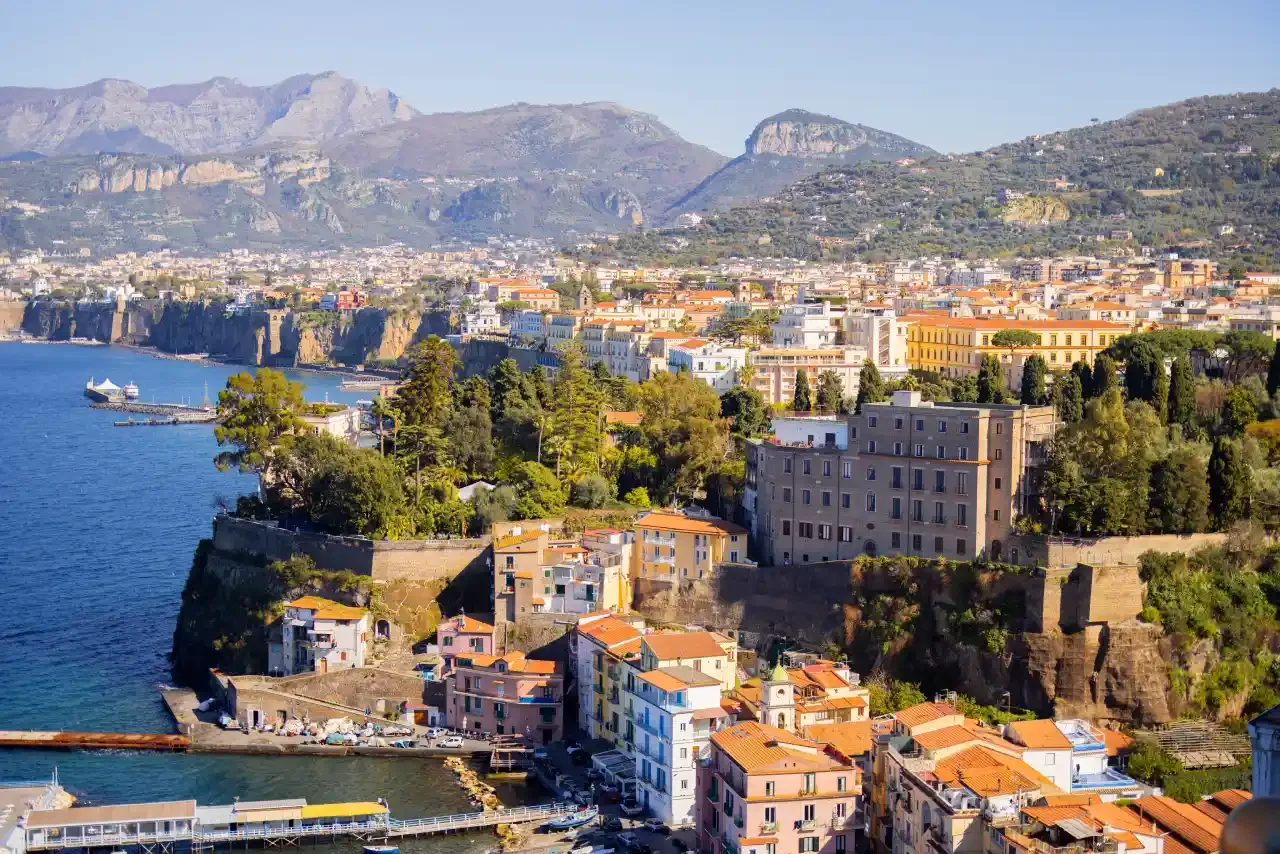
Sorrento
Explore Sorrento in detail Clifftop base for the Amalfi Coast, Capri and Pompeii.
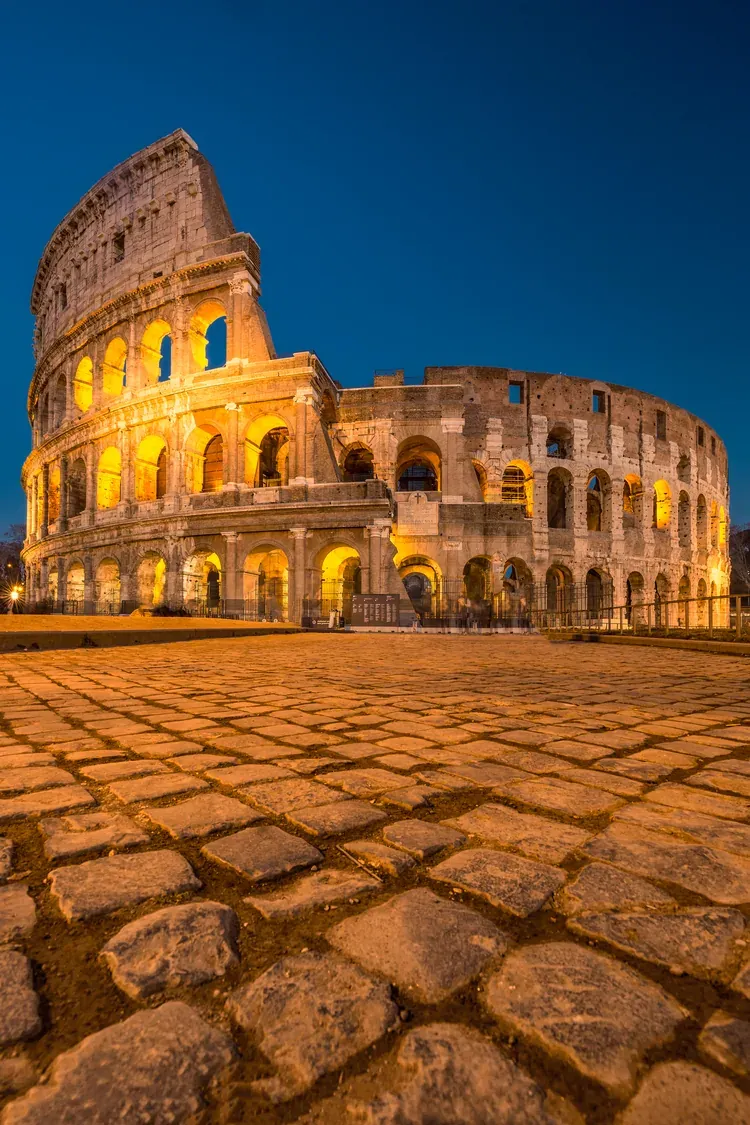
1. Colosseum
No monument says Italy faster than the Colosseum. The largest amphitheatre the Romans ever built once seated tens of thousands for gladiator fights and staged hunts, and what survives reads like a cross-section of ancient engineering: stacked arcades of travertine, numbered entrances that once funnelled the crowds, and the exposed maze of tunnels under the arena floor where fighters and animals waited for the lifts. It anchors the ancient core of Rome, with the Roman Forum and the Palatine Hill folded into the same archaeological park next door.
Opened: around AD 80 · Style: ancient Roman architecture
Location: Piazza del Colosseo, Rome
Access: Ticketed, timed entry
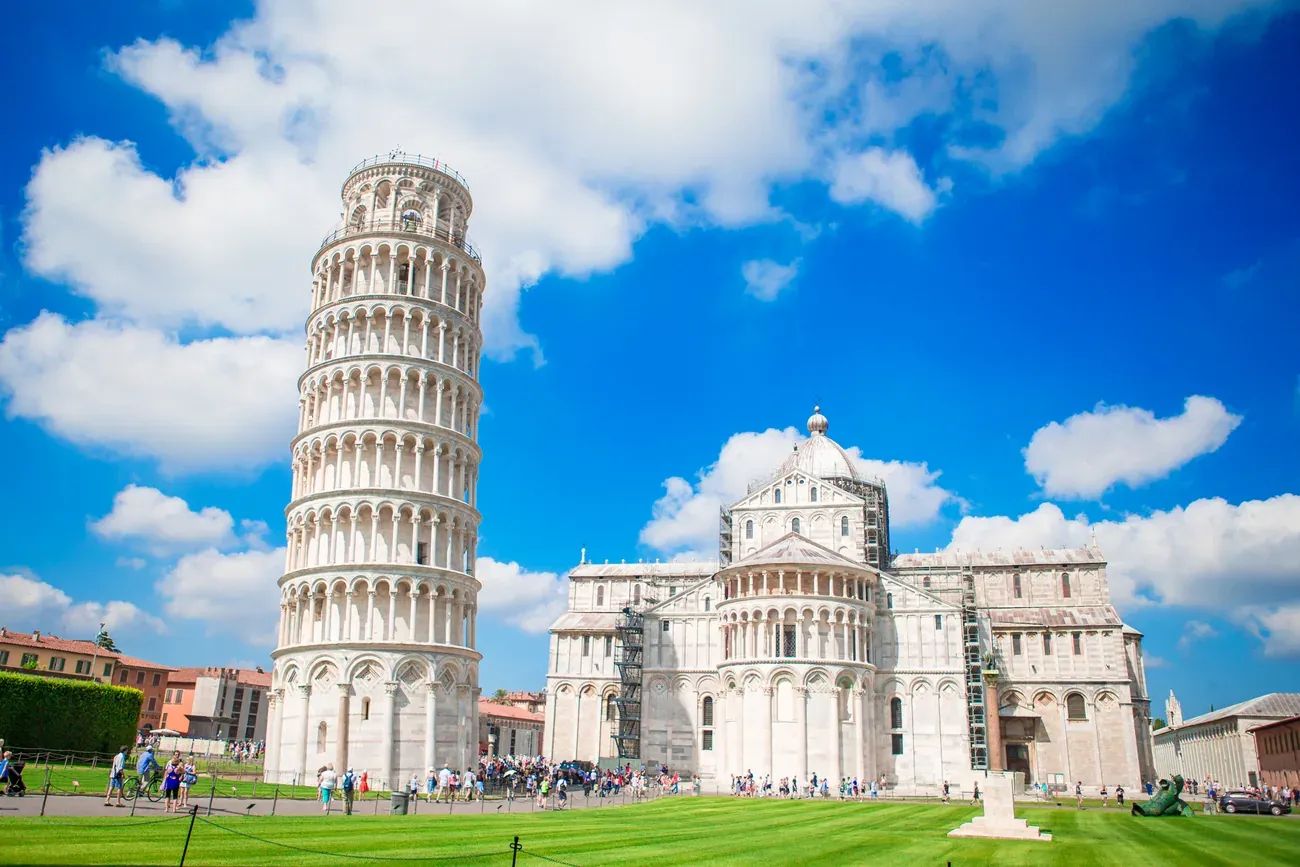
2. Leaning Tower of Pisa
Few buildings are recognised from the silhouette alone, and Pisa's bell tower is one of them. Begun in 1173 as the campanile of the cathedral next door, it started tilting while still under construction as the ground beneath the Piazza dei Miracoli gave way, and engineers have been managing the lean ever since. The climb corkscrews up the marble cylinder to the bell chamber, and the square around it, shared with the cathedral and the baptistery, is a UNESCO World Heritage site with far more to see than the classic photo suggests. The rest of Pisa spreads out along the Arno beyond the square.
Style: Romanesque · Begun: 1173
Location: Piazza dei Miracoli, Pisa
Access: Ticketed, timed entry for the climb
3. Trevi Fountain
The grandest of Rome's Baroque fountains is pure theatre: Oceanus striding through a triumphal arch above tritons and sea horses, the whole travertine reef built against the flank of a palace. Nicola Salvi designed it and Giuseppe Pannini saw it finished in 1762, still fed by the ancient Acqua Vergine aqueduct. The coin tossed over the shoulder promises a return to the city, and the takings go to charity. Early morning or late evening brings the calmest look at it, because the little square in front is rarely anything close to quiet.
Completed: 1762 · Style: Baroque
Location: Piazza di Trevi, Rome
Access: Free from the surrounding square; reaching the basin now requires a timed entry pass
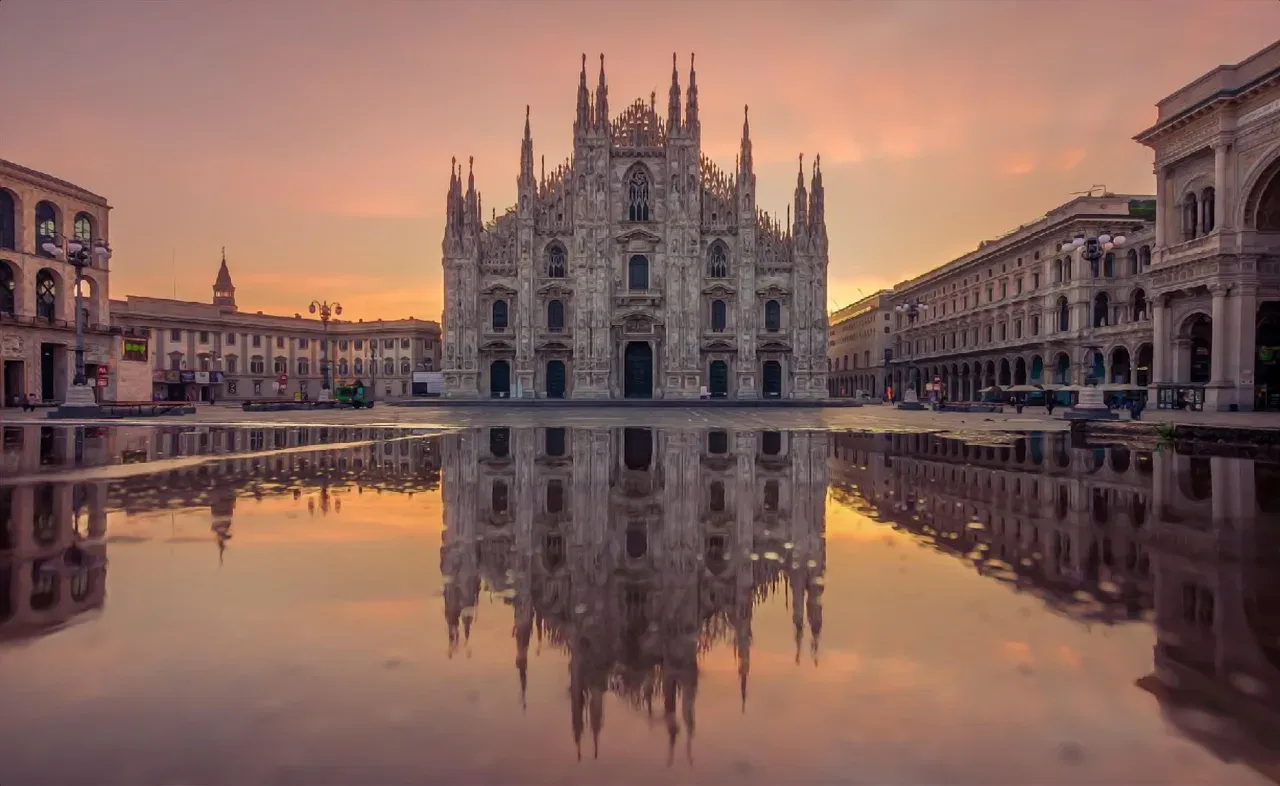
4. Duomo di Milano
Milan's cathedral is Gothic pushed to its limit: begun in 1386 and worked on for almost six hundred years, dressed entirely in pale Candoglia marble and bristling with spires, gargoyles and thousands of statues, with the gilded Madonnina watching the city from the tallest one. It stands among the largest Gothic churches in the world, yet the real prize is the rooftop, where walkways thread between the pinnacles and the Alps line the horizon on clear days. The piazza below works as Milan's living room, framed by the Galleria Vittorio Emanuele II.
Style: Italian Gothic · Begun: 1386 · Architect: Simone da Orsenigo and others
Location: Piazza del Duomo, Milan
Access: Ticketed; passes cover the interior, the rooftop terraces and the museum
5. Vatican Museums
Technically a separate state inside Rome, the Vatican still belongs on any Italian itinerary, and its museums repay a full morning. The route threads papal collections assembled over five centuries: classical marbles, corridors painted with maps, Raphael's Stanze, and at the end the Sistine Chapel with Michelangelo's ceiling above and his Last Judgment behind the altar. Crowds run heavy for most of the year, so a booked time slot spares the worst of the wait, and modest dress covering shoulders and knees is required at the entrance.
Location: Viale Vaticano, Vatican City
Access: Ticketed, timed entry
6. Florence Cathedral
Florence's skyline is Brunelleschi's dome, and the cathedral beneath it took generations to become the ensemble on the postcards. Work started on Santa Maria del Fiore in 1296, Giotto's banded bell tower rose alongside, the polychrome marble facade arrived only in the 1800s, and the octagonal dome that finally closed the crossing in 1436 changed what architects believed possible. Climbers pass between the dome's two brick shells on the way to the lantern, while the bell tower opposite gives the classic view back at it.
Style: Gothic and Renaissance · Architect: Arnolfo di Cambio, Filippo Brunelleschi
Location: Piazza del Duomo, Florence
Access: Free to enter the nave; the dome, bell tower and baptistery need one of the Opera's passes
7. Uffizi Gallery
Nowhere condenses the Renaissance like the Uffizi. Giorgio Vasari raised the long U-shaped block from 1560 as offices for Cosimo I de' Medici, and the family collection now unfolds room by room, from Giotto past the Birth of Venus and the Primavera to Leonardo, Titian and Caravaggio. The corridor windows keep pulling the eye away from the paintings, framing the Arno and the Ponte Vecchio between rooms. Advance booking is close to obligatory in high season, and the gallery stays shut on Mondays.
Style: Renaissance · Architect: Giorgio Vasari
Location: Piazzale degli Uffizi, Florence
Access: Timed entry, closed on Mondays
8. St Mark's Basilica
Venice always looked east, and its great church shows it. St Mark's served as the doges' private chapel, a Byzantine cluster of domes dressed in marble columns and trophies shipped home from Constantinople, its vaults sheathed in some 8,000 square metres of gold mosaic that glow in the morning light. The famous bronze horses on the loggia are copies, with the originals kept in the museum upstairs beside a terrace over Piazza San Marco. Entry runs on booked time slots, and reserving ahead spares a long wait in the piazza.
Style: Byzantine
Location: Piazza San Marco, Venice
Access: Timed entry within the booked slot only
9. Pompeii
When Vesuvius erupted in AD 79 it buried an entire Roman city, and excavation has been returning it to daylight for over two centuries. Pompeii feels less like a ruin than a town on pause: paved streets rutted by cart wheels, bakeries with their ovens still in place, election slogans painted on the walls, frescoed villas, and the plaster casts of the people who never escaped. The site sits in Campania between Naples and the volcano itself, and the modern town of Pompei makes a practical base. A full day on foot barely covers it.
Heritage: UNESCO World Heritage Site
Location: Pompei, Campania
Access: Ticketed
10. Cinque Terre
Five villages cling to the cliffs of the Ligurian coast: Riomaggiore, Manarola, Corniglia, Vernazza and Monterosso, their painted houses stacked above tiny harbours and terraced vineyards. Cars are close to useless here, because the villages are linked by local trains, seasonal ferries and a web of coastal and hillside footpaths inside a national park. Each village keeps its own character, from Corniglia up on its headland, the only one of the five set away from the water, to Vernazza curled around its natural harbour. UNESCO lists the area together with Portovenere and its islands.
Heritage: UNESCO World Heritage Site
Location: Riviera di Levante, Liguria
Access: Free to visit; local trains link the five villages and the main coastal trails use the Cinque Terre Card
11. Amalfi Coast
South of Naples the mountains drop straight into the sea, and the road carved along them threads between villages stacked improbably above the water. Positano spills down its cliff in faded pastels, Amalfi keeps the striped cathedral of a former maritime republic, and Ravello looks down on the whole coastline from its villa gardens. The corniche drive is part of the experience, ferries between the towns turn the return leg into a boat trip, and UNESCO lists the Costiera Amalfitana as a cultural landscape. Spring and early autumn spare the worst of the traffic.
Heritage: UNESCO World Heritage Site
Location: Province of Salerno, Campania
Access: Free to explore; ferries and buses link the towns
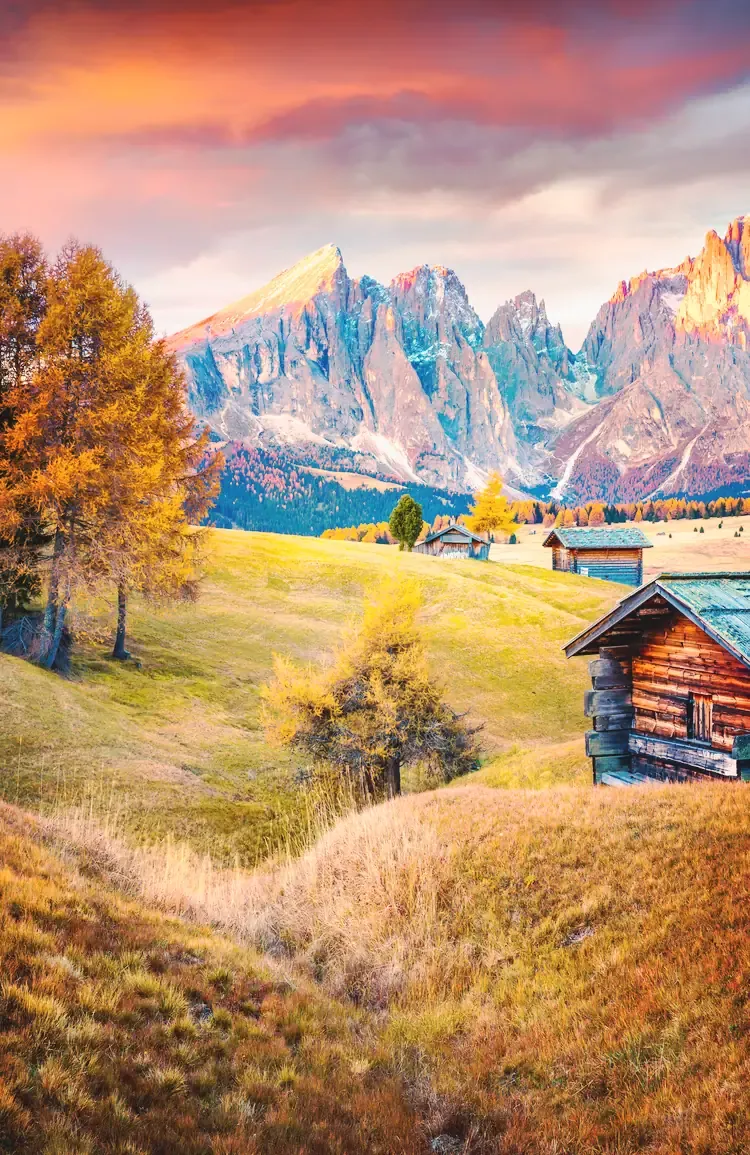
12. Dolomites
Northeast Italy saves its most dramatic scenery for the Dolomites, a range of pale limestone peaks that gave their name to the mineral dolomite. Sheer walls and serrated spires rise out of green meadows and glacial lakes, and at dawn and dusk the rock glows rose-gold in an alpenglow locals call enrosadira. The set pieces sit close together: the three summits of Tre Cime di Lavaredo, the boathouse at Lago di Braies, the pastures of the Alpe di Siusi and the emerald Lake Carezza. Hikers come for the trails and via ferrata, skiers for the linked resorts in winter.
Highest peak: Marmolada, 3,343 metres · Heritage: UNESCO World Heritage Site
Location: South Tyrol, Trentino and Belluno, northern Italy
Access: Free to explore; cable cars, mountain huts and trails run seasonally
Other iconic sights in Italy
St Peter's Basilica
Bramante, Michelangelo and Maderno all worked on the Renaissance church completed in 1626, the largest of any church in the world by interior measure.
Location: Vatican City, within Rome
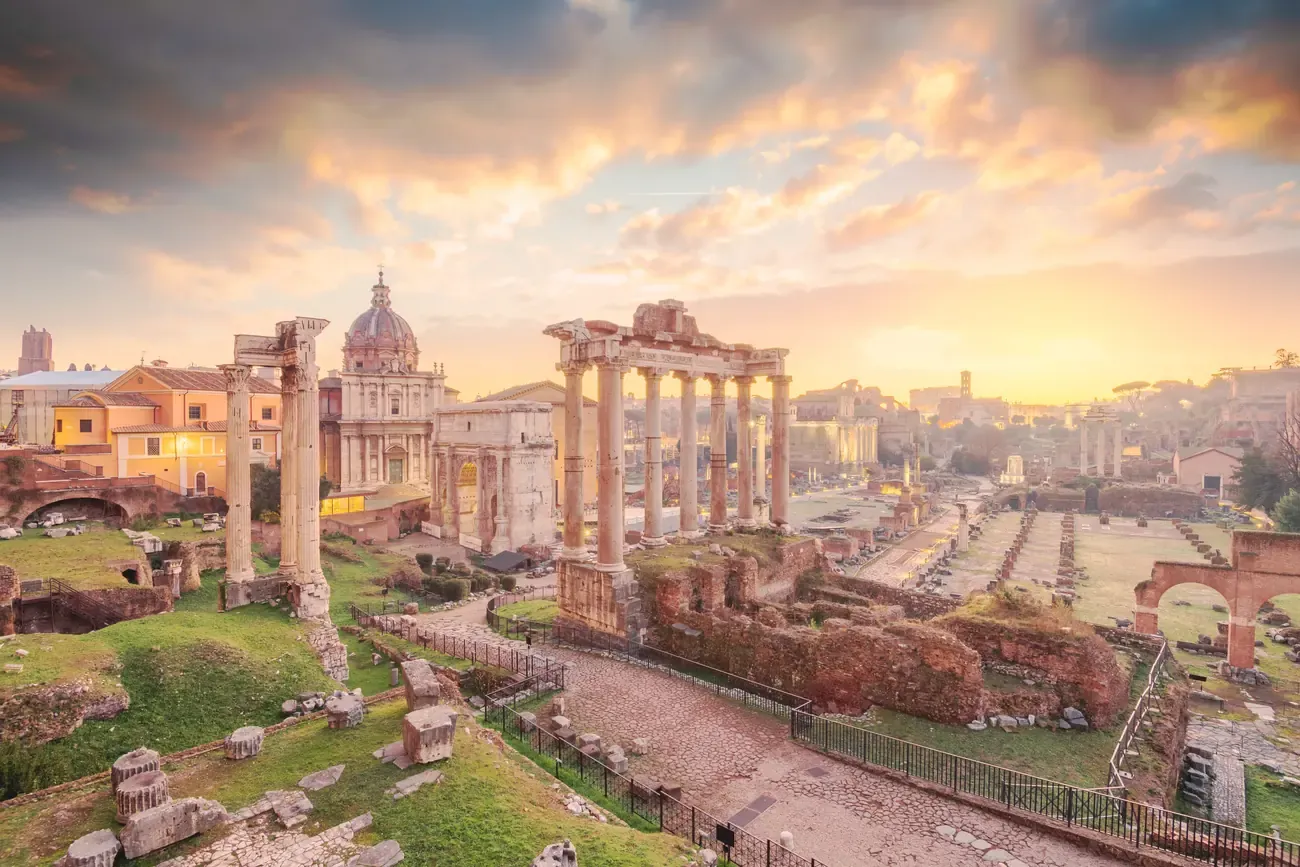
Roman Forum and Palatine Hill
The republic held its elections and trials in this valley square, while emperors from Augustus onward raised their palaces on the hill above it.
Location: Between the Capitoline and Palatine hills, Rome
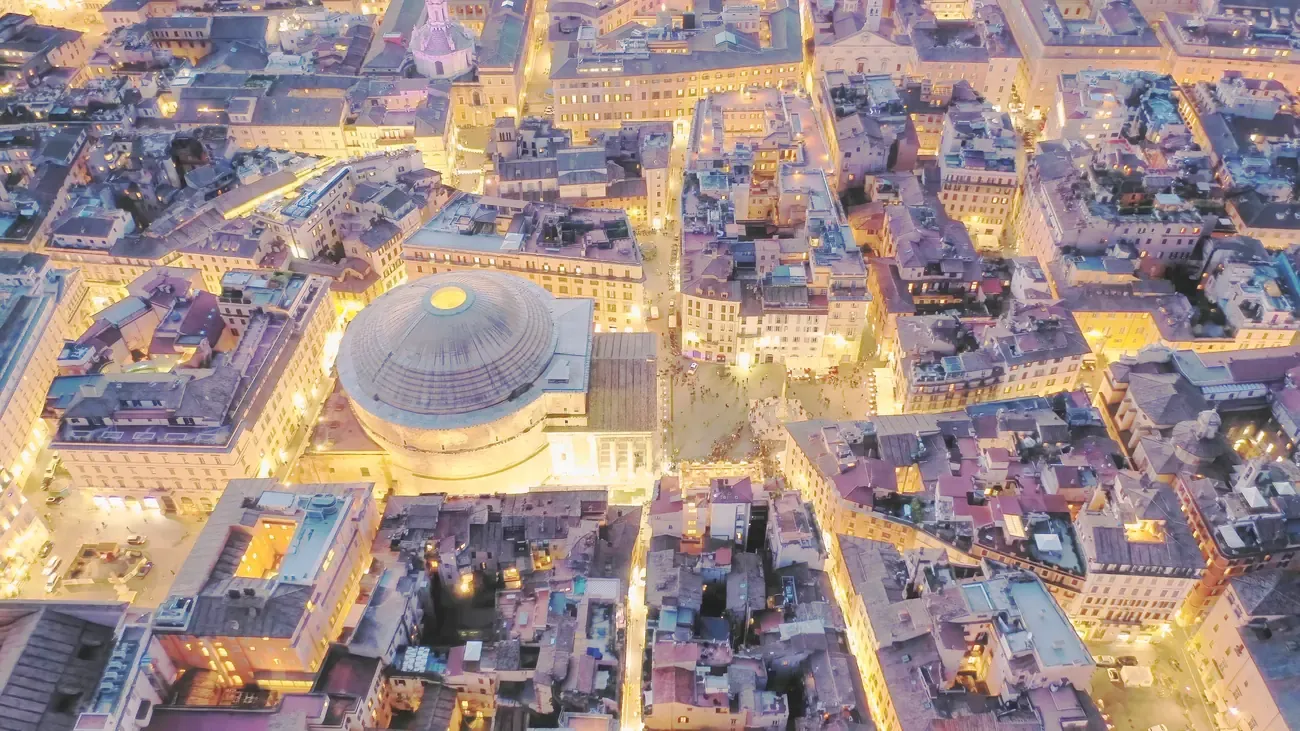
Pantheon
Hadrian finished the rotunda around 126 AD and its coffered concrete dome remains the largest unreinforced one ever built; a church since 609.
Location: Piazza della Rotonda, Rome
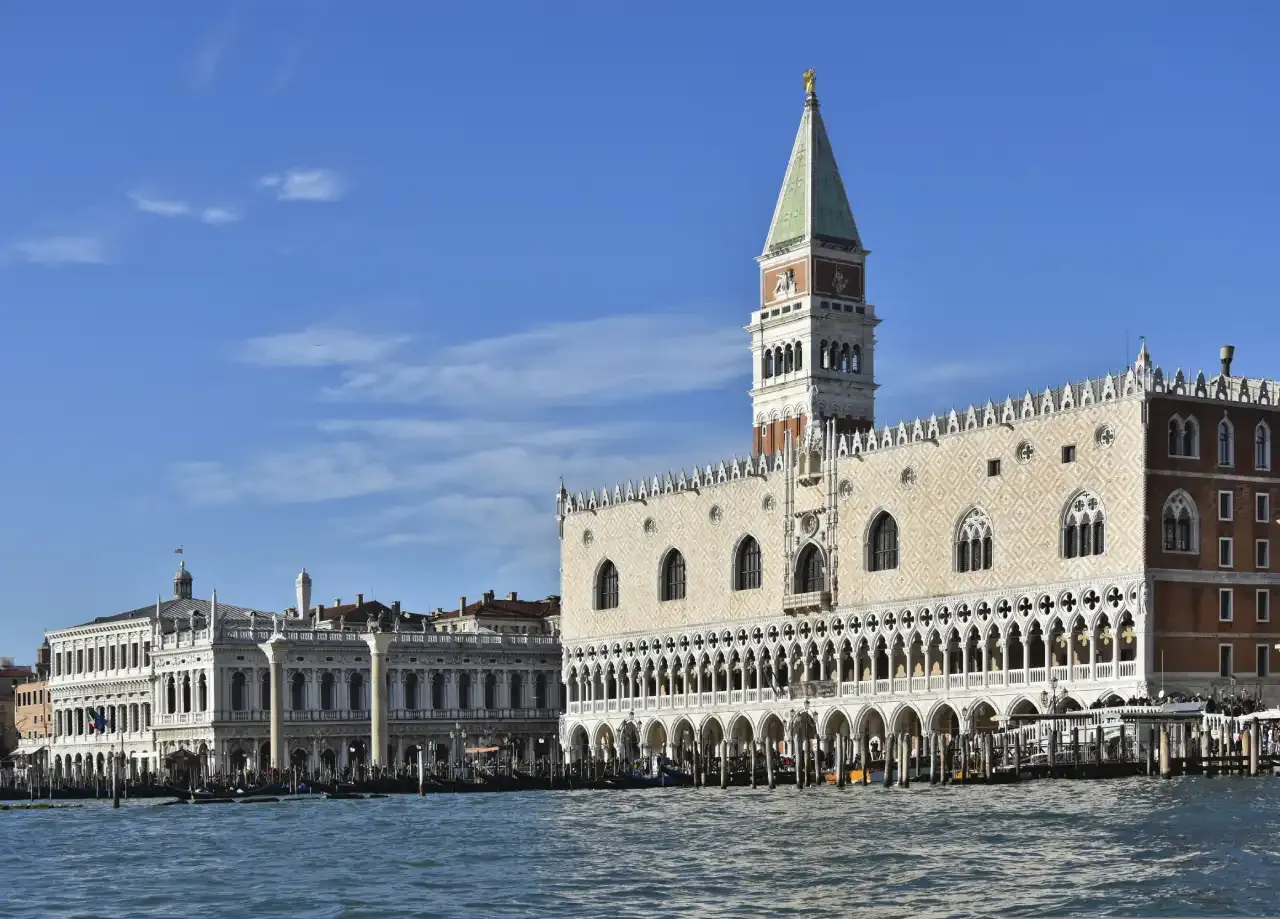
Doge's Palace
Seat of the doges and of Venetian government until 1797, rebuilt in Gothic style from 1340 and run as a civic museum since 1923.
Location: Piazza San Marco, Venice
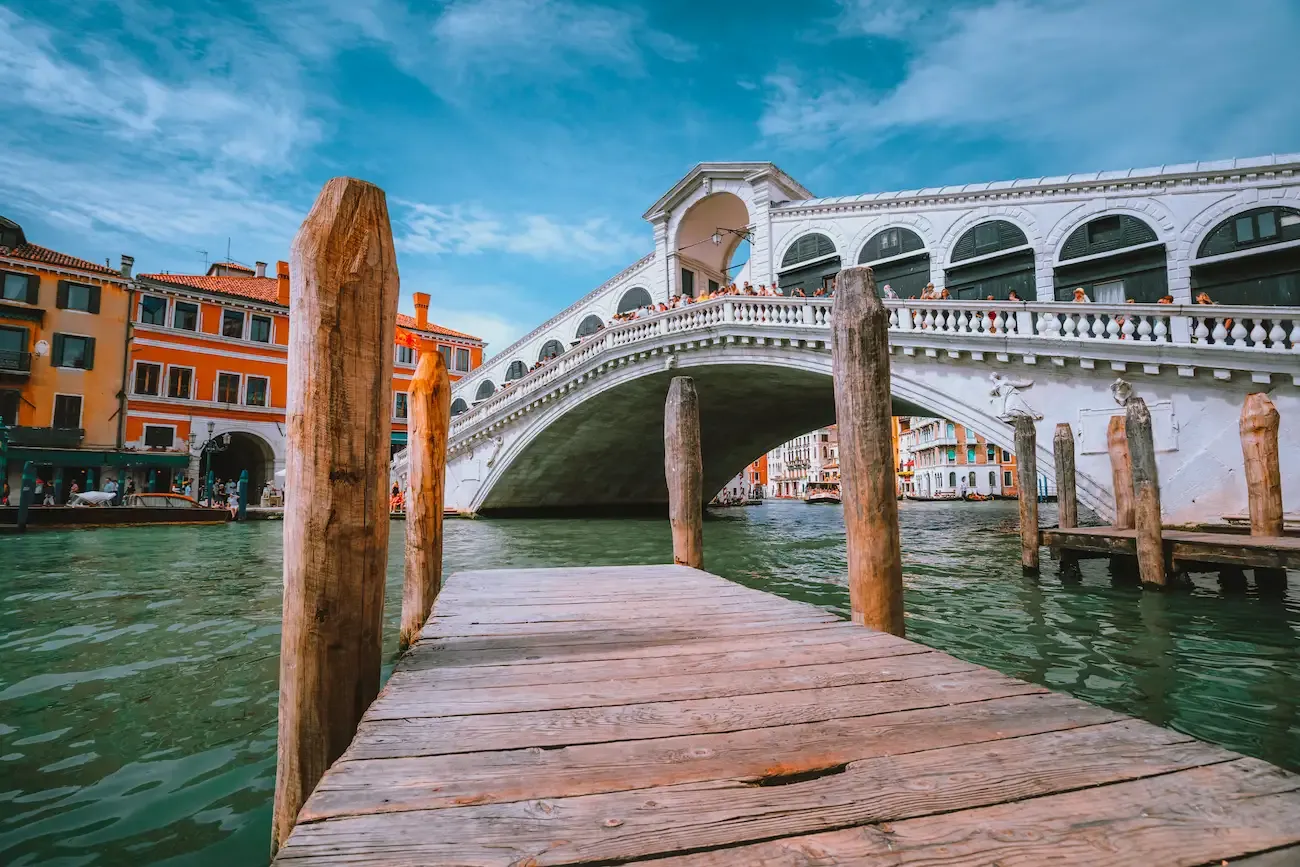
Rialto Bridge
Antonio da Ponte's single stone arch replaced a wooden crossing between 1588 and 1591 and still carries two rows of shops over the Grand Canal.
Location: Grand Canal, between San Marco and San Polo, Venice
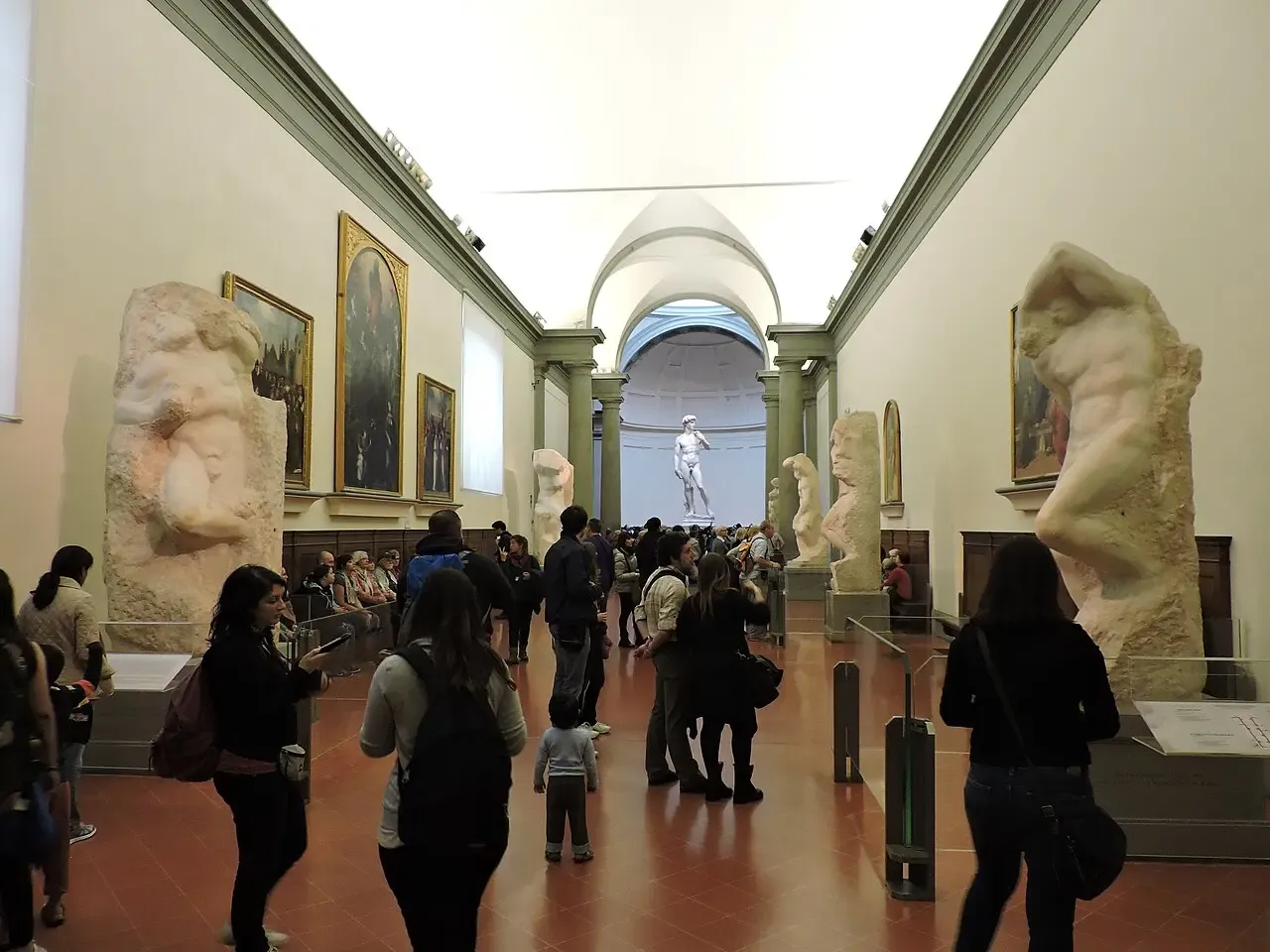
Accademia Gallery
Michelangelo's David has stood here since 1873, alongside his four unfinished Prisoners and Florentine paintings from the fourteenth to the sixteenth century.
Location: Via Ricasoli, Florence
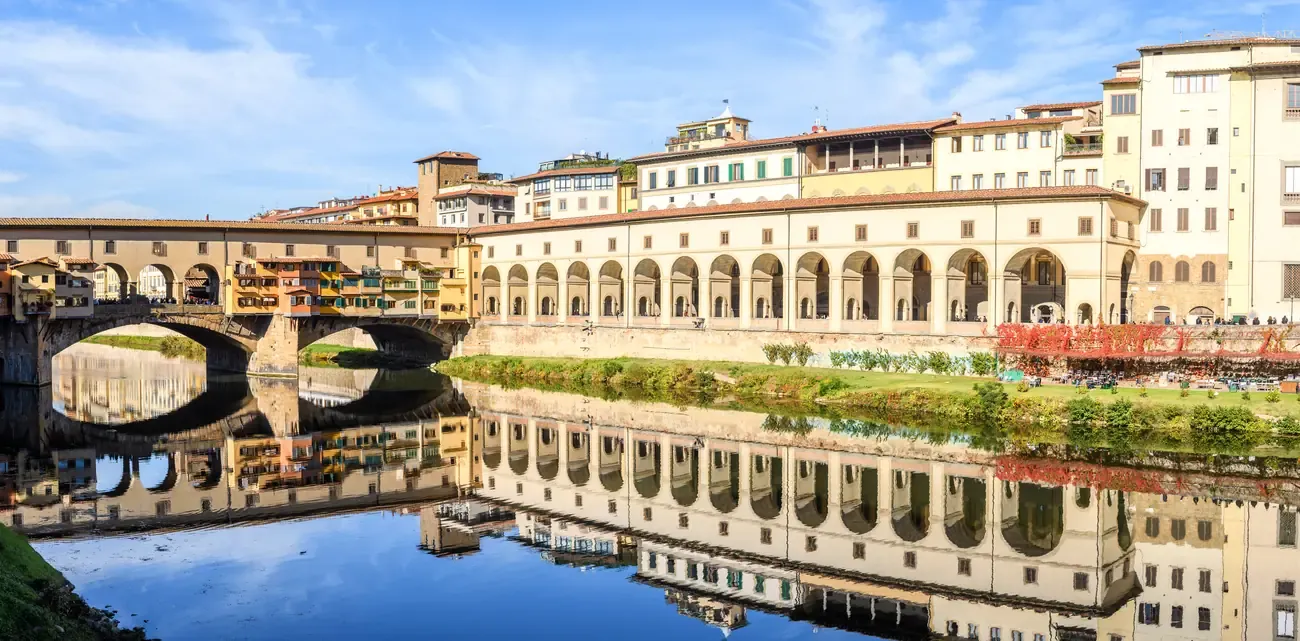
Ponte Vecchio
Shops have lined the medieval arch bridge since butchers and tanners held them; jewellers and art dealers trade there now, and wartime demolition spared it.
Location: Over the Arno, Florence
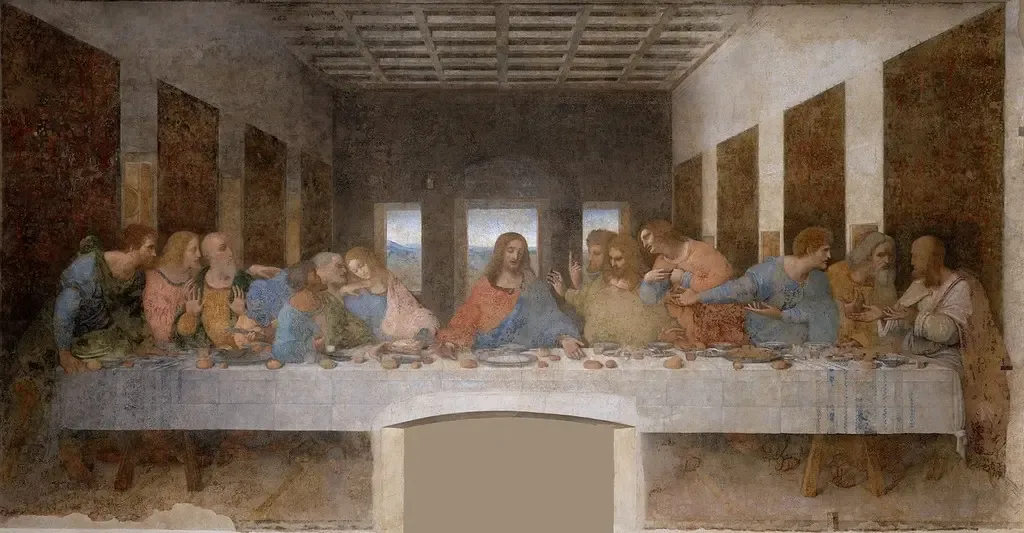
The Last Supper
Leonardo painted the mural on a convent refectory wall between 1495 and 1498; viewing slots run fifteen minutes and booking is always required.
Location: Santa Maria delle Grazie, Milan
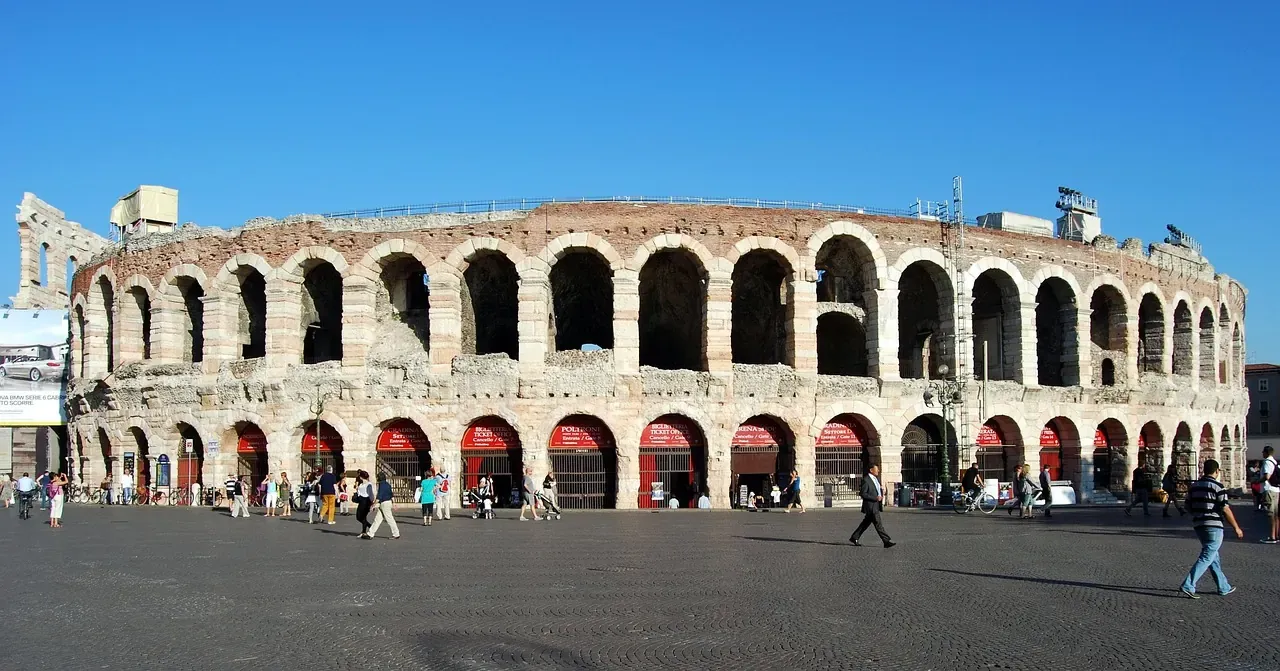
Verona Arena
Among the best preserved Roman amphitheatres, it has staged a summer opera festival since 1913 and held the closing ceremony of the 2026 Winter Olympics.
Location: Piazza Bra, Verona, Veneto
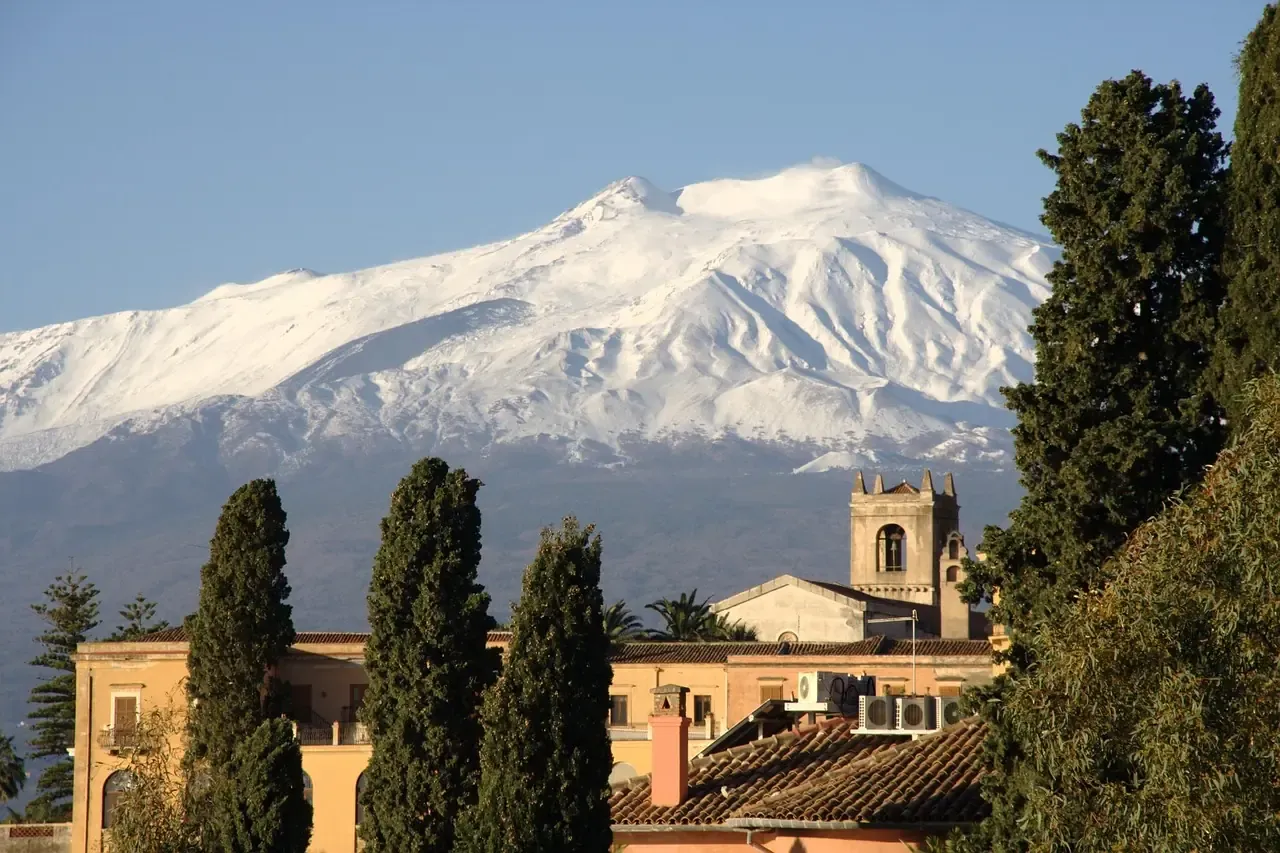
Mount Etna
One of the tallest active volcanoes in Europe and the world's most active stratovolcano, listed by UNESCO in 2013; a regional park manages its trails.
Location: East coast of Sicily, near Catania
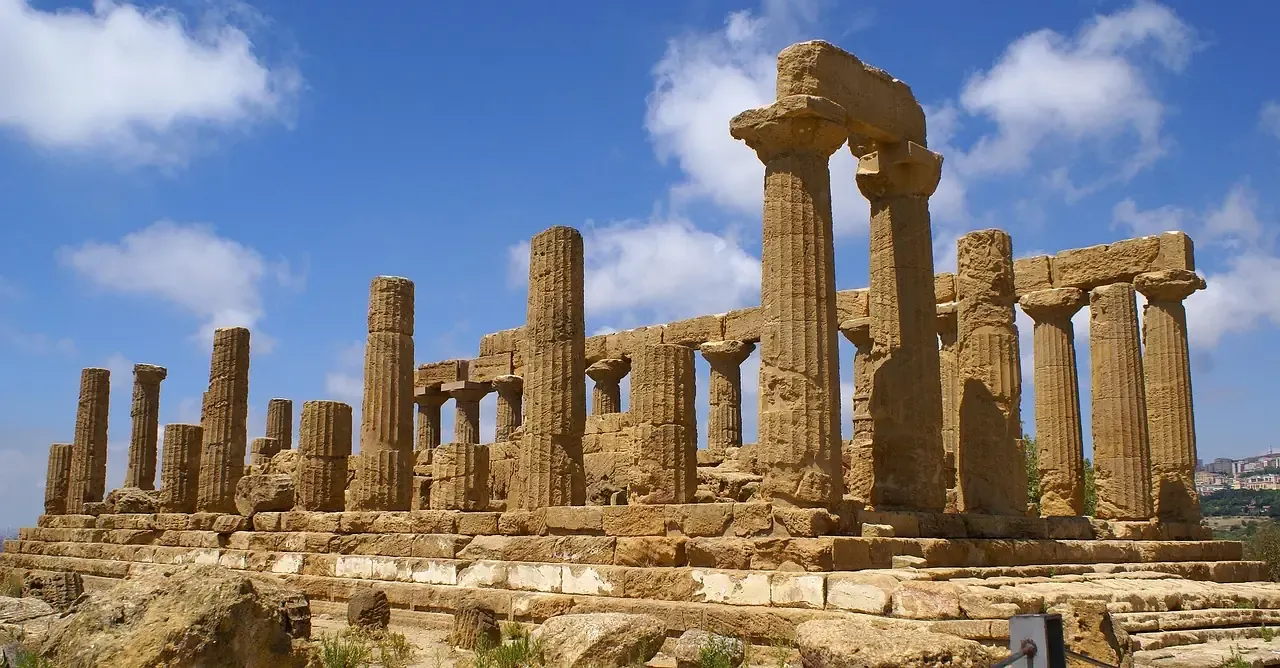
Valley of the Temples
Greek Akragas left a ridge of Doric temples outside Agrigento, on the UNESCO list since 1997 and the largest archaeological park in the Mediterranean.
Location: Agrigento, Sicily
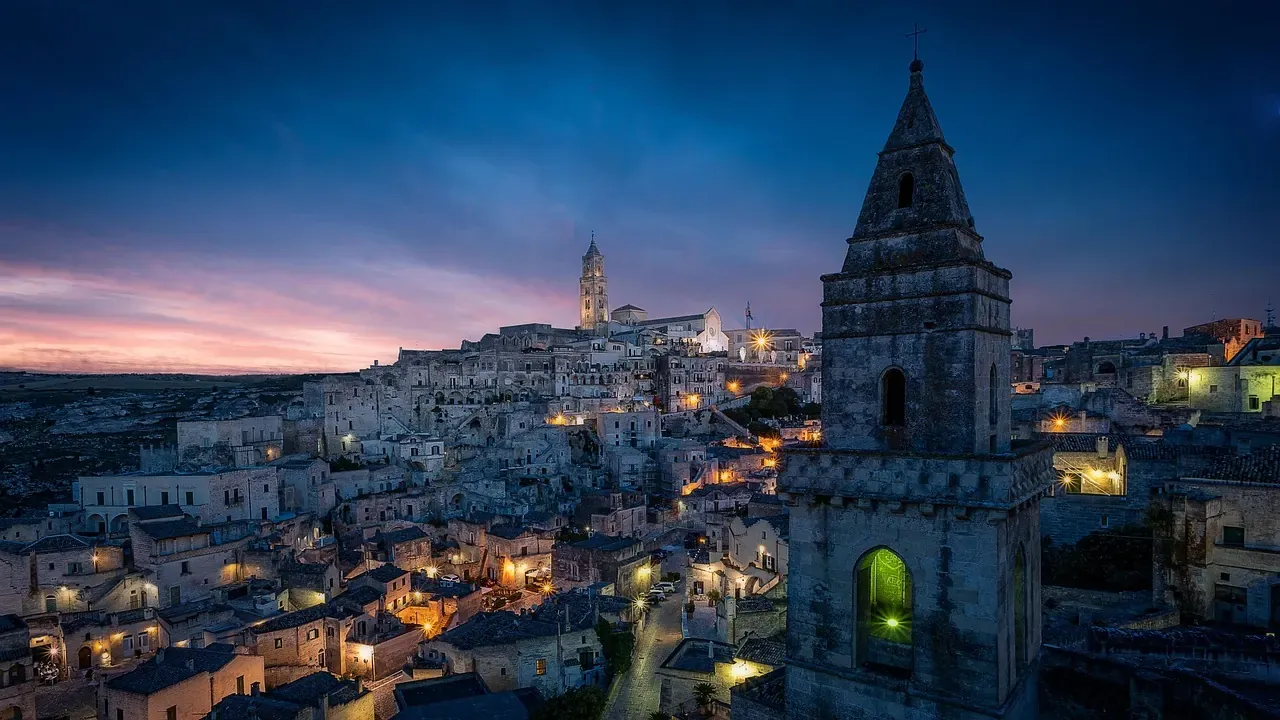
Sassi di Matera
Two districts of cave dwellings cut into the limestone ravine, inhabited since prehistory and inscribed by UNESCO in 1993 with the rupestrian churches.
Location: Matera, Basilicata
Tickets for more tourist attractions in Italy
Food to try in Italy

Pizza napoletana
Naples' original: a soft, blistered disc from a wood-fired oven with a raised rim, San Marzano tomatoes and mozzarella. UNESCO lists the craft of the Neapolitan pizzaiuolo as intangible cultural heritage.
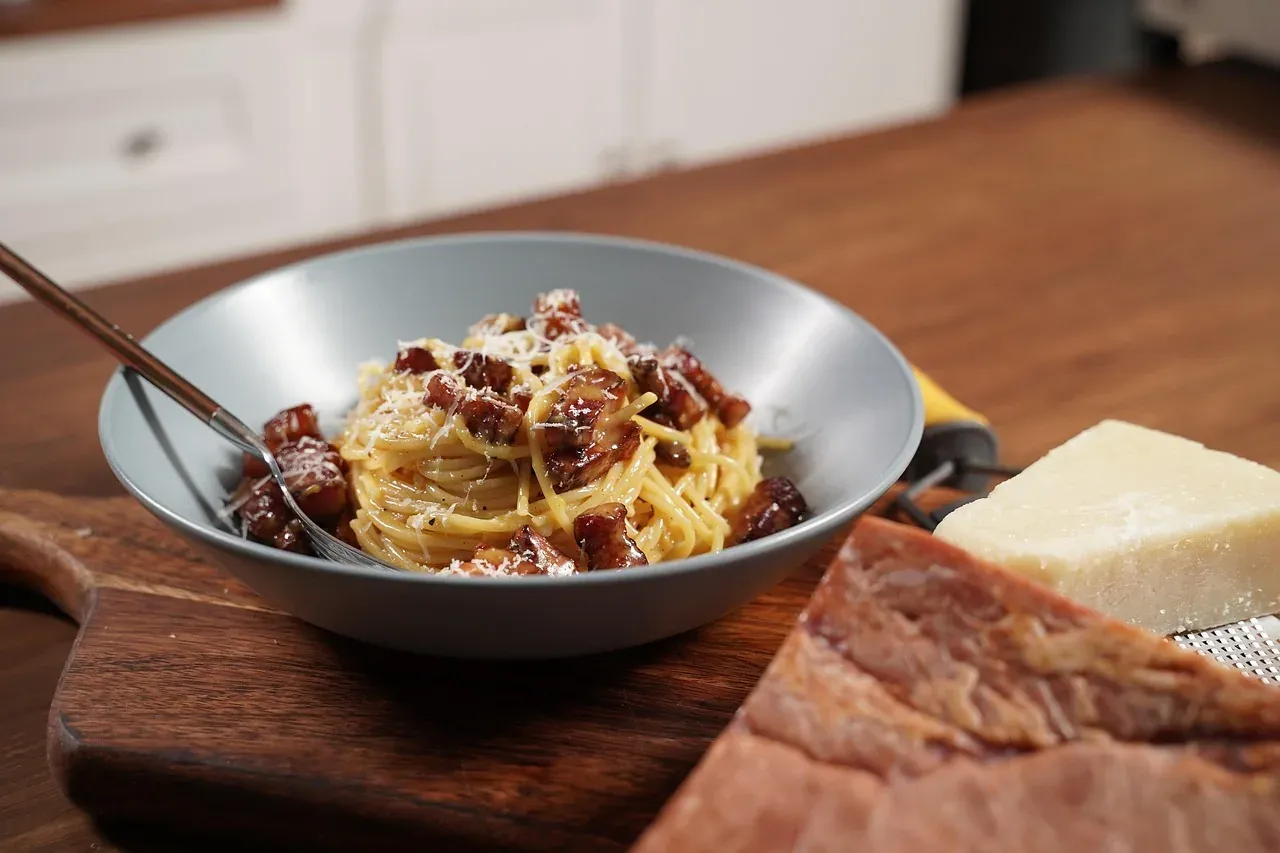
Spaghetti alla carbonara
Rome's most argued-over pasta: eggs, pecorino romano, guanciale and black pepper, with no cream in sight. Every Roman trattoria defends its own version as the correct one.

Gelato
Denser and more intense than industrial ice cream, churned daily in gelaterie across the country. Seasonal fruit flavours and pistachio are the classic tests of a good counter.
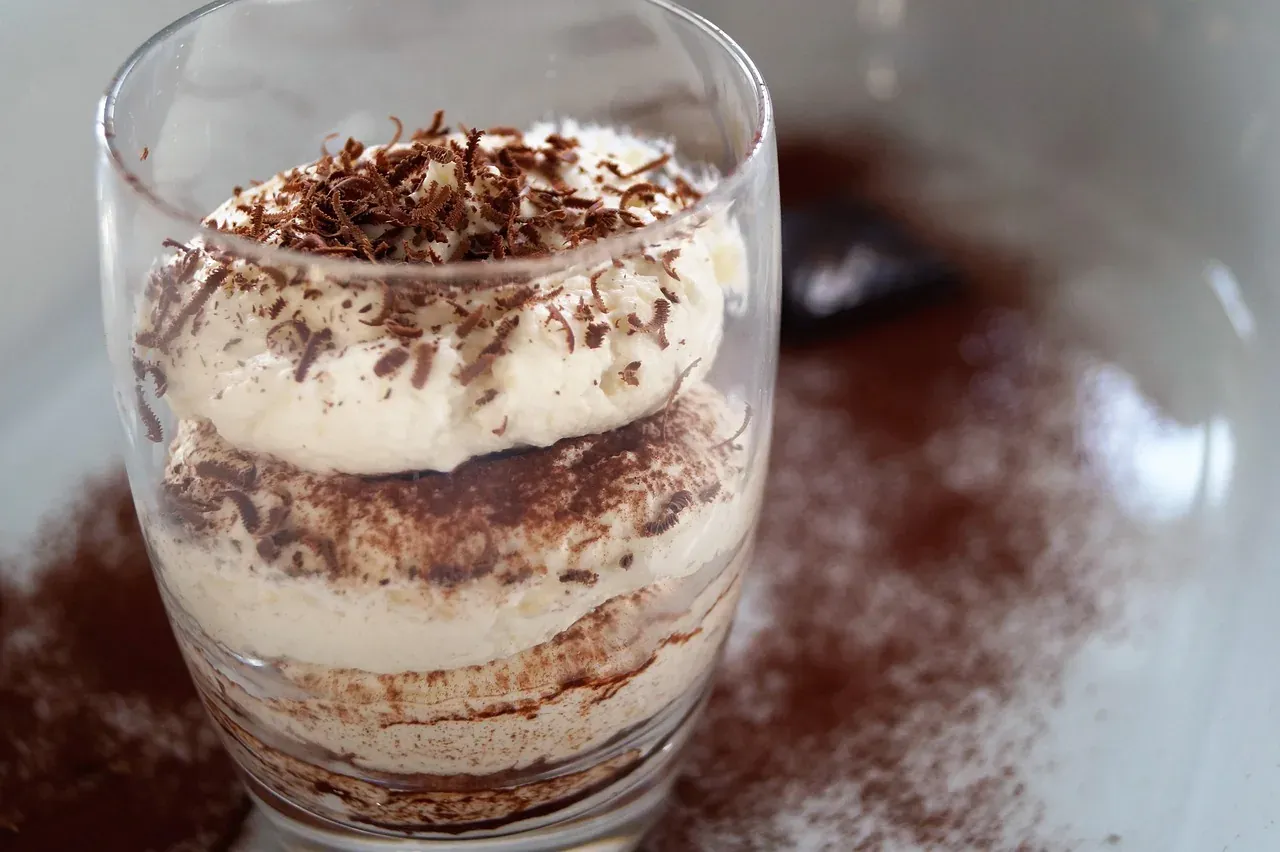
Tiramisù
A chilled layering of coffee-soaked savoiardi and mascarpone cream under cocoa. Both the Veneto and Friuli Venezia Giulia claim the recipe, a dispute Italians take seriously.
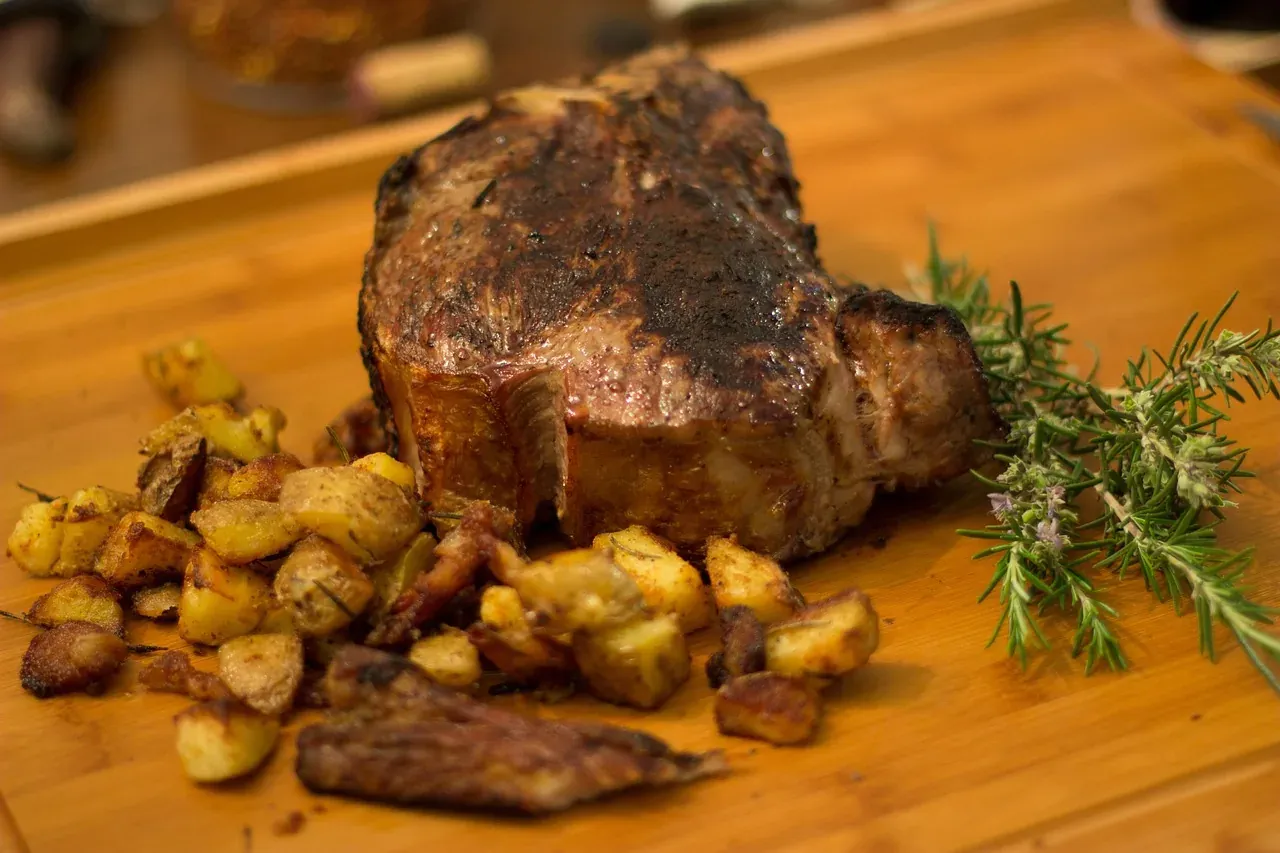
Bistecca alla fiorentina
Florence's thick-cut T-bone, traditionally from Chianina cattle, grilled over embers and served very rare. It is sold by weight and meant for the table to share.
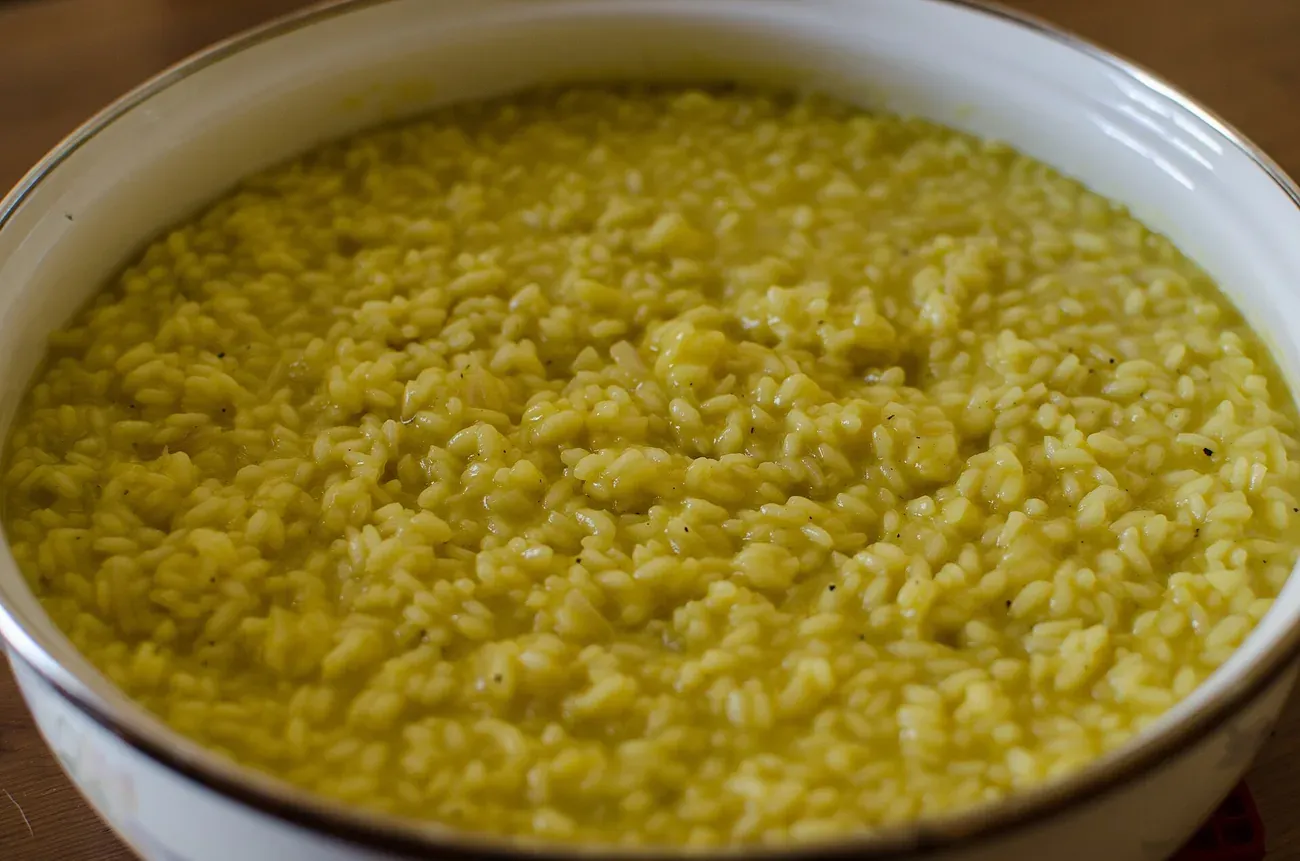
Risotto alla milanese
Milan's saffron risotto, the rice stirred slowly with broth, butter and parmesan until it turns golden. Tradition ties its colour to the glassworkers of the Duomo.
Photo: "Risotto giallo" by Michele Ursino (CC BY-SA 2.0).
Catacombs and underground worlds in Italy
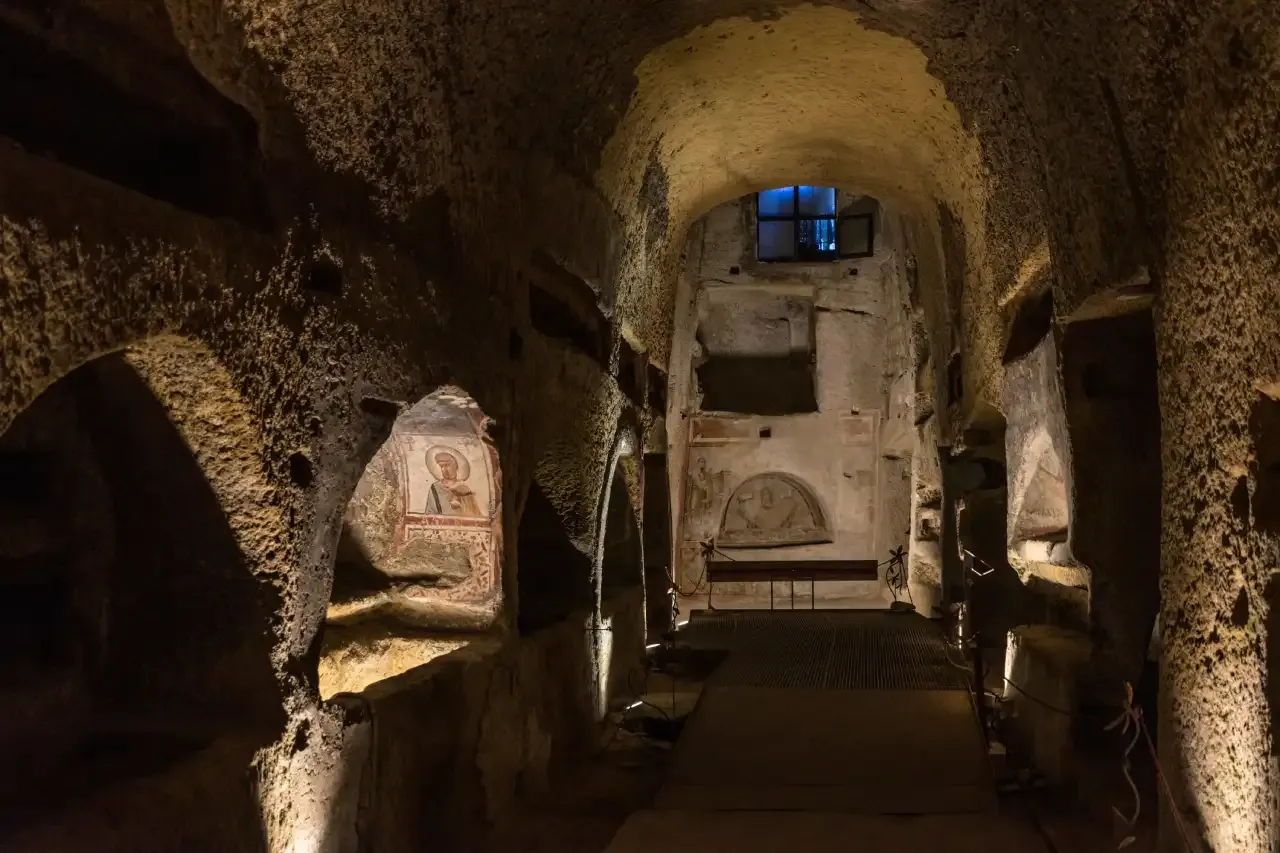
Catacombs of San Gennaro
The largest early-Christian catacombs in southern Italy, two frescoed levels cut into the Capodimonte hillside.
Location: Naples, Campania
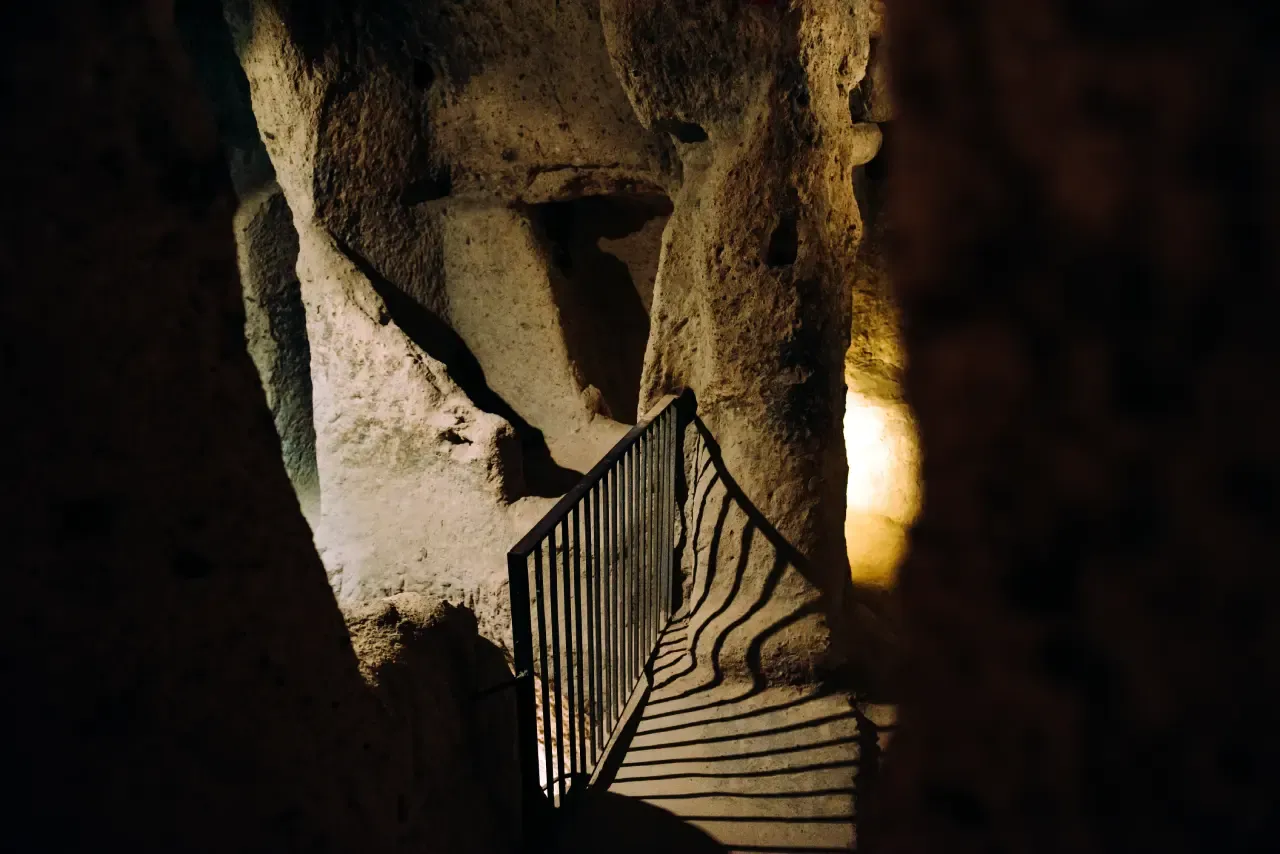
Naples Underground
Guided descents through Greek quarries and Roman cisterns forty metres beneath the historic centre, ending at a hidden theatre.
Location: Naples, Campania
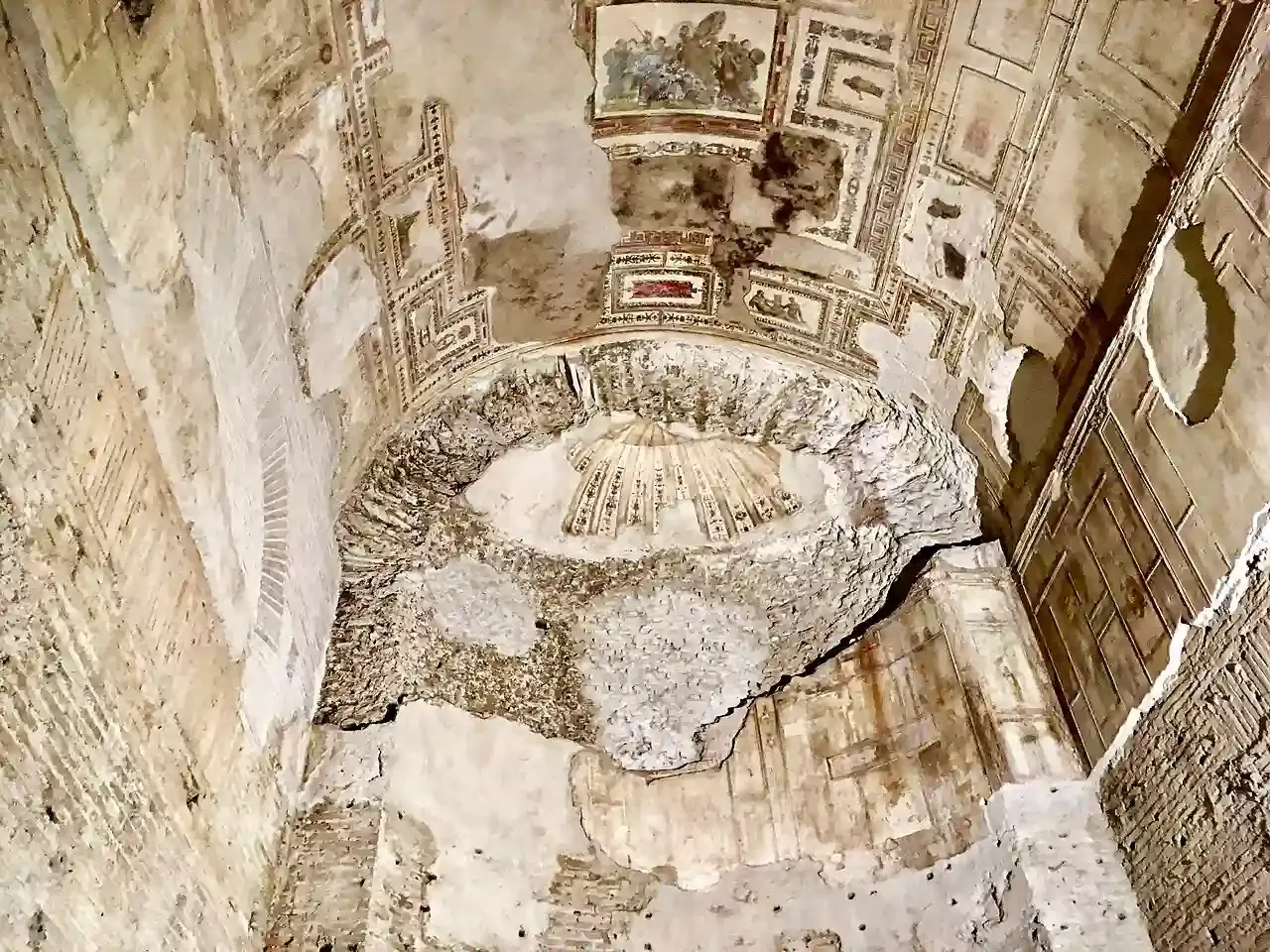
Domus Aurea
Nero's buried golden palace, explored on guided visits with projections that rebuild its frescoed halls.
Location: Rome, Lazio
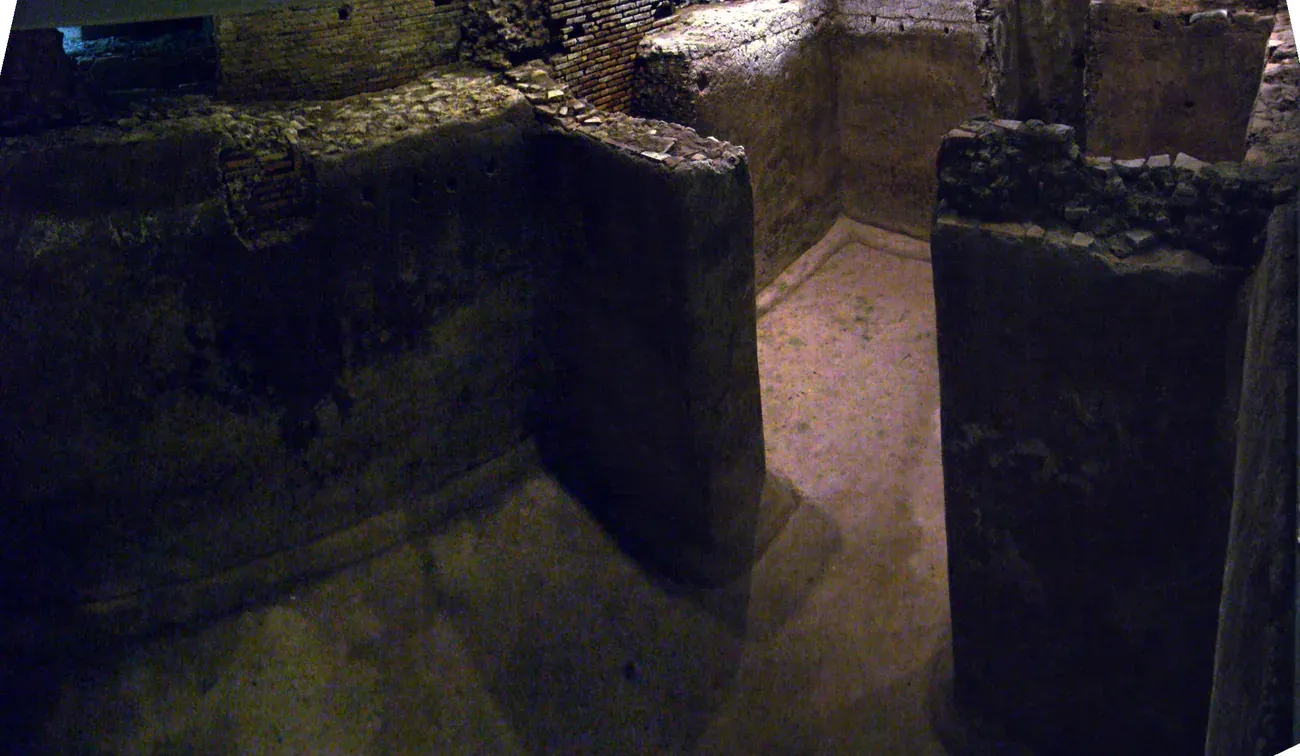
Vicus Caprarius
A Roman house and cistern below the streets behind the Trevi Fountain, still fed by the same ancient aqueduct.
Location: Rome, Lazio
Photo: "Trevi - città dell'acqua - serbatoio aqua virgo" by Lalupa (CC BY-SA 3.0).
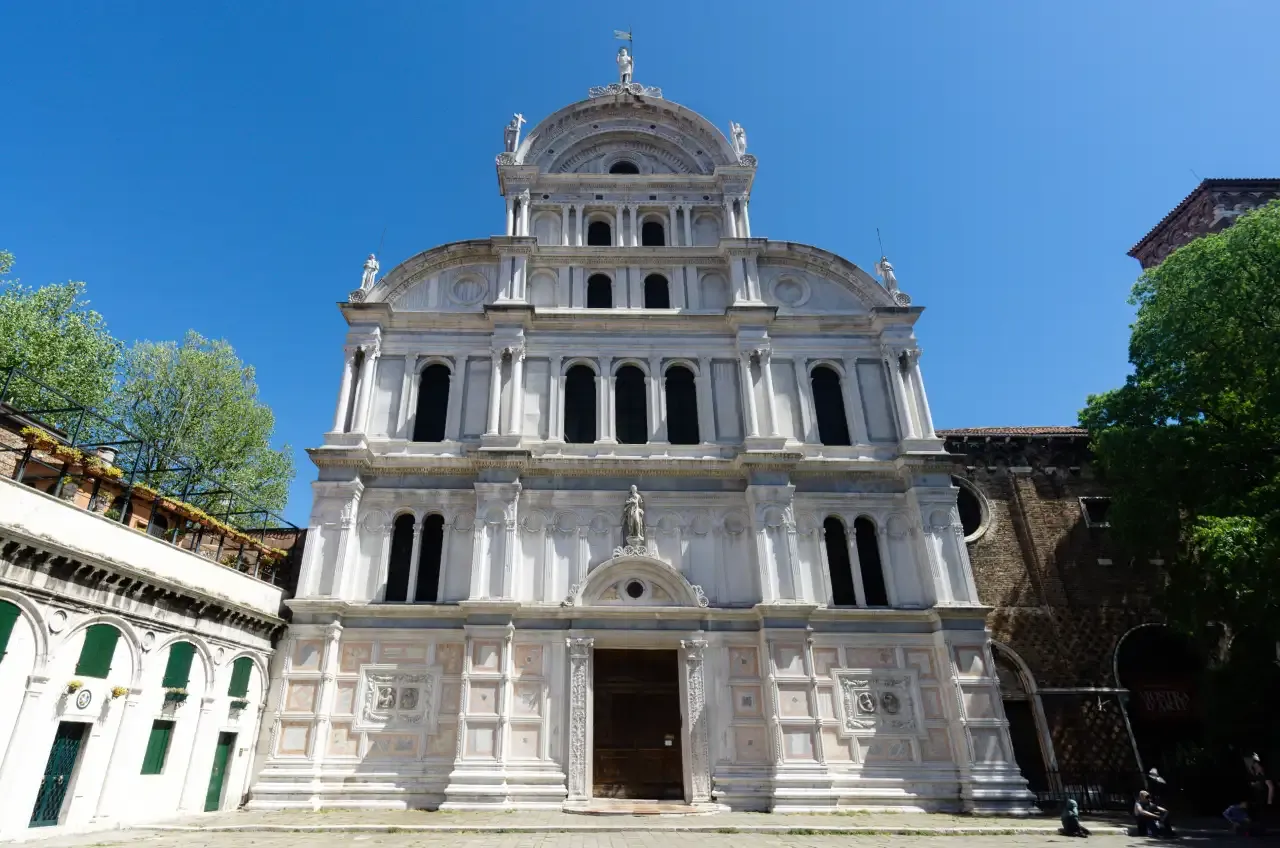
Flooded Crypt of San Zaccaria
Eight early doges rest in a permanently flooded crypt beneath the church, seen from steps just above the water.
Location: Venice, Veneto
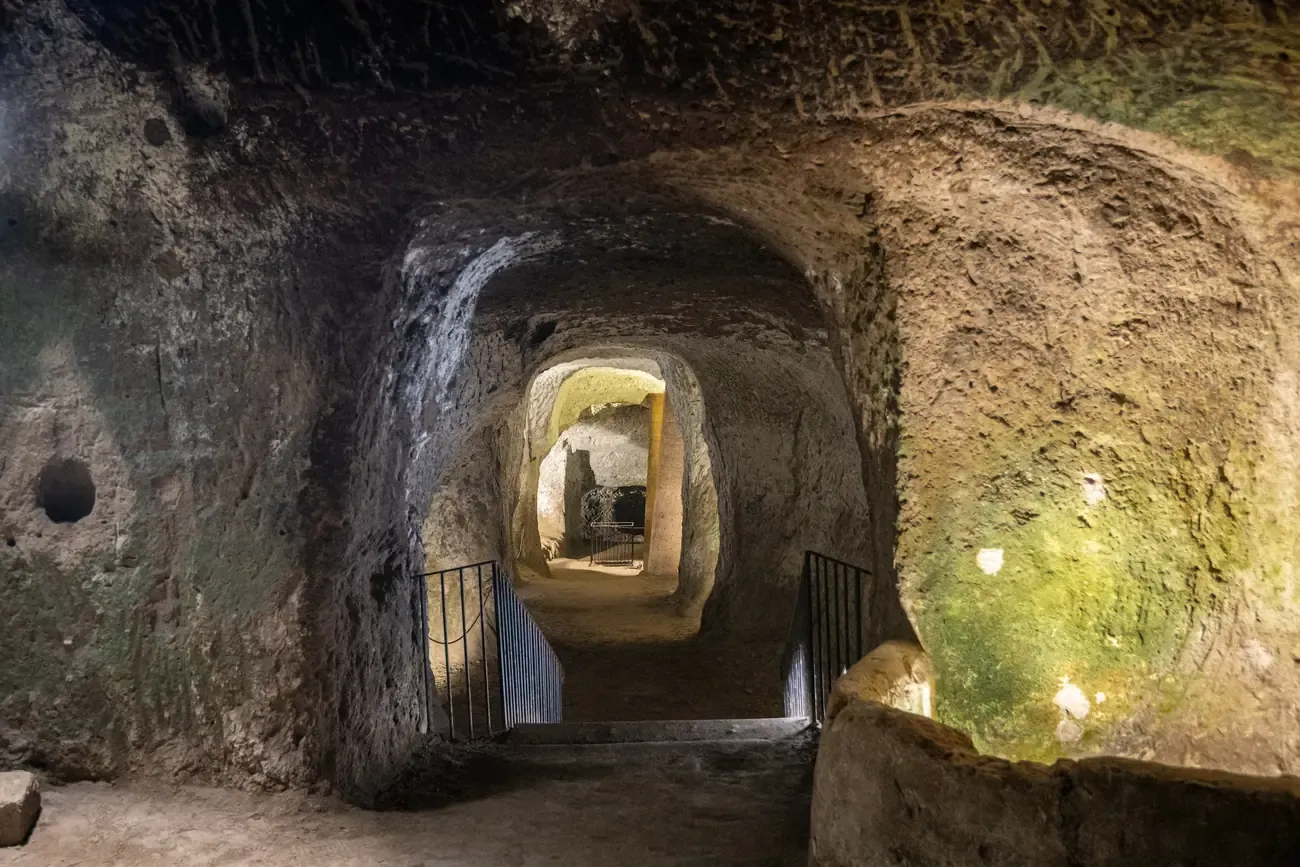
Orvieto Underground
A labyrinth of caves, wells and passages dug into Orvieto's tuff cliff since Etruscan times, visited on guided tours.
Location: Orvieto, Umbria
Ancient Roman sites across Italy
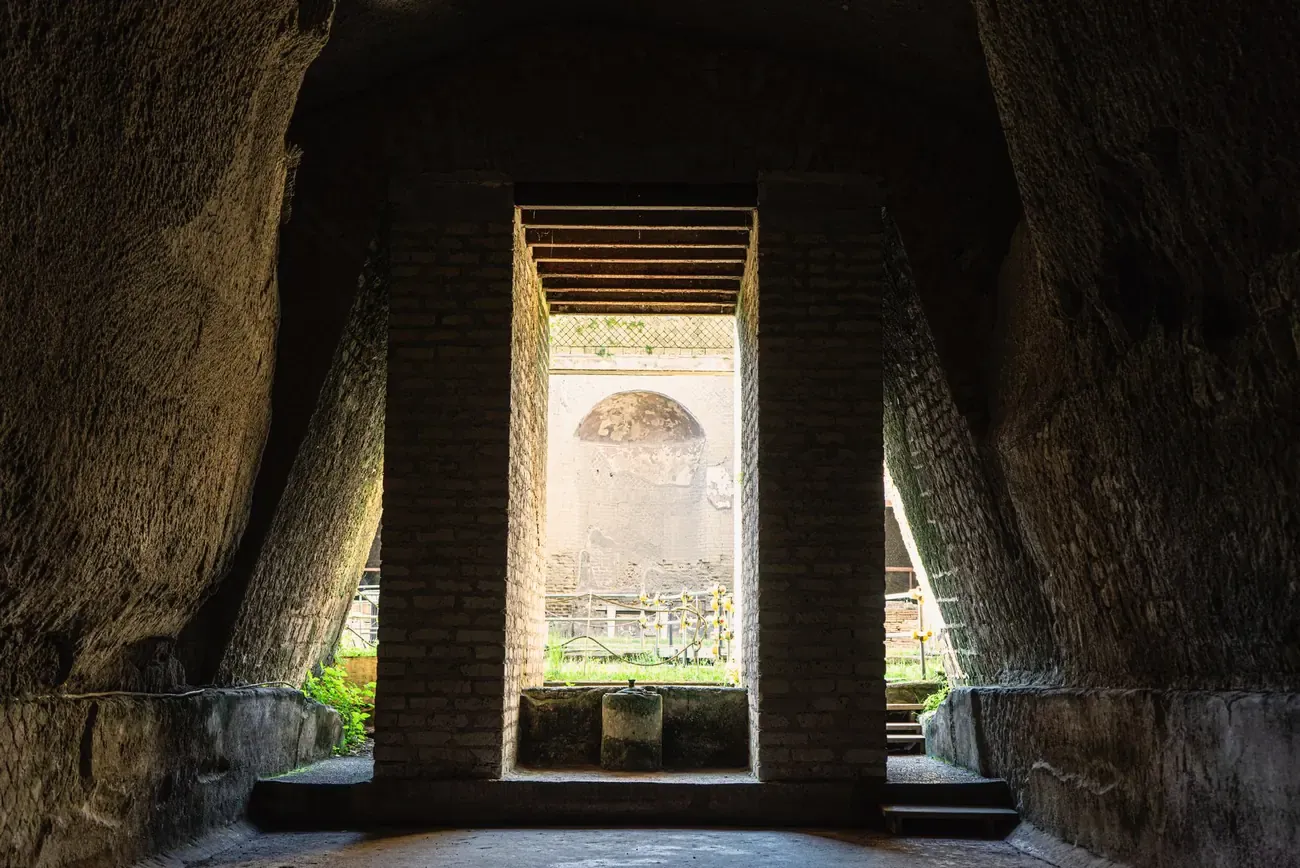
Herculaneum
Sealed by the same eruption as Pompeii, its houses still stand two storeys high with wood, mosaics and painted walls intact.
Location: Ercolano, Campania
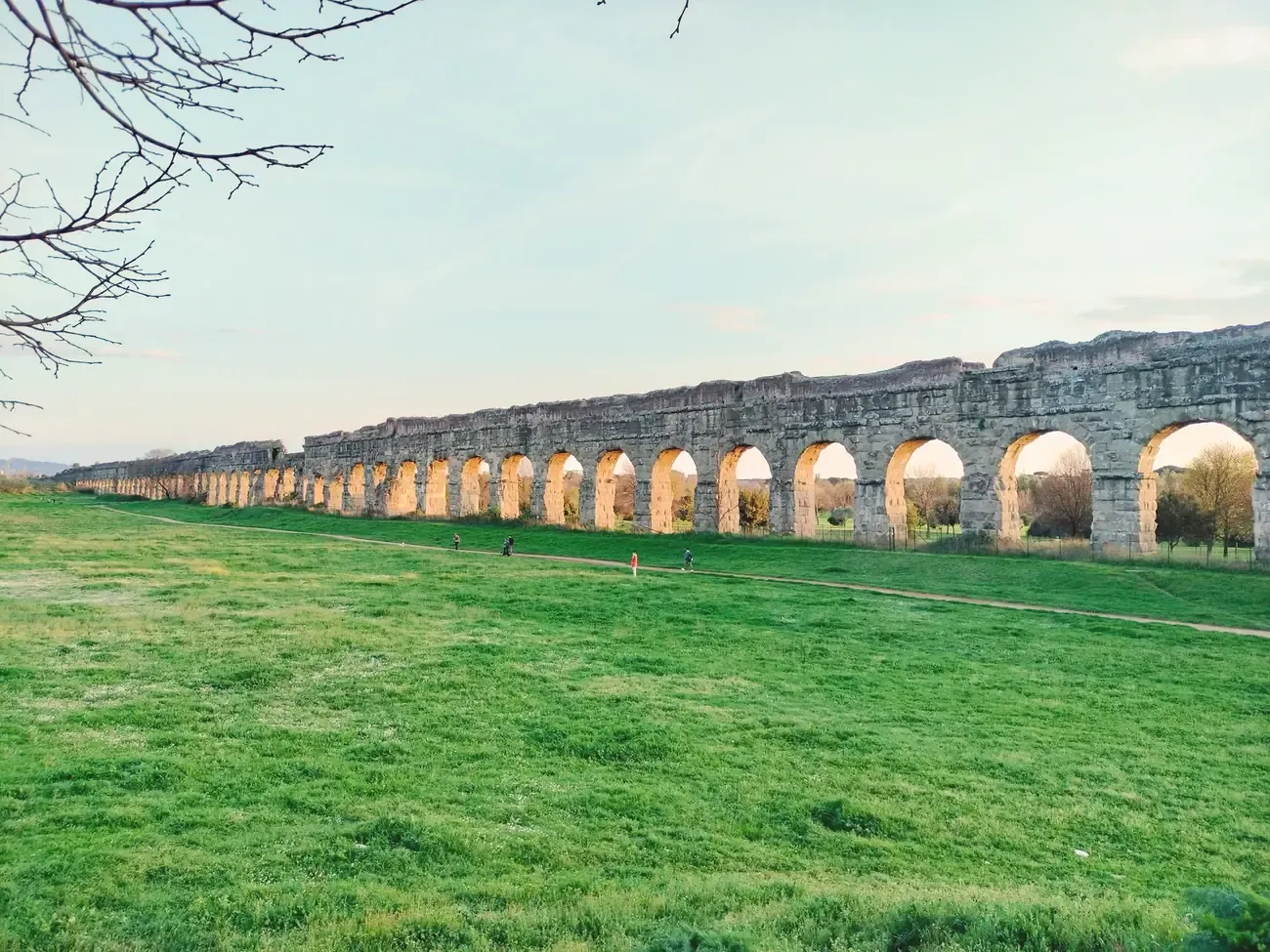
Parco degli Acquedotti
Open parkland on Rome's southern edge where the arches of ancient aqueducts still stride across the fields.
Location: Rome, Lazio
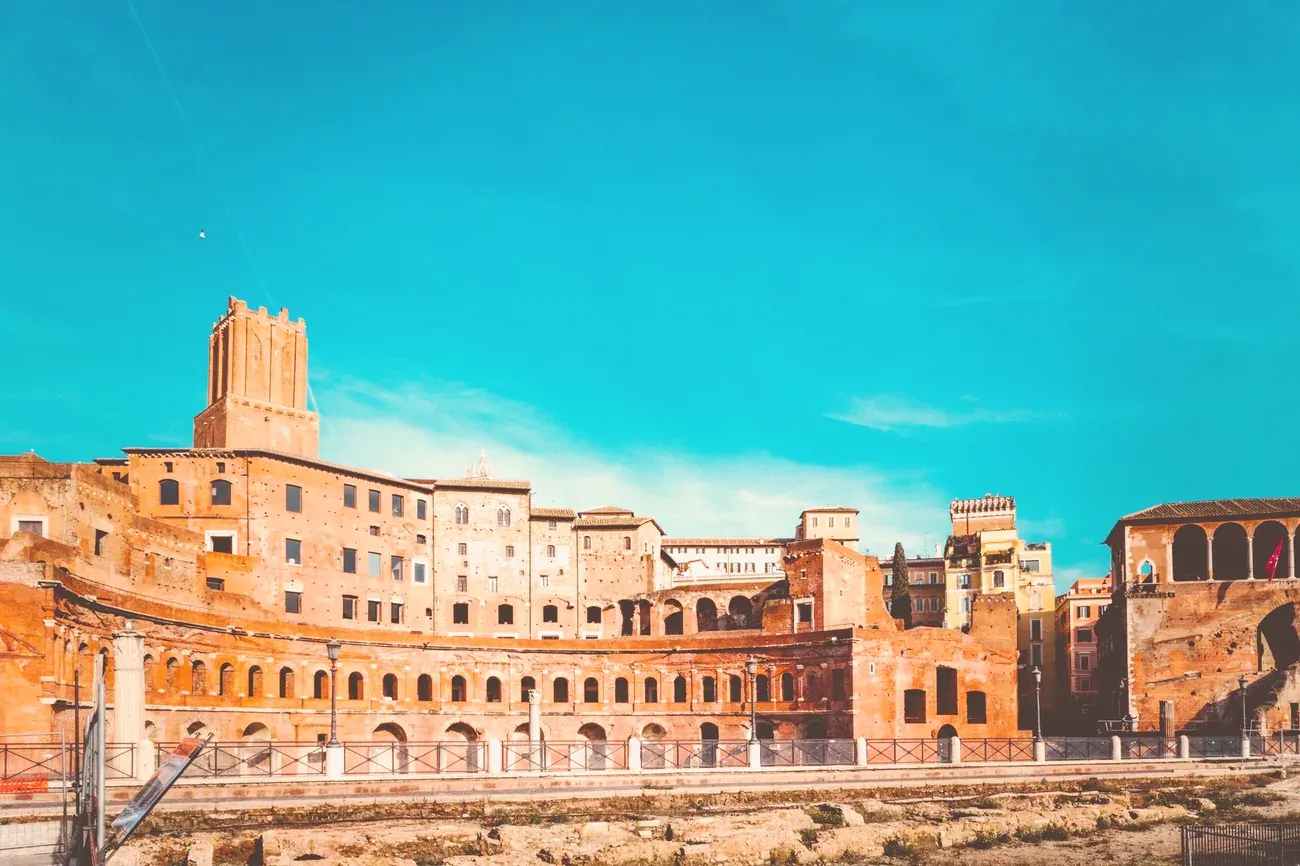
Trajan's Market
A curved, multi-level complex of Roman brick halls beside Trajan's Forum, often called the world's oldest shopping centre.
Location: Rome, Lazio
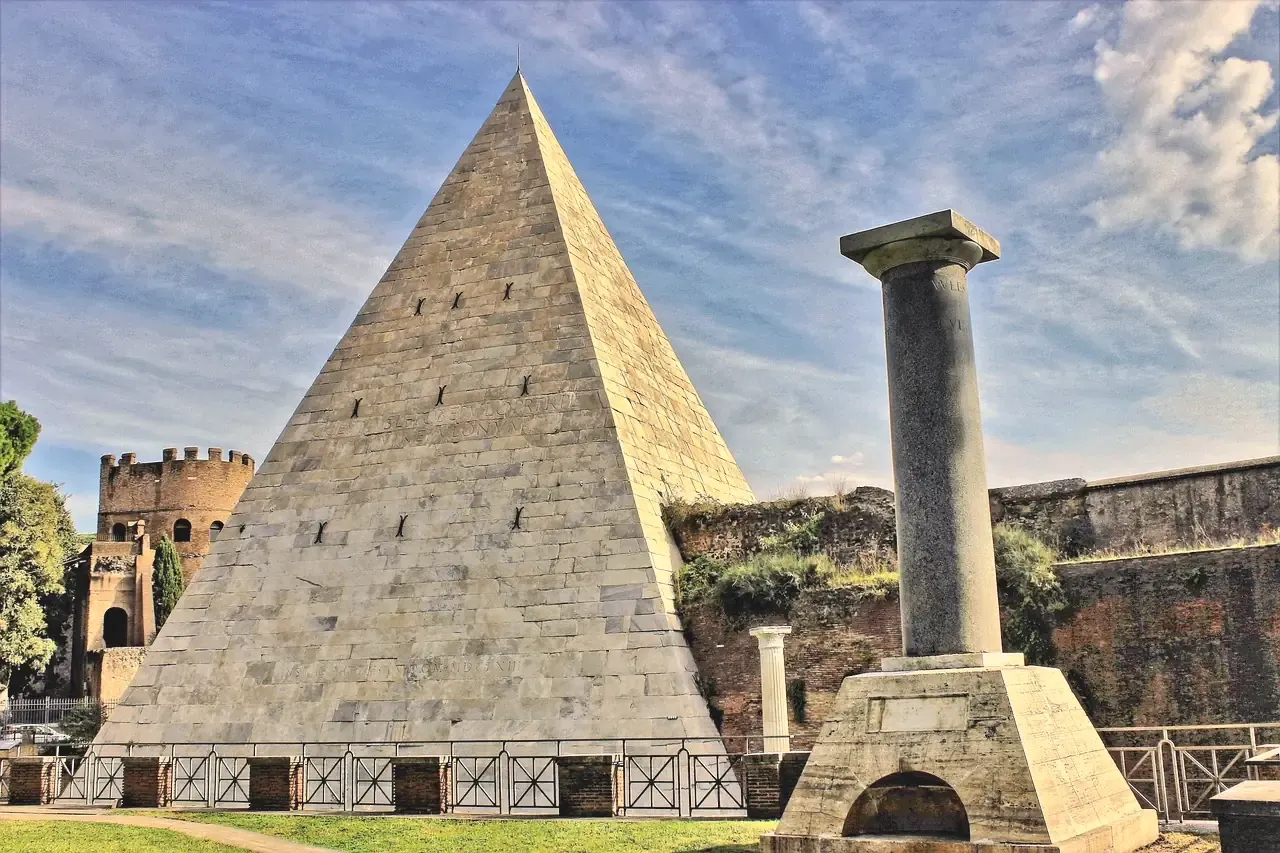
Pyramid of Cestius
A sharp marble pyramid raised as a magistrate's tomb during the Egyptian craze that followed Rome's conquest of Egypt.
Location: Rome, Lazio
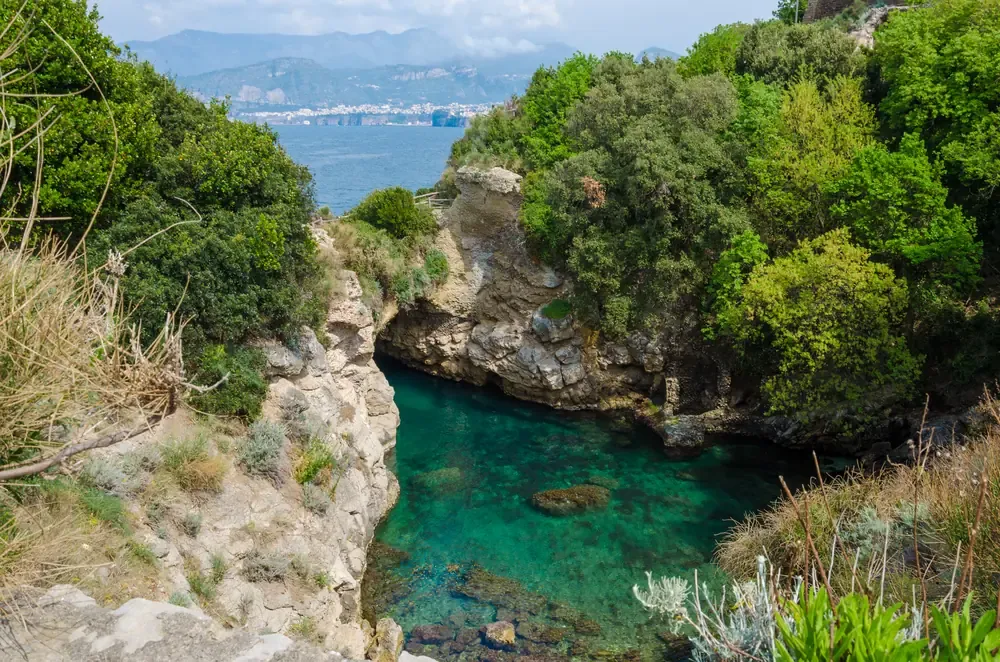
Bagni della Regina Giovanna
Ruins of a Roman seaside villa above a rock-ringed natural pool, reached on foot through olive groves outside Sorrento.
Location: Sorrento, Campania
Historic churches and chapels in Italy
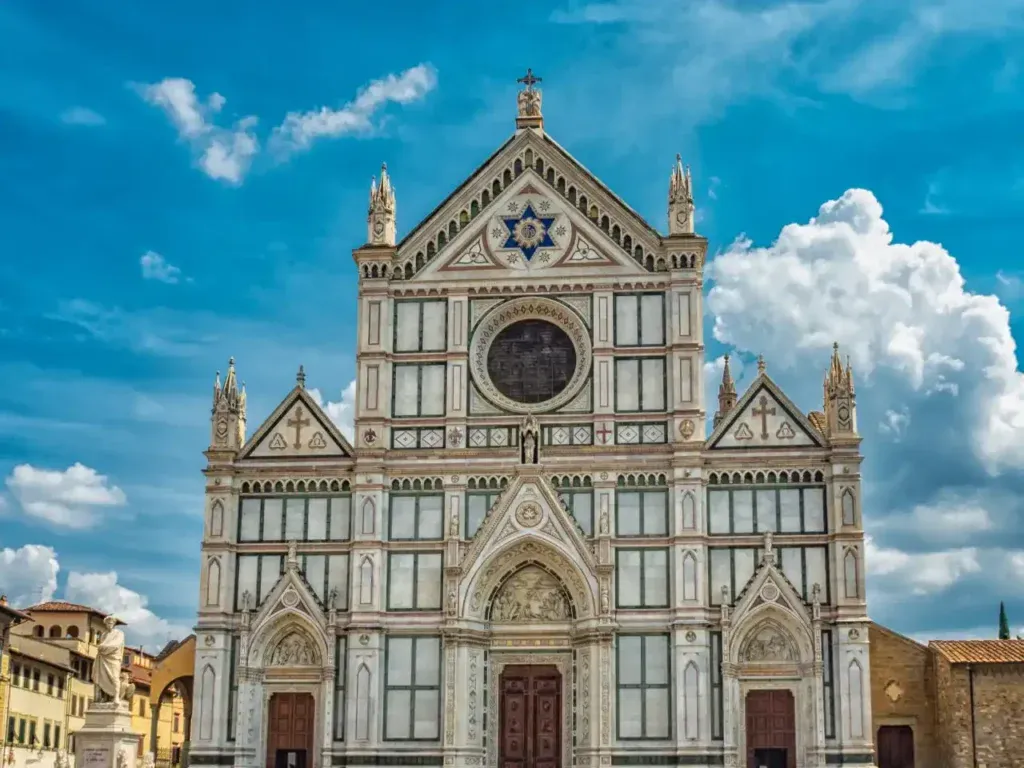
Basilica of Santa Croce
Franciscan basilica holding the tombs of Michelangelo, Galileo and Machiavelli, with Giotto frescoes and the Pazzi Chapel.
Location: Florence, Tuscany
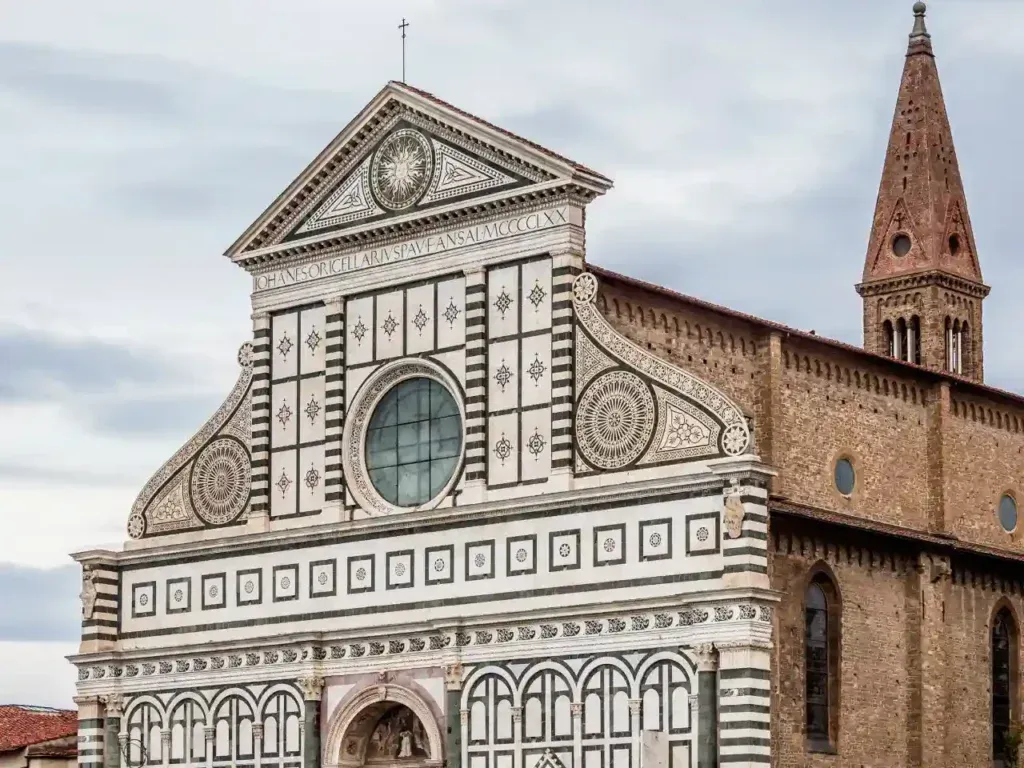
Basilica of Santa Maria Novella
Alberti's striped marble front leads to a Dominican church with Masaccio's Trinity and Ghirlandaio's frescoed choir.
Location: Florence, Tuscany
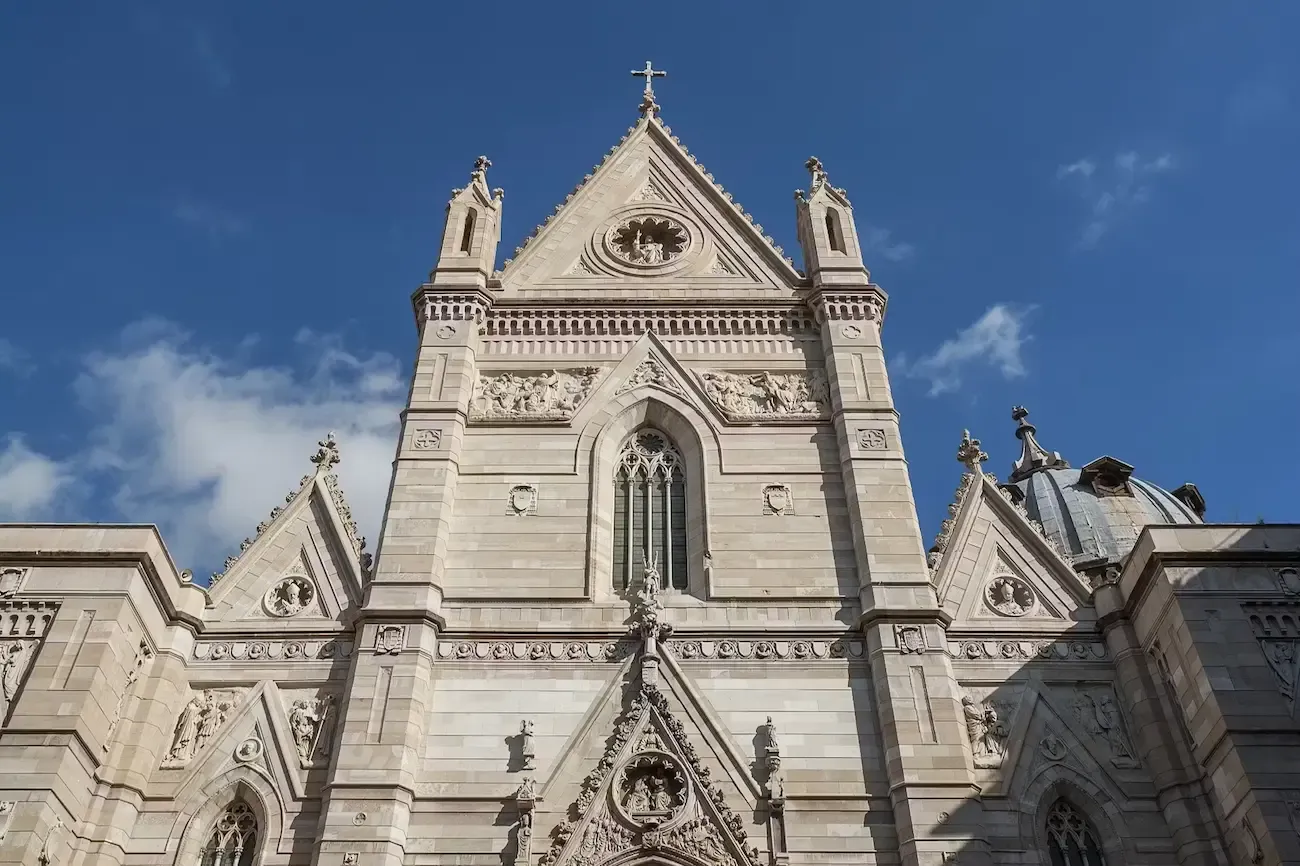
Sansevero Chapel
Home of the Veiled Christ, a marble shroud so fine it reads as real cloth, above a crypt of anatomical curiosities.
Location: Naples, Campania
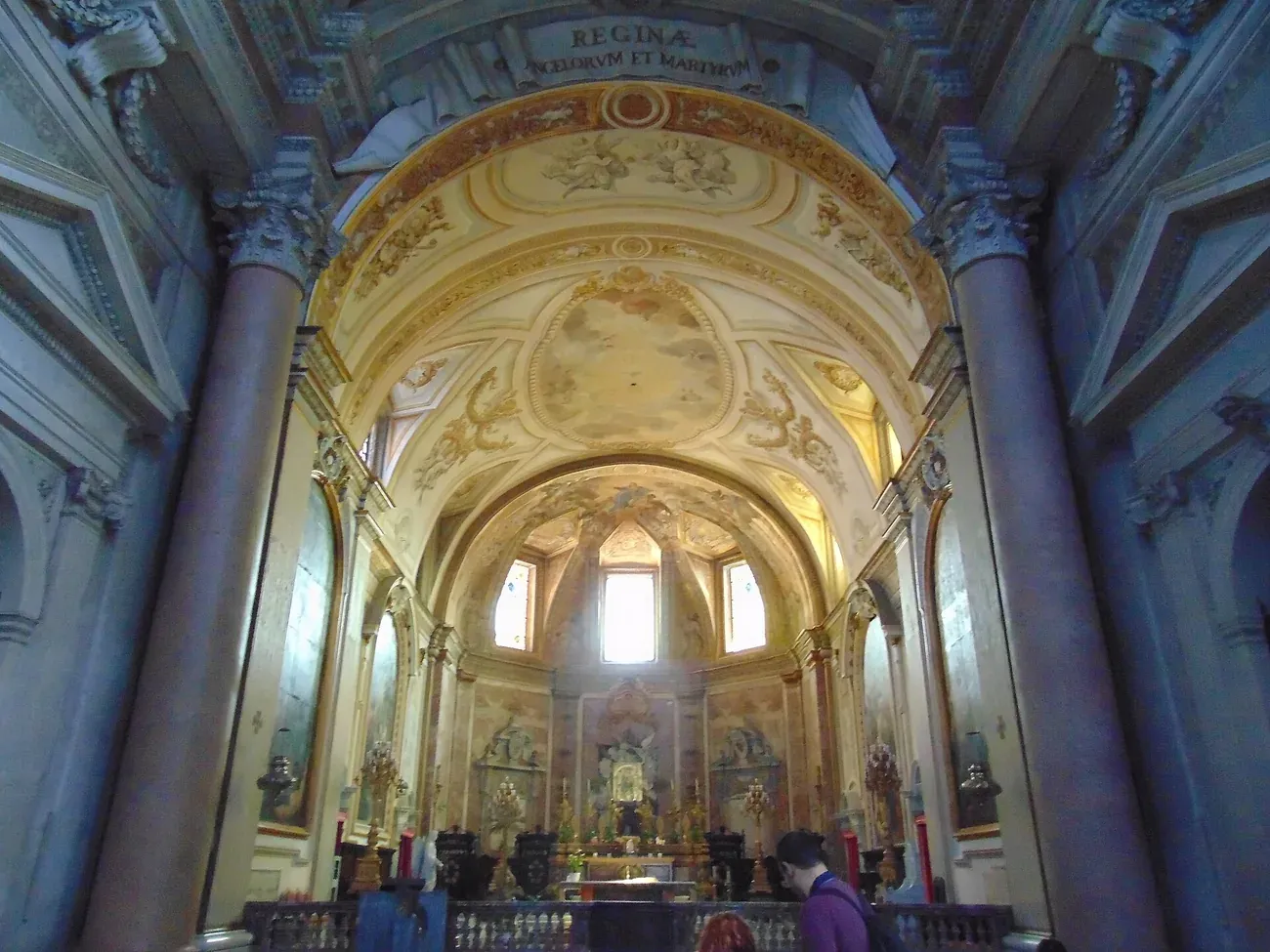
Meridian line of Santa Maria degli Angeli
A brass solar meridian across the floor of a basilica Michelangelo designed inside the Baths of Diocletian.
Location: Rome, Lazio
Photo: "Basilica di Santa Maria degli Angeli e dei Martiri 30" by Nicholas Gemini (CC BY-SA 4.0).
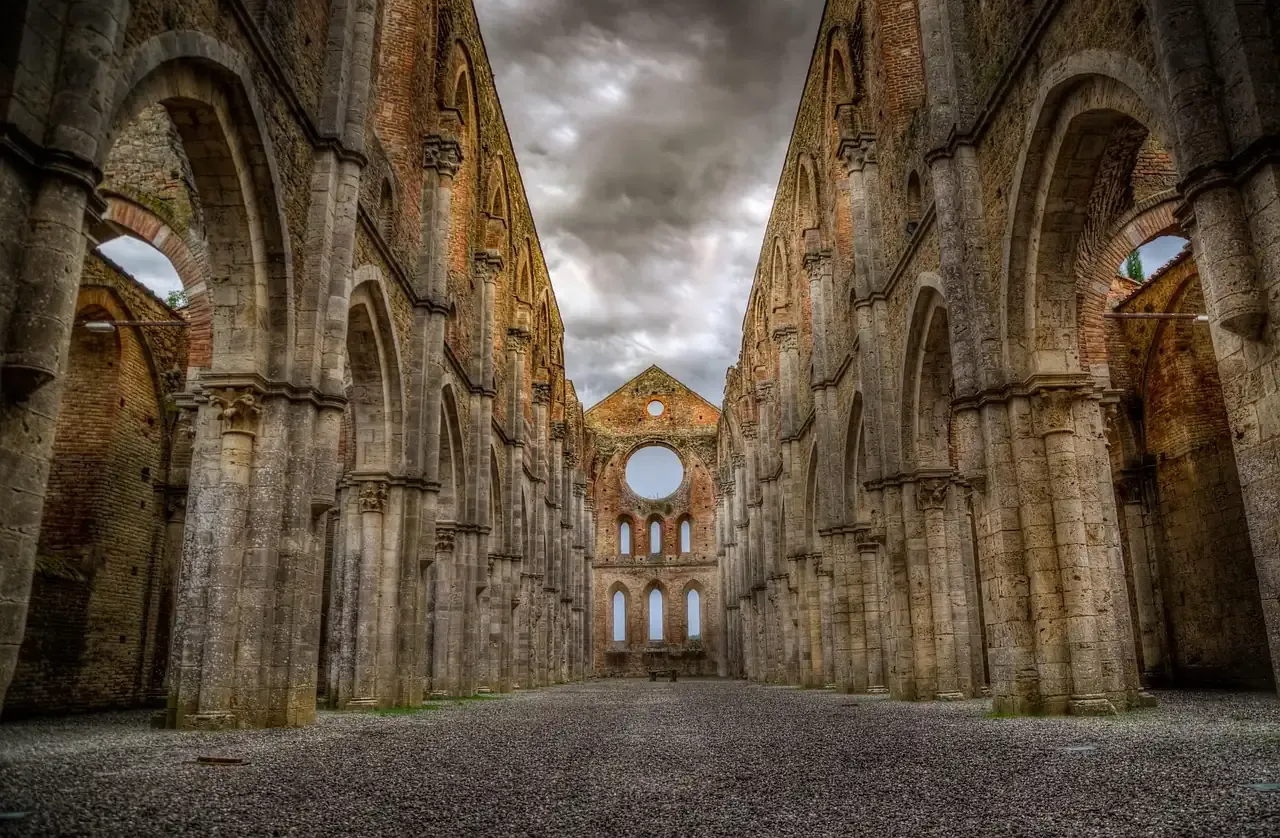
Abbey of San Galgano
A roofless Cistercian abbey open to the sky, beside the round chapel of Montesiepi and its sword in the stone.
Location: Chiusdino, Tuscany
Secret spots in Italy
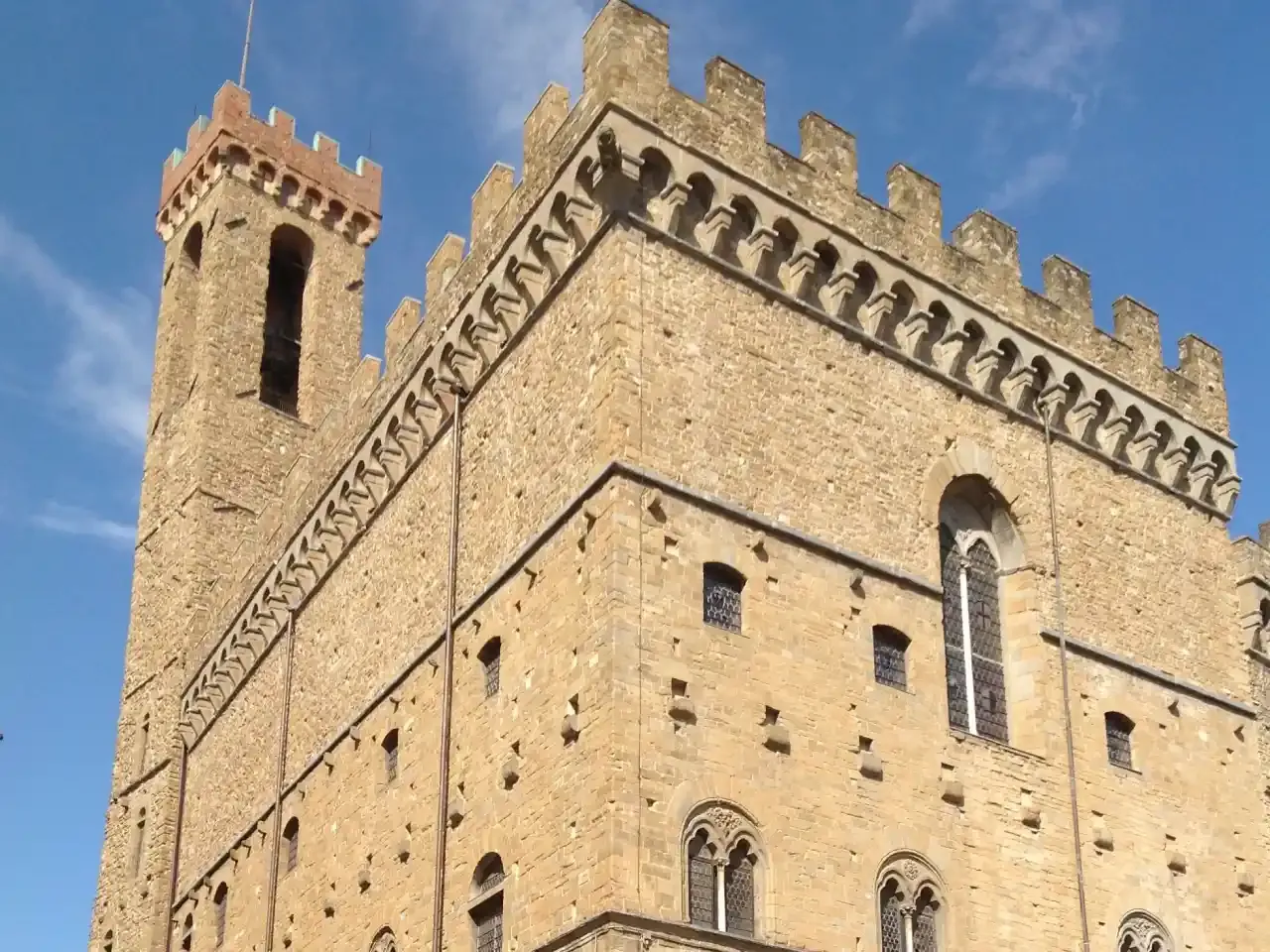
Bargello Museum
Florence's oldest civic palace turned sculpture museum, with Donatello's bronze David and early Michelangelo marbles.
Location: Florence, Tuscany
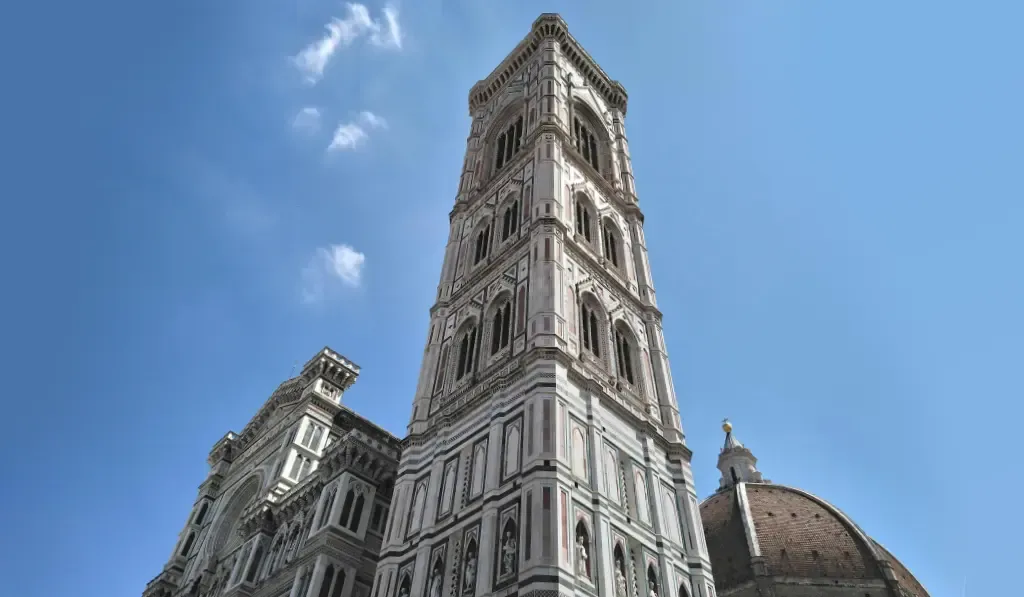
Giotto's Bell Tower
Giotto's marble campanile beside the Duomo; 414 steps end on a terrace face to face with Brunelleschi's dome.
Location: Florence, Tuscany
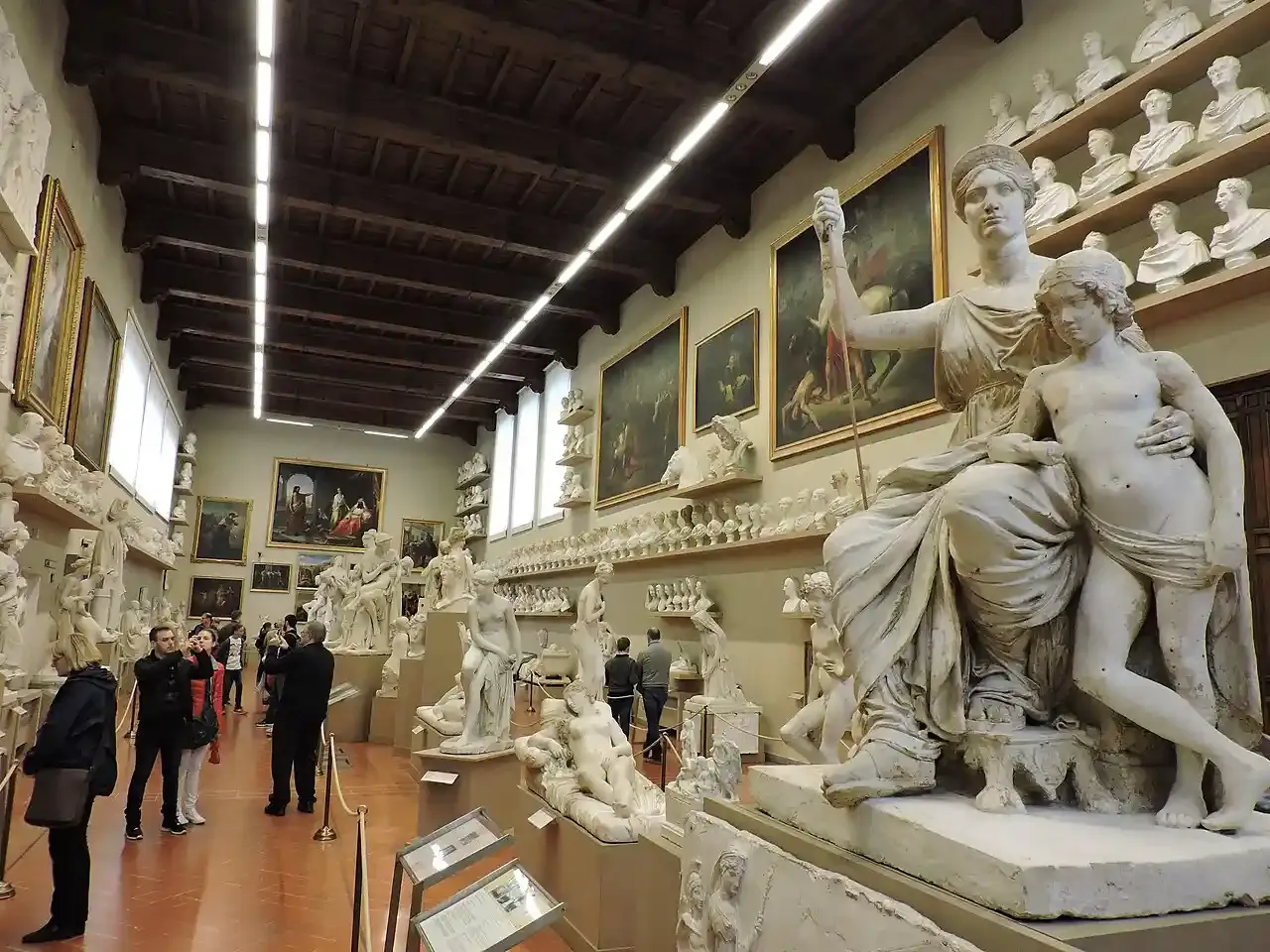
Gipsoteca Bartolini
A hall of nineteenth-century plaster casts inside the Accademia, the working models of sculptor Lorenzo Bartolini.
Location: Florence, Tuscany
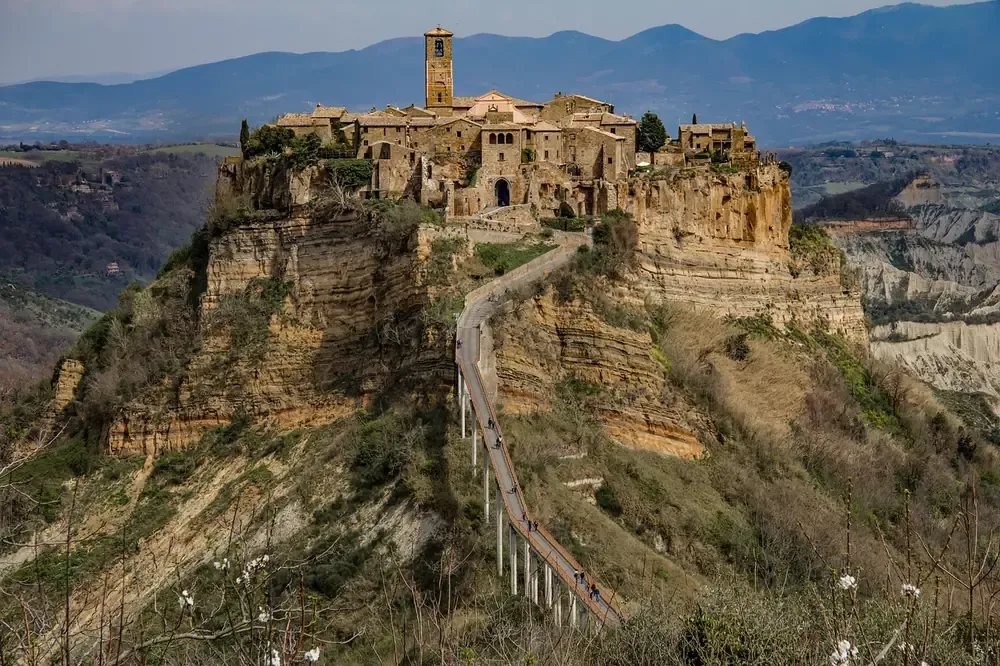
Civita di Bagnoregio
A hilltop village on a crumbling tuff plateau, reached only by footbridge and known in Italy as the dying town.
Location: Province of Viterbo, Lazio
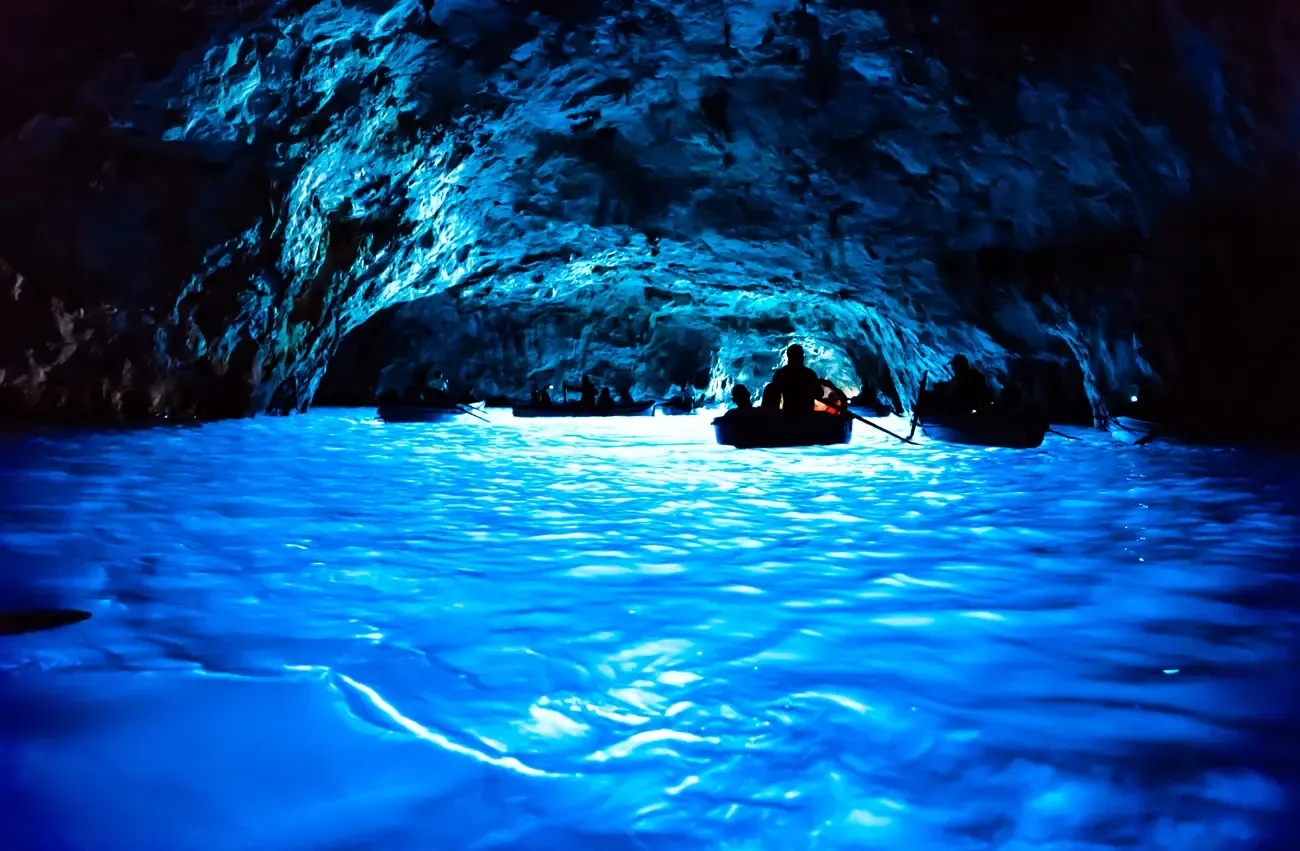
Blue Grotto
A sea cave entered by rowboat through a low opening, where refracted sunlight turns the water an unearthly electric blue.
Location: Capri, Campania

Libreria Acqua Alta
A canal-side bookshop shelving its stock in gondolas and bathtubs against the floods, with a staircase of waterlogged books.
Location: Venice, Veneto
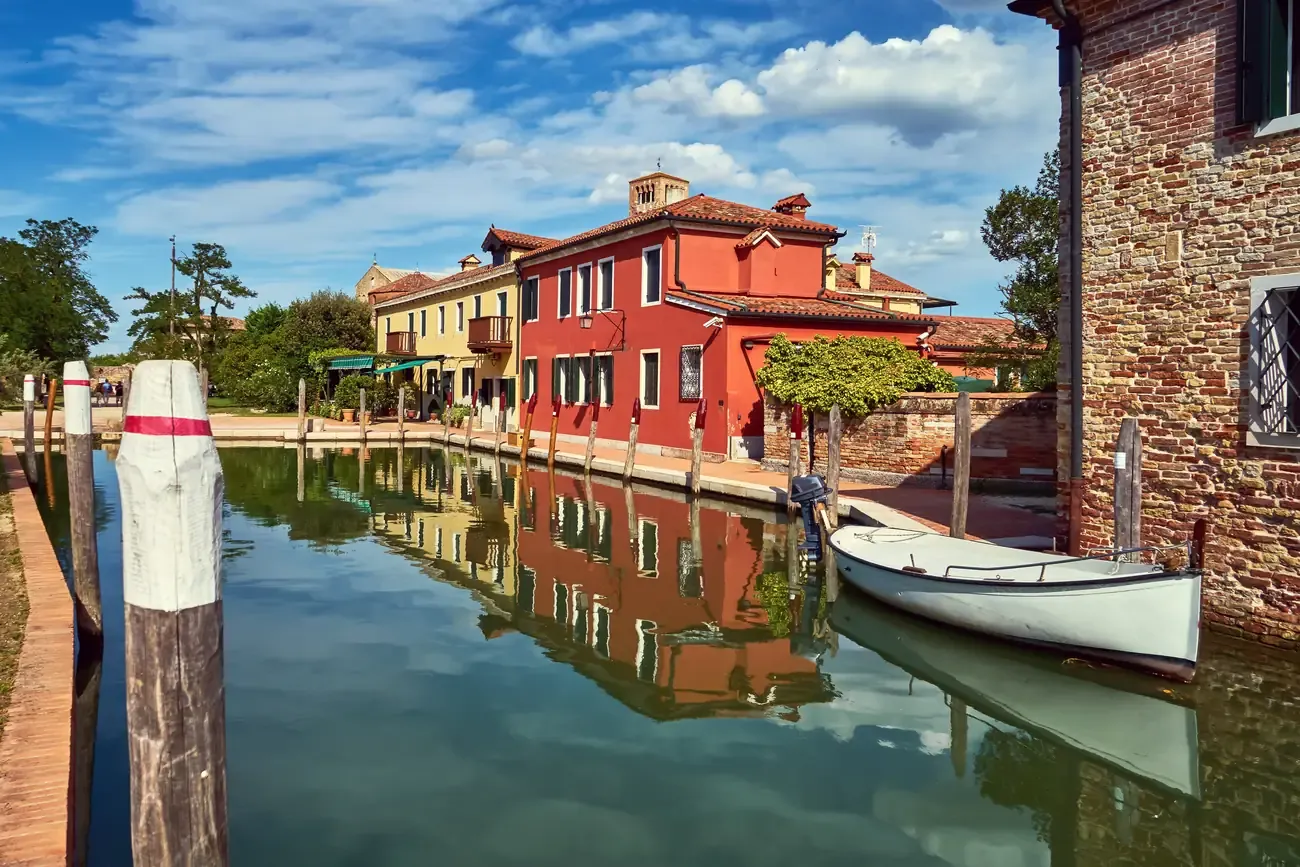
Torcello
The lagoon's quiet early settlement, where the cathedral of Santa Maria Assunta keeps some of Venice's oldest Byzantine mosaics.
Location: Venetian Lagoon, Veneto
Why Italy is worth the trip
Italy packs more layers of European history into reachable distances than anywhere else on the continent. A single week can run from Roman amphitheatres to Renaissance galleries to Baroque fountains without a flight, because the fast trains tie Rome, Florence, Venice and Milan into one convenient circuit, and every stop on it has been a capital of something: an empire, a republic, banking, painting, opera or fashion. Even a cruise call at Civitavecchia leaves time for a day in the capital by rail.
The regions pull in usefully different directions. The north leans alpine, with arcaded cities and lakes like Como below the mountains; the centre holds the hill towns and most of the famous art; the south trades polish for intensity, from Naples' street life to the pastel houses of Positano stacked above the Amalfi cliffs and the island of Capri. Nowhere else holds 62 UNESCO World Heritage properties, and many of the best of them sit outside the obvious capitals.
Seasons matter as much as geography. Spring and early autumn bring open sites, workable queues and swimmable seas at either end, while August moves half the country to the coast. And the food alone justifies the ticket, because every region treats its own dishes as non-negotiable and eating well remains one of Italy's most democratic pleasures. For travellers mapping a wider trip, Italy ranks among the essential tourist attractions and things to do in Europe, with fast trains linking it onward to France, Austria and Switzerland.