
Venice tourist attractions
Known for
Canals, gondolas and Renaissance art across a car-free lagoon city
Must-see landmarks
Doge's Palace, St Mark's Basilica, Rialto Bridge and Teatro La Fenice
Free to visit
Piazza San Marco, the Rialto Bridge and the Rialto market
Getting around
On foot and by vaporetto water bus, since the historic centre has no cars
Tourist attractions in Venice not to miss
The tourist attractions in Venice that matter most, from St Mark's Basilica to St Mark's Square and Doge's Palace, are ranked here in order. After the 12 top sights come 27 hidden gems, free things to do, upcoming events, tickets and visitor FAQs. The 12 sights are numbered on the free tourist map of Venice, with the hidden gems and a walking route.
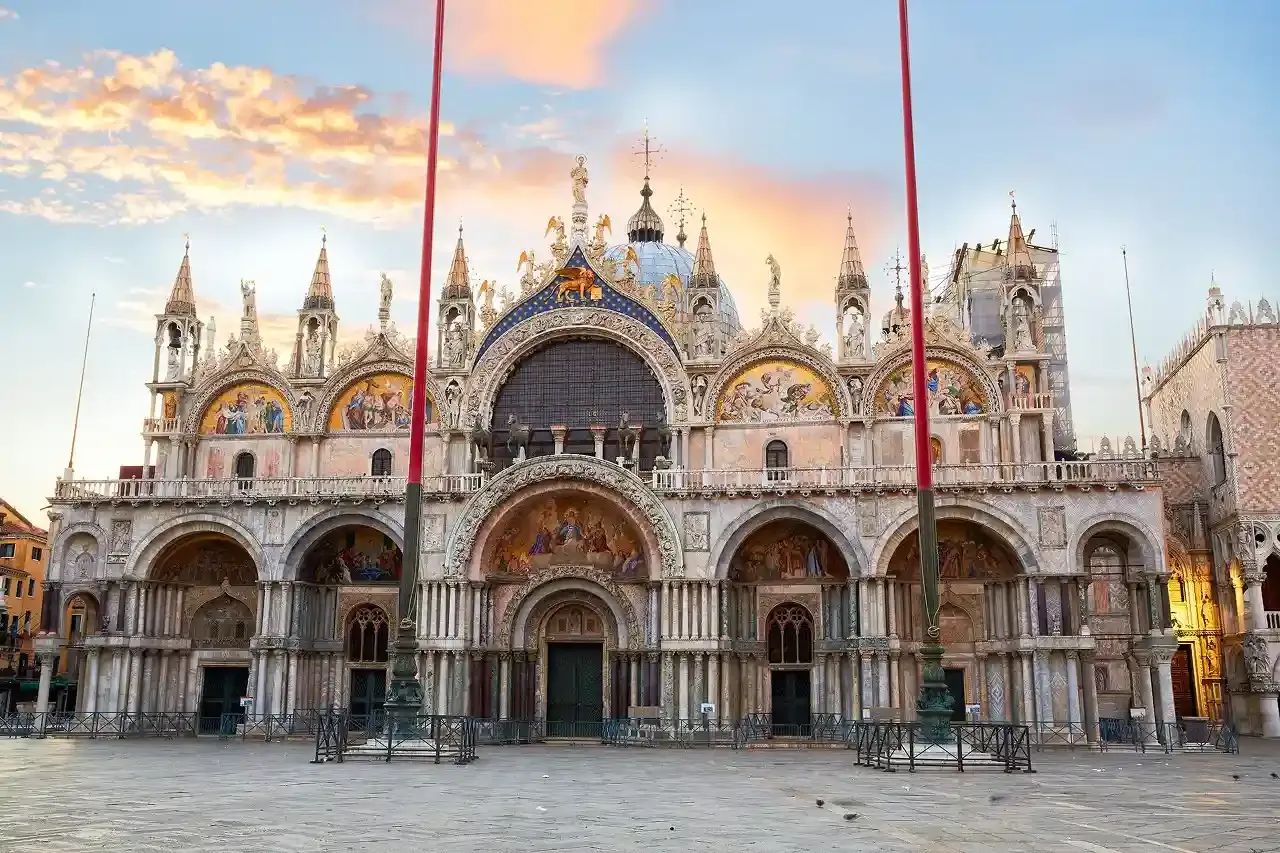
1. St Mark's Basilica
Five domes and nearly 8,000 square metres of gold mosaic cover the church the Doges kept as their private chapel, layered over centuries with marble, porphyry and spoils carried home from Constantinople. The four bronze horses on the balcony are copies, the originals standing inside the museum beside a terrace that looks the length of the piazza. Photography is not allowed in the nave, and larger bags go to a deposit a few steps away before visitors join the queue.
Location: Piazza San Marco 328, San Marco
Access: Timed entry, only within the booked slot, Monday to Saturday from 9:30 and Sunday from 14:00 · Tickets and tours
2. St Mark's Square
The only square in Venice grand enough to be called a piazza is closed on three sides by the arcades of the Procuratie and opens on the fourth to the basilica, with the Campanile standing free in front of it. The bell tower is a 1912 rebuild after the original collapsed, and the lift to the top gives the clearest view of the domes and the lagoon. The Torre dell'Orologio strikes the hours with two bronze Moors, Caffè Florian has served under the arcades since 1720, and the Piazzetta runs past the Doge's Palace to the two columns on the waterfront. Wooden walkways appear in autumn when the tides flood the paving.
Location: San Marco, on the basin of the Grand Canal
Access: Free at any hour; the Campanile and the Museo Correr are ticketed · Tickets and tours
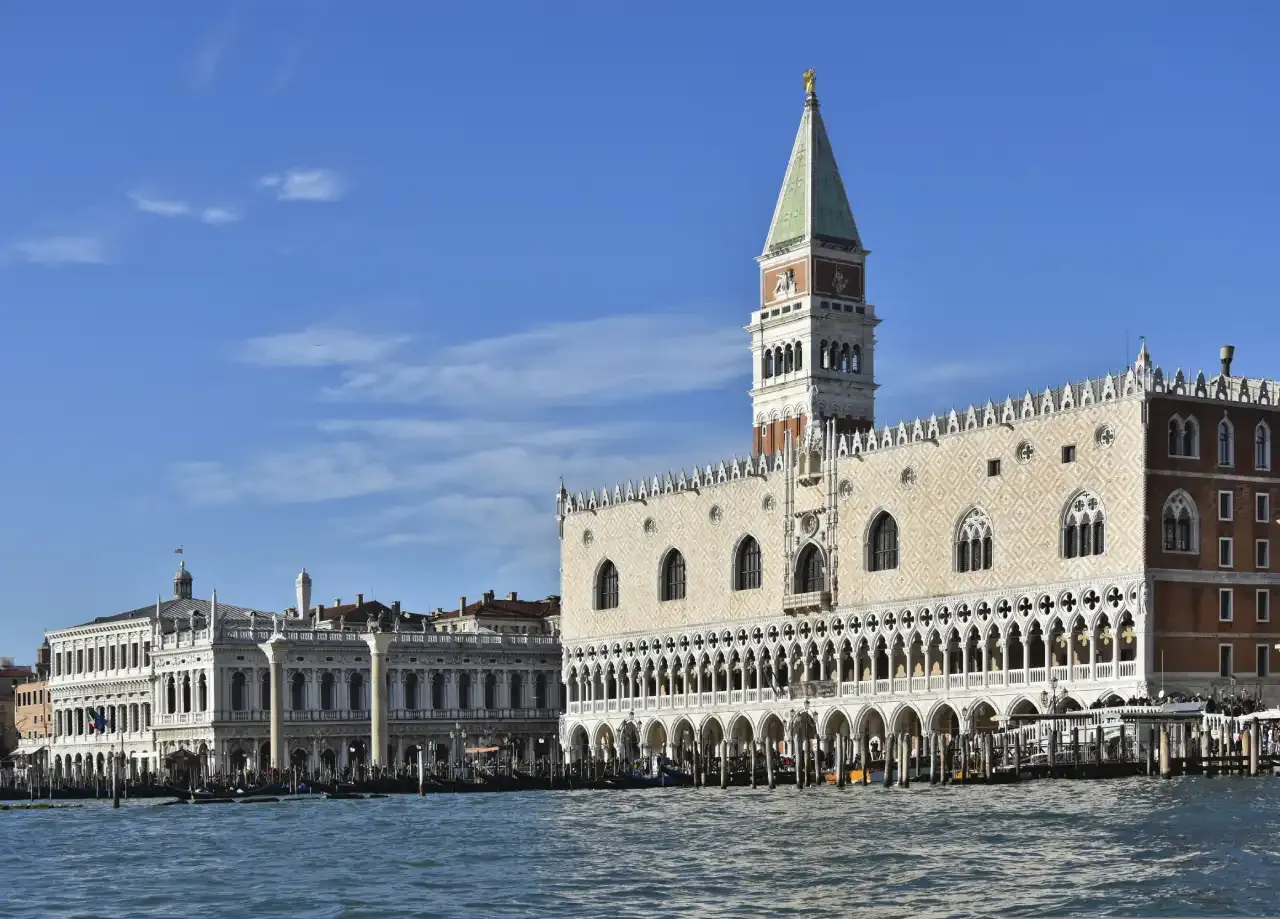
3. Doge's Palace
The seat of Venetian government for most of the Republic's life stacks a pink and white Gothic facade over an arcaded ground floor, then opens into rooms hung with Tintoretto and Veronese, among them the vast Sala del Maggior Consiglio. The route climbs the Golden Staircase, passes the armoury and the chamber where the Council of Ten met, and drops at the end to the canal-side cells the Republic used as prisons.
Style: Venetian Gothic
Location: Piazza San Marco 1, San Marco
Access: Ticketed, open daily 9:00 to 19:00 · Tickets and tours
4. Bridge of Sighs
Antonio Contin's enclosed limestone bridge arches over the Rio di Palazzo to link the palace interrogation rooms with the new prisons, and its two stone lattices let convicts glimpse the lagoon one last time on the way across. The name is Byron's invention rather than a Venetian one. Most visitors photograph it from the Ponte della Paglia on the waterfront, where the crush thins early in the morning and late in the evening.
Architect: Antonio Contin
Location: Rio di Palazzo, seen from the Ponte della Paglia, San Marco
Access: Free to view from the waterfront, and crossed only on the Doge's Palace route
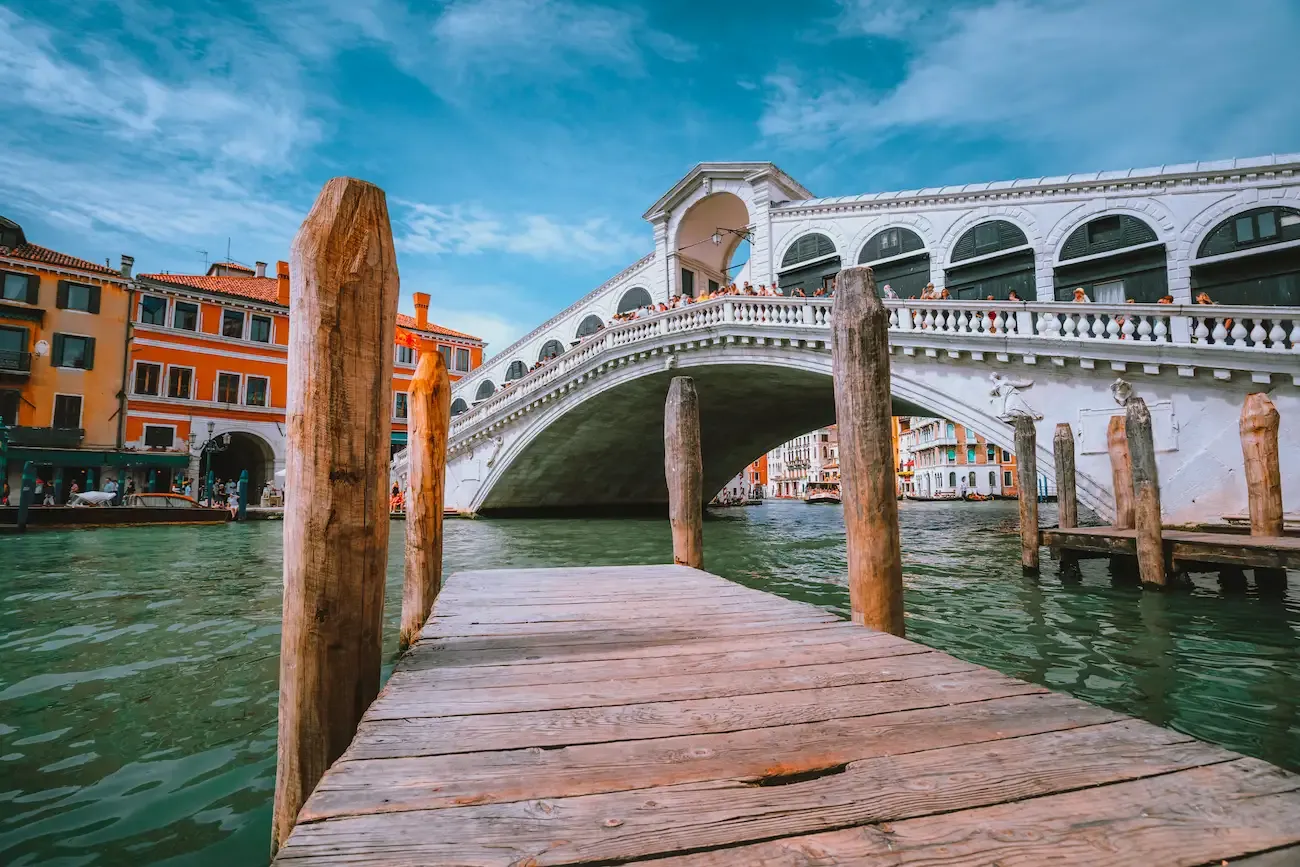
5. Rialto Bridge
Antonio da Ponte's single stone arch has carried the crossing since 1591, replacing a timber bridge that had collapsed more than once, and it still holds two rows of shops along its covered ramps. The steps at either end give the standard view up and down the Grand Canal, busiest around midday and quietest before breakfast. Gondola rides pass beneath it all day, and the vaporetto stop sits at the northern foot.
Architect: Antonio da Ponte
Location: Grand Canal, between San Marco and San Polo
Access: Free to cross at any hour
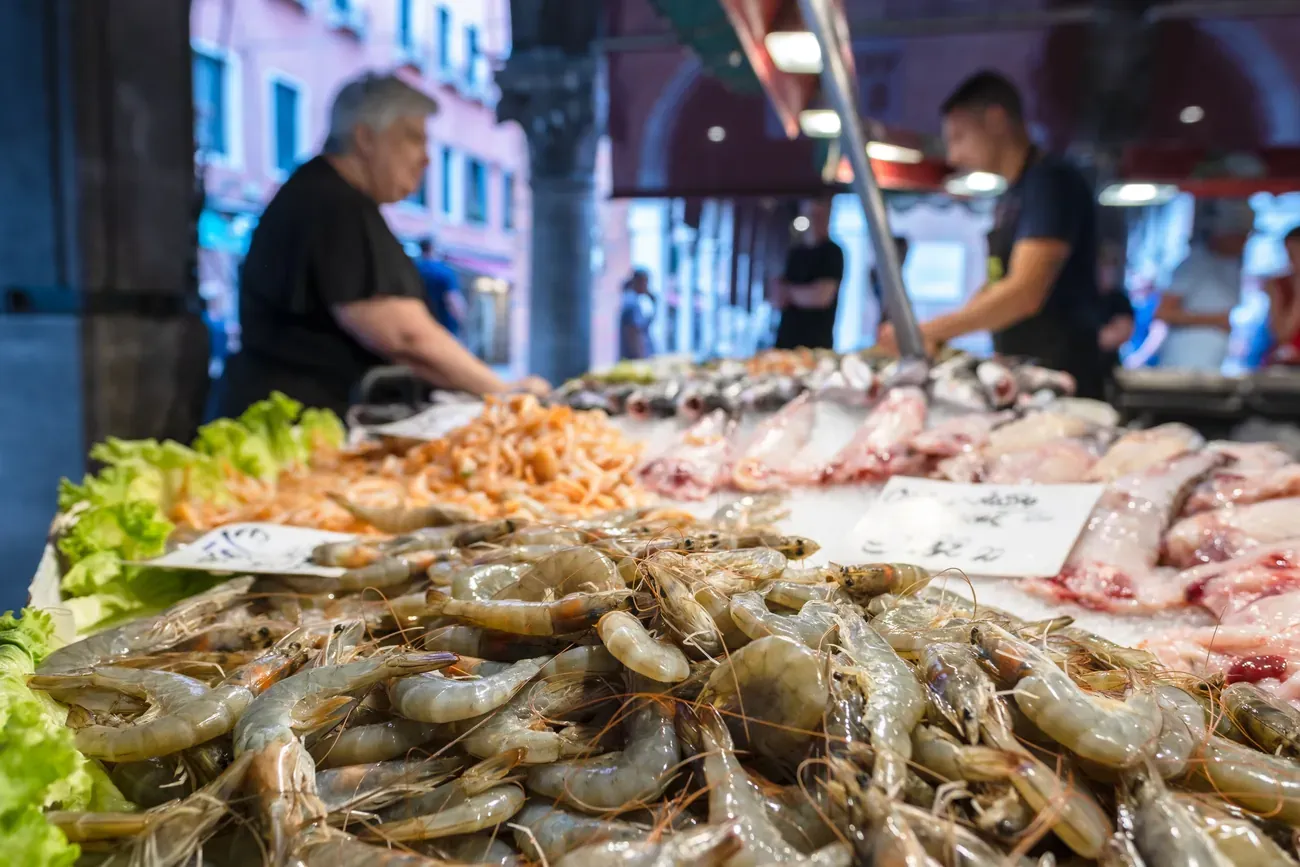
6. Rialto Market
Venice has traded fish, fruit and vegetables on this bend of the Grand Canal for centuries, under the arcades of the Erberia and in the neo-Gothic Pescheria hall beside it. The stalls are busiest in the early morning and pack up by early afternoon, and the market shuts entirely on Sunday. Even with nothing to buy, the walk past the counters is one of the few places where the working city is still on show rather than on display.
Location: Campo de la Pescaria, San Polo
Access: Free to walk through
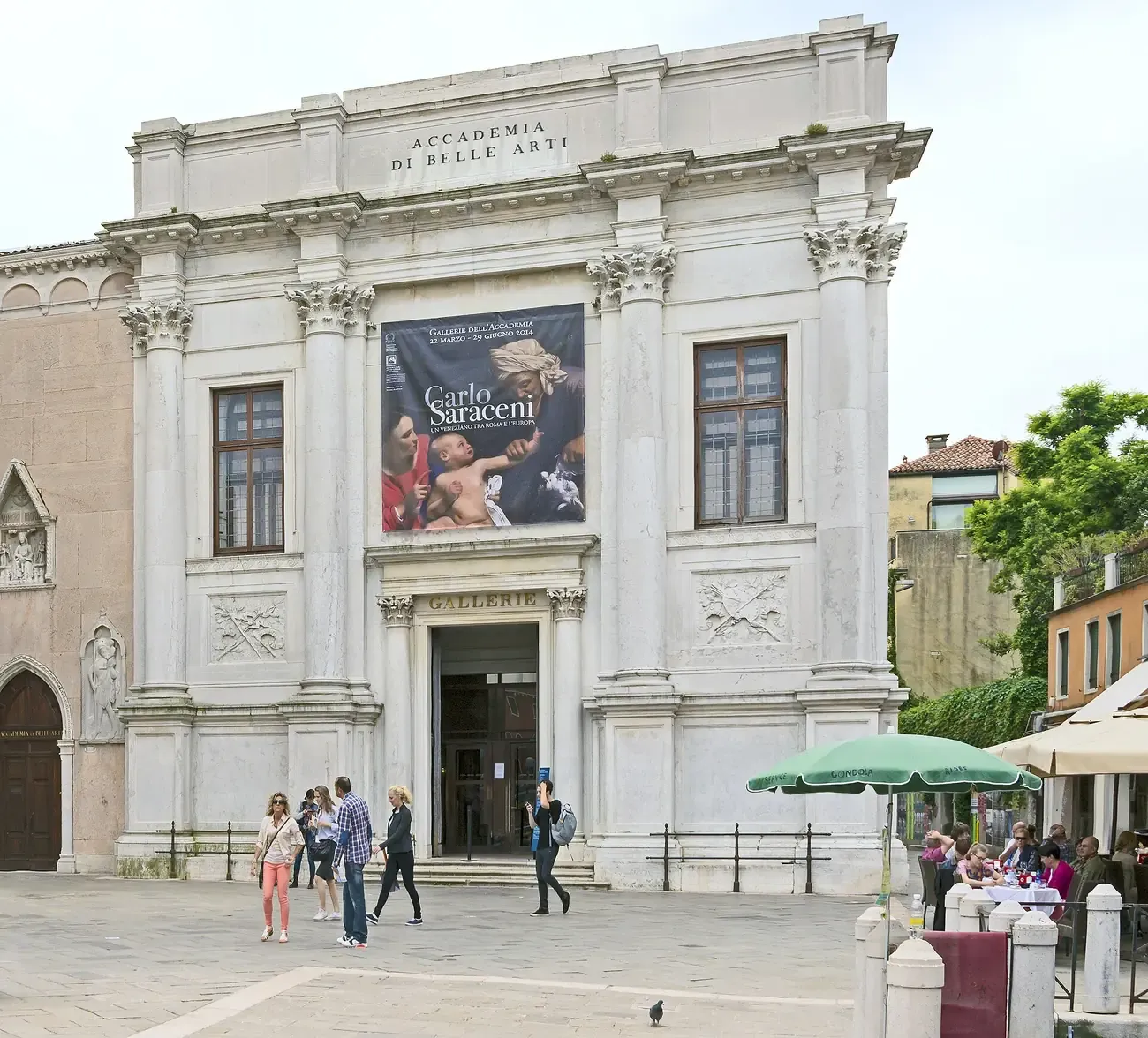
7. Gallerie dell'Accademia
Venetian painting from the 14th to the 18th century hangs in the former Scuola Grande della Carità and the convent Palladio rebuilt next door, with Bellini, Carpaccio, Giorgione, Titian, Tintoretto and Veronese in sequence. The rooms run chronologically, so a short visit can start on the Byzantine gold grounds and stop wherever the Renaissance runs out, and the Palladian cloister is worth the detour on the way to the exit.
Architect: Andrea Palladio, Giorgio Massari
Location: Campo della Carità, Dorsoduro 1050
Access: Ticketed, Tuesday to Sunday 9:00 to 19:00, closed on Monday
Photo: "The facade of the Gallerie dell'Accademia, Venice" by Didier Descouens (CC BY-SA 4.0).
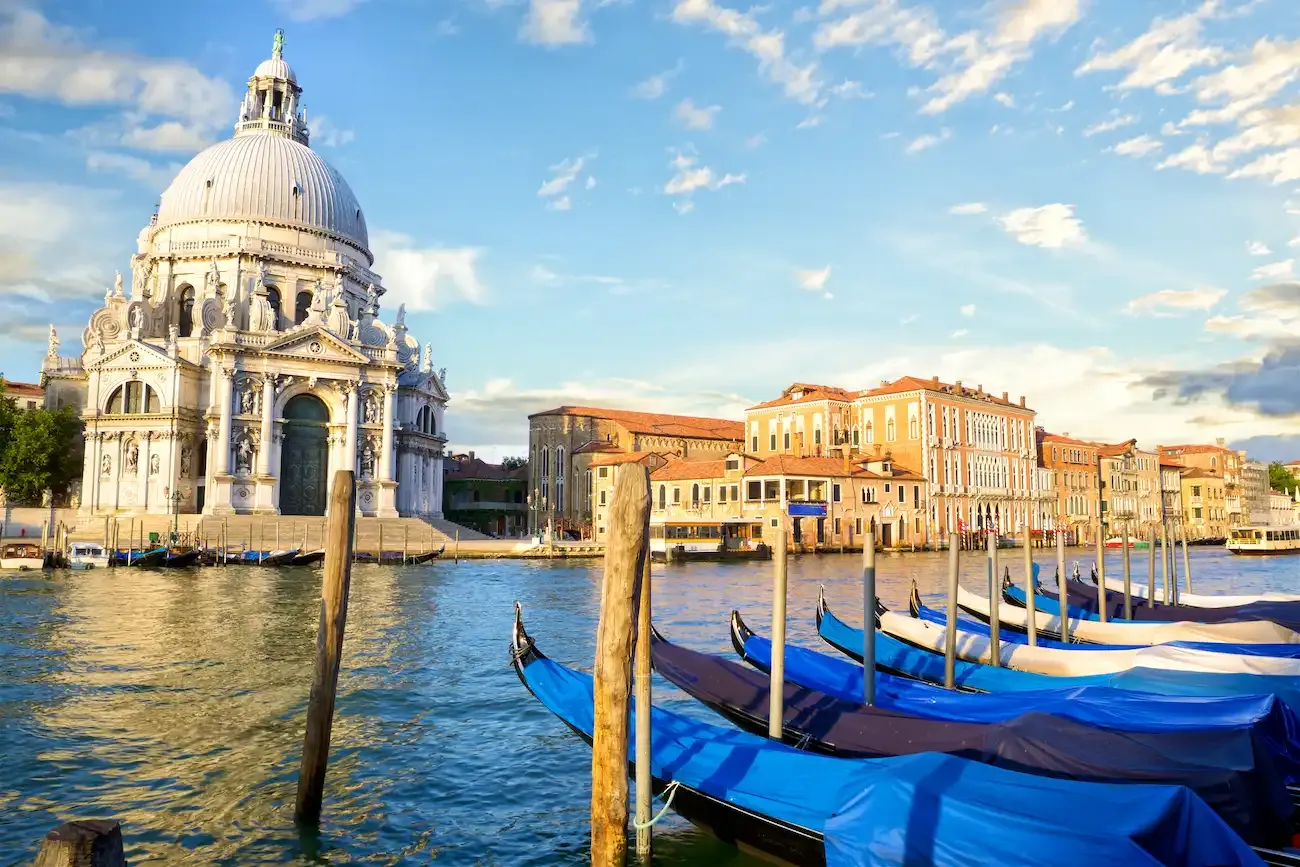
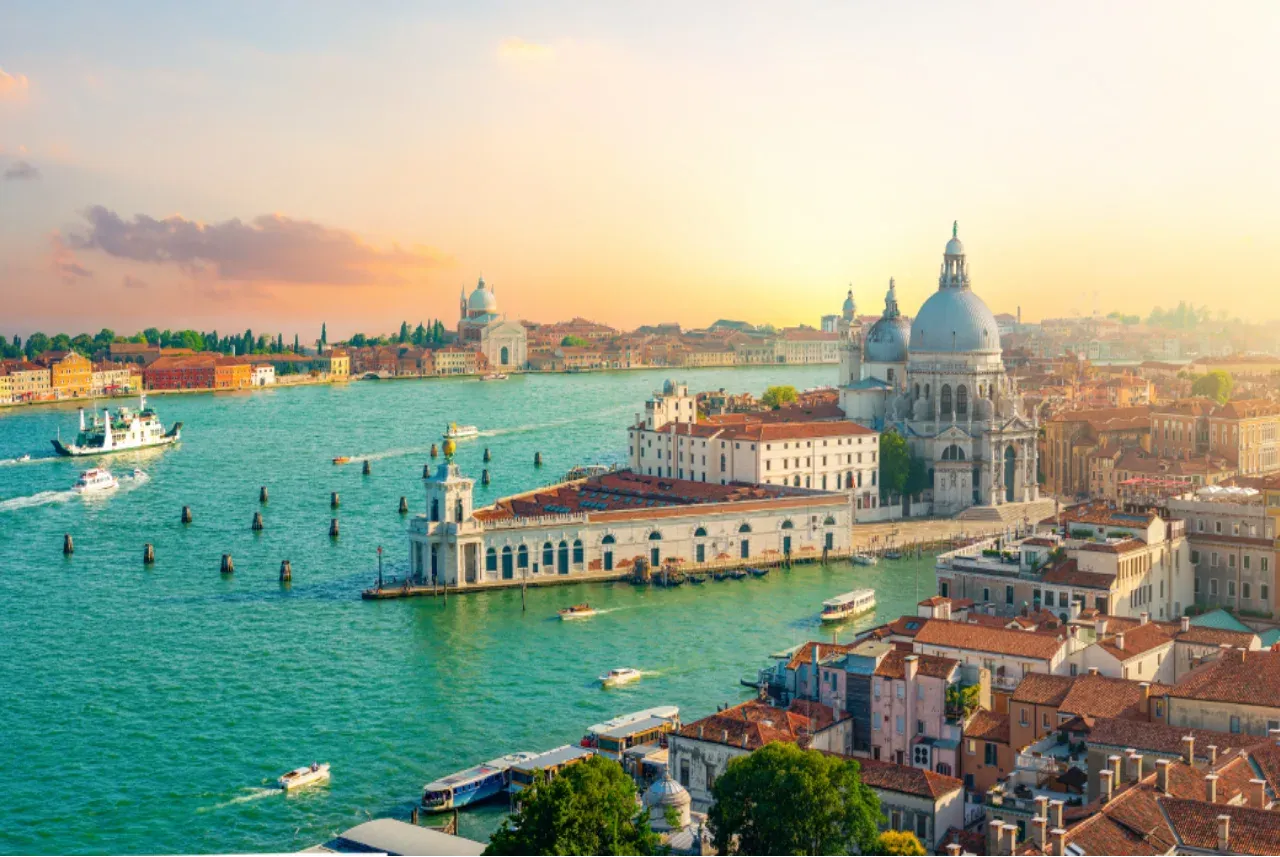
8. Santa Maria della Salute
Baldassare Longhena's octagonal church stands at the mouth of the Grand Canal, built as the votive offering the Senate promised after the plague of 1630 and finished long after his death. The white Istrian stone dome and the great volutes propping it were designed to be read from across the water rather than up close. Inside, the sacristy keeps Titian ceiling panels and Tintoretto's Marriage at Cana.
Architect: Baldassare Longhena · Style: Baroque
Location: Campo della Salute, Dorsoduro 1
Access: Free to enter the main rotunda, 9:00 to 17:30, with a ticket for the sacristy museum
9. Teatro La Fenice
Named for the phoenix before it had any reason to be, the opera house opened in 1792 and has burned down twice, most recently in 1996, rebuilt each time as a replica of what was lost. Verdi premiered Rigoletto and La traviata here, Rossini and Stravinsky too. Daytime visits take in the gilded horseshoe auditorium, the royal box and the Apollonian rooms whenever nothing is being staged or rehearsed.
Architect: Gian Antonio Selva
Location: Campo San Fantin, San Marco 1965
Access: Ticketed, daily visits 9:30 to 18:00, times can change at short notice · Tickets and tours

10. Libreria Acqua Alta
Books here live in a full-size gondola, half a dozen bathtubs and stacks of waterproof bins, an arrangement the owner settled on after one flood too many. A staircase built from water-damaged encyclopedias climbs to a view over the side canal, resident cats sleep on the stock, and the back room opens straight onto the water. It stays a working shop rather than an attraction, and it gets tight when several groups arrive at once.
Location: Calle Lunga Santa Maria Formosa 5176/B, Castello
Access: Free to browse, open daily 9:00 to 19:10 with last entry at 19:00
11. Murano
Venice moved its glass furnaces to this cluster of islands in 1291 to keep fire away from the city, and the craft never left. The Fondamenta dei Vetrai is lined with workshops where masters shape molten glass in front of visitors, and the Museo del Vetro in Palazzo Giustinian traces the trade from Roman pieces to the chandeliers and mirrors that made the island rich. The basilica of Santi Maria e Donato keeps a mosaic floor dated 1140 and a golden apse, a short walk from the lighthouse and the vaporetto stops. Furnaces cool over lunch, so mornings are the time to watch the blowing.
Location: Murano, northern lagoon, ten minutes by vaporetto from Fondamente Nove
Access: Free to walk; the Museo del Vetro is ticketed and workshop demonstrations are arranged by each furnace
12. Torcello
Settled in the 5th century by refugees from the mainland, Torcello was the lagoon's first city and far outgrew Venice before malaria and silt emptied it. What remains is a grass path along a canal, a scatter of buildings and the basilica of Santa Maria Assunta, whose apse holds a Byzantine Virgin on plain gold and whose west wall carries a Last Judgement in mosaic. Its bell tower climbs to the widest view of the northern lagoon.
Location: Torcello, northern lagoon, reached by vaporetto from Fondamente Nove
Access: The island is free to walk, with a ticket for the basilica and its bell tower, open 10:30 to 18:00 from March to October
Venice tourist attractions tickets and tours
Upcoming events in Venice

Patrizia Laquidara - "flòrula"
Patrizia Laquidara - "flòrula" plays Sale Apollinee del Teatro La Fenice on 2 November at 20:30.
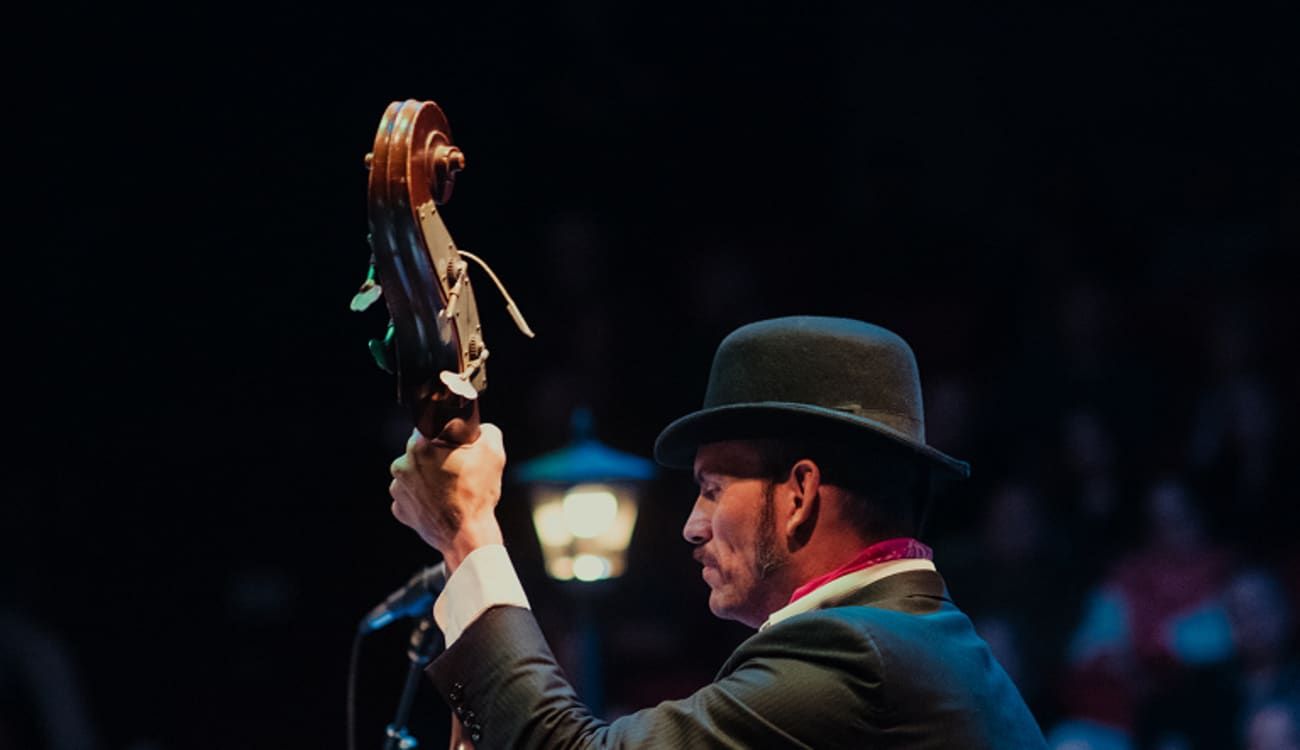
The Jazz Room: omaggio a Frank Sinatra & Louis Armstrong
The Jazz Room: omaggio a Frank Sinatra & Louis Armstrong comes to Laguna Libre on 15 November at 18:00.

Mostre 2026 Palazzo Grassi
Mostre 2026 Palazzo Grassi plays Palazzo Grassi on 23 November at 10:00.
Gaia Banfi - L'ultima Maccaia tour
Gaia Banfi - L'ultima Maccaia tour plays Sale Apollinee del Teatro La Fenice on 16 December at 20:30.

VOLOSI
VOLOSI plays Sale Apollinee del Teatro La Fenice on 16 April 2027 at 20:30.
Free things to do in Venice
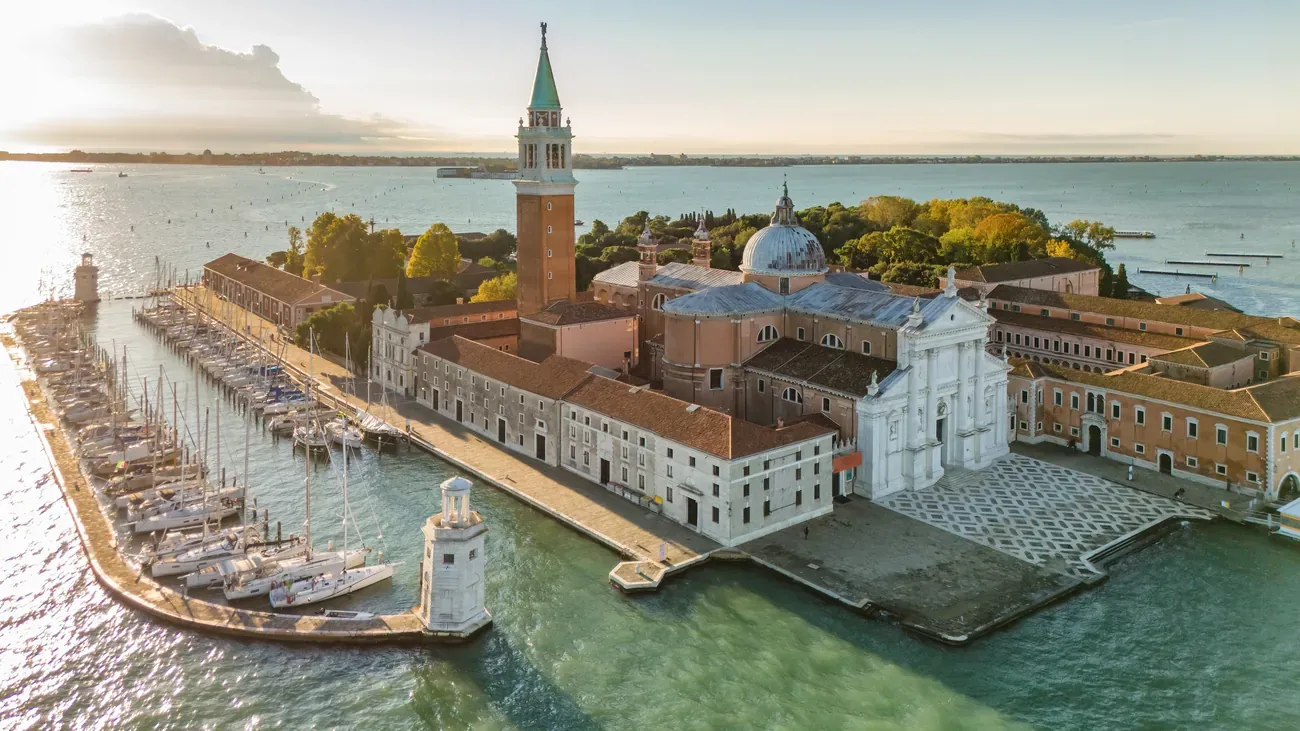
San Giorgio Maggiore
The church interior of San Giorgio Maggiore, facing St Mark's Square from its own island, costs nothing to visit and rarely draws a queue. The lift up the bell tower charges a separate fare, and the vaporetto crossing to reach the island isn't free either. Mid-morning tends to be quieter.
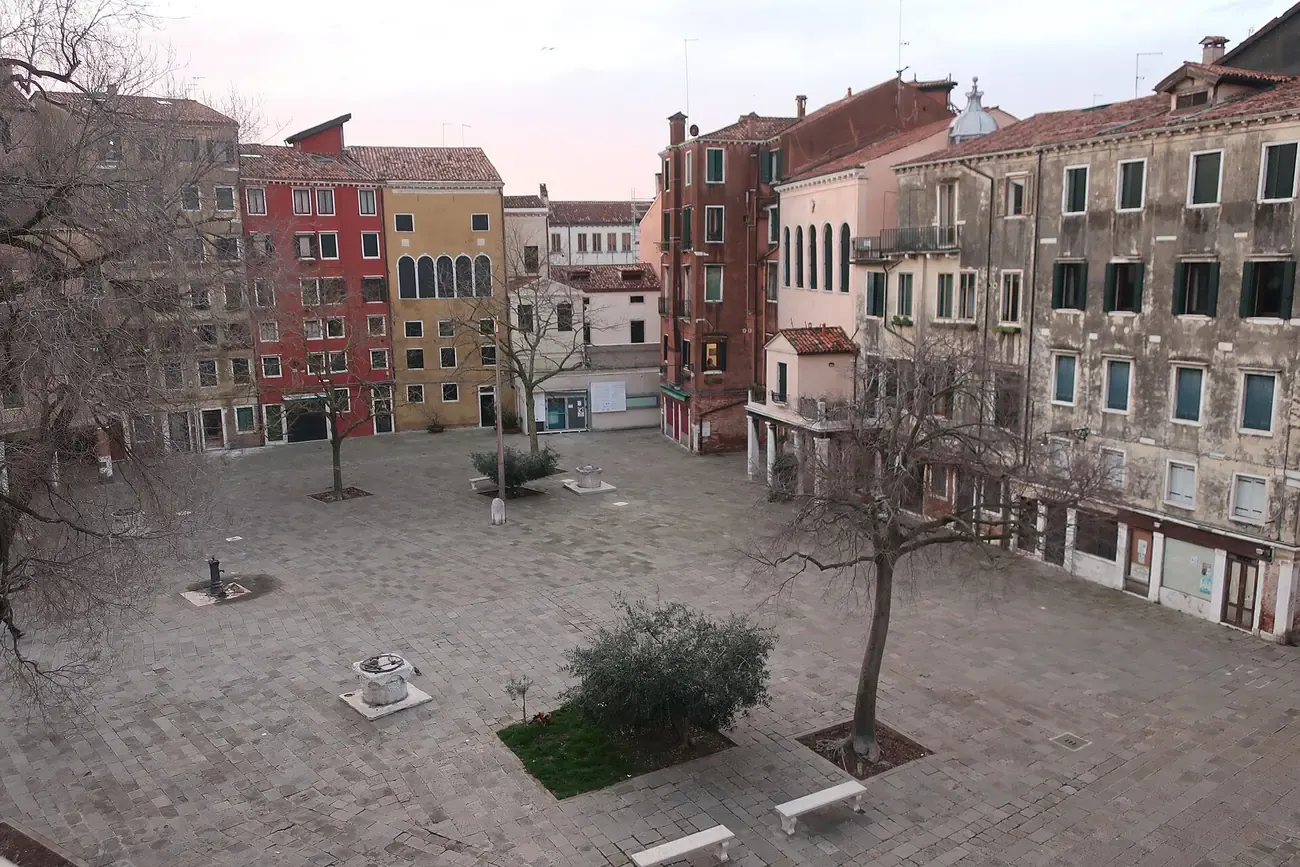
Jewish Ghetto of Venice
The Cannaregio neighbourhood that gave the word ghetto its meaning is free to walk, its Campo del Ghetto Novo ringed by the tall buildings and five historic synagogues of a Jewish community still active today. The guided tours inside the synagogues and the Jewish Museum charge their own admission.
Photo: "Jewish Ghetto of Venice" by DaringDonna (CC BY-SA 4.0).
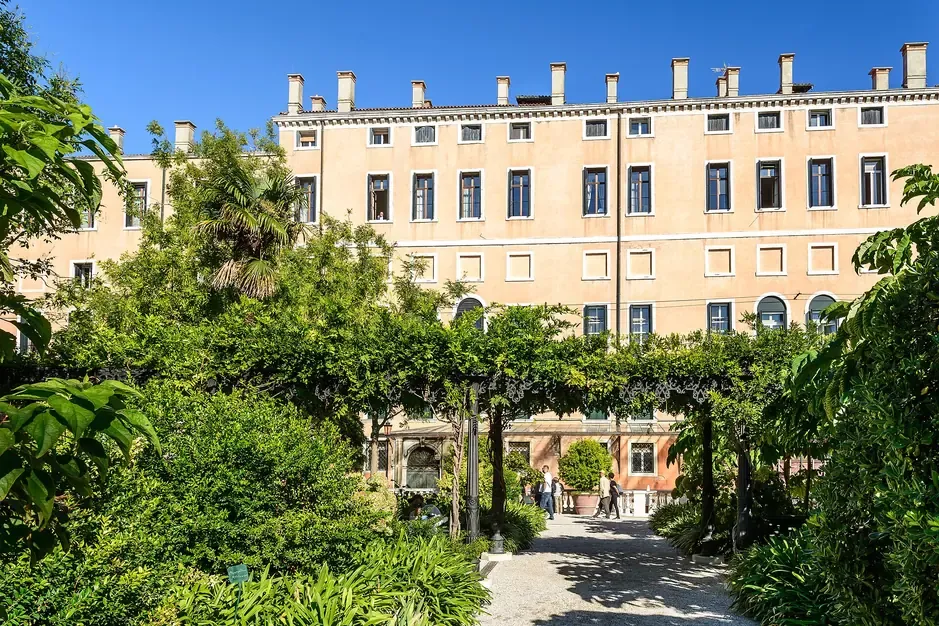
Giardini Reali
The Giardini Reali, tucked behind the Procuratie Nuove just steps from St Mark's Square, charge no entrance fee and rarely appear on a first-time visitor's map. The gravel paths and lawns run down to the water's edge, and the small pavilion cafe inside charges for a coffee or a seat.
Photo: "Giardini Reali, Venezia, Italy" by dconvertini (CC BY-SA 2.0).
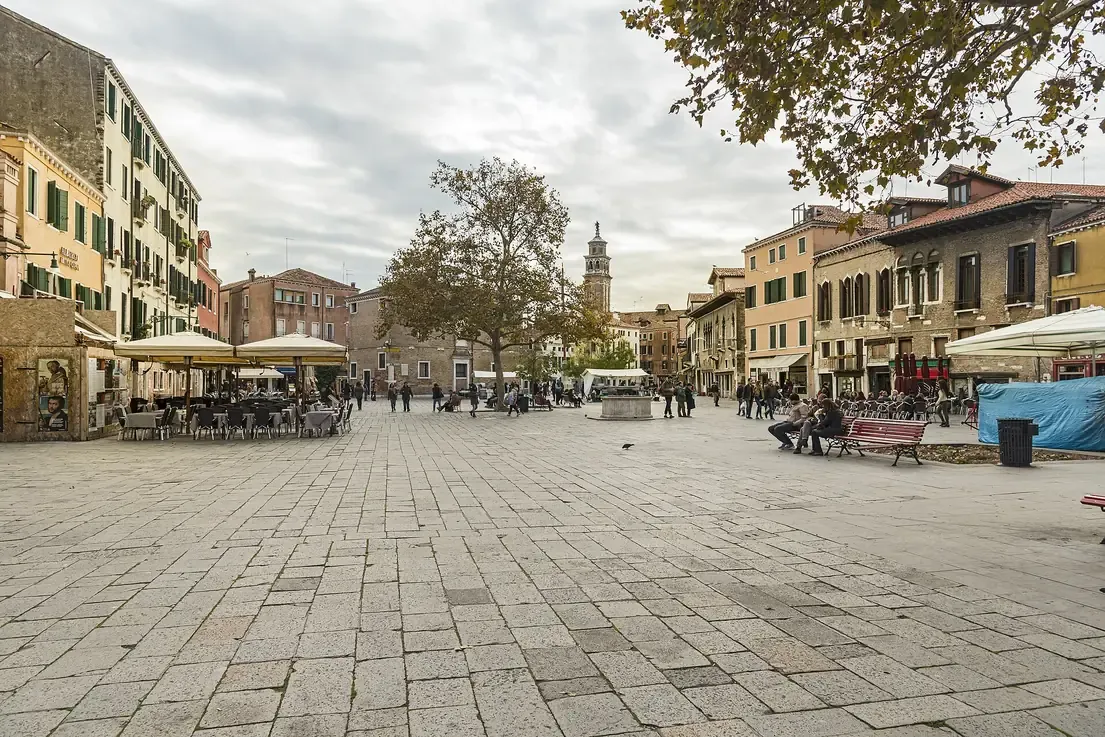
Campo Santa Margherita
Dorsoduro's largest square fills with a small produce and fish market on weekday mornings and with students and bars by evening, framed by 14th and 15th century houses and the stump of a bell tower with no spire. There is never a charge to sit or walk through it.
Photo: "Campo Santa Margherita (Venice)" by Didier Descouens (CC BY-SA 4.0).
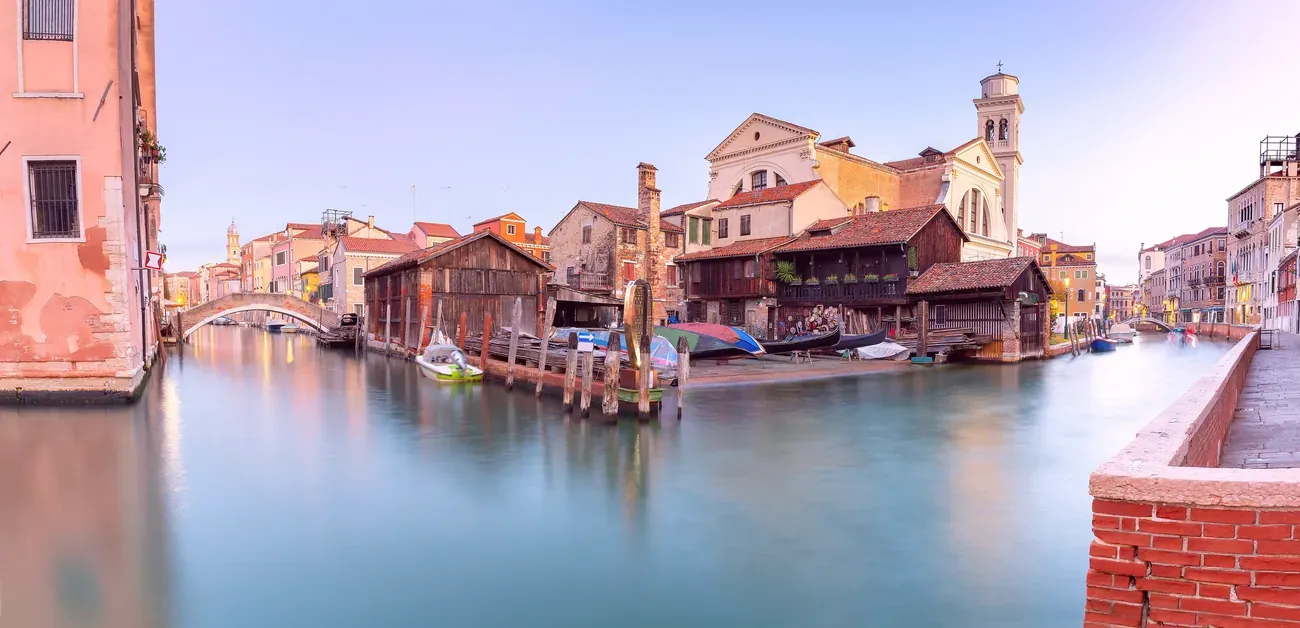
Squero di San Trovaso
One of the last working gondola boatyards in the city repairs and builds boats behind Tyrolean-style wooden sheds on a narrow canal in Dorsoduro. It stays closed to visitors, but anyone can watch the craftsmen at work for free from the fondamenta on the opposite bank.
Lagoon islands beyond the Venice crowds
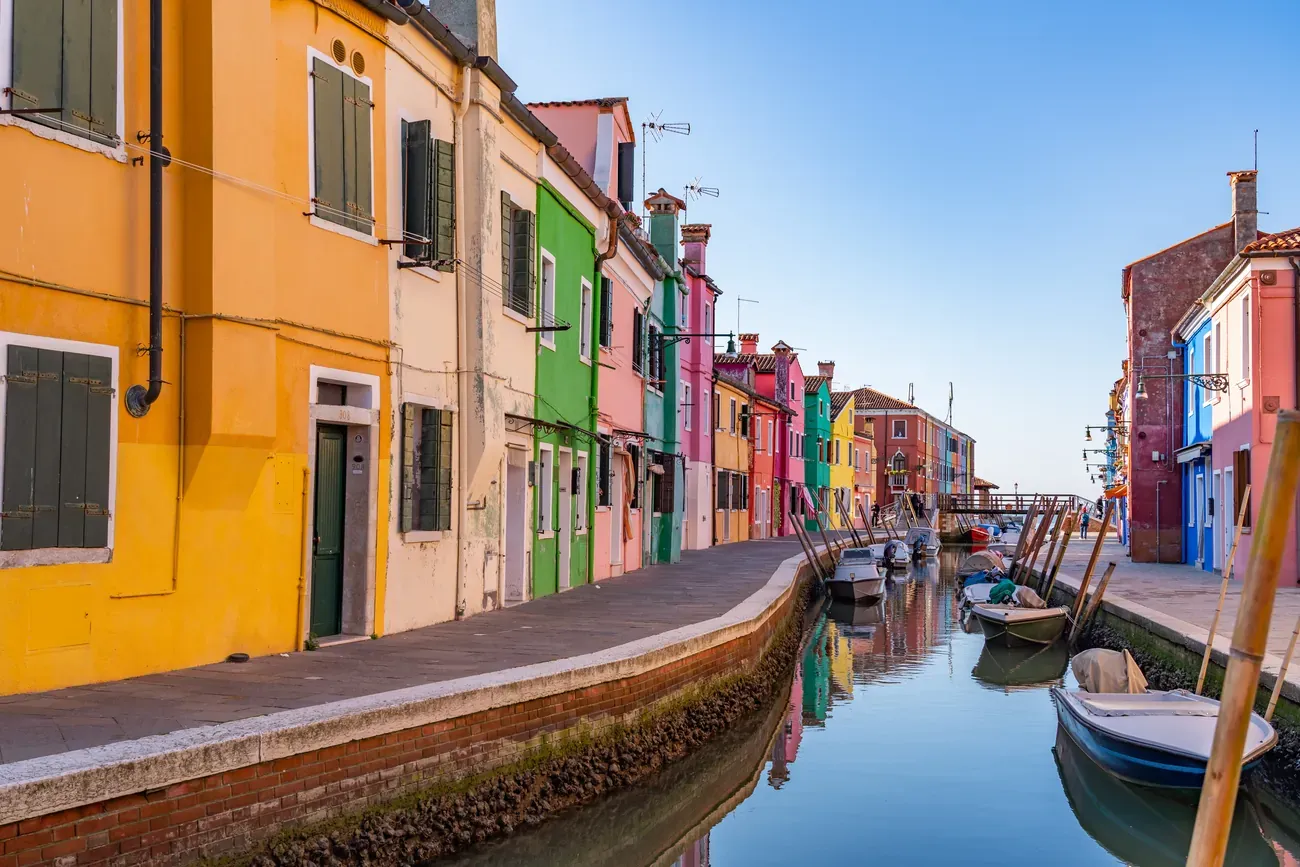
The Mad Colored Houses of Burano
Fishermen painted their houses in blocks of colour to tell them apart through lagoon fog, and the rule still holds: repainting needs permission.
Location: Burano, northern lagoon
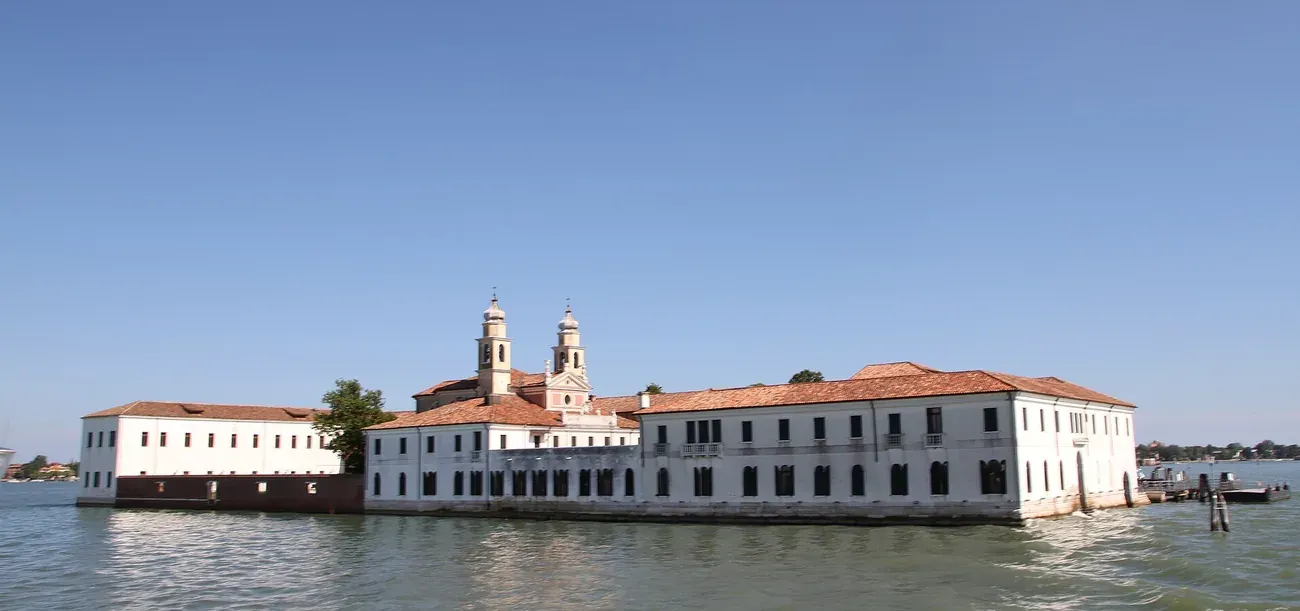
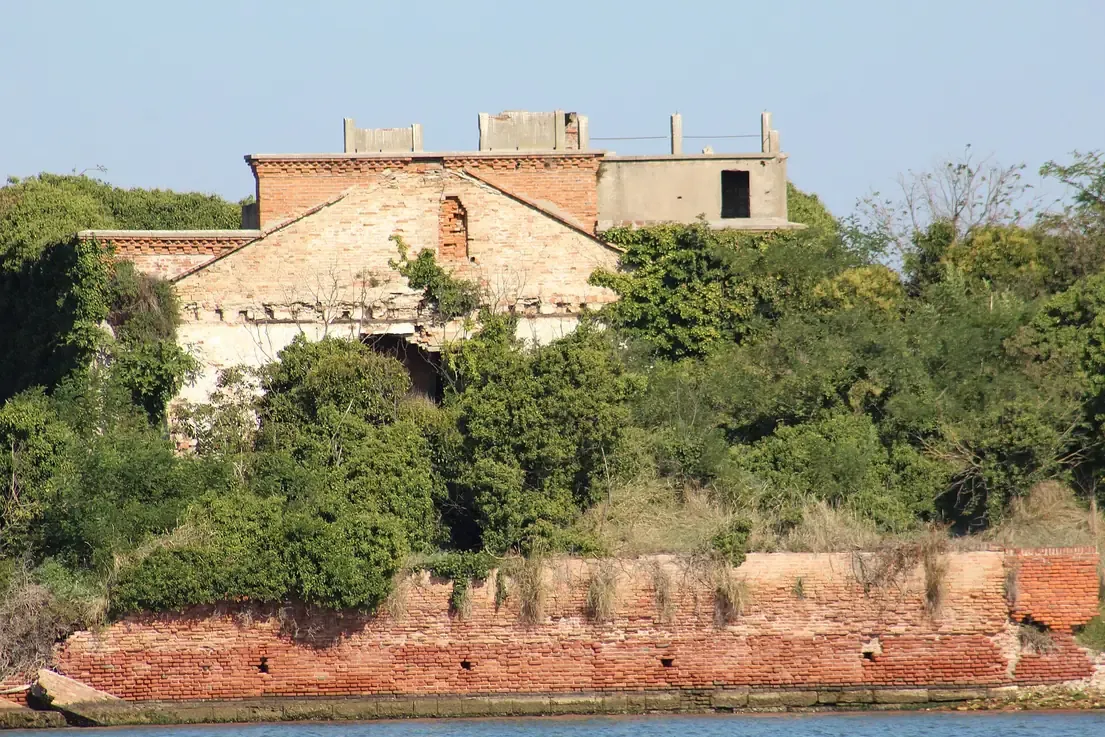
San Servolo Insane Asylum Museum
The island asylum that held Venetian patients for two centuries keeps its restraints, medical instruments and case records in a museum on the old wards.
Location: Isola di San Servolo
Photo: "San Servolo island" by Bjoertvedt (CC BY-SA 4.0).
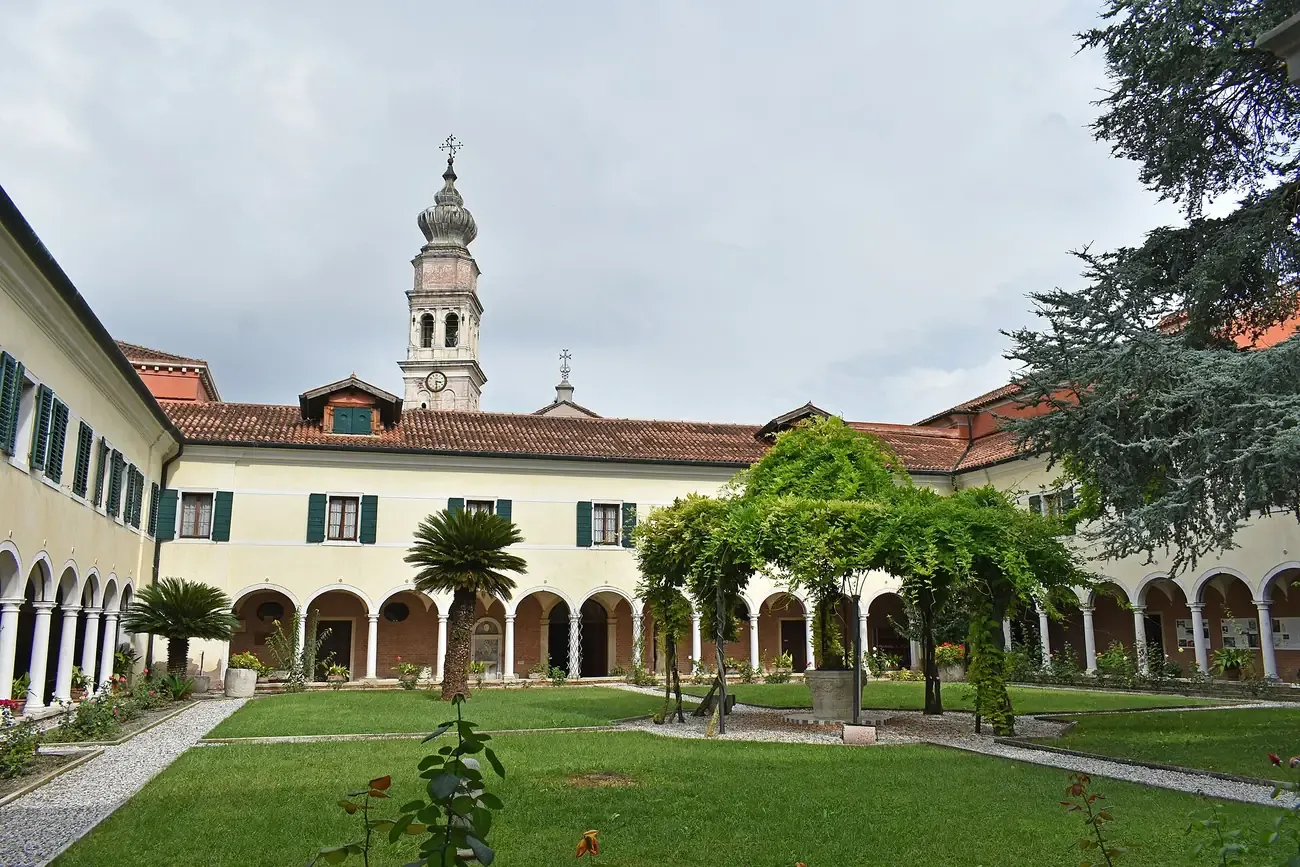
San Lazzaro degli Armeni
Armenian monks have kept this island monastery since 1717, with a manuscript library, gardens of artichokes and roses, and a rose jam made on site.
Location: Isola di San Lazzaro degli Armeni
Photo: "San Lazzaro degli Armeni cloister" by Yerevantsi (CC BY-SA 4.0).
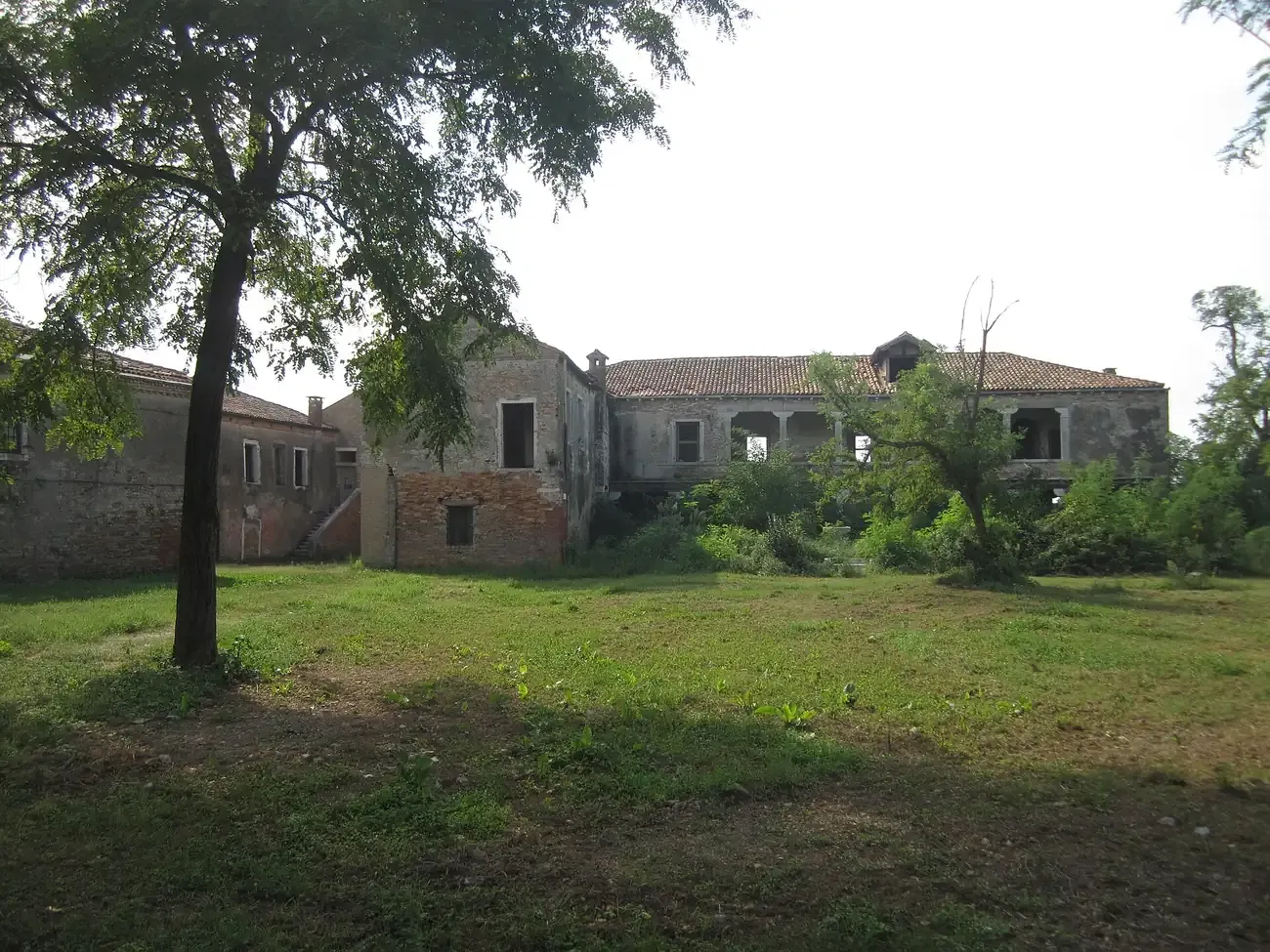
Lazzaretto Vecchio
Europe's first plague quarantine station opened here in 1423, and excavations later uncovered mass graves holding hundreds of victims of the epidemics.
Location: Lazzaretto Vecchio, off the Lido
Photo: "Lazzaretto Vecchio, panorama of the Lazzaretto buildings" by Powermelon (CC0).
Quiet churches and sacred curiosities in Venice
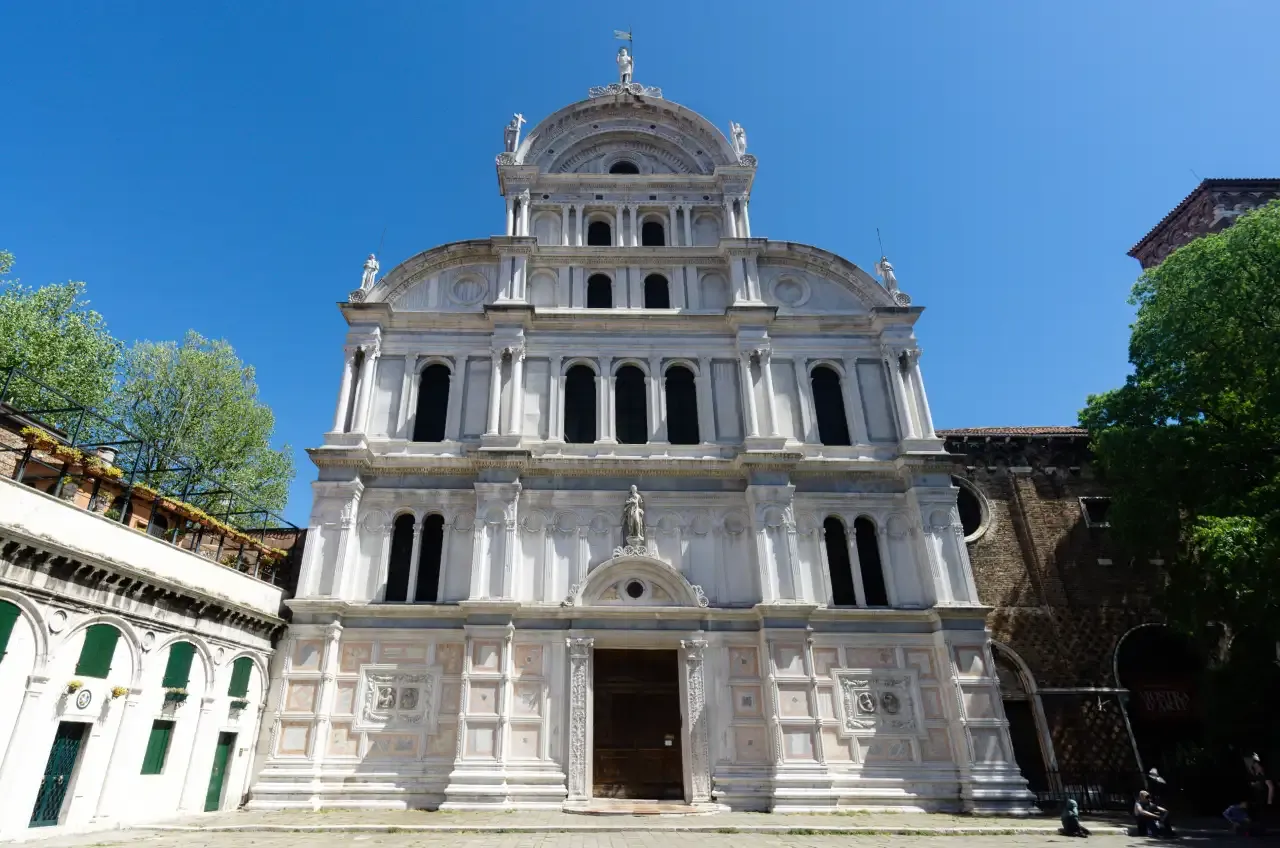
The Flooded Crypt of San Zaccaria
Eight early doges lie in a crypt that now stands under water all year, visible from the steps beneath the church's Renaissance facade.
Location: Campo San Zaccaria, Castello
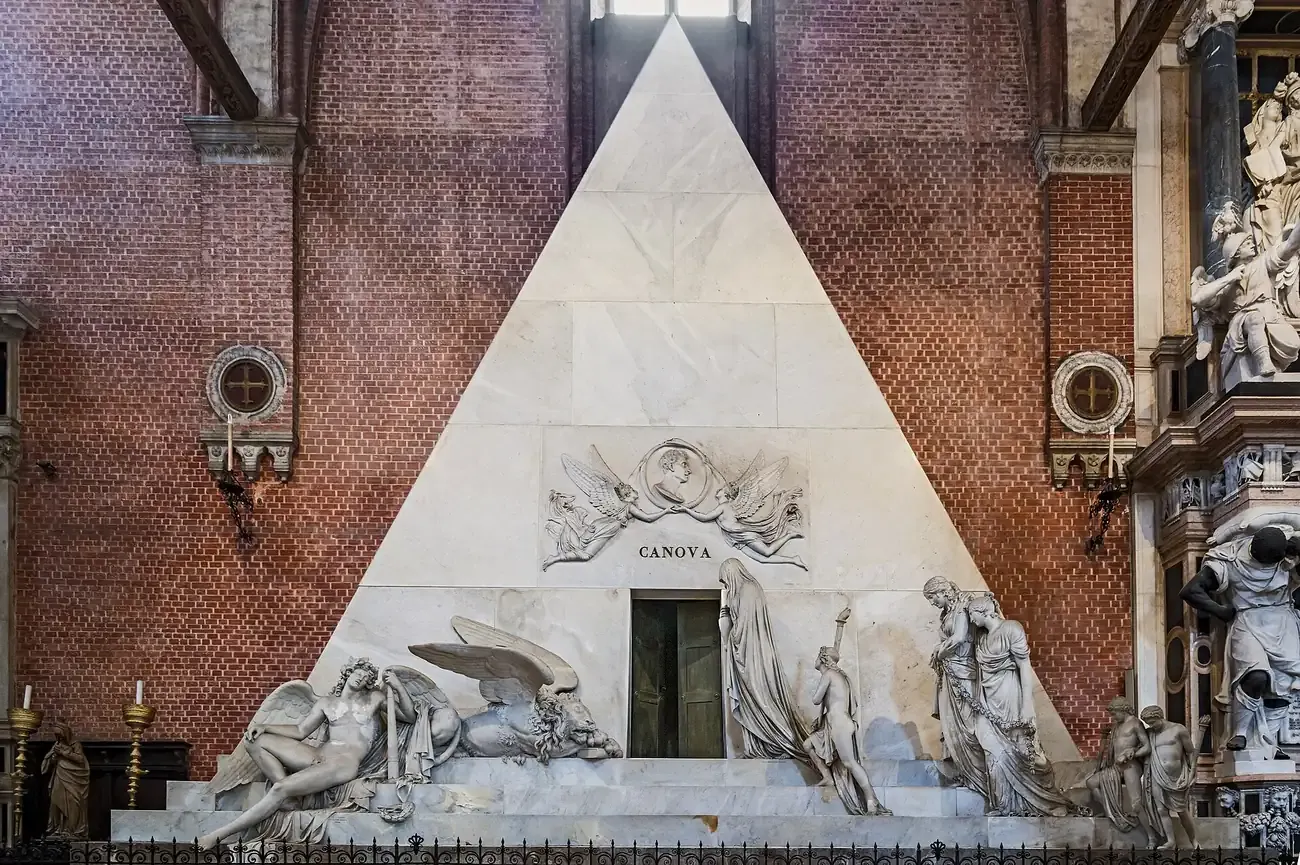
Tomb of Antonio Canova
The sculptor designed this marble pyramid for Titian; his pupils built it for Canova instead, and his heart rests inside it in a porphyry urn.
Location: Basilica dei Frari, San Polo
Photo: "Monument to Antonio Canova, Basilica di Santa Maria dei Frari" by Didier Descouens (CC BY-SA 4.0).
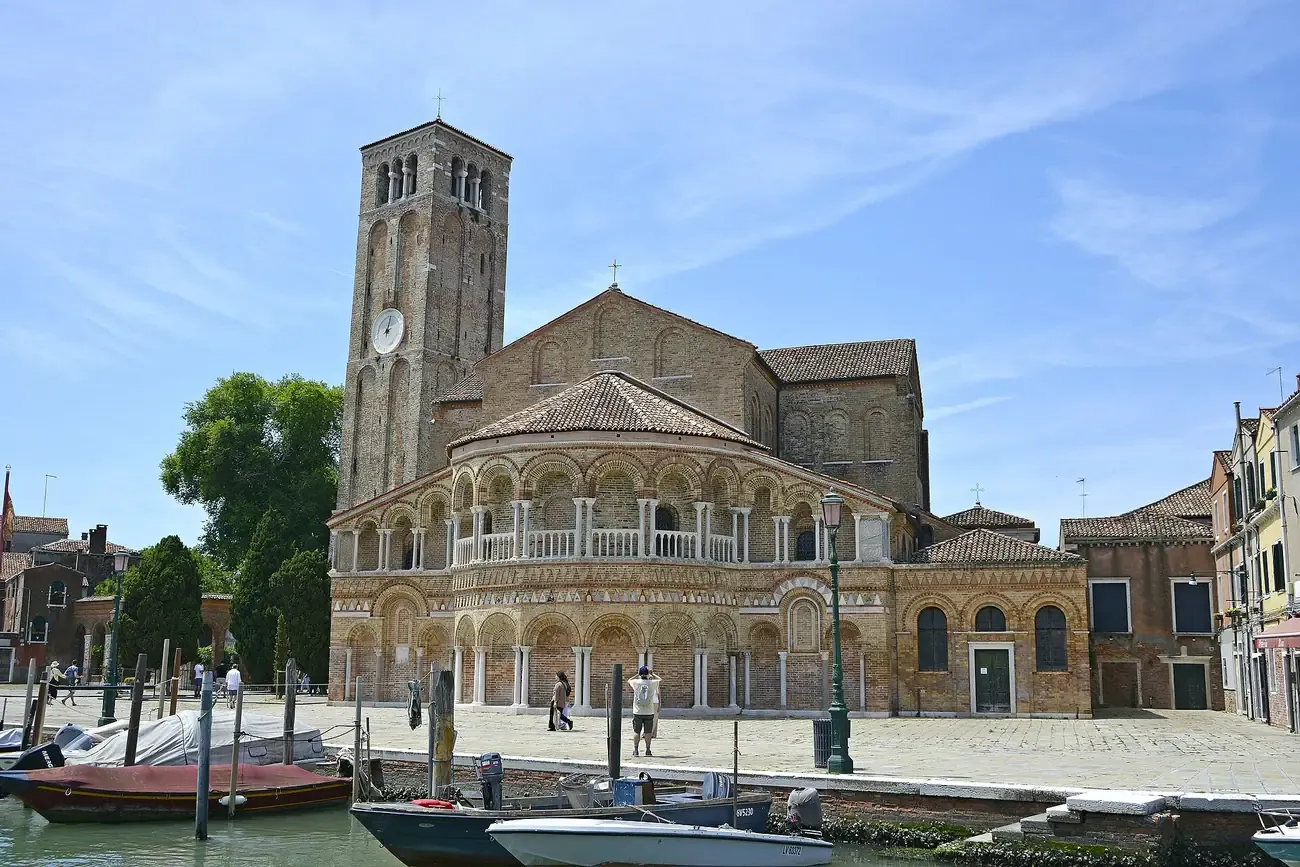
'Dragon Bones' of Santa Maria e San Donato
Four large bones hang behind the altar, brought back as a slain dragon's remains and long since identified as belonging to a whale.
Location: Campo San Donato, Murano
Photo: "Basilica of Santi Maria e Donato, Murano" by Alberto-g-rovi (CC BY 4.0).
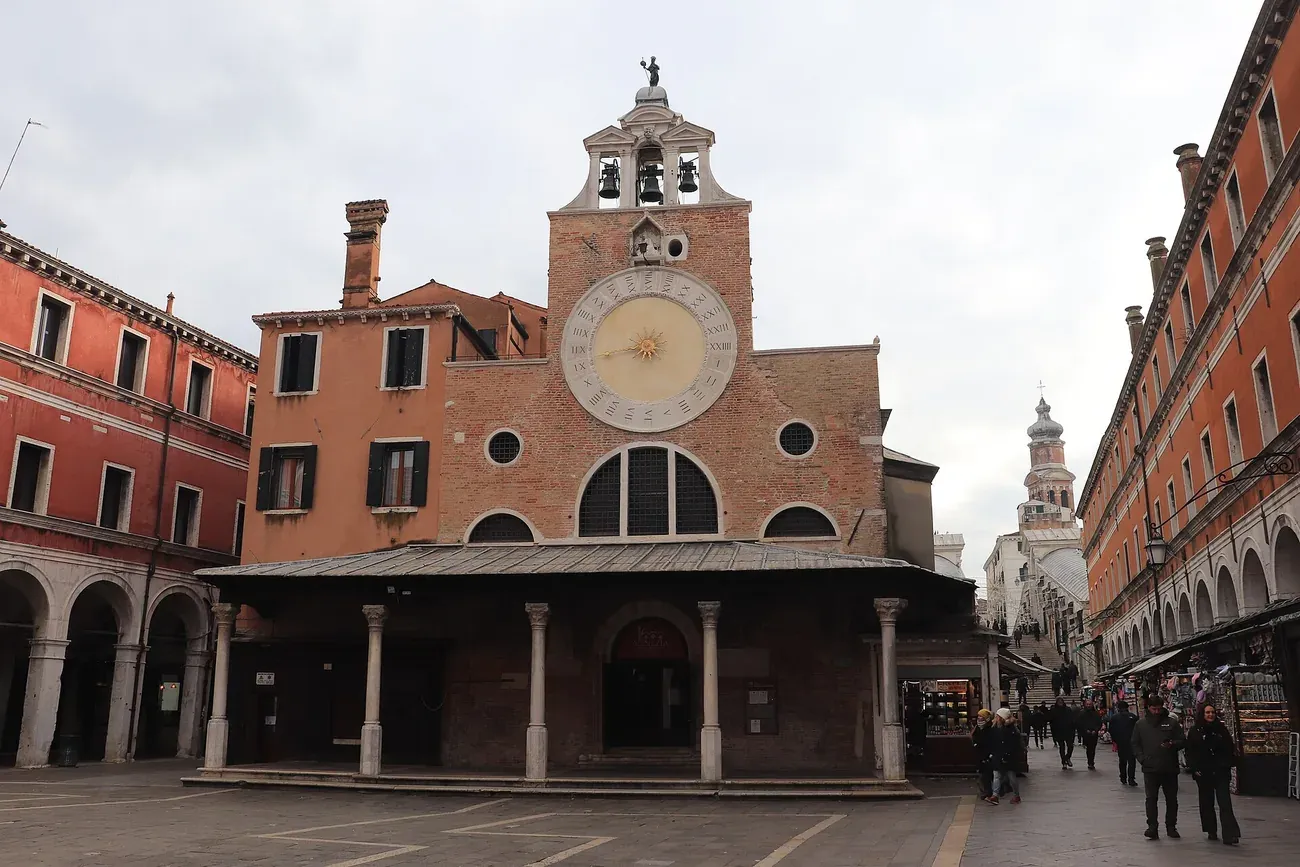
Church of San Giacomo di Rialto
The city's oldest church by tradition, wedged among the market stalls, wears a 15th-century clock that has almost never told the right time.
Location: Campo San Giacomo di Rialto, San Polo
Photo: "Church of San Giacomo di Rialto" by Andrzej Otrębski (CC BY-SA 4.0).
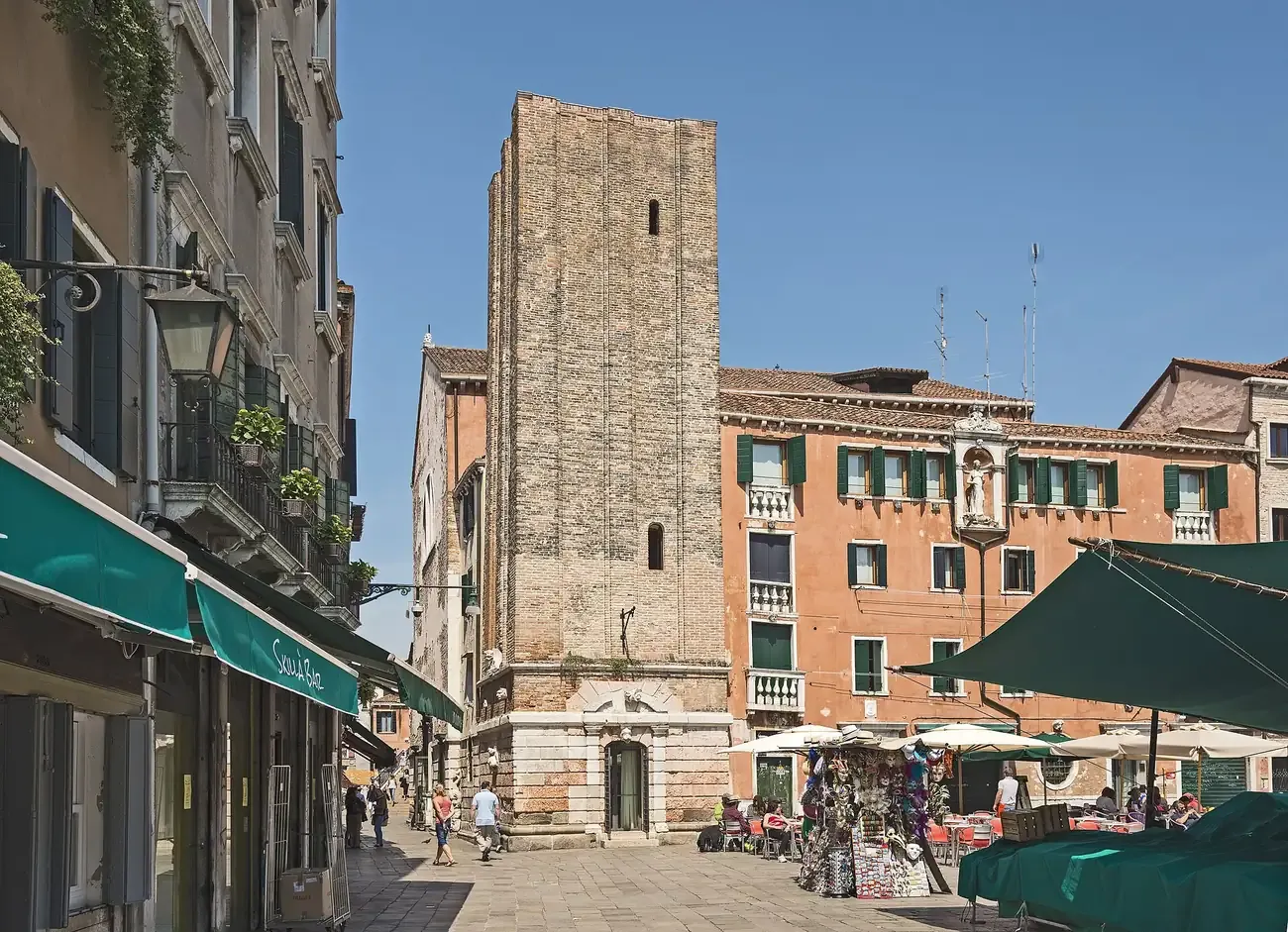
Church of Santa Margherita
Deconsecrated in 1810 and used as a tobacco store and later a cinema, the ancient church is now a university auditorium with a truncated tower.
Location: Campo Santa Margherita, Dorsoduro
Photo: "Chiesa di Santa Margherita" by Didier Descouens (CC BY-SA 4.0).
Venice's plague islands and darker corners
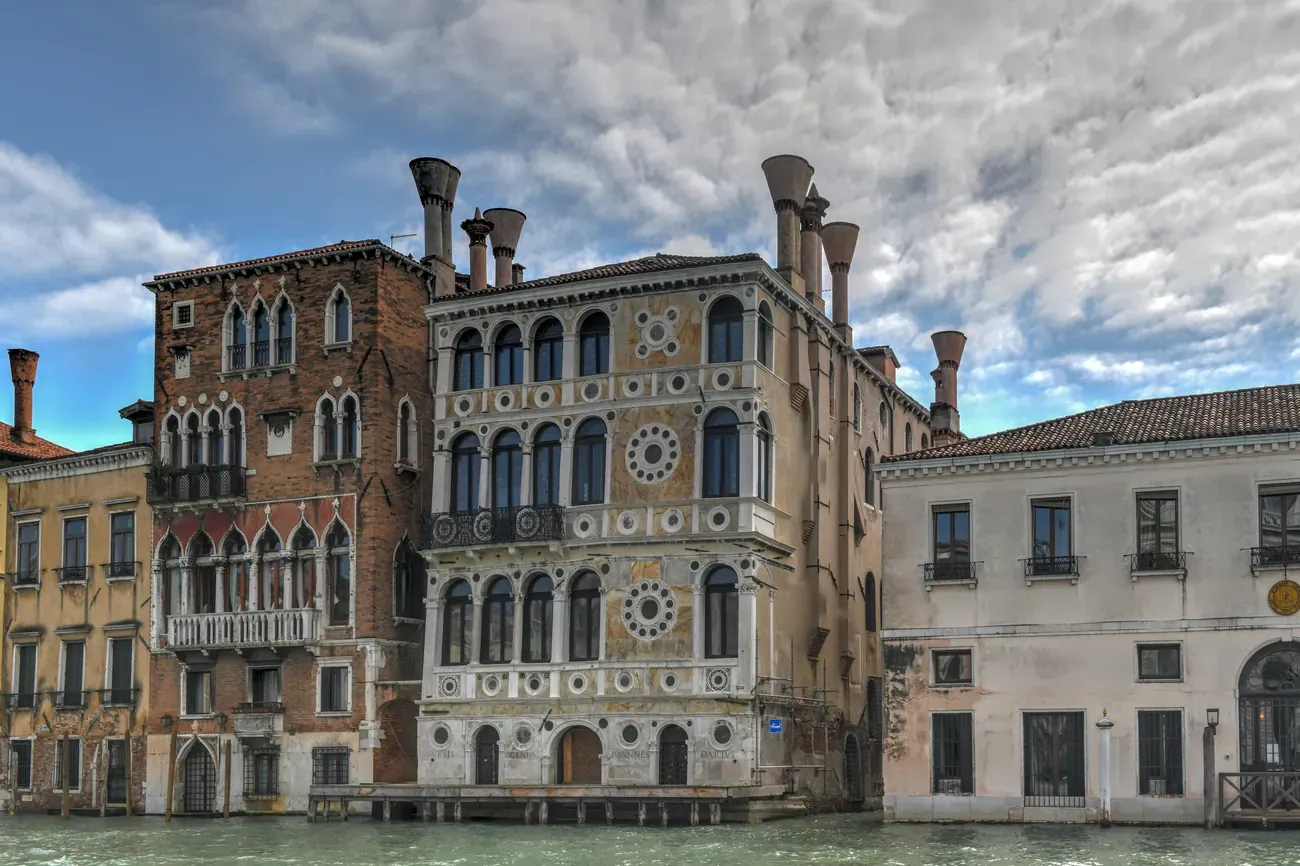
Palazzo Dario
The leaning Renaissance palace on the Grand Canal carries a reputation for ruining its owners, a run of deaths and bankruptcies locals still recount.
Location: Campiello Barbaro, Dorsoduro
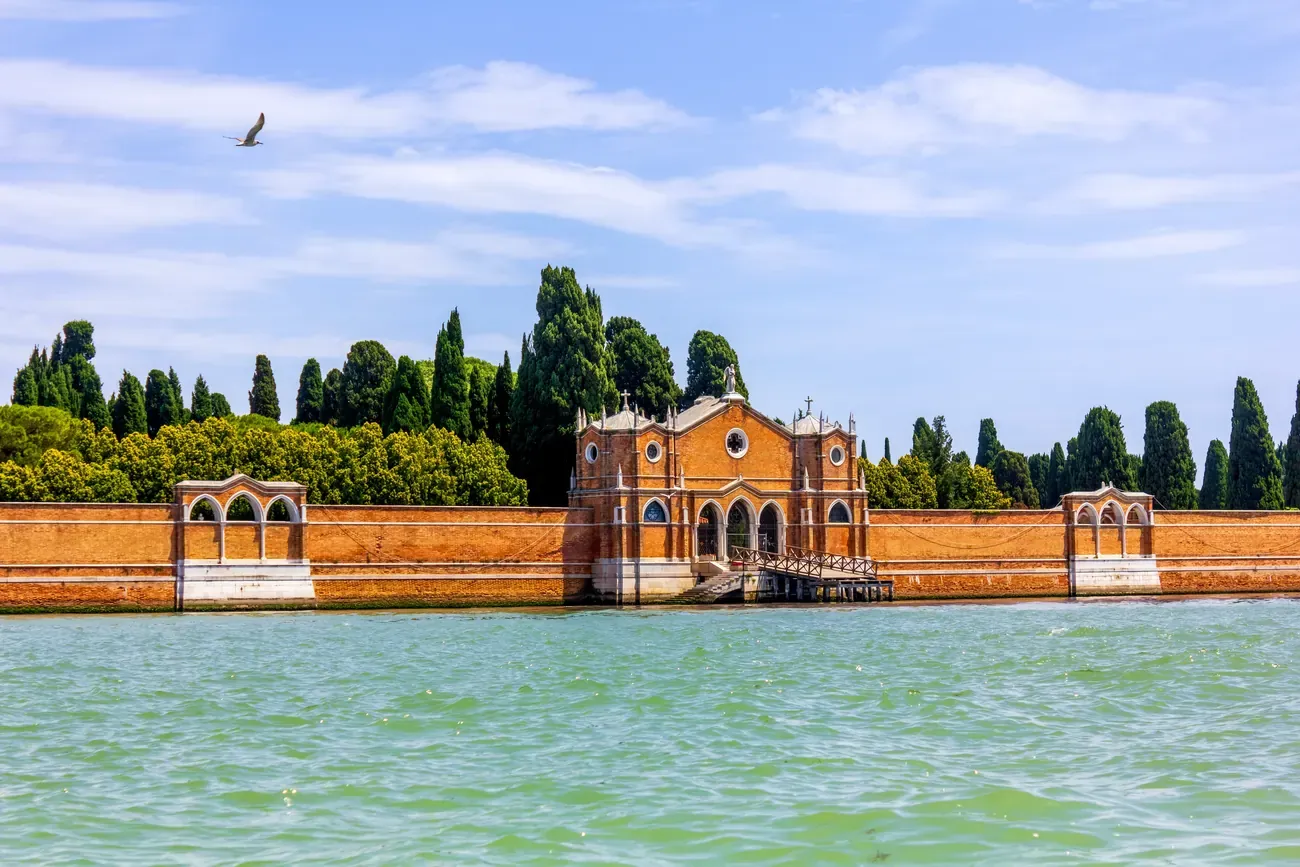
Isola di San Michele
The walled cemetery island holds Stravinsky, Diaghilev and Ezra Pound among its cypresses, reached by the vaporetto that runs on to Murano.
Location: Isola di San Michele, northern lagoon
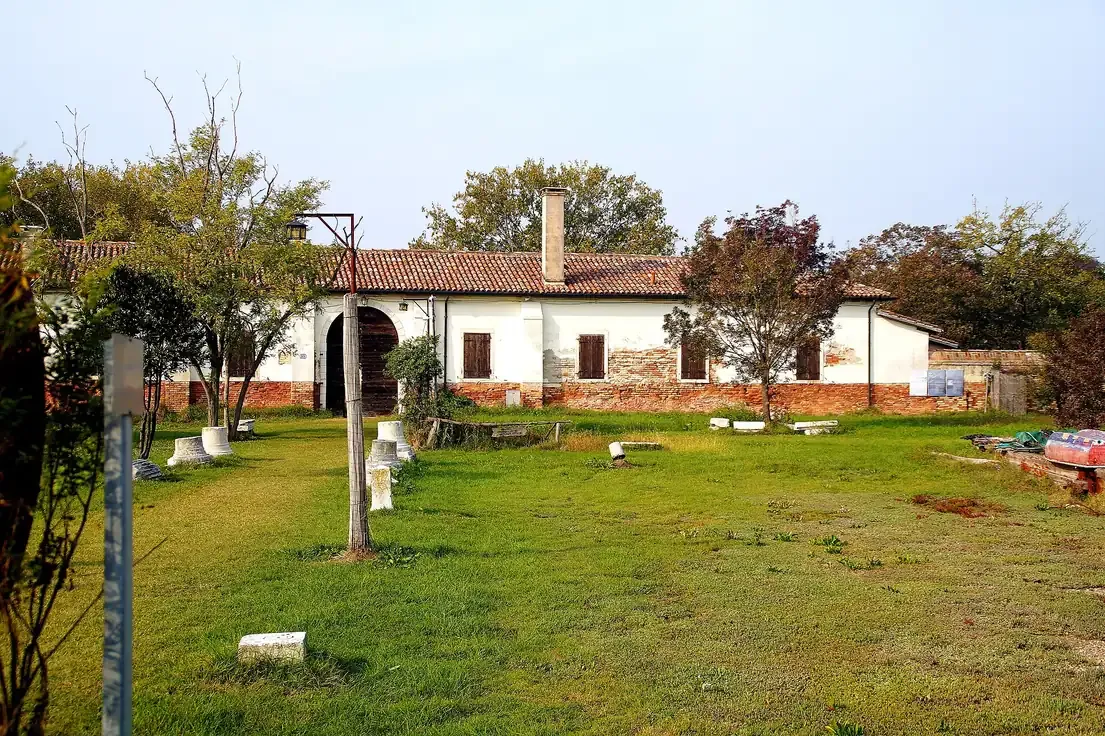
Lazzaretto Nuovo
Ships waited out quarantine here from 1468; the storehouse walls still carry graffiti left by crews, and archaeologists have found plague burials.
Location: Lazzaretto Nuovo, northern lagoon
Photo: "Lazzaretto Nuovo, entrance area" by TheRunnerUp (CC BY-SA 4.0).
Street-level history in Venice
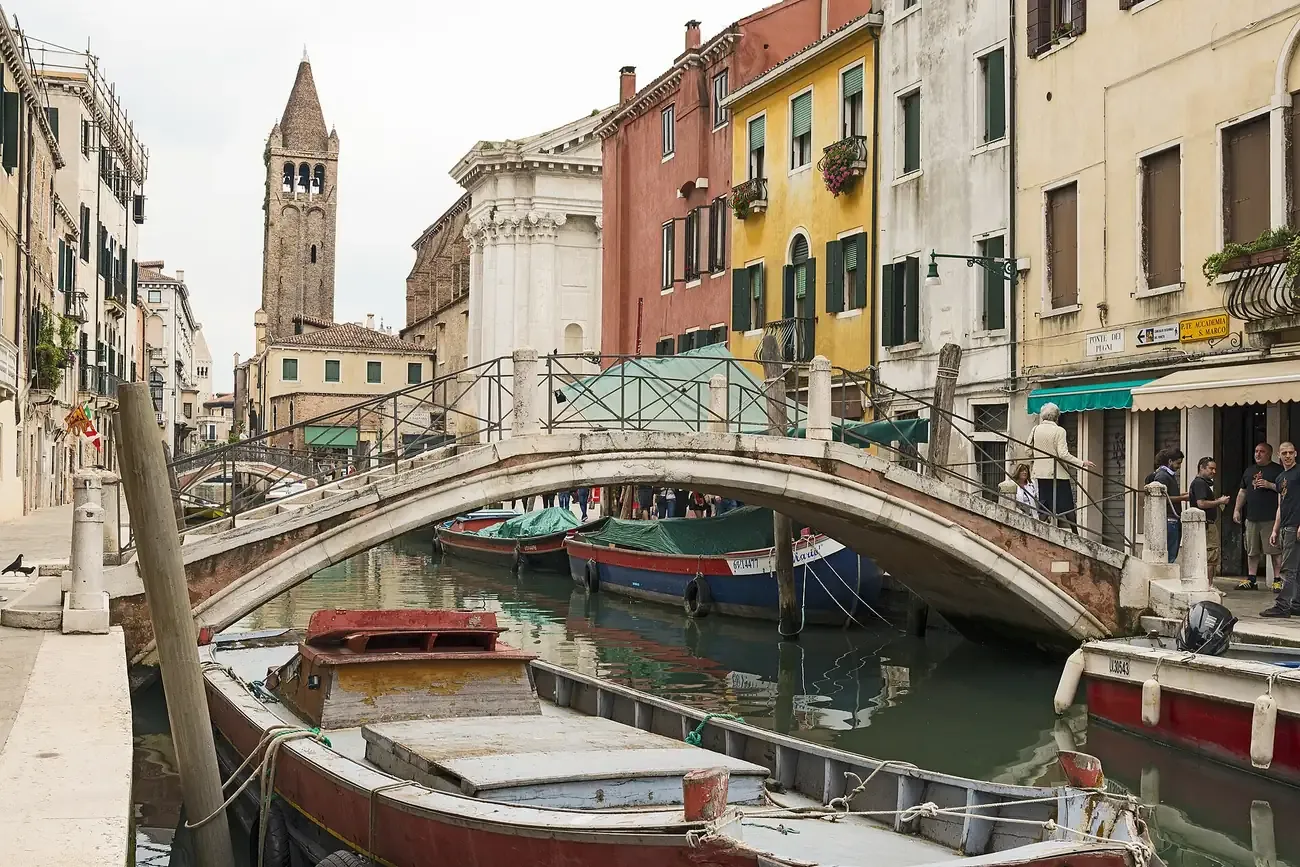
Ponte dei Pugni (Bridge of Fists)
Four marble footprints mark the corners where rival factions began bare-knuckle brawls on a parapet-free bridge, the loser going into the canal.
Location: Campo San Barnaba, Dorsoduro
Photo: "Ponte dei Pugni, Venice" by Didier Descouens (CC BY-SA 4.0).
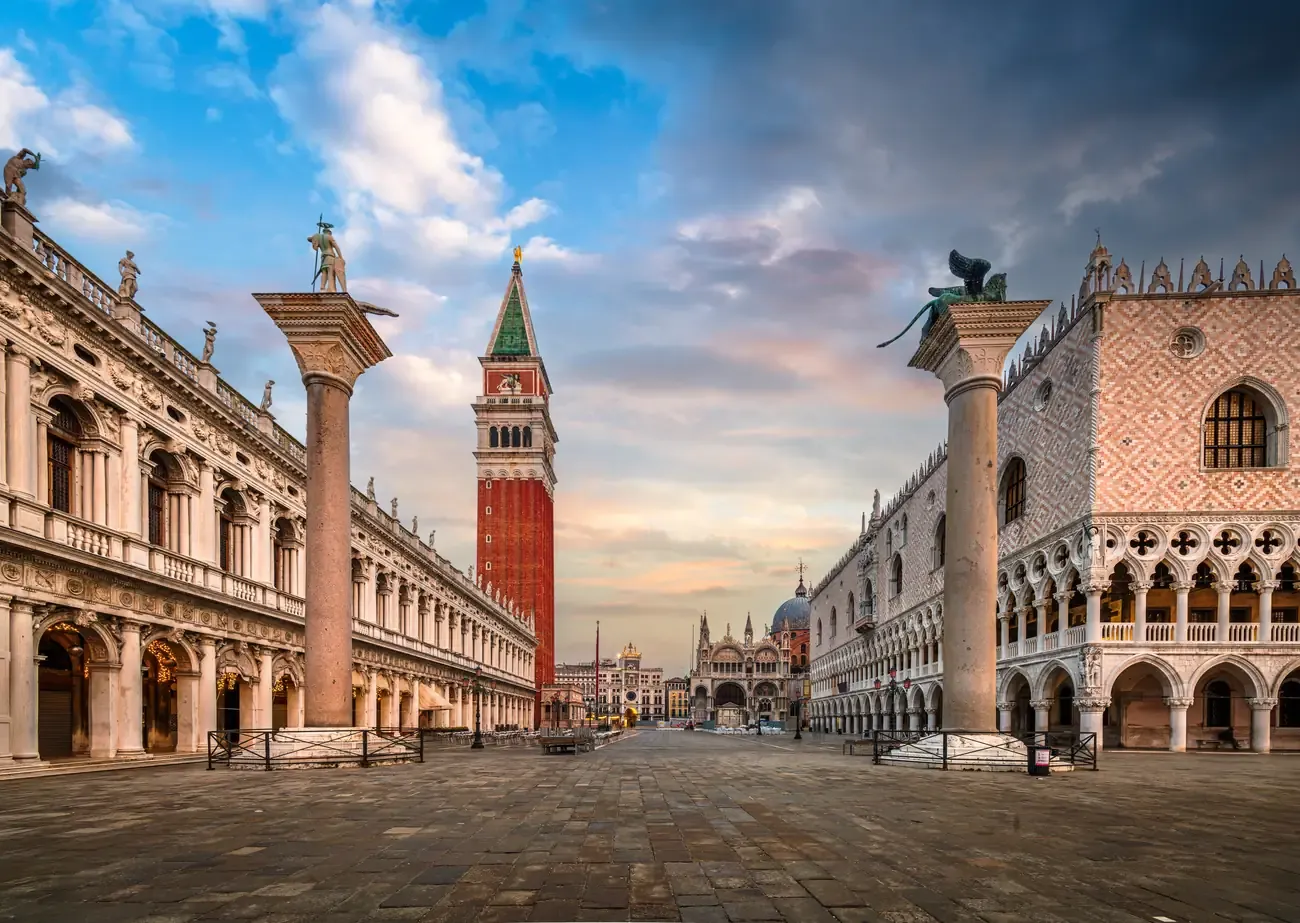
St Mark's Lost Third Column
Two granite columns stand on the Piazzetta; a third slid off the barge in the 12th century and is still somewhere in the basin mud.
Location: Piazzetta San Marco
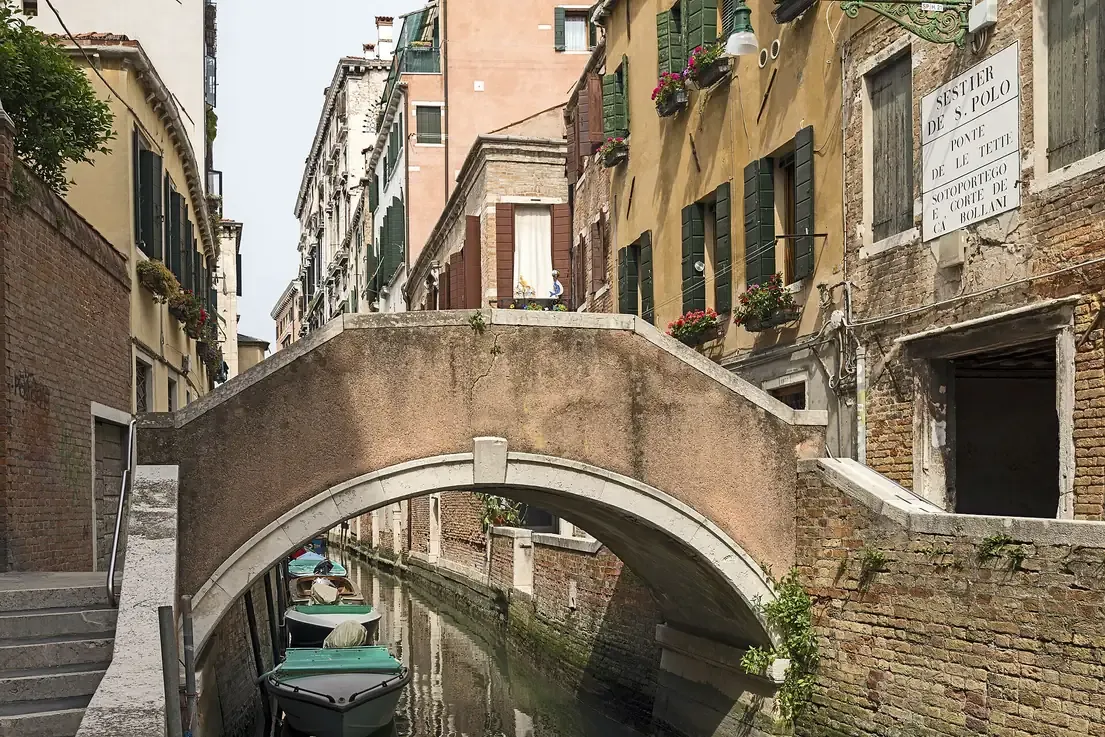
Ponte delle Tette
Named for the balconies where licensed prostitutes were once encouraged to display themselves, a measure the Republic aimed at the district's habits.
Location: Calle Agnello, San Polo
Photo: "Ponte delle Tette, Venice" by Didier Descouens (CC BY-SA 4.0).
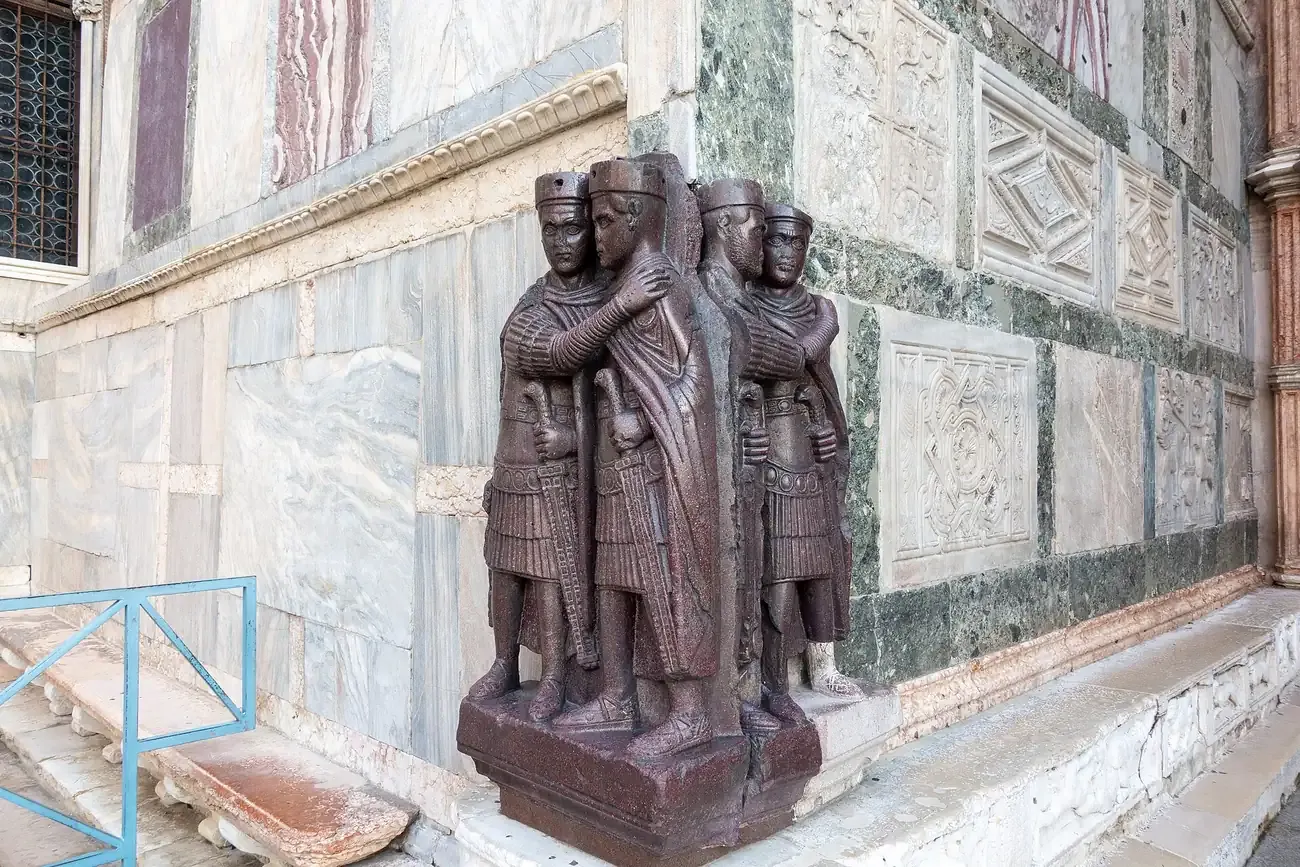
Portrait of the Four Tetrarchs
The porphyry emperors embedded in the basilica corner were looted from Constantinople, and a missing heel turned up there during later excavations.
Location: Piazzetta dei Leoncini, San Marco
Photo: "The Four Tetrarchs at St Mark's Basilica" by Kent Wang (CC BY-SA 2.0).
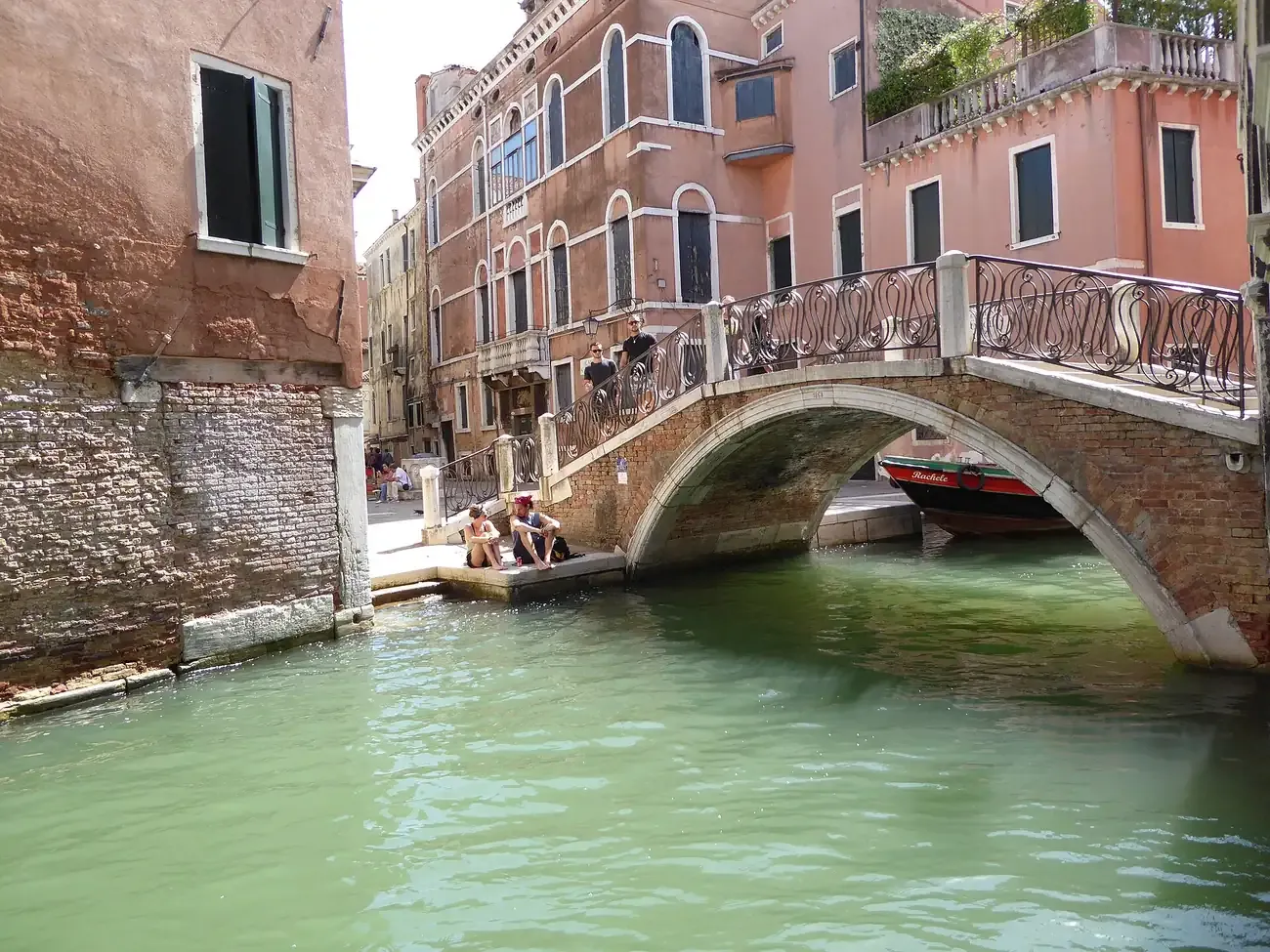
Uncini della Fortuna (Hooks of Fortune)
Two iron hooks on a bridge pillar are rubbed for luck, though they once helped moor the boats that carried coffins to the cemetery island.
Location: Ponte San Canciano, Cannaregio
Photo: "Ponte San Canzian, Venice" by Abxbay (CC BY-SA 4.0).
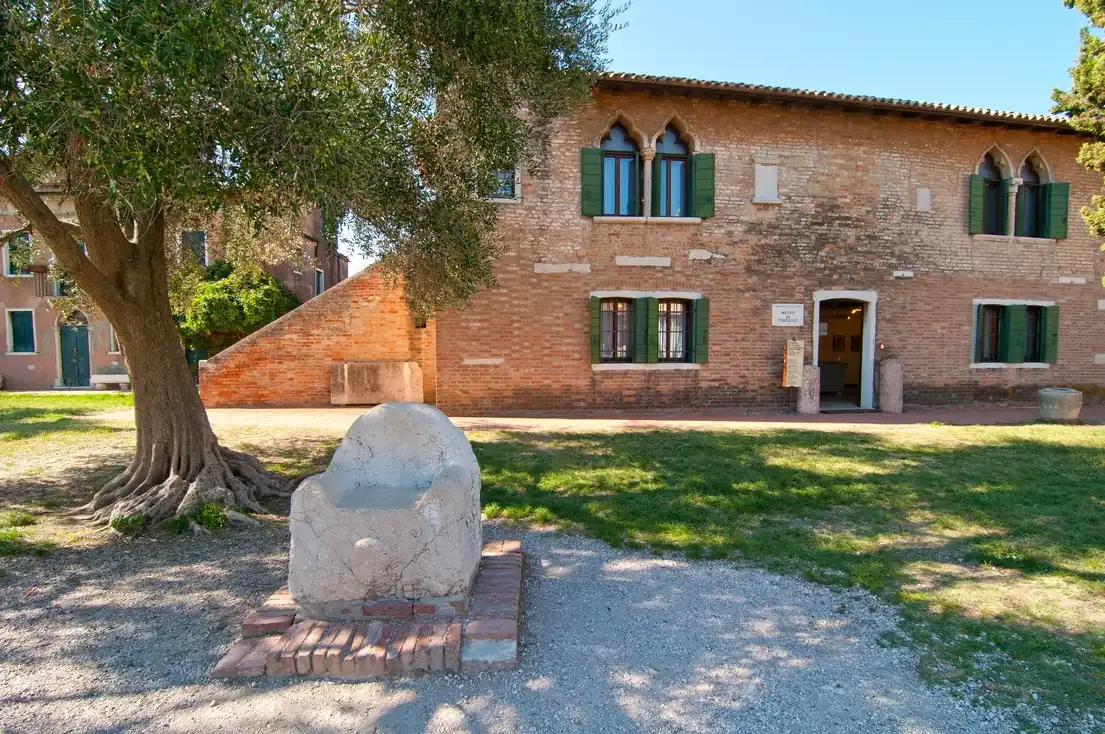
Attila's Throne
A stone seat on Torcello's green, named for a king who never sat in it and more likely used by the island's bishop or magistrate.
Location: Piazza Torcello, Torcello
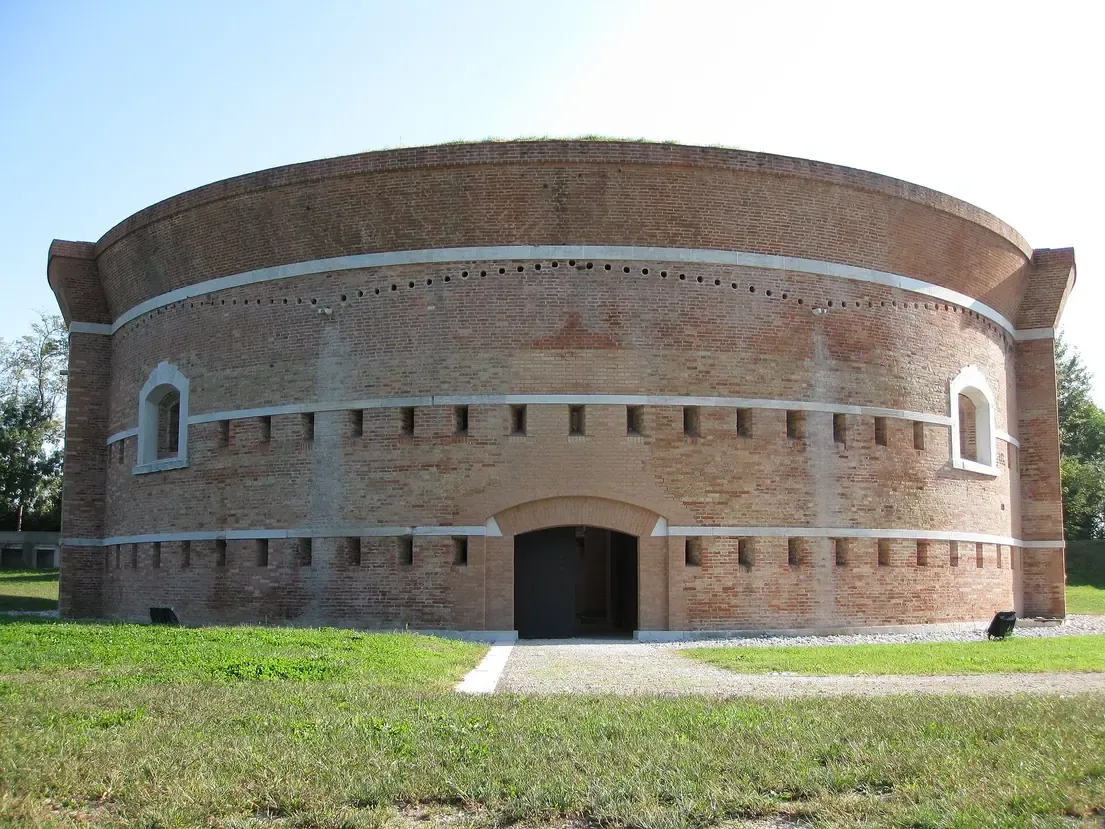
Torre Massimiliana
An Austrian gun tower of 1811 on Sant'Erasmo, now an exhibition space among the vineyards and vegetable plots that still supply the city.
Location: Sant'Erasmo, northern lagoon
Photo: "Torre Massimiliana, Sant'Erasmo" by Godromil (Public domain).
More places to discover in Venice
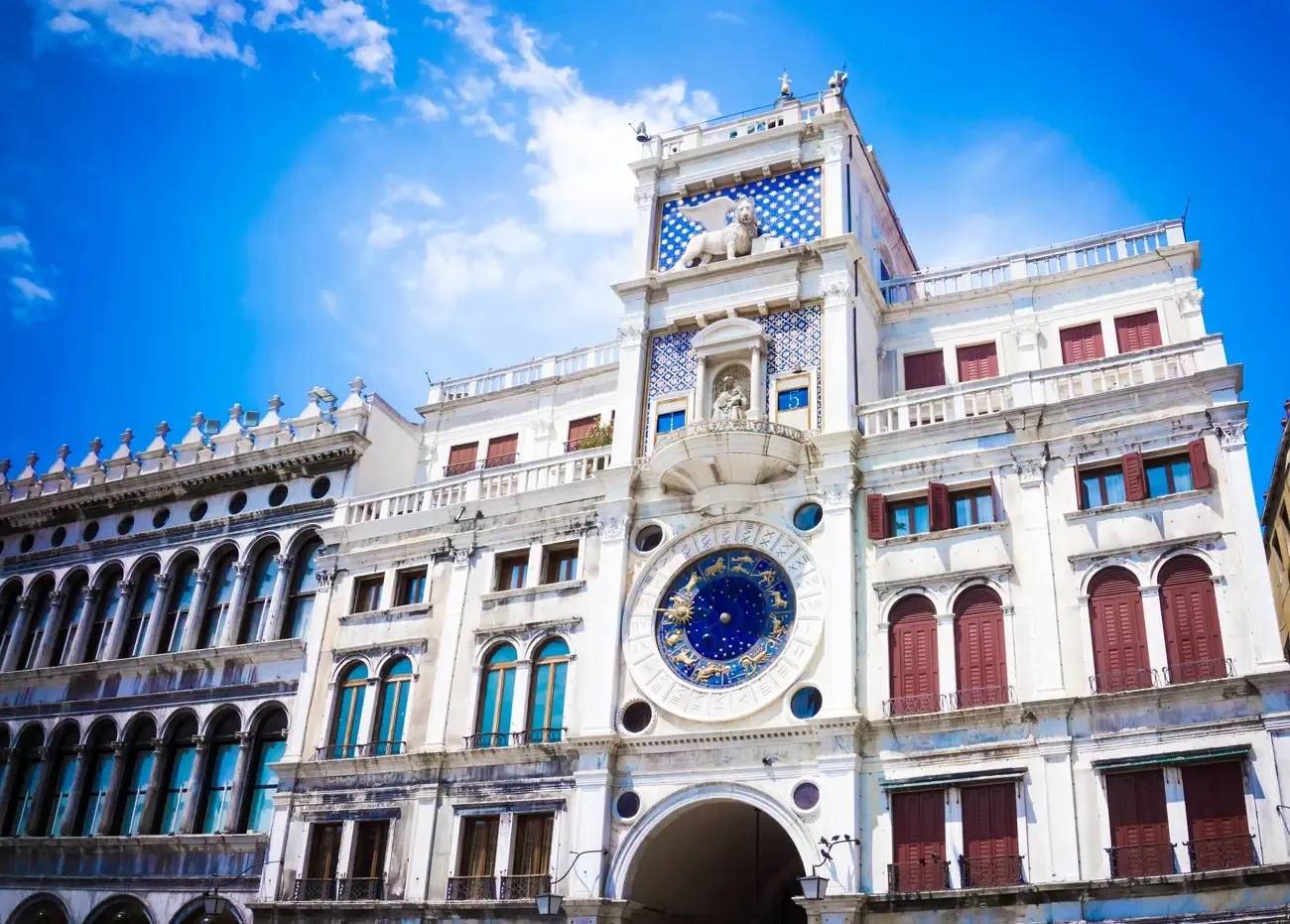
St Mark's Clock Tower (Torre dell'Orologio)
Two bronze figures have struck the hour since 1499 above a dial tracking the zodiac and the moon, and guided visits climb to the mechanism.
Location: Piazza San Marco
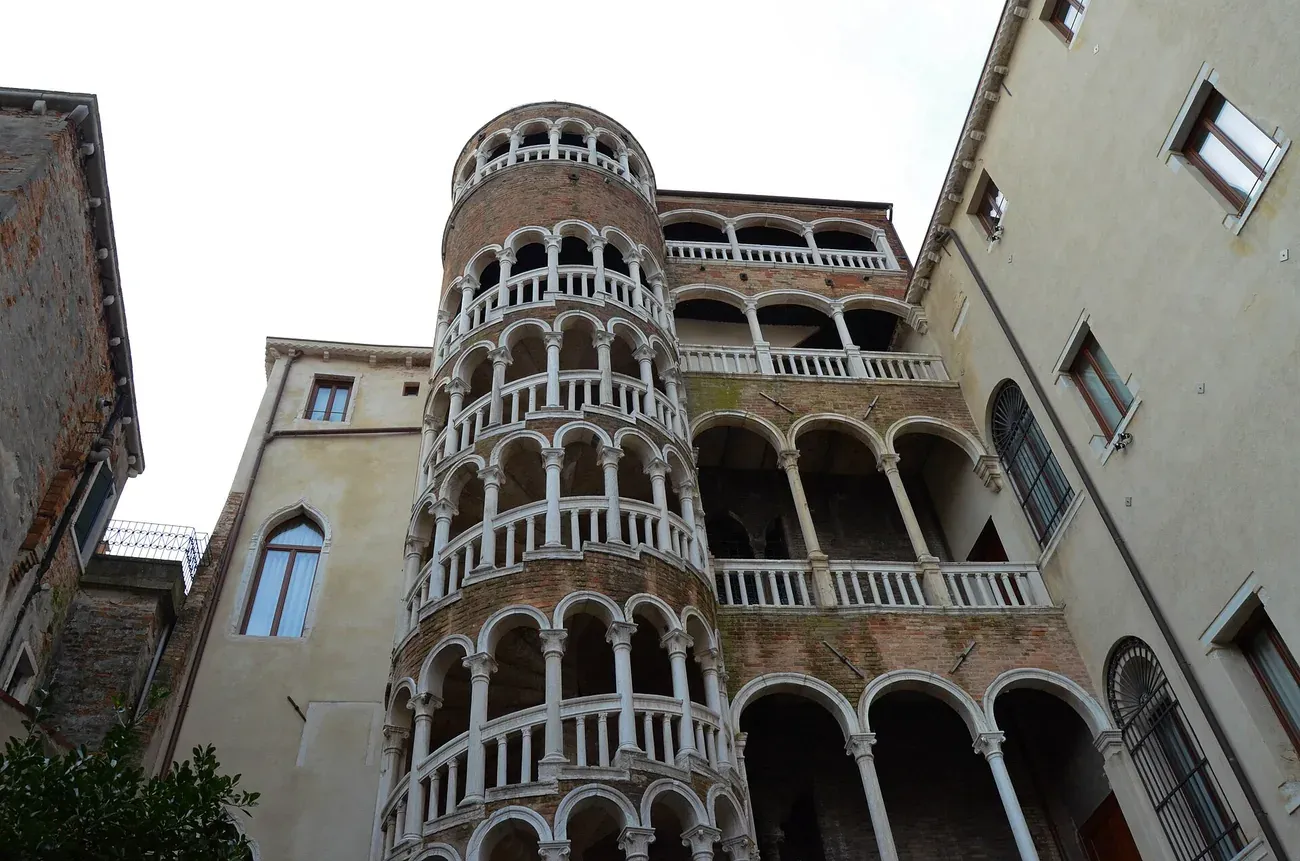
Scala Contarini del Bovolo
A spiral staircase of stacked arches winds up the back of a palace in a courtyard most people walk past, ending at a rooftop loggia.
Location: Corte Contarina del Bovolo, San Marco
Photo: "Hidden Venezia" by PatriPA (CC BY-SA 3.0).
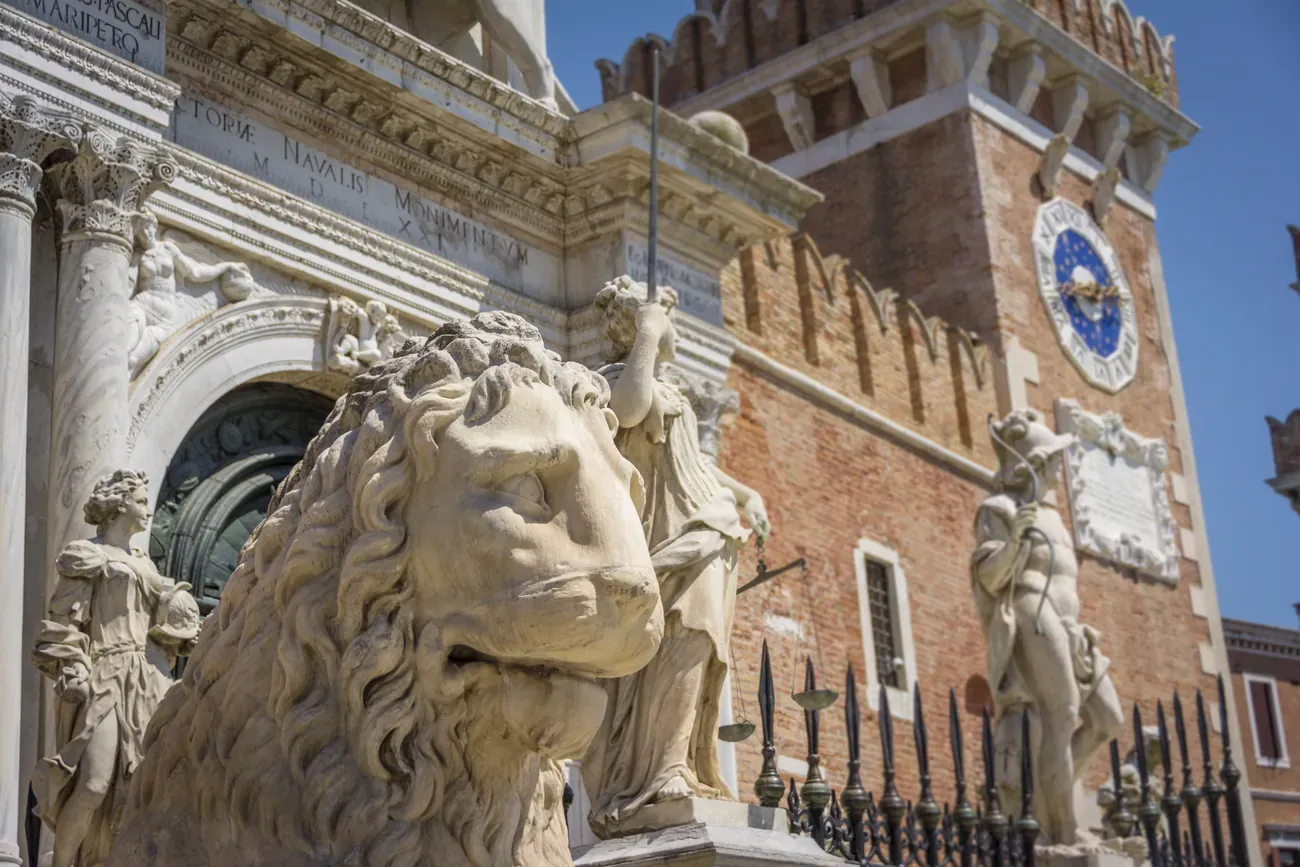
Piraeus Lion
The marble lion guarding the Arsenale gate was taken from Athens in 1687 and carries Norse runes cut by Varangian mercenaries centuries earlier.
Location: Campo de l'Arsenal, Castello
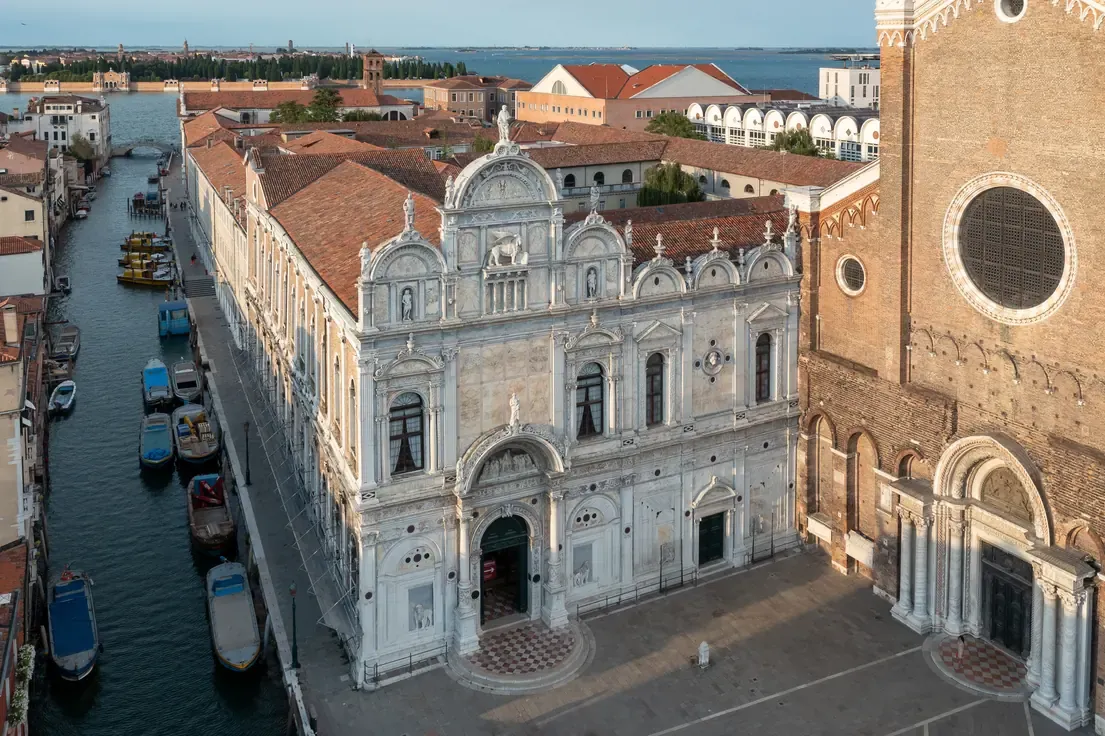
Scuola Grande di San Marco
Its trompe-l'oeil marble facade fronts the city hospital, and the upstairs halls keep a medical library of anatomical books and old surgical instruments.
Location: Campo Santi Giovanni e Paolo, Castello
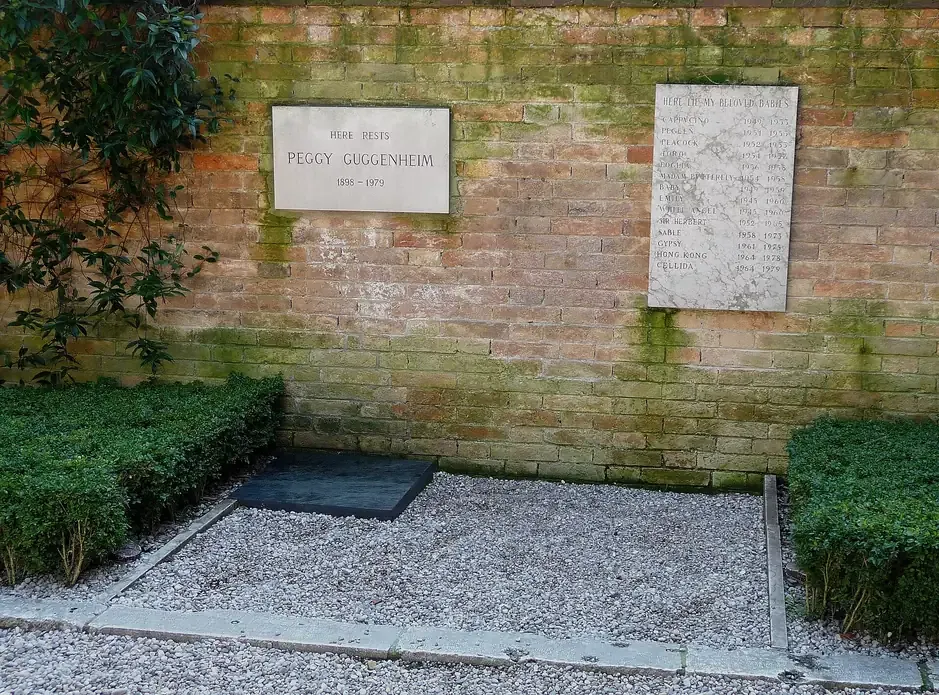
Peggy Guggenheim's Grave
The collector is buried in the garden of her palazzo beside a plaque listing the fourteen Lhasa Apsos interred with her.
Location: Palazzo Venier dei Leoni, Dorsoduro
Photo: "Peggygrab" by Jens Kraglund (sleepytomcat) (Public domain).
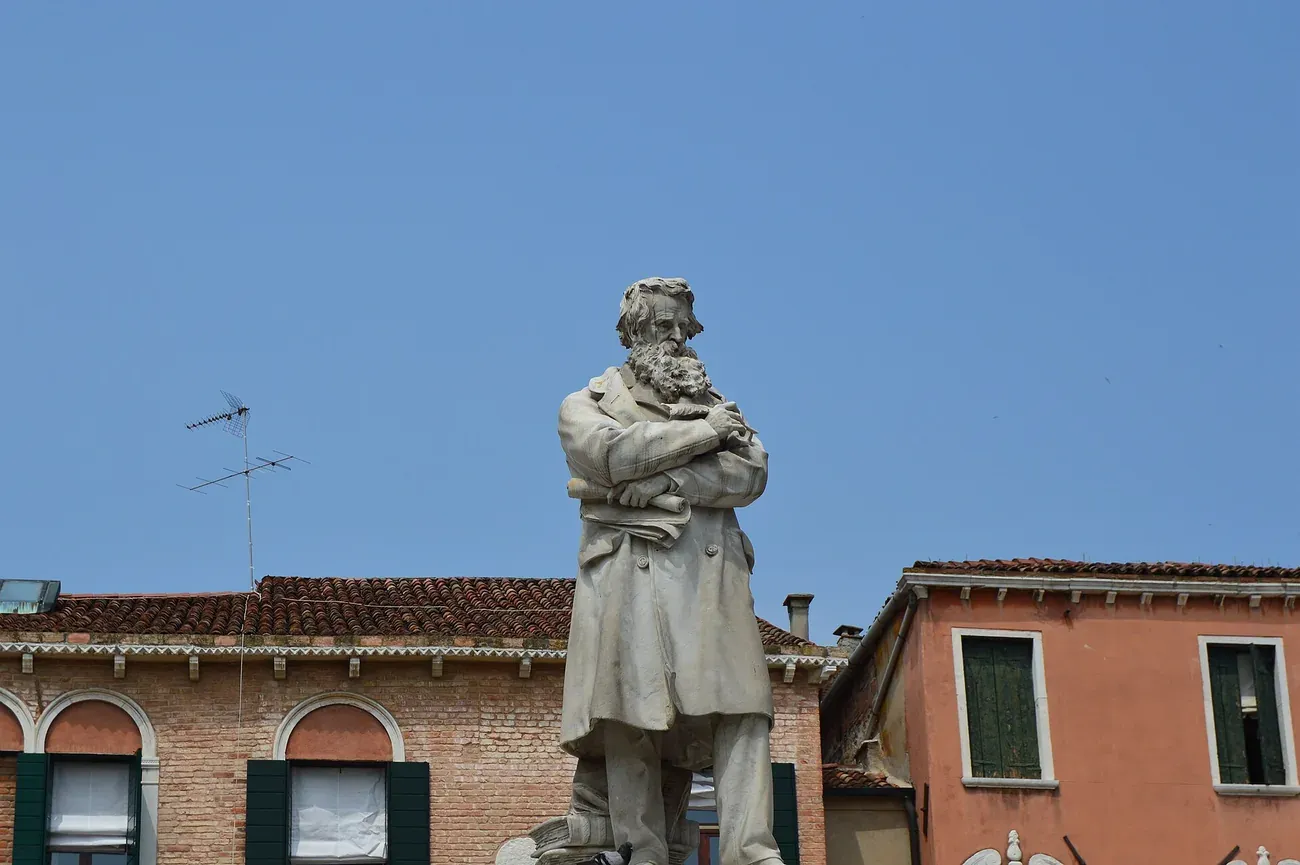
Monument to Niccolò Tommaseo
The statue of the scholar stands over a stack of his own books, an arrangement that earned it a nickname no guidebook prints.
Location: Campo Santo Stefano, San Marco
Photo: "Statue de Venise" by Lolo7433 (CC BY-SA 4.0).
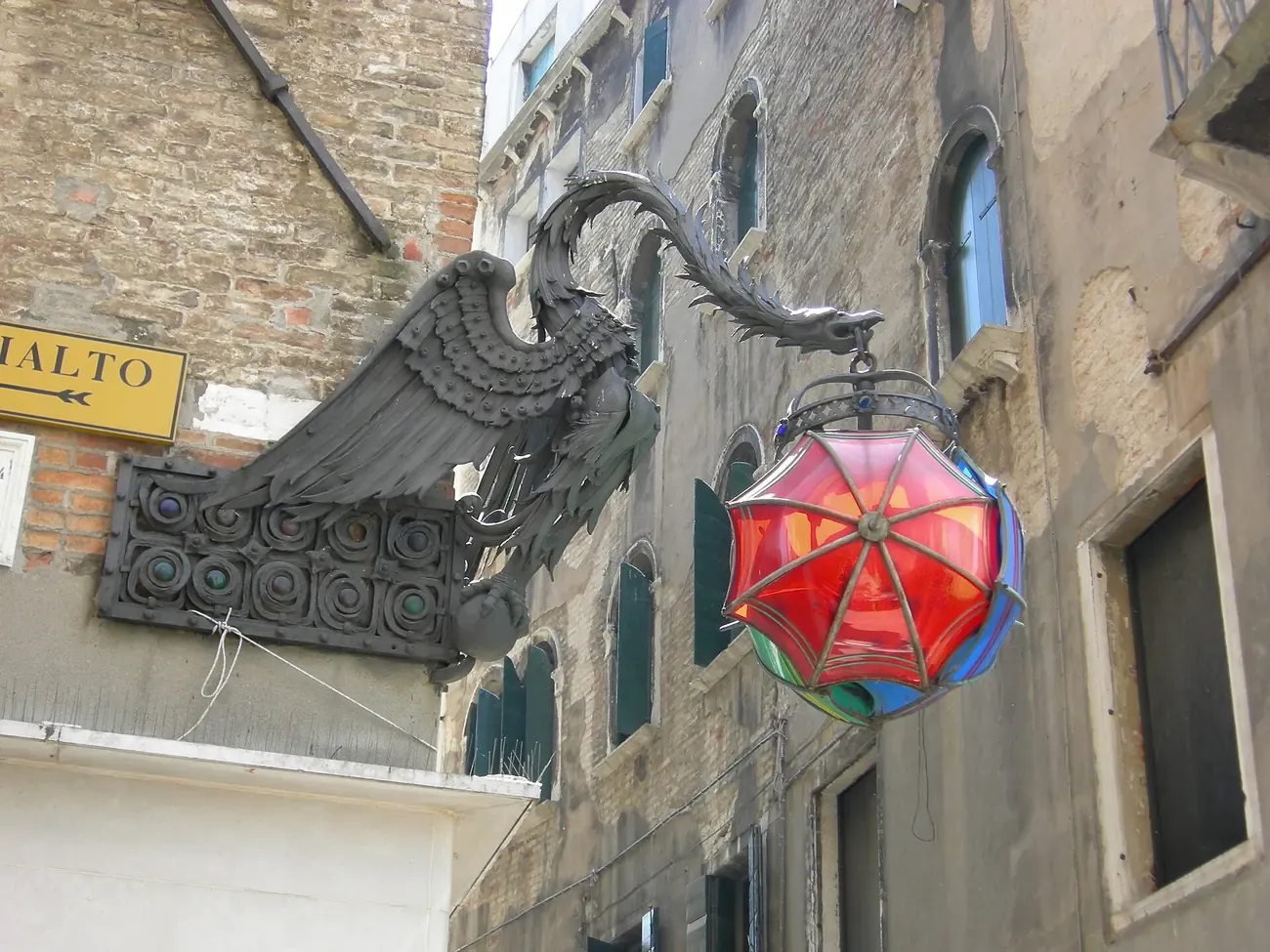
Marforio Dragon Lamp
An elaborate wrought-iron lamp with a coiled dragon hangs over a shopping street, passed daily by thousands who never look up.
Location: Marzarieta Due Aprile, San Marco
Photo: "Iron sign Venice" by Nicola Quirico (CC BY-SA 4.0).
What makes Venice worth visiting
Venice grew as a refuge in a lagoon and became the seat of a maritime republic that ruled Mediterranean trade for nearly a thousand years, from 827 until Napoleon ended it in 1797. That history left a city built entirely on water, its wealth still visible in Gothic palazzi, Byzantine mosaics and the paintings Titian and Tintoretto left across its churches and scuole.
Neighbourhoods to know
The historic centre splits into six sestieri. San Marco holds the main square, the basilica and the highest concentration of sights. San Polo and Santa Croce, across the Rialto, keep the market and the Frari's art. Dorsoduro gathers the Accademia, the Guggenheim and a quieter pace along the Zattere. Cannaregio, behind the station, holds the Jewish Ghetto and canals with fewer visitors, while Castello stretches east past the Arsenale.
When to go and for how long
Mid to late spring and early to mid autumn bring milder weather than the humid heat of July and August, when the lagoon draws its biggest crowds. Winter empties the calli but brings acqua alta, the periodic flooding that can raise water above the pavement several times a season. Two to three full days cover the main sestieri at a steady pace, with a fourth for Murano and Burano. Venice also connects by fast rail to Verona, Padua and Bologna, all under two hours away, for travellers combining it with other tourist attractions in Italy.
Getting around
Venice has no cars in its historic centre: vaporetto water buses run the Grand Canal and the outer islands, water taxis cost more but go door to door, and walking covers most distances between sights faster than waiting for a boat. Bridges and narrow calli make wheeled luggage awkward, so a hotel close to a vaporetto stop cuts down on the walking.