
Tourist attractions in Sorrento
Known for
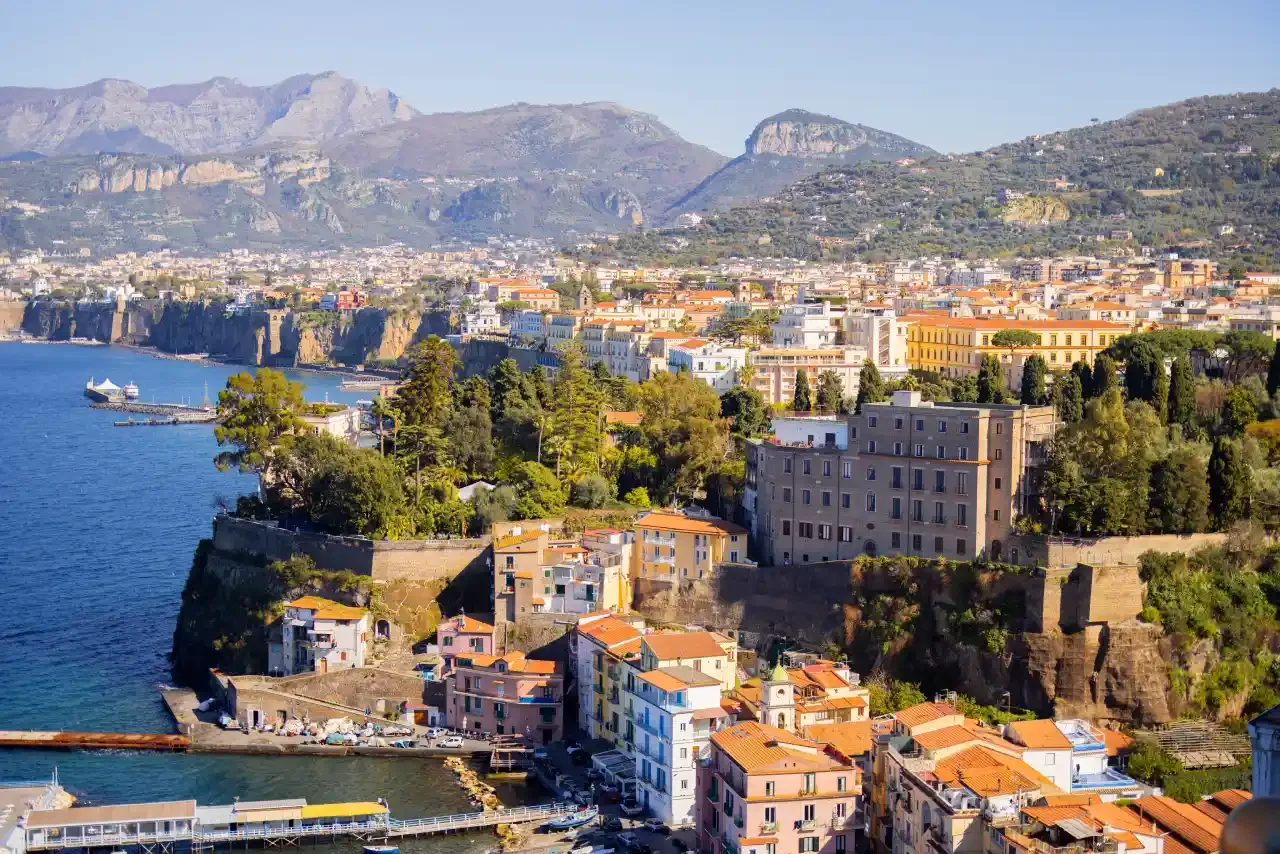
Limoncello, Sorrento lemons and clifftop views over the Bay of Naples
Must-see landmarks
Piazza Tasso, the Sorrento Duomo and Marina Grande
Free to visit
Villa Comunale gardens and the viewpoint over Vallone dei Mulini gorge
Days needed
Two to three days, with more time set aside for visiting the coast
Sorrento's top 7 tourist attractions
Bagni della Regina Giovanna, Marina Grande and Piazza Tasso lead the tourist attractions in Sorrento. This guide ranks the 7 sights worth your time, then adds free things to do and visitor FAQs. The 7 sights are numbered on the free Sorrento tourist map, with a walking route.
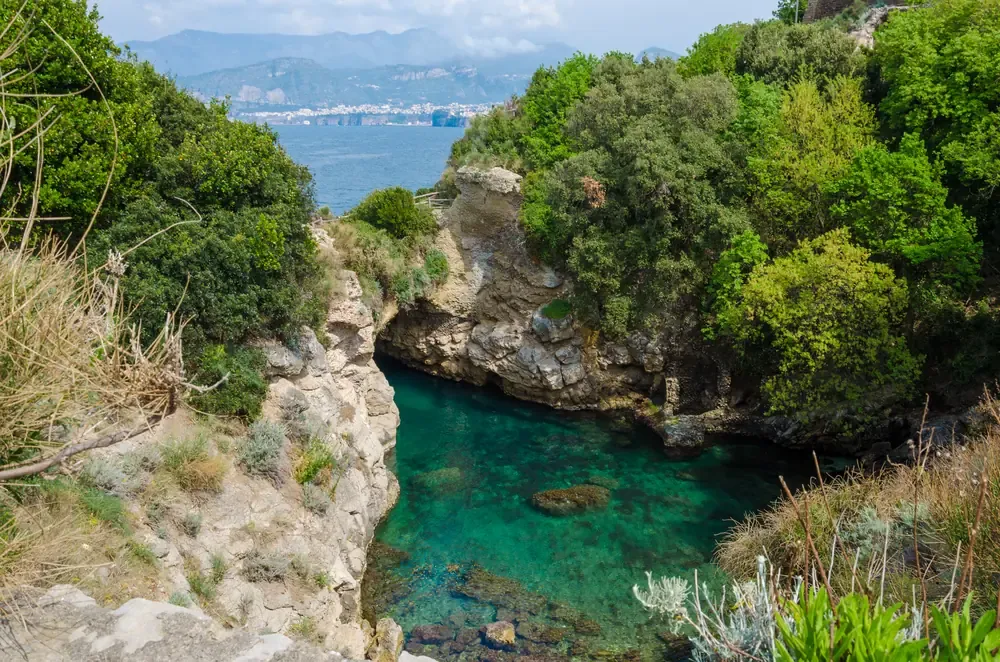
1. Bagni della Regina Giovanna
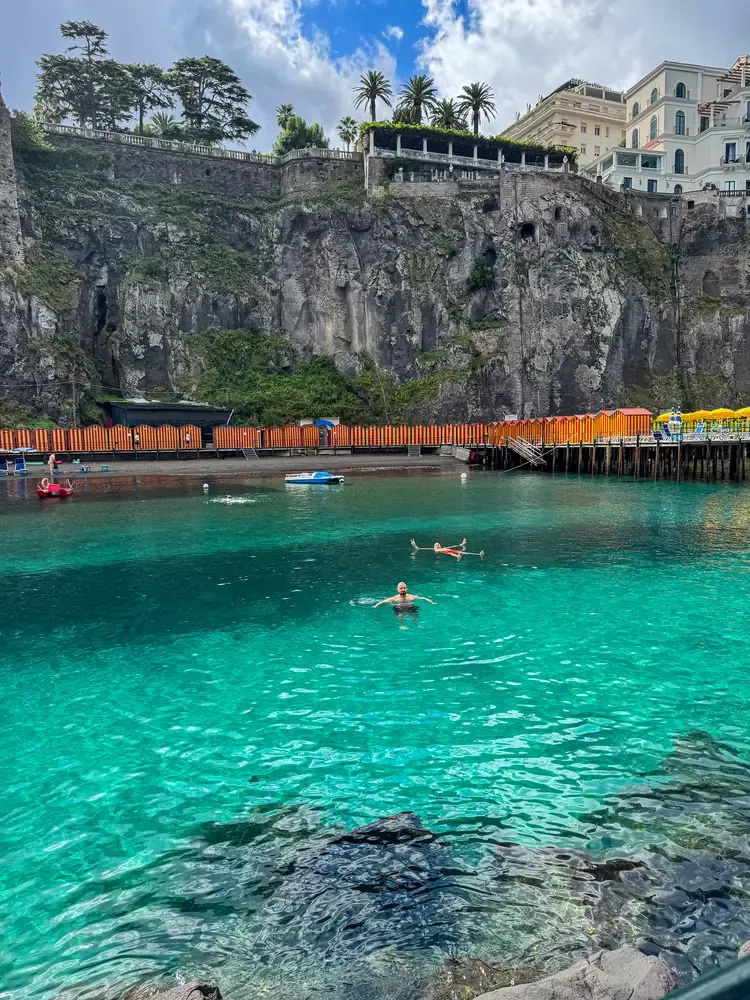
A natural seawater pool sits inside the ruins of a Roman maritime villa at Capo di Sorrento, west of the town, where a collapsed rock arch lets the open sea wash into a sheltered basin. Local tradition names the spot for a queen said to have swum here. The town council treats the headland as an archaeological and natural site, and the way in is a signposted path off the coastal road, rough and partly unpaved with steps in places, so sturdy shoes matter more than anything a visitor can book.
Location: Capo di Sorrento, reached on foot from Via Capo west of the centre.
Access: Free, with no ticket and no timed entry. The path is for walkers only, and motorbikes and scooters are not allowed through.
2. Marina Grande
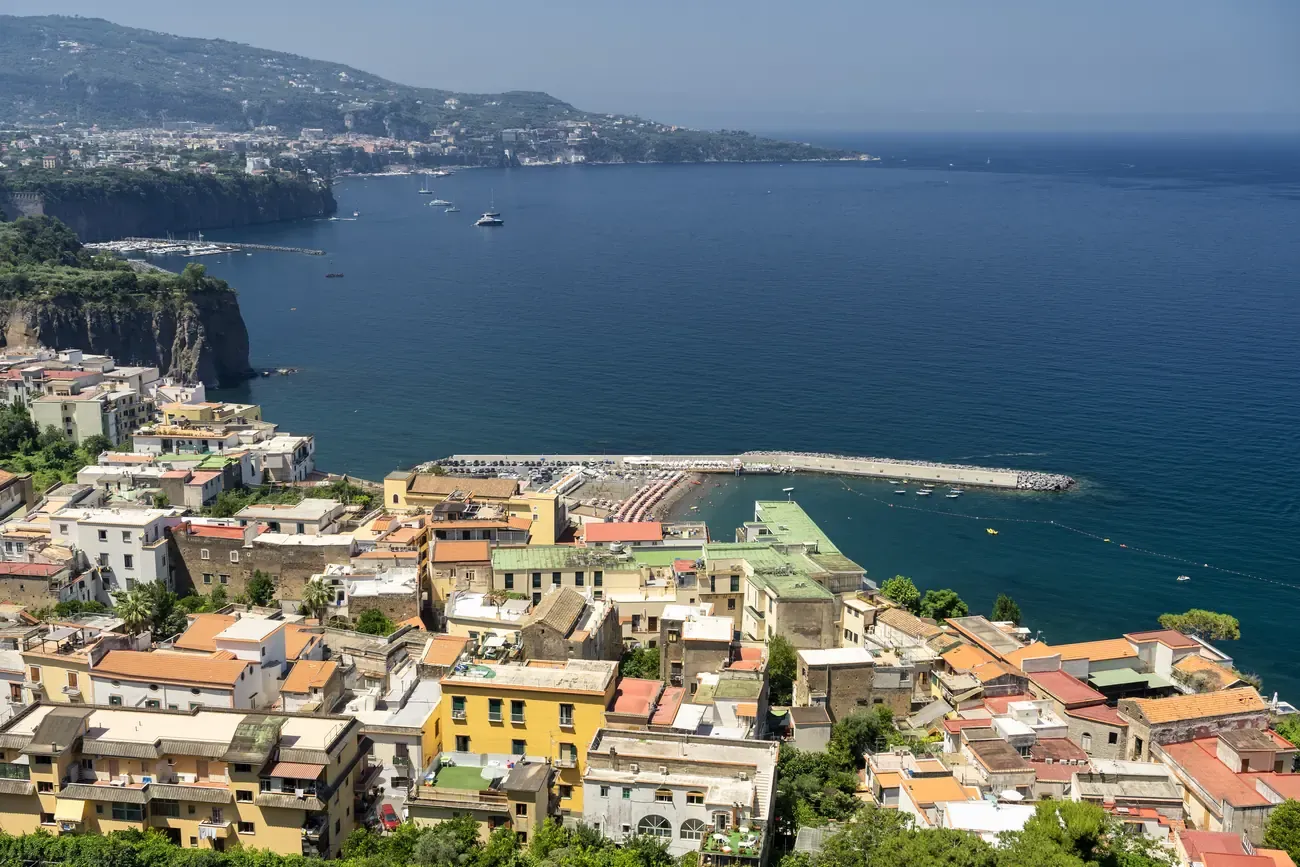
Sorrento's older harbour still looks like the fishing village it grew from, a cluster of pastel houses packed against the cliff at the western edge of town, with wooden boats pulled up on the shingle and nets left out to dry. The small church of Sant'Anna marks its centre, and family run kitchens along the water serve the day's catch, busiest from spring to early autumn. A stretch of public beach sits right alongside concessioned sunbeds and umbrellas, so swimming here costs nothing at all.
Location: below the cliffs at the western end of Sorrento, reached by steps down from Via Marina Grande.
Access: Free to wander at any hour, lanes, jetty and chapel included.
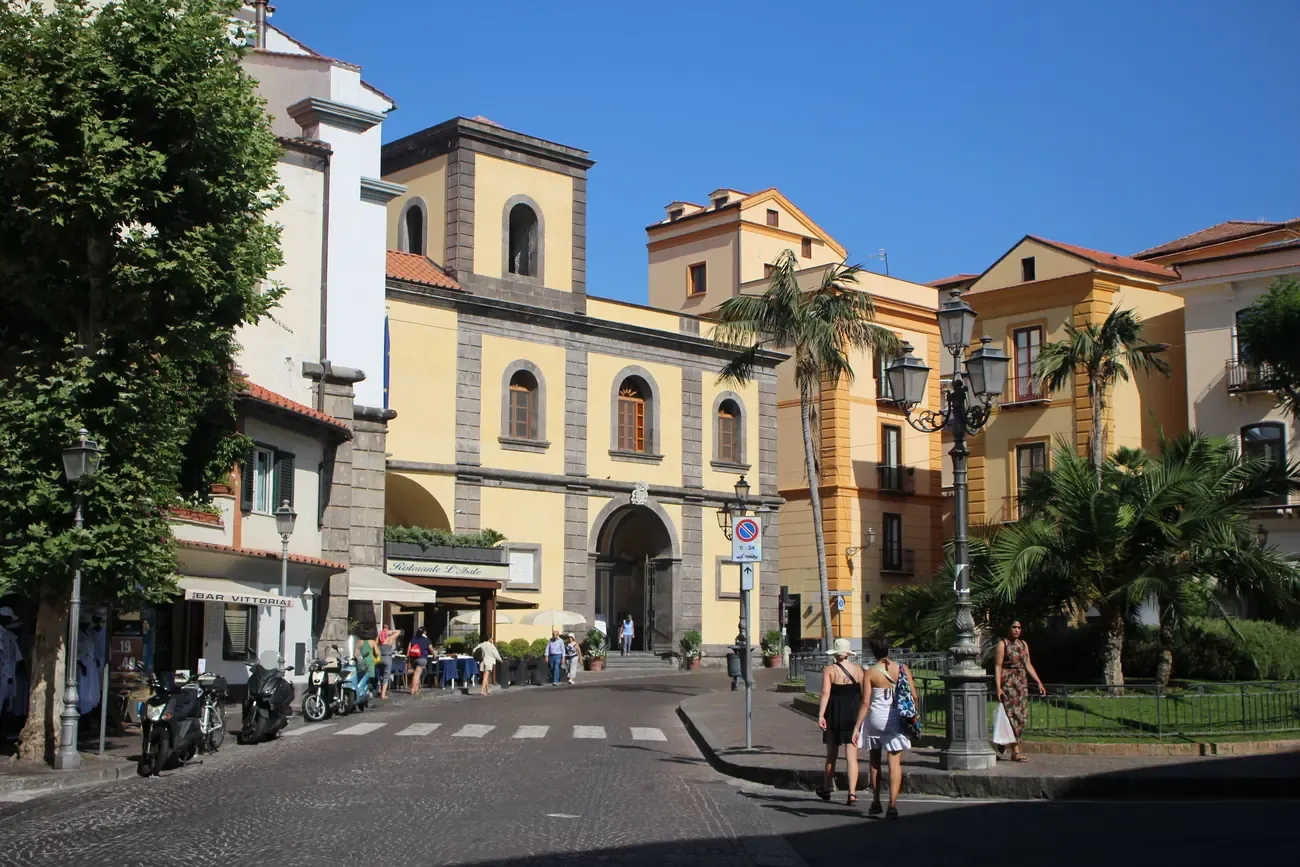
3. Piazza Tasso
The main square carries the name of Torquato Tasso, the poet born in the town, and it was laid out in the 19th century over an old gorge, on ground once called Largo del Castello after the Aragonese castle that stood here until it was pulled down. Cafe terraces, shops and the Santuario della Madonna del Carmine ring the open space, statues of the poet and of Sant'Antonino, the patron saint of Sorrento, stand within it, and the lanes toward Via San Cesareo and the two harbours all start from its edges.
Location: Corso Italia at the head of Via Luigi De Maio, in the historic centre.
Access: Free and open at any hour, as a public square.
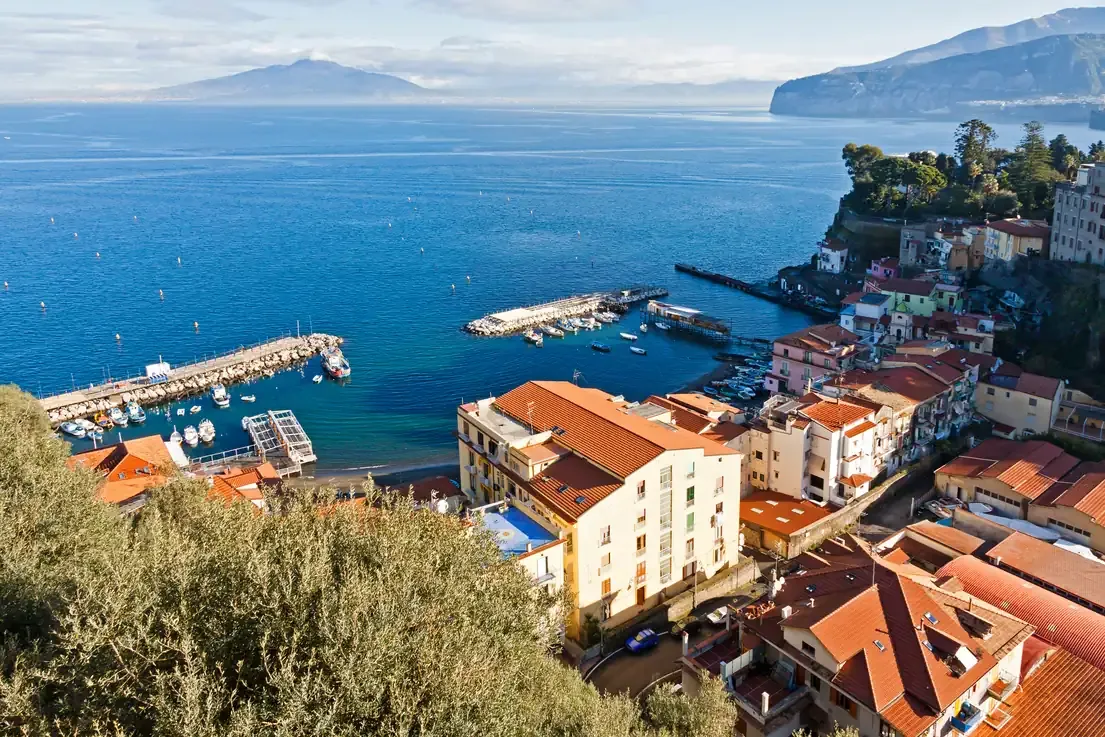
4. Villa Comunale
A clifftop park built between 1877 and 1879 on the former vegetable gardens of the Franciscan friars, laid out beside the monumental complex of the church and cloister of San Francesco. Its parapet works as a terrace over the water, with the Gulf of Naples opening out and Vesuvius standing across it, while the paths behind run between trimmed beds and olive trees old enough to throw real shade on the hottest summer days.
Location: Via San Francesco, next to the church and cloister of San Francesco.
Access: Free to enter, with no ticket. Address and contact details sit on the town council listing.
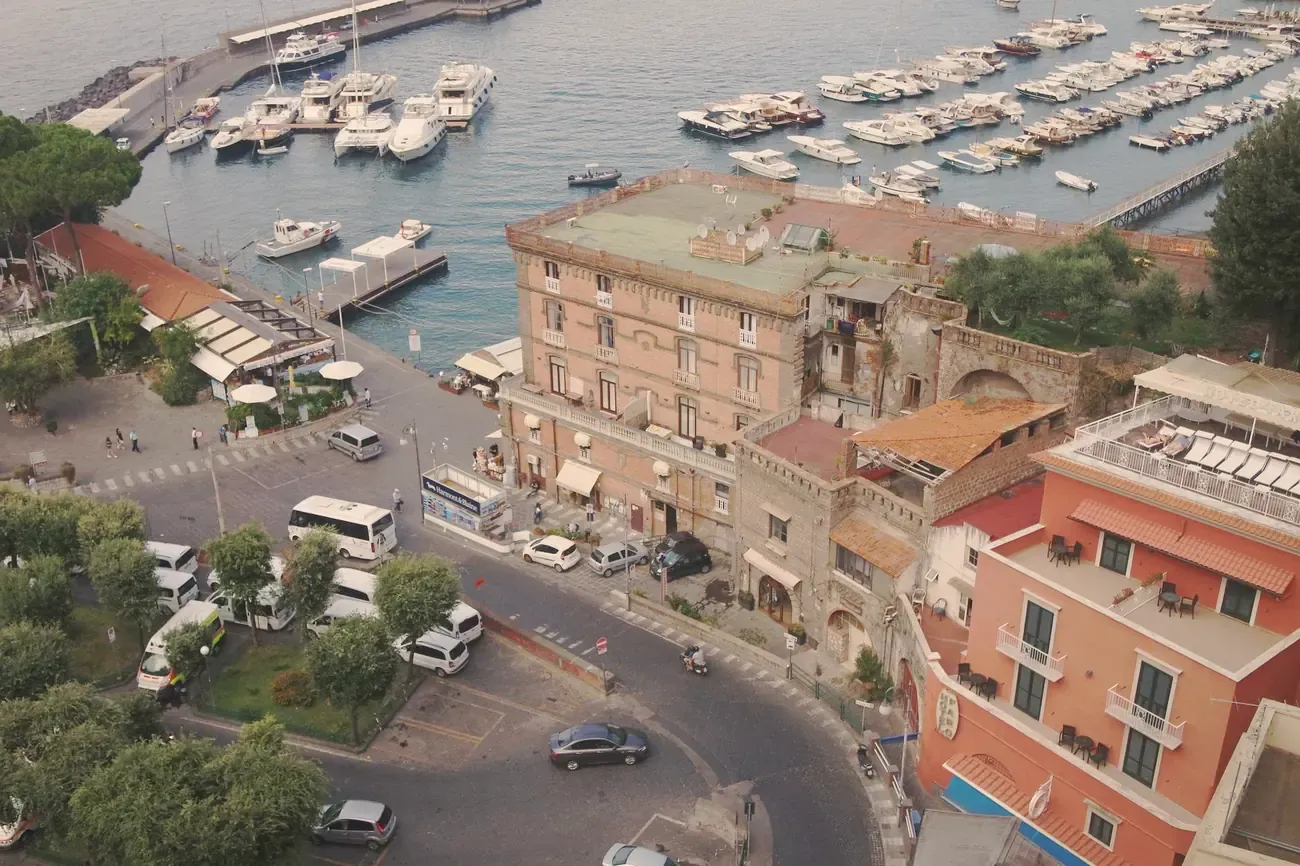
5. Marina Piccola
Sorrento's working harbour lies directly below the cliff of the Villa Comunale, and it is where the ferries and hydrofoils tie up, with Capri, Naples, Positano and the rest of the Amalfi coast all reached from these quays. One of the piers carries the name of the singer Lucio Dalla. West of the basin, bathing platforms stand on stilts under the tufa cliff in the San Francesco area, and the walkway between them stays open to anyone coming down from the town above.
Location: at the foot of the cliffs below the Villa Comunale, reached from Via Luigi De Maio.
Access: Free to walk the quays and the promenade. Ferry crossings and hired boats are ticketed separately.
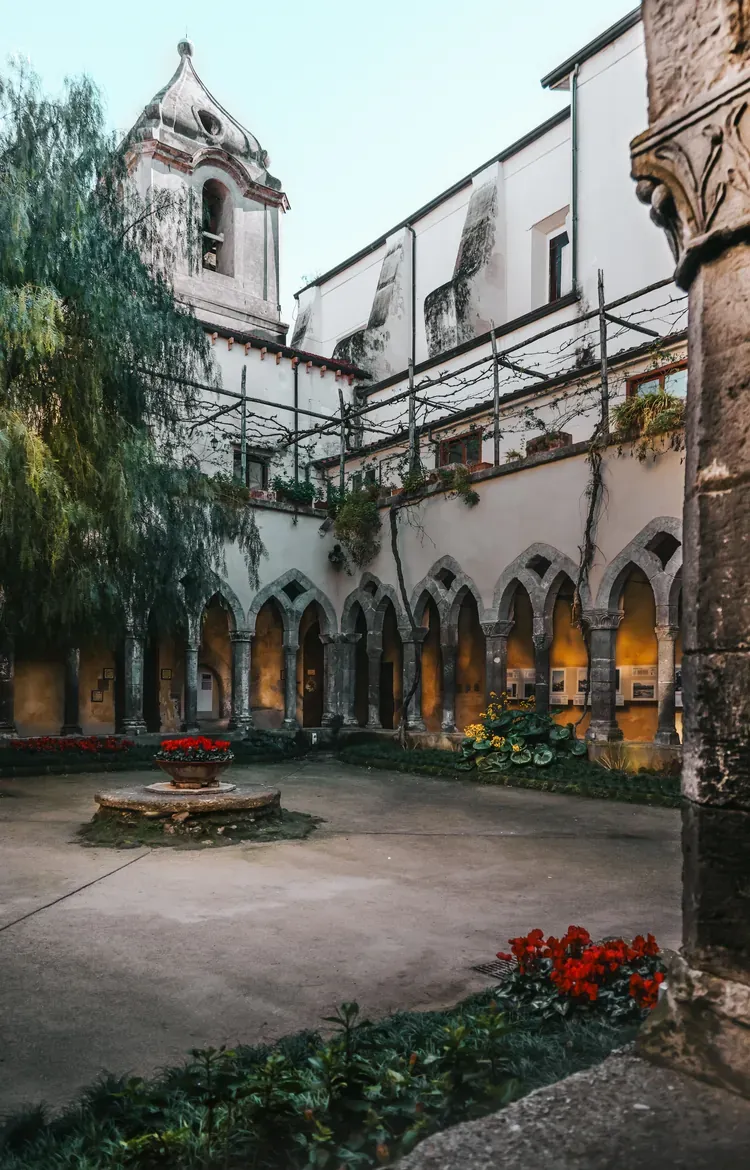
6. Chiostro di San Francesco
A 14th century cloister sits next to the Villa Comunale, its Arab, Gothic and Renaissance arches meeting around a planted courtyard. The building was remodelled in the 15th century, when it served the town as well as the friars: civic meetings were held inside it and the seal of the municipal records was kept here. A restoration at the start of the 20th century left it in the state seen today, and it now works as a setting for concerts and exhibitions.
Location: Via San Francesco 12, beside the Villa Comunale gardens.
Access: Free to step into. Events staged in the courtyard may charge for a seat, and the municipal listing carries the contact for the events office.
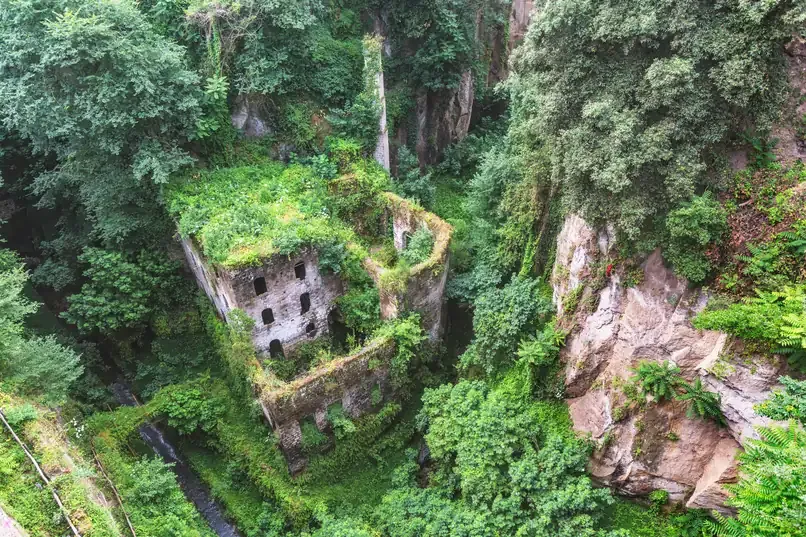
7. Vallone dei Mulini
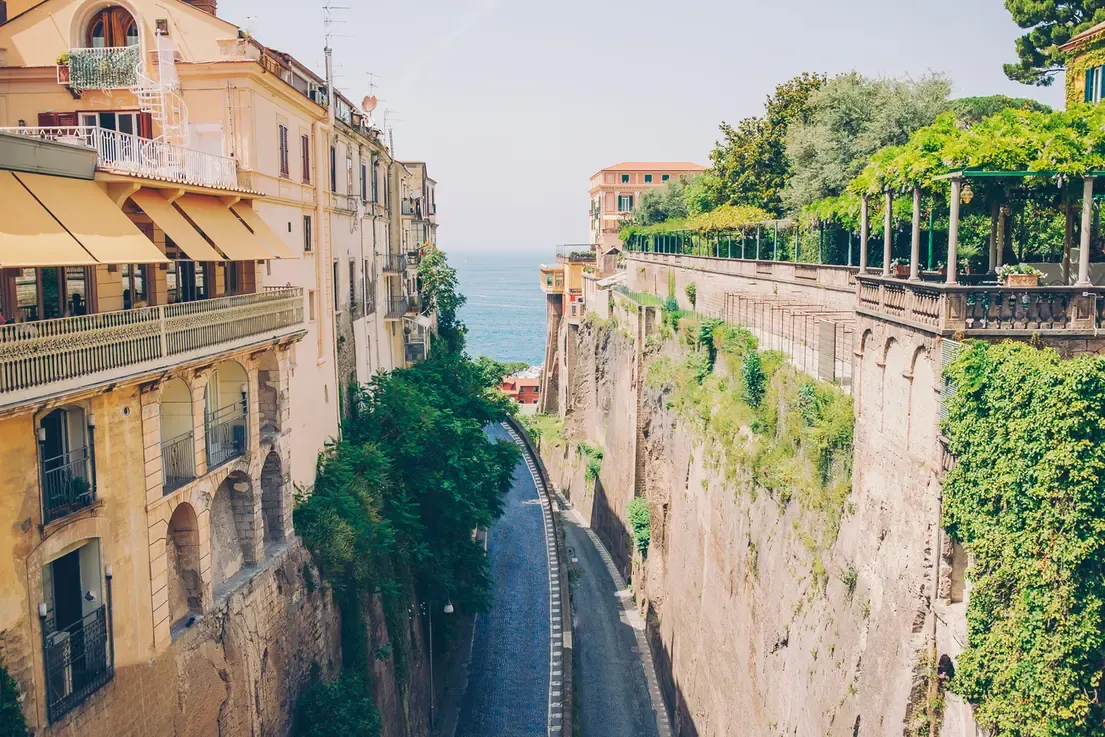
A gorge cut deep into the tufa opens right behind Piazza Tasso, and at its bottom stand the roofless walls of a stone flour mill, abandoned long enough for ferns and creepers to have swallowed the brickwork whole. Damp air trapped between the rock faces keeps that greenery going all year, which is what gives the ruin its half buried look from above. The square itself was laid out over the head of the same gorge in the 19th century.
Location: the street level viewing point above the gorge, a short walk from Piazza Tasso.
Access: Free from the railing above. The floor of the gorge and the mill ruins themselves are not open to visitors.
Free attractions to visit in Sorrento
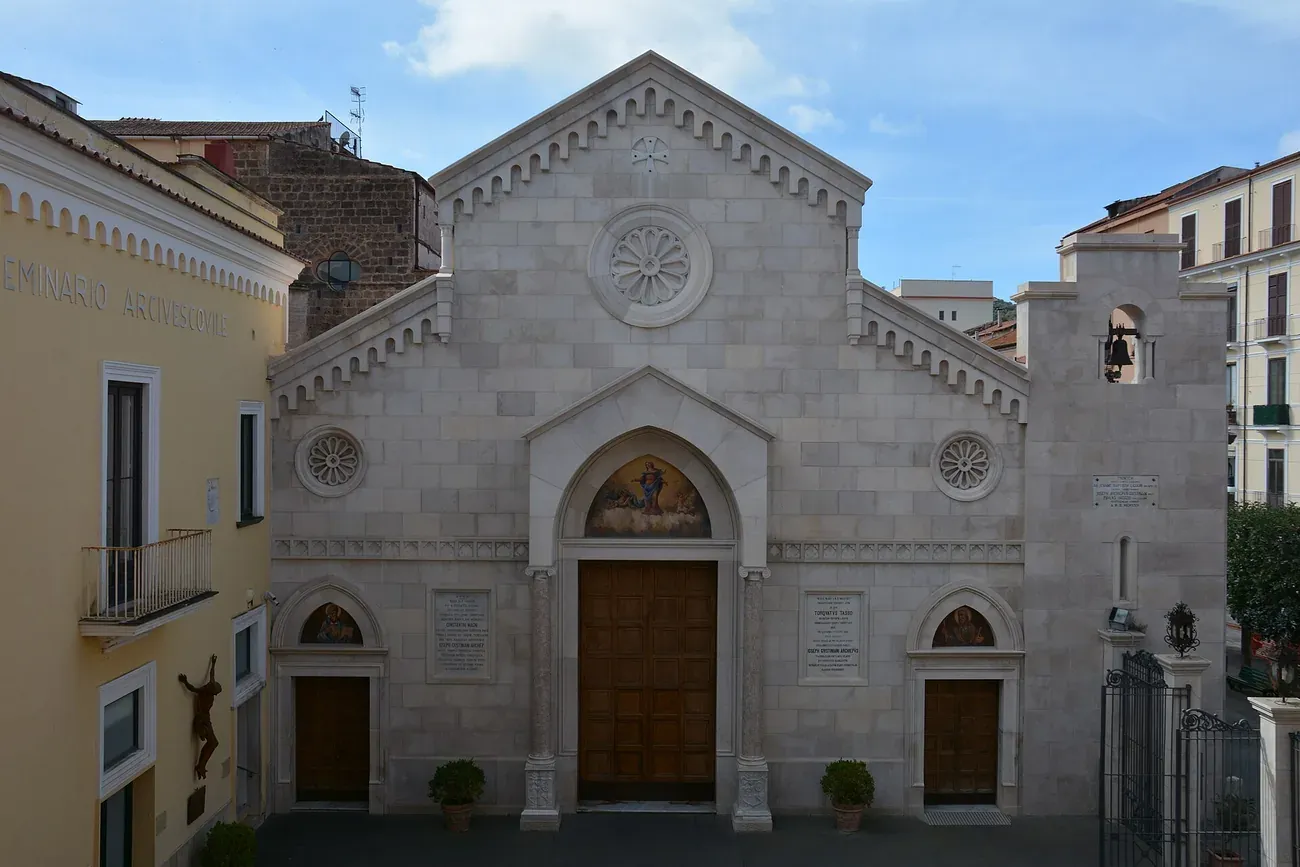
Sorrento Cathedral
Sorrento's cathedral charges nothing at the door, and the marquetry choir stalls and the baptismal font stay open to anyone who walks in during service hours. Modest dress is expected inside, but there is no ticket booth and no timed entry slot to book.
Photo: "Facade of Sorrento Cathedral" by MentNFG (CC BY-SA 4.0).

Basilica di Sant'Antonino
Sorrento's patron saint is buried in the crypt of this basilica just off Piazza Tasso, free to enter, where whale ribs hang above the main doors as an ex voto for a child the saint is said to have saved from a whale. The crypt draws crowds each 14 February, the saint's feast day.
Photo: "Basilica di Sant'Antonino, Sorrento" by Mentnafunangann (CC BY-SA 3.0).
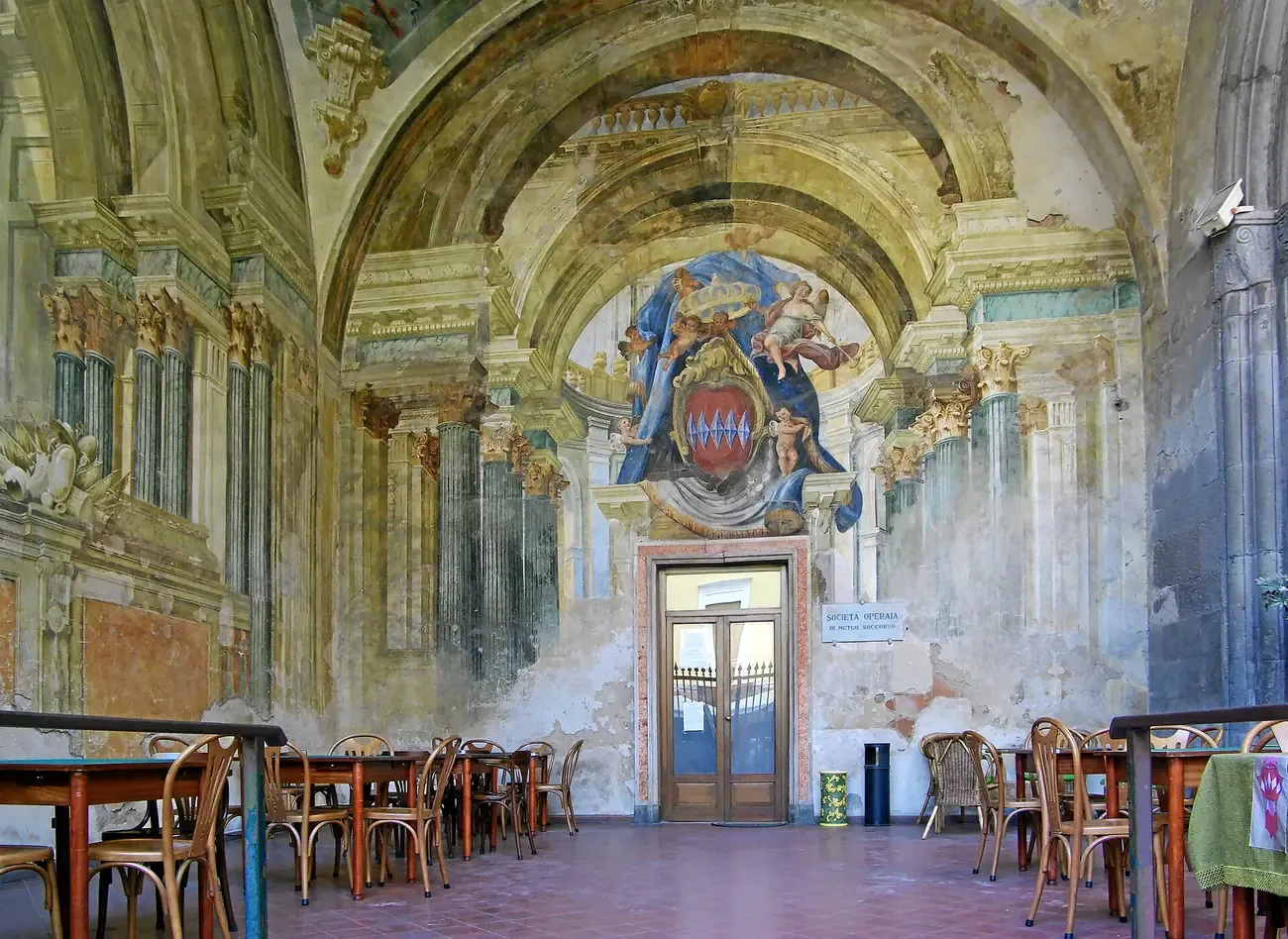
Sedile Dominova
This 14th-century loggia was once where the town's nobility met to discuss civic affairs, its arcades crowned by a majolica dome in yellow and green tiles and its walls covered in 18th-century frescoes. It now serves as a meeting place for a local social club, but the open loggia and dome can be seen from the street at any time.
Photo: "Frescoes inside the Sedile Dominova, Sorrento" by Berthold Werner (CC BY-SA 3.0).
What makes Sorrento worth visiting
Sorrento holds a narrow shelf of volcanic rock high above the Bay of Naples, its cliffs dropping straight down to two small harbours while lemon groves and hotel gardens cover the flatter ground behind the centre. The town has drawn travellers since the days of the Grand Tour, and its historic core still runs on the same tight grid of lanes around Piazza Tasso, easily walked in a day yet with enough of its own churches, gardens and craft museums to reward a longer stay beyond the coastal views that first bring visitors here.
The old town and the coast below
Corso Italia and the surrounding lanes hold the churches, the old loggia of Sedile Dominova and most of the shops and restaurants, all within a few minutes of Piazza Tasso. Two harbours sit directly beneath the cliffs: Marina Piccola, reached by a short descent, handles the ferries and hydrofoils, while Marina Grande, the older fishing hamlet a little further west, keeps its own chapel and family-run seafood kitchens. From the gardens of the Villa Comunale the cliff edge opens onto the whole bay, with Mount Vesuvius standing across the water.
When to go and for how long
April to June and September bring warm, settled weather without the peak crowds and prices of August, when the town is at its busiest and many Italians take their own holidays. Winter stays mild but quiet, with some hotels and restaurants closing for the season. Two to three days suit most visits, covering the historic centre, the marinas and a museum or two, with extra time worth keeping for the coast beyond.
Getting around
The historic centre is entirely walkable, flat along Corso Italia and gently sloped toward the cliff edge, though stairs and a lift lead down to Marina Piccola. The Circumvesuviana railway and the faster seasonal Campania Express connect Sorrento to Pompeii, Herculaneum and Naples, while local buses reach the beaches and villages further along the peninsula. Ferries from Marina Piccola cross to Capri in as little as twenty minutes and also sail to Positano and the rest of the Amalfi Coast. With Pompeii, Capri and Naples all within day trip range, Sorrento works as a base for several of the top tourist attractions in Italy at once.