Tourist attractions in Pompeii
Known for
A Roman city buried whole by the AD 79 eruption of Vesuvius
Must-see landmarks
The Forum, the Amphitheatre and the Villa of the Mysteries
Best time to visit
April to June and September to October, when the site is cooler
Getting around
On foot across uneven stone streets, reached by Circumvesuviana train
The main tourist attractions in Pompeii, ranked
The tourist attractions in Pompeii that matter most, from The Forum to Lupanar and House of the Faun, are ranked here in order. After the 8 top sights come 11 hidden gems, tickets and visitor FAQs.
1. The Forum
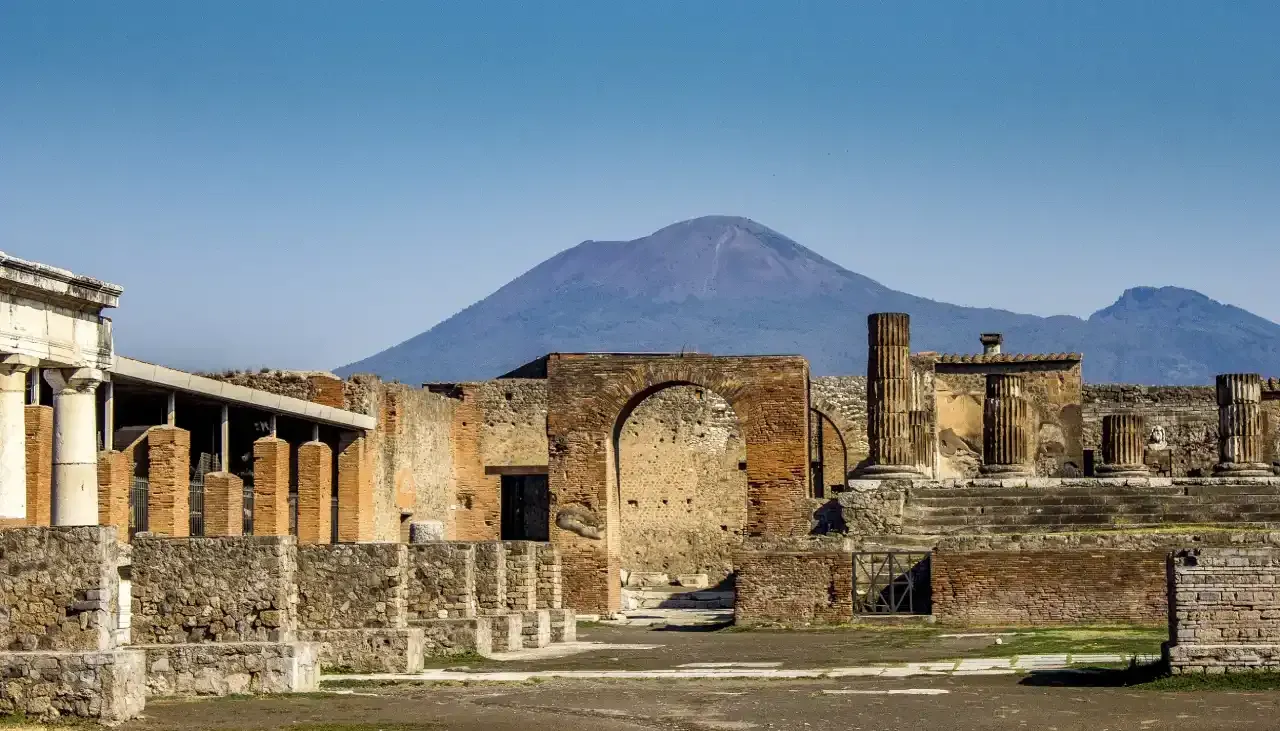
The paved square at the heart of ancient Pompeii gathered the city's public life into one place. Temples, the basilica where legal business was settled and the market halls all opened onto it, wheeled traffic was kept out, and Vesuvius fills the view to the north. Rows of statue bases still mark where civic monuments once stood along the colonnade, and the Temple of Jupiter closes the northern end on the same visiting hours.
Location: Regio VII, a short walk uphill from the Porta Marina entrance
Access: Ticketed. Open 9.00 to 19.00 from 16 March to 14 October, with last entry to the park at 17.30 · Tickets and tours
2. Lupanar
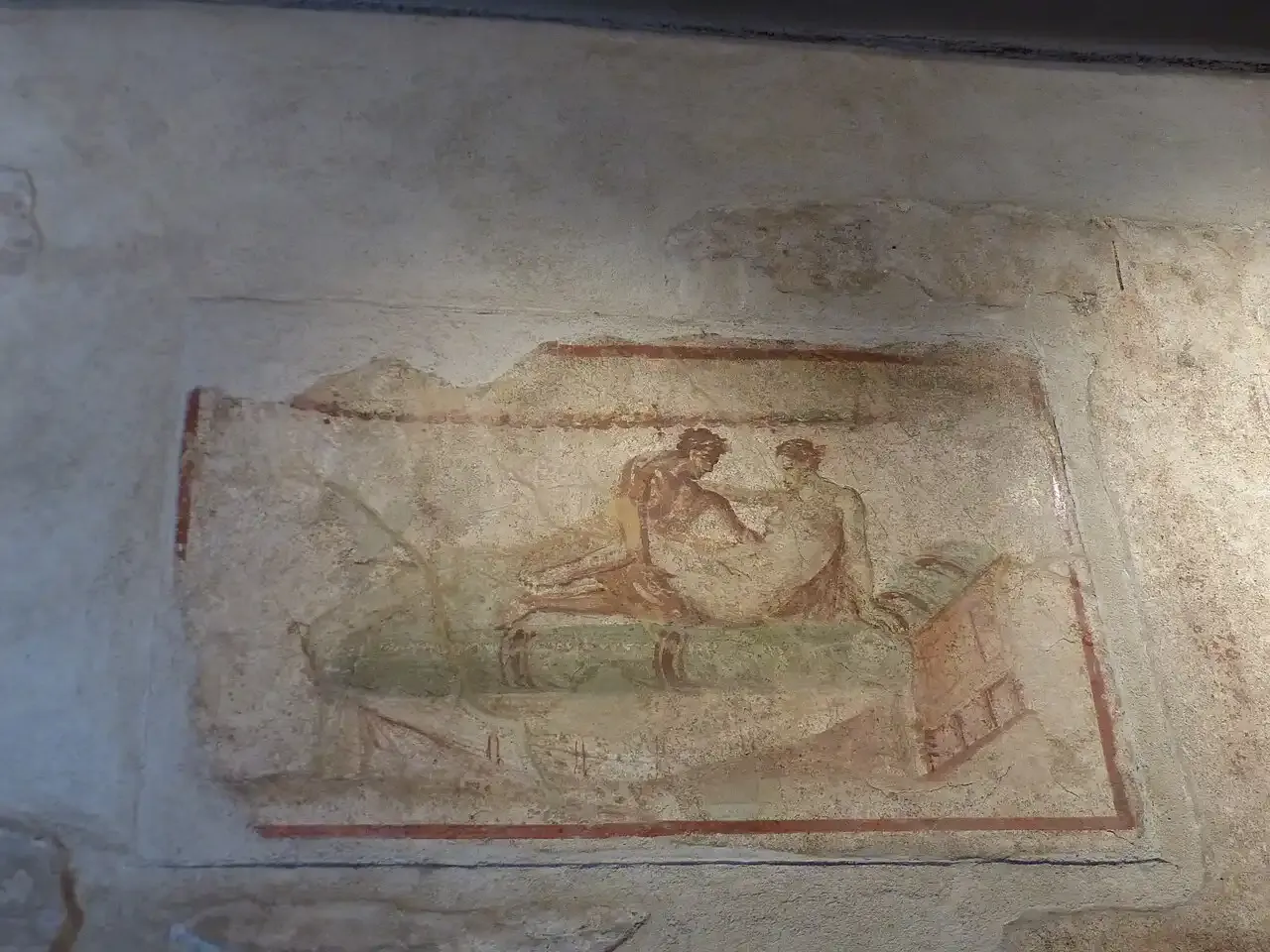
The ancient city's brothel packs narrow masonry beds into small rooms, each doorway topped by a painted panel. Its walls carry graffiti scratched by clients and passers by nearly two thousand years ago, which is part of why it remains one of the most visited buildings on the site. The rooms are small and the queue moves slowly, so the first hour after opening is the calmer moment to walk through. The park also opens it later and closes it earlier than the open air ruins.
Location: Regio VII, on Vicolo del Lupanare, a short walk north east of the Forum
Access: Ticketed. Open 9.15 to 18.20, last entrance 18.00 · Pompeii tickets
3. House of the Faun
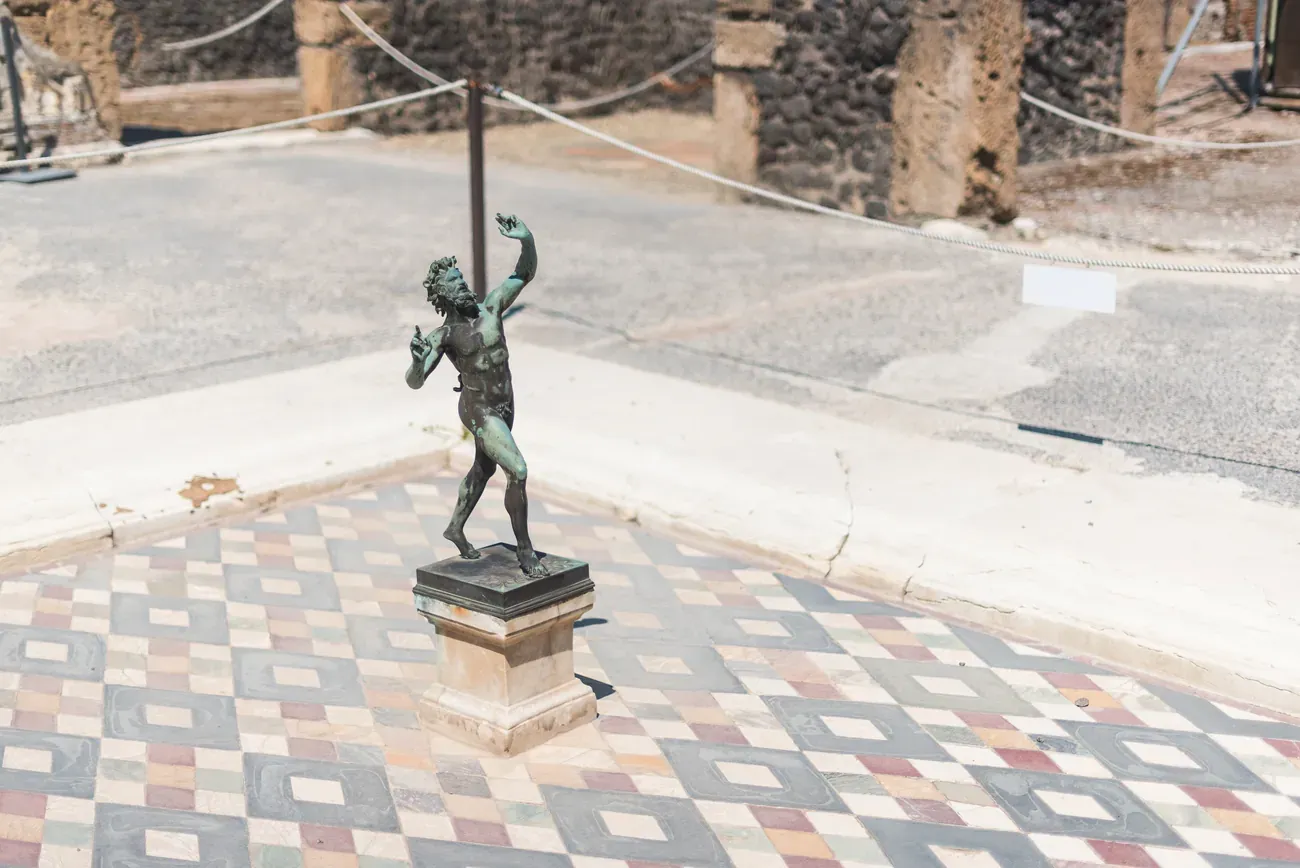
One of the largest private houses in the ancient city, this residence fills an entire block and takes its name from the bronze statue of a dancing faun found at its entrance. The Alexander Mosaic uncovered here, showing Alexander the Great in battle against Darius III, is now kept in Naples, and a copy marks the spot where it was lifted. Built in the Samnite period and framed by a peristyle, it gives a clear idea of how much ground a wealthy Pompeian family could command.
Location: Regio VI, around the corner from the Forum Baths
Access: Ticketed. Open 9.00 to 19.00 · Park tickets
4. Villa of the Mysteries (Villa dei Misteri)
A suburban villa just outside the city walls, built around the fresco cycle that covers three walls of one room and gives the house its name. Painted around 80 to 70 BC, it shows Dionysus and Ariadne among maenads, fauns and winged figures in what is usually read as an initiation scene. Because it lies beyond the walls, the visit runs from the Herculaneum Gate side of the site, which closes its own access earlier in the day.
Location: Extra moenia, on Via Villa dei Misteri north west of the walls
Access: Ticketed, and not covered by the basic ancient city ticket. Open 9.15 to 18.30, last entrance 18.15 · Tickets for the excavations
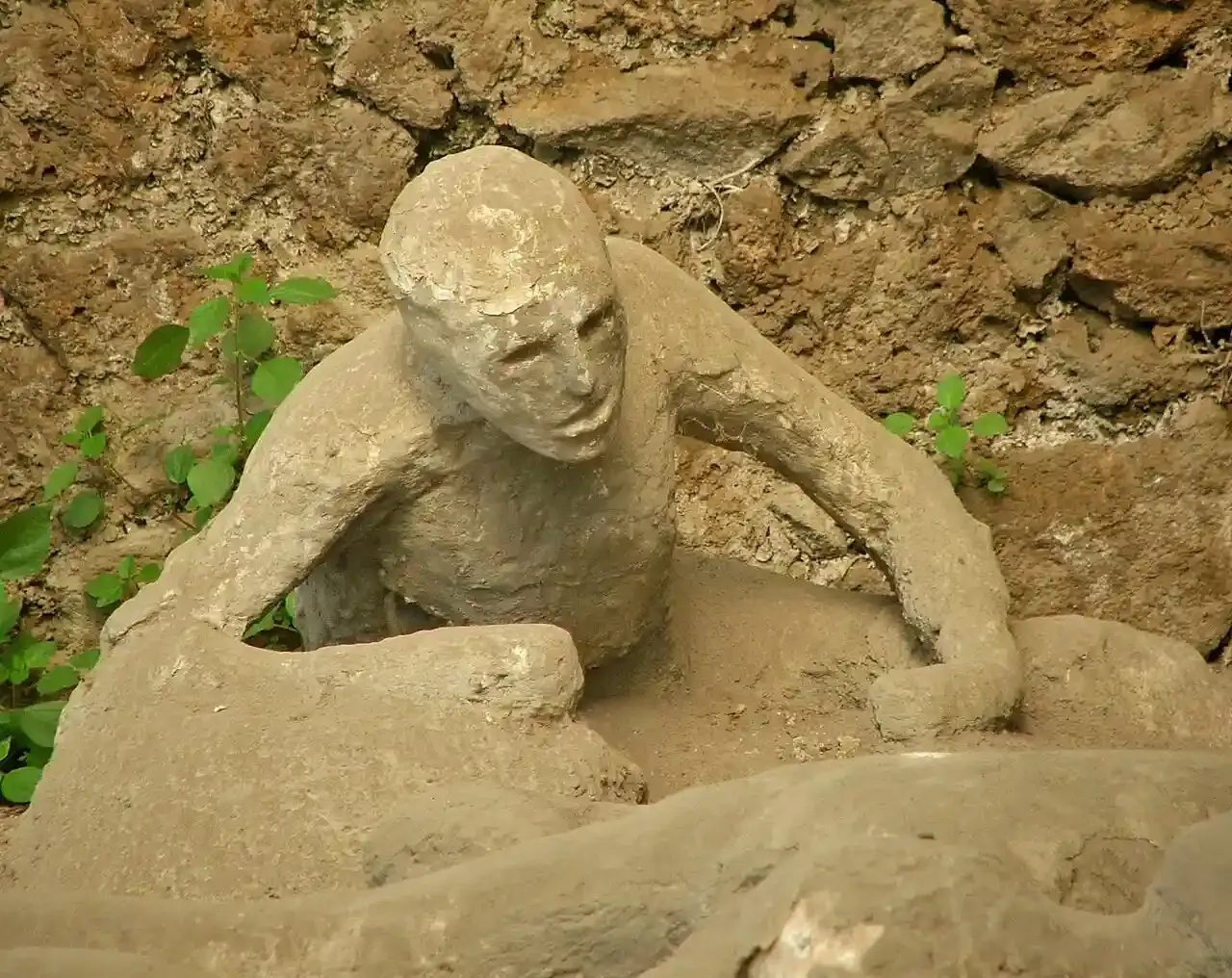
5. Garden of the Fugitives
Plaster casts of thirteen people who died trying to flee lie where they fell, in the corner of what was a working vineyard when Mount Vesuvius erupted in AD 79. Children are among them. The vines and trees around the casts have been replanted from the study of the fossilised roots left in the ground, so the setting reads much as it did on the day. It is among the most affecting corners of the whole site.
Location: Regio I, in the south east of the excavated city
Access: Ticketed. Open 9.00 to 19.00 · Entry tickets
6. Amphitheatre of Pompeii
Built in 70 BC, not long after Pompeii became a Roman colony, this is the oldest known amphitheatre in the Roman world and held up to 20,000 spectators. A riot between Pompeian and Nucerian supporters turned bloody in AD 59 and the Senate shut the arena for a decade. The outer wall keeps the double flights of external stairs that carried the crowd to the upper tiers, and the Large Palaestra faces it across the road.
Location: Regio II, at the eastern end of the site by the Piazza Anfiteatro entrance
Access: Ticketed. Since 14 June it can only be seen from the southern entrance. Open 9.00 to 19.00 · Tickets for Pompeii
7. Grand Theatre and Quadriporticus
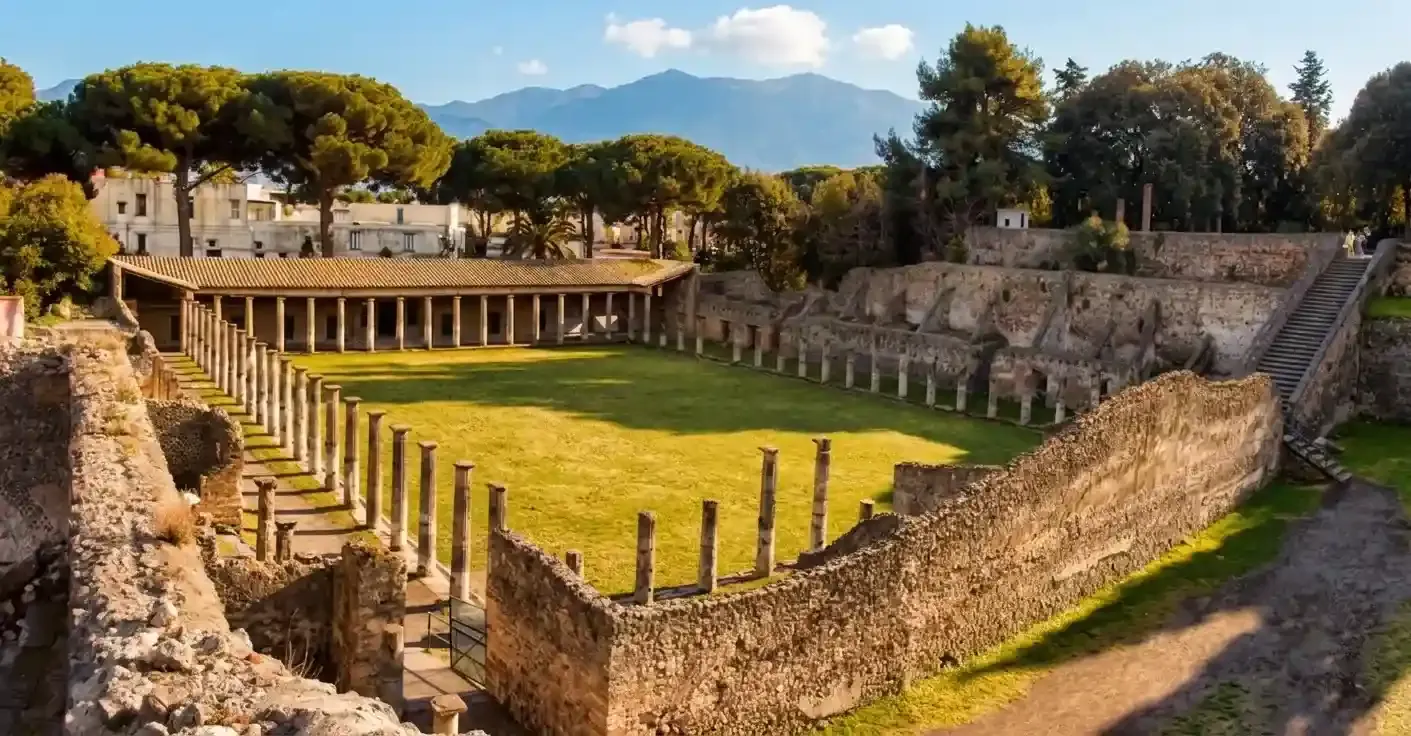
Cut into a natural slope so the ground would carry the sound, the Grand Theatre staged tragedies and comedies, and its curved stone seating still climbs towards the stage in tiers. Behind it the colonnaded Quadriporticus began as a covered walk where audiences waited out the interval, then was turned over to gladiators as barracks after the earthquake of AD 62. The Small Theatre, or Odeion, stands alongside and the park currently lists it as visible from outside only.
Location: Regio VIII, in the theatre quarter above the Triangular Forum
Access: Ticketed. Open 9.00 to 19.00 · Tickets for the archaeological park
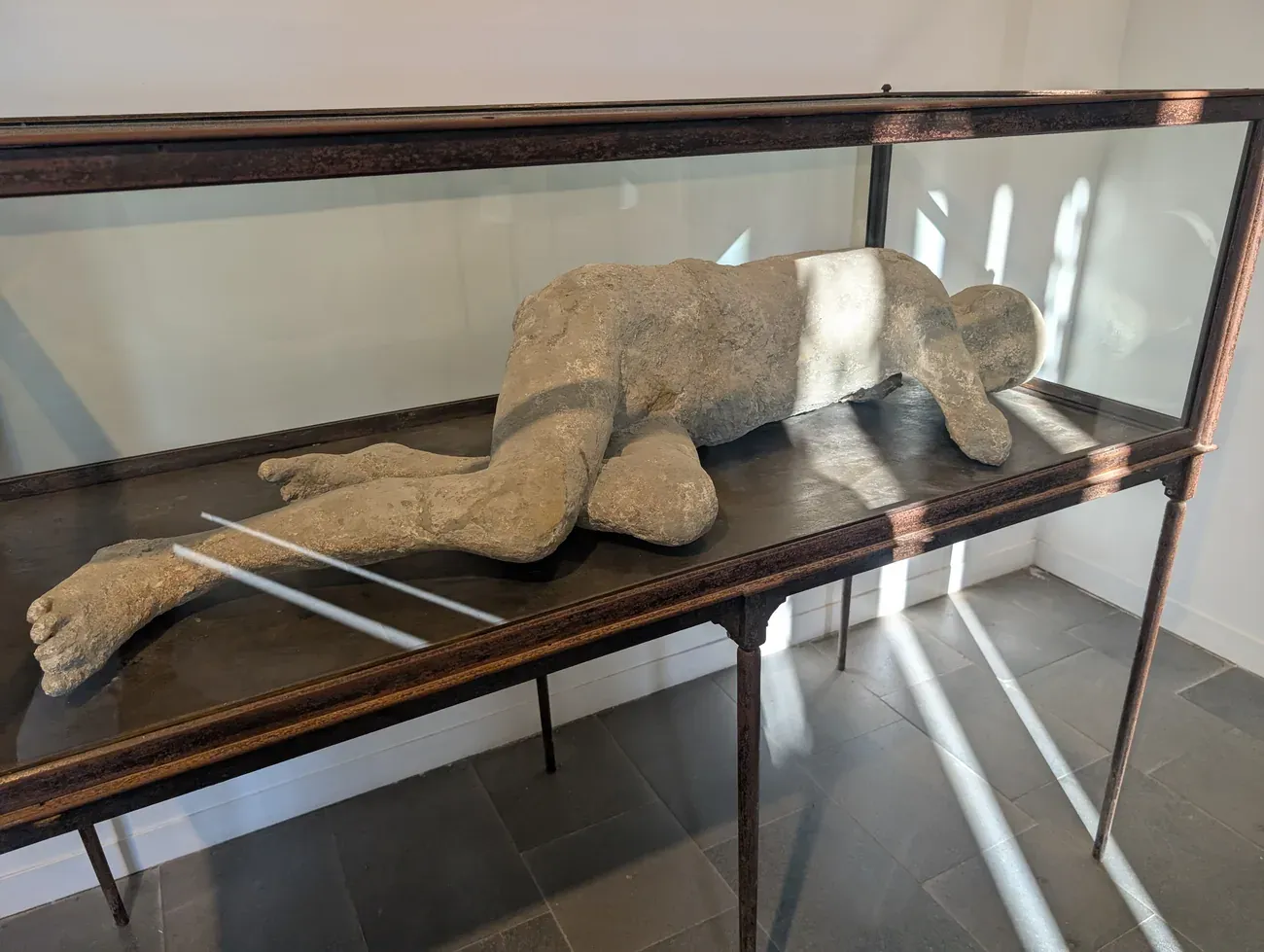
8. Antiquarium of Pompeii
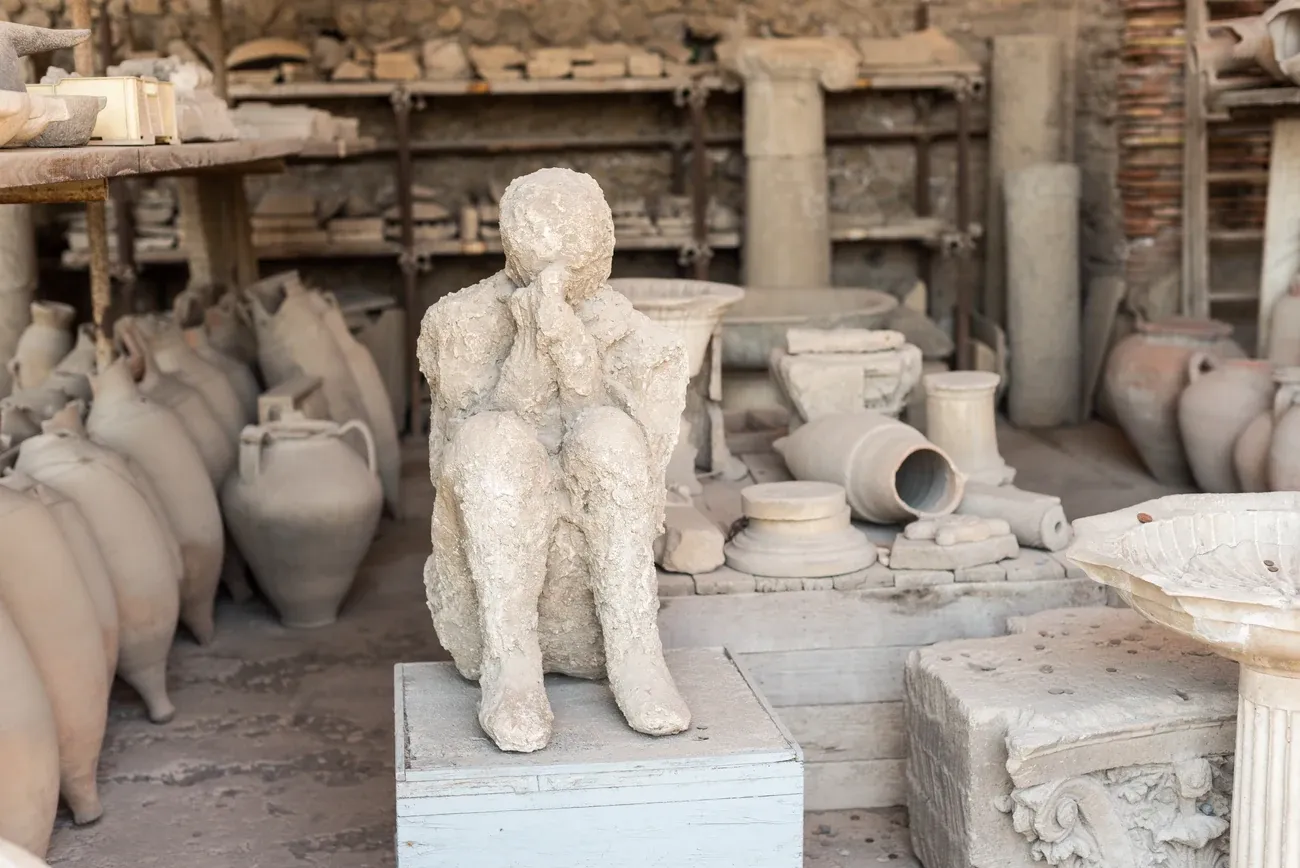
The on site museum sits just past the Porta Marina entrance and works as an introduction to everything beyond it. Everyday objects lifted from the ruins are shown alongside plaster casts of victims, made by pouring liquid plaster into the voids their bodies left in the hardened ash. It is the Antiquarium inside the ancient city, not the separate Antiquarium at Boscoreale, and the ordinary park ticket covers it.
Location: Regio VIII, immediately inside the Porta Marina entrance
Access: Ticketed. Open 9.15 to 18.20, last entrance 18.00 · Pompeii entry tickets
Photo: "Cast of a Man with Belt, Pompeii Antiquarium" by MumblerJamie (CC BY-SA 2.0).
Tickets for Pompeii tourist attractions
Roman public buildings in Pompeii
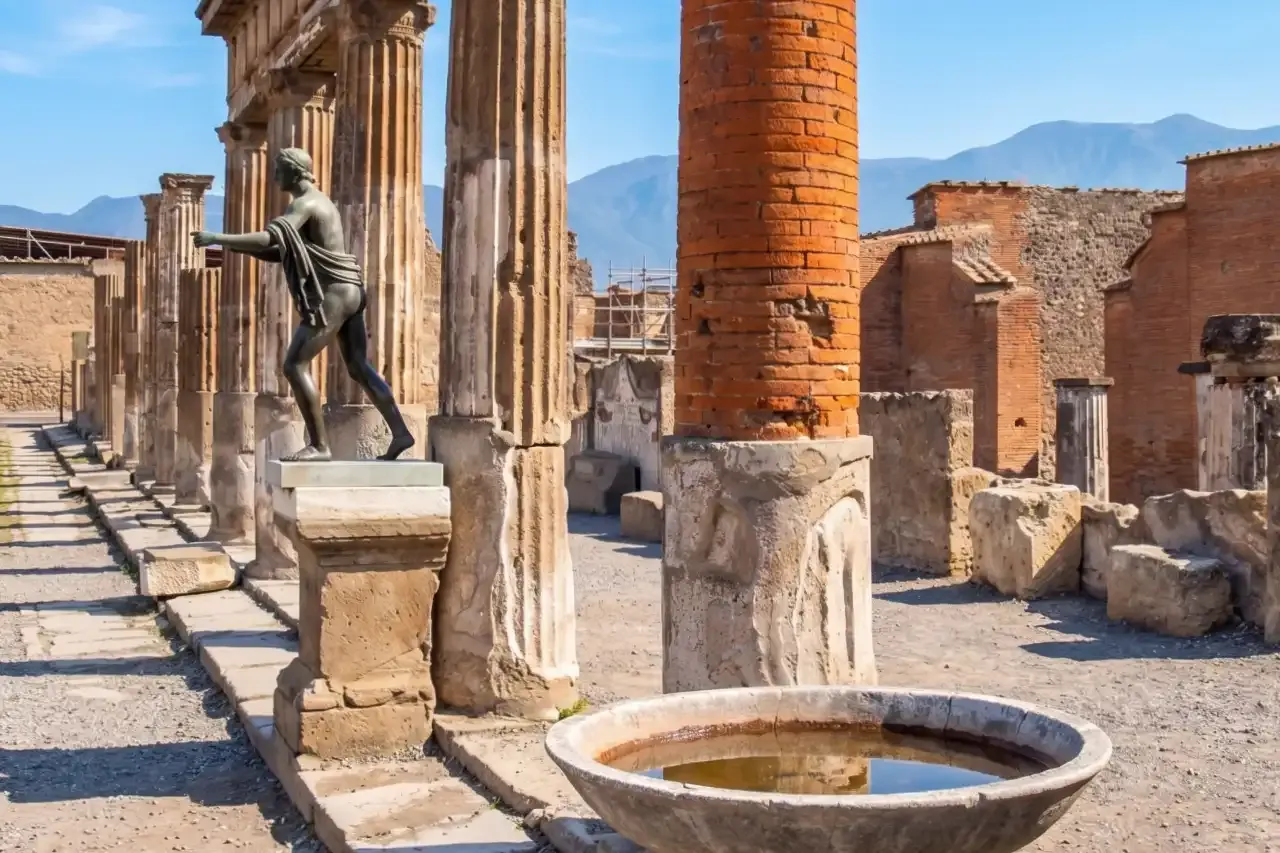
Temple of Apollo
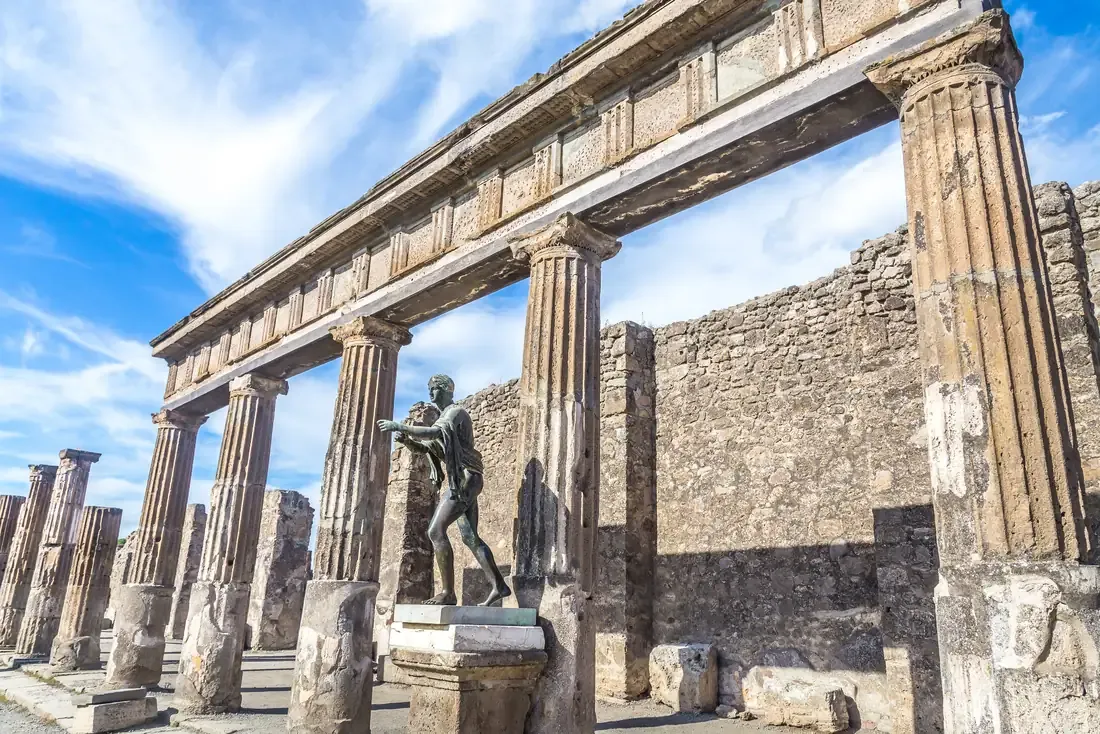
A colonnaded courtyard beside the Forum where a bronze archer still stands among the columns. The park lists it as the Sanctuary of Apollo.
Location: Regio VII, on the west side of the Forum. Open 9.00 to 19.00.
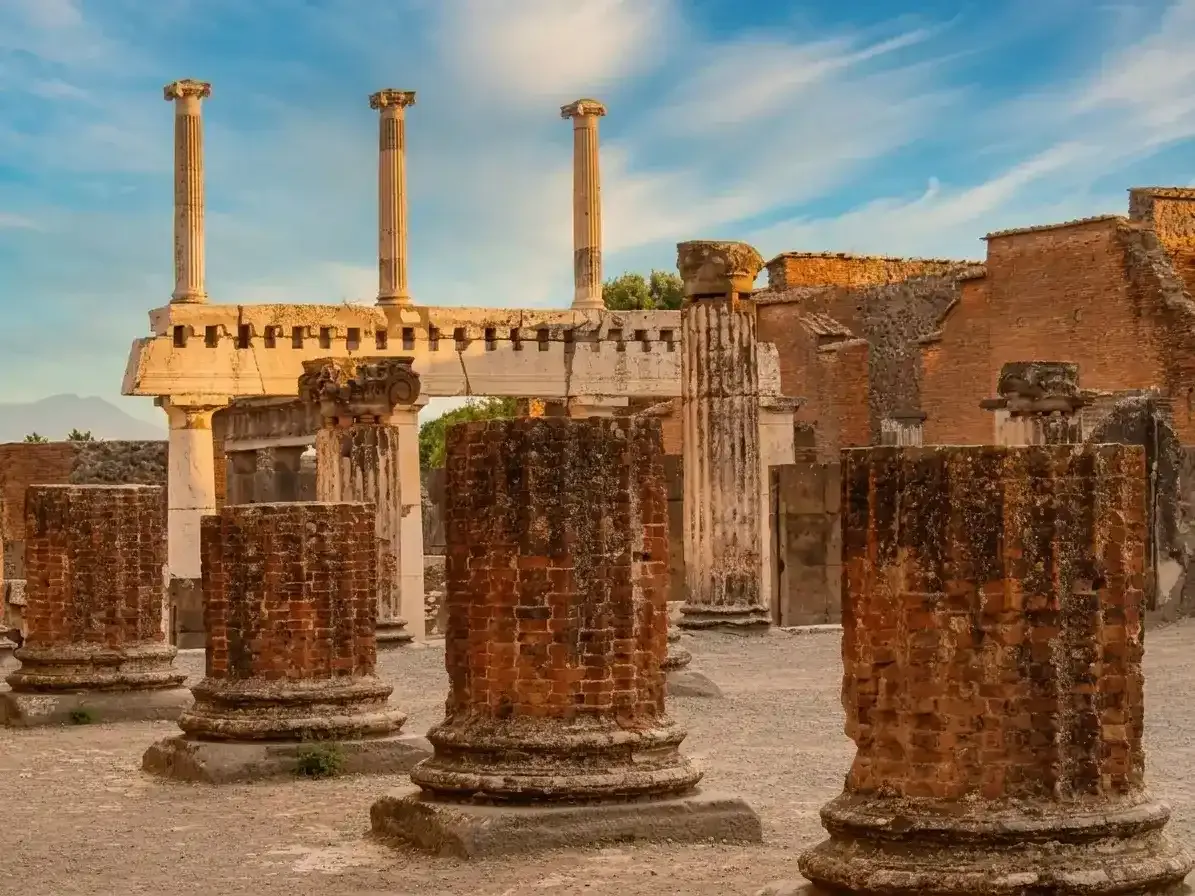
Basilica
The city's law courts and business hall, its long nave still marked out by the tall brick drums of a collapsed colonnade.
Location: Regio VIII, at the south west corner of the Forum. Open 9.00 to 19.00.
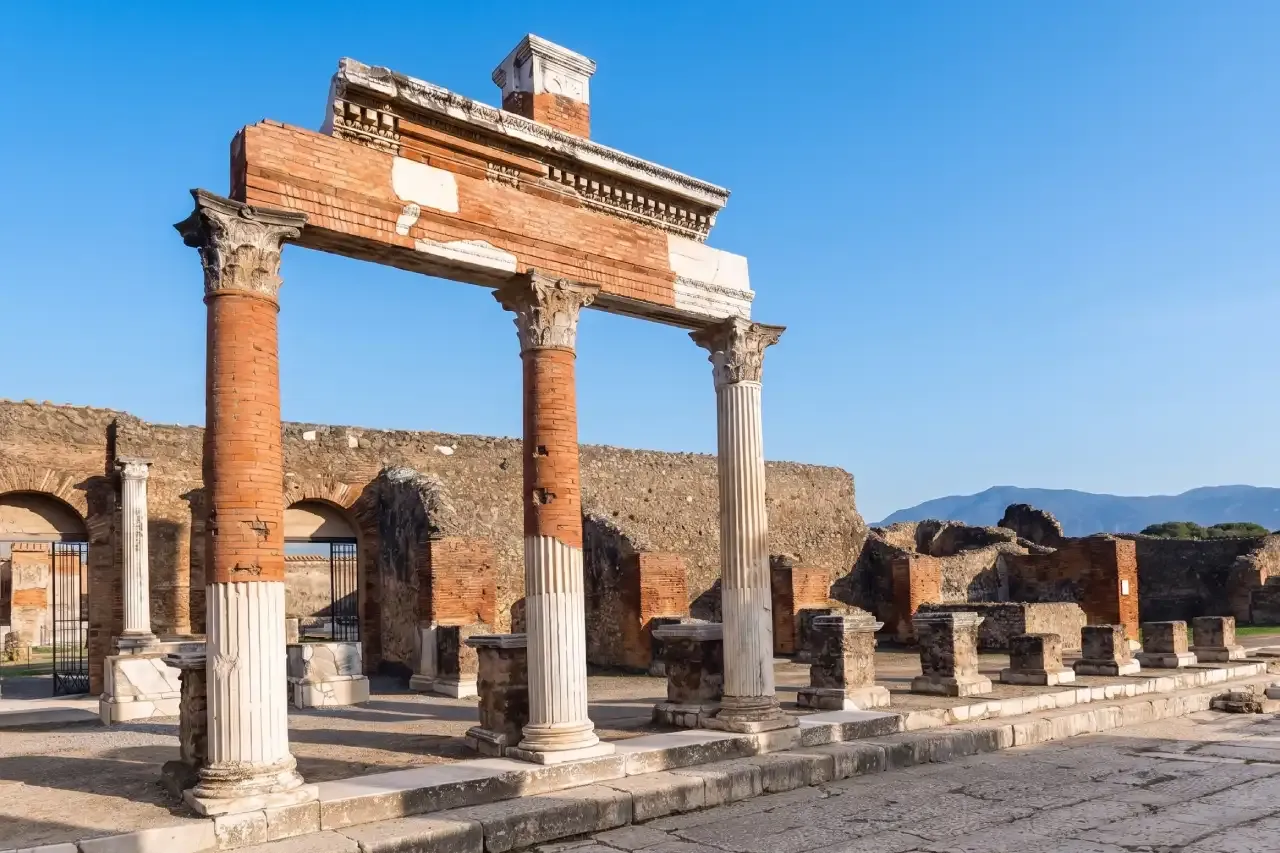
Macellum
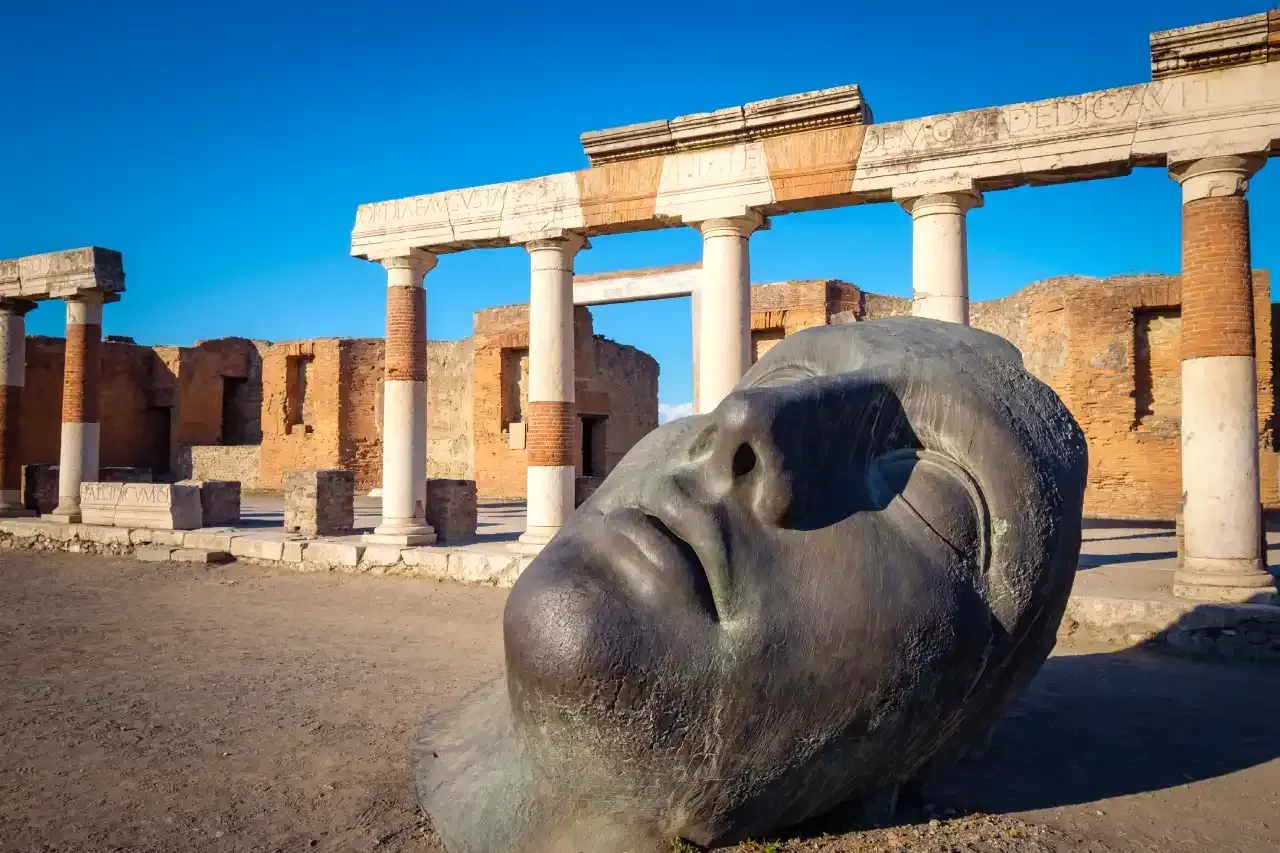
The covered provisions market where fish and meat were sold. Its columns and entablature still front the north east corner of the square.
Location: Regio VII, on the Forum. Open 9.00 to 19.00.
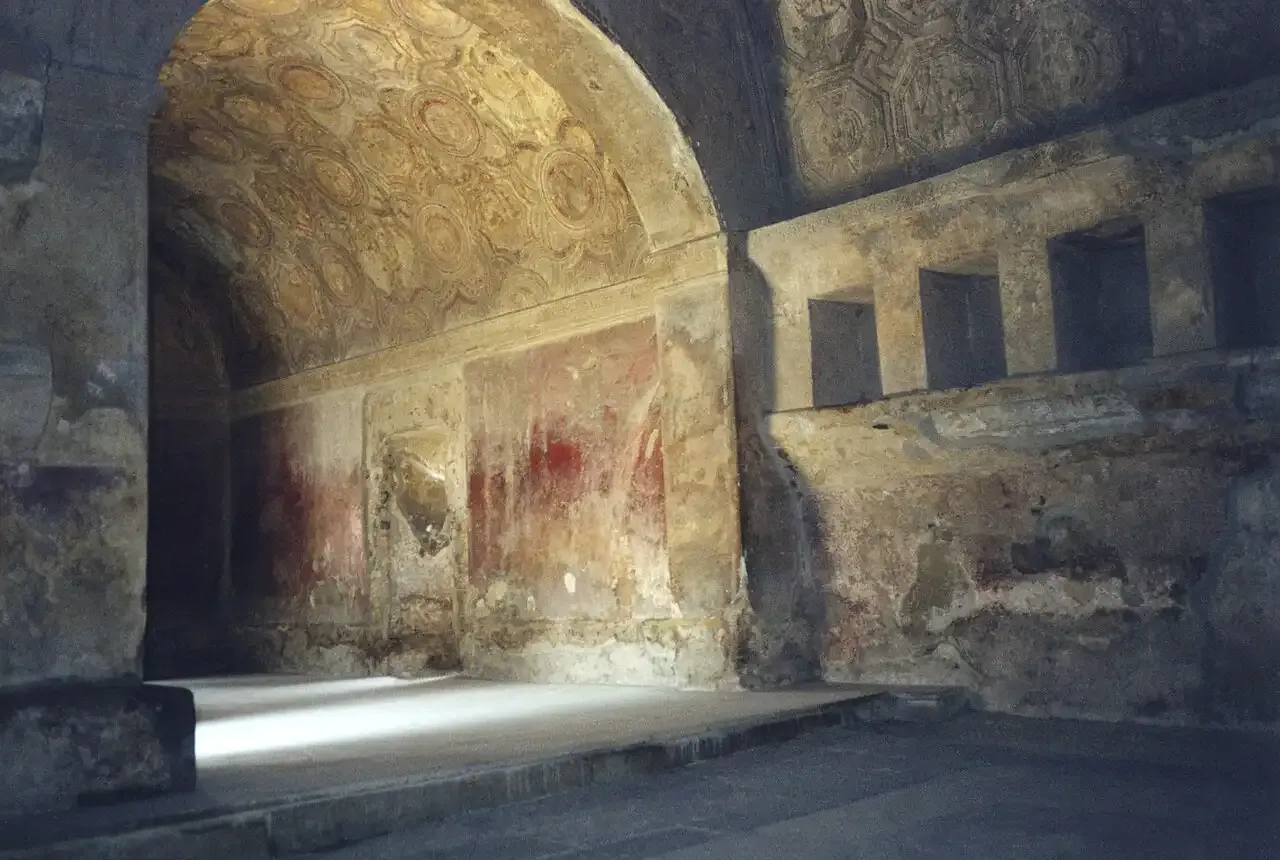
Stabian Baths
A bath complex with stuccoed vaults and moulded ceilings above the changing rooms. The park currently opens the male section to visitors.
Location: Regio VII, where Via dell'Abbondanza meets Via Stabiana. Open 9.15 to 18.20, last entrance 18.00.
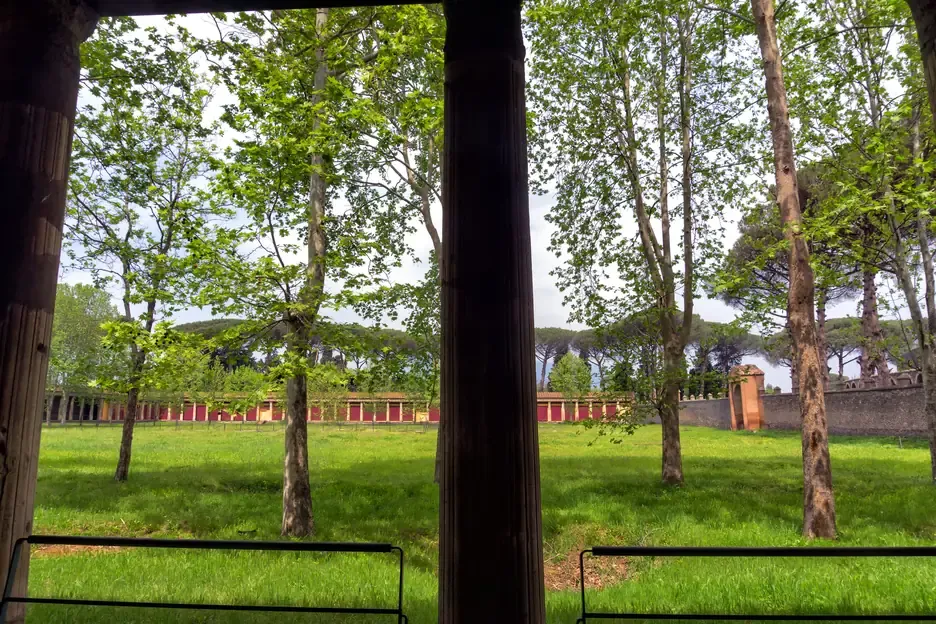
Large Palaestra
A colonnaded exercise ground facing the Amphitheatre, now holding the park's permanent exhibition of plaster casts and organic finds.
Location: Regio II, opposite the Amphitheatre. Open 9.15 to 18.20, last entrance 18.00.
Frescoed houses to visit in Pompeii
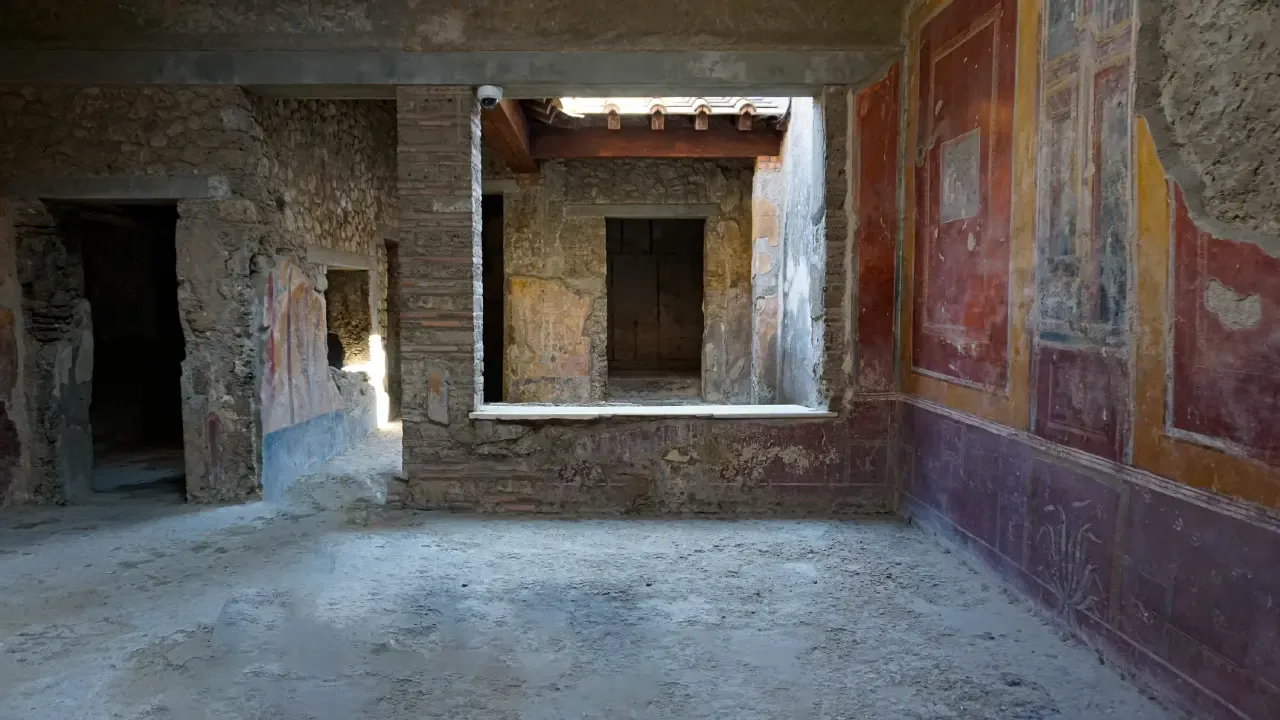
House of the Vettii
Reopened in January 2023 after two decades of restoration, with mythological frescoes on deep red and black walls around the peristyle.
Location: Regio VI, in the northern quarter towards the Vesuvian Gate. Open 9.15 to 18.20, last entrance 18.00.
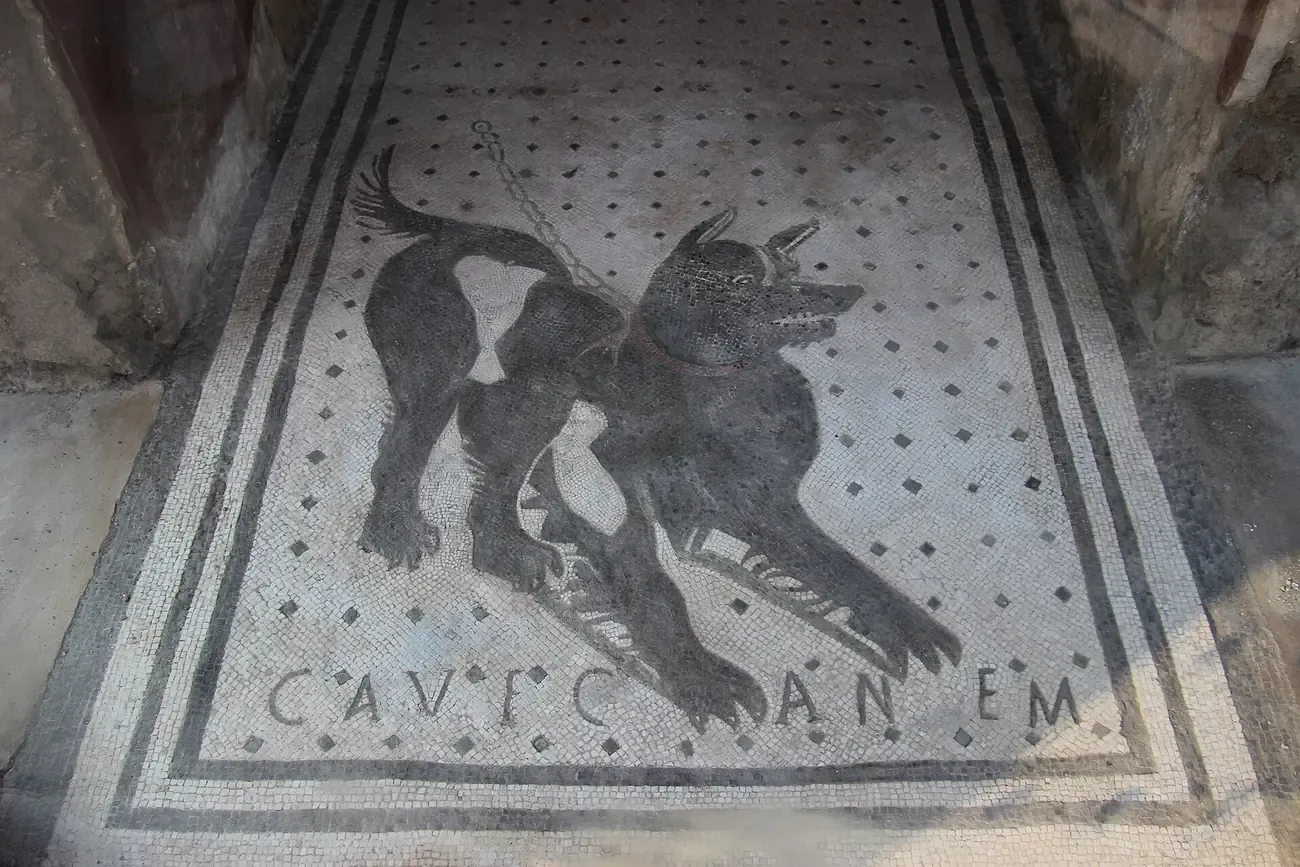
House of the Tragic Poet
Its threshold mosaic shows a chained dog captioned Cave Canem, Latin for beware of the dog. The house reopened in August 2026.
Location: Regio VI, across the street from the Forum Baths. Open 9.15 to 18.20, last entrance 18.00.
Photo: "Cave Canem mosaic, House of the Tragic Poet" by Miguel Hermoso Cuesta (CC BY-SA 4.0).
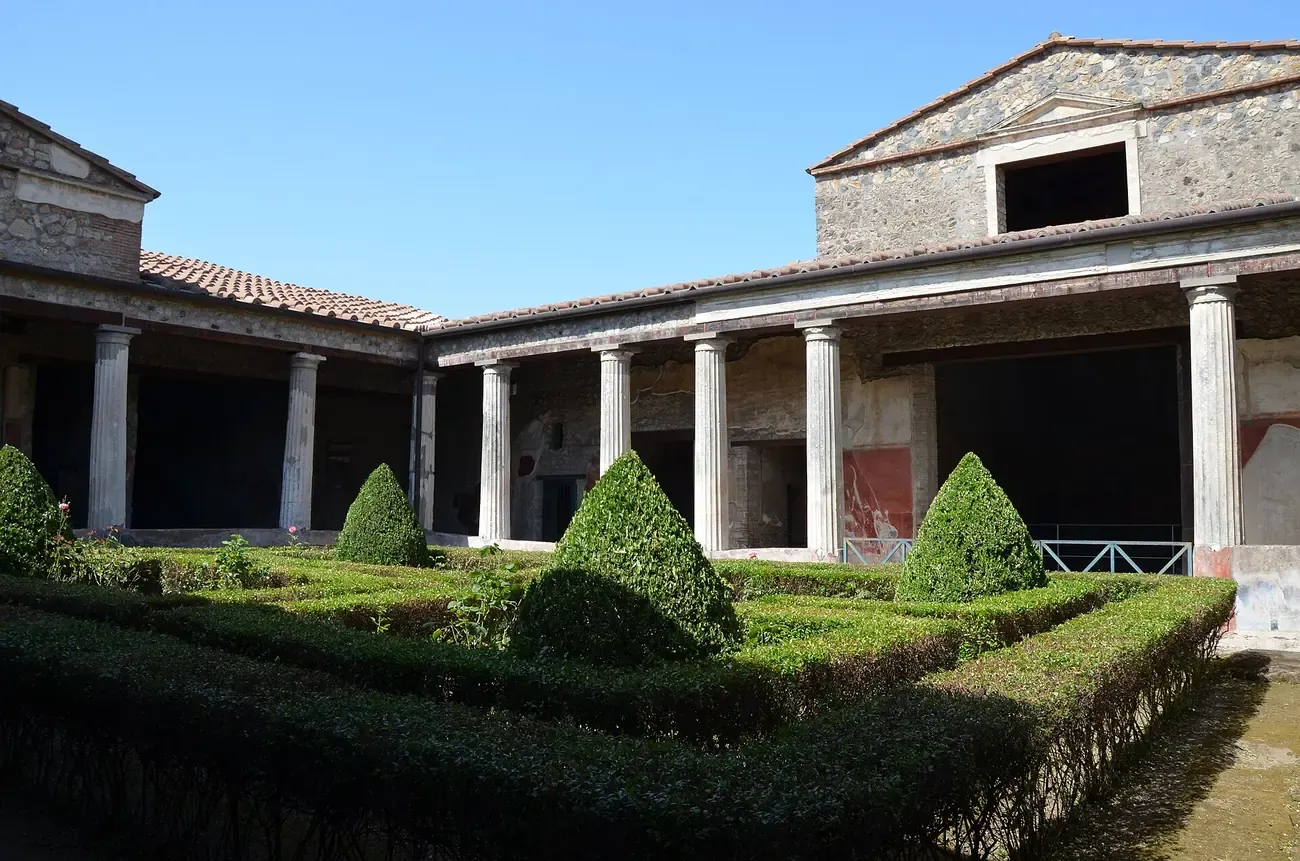
House of the Menander
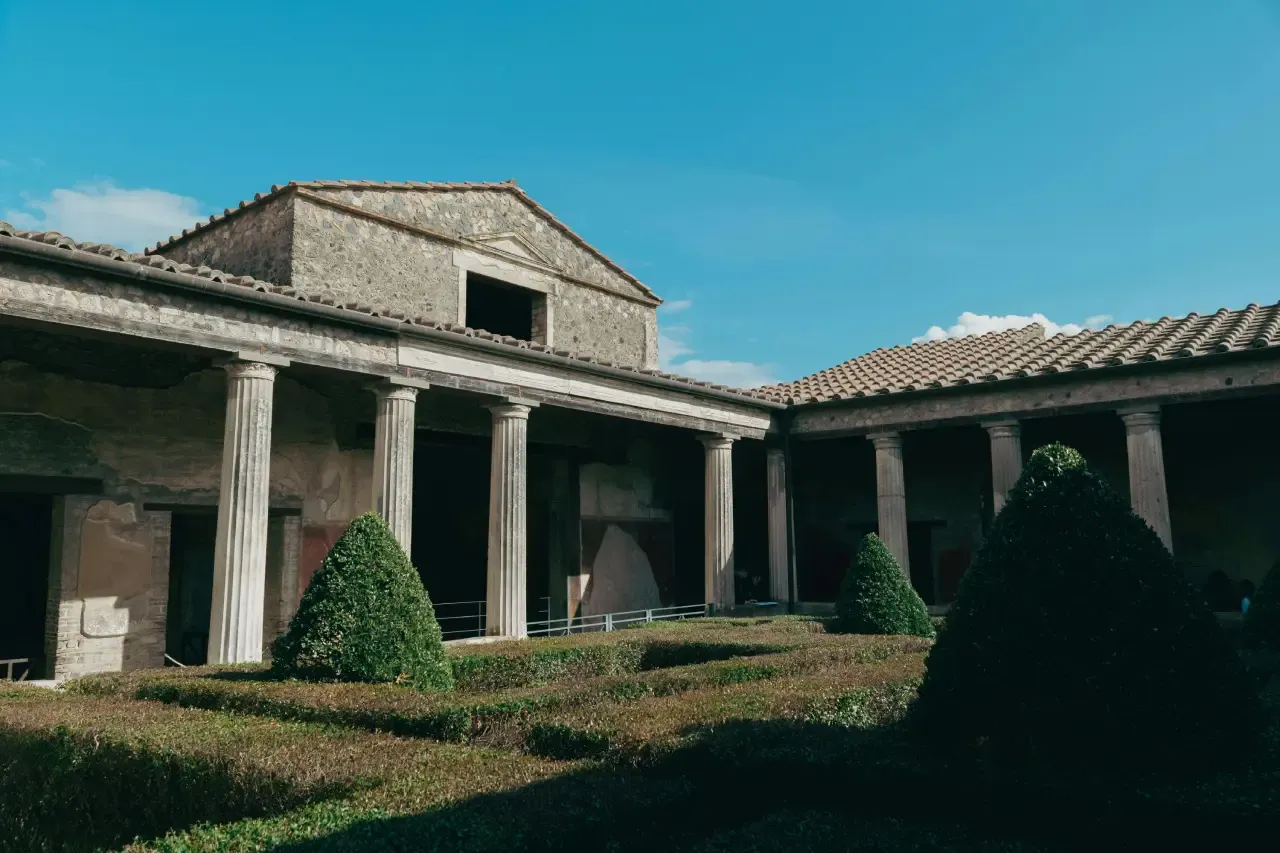
A grand house taking up most of its block, with a peristyle and its own decorated bath suite. It reopened in August 2026.
Location: Regio I, Insula 10, in the eastern half of the excavated city. Open 9.15 to 18.20, last entrance 18.00.
Photo: "Peristyle of the House of the Menander, Pompeii" by Carole Raddato (CC BY-SA 2.0).
Unusual corners of ancient Pompeii
Plaster Citizens of Pompeii
Casts taken by pouring plaster into the voids the bodies of the dead left in the hardened ash, keeping their last poses.
Location: Large Palaestra in Regio II, with others left in place at the Garden of the Fugitives.
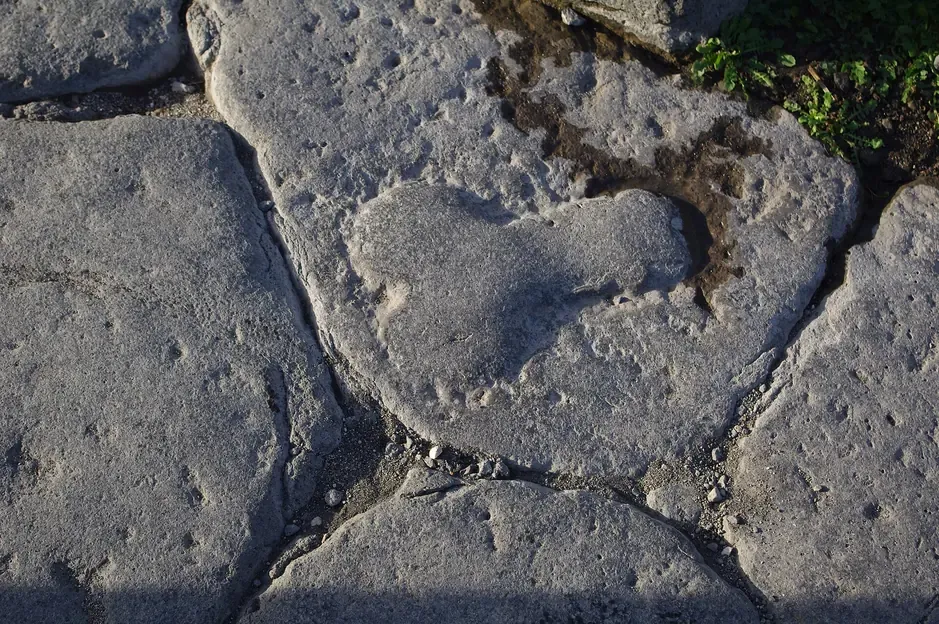
Stone Phalluses of Pompeii
Carved phallic reliefs turn up on walls, paving stones and above doorways across the city, usually read as good luck symbols.
Location: Scattered through the excavated streets, with examples around Vicolo di Eumachia.
Photo: "Phallus relief on a paving stone, Pompeii" by nikola_pu (CC BY-SA 3.0).
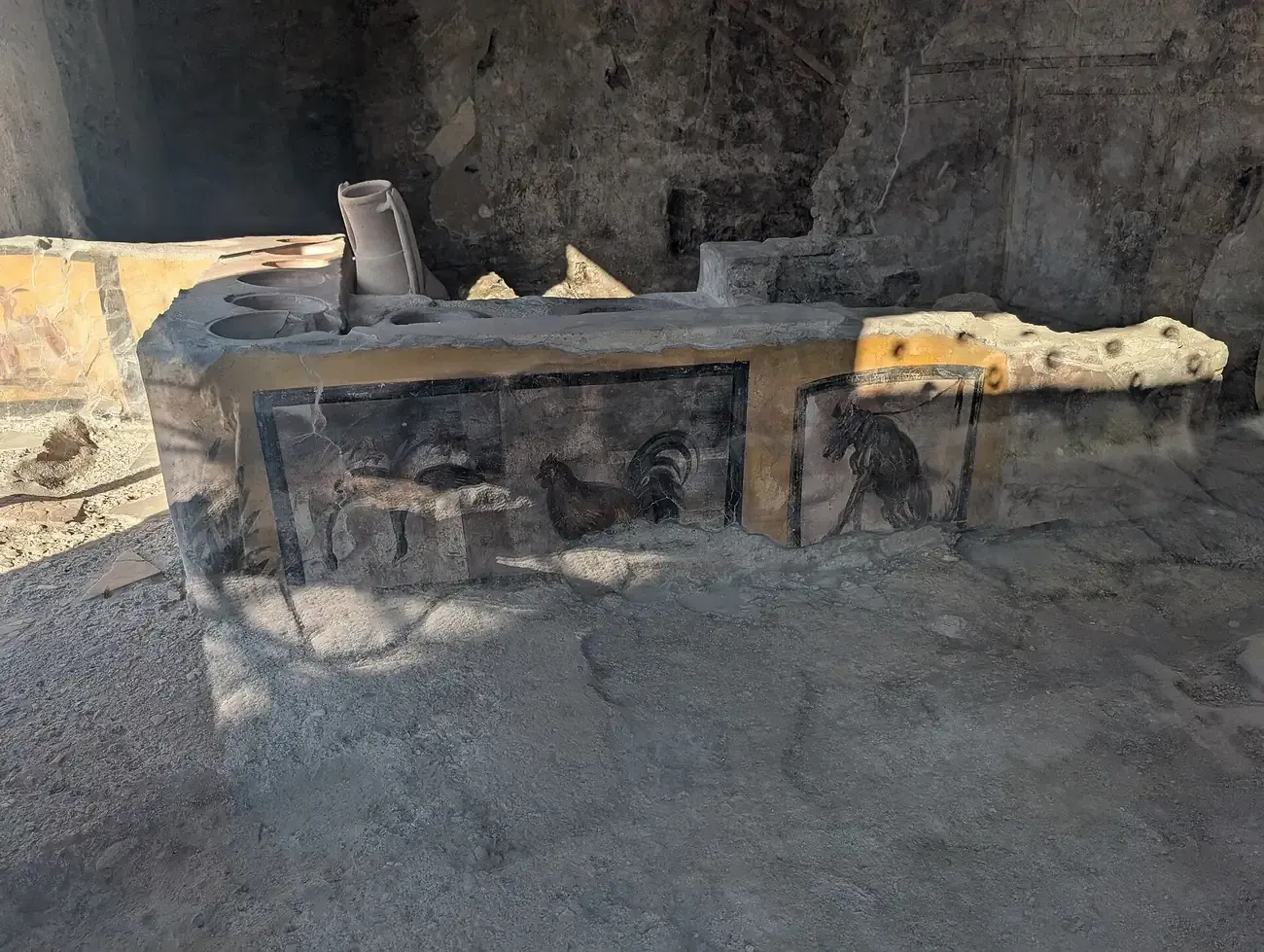
Pompeii Thermopolium
A street food counter with deep jars set into its masonry, fully unearthed in 2020 and painted with a dog on a leash.
Location: Regio V, in the northern sector of the park. Currently visible from outside only.
Photo: "Thermopolium of Regio V, Pompeii" by Jamie Heath (CC BY-SA 2.0).
Why visit Pompeii
Pompeii began as an Oscan and Samnite settlement before Rome made it a colony in the 1st century BC, and by the time Vesuvius erupted it was a thriving town of workshops, villas and public baths. The eruption is traditionally dated to 24 August AD 79, though sealed autumn produce and the heavier clothing worn by many victims have led some historians toward an eruption in October instead. Buried under several metres of ash and pumice, the city was largely forgotten until systematic excavations began in 1748, and new areas are still being uncovered today. For many travellers the ruins are reason enough to visit Italy's tourist attractions, and the site anchors most first itineraries through the south.
The modern town of Pompei
A short walk from the ruins, the living town of Pompei grew up around the Sanctuary of the Blessed Virgin of the Rosary, a basilica founded by Bartolo Longo whose cornerstone was laid in 1876 and which was consecrated in 1891. Its bell tower is visible from parts of the archaeological park, and its streets hold the hotels, restaurants and train stations most visitors pass through on the way to and from the excavations.
When to go and how long to stay
April to June and September to October bring milder weather than the summer, when the shadeless streets turn brutally hot by midday. Half a day covers the main route through the Forum, the theatres and the Amphitheatre at a steady pace, while a full day allows time for the Villa of the Mysteries and the smaller houses as well. Arriving soon after opening helps beat both the heat and the tour groups.
Getting around
Pompeii is a walking site only, its old Roman streets uneven and largely unshaded, so comfortable shoes, water and sun protection matter more here than at most ruins. The Circumvesuviana railway connects the site with Naples and Sorrento, stopping at Pompei Scavi-Villa dei Misteri right by the Porta Marina entrance, while Trenitalia's regional trains from Napoli Centrale call at the separate Pompei station near the Piazza Anfiteatro entrance. Herculaneum, Pompeii's smaller sister site buried by the same eruption, sits on the same Circumvesuviana line toward Naples.