
Pisa tourist attractions
Known for
The Leaning Tower and the marble monuments of Piazza dei Miracoli
Must-see landmarks
Leaning Tower, Pisa Cathedral, the Baptistery and Piazza dei Cavalieri
Best time to visit
April to June and September to October
World Heritage
Piazza del Duomo, UNESCO listed since 1987
1. Leaning Tower of Pisa
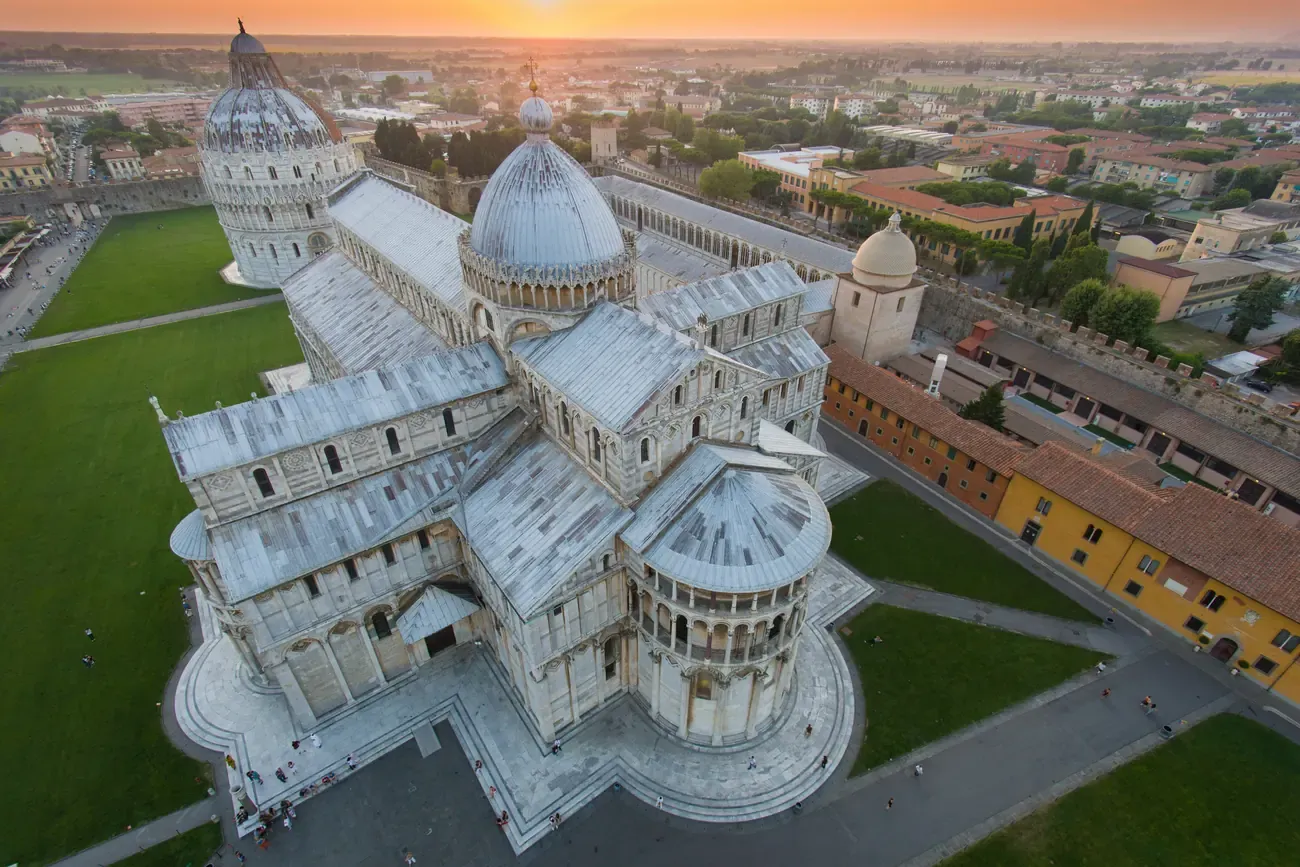
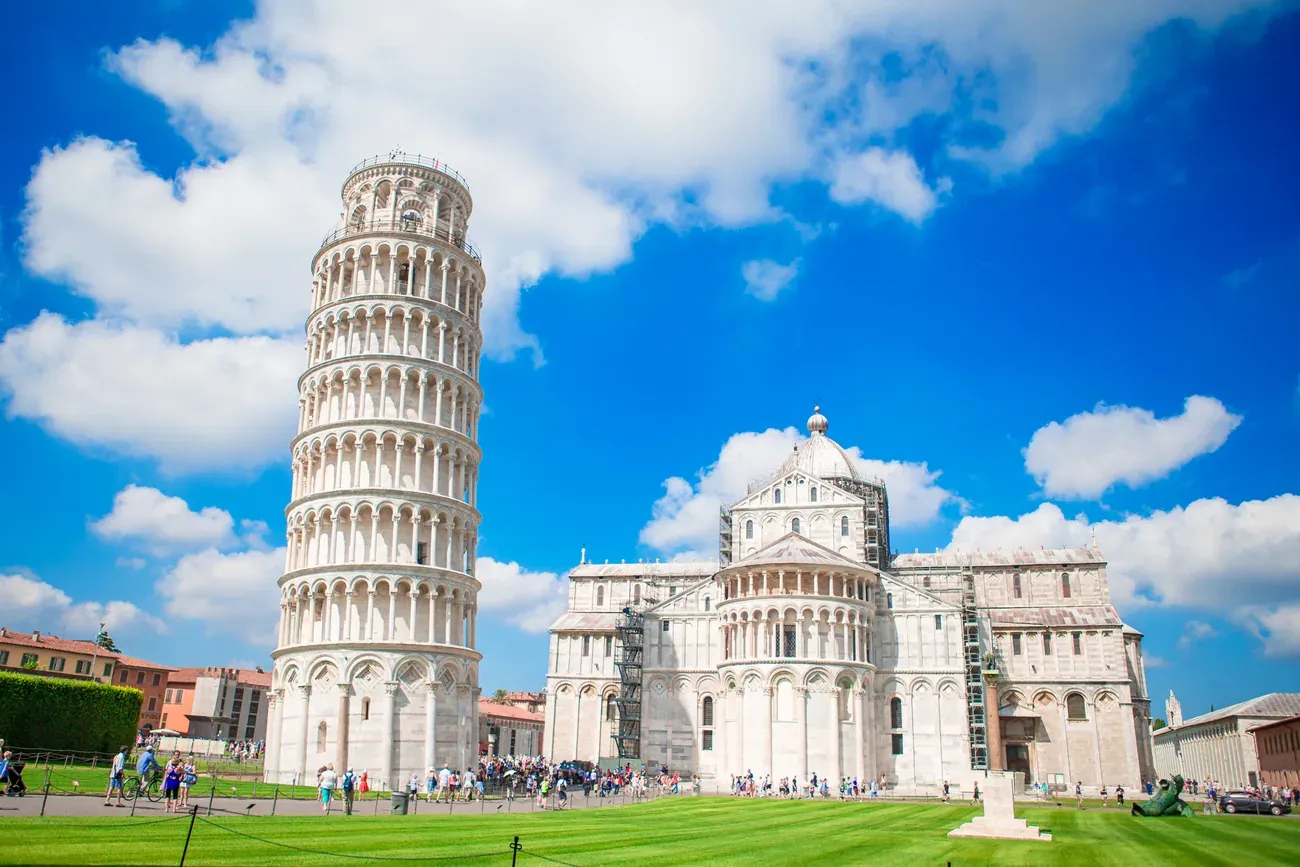
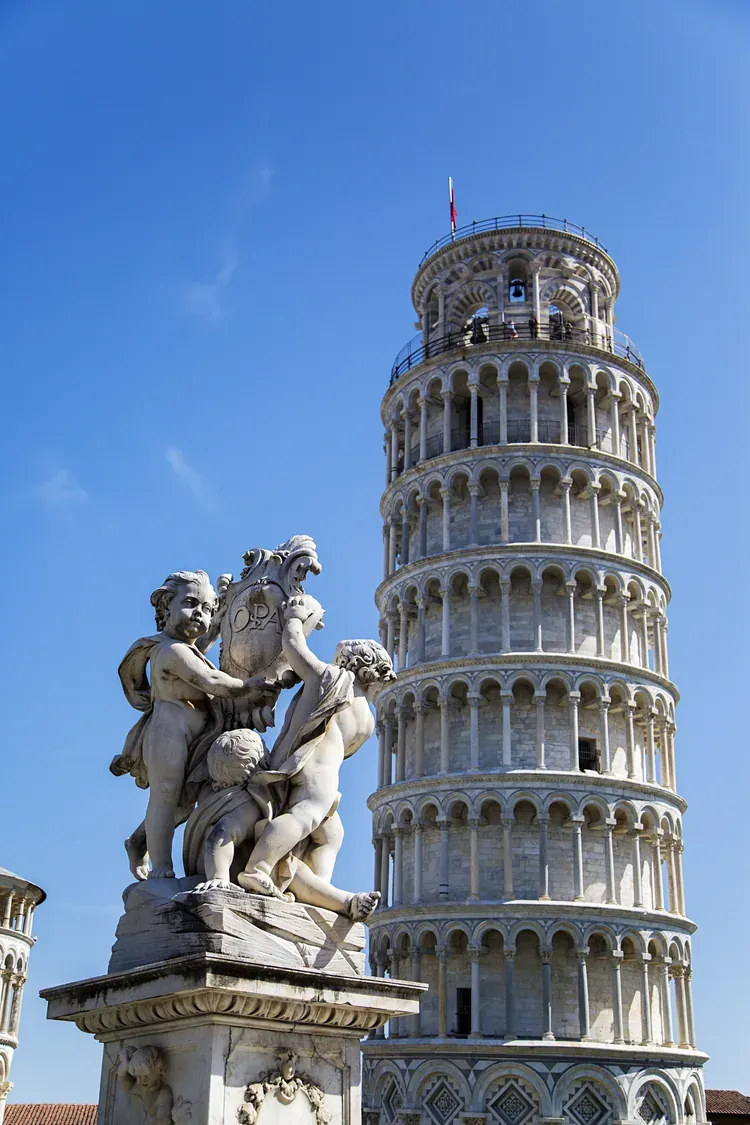
The bell tower of Pisa Cathedral began to lean while it was still being built in the 12th century, because the soft ground beneath it could not carry its weight. It closed to the public in 1990 and reopened in 2001 after stabilisation work. A climb of 273 steps leads to the top, 58.36 metres up, with views over the lawn of the Piazza dei Miracoli and the roofs of the city. The tower, Cathedral, Baptistery and Camposanto together form a UNESCO World Heritage Site.
Location: Piazza del Duomo, Pisa
Access: Timed entry; bags go to the cloakroom before the climb, and children who will not turn 8 by the end of the year cannot go up
2. Pisa Cathedral
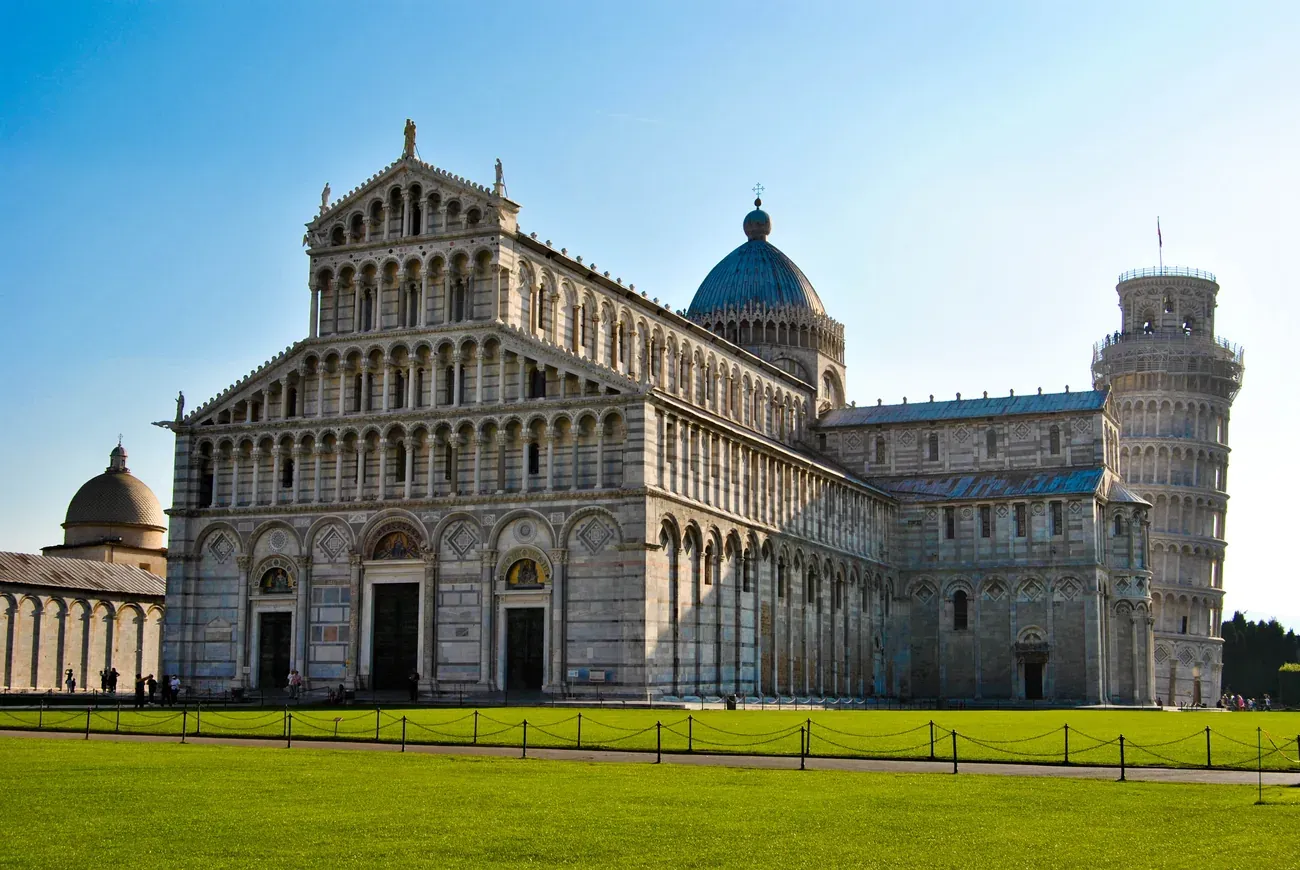
Pisa Cathedral was founded in 1064 and consecrated in 1118, its Romanesque plan laid out by the architect Buscheto and later extended, facade included, by Rainaldo. Inside, Giovanni Pisano's carved pulpit (1302 to 1310) and the apse mosaic, where Cimabue painted the figure of Saint John the Evangelist, are the highlights. The bronze lamp in the nave is known as Galileo's lamp, after the legend that its swing set him thinking about the pendulum.
Location: Piazza del Duomo, Pisa
Access: Free pass with any Piazza monuments ticket, or a fixed-time pass from the ticket offices on site; hours can vary on Sundays and religious holidays
3. Baptistery of San Giovanni
Founded on 15 August 1152 under the architect Diotisalvi, the Baptistery of San Giovanni is the largest in Italy, with a circumference of more than 107 metres. Nicola Pisano carved its pulpit in 1260, a work that quickly became a model for others. The double dome gives the interior remarkable acoustics, and every thirty minutes an attendant sings a few notes to let the echo fill the building. A spiral staircase climbs to the upper gallery, which looks down on the font and the geometric floor.
Location: Piazza del Duomo, Pisa
Access: Ticketed, one of the Piazza dei Miracoli monuments
4. Camposanto Monumentale
The Camposanto was founded in 1277 to gather the graves scattered around the Cathedral, and tradition holds that it rose over soil brought from Golgotha during the Crusades. Its long marble cloister was covered with fresco cycles by Buffalmacco, Francesco Traini and others, badly damaged when a fire broke out during a bombing raid in 1944. After decades of restoration the Triumph of Death returned to its original wall in 2018, near the Roman sarcophagi that line the galleries.
Location: North side of Piazza del Duomo, Pisa
Access: Ticketed, one of the Piazza dei Miracoli monuments
5. Museo dell'Opera del Duomo
The Museo dell'Opera del Duomo gathers the original sculpture and treasures removed over the centuries from the Cathedral, the Baptistery and the Camposanto. Giovanni Pisano leads the collection with his Virgin and Child groups, joined by the Pisa Griffin, a large bronze of Islamic origin that once crowned the Cathedral apse, and the textiles and insignia of Emperor Henry VII. Rearranged in 2019, the visit ends on a loggia with a direct view of the Leaning Tower.
Location: Piazza del Duomo, Pisa
Access: Ticketed, one of the Piazza dei Miracoli monuments
6. Piazza dei Cavalieri
Piazza dei Cavalieri was the political heart of medieval Pisa until Cosimo I de' Medici had Giorgio Vasari rebuild it for the Knights of Saint Stephen in the 16th century. Vasari's Palazzo della Carovana, its facade covered in sgraffito figures, now houses the Scuola Normale Superiore, and the church of Santo Stefano dei Cavalieri beside it keeps banners captured in naval battles. On the north side, the Palazzo dell'Orologio takes in the tower where Count Ugolino starved to death, a story told by Dante.
Location: Piazza dei Cavalieri, Pisa
Access: Free square; most buildings belong to the university and stay closed to visitors
7. National Museum of San Matteo
The National Museum of San Matteo fills a restored medieval convent on the Arno with art from the churches of Pisa and its province, from the early Middle Ages to the 16th century. Its rooms hold sculpture by Nicola Pisano and Donatello and paintings by Giunta Pisano, Simone Martini, Masaccio and Beato Angelico, along with illuminated manuscripts, wooden sculpture and a large collection of medieval ceramics. It shares a combined ticket with the Museo Nazionale di Palazzo Reale.
Location: Piazza San Matteo in Soarta, Pisa
Access: Ticketed; closed on Mondays
8. Palazzo Blu
Palazzo Blu takes its name from the blue colour uncovered on its walls during restoration, a shade linked to the Russian owners who bought the palace in the 18th century. It shows the Fondazione Pisa collections, a history of Pisan art from the 14th century onward with works by Benozzo Gozzoli and Orazio and Artemisia Gentileschi, alongside the stately apartments of the first floor and a programme of major temporary exhibitions.
Location: Lungarno Gambacorti 9, Pisa
Access: Ticketed collections; open every day
9. Santa Maria della Spina
Santa Maria della Spina is a small Gothic church on the Arno, its facade crowded with pinnacles, tabernacles and statues. It began as the oratory of Santa Maria di Pontenovo and took its present name from a thorn of Christ's crown kept here from 1333, a relic now in the church of Santa Chiara. Repeated flooding led the city to dismantle it in 1871 and rebuild it on higher ground, work that lasted until 1884. A full restoration of the interior and exterior began in spring 2026.
Location: Lungarno Gambacorti, Pisa
Access: Facade visible from the Lungarno at any time; interior opening days at the tourist information points in Pisa
10. Orto Botanico
The Orto Botanico was founded in 1543 by the naturalist Luca Ghini as a garden of medicinal plants, and the city's tourist board calls it the oldest university botanical garden in the world. It moved twice before settling in 1591 on its current site, a few minutes' walk from the Piazza dei Miracoli. Greenhouses, a great magnolia growing here since 1787 and the Botanical Museum in the Palazzo delle Conchiglie, its facade decorated in grotesque style in 1752, fill a quiet green block.
Location: Via Luca Ghini 13, with a second entrance at Via Roma 56, Pisa
11. Mura di Pisa
Pisa's medieval walls were begun in 1155 and still enclose much of the historic centre. After a long restoration, the walkway along the top opened to the public in 2018: about 3 kilometres of path, 11 metres above the ground, running past rooftops, gardens and church towers. The stretch beside the Piazza del Duomo looks straight onto the Leaning Tower, and several access points along the circuit make it easy to walk just one section.
Location: Access points include Torre Santa Maria (Piazza del Duomo), Bastione del Parlascio and Piazza delle Gondole
Access: Ticketed; closes in rain or strong wind
12. Museo delle Navi Antiche
In December 1998, building works near Pisa San Rossore station uncovered an ancient river harbour holding around thirty Roman-era boats, preserved for centuries in the silt of past floods. The Museo delle Navi Antiche opened in 2019 inside the Arsenali Medicei, the Medici shipyards on the Arno, and shows seven of the vessels with their cargoes. The best preserved is the Alkedo, a 1st-century pleasure boat rowed by twelve oarsmen, its name painted in Greek letters on a bench.
Location: Arsenali Medicei, Lungarno Ranieri Simonelli 16, Pisa
Access: Ticketed; closed on Mondays
What to do in Pisa for free
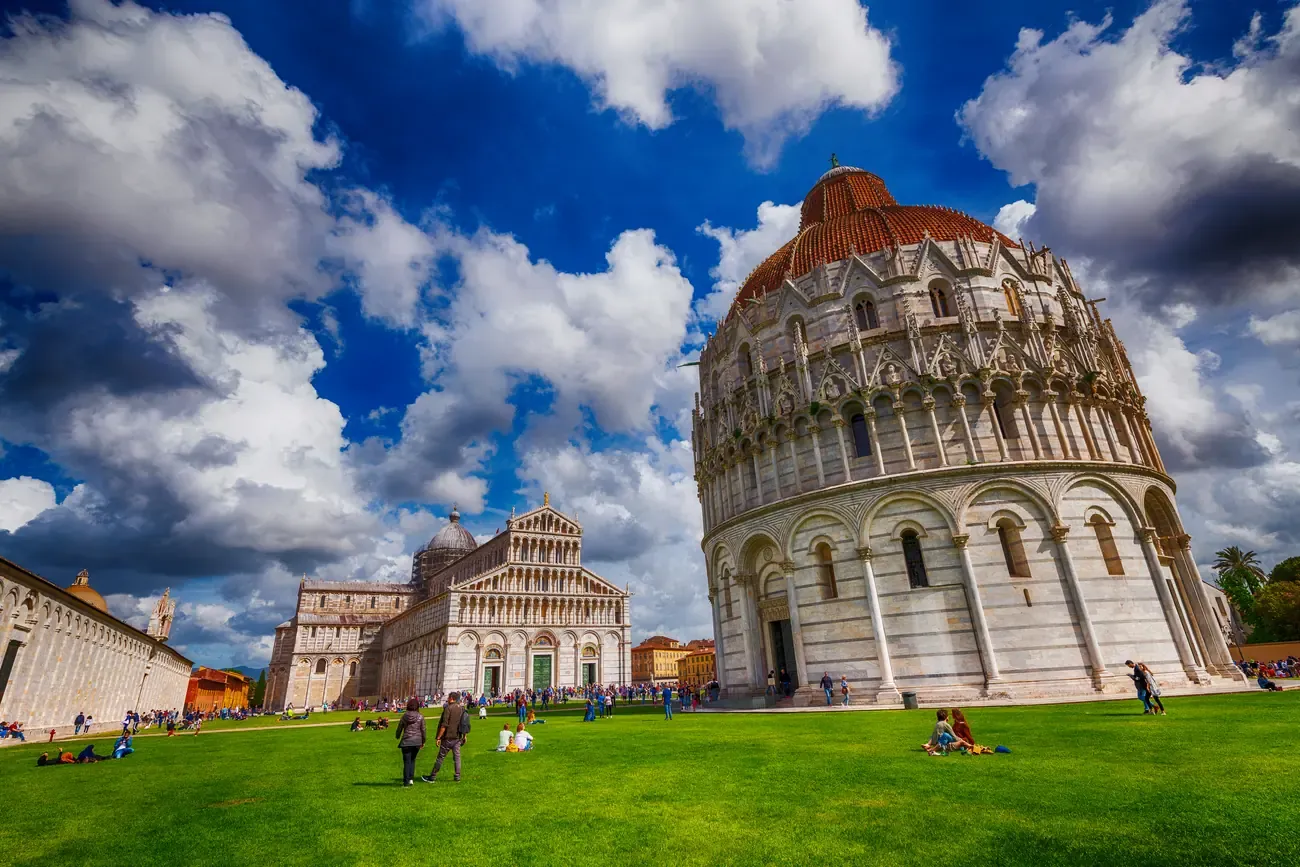
Piazza dei Miracoli
The lawn beneath the Leaning Tower, Cathedral and Baptistery stays open to everyone, free to walk and photograph from any angle. Climbing the tower, entering the Cathedral or Baptistery, and visiting the Camposanto and museum all need a paid ticket.
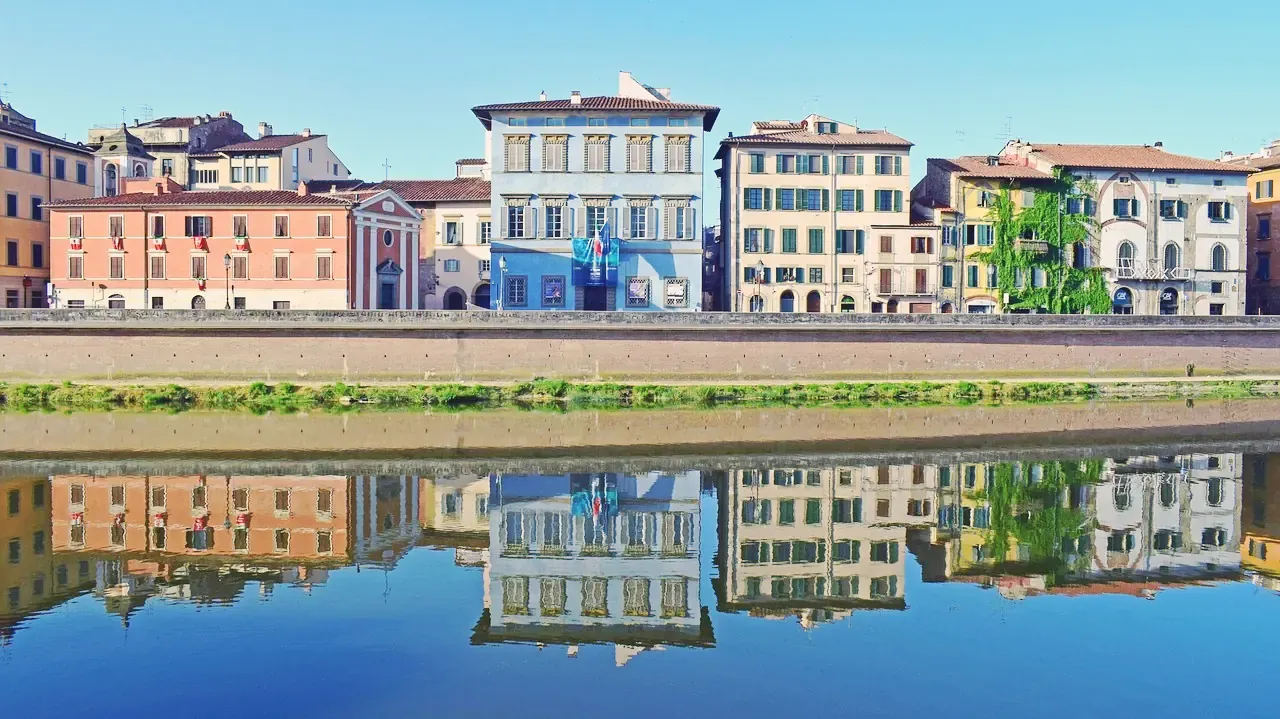
The Lungarni
The Arno's embankments run for several kilometres through the centre, past noble palazzi, university buildings and small museums, and walking them costs nothing at any hour of the day.
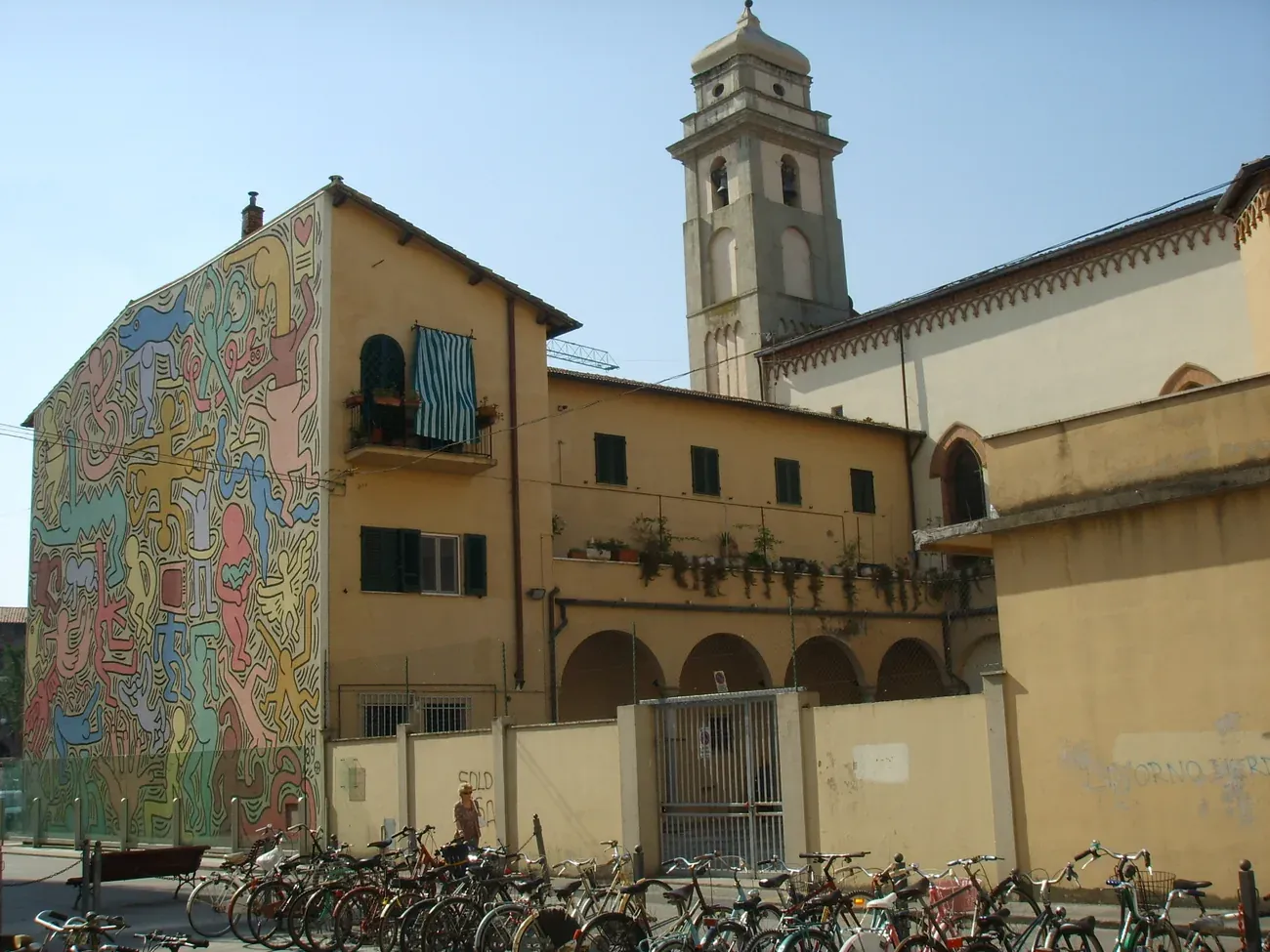
Tuttomondo
Haring's mural covers the outer wall of the former convent on Piazza Vittorio Emanuele II, fully visible from the pavement at any hour without a ticket. Midday light picks out the colours best, and the square in front rarely gets crowded outside summer.
Photo: "Church of Sant'Antonio, Pisa, side view" by sailko (CC BY 2.5).
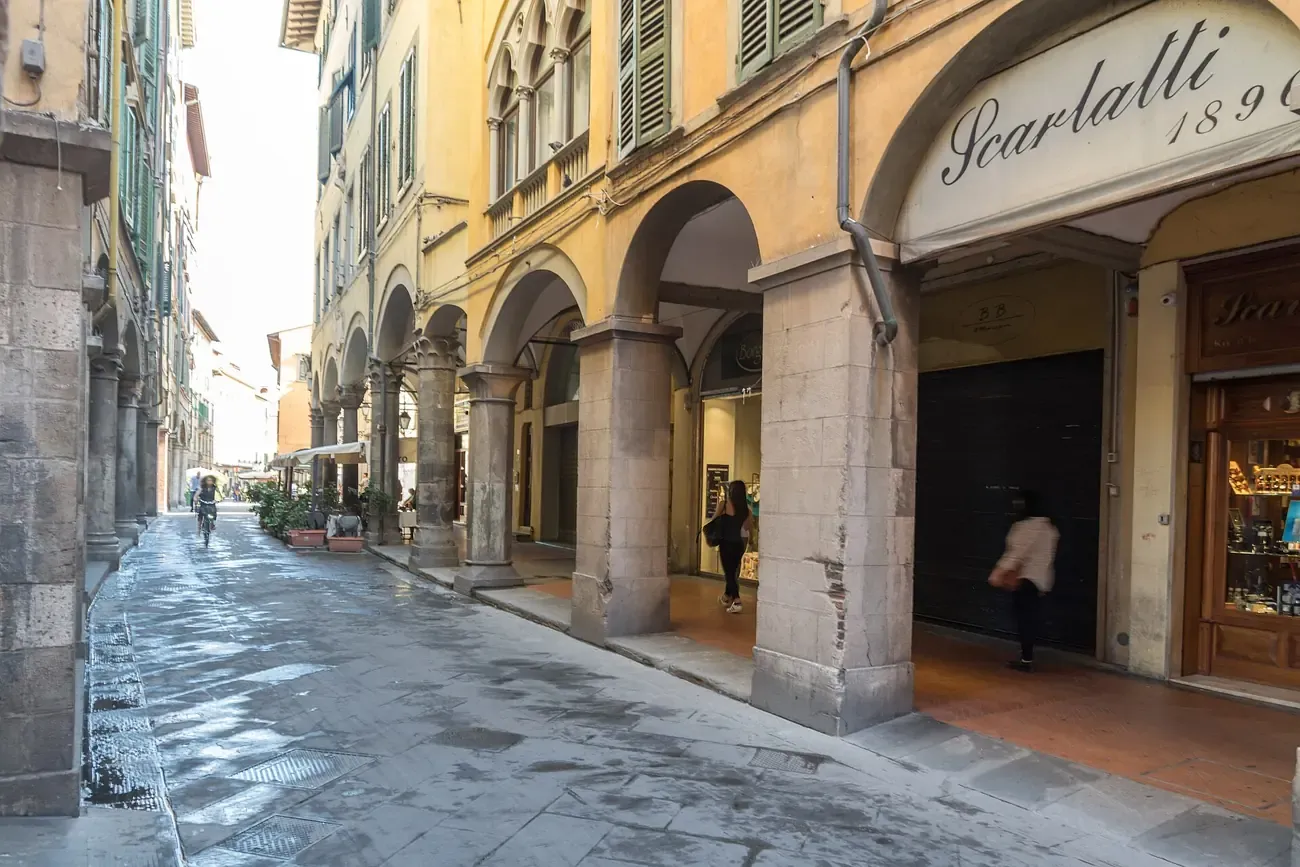
Borgo Stretto
Wandering the porticoes of Pisa's main shopping street costs nothing beyond a coffee, and the medieval arcades stay covered and dry whatever the weather. Sunday morning brings the quietest browsing, before students fill the cafes for the evening.
Photo: "Borgo Stretto, Pisa" by Nikolai Karaneschev (CC BY 3.0).
Piazza delle Vettovaglie
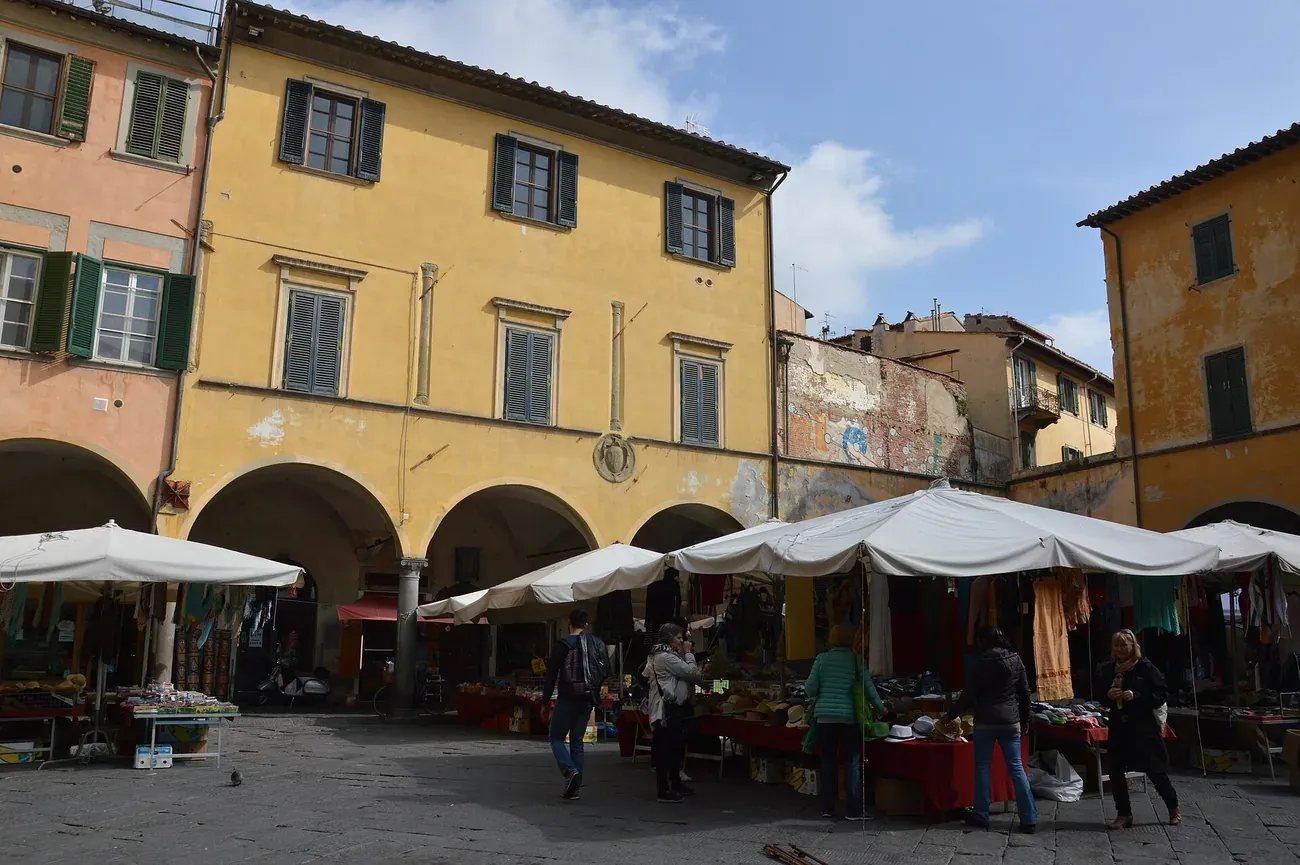
Pisa's main food market fills this porticoed square every morning except Sunday, stallholders selling fruit, vegetables and flowers under 16th century arcades that turn into a hub for the university crowd once the stalls pack up. Walking through and browsing costs nothing.
Photo: "Piazza delle Vettovaglie, Pisa" by Illustratedjc (CC BY-SA 4.0).
Giardino Scotto
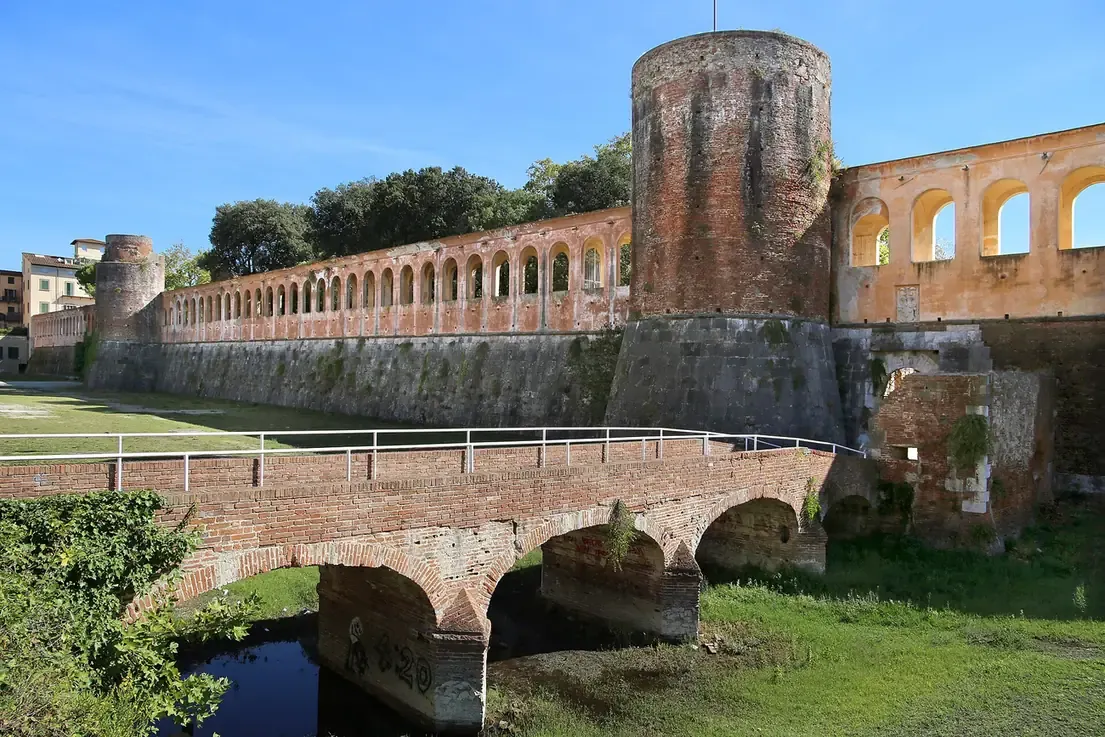
This 15th century fortress beside the Arno became a public garden whose lawns, playground and shaded paths stay free to enter every day. Ticketed film screenings and concerts sometimes fill the space on summer evenings, but the grounds themselves stay free.
Photo: "Cittadella Nuova, walkway and tower, Pisa" by Sailko (CC BY 3.0).
Domus Mazziniana
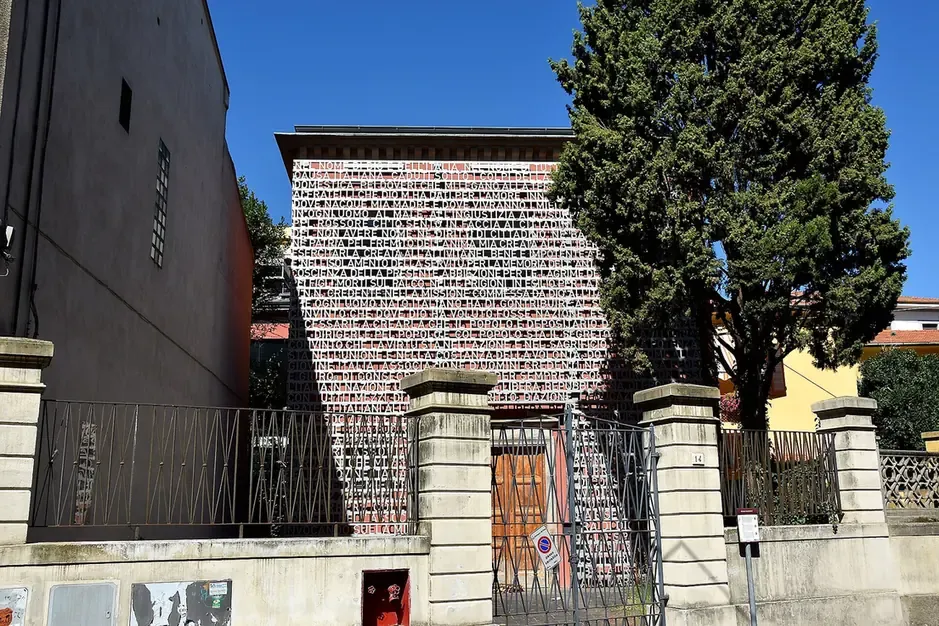
The house where the patriot Giuseppe Mazzini died in 1872 is now a small history museum with free admission, its rooms holding documents and mementoes from the movement that unified Italy.
Photo: "Domus Mazziniana, Pisa" by FaceMePLS (CC BY 2.0).
More places to explore in Pisa
Museo delle Sinopie
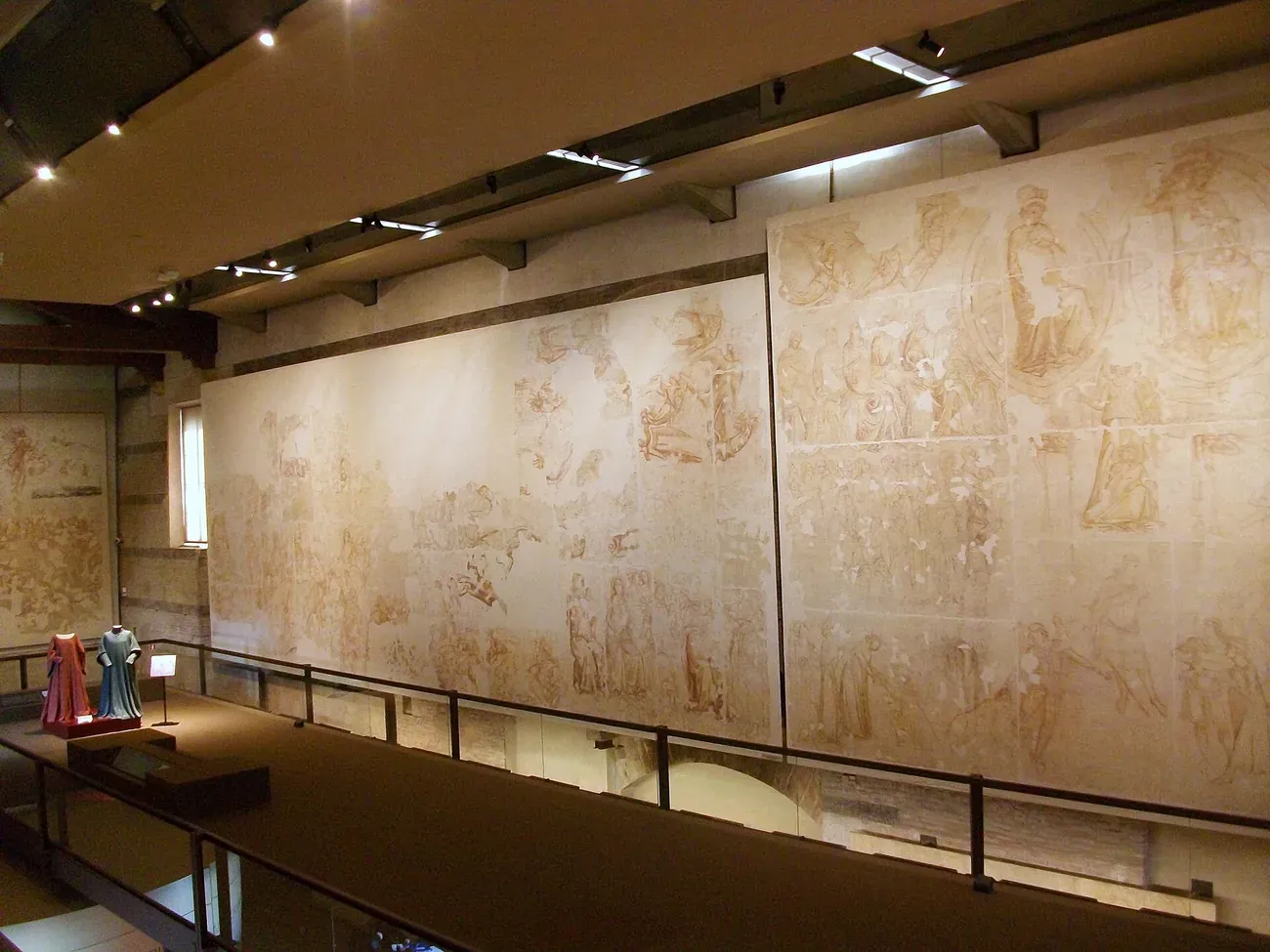
The preparatory drawings revealed when the Camposanto frescoes were detached after the wartime fire, on show since 1979 in a former hospital on the Piazza.
Location: Piazza del Duomo, Pisa
Photo: "Interior of the Museo delle Sinopie, Pisa" by Joanbanjo (CC BY-SA 3.0).
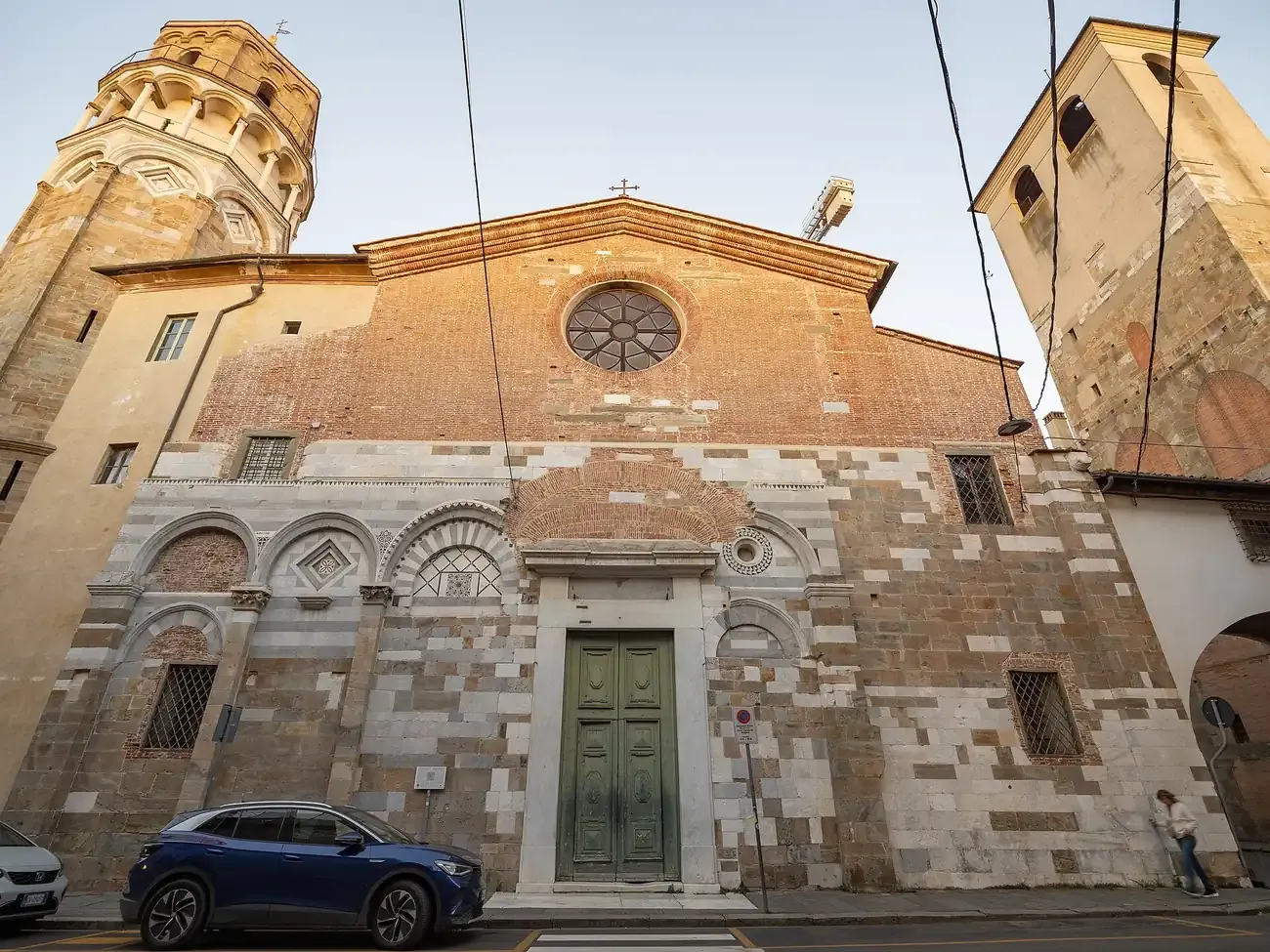
San Nicola
This church hides Pisa's other famous bell tower, an octagonal campanile from around 1170 that also tilts slightly, built in stones of different colours.
Location: Via Santa Maria, Pisa
Photo: "Church of San Nicola, Pisa" by C messier (CC BY-SA 4.0).
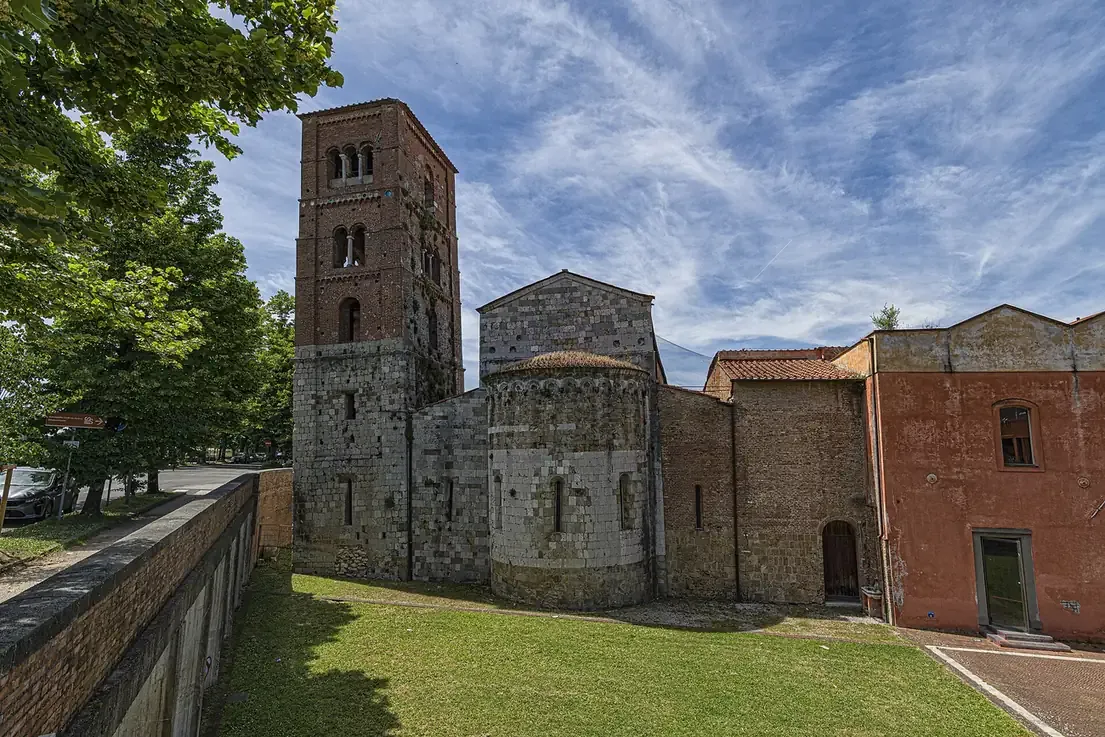
San Michele degli Scalzi
A Romanesque church near the Arno in eastern Pisa, whose brick and stone bell tower leans visibly because of the soft riverside ground.
Location: Piazza San Michele degli Scalzi, Pisa
Photo: "Church of San Michele degli Scalzi, Pisa" by Sgado walter (CC BY-SA 4.0).
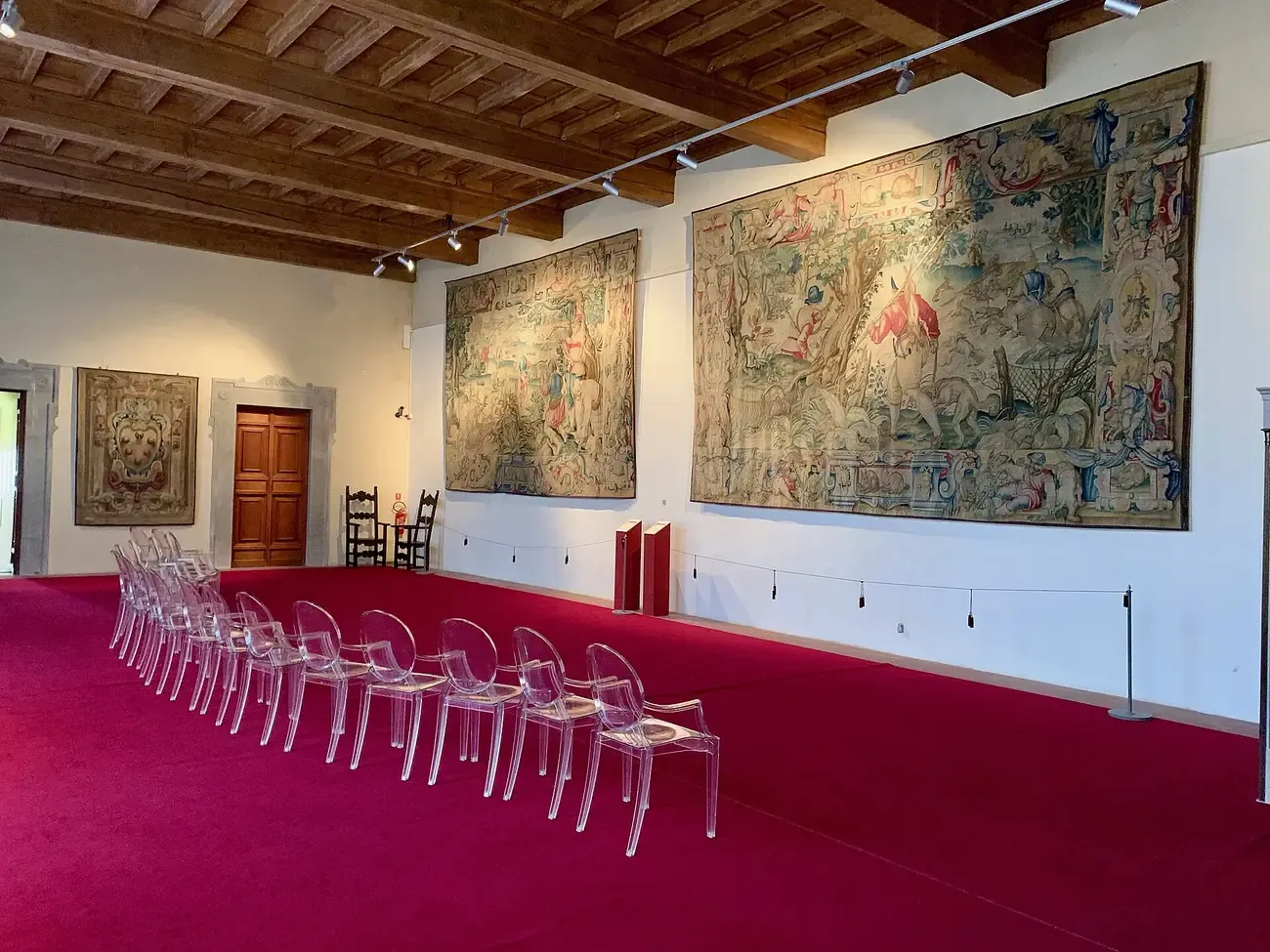
Museo Nazionale di Palazzo Reale
The Medici palace on the Arno, designed by Buontalenti in 1583, displays grand-ducal collections, tapestries and the old armour of the Gioco del Ponte.
Location: Lungarno Pacinotti 46, Pisa
Photo: "Salone degli Arazzi, Palazzo Reale, Pisa" by Federigo Federighi (CC BY-SA 4.0).
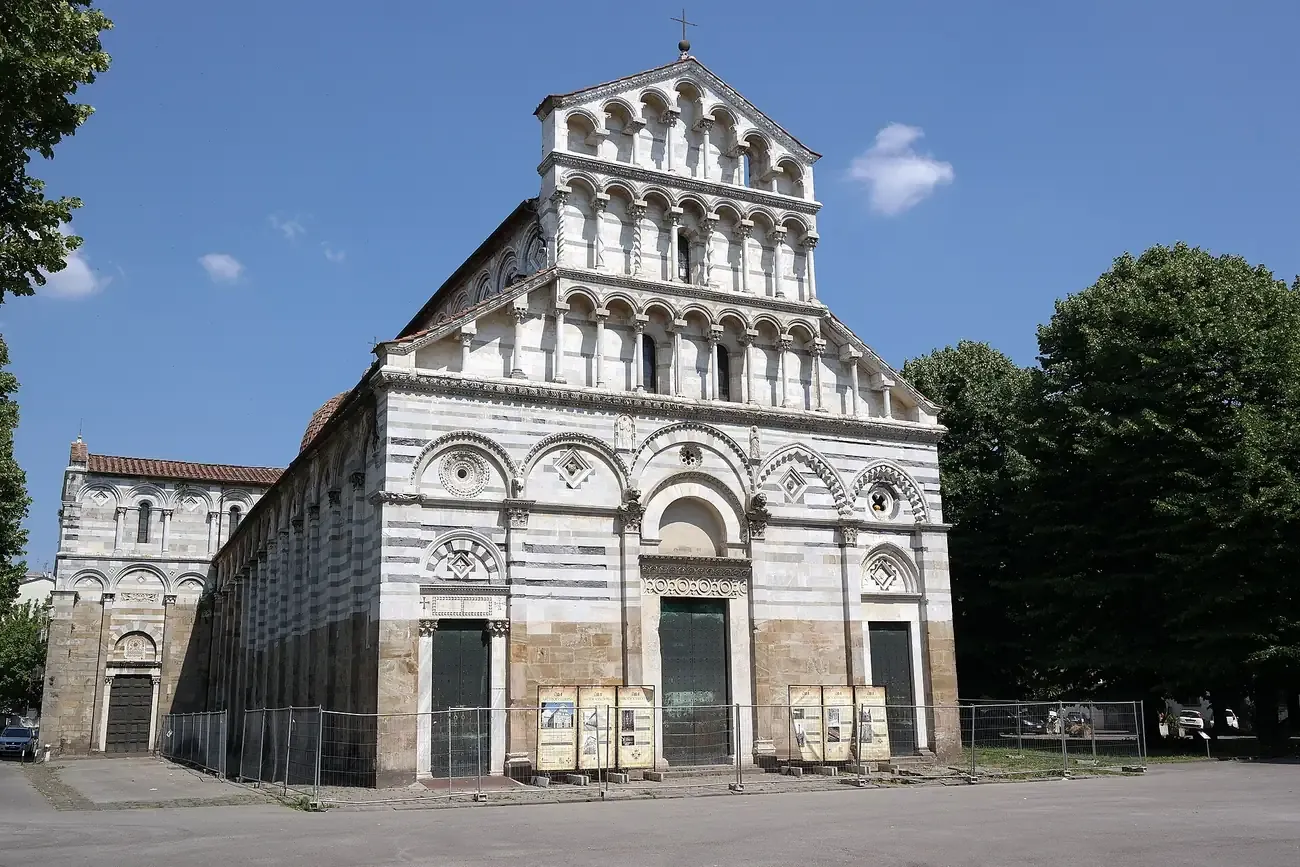
San Paolo a Ripa d'Arno
Known locally as the Duomo vecchio, this Romanesque church echoes the Cathedral's style, with the small Sant'Agata chapel standing free behind it.
Location: Piazza San Paolo a Ripa d'Arno, Pisa
Photo: "Church of San Paolo a Ripa d'Arno, Pisa" by Luca Aless (CC BY-SA 4.0).
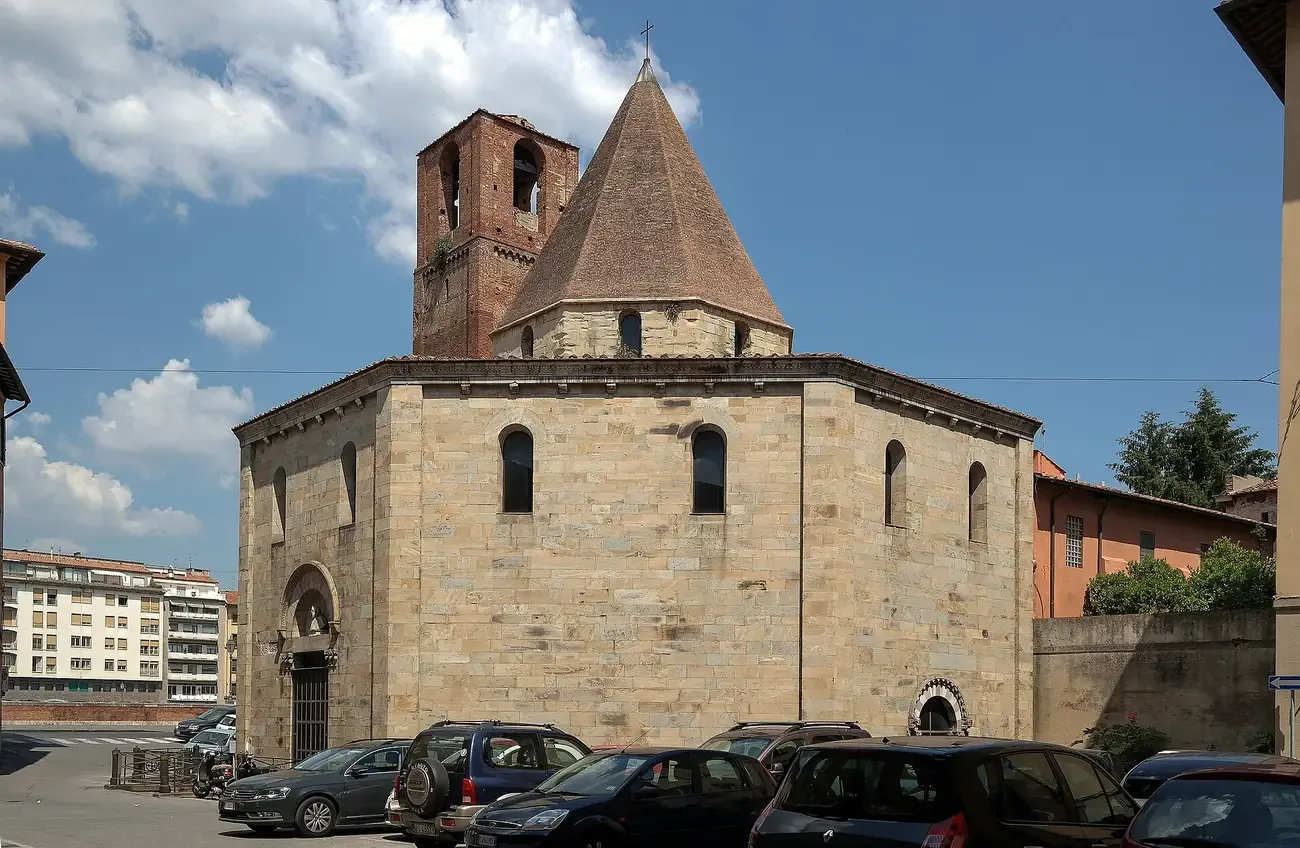
Santo Sepolcro
An octagonal 12th-century church by Diotisalvi, architect of the Baptistery, built to honour relics brought from Jerusalem after the First Crusade.
Location: Piazza Santo Sepolcro, Pisa
Photo: "Church of the Santo Sepolcro, Pisa" by Luca Aless (CC BY-SA 4.0).
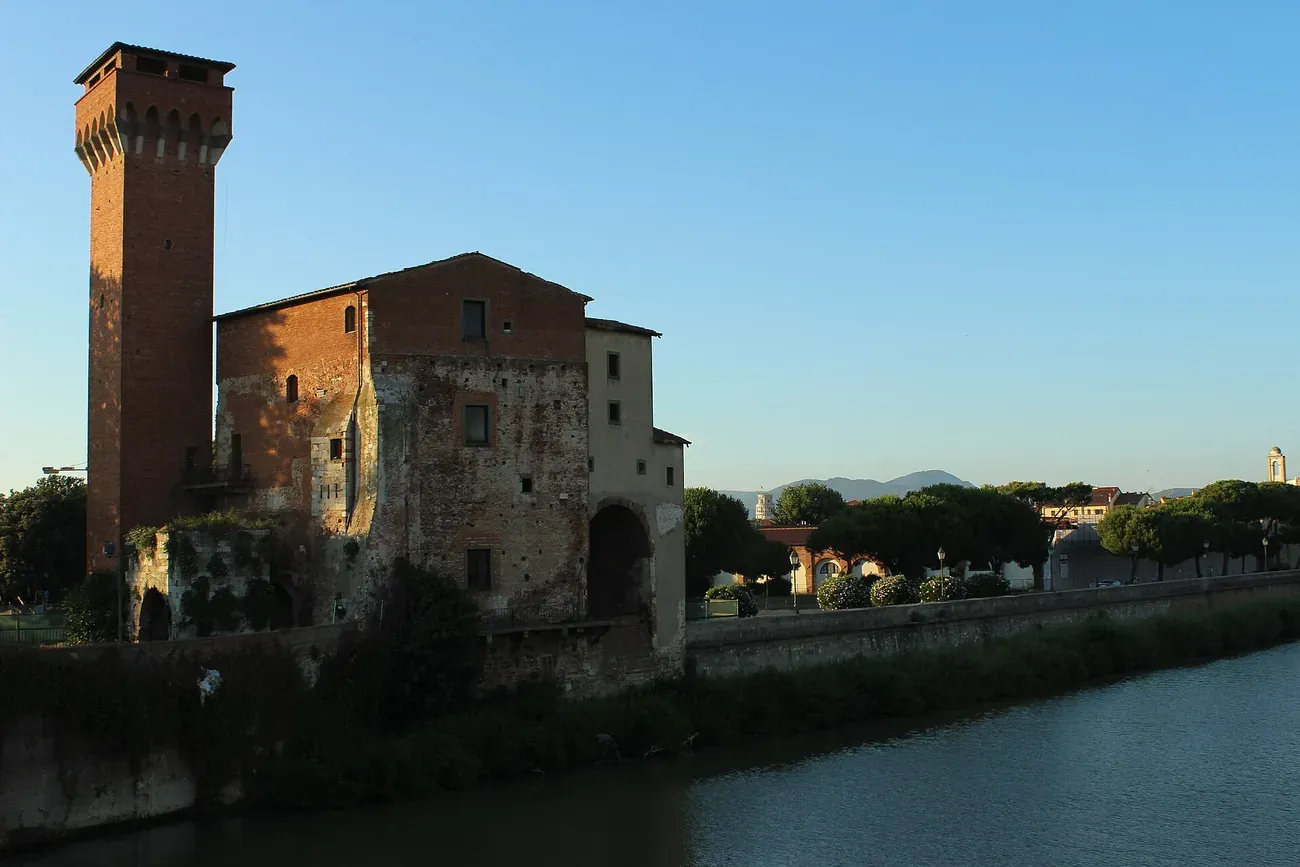
Torre Guelfa and the Cittadella
This 15th-century tower once guarded the Republic's shipyards; rebuilt after being mined in 1944, it opens on special days for views from the top.
Location: Cittadella Vecchia, near the Arsenali Medicei, Pisa
Photo: "Torre Guelfa, Pisa" by Miguel Hermoso Cuesta (CC BY-SA 4.0).
Day trips from Pisa
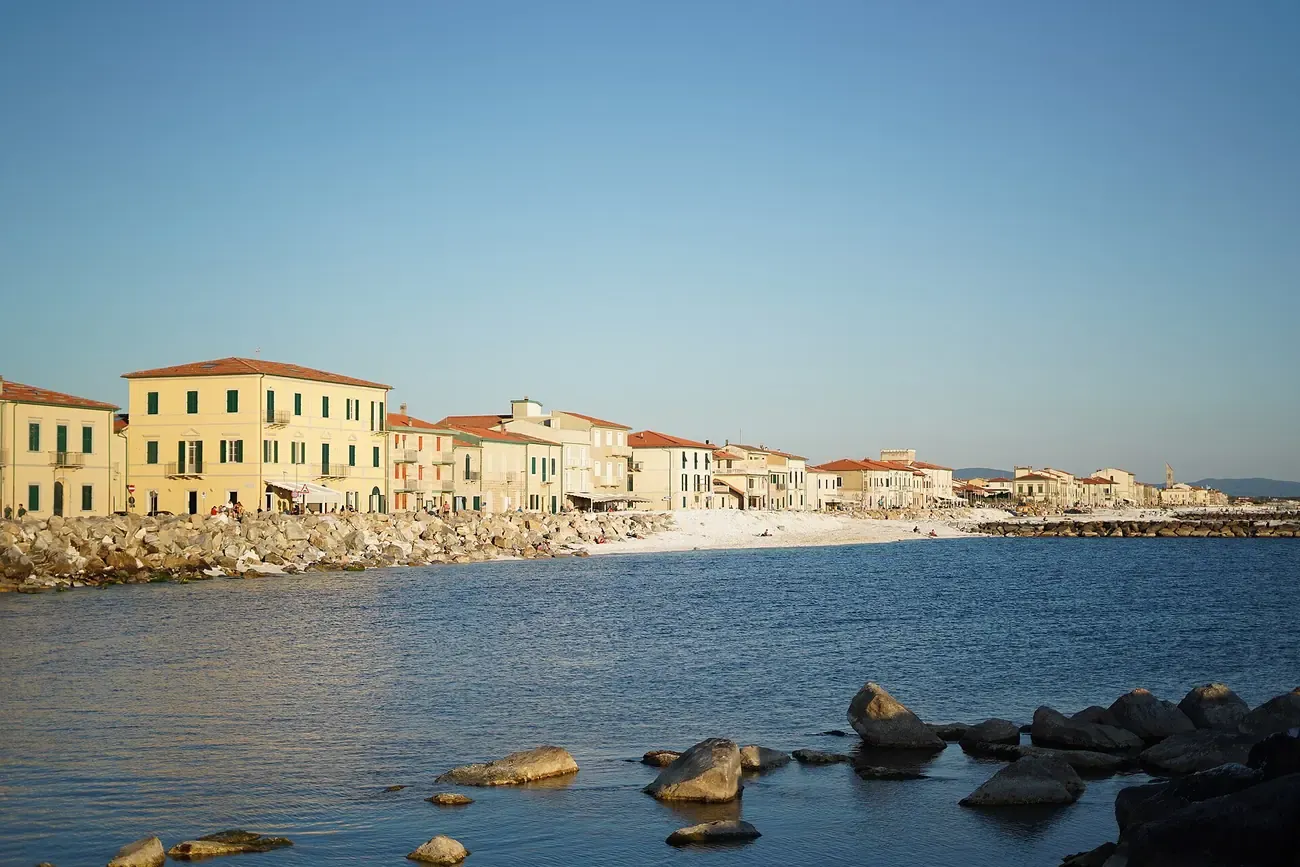
Marina di Pisa
A seaside resort where the Arno meets the Tyrrhenian Sea, about 10 kilometres from the centre, lined with Liberty-style villas from its early days.
Location: Marina di Pisa, west of the city
Photo: "Marina di Pisa, view from the breakwater" by Francesco Tosoni (CC BY-SA 4.0).
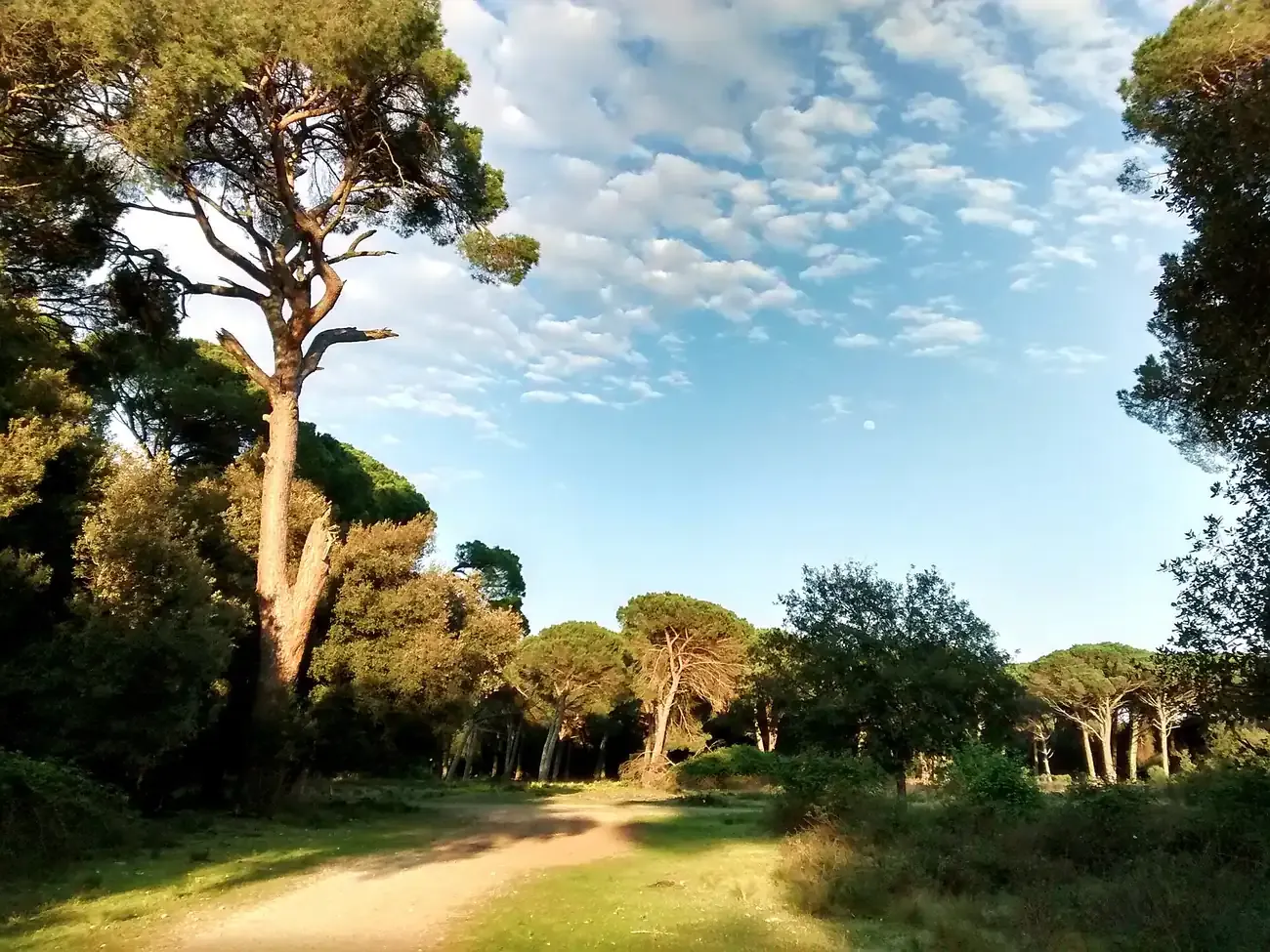
San Rossore Park
Pine woods and meadows on the Tenuta di San Rossore, a former royal and presidential estate between Pisa and the sea.
Location: Tenuta di San Rossore, west of Pisa
Photo: "San Rossore, Paduletto reserve" by Daniele Napolitano (CC BY-SA 4.0).
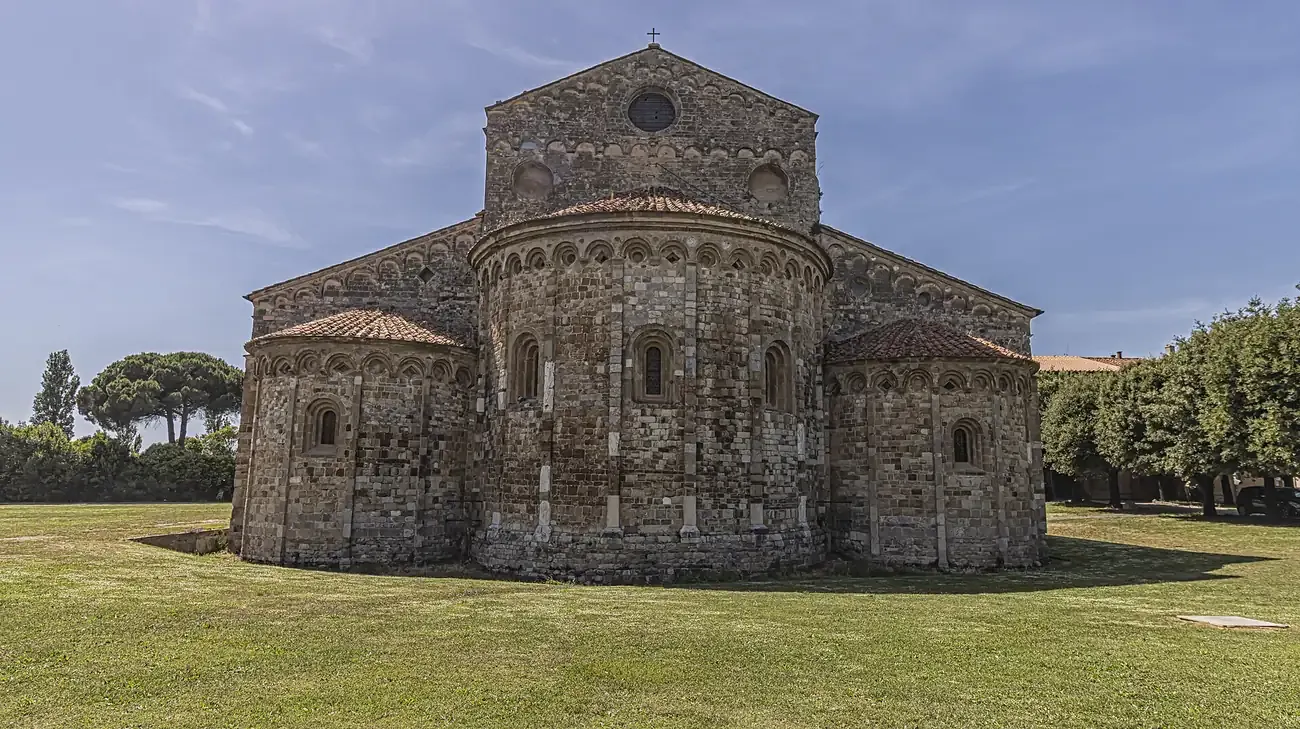
Basilica of San Piero a Grado
A Romanesque basilica on the spot where, legend says, Saint Peter landed in Italy, with an early 14th-century fresco cycle by Deodato Orlandi.
Location: San Piero a Grado, 7 kilometres west of Pisa
Photo: "Basilica of San Pietro Apostolo, San Piero a Grado, Pisa" by Sgado_walter (CC BY-SA 4.0).
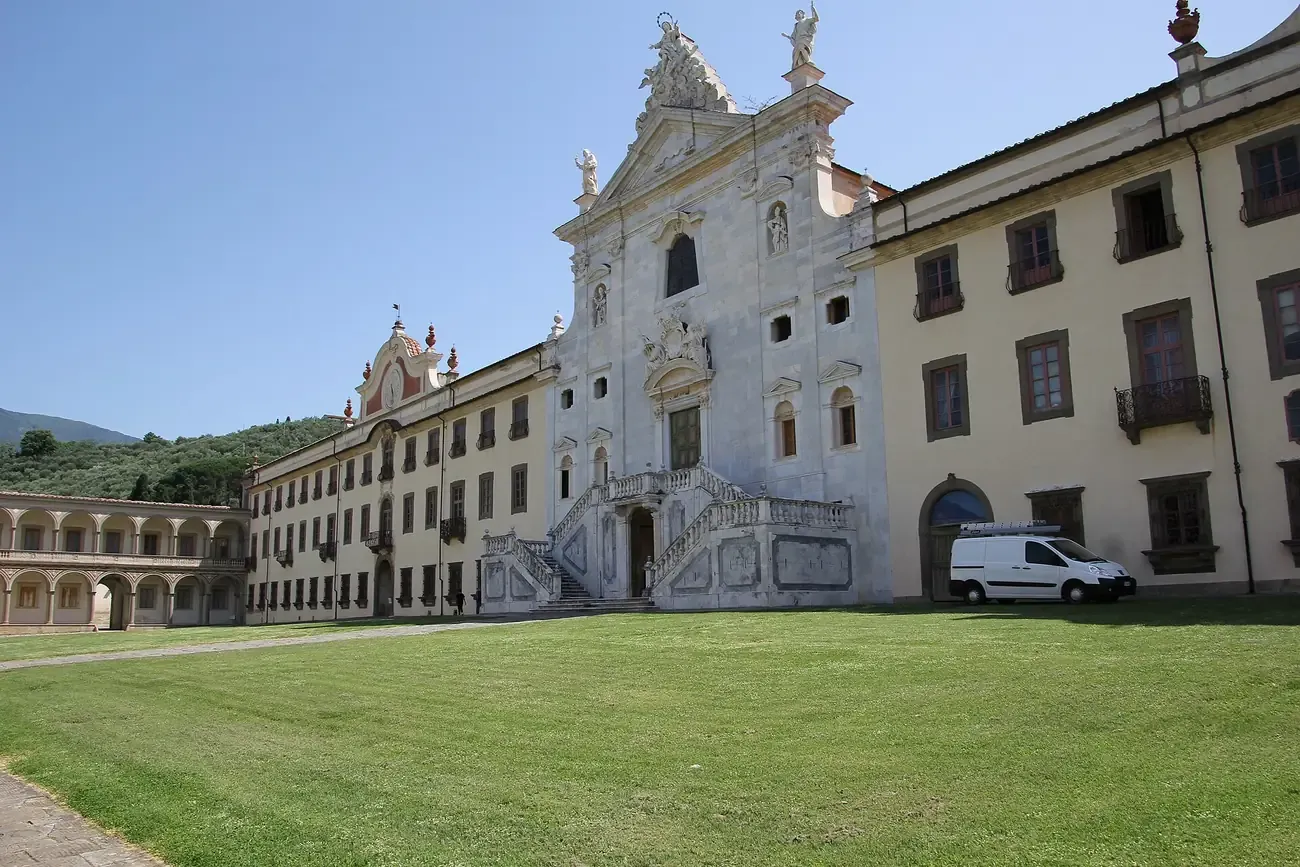
Certosa di Calci
A 14th-century Carthusian monastery below the Monti Pisani, now home to the University of Pisa's Natural History Museum and its gallery of cetaceans.
Location: Via Roma 79, Calci, about 10 kilometres east of Pisa
Photo: "Certosa di Pisa, Calci" by Gianni Careddu (CC BY-SA 4.0).
Why visit Pisa
Pisa is often reduced to a photo stop on a day trip from Florence, but the city behind the Leaning Tower is a working university town of around ninety thousand people on the Arno, with tens of thousands of students filling its streets each term. Its medieval wealth came from the sea as much as from marble, and that history still shapes a centre that rewards more than an hour beside the tower.
What makes it unique
Pisa ranked among medieval Italy's maritime republics alongside Genoa and Venice, its fleets trading and fighting across the Mediterranean until a defeat at the Battle of Meloria in 1284 ended its naval power for good. The university that followed, founded in 1343 and where Galileo Galilei later began his scientific studies, has outlasted the republic by centuries and still gives the city a livelier, younger feel than its monuments alone would suggest.
Neighbourhoods to know
Piazza dei Miracoli sits inside the old walls at the northern edge of the centre, a short walk from the university buildings around Piazza dei Cavalieri. South of there, the porticoes of Borgo Stretto lead down to Ponte di Mezzo and the Arno, where the Lungarni run past Palazzo Blu and Santa Maria della Spina toward the Arsenali Medicei and its Roman ships. Around Pisa Centrale station, a more everyday city continues past the Keith Haring mural, and the Arno itself keeps flowing another ten kilometres to the beaches and Liberty villas of Marina di Pisa.
When to go and for how long
April to June and September to October bring milder, drier weather than the humid heat of a Tuscan summer, when temperatures regularly climb into the thirties. Half a day covers Piazza dei Miracoli on its own, but a full day leaves time to add Piazza dei Cavalieri, the Arno and at least one of the smaller museums that most day trippers skip. The tower ranks among the main tourist attractions in Italy in its own right, which is precisely why the rest of the city goes overlooked.
Getting around
The historic centre is flat and compact enough to cross on foot in well under an hour, with Piazza dei Miracoli, Piazza dei Cavalieri and the Arno all within easy walking distance of each other. Pisa International Airport lies just south of the centre, linked to Pisa Centrale station by the automated Pisamover shuttle in a few minutes, while Pisa San Rossore station, on the line toward Lucca, is the closer stop for the Leaning Tower.