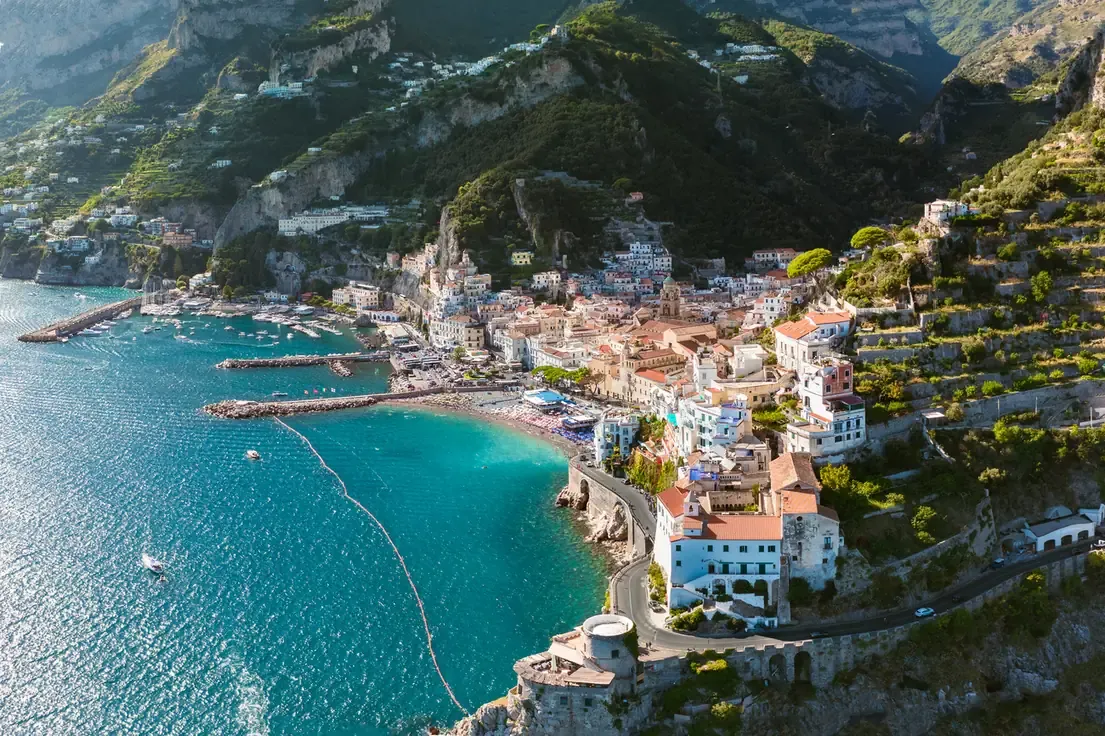
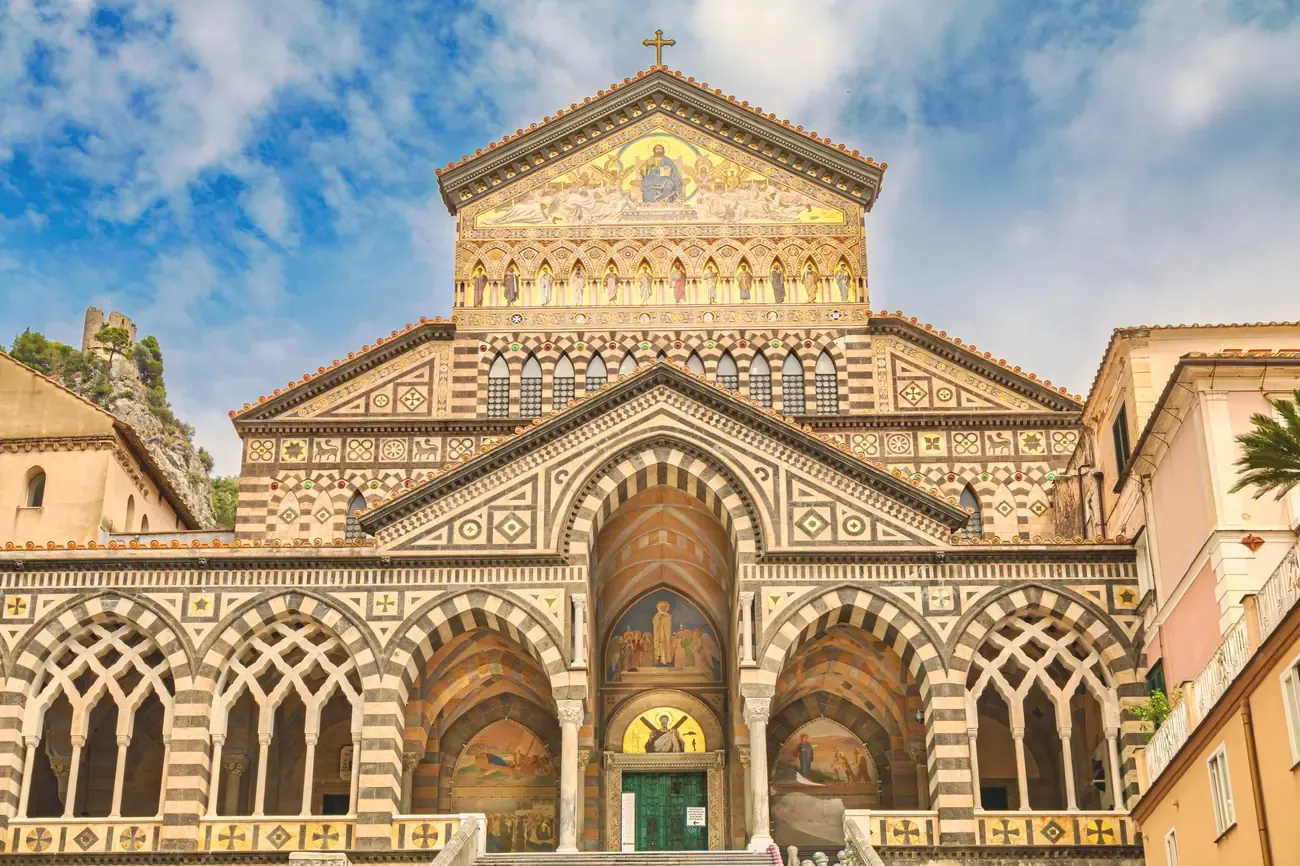
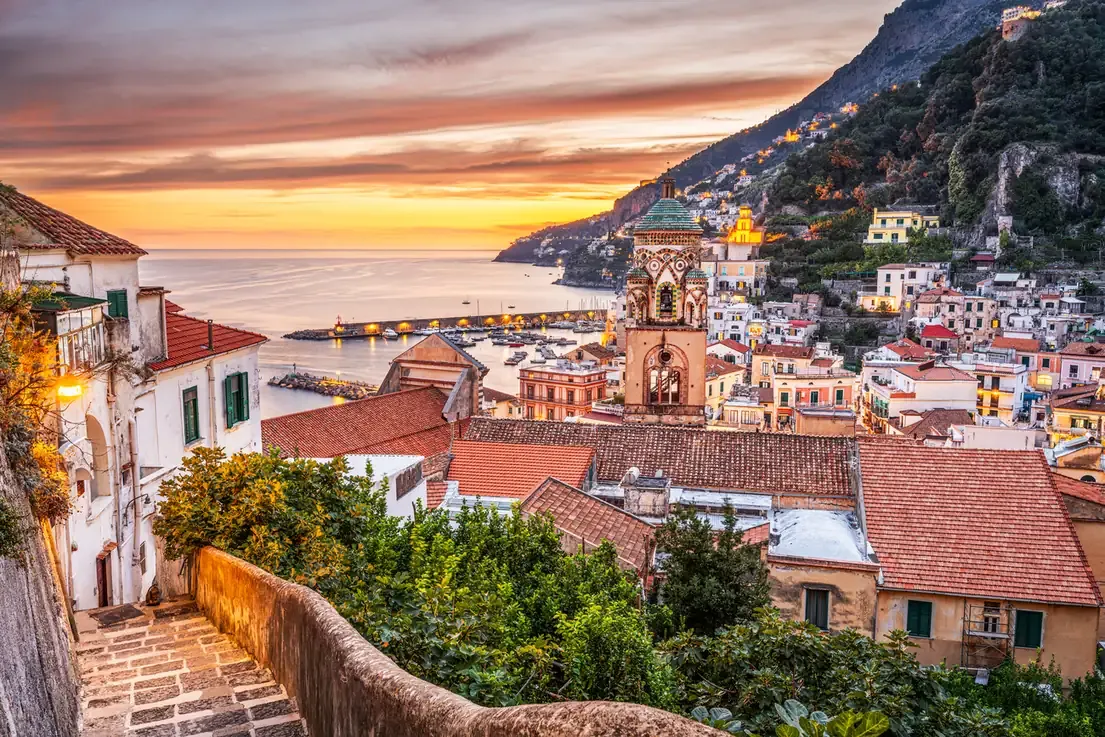
Amalfi gave its name to the whole stretch of coast, yet the town itself holds only a few thousand people packed into a ravine where the Valle dei Mulini meets the sea. From the 9th century it was the capital of one of medieval Italy's four maritime republics, alongside Venice, Genoa and Pisa, trading as far as Byzantium and Egypt, minting its own gold coin the tari and drafting the Tavole Amalfitane, among the earliest maritime codes in the Mediterranean. A seaquake and flood in 1343 drowned its harbour and lower town and ended that power for good, leaving behind a cathedral, a shipyard and a valley of paper mills that still define it today. The coastline that carries its name now ranks among the most celebrated tourist attractions to see in Italy.
The old town and its valley
The historic centre fits into a few hundred metres between the harbour and the cathedral steps, its lanes threading past Supportico Rua and the Rua Nova Mercatorum up to the Valle dei Mulini, where the Museo della Carta keeps the water mills running. Atrani, a separate town in its own right, sits an easy walk or short tunnel away around the headland, and the hamlet of Pogerola climbs the hillside behind, both reached on foot from the centre.
When to go and for how long
April to June and September to October bring warm, quieter weather ahead of and after the August crowds and coastal road traffic. A single day covers the historic centre at an easy pace, with a second half day worth adding for Atrani, the Valle delle Ferriere or the climb to Torre dello Ziro.
Getting around
The centre is entirely on foot, though the paths up the Valle dei Mulini and to Pogerola or Torre dello Ziro climb steeply. SITA buses run along the coast road to Positano, Sorrento and Salerno, and seasonal ferries connect the harbour with Naples, Salerno, Capri and the other coastal towns. Amalfi has no train station of its own; the nearest are in Salerno and Sorrento.