
Tourist attractions in Giza
Known for
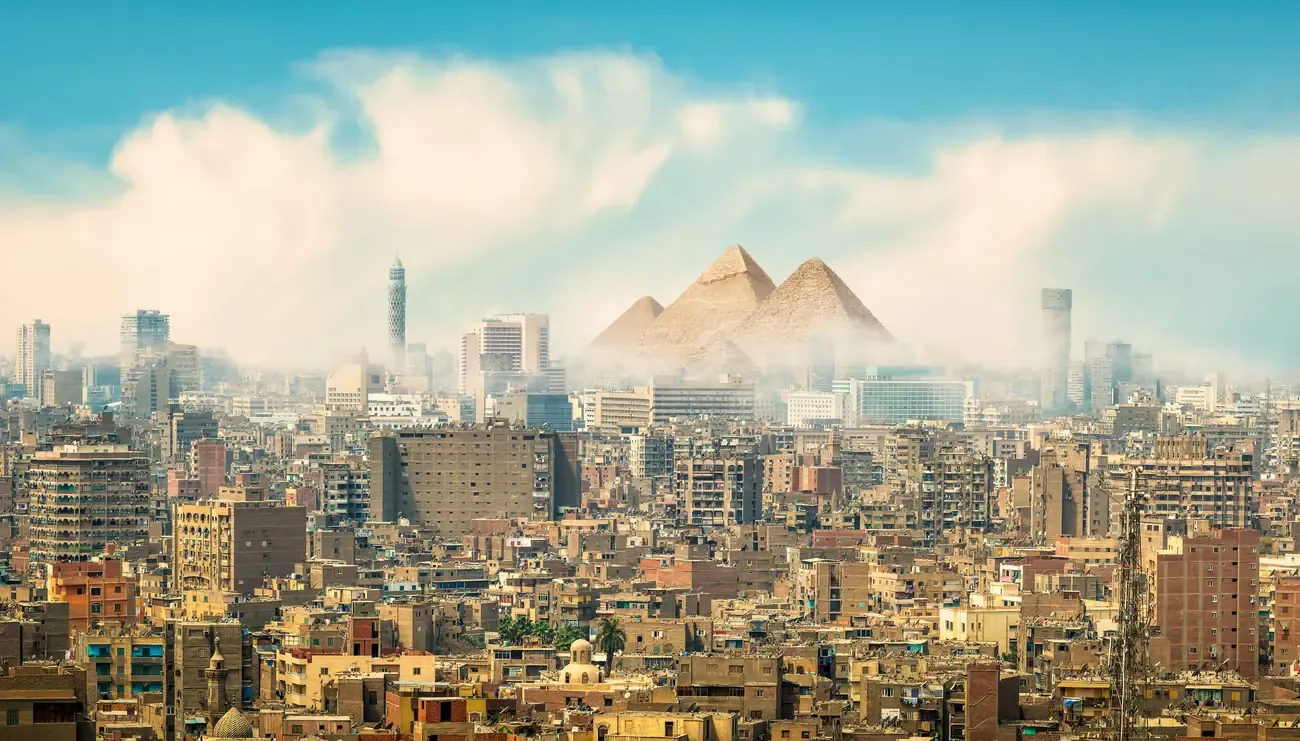
Ancient pyramids on a desert plateau
Must-see landmarks
The Pyramids of Giza, the Great Sphinx and the Grand Egyptian Museum
Best time to visit
October to April, once summer's extreme heat eases
UNESCO World Heritage listed since 1979
Part of Memphis and Necropolis, Pyramid Fields from Giza to Dahshur
Top 8 tourist attractions in Giza
The tourist attractions in Giza that matter most, from Great Pyramid of Khufu to Pyramid of Khafre and Pyramid of Menkaure, are ranked here in order. After the 8 top sights come visitor FAQs.
1. Great Pyramid of Khufu
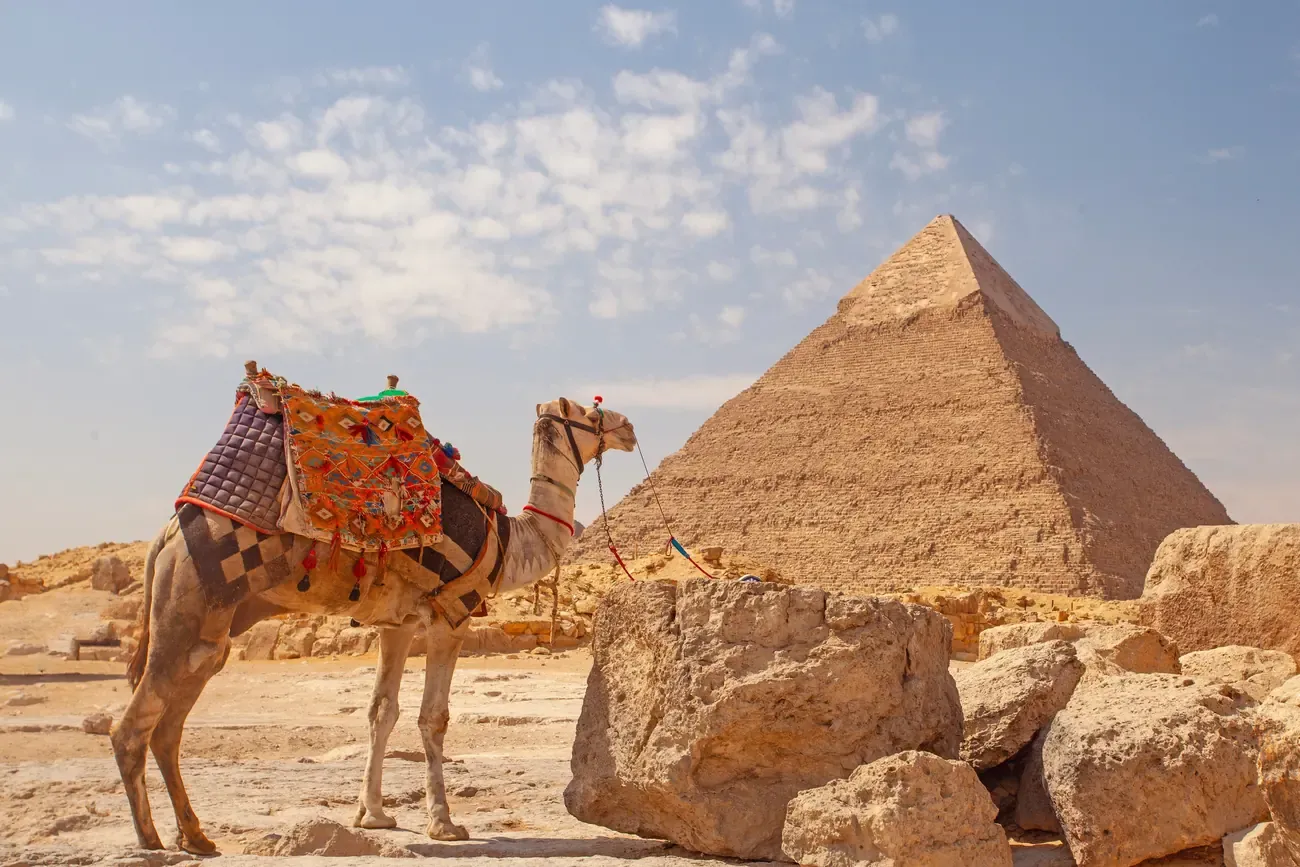
Raised for King Khufu around 2566 BC, the Great Pyramid climbed to an original 146.5 metres and remained the tallest structure on Earth for close to four thousand years. It is the oldest of the Seven Wonders of the Ancient World and the only one still standing, its core built from more than two million blocks of limestone. Camel and horse handlers wait on the sand nearby for rides across the plateau.
Architect: Hemiunu · Built: c. 2566 BC · Dynasty: Fourth Dynasty
Location: Giza plateau, west bank of the Nile, about 13 km southwest of central Cairo
Access: Ticketed

2. Pyramid of Khafre
Khafre, Khufu's son, set his pyramid on higher bedrock so that it appears to rival his father's, though at 143.5 metres it stands slightly shorter. It is the easiest of the three to pick out, keeping a cap of smooth casing stone near its apex where the others have lost theirs entirely. Its valley temple and causeway run down the slope toward the Great Sphinx, part of the same royal funerary complex.
Built: c. 2570 BC · Dynasty: Fourth Dynasty
Location: Central Giza plateau, beside the Great Pyramid
Access: Ticketed
Photos: "Khafre Pyramid Giza" by Daaaveee (CC BY-SA 3.0); "Chephrenpyramide in Gizeh" by Sadarama (CC BY-SA 4.0).

3. Pyramid of Menkaure
The smallest of the three main pyramids, Menkaure rose to an original 65 metres, barely a third the height of its neighbours. Its lowest courses were faced with granite hauled from Aswan, more than 800 kilometres to the south, and much of that rough casing still clings to the base. Three small subsidiary pyramids built for royal women stand in a short row along its southern side.
Built: c. 2510 BC · Dynasty: Fourth Dynasty
Location: Southwest end of the Giza plateau
Access: Ticketed
Photos: "Menkaure's pyramid" by kallerna (CC BY-SA 3.0); "Giza, piramide di Micerino e piramidi minori" by Francesco Gasparetti (CC BY 2.0).


4. Great Sphinx of Giza
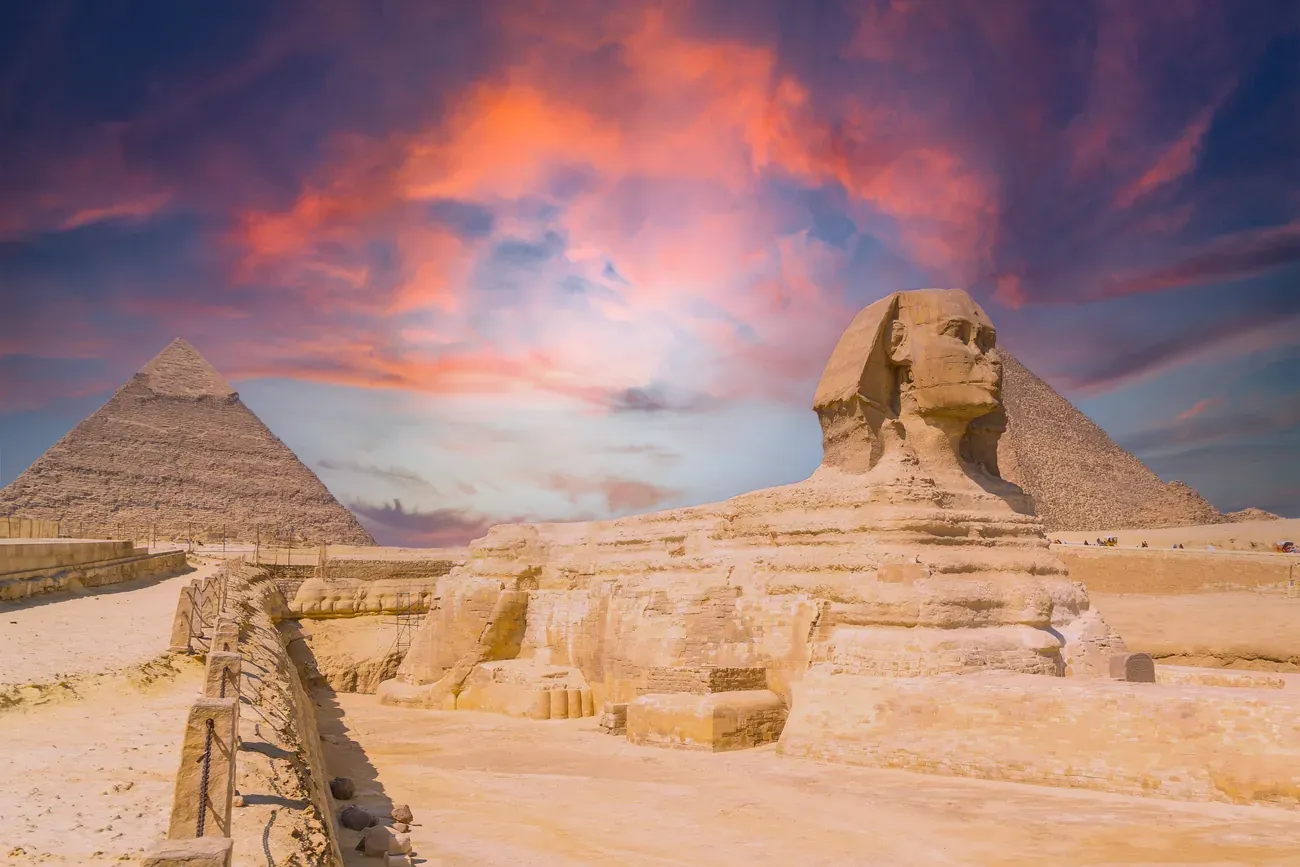
Carved from a single ridge of the plateau's bedrock during the reign of Khafre, the Great Sphinx is the oldest known monumental sculpture in Egypt. The recumbent lion with a human head measures roughly 73.5 metres long and about 20 metres high, and faces due east toward the rising sun. A low rise to the south, reached on foot or by camel, gives the classic view of all three pyramids lined up behind it.
Built: c. 2550 BC · Dynasty: Fourth Dynasty
Location: Eastern edge of the Giza plateau, below the pyramids
Access: Ticketed
5. Grand Egyptian Museum
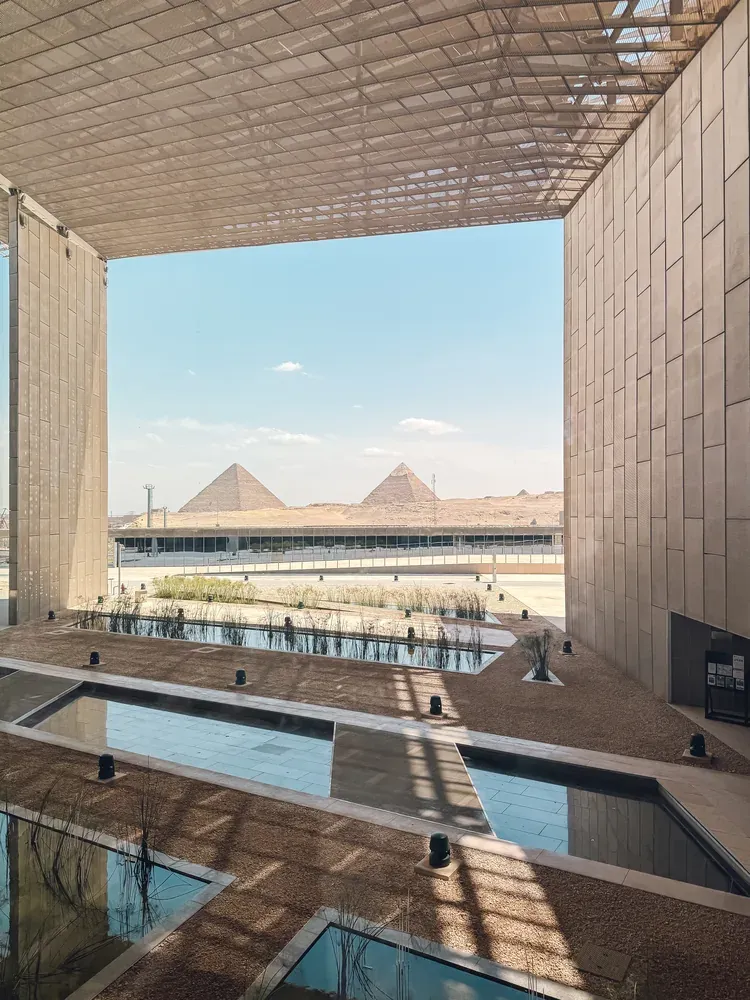
Opened on 1 November 2025 beside the plateau, the Grand Egyptian Museum is described by UNESCO as the world's largest archaeological museum devoted to a single civilisation. Its galleries show the complete collection of Tutankhamun together for the first time since the tomb was found, and the Khufu Boats Museum holds the pharaoh's full-size cedar solar boat. A grand staircase lined with royal statues climbs toward windows that frame the pyramids themselves.
Architect: Heneghan Peng Architects · Opened: November 2025
Location: Giza plateau, about 2 km from the pyramids
Access: Ticketed
Photo: "GEM, December 22nd, 2025, by Dyolf77, ZVE07610" by Habib M'henni (CC BY-SA 4.0).

6. Saqqara
Saqqara is the great necropolis of ancient Memphis, an open-air museum that spans almost the whole of Egyptian history. At its heart stands the Step Pyramid of King Djoser, credited as the oldest complete monumental stone building ever raised, surrounded by noble tombs, the underground Serapeum of the Apis bulls and the Imhotep Museum. Kings and courtiers from the earliest dynasties onward were laid to rest across the sandy plateau.
Built: Step Pyramid, c. 2670 BC · Dynasty: Third Dynasty
Location: About a 30-minute drive south of the Giza plateau
Access: Ticketed
7. Dahshur
Dahshur holds the two pyramids that King Sneferu, Khufu's father, built while working out the true pyramid shape. On the first he changed the angle partway up, leaving the distinctive Bent Pyramid, then completed the smooth-sided Red Pyramid nearby, among the earliest successful straight-edged pyramids. Quieter Middle Kingdom pyramids of later kings stand across the same desert field, well away from the Giza crowds.
Built: c. 2600 BC · Dynasty: Fourth Dynasty
Location: About a 40-minute drive south of the Giza plateau
Access: Ticketed
8. Memphis
Memphis served as ancient Egypt's first capital and its ruling city through much of the Old Kingdom. Little of it survives above ground, but an open-air museum at the village of Mit Rahina gathers what remains, arranged around a colossal fallen limestone statue of Ramesses II shown lying in its own viewing hall. A large alabaster sphinx and scattered royal statuary fill the surrounding garden.
Founded: traditionally c. 3000 BC
Location: At Mit Rahina, about a 25-minute drive south of the Giza plateau
Access: Ticketed
Photo: "Kolosstatue Ramses II Memphis" by Dominik Knippel (CC BY-SA 3.0).

Why Giza deserves your time
Giza sits across the Nile from central Cairo and is technically its own city: as Wikivoyage puts it, "everything west of the Nile's eastern bank is actually in the City of Giza", one of the townships that together make up the Greater Cairo Metropolis. Its plateau still holds what UNESCO calls Egypt's only surviving wonder of the ancient world, the Great Pyramid, inside a World Heritage site that runs from Giza south to Dahshur, and the Grand Egyptian Museum has now given the plateau a second, modern anchor next door. Together they top any list of tourist attractions to visit in Egypt.
Neighbourhoods to know
Haram, threaded by Pyramids Road, is Giza's tourist base, built up along the axis leading to the plateau, with the village of Nazlat al-Samman pressed right against the enclosure wall. Closer to the river, Dokki and Mohandessin hold quieter residential streets near the Nile, while the historic Giza Zoo sits closed for a multi-year redevelopment and the plateau's own evening sound and light show, run by a state-backed company, is currently suspended for development work on its site.
When to go and for how long
October to April brings much easier conditions for walking the open plateau, once summer's extreme heat eases. One day covers the pyramids, the Sphinx and the Grand Egyptian Museum at a steady pace, with a second day free for Saqqara, Memphis or Dahshur to the south.
Getting around
Taxis and ride-hailing apps cover the short trip from central Cairo and between the plateau and the museum, and most hotels can arrange transfers. The plateau itself is easiest on foot between the pyramids and the Sphinx, with camel, horse and hired vehicles covering the wider necropolis.