
Granada tourist attractions
Known for
Moorish palaces, flamenco and the white lanes of the Albaicín
Must-see landmarks
The Alhambra, Granada Cathedral, the Royal Chapel and the Albaicín
World Heritage
Alhambra, Generalife and Albaicín, UNESCO listed since 1984
Best time to visit
April to June and September to October
The 10 tourist attractions to see in Granada
The Alhambra and the Generalife, Plaza Nueva and Alcaicería lead the tourist attractions in Granada. This guide ranks the 10 sights worth your time, then adds 5 hidden gems, free things to do, upcoming events, tickets and visitor FAQs.
1. The Alhambra and the Generalife
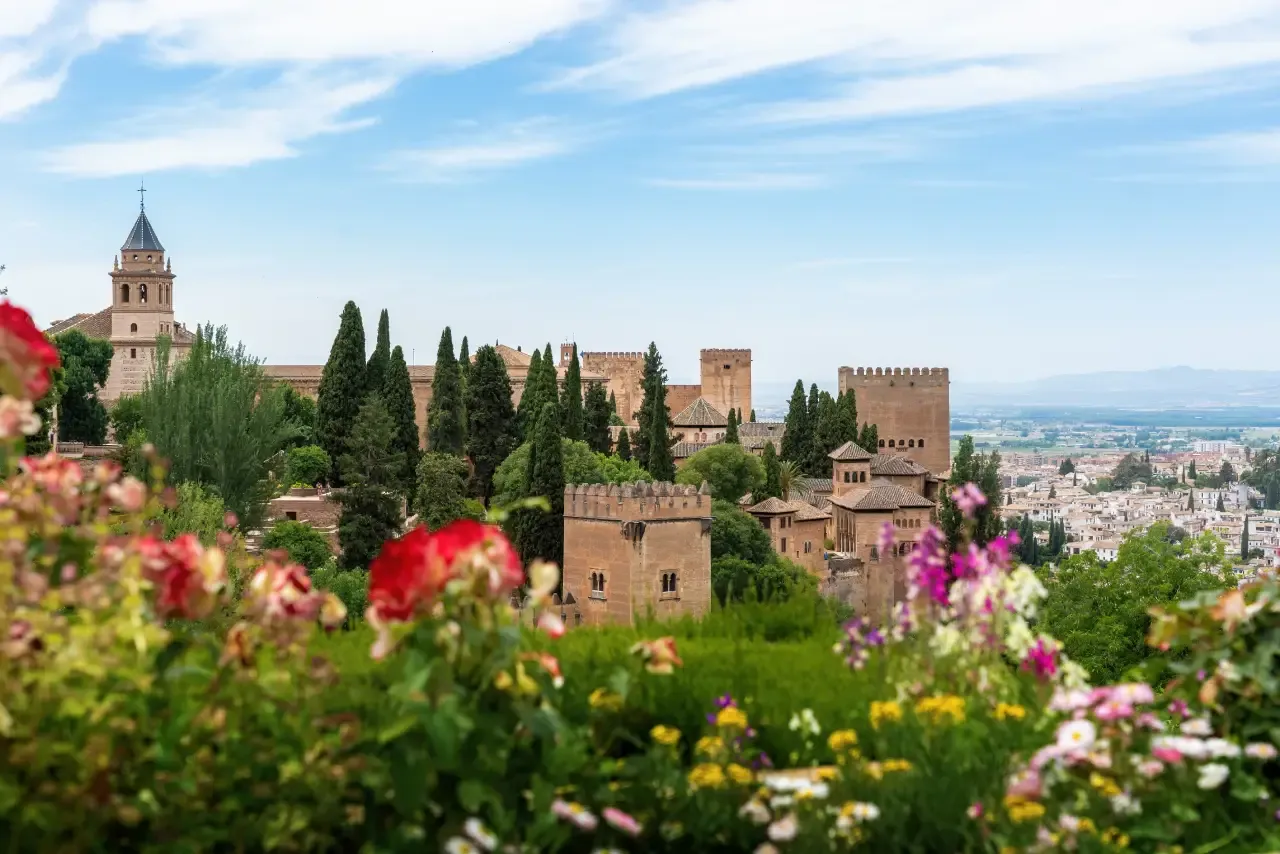
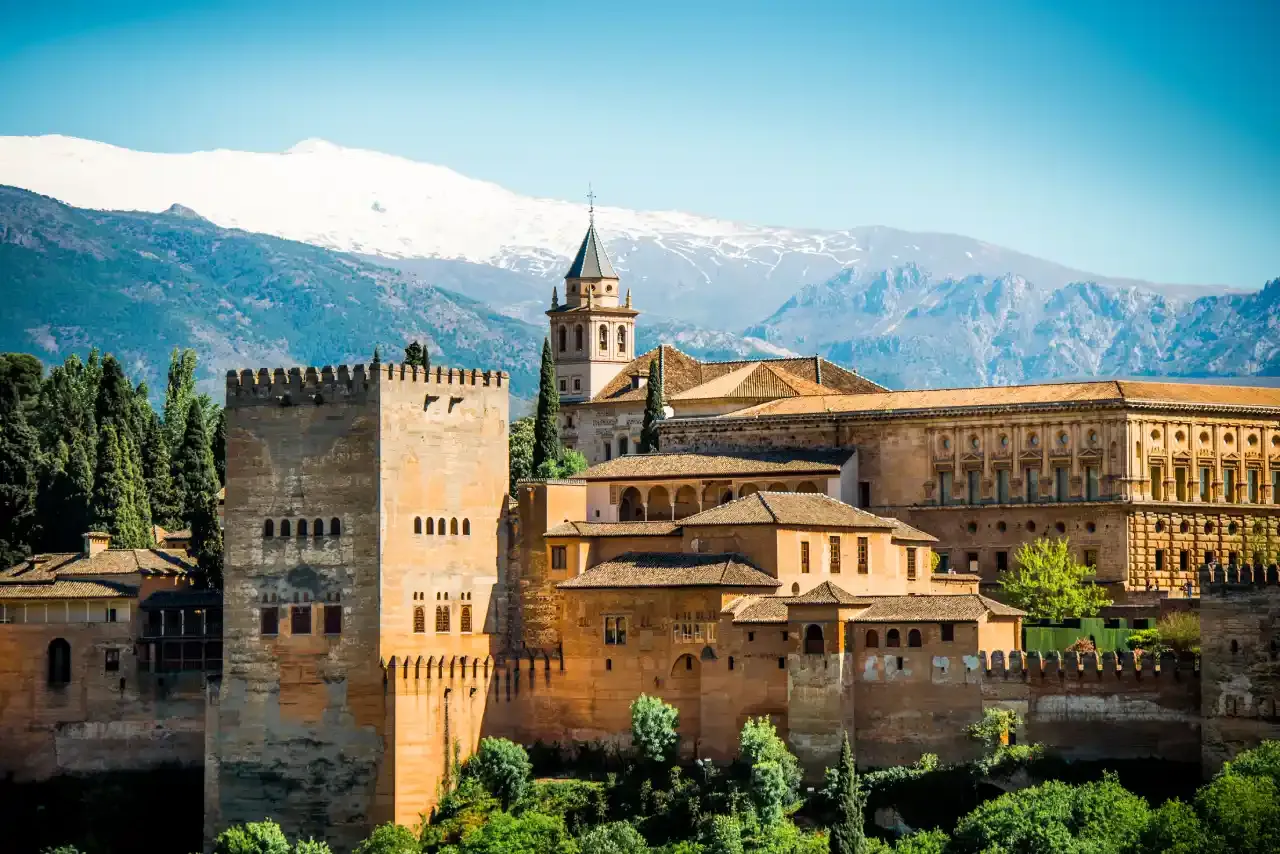
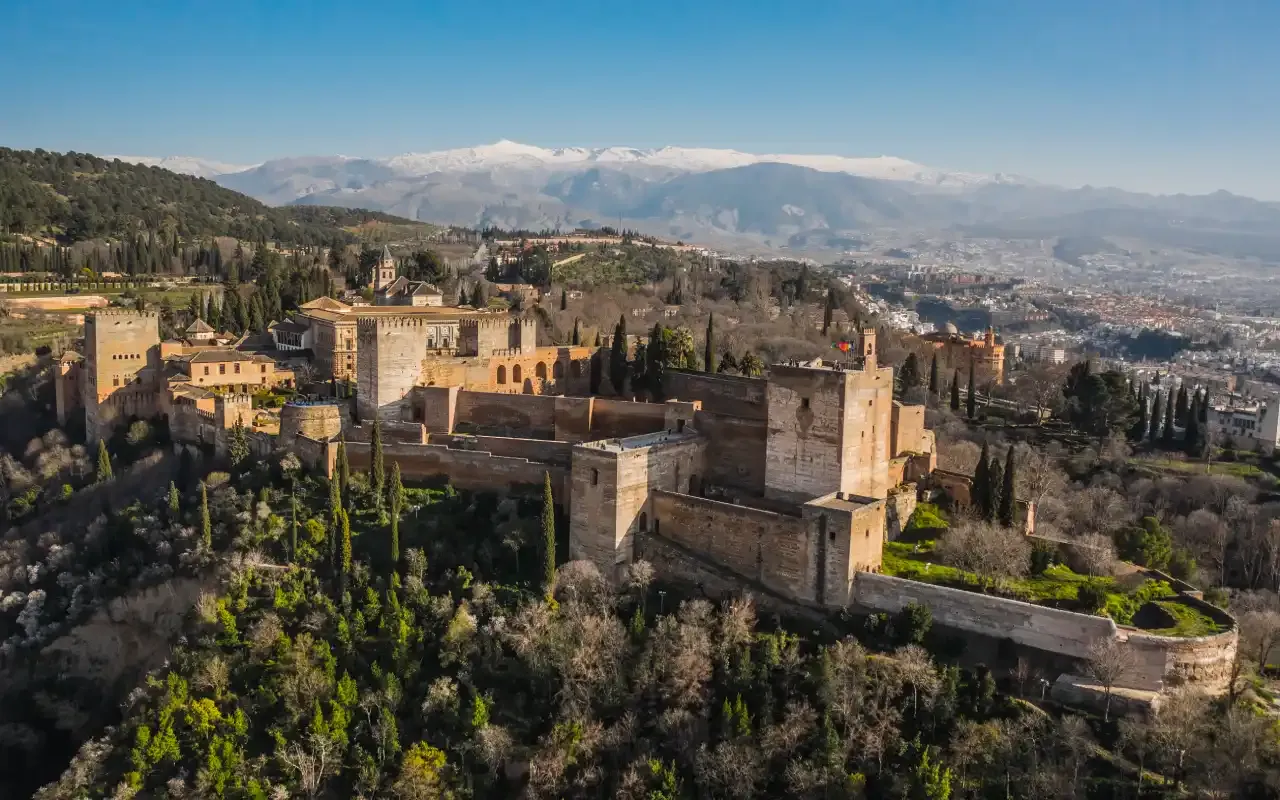
The Nasrid palace city on the Sabika hill is the reason most people come to Granada. The Nasrid Palaces run from the Comares tower to the Court of the Lions, where slender columns and carved plaster frame a marble fountain. The Alcazaba keeps the oldest walls and the widest view, the Palacio de Carlos V adds a round Renaissance courtyard, and a path leads to the Generalife, the summer palace whose terraces of water channels look back at the whole complex. Slots for the palaces fill weeks ahead in high season.
Style: Nasrid, with a Renaissance palace by Pedro Machuca · Heritage: UNESCO World Heritage Site, listed 1984
Location: Calle Real de la Alhambra, Sabika hill
Access: Timed entry; the open precinct is free · Tickets and tours
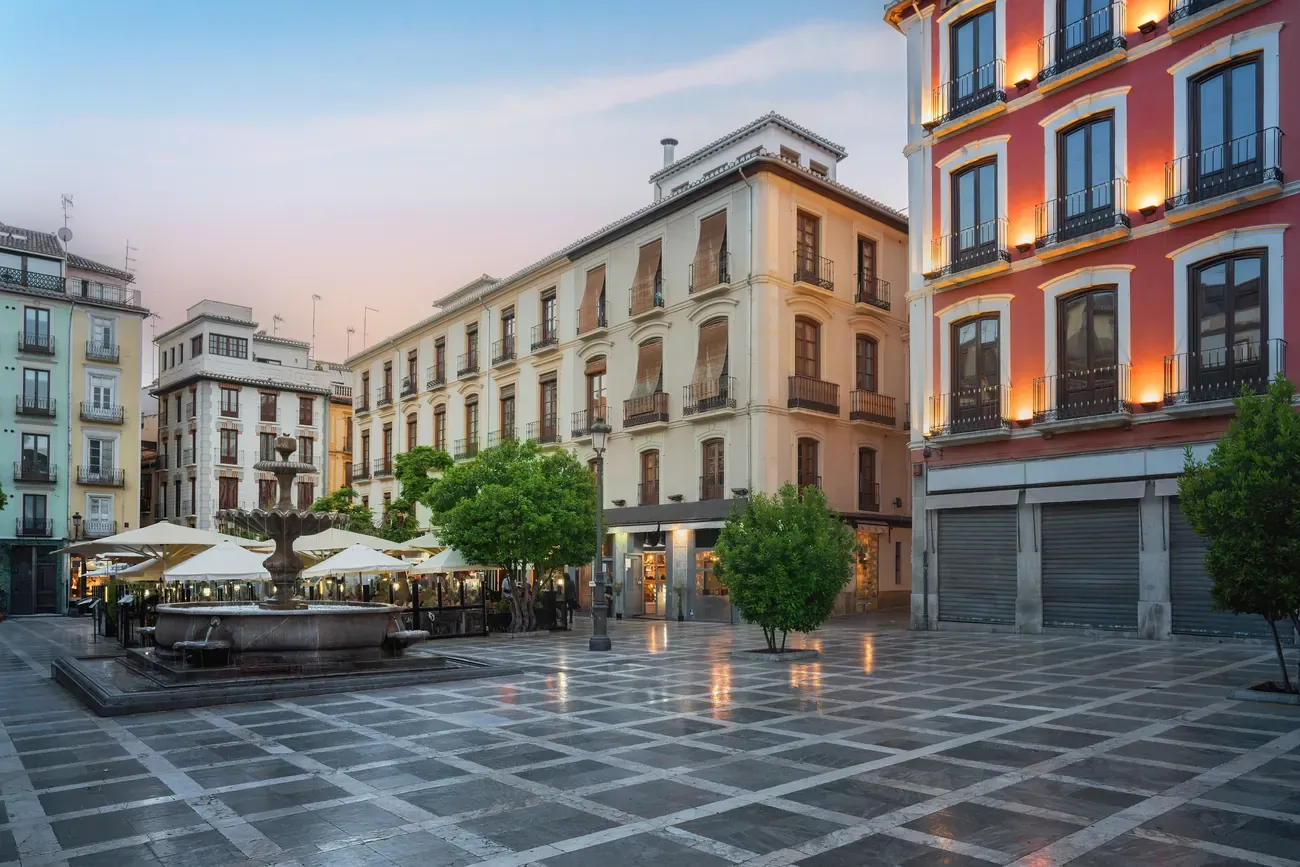
2. Plaza Nueva
Granada's oldest square opens at the foot of the Alhambra hill, on ground where the Darro river still runs unseen beneath the paving. Tapas terraces spread across it below the Renaissance front of the Real Chancillería, the old royal court of appeal, with the church of Santa Ana closing the eastern end. The square works as the hinge of the old city: Carrera del Darro leads off towards Sacromonte, Cuesta de Gomérez climbs into the Alhambra woods, and the flat centre begins a few steps west. Nights are loud with terrace chatter, while early morning leaves it quiet enough for an unhurried look up at the hillside.
Location: Between Calle Reyes Católicos and Carrera del Darro, historic centre
Access: Free public square, open at any hour
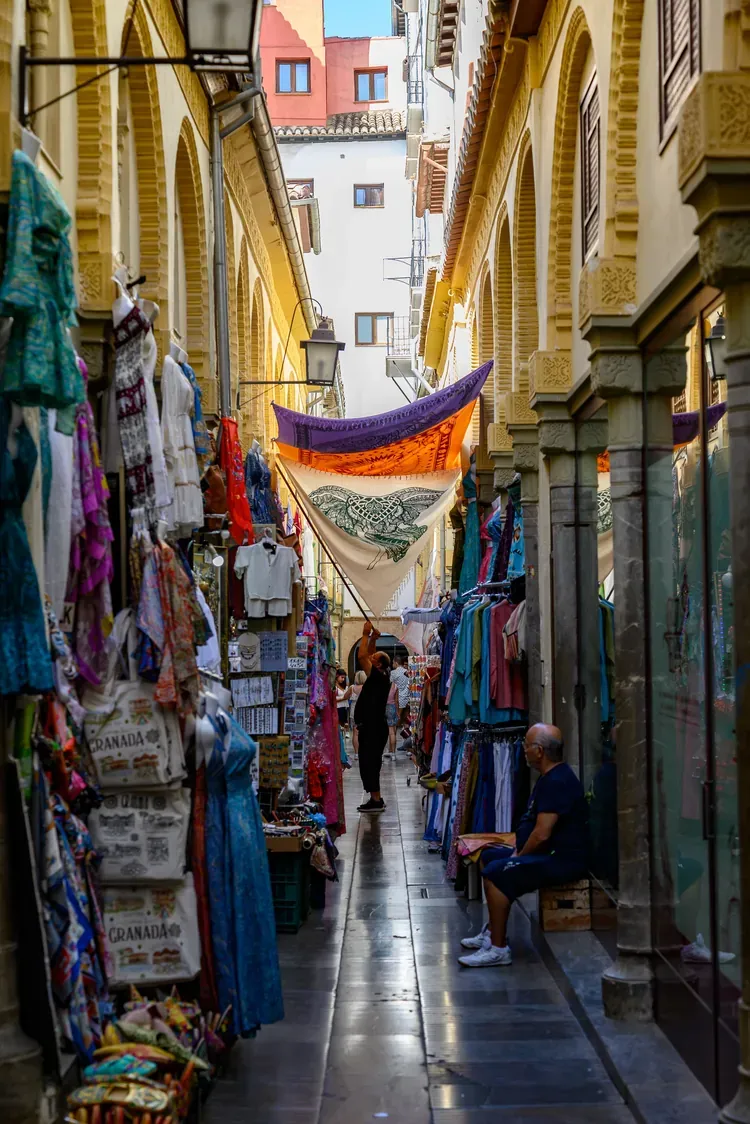
3. Alcaicería
Narrow lanes behind the cathedral mark where the Nasrid silk exchange once traded, a walled bazaar that kept its own gates and guards. Fire destroyed the medieval quarter in the 19th century, and what stands today is a romantic rebuild: horseshoe arches, carved plasterwork and passages barely two people wide, now hung with lamps, marquetry boxes, ceramics and leather. Plaza de Bib-Rambla opens at the southern end, Corral del Carbón waits a couple of minutes east, and the cathedral wall rises behind the stalls. Shops shutter through the afternoon lull, so weekday mornings are the calmest time to browse.
Location: Calle Alcaicería, behind Granada Cathedral
Access: Free to walk; individual shops keep their own hours
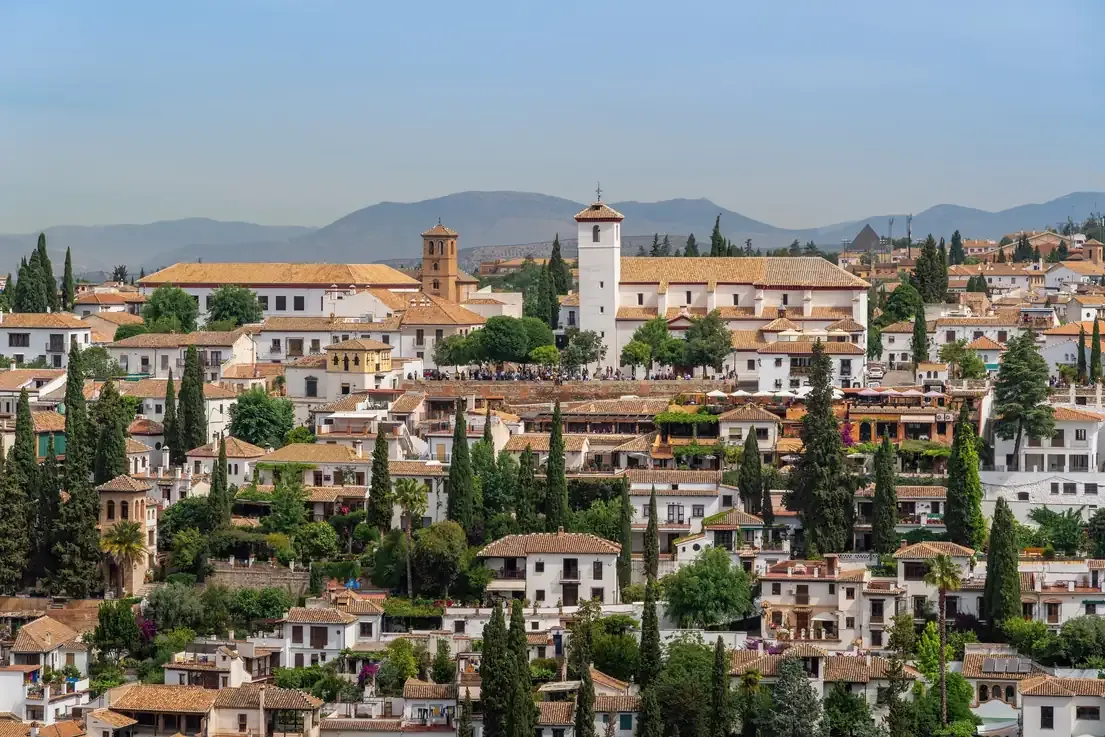
4. Mirador de San Nicolás
The terrace beside the church of San Nicolás holds Granada's defining view: the red towers of the Alhambra along the ridge opposite, the Generalife gardens above them and, on clear days, the Sierra Nevada snowline behind. Guitarists, students and tea shops crowd the low wall at sunset, when the walls turn copper and the square fills to its edges. Mid-morning brings the same panorama with room to stand, and the climb through the whitewashed lanes of the Albaicín is half the pleasure. Nothing here is gated or timed, and the viewpoint stays open long after dark.
Location: Plaza de San Nicolás, upper Albaicín
Access: Free public viewpoint, open at all hours
5. Granada Cathedral
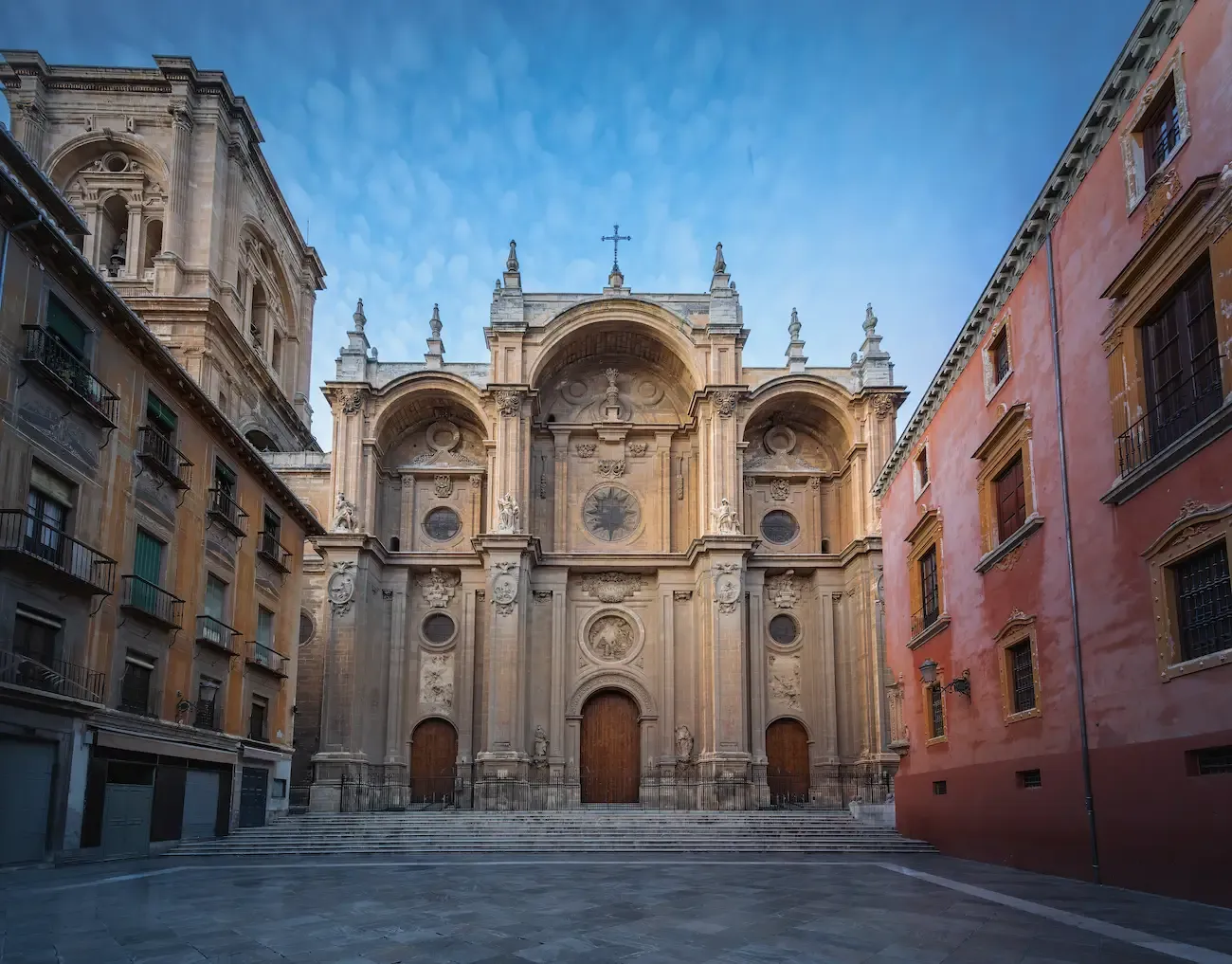
Five naves rise inside the cathedral the Catholic Monarchs raised over the city's main mosque, a Renaissance interior of white stone and enormous piers. Light falls through tall stained glass into the Capilla Mayor, a circular sanctuary ringed by columns and hung with paintings of the Virgin, while the sacristy museum keeps Golden Age canvases, silver and vestments. Outside, the main front faces Plaza de las Pasiegas in three deep arches, a design that broke with every cathedral facade before it. Cultural visits run through the year and pause for services.
Architect: Alonso Cano (main facade) · Style: Renaissance
Location: Plaza de las Pasiegas, historic centre
Access: Ticketed cultural visit, paused during worship · Tickets and tours
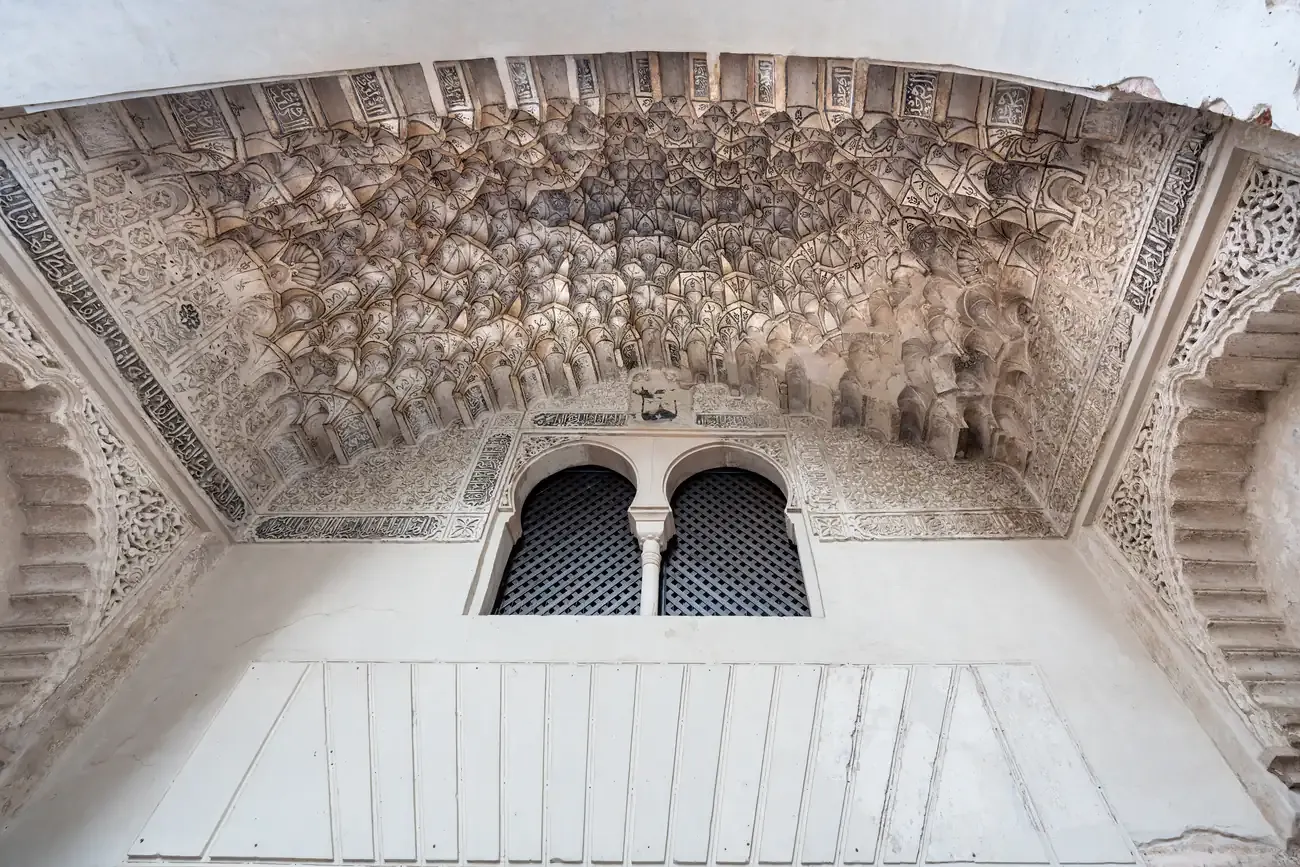
6. Corral del Carbón
Granada's only surviving Nasrid caravanserai stands a few steps from the cathedral quarter, behind a horseshoe gateway carved with Arabic inscription. Merchants once stored goods on the ground floor and slept in the galleries stacked around the brick courtyard, and after 1492 the building served as a coal yard, a playhouse and a tenement before restoration returned it close to its original shape. The courtyard is small, quiet and free of stalls, an unhurried pause between the Alcaicería and Plaza Isabel la Católica, with an exhibition room opening off one side.
Style: Nasrid · Heritage: Bien de Interés Cultural
Location: Calle Mariana Pineda, off Calle Reyes Católicos
Access: Ticketed as one of the Andalusi Monuments, free on Sundays
7. The Royal Chapel
Ferdinand and Isabella chose burial in the city whose conquest in 1492 ended Muslim rule in Iberia, and their marble tombs lie behind a monumental iron screen beside the cathedral. Their daughter Joanna and her husband Philip the Handsome rest alongside, while the crypt below holds the plain lead coffins that actually contain them. The sacristy museum keeps Isabella's Flemish paintings, her crown and Ferdinand's sword, and a gilded Renaissance retable towers over the altar. Cameras stay in bags here: photography and video are not allowed inside.
Style: Isabelline Gothic
Location: Calle Oficios, beside Granada Cathedral
Access: Ticketed; closed Good Friday, 25 December and 1 January · Tickets and tours
8. The Albaicín
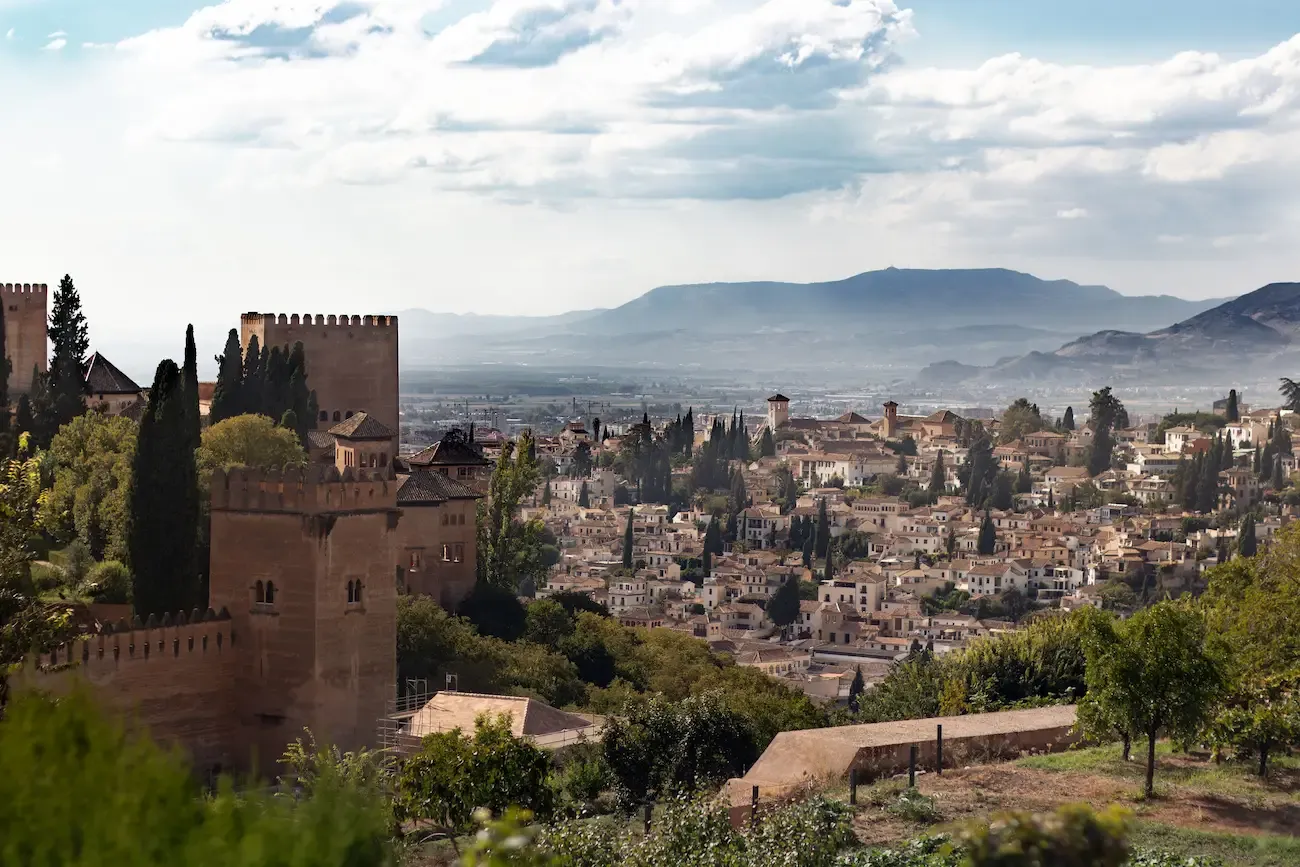
Granada's old Moorish quarter climbs the hill facing the Alhambra in a maze of whitewashed lanes, blind walls and carmen gardens hidden behind their gates. The street plan barely changed after 1492, which is why UNESCO added the district to the Alhambra's World Heritage listing in 1994. Cobbled cuestas link small squares, cisterns and the garden terrace of the Mezquita Mayor, while Carrera del Darro runs below past the brick vaults of El Bañuelo. There is no route to follow and no ticket to buy: the pleasure lies in losing the thread and finding another viewpoint.
Heritage: UNESCO World Heritage Site, listed 1994
Location: Hillside north of Carrera del Darro
Access: Free to wander at any hour
9. Muslim Gravestones of the Alhambra
Look closely at the older walls inside the Alhambra and paler slabs show among the brick and rubble, several carved with Arabic script and Nasrid ornament. They are gravestones. After the surrender of 1492 and the revolt that followed it, the crown took over the Muslim cemeteries of Granada, and their carved markers were reused as ordinary building material in later repairs to the fortress. A number sit in walls near the Puerta del Vino, the gate opening onto the Plaza de los Aljibes, and the Alhambra Museum in the Palacio de Carlos V gathers Nasrid stonework of the same kind.
Location: Puerta del Vino, Calle Real de la Alhambra
Access: Free in the open precinct of the Alhambra; the Nasrid Palaces, Alcazaba and Generalife need a timed ticket
10. Monastery of San Jerónimo
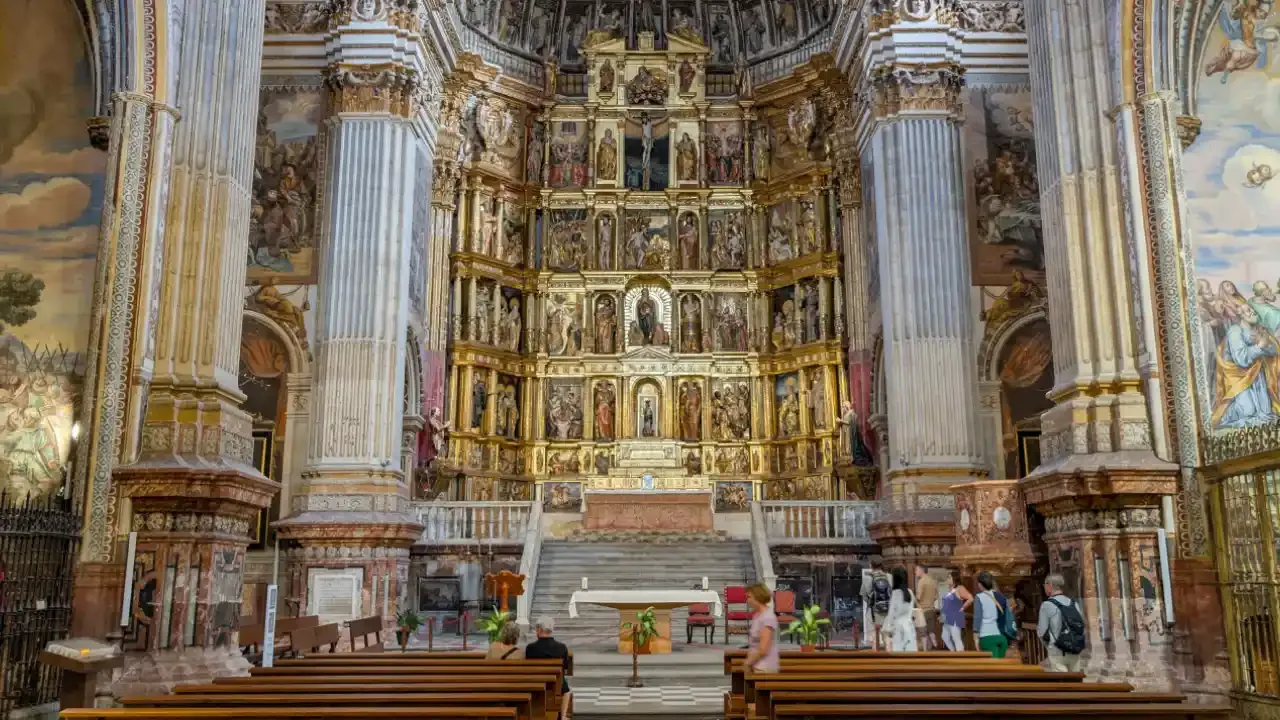
The Catholic Monarchs founded this monastery in 1492, and its Renaissance church became the burial place of Gonzalo Fernández de Córdoba, the Great Captain who won Naples for Spain. Frescoes cover the vaults above his tomb, and a carved retable fills the apse from floor to ceiling with painted saints, warriors and trophies. Two cloisters open off the church, the main one lined with orange trees and the smaller Empress's Cloister behind it, and both rank among the finest in the city. Tourist visits stop while services are held in the church.
Style: Renaissance
Location: Calle Gran Capitán, university quarter
Access: Ticketed; cloisters, common rooms and church
Granada tourist attractions tickets and tours
Upcoming events in Granada
Teenage Fanclub
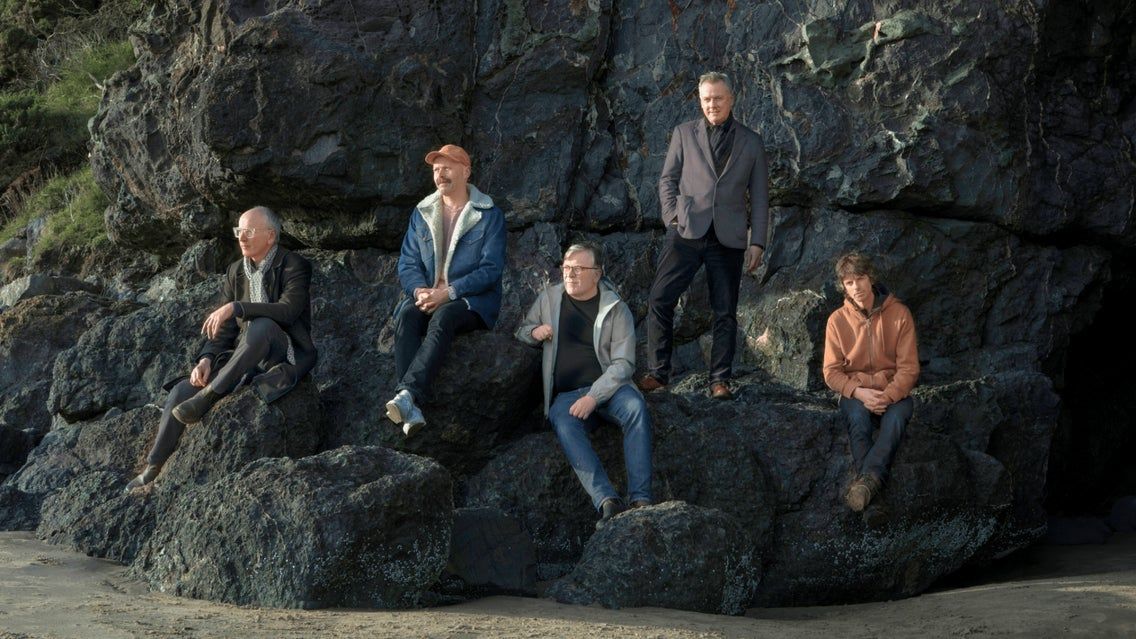
Teenage Fanclub bring the 1001 Músicas, CaixaBank series to Teatro CajaGranada on 6 October at 21:00, the Scottish band formed in Bellshill in 1989 and still touring the guitar pop of Bandwagonesque.

1001 Músicas - CaixaBank: Loquillo
1001 Músicas - CaixaBank: Loquillo plays Palacio de los Deportes on 17 October at 21:30.

Hard GZ
Hard GZ plays Sala Industrial Copera on 13 March 2027 at 21:00.

Sun and Snow Weekend 2027
Sun and Snow Weekend 2027 plays Parking Peñones/Sierra Nevada on 18 April 2027.
Free landmarks and viewpoints in Granada
Sacromonte
Camino del Sacromonte and its paths past whitewashed cave dwellings cost nothing to walk, day or night. The cave museum and flamenco zambra shows charge separate admission; a stroll past the doorways is the free version of the same visit.
Carmen de los Mártires
Cypress terraces, a duck pond and wandering peacocks fill these 19th century municipal gardens on the way up to the Alhambra. Entry is free every day, though the gardens close at midday and reopen in the afternoon, with shorter hours in winter.
Federico García Lorca Park
The public park around Lorca's former summer home is free to enter every day, its rose garden and tree-lined paths filling the family's old orchard on the edge of the Realejo. The house itself, Huerta de San Vicente, charges its own admission.
Puerta de Elvira
This Nasrid gate has guarded the Albaicín's entrance since the 11th century, reinforced with towers under Yusuf I in the 14th. Protected as a historic monument since 1896, the freestanding arch stands open to view at all hours, with no ticket needed.
Basílica de Nuestra Señora de las Angustias
Granada's patron saint is venerated in this Baroque basilica by the Genil river, carried through the streets each September. Entry is free during opening hours: weekday mornings from 11:30 to 13:00, plus Tuesday and Thursday evenings from 18:00 to 19:30.
Centro José Guerrero
This modern art museum dedicated to the Granada-born painter José Guerrero sits on Calle Oficios, steps from the cathedral, with free admission to both the permanent collection and temporary shows. It closes all day Monday.
Sacromonte caves and other secret corners of Granada
Cave Houses Museum
Eleven cave dwellings dug into the hillside, restored as kitchen, stable and craft workshops, with a terrace looking straight across at the Alhambra.
Location: Barranco de los Negros, Sacromonte · Website
Abbey of the Holy Caves
The Abadía del Sacromonte crowns Monte Valparaíso above the caves where lead books and martyrs' relics came to light in the 1590s.
Location: Camino del Sacromonte · Website
Palacio de los Olvidados
A 16th century mansion on a stepped alley, showing instruments of the Inquisition and a Lorca exhibition, with a flamenco stage downstairs.
Location: Cuesta de Santa Inés, Albaicín · Website
Casa de los Tiros
Musket barrels jut from the parapet of this fortified 16th century house, now a museum of Granada's popular art and traveller lore.
Location: Plaza del Padre Suárez, Realejo · Website
Chorrojumo Statue
A statue of Mariano Fernández, the Sacromonte blacksmith who posed for painters and guided visitors around the Alhambra in the 1800s.
Location: Camino del Sacromonte, edge of the Albaicín
Why Granada is worth visiting
Granada packs one of the clearest final chapters of Al-Andalus into a single skyline: the Alhambra, the fortified palace city the Nasrid dynasty built as its rule over southern Iberia narrowed to this one kingdom, and the Albaicín across the river valley, the old Moorish quarter that survived the 1492 Reconquest largely intact. Granada still serves that history with one of Spain's last strongholds of free tapas, a small plate arriving unasked with almost every drink ordered at a bar.
Neighbourhoods to know
The Albaicín and Sacromonte face the Alhambra across the Darro valley, a tangle of carmen gardens and cave dwellings where flamenco still plays after dark. The Realejo, the old Jewish quarter, spreads south of the Alhambra hill with quiet squares and tapas bars. Around Granada Cathedral and the Royal Chapel, the flat centre gathers Plaza Nueva, the Alcaicería's old silk lanes and Gran Vía's banks and shops.
When to go and for how long
April to June and September to October bring mild Andalusian weather and thinner crowds than the peak summer months, when temperatures regularly pass 35 degrees. Holy Week fills the centre with processions and crowds of its own. Two to three full days cover the Alhambra and the historic centre at an easy pace, with a third day free for Sacromonte or the Cartuja monastery.
Getting around
The Alhambra hill, the Albaicín and the flat centre are all walkable, if steep in places, and minibuses C30, C32 and C35 run every 8 to 12 minutes from Plaza Isabel la Católica up to the monument. High speed trains reach Madrid in just over three hours since the Antequera-Granada line reopened in 2019, and the airport bus runs from Federico García Lorca Airport into the centre in about 45 minutes. The Alhambra was among the first five properties in the country inscribed by UNESCO, back in 1984, which keeps it at the top of most rankings of top attractions in Spain.