
Tourist attractions in Lisbon
Known for
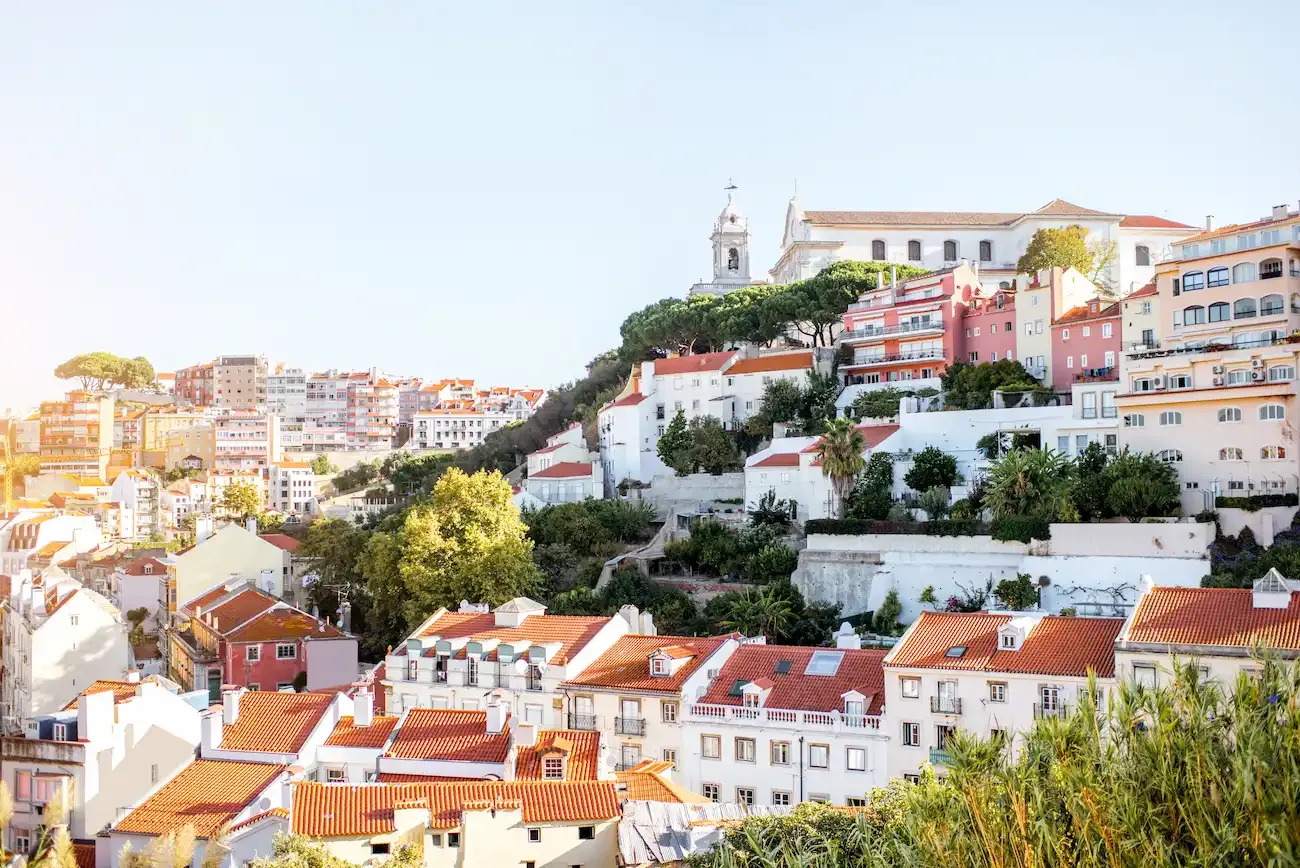
Hilltop viewpoints, azulejo tiles and Age of Discovery monuments
Must-see landmarks
Belem Tower, Jeronimos Monastery and Sao Jorge Castle
Days needed
3 to 4 full days for the main sights
World Heritage
Jeronimos Monastery and Belem Tower, UNESCO listed since 1983
Top 12 tourist attractions in Lisbon
Here are the tourist attractions in Lisbon worth planning around, starting with Sao Jorge Castle, Jeronimos Monastery and Belem Tower. The 12 top sights come first, then 25 hidden gems, free things to do, upcoming events, tickets and visitor FAQs. The 12 sights are numbered on the free Lisbon tourist map, with the hidden gems and a walking route.
1. Sao Jorge Castle
Eleven towers and a long curtain wall crown Lisbon's highest hill, where a Moorish citadel became the royal palace of Portugal's kings until the 1755 earthquake closed that chapter. Peacocks stalk the gardens inside the walls, an archaeological site opens layers from Iron Age huts to a Muslim quarter, and the wall walk pays for the climb with the Baixa grid, the Tagus and the bridge beyond.
Location: Rua de Santa Cruz do Castelo, on the hill above Alfama
Access: Ticketed, daily 9:00 to 21:00 from March to October and 9:00 to 18:00 from November to February, last entry half an hour before closing · Tickets and tours
2. Jeronimos Monastery
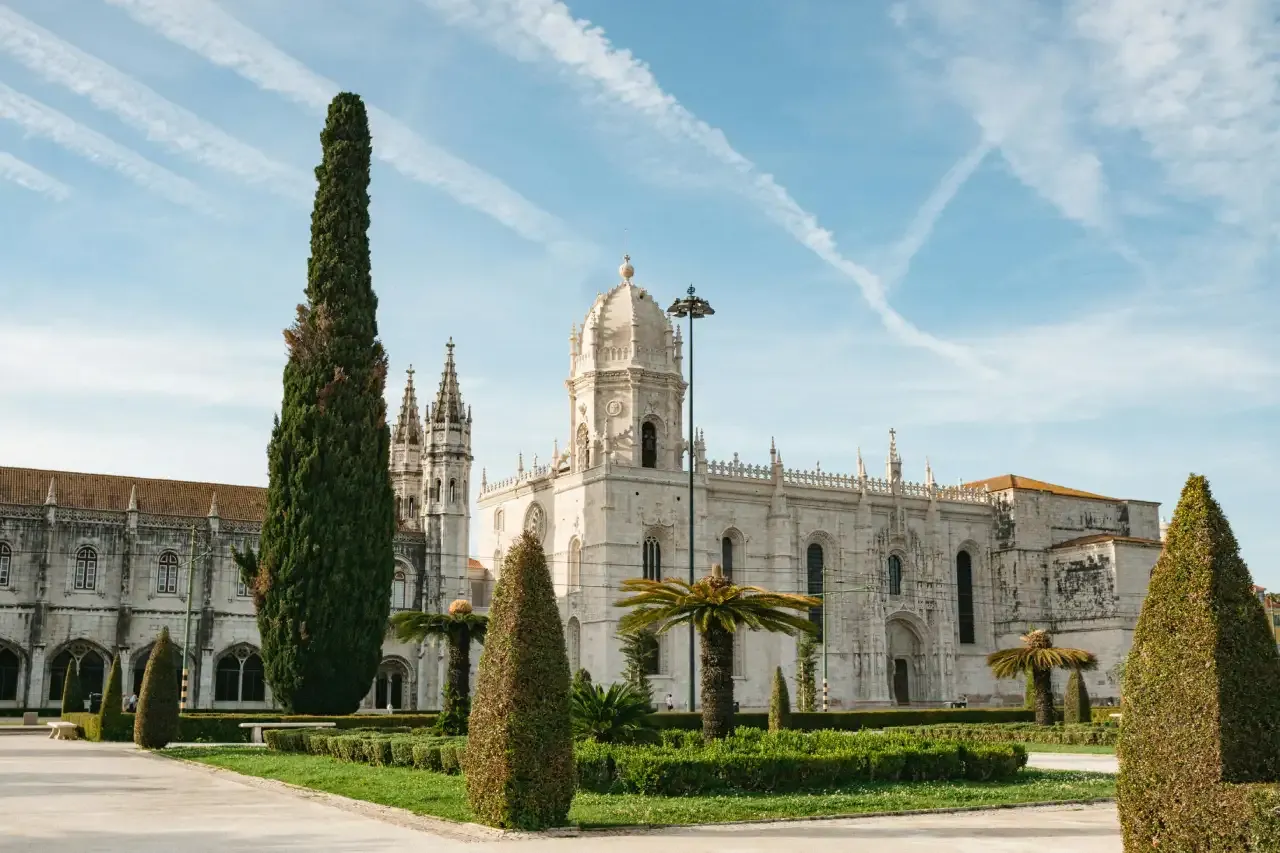
Ordered by Manuel I beside the shore where Vasco da Gama sailed for India, the monastery went up from the first years of the 16th century on the proceeds of the spice trade. Diogo de Boitaca began it, Diogo de Torralva and others carried it on, and the result is the fullest statement of Manueline stone anywhere: ropes, corals and armillary spheres cut into limestone. The two storey cloister is the set piece, and da Gama and the poet Camoes lie inside the church.
Style: Manueline · Heritage: UNESCO World Heritage Site since 1983
Location: Praca do Imperio, Belem
Access: Ticketed, closed on Mondays, last entry at 17:00 · Tickets and tours
3. Belem Tower
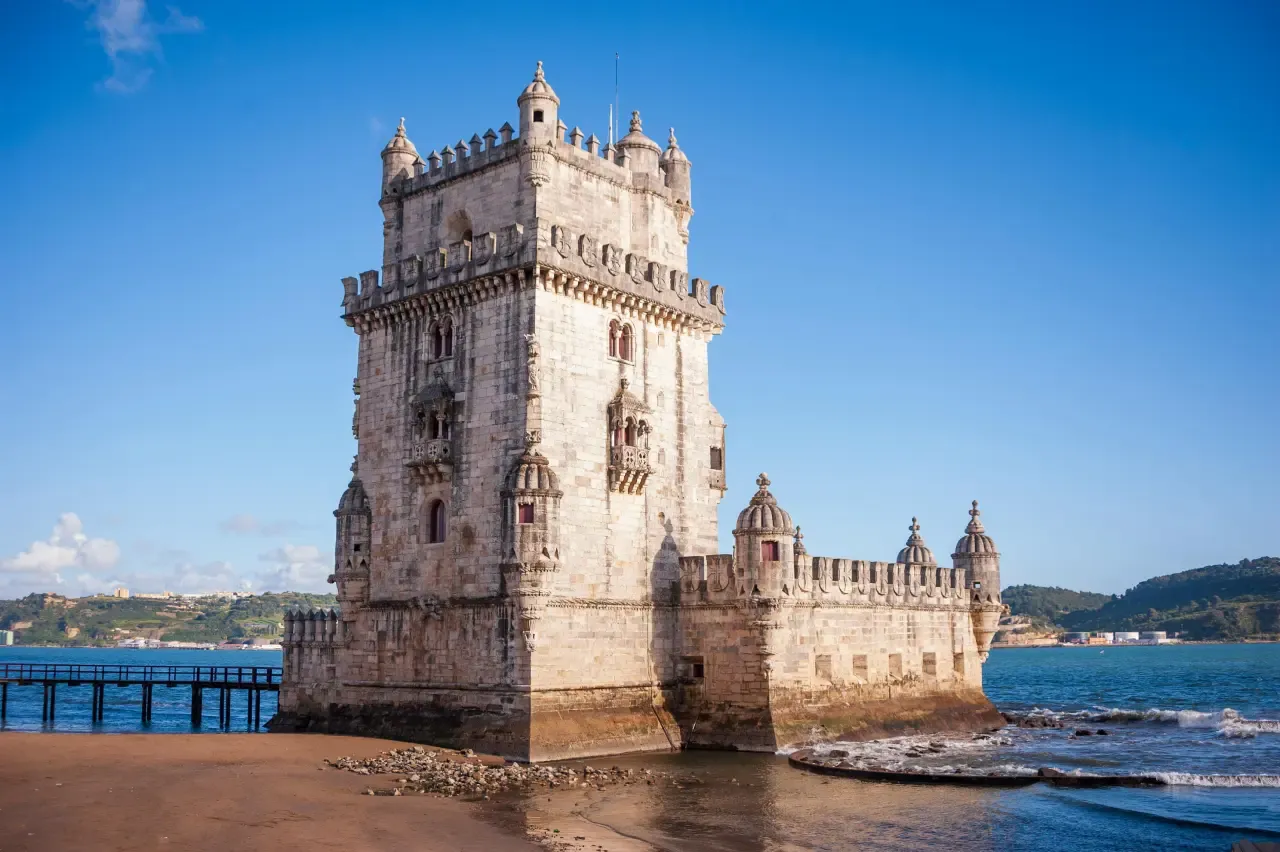
Raised between 1514 and 1519 as a gun platform guarding the mouth of the Tagus, the tower sets a squat bastion under a loggia of Venetian manners and Manueline carving: stone ropes, armillary spheres and, beneath one of the western corbels, a rhinoceros head thought to portray the animal shipped to Lisbon in 1515 and sent on to the Pope. It reopened in May 2026 after conservation work, with entry now released in timed slots. It also earns its silhouette from the water on Tagus river boat tours.
Heritage: UNESCO World Heritage Site since 1983
Location: Avenida Brasilia, Belem
Access: Timed entry · Tickets and tours
4. Praca do Comercio
Lisbon's grand riverside square was laid out after the earthquake of 1755 on the site of the royal palace that the waves destroyed, which is why locals still call it Terreiro do Paco. Yellow arcaded buildings from the Pombaline rebuilding close three sides, the fourth opens onto the Tagus at the marble steps of the Cais das Colunas, and the bronze King Jose I rides in the middle on a horse trampling snakes. The Arco da Rua Augusta frames the way into the Baixa grid, and a lift inside it climbs to a terrace over the square.
Architect: Eugenio dos Santos · Style: Pombaline
Location: Baixa, on the Tagus waterfront
Access: Free at any hour; the viewpoint on the arch is ticketed
5. Lisbon Oceanarium
Built for Expo 98 on the river in Parque das Nacoes, the Oceanario is one of the largest indoor aquariums in Europe and is planned around a single idea: one global ocean. A central tank of five million litres holds sharks, rays and a slow sunfish, and visitors circle it on two levels while four side habitats recreate the Atlantic, Antarctic, Pacific and Indian coasts with puffins, penguins and sea otters. The surrounding waterfront, with its cable car and the Vasco da Gama tower, makes an easy half day away from the old city.
Architect: Peter Chermayeff · Opened: 1998
Location: Esplanada Dom Carlos I, Parque das Nacoes
Access: Ticketed, open every day
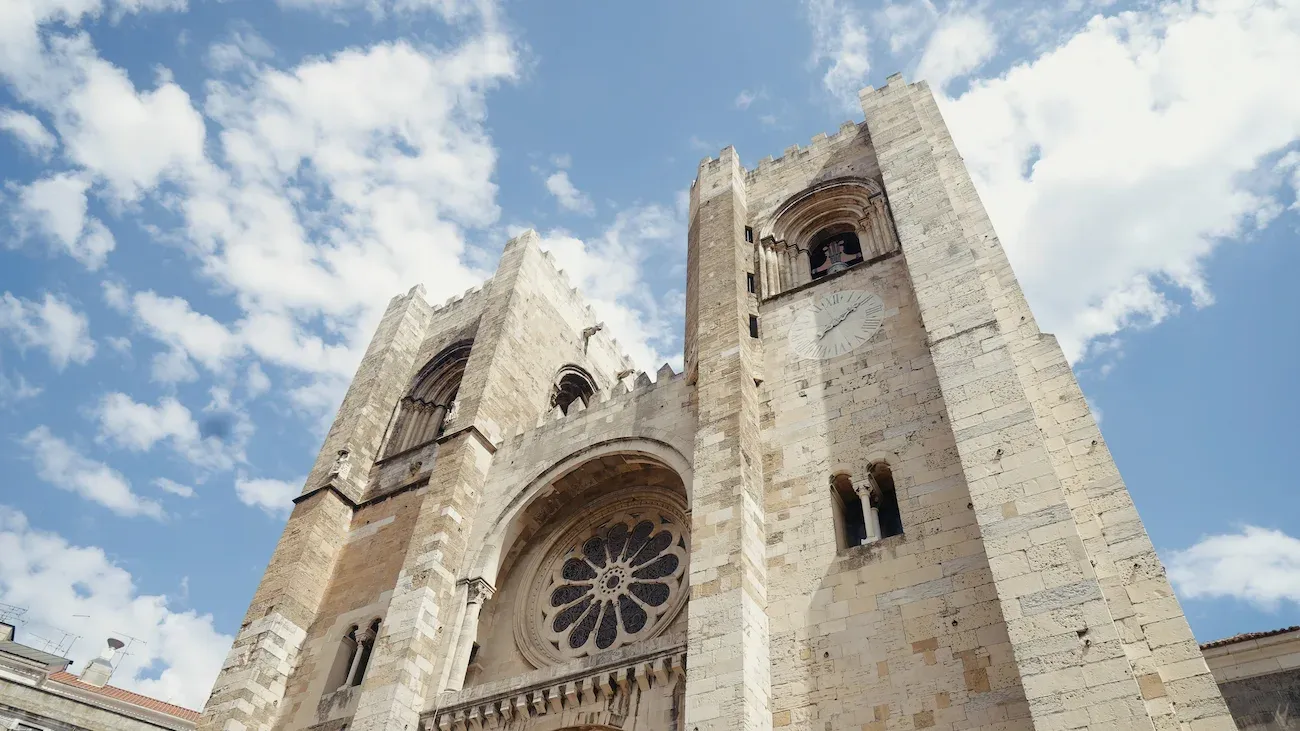
6. Lisbon Cathedral
The city's oldest church went up in the 12th century, straight after Lisbon was taken from Muslim rule, and its twin bell towers and blind arcading still read more like a fortress than a cathedral. Earthquakes rearranged it repeatedly, which is why a Romanesque nave leads on to a Gothic ambulatory and a baroque sacristy, while the cloister sits over excavations that have exposed Roman, Visigothic and Moorish layers.
Style: Romanesque, Gothic and baroque
Location: Largo da Se, Alfama
Access: Ticketed for the visit, which covers the naves, the high choir and the treasury museum. Open Monday to Saturday, closed on Sundays and religious holidays, with a space kept free for prayer.
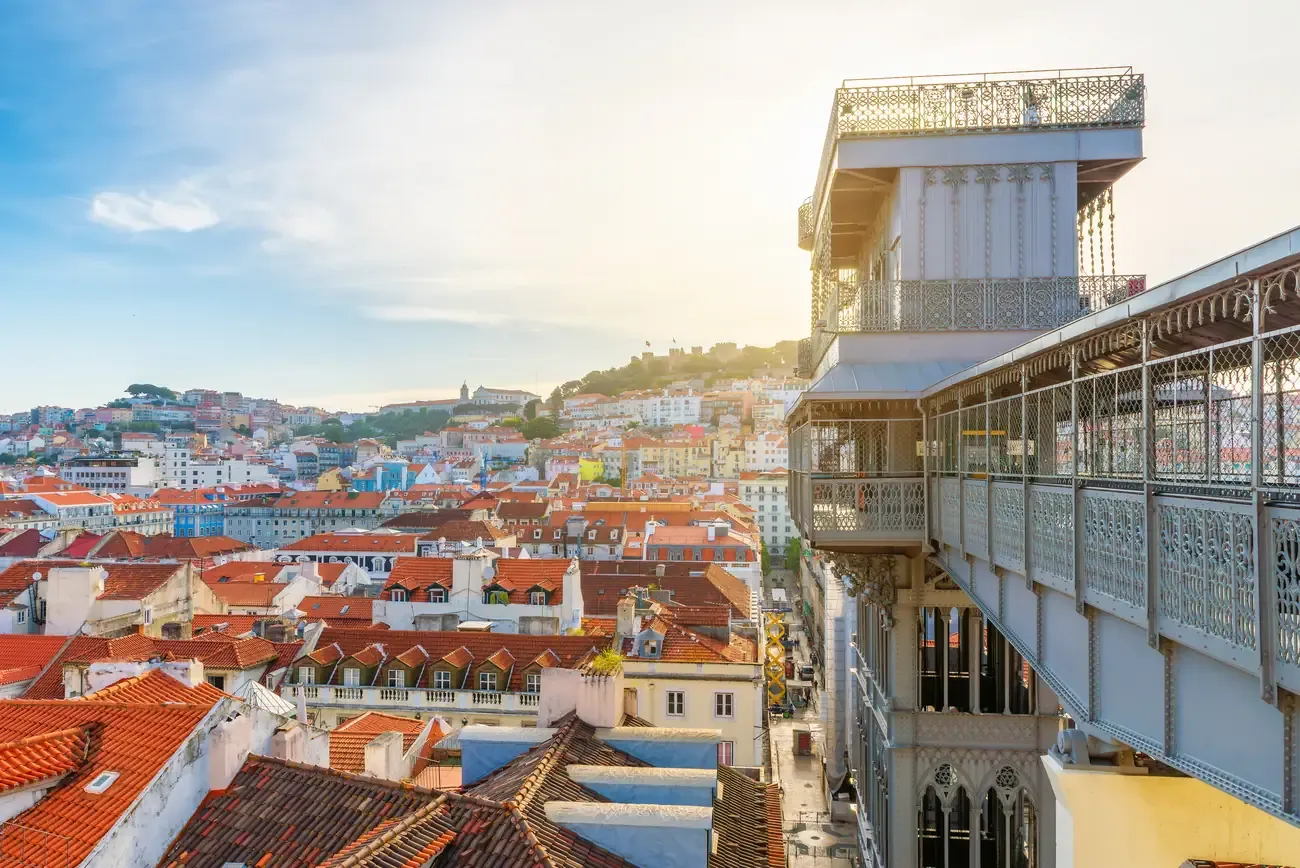
7. Santa Justa Lift
An iron tower dropped into the alleys of the Baixa in 1902, the lift spares walkers the climb from Rua do Ouro up to the terrace at Largo do Carmo. Raoul Mesnier du Ponsard designed it, steam drove it at first and electric motors took over in 1907. The cast iron tracery and wooden cabins made it a landmark long before it became a queue, and a walkway at the top links it to the Carmo ruins.
Engineer: Raoul Mesnier du Ponsard · Opened: 1902
Location: Rua de Santa Justa, Baixa
Access: Ticketed, on the same fares and passes as the trams. Carris lists the rooftop viewing platform as closed for works, so check the operator's service updates first.
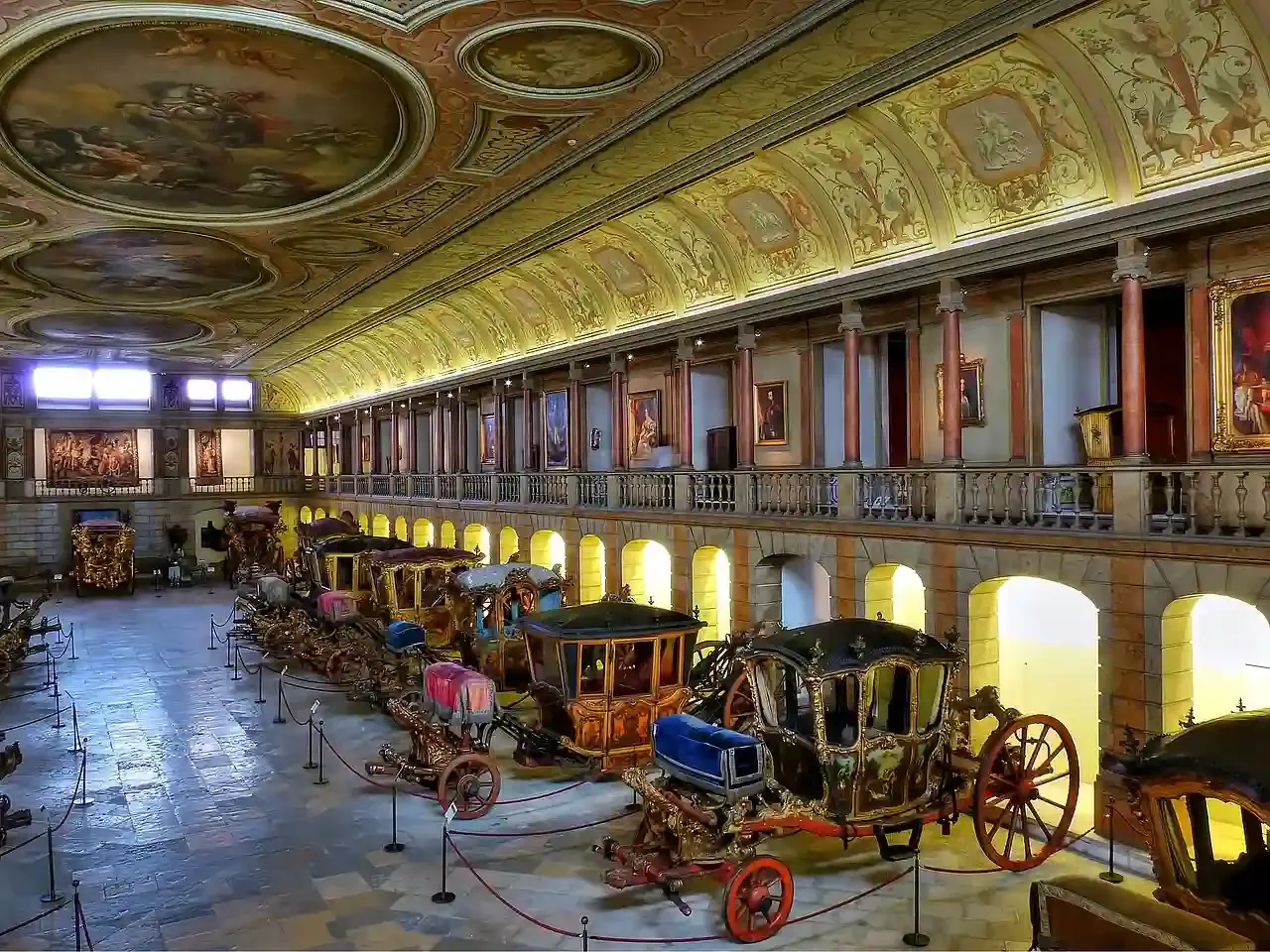
8. National Coach Museum
Portugal's royal fleet of carriages fills a low concrete pavilion in Belem designed by Paulo Mendes da Rocha with Ricardo Bak Gordon. The coaches run from plain 17th century travelling carriages to the gilded baroque theatre built for a Portuguese embassy to the Pope in 1716, all cherubs, dolphins and allegory laid on in gold leaf. The museum's older home, the royal riding hall across the street, is closed for renovation work.
Architect: Paulo Mendes da Rocha and Ricardo Bak Gordon
Location: Avenida da India 136, Belem
Access: Ticketed, Tuesday to Sunday from 10:00 to 18:00, closed on Mondays
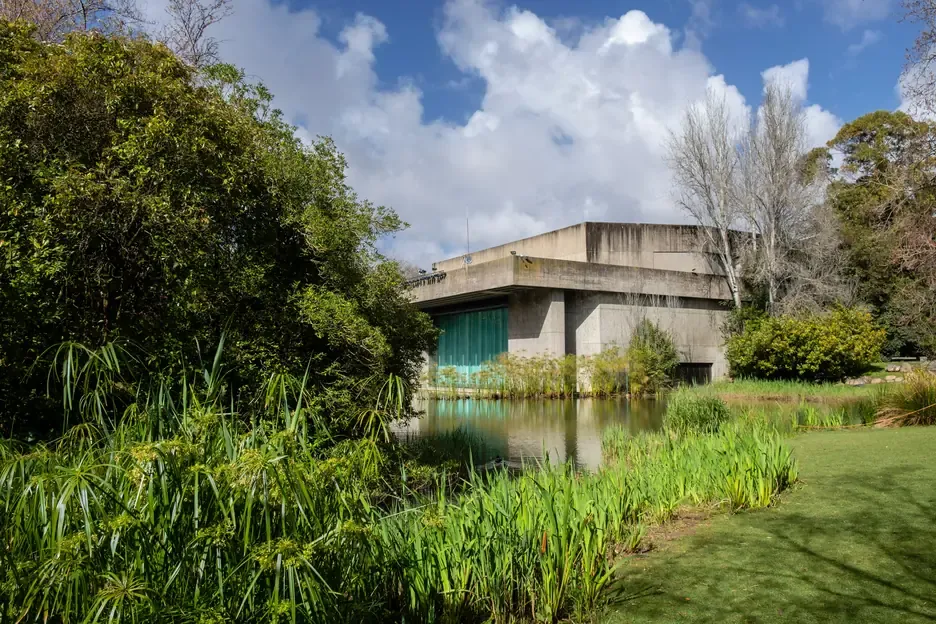
9. Calouste Gulbenkian Museum
The oil magnate Calouste Sarkis Gulbenkian left Lisbon his private collection, and the museum built for it in 1969 is still one of the calmest buildings in the city: low concrete wings opening onto a garden of ponds and old trees. Inside, around a thousand pieces run from Egyptian bronzes and Iznik tiles to Rembrandt, Rubens and a room of Rene Lalique jewellery. The galleries reopened in July 2026 after a long renovation.
Architect: Ruy Jervis d'Athouguia, Pedro Cid and Alberto Pessoa · Opened: 1969
Location: Avenida de Berna 45A
Access: Ticketed, closed on Tuesdays
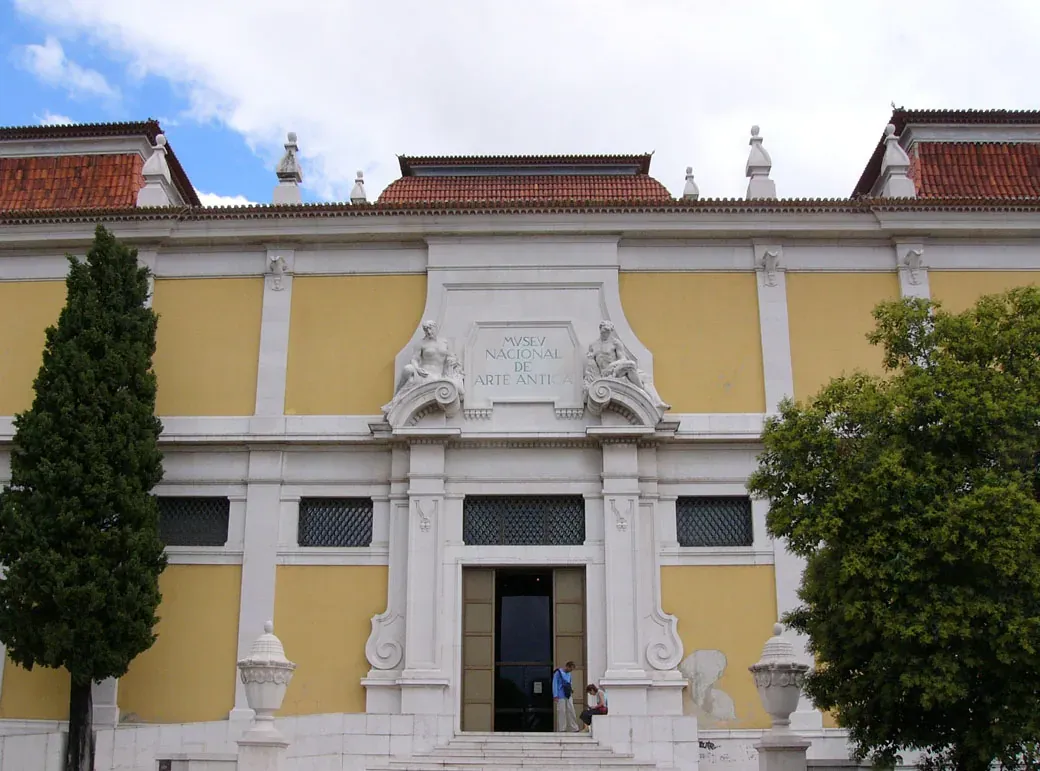
10. National Museum of Ancient Art
Portugal's national collection of early art occupies a 17th century palace above the docks at Janelas Verdes, wrapped around a Carmelite convent chapel. The holdings trace what the country made and what its ships brought home: the Panels of Saint Vincent by Nuno Goncalves, the Temptation of Saint Anthony by Hieronymus Bosch, Namban screens painting Portuguese traders as Japan saw them, and silver, ivory and furniture out of the trading posts. It has been shut since September 2025 for a refit, with the Saint Vincent panels under restoration meanwhile.
Opened: 1884 · Heritage: Immovable Cultural Heritage of Public Interest
Location: Rua das Janelas Verdes, Lapa
Access: Closed for renovation, reopening expected in the second half of 2026
Photo: "Entrance to the National Museum of Ancient Art, Lisbon" by Fulviusbsas (CC BY-SA 3.0).

11. Pasteis de Belem
The shop has been baking pasteis de Belem since 1837 to a recipe it traces to the monastery next door, whose monks turned to selling sweet pastries once the religious orders were dissolved. Behind the small counter at the front opens a warren of azulejo lined rooms seating hundreds, where the tarts arrive warm from the oven with cinnamon and icing sugar to shake over them. The queue on the pavement outside is for the takeaway counter.
Location: Rua de Belem 84 to 92
Access: No admission charge, open daily

12. A Ginjinha
One narrow room on Largo de Sao Domingos has been pouring ginjinha since 1840, the sour cherry liqueur that Lisbon drinks standing on the pavement outside. The order is com elas or sem elas, with or without the steeped cherries at the bottom of the glass, handed across a counter worn smooth by generations of drinkers. The square outside, beside the fire scarred Church of St. Dominic, takes the overflow in the early evening.
Location: Largo de Sao Domingos 8
Access: No admission charge, drinks served at the counter
Tickets for Lisbon tourist attractions
Upcoming events in Lisbon

The Jury Experience – Travessia mortal
The Jury Experience – Travessia mortal comes to Auditório da Associação Nacional das Farmácias on 8 November at 17:00.

The Jazz Room: Um Tributo a Frank Sinatra e Louis Armstrong

HUMOR NEGRO | MARCO PEDROSA
HUMOR NEGRO | MARCO PEDROSA comes to Auditório do Museu da Farmácia on 13 November at 21:30.

Candlelight: Compositores intemporais como Mozart, Bach e outros
Candlelight: Compositores intemporais como Mozart, Bach e outros comes to Altis Grand Hotel on 28 November at 19:30.

Candlelight: O melhor de Vivaldi
Candlelight: O melhor de Vivaldi comes to Academia das Ciências de Lisboa on 18 December at 21:30.
Free things to do in Lisbon
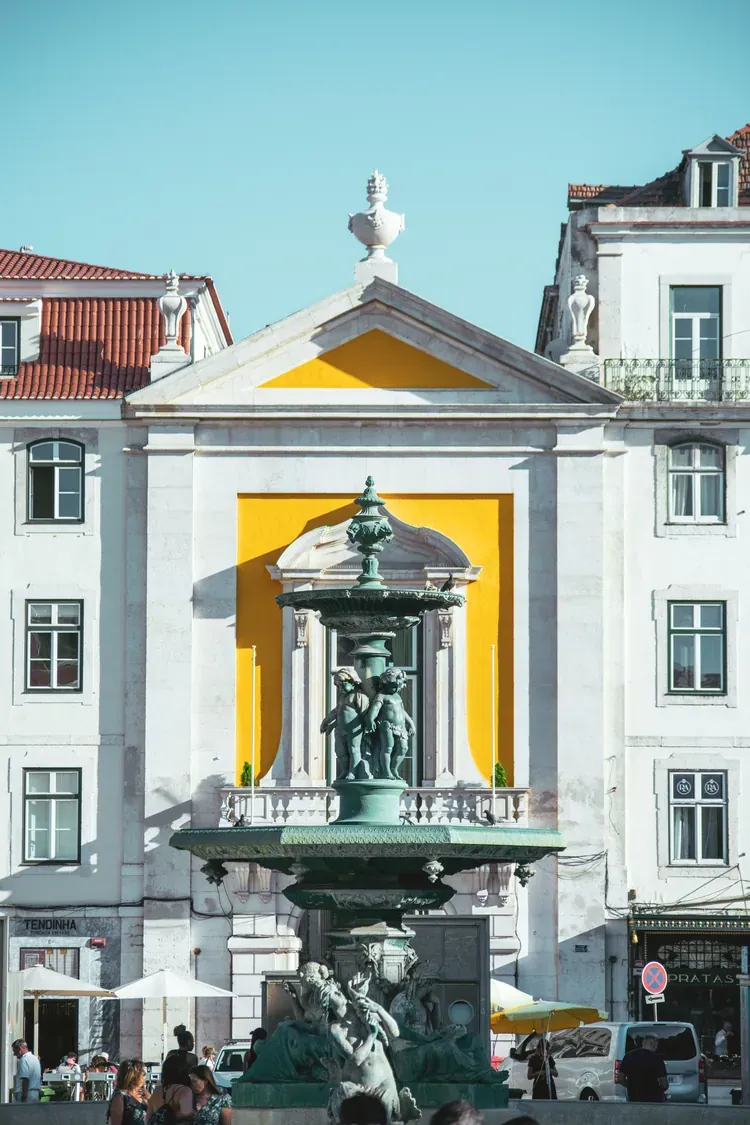
Rossio
Rossio's fountains and the neoclassical Dona Maria II theatre sit in an open square with nothing to pay at any hour. The Santa Justa Lift standing nearby is a separate paid ride, its fare covering only the climb up, not the square around it.
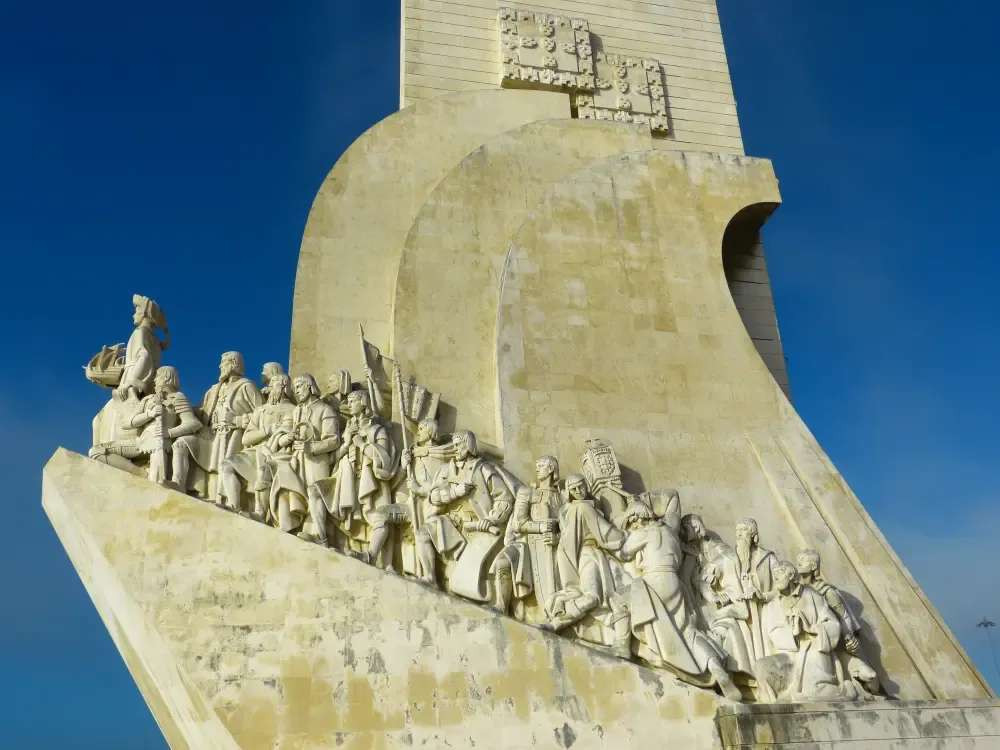
Monument to the Discoveries
This Belem landmark shaped like a ship's prow can be seen and photographed from ground level at no cost, with its ramps and carved figures of Portuguese navigators open to walk around freely. Only the climb to the top platform, the exhibition and the film inside need a paid ticket.
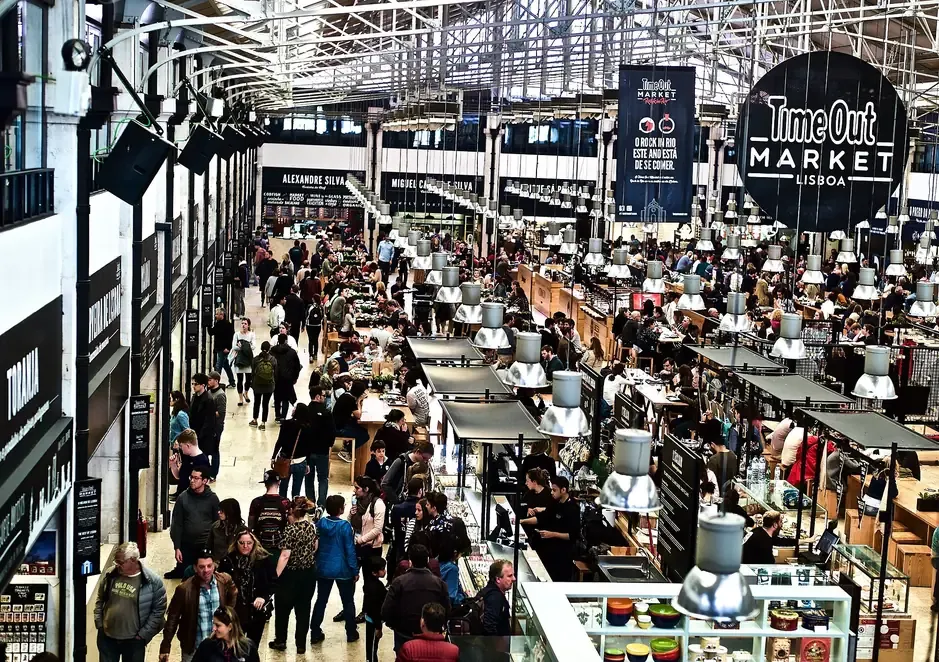
Time Out Market
Walking into the Belle Epoque iron hall of Time Out Market by Cais do Sodre costs nothing, and browsing stalls from dozens of the city's restaurants is free. Only the food and drink bought at each counter comes with a bill, so visitors can look before choosing.
Photo: "Time Out Market Lisboa interior" by Pedro Ribeiro Simões (CC BY 2.0).
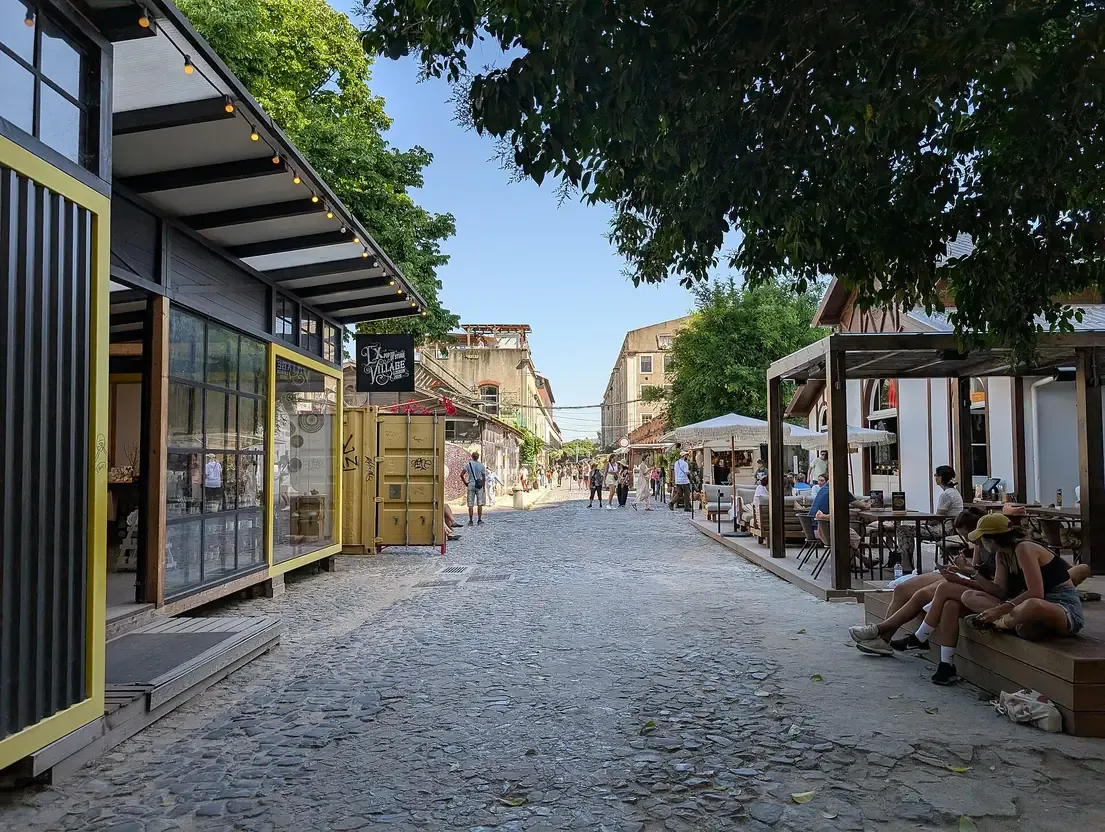
LX Factory
This creative complex under the 25 de Abril bridge in Alcantara costs nothing to wander, and its street art, courtyards and the Ler Devagar bookshop, built from salvaged machinery, are free to explore. Only what's bought inside its shops and cafes comes with a price.
Photo: "LX Factory creative complex in Alcantara" by Philip Mallis (CC BY-SA 4.0).
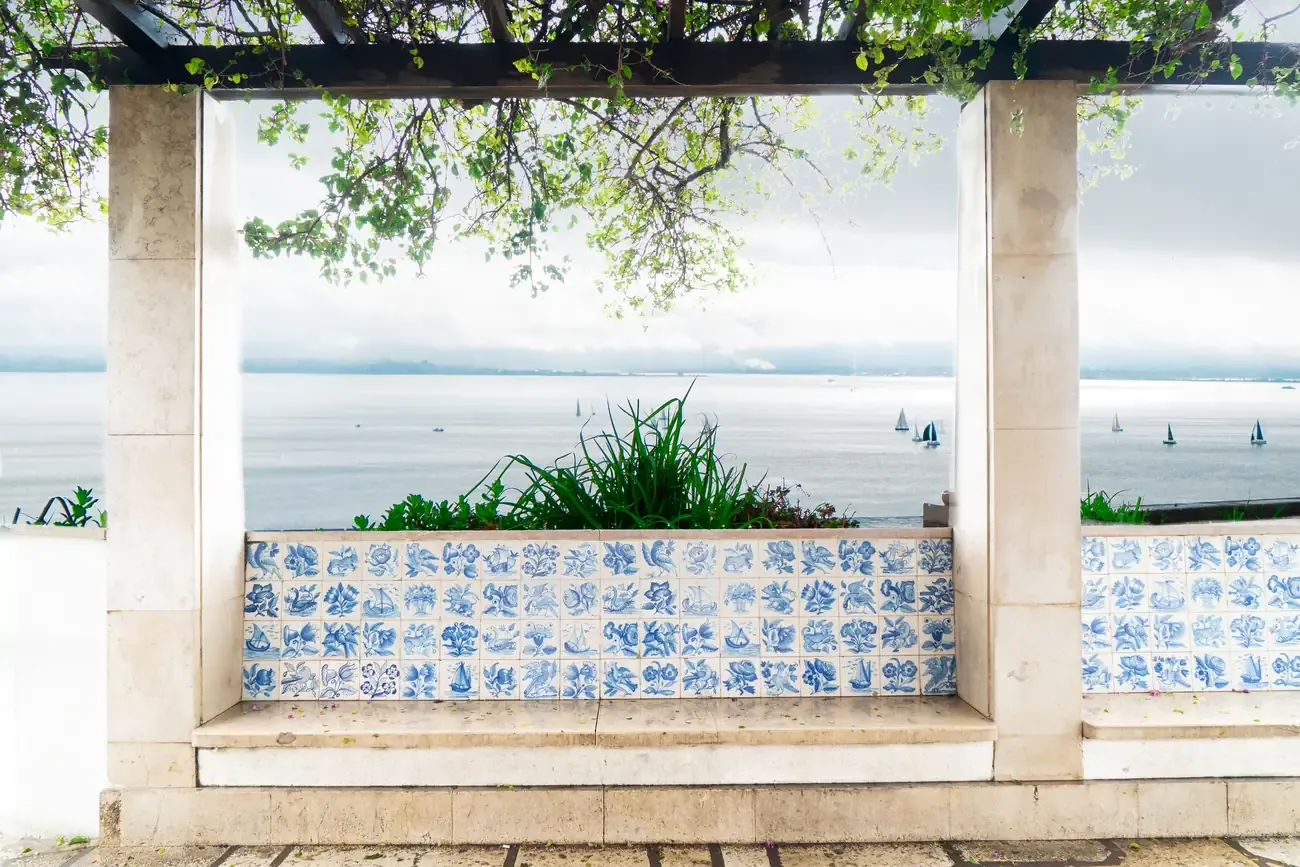
Miradouro de Santa Luzia
A landscaped terrace beside the Church of Santa Luzia frames Alfama's rooftops and the Tagus beyond an azulejo panel showing Praca do Comercio before the 1755 earthquake, one of Lisbon's most photographed viewpoints and free to reach at any hour.
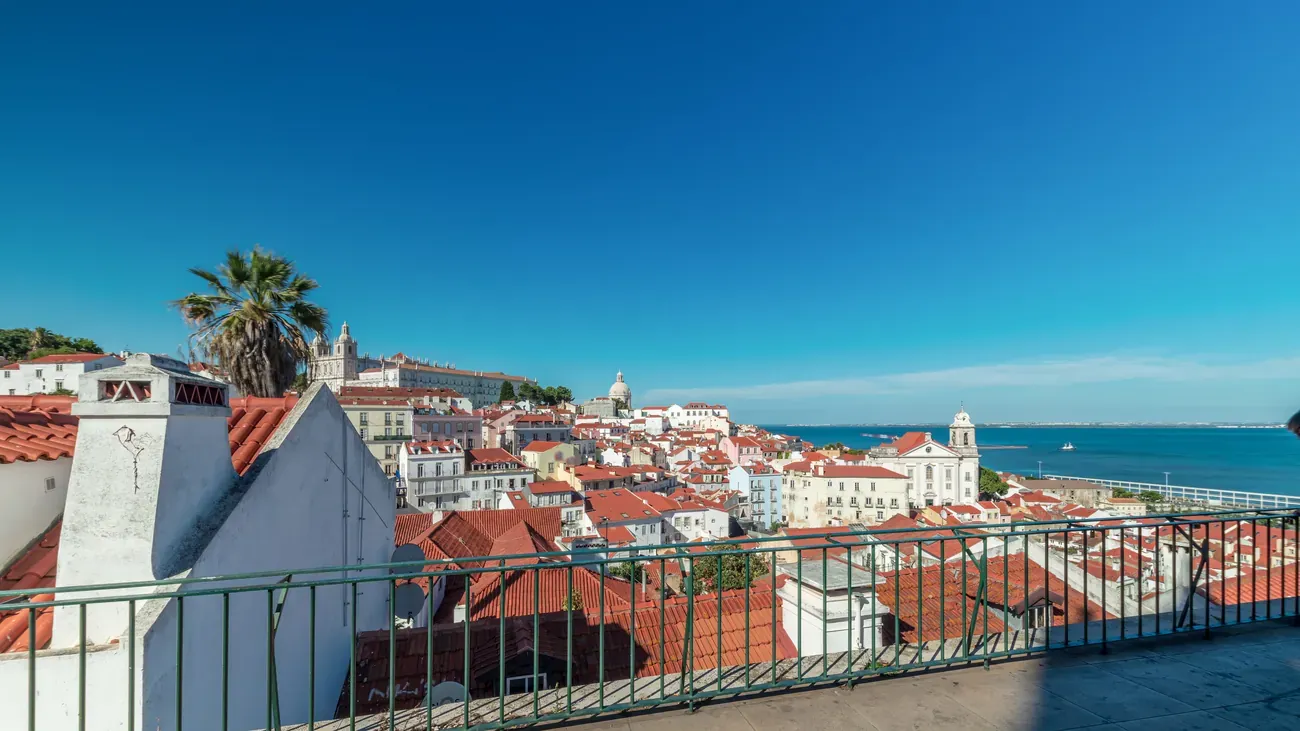
Miradouro das Portas do Sol
This hilltop terrace at the edge of Alfama opens onto the Tagus and the domes of Sao Vicente de Fora, framed by azulejo benches and a statue of Saint Vincent. It costs nothing to reach, stays open around the clock, a short walk from the Santa Luzia terrace.
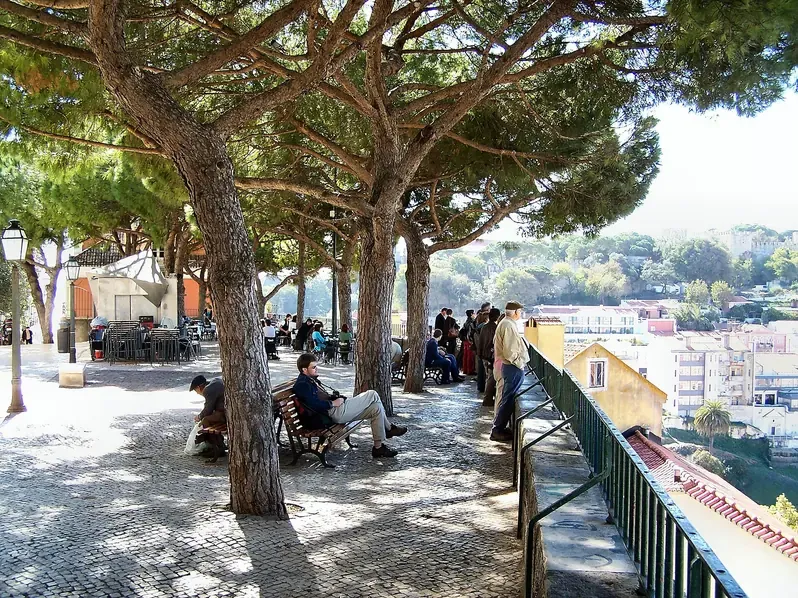
Miradouro da Graca
The hilltop terrace beside the Church of Graca looks across the castle and the historic centre to the river, shaded by pine trees and easiest to reach on tram 28, which stops nearby.
Photo: "Miradouro da Graca viewpoint" by Sacavem (CC BY-SA 3.0).
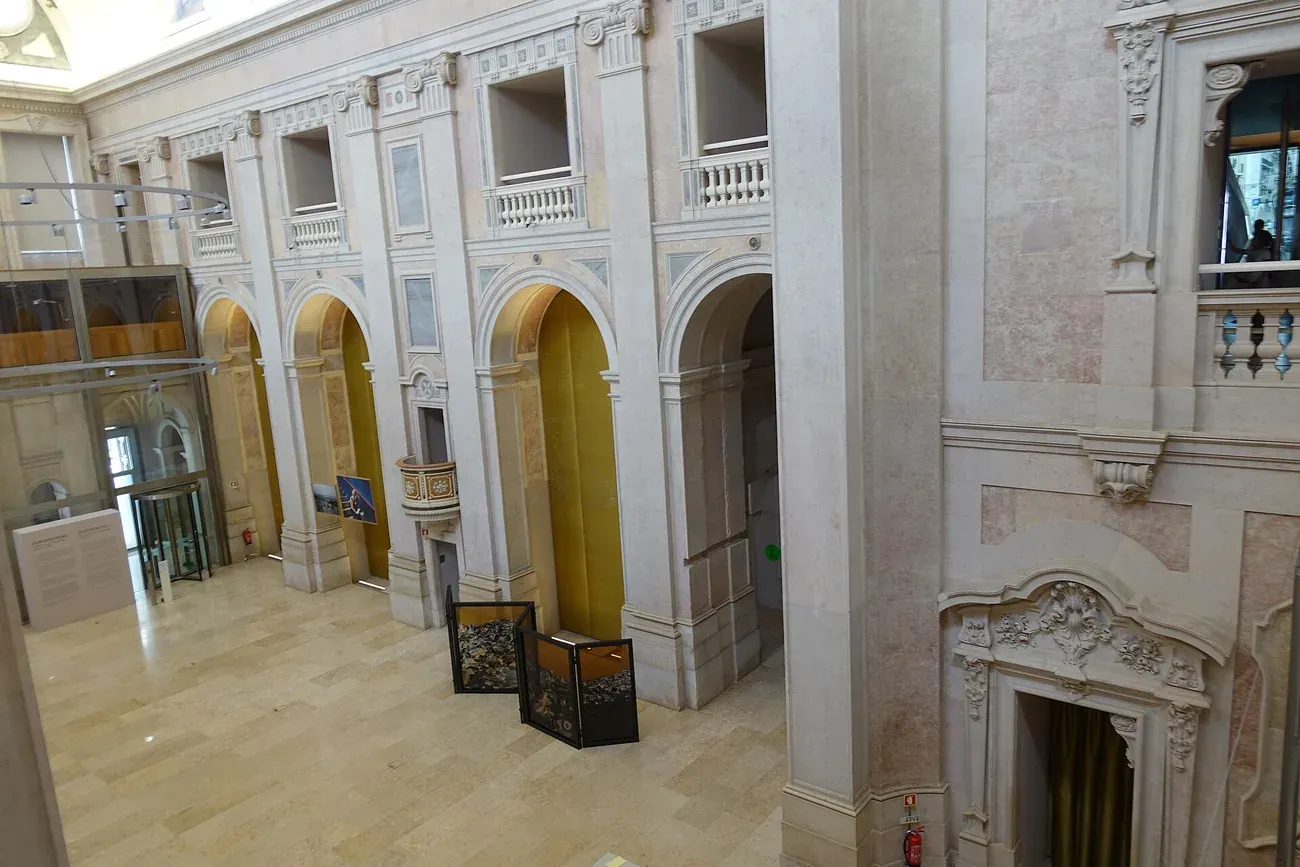
Museu do Dinheiro
The Bank of Portugal's money museum, set in the former Church of Sao Juliao in Baixa, traces currency and trade through rooms where visitors can hold an authentic gold bar. Admission is free from Wednesday to Sunday, 10:00 to 18:00, and it is closed Monday and Tuesday.
Photo: "Museu do Dinheiro interior hall" by Joseolgon (CC BY-SA 4.0).
Gulbenkian Garden
The gardens of the Calouste Gulbenkian Foundation spread across lawns, ponds and old trees near Parque Eduardo VII, free to walk through from sunrise to sunset daily. Museums on the grounds, such as the Founder's and Modern Collections, charge separate admission.

Feira da Ladra
Lisbon's flea market has traded secondhand furniture, records and curiosities at Campo de Santa Clara since the 13th century, behind the Sao Vicente monastery. Browsing the stalls costs nothing on Tuesday and Saturday mornings, prices set by haggling.
Photo: "Feira da Ladra flea market" by Adrian Scottow (CC BY-SA 2.0).
Museums and odd collections in Lisbon
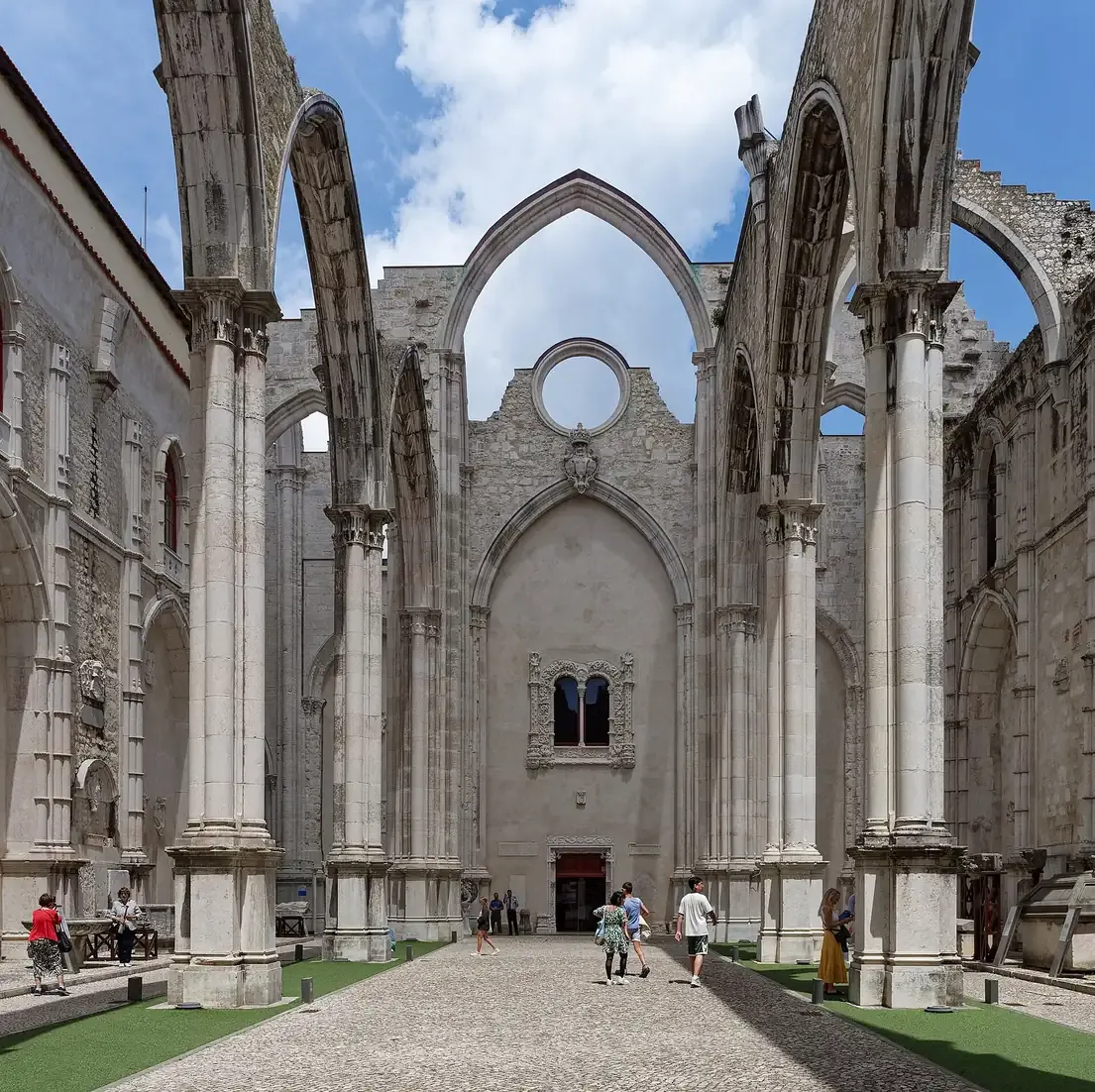
Carmo Convent Ruins
The 1755 earthquake tore the roof off this Gothic church. Its bare arches now shelter an archaeological museum of tombs, tiles and mummies.
Location: Largo do Carmo 92, Chiado
Photo: "Ruins of the Carmo Convent, now the Carmo Archaeological Museum" by Jakub Hałun (CC BY 4.0).
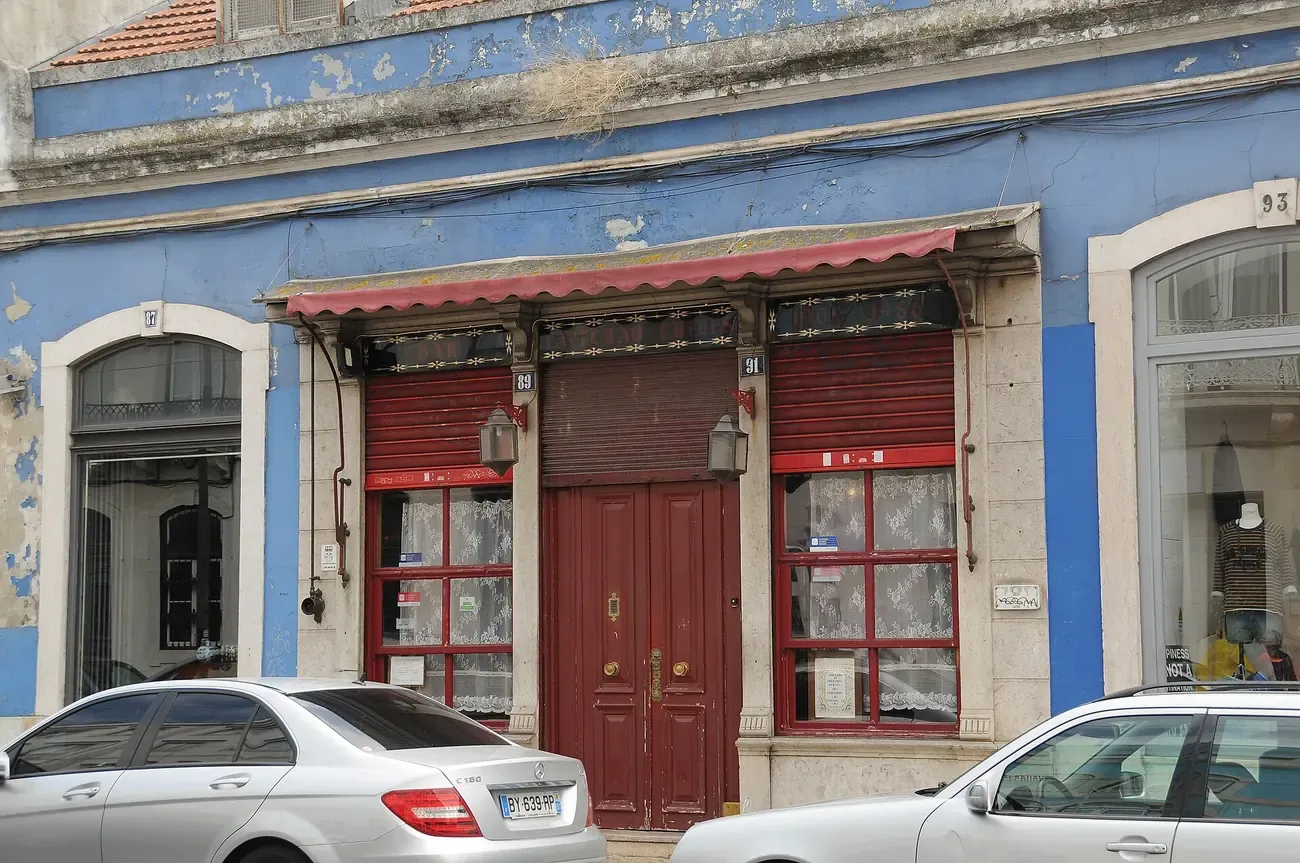
Pavilhao Chines
Ring the bell on a red door and five rooms open up, crammed to the ceiling with toy soldiers, helmets and teapots behind glass.
Location: Rua Dom Pedro V 89, Bairro Alto
Photo: "Pavilhao Chines" by Joseolgon (CC BY-SA 4.0).
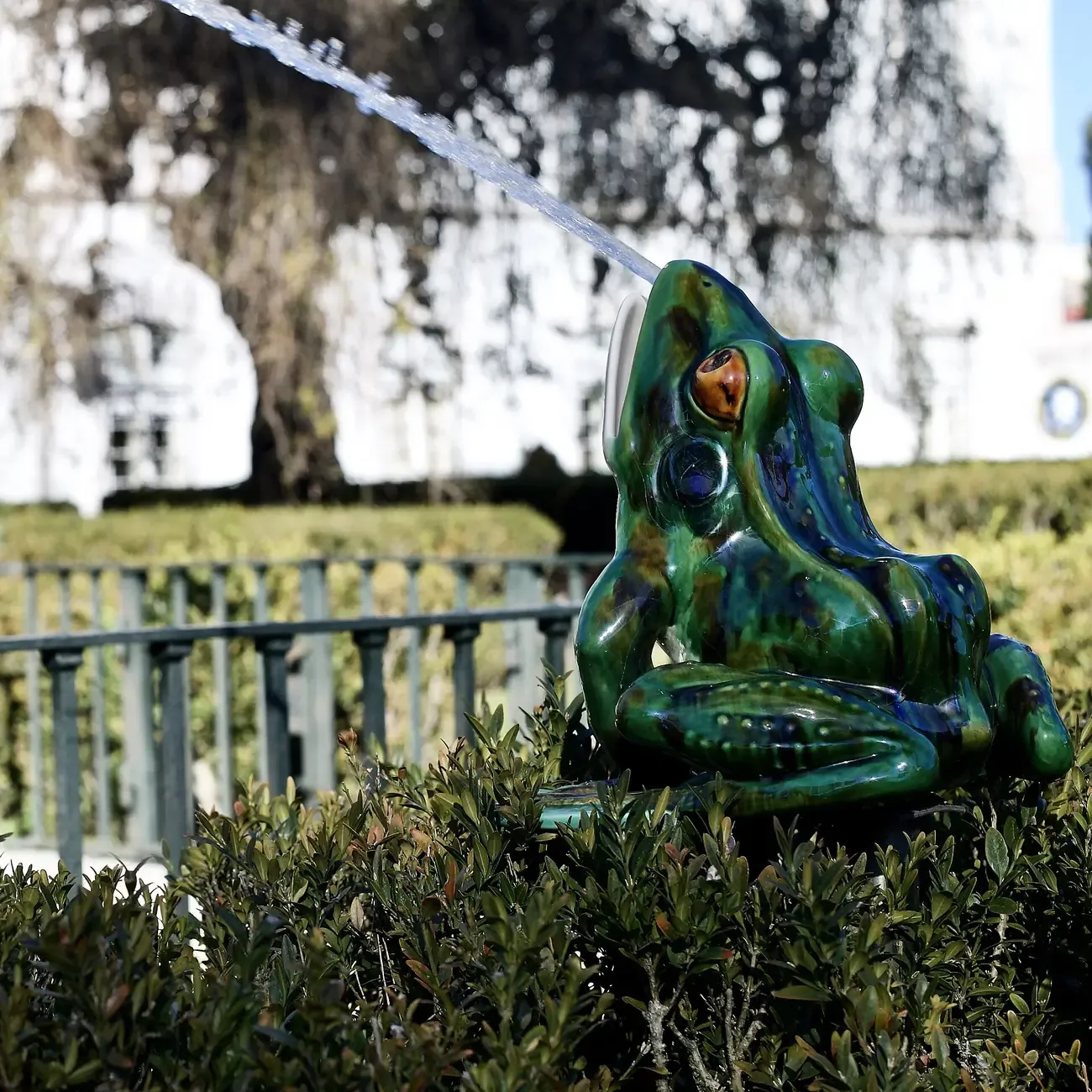
Bordallo Pinheiro Garden
Giant ceramic frogs, snakes and lizards by the 19th century caricaturist sprawl through the garden of the Museu de Lisboa at Palacio Pimenta.
Location: Campo Grande 245
Photo: "Green Toad Throwing Water, Bordalo Pinheiro Garden" by Pedro Ribeiro Simoes (CC BY 2.0).
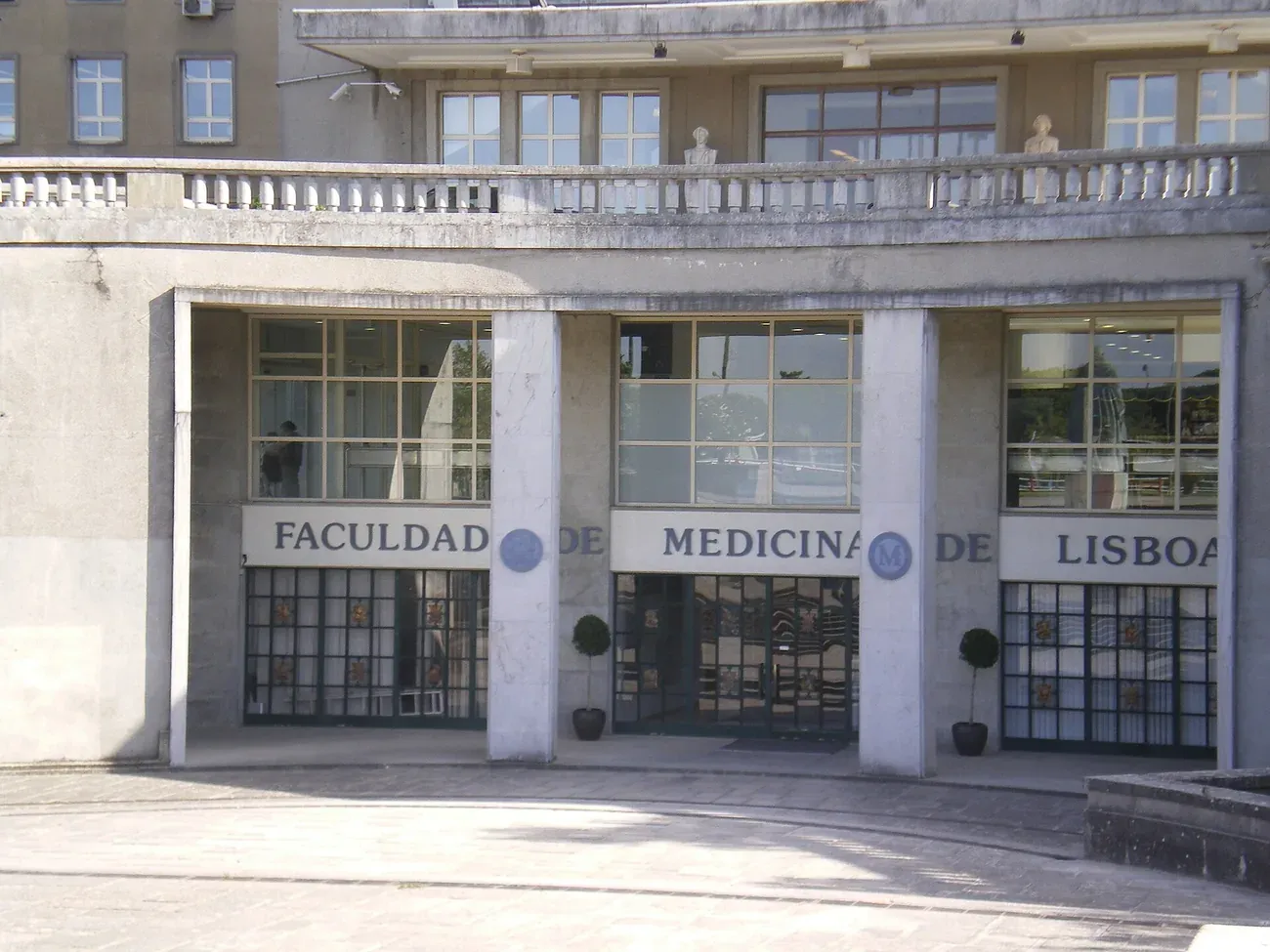
Preserved Head of Diogo Alves
A 19th century killer's head sits pickled in a jar in the medical faculty's anatomical theatre, kept back for phrenological study.
Location: Avenida Professor Egas Moniz
Photo: "Faculdade de Medicina da Universidade de Lisboa" by Ivendrell (CC BY-SA 3.0).
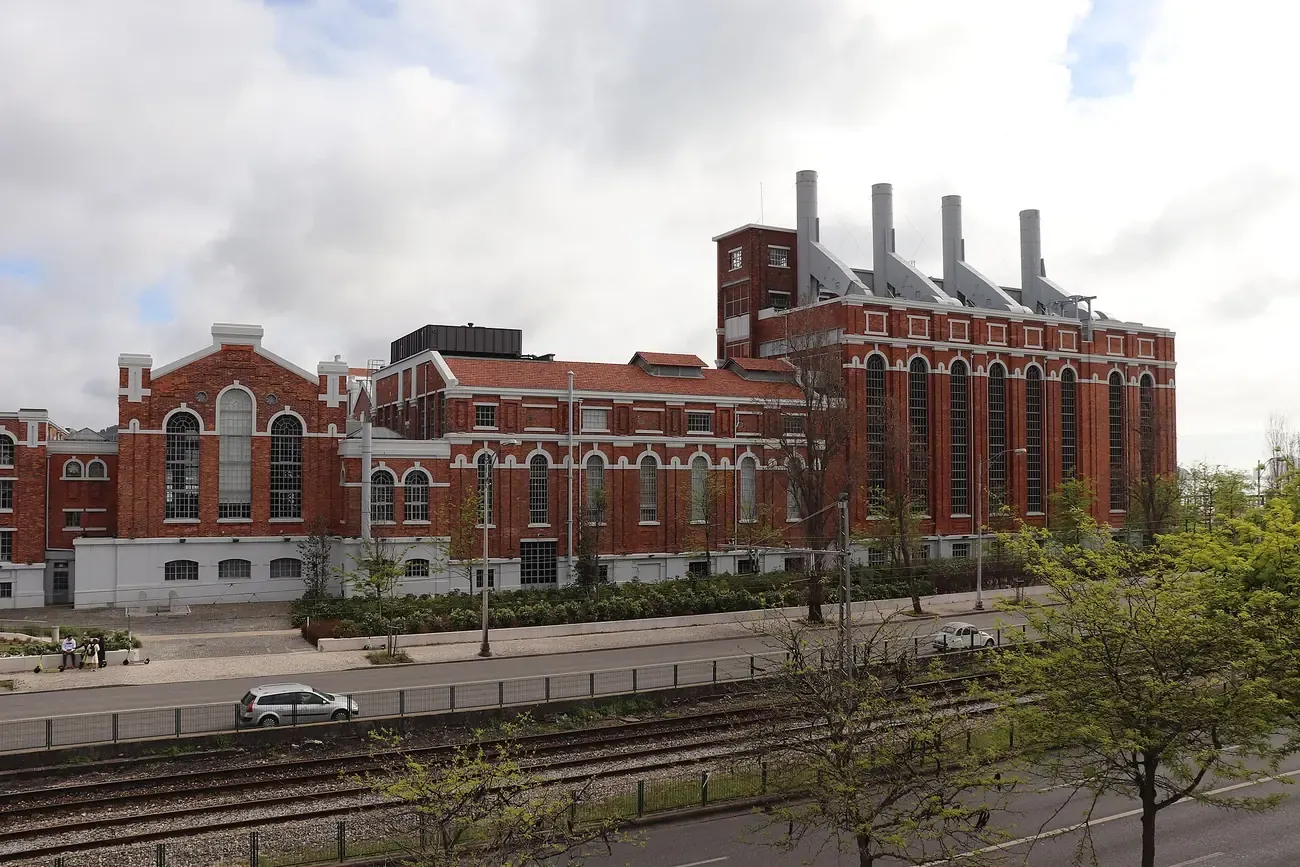
Electricity Museum
A coal power station on the Belem waterfront keeps its boilers and turbines in place, now paired with exhibitions on energy and art.
Location: Avenida Brasilia · Website
Photo: "Central Tejo, former coal power station" by Andrzej Otrębski (CC BY-SA 4.0).
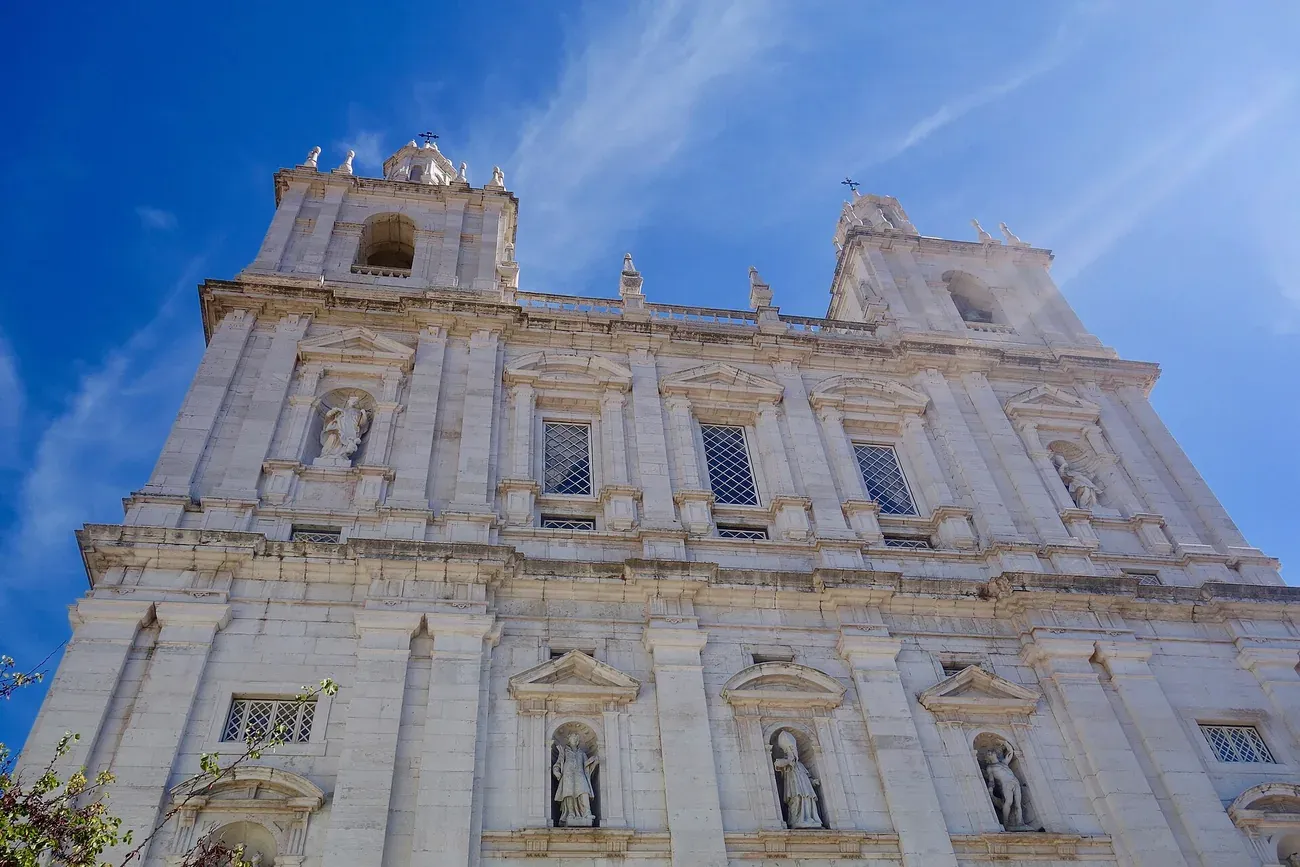
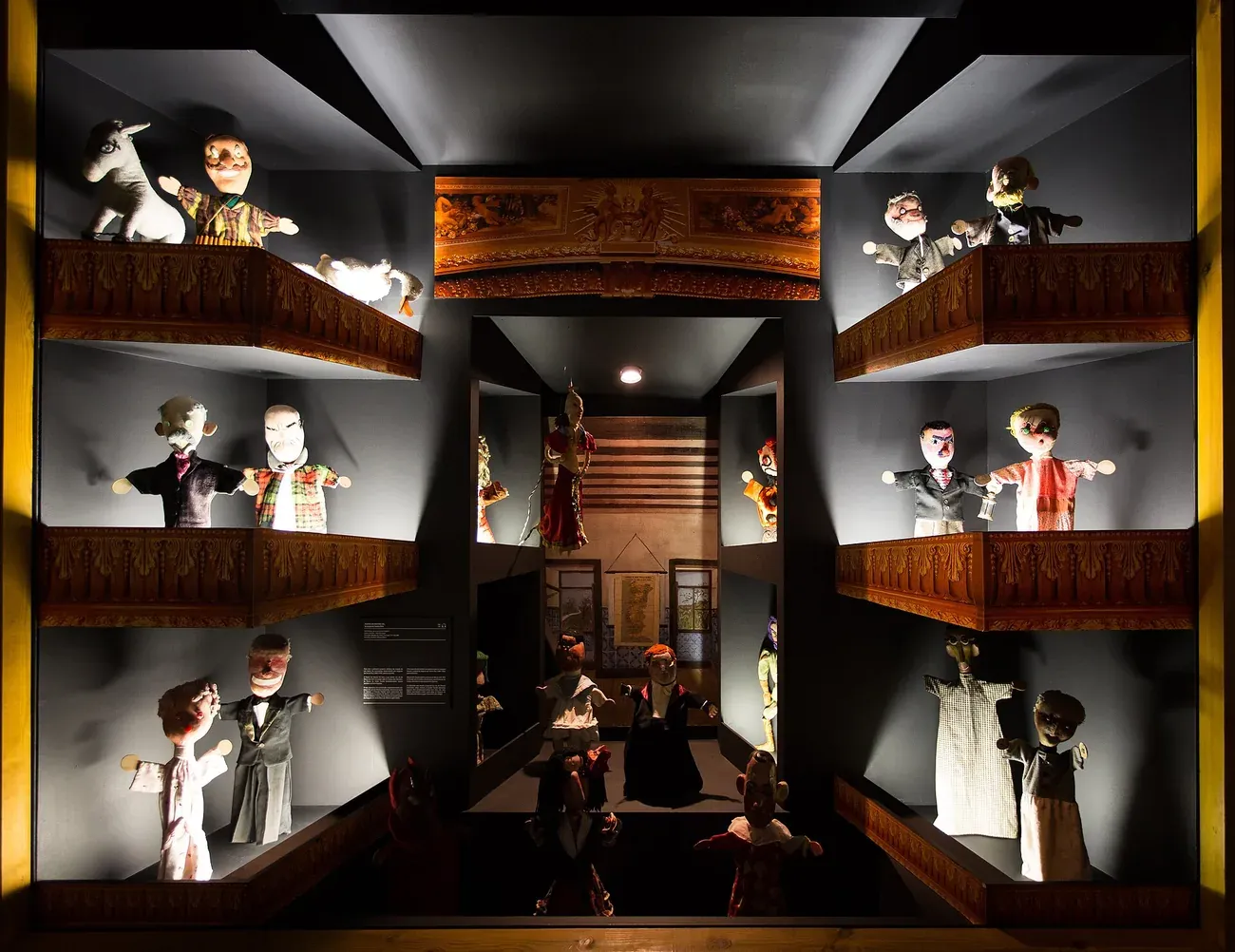
Museu da Marioneta (Museum of Puppetry)
A 17th century convent holds Lisbon's puppet museum, its dark corridors lit on marionettes from Sicily, Java, Vietnam and Portuguese travelling theatre.
Location: Rua da Esperanca 146
Photo: "Silence! (Museu da Marioneta puppet display)" by Paulo Valdivieso (CC BY-SA 2.0).
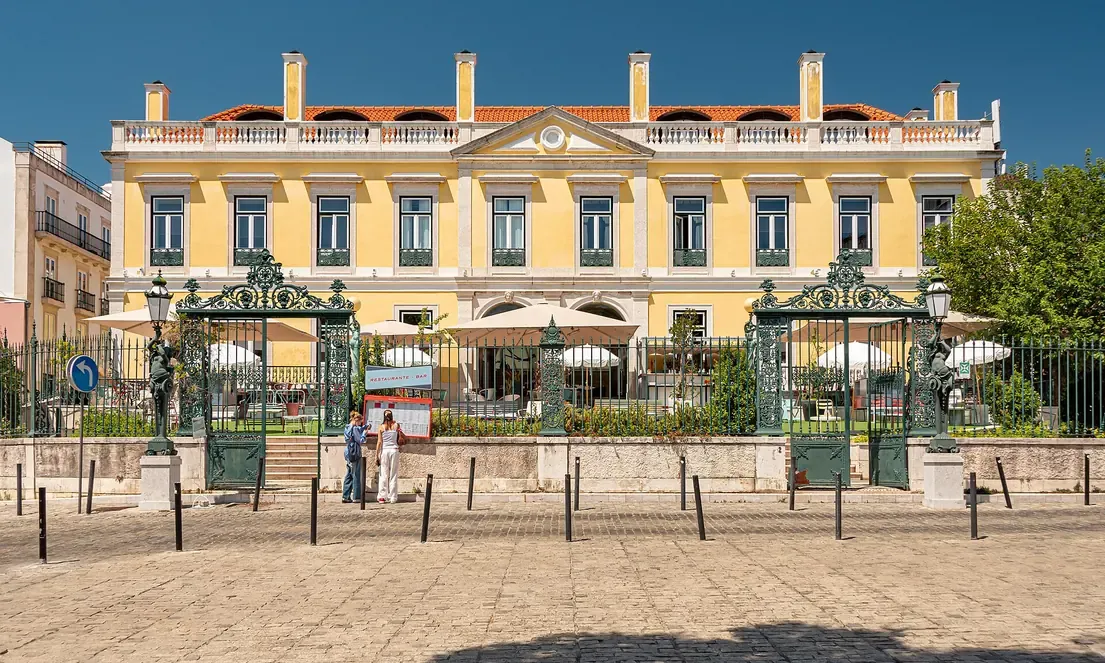
Museu da Farmacia
Pharmacy jars, instruments and whole reconstructed shopfronts trace the trade in Portugal and beyond, most of it donated by working pharmacies.
Location: Rua Marechal Saldanha 1
Photo: "Museu da Farmacia" by Jorge Franganillo (CC BY 2.0).
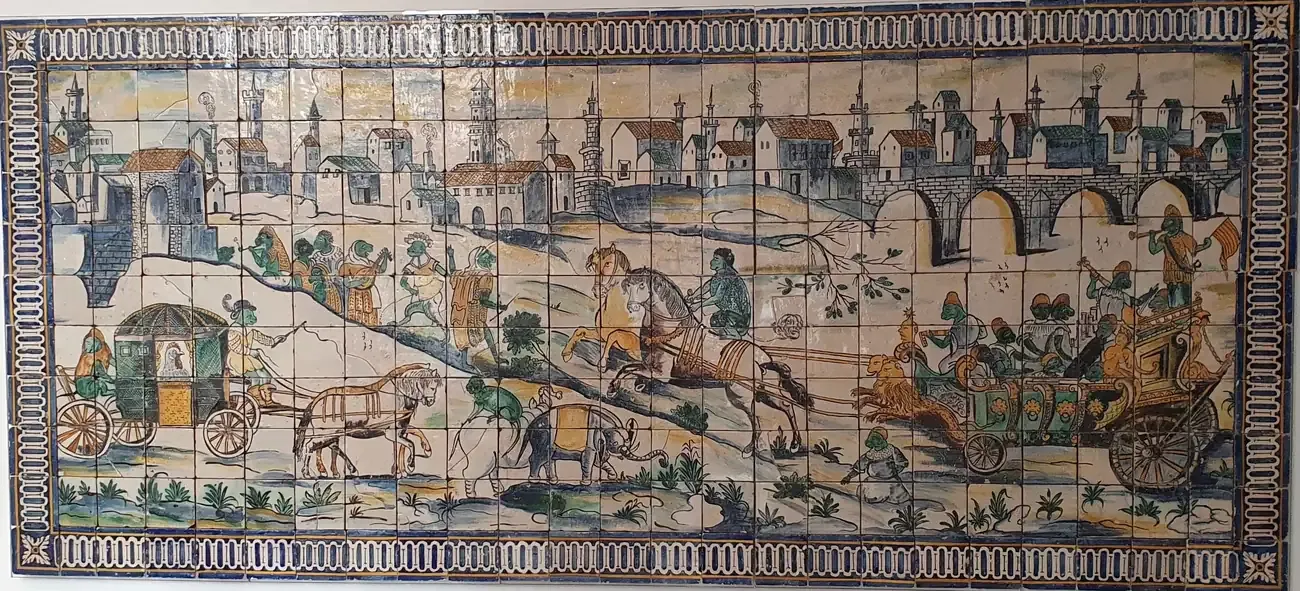
'The Wedding of the Hen'
A comic azulejo panel of a hen's wedding hangs in the National Tile Museum, itself a convent lined with centuries of Portuguese tilework.
Location: Rua Madre de Deus 4
Photo: "The Wedding of the Hen (O Casamento da Galinha) tile panel" by Yair Haklai (CC BY-SA 4.0).
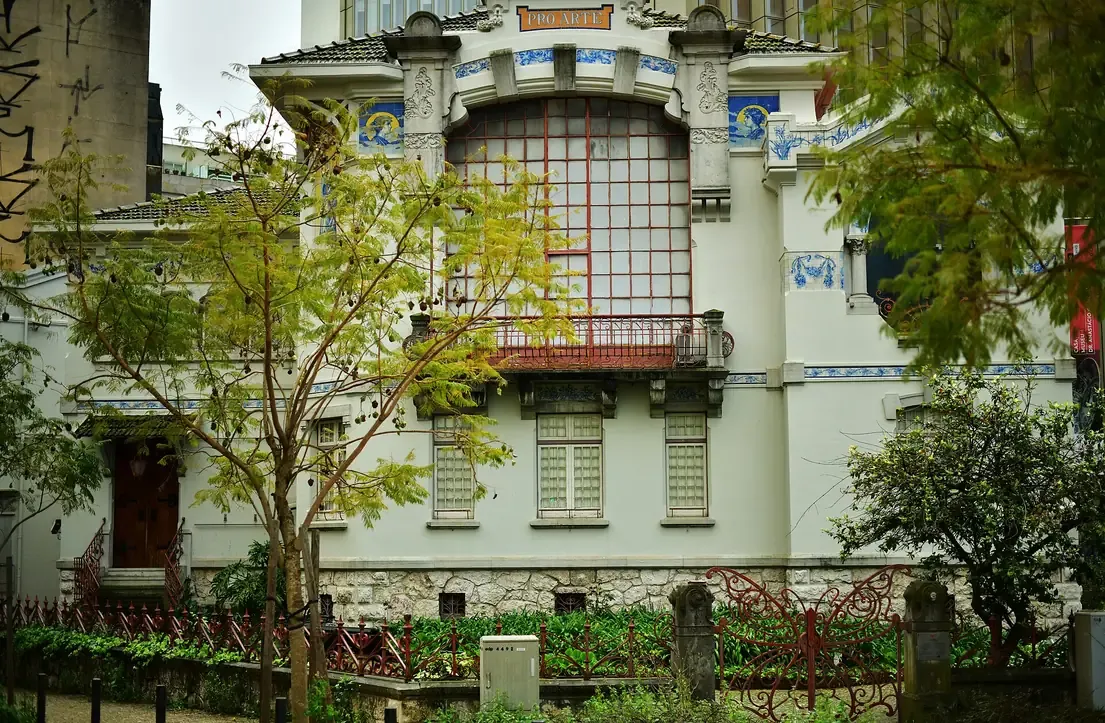
House-Museum of Dr. Anastacio Goncalves
The 1905 house and studio of painter Jose Malhoa, by architect Norte Junior, now shows a doctor's collection of Chinese porcelain and Portuguese painting.
Location: Avenida 5 de Outubro 10
Photo: "Art nouveau facade of the Casa-Museu Dr. Anastacio Goncalves" by Panegyrics of Granovetter (CC BY-SA 4.0).
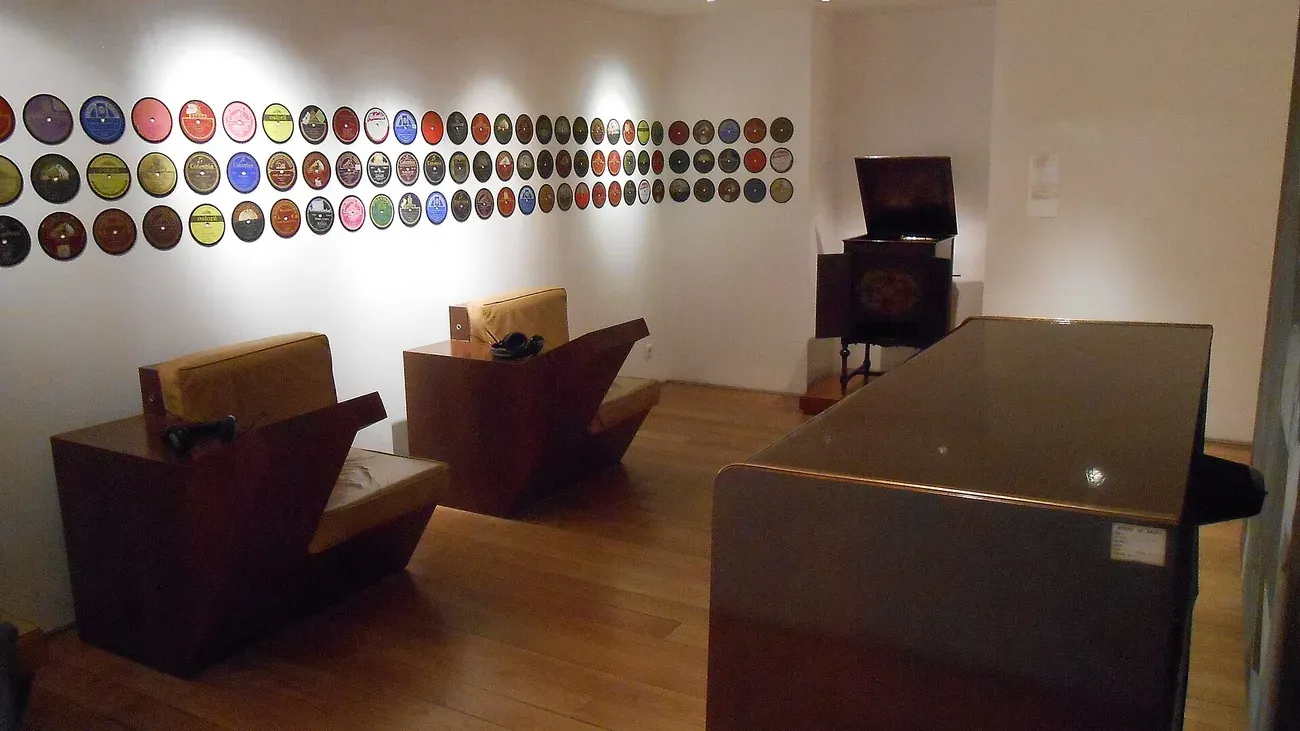
Museu do Fado
An Alfama museum tracing fado from dockside taverns to concert halls, with listening posts, guitars and the archive of the city's own music.
Location: Largo do Chafariz de Dentro, Alfama
Photo: "Record wall inside the Museu do Fado" by 69joehawkins (CC BY-SA 3.0).
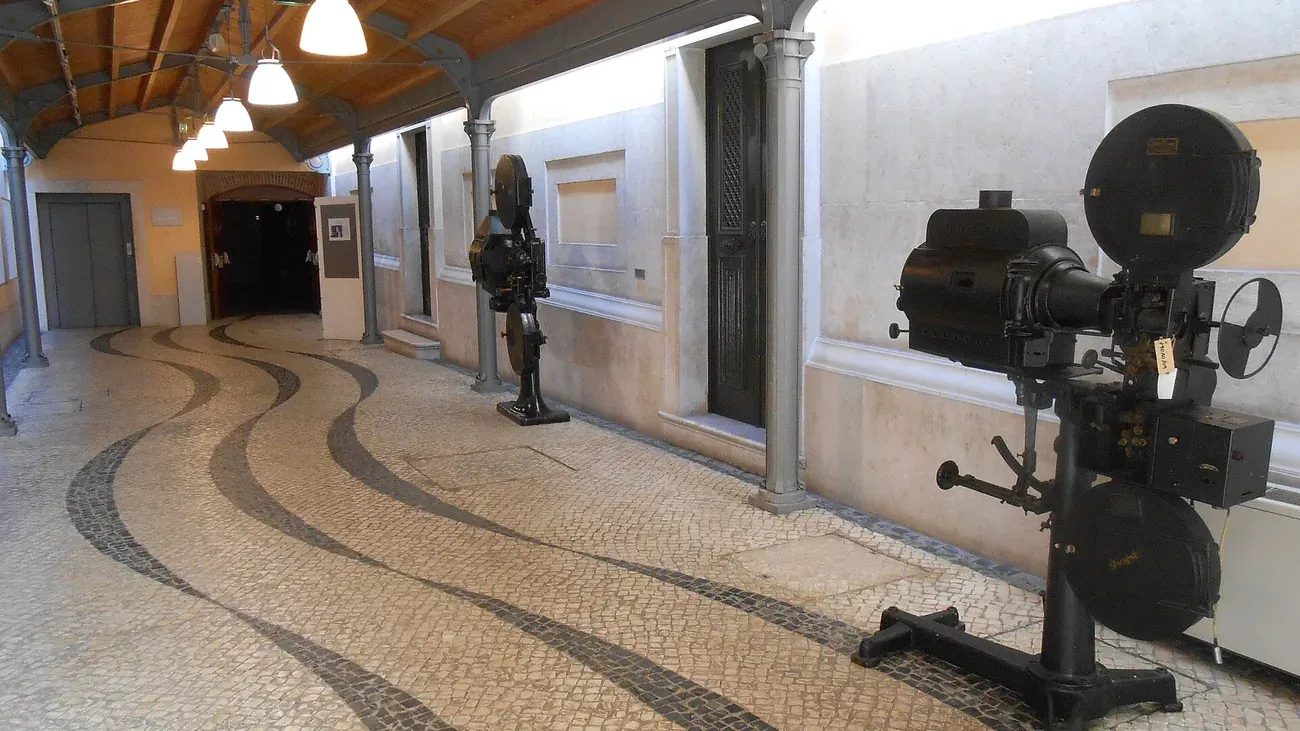
Cinemateca Portuguesa
Portugal's film archive keeps a single screen, a museum of projectors and reels, a starry domed foyer and a rooftop cafe and bookshop.
Location: Rua Barata Salgueiro 39
Photo: "Projector display inside the Cinemateca Portuguesa" by 69joehawkins (CC BY-SA 3.0).
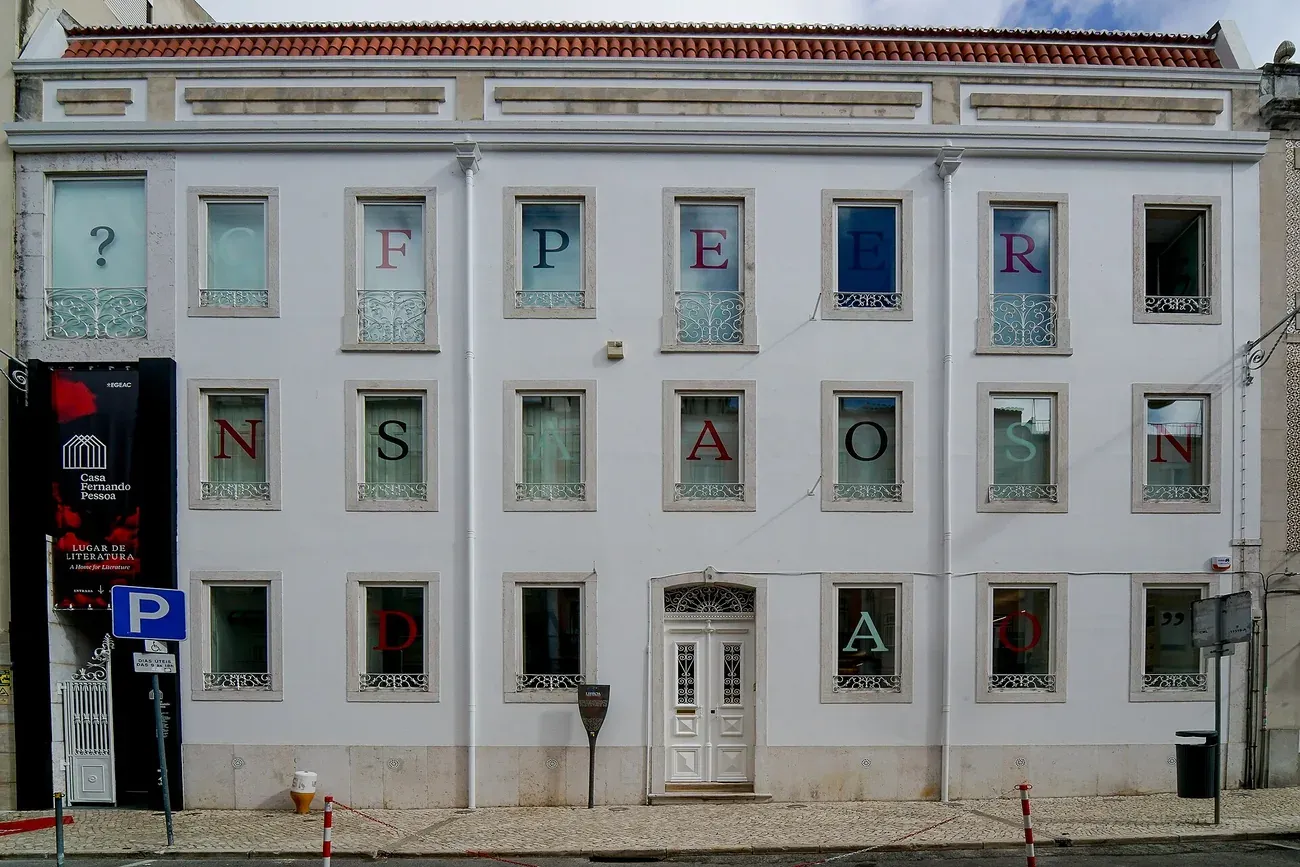
Casa Fernando Pessoa
The poet's last home keeps his library and writing desk, with a reading room and events built around the many names he wrote under.
Location: Rua Coelho da Rocha 16
Photo: "Facade of Casa Fernando Pessoa" by José Frade (CC BY-SA 4.0).
Historic shops in Lisbon
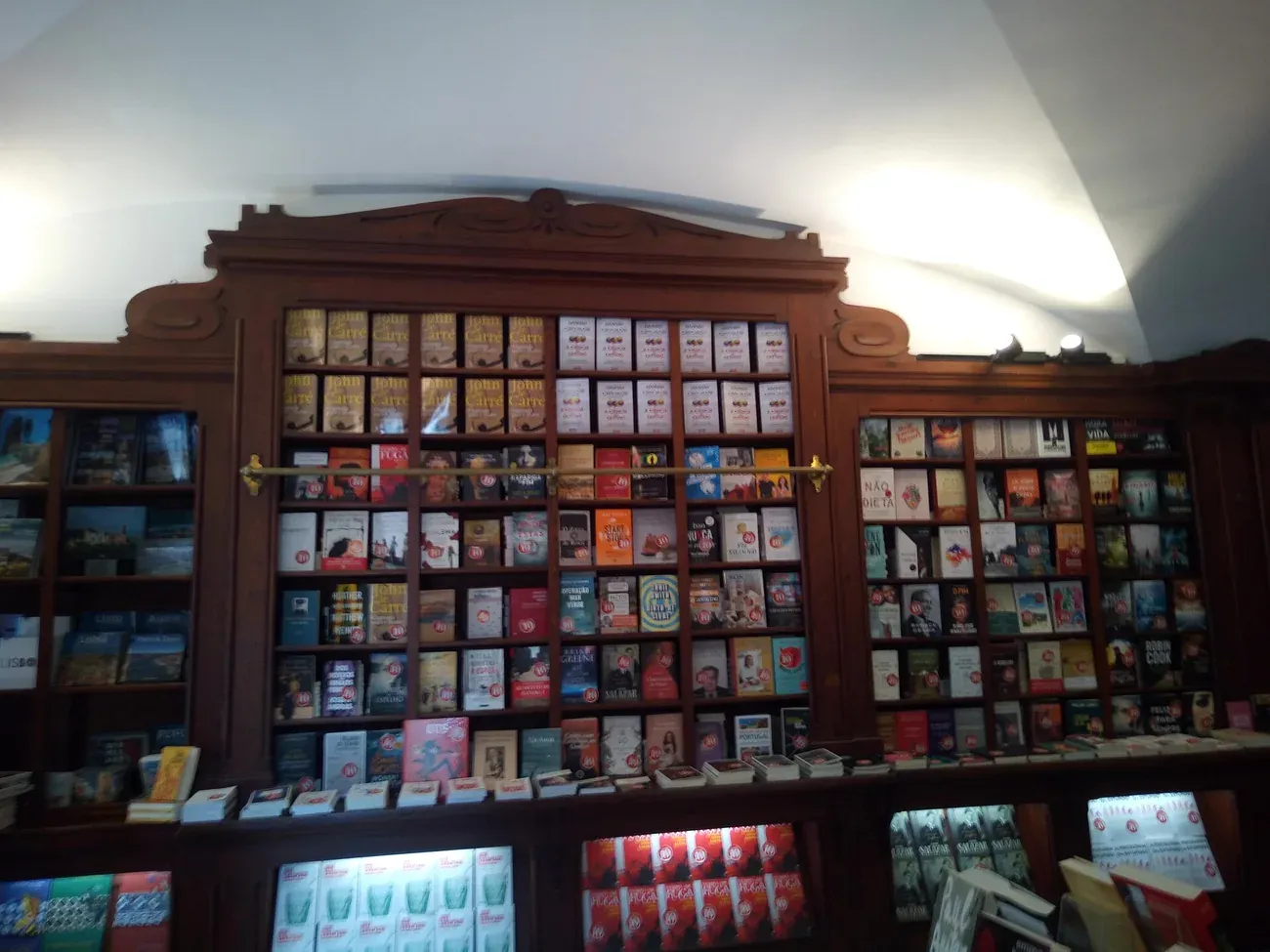
Livraria Bertrand
Trading since 1732 and listed by Guinness as the world's oldest bookshop still open, its linked rooms named after Portuguese writers.
Location: Rua Garrett 73, Chiado · Website
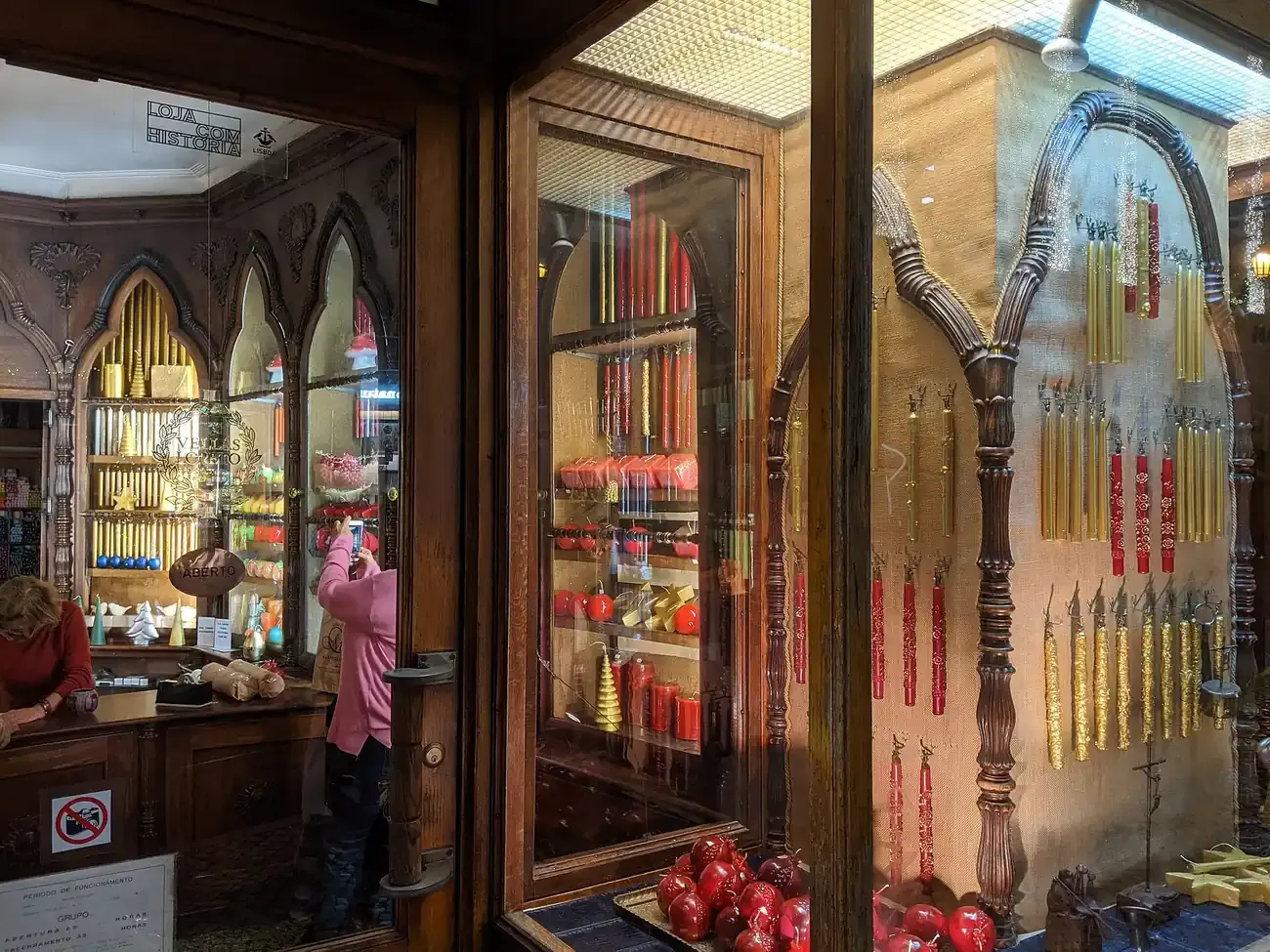
Caza das Vellas Loreto
A candle shop open since 1789, its wooden counters and drawers still selling wax tapers to churches and households by weight.
Location: Rua do Loreto 53 · Website
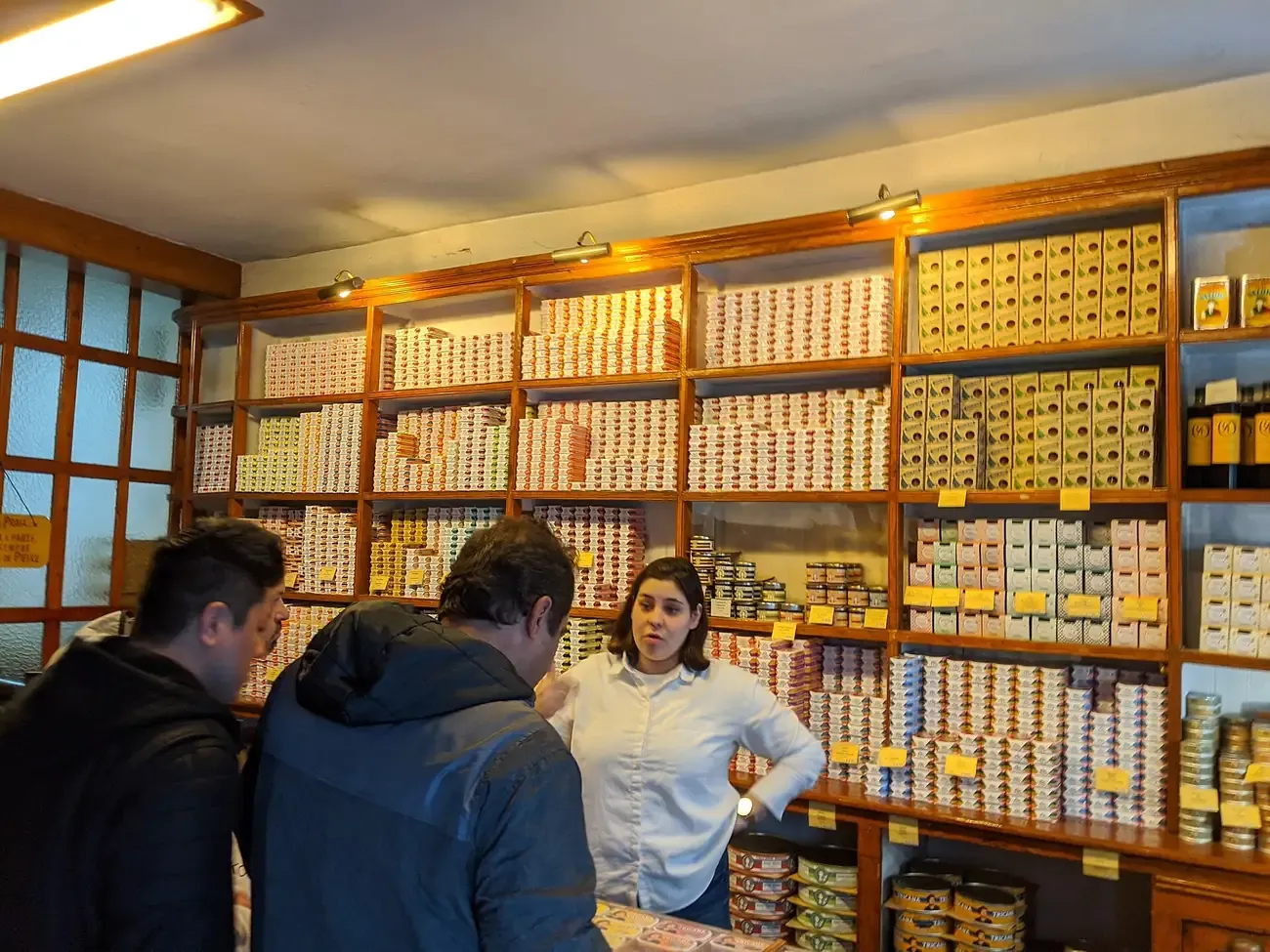
Conserveira de Lisboa
Tinned sardines, mackerel and cod stacked in wrapped paper on wooden shelves, sold by the same family business since the 1930s.
Location: Rua dos Bacalhoeiros 34
Layers of history in central Lisbon
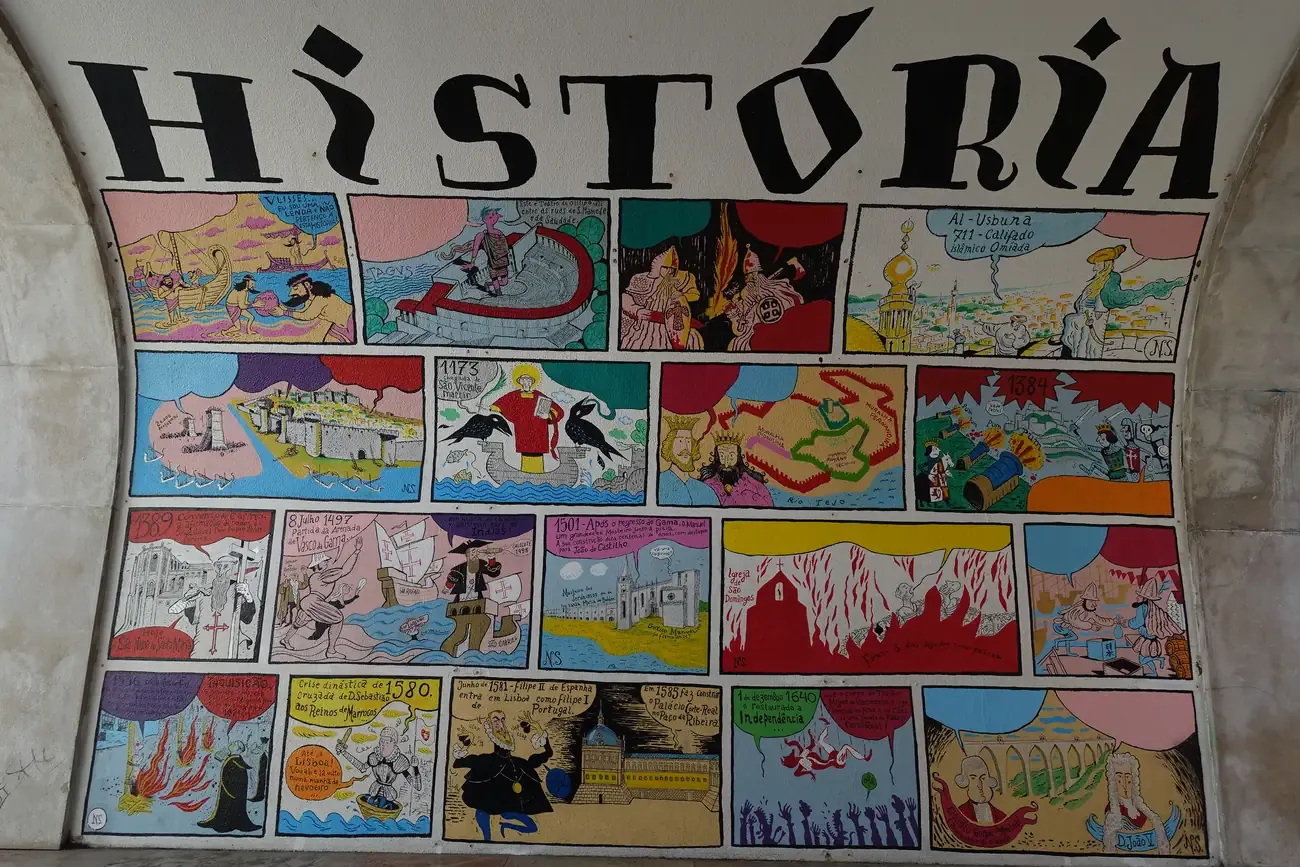
History of Lisbon Mural
A tiled panel under the staircase at Portas do Sol maps Lisbon before the 1755 earthquake, missed by most of the crowd above.
Location: Beco de Santa Helena 25, Alfama
Photo: "History of Lisbon mural by Nuno Saraiva under the arch at Portas do Sol" by Jeremy Thompson (CC BY 2.0).
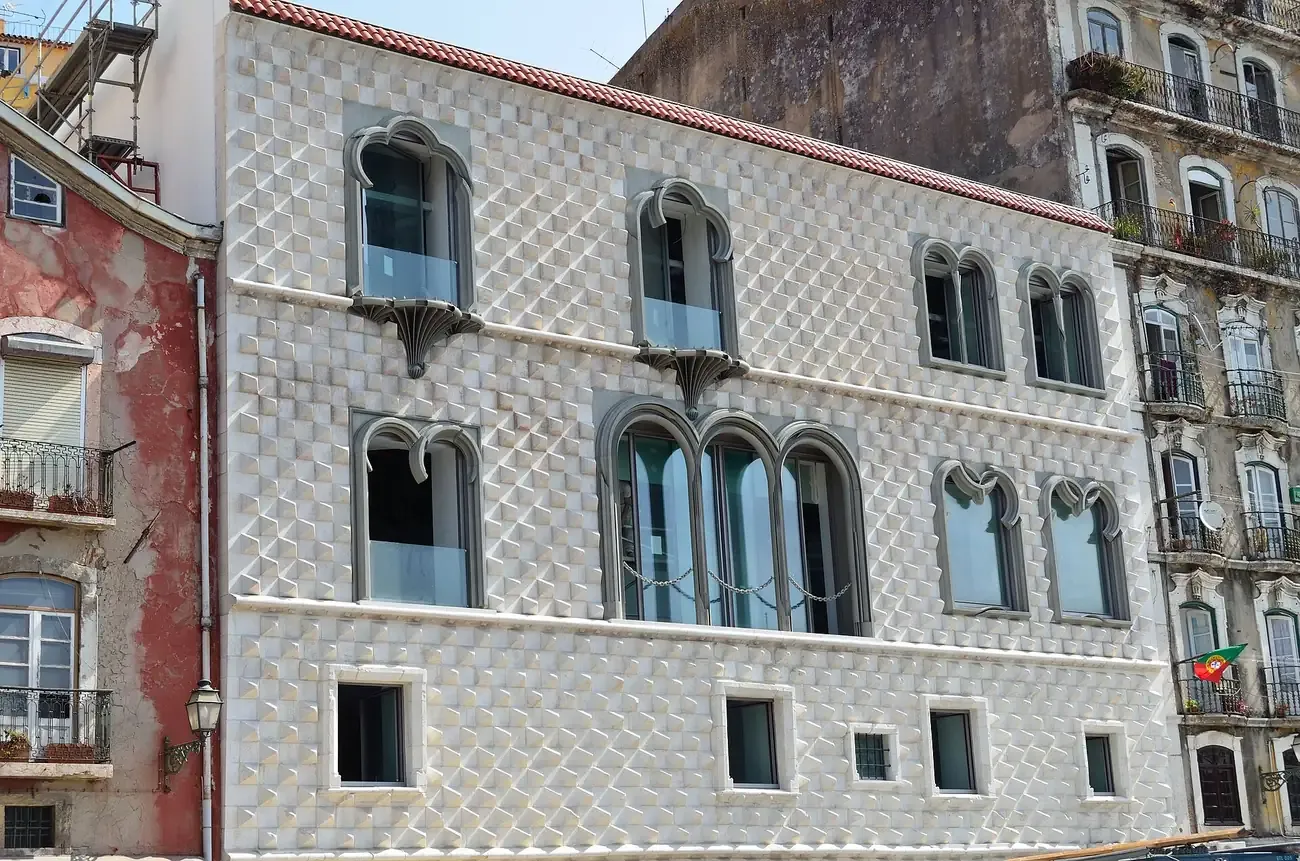
Casa dos Bicos
A 16th century house spiked with pyramid shaped stones, built for a viceroy's son and now the Jose Saramago Foundation, with Roman remains inside.
Location: Rua dos Bacalhoeiros 10
Photo: "Casa dos Bicos facade in Lisbon" by Lrocha (CC BY-SA 3.0).
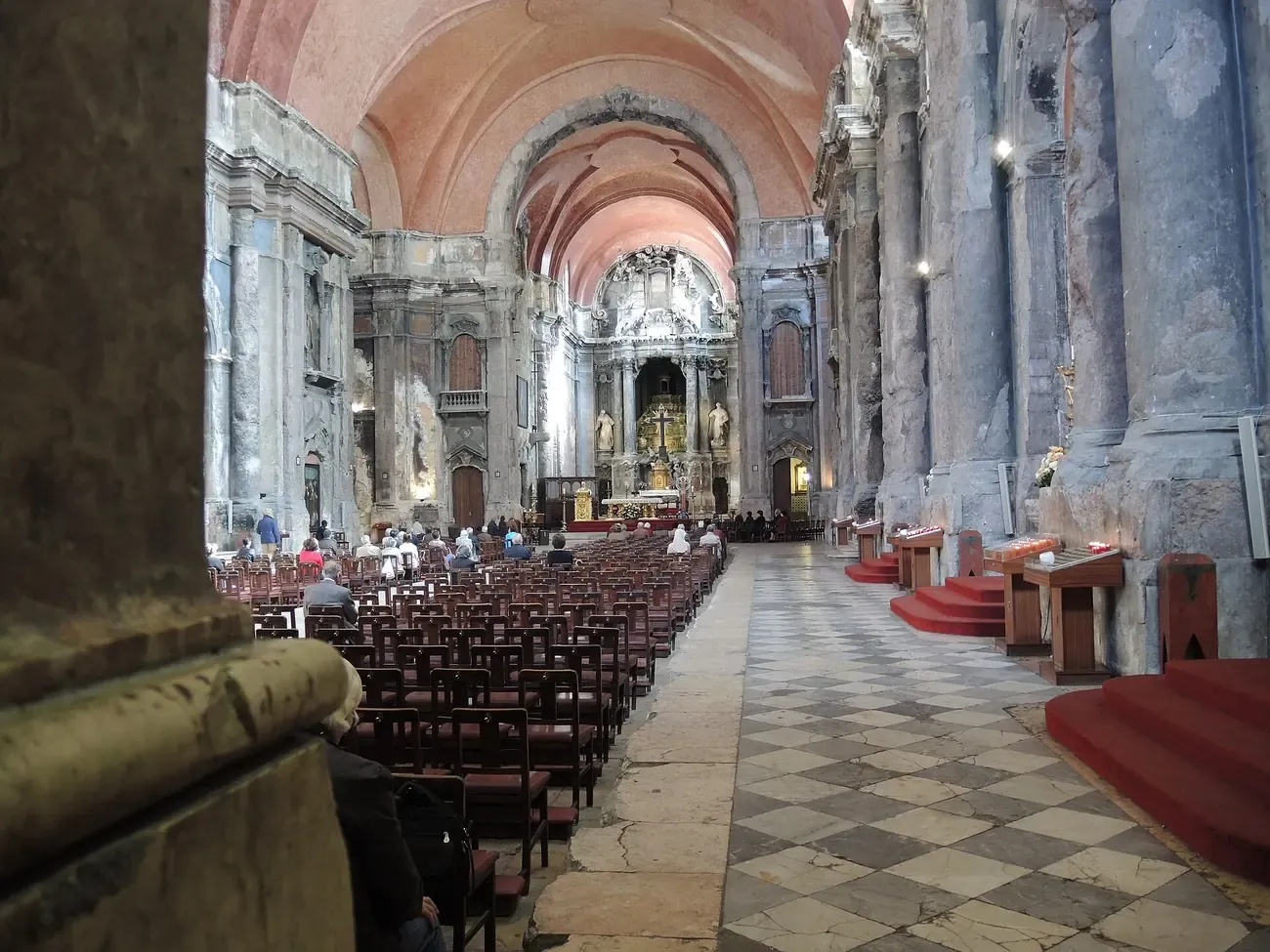
Church of St. Dominic
Two earthquakes and a 20th century fire left scorched walls and cracked pillars, deliberately kept unrestored inside this downtown church.
Location: Largo de Sao Domingos 6
Photo: "Interior of the Church of St. Dominic in Lisbon" by Iantomferry (CC BY-SA 3.0).
More hidden gems in Lisbon
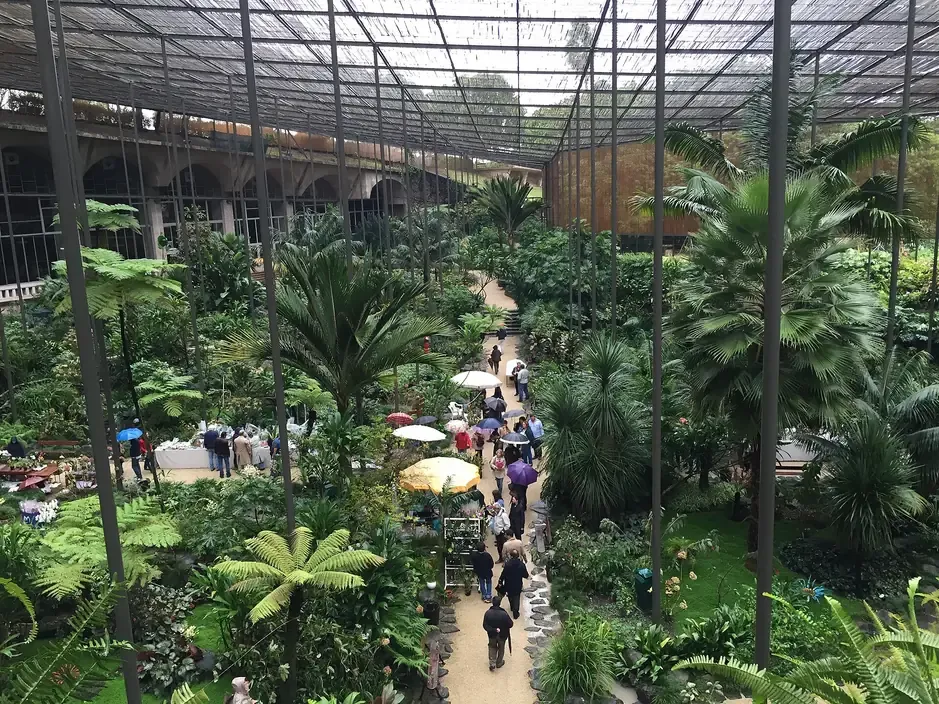
Estufa Fria
A former basalt quarry in Parque Eduardo VII turned greenhouse garden, its slatted roof shading hundreds of plant species, ponds and waterfalls.
Location: Parque Eduardo VII
Photo: "Inside the Estufa Fria greenhouse, Lisbon" by Bex Walton (CC BY 2.0).
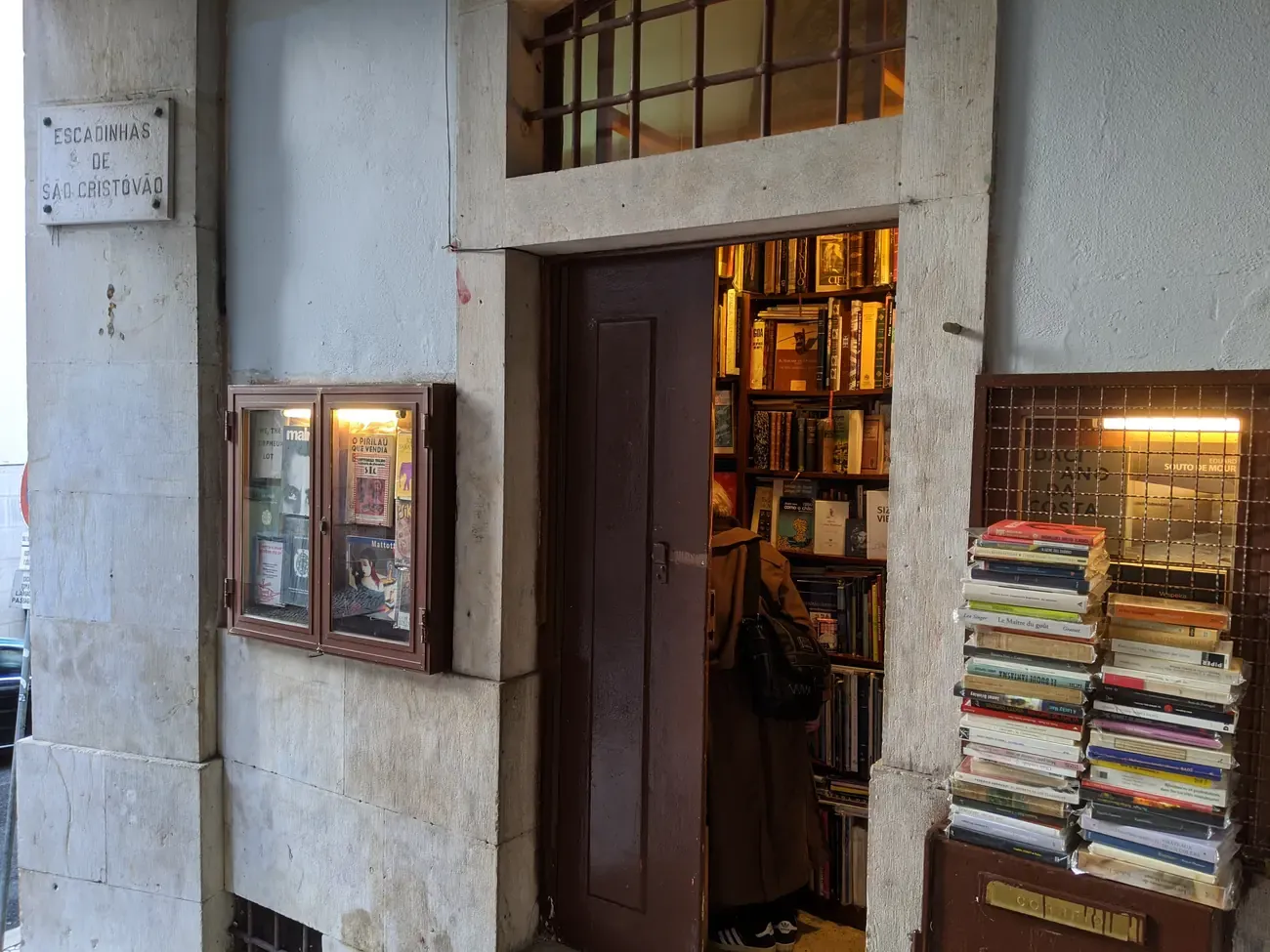
Livraria Simao
One customer at a time fits inside this four square metre bookshop on an Alfama stairway, stacked with several thousand secondhand titles.
Location: Escadinhas de Sao Cristovao 18
Photo: "Livraria Simao bookshop, Escadinhas de Sao Cristovao, Lisbon" by Jeremy Thompson (CC BY 2.0).
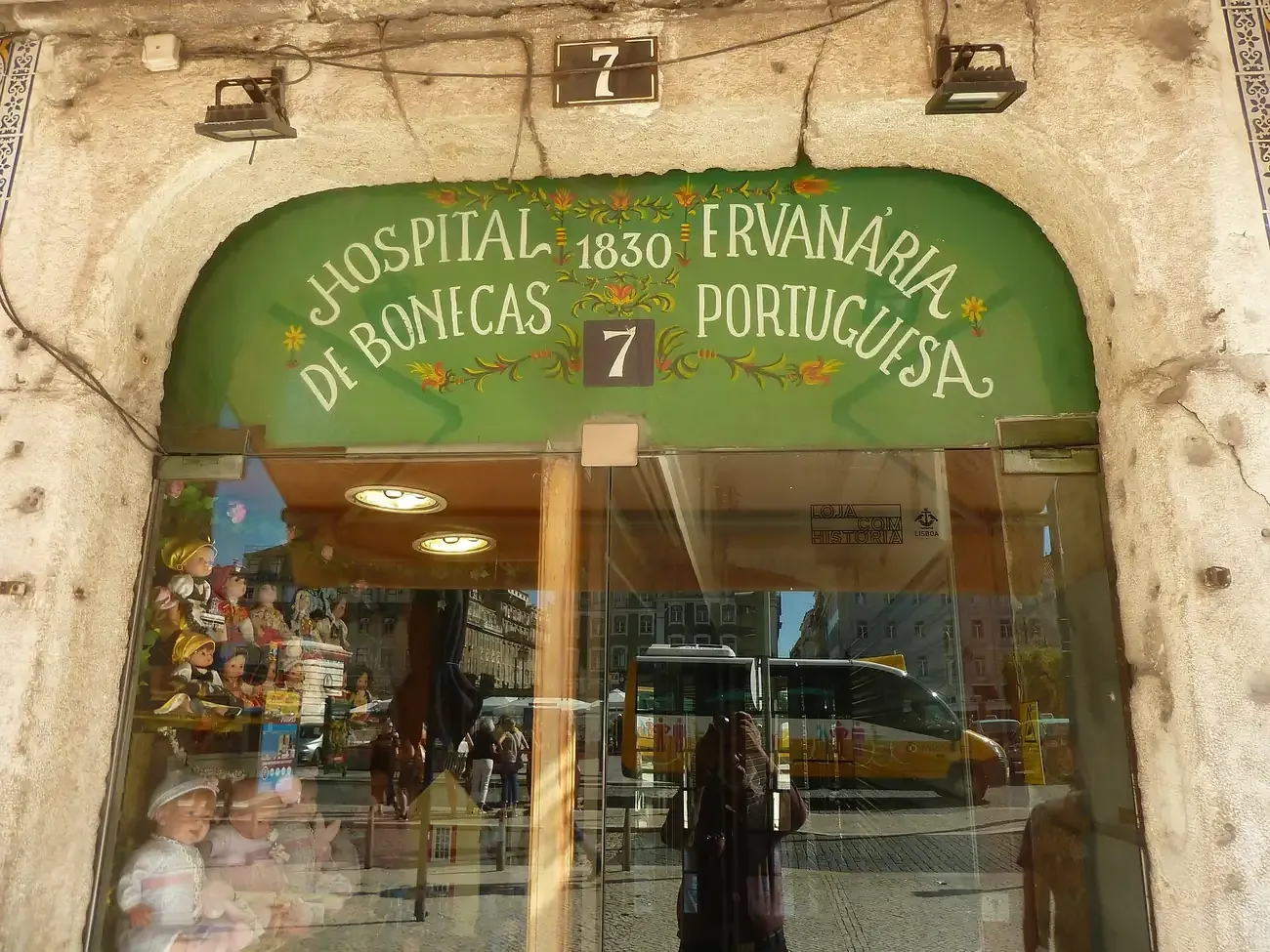
Hospital de Bonecas
A doll hospital running since the 19th century, its shelves lined with limbs and heads waiting on repair behind a small shop counter.
Location: Praca da Figueira 7
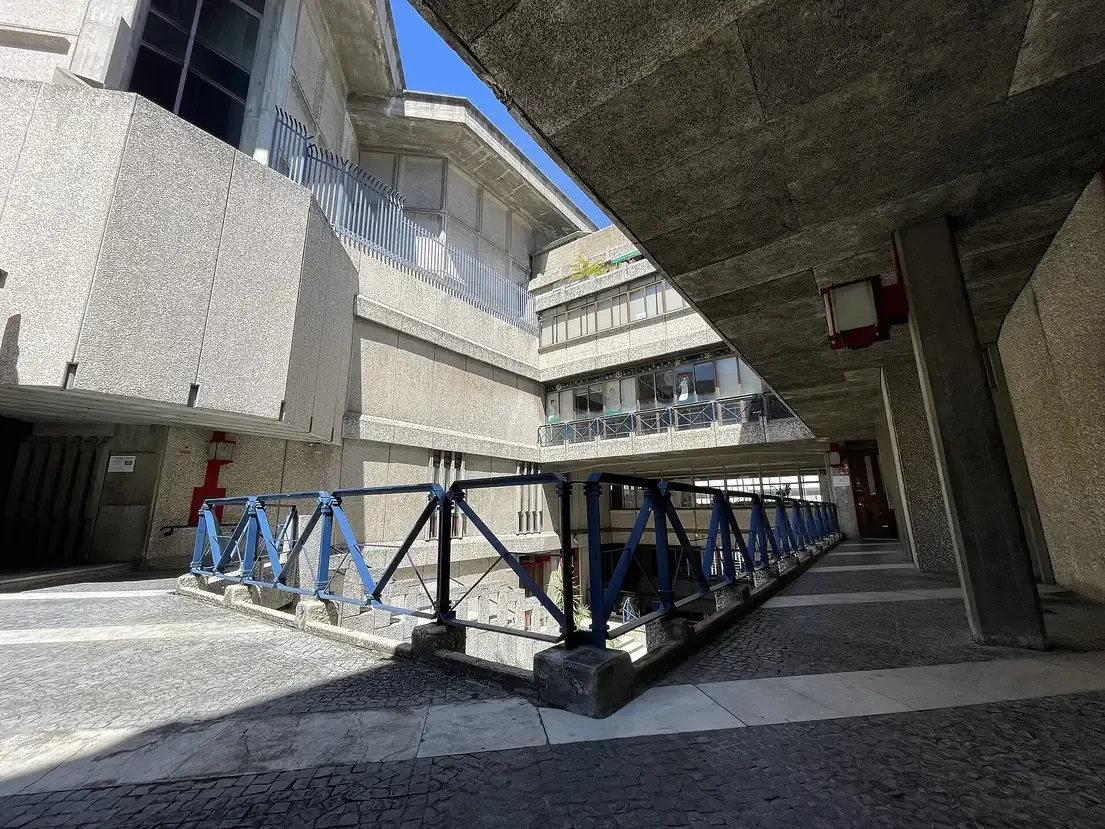
Church Sagrado Coracao
Concrete, hard lines and high skylights make this church by Nuno Teotonio Pereira and Nuno Portas difficult to read as one from the street.
Location: Rua Camilo Castelo Branco 4
Photo: "Igreja do Sagrado Coracao de Jesus, Lisbon" by DiogoBaptista (CC BY-SA 4.0).
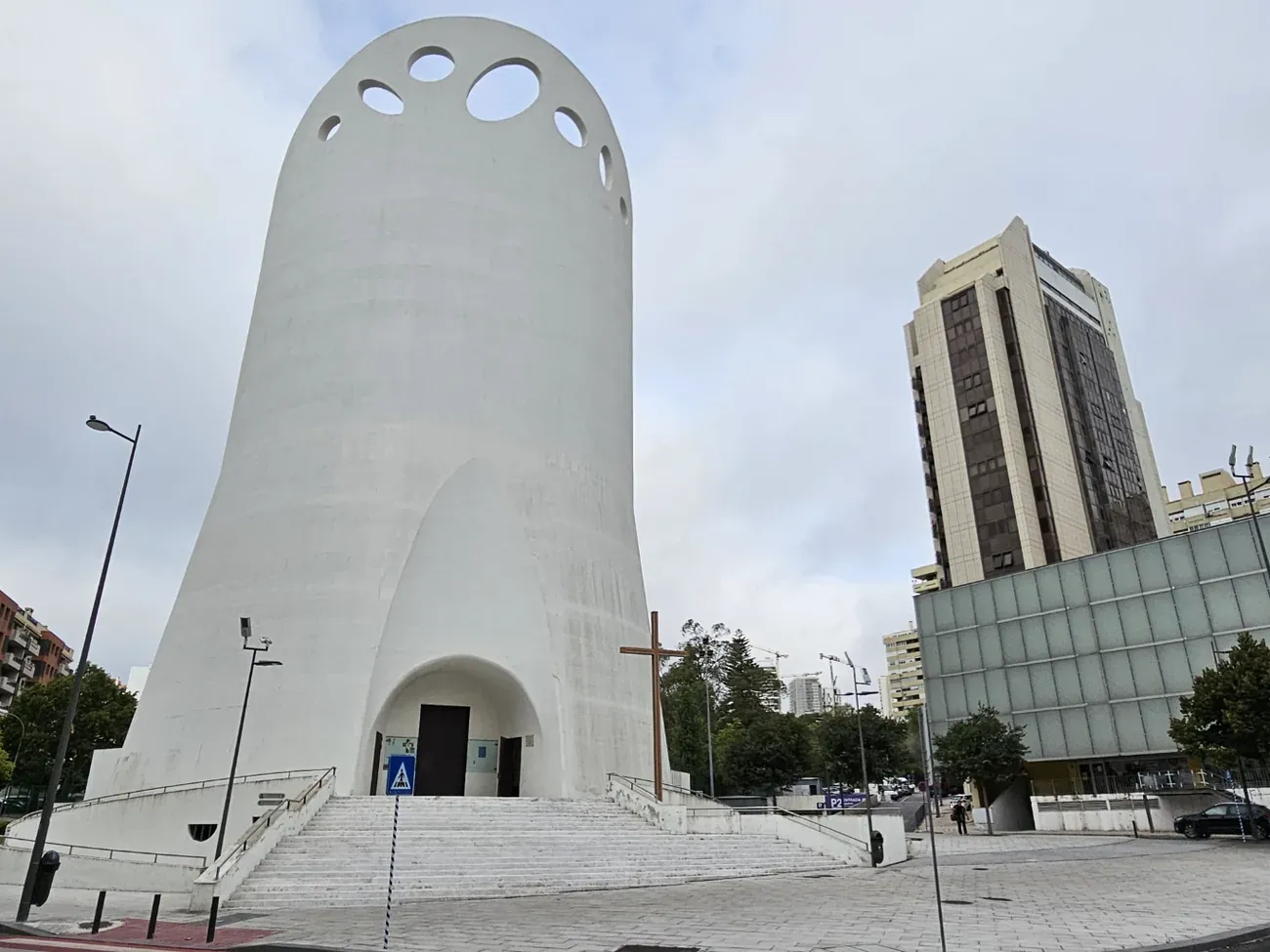
Santissima Trindade Church
A concrete church west of the city whose unusual shape took thirteen years to build, delayed by arguments between priest and architect.
Location: Rua Santa Teresa do Menino Jesus, Miraflores
Photo: "Igreja da Santissima Trindade, Miraflores" by GualdimG (CC BY-SA 4.0).
Why Lisbon is worth visiting
Lisbon rises across seven hills above the mouth of the Tagus, a maritime capital built by traders and returned voyagers whose wealth from the Age of Discovery still shows in the Manueline stone carving from Belem to the Baixa. Rebuilt on a strict grid after the 1755 earthquake and tsunami levelled its centre, the city pairs that formal core with the older, steeper quarters that survived on its hills, a contrast that runs through everything from its architecture to its nightlife.
Neighbourhoods to know
Alfama keeps the oldest street plan, a maze of medieval lanes climbing to the castle and cathedral, with fado houses tucked into its alleys. The Baixa's grid of avenues runs from Rossio to the river, flanked by Bairro Alto and Chiado's restaurants, bars and boutiques on the hill above. Belem, downriver, holds the monastery, the tower and the monuments to the Age of Discovery along a long riverside promenade, while Parque das Nacoes offers a modern counterpoint with the Oceanario and cable cars over the water. Sintra, a UNESCO hill town of palaces about 40 minutes away by train, makes an easy day trip. Lisbon is also the country's main international gateway, and the Belem monuments on its own riverfront are among the first entries on any list of the tourist attractions in Portugal.
When to go and for how long
March to May and September to October bring mild, sunny weather without the July and August heat and cruise ship crowds. Three to four full days cover the historic centre, Belem and one further neighbourhood at a comfortable pace, with a fifth day free for Sintra.
Getting around
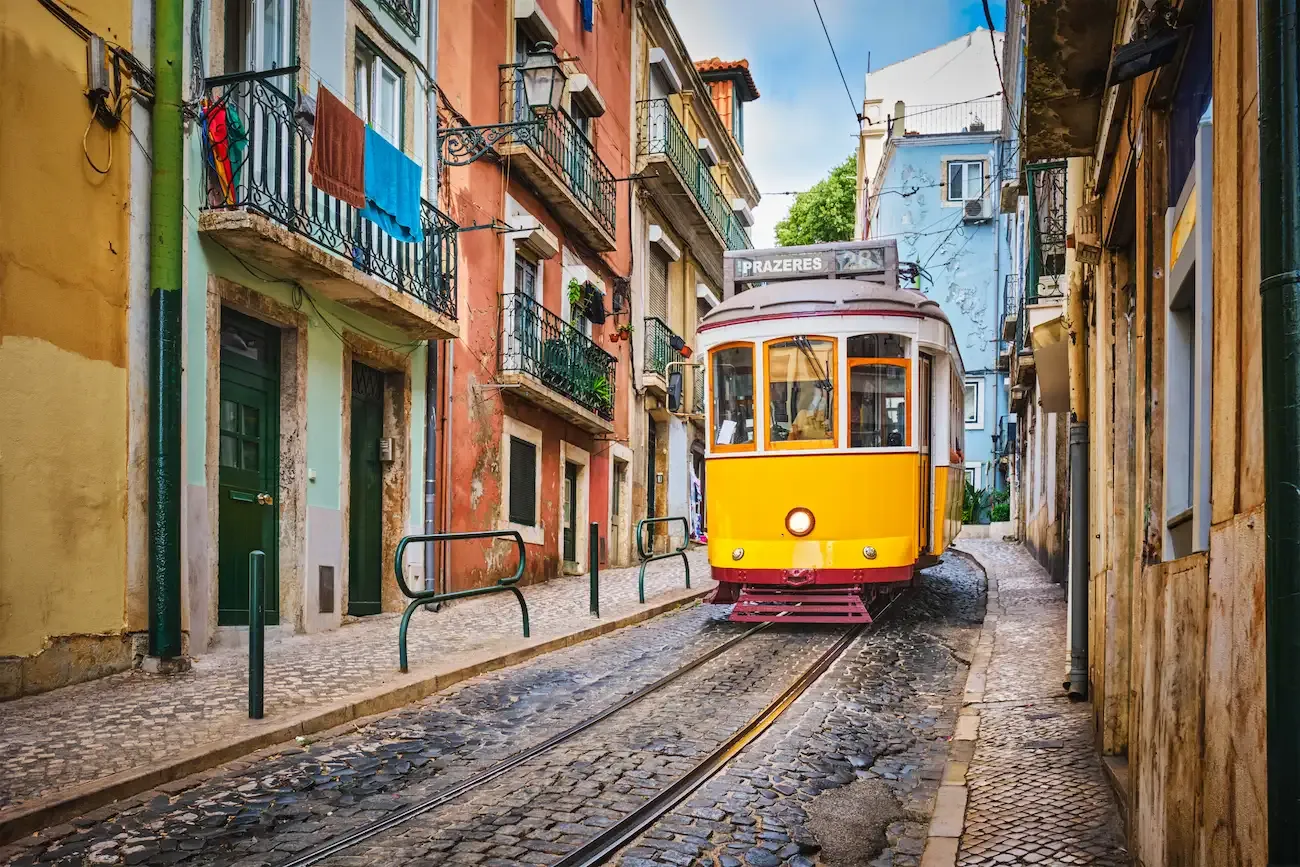
The historic quarters are steep enough that funiculars such as the Elevador da Bica and vintage trams including the number 28 route do real transport work, not just sightseeing laps, while the metro and buses cover the flatter modern districts. Comfortable shoes matter more here than in most European capitals, and the Cascais railway line links central Lisbon to Belem and the coast in minutes.