
Melbourne tourist attractions
Known for
Laneway street art, free inner-city trams and Victorian shopping arcades
Must-see landmarks
Flinders Street Station, Federation Square and the Royal Botanic Gardens
Days needed
3 to 4 days
Free to visit
Federation Square and the free permanent collections at the NGV
Tourist attractions in Melbourne not to miss
For a first visit, the tourist attractions in Melbourne come down to Flinders Street Station, Queen Victoria Market, Melbourne Cricket Ground (MCG) and 8 more sights ranked below, plus free things to do, upcoming events and visitor FAQs.
1. Flinders Street Station
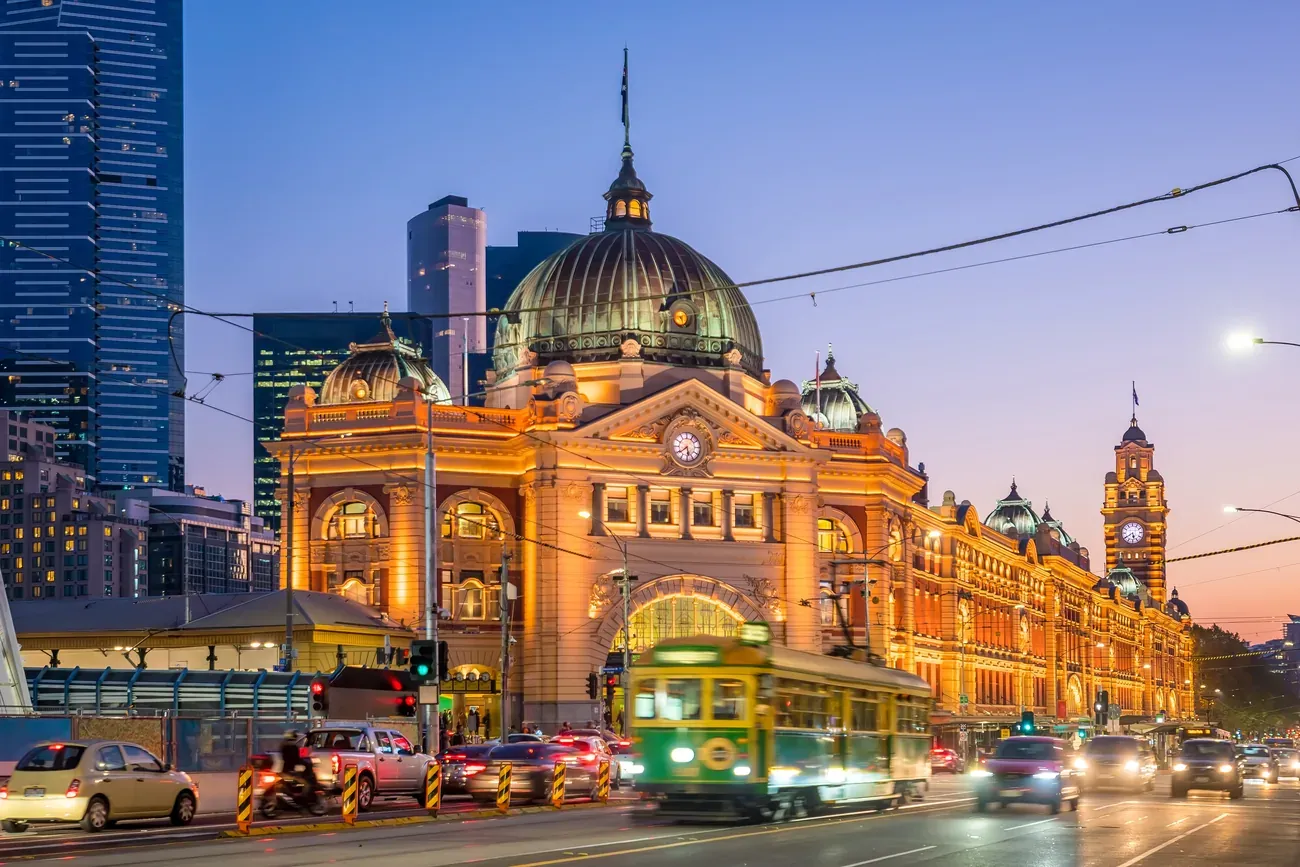
Melbourne's suburban rail network converges under one great dome at the corner of Flinders and Swanston streets. Trains first ran from the site in 1854, which makes Flinders Street the oldest railway station in Australia, although the building that fronts the corner today was only finished in 1910. Generations of Melburnians have arranged to meet under its row of clocks above the entrance steps, and trams pass the doors on the way through the grid to Federation Square opposite.
Location: Corner of Flinders and Swanston streets, Melbourne VIC 3000
Access: Free to walk the concourse and the exterior steps. A myki touch-on is needed once through the gates to board a train.
2. Queen Victoria Market
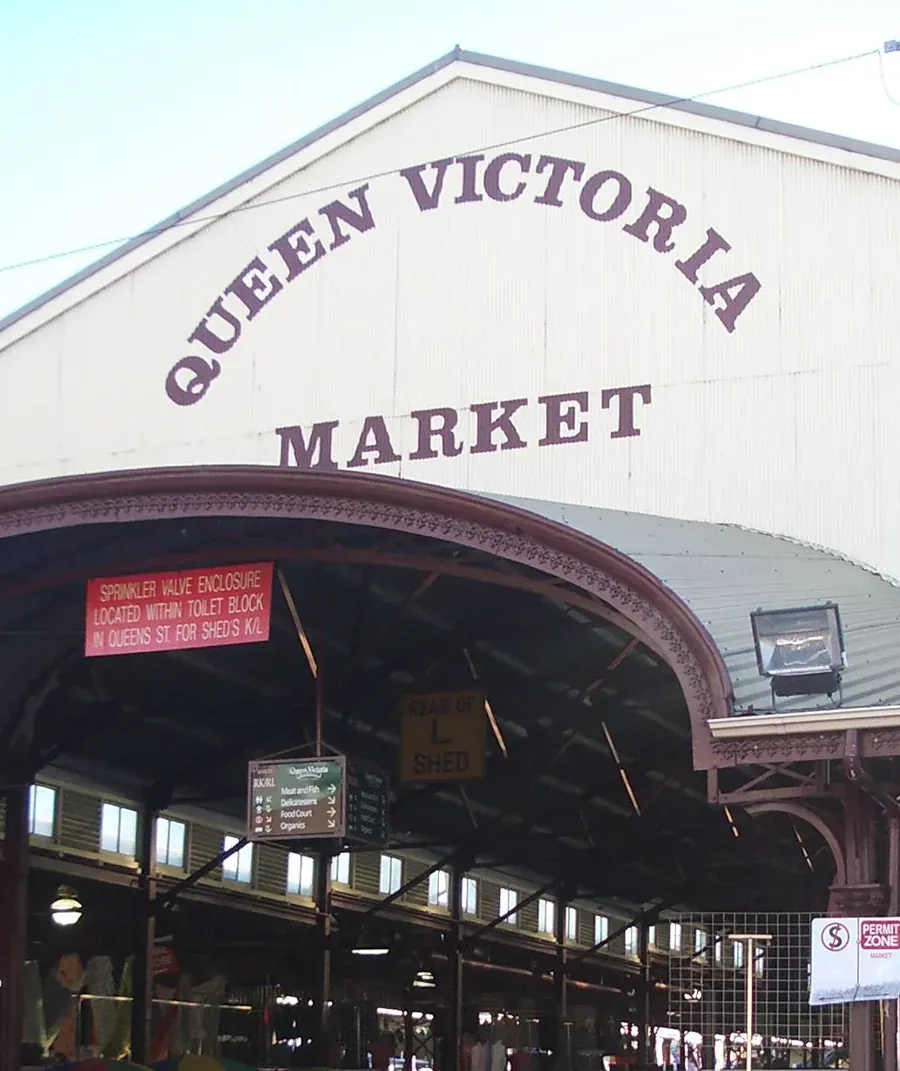
Seven hectares of open sheds and enclosed halls north of the grid, officially opened in 1878 and trading ever since on ground that had served as Melbourne's first official cemetery. Growers and fishmongers work the aisles from before dawn, delicatessens and butchers hold the covered halls, and the market runs night markets and guided tours alongside the ordinary trading days. Renewal works have been going on across the site without closing it.
Location: Queen Street, Melbourne VIC 3000
Access: Walking the aisles costs nothing; only what shoppers buy carries a price. Trading hours run Tuesday, Thursday and Friday 6:00 to 15:00, Saturday to 16:00 and Sunday 9:00 to 16:00, closed Monday and Wednesday.
Photo: "Queen Victoria Market, Melbourne" by AussQVMarks (CC BY-SA).

3. Melbourne Cricket Ground (MCG)
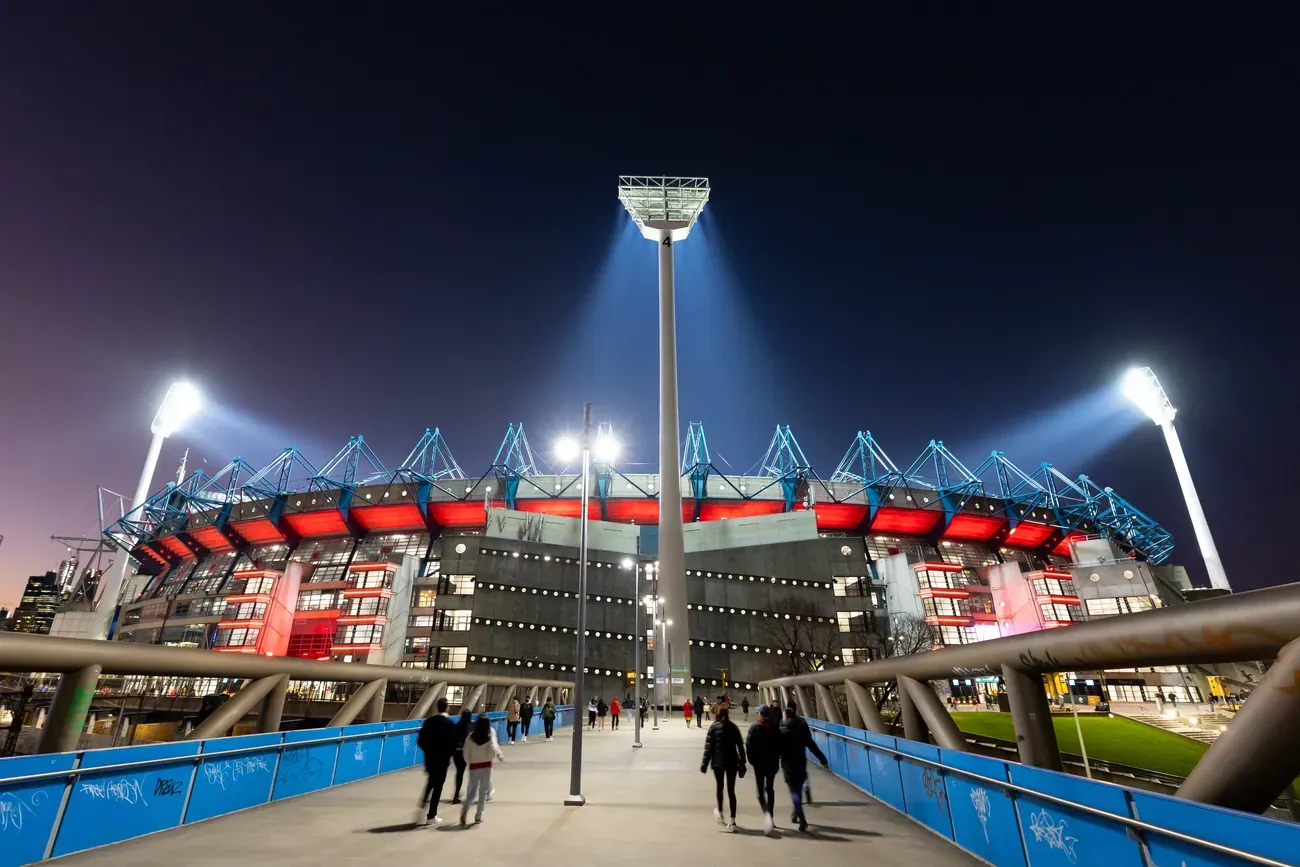
Australians call it The G: 100,024 places in Yarra Park, the home ground of the Melbourne Cricket Club since 1853 and the largest cricket stadium in the world. It staged the main events of the 1956 Olympics and now fills for the AFL season, the Grand Final in late September and the Boxing Day Test that opens every 26 December. On non-event days, tours leave from Gate 3 for the arena fringe, the MCC Long Room and the player changerooms, and the Australian Sports Museum inside the ground spans Australian sport. The walk from Flinders Street Station through Birrarung Marr takes about fifteen minutes.
Capacity: 100,024 · Established: 1853
Location: Brunton Avenue, Yarra Park, East Melbourne
Access: Match days, tours and the museum are ticketed separately
4. State Library Victoria
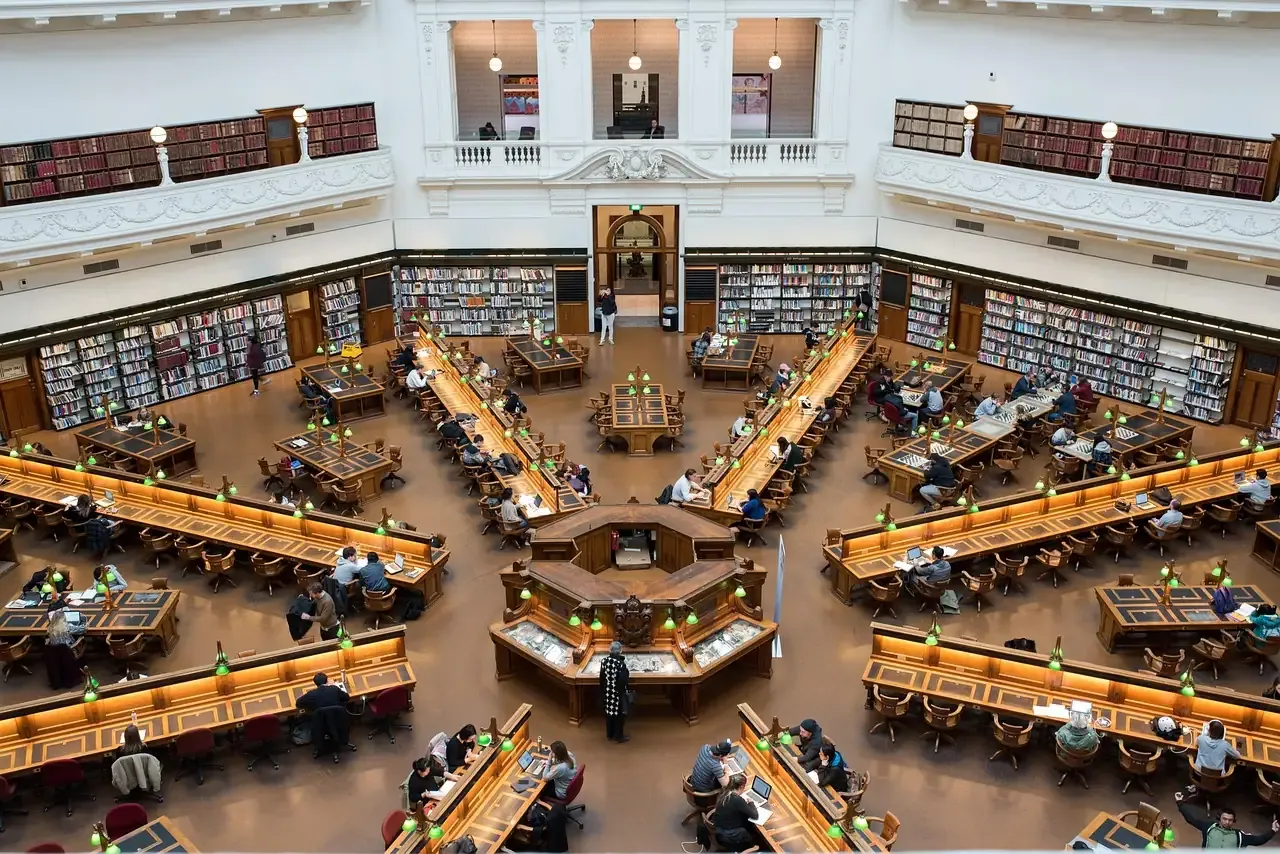
Australia's oldest public library was founded in 1854 and has never left its Swanston Street block, which now runs back as far as Russell Street. Its centrepiece is the octagonal La Trobe Reading Room, completed in 1913 under a dome 34.75 metres across and just as tall, with desks radiating from the centre like spokes. Exhibitions fill the surrounding galleries, Ned Kelly's armour among them.
Architect: Joseph Reed · Style: Neoclassical
Location: 328 Swanston Street, Melbourne VIC 3000
Access: Free to enter, open daily 10:00 to 18:00, closed on New Year's Day, Good Friday, Christmas Day and Boxing Day. Ticketed exhibitions and events charge separately.
5. National Gallery of Victoria International
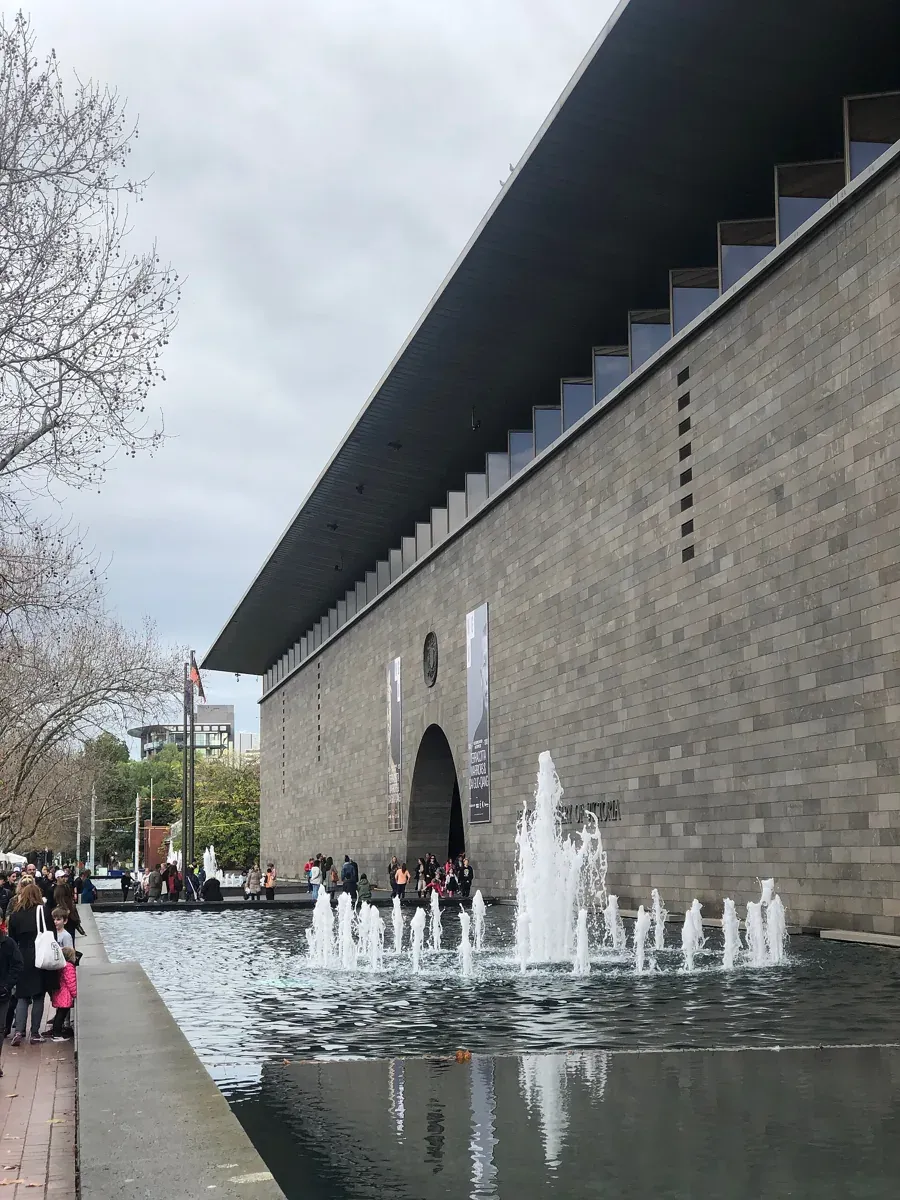
The gallery was founded in 1861 and now splits itself across two buildings; the international collection lives in the bluestone block on St Kilda Road that Roy Grounds designed and opened in 1968. It is the home of the gallery's international art and design, an extensive collection drawn from across the world, while Australian art sits across the river at Federation Square. Southbank's riverside walk and the Melbourne Skydeck, on the 88th floor of the Eureka Tower, are minutes away on foot.
Architect: Roy Grounds
Location: 180 St Kilda Road, Melbourne VIC 3006
Access: Free entry to the collection, open daily 10:00 to 17:00, from 13:00 on Anzac Day and closed on Christmas Day. Special exhibitions are ticketed separately.
Photo: "National Gallery of Victoria, Melbourne" by Gracchus250 (CC BY-SA).
6. Federation Square
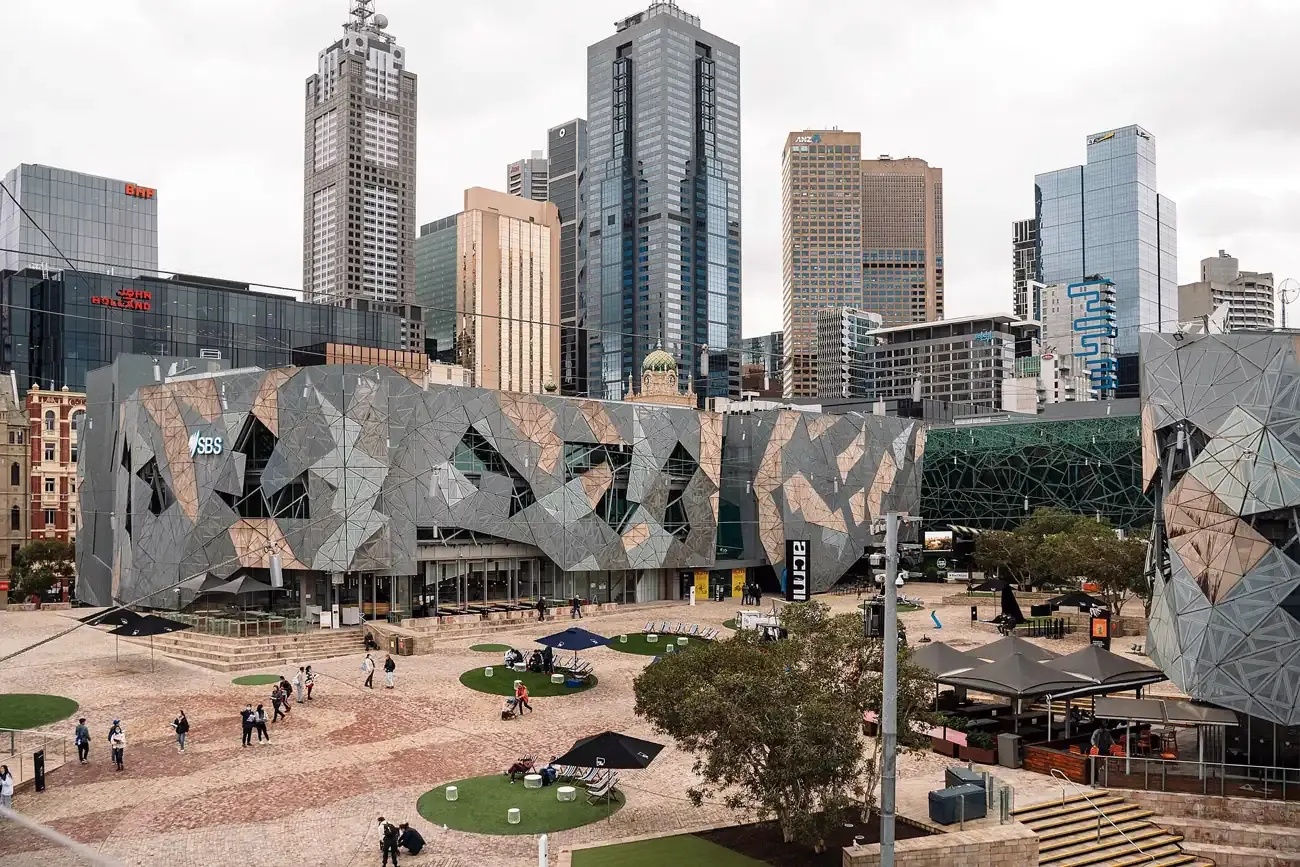
Fed Square opened in 2002 on a deck built over the railway lines across the road from Flinders Street Station, its angular facades folded around an open paved square. ACMI, the Koorie Heritage Trust and the Ian Potter Centre: NGV Australia all open onto it, and thousands of events a year run on the paving. In 2019 it went onto the Victorian Heritage Register, the youngest building in Australia recognised that way. The Melbourne Cricket Ground is a walk east through Birrarung Marr.
Location: Corner of Flinders and Swanston streets, Melbourne VIC 3000
Access: Free to cross at any hour. ACMI's permanent exhibition on screen culture is free too, while its ticketed exhibitions and cinema sessions charge separately.
Photo: "Federation Square, Melbourne" by Ravalight (CC BY-SA).

7. Royal Botanic Gardens Victoria
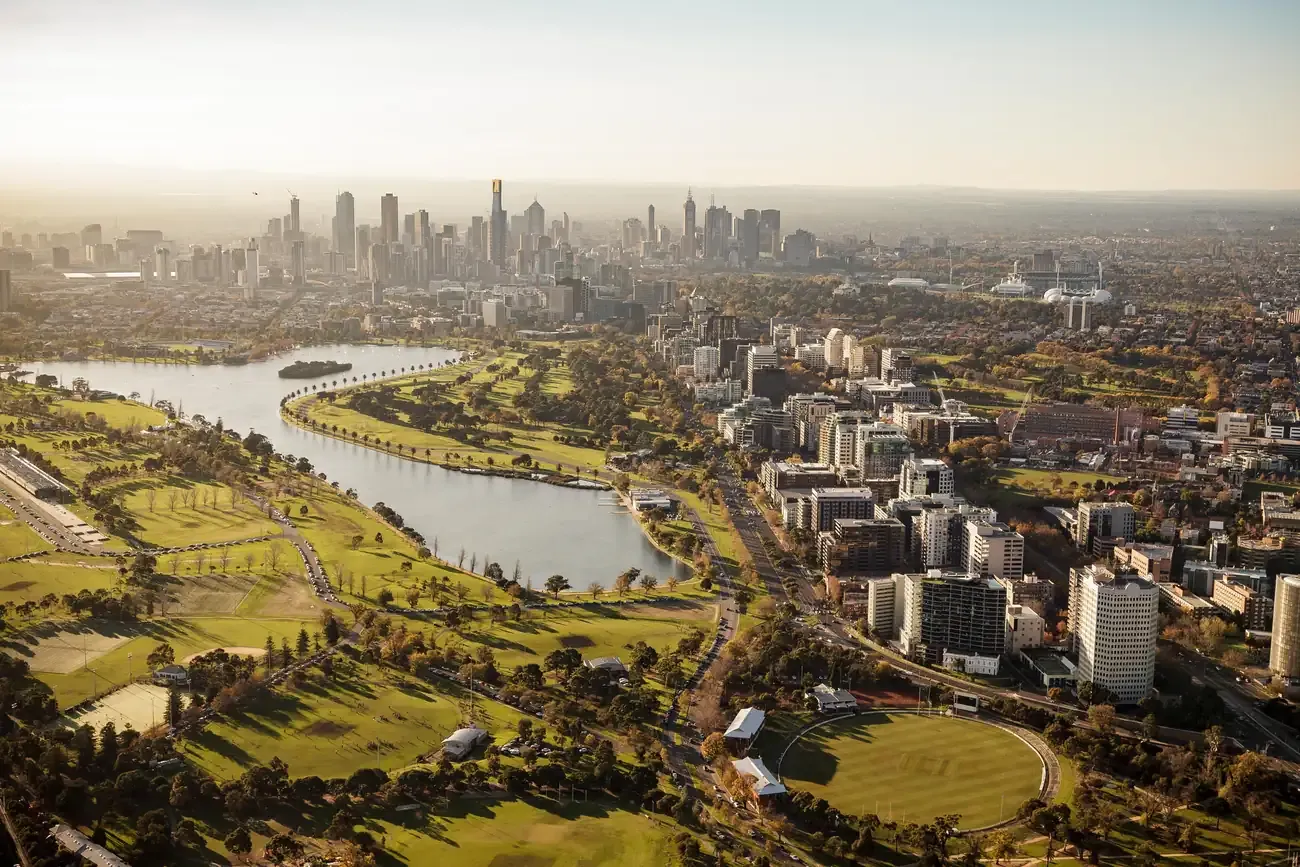
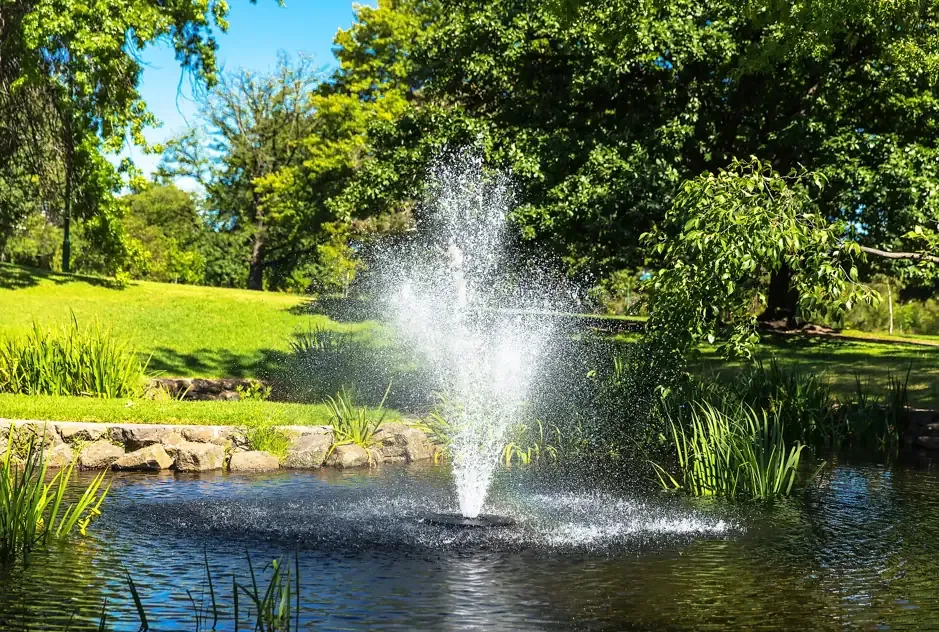
Land on the south bank of the Yarra was set aside for a botanic garden in 1846, and Melbourne Gardens now covers 38 hectares of lawn, lake and specialised plantings a short tram ride from the centre. Paths curve around the Ornamental Lake, where water birds nest within sight of the city towers, and free guided walks leave every day except Monday. The Children's Garden shuts for winter and reopens on 6 September.
Location: Birdwood Avenue, Melbourne VIC 3004
Access: Admission is free and the gardens open every day of the year from 7:30 to 17:30, with the visitor centre from 9:30 to 17:00.
Photo: "Royal Botanic Gardens, Melbourne" by John Torcasio (CC BY-SA).

8. Old Melbourne Gaol
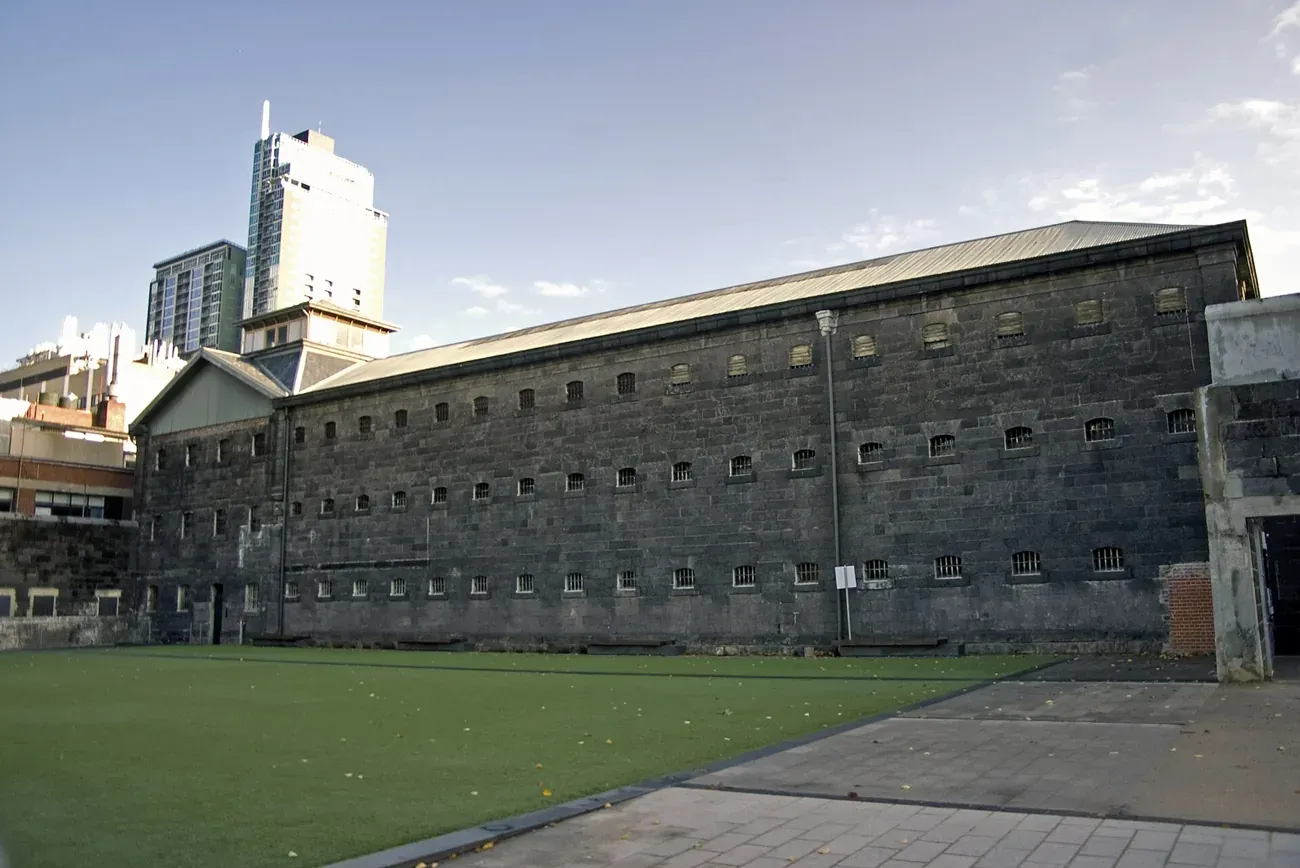
Bluestone walls on Russell Street enclose three levels of cells stacked behind iron walkways. Building began in 1839, the first cellblock opened in 1845, and the National Trust, which runs the site today, calls it Victoria's oldest prison. Ned Kelly was hanged here on 11 November 1880 and the surviving wing displays death masks taken from the men and women executed inside. The National Trust opened the gaol as a penal museum in 1972; next door, the City Watch House ran from 1909 until 1994.
Location: 377 Russell Street, Melbourne VIC 3000
Access: Ticketed, open daily 10:00 to 17:00 and closed on Good Friday and Christmas Day. General admission covers a self-guided visit with an audio guide in English and Mandarin; the heritage building has no lifts or ramps.

9. Abbotsford Convent
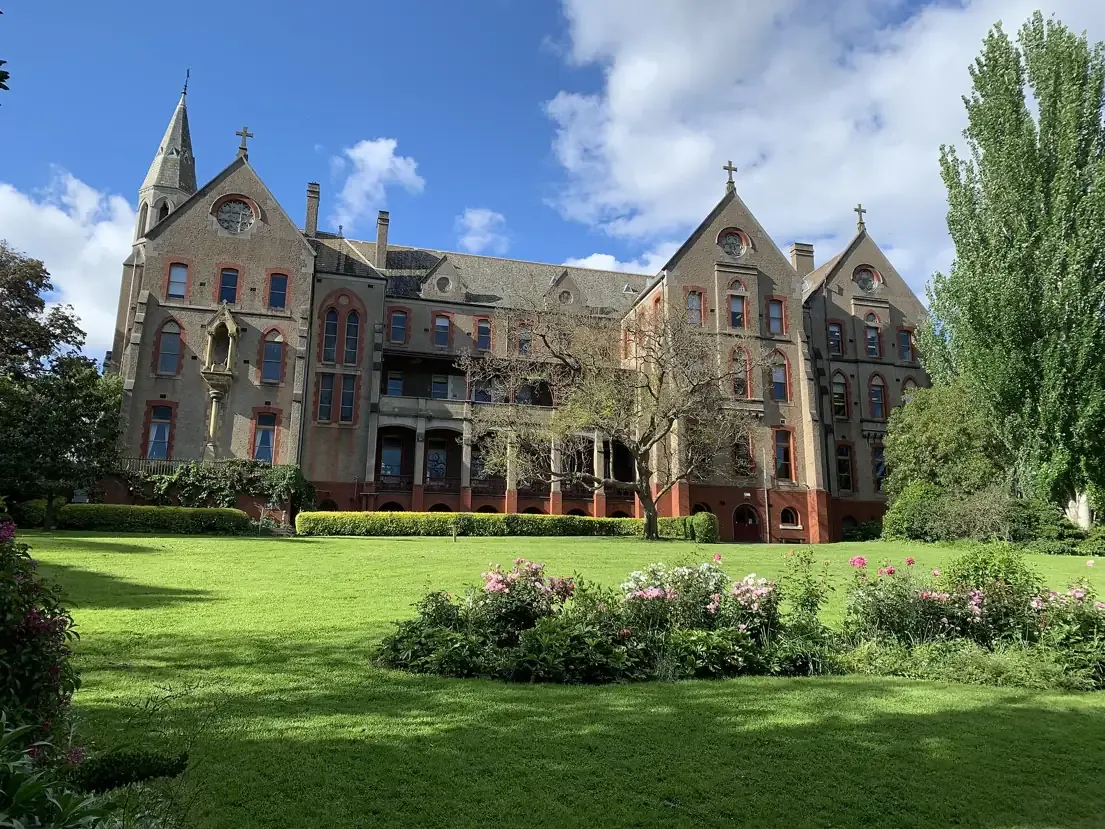
A convent complex in a bend of the Yarra, saved by a seven-year community campaign and reopened as a precinct of arts, culture and learning rather than sold for housing. Artist studios, a gallery, a shop and places to eat now occupy the heritage buildings, and the lawns and gardens between them stay open to anyone walking through, with the Collingwood Children's Farm across the lane. The site is listed on both the Victorian Heritage Register and the Australian National Heritage List.
Location: 1 St Heliers Street, Abbotsford VIC 3067
Access: Entry is free and the grounds open every day of the year; the studios, galleries and eateries keep their own hours.
Photo: "Abbotsford Convent, Melbourne" by Redtree21 (CC BY-SA).

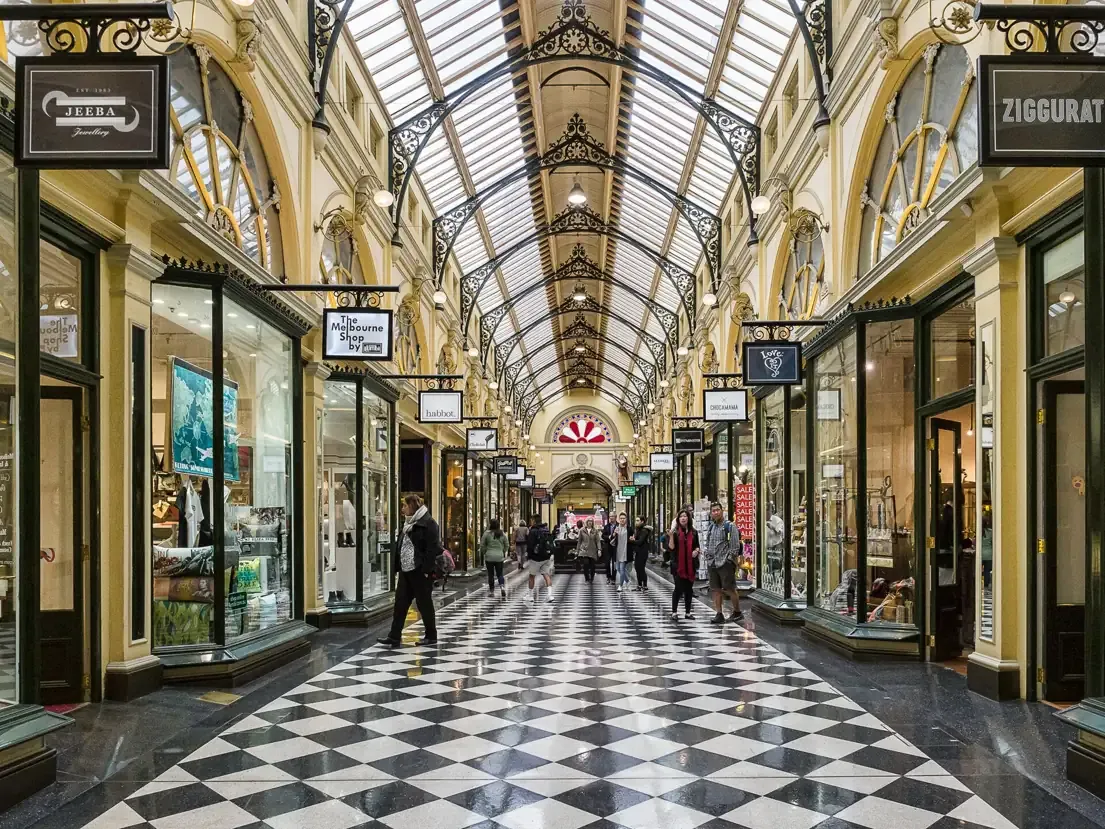
10. The Block Arcade
A glass-roofed shopping arcade that opened in 1892 and cuts between Collins Street and Elizabeth Street, part of the Golden Mile heritage walk. Mosaic tiled floors, a canopy carried on wrought iron and tall carved shopfronts survive from the gold-boom years, and the name recalls the Victorian habit of doing the block, dressing up to promenade this stretch of Collins Street. Chocolatiers, jewellers, watchmakers and Melbourne's oldest tea rooms trade under the glass today.
Location: 282 Collins Street, Melbourne VIC 3000
Access: No ticket to walk through; the boutiques and the tea rooms set their own trading hours, and the arcade's guided walking tour is booked by phone or email.
Photo: "Block Arcade, Melbourne" by Marc Dalmulder from Hamlyn Terrace, Australia (CC BY).
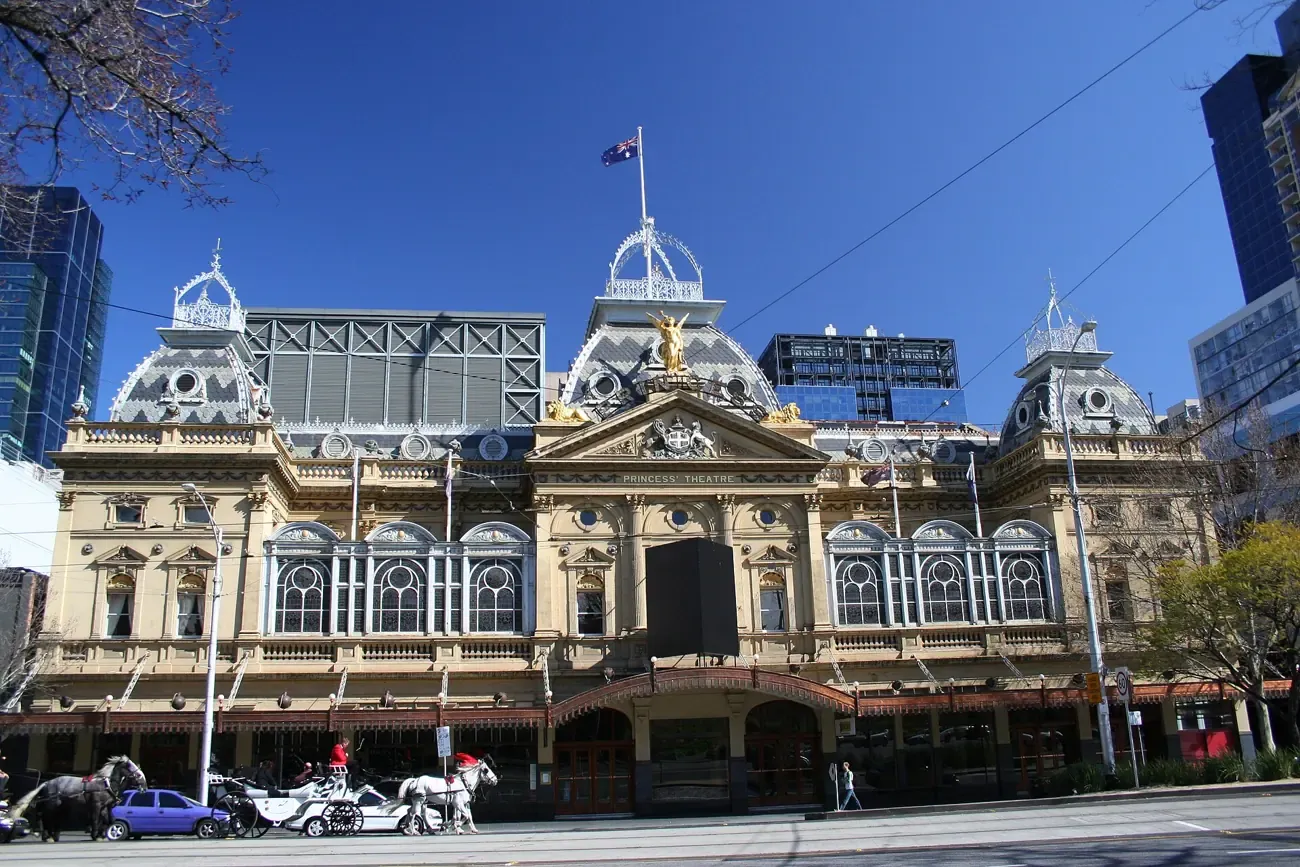
11. Princess Theatre
A theatre has stood on this stretch of Spring Street since 1854, and the building took its present shape when the Melbourne architect William Pitt rebuilt it. Stalls, dress circle and grand circle seat up to 1,500 people over three levels, the original chandelier still hangs above them, and a major refurbishment in 2019 prepared the house for Harry Potter and the Cursed Child. Parliament station sits about 150 metres up the hill.
Architect: William Pitt
Location: 163 Spring Street, Melbourne VIC 3000
Access: Ticketed by performance, with no general admission. The theatre asks patrons to arrive at least 30 minutes before curtain.
Photo: "Princess Theatre, Melbourne" by Mat Connolley (Matnkat) (CC BY).
Upcoming events in Melbourne
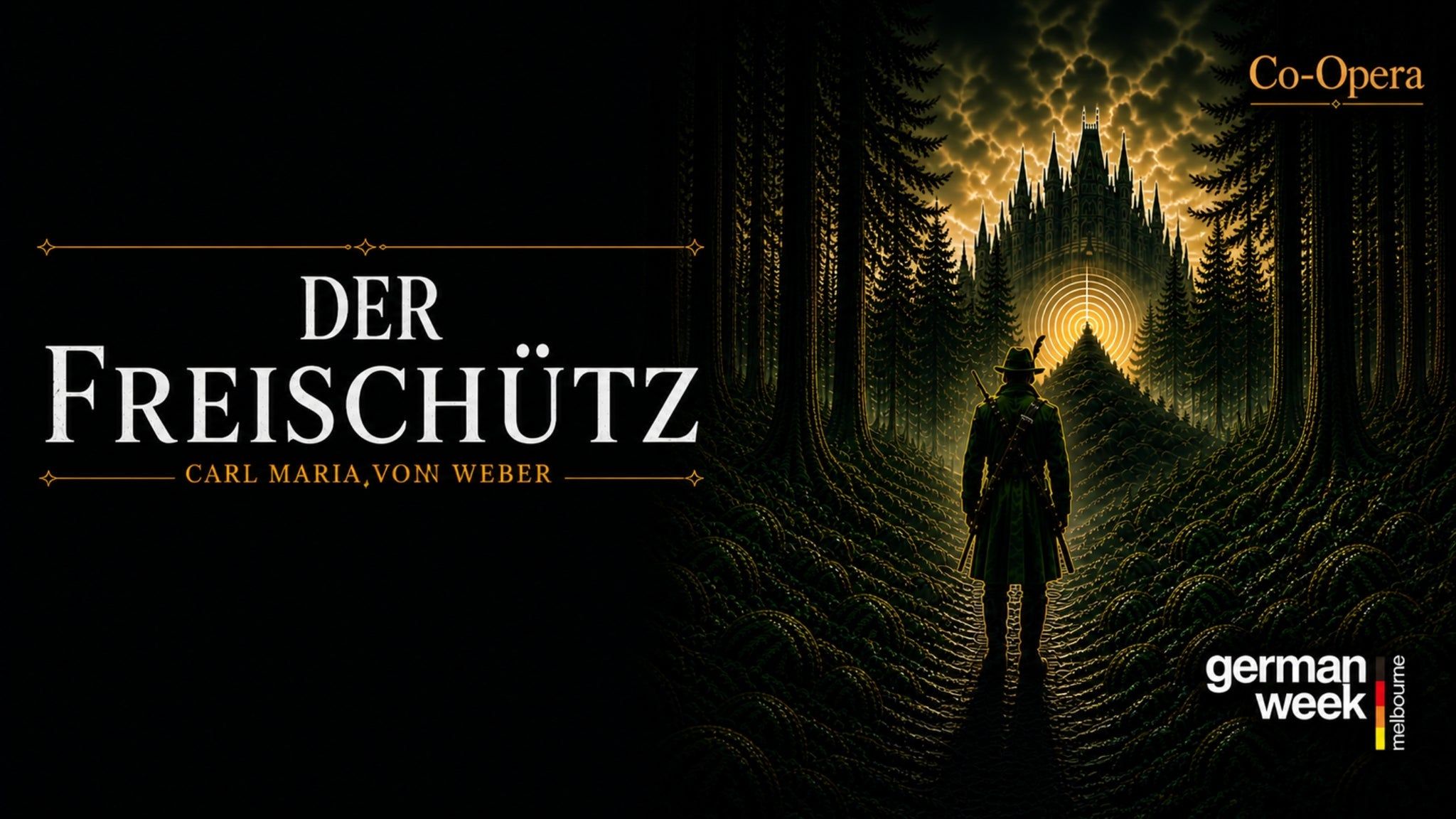
Co-opera presents Der Freischuetz
Co-opera stages Carl Maria von Weber's Der Freischuetz at Athenaeum Theatre Two on 24 October at 18:00.

Australian Open 2027 - Ground Pass - Single Session (Day)
Australian Open 2027 - Ground Pass - Single Session (Day) comes to Melbourne Park on 11 January 2027 at 10:00.

John Cain Arena - Single Session (Day) - Australian Open 2027
John Cain Arena - Single Session (Day) - Australian Open 2027 comes to Melbourne Park on 17 January 2027 at 11:00.

Bryson Tiller: The Neo Trapsoul Tour
Bryson Tiller plays the Sidney Myer Music Bowl on 21 January 2027 at 19:00.
Free landmarks and viewpoints in Melbourne
Hosier Lane
Hosier Lane and its street art sit on public walls rather than behind a gallery door, so wandering through and photographing it costs nothing at any hour.
The Shrine of Remembrance
The Shrine of Remembrance and its grounds are free to visit every day from 10:00 to 17:00; it closes on Good Friday, Christmas Day and selected maintenance days. Its on-site cafe and shop are what visitors end up paying for.
Fitzroy Gardens
Fitzroy Gardens costs nothing to walk through at any hour; Captain Cook's Cottage, brought from Yorkshire and handed over to the State of Victoria on 15 October 1934, charges for its interior alone.
Why Melbourne deserves your time
What makes Melbourne unique
British settlement began in 1835, when settlers from Tasmania led by John Batman "purchased" land on the Yarra River from the local Aboriginal people; the streets of the future CBD were surveyed in 1837 and the settlement, first called Batmania, was soon renamed after the British prime minister of the day, Lord Melbourne. Gold discovered in 1851 funded the Victorian-era arcades, markets and civic buildings that still line the grid today, and generations of laneway art, coffee culture and sport have layered on top of that boom-era streetscape ever since.
Districts and where to go
The CBD and Docklands hold the grid, the free trams and the arcades; Southbank across the Yarra adds the arts precinct around the NGV. St Kilda, a separate municipality south of the centre, brings beaches, Luna Park and live music venues such as the Palais Theatre. Carlton and Parkville hold the university district and Lygon Street's Italian cafes, while Fitzroy, Richmond and Collingwood to the east keep a bohemian, working-class edge around the MCG.
When to go and how long to stay
Spring, from September to November, and autumn, from March to May, bring milder, more settled weather than Melbourne's changeable winter and its hot summer. Three to four days cover the CBD and a handful of sights beyond it at an easy pace, with an extra day worth setting aside for an excursion further out.
Getting around
Trams criss-cross the compact CBD grid, and within a free zone covering the city centre no ticket is needed at all; travel beyond it and a myki card or contactless card is required to touch on and off trains, trams and buses alike. St Kilda Road's trams link the CBD to the arts precinct and on to St Kilda, and the Great Ocean Road's Twelve Apostles lie about 275 kilometres and a four hour drive west of the city. That road, built by returned soldiers as a war memorial, is one of the fixtures among tourist attractions in Australia, along with the Queen Victoria Market and the MCG in the city itself.