
New York City tourist attractions
Known for
Skyscrapers, Broadway theatre and five boroughs
Must-see landmarks
Times Square, Central Park, Empire State Building and Statue of Liberty
Best time to visit
Spring, from April to June, and autumn, from September to November
Days needed
4 to 5 days for Manhattan's main sights, more with the outer boroughs
The 10 tourist attractions to see in New York City
Statue of Liberty, Empire State Building and Times Square lead the tourist attractions in New York City. This guide ranks the 10 sights worth your time, then adds free things to do, upcoming events and visitor FAQs.
1. Statue of Liberty
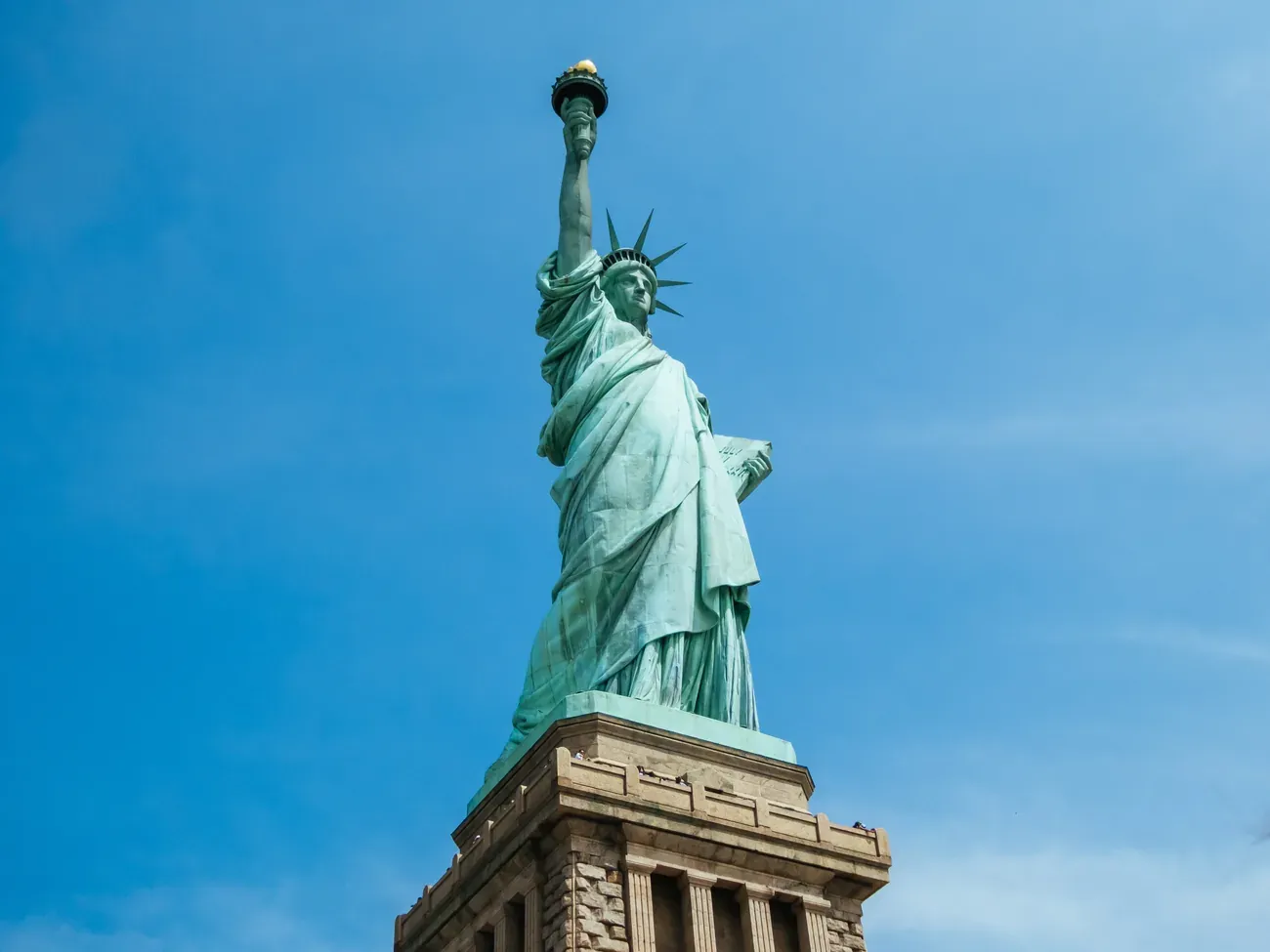
The Statue of Liberty rises on Liberty Island in New York Harbor, a colossal copper figure that has greeted arrivals to the city since the nineteenth century. The sculptor Frederic-Auguste Bartholdi designed the figure, and Gustave Eiffel engineered the iron framework that carries its copper skin, dedicated on 28 October 1886 according to the National Park Service. Seeing her up close means an official ferry from Battery Park in Manhattan or Liberty State Park in New Jersey, with pedestal and crown access sold separately.
Sculptor: Frederic-Auguste Bartholdi · Style: Neoclassical
Location: Liberty Island, New York Harbor
Access: Ticketed ferry to the island; free view from the Staten Island Ferry and Battery Park
2. Empire State Building
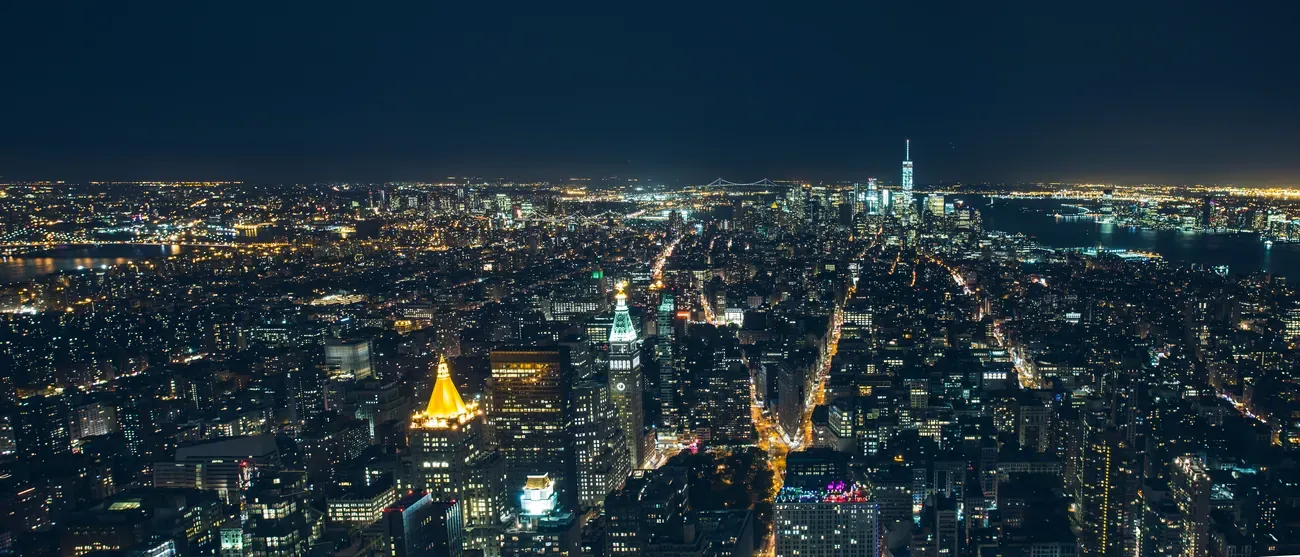
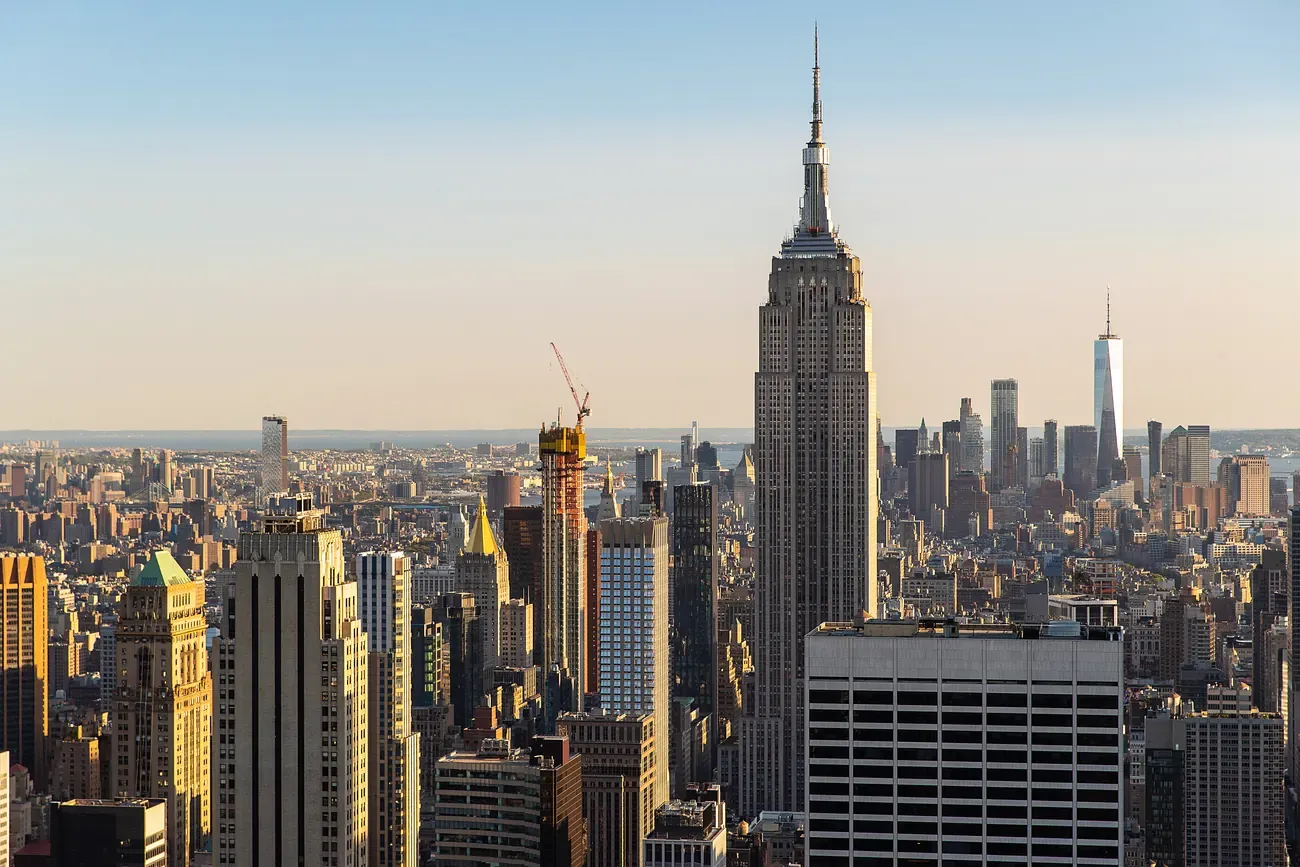
The Empire State Building has defined the Midtown skyline since it opened in 1931, an Art Deco tower that stood as the world's tallest building for nearly forty years. Designed by the firm Shreve, Lamb and Harmon, its limestone setbacks climb to a slender spire and to a pair of observation decks on the 86th and 102nd floors that draw visitors for sweeping views across Manhattan and beyond. The tower is a National Historic Landmark and one of the most recognised buildings in the world.
Architect: Shreve, Lamb and Harmon · Style: Art Deco
Location: 20 West 34th Street, Midtown Manhattan
Access: Ticketed observation decks
Photo: "Empire State Building" by John Dillenbeck (CC0)
3. Times Square
Times Square blazes at the crossroads of Broadway and Seventh Avenue, a wedge of Midtown wrapped in giant illuminated billboards and streaming crowds at every hour. Named for The New York Times, which moved to the district in the early twentieth century, it anchors the Broadway theatre scene and hosts the city's New Year's Eve ball drop above One Times Square. It costs nothing to walk through, day or night, though the attractions around its edges, such as Madame Tussauds, sell their own tickets separately.
Location: Broadway at Seventh Avenue, Midtown Manhattan
Access: Free to walk through, day or night
4. Central Park
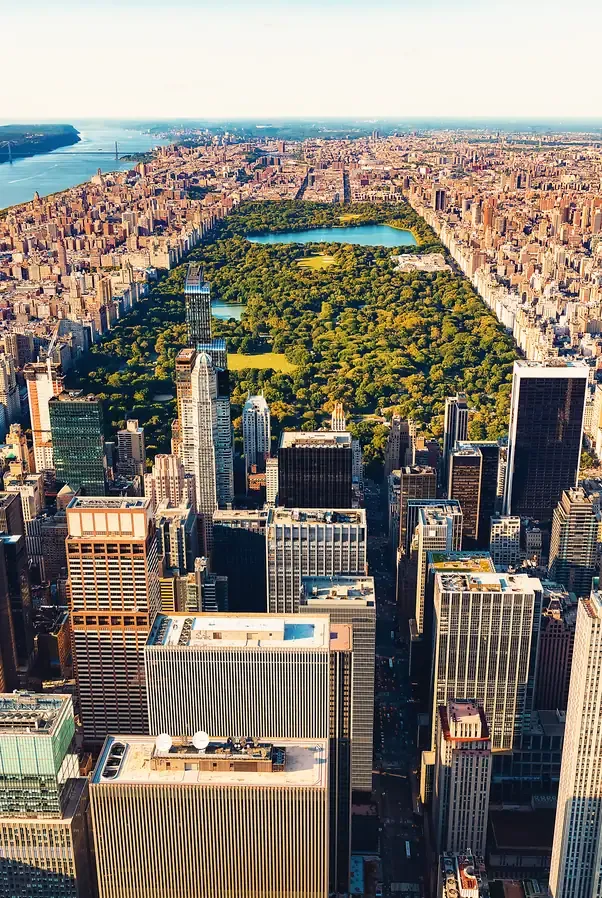
Central Park spreads across 843 acres in the heart of Manhattan, a designed landscape of lawns, woods, lakes and winding paths laid out by Frederick Law Olmsted and Calvert Vaux from the 1850s. Its Bethesda Terrace, the Ramble, the reservoir and the Mall draw walkers, rowers and cyclists through every season, a green counterpoint to the surrounding skyline. The park is free to enter at any of its gates, open daily from 06:00 to 01:00 according to the Central Park Conservancy.
Designers: Frederick Law Olmsted and Calvert Vaux
Location: Midtown to the Upper West and East Sides, Manhattan
Access: Free, open daily 06:00 to 01:00
5. Rockefeller Center
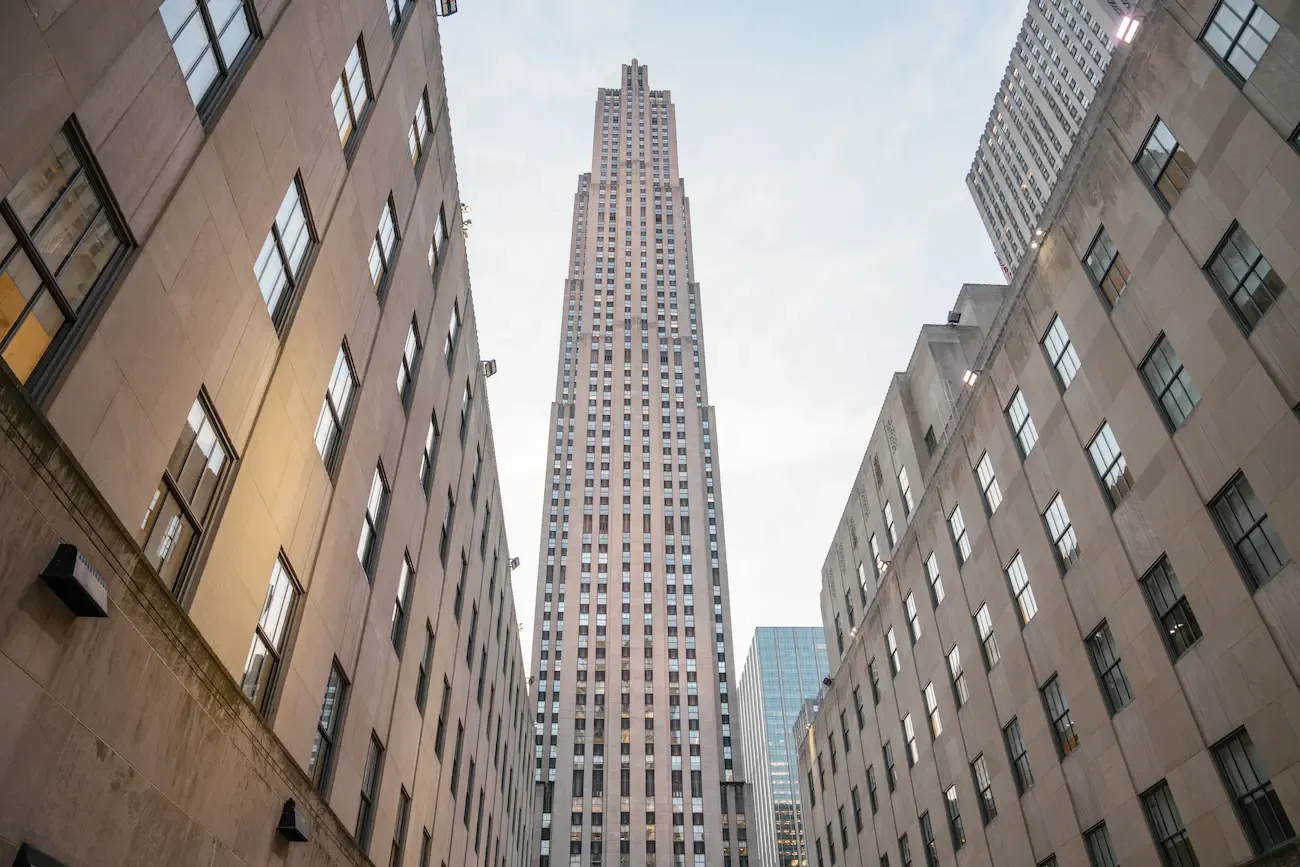
Rockefeller Center is a complex of limestone towers and public plazas built through the 1930s between Fifth and Sixth Avenues, with the tall slab of 30 Rockefeller Plaza rising at its core. The sunken plaza fills with international flags and a winter ice rink, while the Top of the Rock observation deck crowns the main tower with views toward Central Park and the Empire State Building. Raymond Hood and Wallace Harrison led the Art Deco design of the complex.
Architect: Raymond Hood and Wallace Harrison · Style: Art Deco
Location: Between Fifth and Sixth Avenues, Midtown Manhattan
Access: Free to walk the plazas; Top of the Rock deck ticketed
Photo: "Rockefeller Center" by JJBers (CC BY-SA 4.0)
6. Brooklyn Bridge
The Brooklyn Bridge has spanned the East River since 1883, its two Gothic stone towers and steel cables linking the Financial District in Manhattan to Dumbo in Brooklyn. Designed by John Augustus Roebling and completed by his family after his death, it carries an elevated wooden promenade above the traffic lanes with views back over the harbour. Crossing on foot costs nothing at any hour; an early morning or an evening walk avoids the midday crowds, and the subway runs back under the river.
Engineer: John Augustus Roebling · Style: Gothic Revival towers
Location: East River, between Lower Manhattan and Dumbo
Access: Free to cross on foot at any hour
7. Metropolitan Museum of Art
The Metropolitan Museum of Art lines Fifth Avenue across from Central Park, its Beaux-Arts facade fronting an encyclopedic collection that runs from Egyptian temples and Greek marbles to European painting and contemporary art. Founded in 1870, the museum grew through additions by Richard Morris Hunt and later architects into one of the largest art museums in the world. New York State residents and students from New York, New Jersey and Connecticut may pay what they wish, while every other visitor pays a standard admission fee.
Architect: Richard Morris Hunt and others · Founded: 1870
Location: 1000 Fifth Avenue, Upper East Side
Access: Ticketed; pay what you wish for NY State residents and NY, NJ and CT students
Photo: "Metropolitan Museum of Art" by Hugo Schneider (CC BY-SA 2.0)
8. National September 11 Memorial
The National September 11 Memorial marks the footprints of the Twin Towers with two square reflecting pools set within the rebuilt World Trade Center site. Designed by Michael Arad with the landscape architect Peter Walker, the pools are ringed by the names of those killed in the 2001 and 1993 attacks, framed by a plaza of white oak trees. The memorial is free and open daily from 08:00 to 20:00 according to the official site, while the underground museum that tells the story of the attacks is a separate, ticketed visit.
Architect: Michael Arad · Opened: 2011
Location: World Trade Center site, Lower Manhattan
Access: Free memorial plaza, open daily 08:00 to 20:00; museum ticketed
9. Grand Central Terminal
Grand Central Terminal has served Midtown as a working railway hub since 1913, its Beaux-Arts facade crowned by a sculpted clock and its main concourse spread beneath a painted celestial ceiling. Designed by the firms Reed and Stem and Warren and Wetmore, it channels commuters past marble staircases, the Oyster Bar and the whispering gallery tucked below the ramps. Anyone can step inside and admire the concourse without a ticket, though the shops and eateries along it charge for what they sell.
Architect: Reed and Stem; Warren and Wetmore · Style: Beaux-Arts
Location: 89 East 42nd Street, Midtown Manhattan
Access: Free to enter and admire
10. The High Line
The High Line is an elevated park built on a disused freight rail viaduct that runs above the streets of Chelsea and the Meatpacking District on Manhattan's West Side. Opened in 2009, its narrow path threads through gardens of wild grasses and perennials, past public art and viewing spurs set over the traffic below, ending near Hudson Yards. The elevated park is free to walk end to end, open from early morning into the evening, and is busiest on weekend afternoons.
Location: Gansevoort Street to 34th Street, West Side, Manhattan
Access: Free, open early morning into the evening
Photo: "The High Line" by Mike Peel (CC BY-SA 4.0)
Upcoming events in New York City
Candlebox
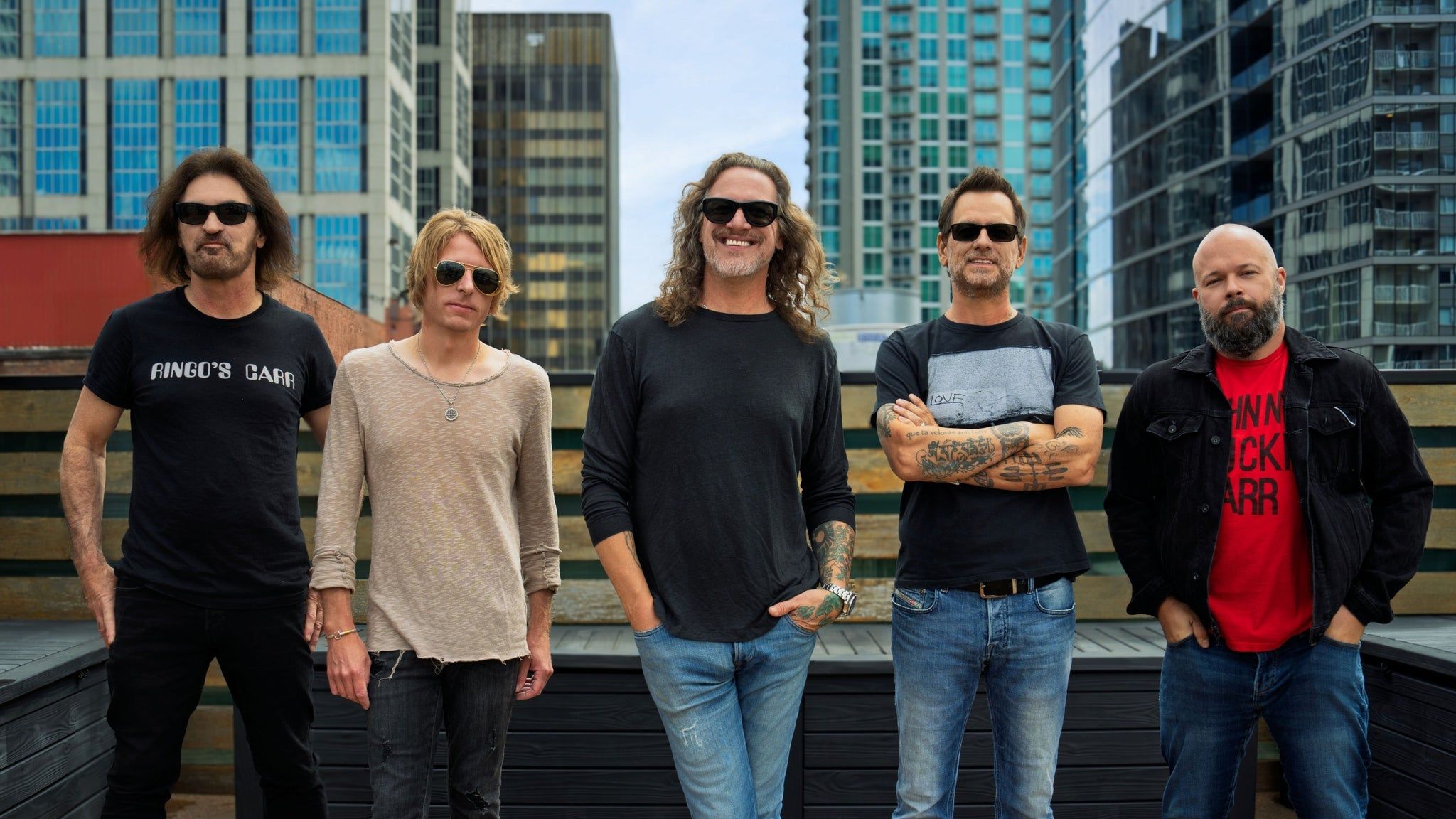
Candlebox plays Bowery Ballroom on 26 October at 19:00.

Slam Frank
Slam Frank plays Orpheum Theatre NYC on 26 October at 19:00.
New York Rangers vs. Los Angeles Kings
New York Rangers vs. Los Angeles Kings comes to Madison Square Garden on 26 October at 19:00.

Jenna Davis
Jenna Davis plays Gramercy Theatre on 26 October at 19:00.
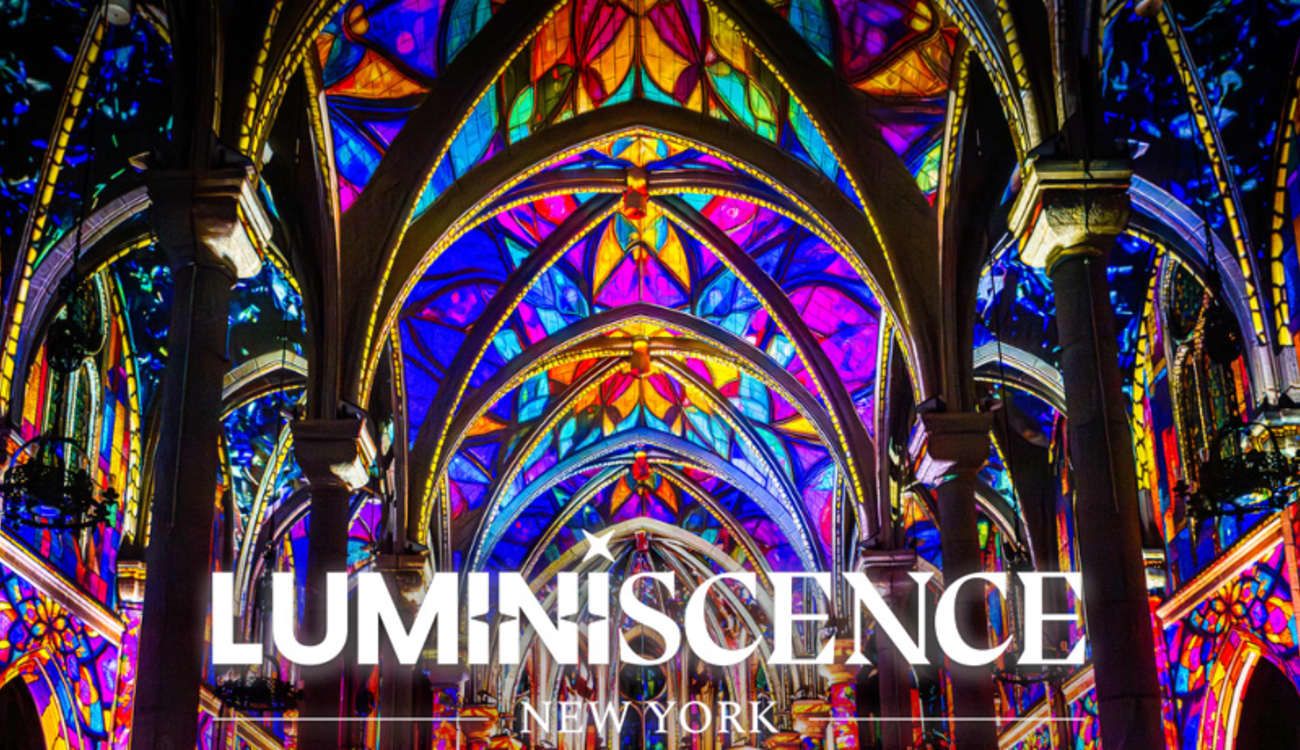
LUMINISCENCE: St. Patrick's Cathedral in New York City
LUMINISCENCE: St. Patrick's Cathedral in New York City comes to St. Patrick's Cathedral on 28 October at 19:30.
The Jazz Room: A Frank Sinatra & Louis Armstrong Tribute
The Jazz Room: A Frank Sinatra & Louis Armstrong Tribute comes to Sony Hall on 24 January 2027 at 18:30.
Free attractions to visit in New York City
Bryant Park
Bryant Park's lawns, reading room and summer film and performance series are all free, and the Bryant Park Corporation opens a free-entry ice rink here in winter.
Chelsea Market
Chelsea Market is free to wander whether or not anyone buys anything, its indoor food hall busiest around lunchtime on weekdays and calmer first thing in the morning.
Staten Island Ferry
The Staten Island Ferry is a free service run by the City of New York, sailing round the clock past the Statue of Liberty and Ellis Island on the way to Staten Island.
New York Public Library, Stephen A. Schwarzman Building
The Fifth Avenue library behind the marble lions Patience and Fortitude is free to enter, with free daily guided tours of the Rose Main Reading Room, per the library's own site.
Why New York City is worth visiting
New York City packs the density of a place immigrants from more than 180 countries have built together, one borough butting into the next until Manhattan's skyscraper canyons give way to Brooklyn's brownstones, Queens' street food and the Bronx's ballpark. Its skyline, subway and stages have shaped how the rest of the world pictures a big city, and it keeps changing faster than a single visit can take in.
Neighbourhoods to know
Midtown Manhattan holds the postcard cluster of Times Square, Rockefeller Center, the Empire State Building and Grand Central Terminal. Downtown runs from Greenwich Village's tree-lined streets through Chelsea and the High Line to the Financial District's canyons and the ferry docks at Battery Park. Uptown, the Upper East and Upper West Sides frame Central Park with museum row and Lincoln Center. Across the rivers, Brooklyn's Dumbo and Williamsburg draw their own crowds, and Coney Island's boardwalk sits at the end of the Brooklyn subway line.
When to go and for how long
Spring and autumn bring milder weather than the city's humid summers or cold winters. Four to five days cover Manhattan's main sights at a walkable pace; a longer stay leaves room for a borough like Brooklyn or a day trip to the Statue of Liberty and Ellis Island.
Getting around
The subway runs around the clock across all five boroughs and is the fastest way to cover long distances, while Manhattan's neighbourhoods themselves reward walking between sights. The Staten Island Ferry adds a free harbour crossing to the mix, and yellow cabs and rideshares fill the gaps the subway does not reach. Four of the landmarks that open any list of the must-see tourist attractions in the United States stand inside the five boroughs: the Statue of Liberty, Central Park, Times Square and the Empire State Building.