Niagara Falls' top tourist attractions
This guide covers the tourist attractions in Niagara Falls in one walkable day, from Niagara Parks Power Station to Journey Behind the Falls, then adds 10 more sights, free things to do, upcoming events and visitor FAQs.
Niagara Falls attractions beyond the itinerary
Niagara Falls splits between two countries: the Horseshoe Falls and the promenades above sit in Ontario, Canada, while the American and Bridal Veil Falls and their own set of attractions sit across the Niagara River in New York State, reachable on foot over the Rainbow Bridge with a valid passport.
- White Water Walk descends 70 metres by elevator to a boardwalk beside Class 6 rapids north along the Niagara Parkway, the river surging past on its way down from the Whirlpool.
- Whirlpool Aero Car carries passengers over the Niagara Whirlpool in a cable car that has run since 1916, suspended above the swirling water on a route Spanish engineer Leonardo Torres Quevedo designed.
- Clifton Hill packs its neon-lit strip with arcades, mini-golf courses and haunted houses above the falls, free to walk even though each attraction charges its own admission.
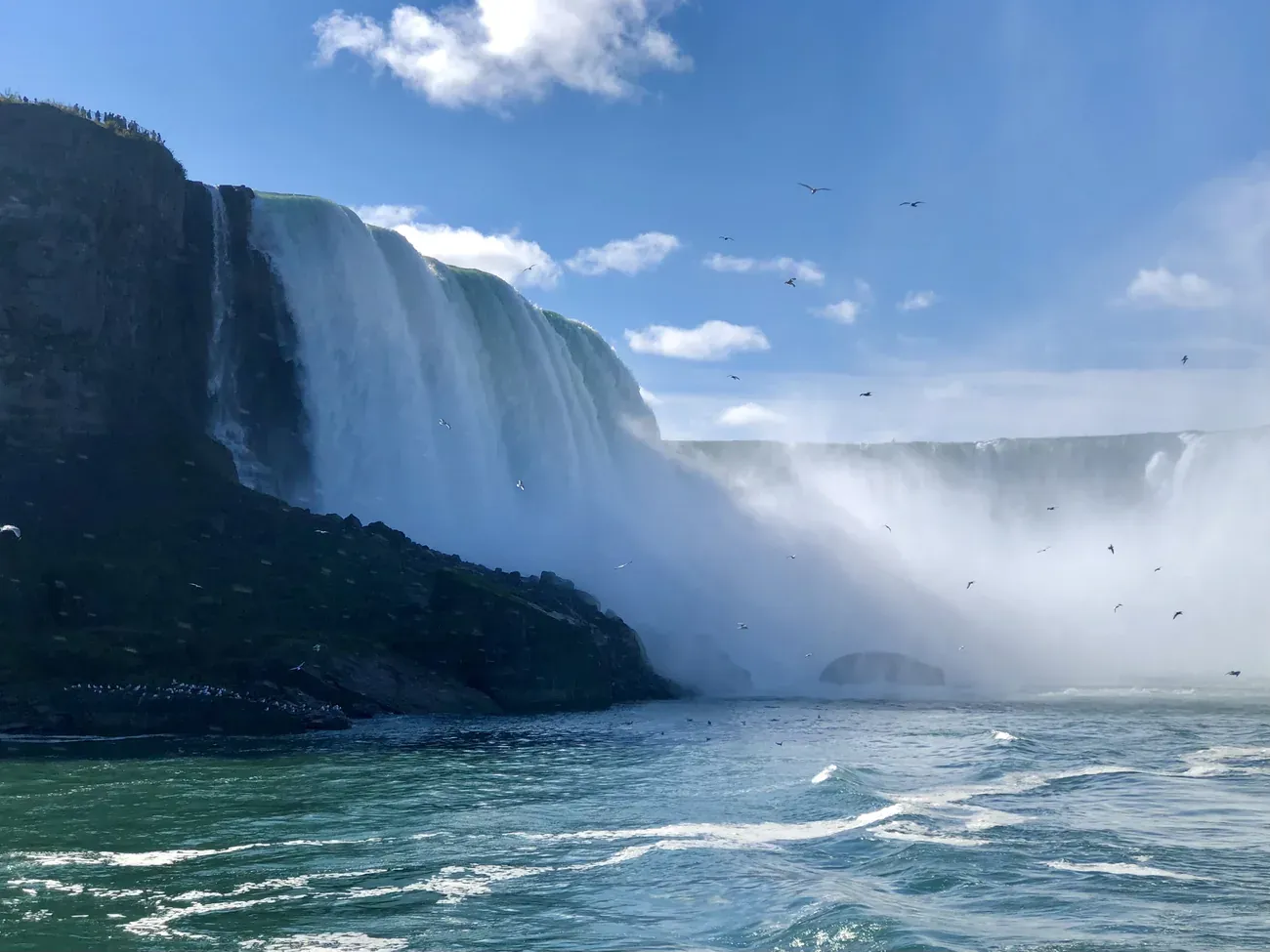
- Niagara City Cruises sails from the Canadian shore to the foot of the Horseshoe Falls, a different operator from the Maid of the Mist boats departing the American side across the river.
- Butterfly Conservatory houses thousands of free-flying butterflies inside a tropical, glass-enclosed garden, one of the largest conservatories of its kind in North America.
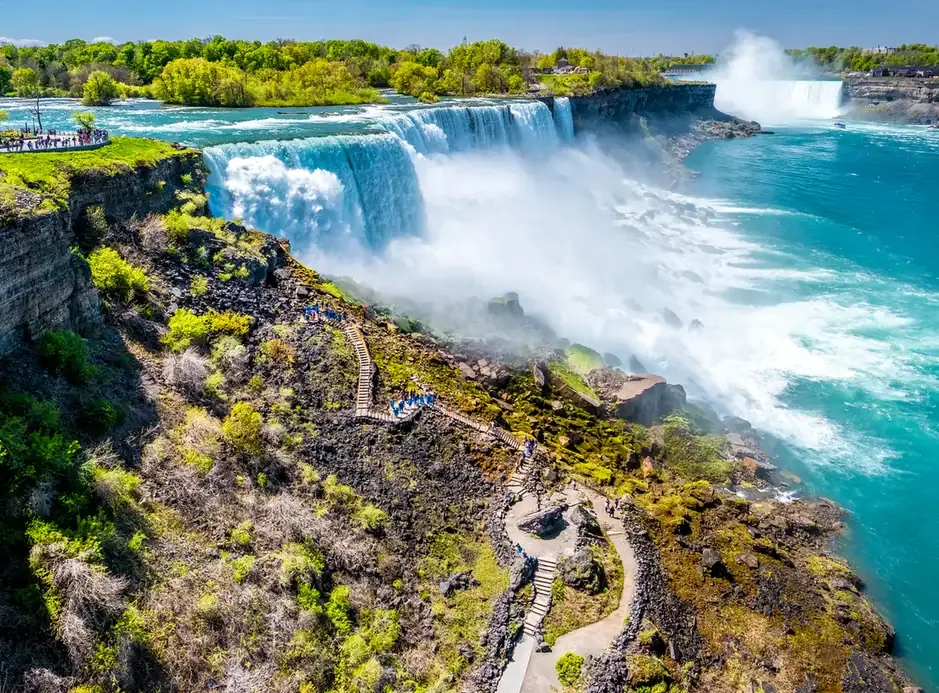
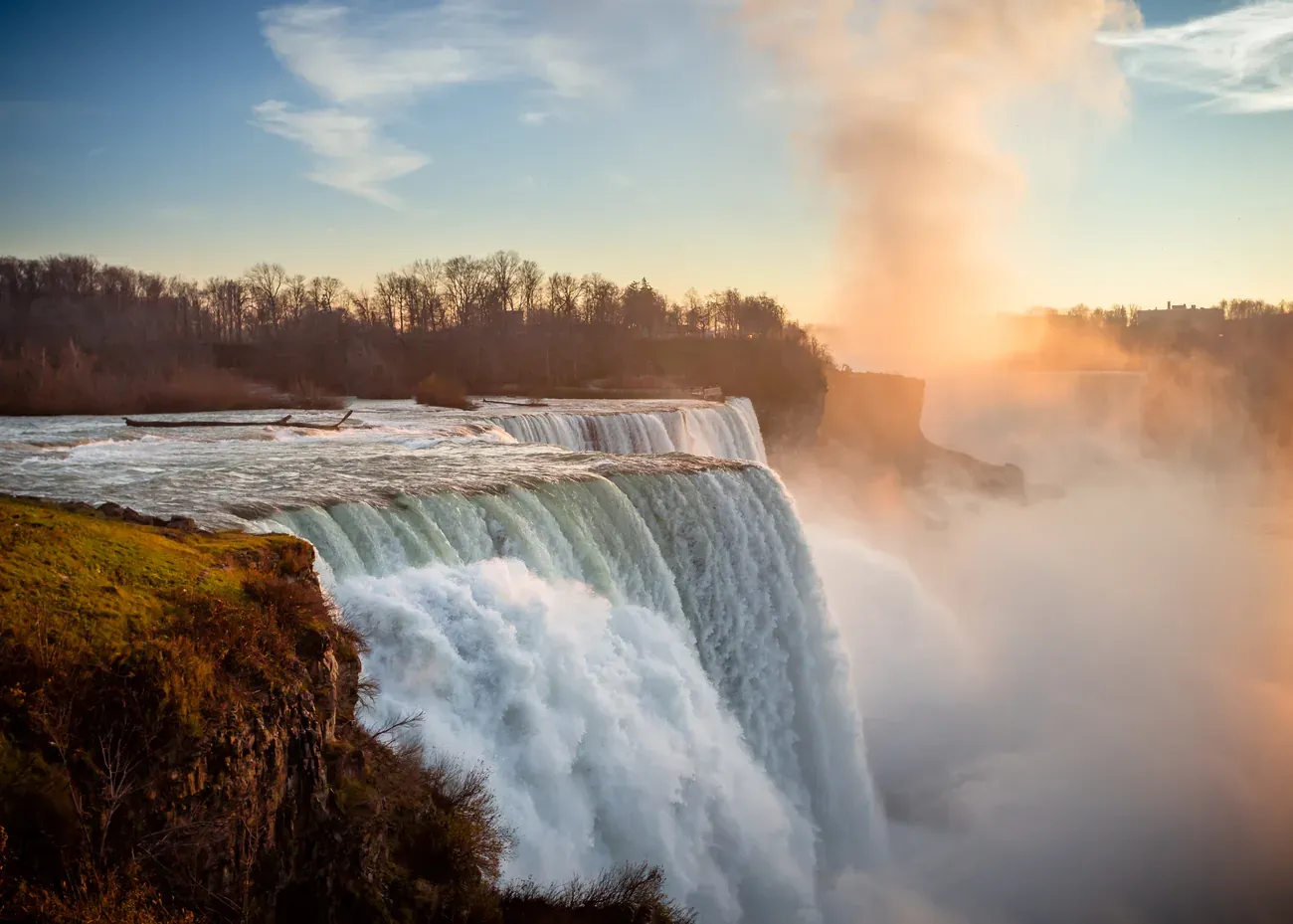
- Niagara Falls State Park spreads along the American shoreline as the oldest state park in the United States, its paths reaching Prospect Point, Luna Island and the brink of the American and Bridal Veil Falls.
- Maid of the Mist carries passengers to the base of the falls from the American side, running since 1846 as the river's original boat tour, distinct from the Canadian Niagara City Cruises.
- Cave of the Winds leads visitors down through the gorge to a wooden platform beside Bridal Veil Falls, close enough to feel its spray, an experience unique to the New York side.
- Niagara Falls Observation Tower juts out from Prospect Point over the gorge, an elevated deck built on the American side for views across all three falls at once.
- Goat Island splits the Niagara River between the Horseshoe and American Falls, its paths circling the shoreline past both sets of rapids on foot from Niagara Falls State Park.
What makes Niagara Falls special
What makes Niagara Falls unique
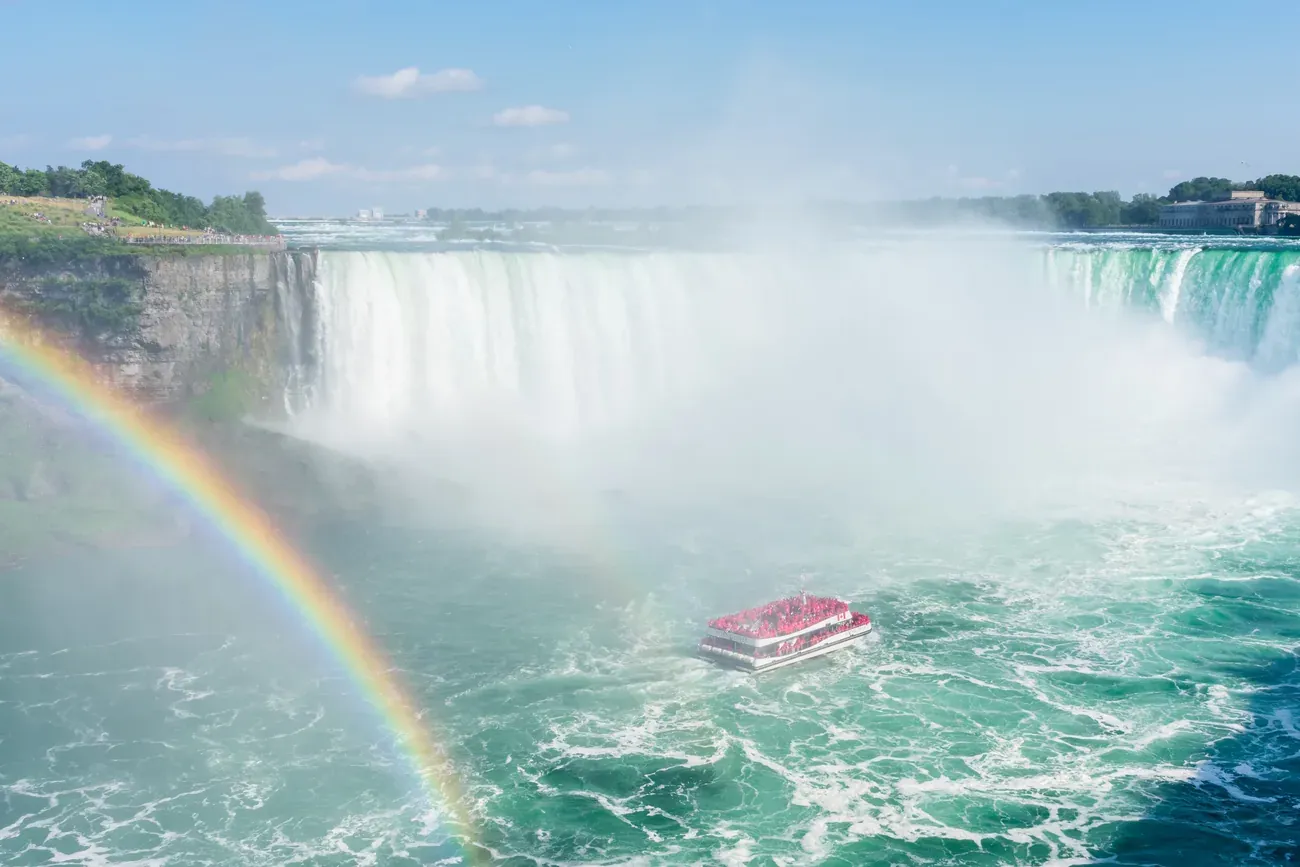
Horseshoe Falls curves across the Niagara River, its curtain of water averaging 57 metres high along a crestline about 670 metres wide, with more than 168,000 cubic metres pouring over the brink each minute during peak daytime hours, per Niagara Parks. Illuminated every night since 1925 and lit by seasonal fireworks, the falls have drawn sightseers to this stretch of river since the 19th century, long before Queen Victoria Park was set aside to protect the view in 1888.
Two shores, one river
Niagara Falls is really two towns split by an international border: Ontario's Horseshoe Falls and its promenades sit on one bank, New York's American and Bridal Veil Falls and Niagara Falls State Park on the other. The Rainbow Bridge links them on foot, but every visitor, adult or child, needs a valid passport to cross either way, per Niagara Parks' own visitor guidance.
When to go and how long to stay
Niagara Parks runs several attractions seasonally: White Water Walk and the Whirlpool Aero Car close for winter and reopen each April, while the falls themselves and their nightly illumination never stop. A single day covers Queen Victoria Park, Table Rock and Clifton Hill's Canadian core; add a second for the American side or for attractions further along the parkway. The falls are the Ontario fixture among tourist attractions to visit in Canada, and Toronto is close enough to pair them with the CN Tower on the same trip. Winter brings the free Winter Festival of Lights to Queen Victoria Park and Dufferin Islands.
Getting around
The falls-side core is entirely walkable between Table Rock, Queen Victoria Park and Clifton Hill, and Niagara Parks' WEGO Blue Line bus reaches attractions further along the parkway for those not walking. From Toronto, GO Transit runs a direct weekend train from Union Station, while the drive down the QEW covers roughly 130 kilometres.