
Tourist attractions in Rio de Janeiro
Known for
Samba, Carnival and a coastline where granite rise from the beaches
Must-see landmarks
Christ the Redeemer, Sugarloaf Mountain, and Copacabana Beach
UNESCO World Heritage listed since 2012
Carioca Landscapes between the Mountain and the Sea
Days needed
4 to 5 days for the main sights
Rio de Janeiro's top 10 tourist attractions
Rio de Janeiro's tourist attractions start with Christ the Redeemer, Sugarloaf Mountain and Copacabana Beach. The 10 top sights are ranked below, followed by free things to do, upcoming events and visitor FAQs.
1. Christ the Redeemer
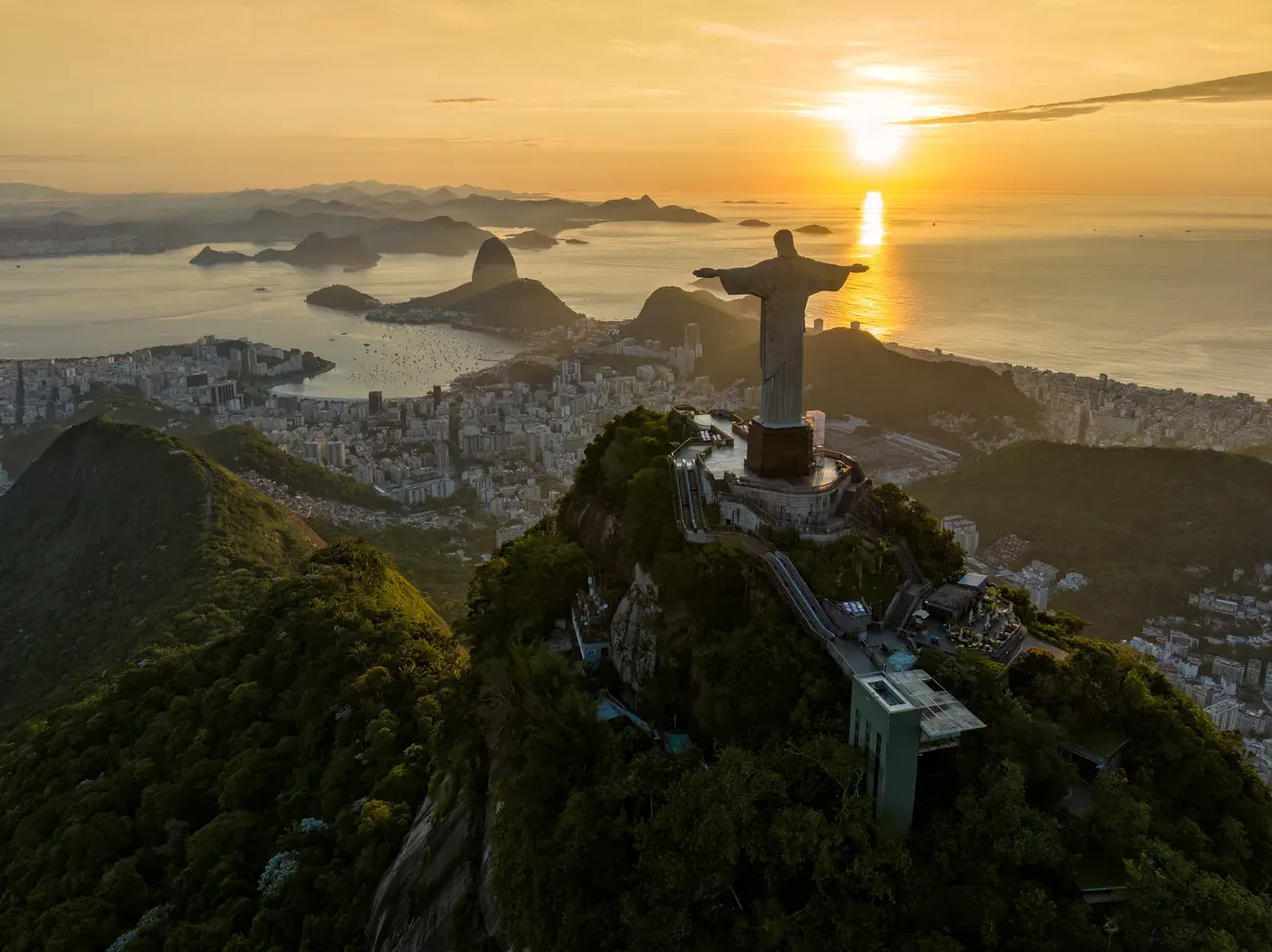
The Art Deco statue of Christ crowns the Corcovado peak inside Tijuca National Park, its arms spanning 28 metres above a city hemmed by mountains and sea. Voted one of the New7Wonders of the World in 2007, it draws visitors to terraces that look out over Sugarloaf, Copacabana and Guanabara Bay. The Corcovado Rack Railway climbs through the forest from Cosme Velho, with a final stretch of stone steps and escalators up to the feet of the monument.
Sculptor: Paul Landowski · Completed: 1931
Location: Corcovado summit, Alto da Boa Vista
Access: Ticketed rack railway or authorised vans to the top
2. Sugarloaf Mountain
Sugarloaf Mountain rises as a bare granite dome over the mouth of Guanabara Bay at Urca. Brazil's first cable car climbs in two stages from Praia Vermelha, pausing on Morro da Urca before the final span to the summit of Pao de Acucar. Its peaks form part of the Carioca Landscapes that UNESCO inscribed as World Heritage in 2012, and the viewing decks turn back towards Botafogo, Copacabana and the statue on Corcovado.
Type: Granite peak over Guanabara Bay
Location: Avenida Pasteur, Urca
Access: Ticketed cable car from Praia Vermelha, running daily
3. Copacabana Beach
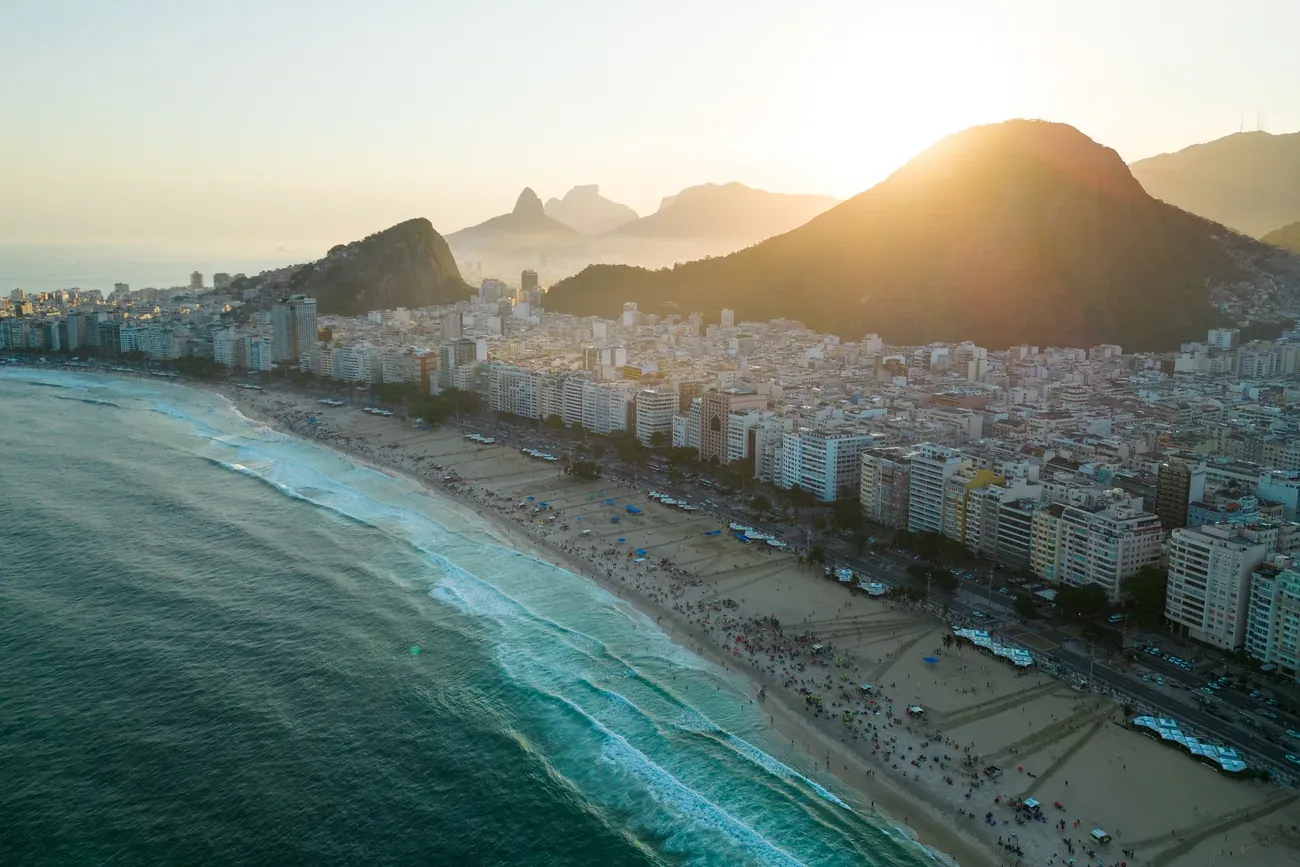
Copacabana's long crescent of sand curves beneath the wave-patterned promenade that landscape architect Roberto Burle Marx laid along the seafront. Like every beach in Brazil the sand and water are public and free around the clock, with kiosks, chair rentals and the Copacabana Fort anchoring its southern end. The calcadao is quietest at dawn, when joggers and swimmers have the shoreline to themselves before the day's crowds gather along the mosaic.
Location: Zona Sul, between Leme and Arpoador
Access: Free and open at all hours
4. Ipanema Beach
Ipanema stretches west from Arpoador towards Leblon beneath the twin peaks of Dois Irmaos, its name carried worldwide by the 1962 bossa nova standard that Tom Jobim and Vinicius de Moraes wrote nearby. The sand is public and free the year round, the same as every beach in the city. Posto 9 gathers the liveliest crowd, while the stretch towards Leblon stays calmer, and the promenade fills at dusk as the sun drops behind the mountains.
Location: Zona Sul, between Arpoador and Leblon
Access: Free and open year-round
5. Escadaria Selaron
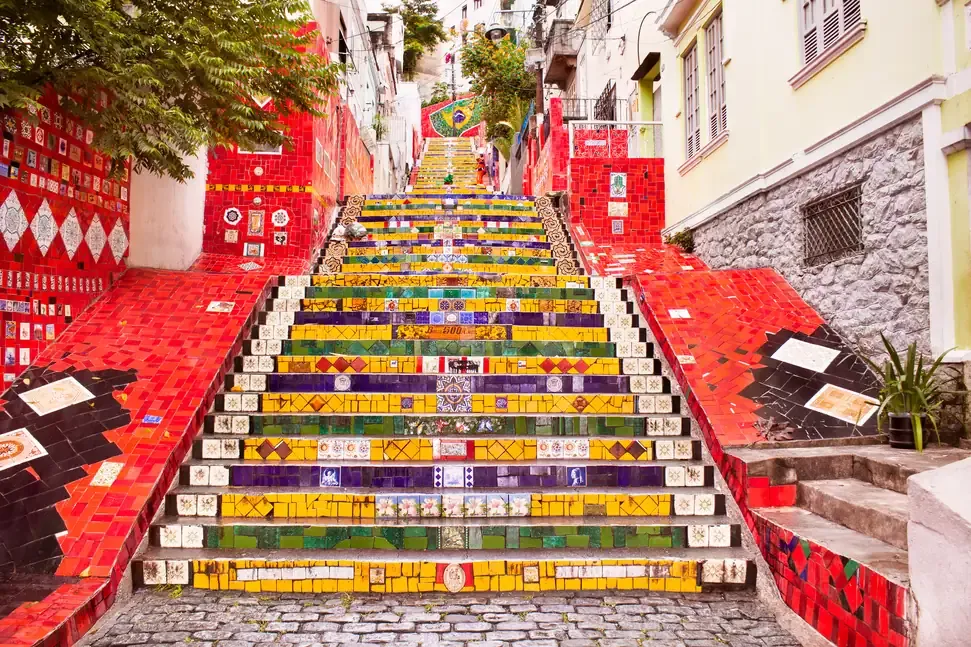
The Escadaria Selaron climbs between Lapa and Santa Teresa in a cascade of hand-painted tiles that the Chilean-born artist Jorge Selaron began laying outside his house in 1990. He kept adding pieces sent by visitors from around the world until his death in 2013, covering the steps in blue, green and yellow. The staircase is a public street, free to climb and photograph at any hour, and the tiles show best in the soft morning light before the tour groups arrive.
Artist: Jorge Selaron
Location: Rua Joaquim Silva, Lapa
Access: Free public staircase, open at all hours
Photos: "BR-rio-esc-selaron-1" by Balou46 (CC BY-SA 4.0) and "Escadaria Selarón - Rio de Janeiro - 20240417062601" by Donatas Dabravolskas (CC BY-SA 4.0).


6. Maracana Stadium
The Maracana opened in 1950 for that year's World Cup, when a record crowd packed its terraces for the deciding match. Rebuilt for the 2014 World Cup and the 2016 Olympics, it remains the home of Rio football and stages the occasional major concert between league fixtures. A guided stadium tour leads visitors through the stands and pitchside, the dressing rooms and the hall of fame that records the club and national sides who have played here.
Opened: 1950
Location: Maracana, Zona Norte
Access: Ticketed stadium tour, plus match days
7. Museum of Tomorrow
The Museum of Tomorrow reaches out over Guanabara Bay on Praca Maua, a science museum on humanity's future that architect Santiago Calatrava wrapped in a cantilevered roof of moving solar panels. Opened in December 2015 as the centrepiece of Rio's revived port district, its exhibitions trace the themes of cosmos, earth and the choices facing the planet through immersive installations rather than a permanent collection. The white structure sits above reflecting pools drawn from the bay.
Architect: Santiago Calatrava · Style: High-tech
Location: Praca Maua, Centro
Access: Ticketed
Photos: "Museu do Amanhã, Rio de Janeiro" by Bruna Prado / MTur Destinos (public domain) and "Museu do Amanhã ao anoitecer do Rio" by Bruno Tamm Rabello (CC BY-SA 4.0).


8. Rio de Janeiro Botanical Garden
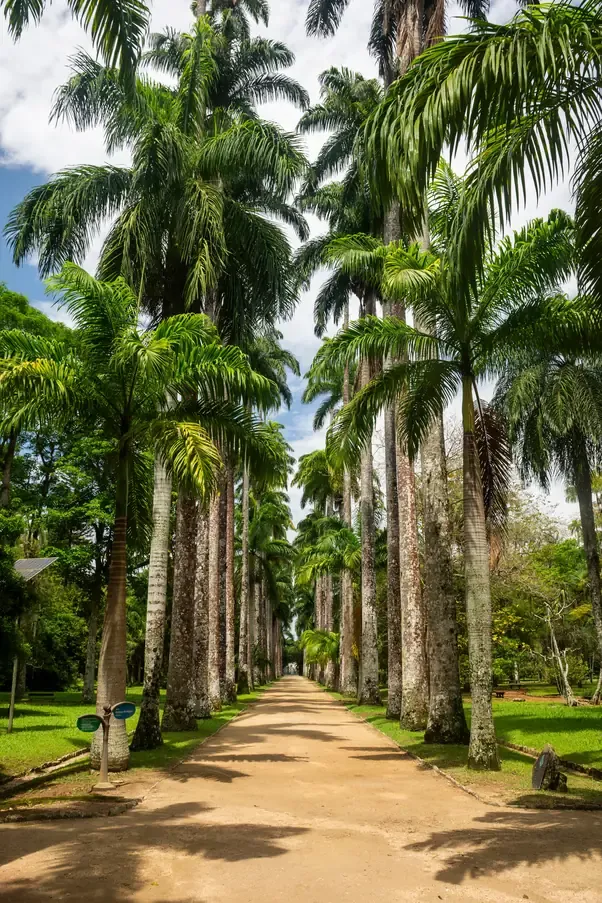
The Botanical Garden spreads beneath Corcovado over grounds that the Portuguese Prince Regent Dom Joao founded in 1808, first for a gunpowder works and an acclimatisation garden for plants brought from across the empire. Avenues of towering royal palms lead past greenhouses, an orchid house and a Japanese garden laid out in 1935, while the surrounding Atlantic Forest shelters toucans and marmosets. The grounds serve as a research institute as well as a park, and entry is ticketed.
Founded: 1808
Location: Rua Jardim Botanico, Jardim Botanico
Access: Ticketed
Photos: "Springbrunnen im Jardim Botânico" by Matthias Bethke (CC BY-SA 4.0) and "Jardim Botânico do Rio de Janeiro" by Jimmy Baikovicius (CC BY-SA 2.0).


9. Tijuca National Park
Tijuca National Park protects the largest replanted urban rainforest in the world, a wide tract of Atlantic Forest across the mountains inside the city limits. Its trails climb past waterfalls and lookout points, among them the Vista Chinesa and the Mirante Dona Marta, which frames Christ the Redeemer above the bay. The park also takes in the Corcovado peak, the Pedra da Gavea and Parque Lage, and its forested sectors stay open to walkers through the day.
National park since: 1961
Location: Alto da Boa Vista and the Carioca range
Access: Open daily from 8:00 to 17:00
Photos: "Floresta tropical, Parque Nacional da Tijuca" by Bruno Henning (CC BY-SA 4.0) and "Cascatinha Taunay, Tijuca Forest" by Pierre André (CC BY-SA 4.0).


10. Santa Teresa
Santa Teresa climbs a hillside above Lapa in cobbled lanes and colonial mansions that artists have turned into studios and galleries. The yellow bonde tram still rattles up from the centre across the Arcos da Lapa on its historic line, and staircases and viewpoints open between the houses onto the city and the bay. Wandering the neighbourhood, its street art and its ateliers costs nothing, and the bonde adds a short ride for anyone who wants one.
Location: Santa Teresa, above Lapa and Centro
Access: Free to wander; the bonde tram is ticketed
Photos: "Haus mit Garten in Santa Teresa" by Matthias Bethke (CC BY-SA 4.0) and "Bonde de Santa Teresa" by Henrique Freire (CC BY 2.0 br).


Upcoming events in Rio de Janeiro

Lagum: Rio de Janeiro
Lagum: Rio de Janeiro plays Qualistage on 7 November at 21:30.

The Cat Empire
The Cat Empire play Circo Voador on 13 November at 21:30.

Nando Reis
Nando Reis performs at Qualistage on 13 November at 21:30.

CA7RIEL & Paco Amoroso
CA7RIEL and Paco Amoroso bring the Free Spirits World Tour to Vivo Rio on 20 November at 21:00.
Free attractions to visit in Rio de Janeiro
Arpoador
The rocky outcrop and its park are free to reach on foot from either Copacabana or Ipanema, with no gate or ticket booth; the sunset views over the ocean are the reason most people climb up.
Praia Vermelha
No ticket is needed to sit on the sand here even though it shares a plaza with the paid cable car queue; arrive before the tour buses for a quiet swim before heading up Sugarloaf.
Arcos da Lapa
The old aqueduct is a public viaduct that costs nothing to see, whether from the street below or from Lapa's nightlife strip underneath its arches.
Parque Lage
Entry to the park and its wooded trails is free, and even the historic mansion inside can be visited with a free online reservation, confirmed on the park's own site.
Why visit Rio de Janeiro
What makes Rio de Janeiro unique
Rio de Janeiro folds a tropical city between granite mountains and the Atlantic, its skyline framed by Sugarloaf and Corcovado rather than towers. UNESCO listed the setting itself, Carioca Landscapes between the Mountain and the Sea, as a World Heritage site in 2012. Samba schools rehearse year-round for Carnival, and beach culture runs through daily life, from dawn joggers on the sand to the sunset crowds gathering at Arpoador.
Neighbourhoods to know
Zona Sul, the South Zone, gathers the beach neighbourhoods of Copacabana, Ipanema and Leblon around the Lagoa. Centro holds the colonial churches, the Theatro Municipal and the Museu do Amanhã, with Lapa's nightlife and the hillside lanes of Santa Teresa just above. Urca, a quiet peninsula at the foot of Sugarloaf, and Zona Norte, home to the Maracanã, sit further round Guanabara Bay.
When to go and for how long
August sits in Rio's winter, drier and cooler than the rest of the year; summer runs December to February, hot and humid, and Carnival falls in February or March on the moveable Christian calendar. Four to five days cover Corcovado, Sugarloaf, the main beaches and Centro at a steady pace. Corcovado, Sugarloaf and the designed landscapes of Copacabana all belong to the Carioca setting that UNESCO listed in 2012, and the country guide gathers the rest of the tourist attractions in Brazil.
Getting around
MetrôRio's two lines reach the beach neighbourhoods and Centro directly, connecting at Vicente de Carvalho with a dedicated BRT service to Galeão International Airport. Taxis and ride-hailing apps fill the gaps the metro doesn't cover, including the routes out to Urca and Corcovado.