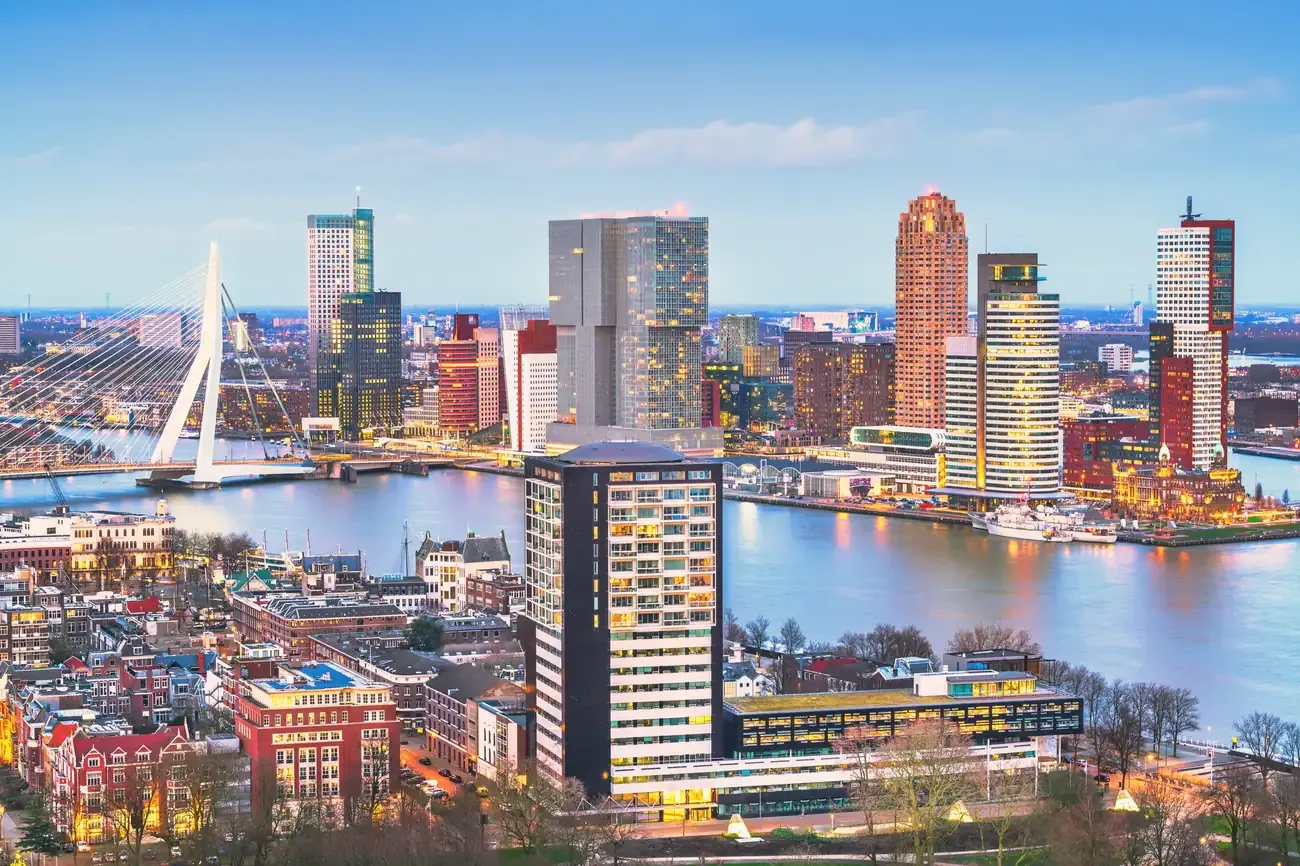
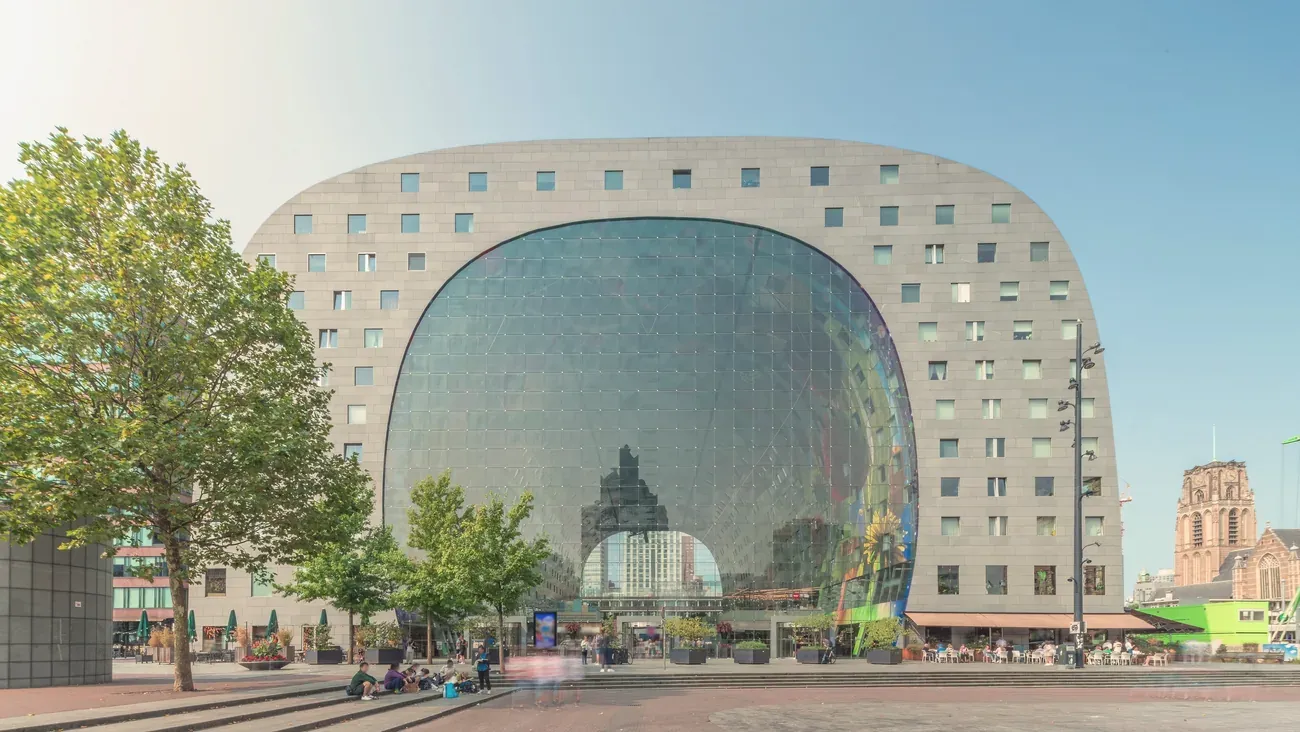
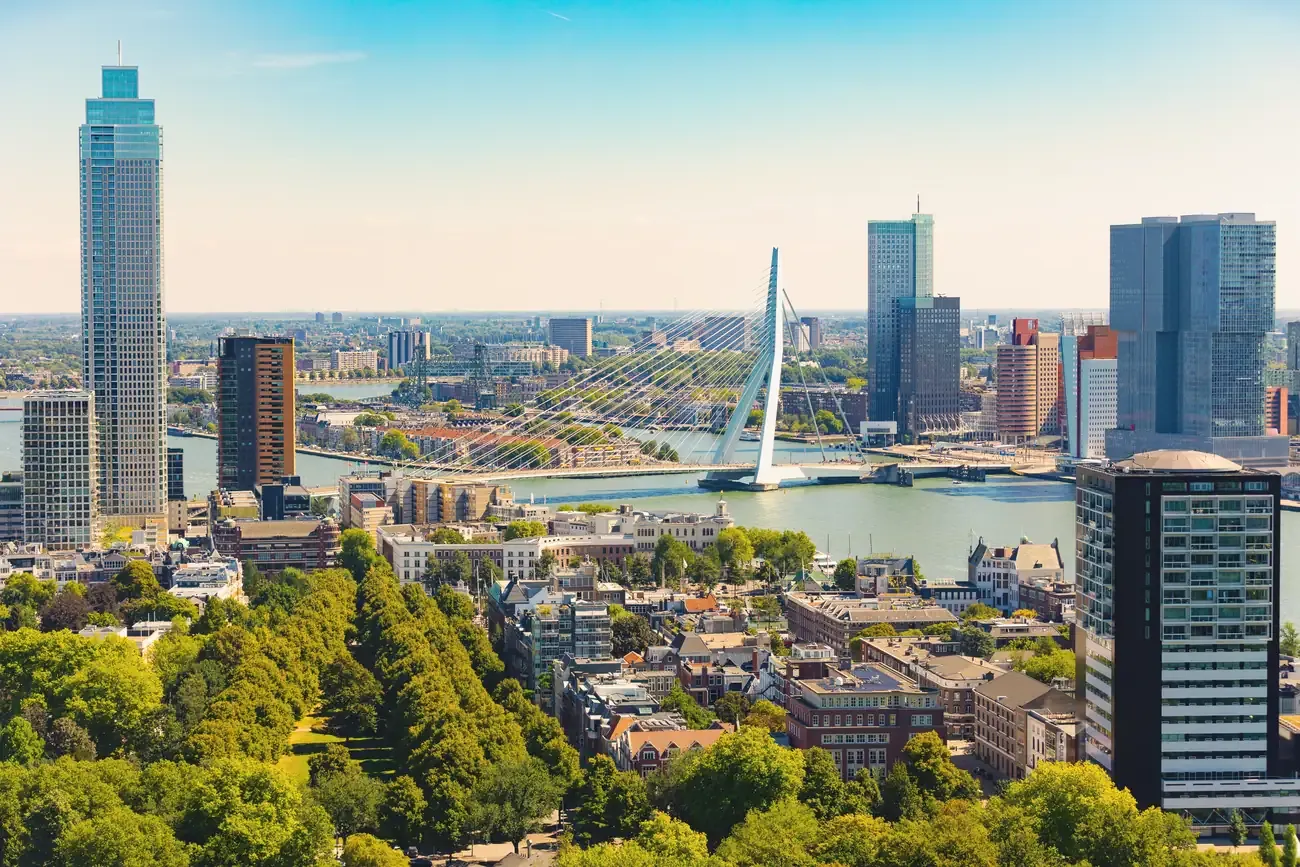
German bombs flattened almost the entire medieval centre of Rotterdam on 14 May 1940, killing hundreds of people and leaving some 85,000 homeless. Rather than rebuild what was lost, the city chose to experiment, and the skyline that grew from the rubble, glass towers beside tilted cube houses beside a horseshoe-shaped market hall, has made Rotterdam the country's showcase for contemporary architecture.
A city rebuilt
Only a handful of buildings survived the bombing, among them the Laurenskerk and the Witte Huis, and they now stand out as rare fragments of old Rotterdam inside a resolutely modern centre. Everything from the Markthal to the Erasmusbrug to the Depot dates from the past three decades, a rebuilding that has never really stopped.
Neighbourhoods to know
The Centrum holds the Markthal, the Cube Houses and Oude Haven within easy walking distance of each other. South of the river, Kop van Zuid carries Hotel New York and the SS Rotterdam on reclaimed harbour land, while Katendrecht, once a sailors' quarter, now holds the Fenix migration museum. Delfshaven, further west, kept its old lanes intact.
Day trips and when to go
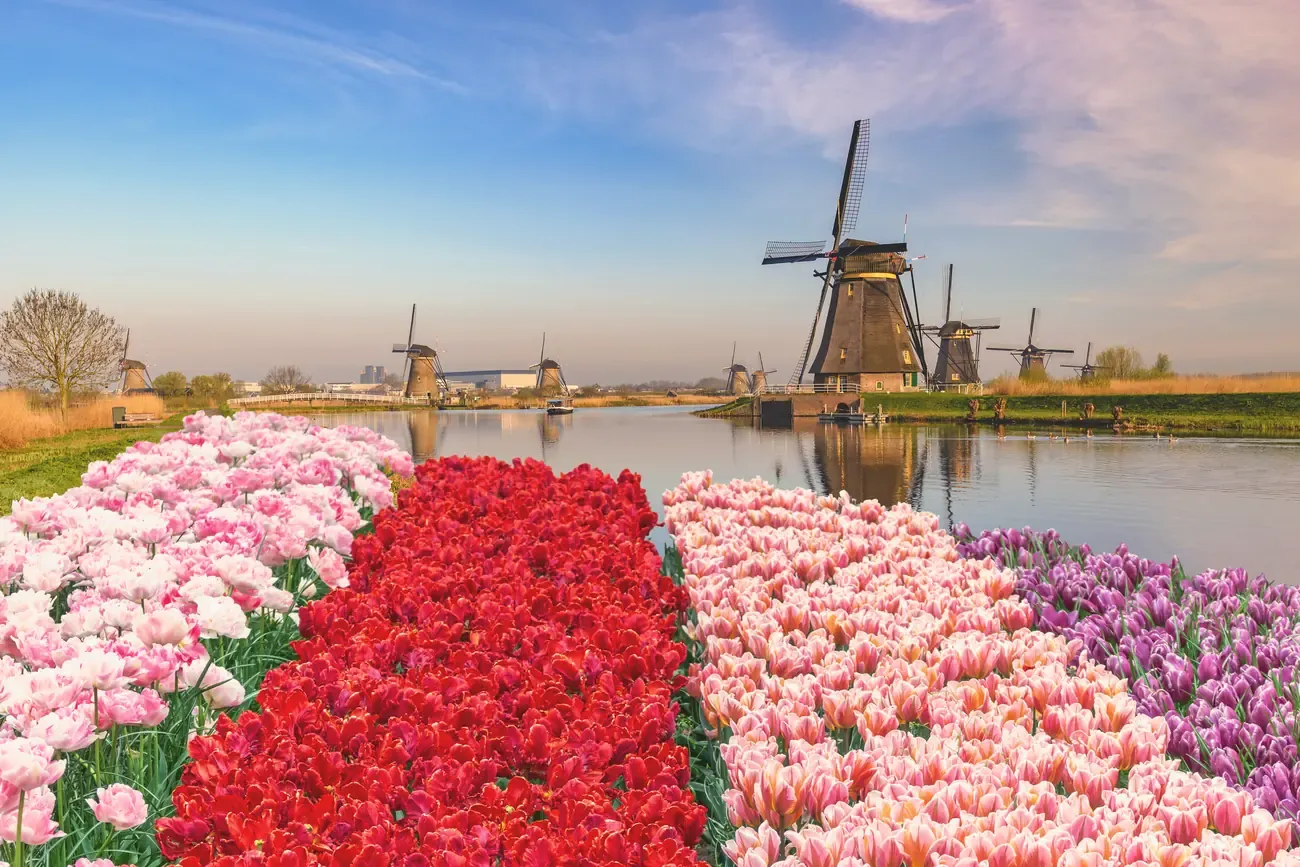
Spring and summer bring the longest days and the busiest terraces along Oude Haven and the Erasmusbrug. Two to three full days cover the centre at an easy pace. The UNESCO windmills of Kinderdijk sit about 15 kilometres east, and travellers chasing tulip season can combine a Rotterdam stay with a trip to the Keukenhof gardens near Lisse, which open from mid March to early May.
Getting around
The centre is compact enough to cover on foot between the Markthal and the river, and the RET network of trams, buses and a small metro covers the rest of the city on a single contactless card. A passenger ferry also crosses the Nieuwe Maas between the north and south banks. The Van Nellefabriek on the Schie, a 1931 glass and steel plant listed by UNESCO in 2014, is the city's own World Heritage entry and one more stop among the tourist attractions to see in the Netherlands.