Tourist attractions in the Netherlands
Known for
Canal cities, drainage windmills, bulb fields and Golden Age painting
UNESCO World Heritage
13 sites across the Kingdom, from Amsterdam canal ring to Wadden Sea
Best time to visit
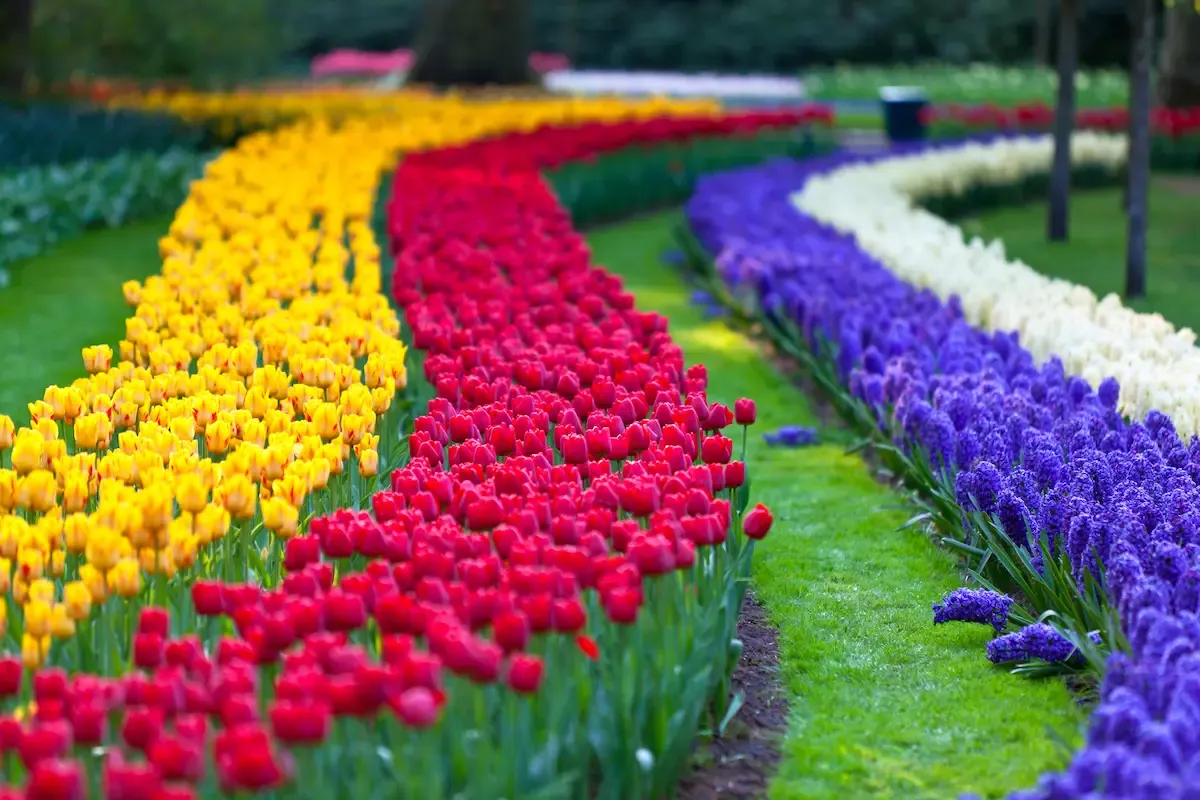
March to May for bulb fields, September and October for calmer cities
Getting around
3,223 route kilometres of railway and 35,000 kilometres of cycle path
10 must-see tourist attractions in the Netherlands
The tourist attractions in the Netherlands centre on the Rijksmuseum, the Anne Frank House and the Van Gogh Museum. The 10 top sights are ranked here, plus the cities worth a stop, 12 more landmarks, tickets, local dishes, 23 hidden gems and visitor FAQs.
Must-see cities in the Netherlands
Amsterdam
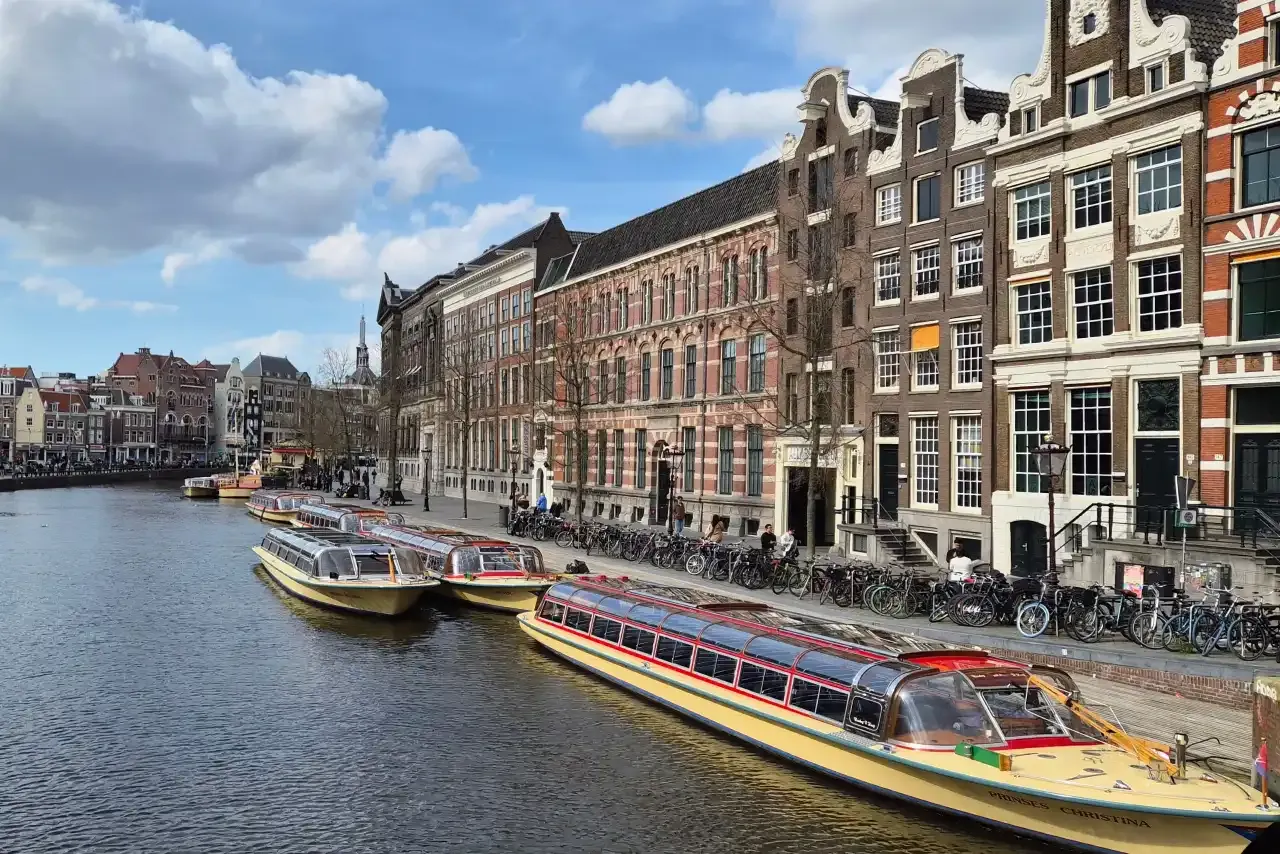
See Amsterdam in detail Golden Age canals, world-class museums and a compact centre made for walking.
Rotterdam
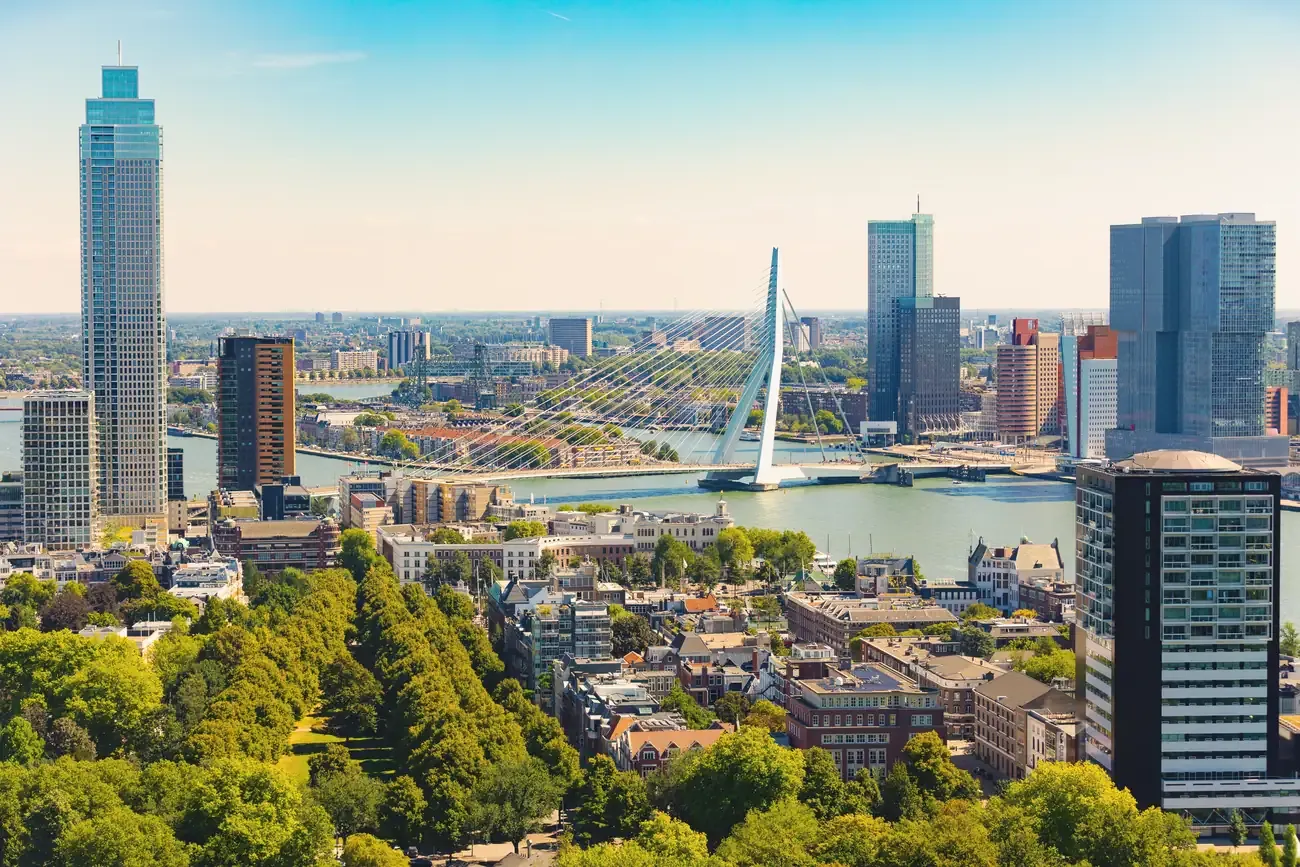
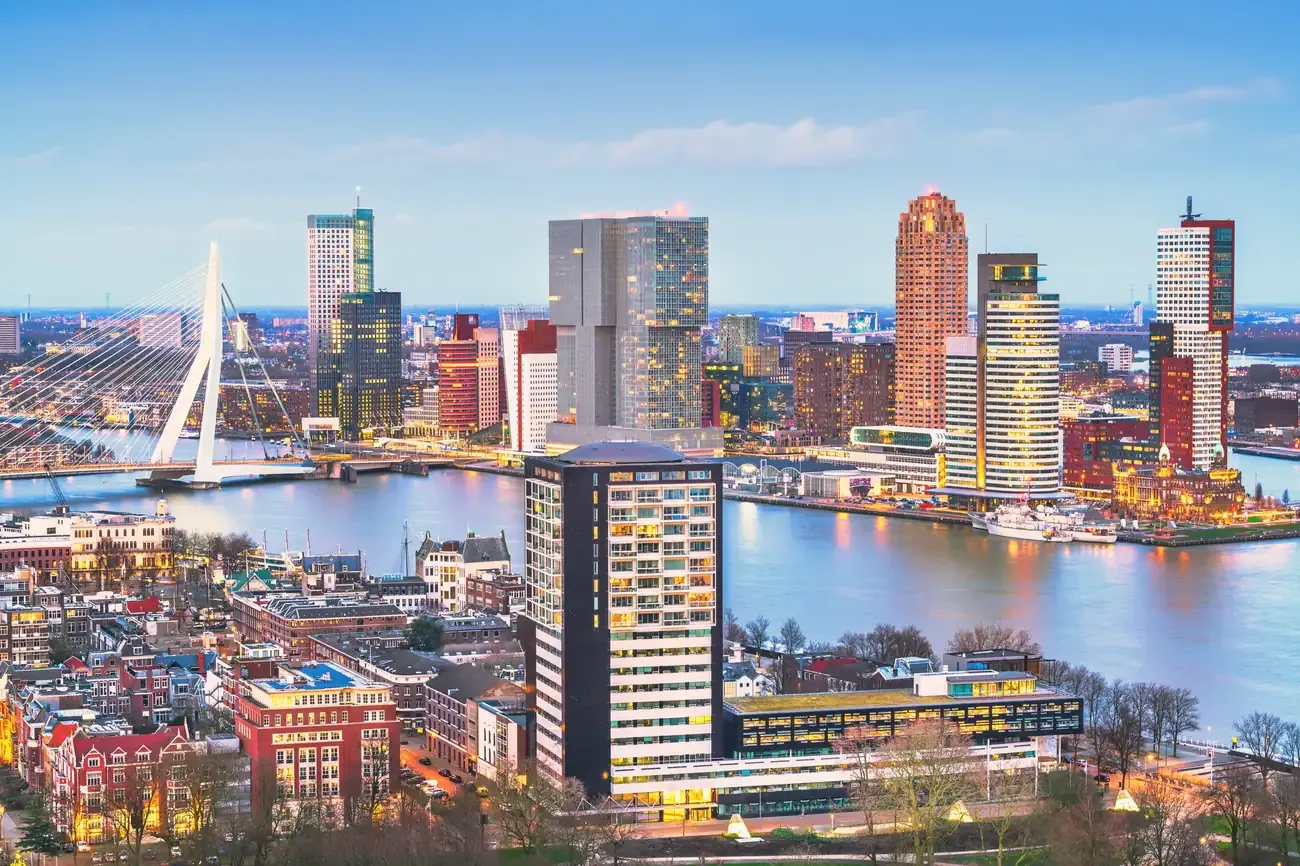
See Rotterdam in detail Rebuilt from scratch after 1940 and now the country's architecture laboratory.
The Hague
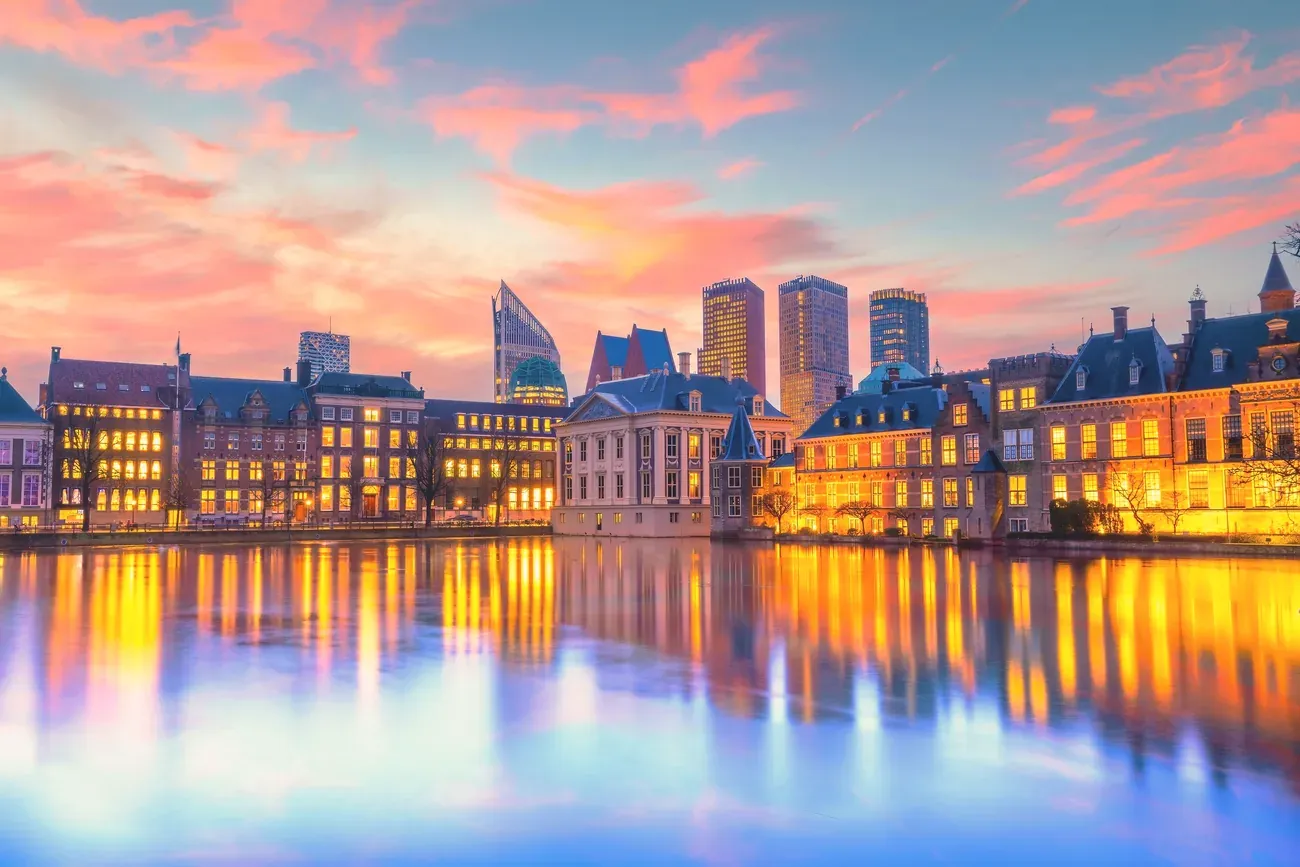
See The Hague in detail Seat of government and international courts, with the seaside resort of Scheveningen inside the city.
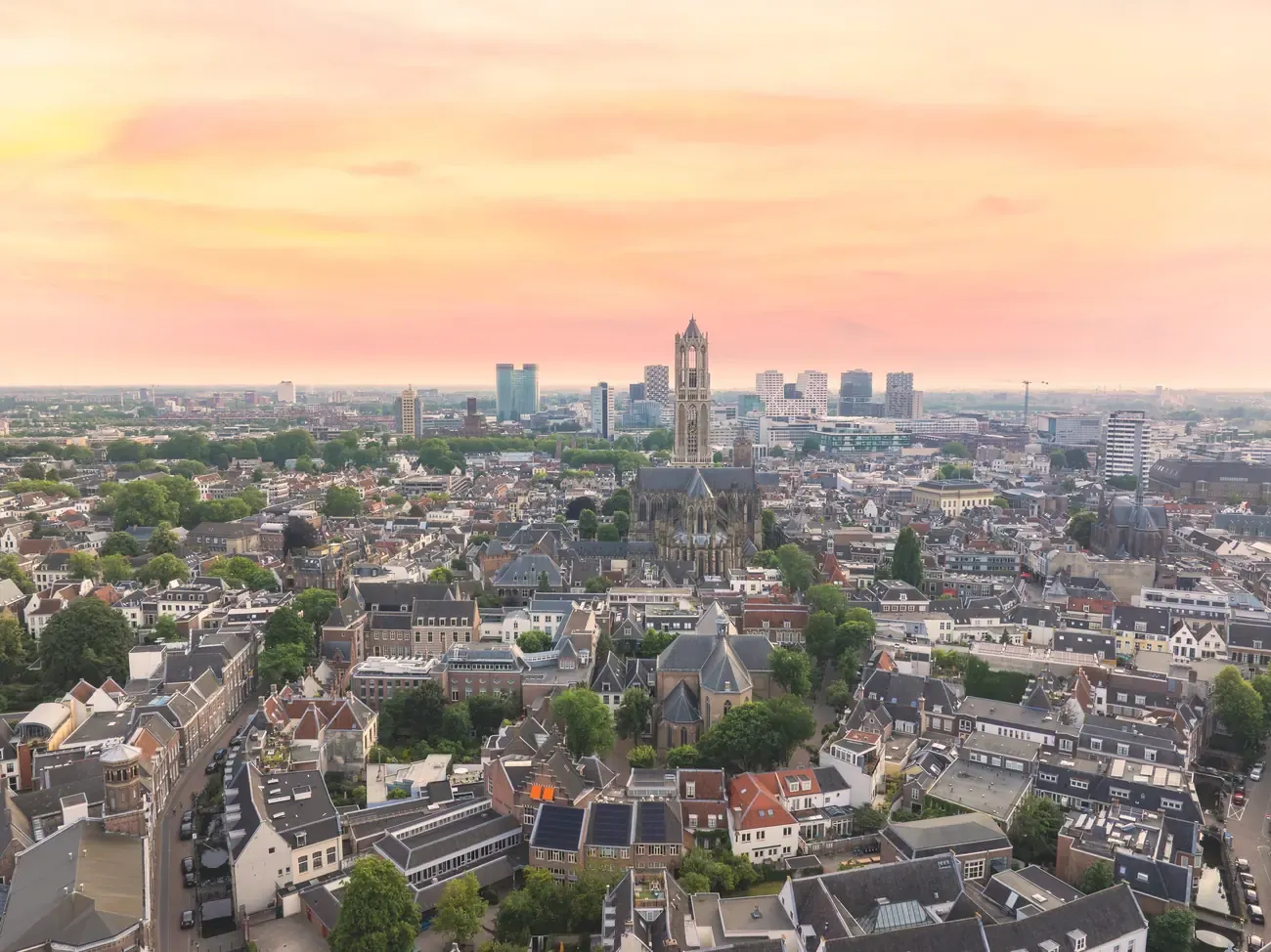
Utrecht
See Utrecht in detail Split-level canals with wharf cellars below the streets, under the tallest church tower.
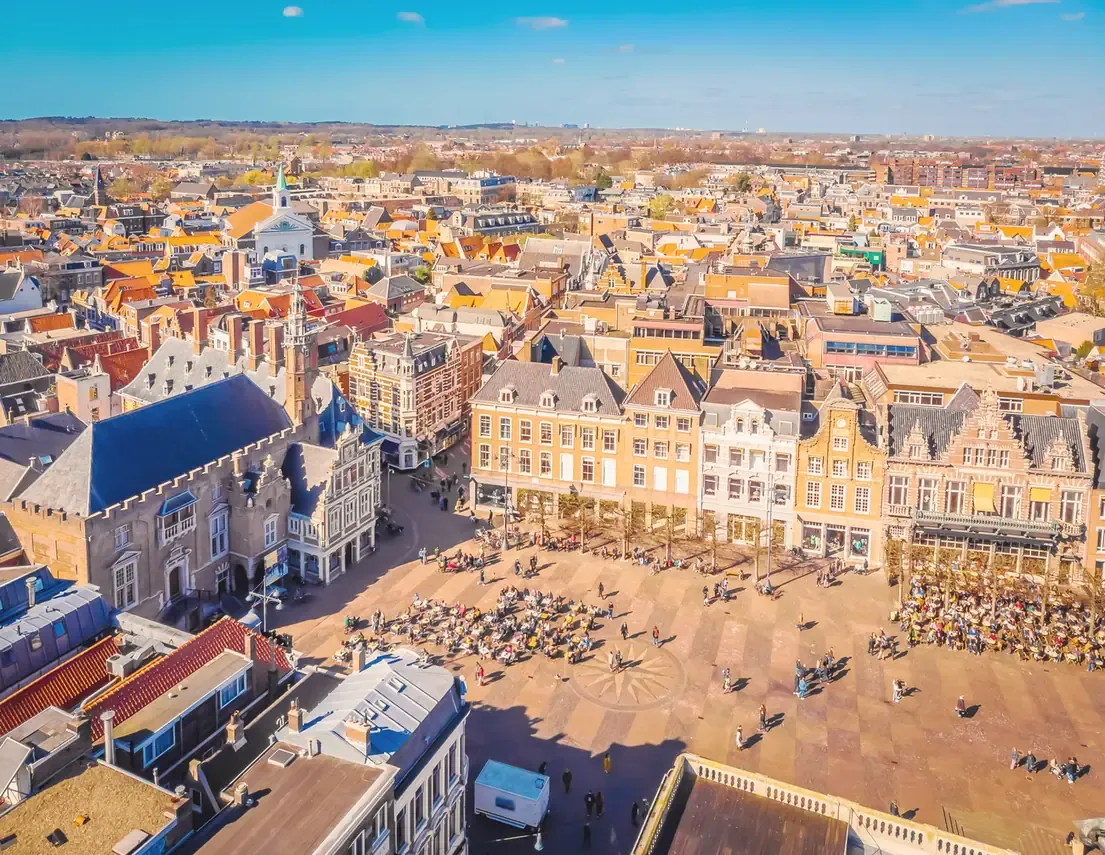
Haarlem
See Haarlem in detail Amsterdam in miniature, with Frans Hals, a huge market square and the dunes nearby.
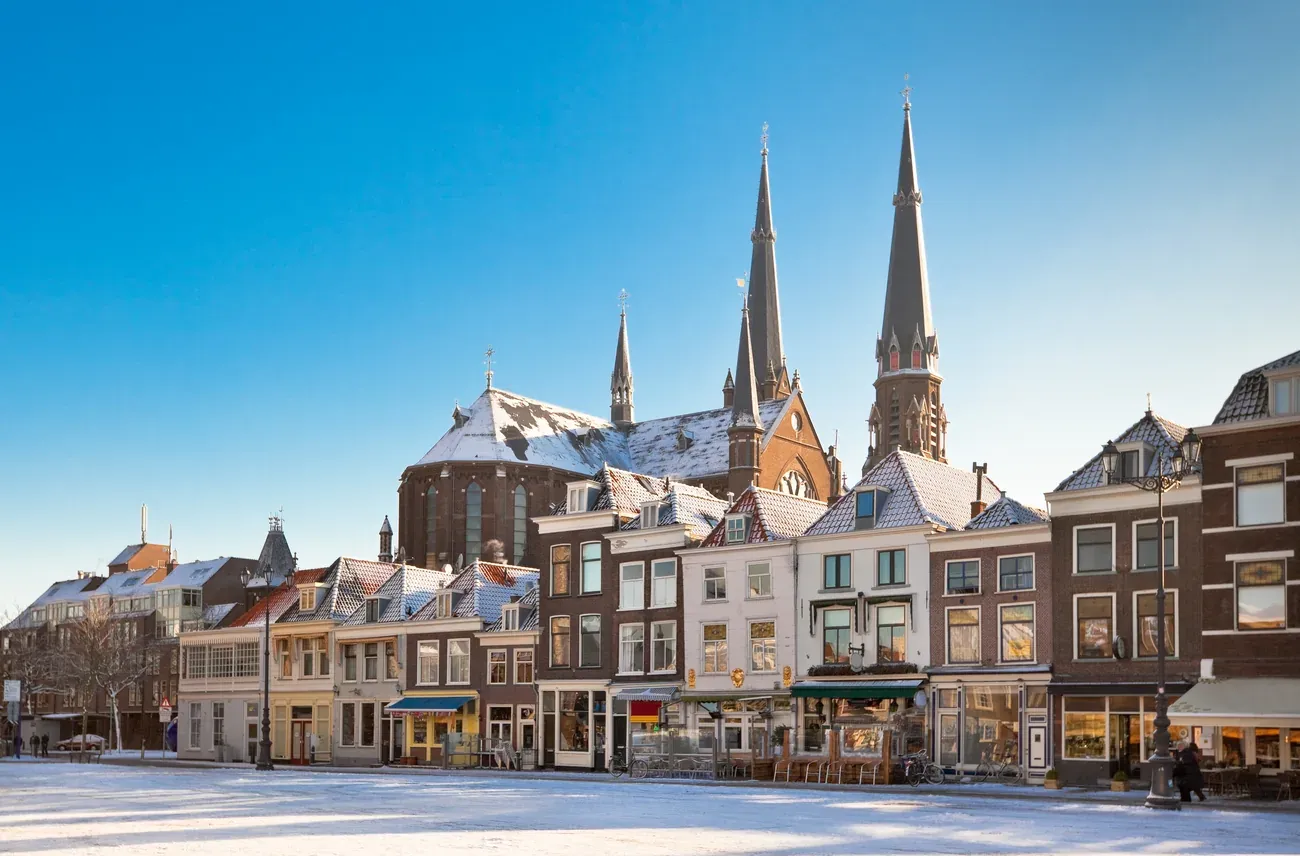
Delft
See Delft in detail Vermeer's home town, blue-and-white pottery and the royal burial church.
1. Rijksmuseum
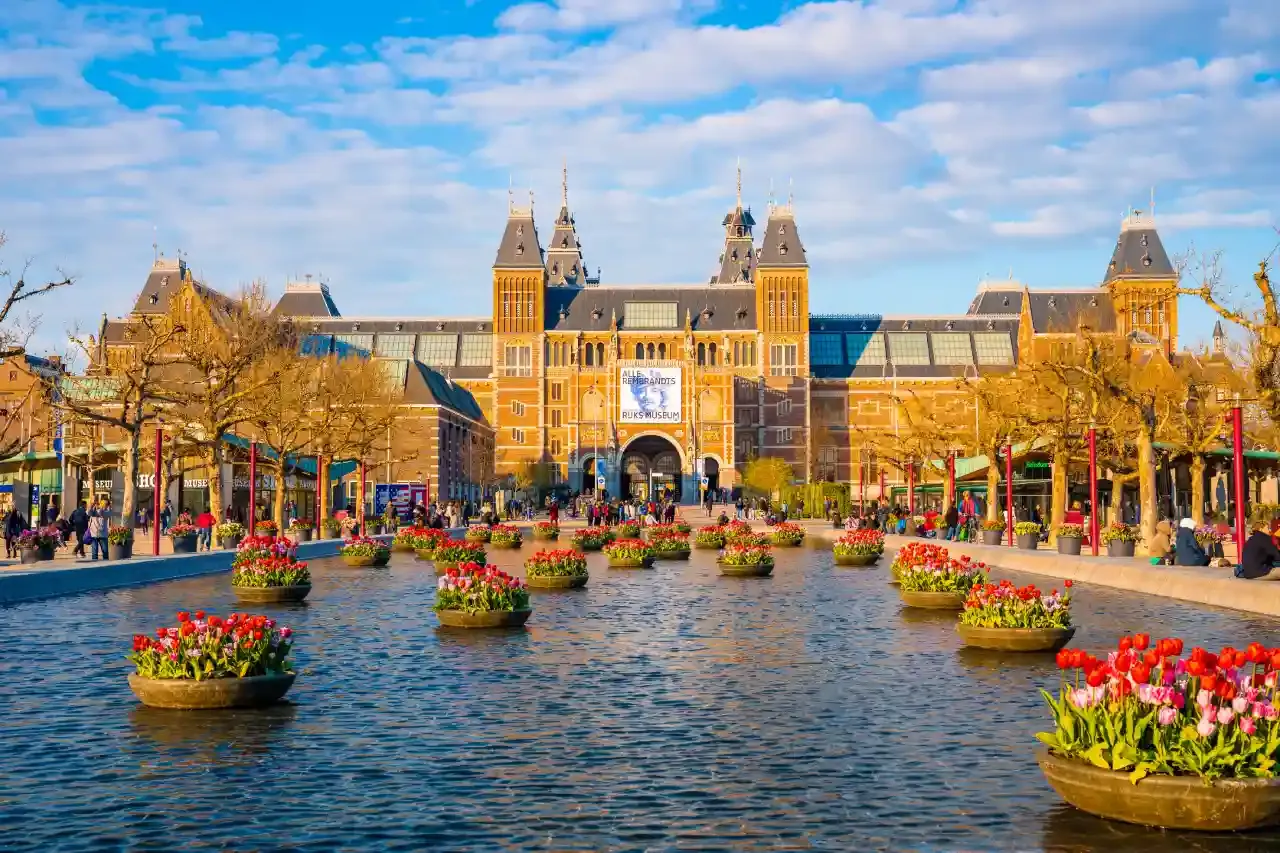
The national museum of the Netherlands turns eight centuries of Dutch art and history into one walkable route, and the Gallery of Honour is its spine: Frans Hals, Vermeer's quiet interiors and, at the far end, Rembrandt's vast Night Watch. Pierre Cuypers designed the red-brick building that opened on Amsterdam's Museum Square in 1885, and a ten-year renovation returned it in 2013 with the cycle passage running straight through the middle. Four Van Gogh paintings hang here too, including a self-portrait, and a separate pavilion holds the Asian collection.
Collection highlight: The Night Watch by Rembrandt · Opened: 1885 · Architect: Pierre Cuypers
Location: Museum Square, Amsterdam
Access: Ticketed, open daily
2. Anne Frank House
Behind a hinged bookcase at Prinsengracht 263, Anne Frank, her family and four others hid for just over two years while the Netherlands was under German occupation. The Secret Annex is kept unfurnished, as it was found after the arrest, and the route through the canal house sets her diary against the offices and warehouse that shielded it. The museum opened in 1960 across three adjoining buildings, adding an exhibition on Anne's life and on persecution more broadly. It is a slow, quiet visit rather than a sight to tick off between canal stops.
Opened: 1960 · Style: 17th-century Amsterdam canal house
Location: Prinsengracht, beside the Westerkerk in Amsterdam
Access: Ticketed, timed entry booked online in advance
Photo: "Amsterdam (NL), Anne-Frank-Huis -- 2015 -- 7185" by Dietmar Rabich (CC BY-SA 4.0).
3. Van Gogh Museum
No collection follows Vincent van Gogh's decade of painting as closely as this one, which holds more of his paintings and drawings than anywhere else in the world. The hang runs chronologically, from the dark Dutch peasant scenes through Paris and the sunlit south to the restless final canvases, with letters and works by contemporaries filling in the argument. Gerrit Rietveld designed the main building, opened in 1973 on Museum Square, and Kisho Kurokawa added the oval exhibition wing behind it. Tickets carry a start time and are sold online only.
Collection highlight: the world's largest Van Gogh holdings · Opened: 1973 · Architects: Gerrit Rietveld and Kisho Kurokawa
Location: Museum Square, Amsterdam
Access: Ticketed, timed entry
4. Amsterdam Canal Ring
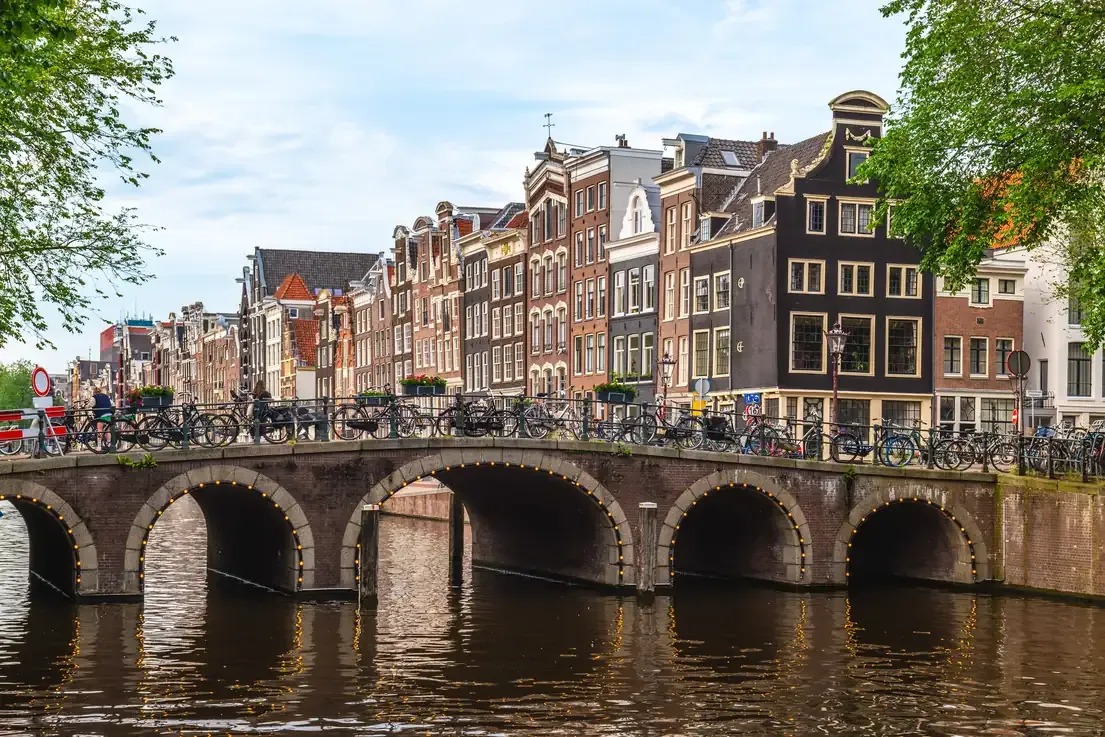
The three great 17th-century canals of Amsterdam, the Herengracht, Keizersgracht and Prinsengracht, curve around the old city in concentric belts lined with about 1,550 protected buildings. UNESCO inscribed the ring inside the Singelgracht in 2010 as a planned expansion of the Dutch Golden Age, and the city as a whole counts more than 100 kilometres of canals, some 90 islands and 1,500 bridges. Walking the Nine Streets and the Jordaan shows the merchant houses at eye level, while a boat brings the gables and bridges into one line.
Heritage: UNESCO World Heritage since 2010 · Dug: 17th century
Location: the historic centre of Amsterdam
Access: Free to walk; boat trips are ticketed
5. Keukenhof
For a few weeks each spring the bulb fields behind Lisse turn into the largest flower garden many visitors will ever walk through. Around seven million bulbs are planted every autumn across 32 hectares of woodland, ponds and formal beds, so the tulips arrive in waves alongside hyacinths, daffodils and irises, with the pavilions showing cut-flower displays right through the season. The garden is strictly seasonal: it opens in mid-March and closes in May, and in 2027 it runs from 18 March to 9 May. Outside those dates the gates stay shut.
Area: 32 hectares · Season: mid-March to May, 18 March to 9 May in 2027
Location: Stationsweg, Lisse, in the bulb region south of Haarlem
Access: Ticketed, spring season only
6. Kinderdijk windmills
Nineteen drainage mills stand along the dykes of the Alblasserwaard polder, built around 1740 to lift water out of land that lies below the rivers, and together they form the largest concentration of old windmills in the country. UNESCO listed the network in 1997, and it still reads as a working landscape rather than a museum street: straight canals, reed banks, millers' houses and sails turning when the wind allows. Paths and a tour boat link the mills, and the museum mills are open to walk through, room by room.
Built: around 1740 · Heritage: UNESCO World Heritage since 1997
Location: Molenlanden, about 15 kilometres east of Rotterdam in South Holland
Access: Ticketed for the museum mills and the boat
7. Zaanse Schans
Green timber houses, working windmills and small craft workshops stand together on a bend of the river Zaan, half an hour north of Amsterdam. Most were moved here between 1961 and 1974 from across the Zaanstreek to save them from demolition, which makes the village an assembled one, and the mills still grind pigment, spices and oil rather than posing for the camera. The Zaans Museum, opened in 1994, explains how this stretch of river became an early industrial district, and a clog workshop and cheese barn sit within a few minutes' walk.
Assembled: 1961 to 1974 · Style: Zaan timber architecture
Location: Zaandam, north of Amsterdam in North Holland
Access: Ticketed for the mills and museums
8. Mauritshuis
A small museum with a very large reputation, the Mauritshuis holds the Royal Cabinet of Paintings, some 854 works weighted heavily towards the Dutch Golden Age. It holds Vermeer's Girl with a Pearl Earring and Rembrandt's Anatomy Lesson of Dr Nicolaes Tulp, alongside Fabritius, Jan Steen, Frans Hals and Potter's Young Bull. The setting helps: a compact 17th-century city palace built for Count John Maurice of Nassau, with panelled rooms rather than long galleries, standing on the Hofvijver lake beside the Binnenhof.
Collection highlight: Girl with a Pearl Earring by Vermeer · Built: 17th century · Style: Dutch Classicism
Location: Plein, beside the Hofvijver in The Hague
Access: Ticketed, timed slots recommended; closed for maintenance to 20 September 2026
9. Efteling
The Netherlands built its own answer to the theme park three years before Disneyland opened, and it went to fairy tales rather than cartoons. Efteling opened on 31 May 1952 around the Fairytale Forest that illustrator Anton Pieck designed, and it has grown into the largest theme park in the country, with six roller coasters and five dark rides threaded through woodland. The tone stays closer to folklore than to franchise, which is why Dutch adults return without children in tow. It sits in Kaatsheuvel, in the southern province of North Brabant.
Opened: 31 May 1952 · Designer: Anton Pieck
Location: Kaatsheuvel, North Brabant
Access: Ticketed, open year-round
10. Giethoorn
The old core of this Overijssel village has no through road at all. Thatched farmhouses sit on their own small islands among peat lakes and canals dug by medieval turf cutters, linked by arched wooden footbridges, so the way to arrive is by water or on foot. Boats glide along the main canal past gardens that come right down to the bank, and the wider Weerribben-Wieden wetlands begin at the edge of the village. It is small, so the early and late hours are the ones worth aiming for.
Setting: peat lakes and canals in the Weerribben-Wieden wetlands
Location: Steenwijkerland, Overijssel, in the north-east of the Netherlands
Access: Free to walk; boat hire and tours are ticketed
Famous places to see in the Netherlands
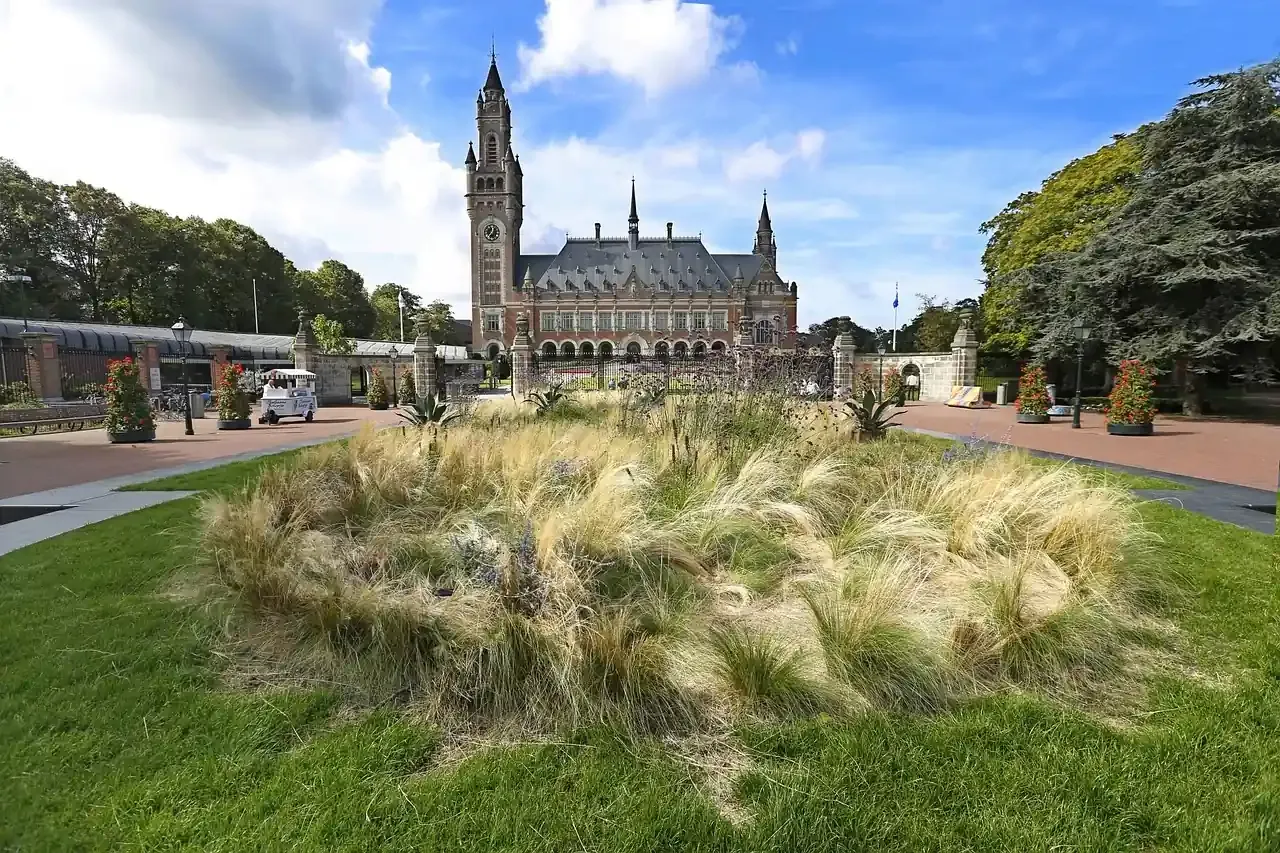
Peace Palace
The 1913 courthouse of the Permanent Court of Arbitration, now also home to the International Court of Justice. The grounds open only on guided tours.
Location: Carnegieplein, The Hague
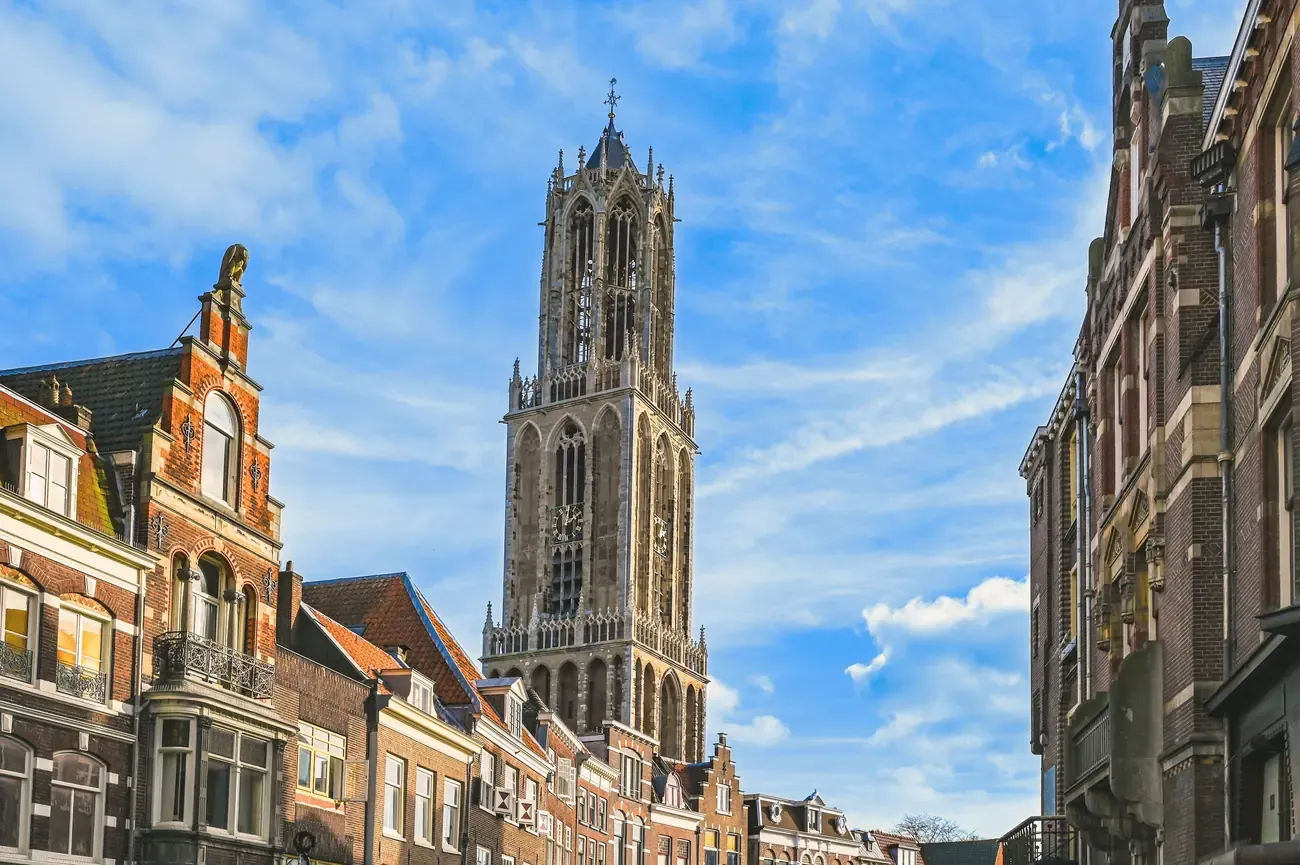
Dom Tower
The tallest church tower in the country at 112 metres, freestanding since the unfinished nave between it and the Domkerk collapsed in 1674.
Location: Domplein, Utrecht
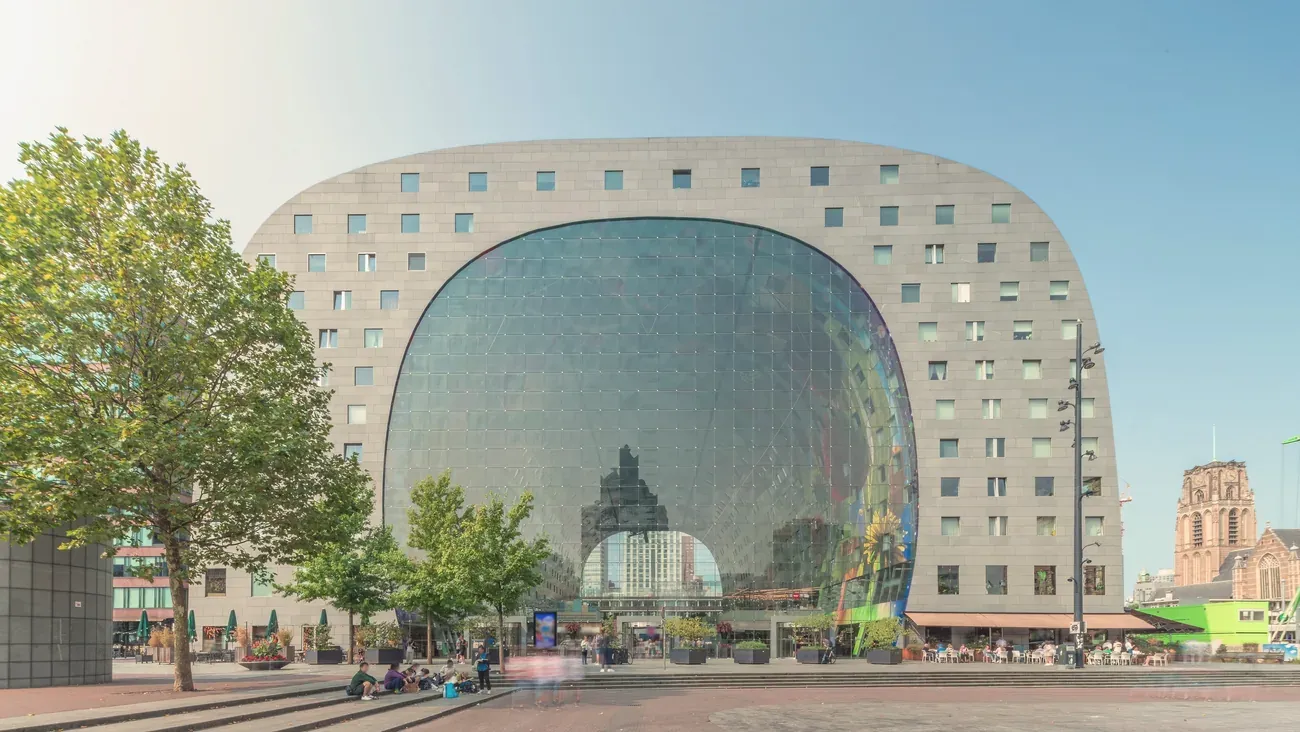
Markthal
A horseshoe of 228 apartments arched over a covered food market, opened in 2014 beneath an 11,000 square metre artwork of fruit and flowers.
Location: Binnenrotte, Rotterdam
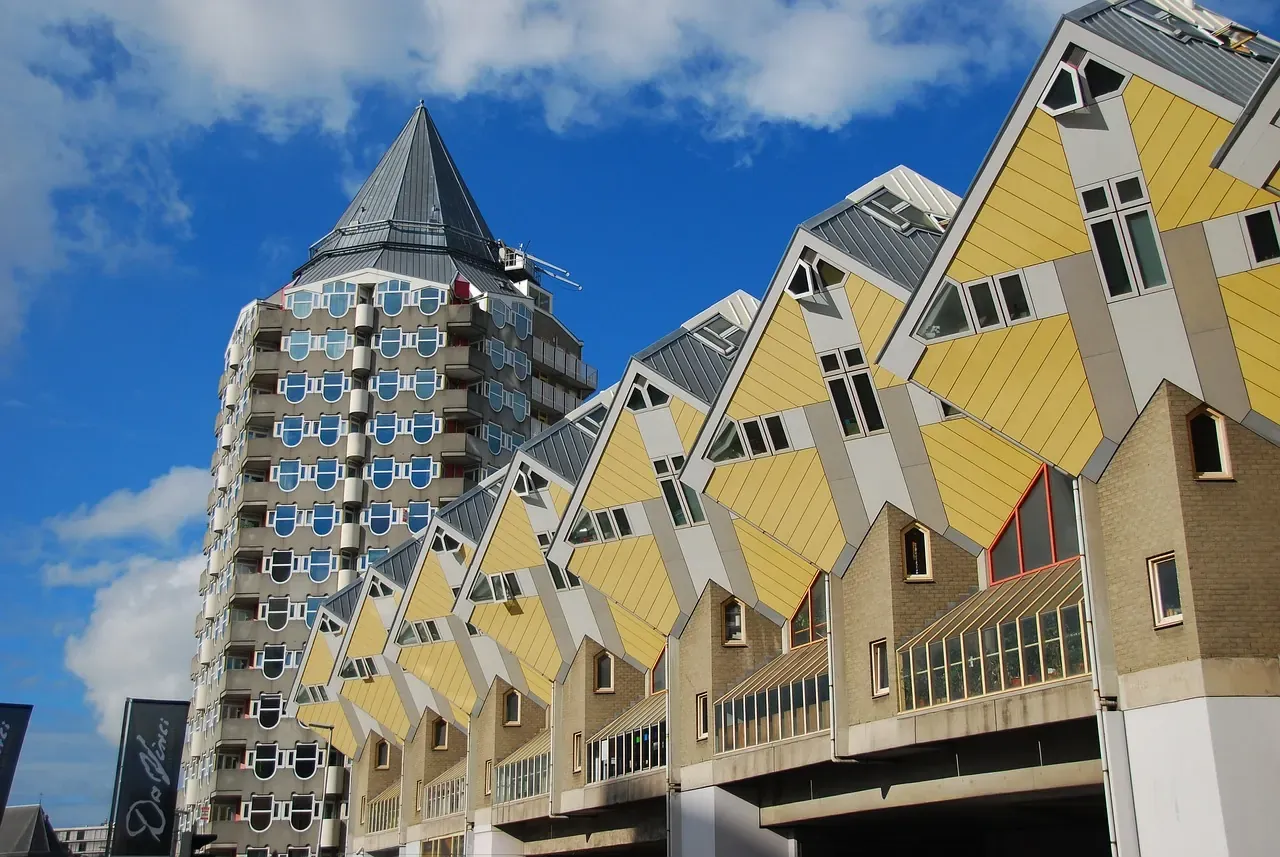
Cube Houses
Thirty-eight yellow cubes tilted on hexagonal pylons above the Blaak, designed by Piet Blom and built between 1982 and 1984.
Location: Blaak, Rotterdam
Erasmus Bridge
A cable-stayed and bascule bridge across the Nieuwe Maas, finished in 1996 and used in the city's own logo.
Location: Nieuwe Maas, Rotterdam
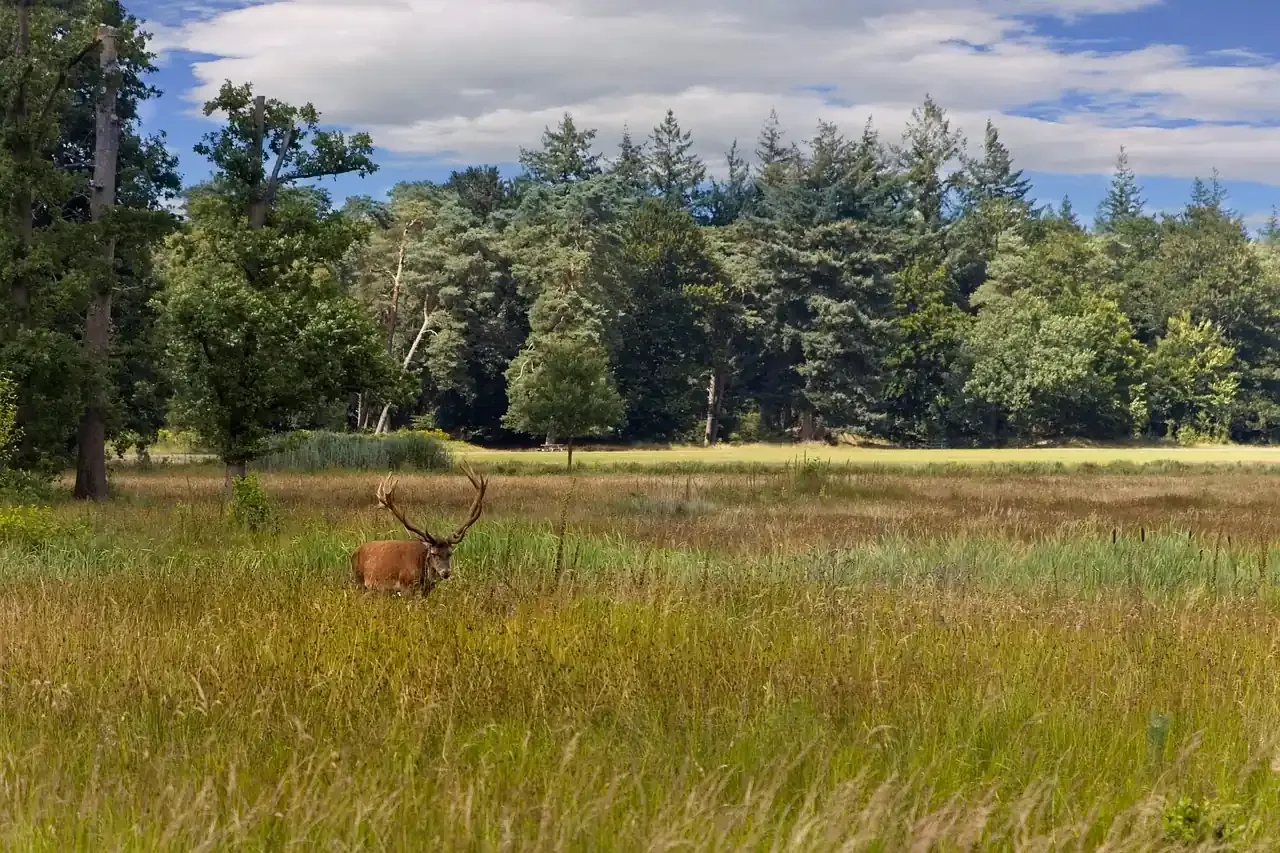
De Hoge Veluwe National Park
Fifty-five square kilometres of heath, dune and woodland, with the Kroller-Muller Museum, its sculpture garden and the second largest Van Gogh collection inside the gates.
Location: Gelderland, between Arnhem and Apeldoorn
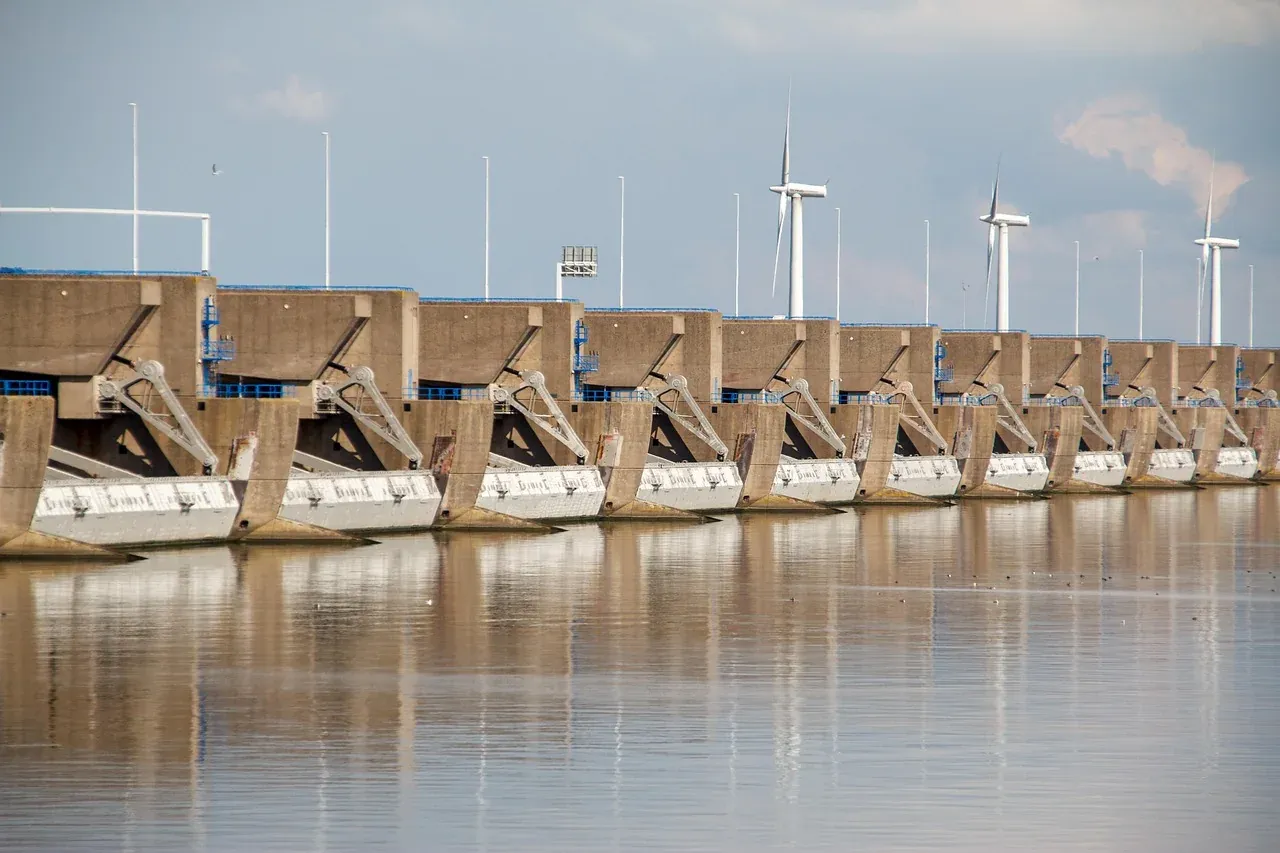
Delta Works
Dams, sluices and storm surge barriers built between 1954 and 1997, listed among the Seven Wonders of the Modern World by American civil engineers.
Location: Zeeland and South Holland
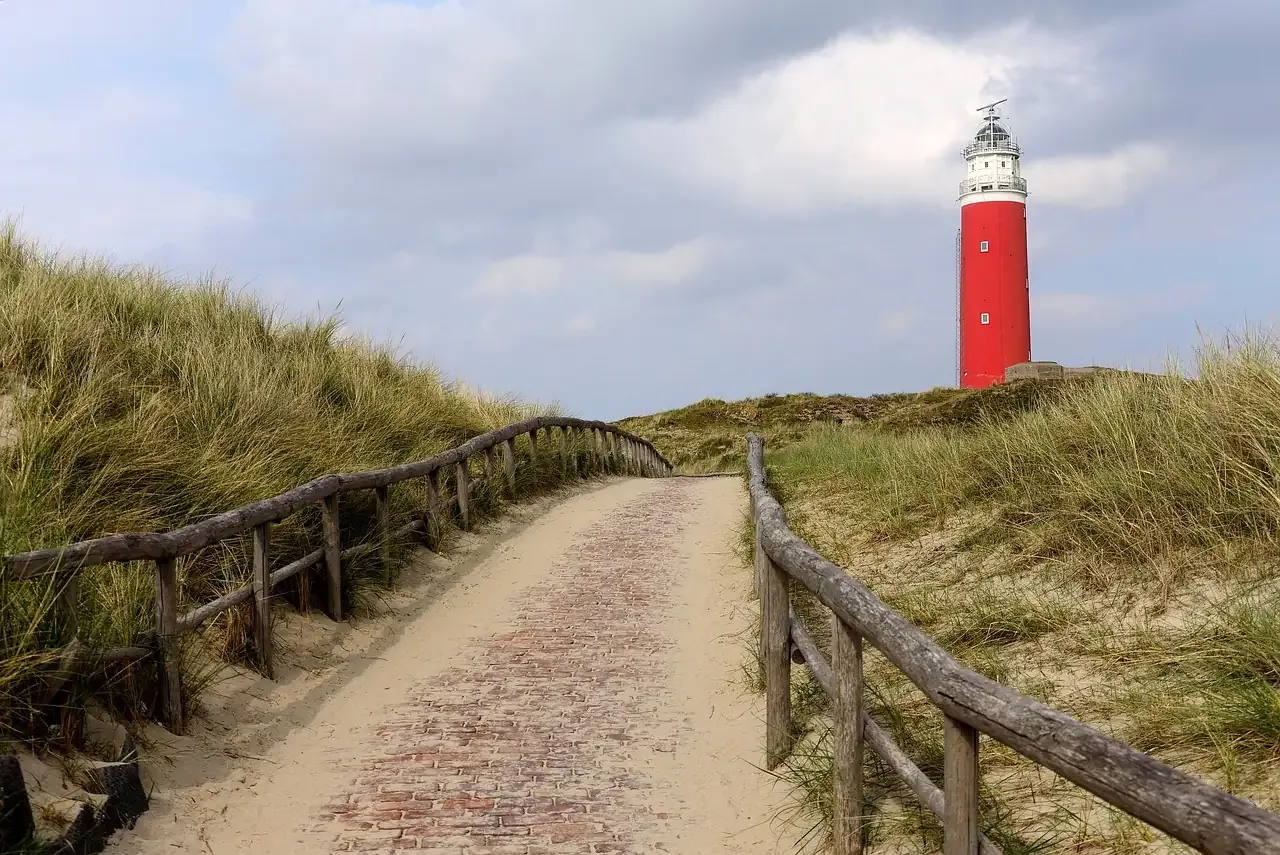
Texel and the Wadden Sea
The largest of the West Frisian Islands, fringed by dunes, sheep meadows and the tidal flats of the UNESCO-listed Wadden Sea.
Location: North Holland
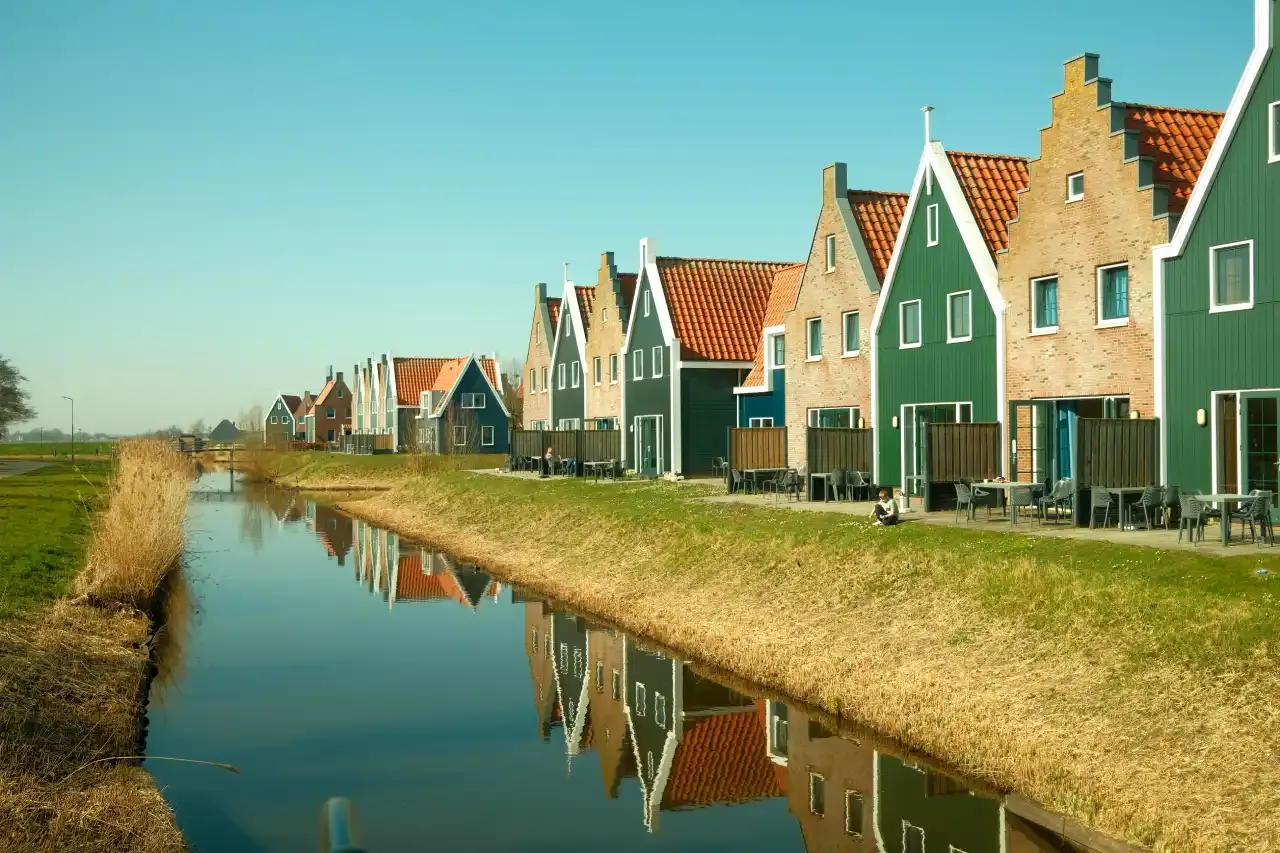
Volendam and Marken
A former Zuiderzee fishing port known for its pointed lace bonnet, paired with the wooden houses of Marken across the water.
Location: North Holland, north of Amsterdam
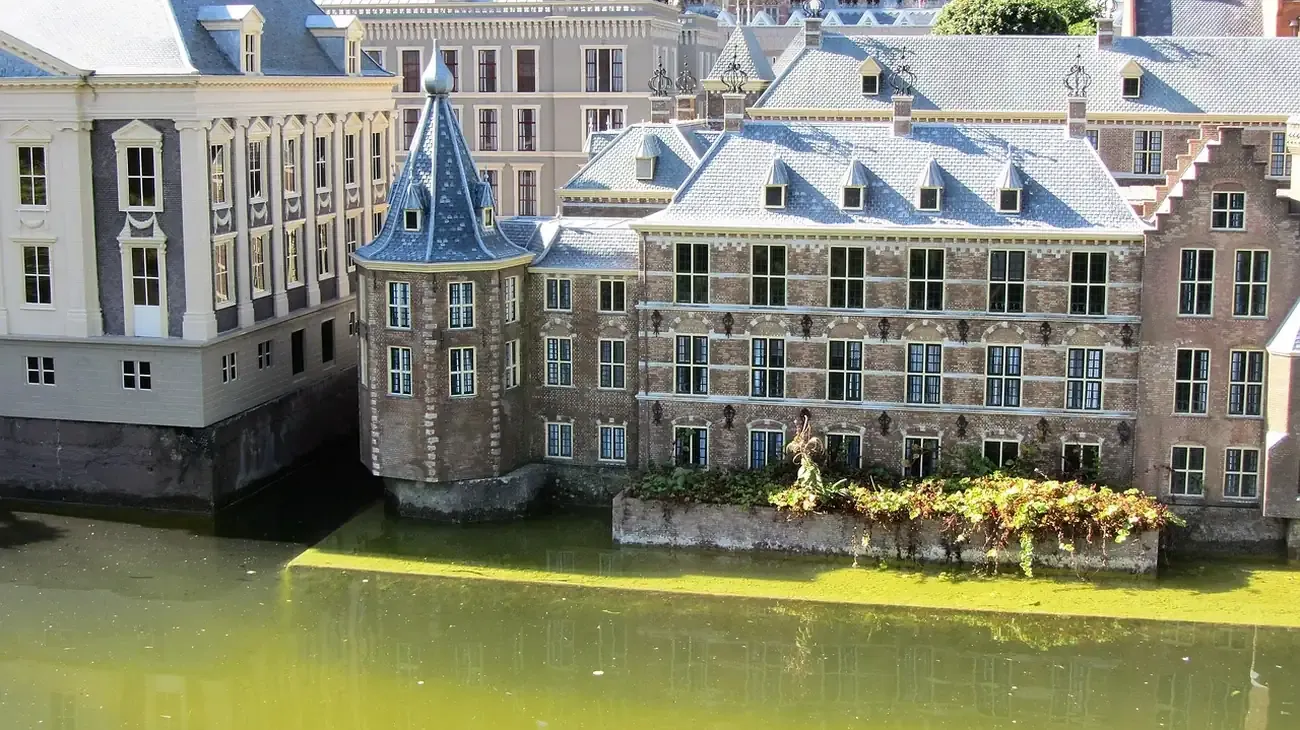
Madurodam
The whole country at 1 to 25 scale since 1952, with model ports, canals and landmarks, and net proceeds going to Dutch charities.
Location: Scheveningen, The Hague
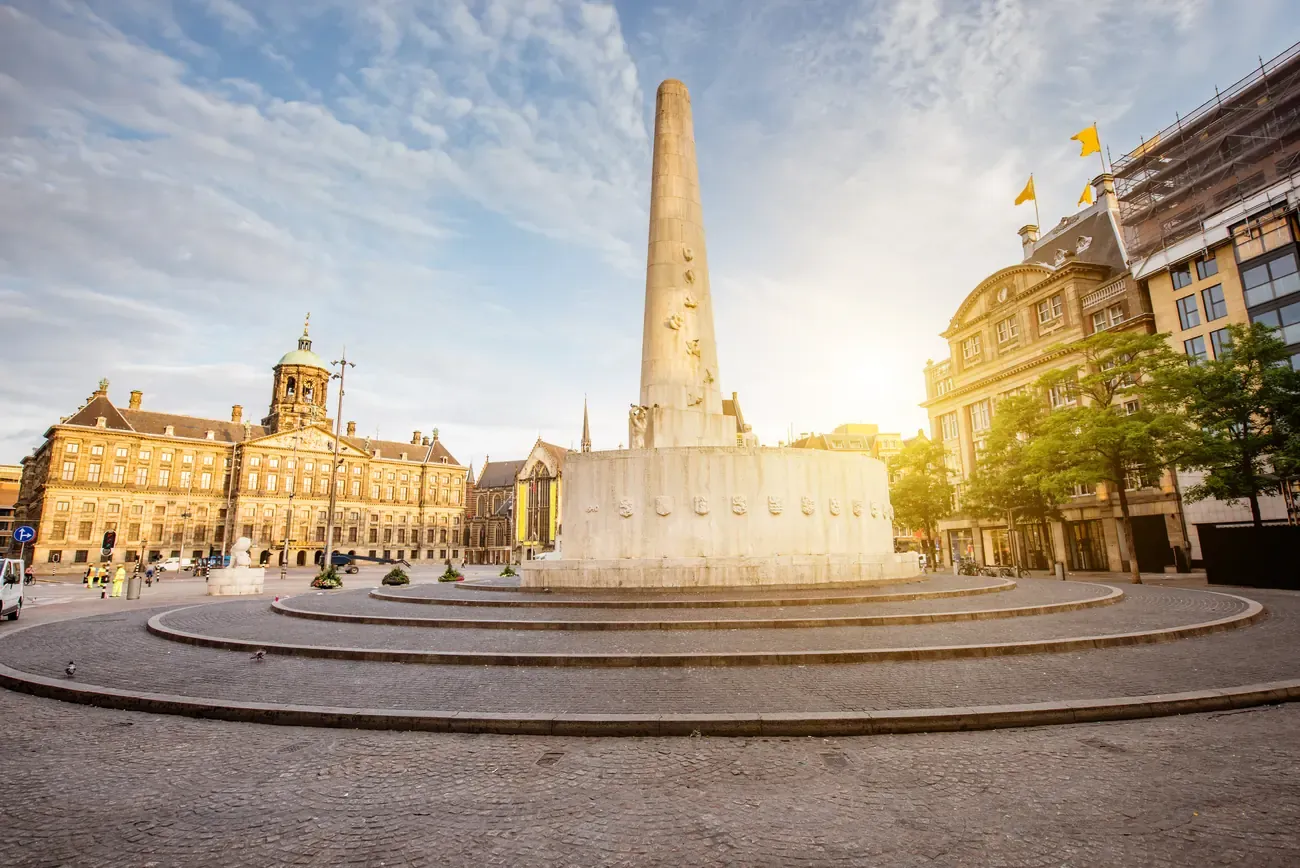
Royal Palace Amsterdam
Built as the city hall in the 1650s and a palace since 1808, still used by the King for state occasions and open between them.
Location: Dam Square, Amsterdam
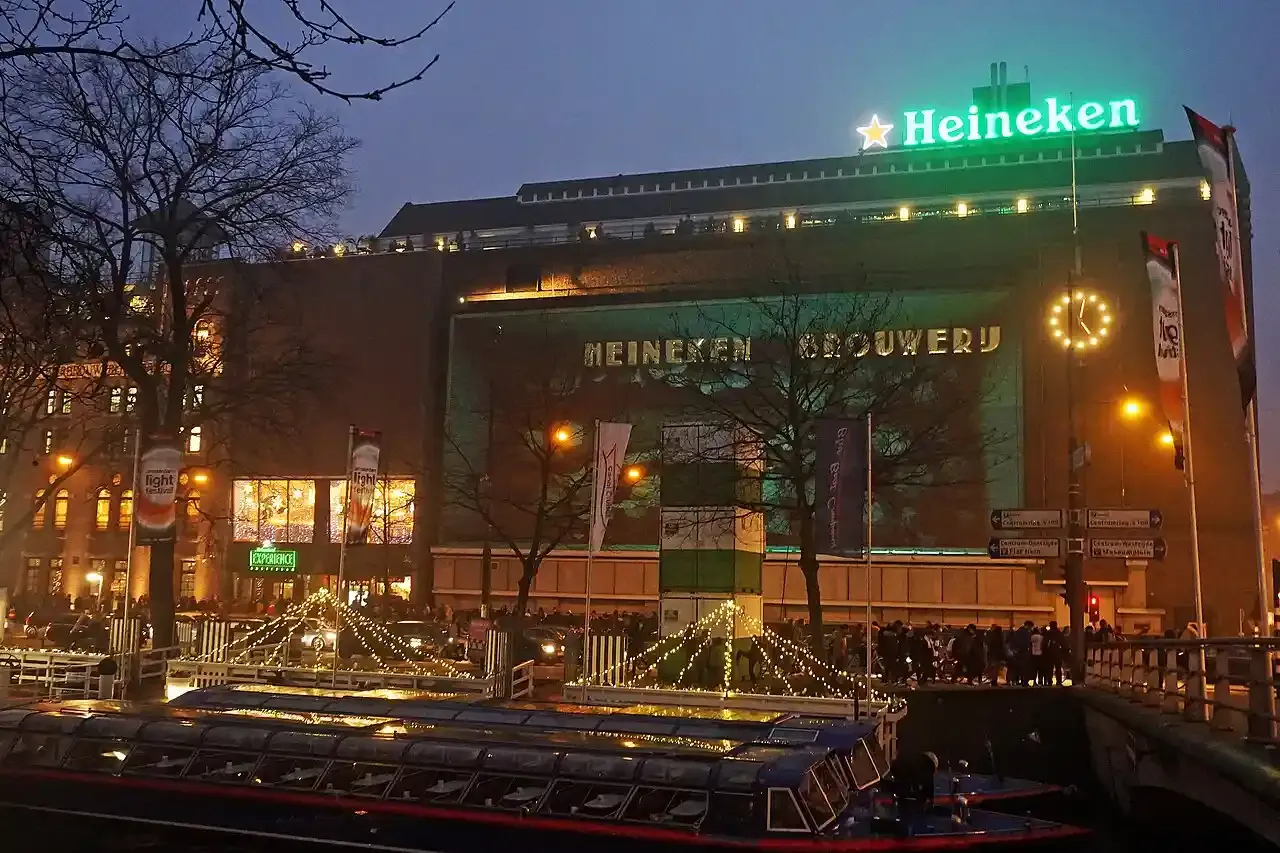
Heineken Experience
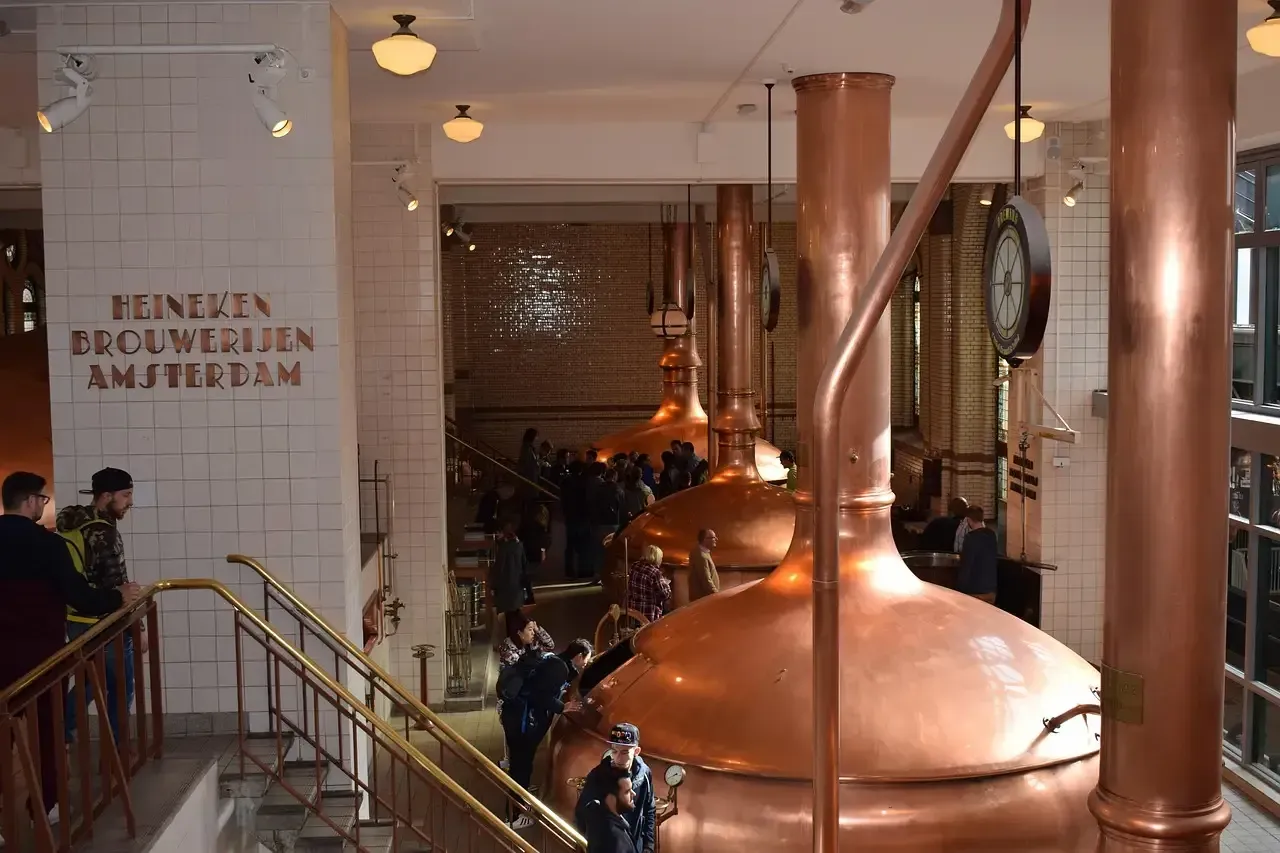
The brewery that supplied Heineken from 1867 until 1988, now a self-guided route through the old brewhouse, stables and tasting rooms.
Location: Stadhouderskade, Amsterdam
More tourist attraction tickets in the Netherlands
Local food in the Netherlands

Stroopwafel
Two thin waffle discs pressed around a layer of caramel syrup, sold warm off the iron. Gouda claims the origin, and the trick is to rest one on a hot mug until the syrup softens.
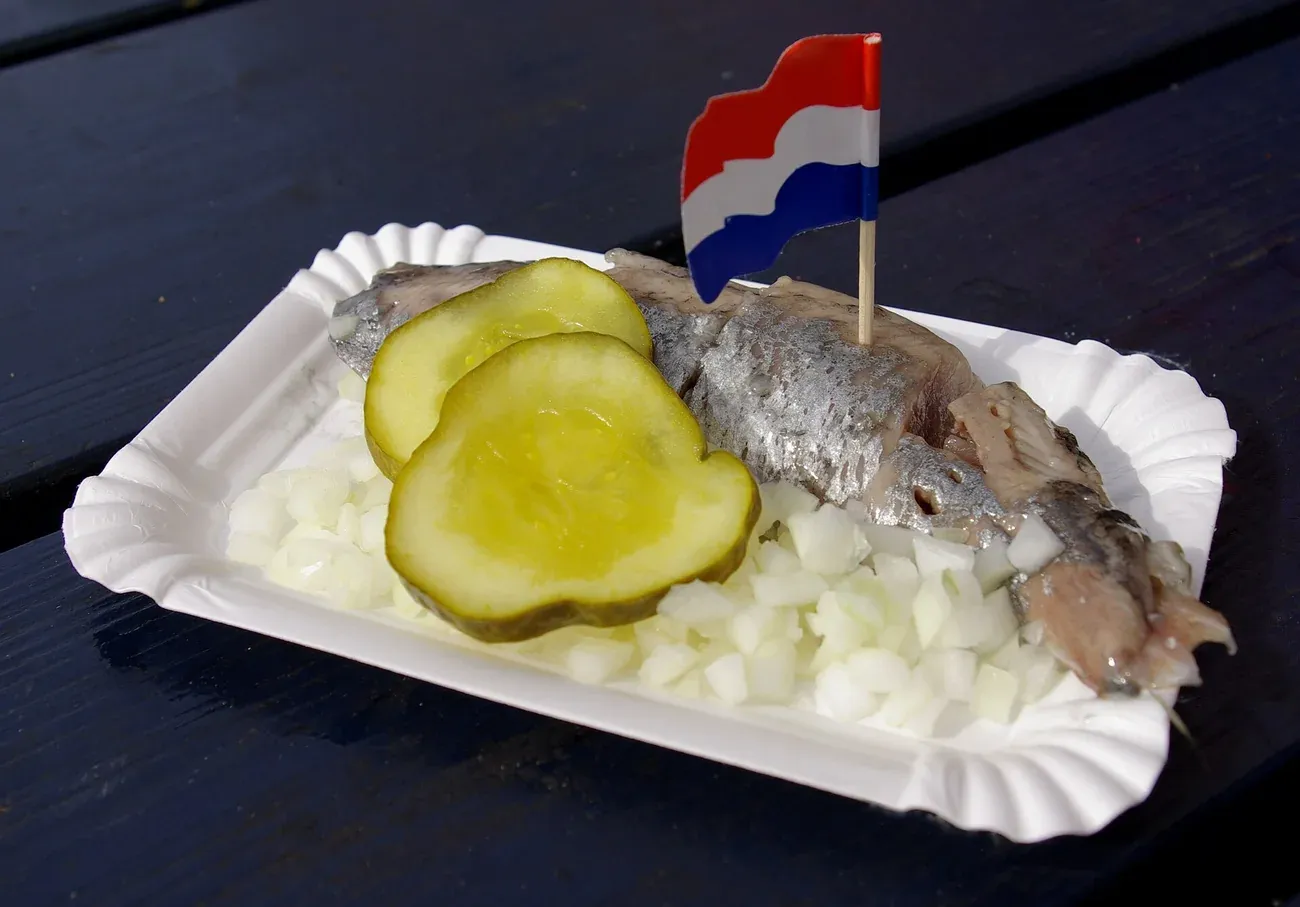
Haring
Raw herring soaked in a mild vinegar pickle, served with chopped onion. New-season herring is sold as Hollandse Nieuwe, and the traditional way to eat one is by the tail.
Photo: "Hollandse Nieuwe 001" by Janericloebe (public domain).
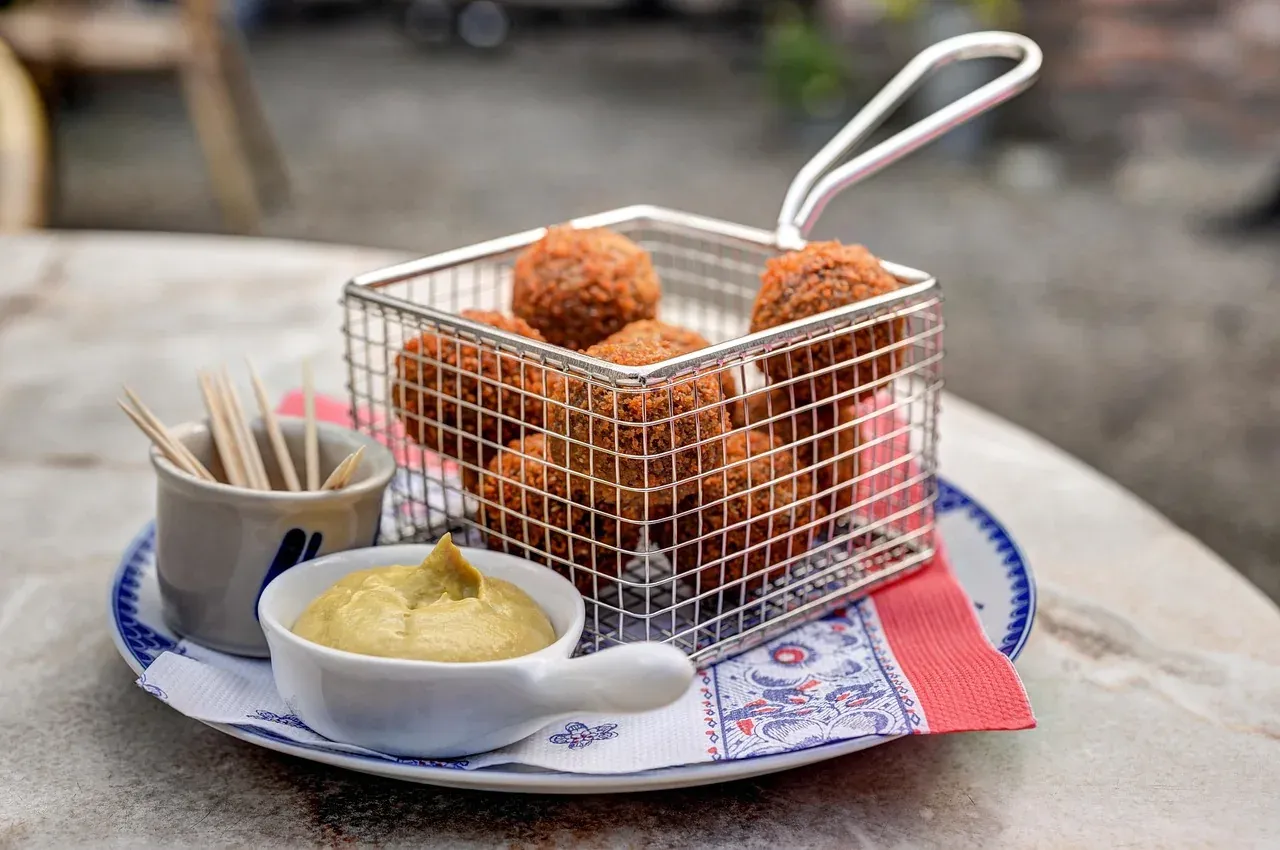
Bitterballen
Crisp-crumbed spheres of thickened beef ragout, deep-fried and served scalding with mustard for dipping. They are the standard order during borreltijd, the early evening drinks hour.
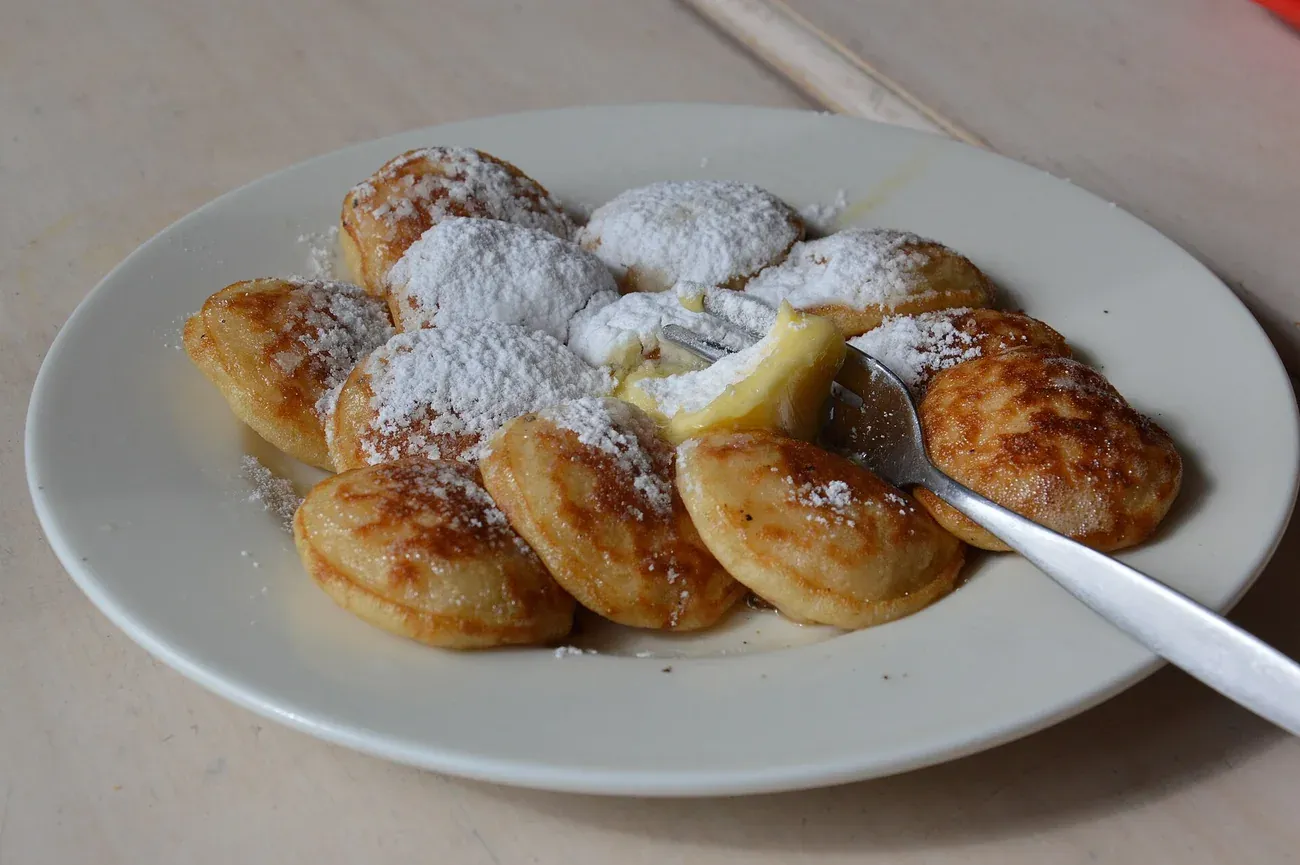
Poffertjes
Small, spongy yeast pancakes cooked in a dimpled cast-iron pan and served under butter and powdered sugar. A festive treat, they turn up at summer festivals and Christmas markets alike.
Photo: "Poffertjes-Melkhuis" by Illustratedjc (CC BY-SA 4.0).

Stamppot
Winter comfort food: potatoes mashed with a vegetable, most often kale for boerenkool or carrot and onion for hutspot, and topped with smoked sausage and a well of gravy.
Photo: "Boerenkool stamppot" by M.Minderhoud (CC BY-SA 3.0).
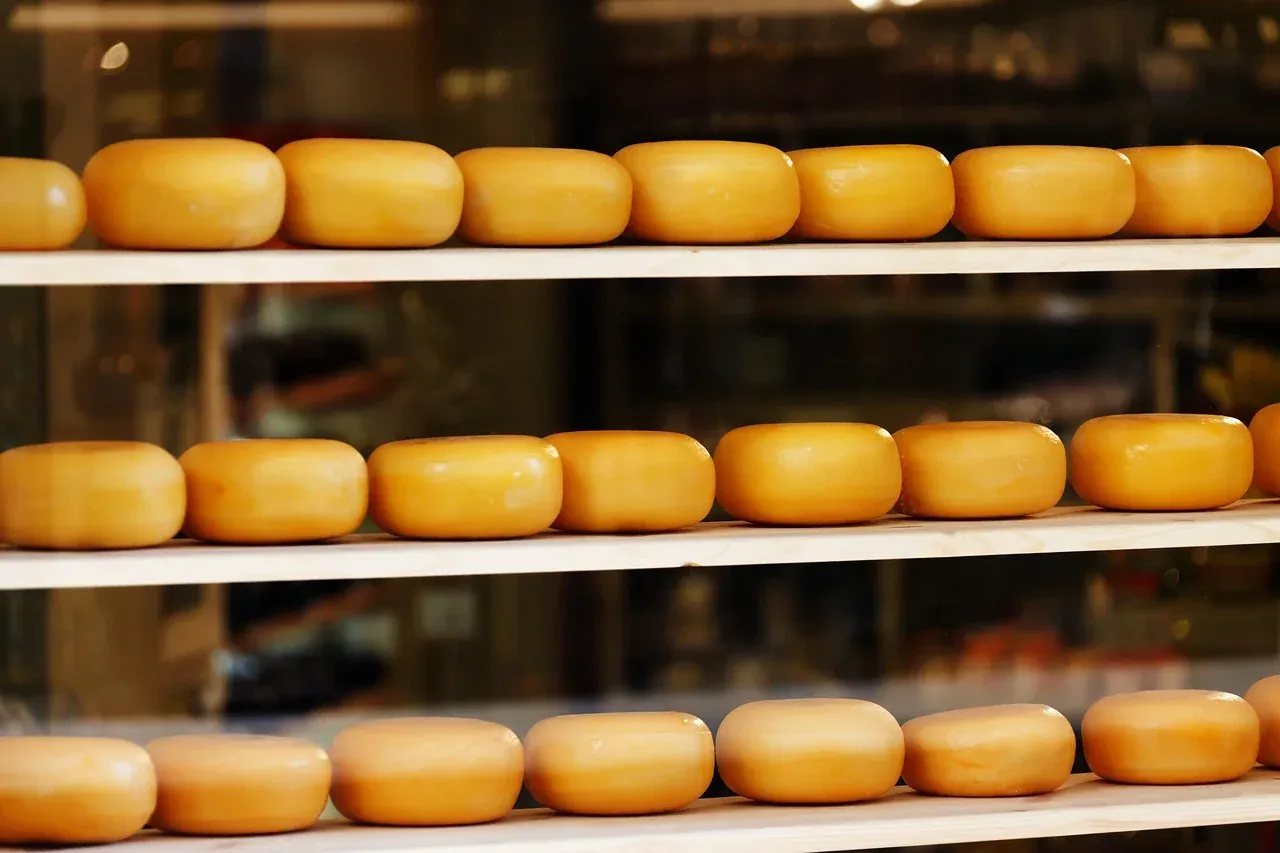
Gouda cheese
The country's defining cheese, aged from mild and springy to crumbly and caramel-sweet. Farmers once sold it at Gouda through a guild of porters in coloured straw hats, and Alkmaar still stages a Friday weighing market.
Unusual museums in the Netherlands
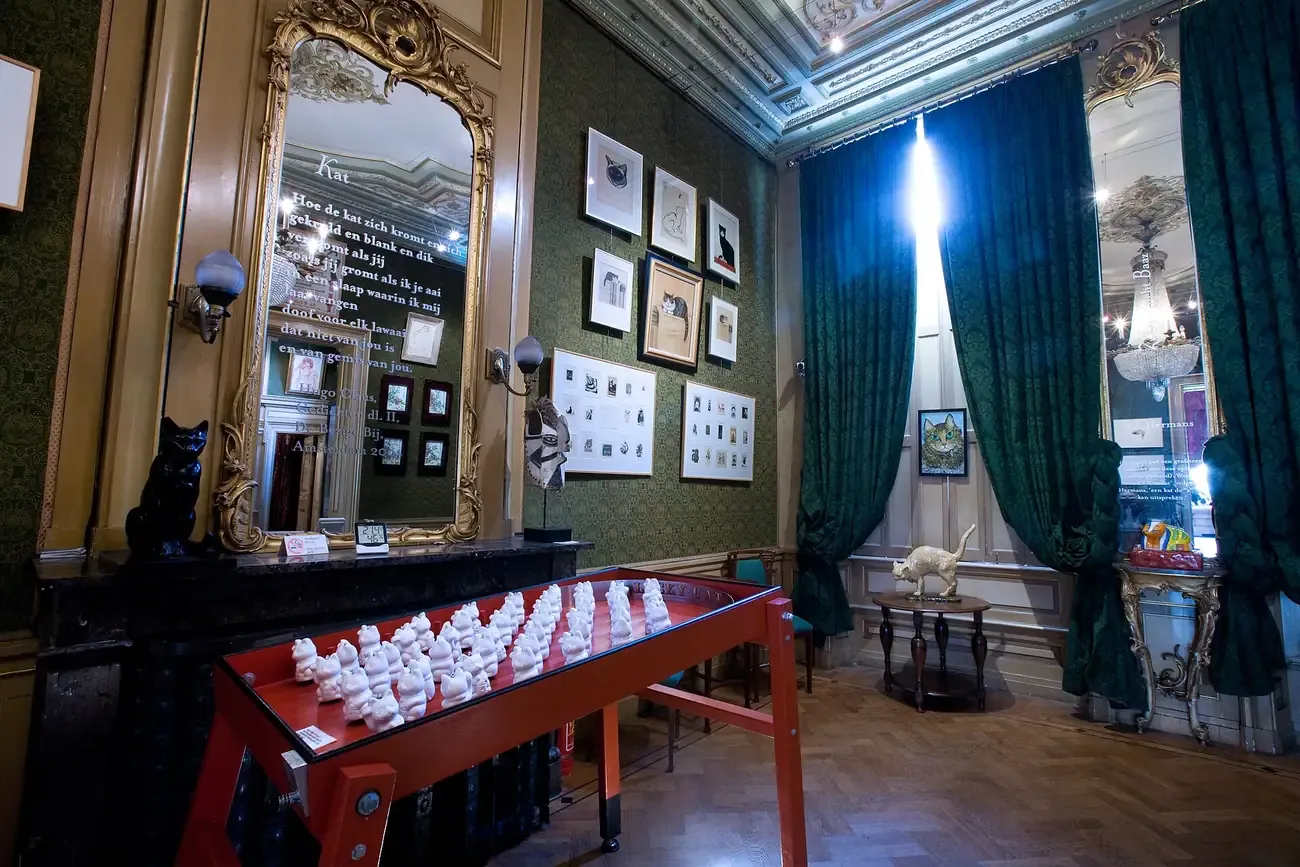
KattenKabinet
A canal house on the Golden Bend given over to art about cats, with work by Picasso, Rembrandt and Toulouse-Lautrec.
Location: Herengracht, Amsterdam
Photo: "Amsterdam - KattenKabinet - 0346" by Jorge Royan (CC BY-SA 3.0).
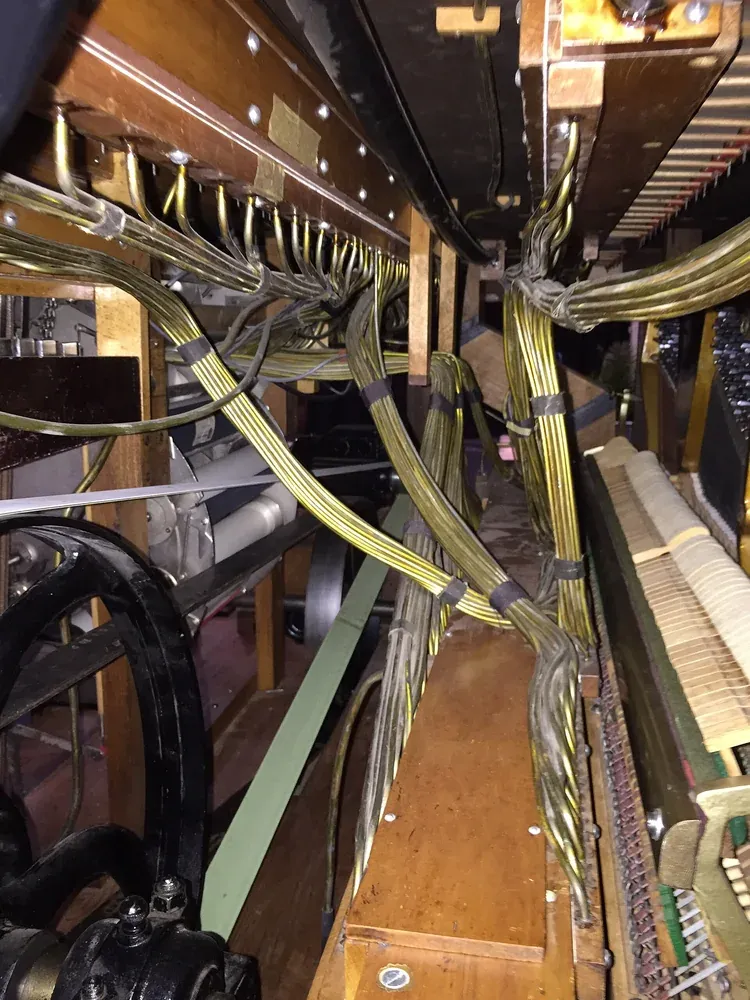
Museum Speelklok
Self-playing music in a former church: musical clocks, pianolas and the huge Dutch street organs, most still in working order.
Location: Buurkerk, Utrecht
Photo: "Utrecht, Voorm Prot Buurkerk Mus Speelklok Orgel binnenwerk 2467" by Dosseman (CC BY-SA 4.0).
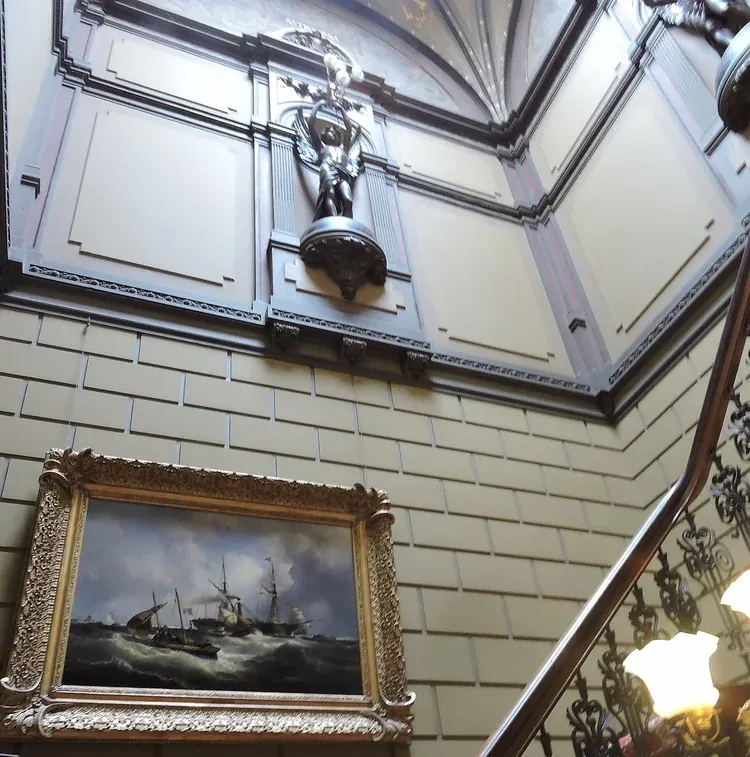
Teylers Museum
The oldest museum in the country, founded in 1778, still showing fossils, instruments and drawings in its neoclassical Oval Room.
Location: Spaarne, Haarlem
Photo: "Teylers museum haarlem" by bertknot (CC BY-SA 2.0).
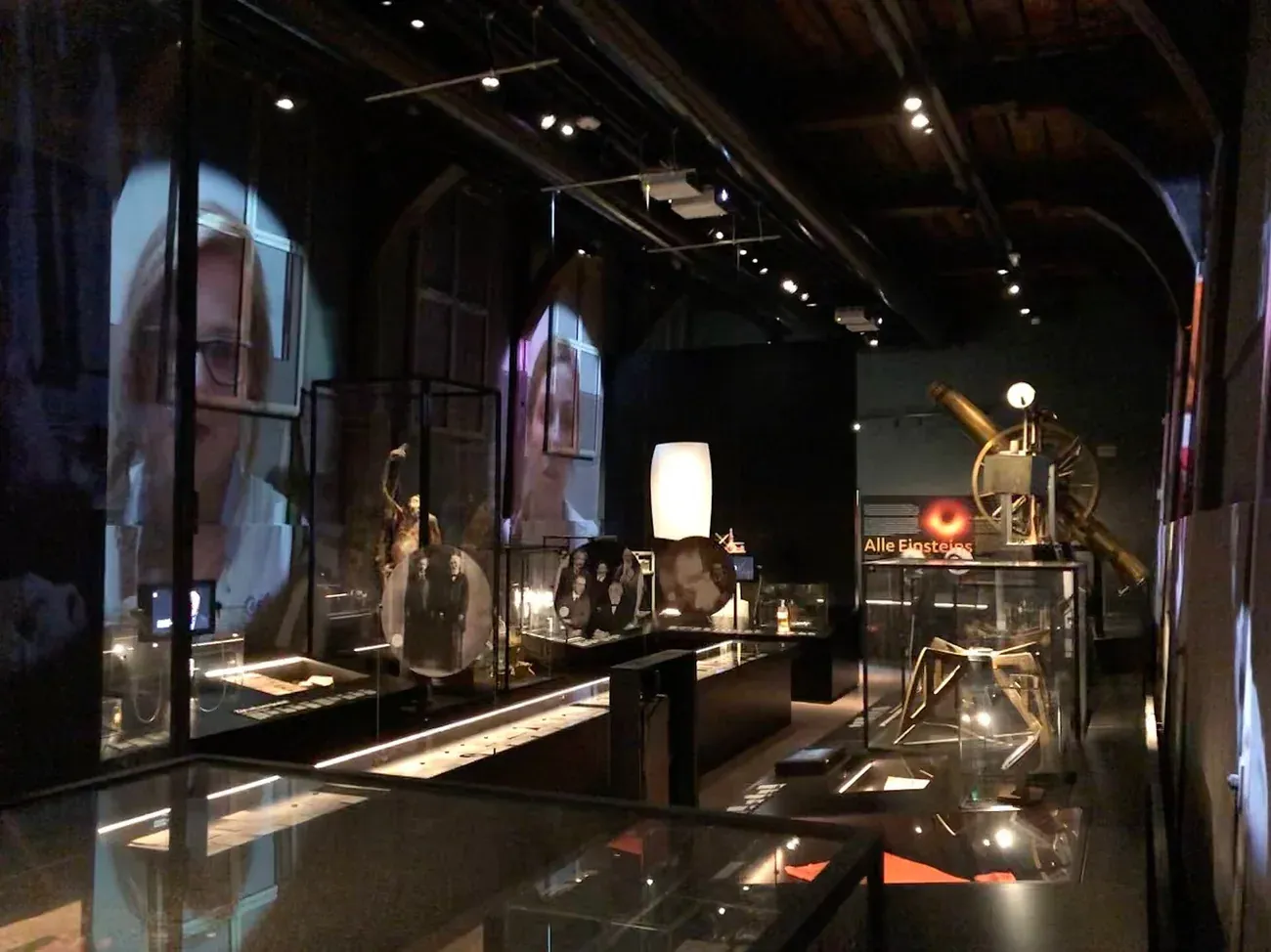
Museum Boerhaave
The world of science and medicine at Rijksmuseum Boerhaave, in a former convent with a reconstructed anatomical theatre.
Location: Lange Sint Agnietenstraat, Leiden
Photo: "Rijksmuseum Boerhaave in 2019 foto 23" by Hanno Lans (CC0).
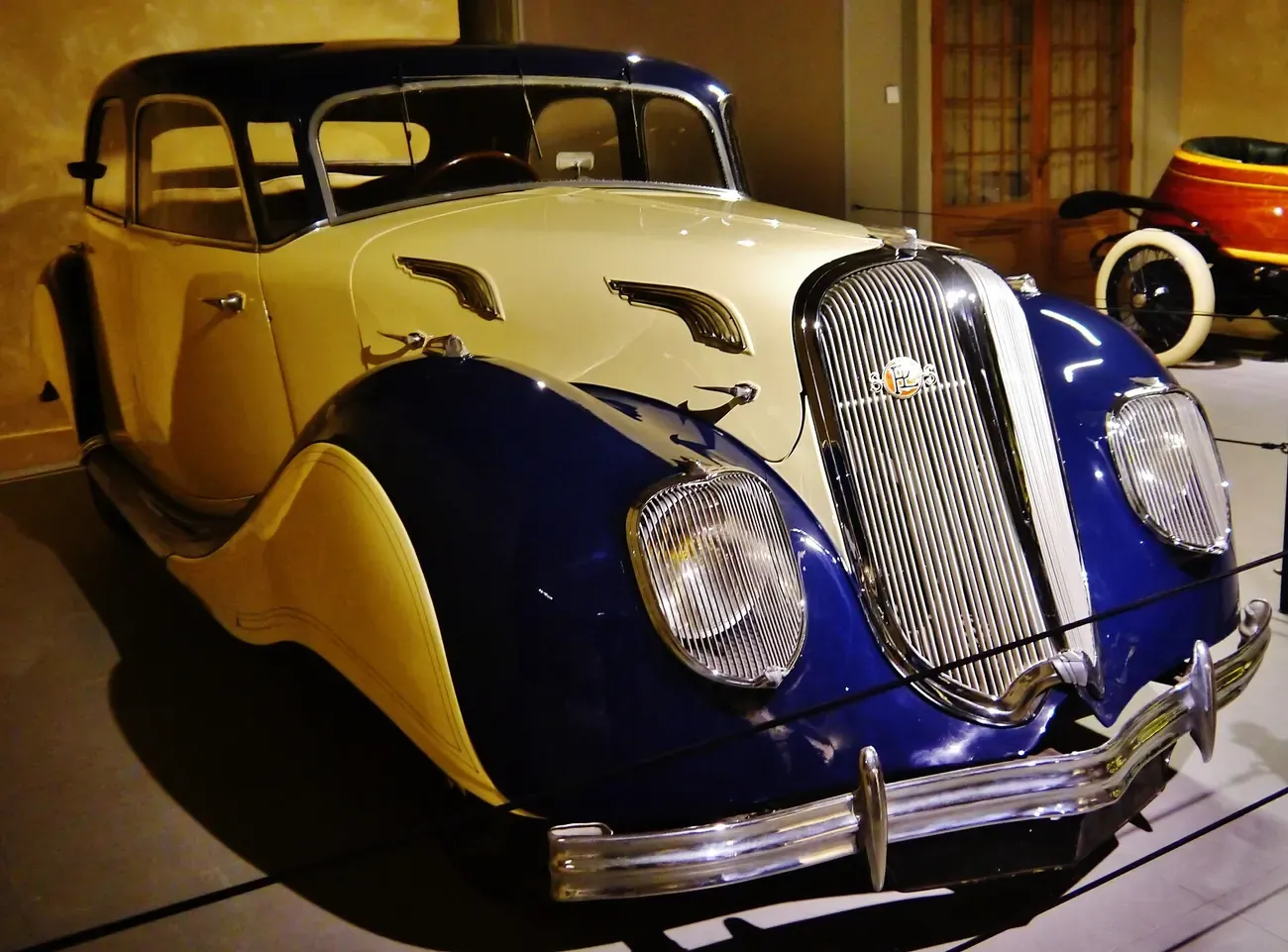
Louwman Museum
Around 275 historic cars, coaches and motorcycles, from the earliest horseless carriages to film-famous machines.
Location: Leidsestraatweg, The Hague
Photo: "Panhard & Levassor at Den Haag Louwman Museum 058" by Zairon (CC BY-SA 4.0).
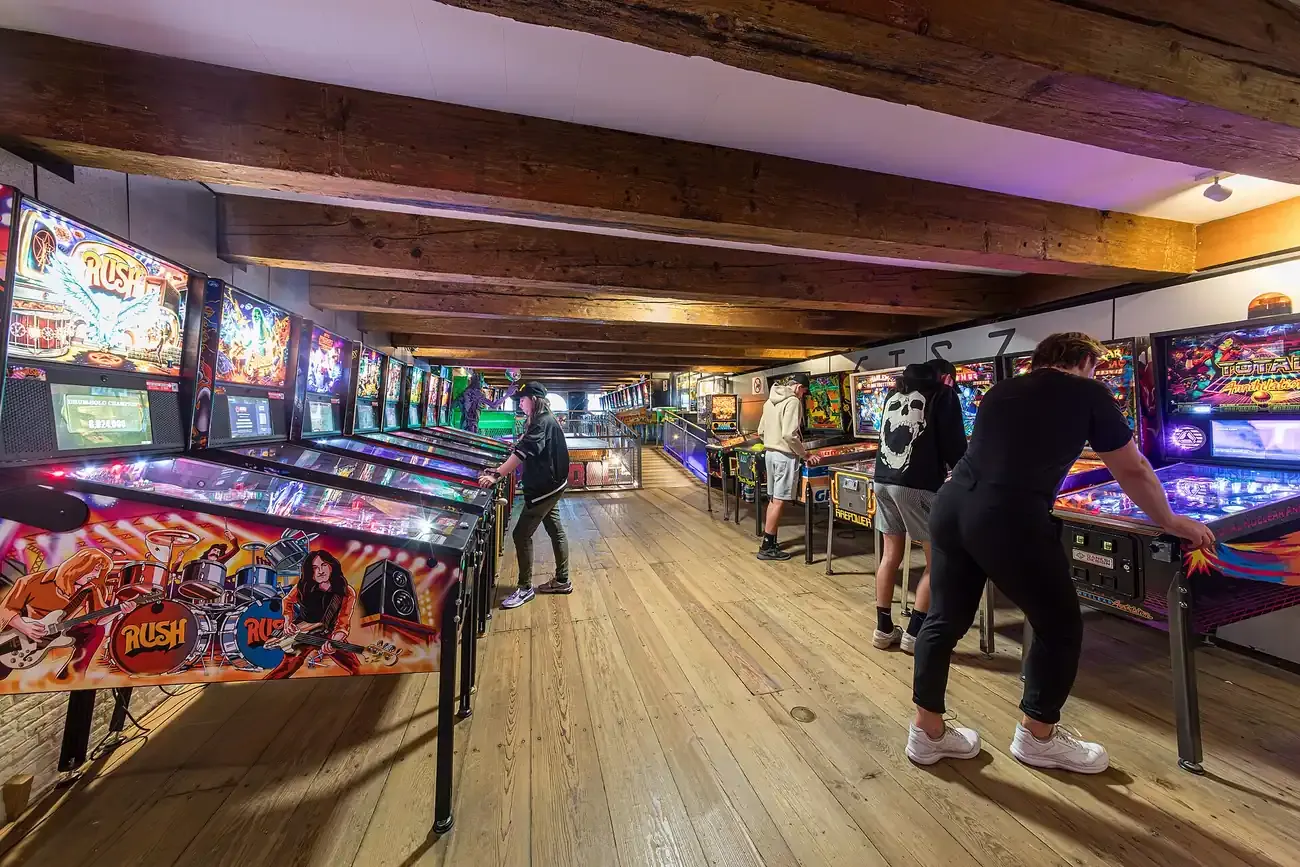
Dutch Pinball Museum
More than 160 pinball machines, all of them freely playable, in a historic building in old Delfshaven.
Location: Delfshaven, Rotterdam
Photo: "Dutch Pinball Museum flipperkasten" by Mischademuynck (CC BY-SA 4.0).
Historic churches in the Netherlands
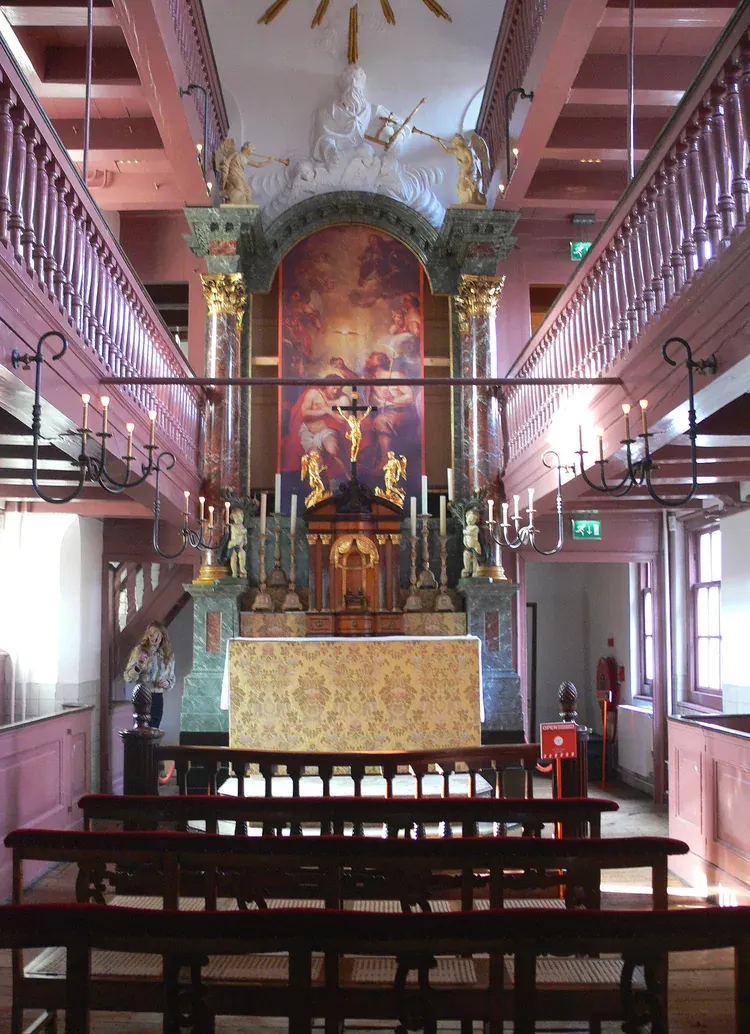
Our Lord in the Attic
A complete Catholic church hidden across the top three floors of a 1660s canal house, built when public worship was banned.
Location: Oudezijds Voorburgwal, Amsterdam
Photo: "Amsterdam - Museum Ons' Lieve Heer op Solder - hidden church" by Remi Mathis (CC BY-SA 3.0).
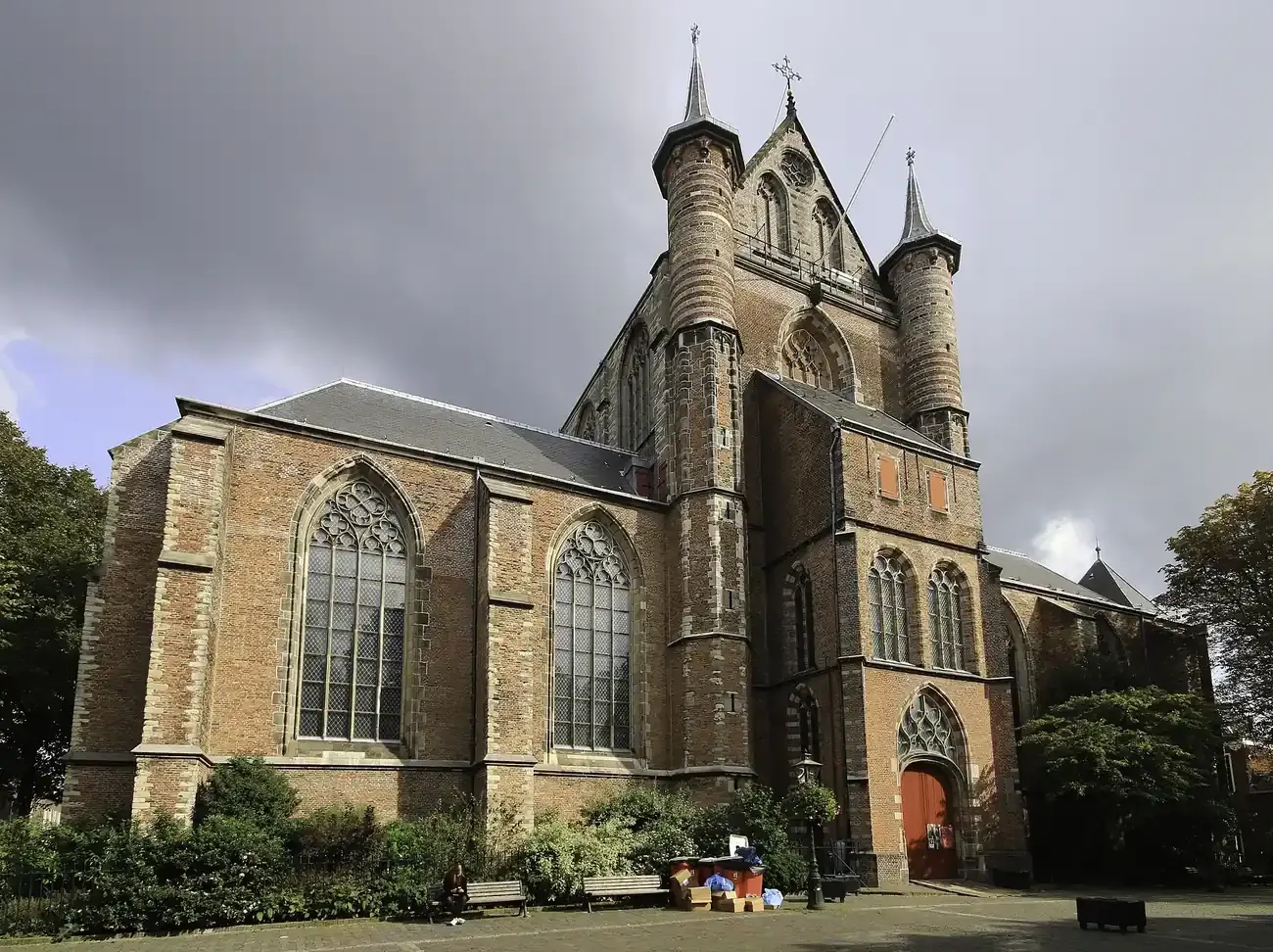
Pieterskerk
The Gothic church of the Pilgrim Fathers, where their pastor John Robinson is buried along with Jan Steen and Willebrord Snellius.
Location: Pieterskerkhof, Leiden
Photo: "Wiki Takes Leiden 2017--31" by Erik Zachte (CC BY-SA 4.0).
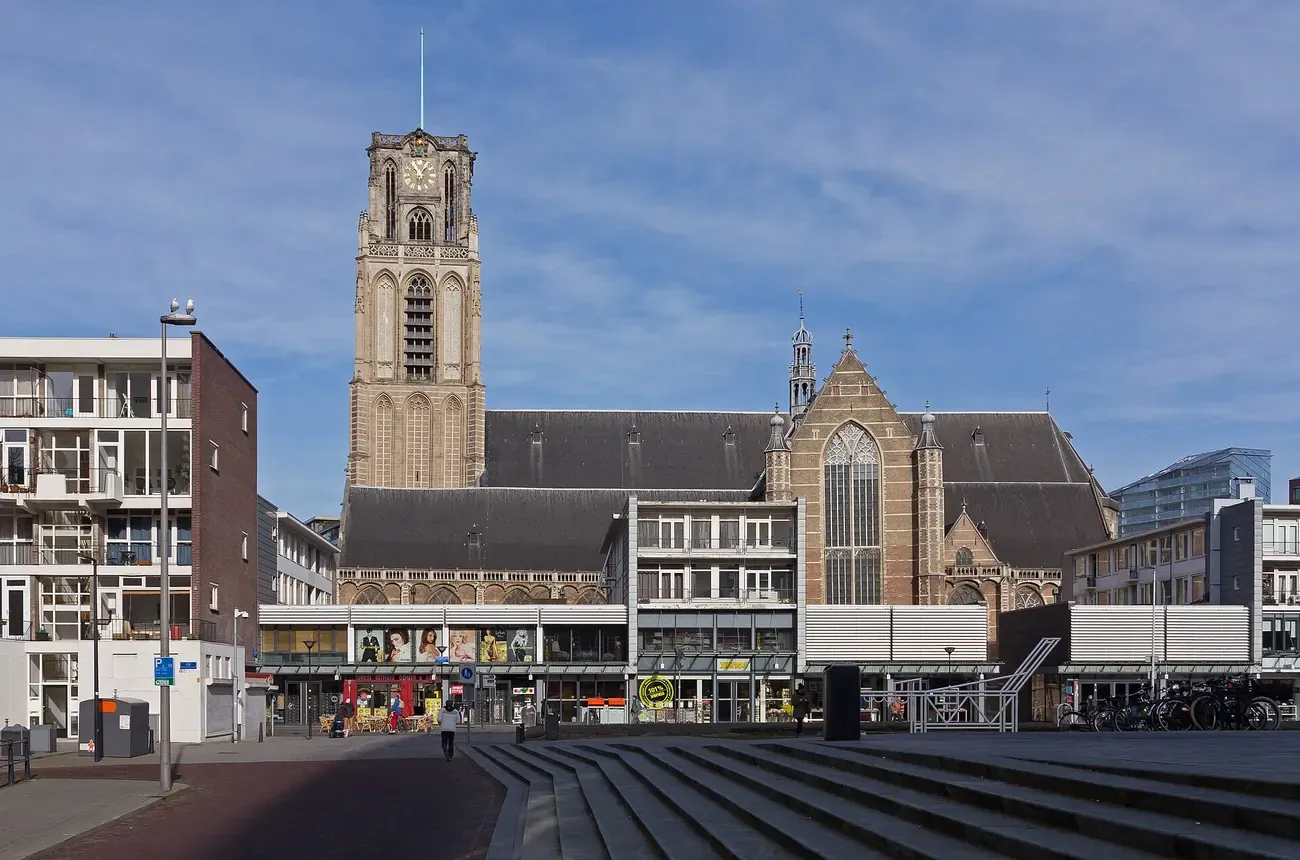
Grote of Sint-Laurenskerk
The only surviving building of medieval Rotterdam, raised between 1449 and 1525 and rebuilt after the 1940 bombing.
Location: Grotekerkplein, Rotterdam
Photo: "Rotterdam, de Sint Laurenskerk RM32783 foto4" by Michielverbeek (CC BY-SA 4.0).
Gardens and parks in the Netherlands
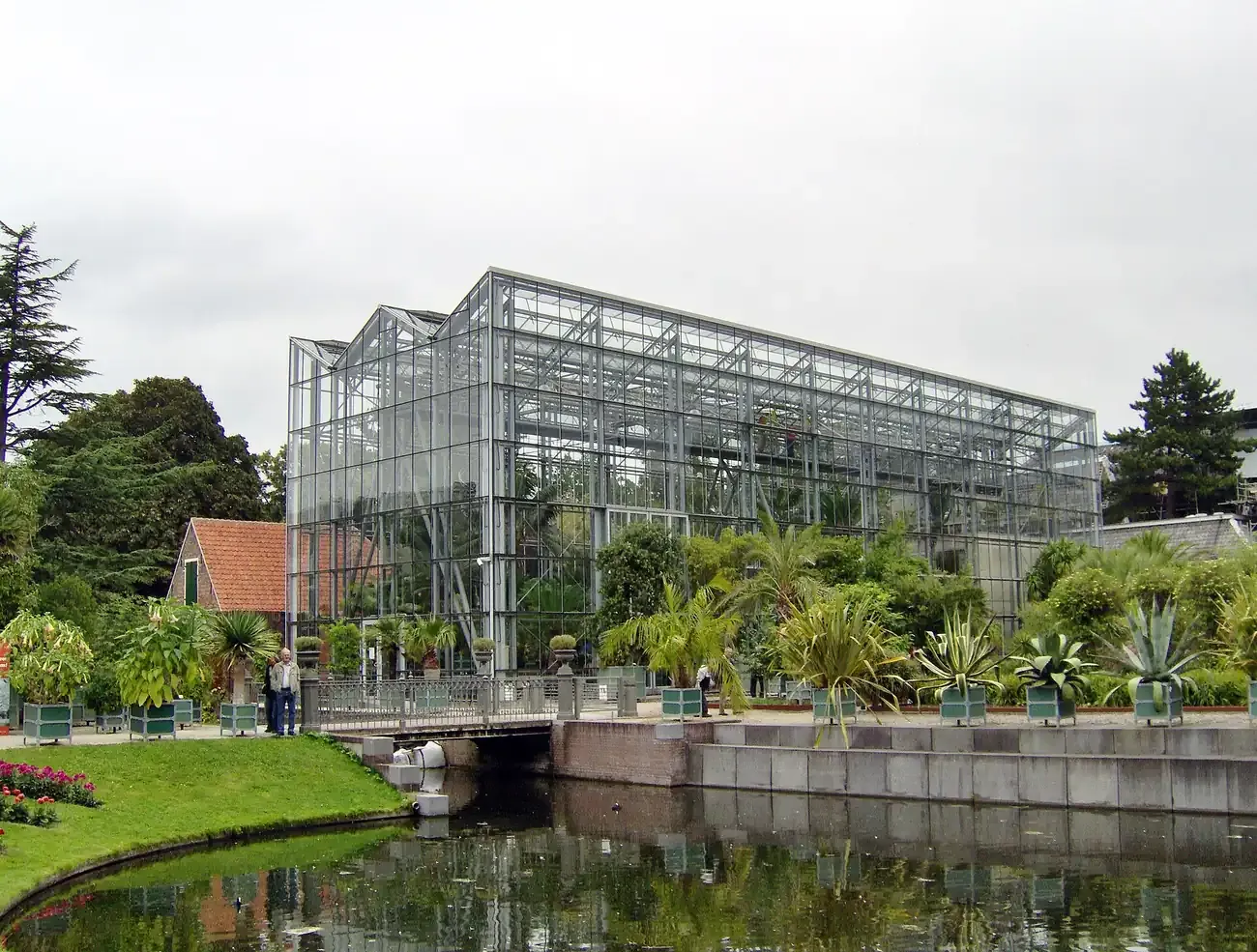
Hortus botanicus Leiden
The oldest botanical garden in the country, laid out for the university in 1590 and still growing Clusius' first tulips.
Location: Rapenburg, Leiden
Photo: "Hortus Botanicus Leiden - De Wintertuin" by Tubantia (CC BY-SA 3.0).
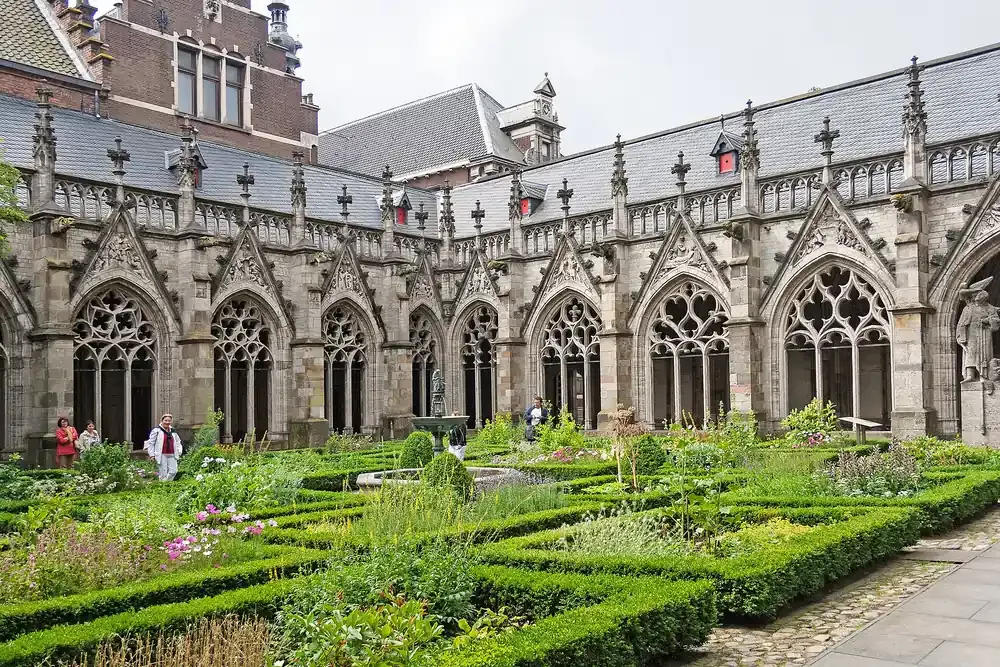
Pandhof cloister garden
A walled herb garden inside the Gothic cloister beside the Domkerk, a pocket of quiet a step off the busiest square.
Location: Domplein, Utrecht
Photo: "Utrecht Pandhof 9079" by Ludvig14 (CC BY-SA 4.0).
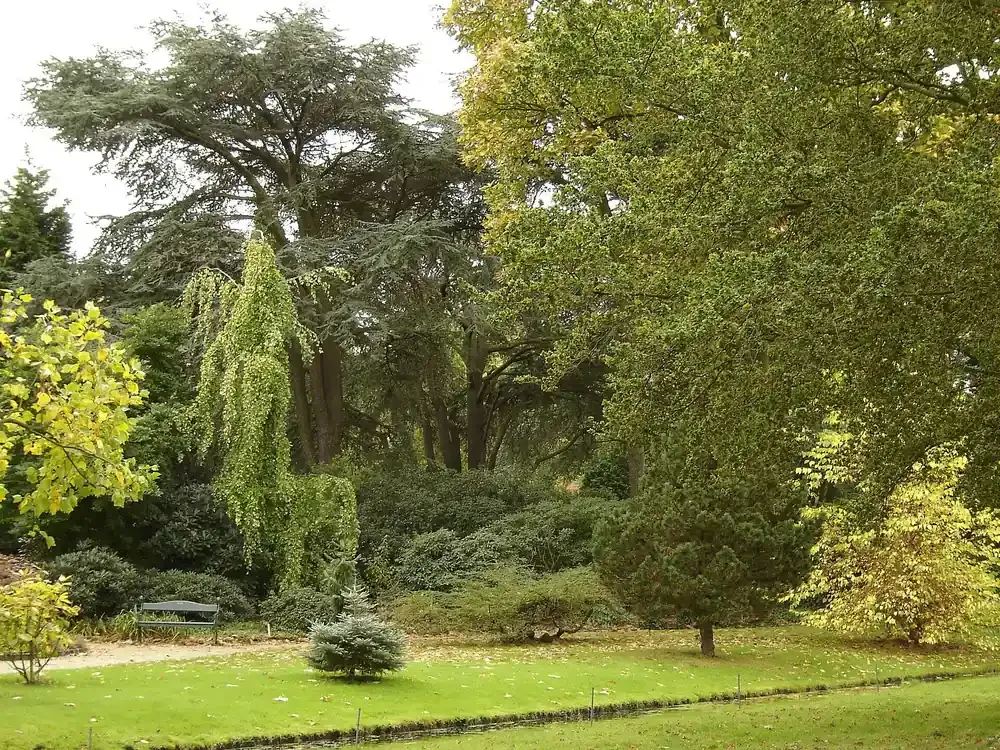
Arboretum Trompenburg
Seven hectares of trees four metres below sea level, holding national collections of oaks, beeches and rhododendrons.
Location: Kralingen, Rotterdam
Photo: "Arboretum Trompenburg Nl 2" by Wilma Verburg (CC BY-SA 2.5 NL).
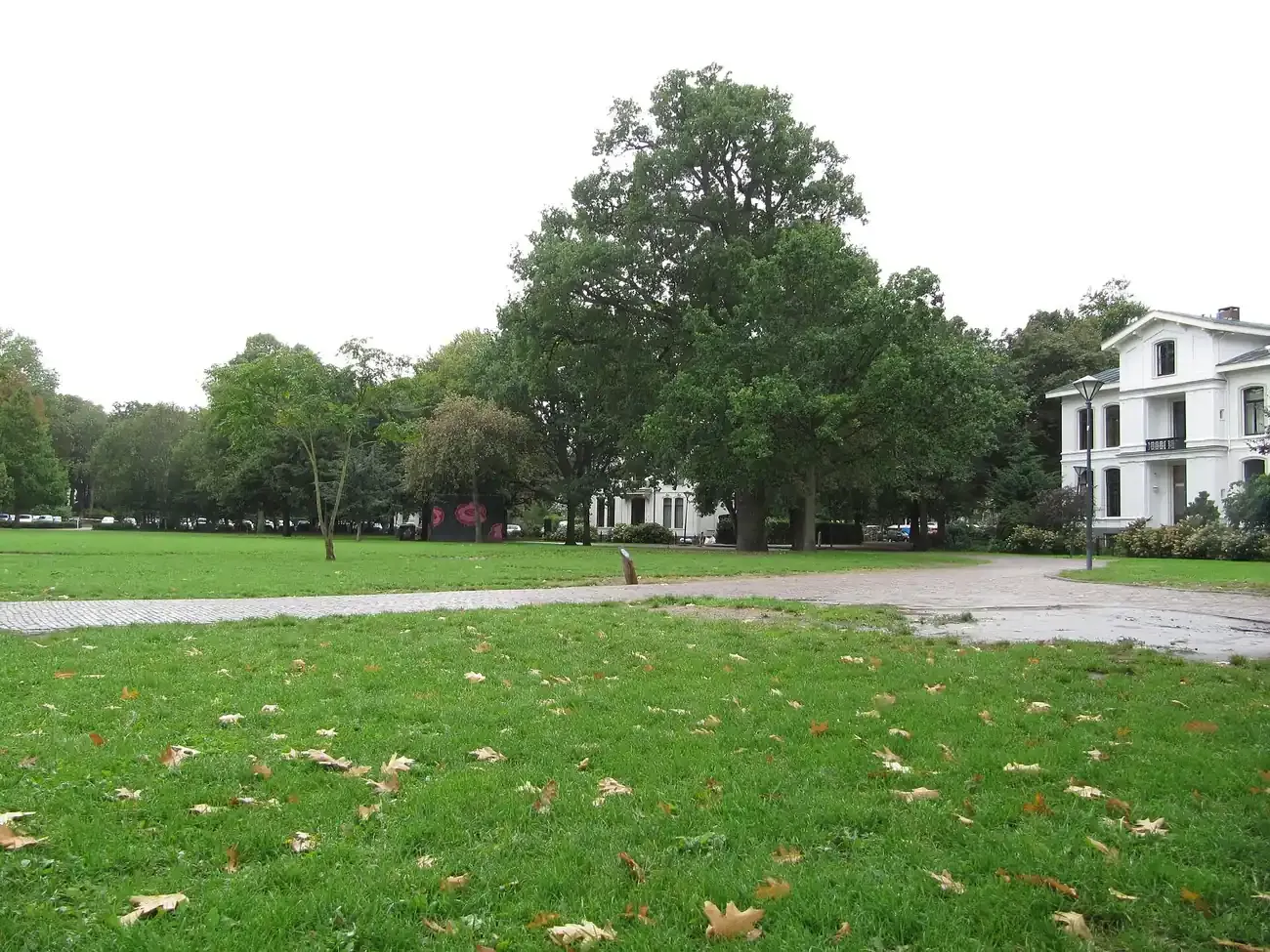
Frederikspark
Lawns and old trees around the garden of the 18th-century Paviljoen Welgelegen, on the edge of the Haarlemmerhout.
Location: Haarlemmerhoutkwartier, Haarlem
Photo: "RM511392 Haarlem - Frederikspark" by Michiel1972 (CC BY-SA 3.0).
Unusual places to visit in the Netherlands
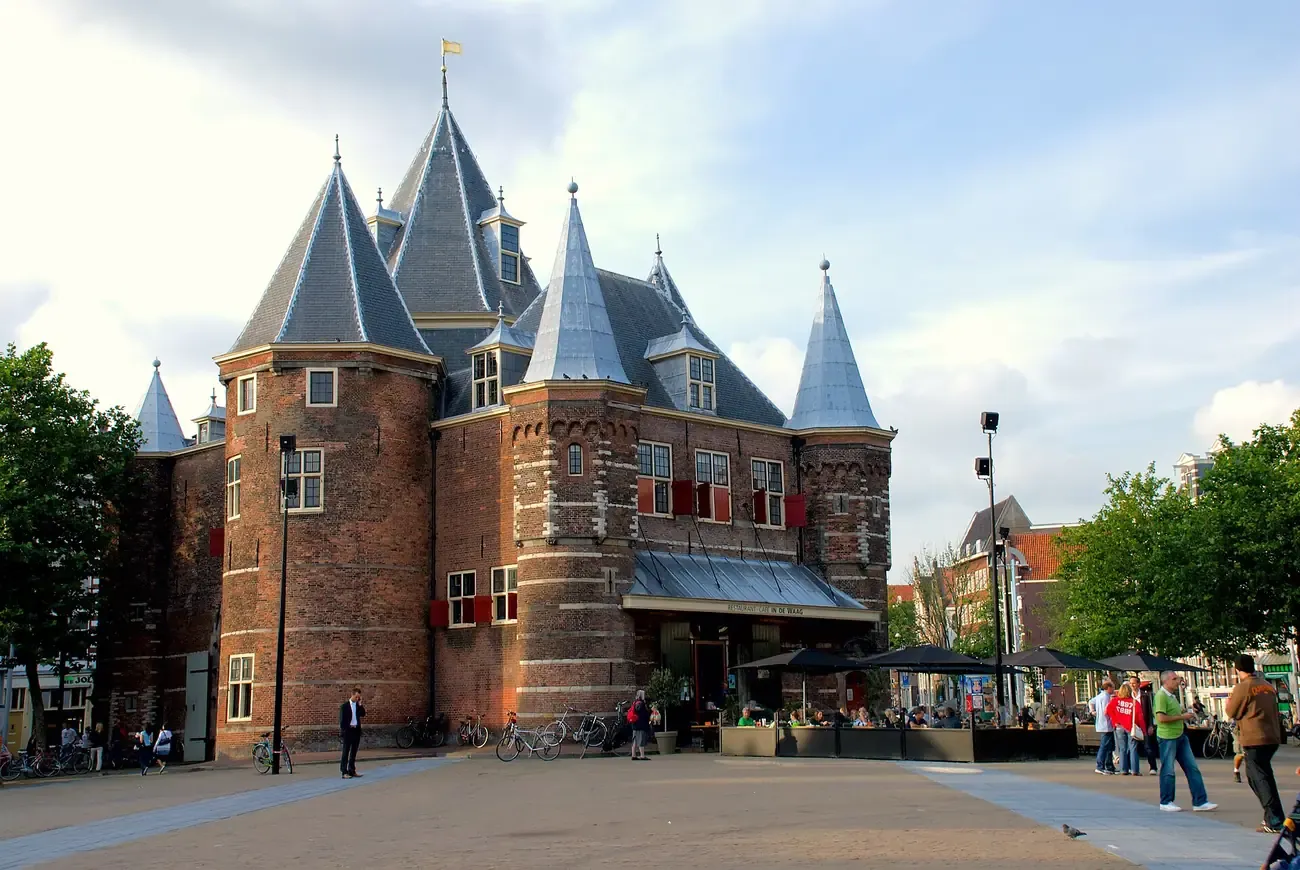
De Waag
The oldest surviving non-religious building in the city, a 15th-century gate turned weigh house whose anatomical theatre Rembrandt painted.
Location: Nieuwmarkt, Amsterdam
Photo: "Waag Amsterdam 2" by Kmhofmann (CC BY-SA 3.0).
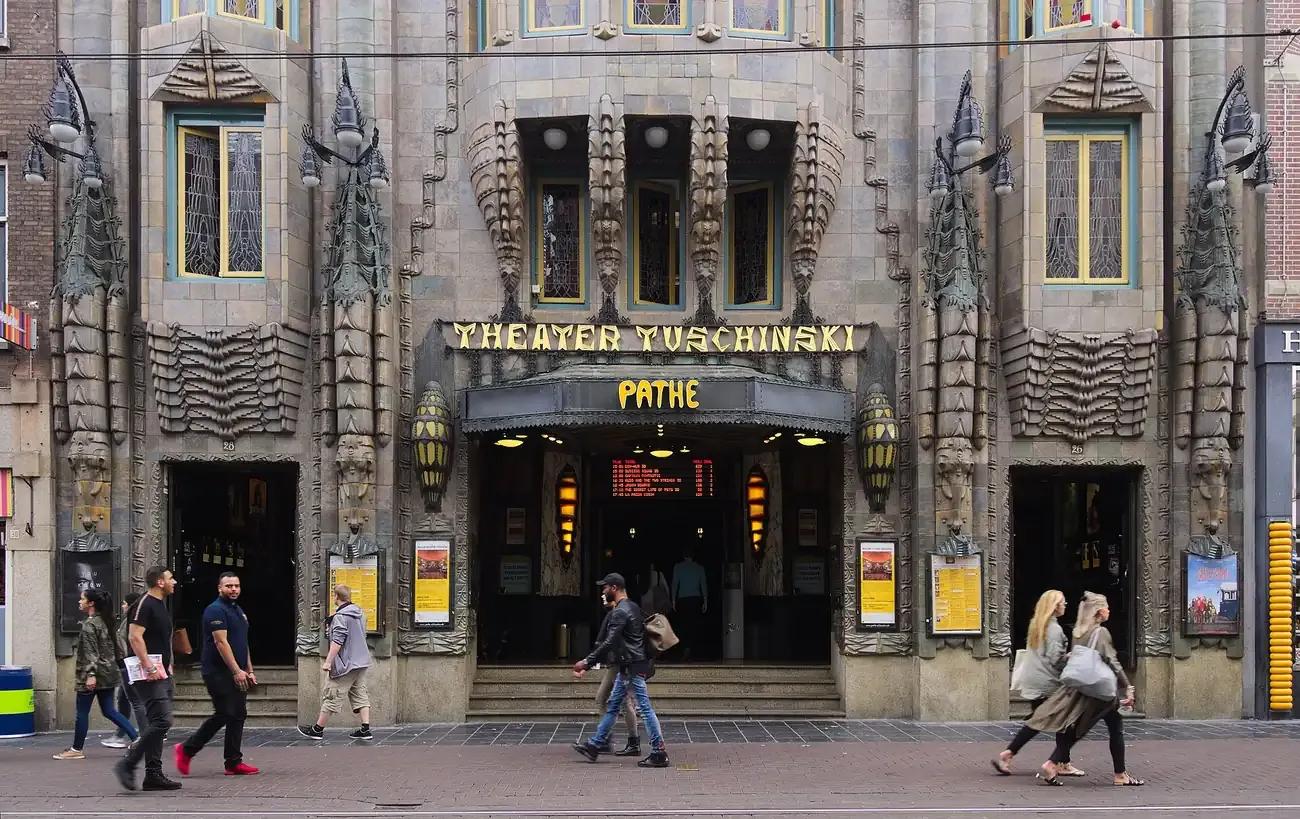
Theater Tuschinski
A 1921 cinema in a one-off blend of art deco and Amsterdam School, carpets and murals included, still screening films.
Location: Reguliersbreestraat, Amsterdam
Photo: "Tuschinski Theater 2894" by C messier (CC BY-SA 4.0).
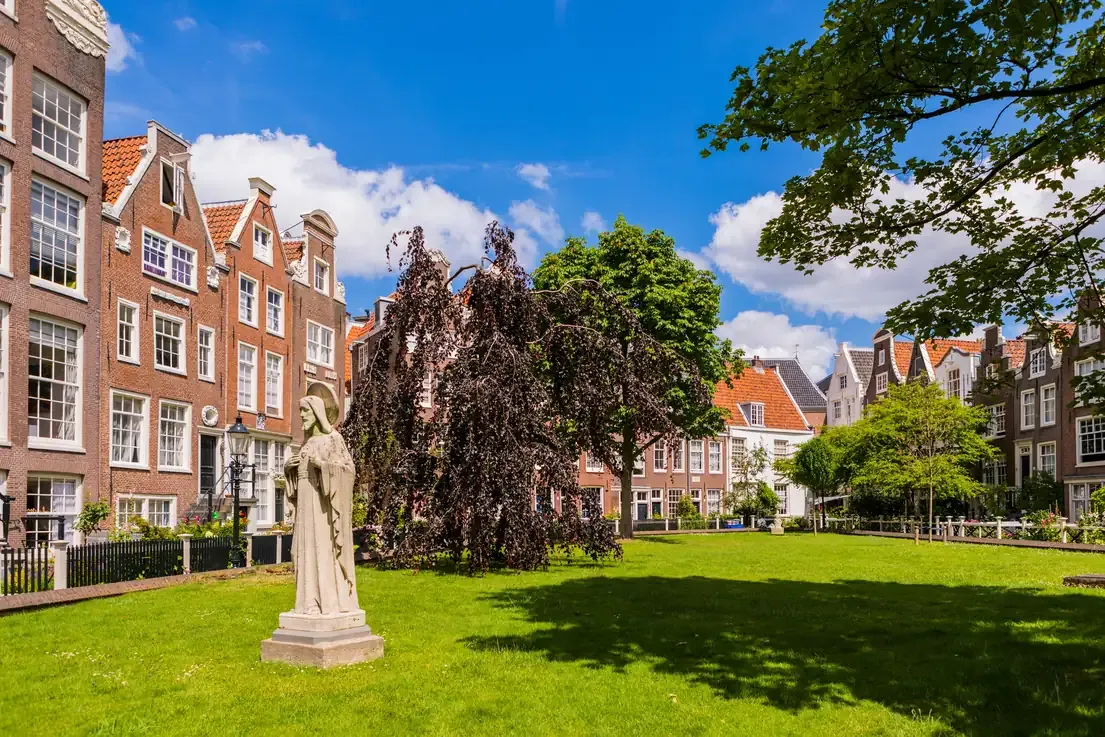
Begijnhof
A medieval courtyard of almshouses inside the Singel, with two churches and one of Amsterdam's last wooden houses.
Location: Spui, Amsterdam
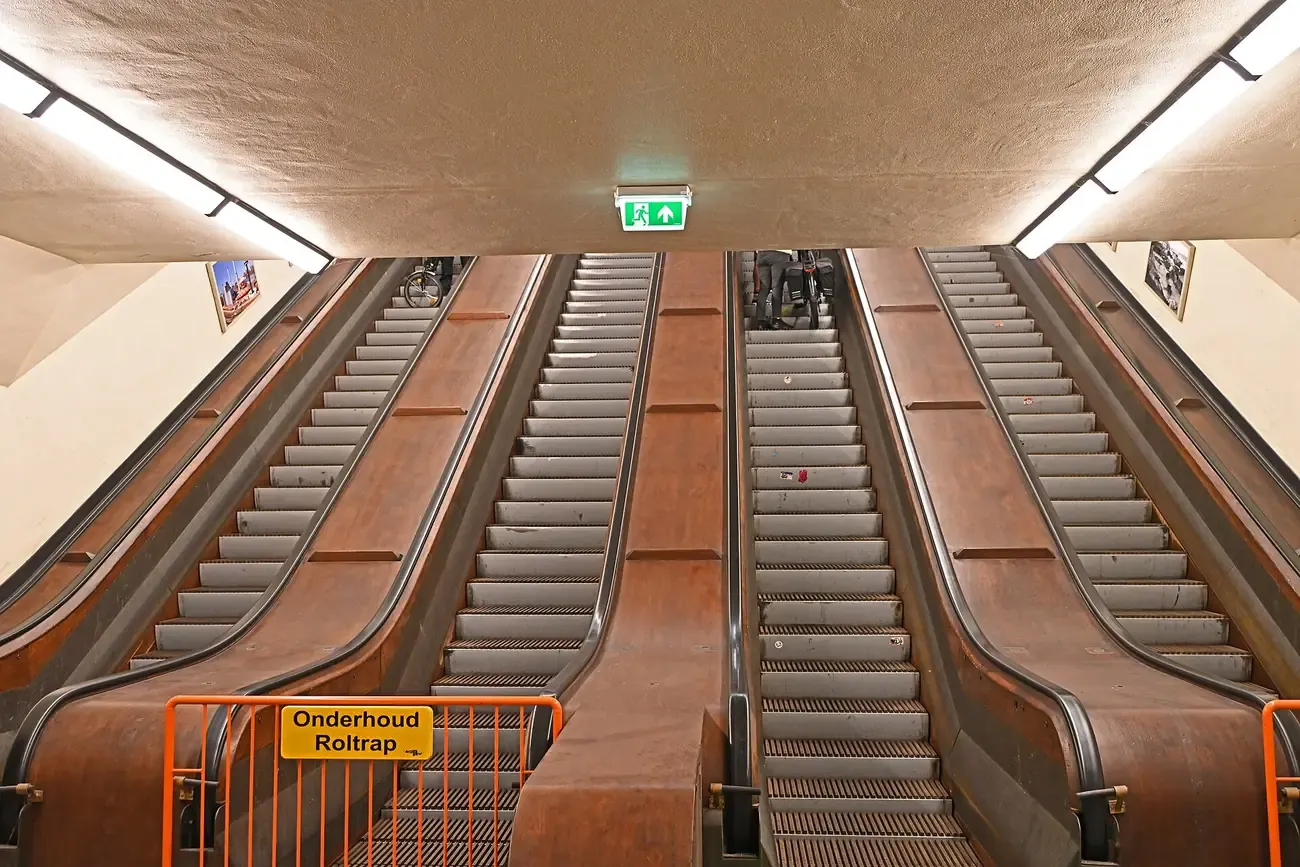
Maastunnel
The country's oldest immersed tunnel, opened in 1942, with separate tubes for cyclists and walkers reached by long wooden escalators.
Location: Nieuwe Maas, Rotterdam
Photo: "Rotterdam Maastunnel South portal escalators seen from below" by Ymblanter (CC BY-SA 4.0).
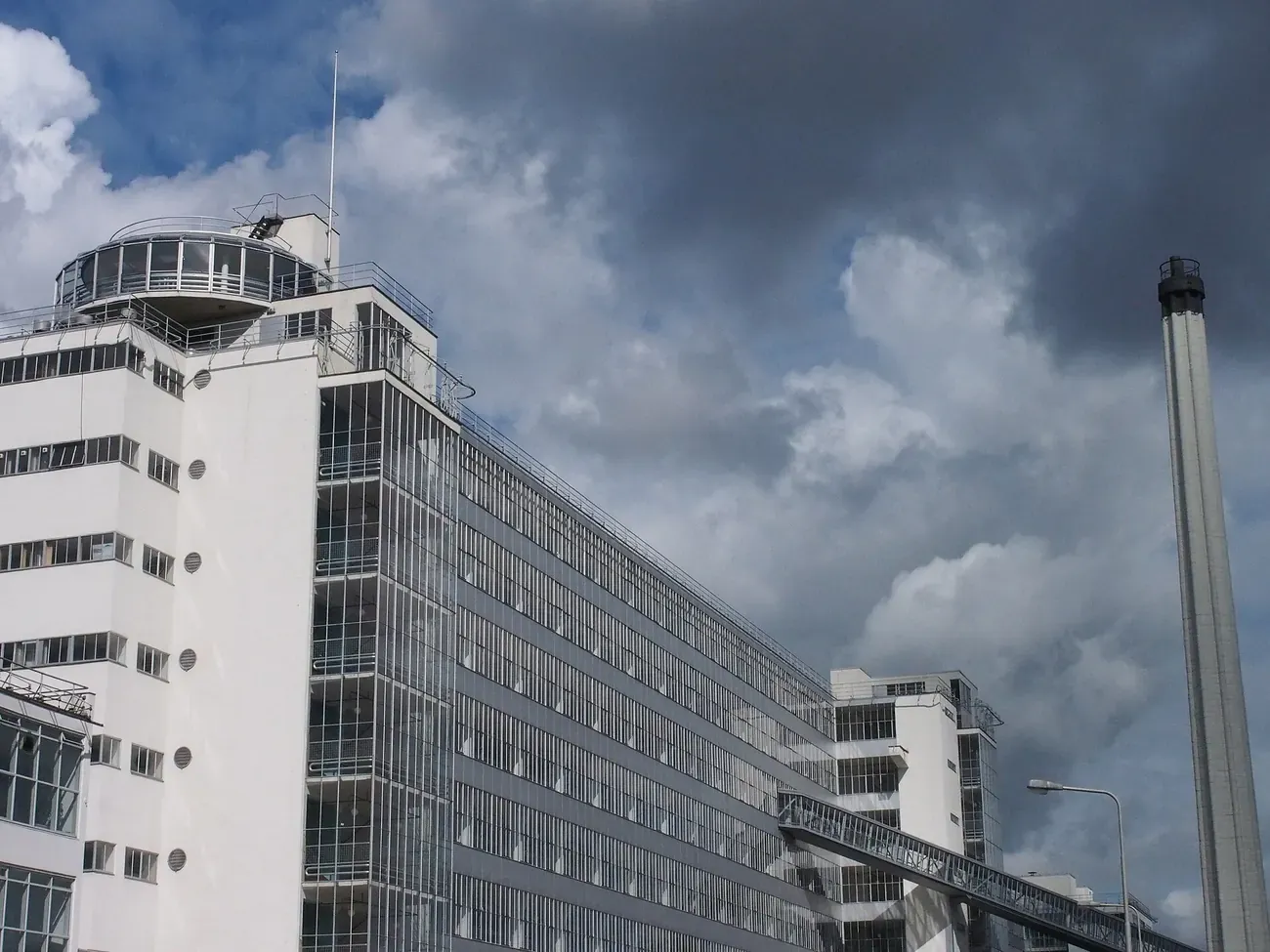
Van Nelle Factory
A 1931 coffee and tobacco plant of glass and steel that Le Corbusier admired, listed by UNESCO in 2014.
Location: Schie, Rotterdam
Photo: "Van Nellefabriek Rotterdam 1930 01" by Arjandb (CC BY-SA 3.0 NL).
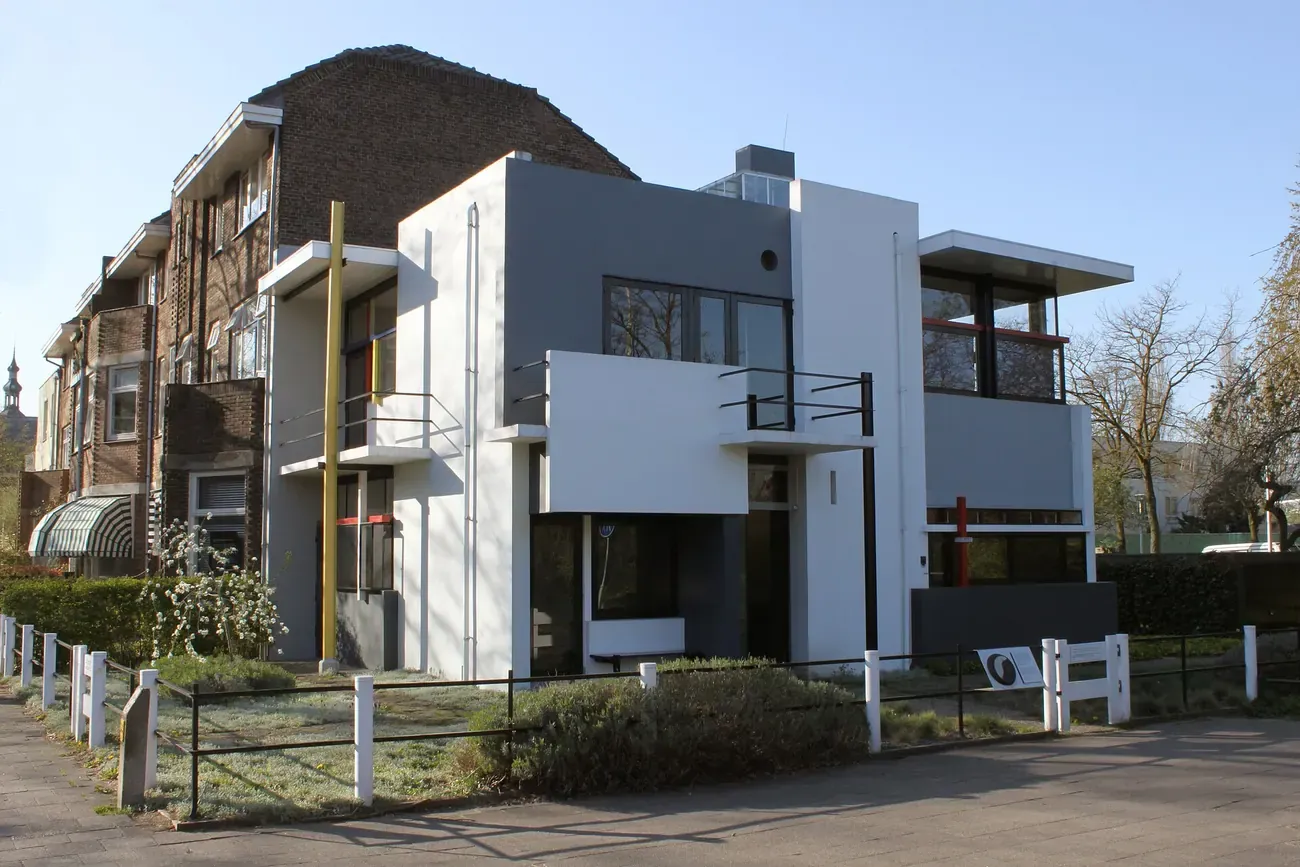
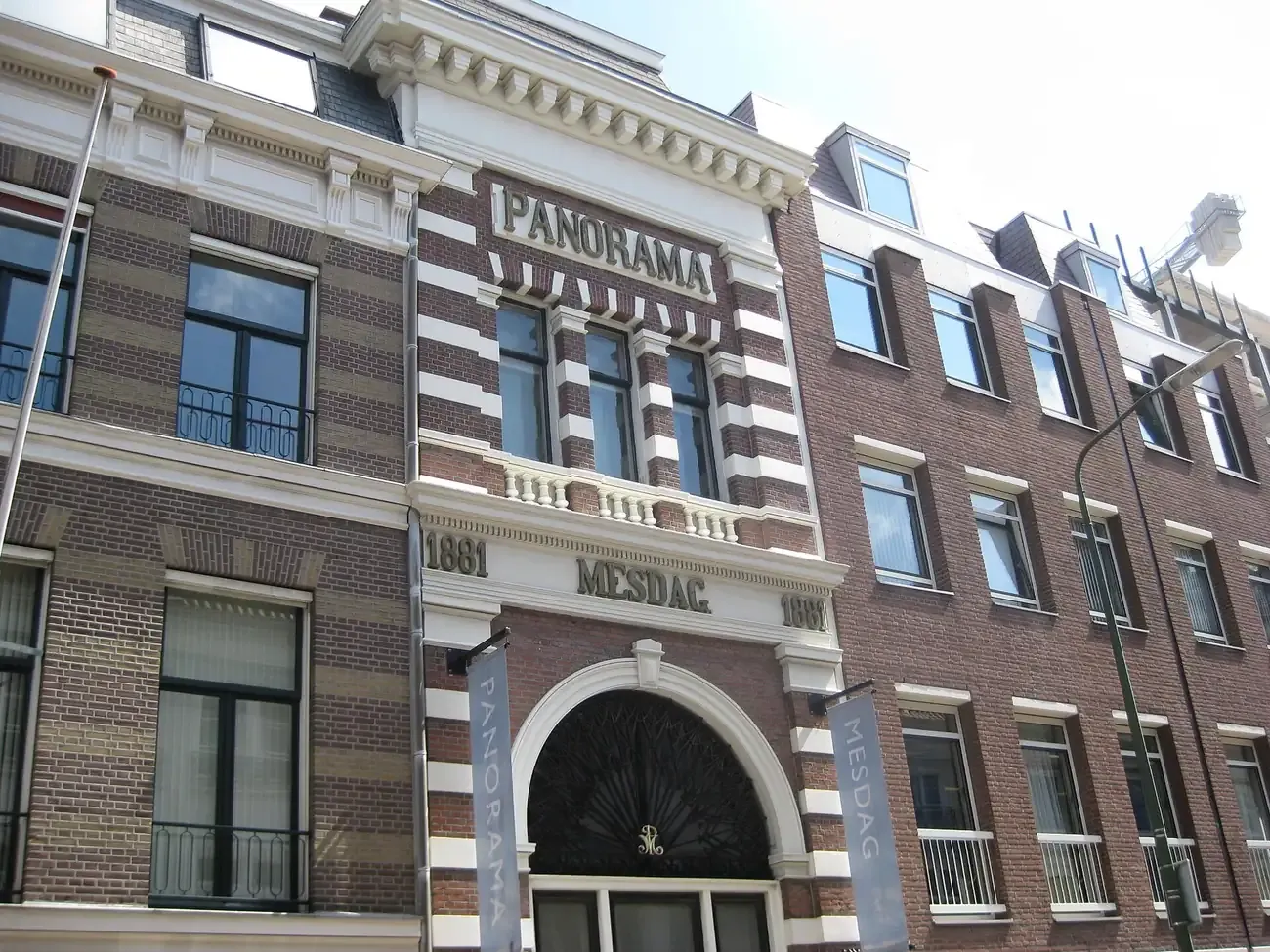
Panorama Mesdag
A cylindrical seascape 14 metres high and 120 metres round, painted in 1881, viewed from a dune-like platform at its centre.
Location: Zeestraat, The Hague
Photo: "Panorama Mesdag 08" by Marion Golsteijn (CC BY-SA 3.0).
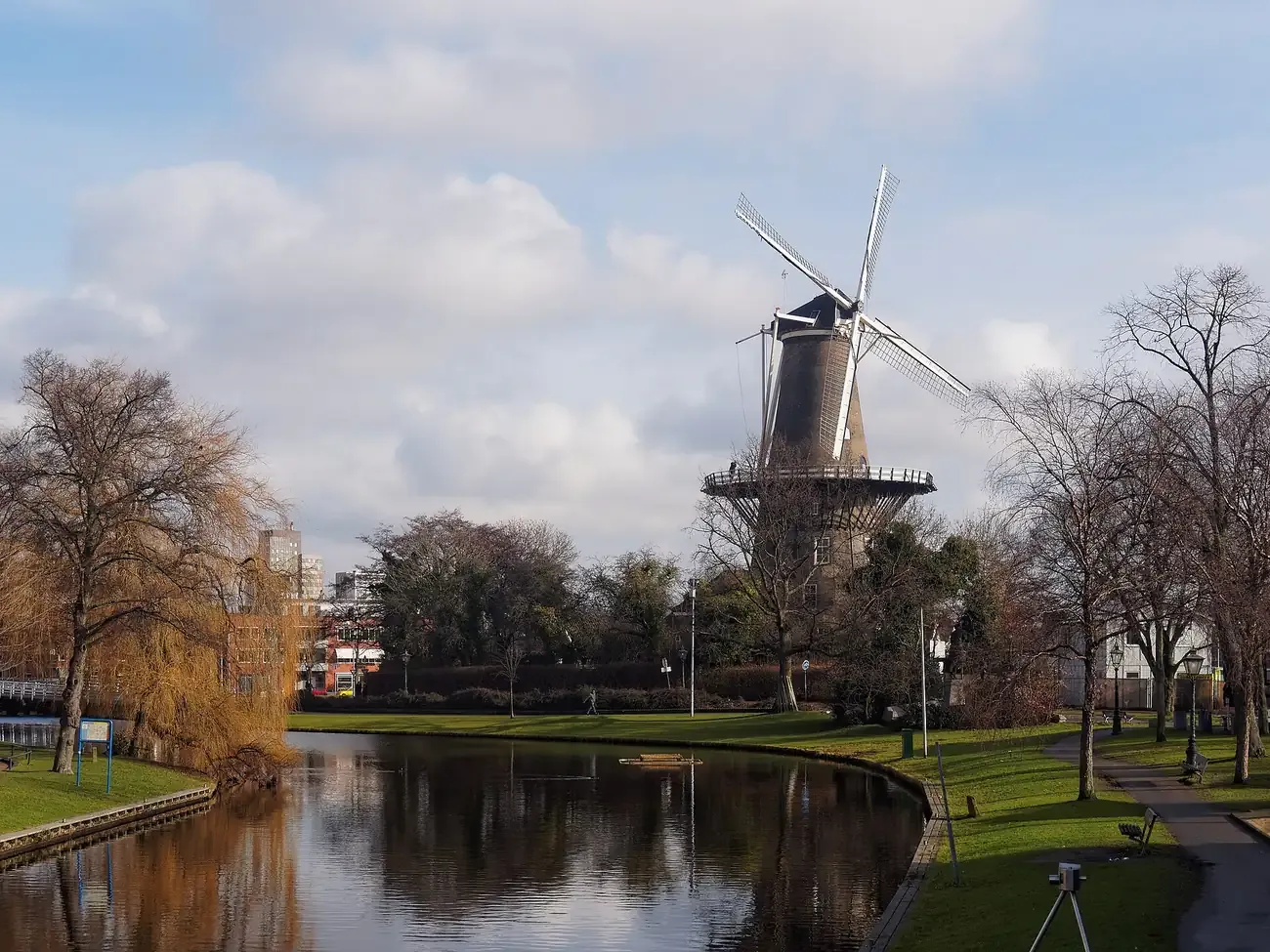
Molen De Valk
A stone tower mill of 1743 on the old city rampart, kept as a museum with the miller's rooms furnished.
Location: Lammermarkt, Leiden
Photo: "De Valk Leiden 6847" by C messier (CC BY-SA 4.0).
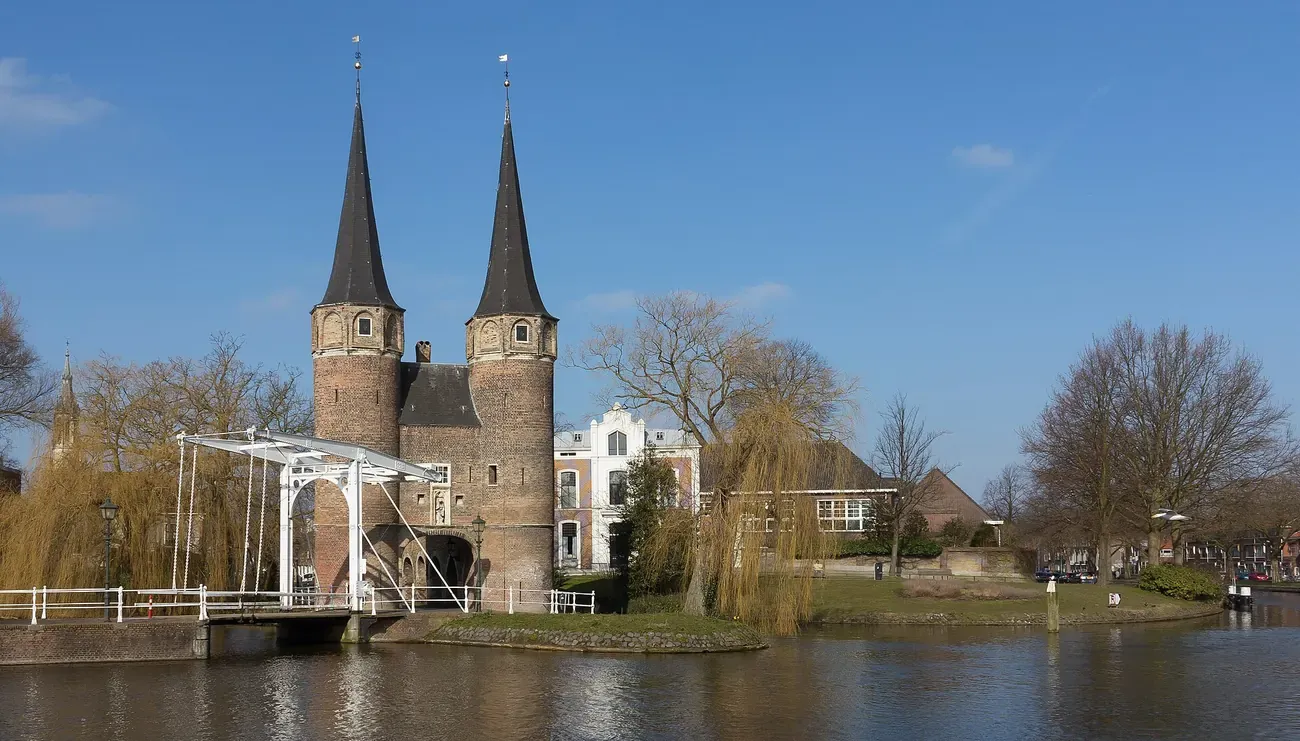
Oostpoort
The last of eight medieval city gates left in Delft, twin brick towers standing over the water at the edge of the old town.
Location: Oosteinde, Delft
Photo: "Delft, de Oostpoort RM11968 foto11" by Michielverbeek (CC BY-SA 4.0).
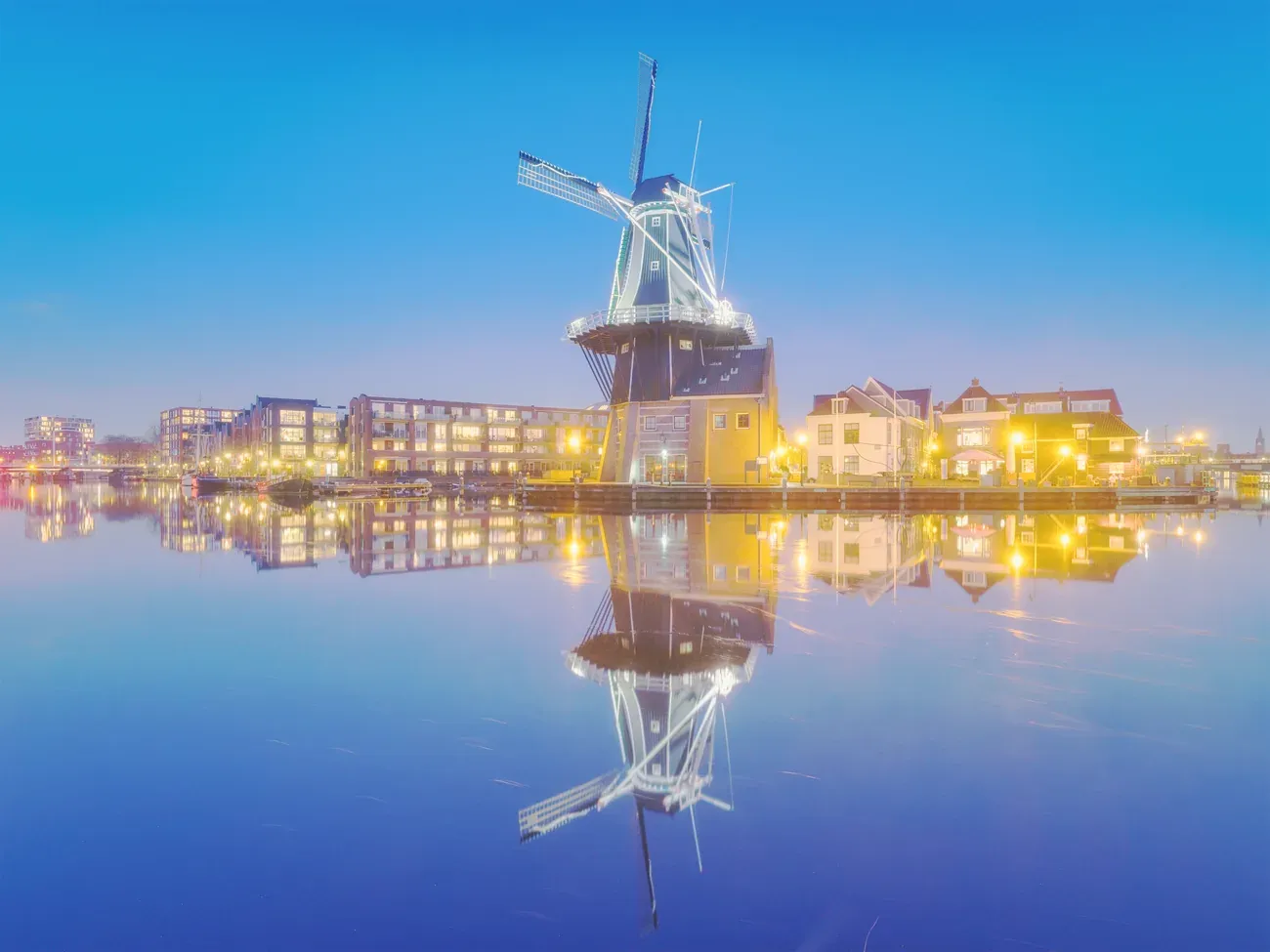
Windmill De Adriaan
A landmark of the Spaarne since 1779, burnt down in 1932 and rebuilt in 2002, now open for guided climbs.
Location: Papentorenvest, Haarlem
Why the Netherlands is worth the trip
Few countries put this much variety inside such a small area. The rail network runs to 3,223 route kilometres and reaches nearly every town worth stopping in, so Amsterdam, Rotterdam, Utrecht and The Hague work as a single circuit rather than four separate trips, and a day out to a windmill landscape or a bulb field rarely costs more than an hour each way.
The pull is cultural as much as scenic. Thirteen UNESCO World Heritage sites are spread across the Kingdom, from the Amsterdam canal ring to the mills at Kinderdijk and the tidal flats of the Wadden Sea, and the Golden Age painting that made the country famous still hangs where it was made. Leiden shows how tightly that history is packed: Rembrandt was born there, its university opened in 1575 and the Pilgrims lived and printed there before sailing for Massachusetts.
Then there is the way people move. Some 35,000 kilometres of cycle path make the bicycle the default for short distances, and hiring one is the quickest way to see polders, dunes and city centres at the pace they were built for.
Seasons change the answer. Spring belongs to the bulb fields, summer to the islands and terraces, and winter to museums that are never quiet but are at least never queued. Amsterdam Schiphol ranks among the busiest airports in Europe, which makes the country an easy first stop before the wider list of Europe's top tourist attractions.