A capital without the crown
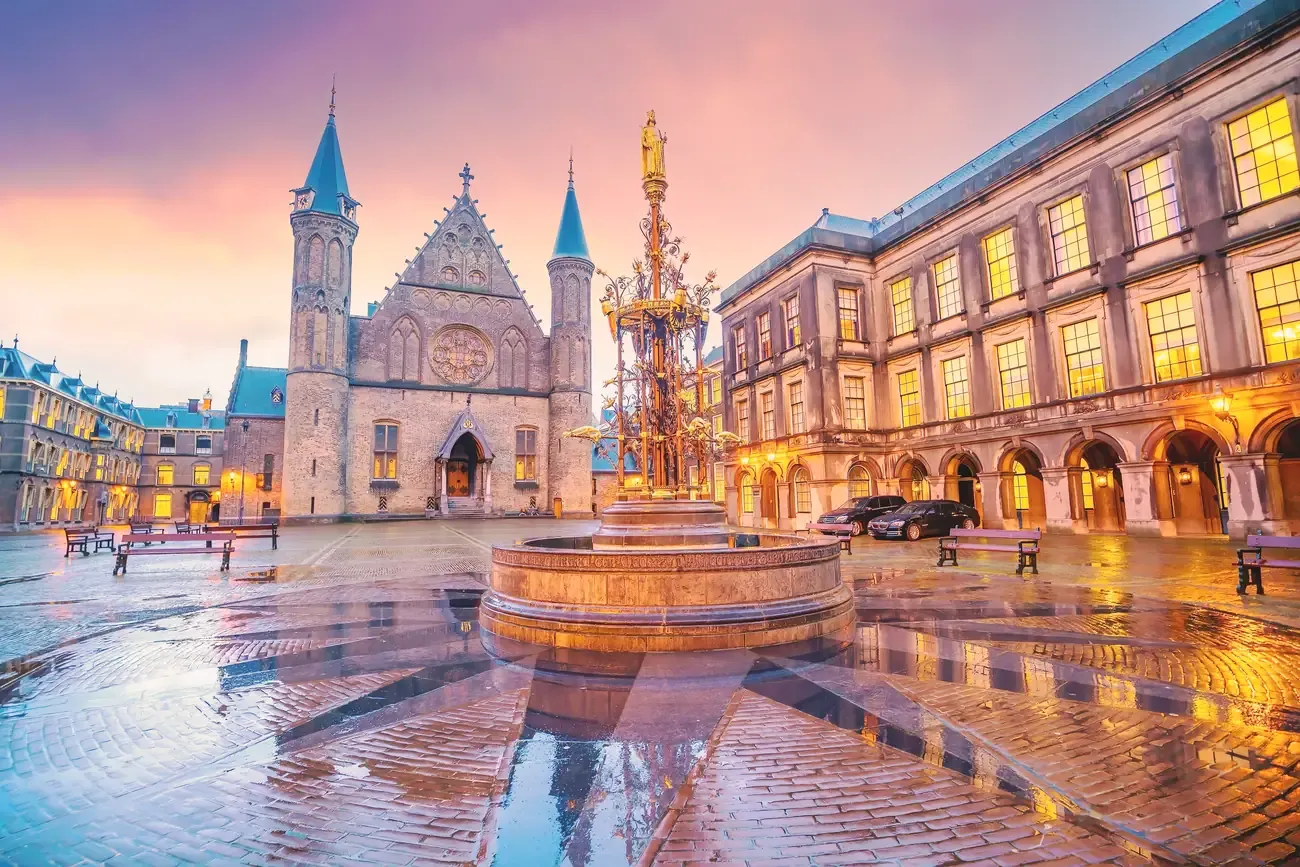
Amsterdam is the official capital, but The Hague is where the Dutch government actually sits: the Cabinet, the States General, the Supreme Court and the Council of State all meet here, and the king works at Noordeinde Palace while living at Huis ten Bosch. The city also hosts the International Court of Justice, the International Criminal Court and around 200 other international organisations, earning it a reputation as a hub for international law that feels distinctly different from Amsterdam's tourist bustle.
Neighbourhoods to know
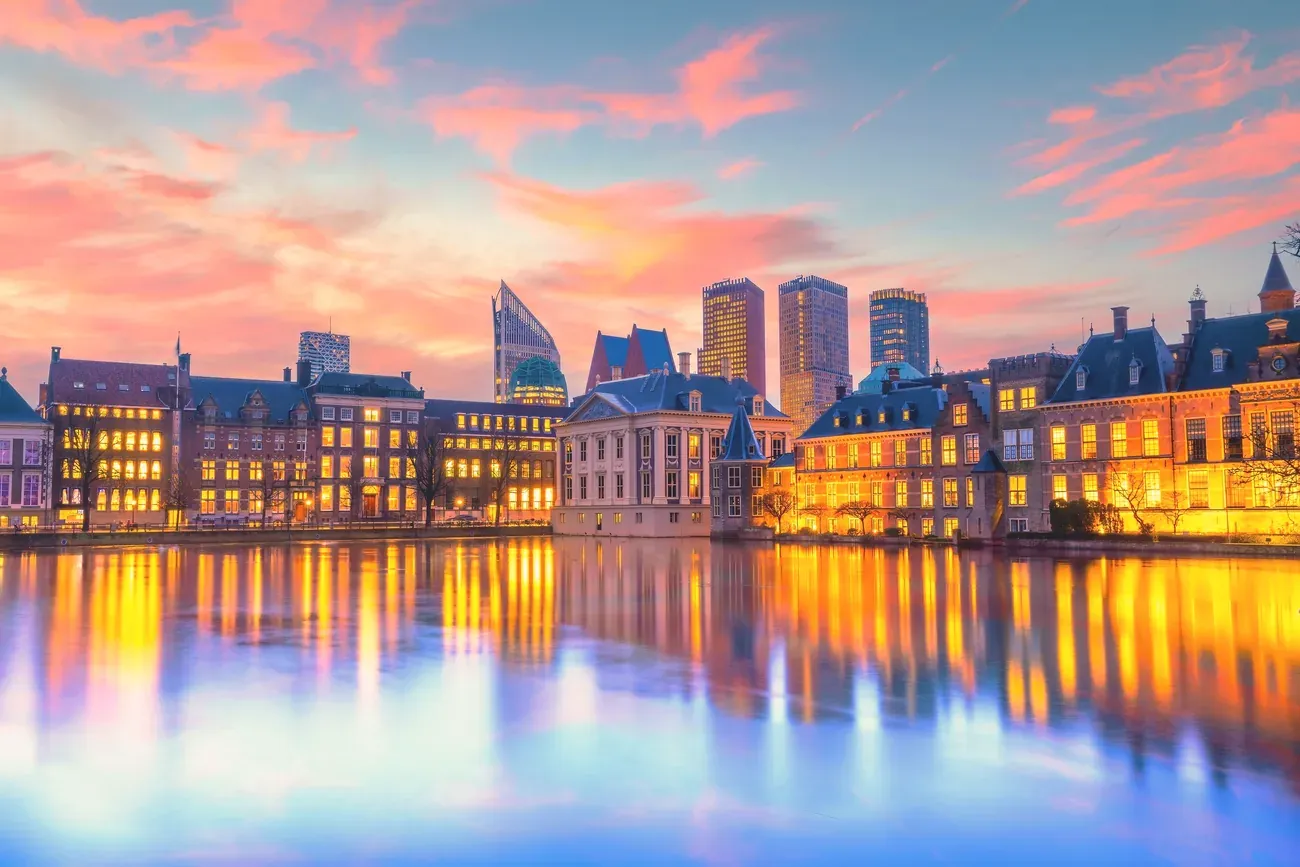
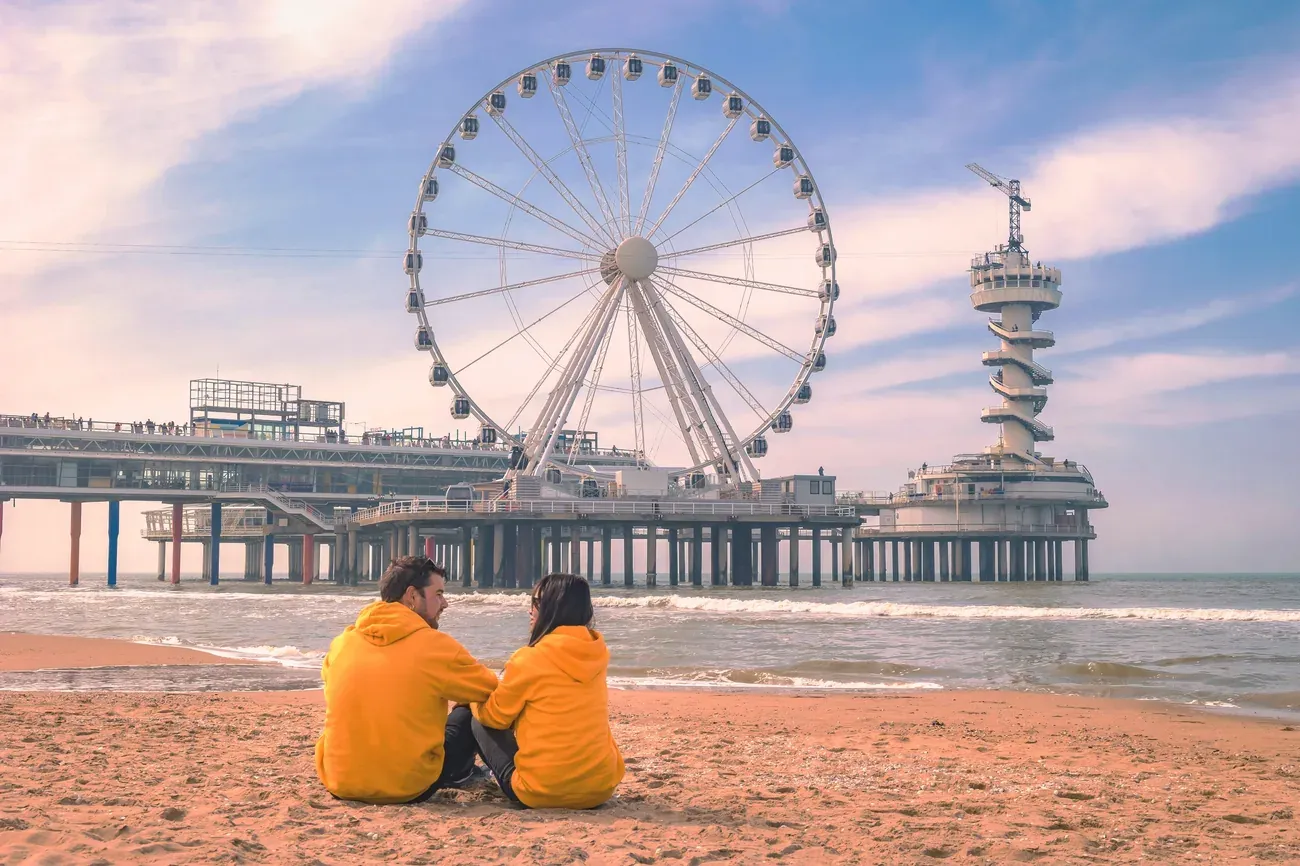
The Centrum holds the government quarter around the Hofvijver and Binnenhof, the Mauritshuis and the grand avenue of Lange Voorhout within easy walking distance of each other. The Zeeheldenkwartier just north is a quieter grid of Art Nouveau streets, while Scheveningen, reached by tram, swaps government buildings for a sandy beach, a pier and a working fishing harbour.
Day trips and when to go
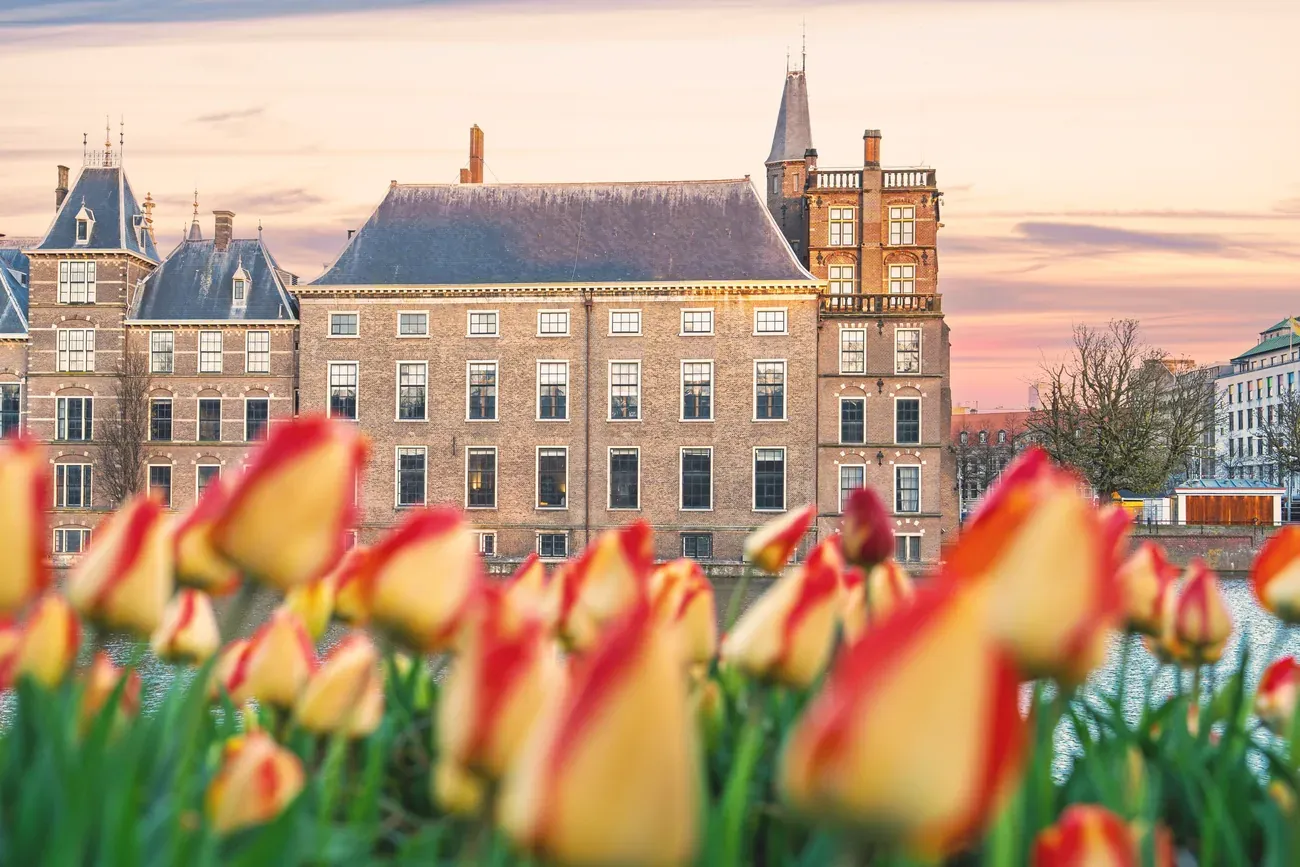
Spring brings mild weather and, in season, a day trip to the Keukenhof gardens near Lisse, while summer is warmest for the beach at Scheveningen. Delft and Leiden are both a short train ride from Den Haag Centraal and combine easily with a longer stay. One full day covers the main sights at a brisk pace, and two or three let museums and the coast breathe.
Getting around
The government quarter, Mauritshuis and Lange Voorhout all sit within a compact, walkable centre, and HTM trams and buses cover the rest of the city, including the ride out to Scheveningen, on a single contactless card. The Peace Palace, opened in 1913 and still the seat of the International Court of Justice, is the other reason the city turns up in every guide to the top tourist attractions in the Netherlands.