A small city with an outsized legacy
Delft earned its city charter in 1246 and grew into one of Holland's leading trading cities, its 17th century Golden Age fuelled by an office of the Dutch East India Company and by Delftware, the blue and white pottery that imitated imported Chinese porcelain. The painter Johannes Vermeer was born, worked and died here, and the city became the de facto capital of the young Dutch Republic after William of Orange made the Prinsenhof his headquarters in 1572. The Delft Explosion of 1654, when a gunpowder store blew up and levelled much of the centre, is still remembered as one of the city's defining disasters.
Canals, courtyards and a university
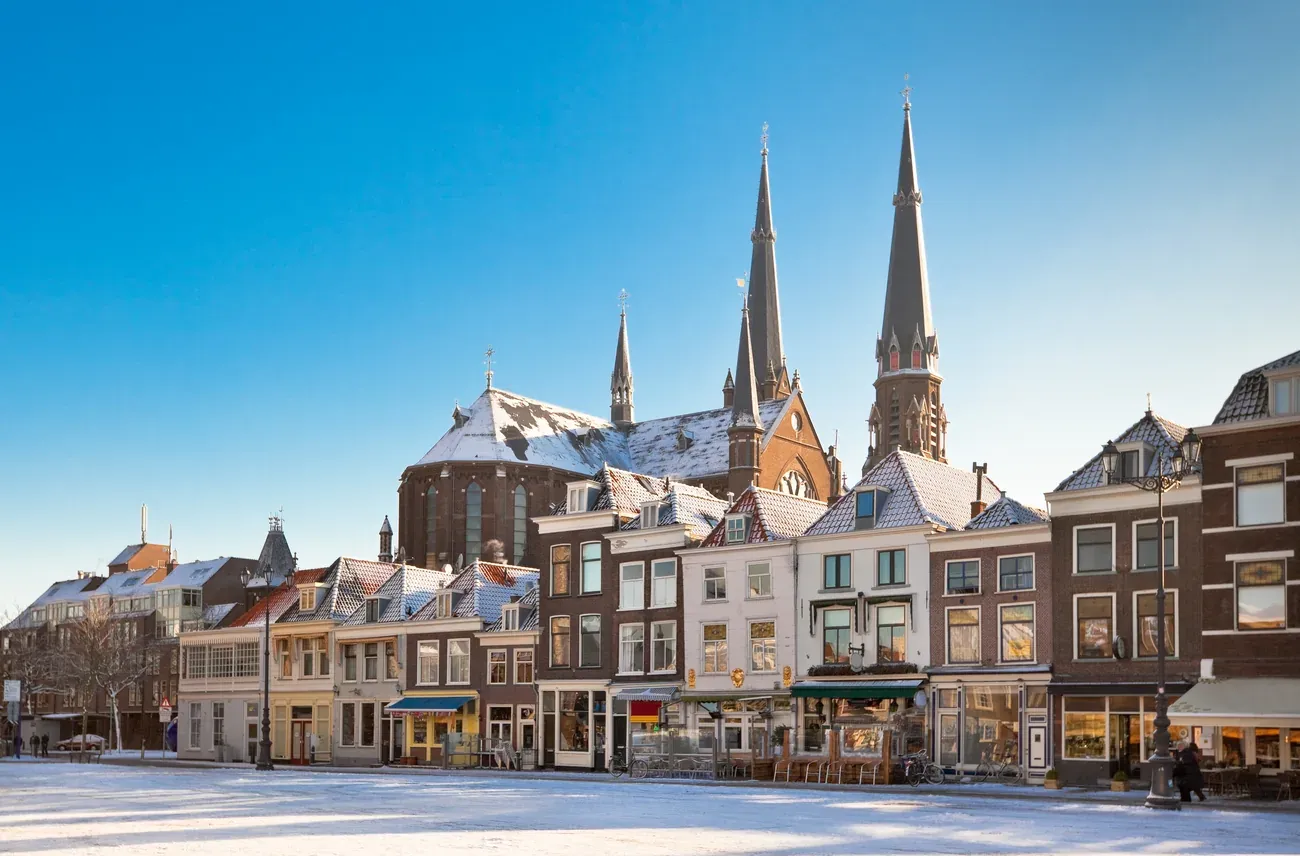
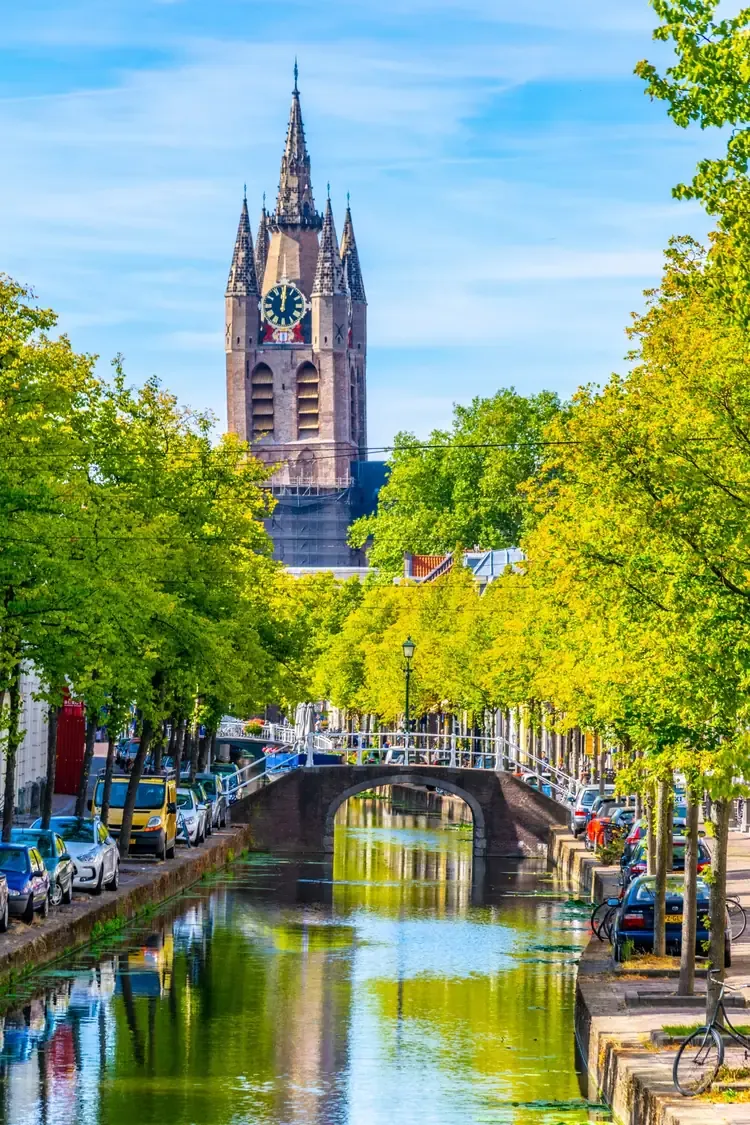
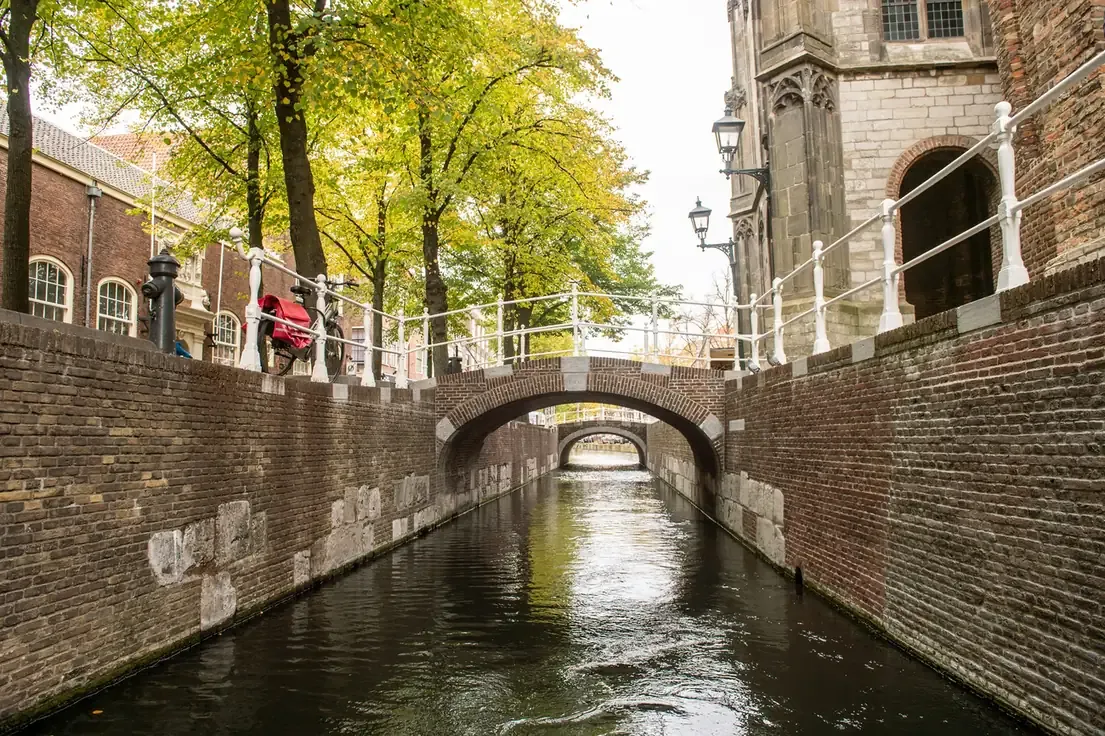
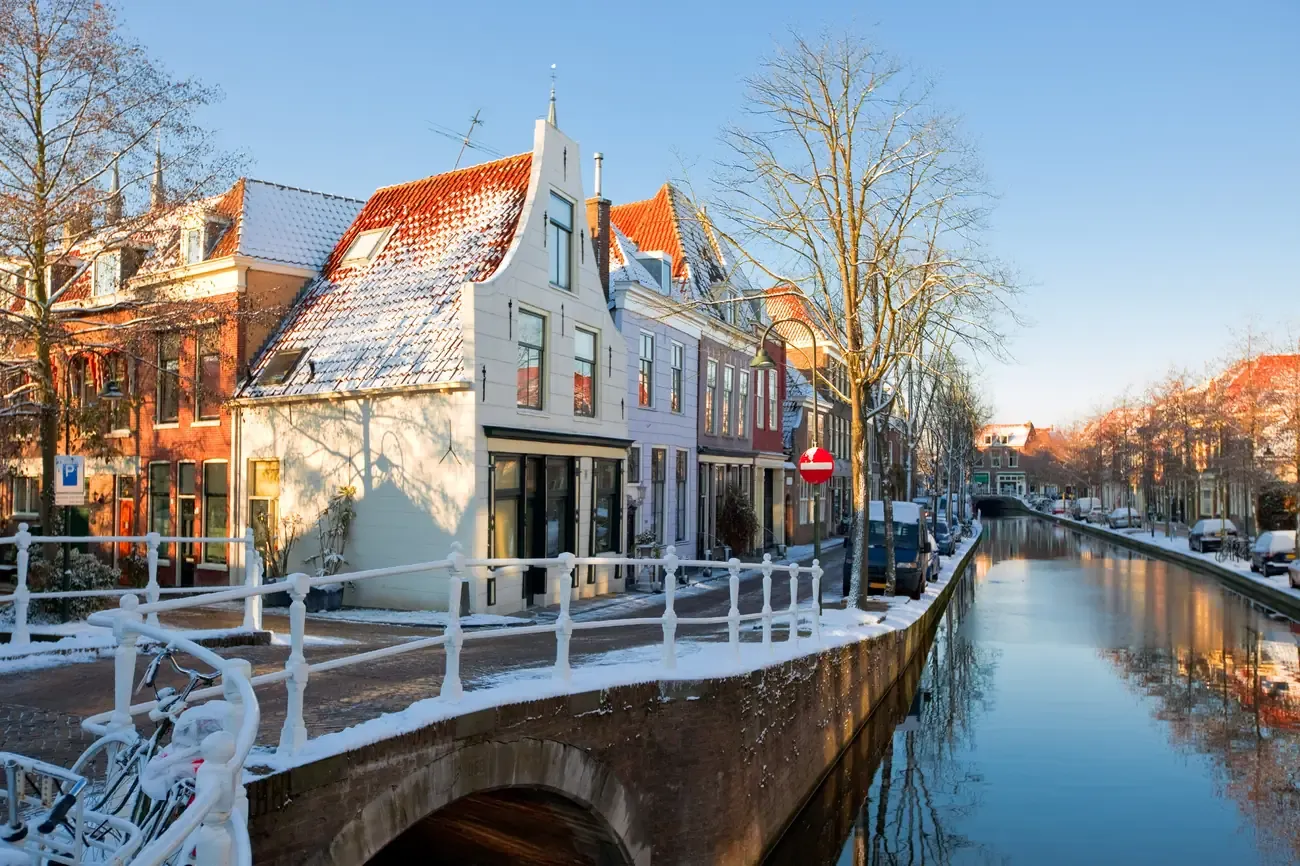
The compact historic centre is built around the Oude Delft canal and the Markt, with narrow streets, hidden courtyard almshouses called hofjes, and bridges connecting both banks. Delft University of Technology, one of the Netherlands' major technical universities, brings a large student population and a modern campus just south of the old centre, keeping a city famous for the 17th century feeling young.
When to go and how many days
Spring and summer bring the mildest weather and the busiest canalside terraces, while a quieter, colder visit in autumn or winter still leaves every museum and church open. A single day covers the main historic centre at a steady pace, and two days leave room for Royal Delft, a museum or two and time to simply wander.
Getting around and day trips
The historic centre is entirely walkable, with a train station a short walk south of the Markt. Many visitors combine Delft with The Hague, a short train ride away, or add it onto a longer stay based in Rotterdam or Amsterdam, both reachable directly by train. The Oostpoort, the last of eight medieval city gates left standing, still frames the water at the eastern edge and is one of the smaller pleasures on a run of the must-see tourist attractions in the Netherlands.