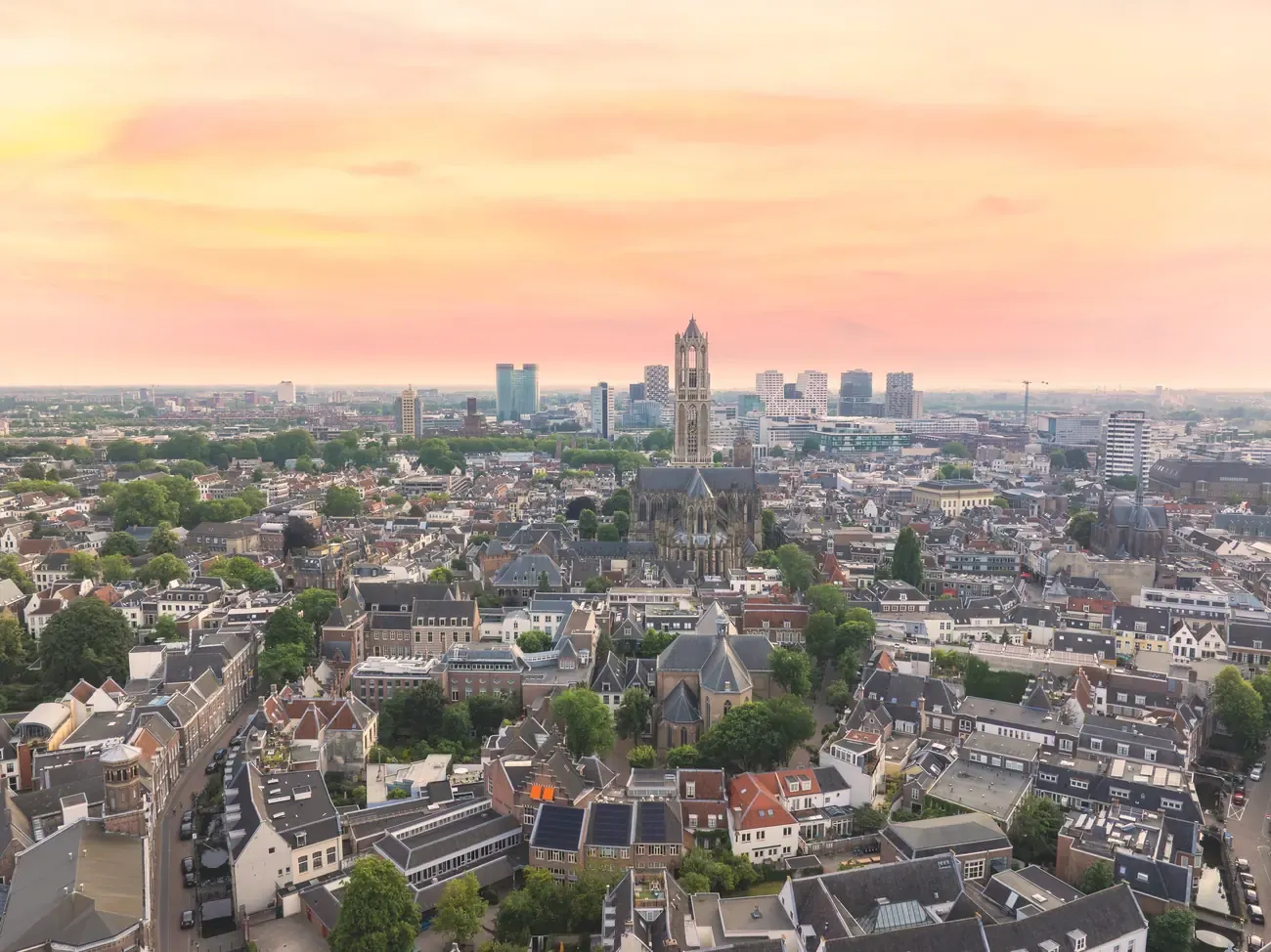
Utrecht grew from Traiectum, a Roman fort guarding a crossing of the Rhine, into the seat of the Dutch bishopric and, much later, the country's rail hub. Its medieval core survives almost intact around the Dom Tower, laced by a canal that drops a full storey below street level, an arrangement its own tourism board calls unique in the world.
What makes Utrecht unique
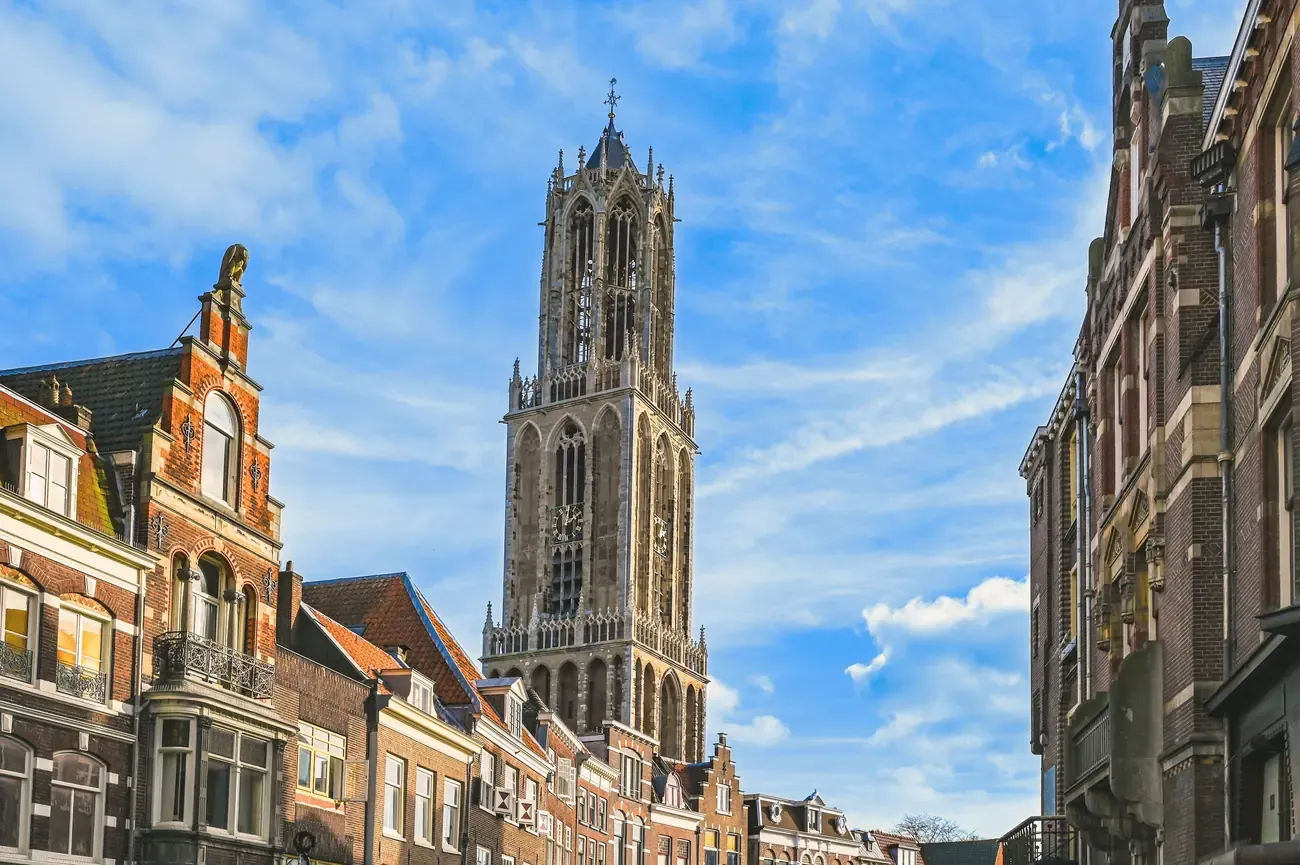
The Oudegracht drops a full storey below the streets, with cafes and shops tucked into cellars built at water level, under a church tower that has watched over the city since the Middle Ages. Utrecht is also the birthplace of Dick Bruna, whose children's character Miffy still draws fans to a museum built in his honour.
Neighbourhoods to know
Domplein and the streets around the Oudegracht hold most of the historic sights within a compact, walkable loop. Neude, just north, mixes the old post office with modern cafes and the library. Lombok, west of the centre along Kanaalstraat, brings a livelier mix of shops and eateries, and De Uithof, the university campus to the east, adds a botanic garden among its modern buildings.
When to go and for how long
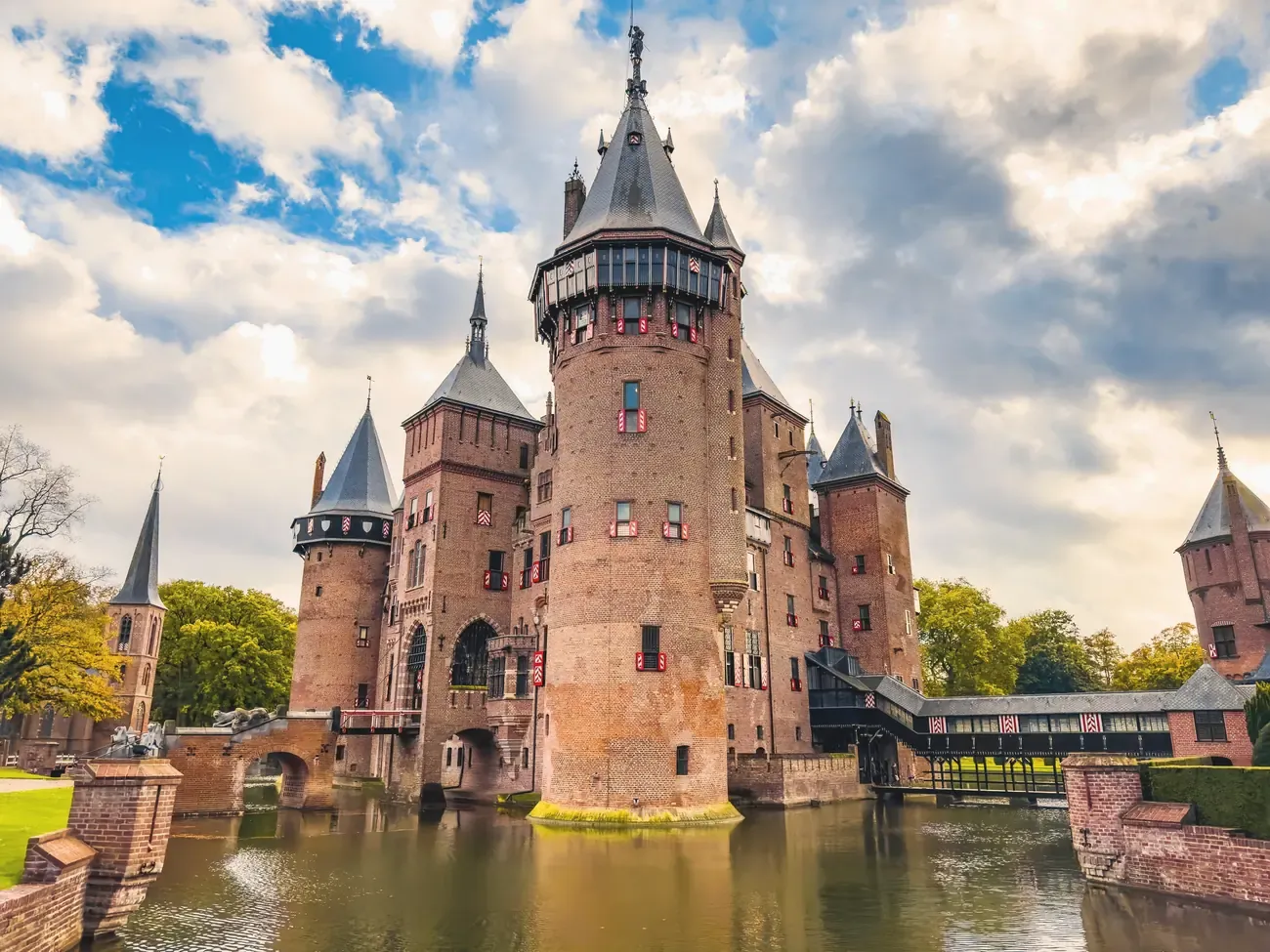
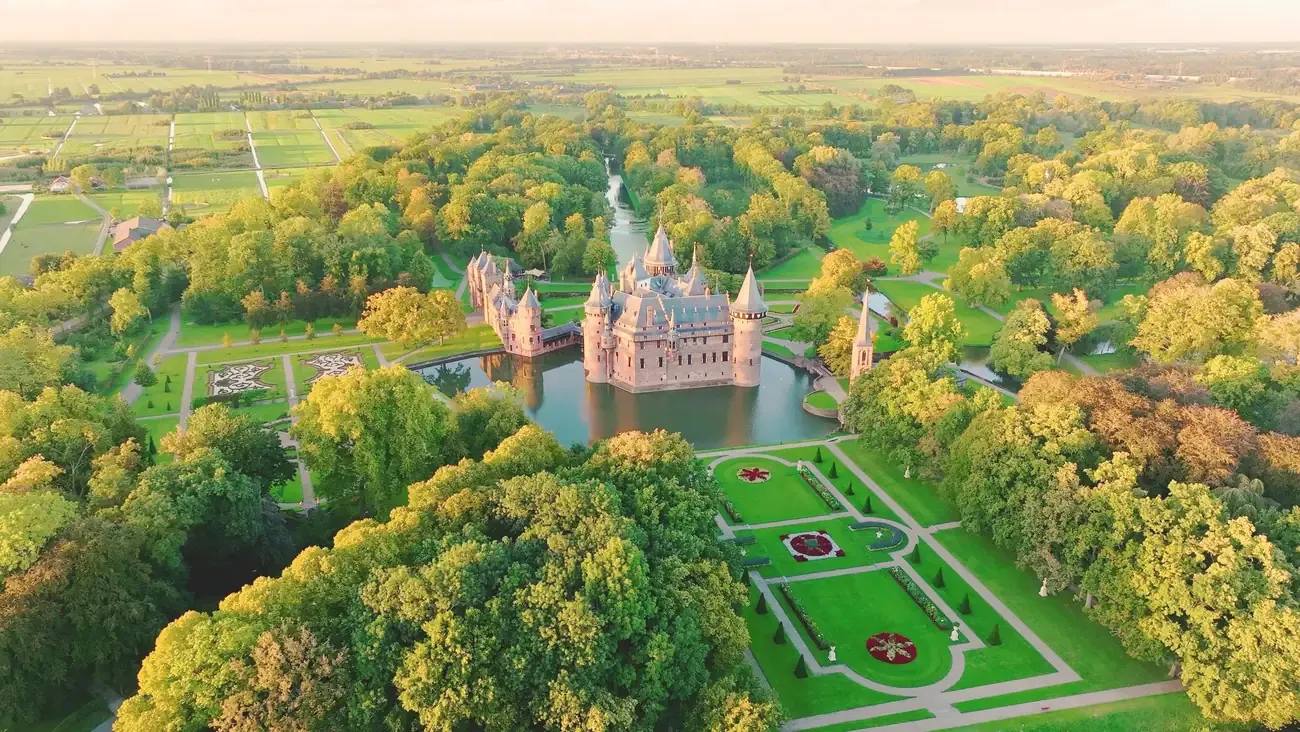
Spring and summer bring the canalside terraces to life and line up the longest days for sightseeing, while a quieter autumn or winter visit still covers every major sight indoors. A single day is enough for the historic centre; a second allows for the Railway Museum, the Rietveld Schröder House or a trip out to Kasteel de Haar in Haarzuilens.
Getting around
Utrecht Centraal sits at the centre of the Dutch rail network, putting the whole country within easy reach: Amsterdam, Rotterdam, The Hague and Haarlem are all direct train rides away. Inside the centre, walking or cycling covers the sights faster than any bus, and trams and buses fan out from the station to everywhere else. The Dom Tower reaches 112 metres, the tallest church tower in the country, which on its own earns Utrecht a place among tourist attractions in the Netherlands.