
Tourist attractions in Tokyo
Known for
Historic temples and shrines standing beside neon-lit shopping streets
Must-see landmarks
Senso-ji, Tokyo Tower, Meiji Jingu and Shibuya Crossing
Best time to visit
March to April for cherry blossoms and mild weather
Free to visit
Senso-ji, Meiji Jingu and Tokyo Metropolitan Government Building
Top 11 tourist attractions in Tokyo
The tourist attractions in Tokyo that matter most, from Senso-ji to Meiji Jingu and Shibuya Crossing, are ranked here in order. After the 11 top sights come free things to do and visitor FAQs.
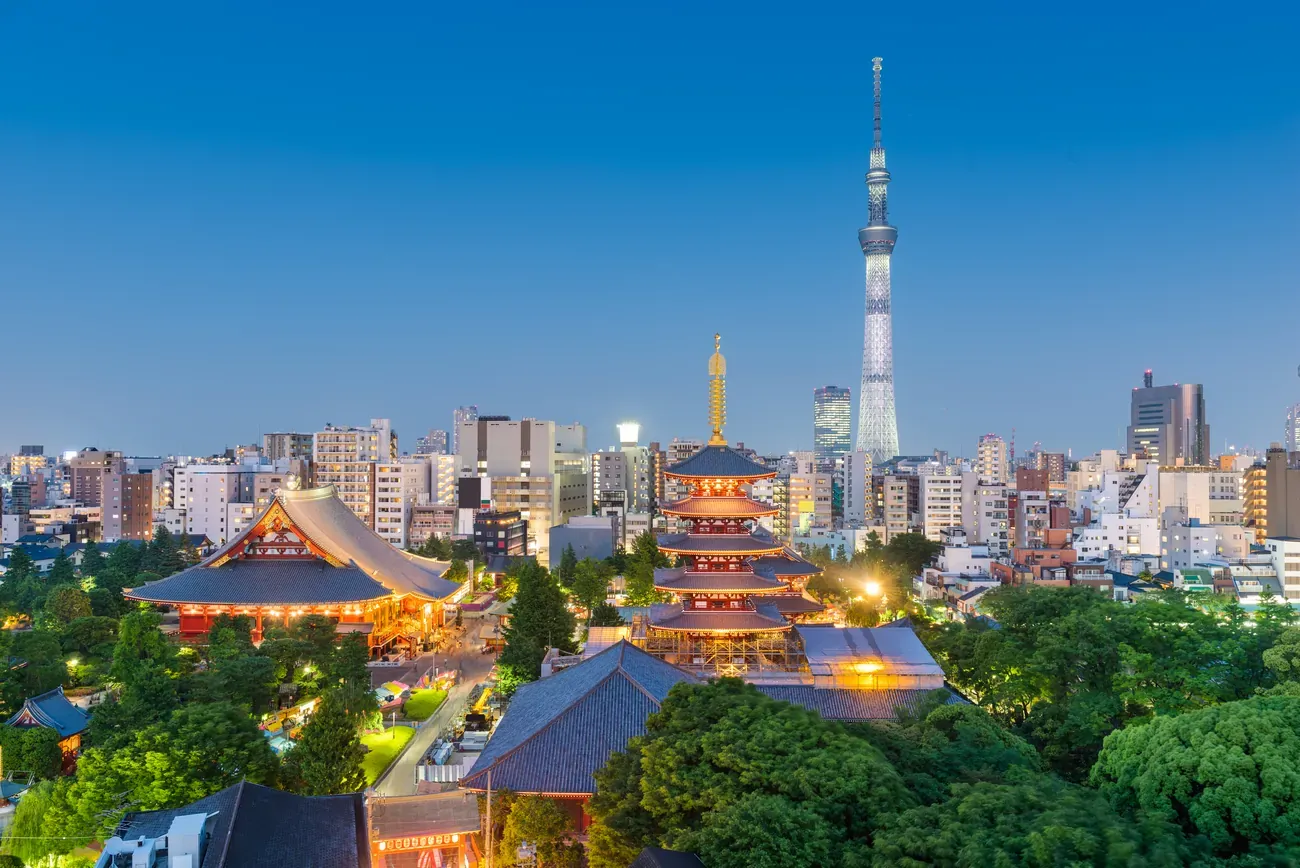
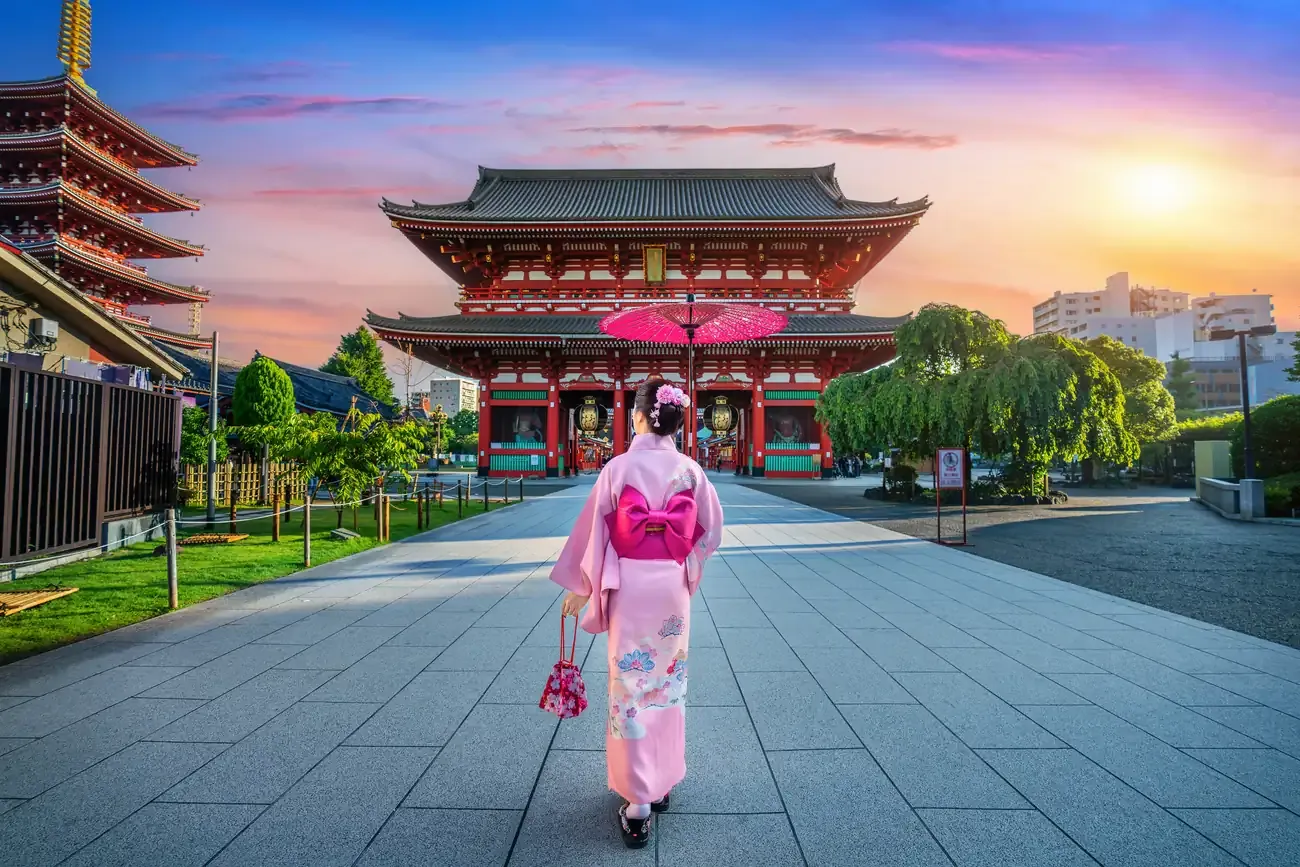
1. Senso-ji
Tokyo's oldest Buddhist temple closes the far end of Nakamise-dori, a lane of about 90 stalls running from the Kaminarimon thunder gate to the main hall. Legend traces the temple to a Kannon statue two fishermen pulled from the Sumida River in 628, but the crimson hall photographed today is a 1950s reconstruction, since the complex burned in the firebombing of March 1945. A five-storey pagoda stands beside it and incense smoke drifts across the forecourt. The temple puts its own draw at 30 million worshippers a year.
Location: 2-3-1 Asakusa, Taito City, Tokyo
Access: Free. Asakusa Station is five minutes on foot, on the Ginza Line, the Tobu Isesaki Line and the Tsukuba Express, and the temple's English pages set out its yearly calendar.
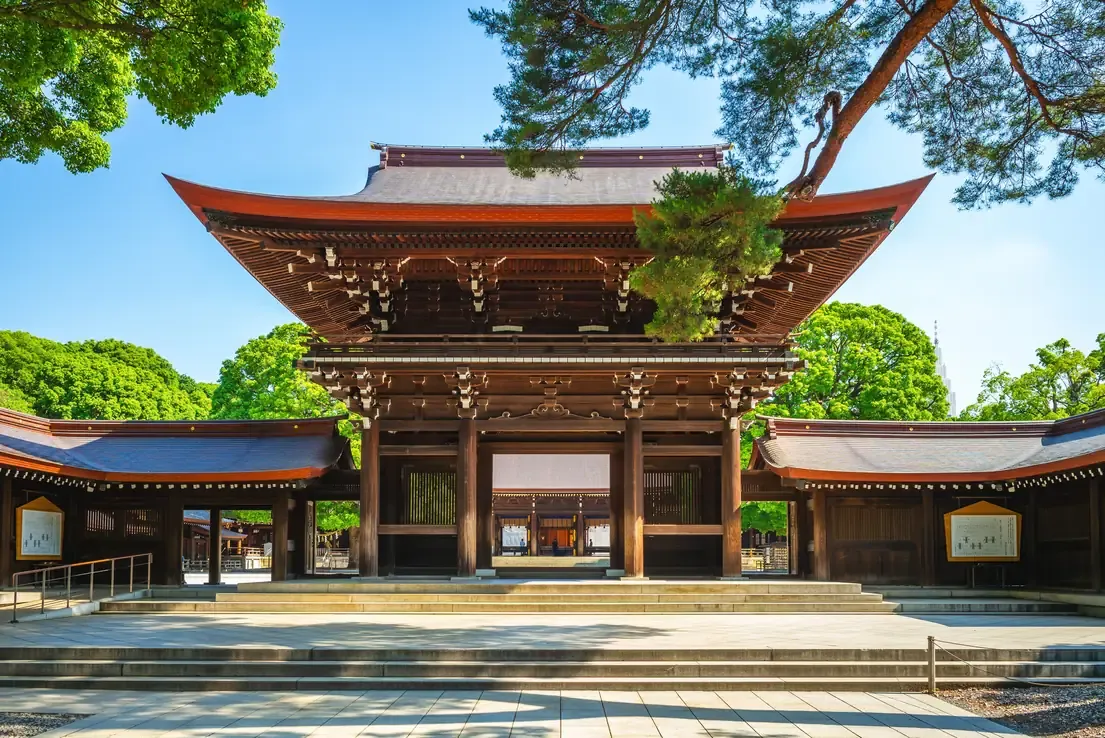
2. Meiji Jingu
A forest of some 100,000 trees, donated from across Japan and planted by youth volunteers, screens this Shinto shrine from Harajuku and Yoyogi. It was dedicated in 1920 to the deified spirits of Emperor Meiji and Empress Shoken, and a gravel approach passes under enormous cypress torii before reaching the offering hall. The precinct stays quiet enough that the crunch underfoot carries. Set apart from it, the Inner Garden and the Meiji Jingu Museum charge their own admission.
Style: Nagare-zukuri
Location: 1-1 Yoyogi Kamizono-cho, Shibuya-ku, Tokyo
Access: Free, every day of the year. The shrine opens at sunrise and closes at sunset, roughly 5:00 to 18:30 in June and 6:40 to 16:00 in December; the shrine's visitor pages publish the month-by-month table.
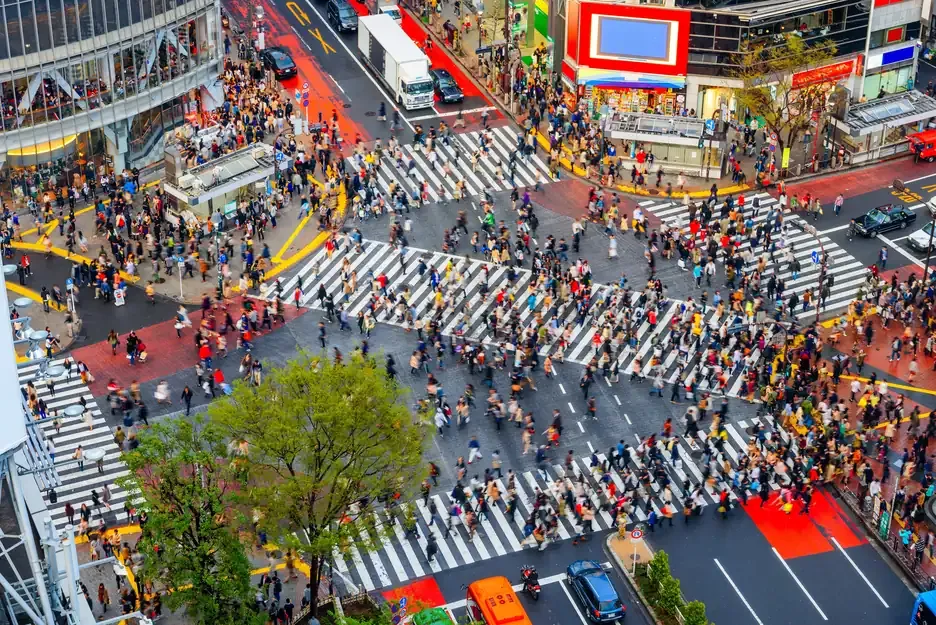
3. Shibuya Crossing
A multi-cornered intersection outside Shibuya Station releases in every direction at once, and the Tokyo Convention and Visitors Bureau counts upwards of a thousand people on the asphalt in a single green phase. The scramble works because nobody stops: walkers thread through each other and the far kerb clears before the lights change. The bronze Hachiko statue by the station exit marks where a dog waited for an owner who never came back, and the Starbucks window above the junction is the standard photo vantage point.
Location: Dogenzakashita, Shibuya City, Tokyo
Access: Free, day and night. Shibuya Station sits on one corner, served by the JR lines, the Ginza Line, the Keio Inokashira Line and the Tokyu Toyoko Line.
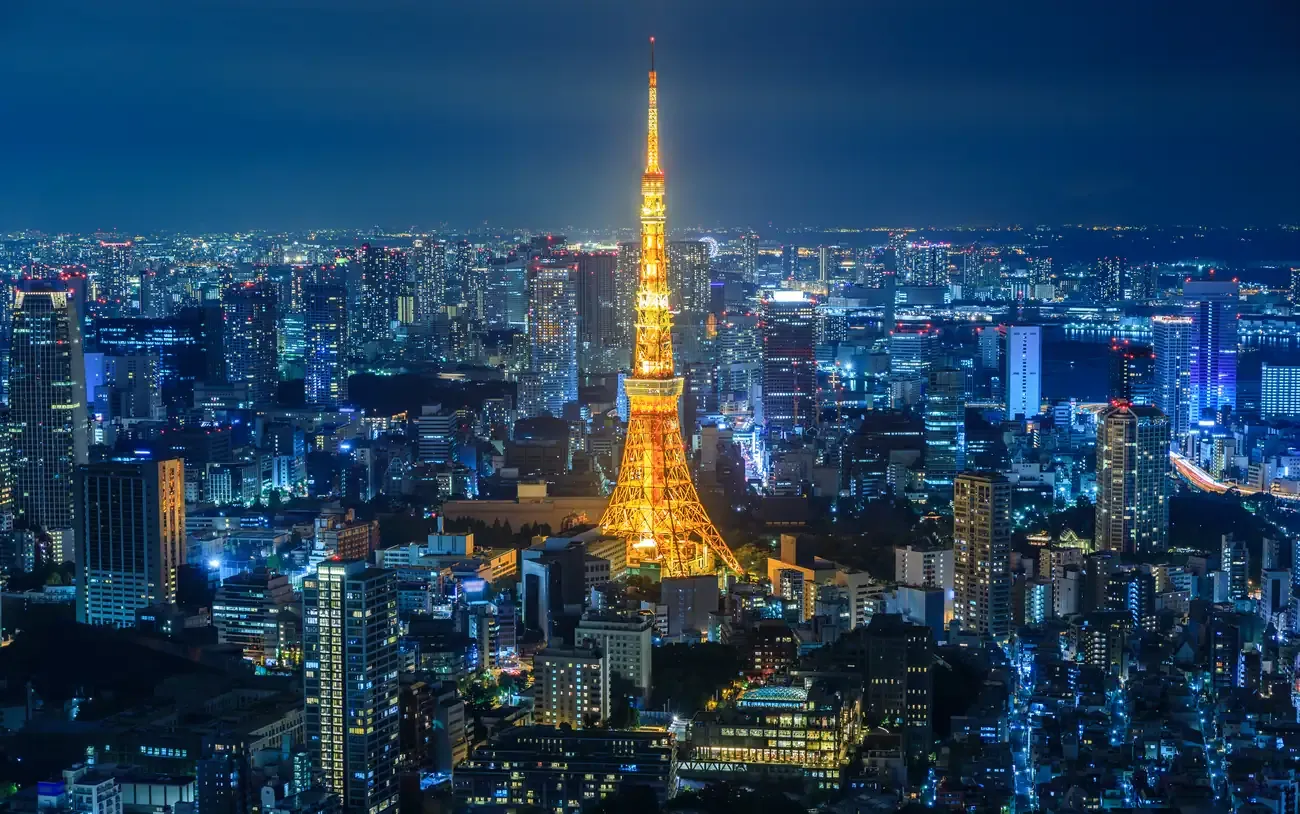
4. Tokyo Tower
An orange and white lattice tower rises 333 metres over Shiba-koen, painted in those colours to satisfy air safety rules and modelled on the Eiffel Tower. Completed in 1958, it carried the city's television signals until Tokyo Skytree took over, and it still leases antenna space. Visitors reach a two-storey Main Deck at 150 metres, and a separate guided tour continues to the Top Deck at 250 metres. The five-floor FootTown building at its feet holds the shops and cafes, and the lattice fills the view from the surrounding streets without a ticket.
Architect: Tachu Naito
Location: 4-2-8 Shibakoen, Minato-ku, Tokyo
Access: Ticketed. The operator's own daily notice gives the Main Deck as 9:00 to 23:00, last entry 22:30, and the Top Deck Tour as 9:00 to 22:45, last entry 22:15.
5. Tokyo Skytree
At 634 metres the broadcasting tower in Sumida is the tallest structure in Japan and the tallest free-standing tower in the world, opened in 2012 to take over broadcasting from Tokyo Tower. Two levels look out over the city: the Tembo Deck at 350 metres and the Tembo Galleria at 450 metres, a glass ramp that spirals around the shaft. The tower rises from Tokyo Skytree Town, with the Solamachi shops and the Sumida Aquarium at its base, and it is the tower behind the pagoda in the classic dusk photograph of Senso-ji, a twenty minute walk across the river.
Architect: Nikken Sekkei · Height: 634 m · Opened: 2012
Location: 1-1-2 Oshiage, Sumida, at Tokyo Skytree and Oshiage stations
Access: Ticketed; the Deck and the Galleria have separate tickets
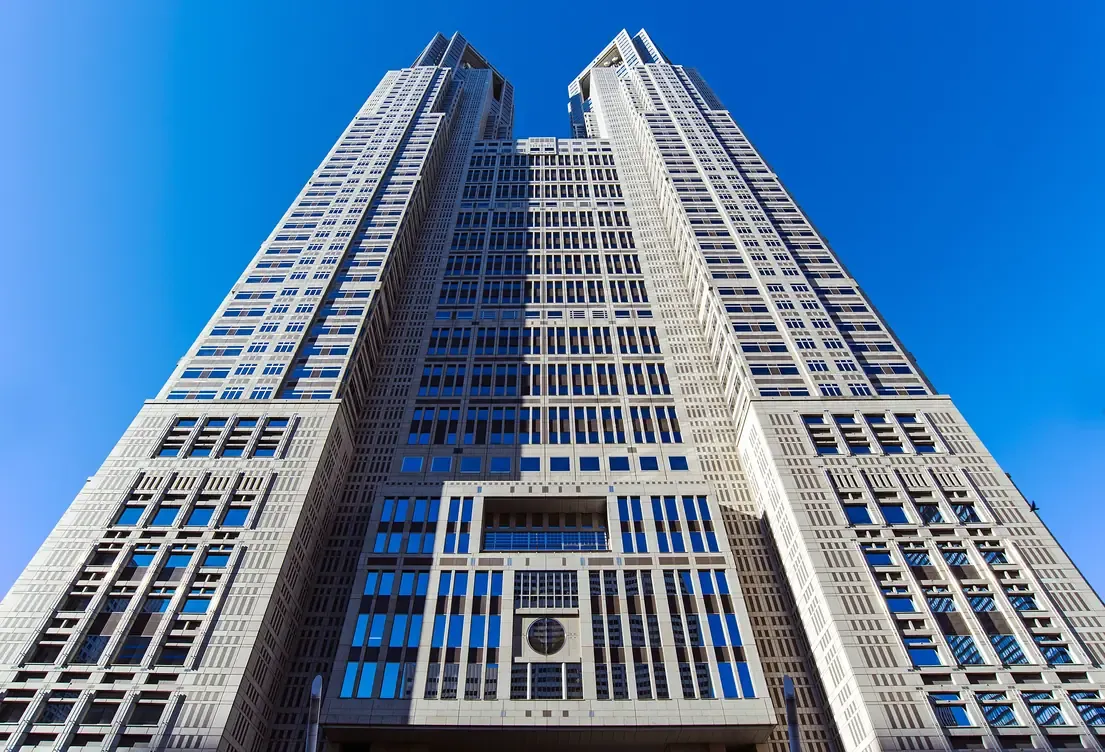
6. Tokyo Metropolitan Government Building
Kenzo Tange's city hall opened in 1991 and splits into twin towers, a silhouette read as an integrated circuit and a cathedral. Two observation rooms sit 202 metres up, one in each tower, reached by dedicated lifts from the ground floor of Main Building No. 1. Signs inside point northeast to Tokyo Skytree and west to Mount Fuji, which the metropolitan government says shows on clear, cold days from December to February.
Architect: Kenzo Tange · Style: Postmodern
Location: 2-8-1 Nishishinjuku, Shinjuku-ku, Tokyo
Access: Free. The metropolitan government's pages give the south room as open until 22:00, closed the first and third Tuesday of the month, and the north room until 17:30, closed the second and fourth Monday. Either can shut at short notice.
7. Ueno Park
Land that belonged to the Kan'ei-ji temple complex became one of Japan's first public parks in 1873, and in 1924 Emperor Taisho handed it to the city, which is why its official name reads Ueno Onshi Park, the imperial gift park. The metropolitan government counts 800 Somei-yoshino cherry trees on the main avenue, drawing hanami crowds from late March into early April, while Shinobazu Pond fills with lotus in summer. The Tokyo National Museum, the National Museum of Western Art and Ueno Zoo stand inside the grounds.
Location: 5-20 Ueno-koen, Taito City, Tokyo
Access: Free, with the park open 5:00 to 23:00. Museums, the zoo and the pond's rowing boats charge separately, and most indoor institutions close on Mondays. Ueno Station's Park Exit leaves the entrance across the street.
8. Takeshita Street
A 350 metre pedestrian lane runs from the Takeshita exit of JR Harajuku Station, packed most days of the year with the trend-conscious teenagers who turned Harajuku into shorthand for Japanese street fashion. Crepe stalls, candy floss counters and purikura photo booths sit between boutiques that swing from kawaii pastel to grunge and goth in the space of a few doorways. The shopkeepers' association asks visitors to keep left and circulate in one direction rather than doubling back through the crush.
Location: 1 chome Jingumae, Shibuya City, Tokyo
Access: Free and open daily, with each shop setting its own hours. Rising bollards close the lane to vehicles between 11:00 and 18:00, when it becomes a pedestrian street; the association's official map marks every storefront.
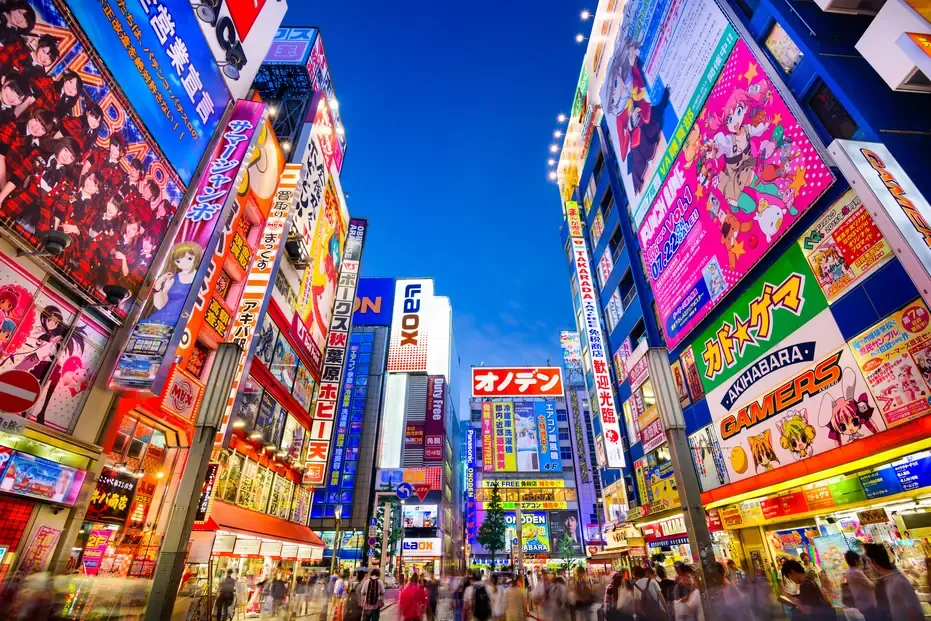
9. Akihabara Electric Town
The district is named after a shrine to a fire-controlling deity, raised after a fire cleared the area in 1869, and grew from a postwar radio-parts market into the world's shorthand for otaku culture. The Tokyo tourism board describes a square kilometre by the station once packed with a thousand electronics shops. Chuo-dori now carries anime, manga, games and figures, while the back alleys keep retro cartridges and computer parts.
Location: Sotokanda, Chiyoda City, Tokyo
Access: Free to wander, though the arcades and shops charge for what is inside. The Electric Town Exit of Akihabara Station serves the JR Yamanote and Tokyo Metro Hibiya lines. Streets here go car-free on Sundays, 13:00 to 18:00 from April to September and 13:00 to 17:00 from October to March.
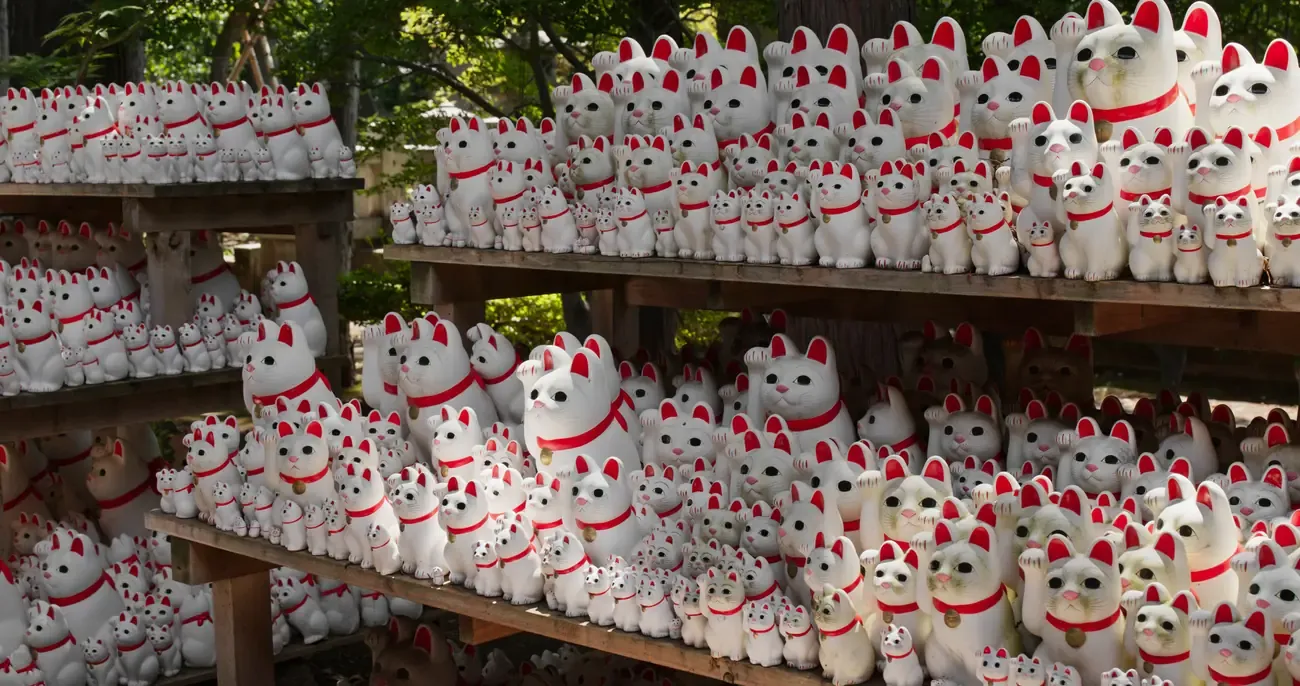
10. Gotokuji Temple
A Soto Zen temple in residential Setagaya is better known as the cat temple, its shelves around the Shofuku-den hall carrying thousands of white maneki-neko left by visitors whose wishes came good. The temple's own telling has a cat beckoning Ii Naotaka, lord of the Hikone domain, in from the gate ahead of a thunderstorm, and the grateful lord paying for its rebuilding in 1633. Gotokuji's cats raise an empty paw instead of a coin, which the temple reads as offering a chance, not luck itself.
Location: 2-24-7 Gotokuji, Setagaya-ku, Tokyo
Access: Open 6:00 to 17:00, with the temple office receiving 8:00 to 15:00. Miyanosaka on the Tokyu Setagaya Line is five minutes on foot and Gotokuji on the Odakyu Line about fifteen; the temple's English pages carry a precinct map.
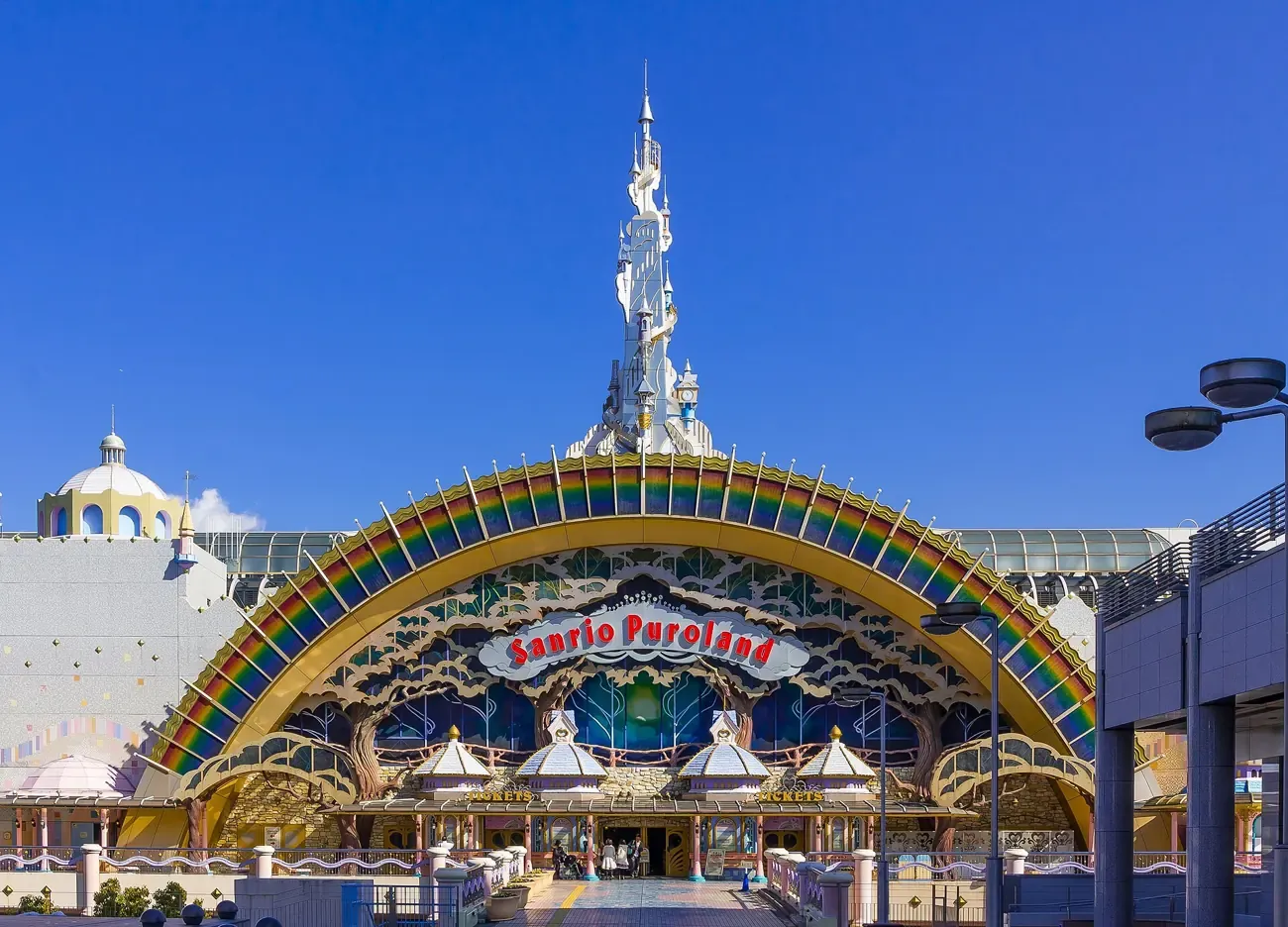
11. Sanrio Puroland
Hello Kitty, My Melody and the rest of the Sanrio cast hold court in an entirely indoor theme park in Tama New Town, at the western end of the metropolis. It opened in December 1990 and runs on parades, live musical shows, character greetings and shops stocked with goods sold nowhere else, all of it past a rainbow arch at the entrance. Because the whole park sits under a roof, the Tokyo tourism board recommends it for a wet day.
Location: 1-31 Ochiai, Tama City, Tokyo
Access: Ticketed, with opening hours that change by date and scheduled closing days; the official calendar publishes both. Tama Center Station is a short walk away on the Keio Sagamihara Line, the Odakyu Tama Line and the Tama Monorail, about 30 minutes from Shinjuku by Keio limited express.
What to do in Tokyo for free
Imperial Palace East Gardens
The former grounds of Edo Castle are free to enter. They close every Monday and Friday, except a Monday that falls on a national holiday other than the Emperor's Birthday, when they open instead and close the following Tuesday; they also shut from 28 December to 3 January and during Imperial Court functions.
Yoyogi Park
The fifth largest of the 23 wards' metropolitan parks is free to enter, its forest grown from a former Olympic athletes' village for the 1964 Tokyo Games.
Tsukiji Outer Market
Wandering the market's covered lanes costs nothing; only what's bought at the seafood, produce and kitchenware stalls does.
What makes Tokyo worth visiting
Tokyo began as Edo, a fishing village that grew into the Tokugawa shogunate's seat of government in 1603. When the Meiji Restoration ended the shogunate in 1868, the imperial capital moved from Kyoto to Edo, renamed Tokyo, the eastern capital. Wooden Edo had already grown into a sprawling city of merchants and samurai long before it took on its new name and its role as the country's capital.
Neighbourhoods to know
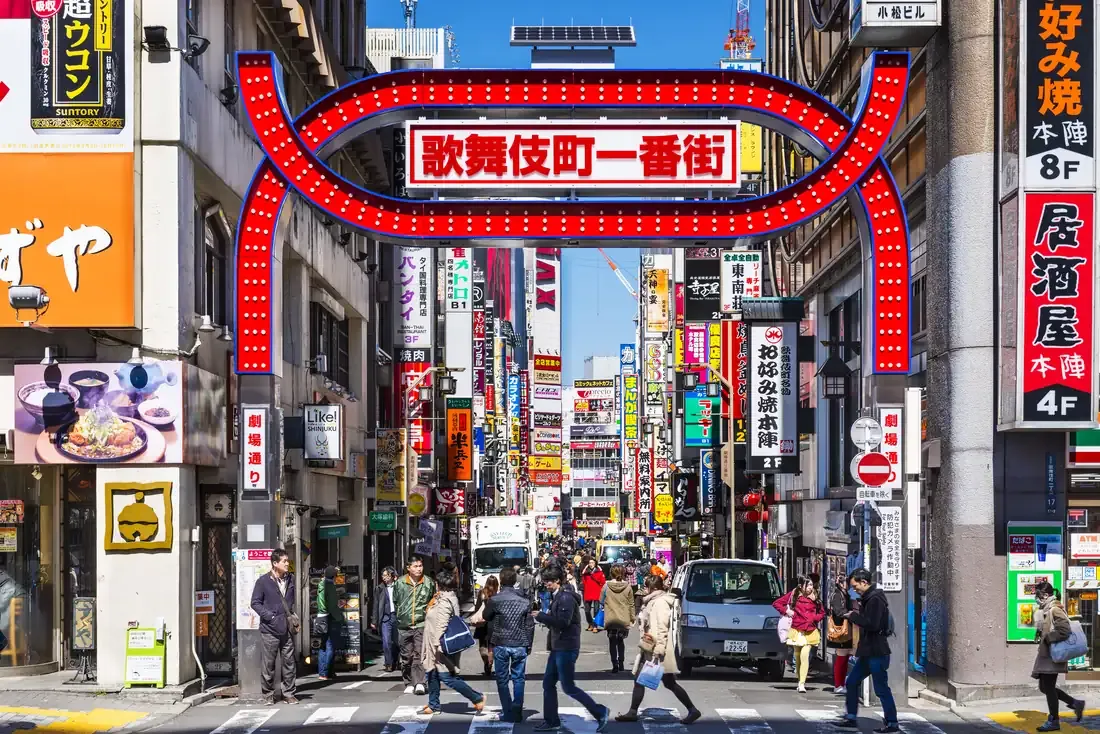
Asakusa keeps an old downtown feel around Senso-ji's temple streets. Shibuya and Harajuku drive youth fashion and nightlife around the scramble crossing and Takeshita Street, while neighbouring Shinjuku mixes a skyscraper business district with the entertainment streets of Kabukicho and Golden-Gai. Akihabara trades in electronics, anime and manga, and Ginza holds the flagship department stores.
When to go and for how long
Spring brings cherry blossoms in late March and April, and autumn brings cooler, drier weather once the peak of the typhoon season, which runs from August to September, has passed. Summer is hot and humid, with an average temperature near 27°C in August. Four to five days cover the main districts at an easy pace.
Getting around
The JR Yamanote Line loops around the centre, linking Tokyo's main districts on a single line, while the Tokyo Metro and Toei subway networks fill in the gaps between stops. A rechargeable IC card such as Suica or Pasmo covers trains, subways and most buses across the network. The Shinkansen network was built to link Tokyo with the rest of the country, which is why most itineraries of the tourist attractions in Japan start from the capital and work outwards.