
Tourist attractions in Toronto
Known for
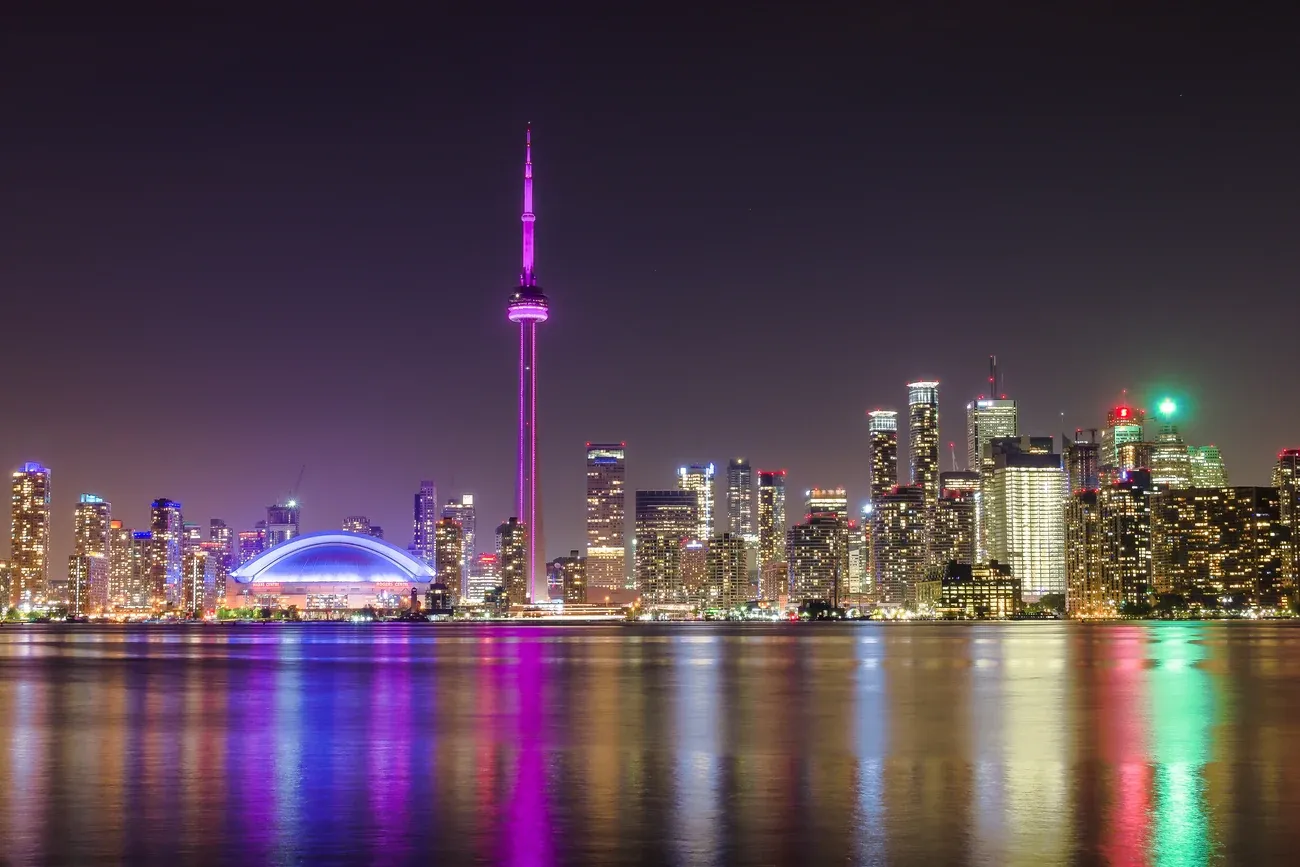
A CN Tower skyline over Lake Ontario and multicultural neighbourhoods
Must-see landmarks
CN Tower, Casa Loma, Royal Ontario Museum and the Distillery District
Best time to visit
June to September, when the lakefront and patios are busiest
Days needed
3-4 days to cover downtown, the waterfront and a trip up to Casa Loma
Toronto's top 11 tourist attractions
Here are the tourist attractions in Toronto worth planning around, starting with CN Tower, Casa Loma and Royal Ontario Museum. The 11 top sights come first, then free things to do, upcoming events and visitor FAQs.
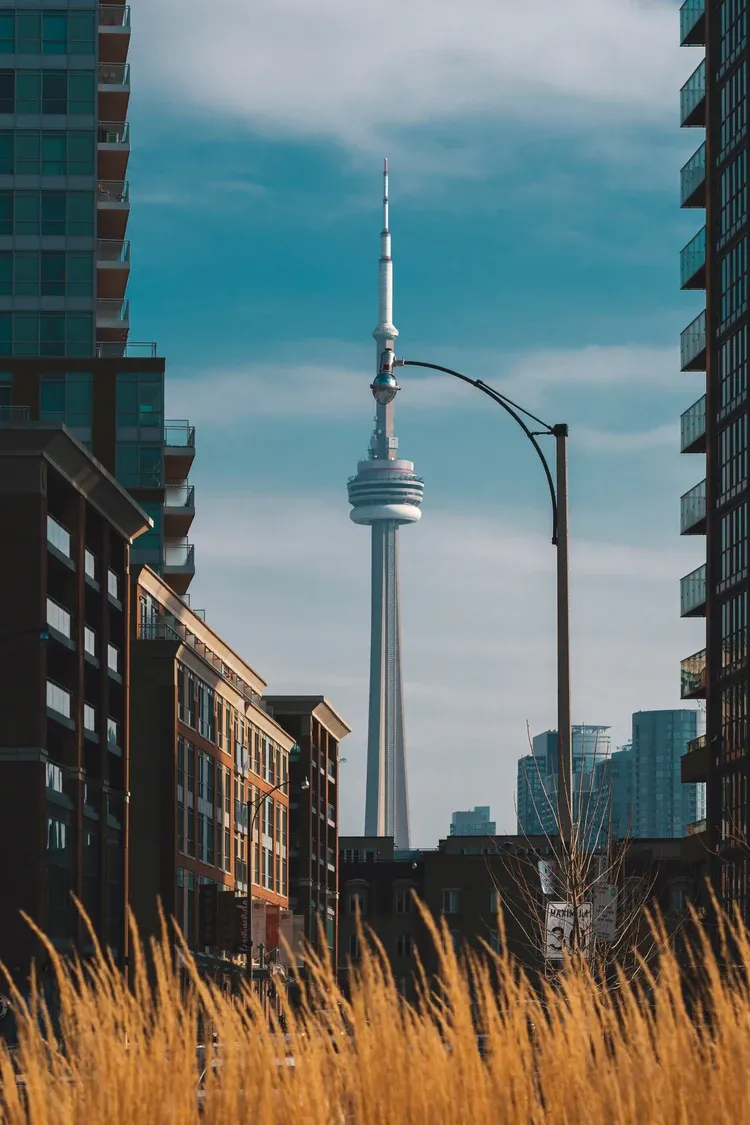
1. CN Tower
Canadian National finished the tower on the old Railway Lands in 1976, and at 553.3 metres it held the record as the world's tallest free-standing structure for three decades. High-speed lifts reach the Main Observation Level, 346 metres up, in 58 seconds. One floor below, a two-tiered Glass Floor looks 342 metres straight down beside an outdoor terrace. The Top, 447 metres above the city, is still the highest observation platform in the Western Hemisphere, and EdgeWalk sends harnessed visitors around the outside of the main pod in season.
Architect: John Andrews
Location: 301 Front Street West, Toronto
Access: Ticketed, observation levels open 9:00 to 23:00 all year with last entry at 21:30
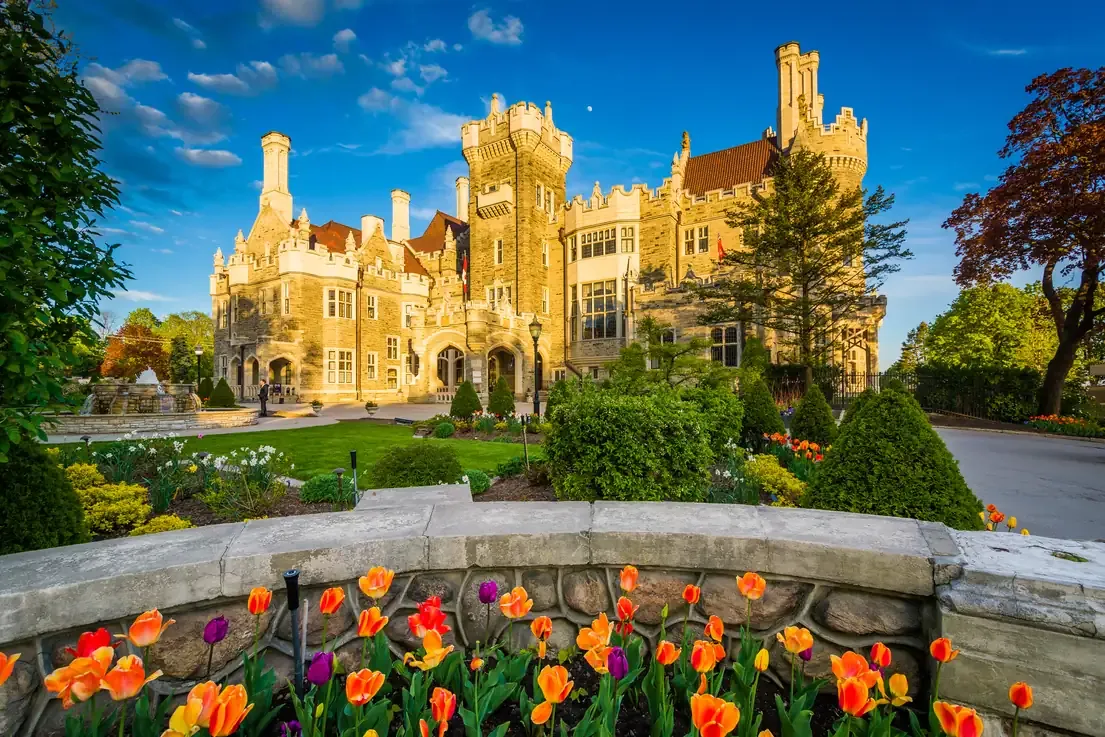
2. Casa Loma
The financier Sir Henry Pellatt spent three years building himself a castle above Davenport Hill, and the architect E. J. Lennox finished it in 1914. Pellatt lost the fortune that paid for it within a decade and moved out, leaving Toronto with a Gothic Revival house of turrets, oak-panelled halls and a tunnel running under the lawn to the stables. The City of Toronto owns the estate today and runs it as a house museum, with a run of outdoor concerts in the terraced gardens through the summer.
Architect: E. J. Lennox · Style: Gothic Revival
Location: 1 Austin Terrace, midtown Toronto
Access: Ticketed, open daily 9:30 to 17:00
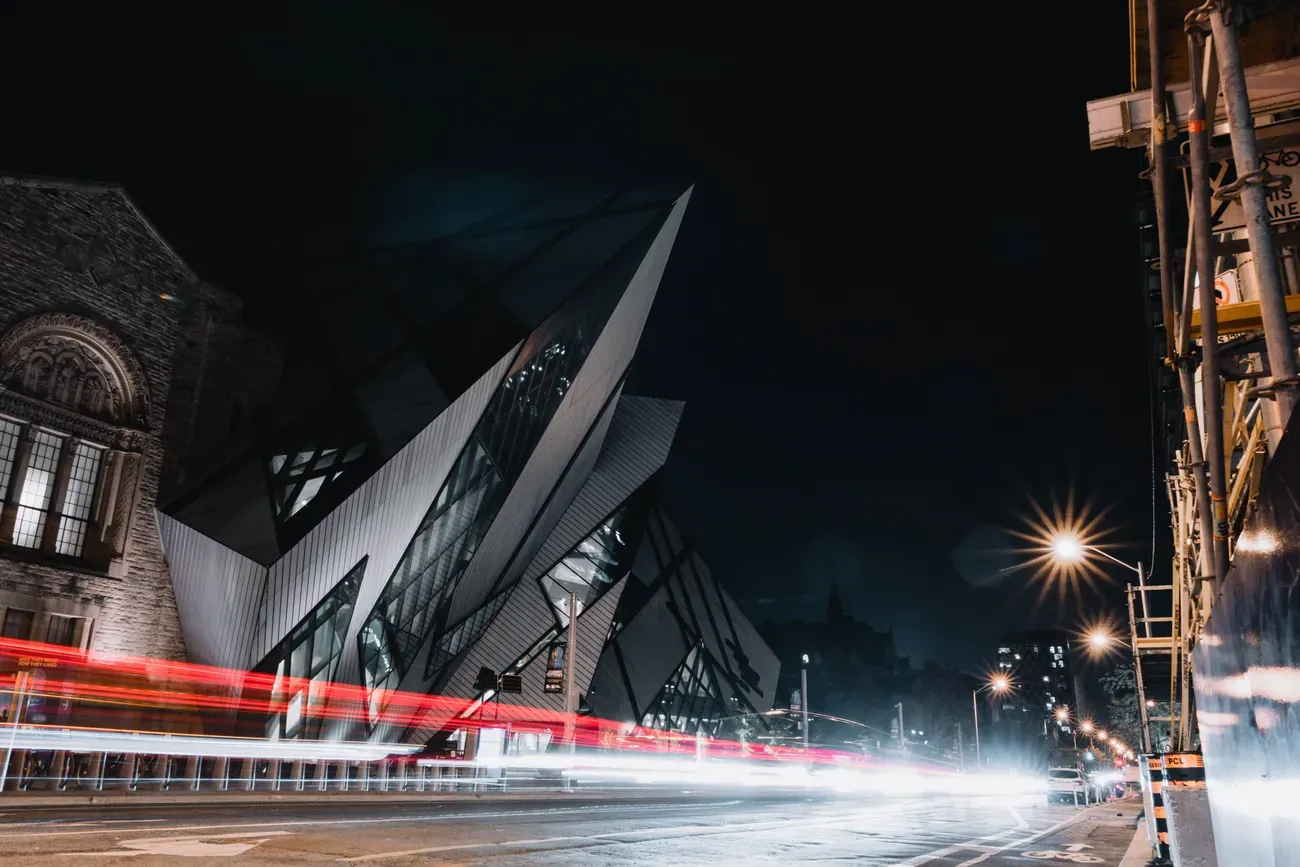
3. Royal Ontario Museum
Canada's largest museum was established in 1912 and opened on Bloor Street in March 1914, and it now holds more than 18 million objects across some 40 galleries: dinosaur skeletons, minerals and meteorites on one side, African, Near Eastern and East Asian art on the other. Daniel Libeskind's Michael Lee-Chin Crystal, a collision of angular glass and aluminium prisms, was grafted onto the old building in 2007 and gave it a new Bloor Street entrance. Museum subway station opens at the door, its platform dressed since 2008 to echo the collections above.
Location: 100 Queen's Park, at Bloor Street West and Avenue Road
Access: Ticketed, daily 10:00 to 17:30, and free for everyone on the third Tuesday night of the month from 16:00 to 20:30
4. Toronto Islands
A chain of car-free islands lies a 10 to 15 minute ferry ride off downtown, with three routes from the Jack Layton Ferry Terminal to Centre Island, Hanlan's Point and Ward's Island. The islands were a peninsula until a storm cut the channel in 1858; near Hanlan's Point, the Gibraltar Point Lighthouse of 1808 is the oldest on the Great Lakes. Centre Island holds Centreville, an amusement park in turn of the century style run by the Beasley family since 1967, plus beaches, bike rentals and the classic view of the skyline across the inner harbour.
Peninsula until: 1858 · Lighthouse: 1808
Location: Ferries from Jack Layton Ferry Terminal, 9 Queens Quay West
Access: Ferry ticketed; the islands are free to roam and Centreville rides are paid
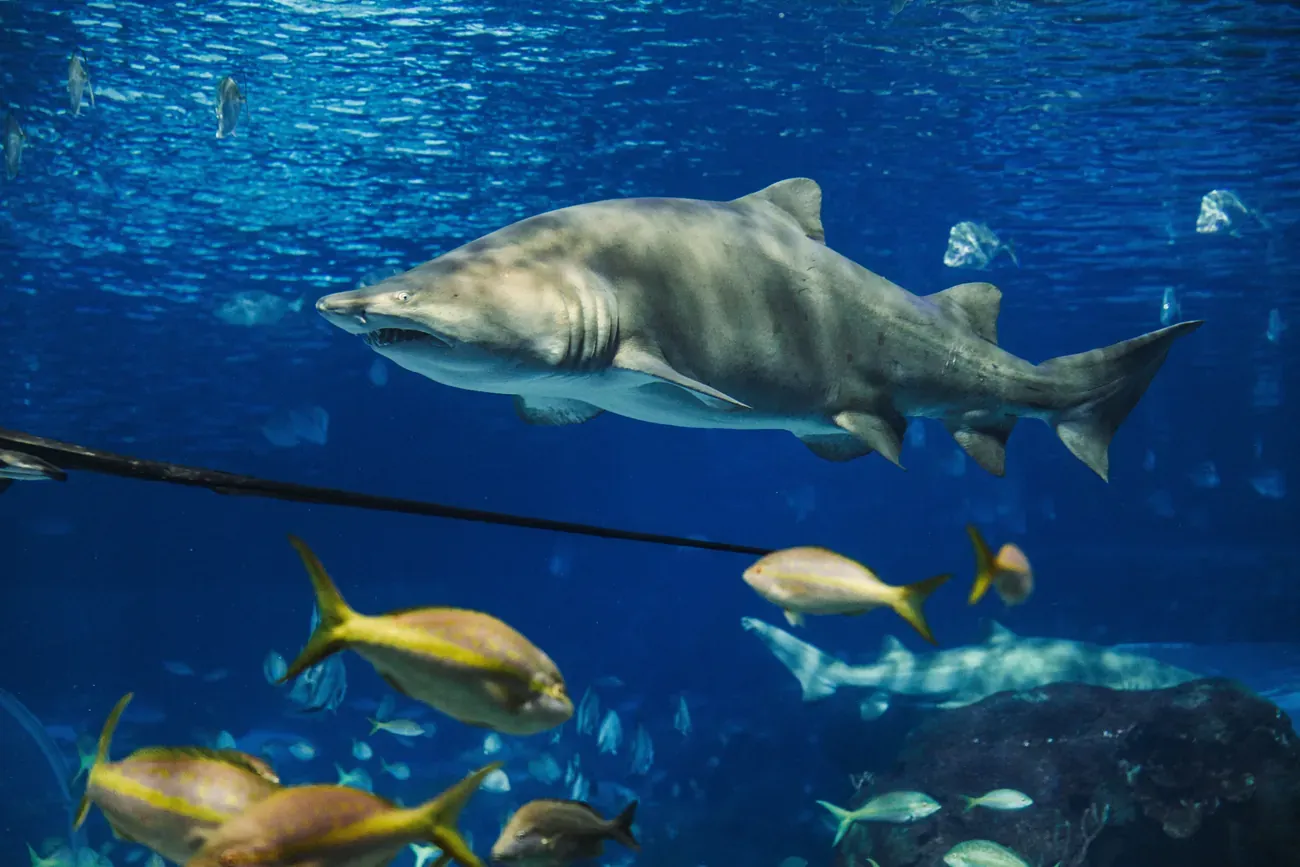
5. Ripley's Aquarium of Canada
Toronto's aquarium sits at the foot of the CN Tower and holds 5.7 million litres of water, more than 20,000 animals and over 450 species. Dangerous Lagoon is the reason most people come: a moving walkway carries visitors through a glass tunnel while sand tiger sharks, sawfish and green sea turtles swim overhead. The galleries around it work through Canadian lake and river habitats, Pacific kelp forests and tropical reefs, and the late closing hour leaves it one of the few big attractions downtown still open in the evening.
Location: 288 Bremner Boulevard, beside the CN Tower
Access: Ticketed, open daily 9:00 to 23:00
6. Distillery District
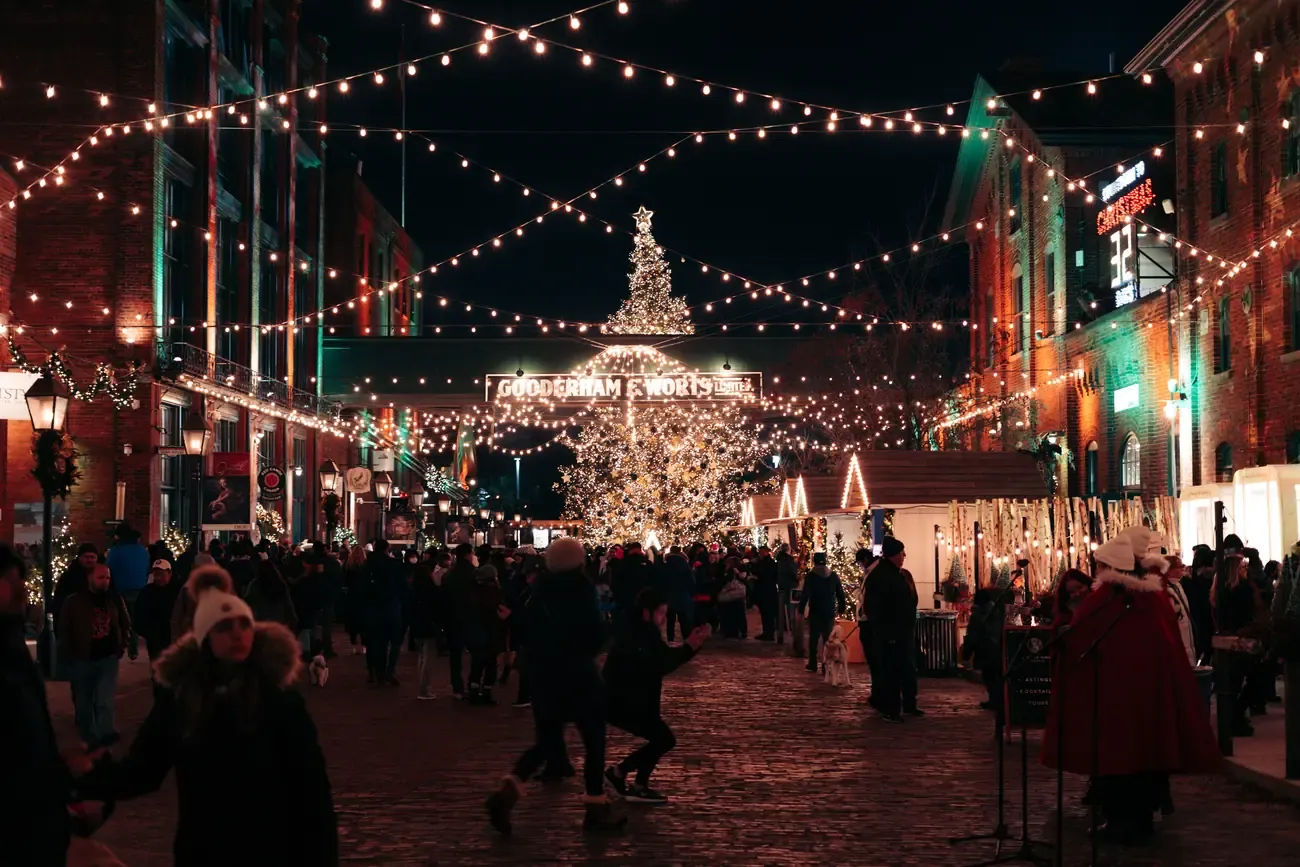
Gooderham and Worts have been on this ground since 1832, and their Victorian distillery survives as more than forty heritage buildings along ten lanes across thirteen acres, the largest collection of Victorian industrial architecture in North America. Parks Canada made it a National Historic Site in 1988. Cars have been kept out since the complex reopened as a cultural district, so the cobbles now carry galleries, studios, coffee roasters and the Young Centre for the Performing Arts, with buskers and seasonal markets filling the lanes between the old tank houses.
Location: 55 Mill Street, east of downtown Toronto
Access: Free to walk, open 364 days a year. Distillery District information
7. St Lawrence Market
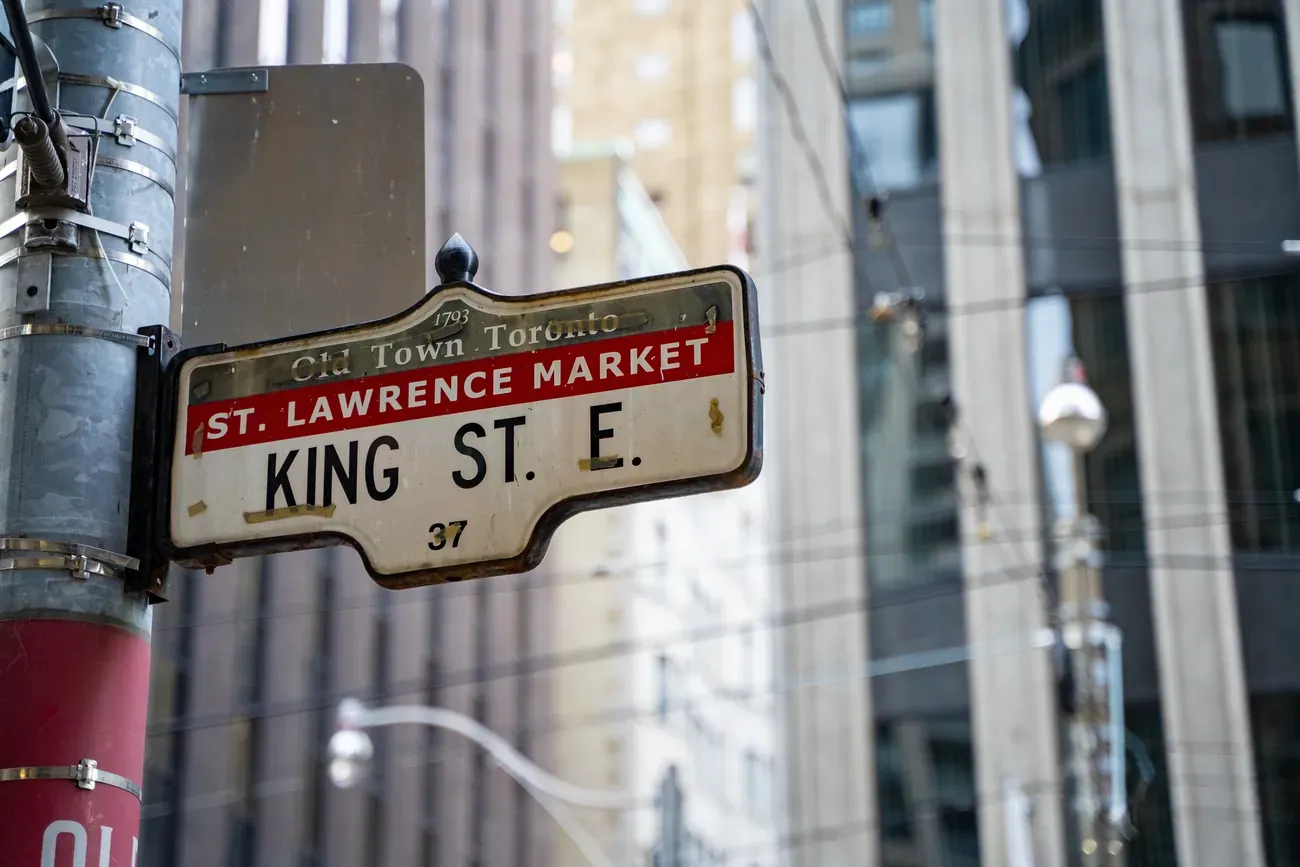
A proclamation set this block aside for a public market in 1803 and Torontonians have shopped here ever since. The South Market opened in 1902, built around the walls of a former city hall, and gathers more than sixty vendors of meat, fish, cheese, produce and baked goods under one roof, with the Market Gallery on the floor above. Across Front Street the rebuilt North Market held its first Saturday farmers' market in April 2025, and an antique market takes the same floor on Sundays.
Location: 92 to 95 Front Street East, Toronto
Access: Free to wander. South Market open Tuesday to Friday 9:00 to 19:00, Saturday 7:00 to 17:00 and Sunday 10:00 to 17:00, closed Monday. Market hours
8. Hockey Hall of Fame
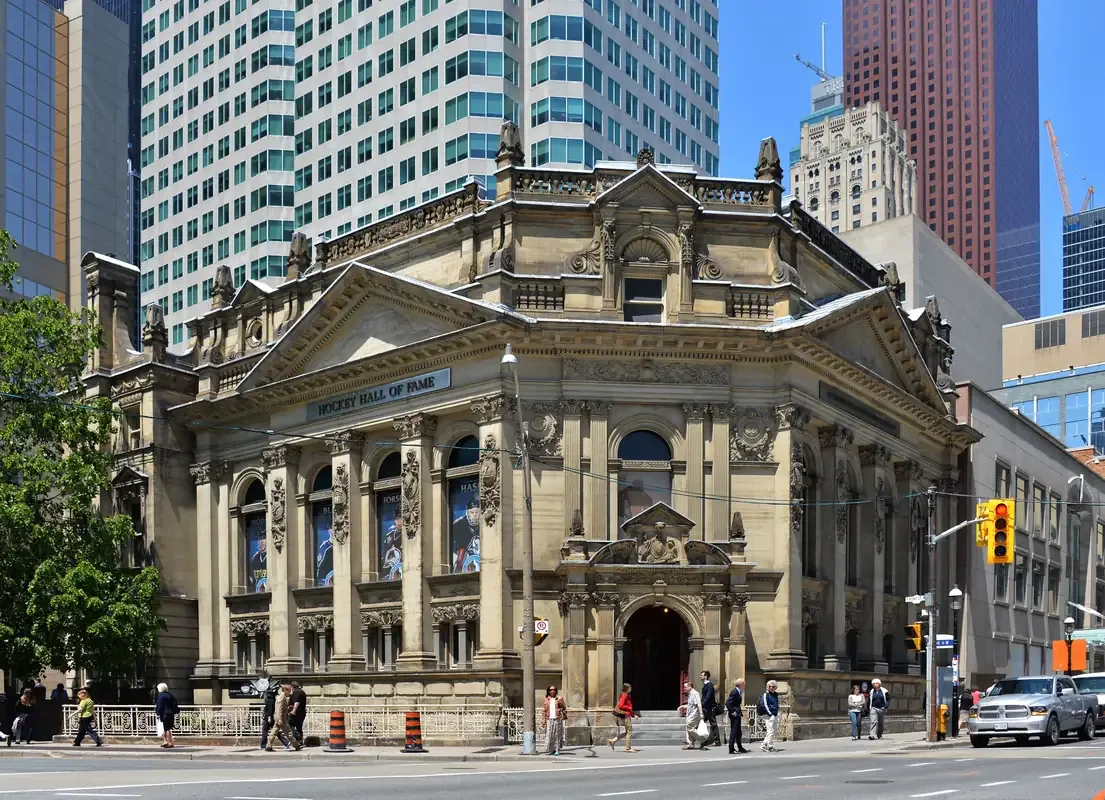
The Stanley Cup sits in the Esso Great Hall, the 1885 Bank of Montreal banking room that the Hall moved into in June 1993 and that Brookfield Place was later built around. Founded in 1943 and in Toronto since 1958, the museum lines up trophies, sweaters, sticks and goalie masks below street level, replays the game's turning points on film, and lets visitors take shots at a simulated goaltender or mind the net themselves on a model rink.
Location: Brookfield Place, 30 Yonge Street, at Front Street
Access: Ticketed, daily 9:00 to 17:00 from late June to early September and 10:00 to 17:00 through the rest of the year
9. Nathan Phillips Square
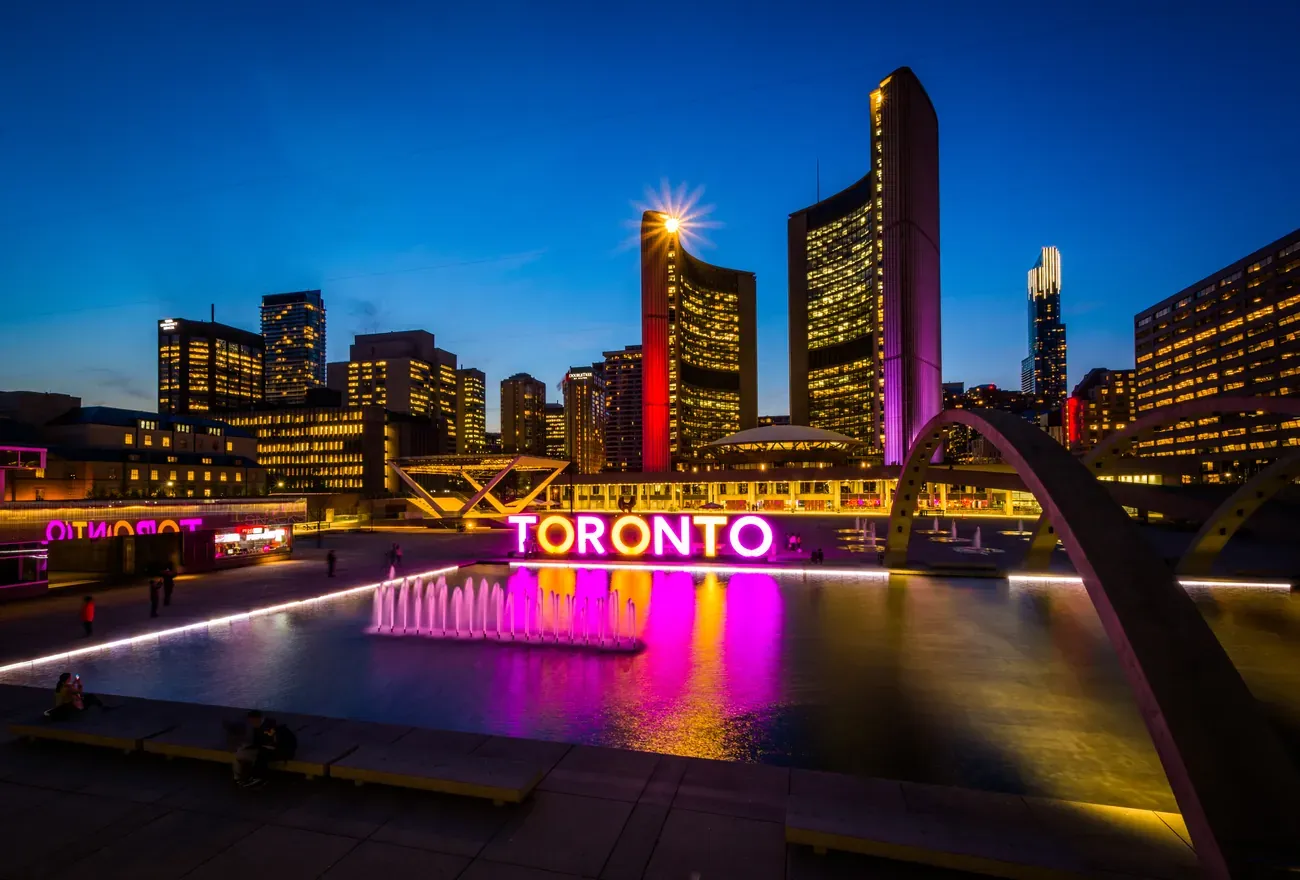
Viljo Revell's two curved towers went up in 1965 and the square in front of them takes the name of Nathan Phillips, the mayor behind the project. At 4.85 hectares it is the largest city square in Canada, and about 1.8 million people a year turn up for concerts, markets and civic ceremonies. The three-metre TORONTO sign stands beside the reflecting pool, Henry Moore's bronze Archer sits on the paving, and the Spirit Garden, an Indigenous cultural space built in answer to the Truth and Reconciliation Commission, is now open.
Architect: Viljo Revell
Location: 100 Queen Street West, Toronto
Access: Free at any hour, and the reflecting pool becomes a skating rink from November to March, with free drop-in sessions and skate rental on site. Square information
10. Sankofa Square
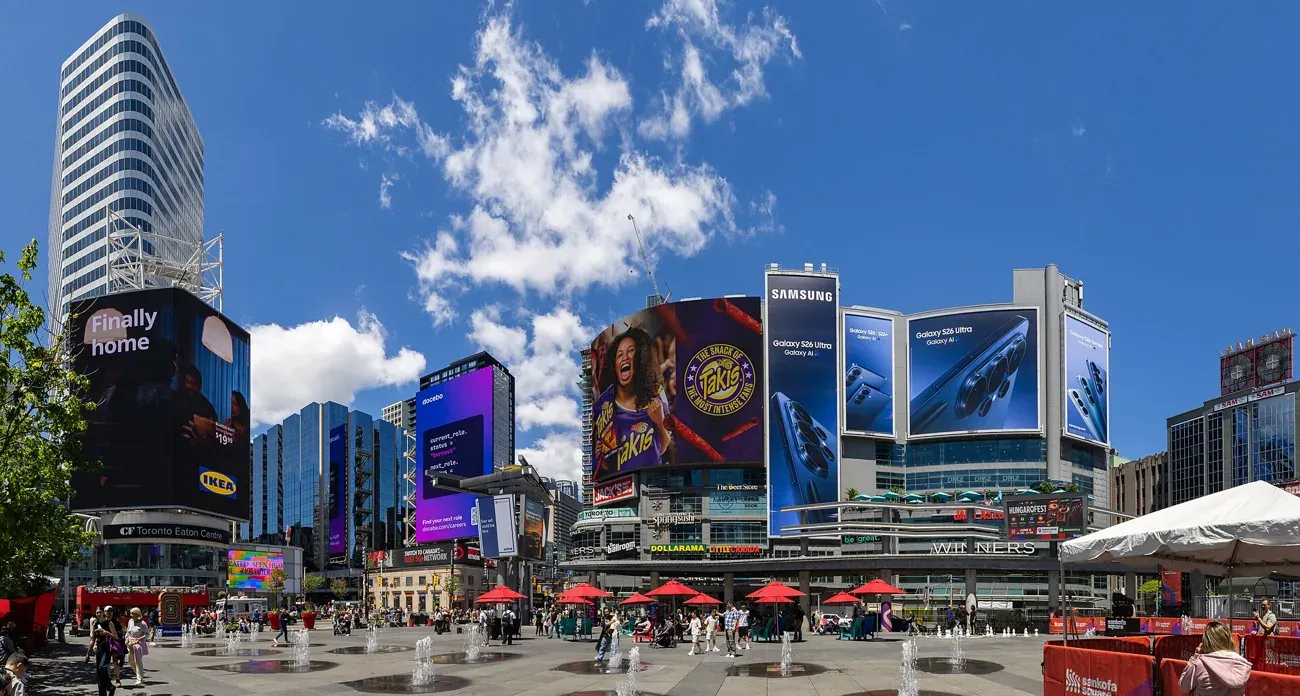
Billboard screens and LED walls wrap the plaza at Yonge and Dundas, which invites comparison with Times Square and Shibuya Crossing and looks onto Canada's first pedestrian scramble, crossed by more than 100,000 people a day. It opened in the early 2000s as Yonge-Dundas Square, and on 14 December 2023 Toronto City Council adopted the name Sankofa Square, put forward by a community advisory committee of Black and Indigenous leaders after a review of civic names tied to colonial figures. Hundreds of events a year fill it.
Location: 1 Dundas Street East, Toronto
Access: Free and open at all hours, run by a City of Toronto agency. Event calendar
Photo: "Sankofa Square" by Dillan Payne (CC BY-SA).
11. Bata Shoe Museum
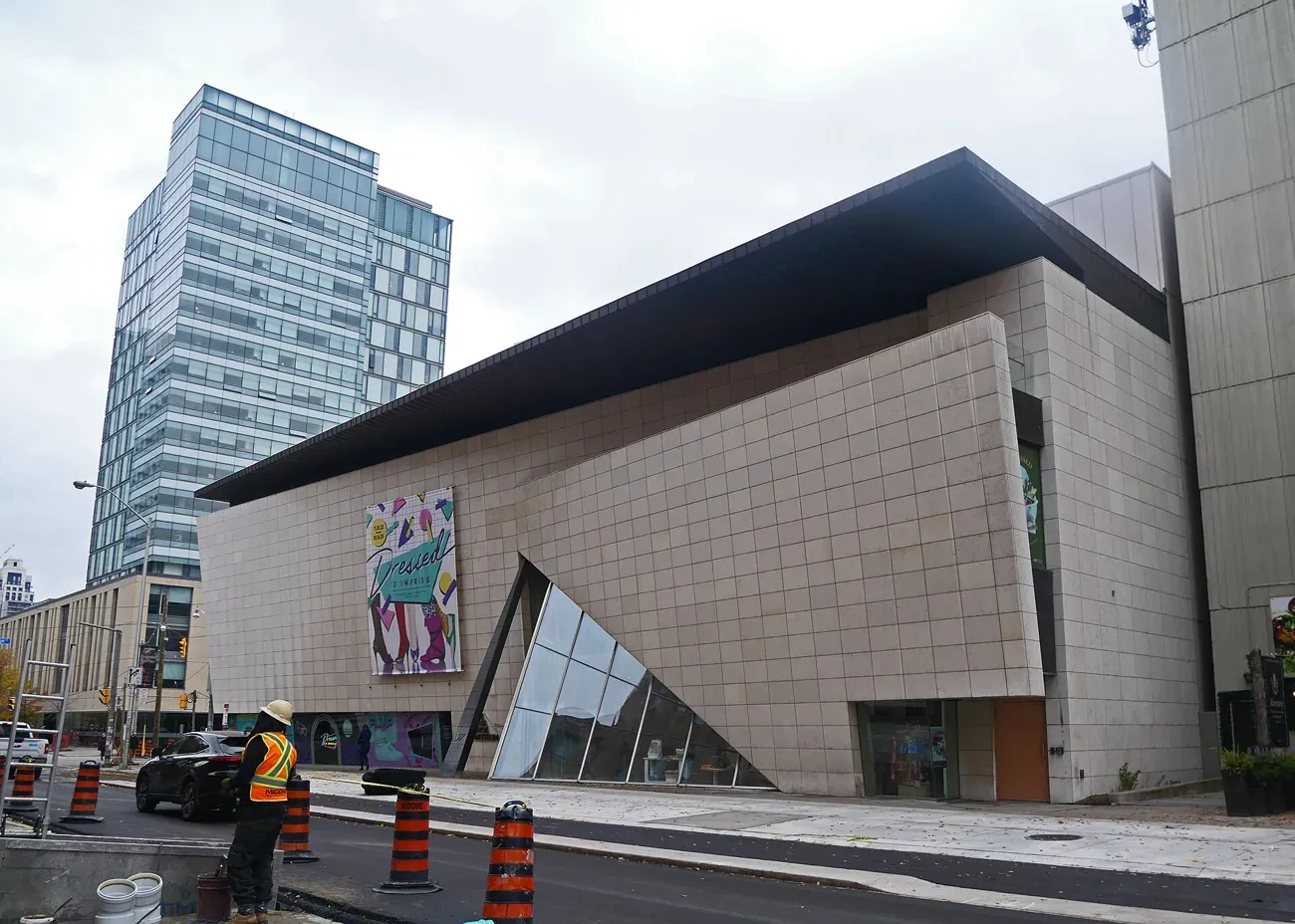
Sonja Bata started buying shoes in the 1940s, endowed a foundation for the collection in 1979 and opened a purpose-built museum for it in 1995, in a Raymond Moriyama building on the corner of Bloor and St George. More than 13,000 shoes and related objects reach back 4,500 years, the largest footwear collection in the world, and the permanent gallery runs alongside temporary exhibitions that read footwear as social history. St George station is a minute from the door.
Architect: Raymond Moriyama
Location: 327 Bloor Street West, at St George Street
Access: Ticketed Monday to Saturday 10:00 to 17:00 and Sunday 12:00 to 17:00, with free admission for everyone on Sundays
Photo: "Bata Shoe Museum" by Jim.henderson (CC BY).

Upcoming events in Toronto

The Beloved
The Beloved plays Scotiabank Theatre Cinema 2 on 14 September at 11:15.

In Waves
In Waves plays TIFF Lightbox Cinema 3 on 14 September at 11:15.
Social Distortion
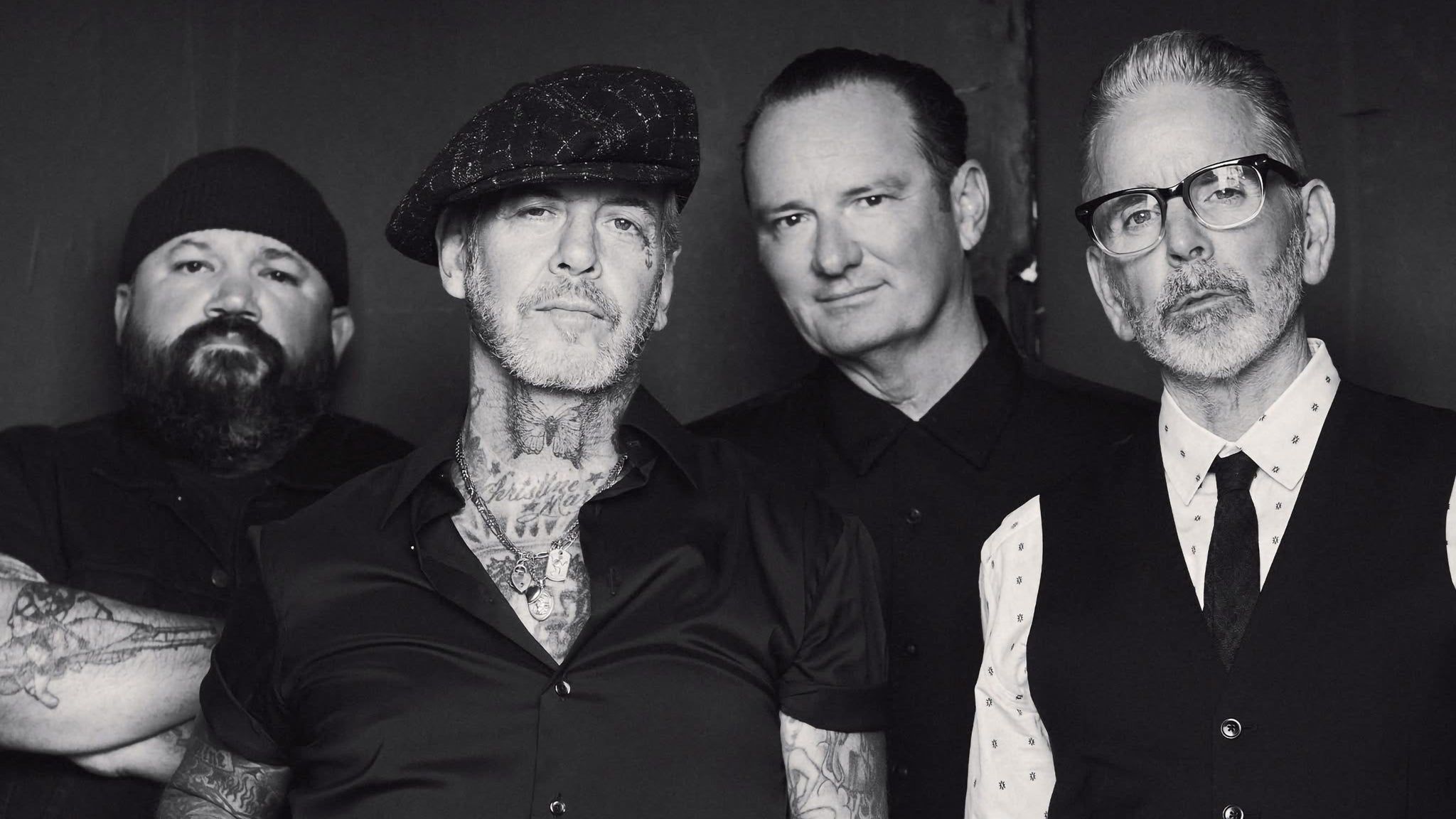
Social Distortion plays History Toronto on 14 September at 18:30.

$uicideboy$ Present Grey Day Tour 2026 W. Destroy Lonely & More
$uicideboy$ Present Grey Day Tour 2026 W. Destroy Lonely & More plays RBC Amphitheatre on 14 September at 18:30.

Toronto Blue Jays vs. Detroit Tigers
Toronto Blue Jays vs. Detroit Tigers comes to Rogers Centre on 14 September at 19:07.

Toronto Blue Jays vs. Tigers (Loonie Dogs Night)
Toronto Blue Jays vs. Tigers (Loonie Dogs Night) comes to Rogers Centre on 15 September at 19:07.
Free things to do in Toronto
Graffiti Alley
This block-long laneway off Queen Street West wears a changing gallery of large-scale murals and street art, always open and always free to wander at any hour.
Kensington Market
Parks Canada named this bohemian grid of narrow streets a National Historic Site on 27 November 2006 for the waves of immigrant communities who shaped it; browsing its shopfronts and alleyways costs nothing.
High Park
This 161 hectare green space west of downtown is free to enter at any hour, and its small animal display, home to bison, llamas and Highland cattle since 1893, charges no admission either.
Scarborough Bluffs
Eleven lakeside parks give free public access to these cliffs above Lake Ontario, Bluffer's Park among them; only the edge itself is off limits, fenced for safety.
St James Cathedral
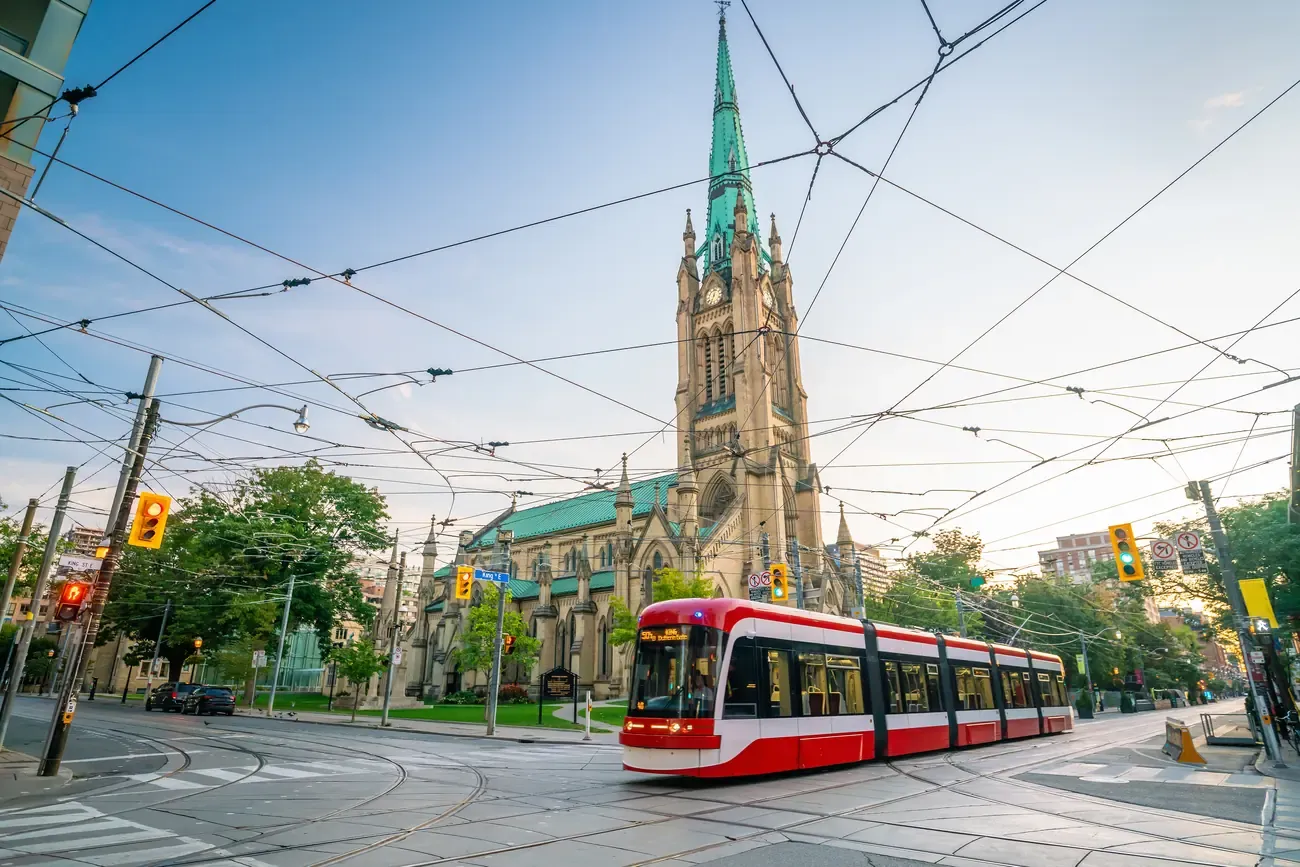
This Gothic Revival cathedral on King Street welcomes visitors free of charge outside service times, its garden a quiet, no-cost place to sit beside the streetcar tracks.
Berczy Park
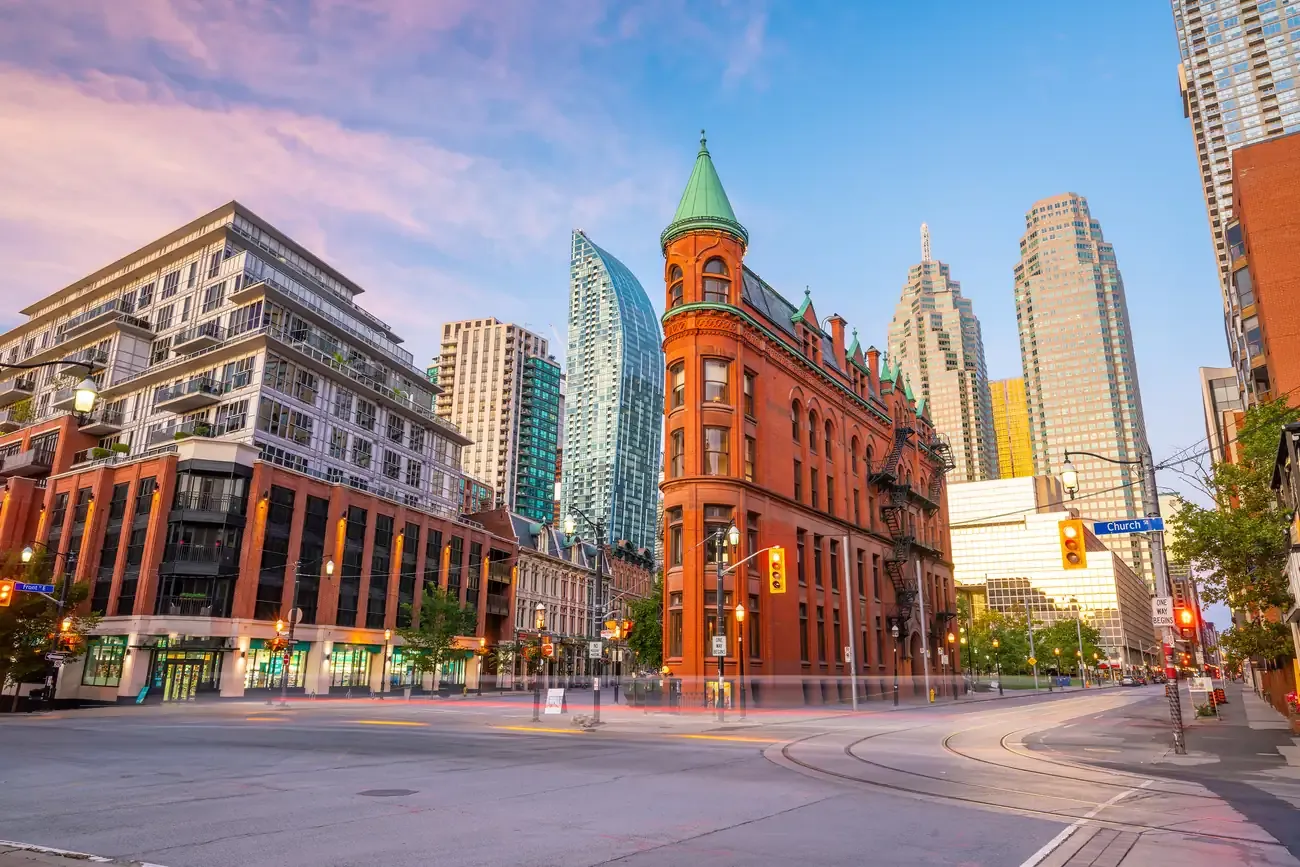
This small park costs nothing to sit in, its fountain topped with cast dogs gazing up at a bone, and the trompe-l'oeil mural on the Gooderham Building's rear wall visible from the benches.
Why Toronto is worth visiting
What makes Toronto unique
Toronto grew from a small colonial garrison town into Canada's financial capital and its largest city, its skyline anchored by the CN Tower since the 1970s and, before that, by the flatiron Gooderham Building at the foot of the Financial District. Waves of immigration since the 20th century filled the downtown grid with distinct neighbourhoods, from Kensington Market's bohemian streets to Chinatown's markets, making the city one of the most ethnically diverse in North America. A working harbourfront, three subway-connected sports stadiums and a year-round festival calendar keep the core busy well beyond office hours. The CN Tower and the car-free Toronto Islands are two of the fixtures among tourist attractions in Canada, and Niagara Falls is close enough to add as a day trip.
Neighbourhoods to know
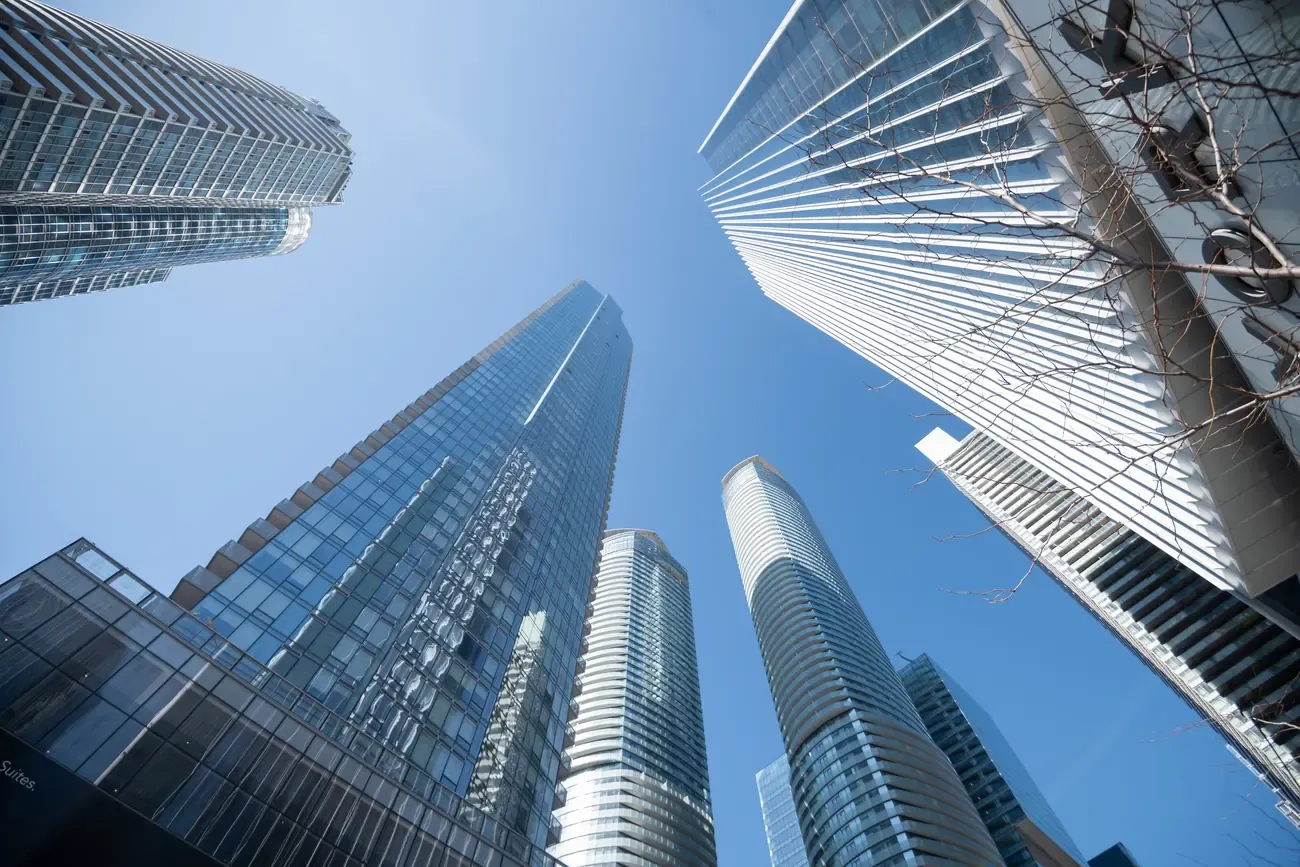
The Financial and Entertainment Districts hold the CN Tower, Rogers Centre and the bulk of downtown's office towers and theatres. Old Town, east along King and Front Streets, keeps St Lawrence Market and the Distillery District's Victorian brick. West of University Avenue, Kensington Market and Chinatown sit side by side, while Yorkville and the Annex further north group the Royal Ontario Museum with boutique shopping. Midtown's Casa Loma looks down on all of it from Davenport Hill.
When to go and how long to stay
Late spring through early autumn brings Toronto's mildest weather and its busiest festival season, while winters turn cold enough for outdoor rinks to freeze downtown. Three to four days cover the CN Tower, the waterfront and the Distillery District at an easy pace, with a full extra day useful for Casa Loma, the Royal Ontario Museum and the Art Gallery of Ontario together.
Getting around
Downtown's grid is flat and walkable between the harbourfront and Bloor Street, and the TTC's two subway lines and streetcar network reach the rest of the city. The underground PATH network links many downtown office towers and shopping concourses without stepping outside, useful on Toronto's coldest winter days.