
Germany tourist attractions
Known for
Castles above Rhine, Gothic cathedrals and Advent Christmas markets
Must-see cities
Berlin, Munich, Hamburg and Cologne
World Heritage
55 UNESCO properties, from Cologne Cathedral to the Wadden Sea
Best time to visit
May to September for long days outdoors
Tourist attractions in Germany not to miss
Neuschwanstein Castle, Cologne Cathedral and the Brandenburg Gate lead the tourist attractions in Germany. This guide ranks 15 national sights, then covers the cities worth a stop, 7 more landmarks, tickets, local dishes, 20 hidden gems and visitor FAQs.
Popular tourist destinations in Germany
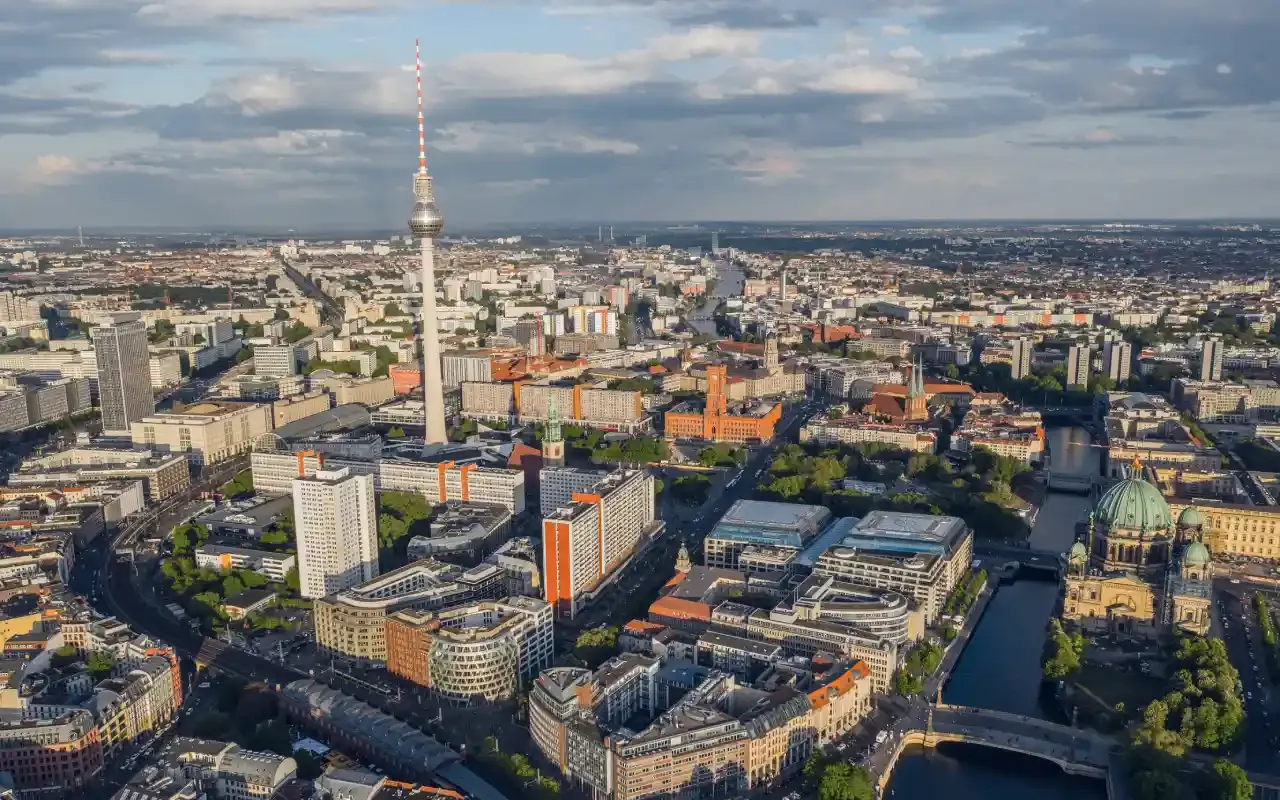
Berlin
Berlin's tourist attractions The capital, its museum island and the stretches of Wall that were left standing.
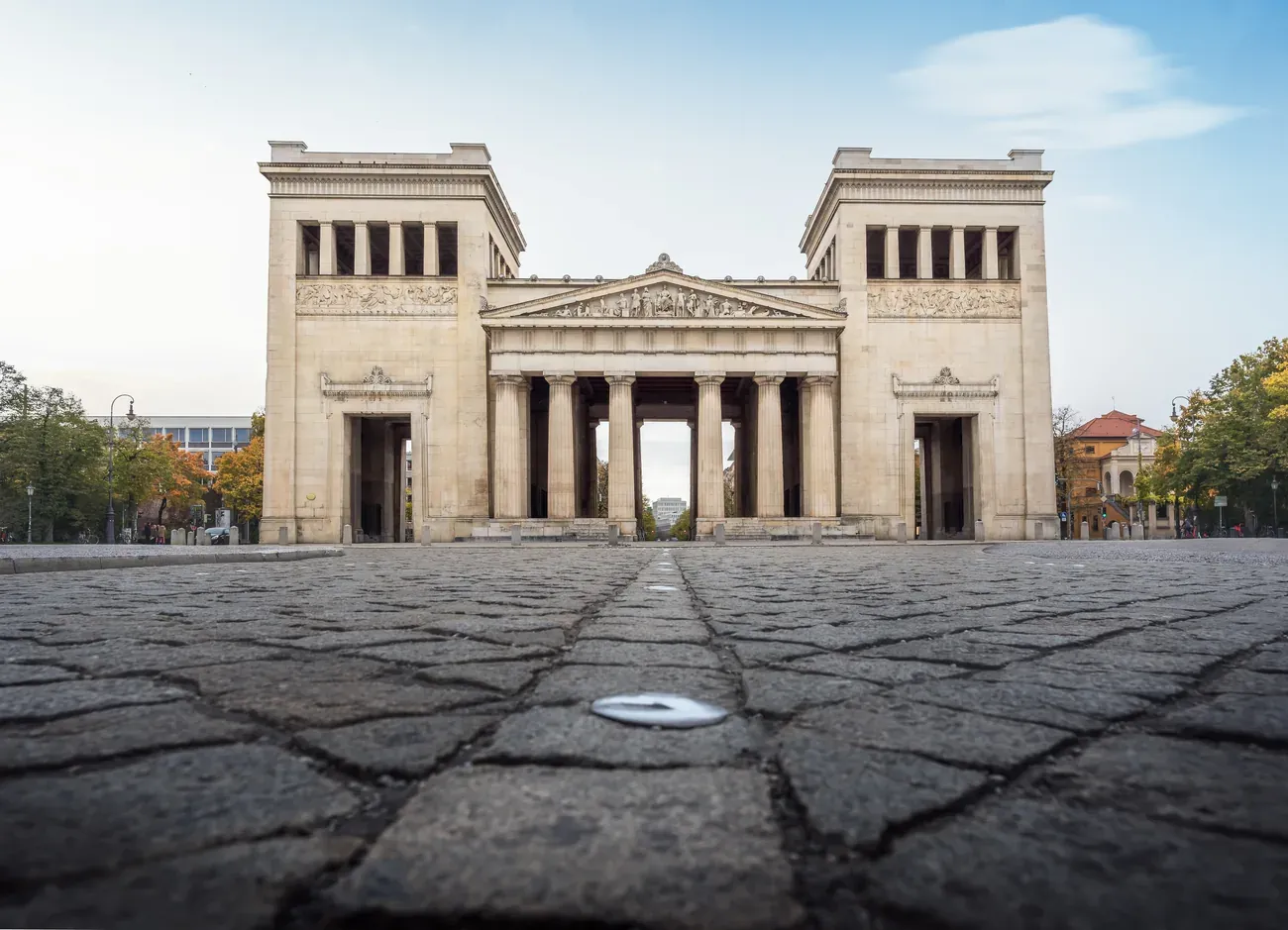
Munich
Munich's tourist attractions Bavaria's capital, its beer gardens and the quickest way into the Alps.
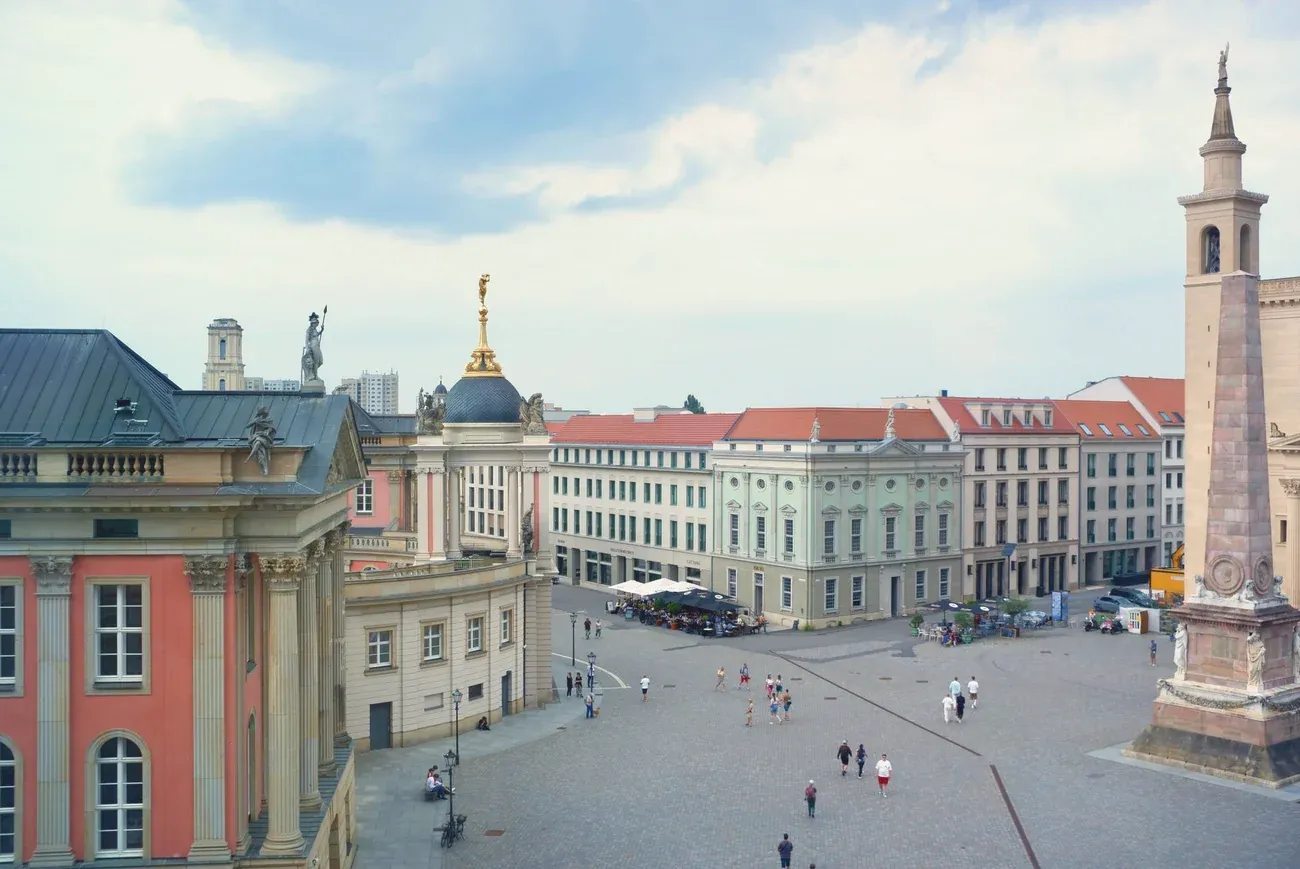
Potsdam
Potsdam's tourist attractions Prussian palaces and parks half an hour from central Berlin.
1. Neuschwanstein Castle
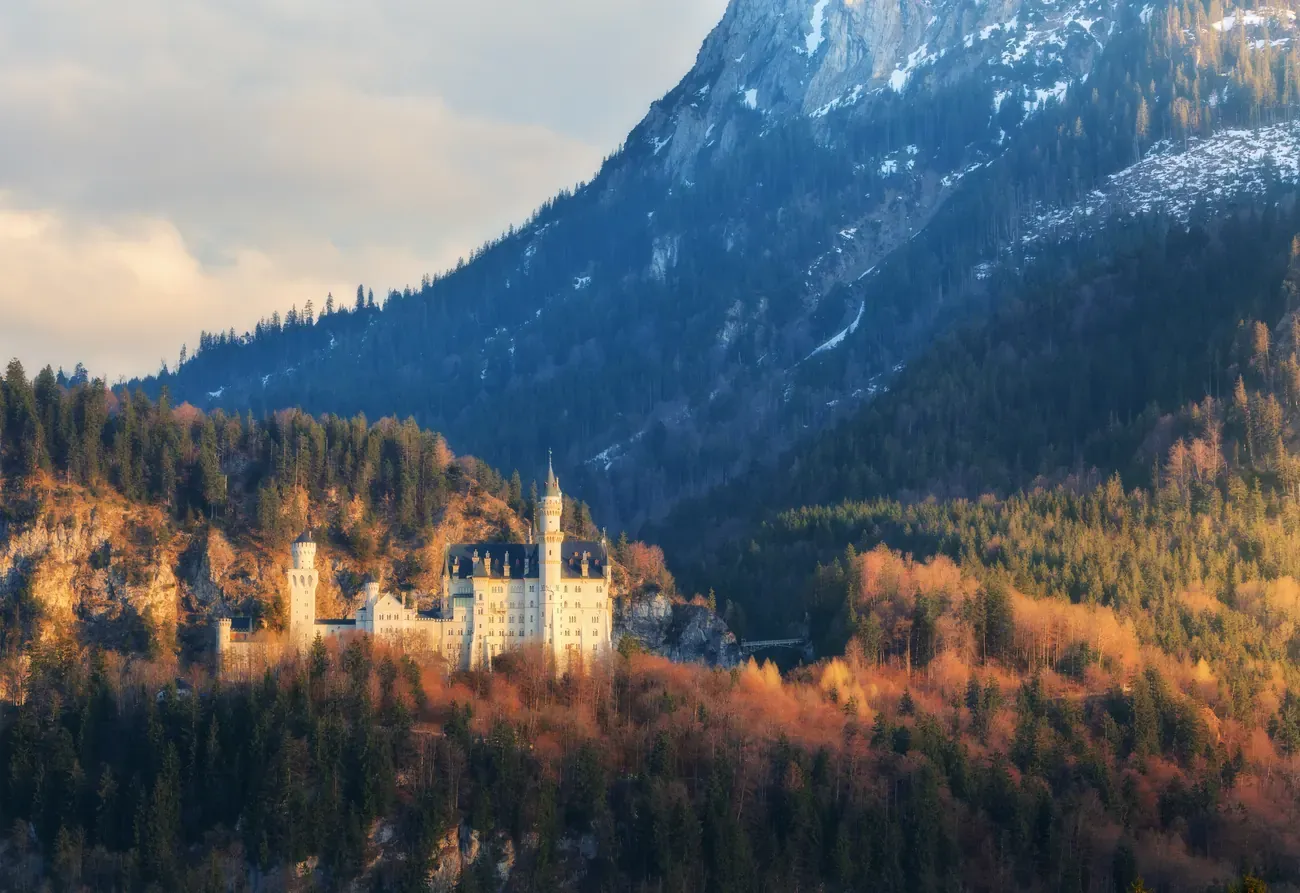
Ludwig II of Bavaria had this castle raised on a crag above Hohenschwangau from 1869 and never saw it finished, dying in 1886 with barely a third of the rooms complete. The first drawings came from a theatre designer rather than an architect, which is why the throne hall and the singers' hall read as stage sets built in stone. Below the walls the ground falls away to the Alpsee and the foothills, and the Marienbrücke footbridge over the Pöllat gorge frames the view that fills the postcards. Only the outside can be wandered freely.
Architect: Christian Jank · Heritage: UNESCO World Heritage since 2025
Location: Schwangau, Bavaria
Access: Ticketed, and the interior only on a timed guided tour
2. Cologne Cathedral
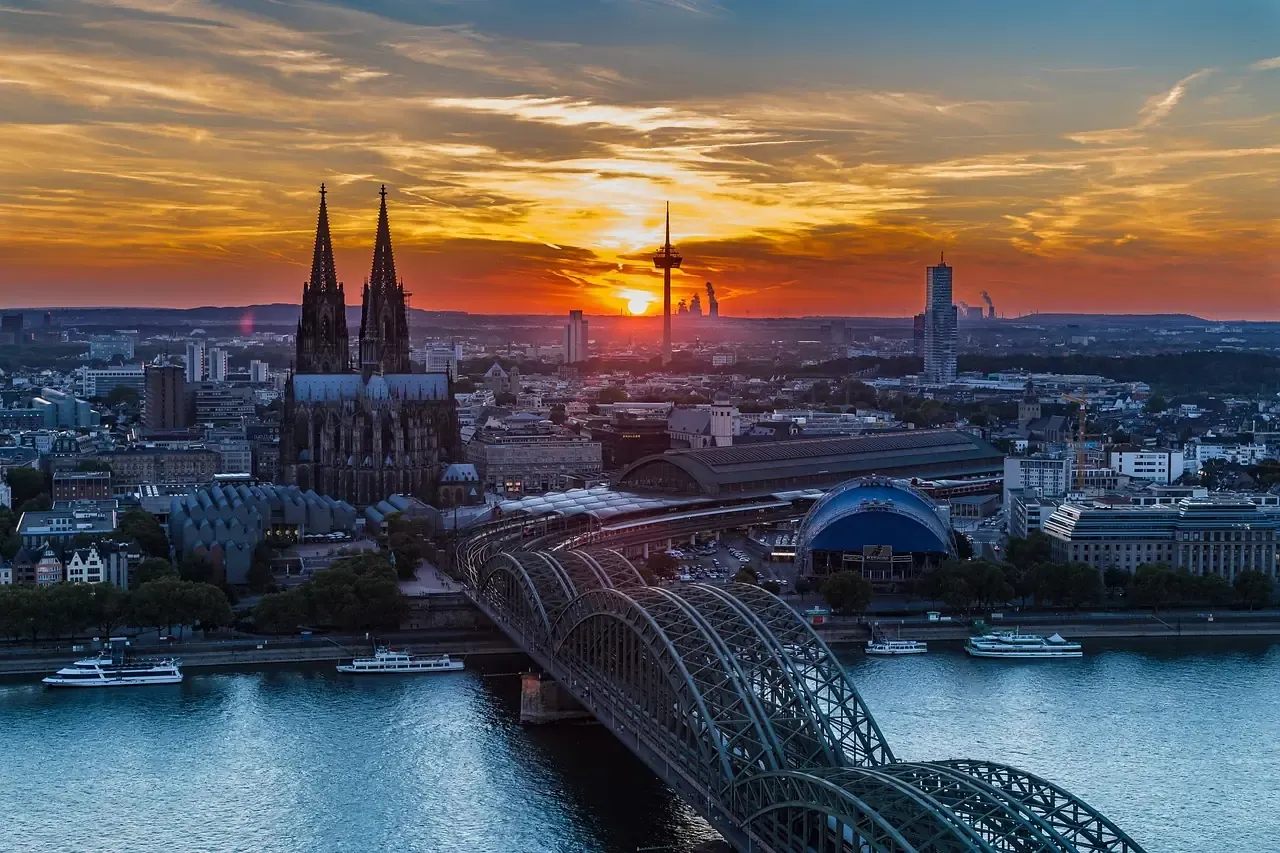
Building began in 1248, stalled for three centuries with a crane left standing on the unfinished south tower, and only ended in 1880 when nineteenth century masons went back to the medieval plans. At 157 metres its twin spires are the tallest of any church in the world, and around six million visitors a year make it the most visited landmark in the country. The golden Shrine of the Three Kings stands behind the high altar, and the glass runs from medieval panels to Gerhard Richter's field of coloured squares of 2007. A stair of 533 steps climbs the south tower.
Style: Gothic · Built: 1248 to 1880 · Heritage: UNESCO World Heritage since 1996
Location: Cologne, North Rhine-Westphalia
Access: Ticketed for tourist visits, with the north transept kept free for prayer
3. Brandenburg Gate
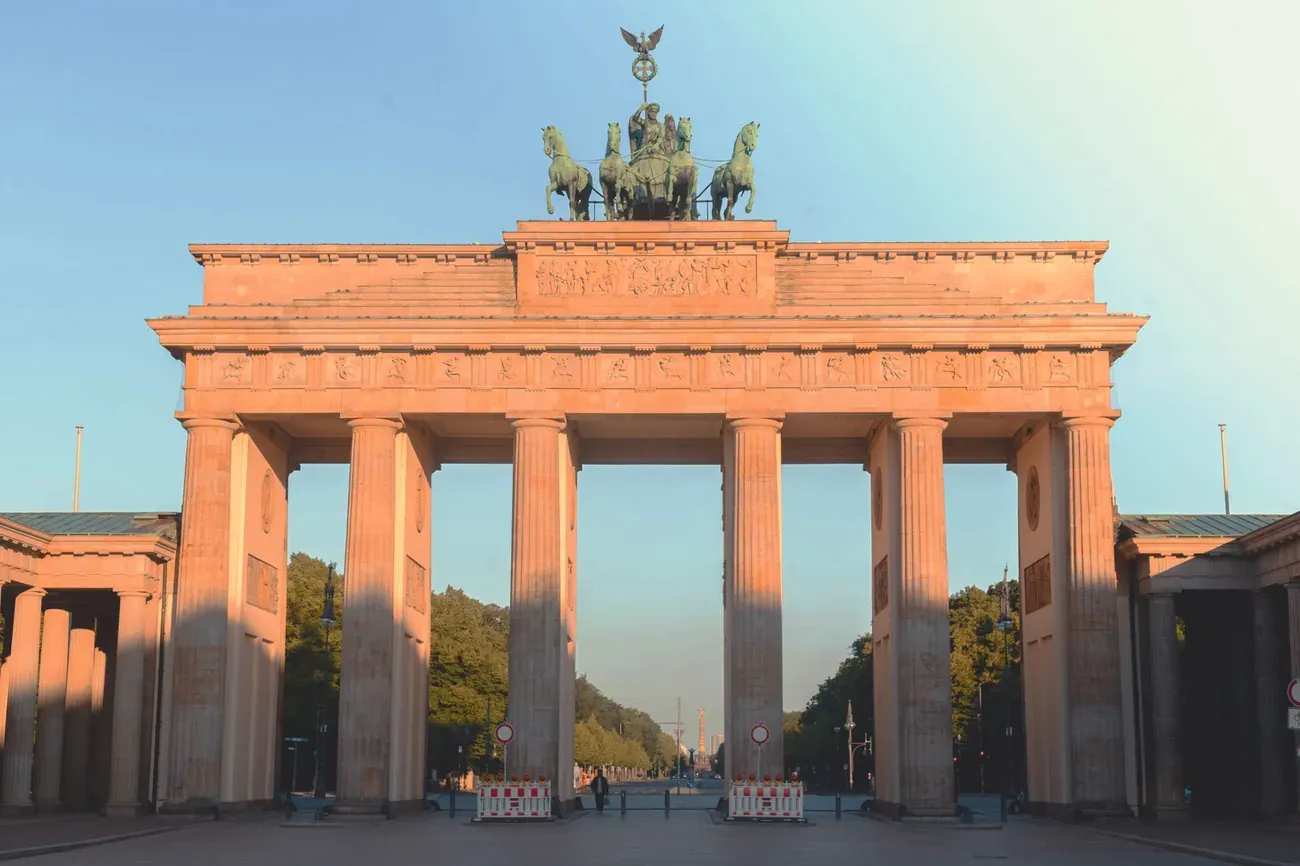
No other structure carries as much German history in one silhouette. Carl Gotthard Langhans modelled the sandstone gateway on the entrance to the Athenian Acropolis and completed it in 1791, and Napoleon carted the Quadriga off to Paris before it came back eight years later. From 1961 the monument stood inside the border strip, out of reach from both sides of the divided city, and the crowds who gathered at it in November 1989 turned it into the image of a reunited country. It marks the western end of Unter den Linden.
Architect: Carl Gotthard Langhans · Completed: 1791
Location: Pariser Platz, Berlin
Access: Free, an open square with no ticket and no closing time
4. Reichstag Building
The German parliament sits in a building that keeps its own damage on show. Paul Wallot finished it in 1894, fire gutted the chamber in 1933, and Red Army soldiers wrote their names on the walls in 1945; those inscriptions were deliberately left in place when Norman Foster rebuilt the interior for the returning Bundestag. His glass dome stands over the debating chamber with a ramp spiralling up its inner wall, so the public walks above the politicians and looks out at the government quarter and the Tiergarten.
Architect: Paul Wallot, rebuilt by Norman Foster · Completed: 1894
Location: Platz der Republik, Berlin
Access: Free, with advance registration required for the dome and the roof terrace
5. East Side Gallery
The longest piece of the Berlin Wall still standing runs about 1.3 kilometres beside the Spree in Friedrichshain. In 1990, months after the border opened, artists from more than twenty countries painted the eastern face that had always been kept blank, and a border installation became an open air gallery of over a hundred works. Two of them end up on most postcards: the Brezhnev and Honecker kiss by Dmitri Vrubel, and a Trabant bursting through the concrete. Most of what stands there today is a repainting of the 1990 originals made in 2009.
Painted: 1990 · Length: about 1.3 kilometres
Location: Mühlenstraße, Friedrichshain, Berlin
Access: Free, a riverside path open at any hour
6. Museum Island
Five museums raised between 1824 and 1930 fill the northern tip of the island in the Spree, an ensemble UNESCO listed in 1999 as a record of how the public museum was invented. The Neues Museum holds the Egyptian collection and the bust of Nefertiti, the Alte Nationalgalerie hangs nineteenth century painting behind a temple front, and the Bode Museum closes the point with sculpture and a vast coin cabinet. The Pergamonmuseum is shut for a long refurbishment, so a visit is built around the other houses.
Built: 1824 to 1930 · Heritage: UNESCO World Heritage since 1999
Location: Spreeinsel, Mitte, Berlin
Access: Ticketed, museum by museum or on a combined pass
7. Marienplatz
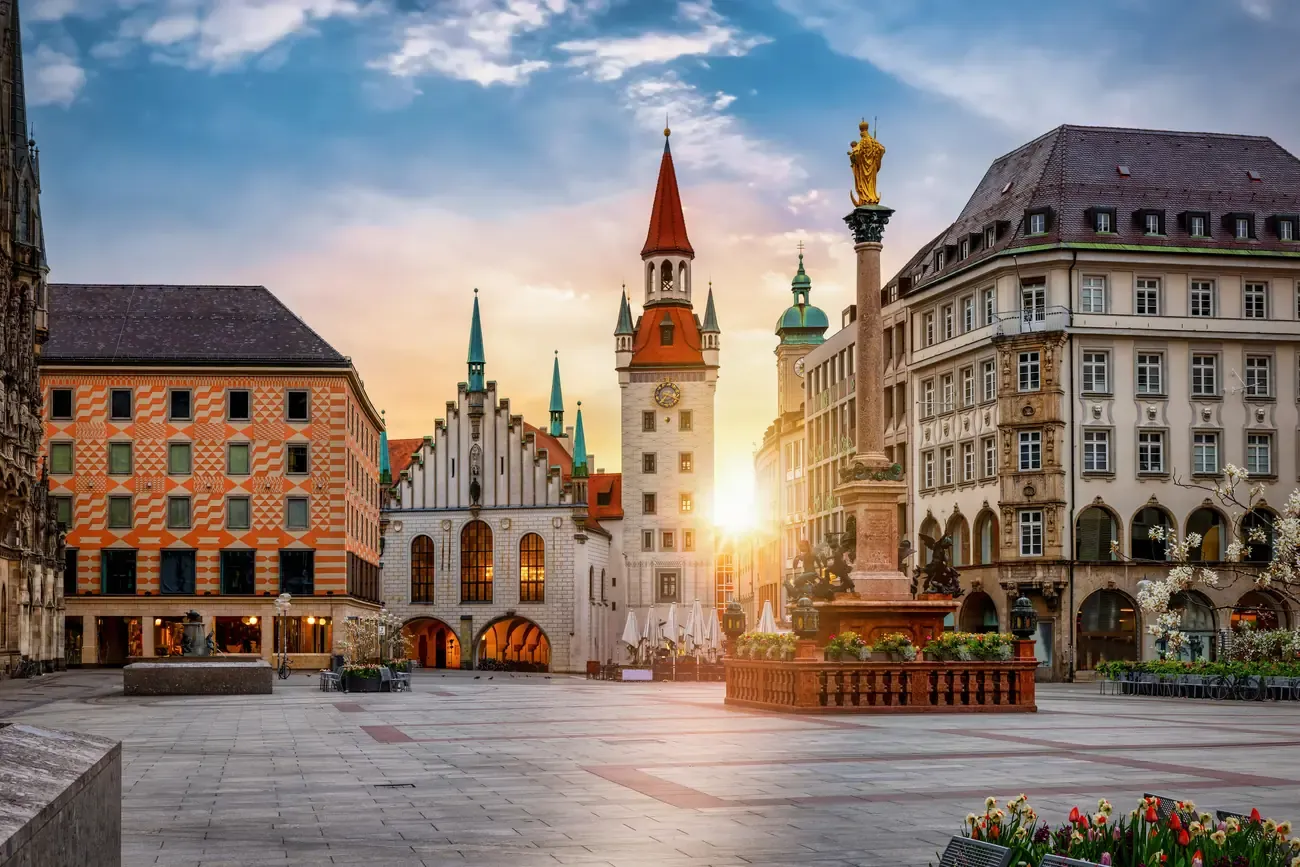
Munich has been arranged around this square since the city was founded on the salt road in 1158 and the market moved here. The neo-Gothic New Town Hall fills the north side, and the Glockenspiel in its tower acts out a ducal wedding of 1568 and the coopers' dance daily at eleven and at noon, with an extra turn at five from March to October. The Old Town Hall closes the eastern end, the Mariensäule stands in the middle of it, and the stalls of Viktualienmarkt are two minutes away.
Laid out: 1158 · Glockenspiel: daily at 11:00 and 12:00
Location: Altstadt, Munich
Access: Free, a public square with no ticket at any hour
8. Sanssouci Palace
Frederick the Great wanted a single storey summer house above six curving vine terraces, and called it Sanssouci, without a care. Georg Wenzeslaus von Knobelsdorff built it between 1745 and 1747 from the king's own sketches, which is why the rooms are small, the ceilings low and the rococo decoration runs to gilded spiders and vine tendrils. Voltaire stayed here, and Frederick was buried on the terrace beside his dogs in 1991. The palace anchors a park of some 500 hectares that UNESCO listed with the Berlin palaces in 1990.
Architect: Georg Wenzeslaus von Knobelsdorff · Built: 1745 to 1747
Location: Sanssouci Park, Potsdam
Access: Timed entry, with fixed admission slots and a daily limit on tickets
9. Heidelberg Castle
The red sandstone pile on the Königstuhl slope has stood half ruined since French troops blew up parts of it in 1689 and 1693, and lightning finished the work in 1764. Romantic painters and poets then made the wreck famous across Europe, and nobody put it back together. What survives repays the climb: the statue-lined front of the Ottheinrich wing, a terrace over the Neckar and the old town, the German Pharmacy Museum and the Great Tun, a wine barrel holding some 220,000 litres in the cellar.
Style: Gothic and Renaissance · Ruined: 1689, 1693 and 1764
Location: Heidelberg, Baden-Württemberg
Access: Ticketed, with the funicular, courtyard, Great Tun and Pharmacy Museum on one ticket
10. Upper Middle Rhine Valley
Sixty five kilometres of river between Rüdesheim and Koblenz run through a gorge lined with hilltop castles, terraced vineyards and small wine towns, and UNESCO listed the stretch in 2002 as a landscape shaped by that mix. Burg Katz looks down on Sankt Goarshausen, the Pfalzgrafenstein toll castle sits on its own island at Kaub, and the Lorelei rock narrows the channel where the current still concerns the pilots. Trains run along both banks, ferries cross where there is no bridge, and boats work between the villages from spring to autumn.
Length: 65 kilometres, Rüdesheim to Koblenz · Heritage: UNESCO World Heritage since 2002
Location: Rhineland-Palatinate and Hesse
Access: Free to travel through, with the individual castles ticketed
11. Zugspitze
Germany runs out of altitude at 2,962 metres, where the Austrian border crosses the summit and the old checkpoint has stood unstaffed since both countries joined the Schengen area. Josef Naus made the first ascent in 1820, a cross has marked the top since 1851, and the two largest glaciers in the country lie on the flanks below. Reaching it takes no rope now: a rack railway tunnels through the northern flank to the Zugspitzplatt, cable cars climb from the Eibsee and from the Tyrolean side, and the two German lines carry some 500,000 people a year between them.
Elevation: 2,962 metres, the highest in Germany · Range: Wetterstein Mountains
Location: South of Garmisch-Partenkirchen, Bavaria
Access: Ticketed for the rack railway and the cable cars
12. Frauenkirche Dresden
George Bähr, city architect of Dresden, worked on this Lutheran church from 1726 to 1743 and died before it was finished, having set altar, pulpit and font together in the middle so the whole congregation could see them. The firebombing of February 1945 brought the dome down, and the heap of blackened stone was left for decades as a memorial, a counterpart to the ruins of Coventry Cathedral. Residents had numbered the salvaged fragments, so when rebuilding began in 1994 those stones went back into the walls, which is why the elevation is mottled dark and pale.
Style: Baroque, by George Bähr · Rebuilt: 1994 to 2005
Location: Neumarkt, Dresden, Saxony
Access: Ticketed for the dome ascent and the guided tours, with set hours for visits to the nave
13. Rothenburg ob der Tauber
The walls are the reason to come. Rothenburg keeps a complete circuit of them, one of only four German towns that still can, and the covered walkway on top runs above the gardens. The town grew from 1170 around its market square and the church of St James, and governed itself as a free imperial city until 1803. The medieval look owes as much to repair as to luck: bombs on 31 March 1945 destroyed about a third of the houses, though most outer walls stayed up and were built back into them. The Plönlein, a fork of lanes under two towers, is the corner everyone photographs.
Founded: 1170 · Walls: one of four German towns with a complete circuit
Location: Middle Franconia, Bavaria, on the Romantic Road
Access: Free to walk, with museums and tower climbs ticketed
14. Black Forest
A wooded range about 160 kilometres long and up to 50 wide fills the southwest corner of the country, spruce and cleared pasture above steep valleys between the Rhine and the Neckar. Both the Danube and the Neckar rise in it. The Feldberg is the high point, glacial lakes such as the Titisee and the Feldsee sit in hollows below it, and above Triberg the Gutach drops 163 metres in seven steps, one of the highest falls in Germany. Cuckoo clocks, cured ham, Kirschwasser and the cherry gateau all come from these valleys.
Area: about 6,009 square kilometres · Highest point: the Feldberg, 1,493 metres
Location: Baden-Württemberg, southwest Germany
Access: Free to walk and drive through, with lifts and museums ticketed
15. Elbphilharmonie
Hamburg put a concert hall on the roof of a harbour warehouse. Herzog and de Meuron kept the brick hulk of the Kaispeicher, a store built in the 1960s on the Grasbrook peninsula, and raised a glass body over it with about a thousand curved panes and a roofline like a wave, 108 metres at its western end and the tallest inhabited building in the city. A curved escalator 82 metres long climbs through the old brick to the Plaza, a public deck at 37 metres where visitors can walk right around the building and look over the port. The grand hall above seats 2,100 in vineyard tiers around the players.
Architects: Herzog and de Meuron · Opened: 2017
Location: HafenCity, Hamburg
Access: Timed entry to the Plaza deck, with concert and tour tickets sold separately
More famous landmarks in Germany
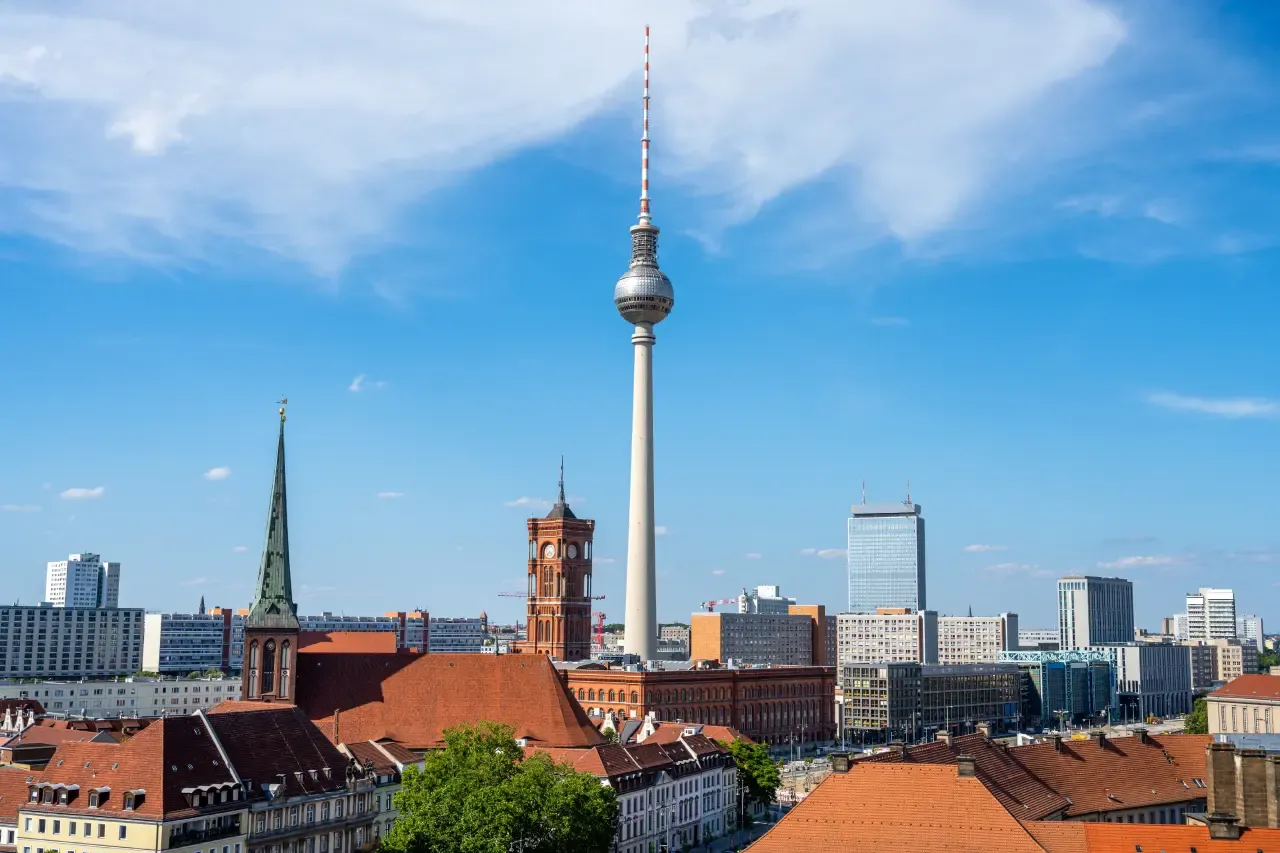
Berlin TV Tower
Built beside Alexanderplatz between 1965 and 1969, and at 368 metres the tallest structure in Germany.
Location: Mitte, Berlin
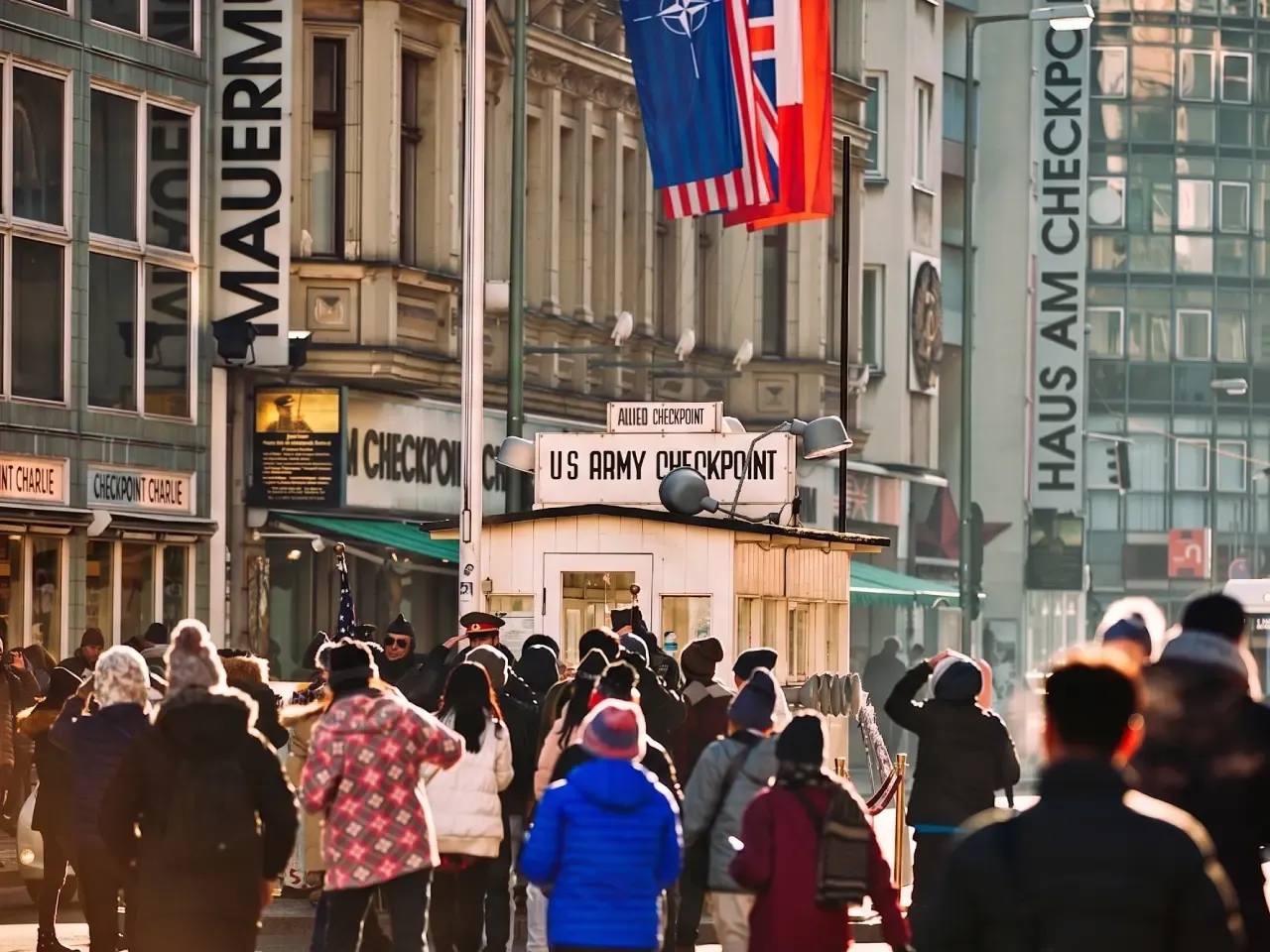
Checkpoint Charlie
The best known crossing between East and West Berlin, where Soviet and American tanks faced each other in 1961.
Location: Friedrichstrasse, Mitte, Berlin
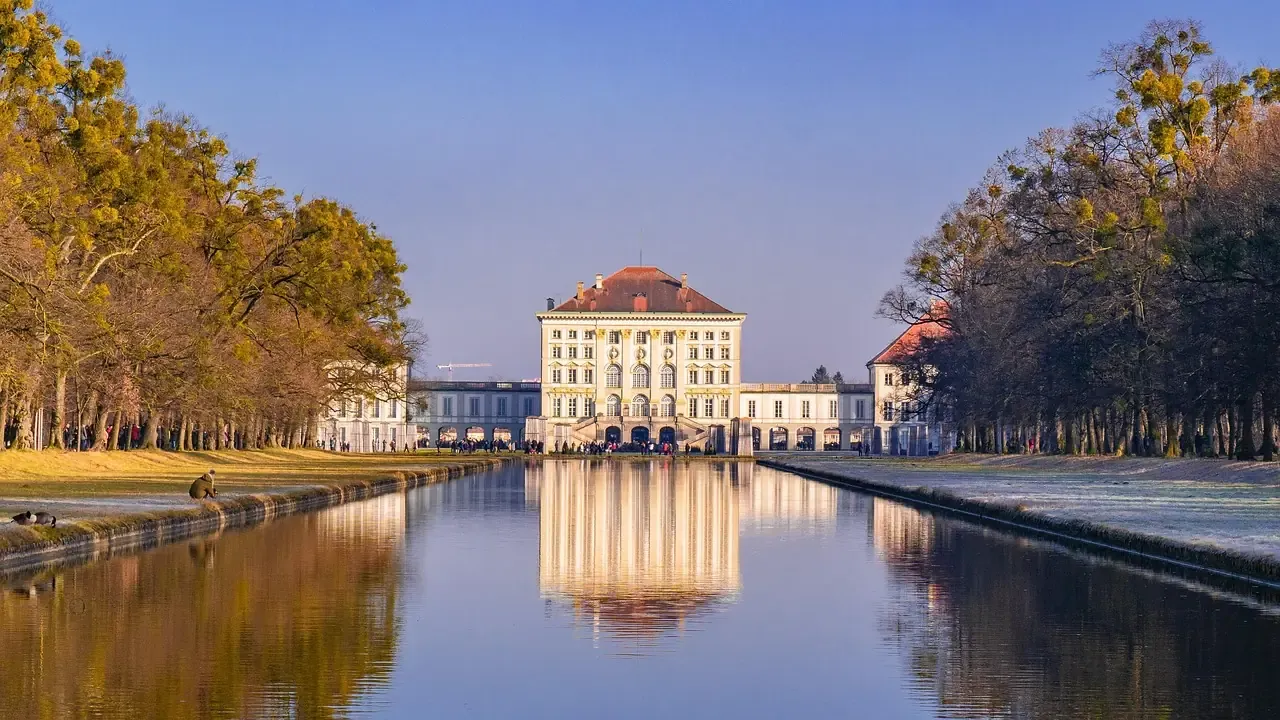
Nymphenburg Palace
The summer residence of the Wittelsbach rulers of Bavaria, its frontage of 632 metres longer than that of Versailles.
Location: Neuhausen-Nymphenburg, Munich
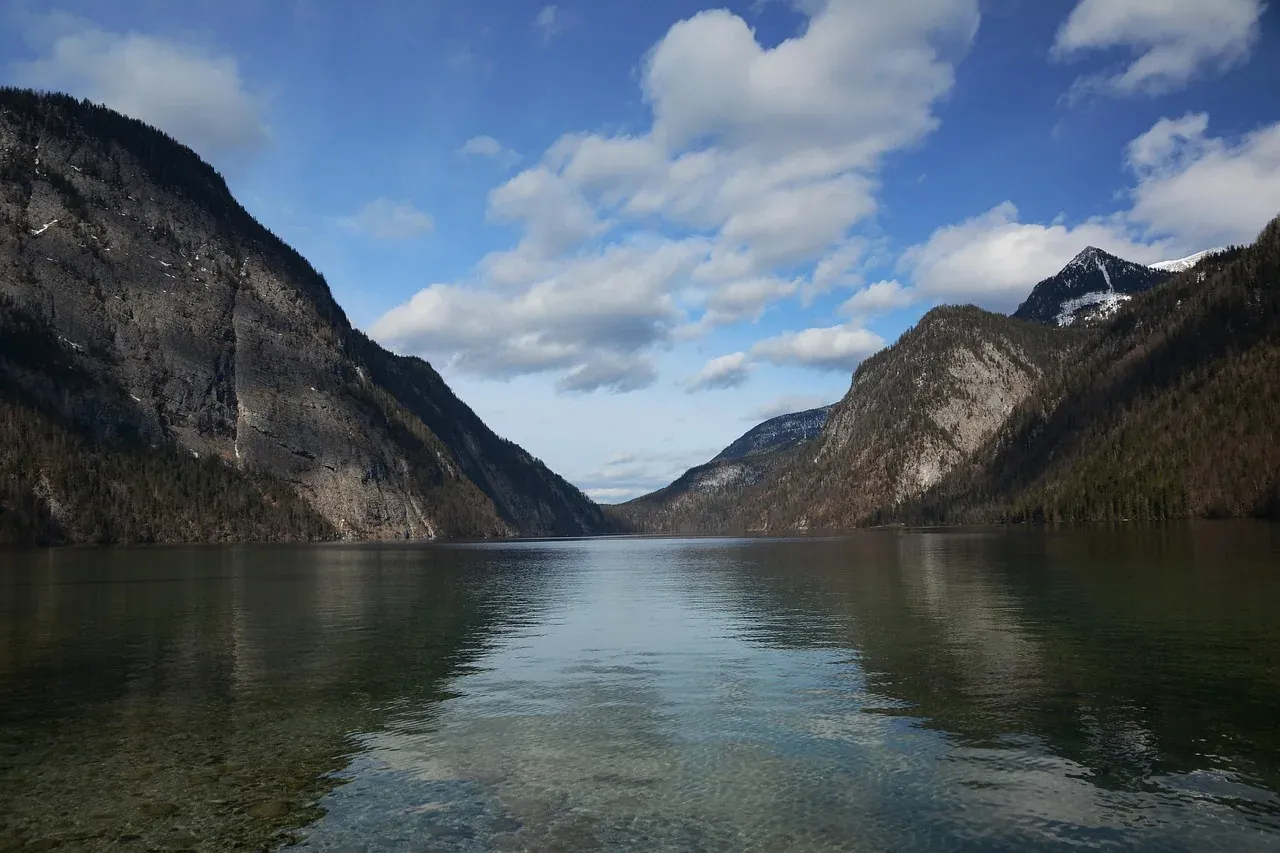
Königssee
A natural lake between steep Alpine walls, most of it inside Berchtesgaden National Park close to the Austrian border.
Location: Berchtesgadener Land, Bavaria
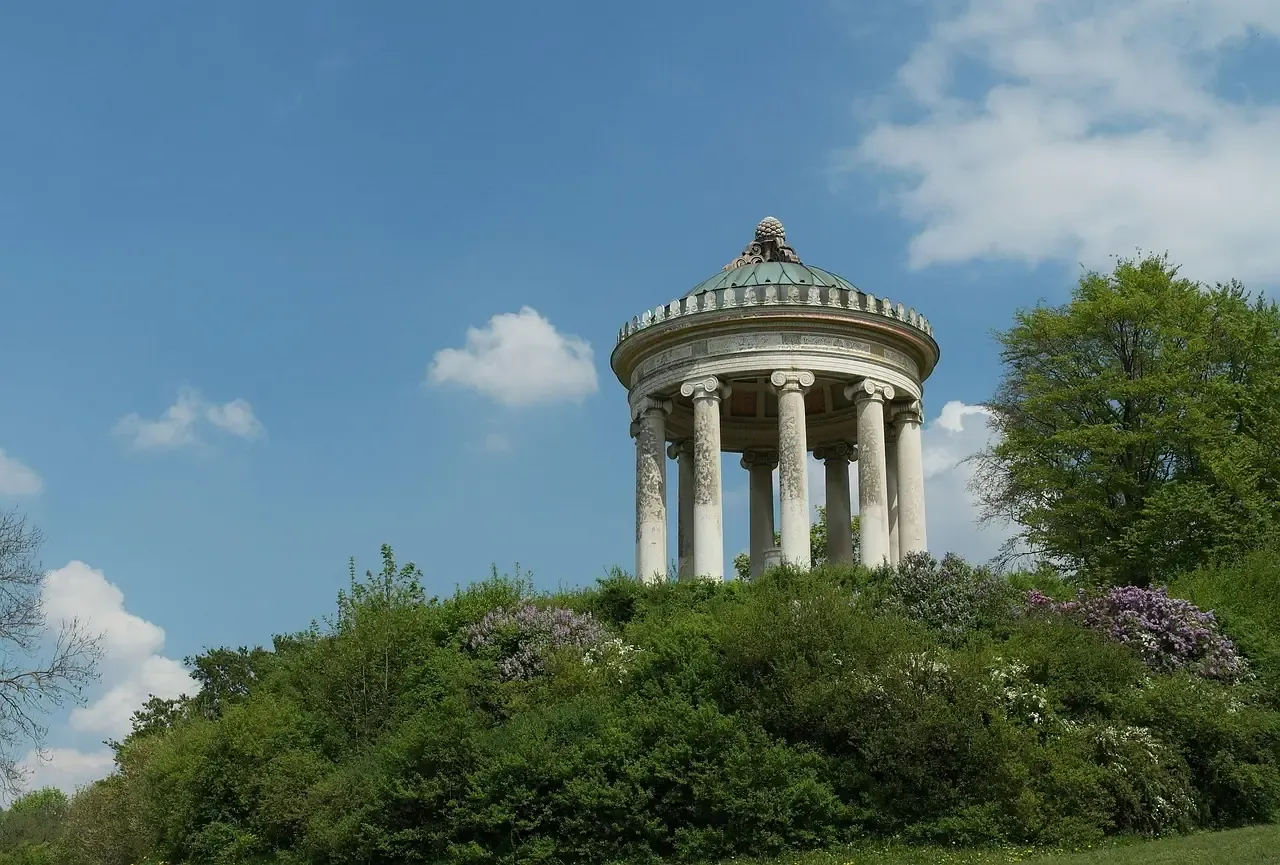
English Garden
One of the largest urban parks in the world, 370 hectares begun in 1789 in the informal English landscape style.
Location: Munich, Bavaria
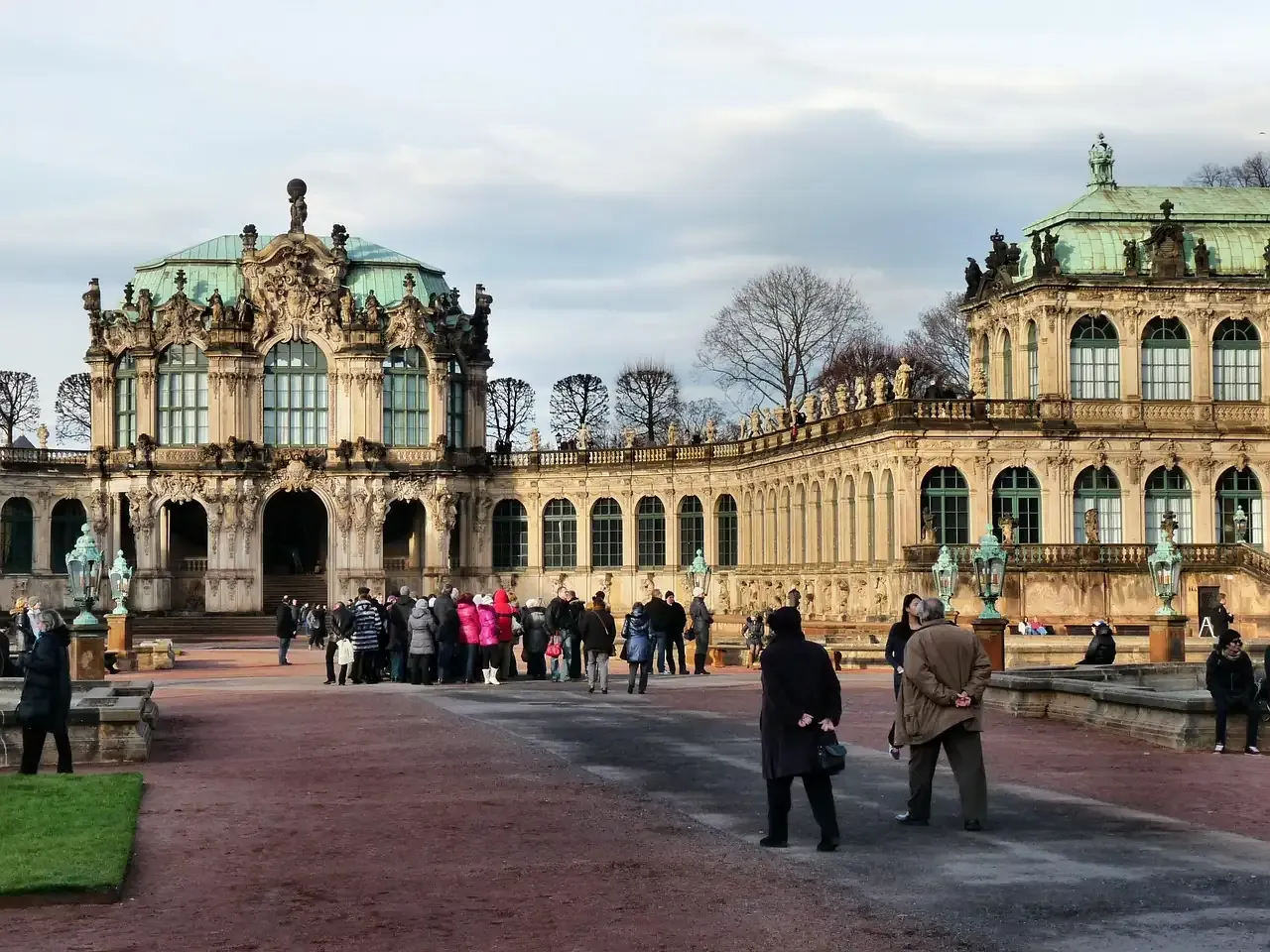
Dresden Zwinger
Matthäus Daniel Pöppelmann began this baroque complex in 1709 as an orangery and a festival ground for Augustus the Strong.
Location: Altstadt, Dresden
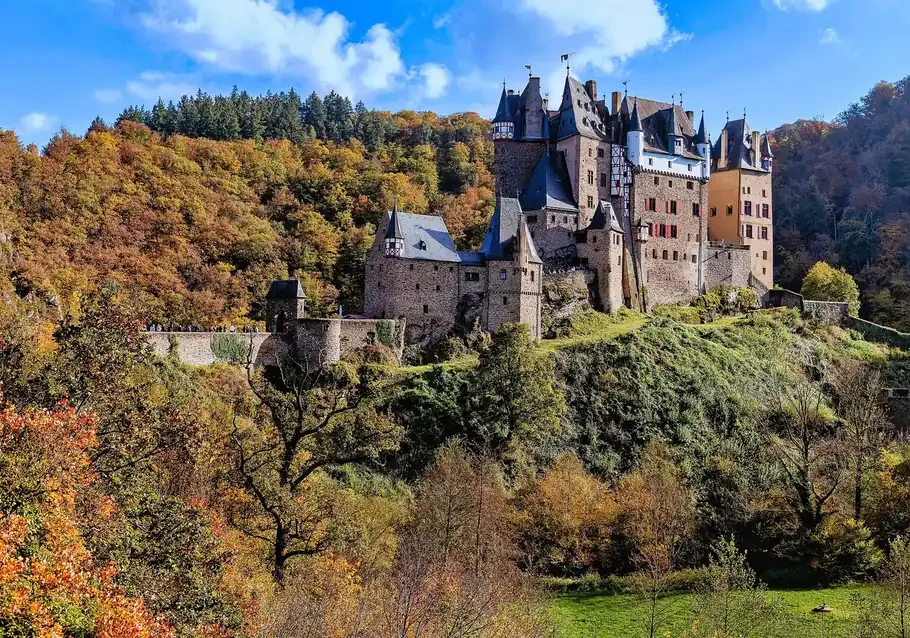
Eltz Castle
A medieval castle on a rock spur above the Elzbach, home to a branch of the Eltz family since the twelfth century.
Location: Wierschem, Moselle valley
Photo: "Burg Eltz im Oktober, Westseite" by Rolf Kranz (CC BY-SA 4.0).
More tourist attraction tickets in Germany
Typical dishes of Germany
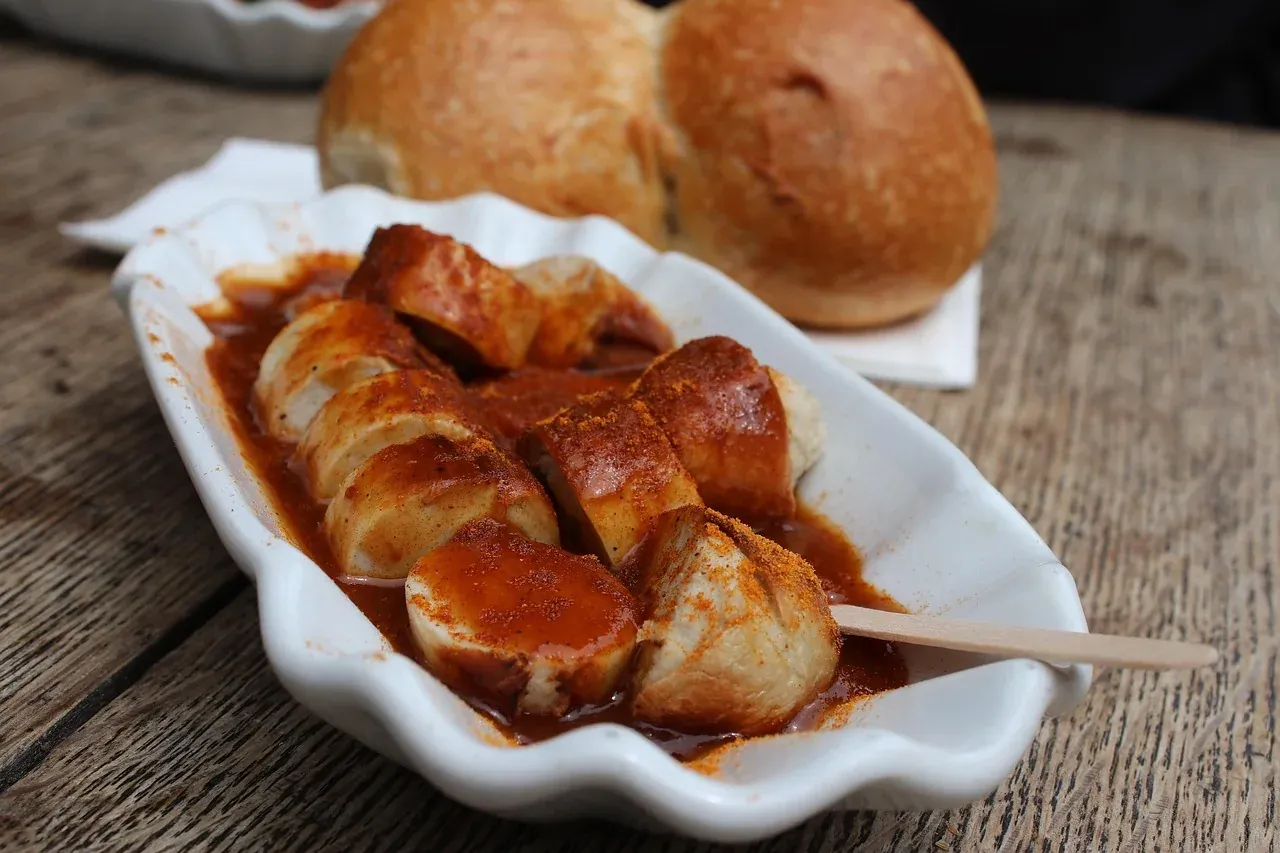
Currywurst
Grilled pork sausage cut up and buried under curried ketchup. Herta Heuwer started selling it from a stand in West Berlin in 1949 and the city has never let it go.
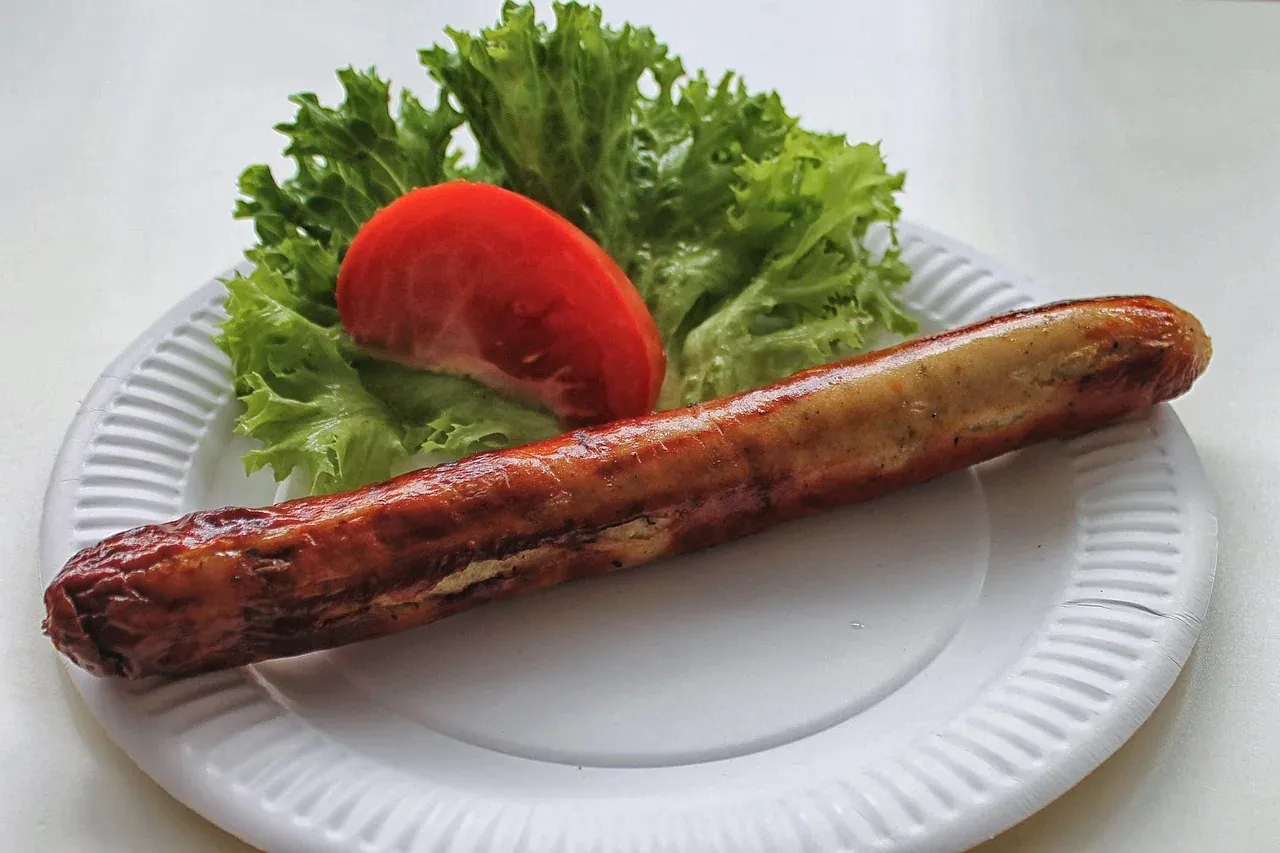
Bratwurst
Grilled pork sausage in dozens of regional versions. The first written mention comes from Nuremberg in 1313, and Franconia still argues over the right length and seasoning.

Schweinshaxe
Roast pork knuckle with crackling, a fixture of Bavarian beer halls and gardens. The northern relative, Eisbein, is pickled and boiled rather than roasted.

Käsespätzle
Soft egg noodles layered with cheese and fried onion, the Swabian answer to macaroni cheese. Plain Spätzle also turn up beside game and gravy across the south.
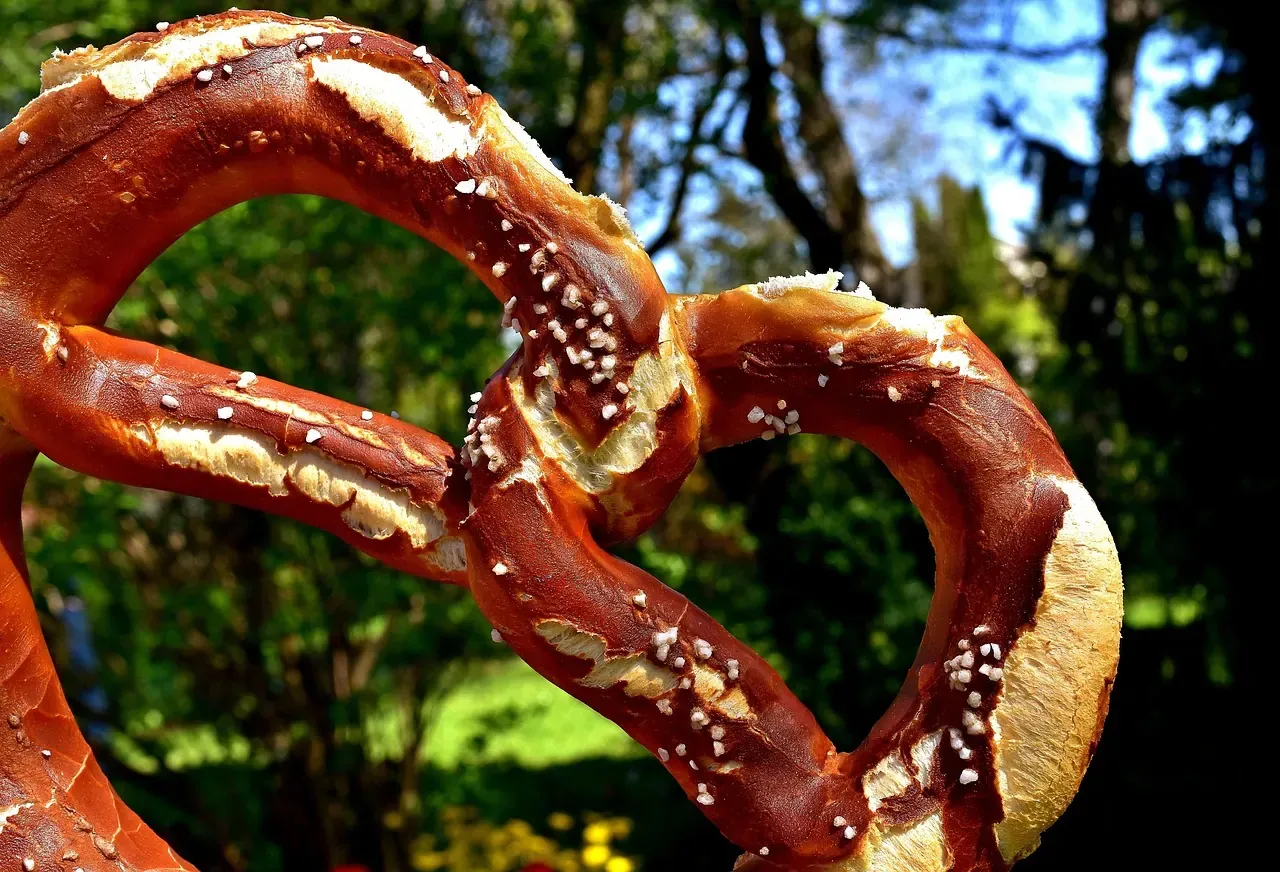
Brezel
A knot of dough dipped in lye before baking, which gives the dark crust under the salt. Bavaria calls it a Brezn and eats it with white sausage and sweet mustard.
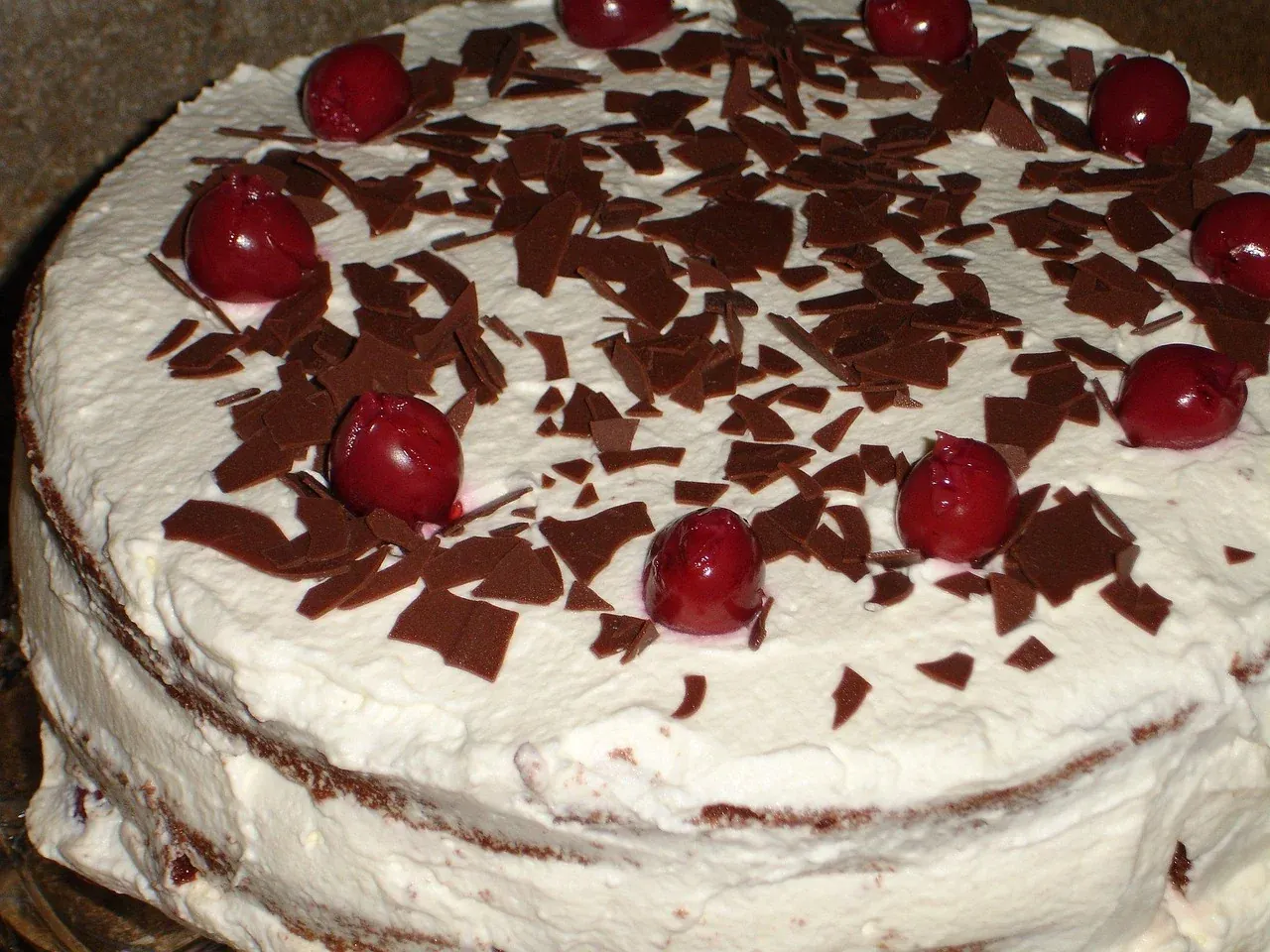
Schwarzwälder Kirschtorte
Chocolate sponge layered with cream and cherries soaked in Kirsch. The origin is disputed, though a recipe from 1927 is kept in an archive at Radolfzell.
Unusual museums and collections in Germany
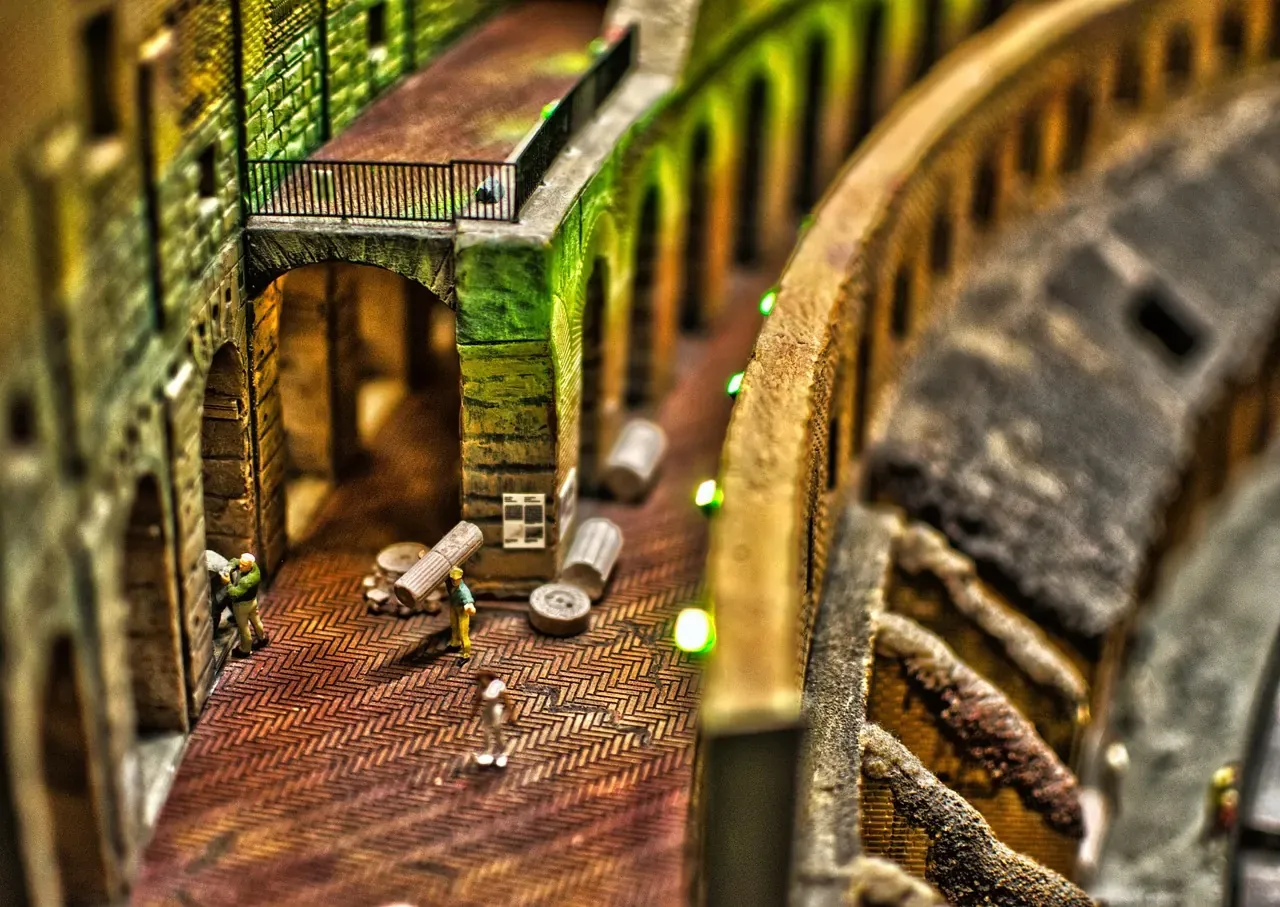
Miniatur Wunderland
The largest model railway in the world by Guinness count, with more than a thousand trains running through miniature countries.
Location: Speicherstadt, Hamburg
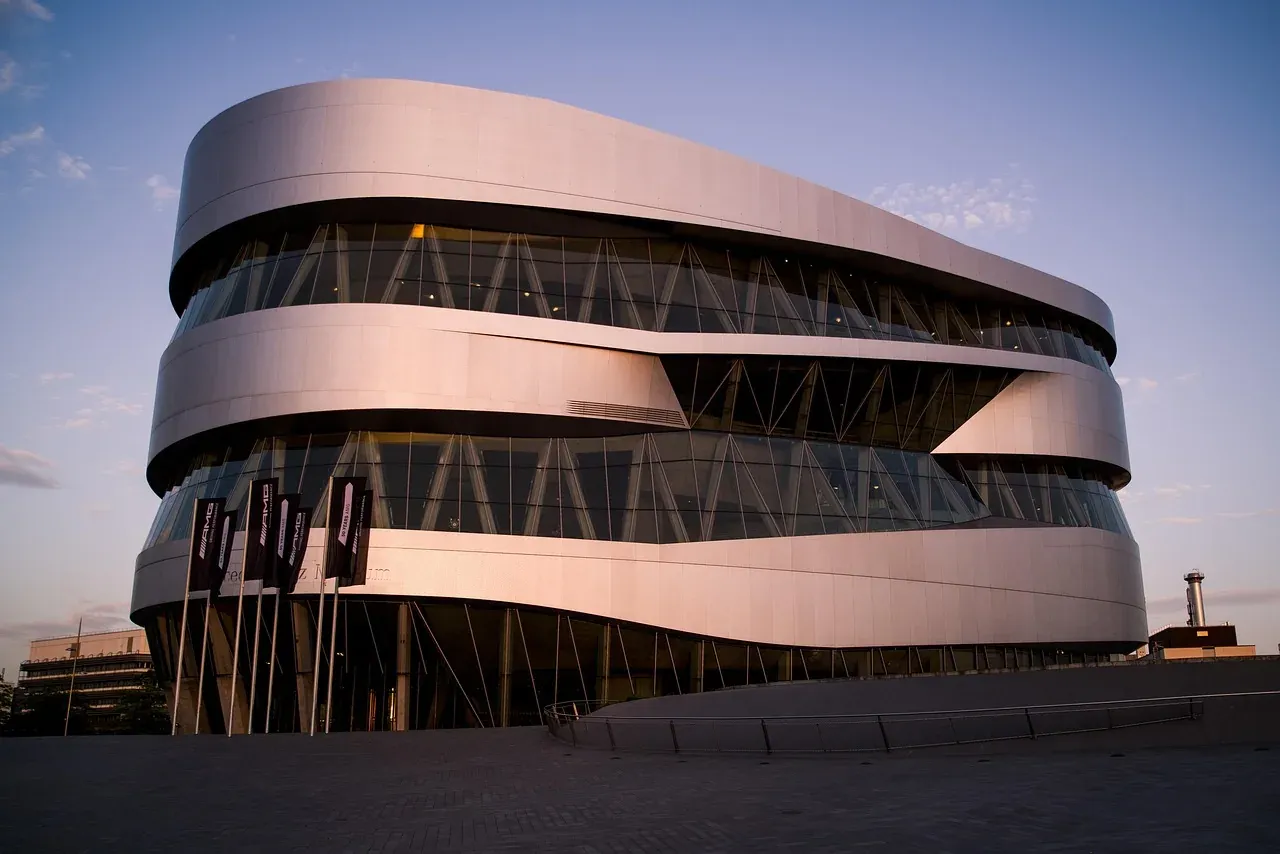
Mercedes-Benz Museum
Cars spiral down a double helix designed by UNStudio, from the first Benz patent motor car to the Silver Arrow racers.
Location: Stuttgart, Baden-Württemberg
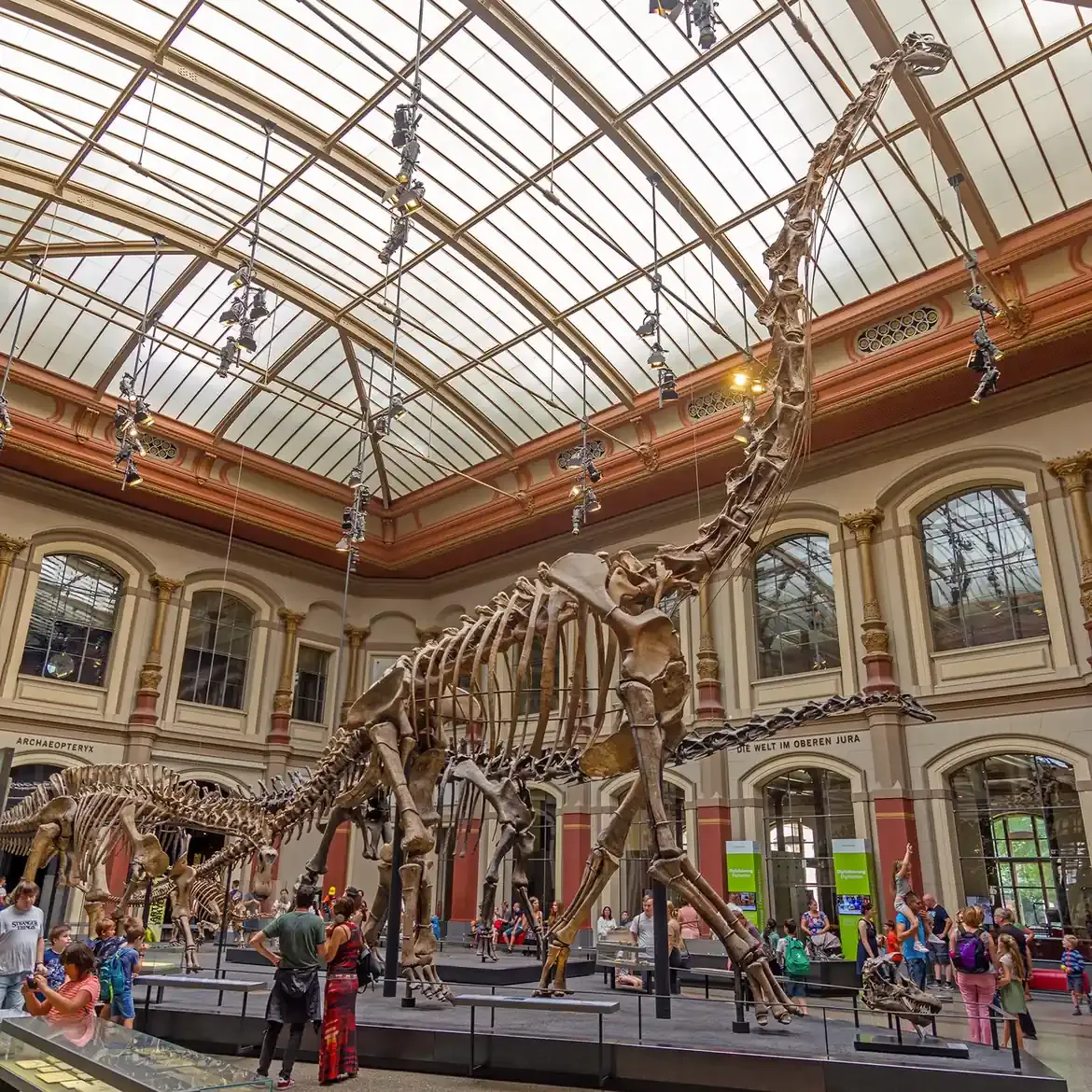
Museum für Naturkunde
The largest mounted dinosaur skeleton in the world stands under glass here, beside an Archaeopteryx fossil and thirty million further specimens.
Location: Invalidenstraße, Berlin
Photo: "Brachiosaurus brancai Berlin 1" by User:Vesta (CC BY-SA 4.0).
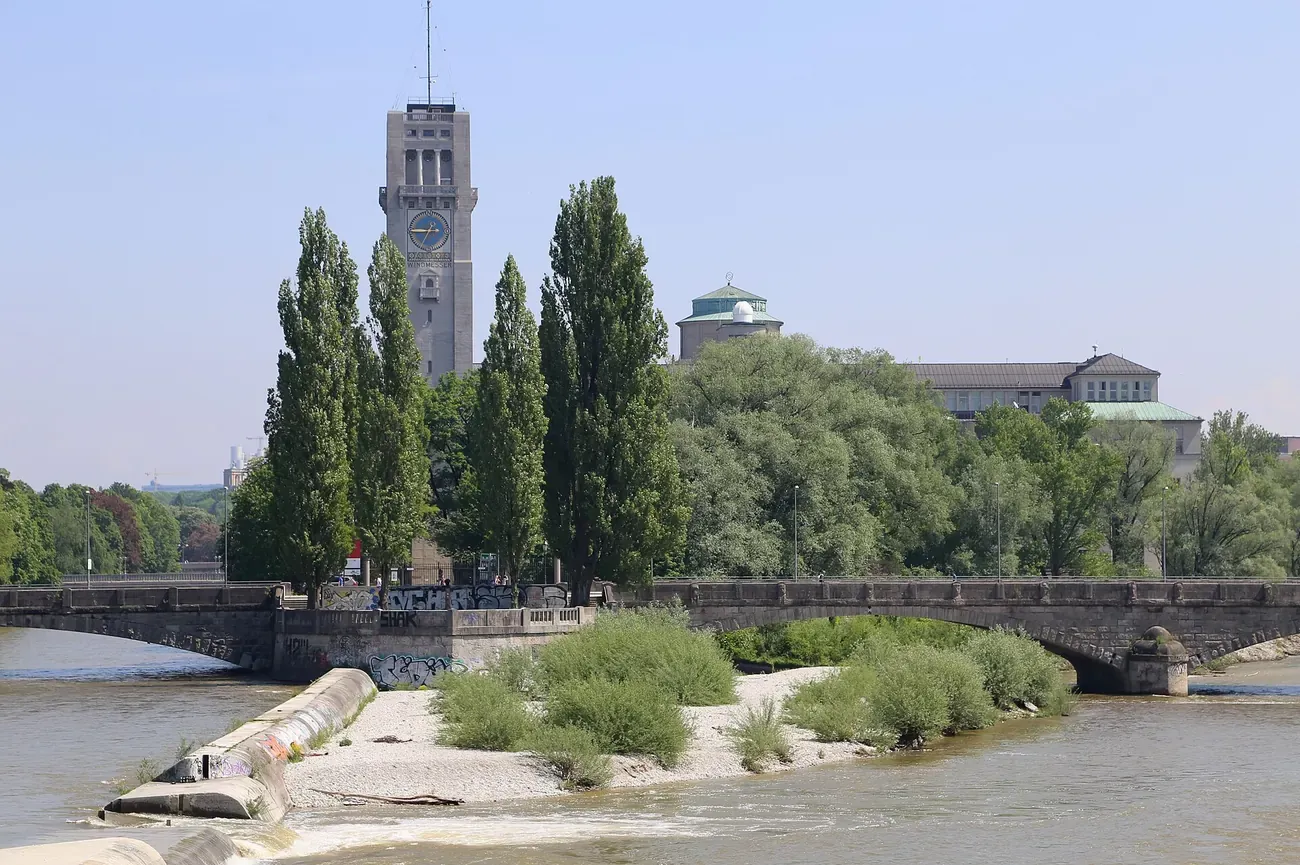
Deutsches Museum
The world's largest museum of science and technology, with around 125,000 objects from fifty fields on an island in the Isar.
Location: Museumsinsel, Munich
Photo: "Isar von der Reichenbachbruecke Deutsches Museum Muenchen" by Rufus46 (CC BY-SA 3.0).
Cold War sites to visit in Germany
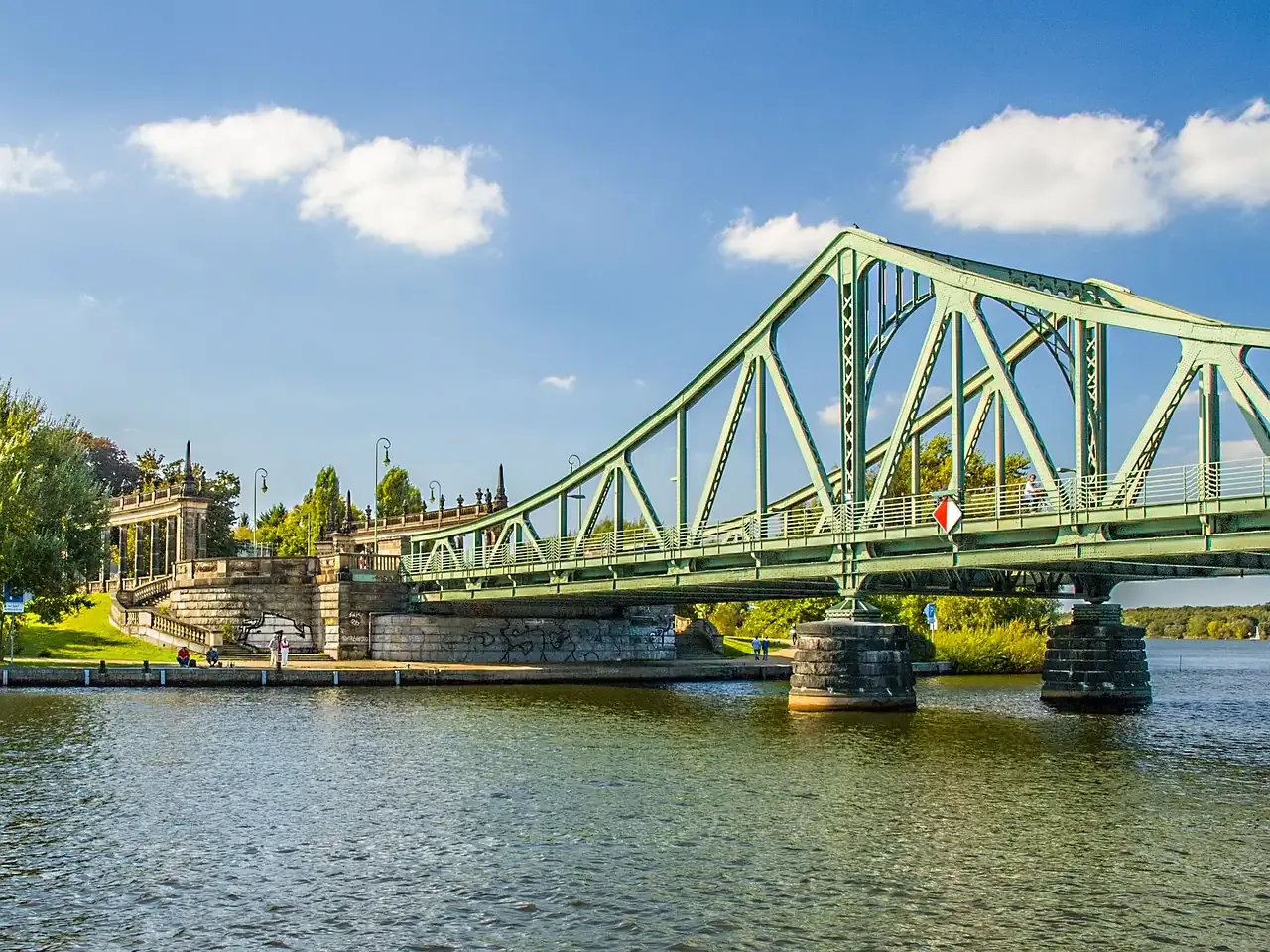
Glienicke Bridge
Captured spies were swapped in the middle of this green steel span, where the border between West Berlin and East Germany ran down the Havel.
Location: Between Wannsee and Potsdam
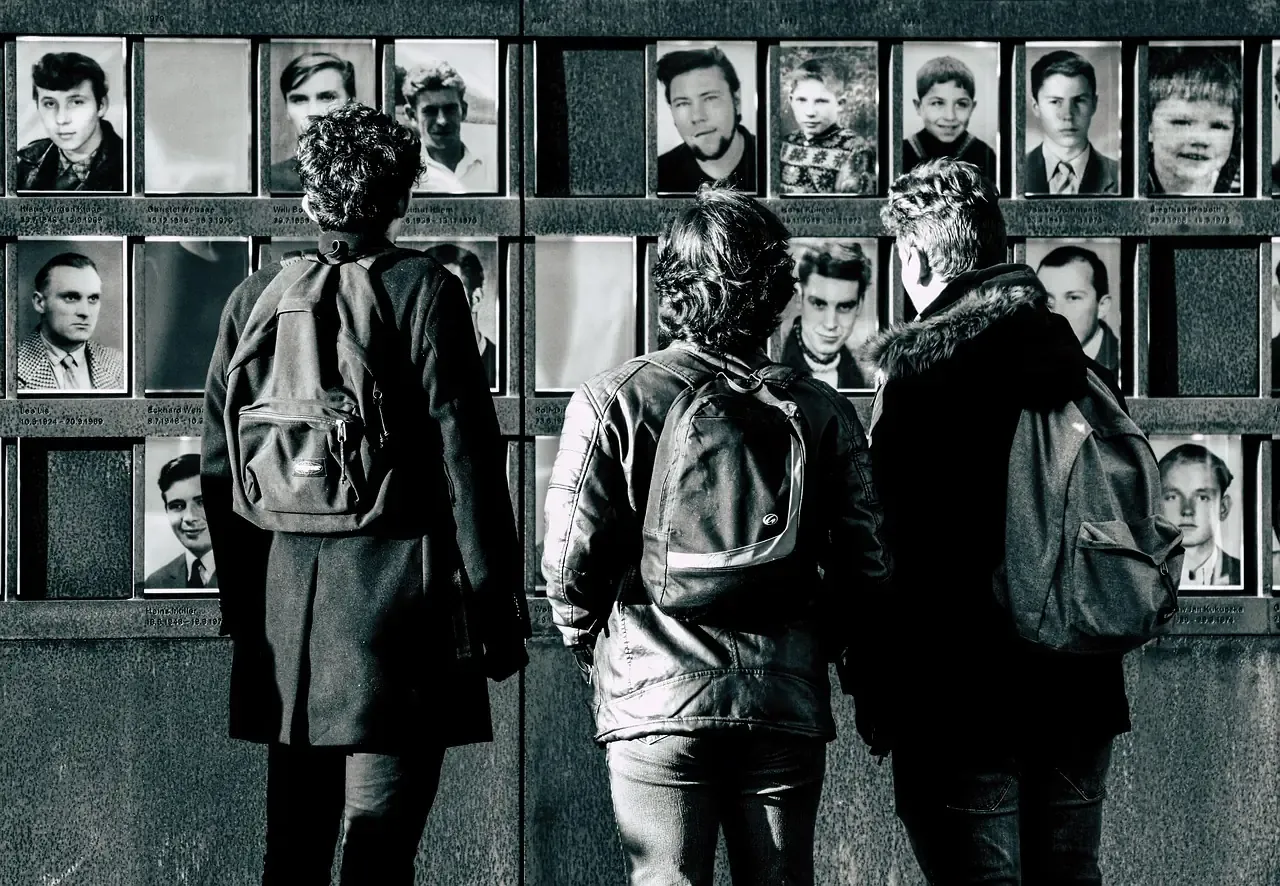
Berlin Wall Memorial
A preserved stretch of the death strip with its watchtower, a chapel of reconciliation and a window of remembrance for those killed at the border.
Location: Bernauer Straße, Berlin
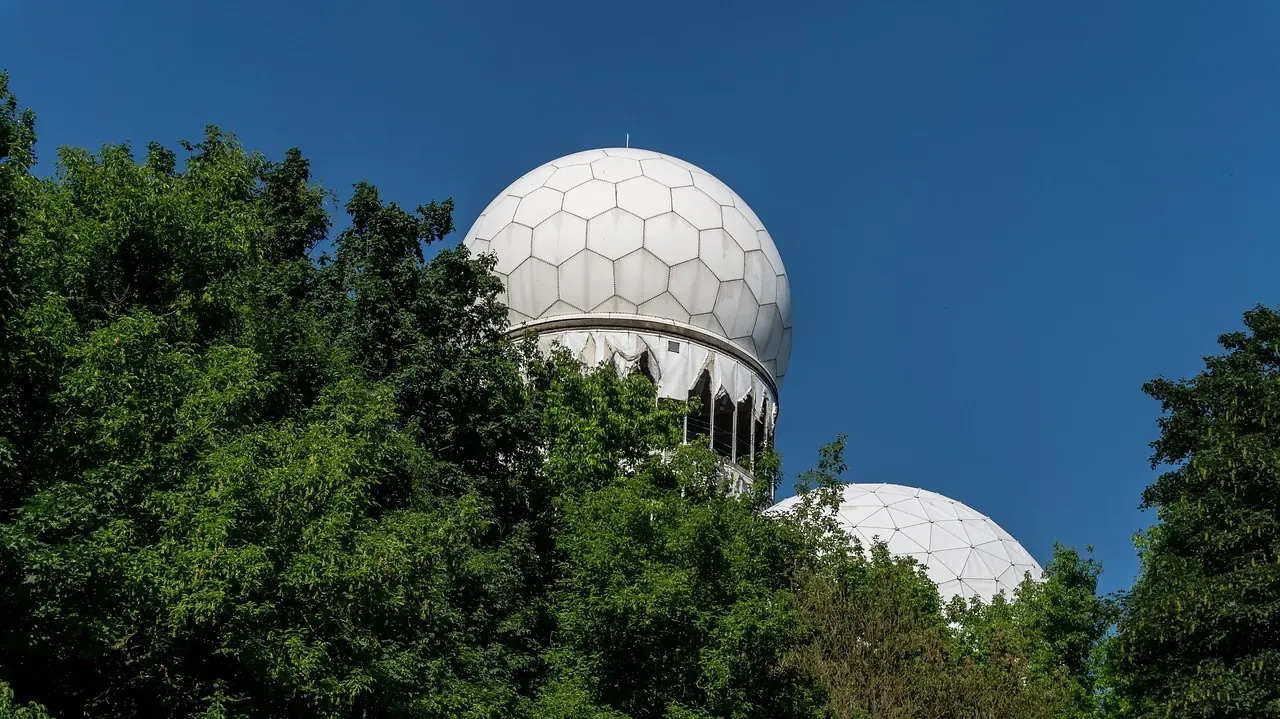
Teufelsberg
An American listening station on a hill of war rubble in the Grunewald, its torn radomes now covered in murals and open on tours.
Location: Grunewald, Berlin
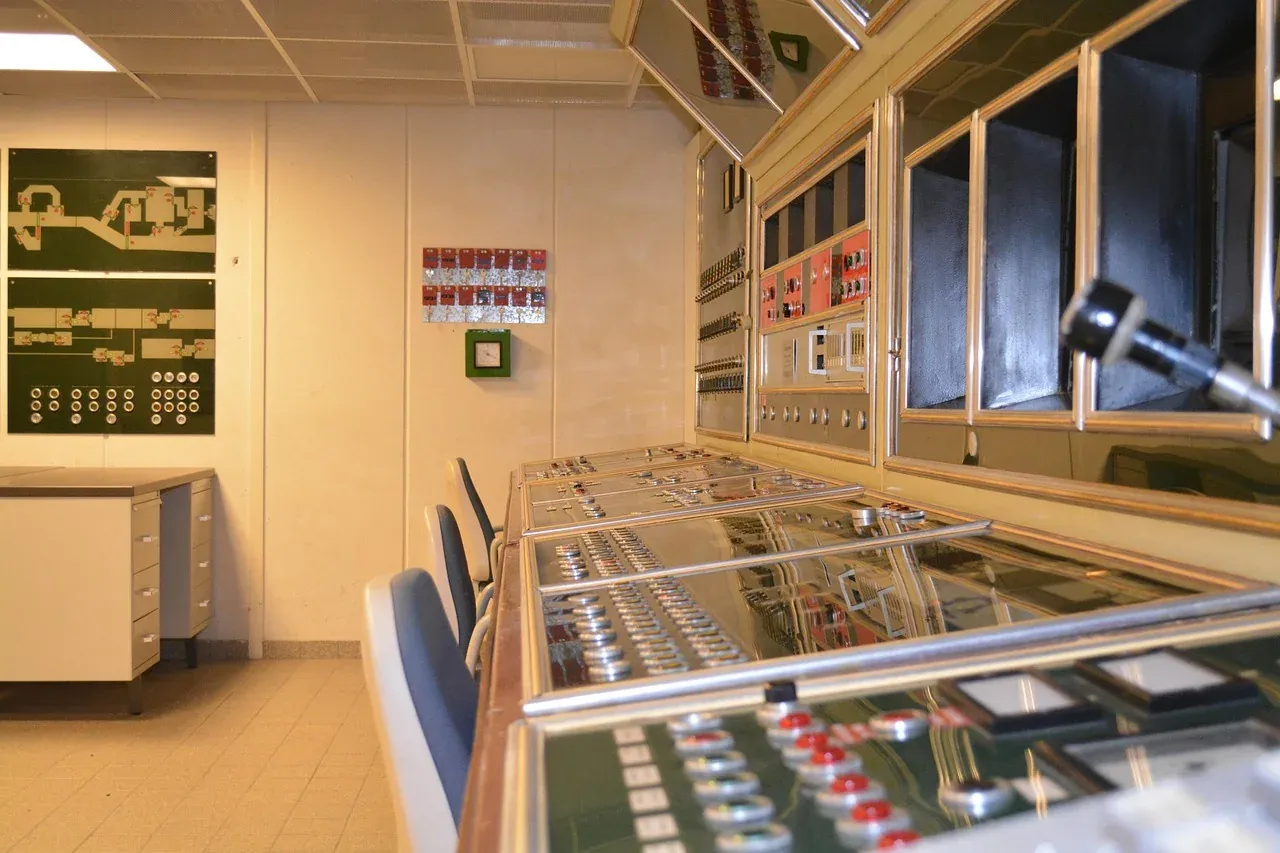
Ahrweiler government bunker
A stretch of the nuclear bunker built to hold the West German government is kept as a museum in the Ahr valley.
Location: Bad Neuenahr-Ahrweiler, Rhineland-Palatinate
Lesser known castles and palaces in Germany
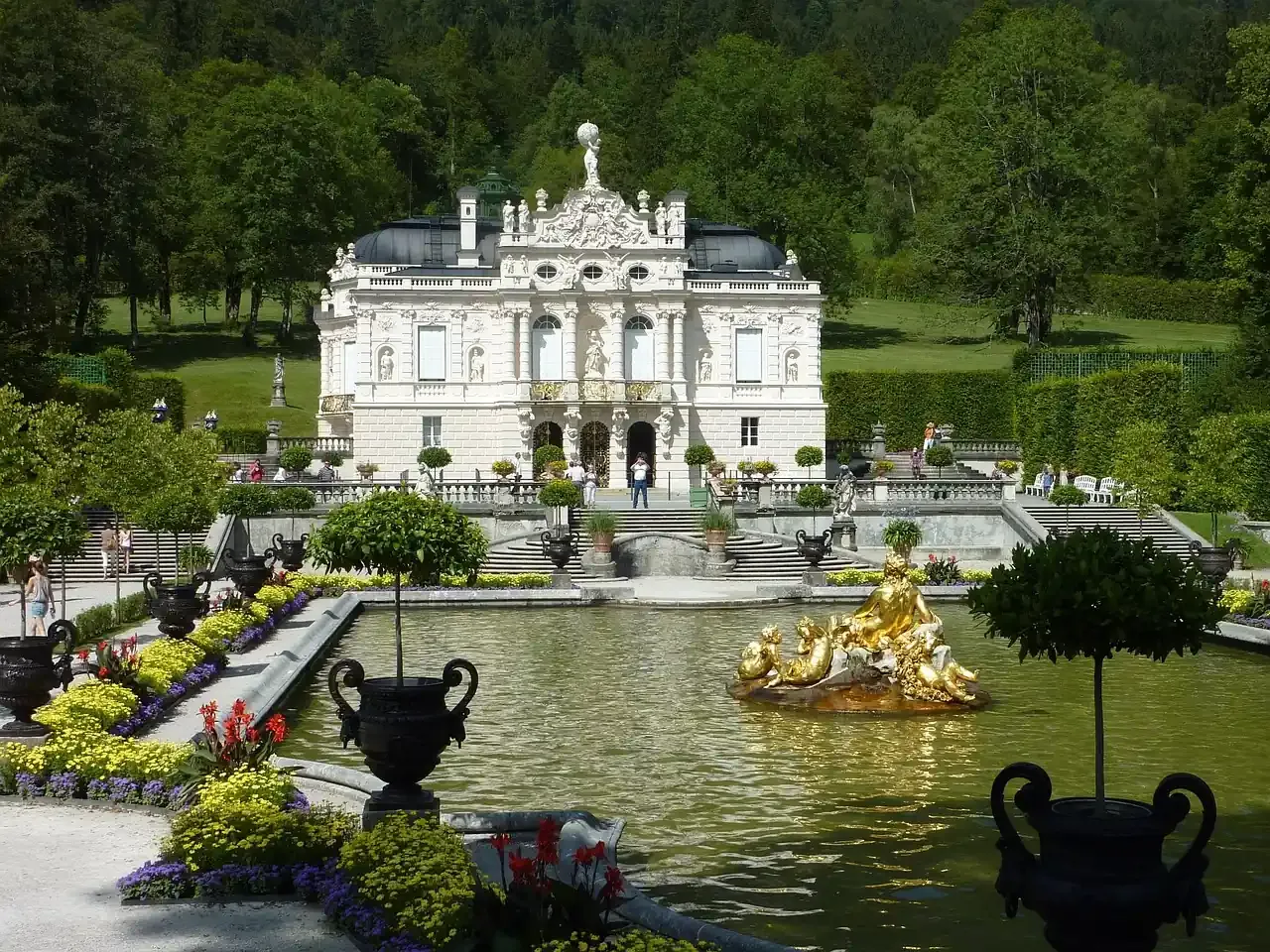
Linderhof Palace
The smallest of Ludwig II's palaces and the only one he saw finished, with an artificial grotto behind it. UNESCO listed in 2025.
Location: Ettal, Bavaria
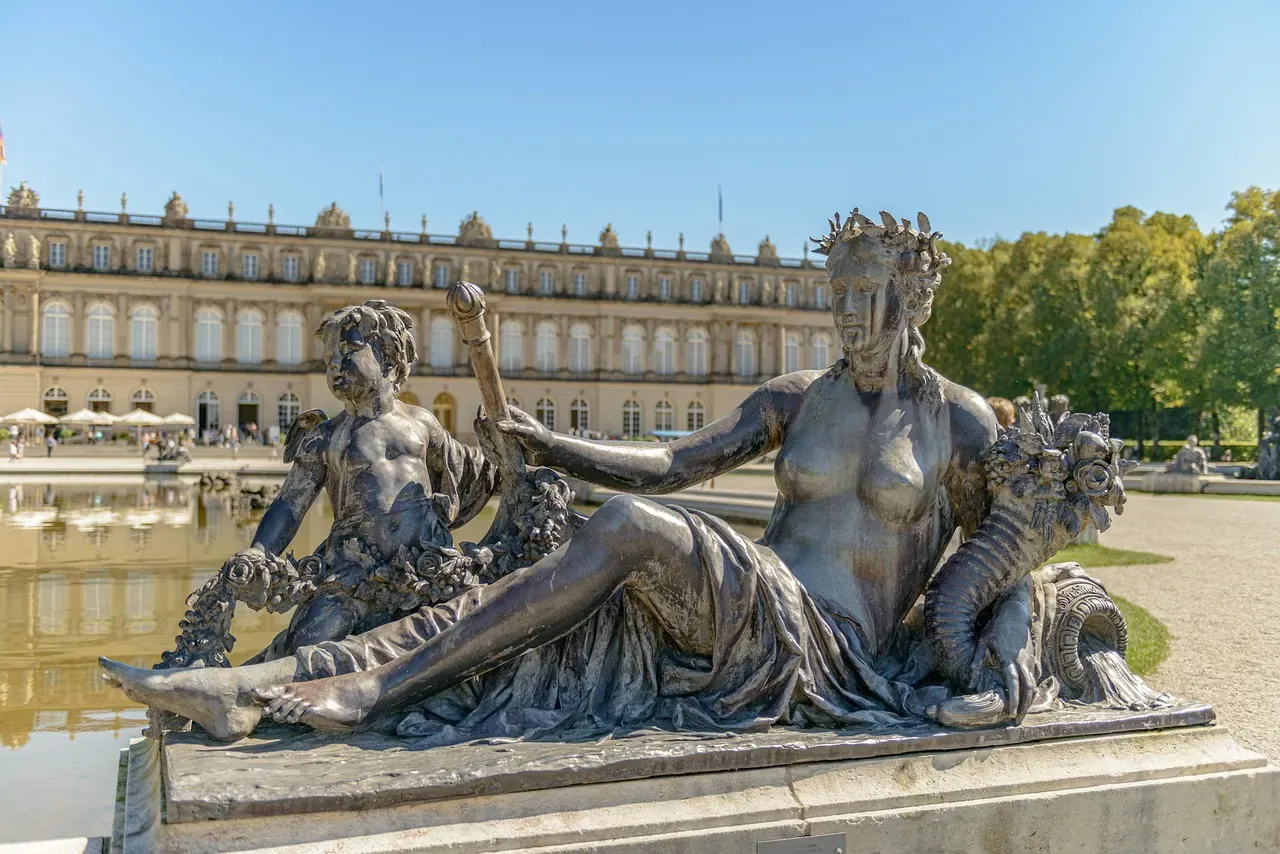
Herrenchiemsee
Ludwig II answered Versailles with a palace on an island in the Chiemsee, left unfinished at his death in 1886 and UNESCO listed in 2025.
Location: Herreninsel, Chiemsee, Bavaria
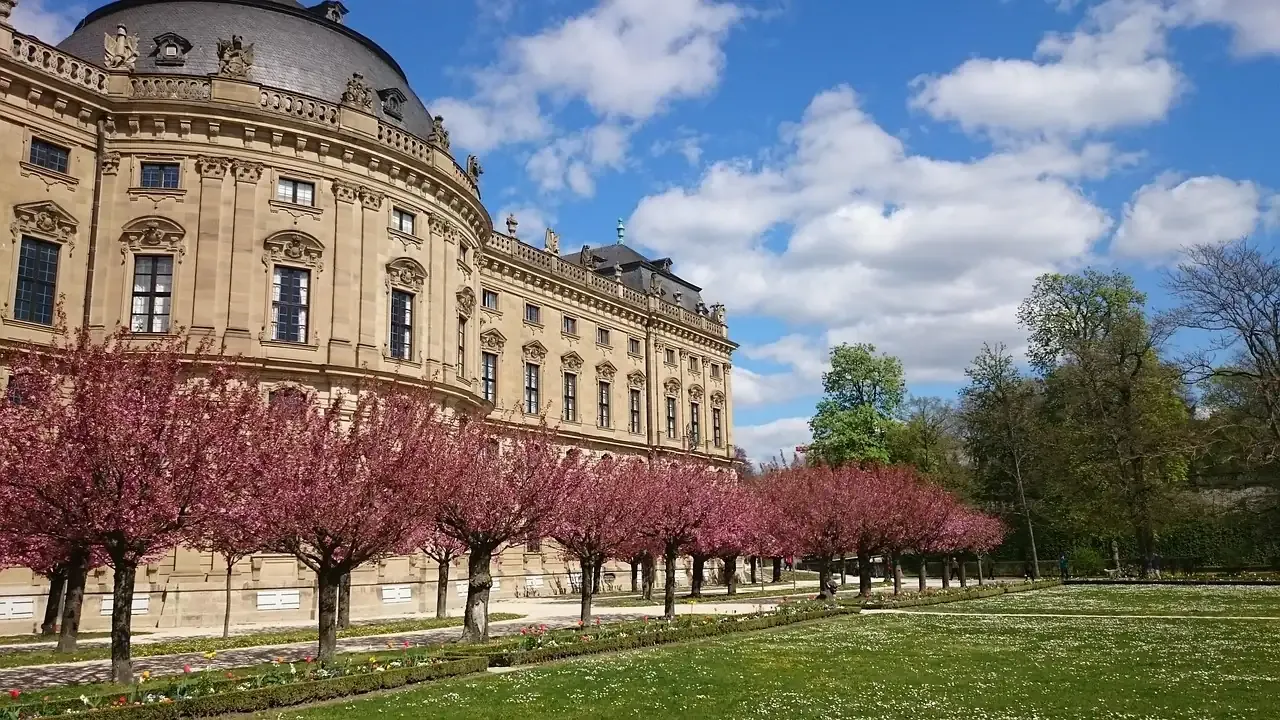
Würzburg Residence
Balthasar Neumann's baroque palace carries the largest ceiling fresco in the world, painted by Tiepolo above the staircase.
Location: Würzburg, Bavaria
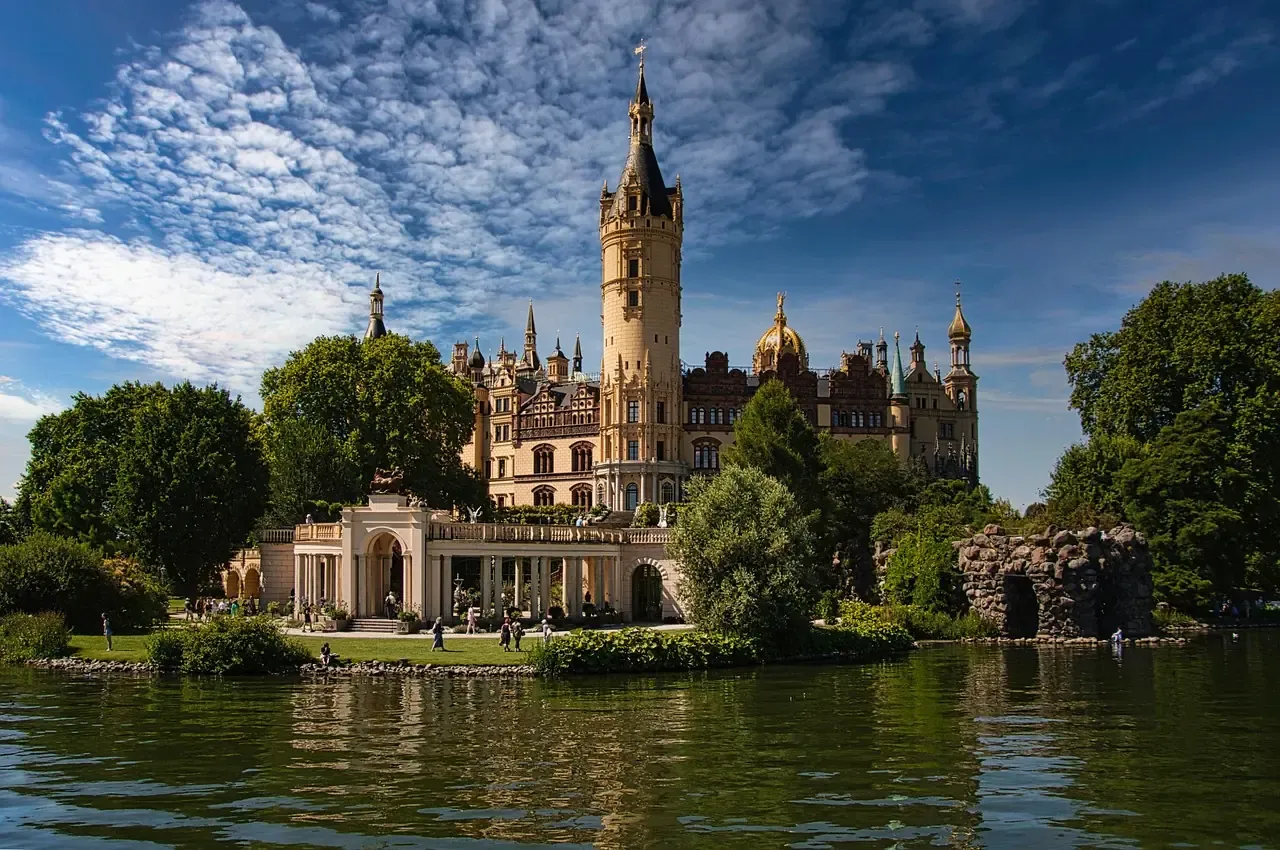
Schwerin Palace
A nineteenth century fantasy of towers and domes on an island in Lake Schwerin, now the seat of the state parliament.
Location: Schwerin, Mecklenburg-Vorpommern
More places to discover in Germany
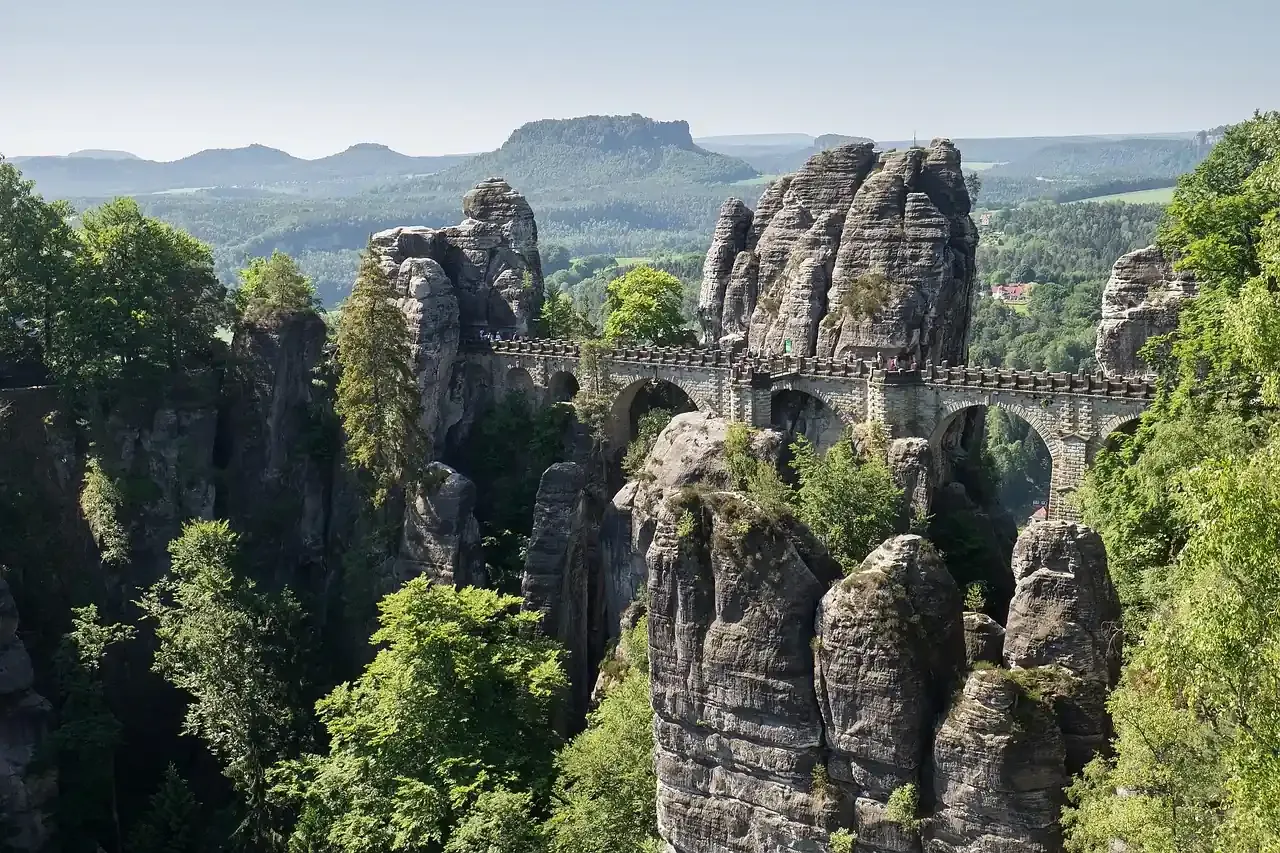
Bastei
A bridge threaded between sandstone towers 194 metres above the Elbe, the landmark of the Saxon Switzerland national park.
Location: Near Rathen, Saxony
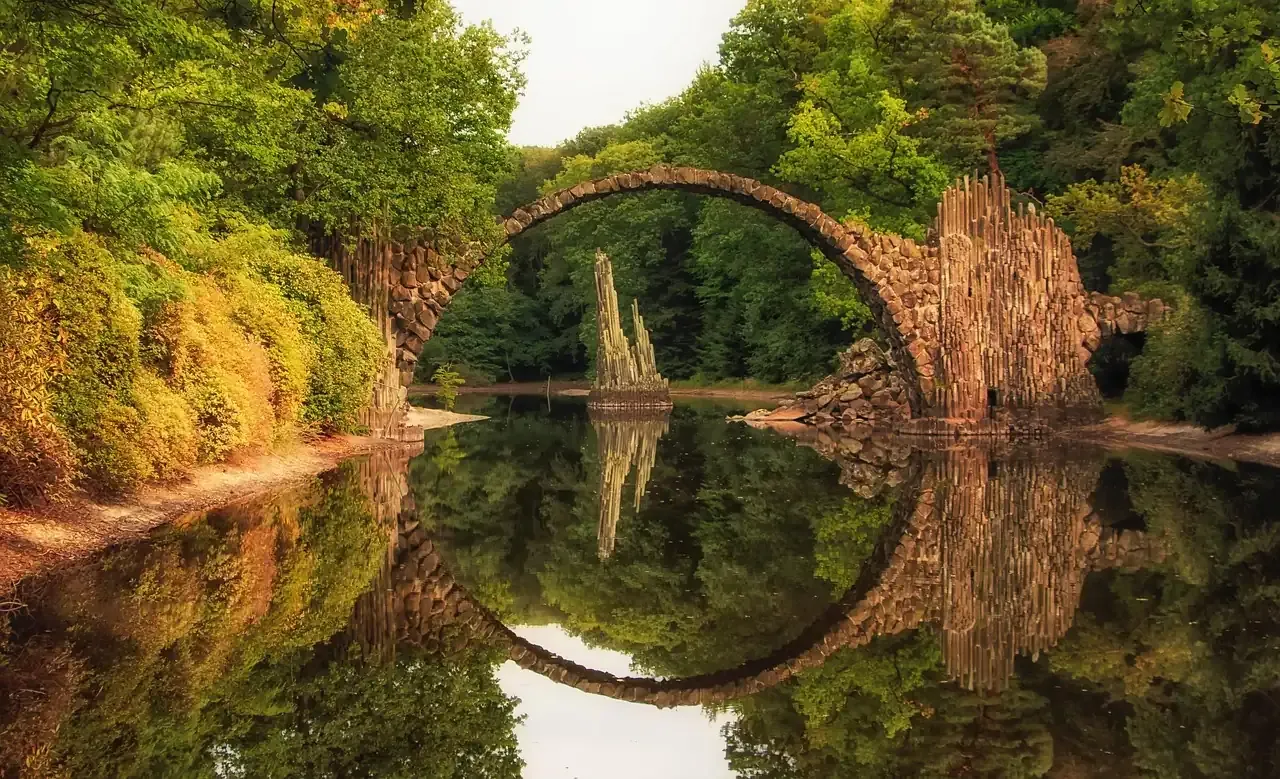
Rakotzbrücke
A basalt arch built so that its reflection closes a perfect circle in the pond below, inside a rhododendron park in Lusatia.
Location: Kromlau, Saxony
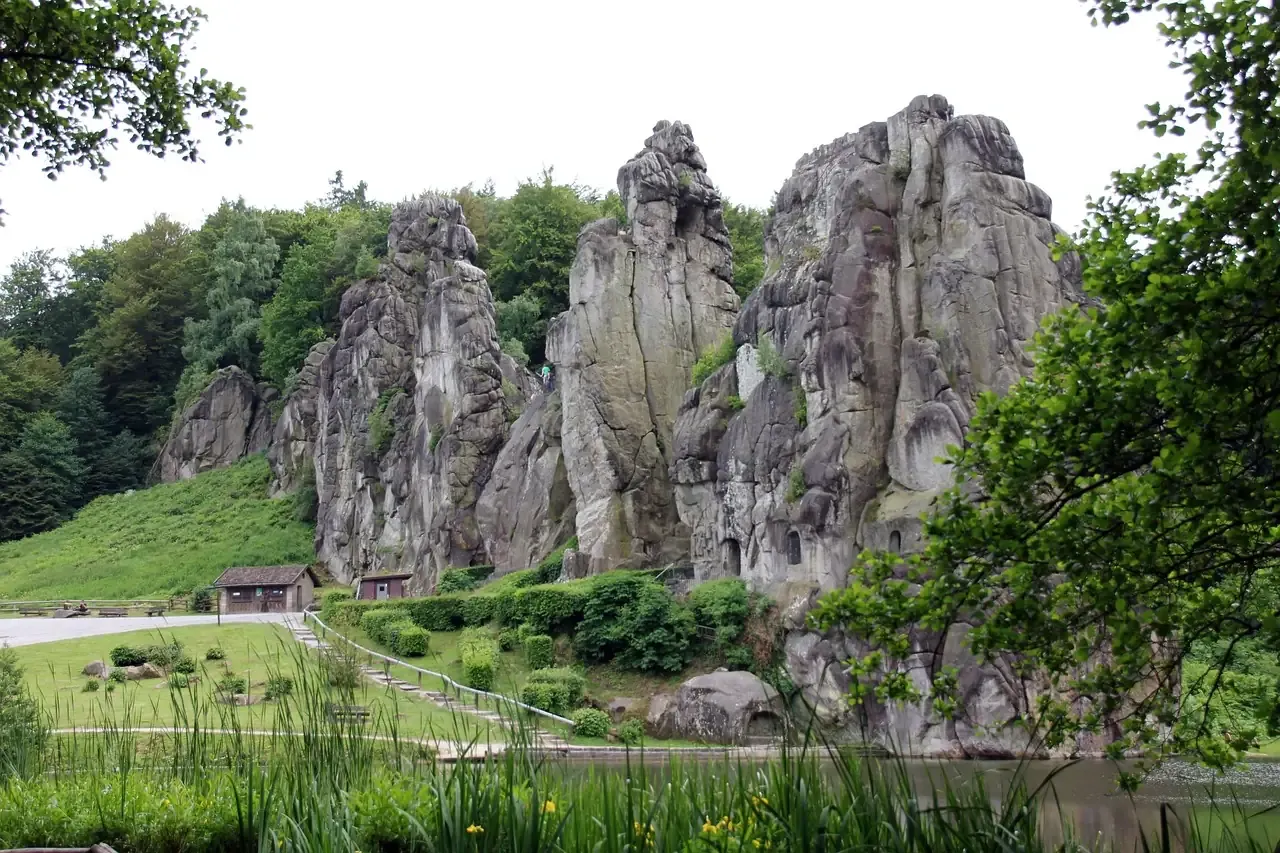
Externsteine
Sandstone columns rising abruptly from wooded hills, carved with a medieval relief and long claimed as a pagan sanctuary.
Location: Horn-Bad Meinberg, Teutoburg Forest
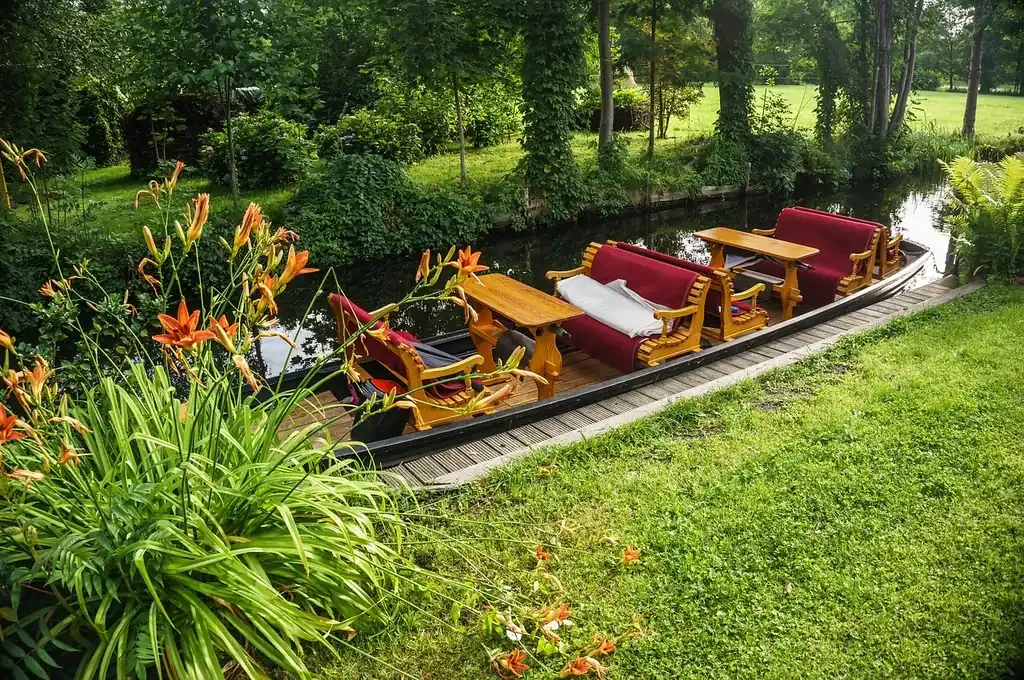
Spreewald
An inland delta of the Spree crossed by flat wooden punts, in a bilingual German and Sorbian corner of Brandenburg known for its gherkins.
Location: Lusatia, Brandenburg
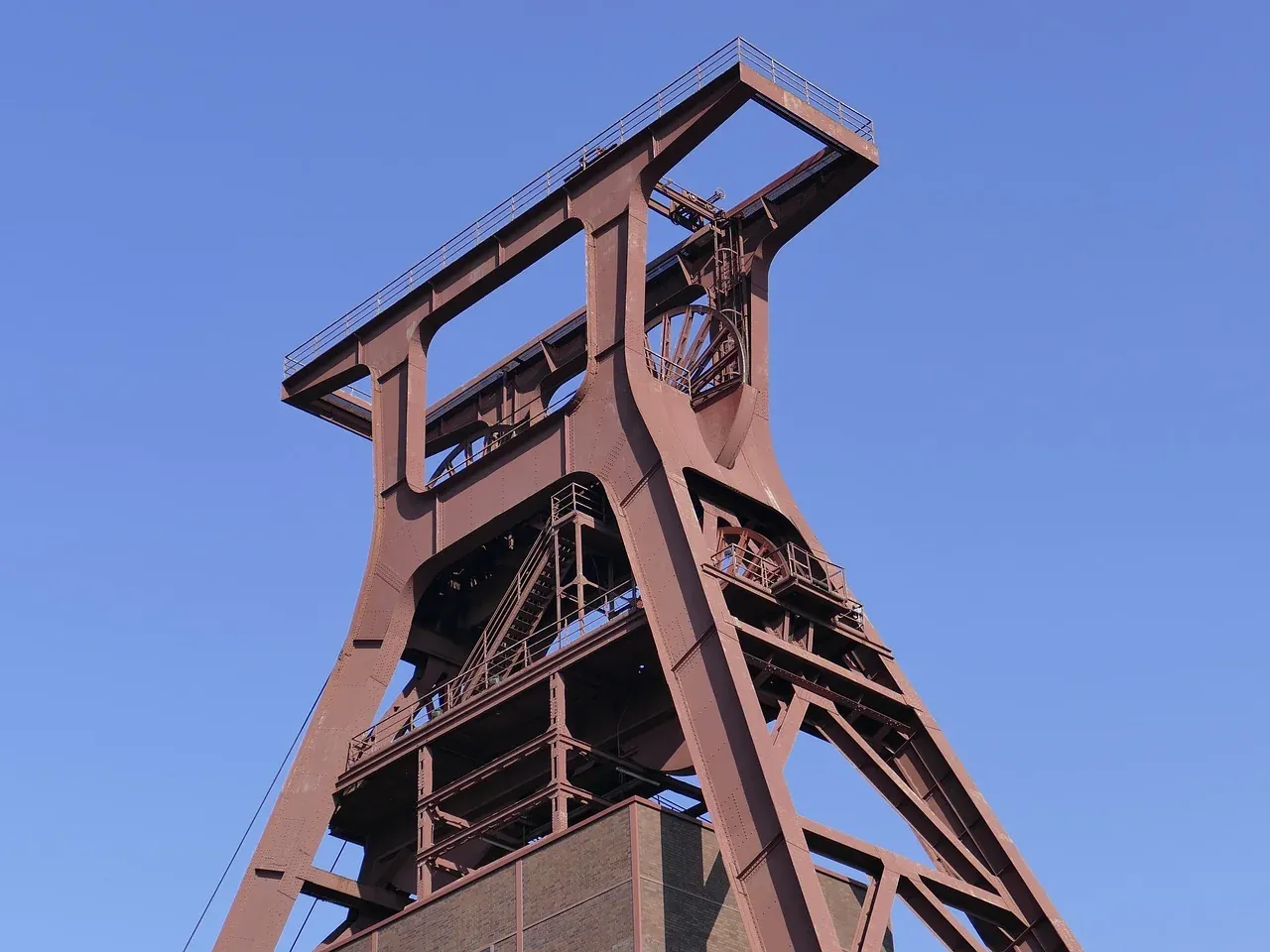
Zollverein colliery
A coal mine that shut in 1986, its shaft twelve of 1932 now a World Heritage site with the Ruhr Museum inside.
Location: Essen, North Rhine-Westphalia
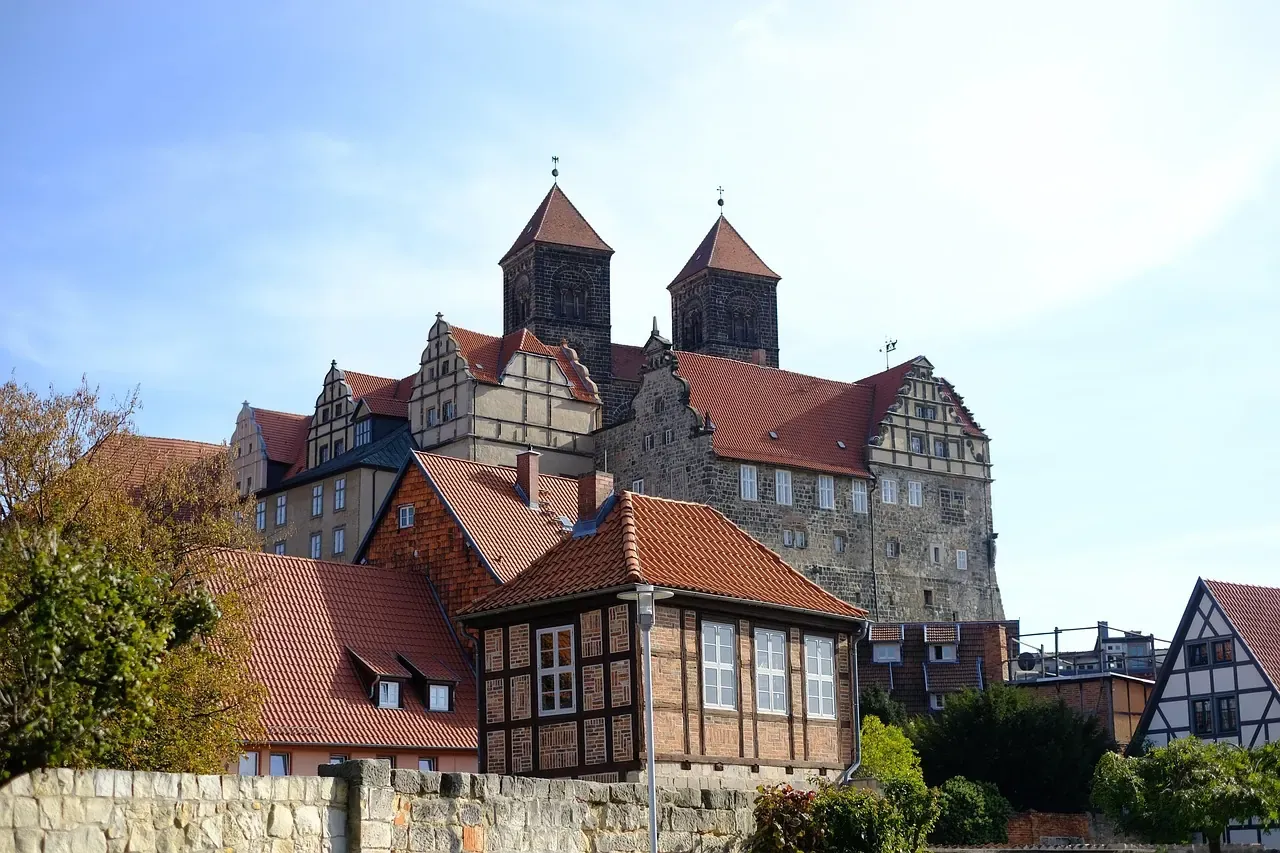
Quedlinburg
Around 2,100 timber framed houses survive below the castle hill and its Romanesque collegiate church, listed by UNESCO in 1994.
Location: Harz, Saxony-Anhalt
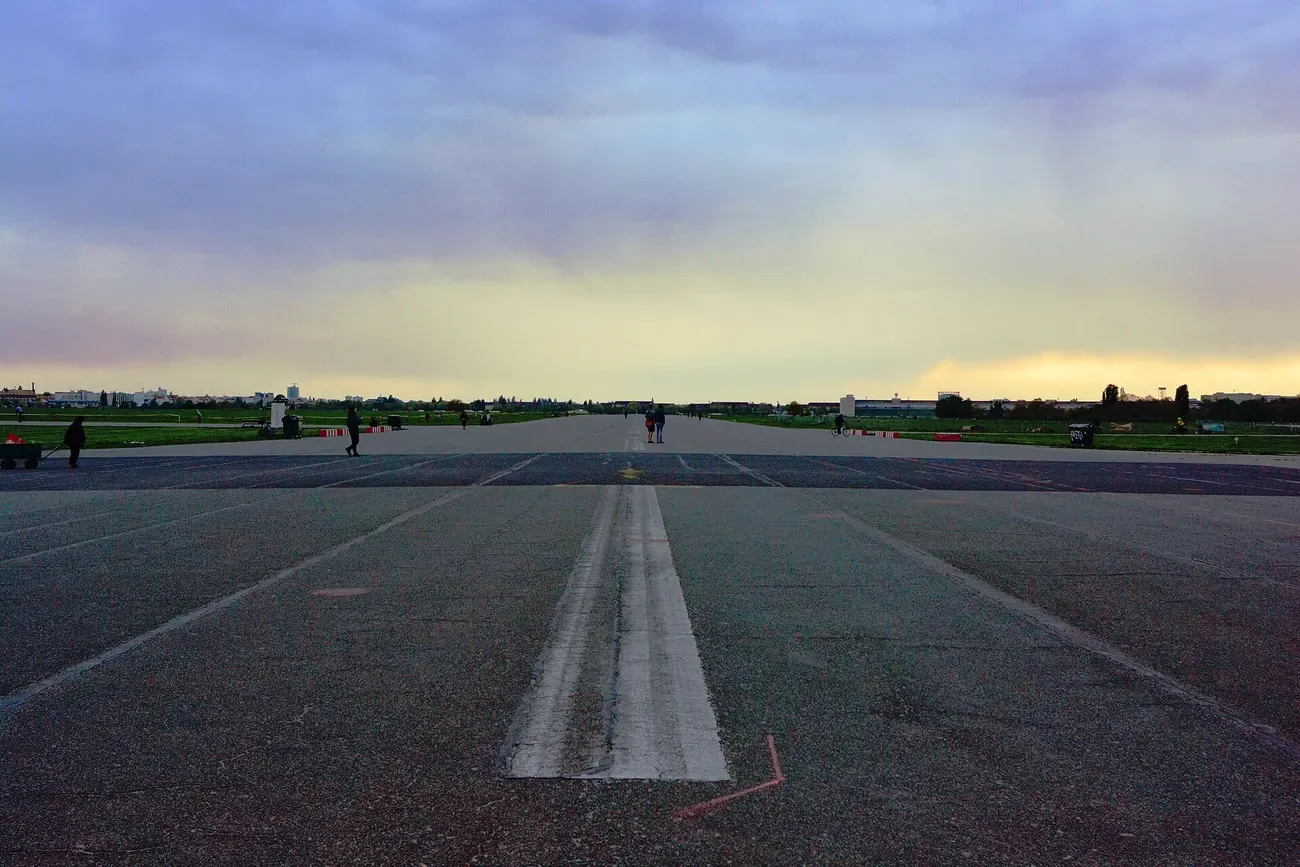
Tempelhofer Feld
The runways of the airport that flew the Berlin airlift are now a park for cyclists, skaters and community gardeners.
Location: Tempelhof, Berlin
Photo: "Tempelhofer Feld, a runway on a spring evening" by Joe Mabel (CC BY-SA 4.0).
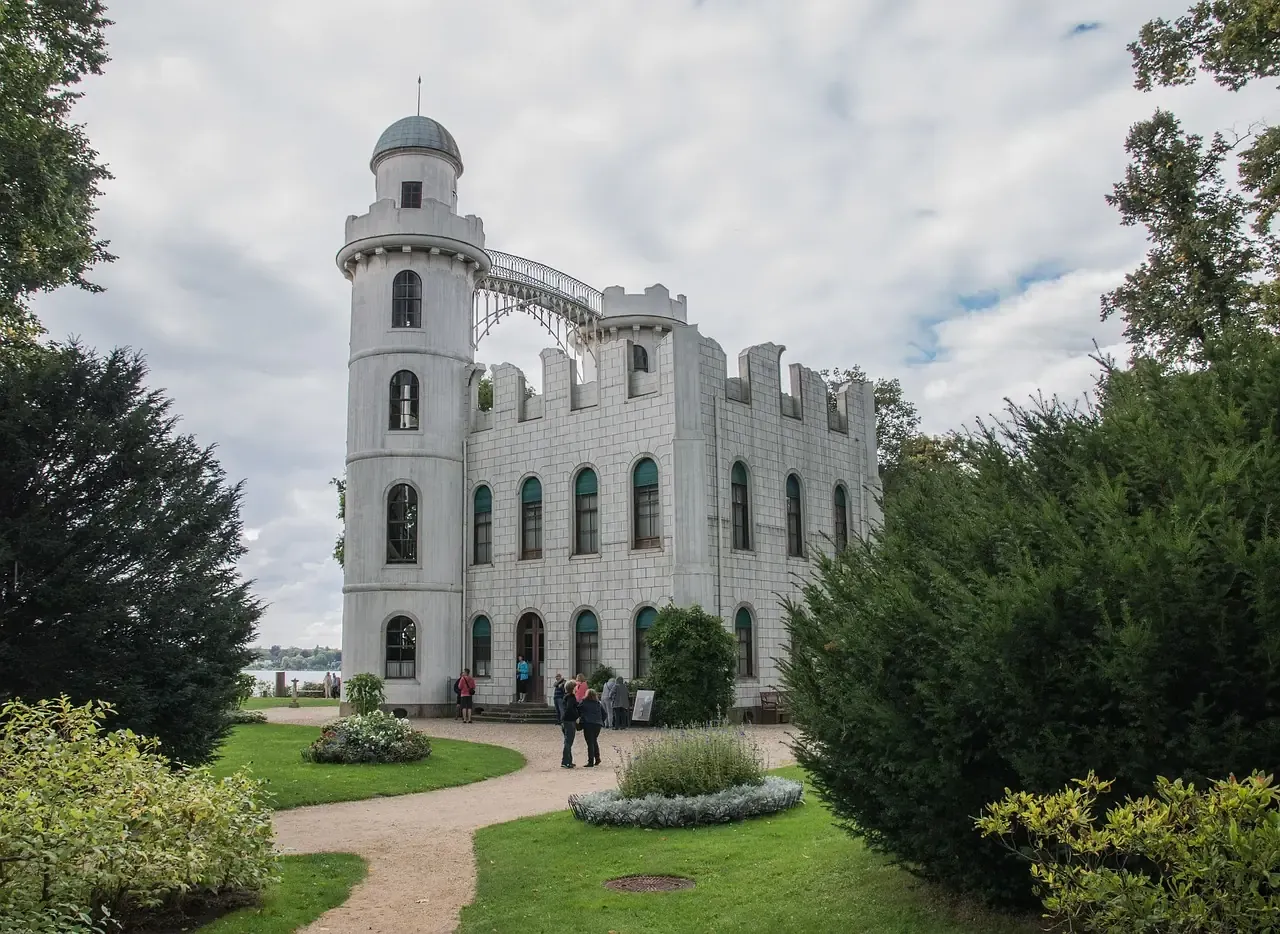
Pfaueninsel
A Havel island of loose peacocks, a folly castle built as a ruin and the oldest rose garden in Berlin, reached by a small ferry.
Location: Wannsee, Berlin
Reasons to visit Germany
Germany rewards travellers who accept that it has no single centre. The country only came together in 1871, and its sixteen federal states still run their own capitals, universities and kitchens, so it reads as a set of regions rather than a hub with a hinterland. Baroque Dresden and Hanseatic Hamburg barely feel like the same country.
That variety shows fastest in the landscape. The north is flat, wind blown and tidal, with the Wadden Sea draining and refilling twice a day behind the dykes. The middle belt is hills, gorges and forest, cut by the Rhine and the Moselle and their terraced vineyards. The south climbs into the Alps, where the Zugspitze carries the highest ground in the country and the lakes below it stay cold all summer.
History here is not tidy, and the country does not pretend otherwise. Memorials to the Nazi years and to the division of Germany sit in the middle of ordinary streets, documented rather than tucked away, which makes travelling through the country an unusually direct education.
Seasons matter more than in southern Europe. Long daylight from May to September opens the mountains and the river valleys, while the weeks of Advent fill town squares with wooden stalls, mulled wine and the smell of roasting almonds. Germany borders nine countries, more than any other nation on the continent, which makes it a practical hub for a broader run of top tourist attractions in Europe.