
Berlin tourist attractions
Known for
Cold War history, world class museums and a legendary nightlife scene
Must-see landmarks
Brandenburg Gate, Reichstag Building and the Museum Island
World Heritage
Museum Island, UNESCO listed since 1999
Days needed
Three to four full days
Tourist attractions in Berlin not to miss
The tourist attractions in Berlin that matter most, from Brandenburg Gate to Reichstag Building and Berlin Cathedral, are ranked here in order. After the 12 top sights come 31 hidden gems, free things to do, upcoming events, tickets and visitor FAQs. The 12 sights are numbered on the free Berlin tourist map with a walking route, with the hidden gems.
1. Brandenburg Gate
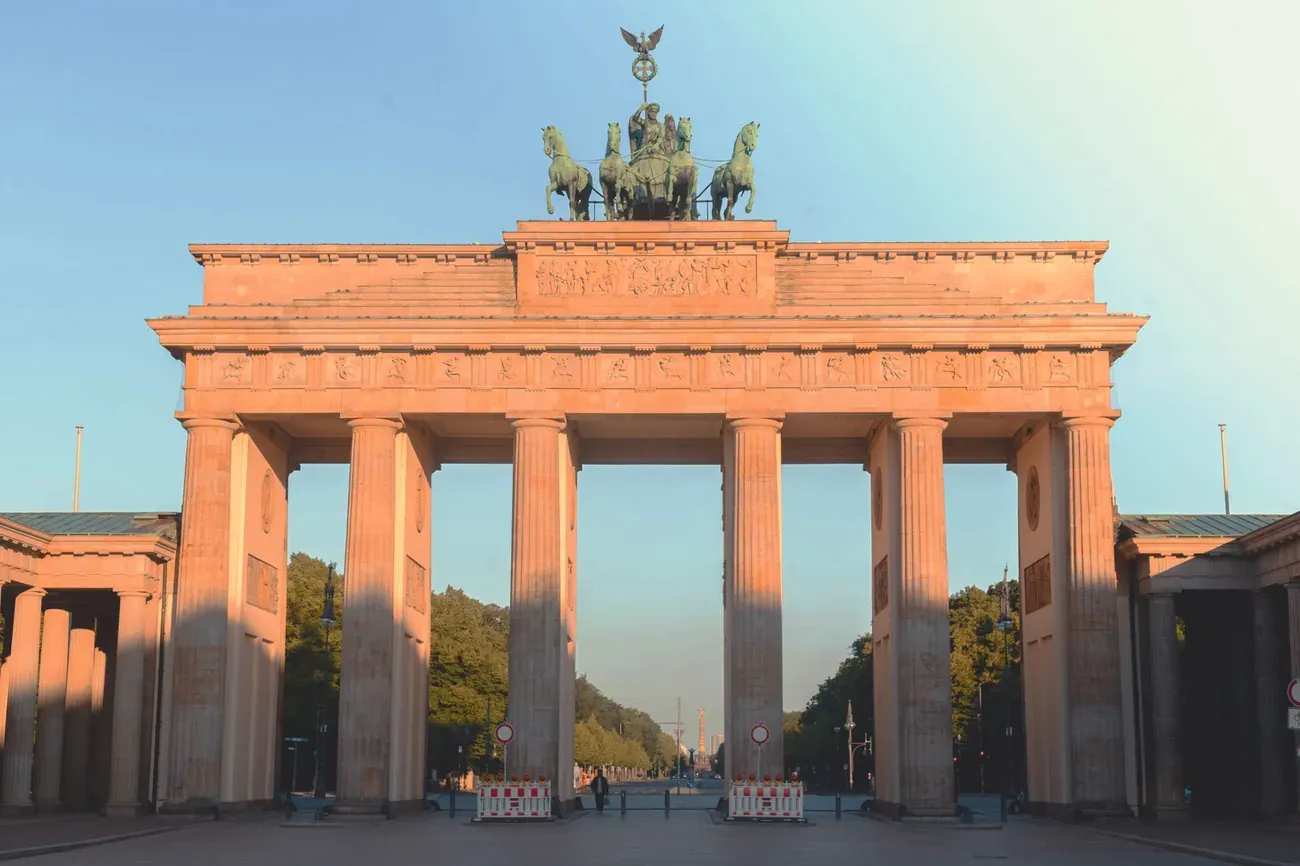
Berlin's defining landmark closes the west end of Unter den Linden with a Doric colonnade and the Quadriga, the chariot of victory that has crowned it since 1791. For twenty eight years the gate stood inside the border strip, sealed behind the Wall and unreachable from either side, and it became the image of a reunified Germany after 1989. Pariser Platz around it works best early in the morning, before the tour groups, the pedicabs and the street performers arrive.
Architect: Carl Gotthard Langhans · Style: Greek Revival
Location: Pariser Platz, Mitte
Access: Free at any hour, with no ticket booth or opening times on the square.
2. Reichstag Building
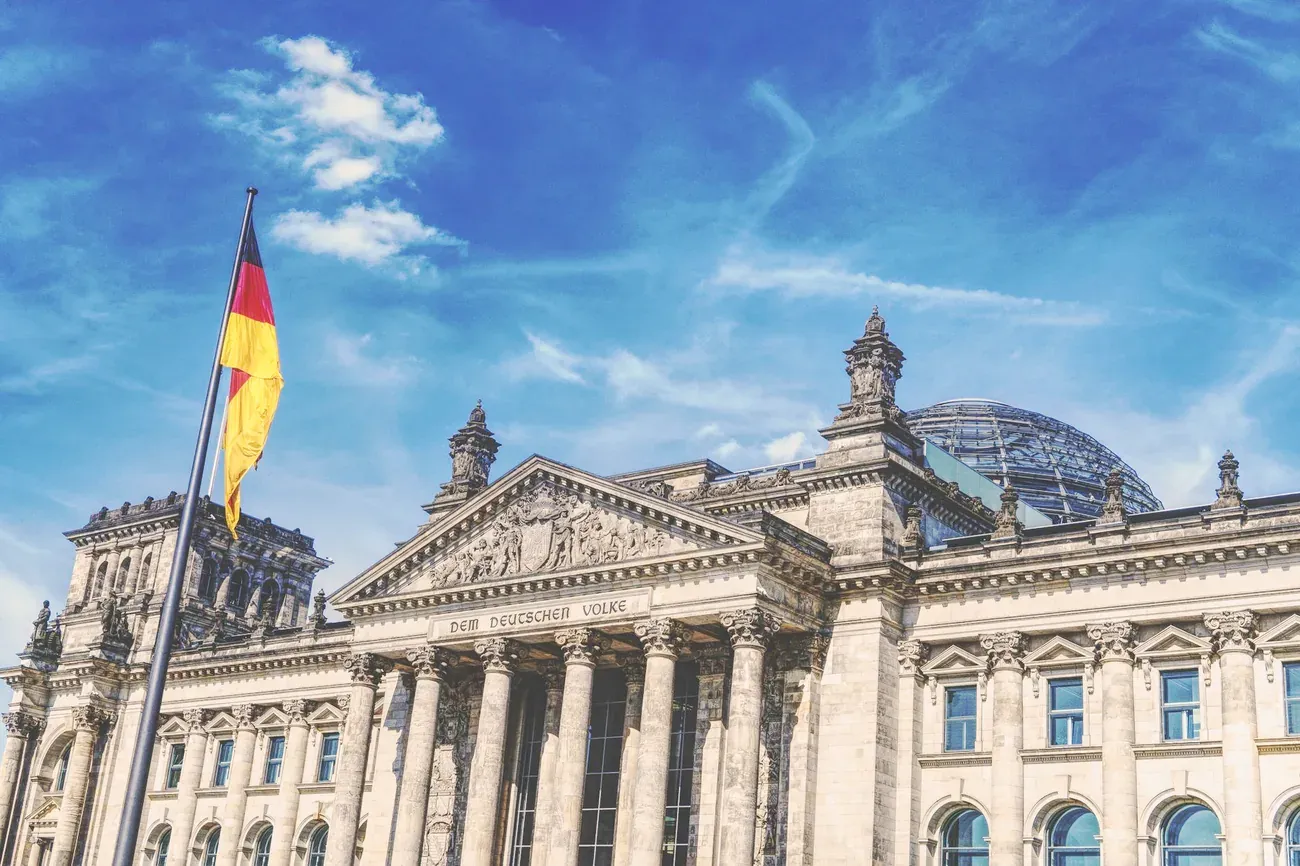
Paul Wallot's parliament building carries the scars and the repairs of German history, from the fire of 1933 to the Soviet graffiti still preserved on its inner walls, and since reunification it houses the Bundestag again. Norman Foster crowned it with a glass dome whose spiral ramp climbs above the debating chamber and opens a full circle of views over the government quarter and the Tiergarten. Anyone without a booking can still read the inscription across the west facade from Platz der Republik.
Architect: Paul Wallot, Norman Foster · Style: Renaissance Revival
Location: Platz der Republik 1, Tiergarten
Access: Free, though the dome needs a time slot reserved in advance and a photo ID at the entrance.
3. Berlin Cathedral
The Protestant cathedral of Museum Island rises beside the Lustgarten, built for Wilhelm II between 1894 and 1905 to a design by Julius Carl Raschdorff. Its dome carries an outer gallery 50 metres up, climbed by 270 steps for a sweeping view over the Spree, while the Sauer organ fills the nave below. The Hohenzollern crypt beneath holds around ninety burials of the dynasty and reopened in March 2026 after six years of work. Wartime bombing gutted the building in 1944, and it reopened in 1993.
Architect: Julius Carl Raschdorff · Style: Renaissance and Baroque revival
Location: Am Lustgarten, Museum Island, Mitte
Access: Ticketed, dome gallery and crypt included, open from 9:00 on weekdays with last admission an hour before closing.
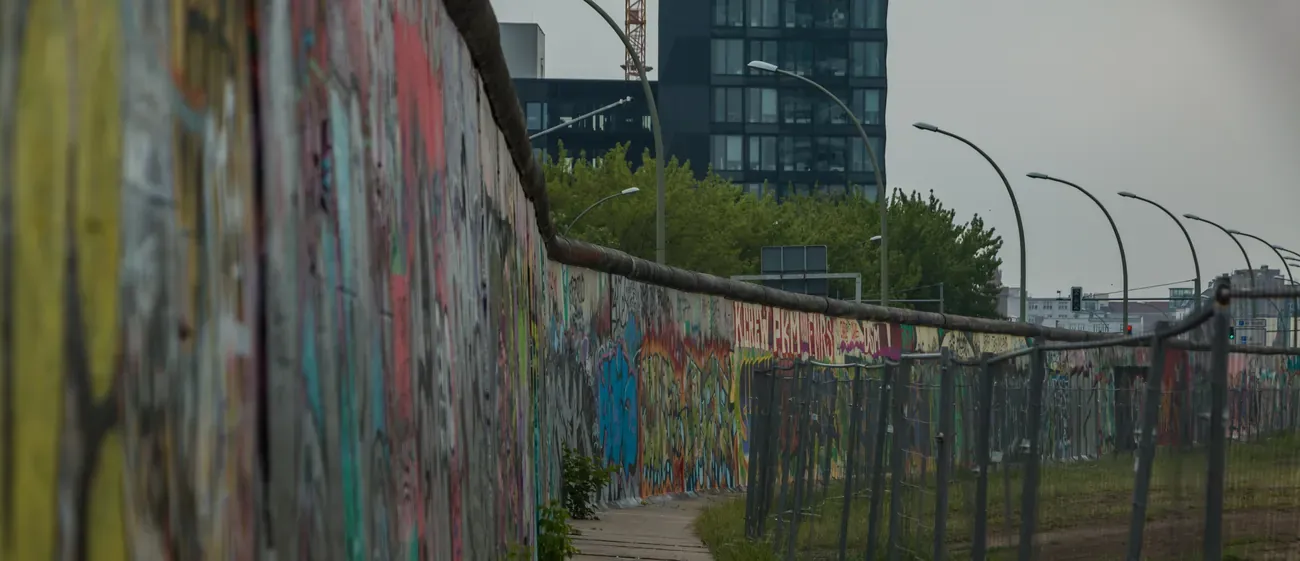
4. East Side Gallery
The longest surviving stretch of the Berlin Wall runs more than a kilometre along the Spree in Friedrichshain, where artists from around the world painted the east face in 1990 and turned a border installation into an open air gallery. More than a hundred works line it, among them Dmitri Vrubel's fraternal kiss between Brezhnev and Honecker and Birgit Kinder's Trabant breaking through the concrete. The paintings have been restored more than once, and the riverside path beside them never closes.
Style: Open air mural gallery, painted 1990
Location: Mühlenstraße, Friedrichshain
Access: Free to walk along, day or night.
5. Oberbaum Bridge
Otto Stahn's double-deck bridge of red brick crosses the Spree between Kreuzberg and Friedrichshain, its two neo-Gothic towers modelled on a medieval gate. Built between 1894 and 1896, it carries road traffic, cyclists and walkers on the lower deck, while U-Bahn lines U1 and U3 run across the upper level between Schlesisches Tor and Warschauer Straße. While the city was divided the bridge served as a pedestrian border crossing, and after 1989 it was rebuilt to its old form with a new steel middle span by Santiago Calatrava. The East Side Gallery lines the Friedrichshain bank at its foot.
Built: 1894 to 1896 · Architect: Otto Stahn
Location: over the Spree between Kreuzberg and Friedrichshain
Access: Free to cross on foot at any hour.
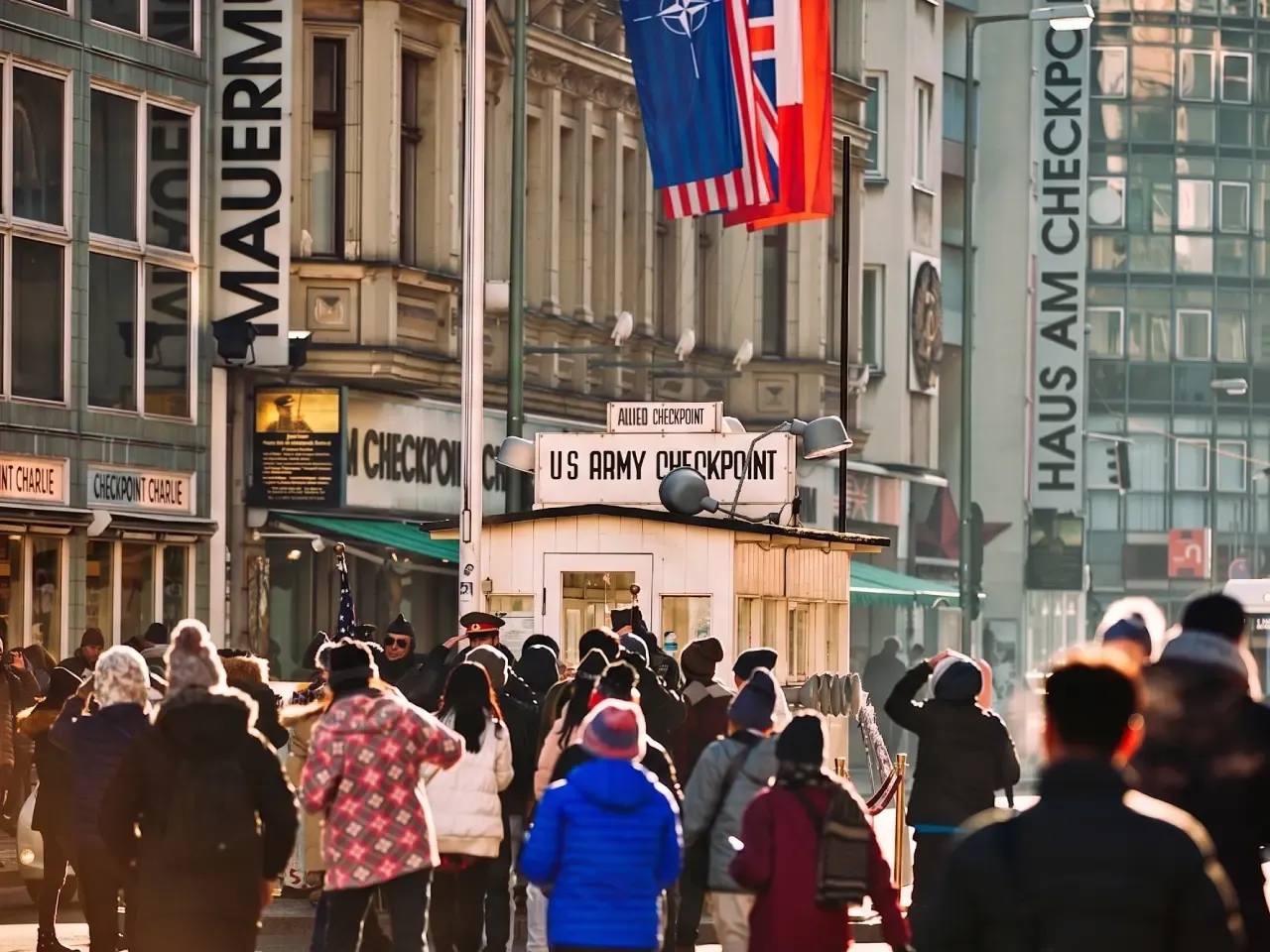
6. Checkpoint Charlie
The crossing between the American and Soviet sectors became the most photographed border post of the Cold War, the place where tanks faced each other in October 1961 and where escapes ended in triumph or in tragedy. What stands on Friedrichstraße today is a reconstruction, a white guard hut with sandbags and the enlarged portraits of a Soviet and an American soldier facing their former sectors. It is a street corner rather than a site, and it is busiest in the middle of the day.
Style: Reconstructed Cold War border post, 1961
Location: Friedrichstraße 43 to 45, Mitte
Access: Free to see and photograph at street level; the museums beside it are ticketed separately.
7. Berlin TV Tower
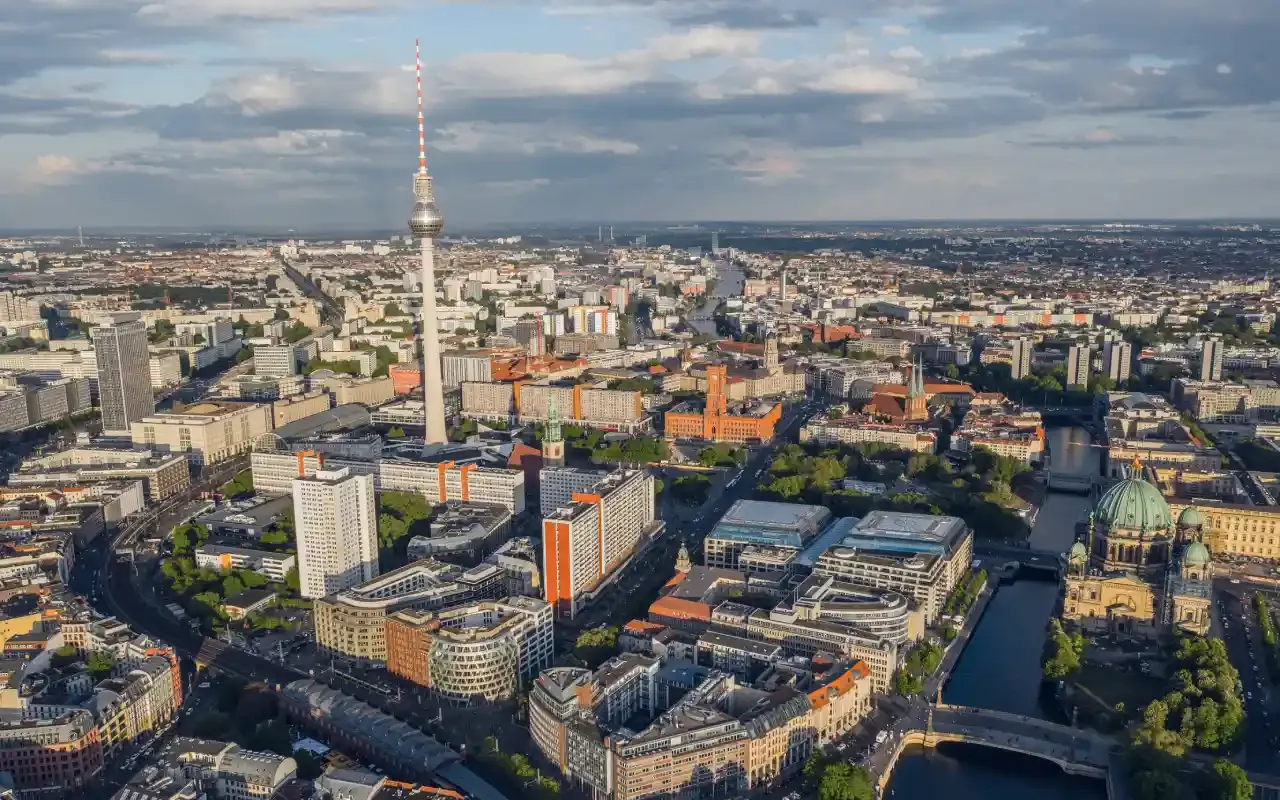
East Germany built the Fernsehturm to be seen from every corner of the divided city, and it still is the tallest structure in the country, its steel sphere hanging over Alexanderplatz like a pin dropped on the map. A high speed lift reaches the observation deck 203 metres up in under a minute, and the revolving restaurant one level above turns a full circle while you eat. On a clear day the view runs well past the city limits.
Architect: Hermann Henselmann · Opened: 1969
Location: Panoramastraße 1A, Alexanderplatz
Access: Ticketed, open daily from 09:00 to 23:00 · Tickets and tours
8. Neues Museum
Friedrich August Stüler's museum was gutted in the Second World War and stood as a ruin for decades until David Chipperfield rebuilt it, leaving shrapnel scars, bare brick and missing frescoes visible beside the new work. The bust of Nefertiti is displayed alone under the dome of the north cupola room, and around it run the Egyptian collection, the papyrus holdings and the prehistoric galleries, from Stone Age tools to the conical hats of beaten gold.
Architect: Friedrich August Stüler, David Chipperfield · Style: Neoclassical
Location: Bodestraße, Museum Island
Access: Ticketed, Tuesday to Sunday 10:00 to 18:00, closed Monday · Tickets and tours
9. Alte Nationalgalerie
A temple raised on a plinth and reached by a double staircase, the Alte Nationalgalerie holds the nineteenth century collection of the Berlin state museums. Caspar David Friedrich's landscapes hang here with Schinkel's architectural fantasies and Menzel's scenes of Prussian life, and the upper rooms carry French Impressionism, Manet, Monet and Renoir among them, alongside sculpture by Rodin. The reflecting pool in the colonnade courtyard outside doubles the facade after dark.
Architect: Friedrich August Stüler, Heinrich Strack · Style: Neoclassical
Location: Bodestraße, Museum Island
Access: Ticketed, Tuesday to Sunday 10:00 to 18:00, closed Monday · Tickets and tours
10. Bode Museum
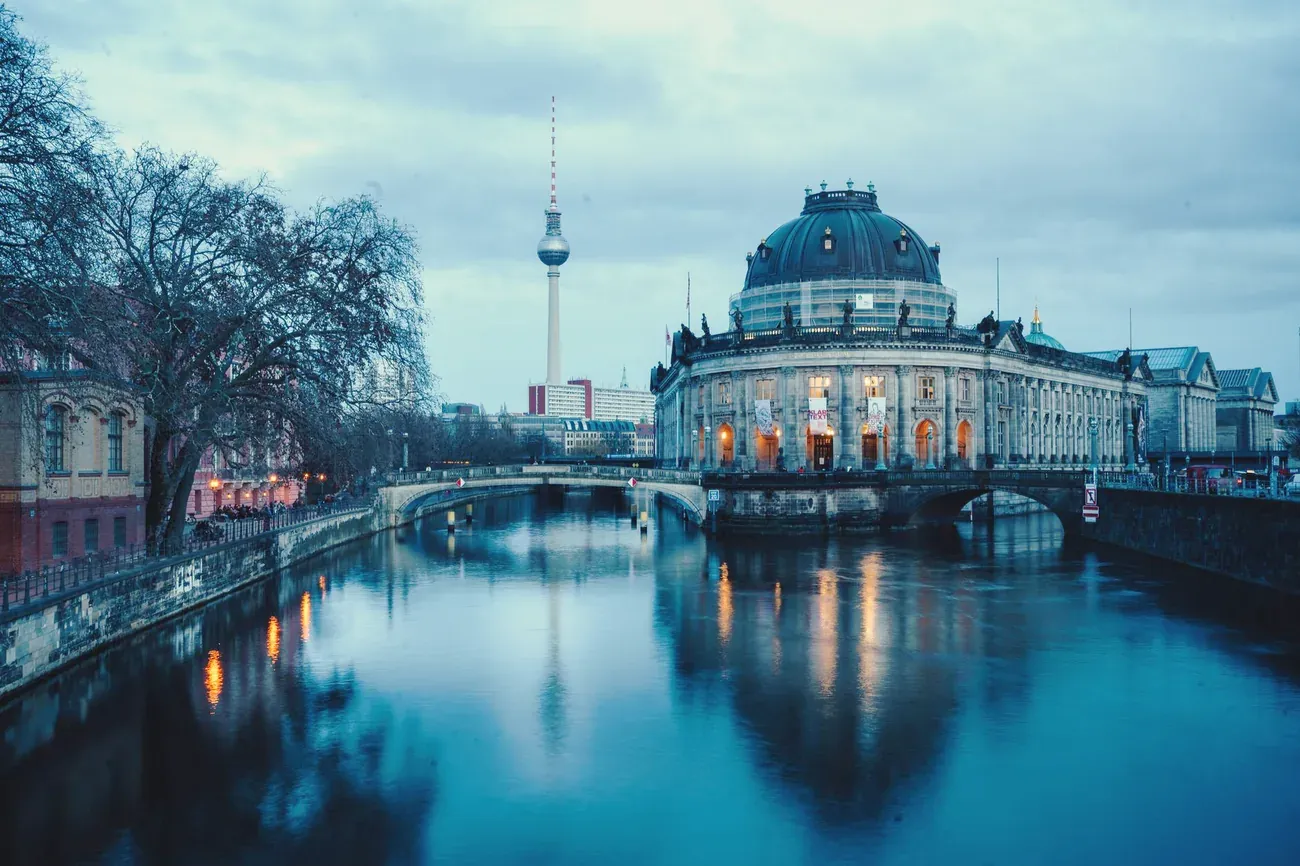
Ernst von Ihne's museum fills the northern tip of Museum Island like the prow of a ship, its dome rising straight out of the water where the two arms of the Spree divide. The great dome hall opens with a baroque equestrian statue of the Great Elector, and beyond it run the sculpture collection, from Byzantine ivories to Italian Renaissance terracotta and Tilman Riemenschneider's limewood figures, and one of the largest coin cabinets anywhere.
Architect: Ernst von Ihne · Style: Baroque Revival
Location: Am Kupfergraben, entrance over the Monbijoubrücke
Access: Ticketed, Tuesday to Friday 10:00 to 17:00 and weekends 10:00 to 18:00, closed Monday · Tickets and tours
11. Charlottenburg Palace
The largest surviving royal palace in Berlin began as a summer house for Sophie Charlotte and grew wing by wing into the Hohenzollern residence west of the centre. The Altes Schloss keeps the baroque state apartments and a porcelain cabinet lined floor to ceiling with Chinese and Japanese pieces, while Knobelsdorff's Golden Gallery and the White Hall sit in the newer wing. Behind the building the gardens run down to the carp pond, French in plan and later reworked in the English manner.
Architect: Johann Arnold Nering, Georg Wenzeslaus von Knobelsdorff · Style: Baroque and Rococo
Location: Spandauer Damm 10 to 22, Charlottenburg
Access: Ticketed, Tuesday to Sunday 10:00 to 17:30 from April to October, closed Monday · Tickets and tours
12. Gemäldegalerie
The Kulturforum building holds one of the finest collections of European painting from the thirteenth to the eighteenth century, hung along a spine of daylit rooms that runs the length of the museum. Dürer, Cranach and Holbein fill the German rooms, Vermeer, Rembrandt and Rubens the Dutch and Flemish ones, Botticelli, Raphael and Caravaggio the Italian. It sits away from Museum Island, among the museums and concert halls built beside the former course of the Wall.
Architect: Hilmer & Sattler · Style: Modern
Location: Matthäikirchplatz, Kulturforum
Access: Ticketed, Tuesday to Sunday 10:00 to 18:00, closed Monday · Tickets and tours
Berlin attraction tickets and tours
Upcoming events in Berlin
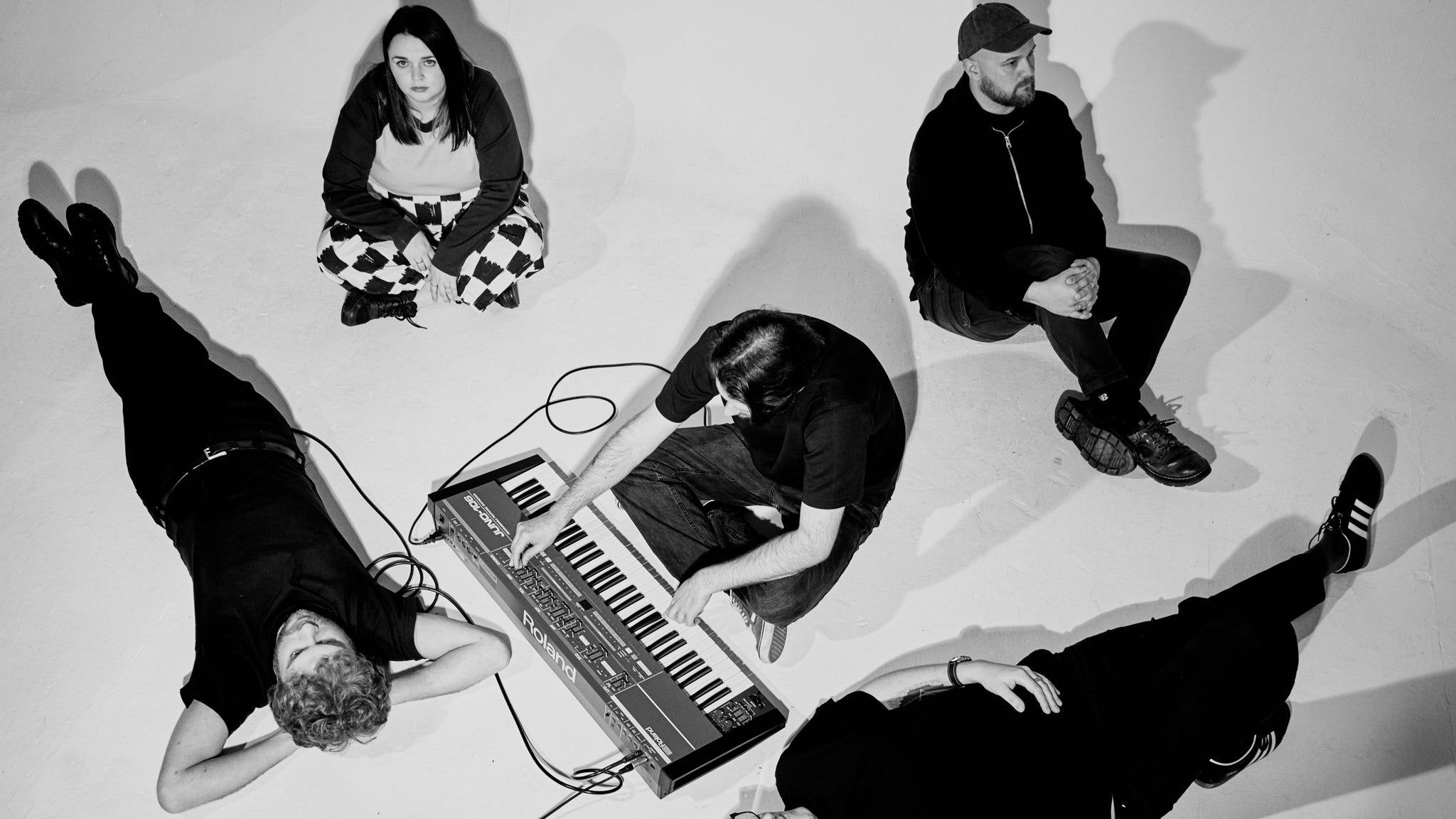
Tokyo Tea Room
Tokyo Tea Room plays Mikropol on 2 November at 20:00.
BR Volleys vs. VfB Friedrichshafen
BR Volleys vs. VfB Friedrichshafen comes to Max-Schmeling-Halle on 4 November at 19:00.
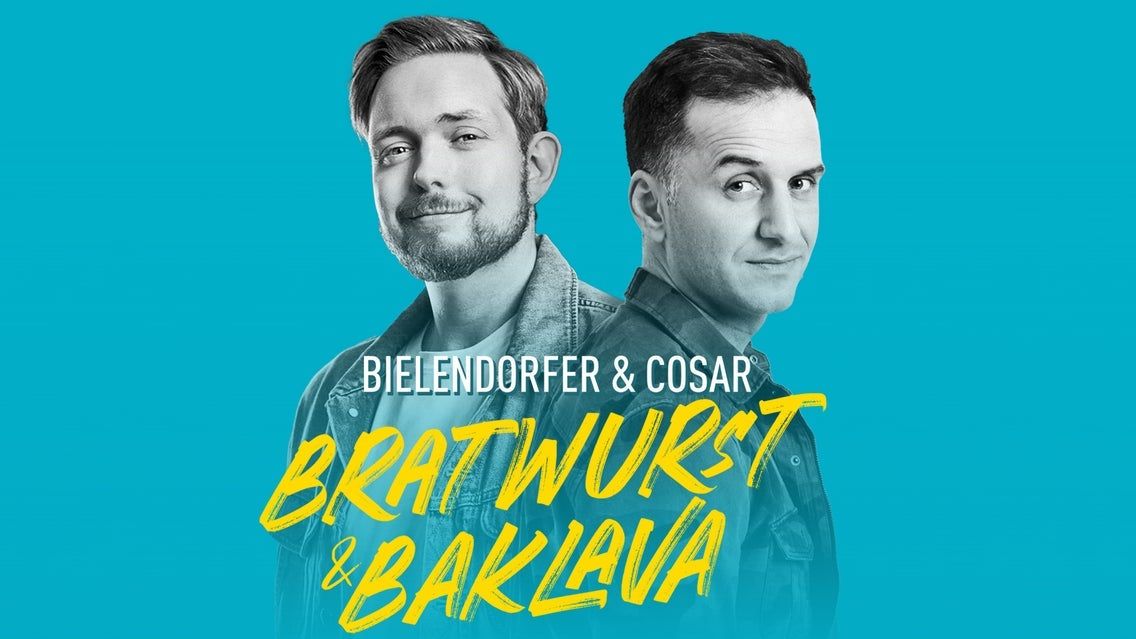
Bratwurst und Baklava - Live mit Bastian Bielendorfer und Özcan Cosar
Bratwurst und Baklava - Live mit Bastian Bielendorfer und Özcan Cosar plays Columbiahalle on 4 November at 20:00.
Candlelight: Das Beste der 80er
Candlelight: Das Beste der 80er comes to Französischer Dom on 5 November at 18:45.

BR Volleys vs. Barock Volleys MTV Ludwigsburg
BR Volleys vs. Barock Volleys MTV Ludwigsburg comes to Max-Schmeling-Halle on 21 November at 18:00.

NIGHT of the JUMPs, Freestyle MX World Championship
NIGHT of the JUMPs brings its freestyle motocross championship to Uber Arena on 22 May 2027 at 19:00, riders competing in one of Berlin's biggest indoor arenas.
Free attractions to visit in Berlin
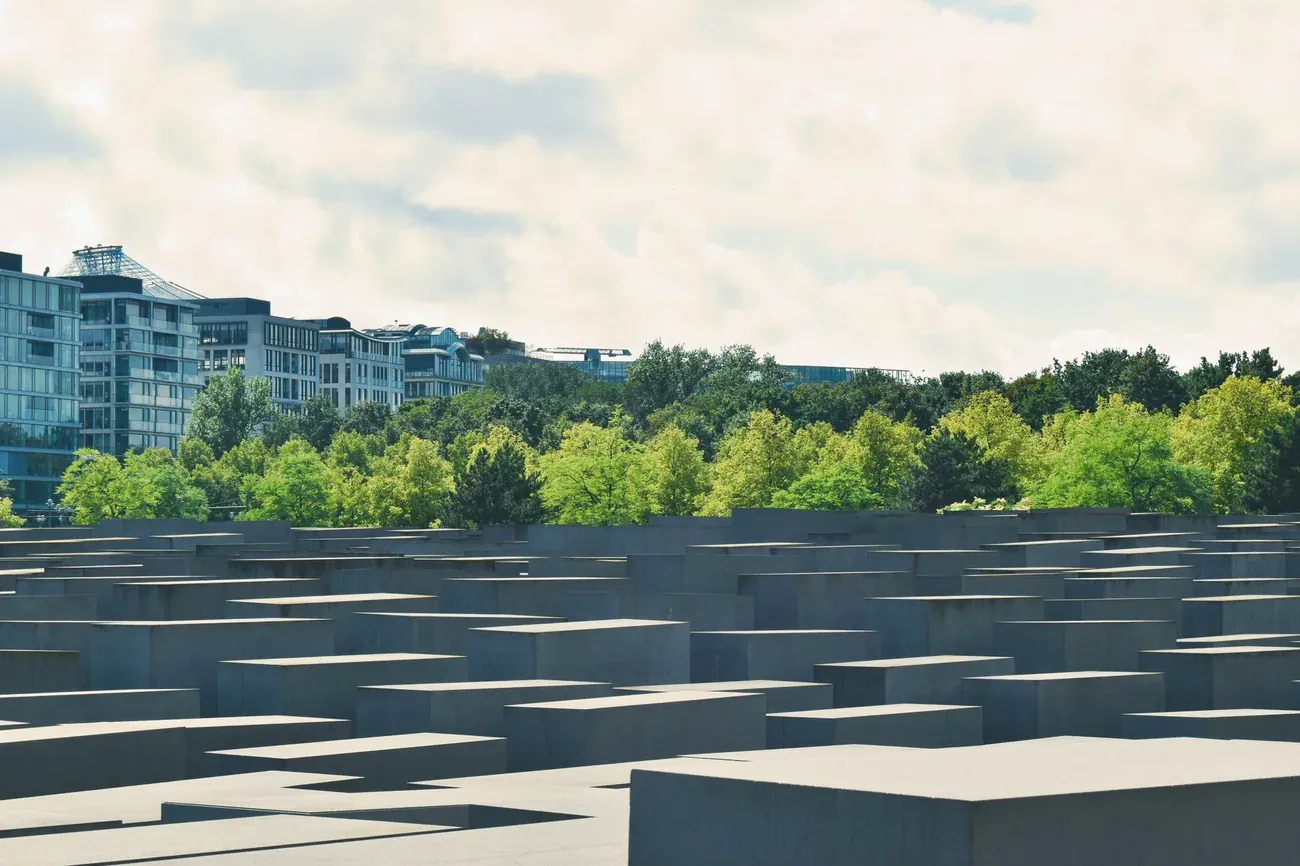
Memorial to the Murdered Jews of Europe
The Holocaust Memorial's field of 2,711 concrete steles near the Brandenburg Gate is open to walk through at all times, and the Information Centre beneath it holds a permanent exhibition on the Nazi persecution of European Jews with no admission charge.
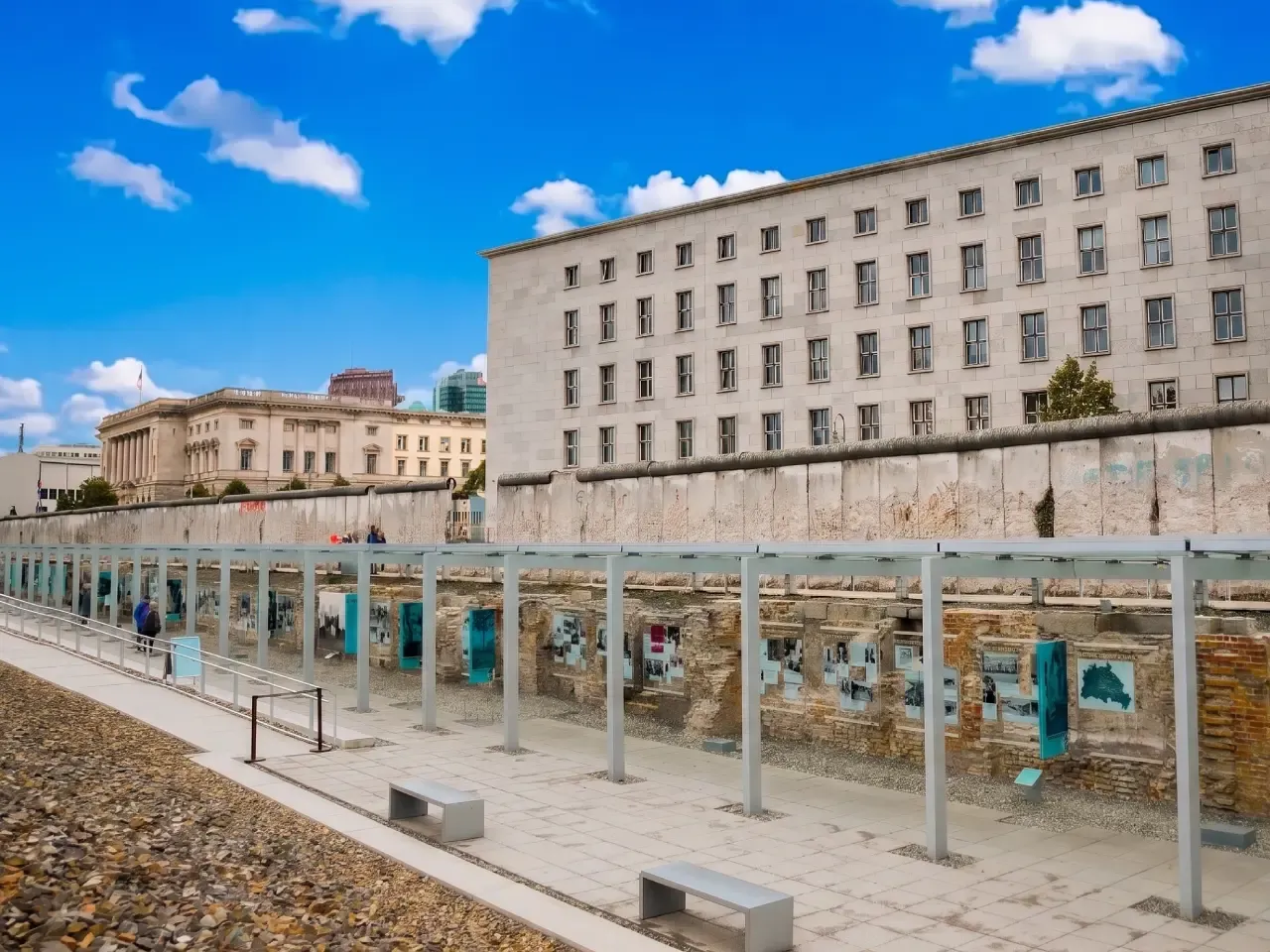
Topography of Terror
Documentation halls built where the SS and Gestapo once operated charge nothing to enter, and the open-air display along a surviving piece of the Wall outside is free too. No ticket or booking is needed at the door, any day the site is open.
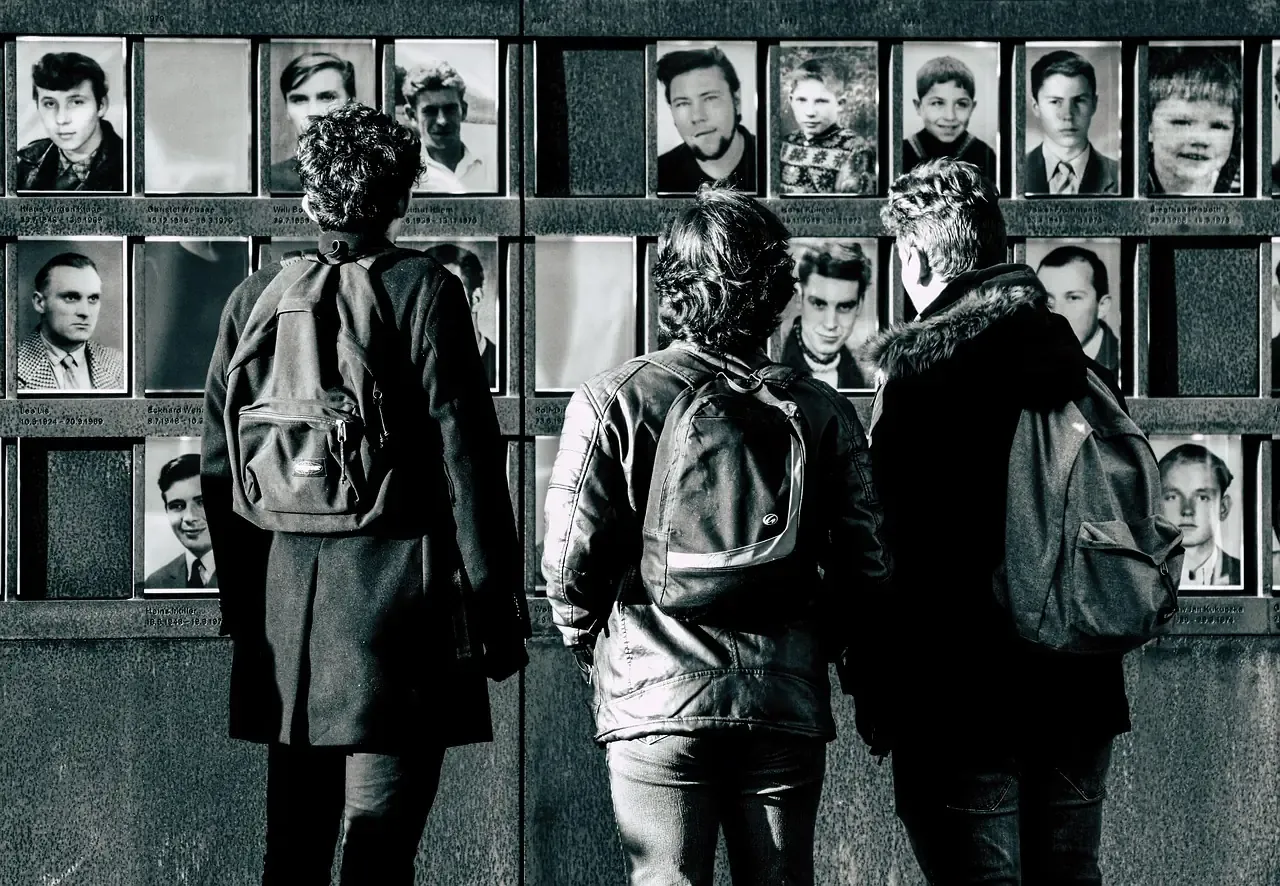
Berlin Wall Memorial
The memorial along Bernauer Strasse preserves a surviving section of the death strip with its watchtower and the Chapel of Reconciliation, and admission to the outdoor memorial and documentation centre is free, and the guided tours are charged separately.
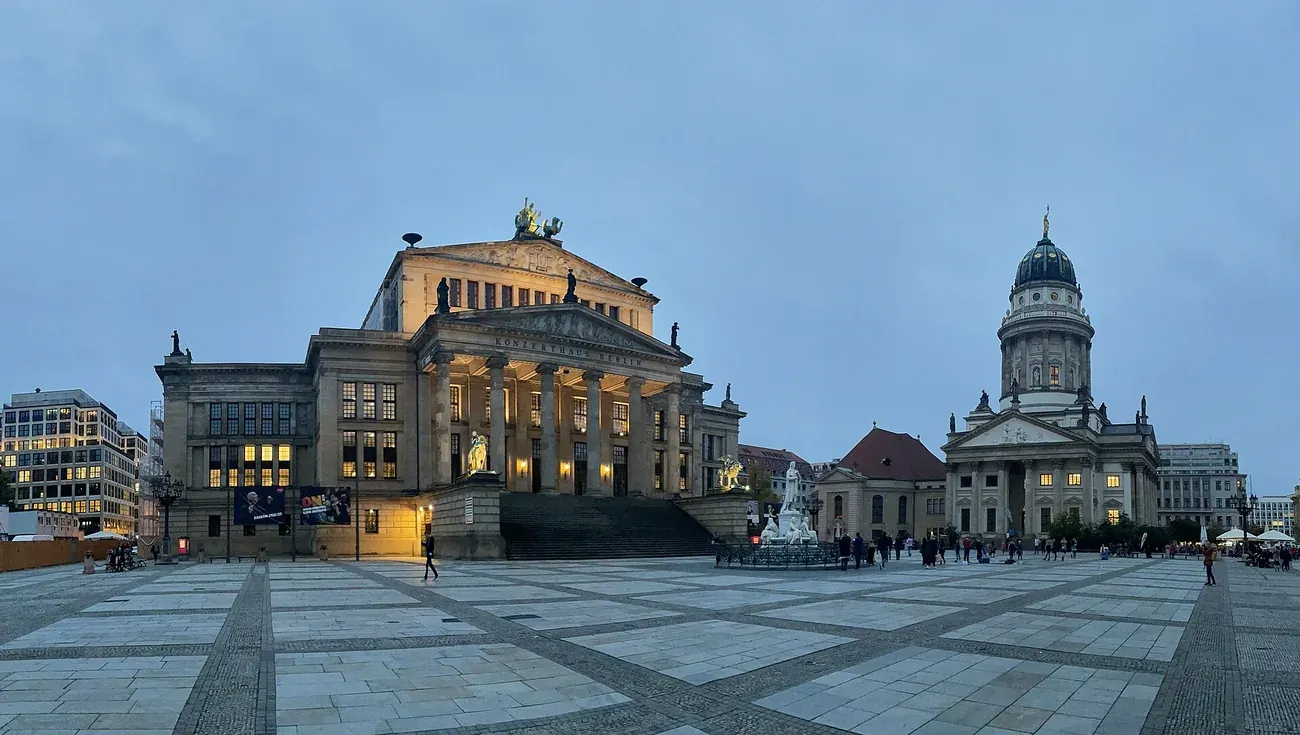
Gendarmenmarkt
No entry fee applies to Gendarmenmarkt itself, an open plaza anyone can cross, sit in or photograph at any hour without a ticket. The buildings ringing it, including the concert hall's shows and each church's own exhibition, charge separately.
Photo: "Gendarmenmarkt" by Anil Öztas (CC BY-SA 4.0).
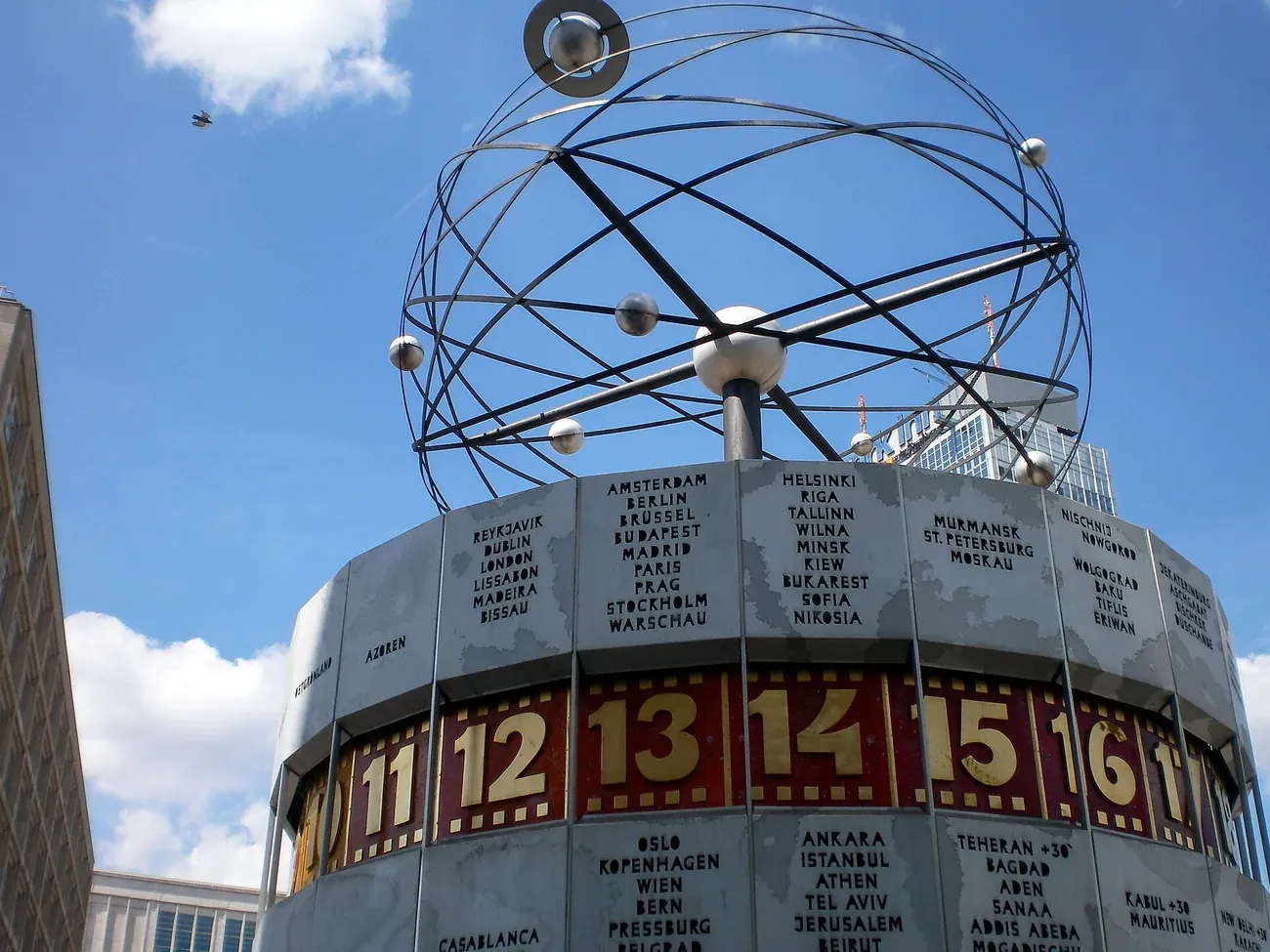
Alexanderplatz
The paving, the Weltzeituhr and the Fountain of Friendship among Nations are free to see on this GDR-era square, with nothing to pay for walking through or taking photos. The TV Tower rising above it has its own paid observation deck, sold separately.
Photo: "Weltzeituhr, Alexanderplatz" by HerrAdams (CC BY-SA 4.0).
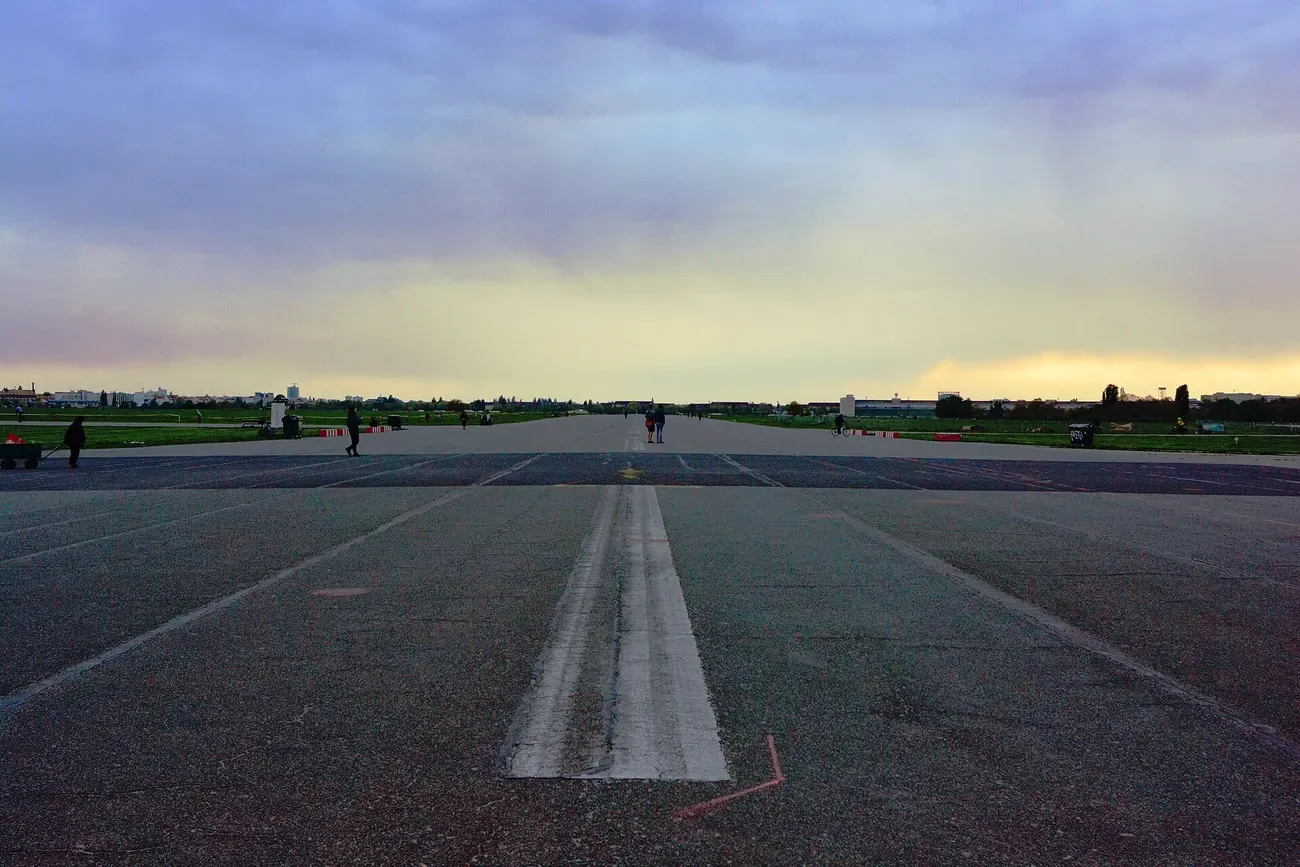
Tempelhofer Feld
The runways and terminal buildings of Berlin's former central airport are now a vast public park where admission is free, its open tarmac used for cycling, kite flying and urban gardening plots.
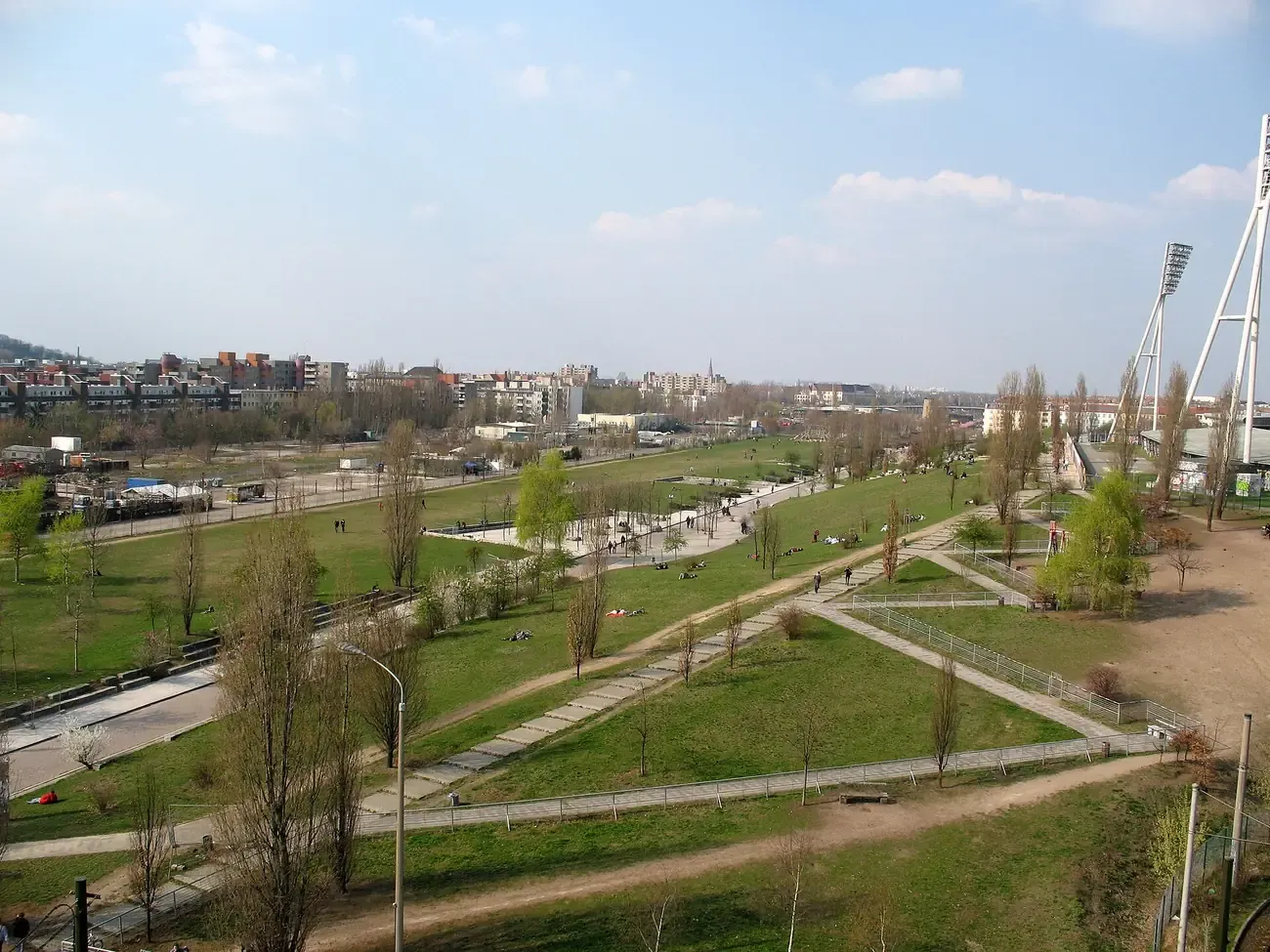
Mauerpark
The park built over a former Wall death strip between Prenzlauer Berg and Wedding is free to enter, drawing crowds for its Sunday flea market, open air karaoke and views back over the city.
Photo: "Mauerpark" by User:FRZ (CC BY-SA 3.0).
Unusual museums and collections in Berlin
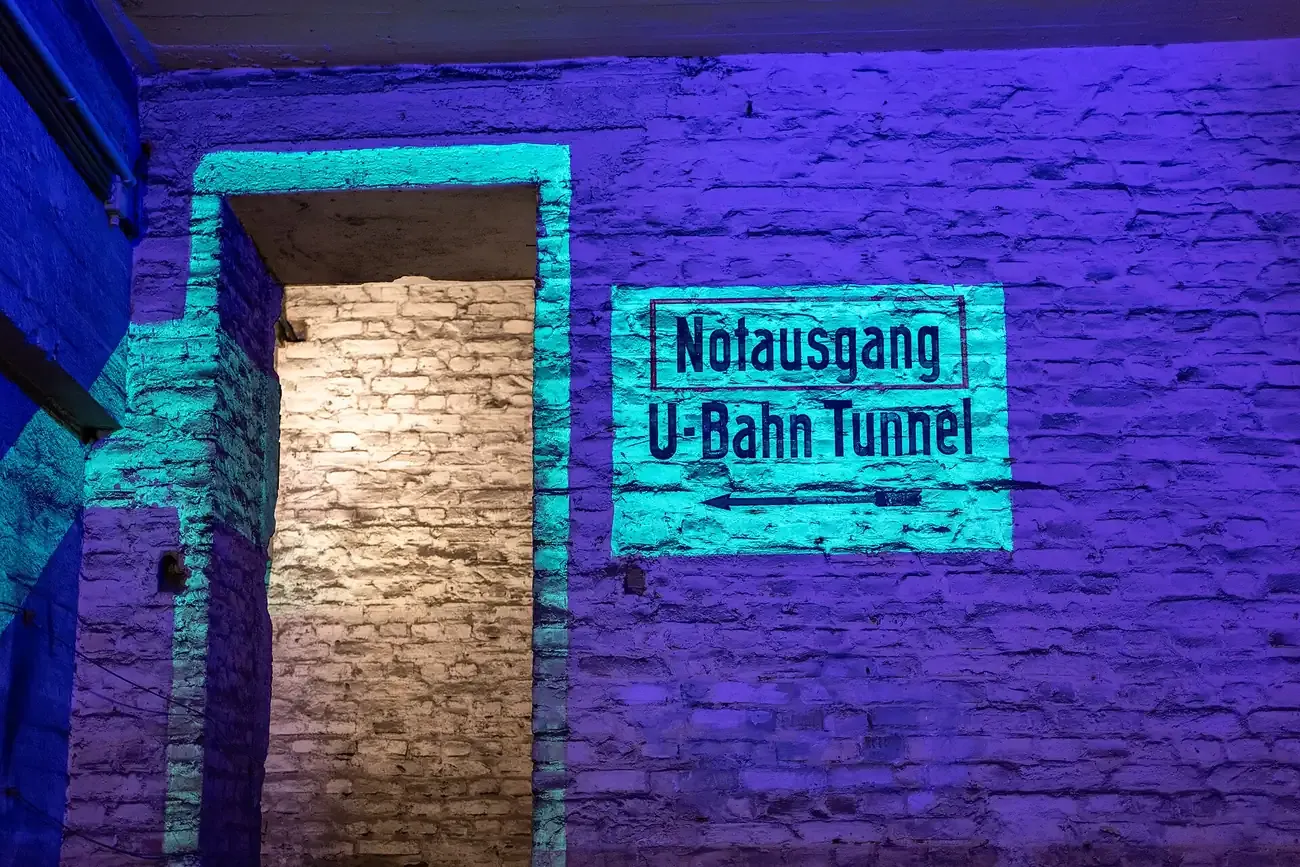
Berliner Unterwelten
Guided tours through wartime air raid bunkers, tunnels and Cold War shelters under the Gesundbrunnen station, booked in advance and led underground.
Location: Brunnenstraße 105, Gesundbrunnen
Photo: "U-Bahn tunnel sign on a Berliner Unterwelten tour" by GodeNehler (CC BY-SA 4.0).
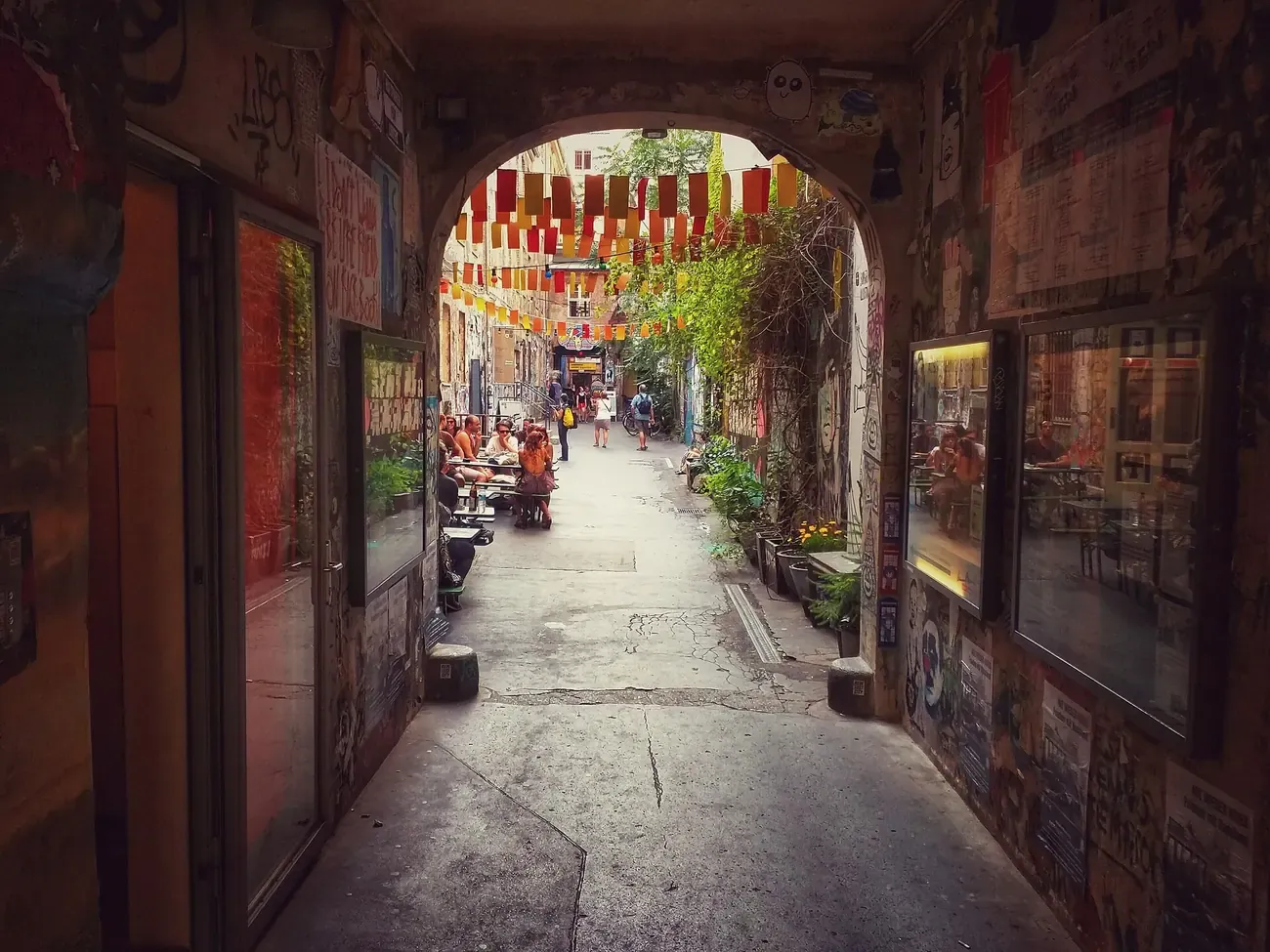
Monsterkabinett
Robotic creatures and clanking metal beasts staged as a guided walk through of about twenty five minutes, in a courtyard behind Haus Schwarzenberg.
Location: Rosenthaler Straße 39, Mitte · Website
Photo: "Entrance to the Monsterkabinett courtyard in Berlin" by Jonas Bengtsson (CC BY 2.0).
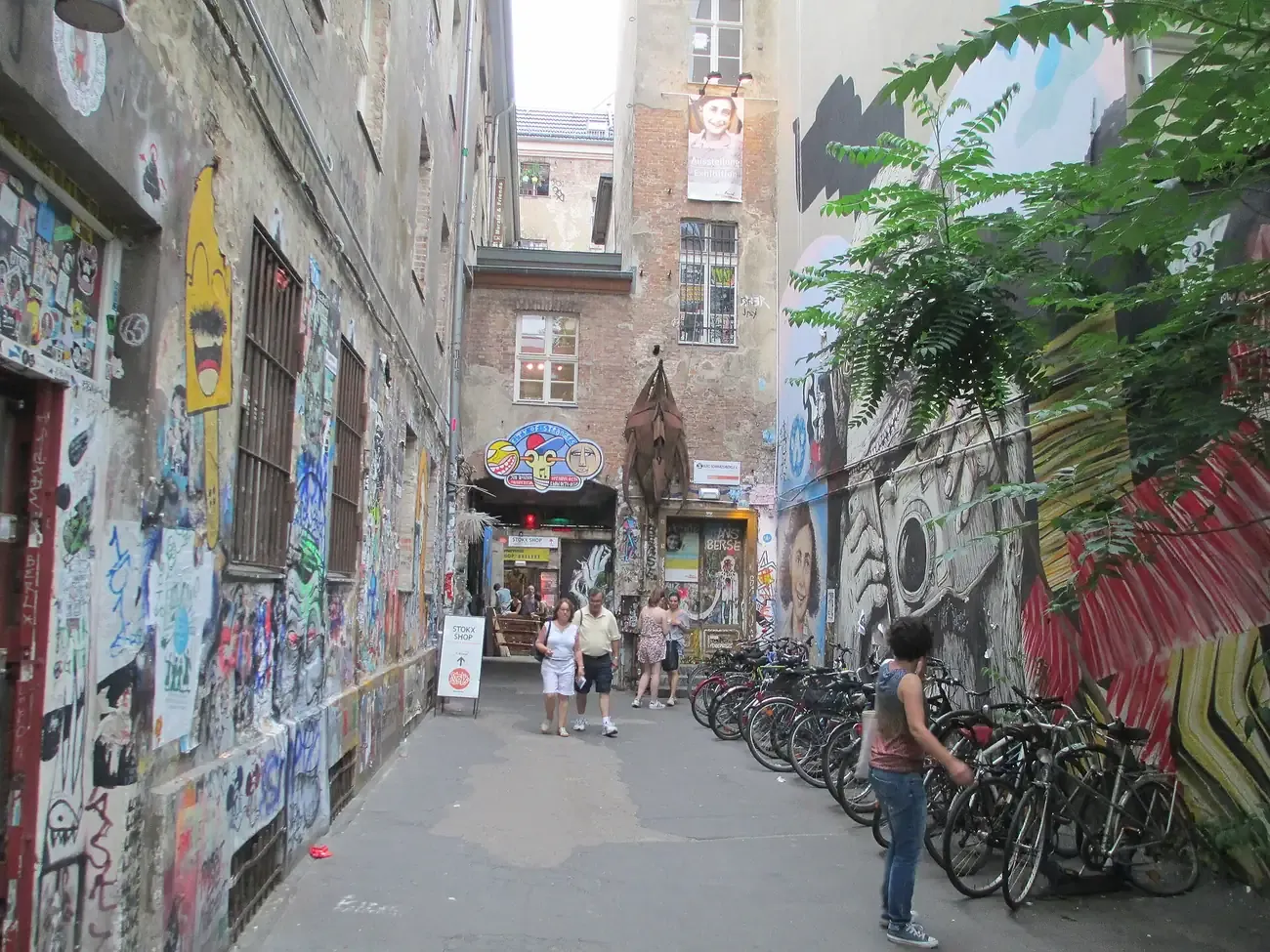
Haus Schwarzenberg Street Art Alley
An unrestored courtyard beside the polished Hackesche Höfe, its walls layered with paste ups, stickers and murals that change constantly.
Location: Rosenthaler Straße 39, Mitte
Photo: "Haus Schwarzenberg street art passage in Berlin" by Avi1111 dr. avishai teicher (CC BY-SA 4.0).
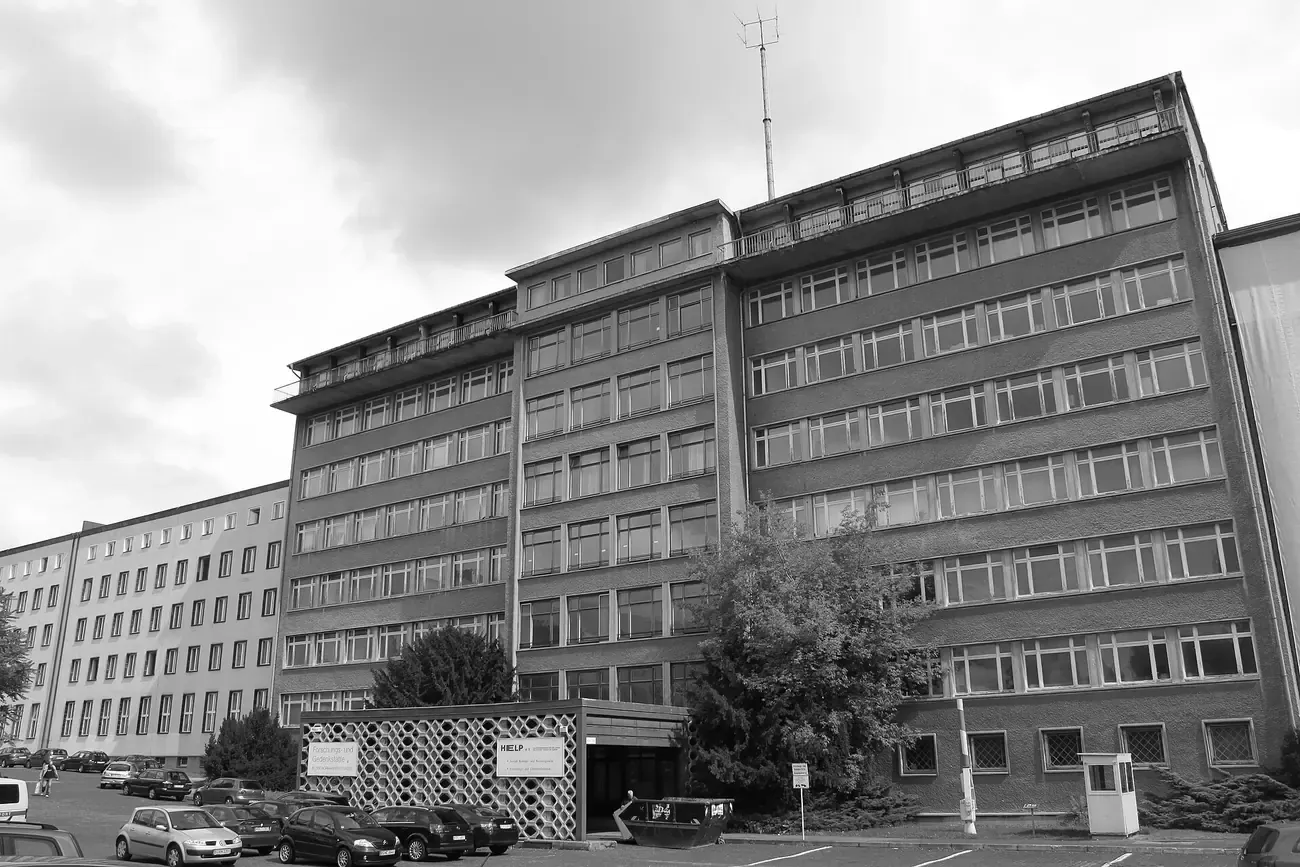
Stasi Museum
The former ministry where Erich Mielke ran East Germany's secret police, his office preserved with the furniture, surveillance kit and disguises in place.
Location: Ruschestraße 103, Lichtenberg · Website
Photo: "Haus 1 facade of the Stasi Museum in Berlin" by Prof.Quatermass (CC BY 3.0).
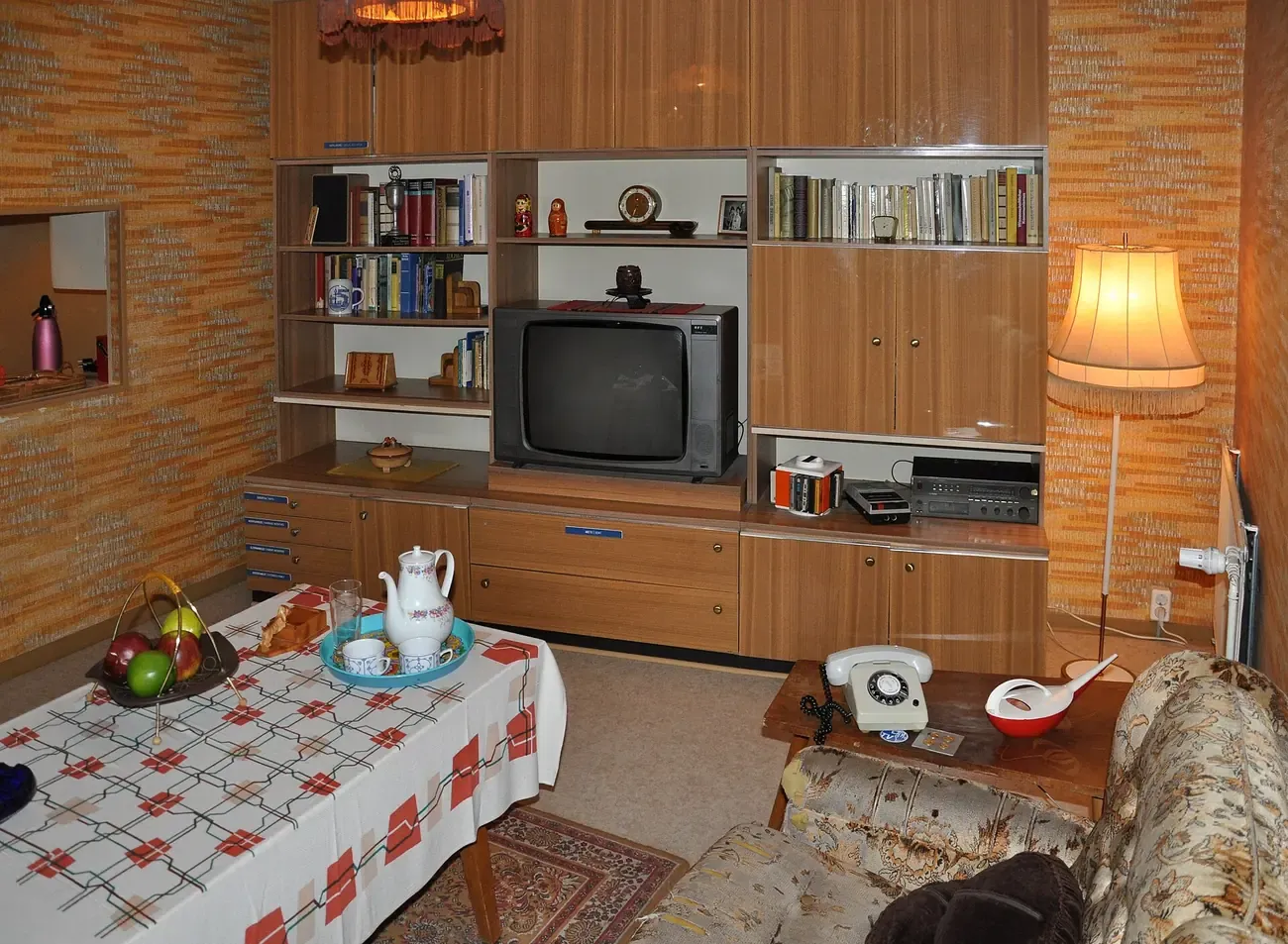
The DDR Museum
Everyday life in East Germany laid out to be handled: a furnished flat, a Trabant to sit in and drawers you are meant to open.
Location: Karl-Liebknecht-Straße 1, Mitte
Photo: "Furnished living room exhibit at the DDR Museum in Berlin" by User:FA2010 (Public domain).
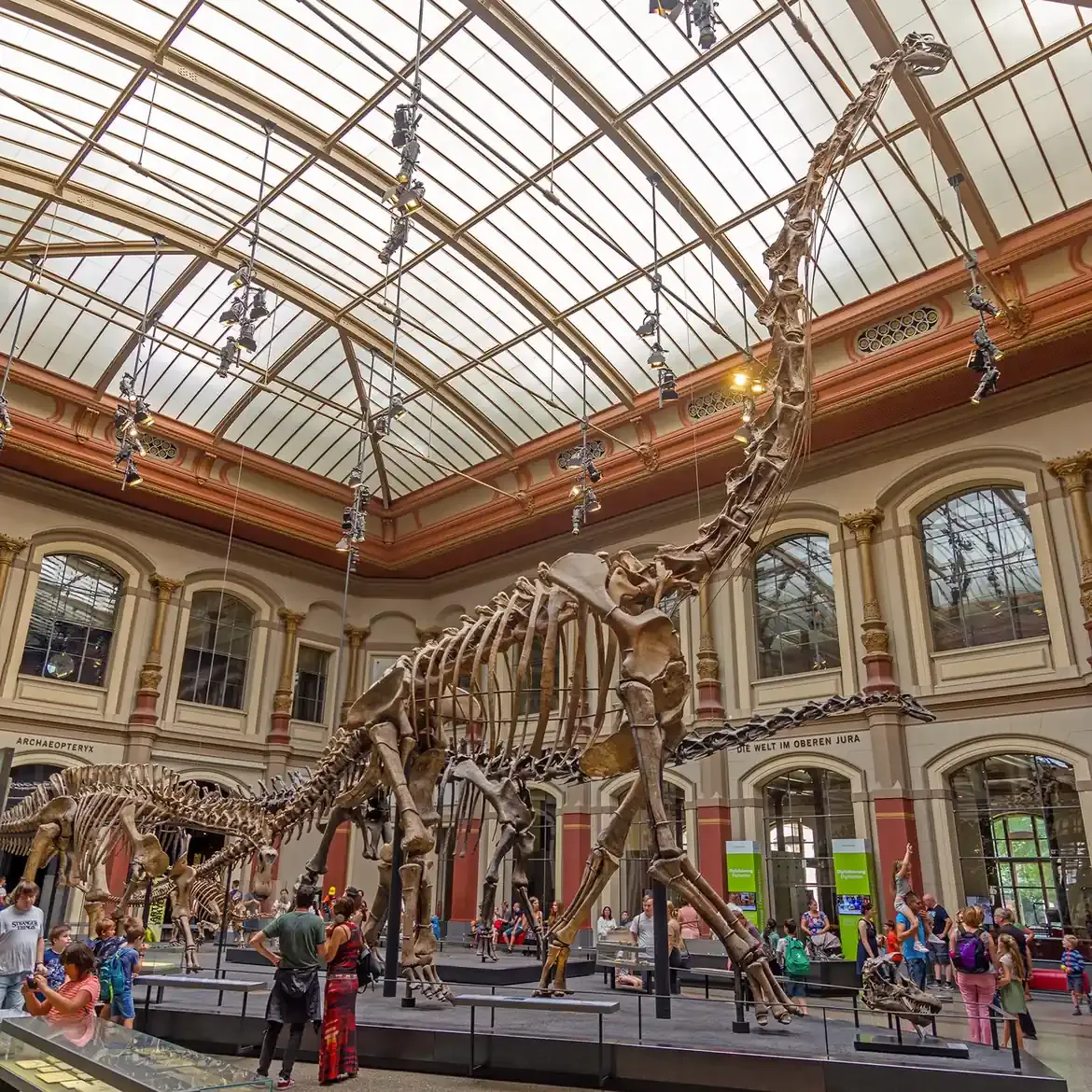
Museum für Naturkunde
Germany's largest natural history museum, built around the mounted Brachiosaurus skeleton, the Archaeopteryx fossil and thirty million specimens.
Location: Invalidenstraße 43, Mitte · Website
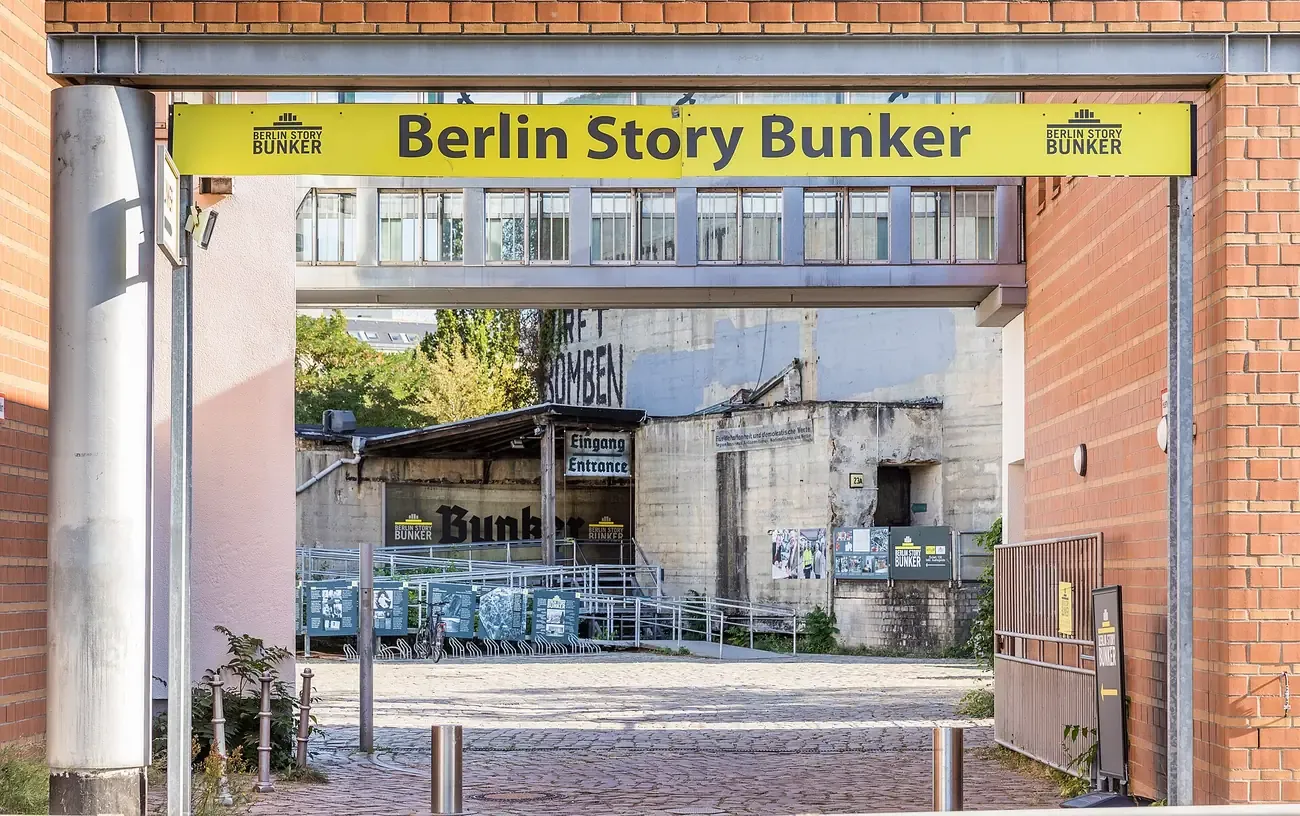
Berlin Story Bunker
A 1943 air raid bunker near Anhalter Bahnhof, now a documentation centre on the Nazi regime and the bunker system beneath the city.
Location: Schöneberger Straße 23a, Kreuzberg · Website
Photo: "Entrance to the Berlin Story Bunker" by Raimond Spekking (CC BY-SA 4.0).
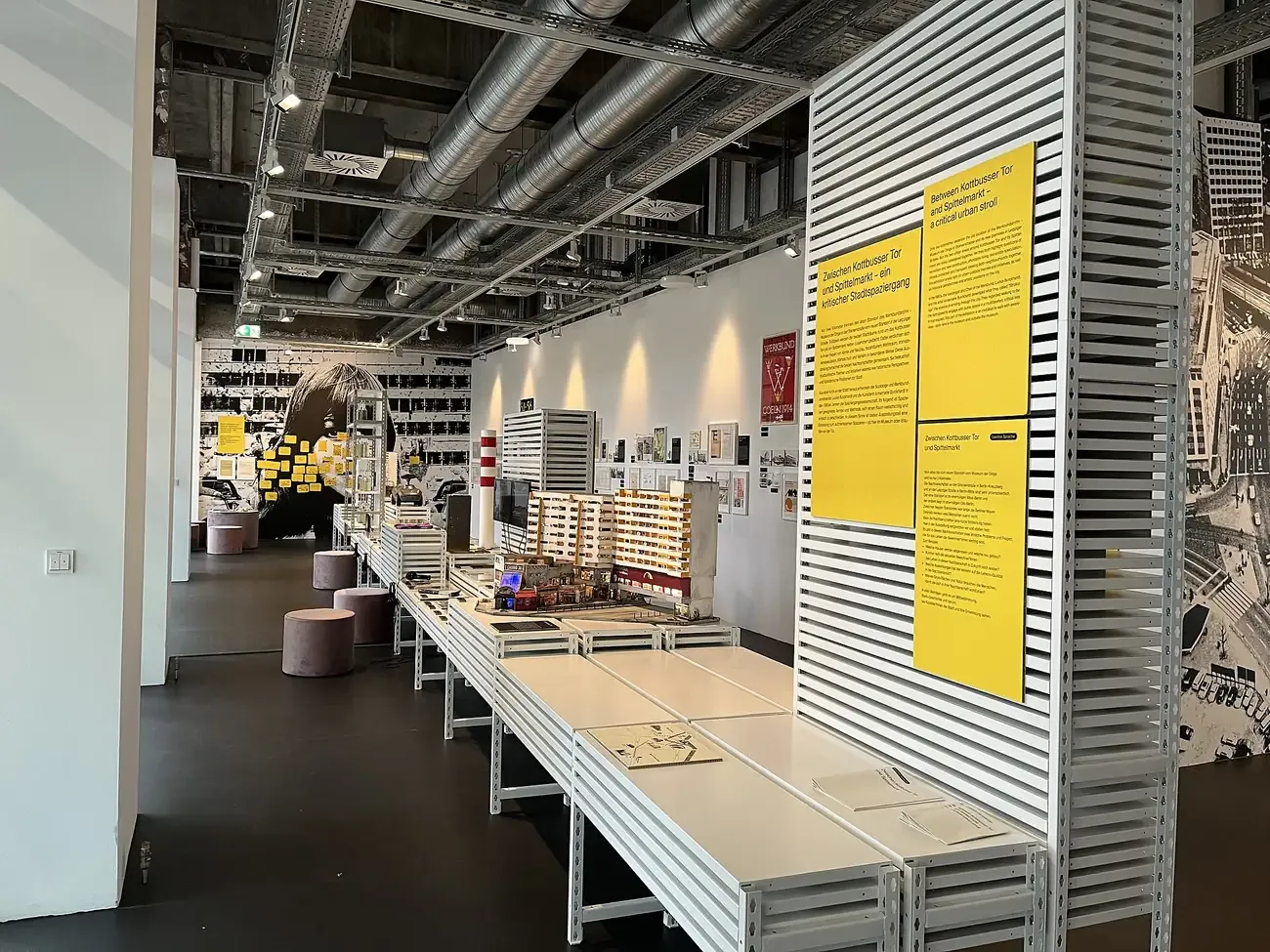
Museum der Dinge
Over thirty thousand mass produced objects of the twentieth century, packed into vitrines. It left Oranienstraße and reopened on Leipziger Straße, closed Tuesday and Wednesday.
Location: Leipziger Straße 54, Mitte · Website
Photo: "Inside the Museum der Dinge in Berlin" by GodeNehler (CC BY-SA 4.0).
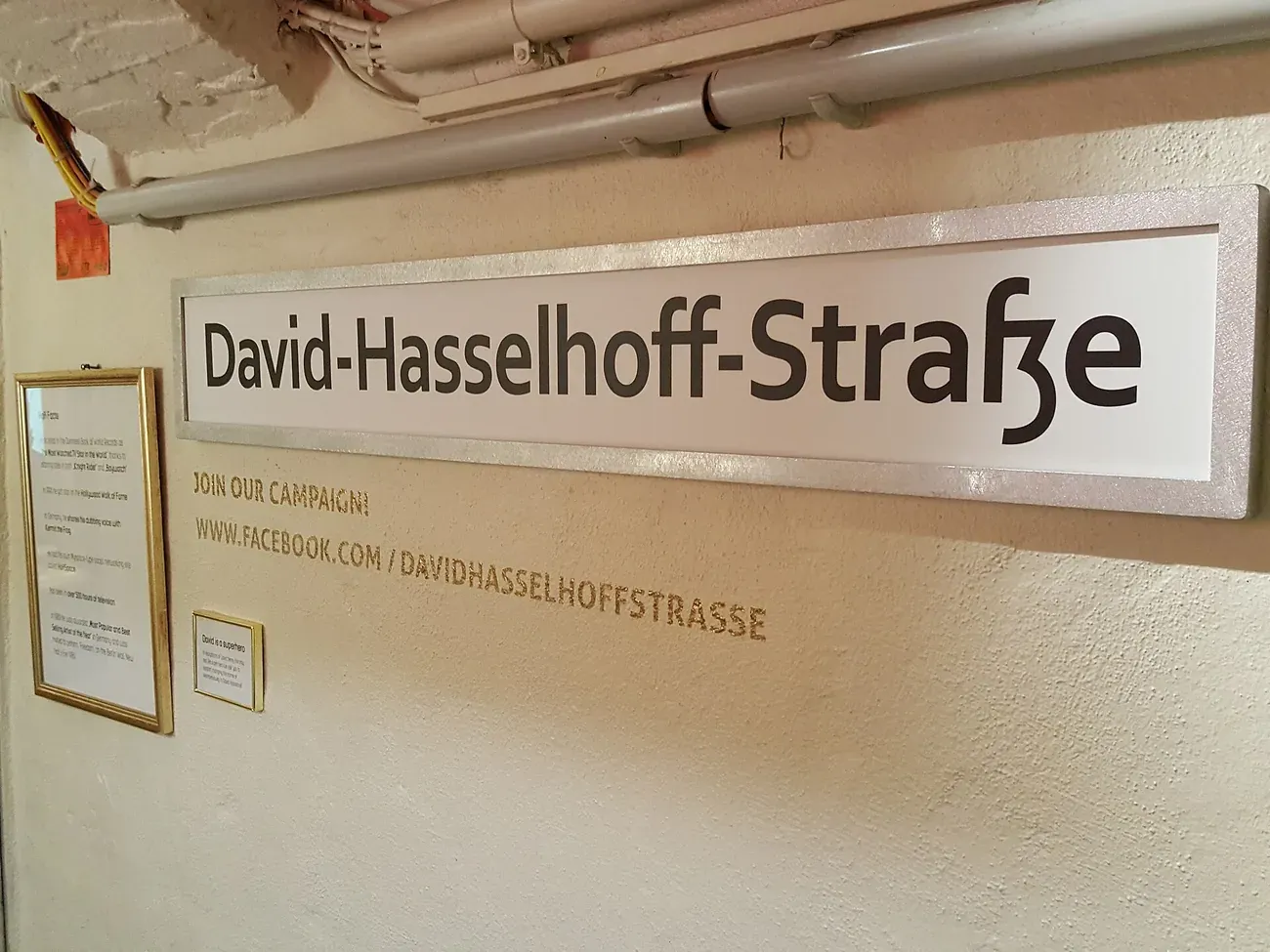
David Hasselhoff Museum
A basement shrine to the singer's 1989 concert at the Wall, assembled by fans in the Circus Hostel and free to walk into.
Location: Weinbergsweg 1a, Mitte
Photo: "Street sign exhibit at the David Hasselhoff Museum" by OlafJanssen (CC BY-SA 4.0).
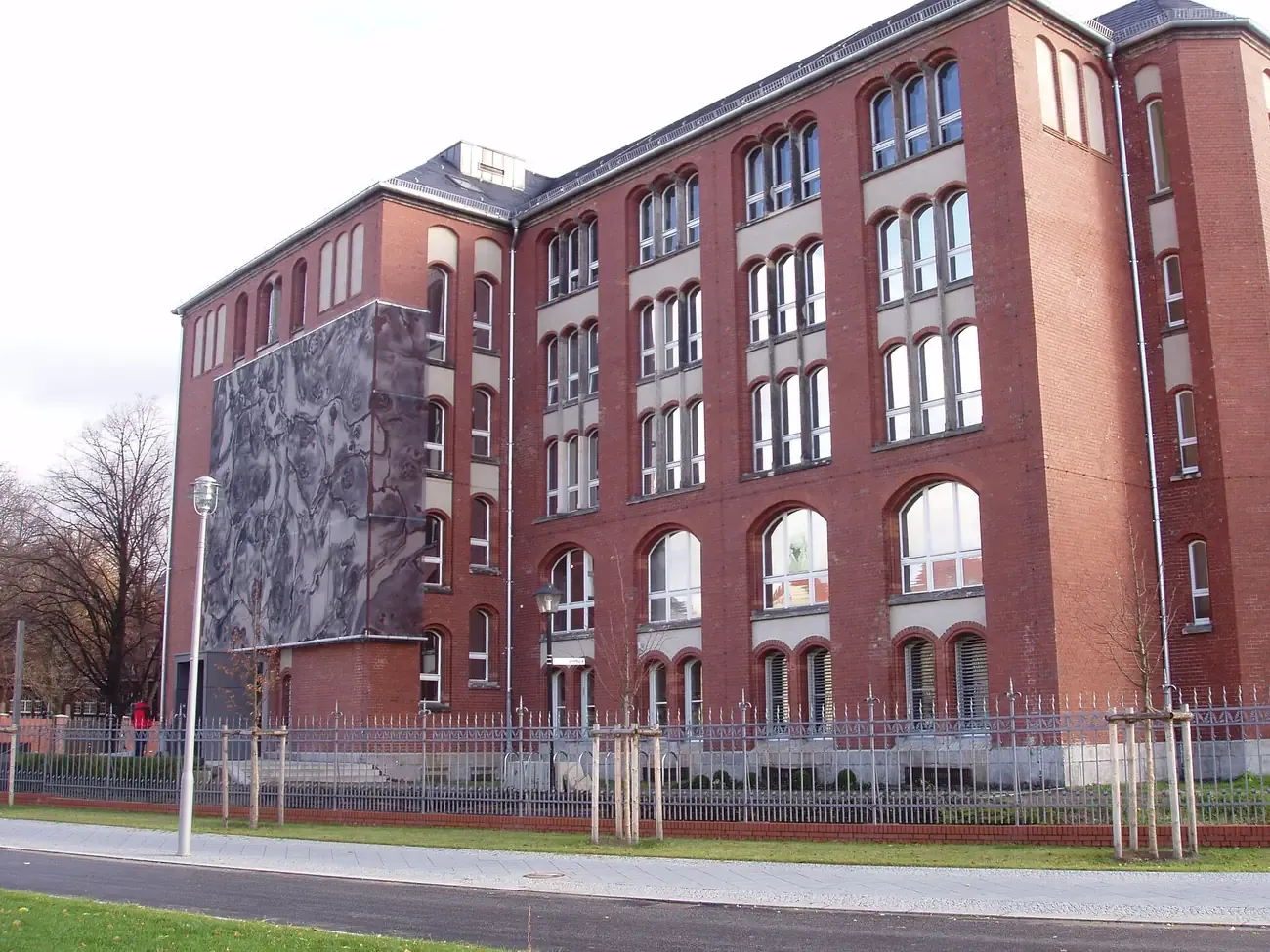
Berliner Medizinhistorisches Museum
Rudolf Virchow's pathological collection at the Charité, with specimens, a reconstructed nineteenth century lecture theatre and a ward from the 1930s.
Location: Charitéplatz 1, Mitte · Website
Photo: "Berliner Medizinhistorisches Museum building" by dreizung (Public domain).
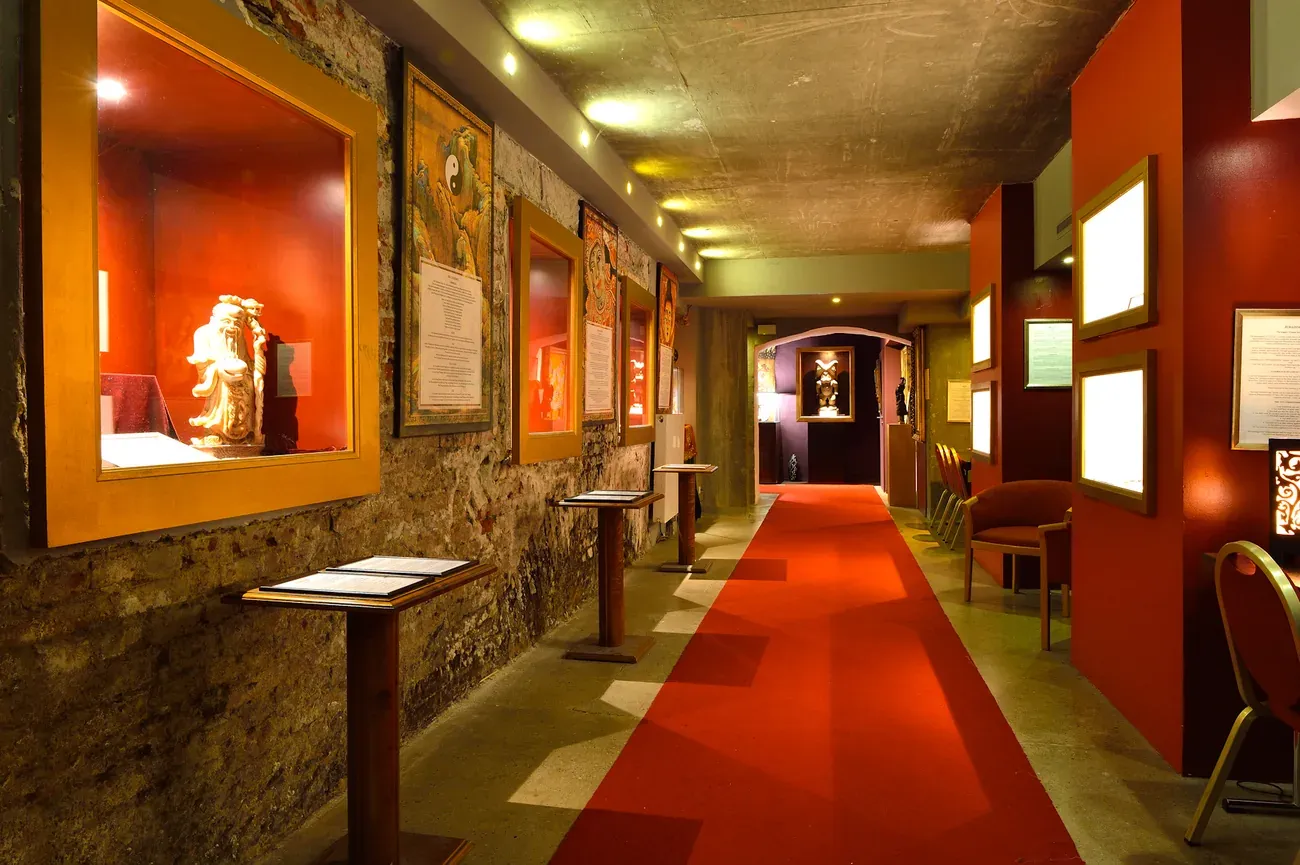
Magicum
A small museum of magic and superstition covering alchemy, astrology and illusion, with hands on tricks along the route.
Location: Große Hamburger Straße 17, Mitte
Photo: "Exhibition corridor at the Magicum museum in Berlin" by MagicExplorer111 (CC BY-SA 4.0).
Curious places to eat and drink in Berlin
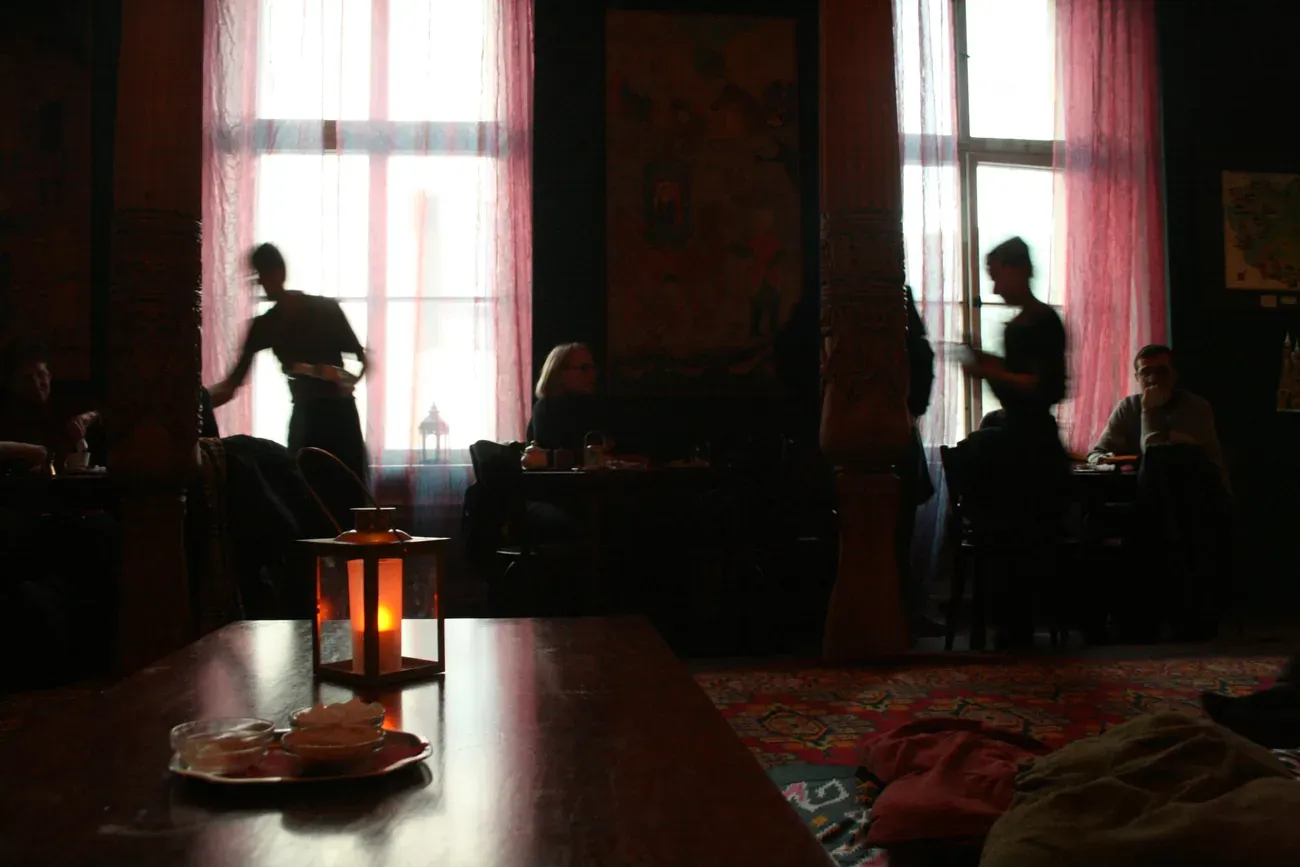
Tajikistan Tearoom
A Soviet era pavilion given to East Berlin by Tajikistan, carved and painted inside, where tea is served seated on cushions on the floor.
Location: Oranienburger Straße 27, Mitte
Photo: "Tajikistan tea room, Berlin" by Olga Pavlovsky (CC BY 2.0).
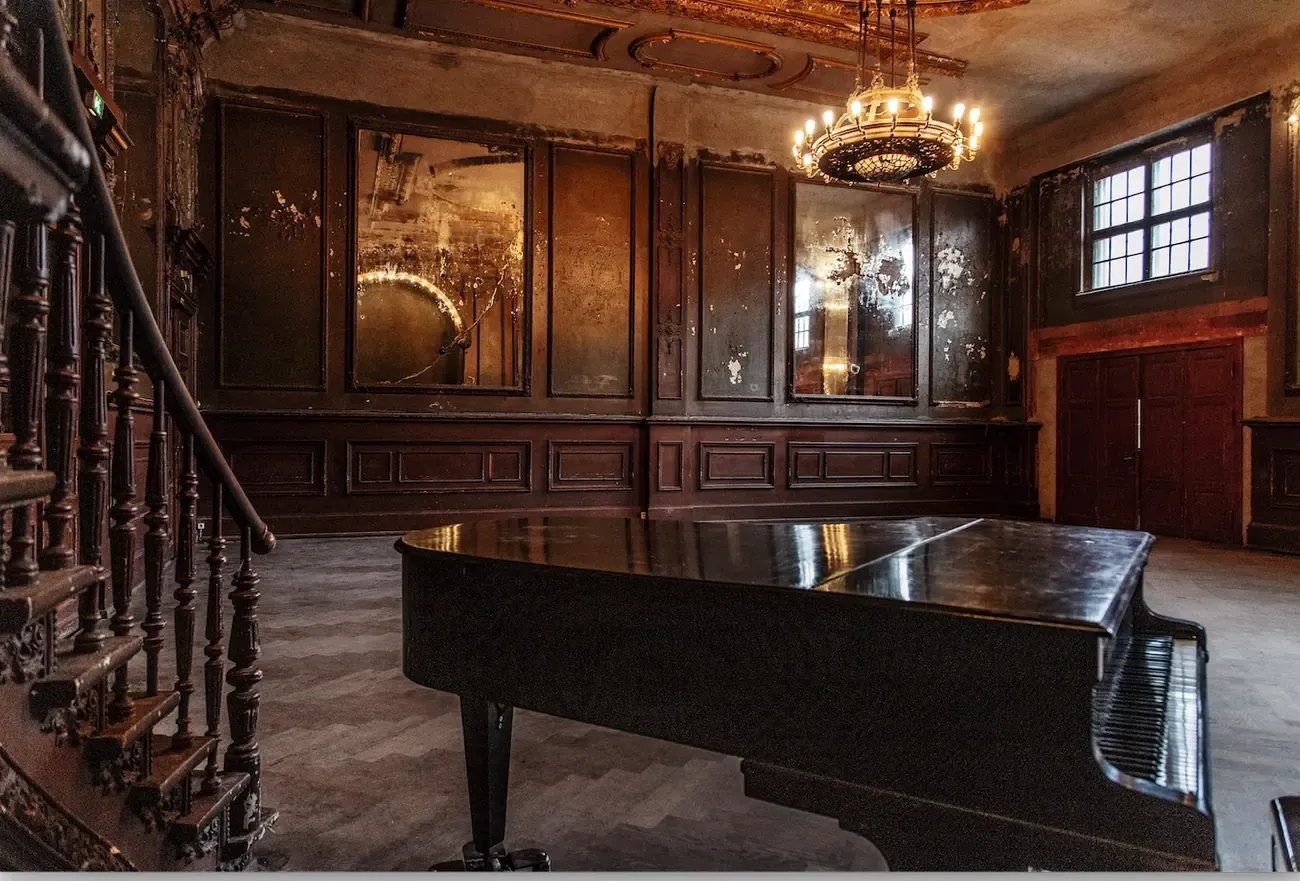
Hall of Mirrors in Clärchens Ballhaus
A mirrored ballroom above a dance hall opened in 1913, its plaster left cracked and unrestored, used for concerts and dancing.
Location: Auguststraße 24, Mitte
Photo: "Hall of mirrors above Clarchens Ballhaus" by Clärchens Ballhaus (CC BY-SA 4.0).
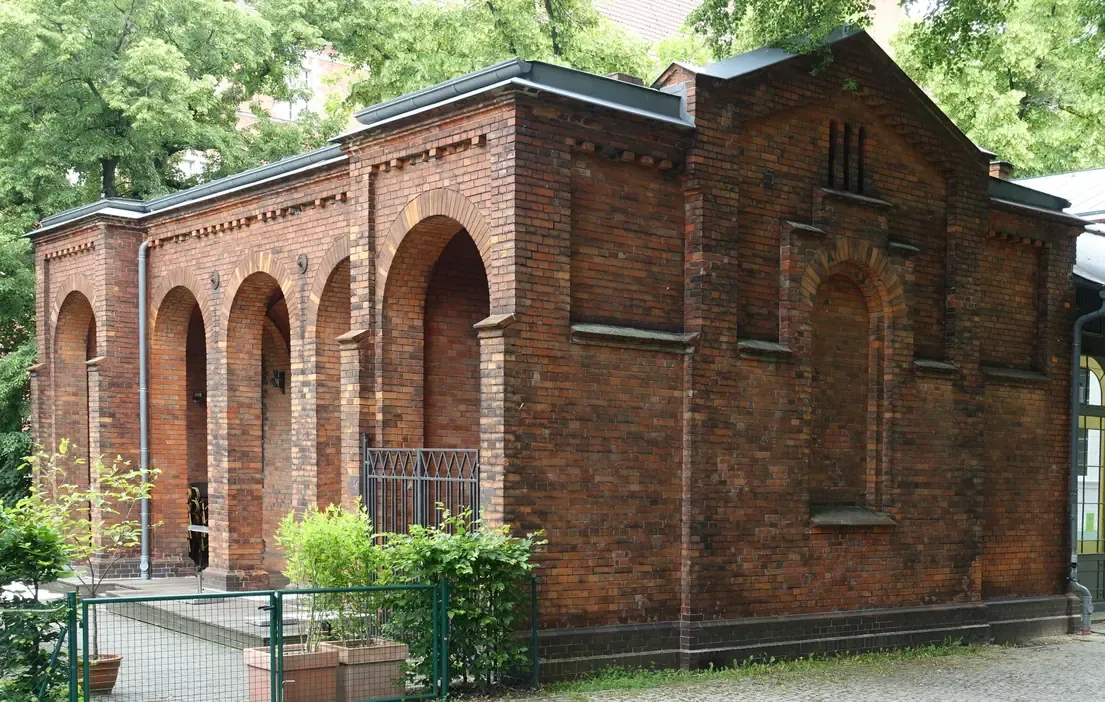
Café Strauss
A cafe inside the former mortuary of a Kreuzberg cemetery, with tables among the graves and cake served under the trees.
Location: Bergmannstraße 42, Kreuzberg
Photo: "Former cemetery mortuary housing Cafe Strauss" by Bodo Kubrak (CC BY-SA 4.0).
Wartime and Cold War sites in Berlin
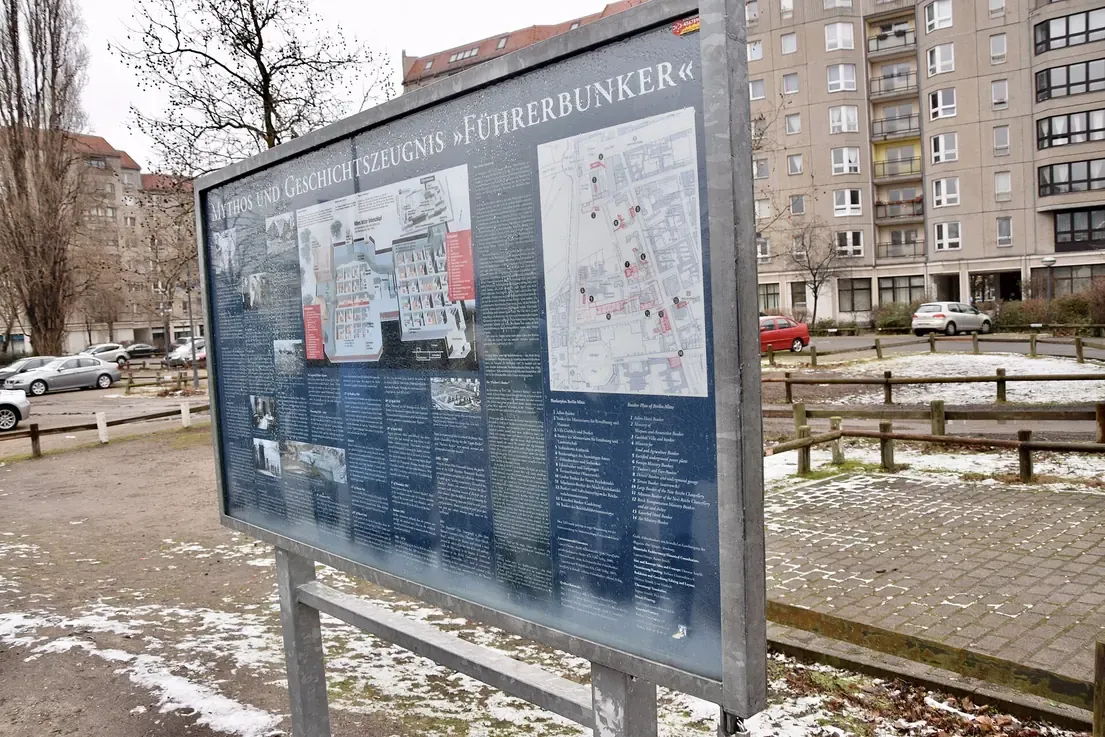
Führerbunker Parking Lot
The bunker where Hitler spent his last months lies sealed under a residential car park, marked only by an information board.
Location: Gertrud-Kolmar-Straße 4, Mitte
Photo: "Fuhrerbunker information board and parking lot" by Ank Kumar (CC BY-SA 4.0).
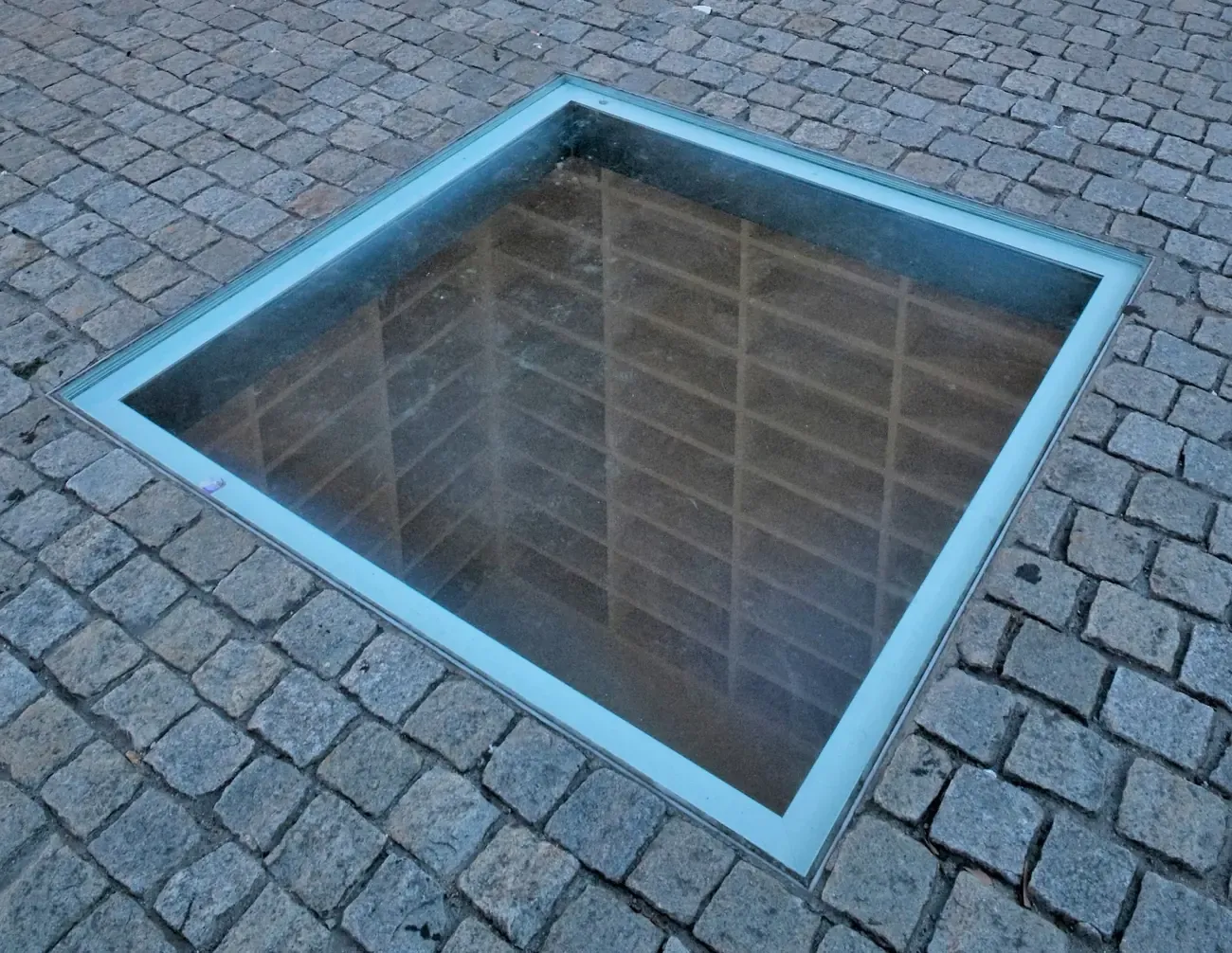
Bebelplatz
A pane of glass in the paving looks down into a room of empty white shelves, the memorial to the book burning of 1933.
Location: Unter den Linden 7, Mitte
Photo: "Bebelplatz book-burning memorial" by Kemmi.1 (Stefan Kemmerling) (CC BY-SA 3.0).
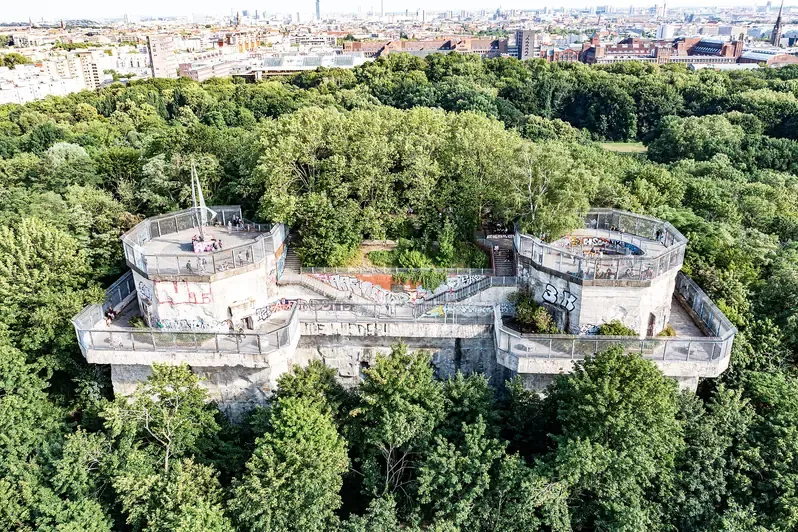
Flakturm Humboldthain
A wartime anti aircraft bunker half buried in rubble in Volkspark Humboldthain, its surviving platform climbable for a view over the north of the city.
Location: Hochstraße 5, Gesundbrunnen
Photo: "Flakturm Humboldthain from the air" by Kasa Fue (CC BY-SA 4.0).
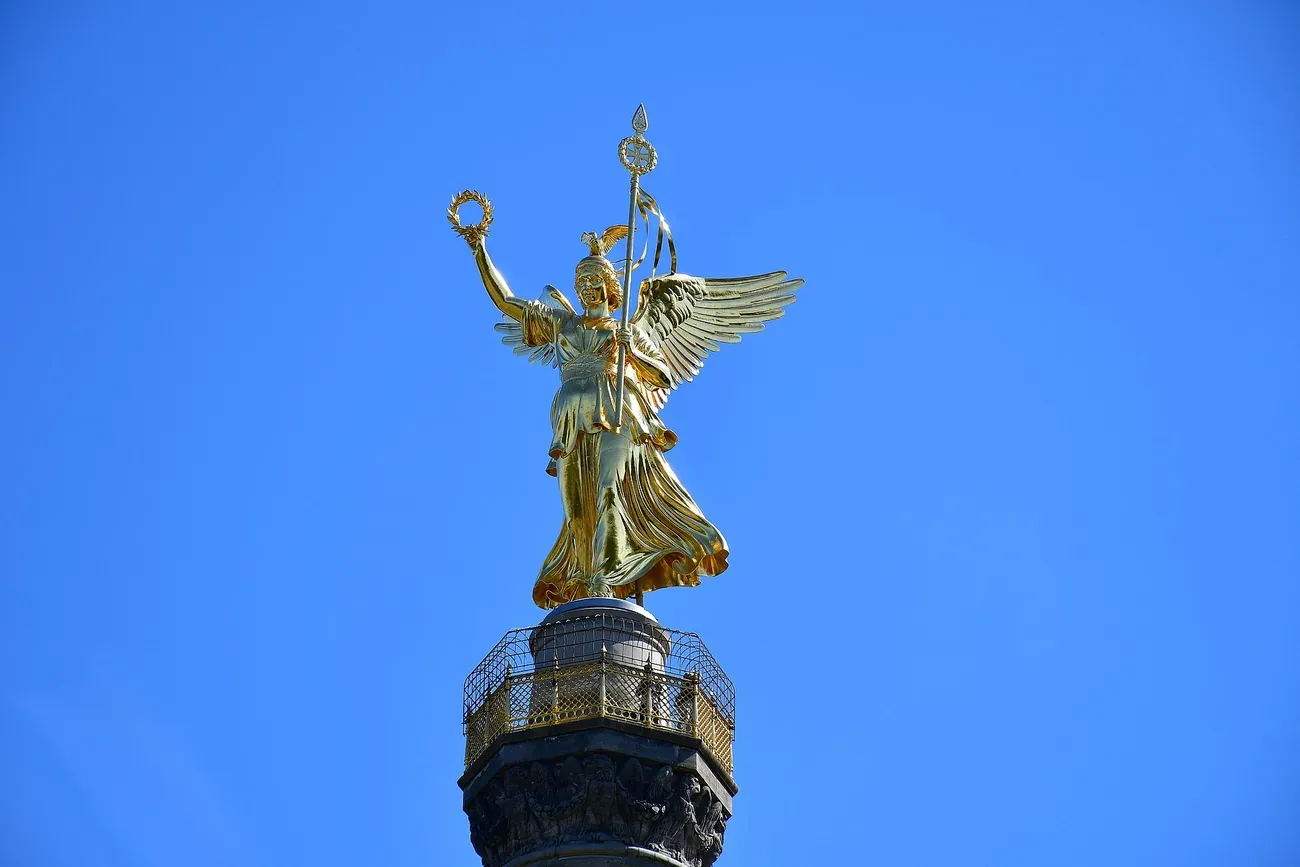
Berlin Victory Column
The gilded Victoria stands on a column in the middle of a Tiergarten roundabout, reached through a tunnel and then 285 steps.
Location: Großer Stern 1, Tiergarten
Photo: "Victoria statue atop the Berlin Victory Column" by BugWarp (CC BY-SA 4.0).
Hidden gems and green escapes in Berlin
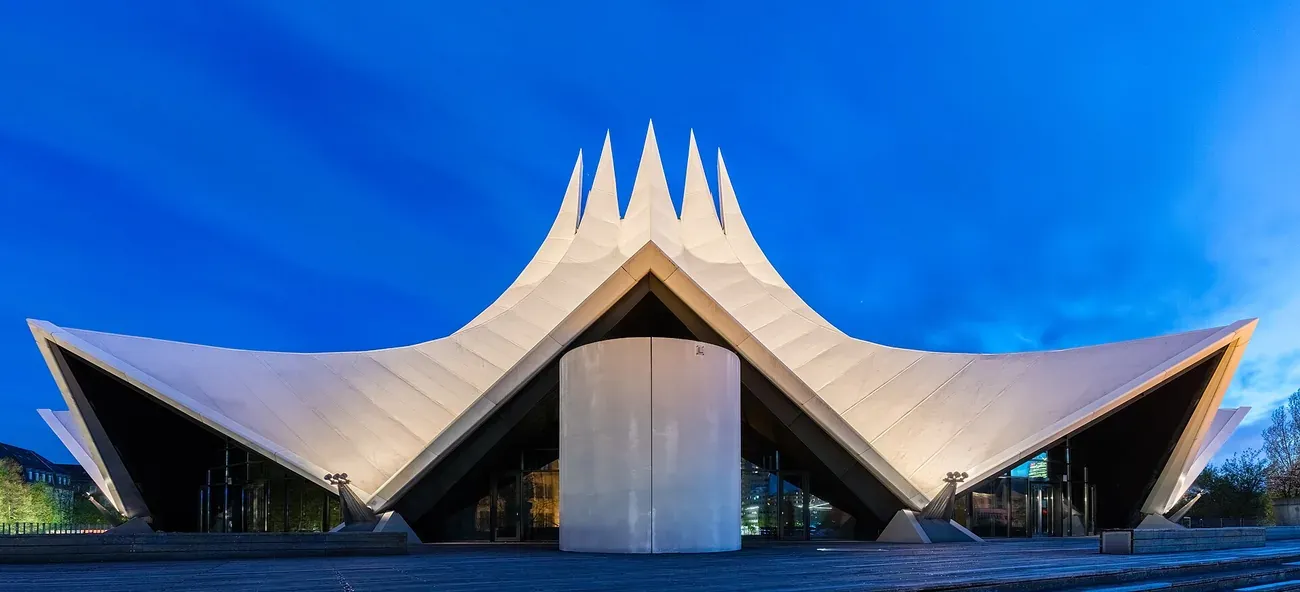
Liquidrom
A saltwater pool under a dark dome inside the Tempodrom, where music is played underwater and swimmers float on their backs to listen.
Location: Möckernstraße 10, Kreuzberg
Photo: "The Tempodrom in Berlin" by Diego Delso (CC BY-SA 4.0).
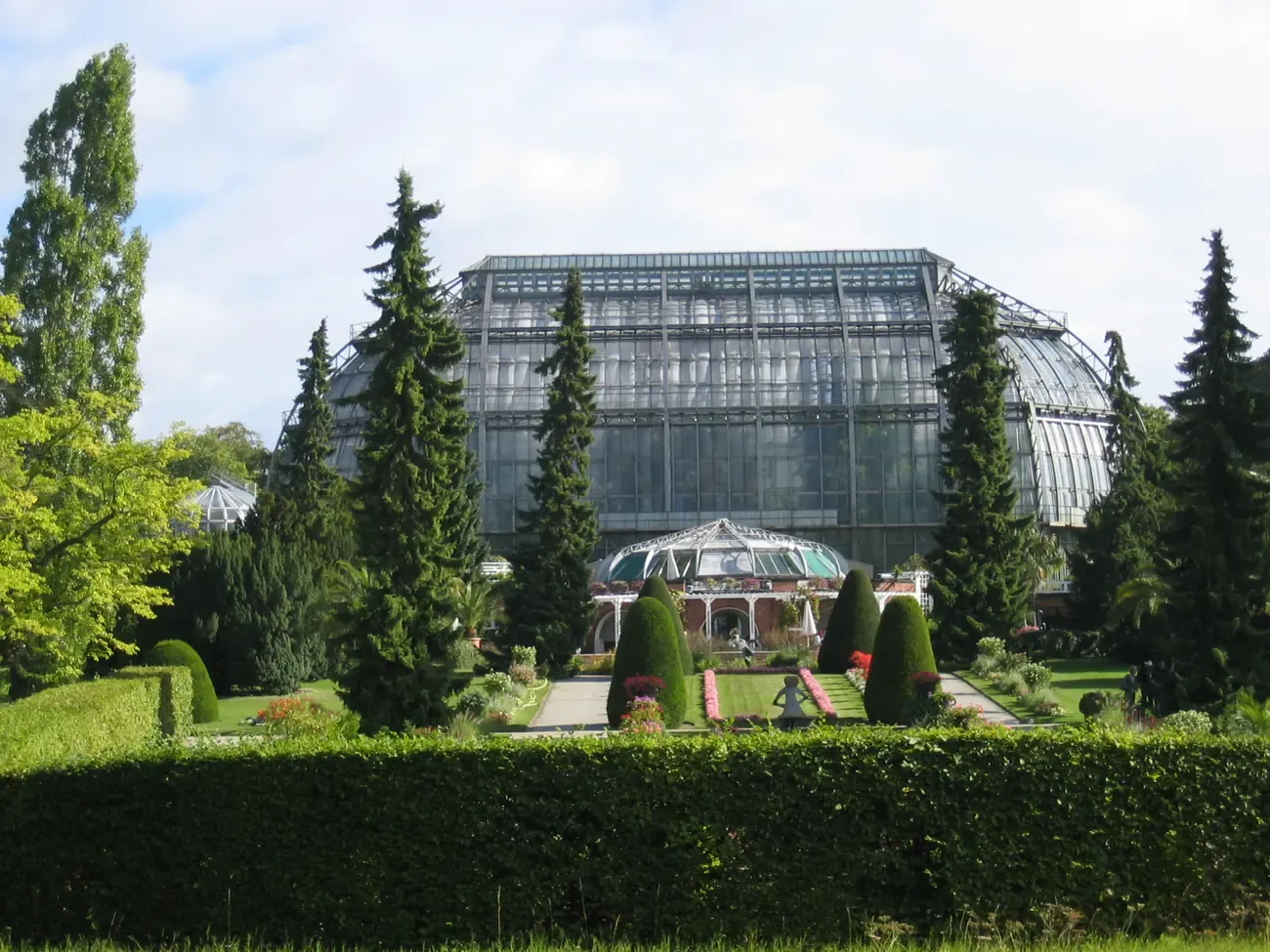
Berlin Botanical Garden
One of the largest botanical gardens in the world, with a vast tropical greenhouse. The Botanical Museum is closed for refurbishment.
Location: Königin-Luise-Straße 6, Lichterfelde · Website
Photo: "The Great Tropical Greenhouse, Berlin Botanical Garden" by Pismire (CC BY-SA 3.0).
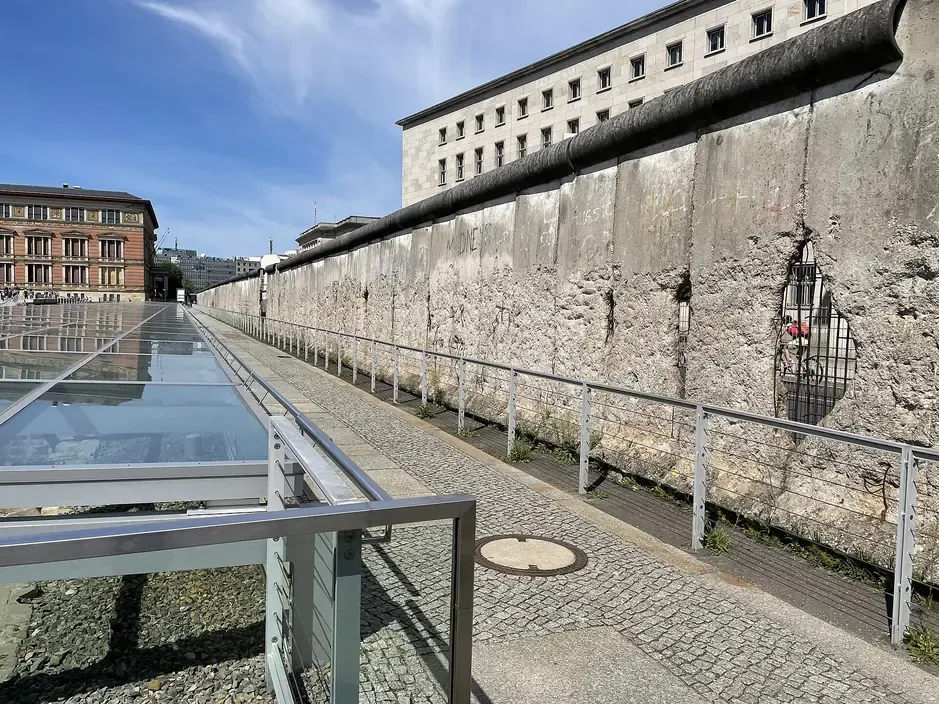
Remnants of the Berlin Wall
Beyond the famous stretches, fragments of wall, watchtowers and the cobbled line of its course surface all over the city.
Location: Marked across Berlin, including Niederkirchnerstraße in Mitte
Photo: "Berlin Wall segment on Niederkirchnerstrasse" by Vedha242424 (CC0).
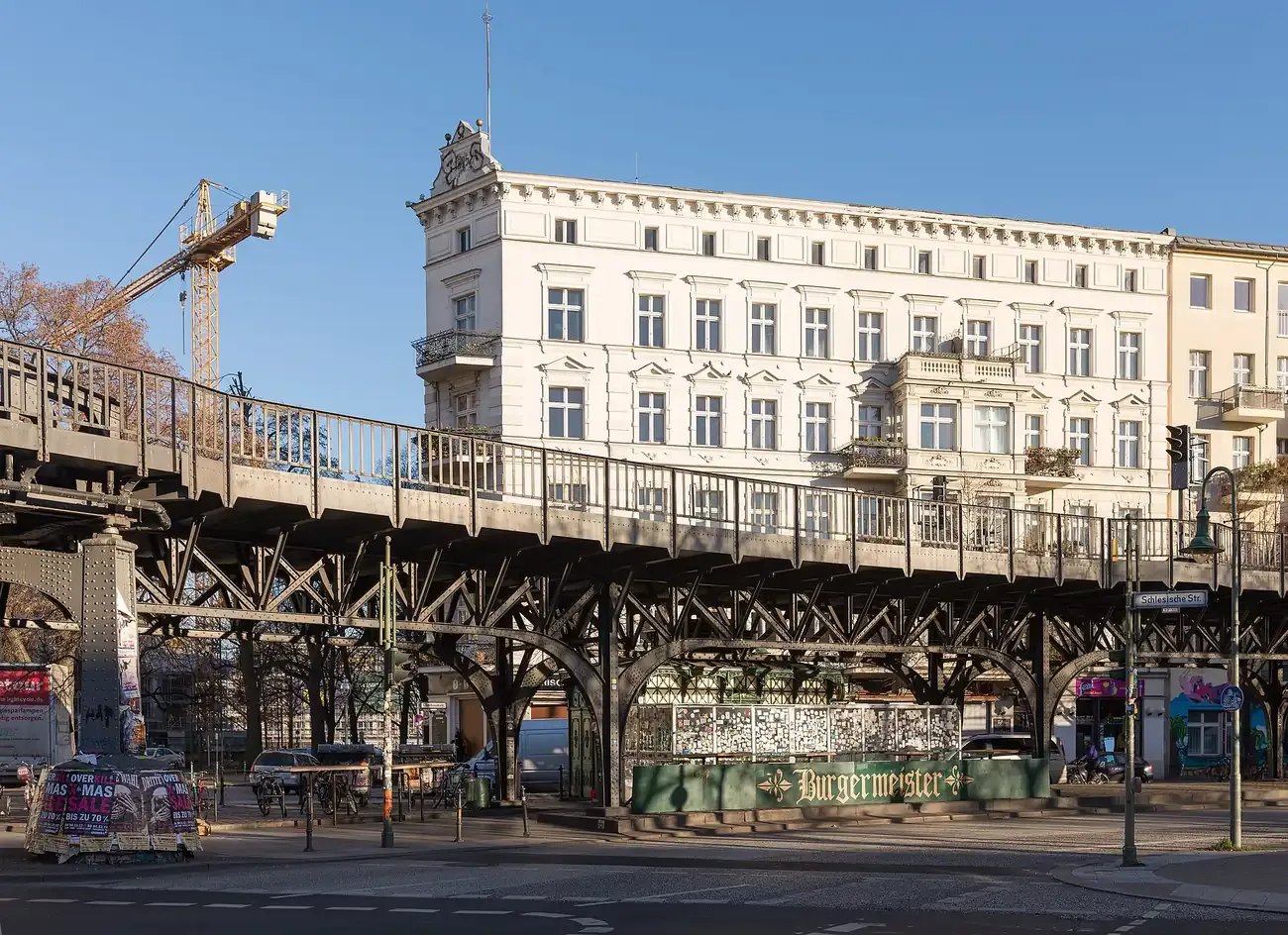
Burgermeister
A burger stand in a converted public toilet from 1900, wedged under the elevated U1 tracks at Schlesisches Tor.
Location: Oberbaumstraße 10, Kreuzberg
Photo: "Burgermeister at Schlesisches Tor" by Arild Vågen (CC BY-SA 3.0).
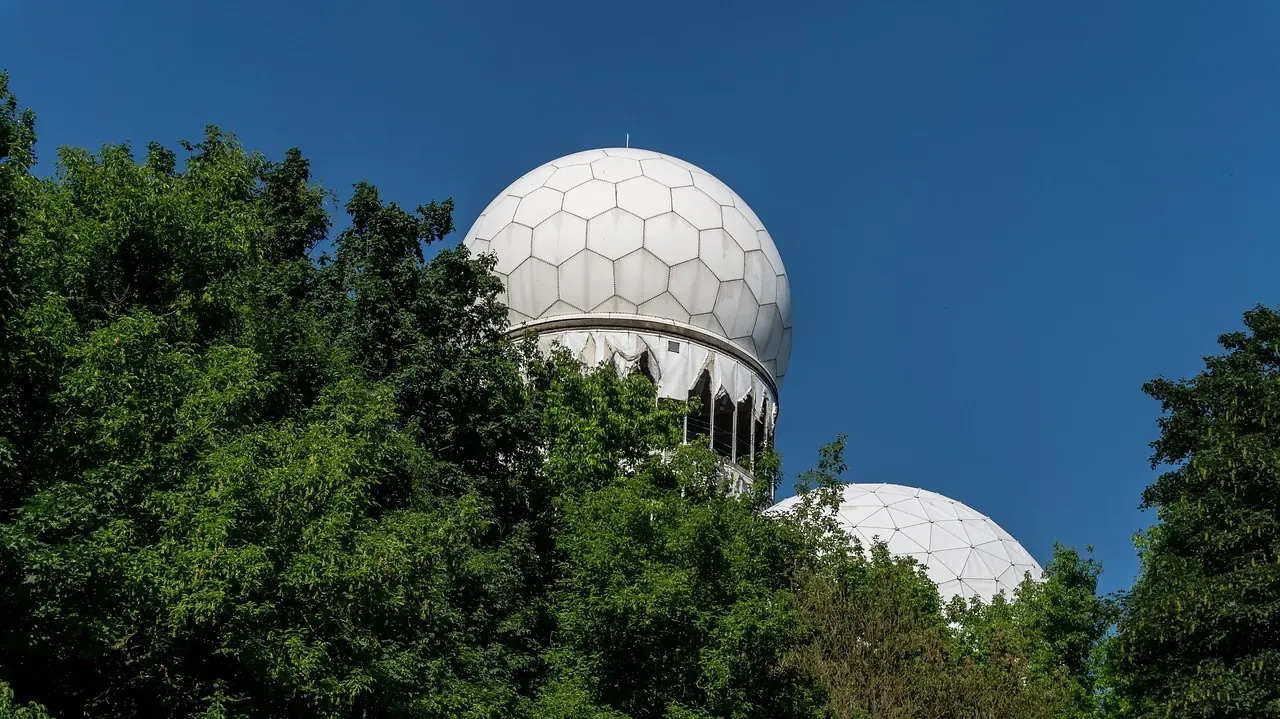
Teufelsberg
An abandoned listening station on a hill of war rubble in the Grunewald, its torn radomes now covered in murals and open on tours.
Location: Teufelsseechaussee 10, Grunewald
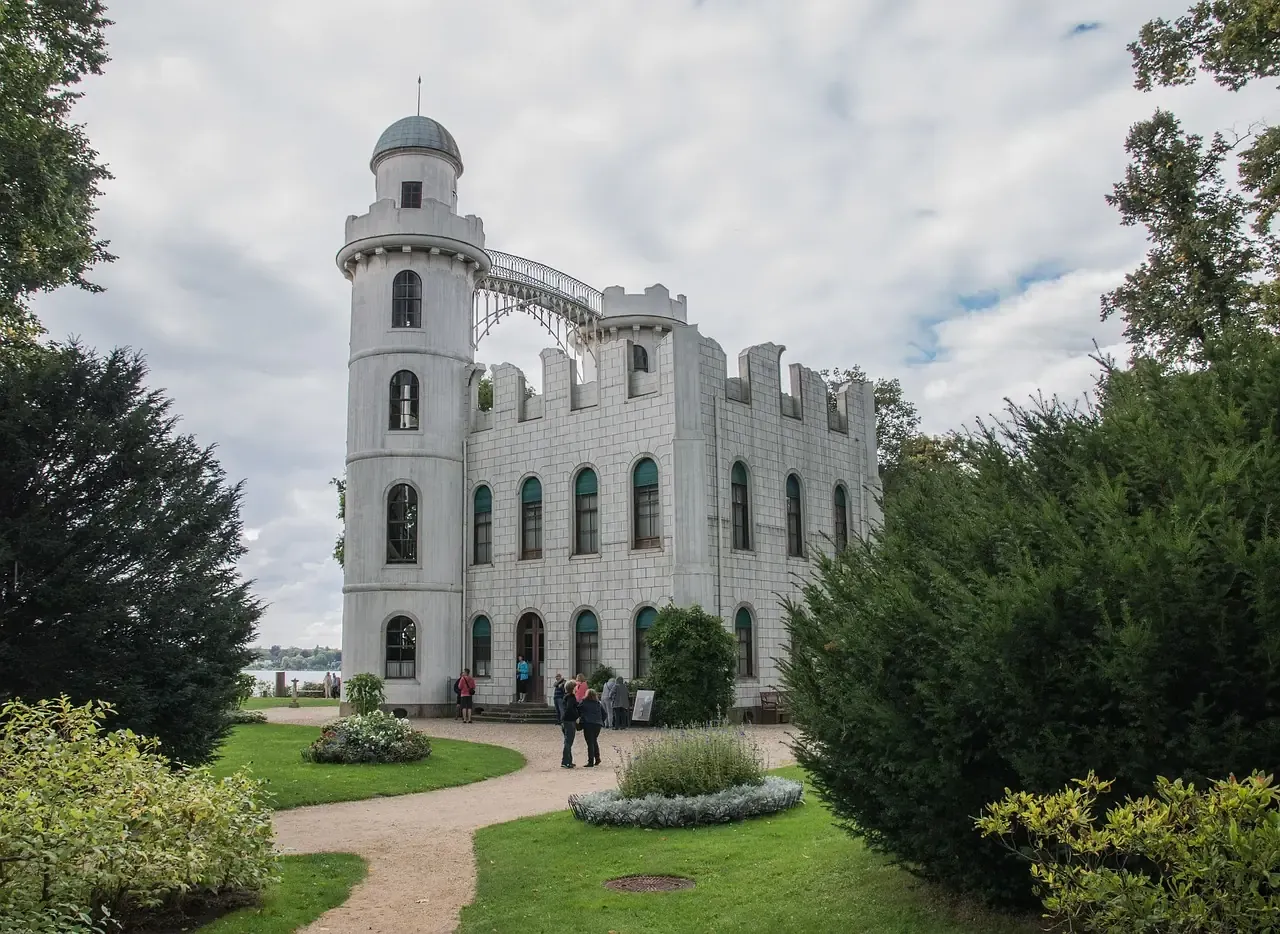
Pfaueninsel
A Havel island of wild peacocks and a folly castle built as a ruin, reached only by a small summer ferry, 10:00 to 18:00.
Location: Pfaueninsel, Wannsee
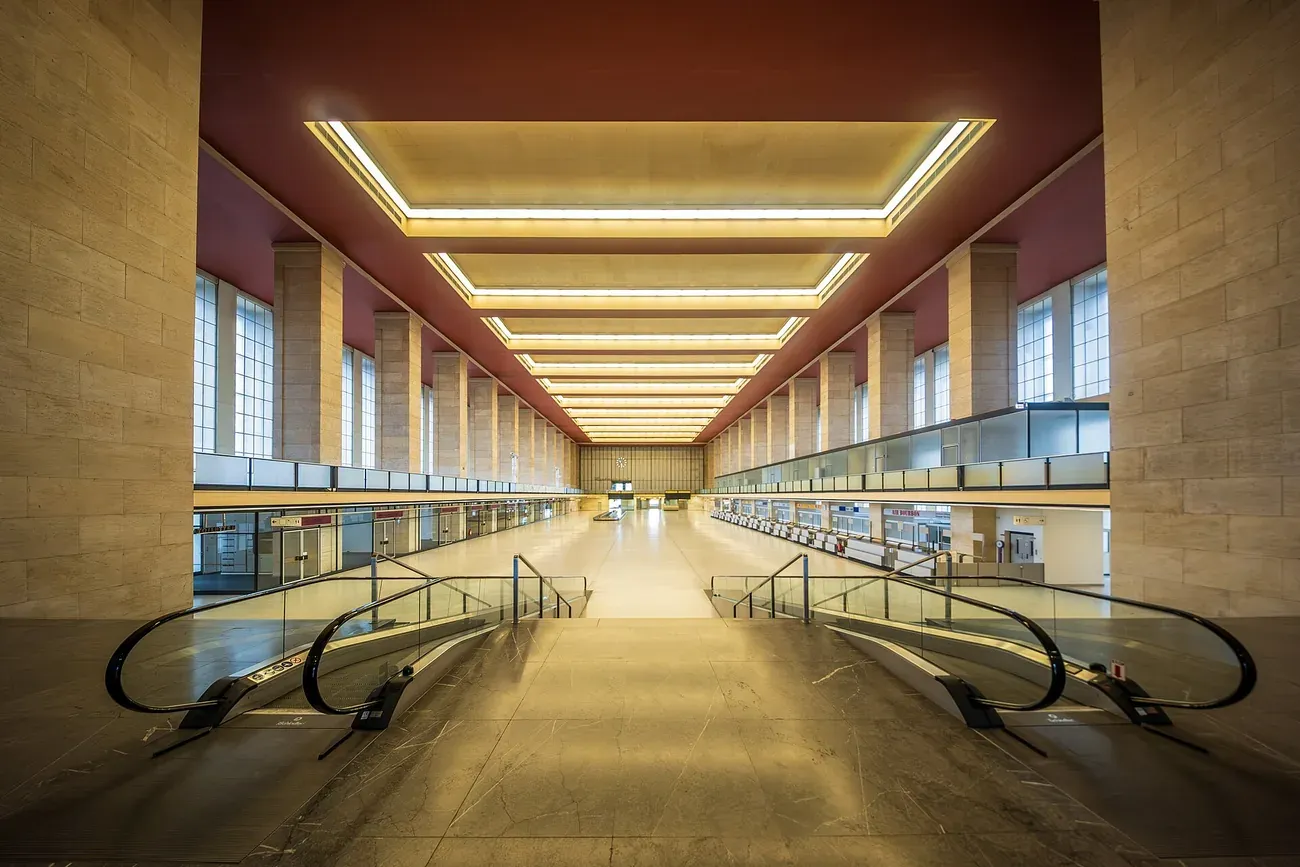
Tempelhof Airport terminal
Guided tours enter the vast 1930s terminal and its hangars, the airport of the Berlin Airlift, standing empty beside the free airfield park.
Location: Platz der Luftbrücke 5, Tempelhof
Photo: "Tempelhof Airport terminal hall" by Matthias Süßen (CC BY-SA 4.0).
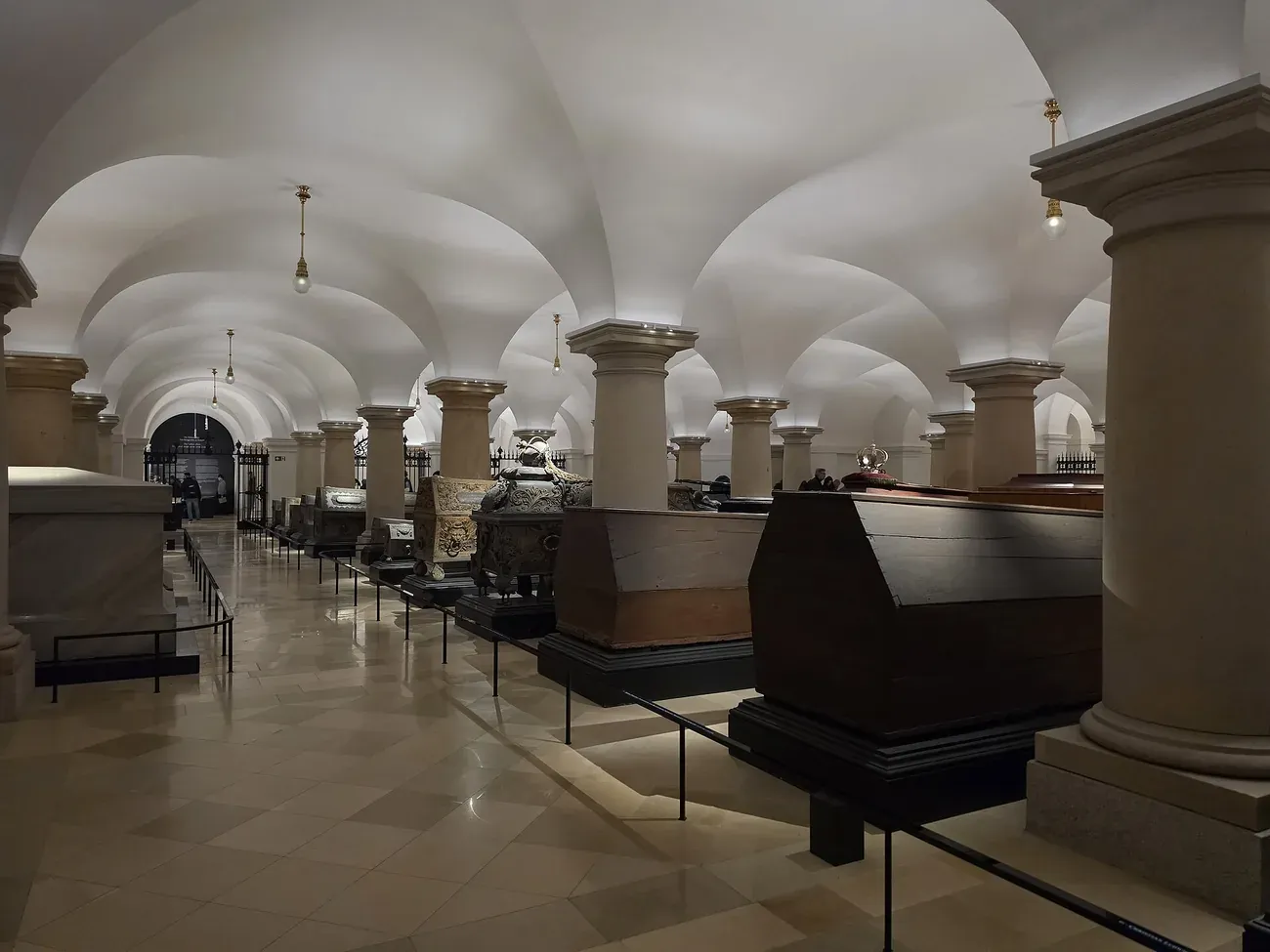
Hohenzollern Crypt
The dynastic crypt under Berlin Cathedral reopened in March 2026 after six years of work, with around ninety Hohenzollern burials on show.
Location: Am Lustgarten 9, Mitte
Photo: "Hohenzollern Crypt, Berlin Cathedral" by LarsMueller (CC0).
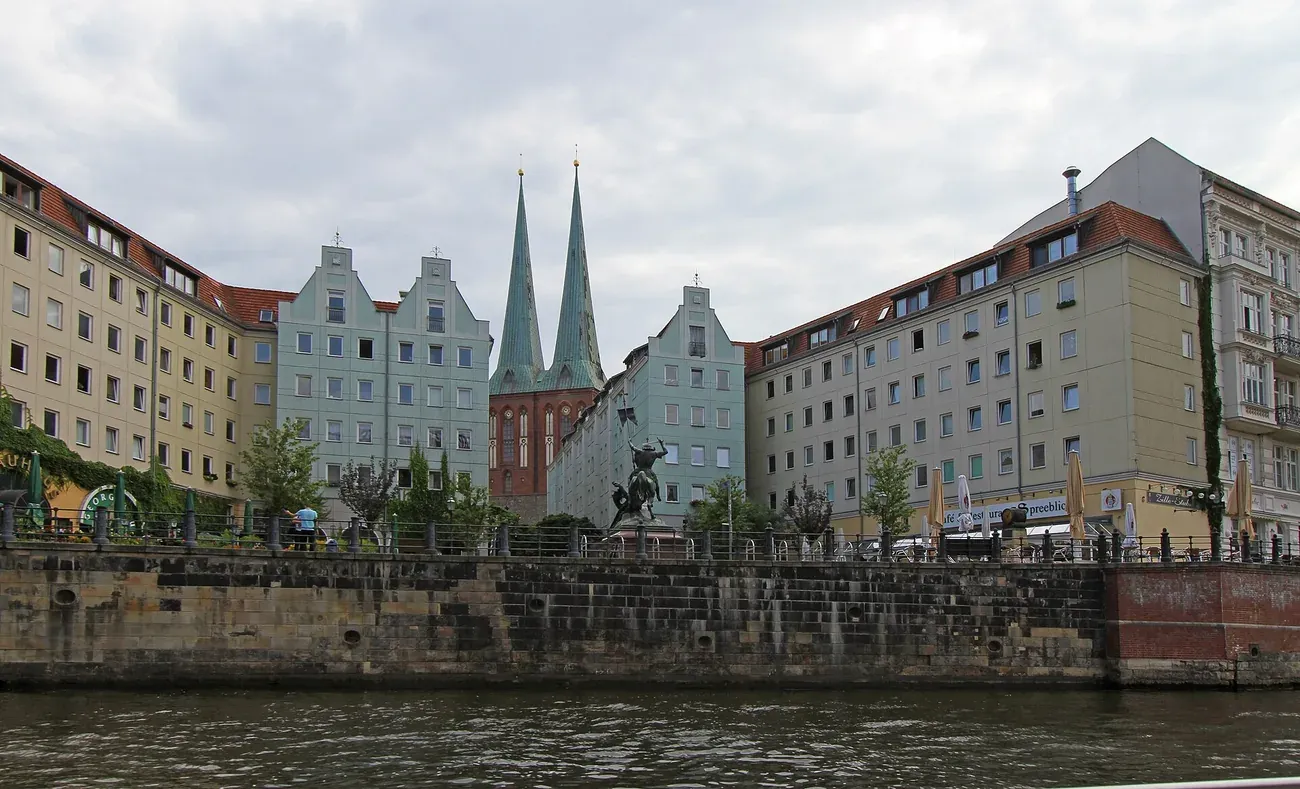
Nikolaiviertel
East Germany rebuilt Berlin's medieval core around the Nikolaikirche for the city's 750th anniversary, mixing salvaged facades with prefabricated blocks.
Location: Around the Nikolaikirche, Mitte
Photo: "Nikolaiviertel and the Nikolaikirche" by Gerd Eichmann (CC BY-SA 4.0).
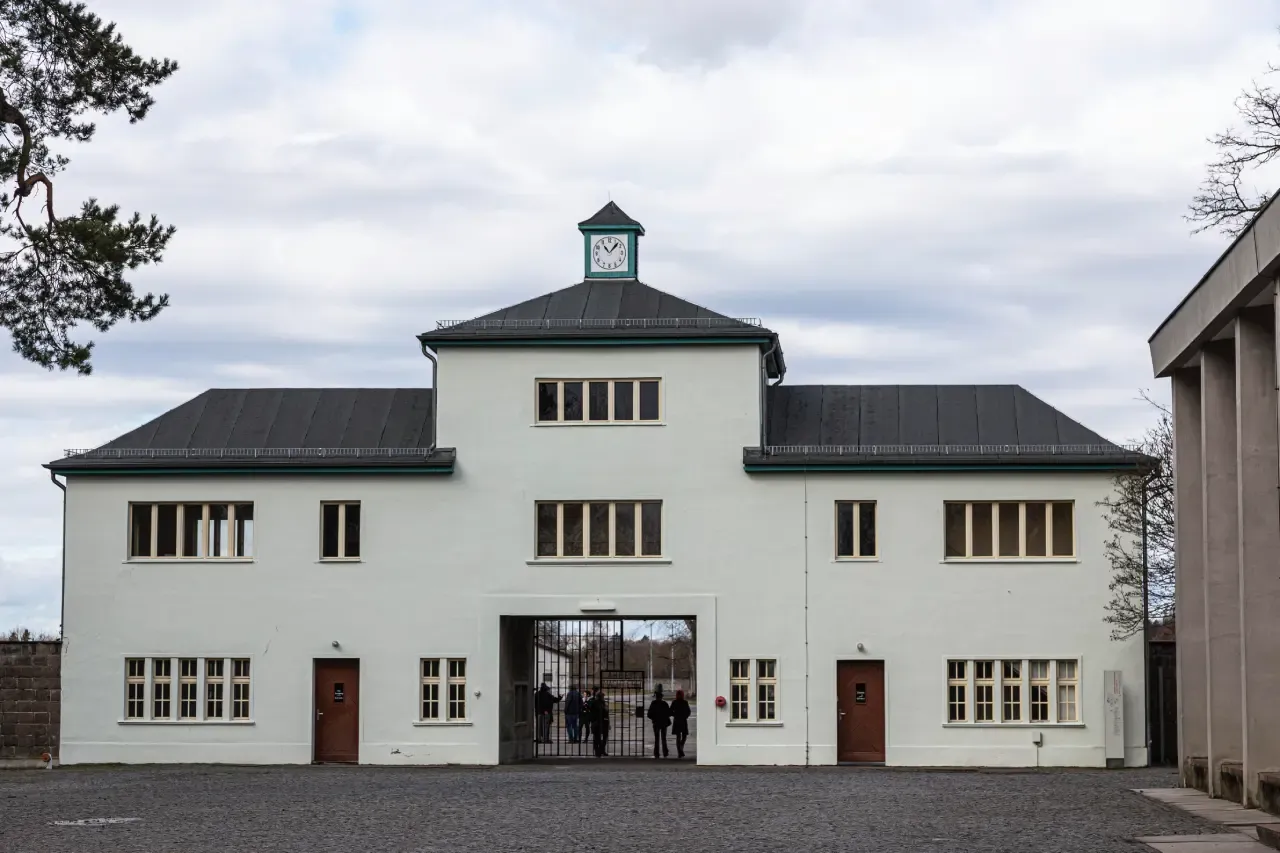
Sachsenhausen Memorial
The concentration camp north of Berlin is preserved as a memorial and museum, with the roll call ground, barracks and Station Z open to visitors.
Location: Straße der Nationen 22, Oranienburg · Tickets and tours
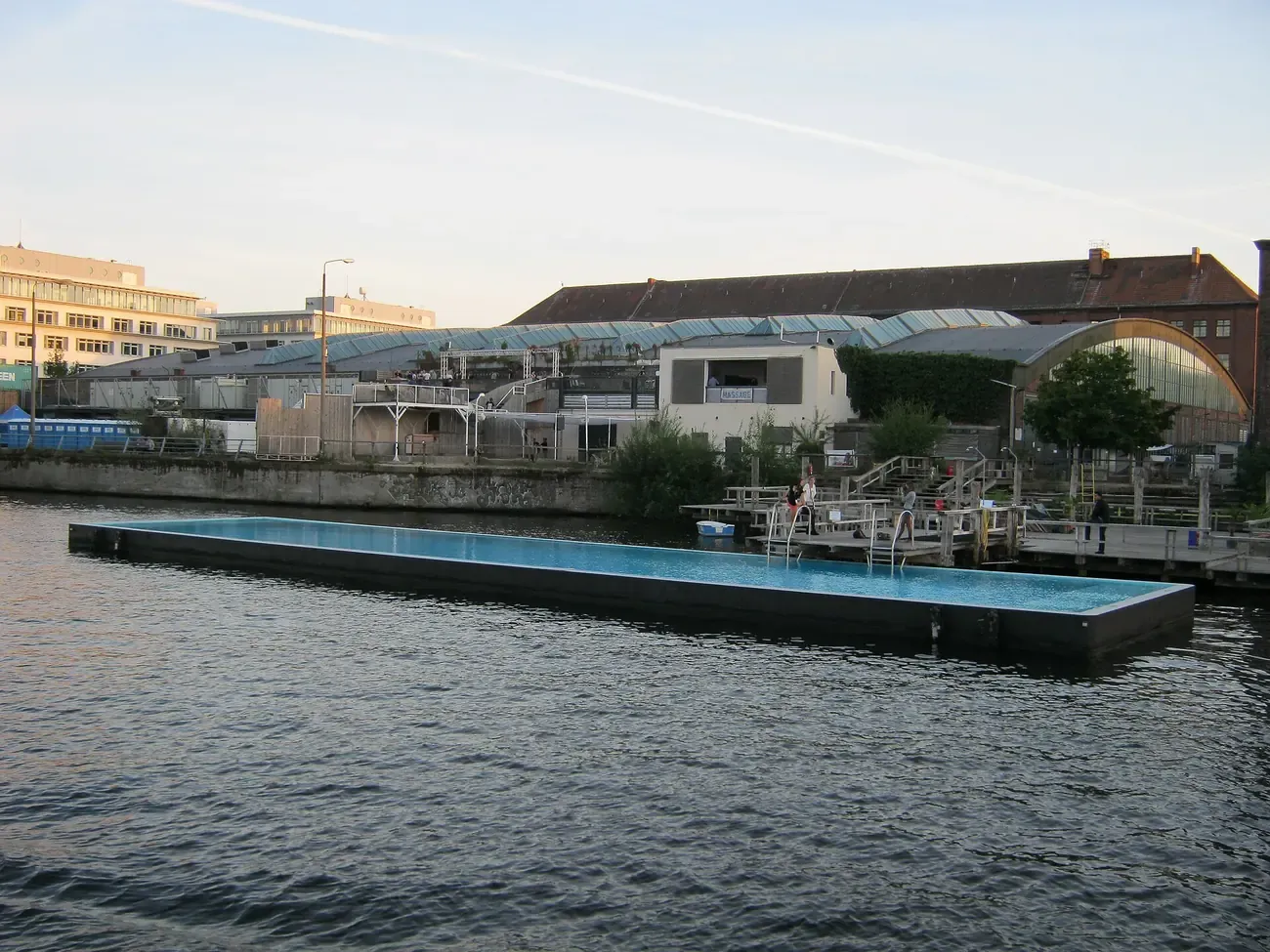
Badeschiff
A swimming pool built into an old cargo barge and moored in the Spree, so bathers swim in the river without swimming in it.
Location: Eichenstraße 4, Treptow
Photo: "Badeschiff on the Spree" by Sören Kusch (CC BY-SA 3.0).
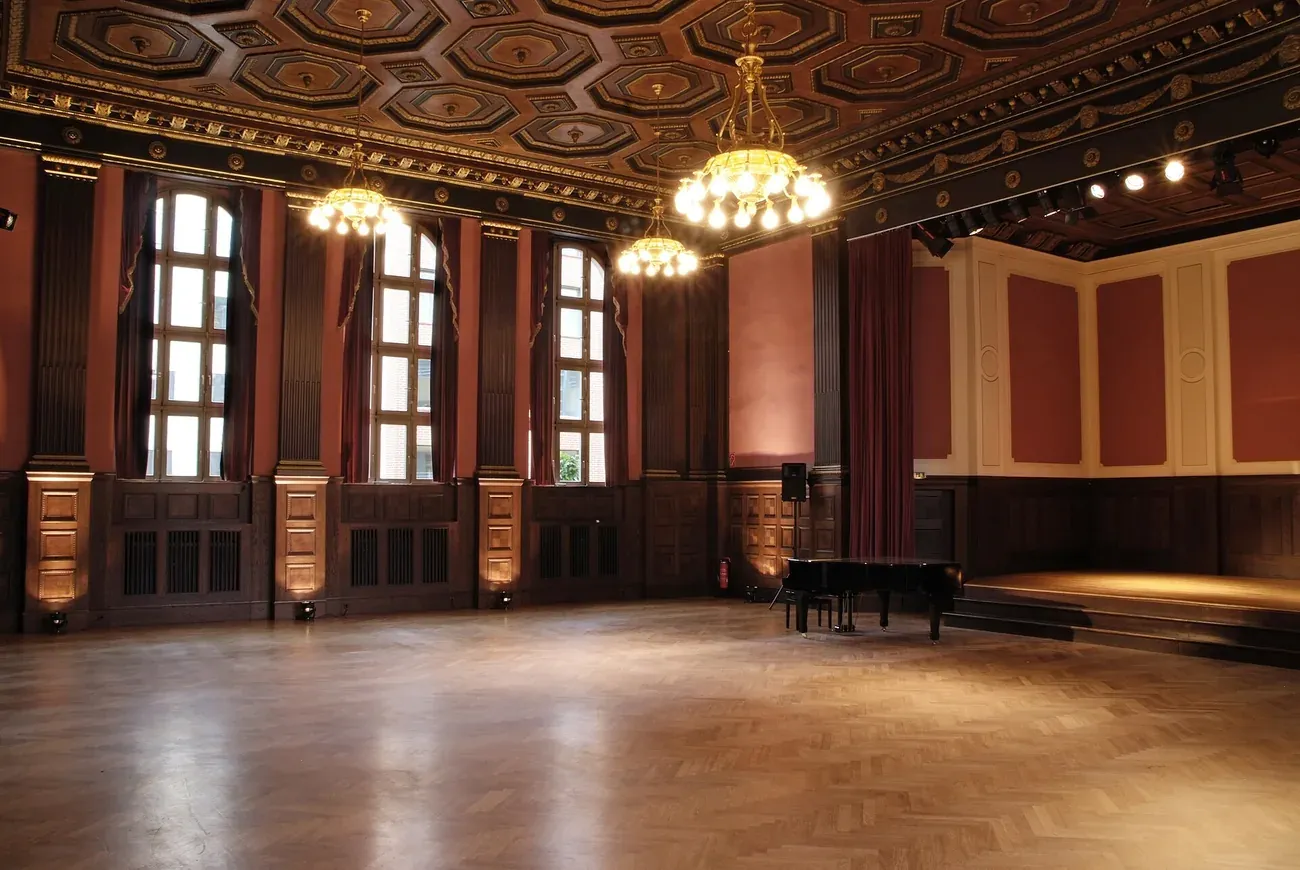
Hansa Studios
The studio beside the former Wall where David Bowie recorded Heroes and Iggy Pop worked, still in use and open on guided tours.
Location: Köthener Straße 38, Kreuzberg · Website
Photo: "Meistersaal hall, Hansa Studios" by In3s (CC BY-SA 3.0).
Why Berlin is worth visiting
Berlin carries its twentieth century history openly, from the Cold War scars along the East Side Gallery to the rebuilt Reichstag dome that turned a former parliament into a public landmark. Reunified since 1990, the city keeps two very different downtowns instead of one, plus a museum collection recognised by UNESCO and a nightlife scene that never quite decides when to close.
Neighbourhoods to know
Mitte holds the historic core: the Brandenburg Gate, the government quarter and Museum Island, all walkable from each other. Kreuzberg and Friedrichshain, across the river, keep the alternative edge of reunified Berlin, with the East Side Gallery, canalside bars and street art. Charlottenburg, further west, is City West, built around Kurfurstendamm's shopping and the baroque palace. Prenzlauer Berg mixes restored townhouses with Mauerpark and its Sunday flea market.
When to go and for how long
May to September brings the longest days and outdoor beer gardens, with June to August the busiest and warmest stretch. Spring and autumn stay mild with thinner crowds, and December fills Gendarmenmarkt and Alexanderplatz with Christmas markets. Three to four days cover the historic centre and one of the outlying districts at an easy pace.
Getting around
The U-Bahn and S-Bahn networks reach almost everywhere on a single BVG ticket that also covers trams and buses, with day passes covering unlimited rides. Central Mitte stays walkable between its main sights, and bike lanes make cycling a realistic way to cover the wider city. Museum Island, the five museums UNESCO added to its list in 1999, is where most first trips through the tourist attractions in Germany begin.