
Munich tourist attractions
Known for
Beer halls, Bavarian royal palaces and the Oktoberfest beer festival
Must-see landmarks
Marienplatz, Munich Residenz, Nymphenburg Palace and English Garden
Best time to visit
Late spring to early autumn, outside the Oktoberfest crowds
Days needed
Two to three days for the old town and a palace on the outskirts
10 must-see tourist attractions in Munich
Here are the tourist attractions in Munich worth planning around, starting with Marienplatz, Frauenkirche and St. Peter's Church. The 10 top sights come first, then free things to do, upcoming events and visitor FAQs.
1. Marienplatz
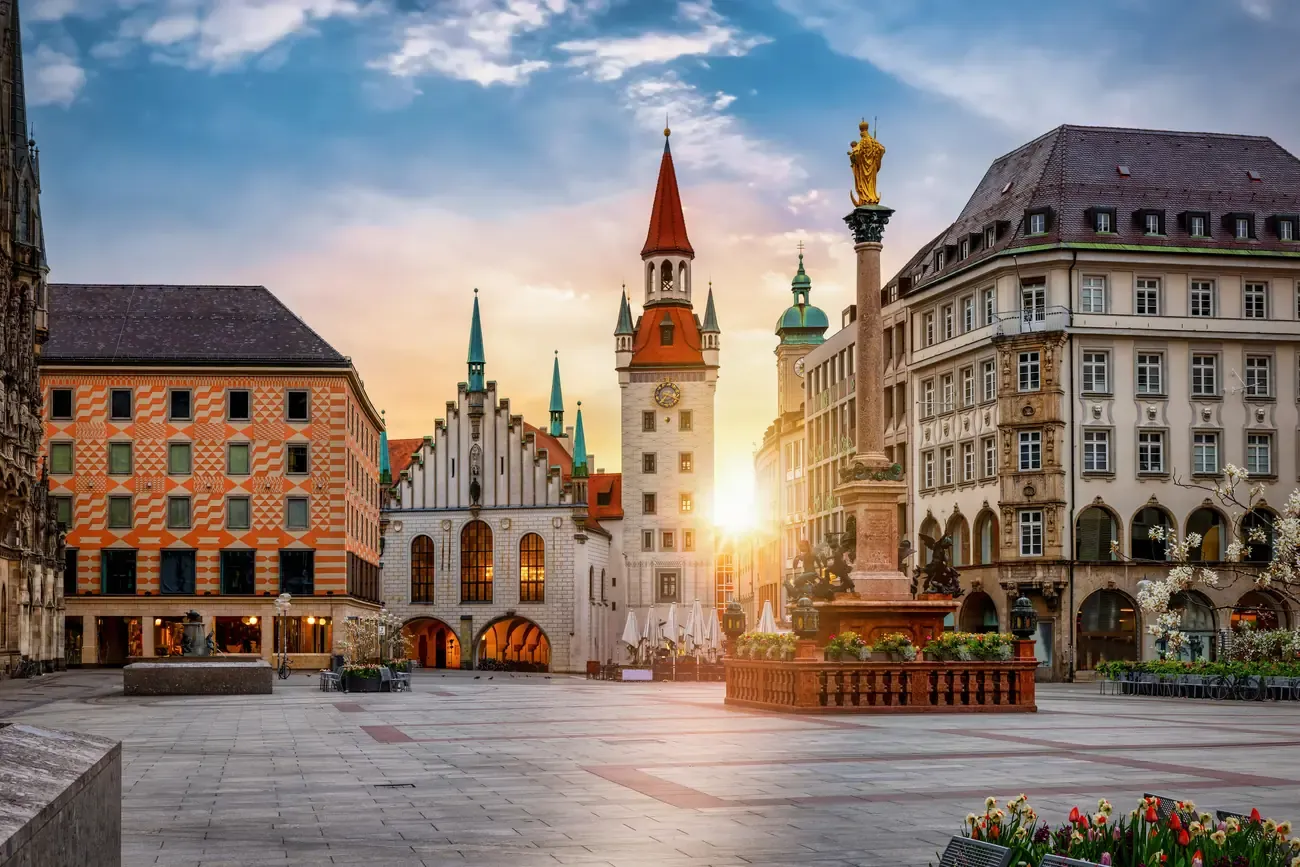
Munich has centred on Marienplatz since 1158, when the market that gave the city its name settled here. The Neues Rathaus fills the north side, its tower carrying the Glockenspiel whose figures act out a ducal wedding and a coopers' dance to a run of bells. The golden Madonna on the Mariensaule has watched the square since 1638, and the cafes, spires and shopping streets around it make this the natural start of any walk through the old town.
Location: Marienplatz, Altstadt, at the heart of the old town.
Access: Free. The Glockenspiel plays daily at 11:00 and 12:00, with an extra show at 17:00 from March to October.
2. Frauenkirche
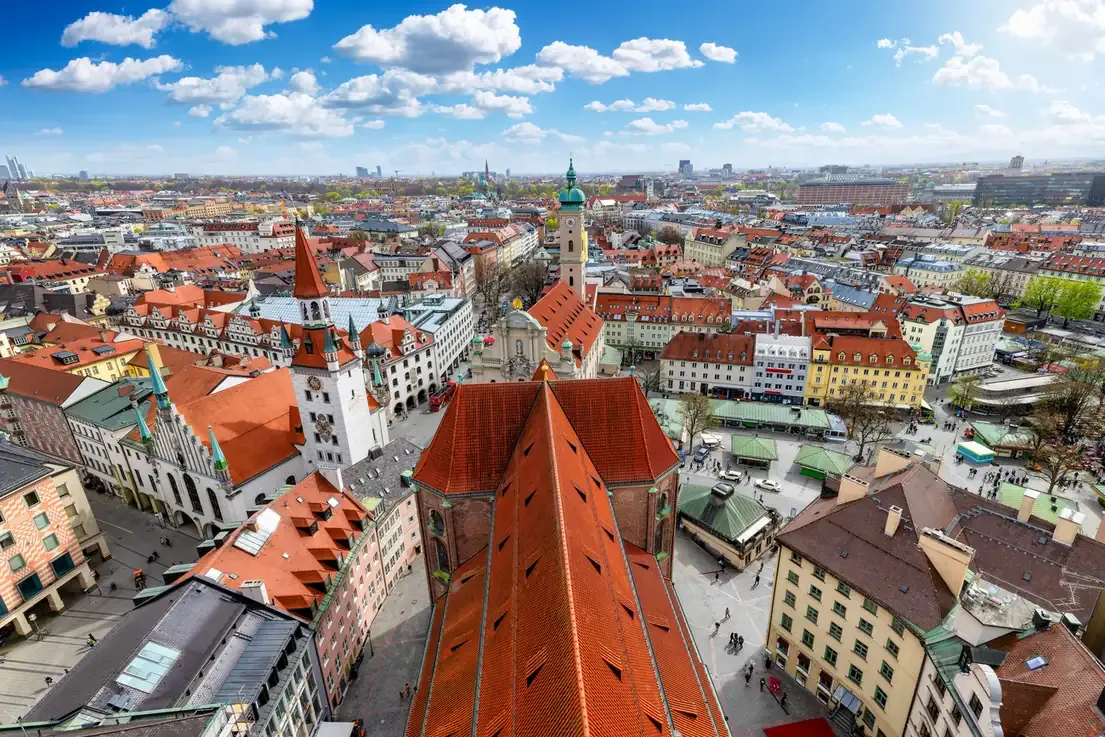
The Frauenkirche is Munich's cathedral and the defining shape of its skyline, two bare brick towers capped by green copper domes that locals liken to onions. The late Gothic hall church was raised in the late 15th century and consecrated in 1494, its whitewashed interior kept plain after wartime rebuilding. A dark mark near the entrance, the Devil's Footstep, ties the church to a legend about a bargain struck with its builder. It remains the seat of the Archbishop of Munich and Freising.
Style: Late Gothic
Location: Frauenplatz, Altstadt.
Access: Free to enter the nave. Climbing the south tower is ticketed.
Photos: "Frauenkirche seen from the Peterskirche tower" by Diliff (CC BY 2.5); "Nave of the Frauenkirche" by AuHaidhausen (CC BY 4.0).
3. St. Peter's Church
Known to locals as Alter Peter, or Old Peter, St. Peter's is the oldest parish church in Munich, its roots reaching back to the settlement that preceded the city. Inside, a Gothic frame gathers a gilded high altar and centuries of chapels and monuments. The real draw is the tower: a climb of around 300 steps reaches a narrow gallery that looks straight across Marienplatz to the Frauenkirche and, on clear days, to the Alps on the horizon.
Style: Gothic with a Baroque interior
Location: Rindermarkt, Altstadt, beside Marienplatz.
Access: The church is free to enter. The tower climb is ticketed.
4. Viktualienmarkt
A few steps from Marienplatz, the Viktualienmarkt has traded as Munich's daily food market since 1807, when it outgrew its first home on the main square. Its stalls sell produce, cheese, flowers, spices and Bavarian specialities beneath a painted maypole, and a beer garden at the centre rotates its pour between the city's big breweries through the year. Mornings are busiest, and the market rests on Sundays and public holidays while the surrounding lanes stay open.
Location: Viktualienmarkt, Altstadt.
Access: Free to wander. Only what goes in the bag or onto the table is paid for.
Photo: "Viktualienmarkt, Munich" by Wikiolo (CC BY-SA 3.0).
5. Asamkirche
The Asamkirche hides behind a narrow front on Sendlinger Strasse and opens into one of the most concentrated Rococo interiors in Bavaria. The brothers Cosmas Damian and Egid Quirin Asam built it from 1733 as their private chapel, paying for it themselves, which let them cover almost every surface in gilding, fresco and twisting marble. Public pressure later opened the church to the city, and it still holds services beneath its crowded ceiling.
Architect: Cosmas Damian and Egid Quirin Asam · Style: Late Baroque and Rococo
Location: Sendlinger Strasse, Altstadt.
Access: Free to enter.
Photos: "The Asamkirche in Munich" by Wikiolo (CC BY-SA 4.0); "Inside the Asamkirche" by Fred Romero (CC BY 2.0).
6. Munich Residenz
The Residenz served the Wittelsbach dukes, electors and kings as their city palace for more than four centuries, growing from a moated castle of 1385 into a sprawling run of courtyards and state rooms. It is now a museum, and the shell-encrusted Grottenhof, the barrel-vaulted Antiquarium and a treasury of crowns and reliquaries rank among its highlights. The formal Hofgarten alongside stays open at no charge between palace visits.
Style: Renaissance to Rococo
Location: Residenzstrasse, Altstadt.
Access: Ticketed. The adjoining Hofgarten is free.
7. English Garden
Laid out from 1789 by Friedrich Ludwig von Sckell, the Englischer Garten runs north from the old town along the Isar and ranks among the largest urban parks in the world, wider than several better-known parks abroad. Its lawns, beer gardens and the wooden Chinese Tower fill up all summer, while the Greek-style Monopteros temple crowns a low rise. At the southern edge, surfers ride the standing wave of the Eisbach, a fixture of the park since the 1970s.
Location: North of the old town, along the Isar.
Access: Free and open at all hours.
8. Nymphenburg Palace
Nymphenburg began in 1664 as a summer villa for the Electress Henriette Adelaide and grew over the next century into a broad Baroque palace fronted by a canal and formal gardens. Inside, the Stone Hall runs the full height of the central block under ceiling frescoes, and the Gallery of Beauties holds portraits commissioned by King Ludwig I. The park behind spreads into woodland dotted with smaller pavilions, among them the Amalienburg hunting lodge.
Style: Baroque
Location: Schloss Nymphenburg, Neuhausen-Nymphenburg, west of the centre.
Access: Ticketed. The surrounding park is free.
9. Deutsches Museum
On an island in the Isar, the Deutsches Museum is one of the world's largest museums of science and technology, holding some 125,000 objects across around fifty subject areas, from mining and aviation to chemistry and timekeeping. Roughly 25,000 are on display at any time, many of them full-size machines, from an early diesel engine to sailing ships and a walk-through mine beneath the halls. A phased modernisation keeps reopening galleries, so the layout shifts between visits.
Location: Museumsinsel, on an island in the Isar.
Access: Ticketed.
10. BMW Museum
The BMW Museum traces the marque's history of cars, motorcycles and engines inside a silver bowl-shaped building at the foot of the company's four-cylinder tower. Its ramps wind past racing machines, prototypes and design studies arranged by decade. Next door, the free BMW Welt showroom displays the newest models under a swooping double-cone roof, and the two sit beside the Olympiapark on the northern edge of the city.
Location: Am Olympiapark, Milbertshofen, north of the centre.
Access: Ticketed. The neighbouring BMW Welt showroom is free.
Photos: "BMW Museum, Munich" by Diego Delso (CC BY-SA 3.0); "BMW Museum at night" by Flocci Nivis (CC BY 4.0).
Upcoming events in Munich

Ebow - ARBAYT Tour 2026
Ebow - ARBAYT Tour 2026 plays Muffathalle on 22 October at 20:00.
Candlelight: Vivaldis „Vier Jahreszeiten“
Candlelight: Vivaldis „Vier Jahreszeiten“ comes to St Matthäus on 23 October at 18:00.

Simple Plan - Bigger Than You Think! Europe Tour 2026
Simple Plan - Bigger Than You Think! Europe Tour 2026 plays Zenith on 23 October at 19:30.
Quichotte - Guter Dinge
Quichotte - Guter Dinge plays Wirtshaus im Schlachthof // Saal on 4 November at 20:00.

Richard Cwiertnia - Ostblock Live
Richard Cwiertnia - Ostblock Live plays Schlachthof München on 10 November at 20:00.

NIGHT of the JUMPs - Freestyle MX World Championship 2027
NIGHT of the JUMPs - Freestyle MX World Championship 2027 comes to Olympiahalle on 24 April 2027 at 19:00.
Free attractions to visit in Munich
Hofgarten
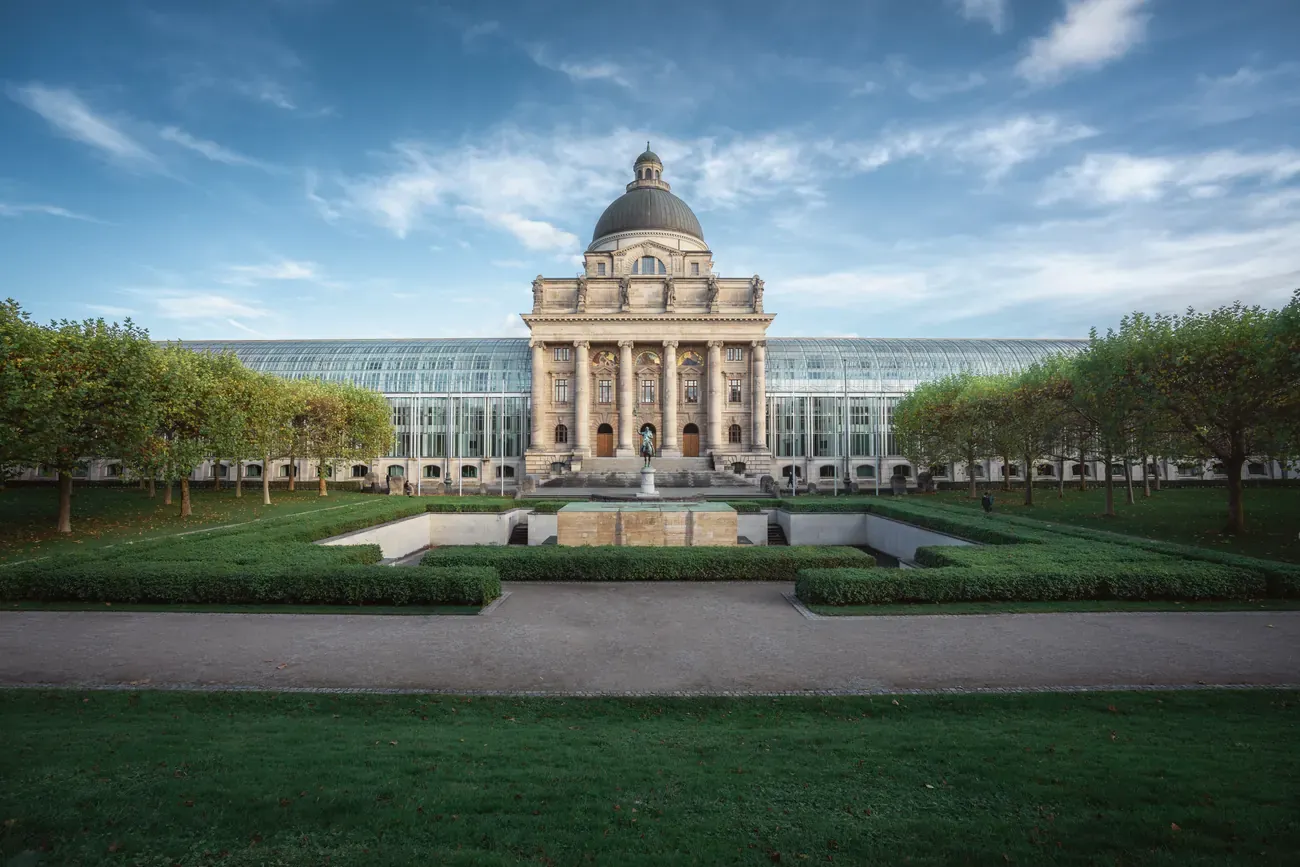
This royal garden beside the Residenz charges no entry fee and keeps no closing time, making it a free stop between palace visits. The Bavarian State Chancellery, which frames its eastern side today, costs nothing to admire from the paths either.
Feldherrnhalle and Odeonsplatz
The open loggia and the square in front of it are freely accessible around the clock, and the bronze monuments to the generals Tilly and Wrede can be seen without a ticket.
NS-Dokumentationszentrum
This documentation centre on the city's role under National Socialism gives free admission to its permanent exhibition, open Tuesday to Sunday from 10:00 to 19:00; no tickets or reservations are required.
Why Munich is worth visiting
Munich grew from a 12th century monks' settlement on the Isar into the seat of the Wittelsbach dynasty and today the capital of Bavaria, a city that pairs baroque churches and royal palaces with beer gardens and a modern industrial base built around BMW. The old town stays compact and walkable, ringed by the wider districts that hold the rest of the sights.
Neighbourhoods to know
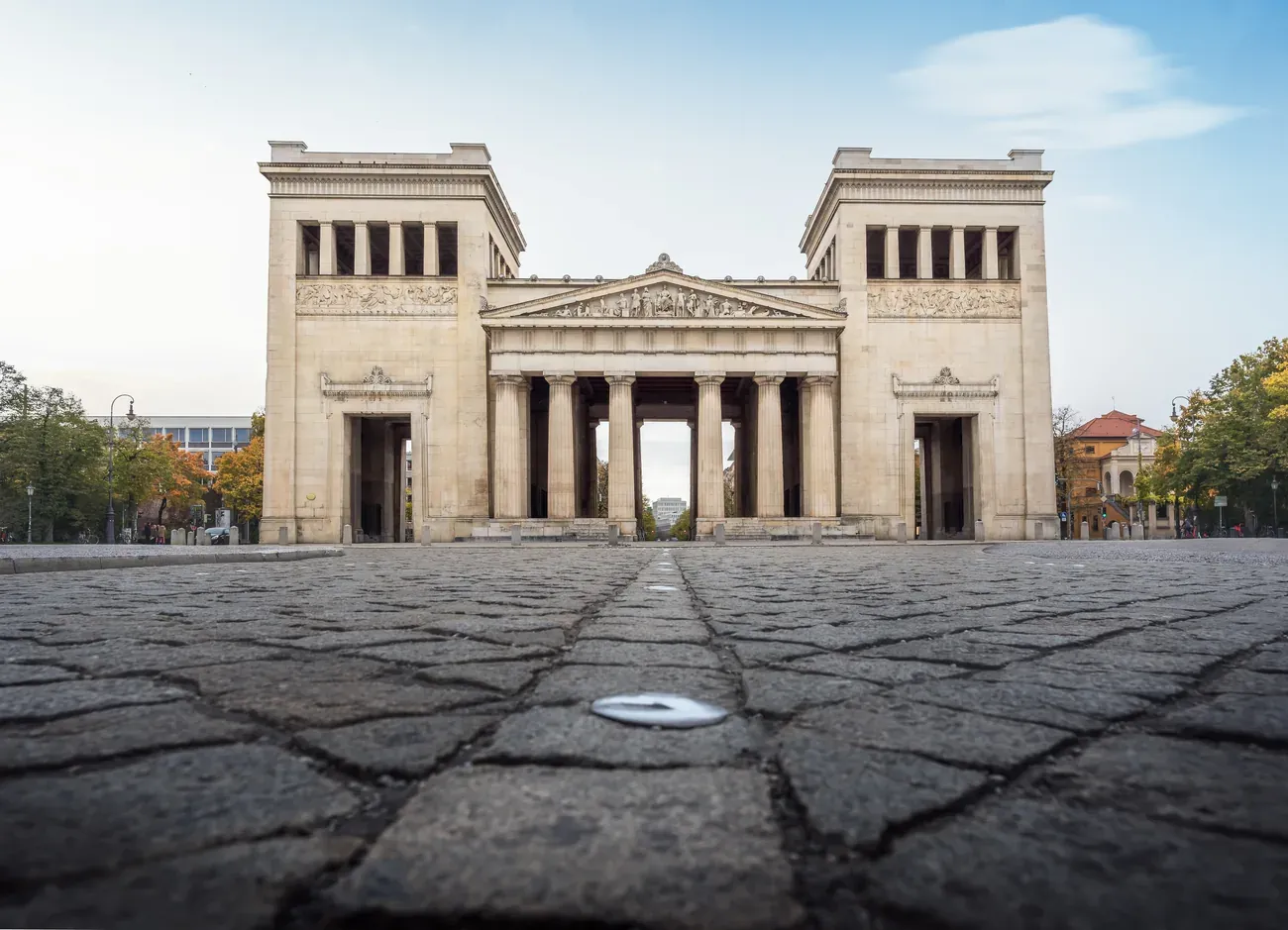
The Altstadt around Marienplatz holds the historic core: the Residenz, the Frauenkirche and the Viktualienmarkt all sit within a few minutes of each other. Maxvorstadt, north of the centre around Konigsplatz, gathers the Kunstareal museum quarter, its Propylaea gateway and the Alte and Neue Pinakothek galleries. Schwabing, further north again, borders the English Garden with student-town cafes and bookshops, while Haidhausen across the river keeps a village feel around its own market square.
When to go and for how long
Late spring through early autumn brings beer garden weather and the longest days, though late September and early October fill the city for the Oktoberfest beer festival on the Theresienwiese, whose current edition runs from 19 September to 4 October 2026. Two to three days cover the old town and a palace on the outskirts; a fourth allows a day trip further out.
Getting around and day trips
The compact centre rewards walking, and the U-Bahn and S-Bahn network run by MVV covers the rest of the city and the airport. High-speed ICE trains connect Munich to Berlin and Potsdam further north, and a short regional train reaches Salzburg across the Austrian border. Regional trains also reach Fussen, the gateway to Neuschwanstein Castle in the municipality of Schwangau, while an S-Bahn and short bus ride reach the town of Dachau and its former concentration camp, now a memorial site with free admission that visitors approach in a sober, reflective spirit rather than as a sightseeing stop. Neuschwanstein itself can only be seen inside on a timed guided tour, so a slot is worth booking before it joins a longer run of tourist attractions to visit in Germany.