Tourist attractions in Le Mont-Saint-Michel
Known for
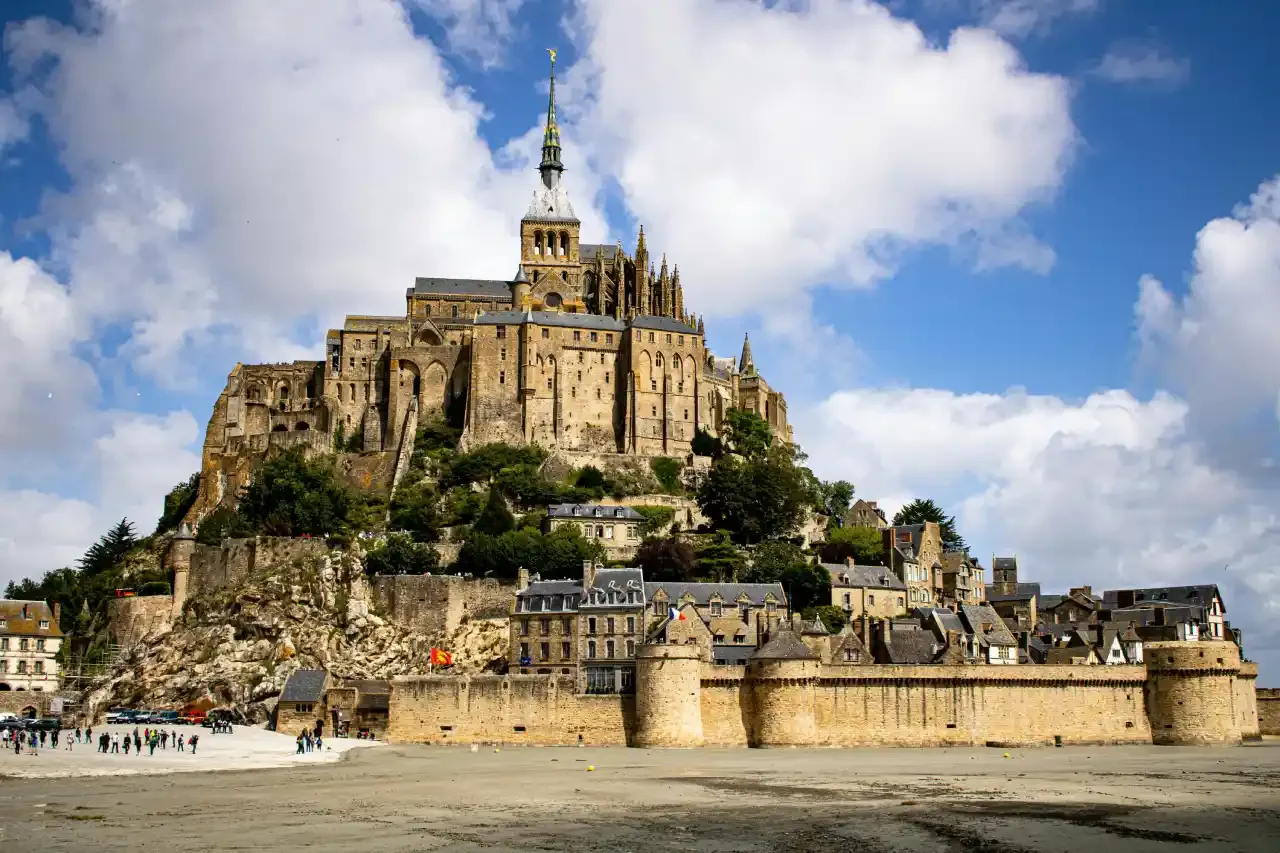
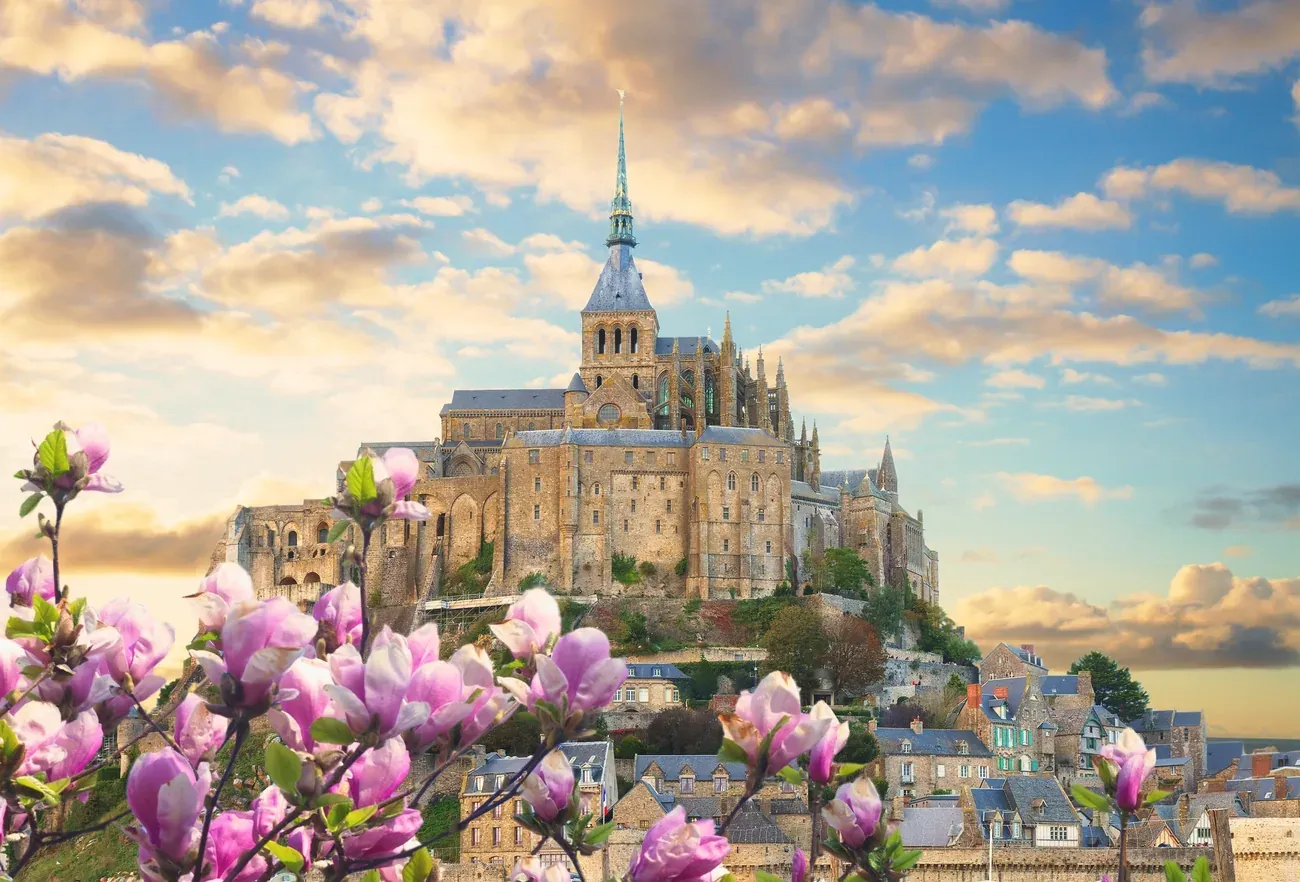
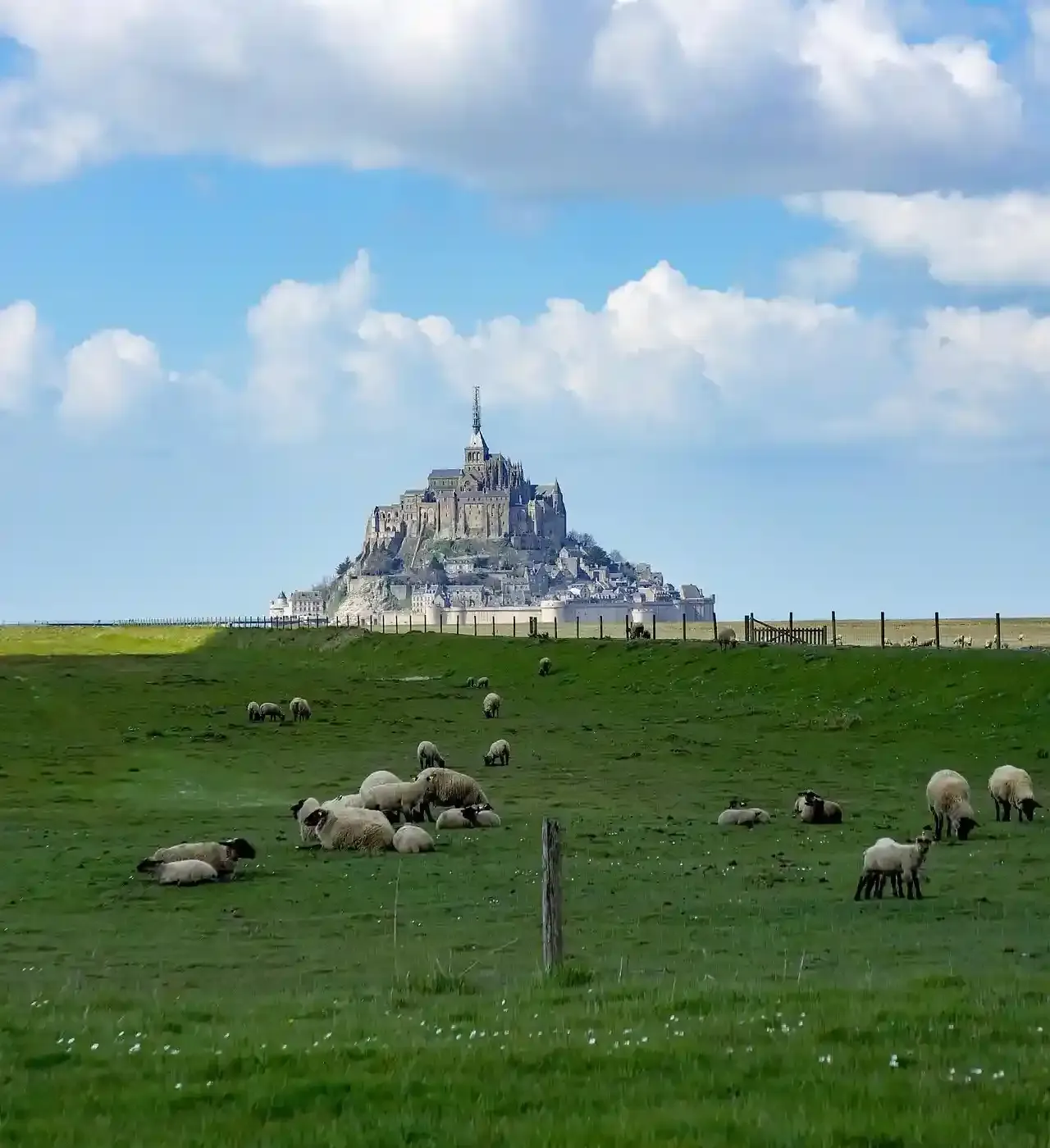
A Gothic abbey crowning a rocky tidal island
Must-see landmarks
Mont-Saint-Michel Abbey, La Merveille and Église Saint-Pierre
World Heritage
Mont-Saint-Michel and its bay, UNESCO listed since 1979
Getting around
On foot only inside the walls; a free shuttle links the car park to the island
The main tourist attractions in Le Mont-Saint-Michel, ranked
The tourist attractions in Le Mont-Saint-Michel that matter most, from Mont-Saint-Michel Abbey to La Merveille and Grande Rue, are ranked here in order. After the 5 top sights come 5 hidden gems, free things to do, tickets and visitor FAQs.
1. Mont-Saint-Michel Abbey
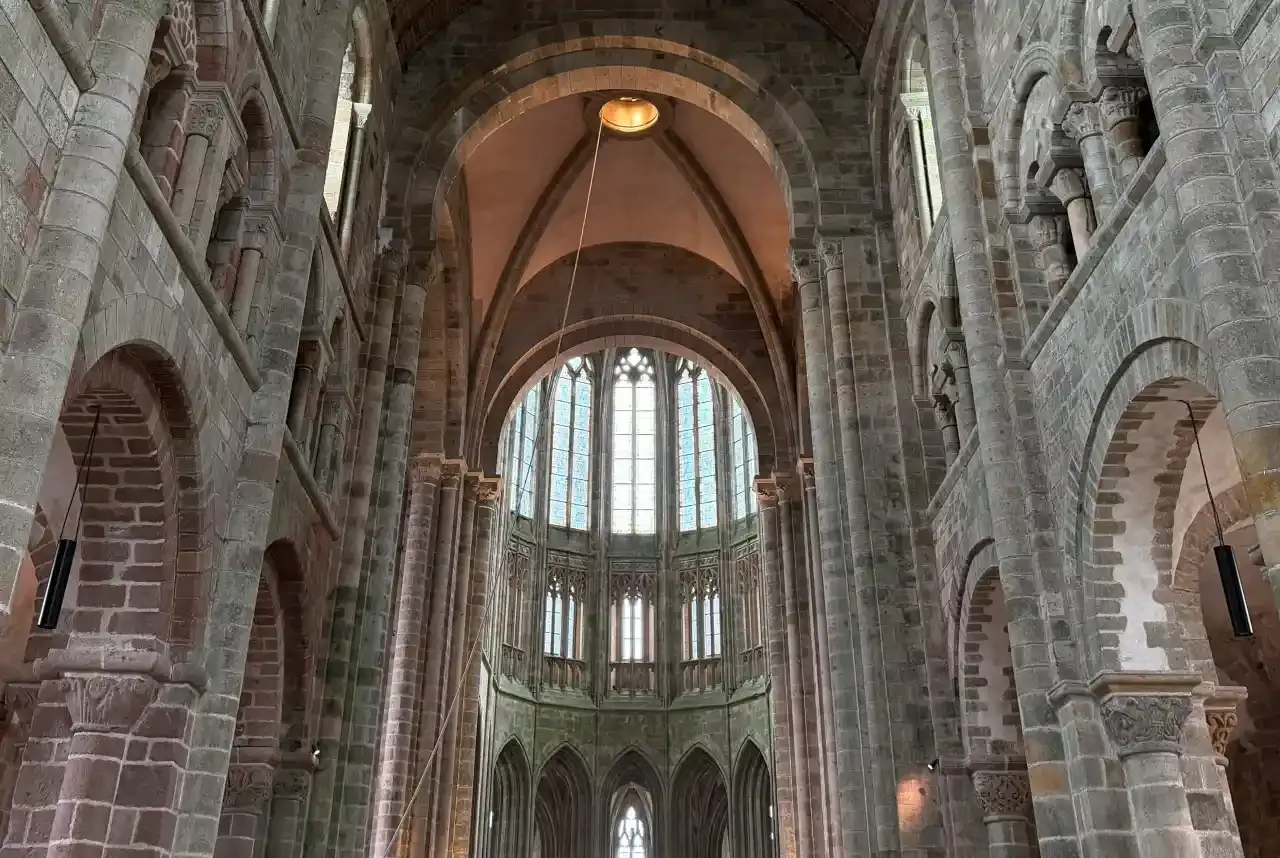
The abbey crowns the summit of the rock and is the reason most visitors climb the village street at all. A self-guided route starts at the guardroom, works up the Grand Degré to the west terrace, then runs through the abbey church, the cloister and the refectory before dropping back past the almonry and the cellar. The Centre des monuments nationaux, which runs the monument, allows between 45 minutes and an hour and a half for the circuit.
Location: at the top of the Grande Rue, above the village
Access: Ticketed, last entry one hour before closing, closed on 1 January, 1 May and 25 December · Tickets and tours
2. La Merveille
The Gothic range on the north face of the rock, raised at the start of the 13th century and built to carry the cloister on its roof. Its rooms are the ones that fill the abbey visit: the almonry and the cellar at the bottom, the guests' hall and the scriptorium known as the Knights' Hall in the middle, the refectory and the cloister on top. The refectory is lit by tall narrow windows cut into the thickness of the wall, invisible from the doorway.
Style: Norman Gothic
Location: north side of the abbey, above the ramparts
Access: Included in the abbey visit, on the same ticket
Photos: "La Merveille, Mont Saint Michel" by Lekemok (CC BY-SA 3.0); "Mont Saint Michel - Salle des Chevaliers" by Ptyx (CC BY-SA 4.0); "Refectory of Mont Saint-Michel" by Ibex73 (CC BY-SA 4.0).
3. Grande Rue
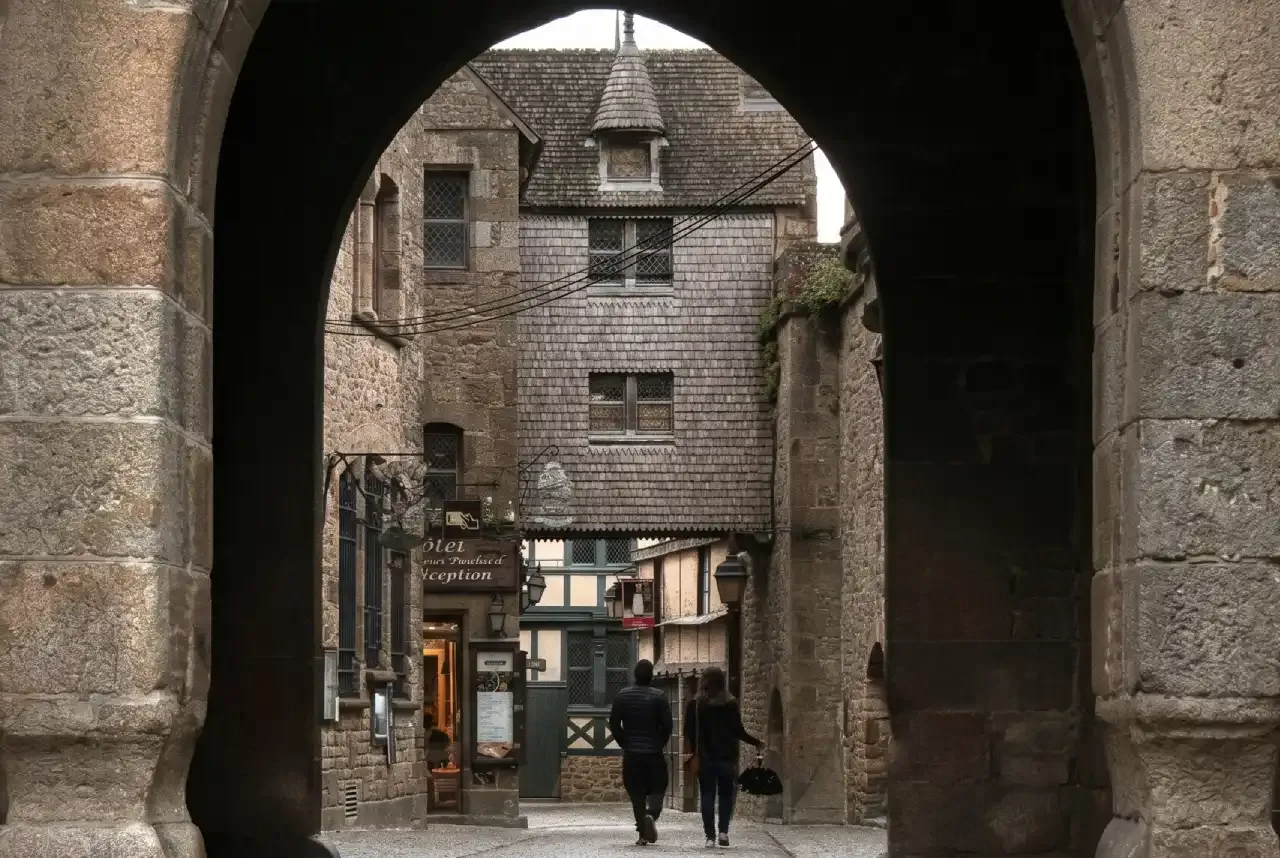
The village has one real street and this is it, a cobbled climb from the fortified gates to the parish church and the foot of the abbey stairway, lined with half-timbered houses that now hold souvenir shops, crêperies and hotels. It is the busiest ground on the Mont in the middle of the day, which is why the rampart walk running above it is the quieter way up or back down.
Location: from the Porte du Roy up to Église Saint-Pierre
Access: Free and open at any hour, like the rest of the village
Photo: "Grand Rue, Le Mont-Saint-Michel" by Tristan Surtel (CC BY-SA 4.0).
4. Église Saint-Pierre
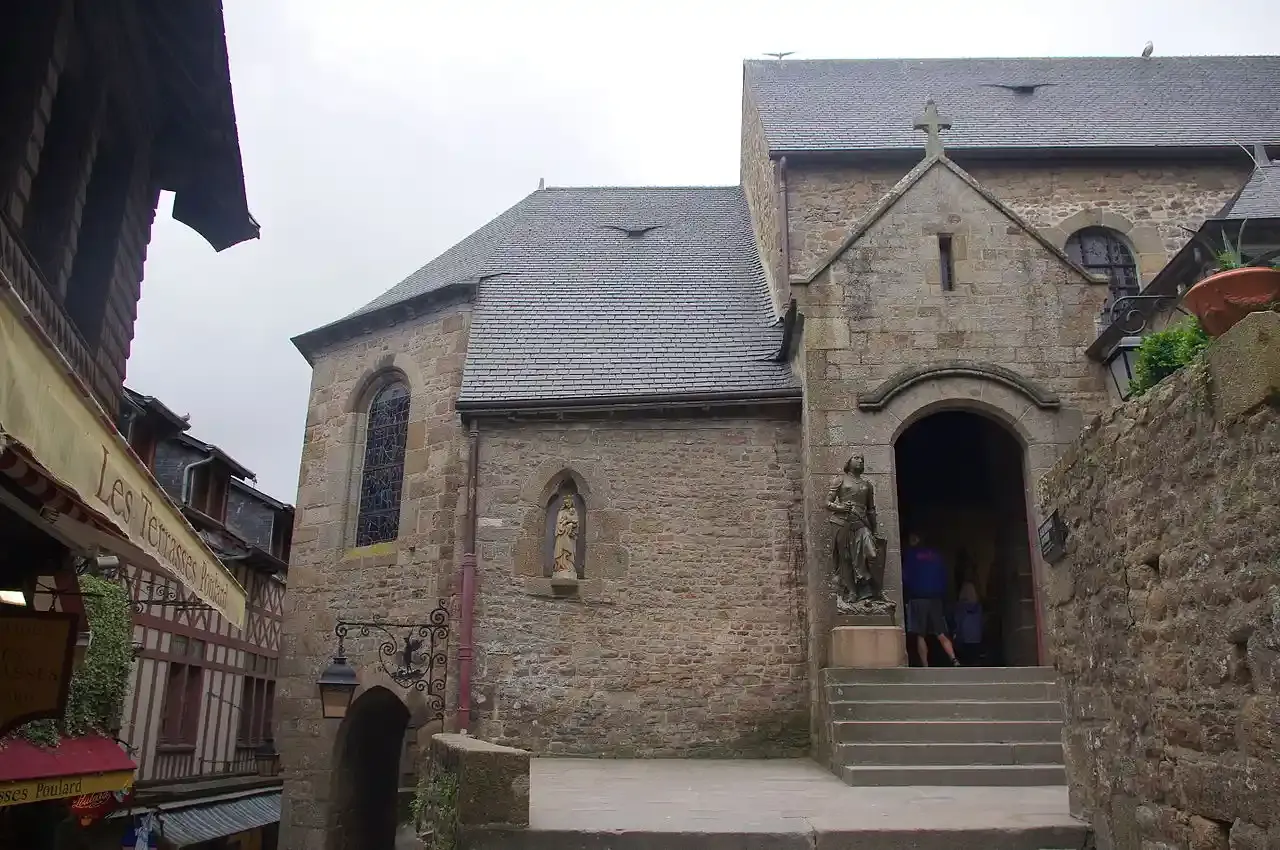
The parish church of the village, a small building of the 15th and 16th centuries dedicated to Saint Peter. It sits partway up the Grande Rue, wedged in among the houses, and services are still held there regularly. A statue of Joan of Arc stands at the door, a tribute to the Archangel Michael who guided her in the Hundred Years War, and the stepped Grand Degré up to the abbey entrance begins just beyond it.
Location: on the Grande Rue, below the abbey entrance
Access: Free
Photo: "Eglise Saint-Pierre du Mont Saint-Michel" by Paterm (CC BY-SA 3.0).
5. Remparts
Seven towers linked by a chemin de ronde ring the village below the abbey, and the walkway between them is open to the public. The circuit gives the wide view the Grande Rue never offers: the bay, the footbridge, the flats running out to the horizon and the 13th century North Tower looking over the tidal bore. It doubles as a bypass, since climbing the street one way and returning along the walls avoids the worst of the crowds.
Location: around the village, below the abbey
Access: Free and open at any hour
Book Le Mont-Saint-Michel attractions and tours
Free landmarks and viewpoints in Le Mont-Saint-Michel
Porte de l'Avancée
The medieval gate marking the start of the village costs nothing to pass through, at any hour, the first of three fortified gates on the way up to the abbey.
Maison de l'Artichaut
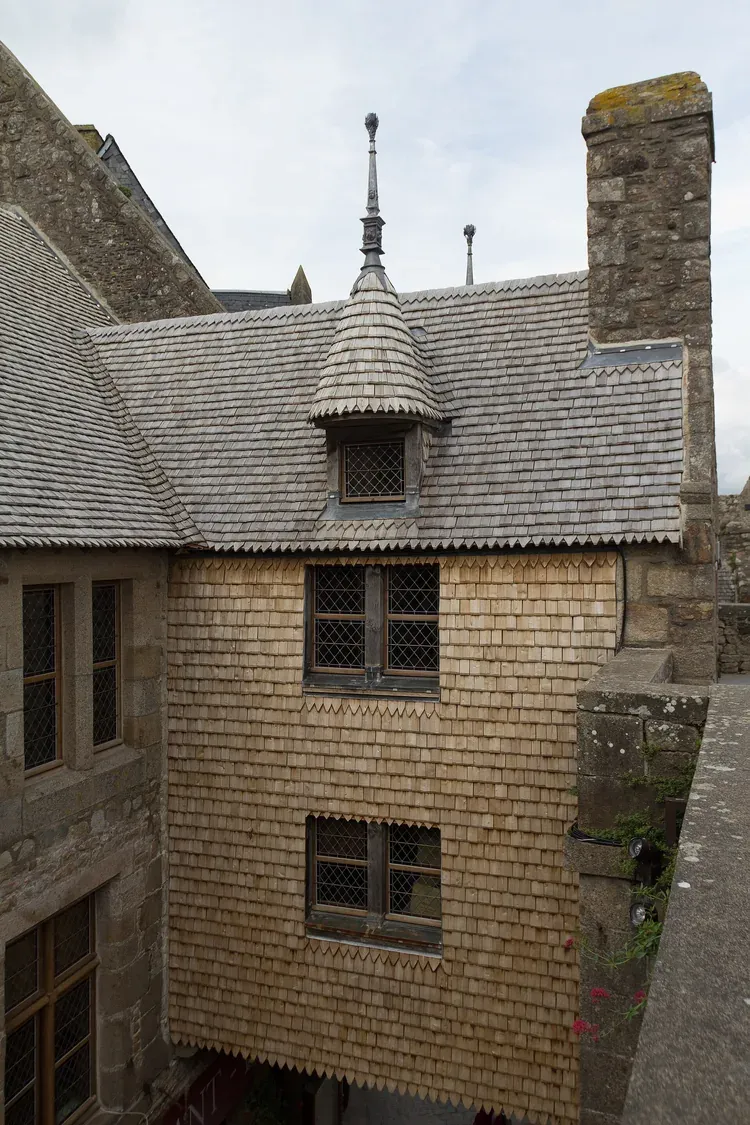
Named for the artichoke-shaped ornaments crowning its roof, this wood-shingled house is a listed historic monument that can only be seen from outside, along the ramparts walk.
Photo: "Maison de l'Artichaut at Mont-Saint-Michel" by EdouardHue (CC BY-SA 3.0).
The bay from the footbridge
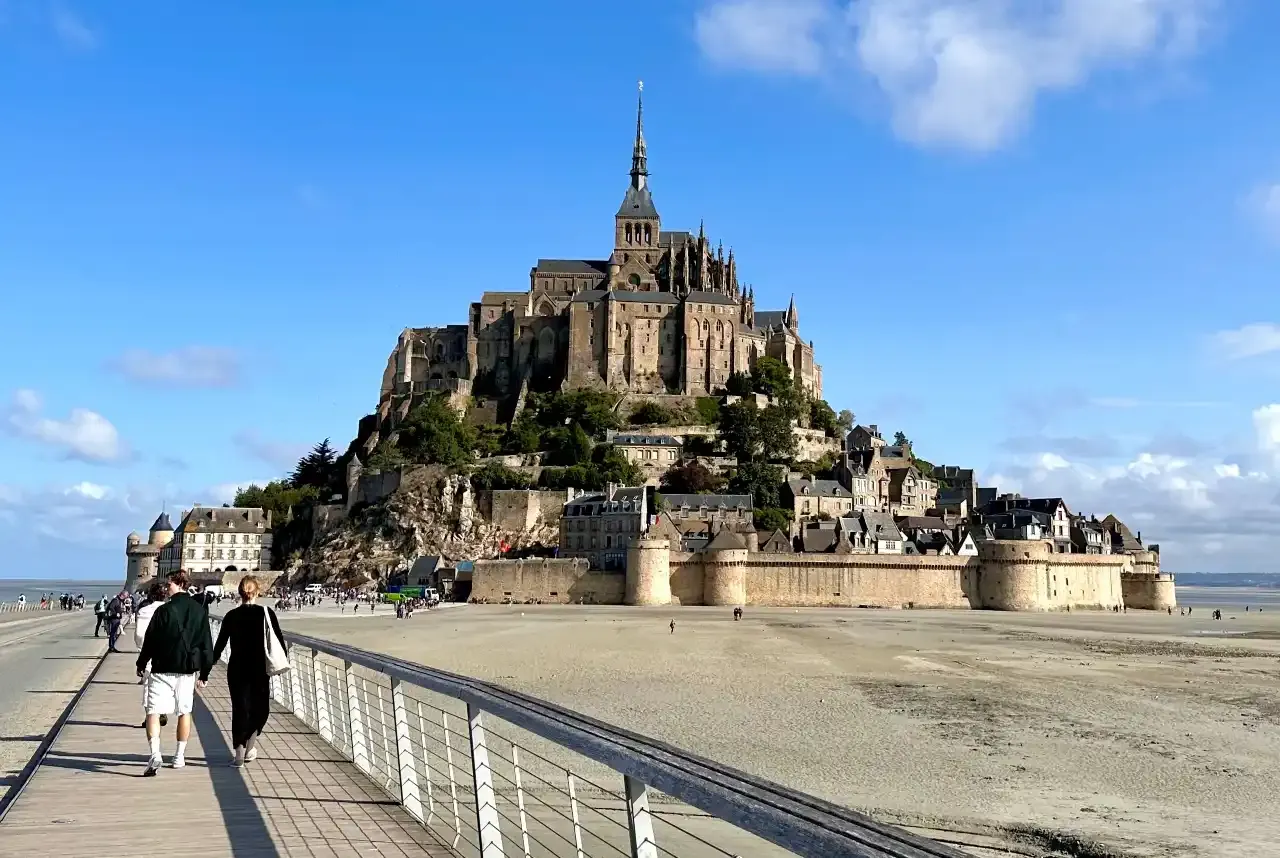
Watching the tide return across the flats costs nothing from the modern footbridge and its viewing points; walking out into the bay itself is not safe without a licensed guide.
Hidden corners and small museums in Le Mont-Saint-Michel
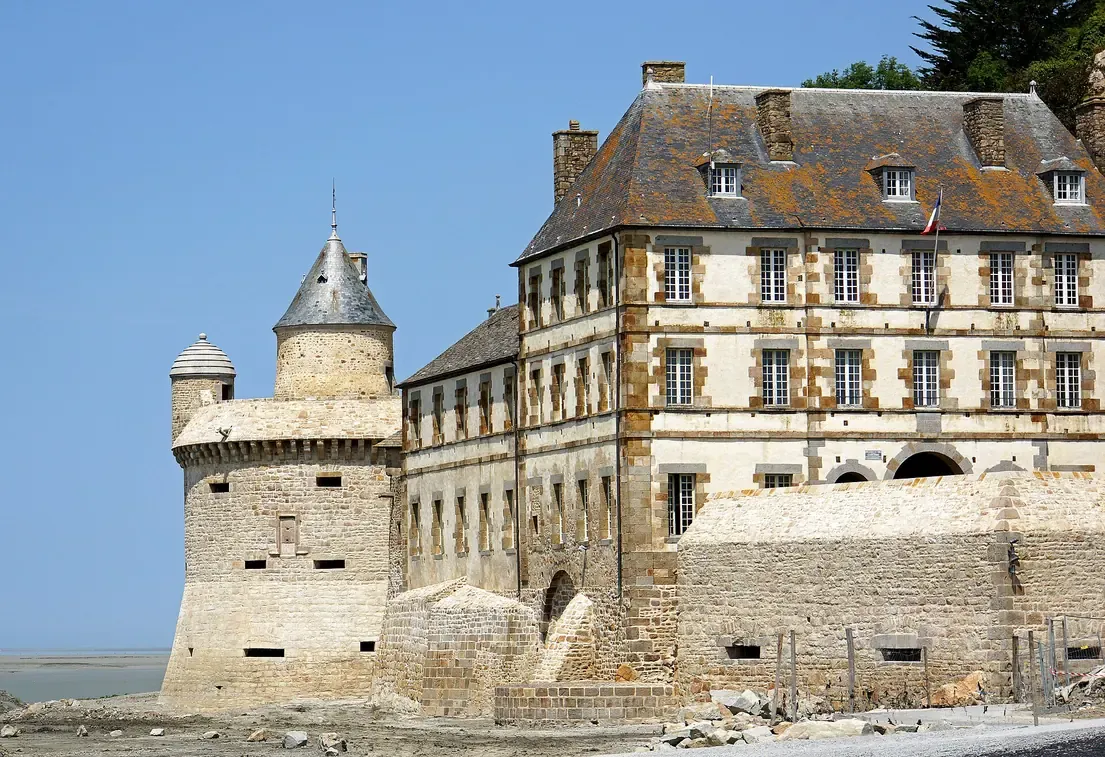
Tour Gabriel
A tower crowned with machicolations, built around 1524 to guard the western side of the ramparts.
Location: western tip of the rampart walk
Photo: "The Gabriel Tower at Mont-Saint-Michel" by Dennis G. Jarvis (CC BY-SA 2.0).
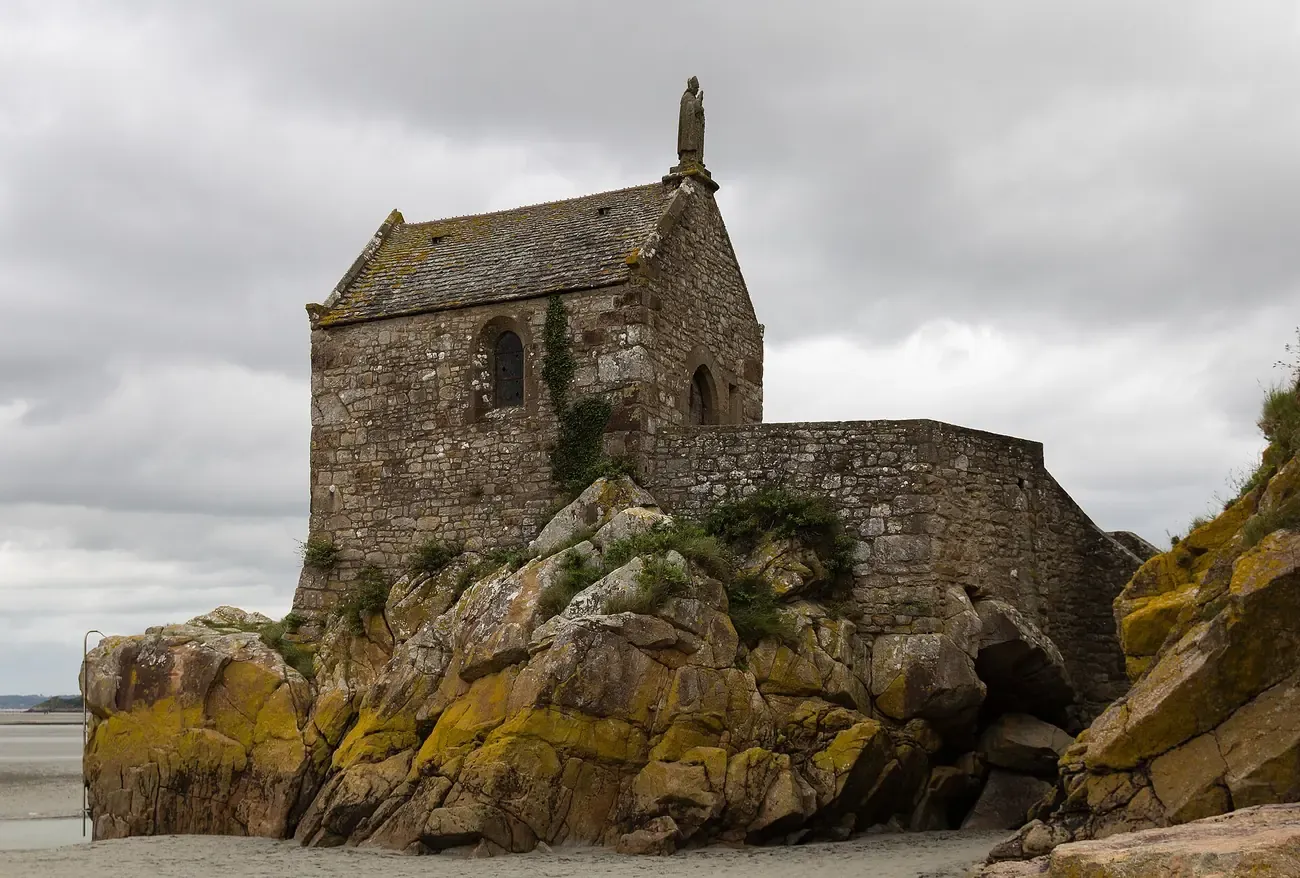
Chapelle Saint-Aubert
A 15th century chapel standing on bare rock below La Merveille, outside the walls and tied to the legend of the Mont's founding.
Location: below the north ramparts, on a path that depends on the tide
Photo: "Chapelle Saint-Aubert at Mont-Saint-Michel" by EdouardHue (CC BY-SA 3.0).
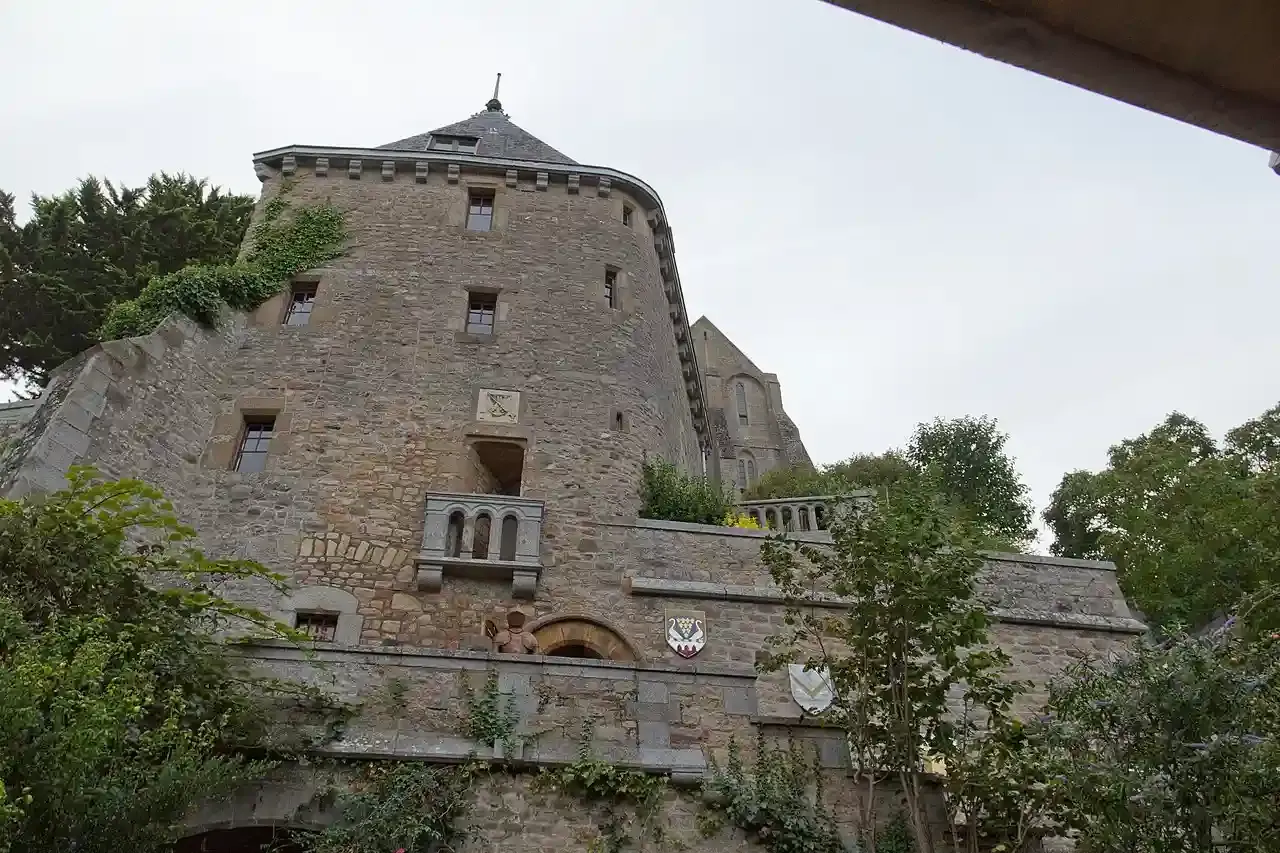
Logis Tiphaine Raguenel
The 14th century house of Bertrand du Guesclin and his wife Tiphaine de Raguenel, furnished as the home of a medieval knight.
Location: in the village, ticketed separately from the abbey
Photo: "Face est du logis Tiphaine Raguenel" by EdouardHue (CC BY-SA 3.0).
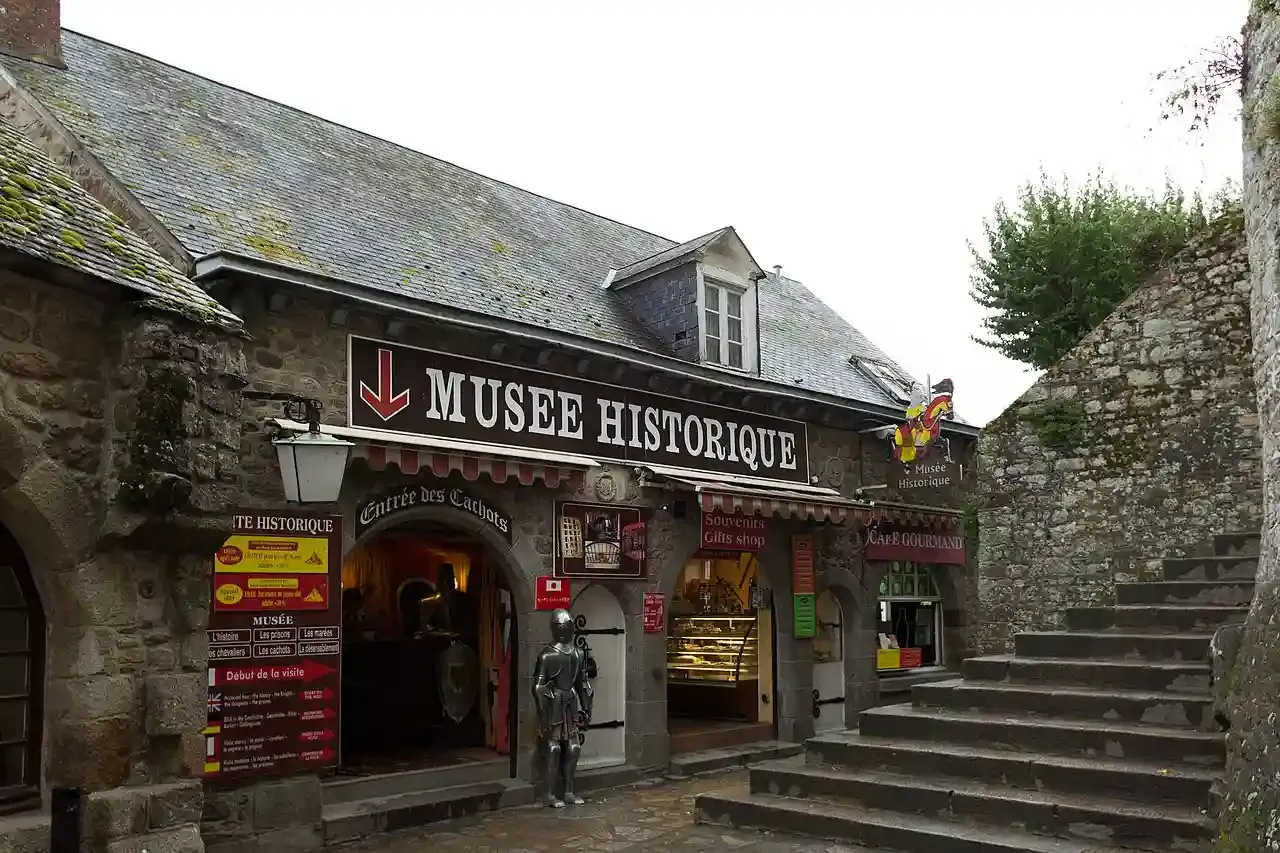
Musée Historique
Thirteen centuries of the Mont told in wax tableaux, reconstructed dungeons and old weapons, with a periscope trained on the bay.
Location: Venelle du Tripot, at the foot of the abbey
Photo: "Façade ouest de la villa Saint-Michel" by EdouardHue (CC BY-SA 3.0).
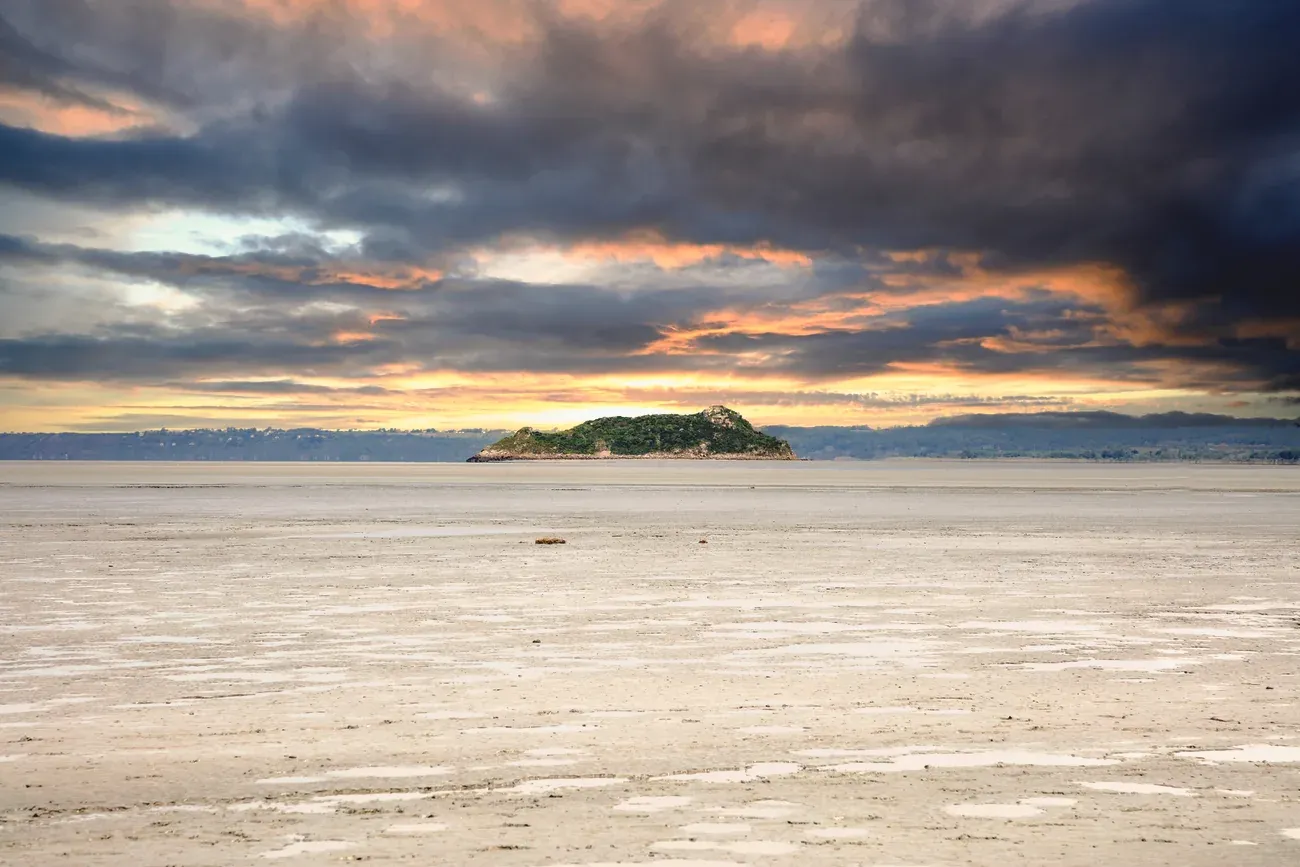
Tombelaine
A granite islet out in the bay, classified as a bird reserve and reached only on a guided crossing over the sands.
Location: in the bay, north of the Mont
What makes Le Mont-Saint-Michel special
A rocky tidal island barely a kilometre round, Mont-Saint-Michel has drawn pilgrims since the Archangel Michael was said to have appeared to Bishop Aubert of Avranches in 708, and a Benedictine monastery went up soon after. The Romanesque church, the Gothic halls of La Merveille and the ramparts that followed turned a hermitage into a heavily fortified pilgrimage site, and the whole Mont and its bay have been UNESCO listed since 1979.
A village of one street
Everything sits along the Grande Rue and the lanes that climb from it: souvenir shops and creperies at the bottom, the parish church of Saint-Pierre partway up, and the abbey at the top, reached by the stepped Grand Degré. A walkway along the ramparts circles seven towers and offers a quieter route back down, away from the crowds on the main street.
The bay and its tides
The Mont sits in a bay with a tidal range of up to 14 metres, and the sea can surround the rock within hours during the highest spring tides. The mudflats and quicksand make an unguided crossing dangerous, so the bay is best watched from the footbridge rather than walked into alone.
When to go and how long to stay
The village and the abbey fill a half day at an easy pace; visitors staying longer in the region add a walk along the ramparts at a quieter hour, early morning or after the day trip buses leave. The Grande Rue is at its busiest in the middle of the day, so arriving early or staying late is what cuts the crowds.
Getting to and around the Mont
The causeway is closed to private cars: visitors park on the mainland and either walk in or ride the free shuttle, which reaches the island in around 12 minutes. Once inside the walls, the village and the abbey are on foot only, up a single climbing street and a run of stairs at the end. The mount and its bay have been on the UNESCO World Heritage List since 1979, which is why they appear on most itineraries that visit France's tourist attractions beyond Paris.