Must-see tourist attractions in Segovia
Segovia's tourist attractions fit into a single day. Segovia Aqueduct, Casa de los Picos and Iglesia de San Martín anchor the walking itinerary below, with 6 more sights, free things to do and visitor FAQs further down.
Why visit Segovia
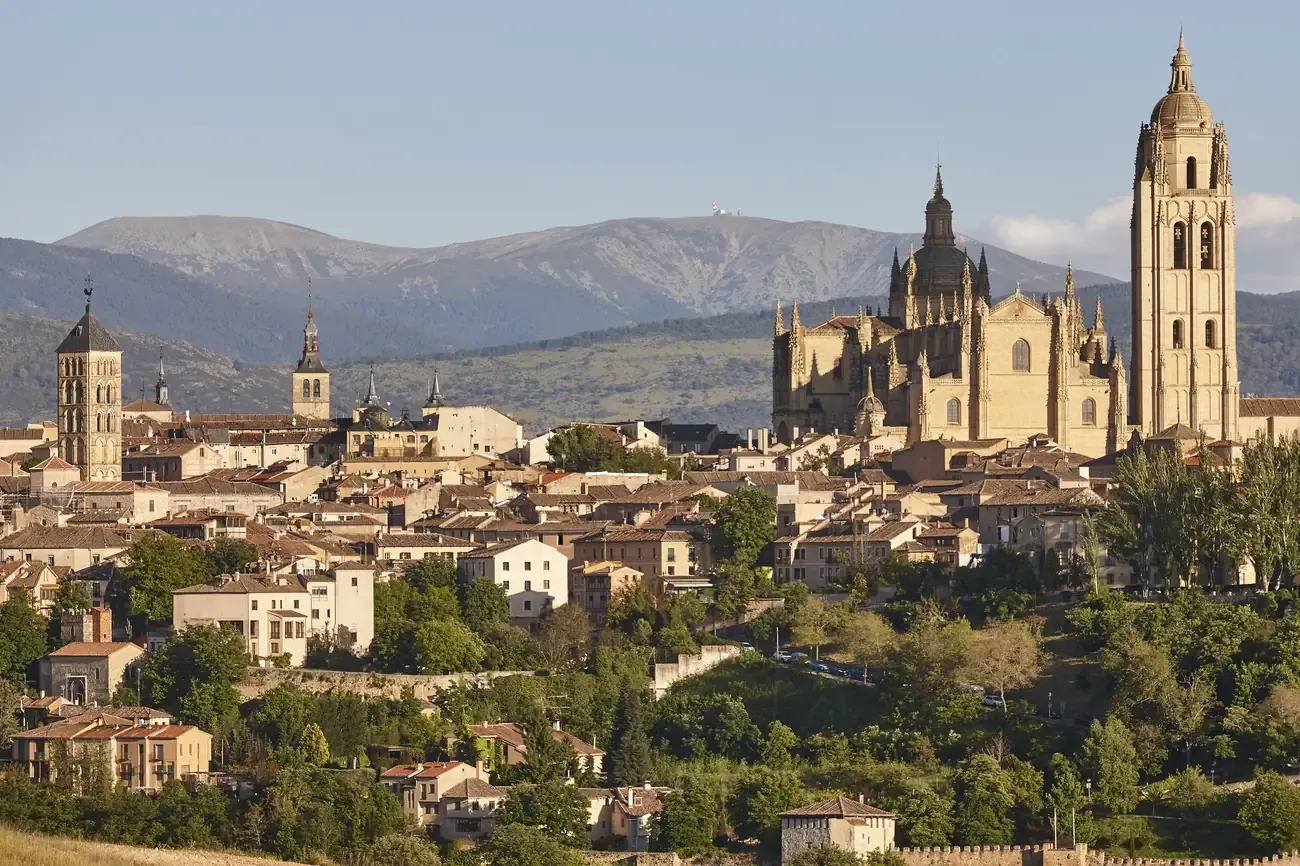
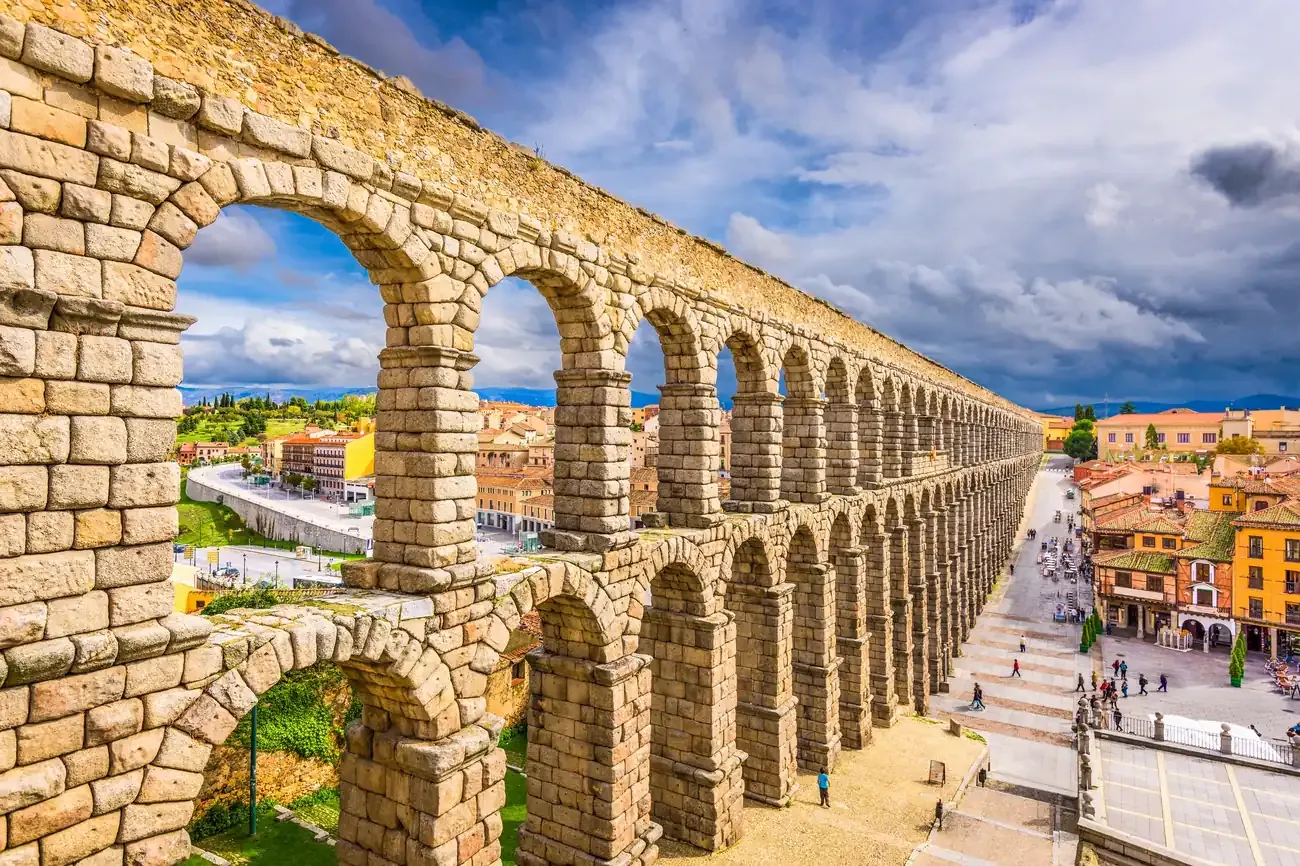
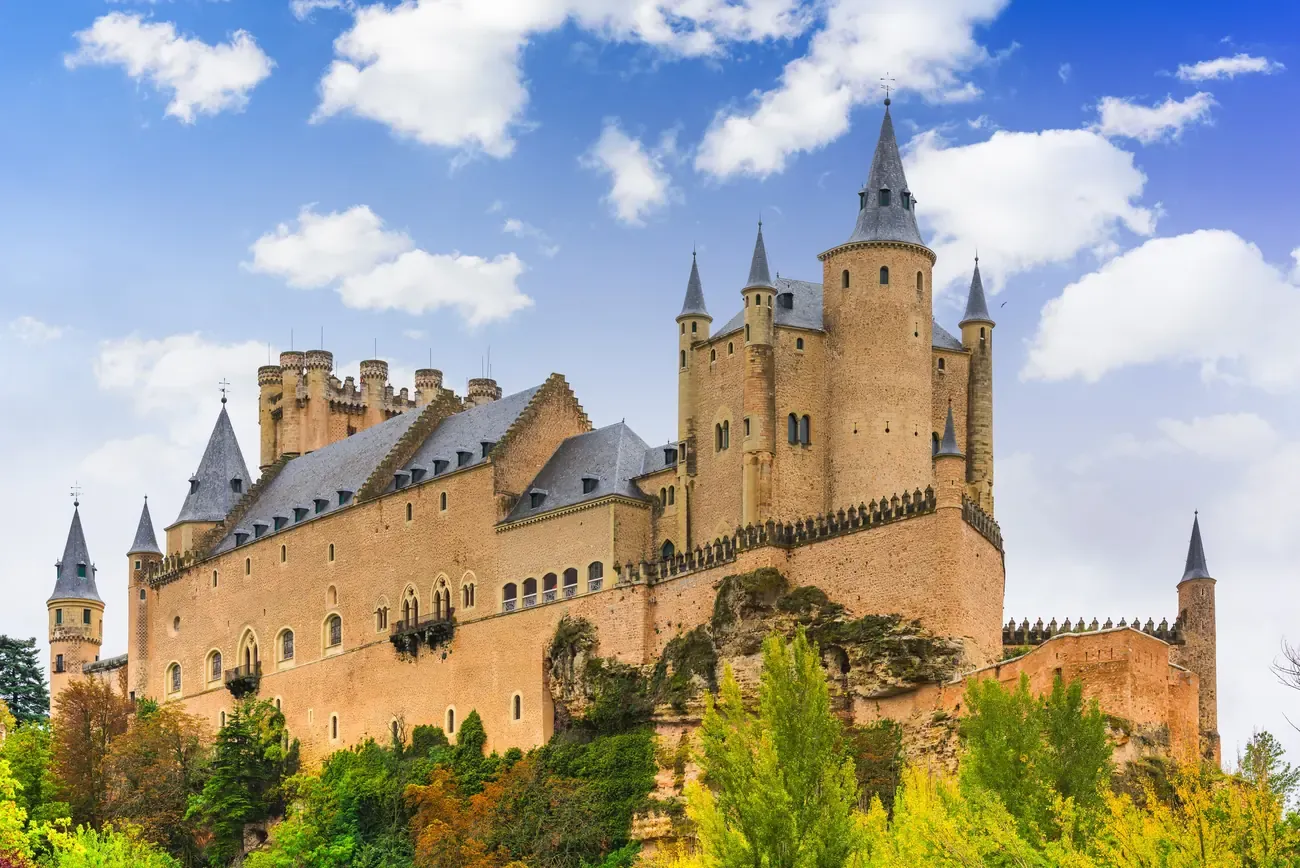
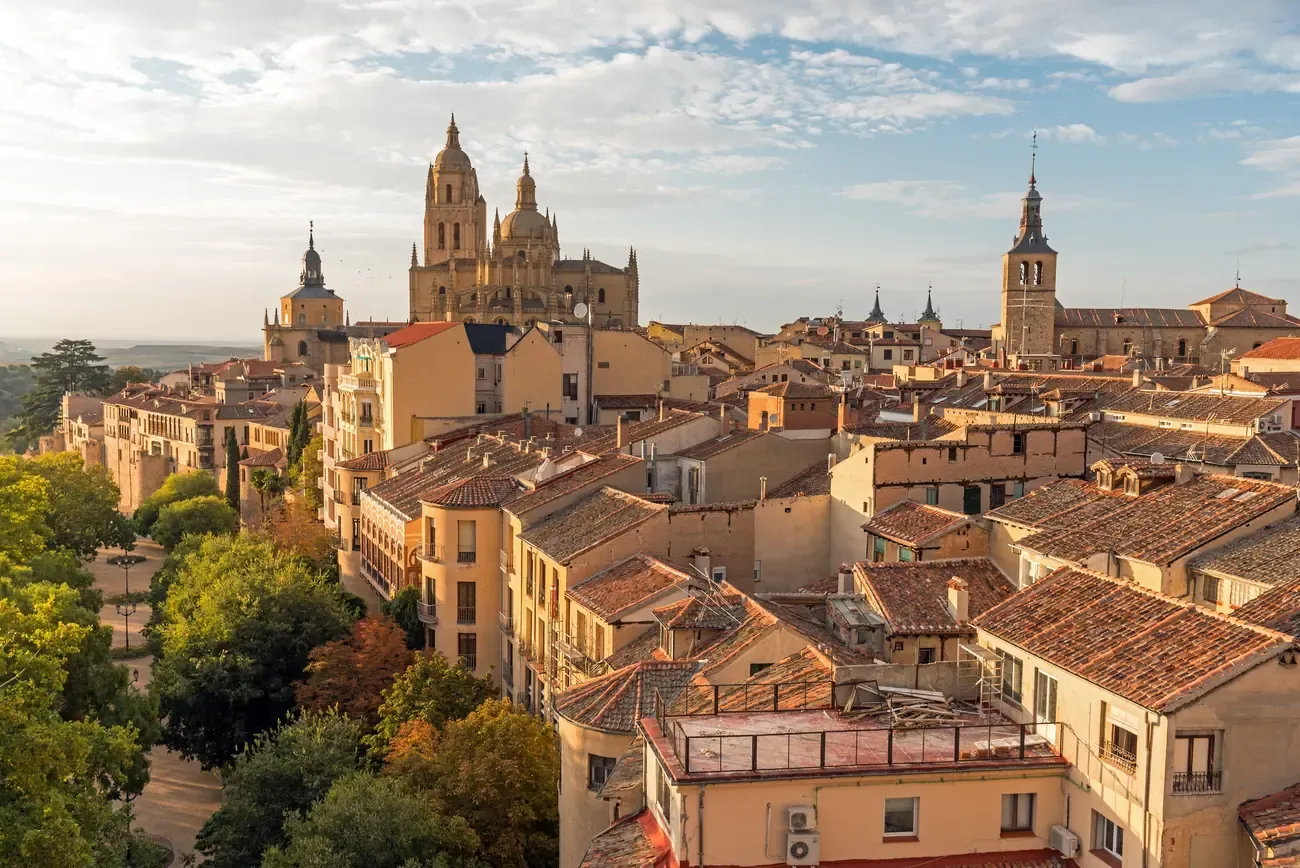
Segovia rises on a rocky spur between two rivers on the high plateau of Castilla y León, its skyline stitched together by a Roman aqueduct, a Gothic cathedral and a turreted Alcázar that together earned the old town its UNESCO World Heritage listing in 1985. Every route through the centre eventually threads past all three, and the compact old town rewards slow walking as much as any single monument.
Neighbourhoods to know
The old Jewish quarter, or Judería, spreads through the narrow streets south of the cathedral, home to Segovia's Jewish community until the expulsion of 1492. Around Iglesia de San Millán and the climb of Calle Cervantes, the Canonjías district keeps some of the oldest civil Romanesque houses in the city. Across the Eresma valley, reached from the Alcázar side, the monastery of El Parral and the Real Casa de la Moneda sit among pine woods with the old town's silhouette behind them.
When to go and how long to stay
Spring and autumn keep the stone streets comfortable and the crowds thinner than summer, when the plateau can turn hot by day and cool sharply after dark. Winters are cold. A full day covers the aqueduct, cathedral, Alcázar and old town churches at a steady pace, and a second allows time for the Judería and the monasteries across the valley.
Getting around and beyond
The old town is built for walking, its streets far too narrow and steep for casual driving, with most sights sitting within a compact loop from the aqueduct to the Alcázar. Most visitors arrive from Madrid, about 80 km south, by car or on the high speed train. A short bus ride into the pine forests above the city reaches San Ildefonso, home to the Bourbon summer palace and gardens of La Granja, a separate excursion best kept to another day. The aqueduct back in the centre ranks among the best preserved Roman aqueduct bridges anywhere, and is reason enough on its own to visit Spain's tourist attractions.