
Sintra tourist attractions
Known for
UNESCO-listed 19th-century fairytale palaces
Must-see landmarks
Pena Palace, Quinta da Regaleira and the Moorish Castle
World Heritage
UNESCO World Heritage since 6 December 1995
Getting around
Paid buses 434 and 435 climb from the station to the palaces
The 4 tourist attractions to see in Sintra
The tourist attractions in Sintra that matter most, from Quinta da Regaleira to Pena National Palace and Moorish Castle, are ranked here in order. After the 4 top sights come 4 hidden gems, free things to do, tickets and visitor FAQs. The 4 sights are numbered on the free tourist map of Sintra, with the hidden gems and a walking route.
1. Quinta da Regaleira
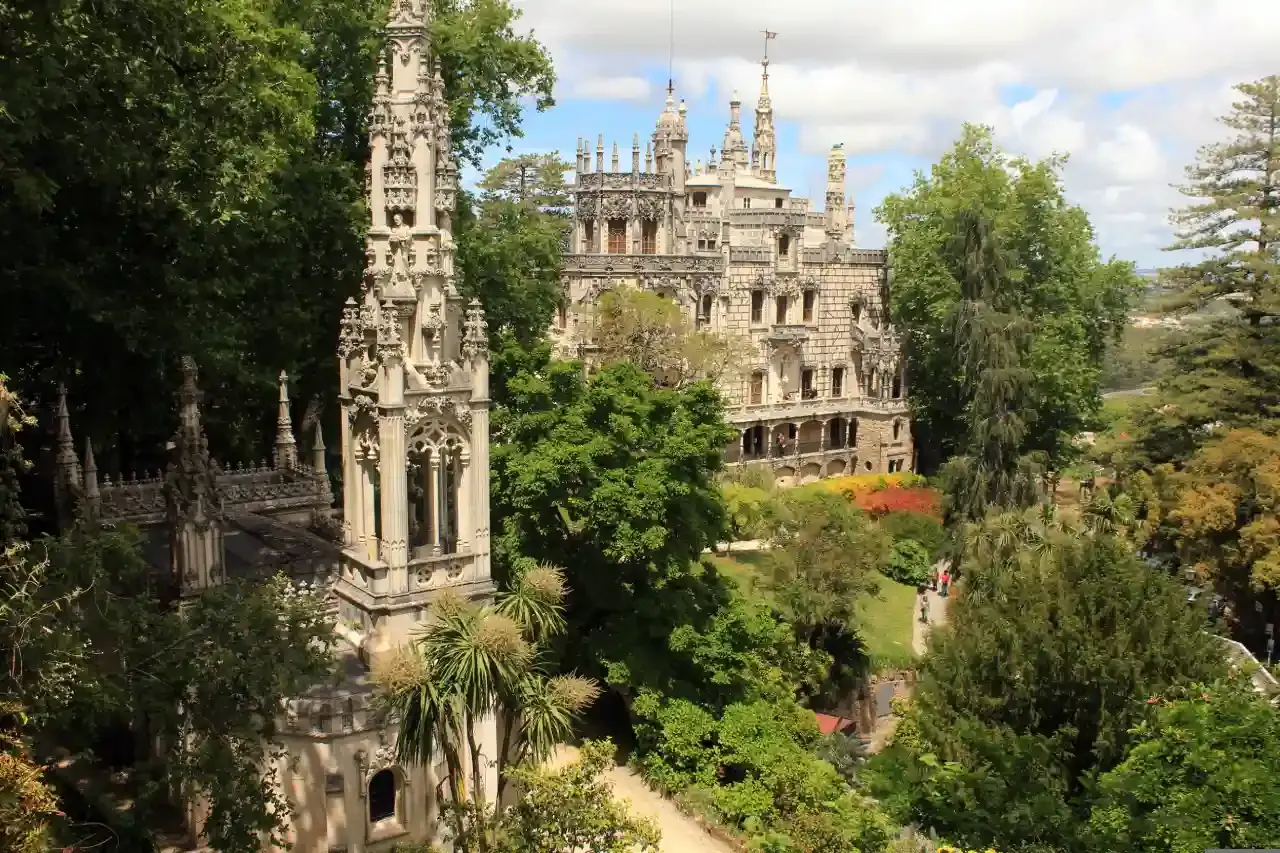
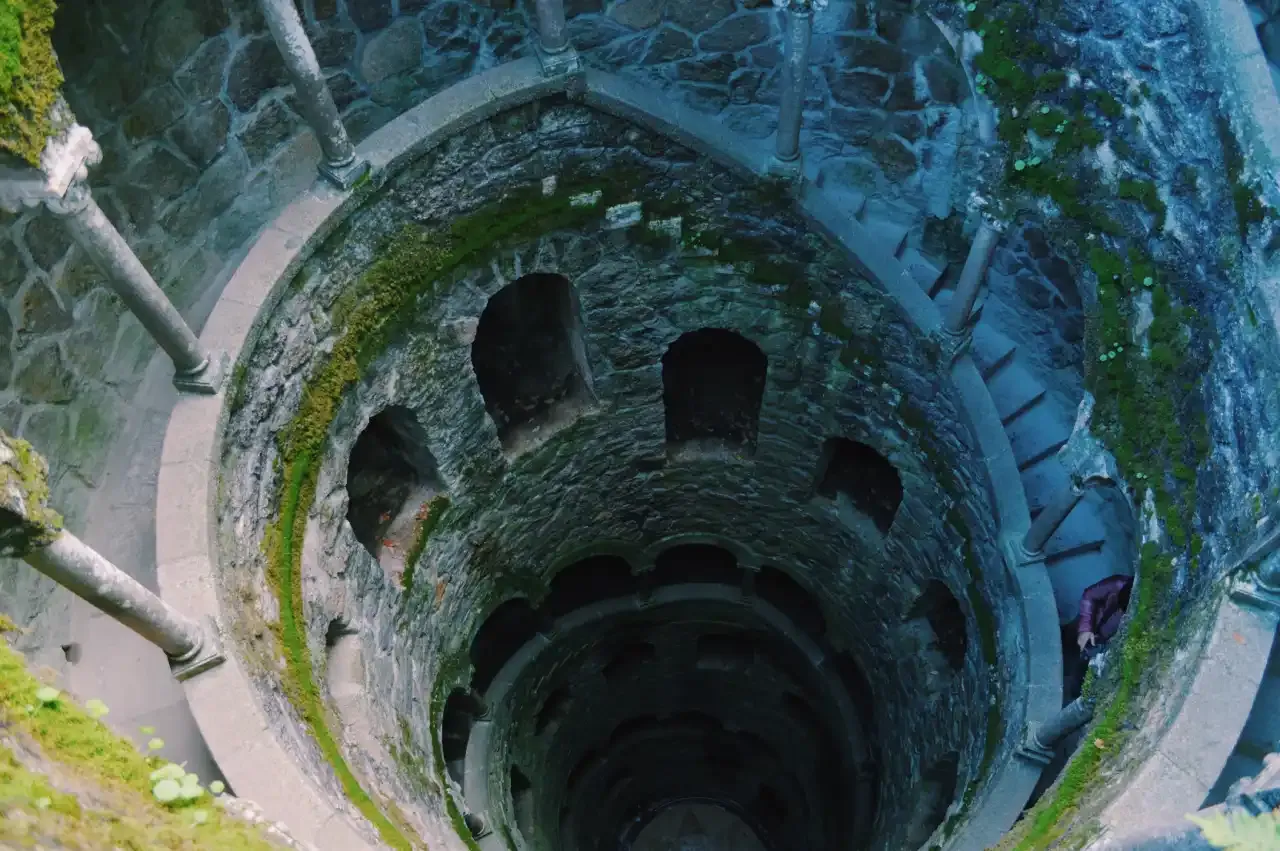
Luigi Manini built this hillside estate for the magnate Carvalho Monteiro between 1904 and 1910, folding Gothic, Renaissance and Manueline detail into a palace, a chapel and gardens that read like a puzzle. The grounds carry the drama: a spiral Initiation Well drops through nine symbolic levels underground, linked by tunnels to grottoes, a waterfall lake and terraces stacked up the slope. Entry runs in timed slots, with an hour of grace after the booked time.
Architect: Luigi Manini · Style: Gothic Revival and Neo-Manueline
Location: A short walk uphill from the historic centre.
Access: Timed entry · Tickets and tours
2. Pena National Palace
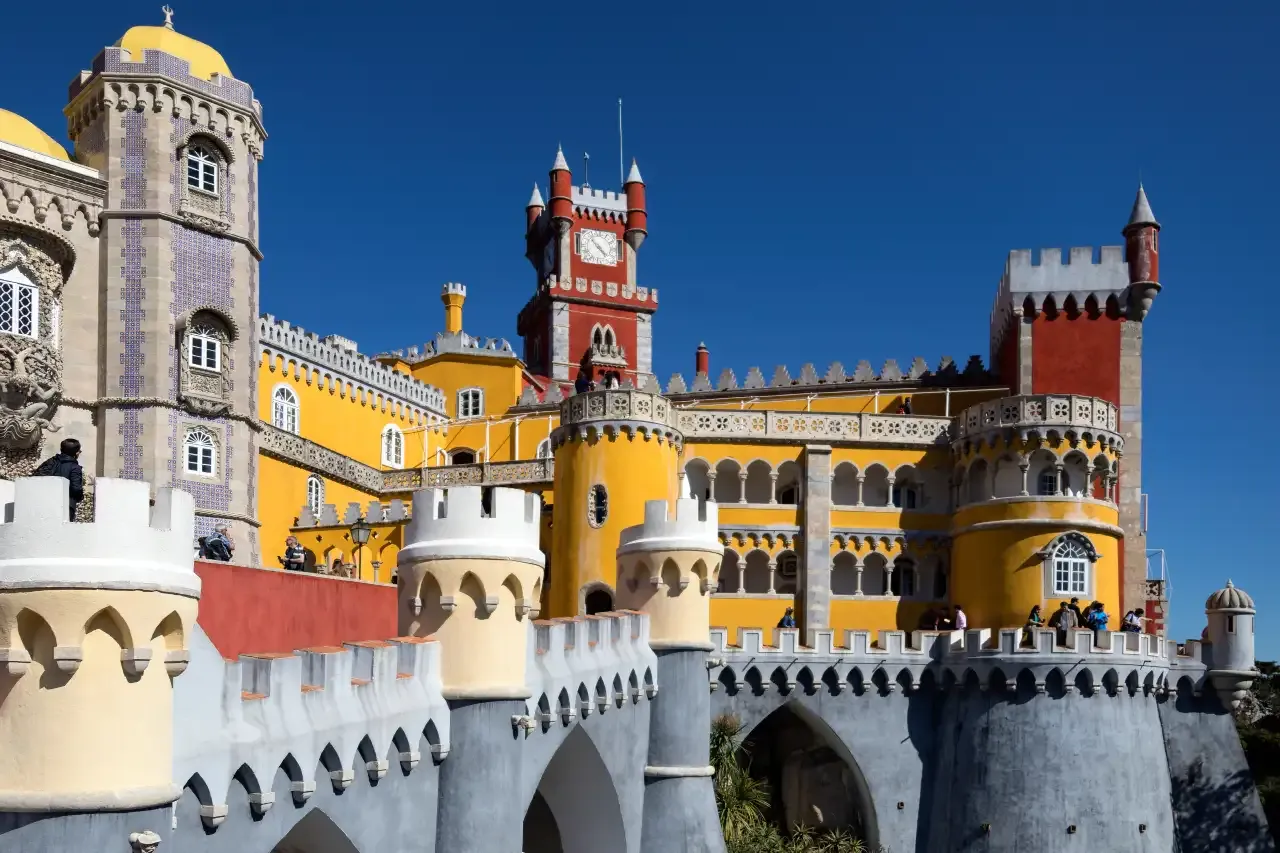
Ferdinand II bought a ruined 1503 monastery on this peak in 1838 and wrapped a Romanticist palace around it, all yellow, red and tilework, with turrets, a working drawbridge and terraces looking out over the whole Serra de Sintra. Wilhelm Ludwig von Eschwege drew the design, mixing Manueline and Moorish Revival flourishes wing by wing. The wooded park below is ticketed separately from the palace, which admits visitors only at the time printed on the ticket.
Architect: Wilhelm Ludwig von Eschwege · Style: Romanticist, Neo-Manueline and Moorish Revival
Location: Estrada da Pena, on the hilltop above the town.
Access: Timed entry, park sold separately · Tickets and tours
3. Moorish Castle
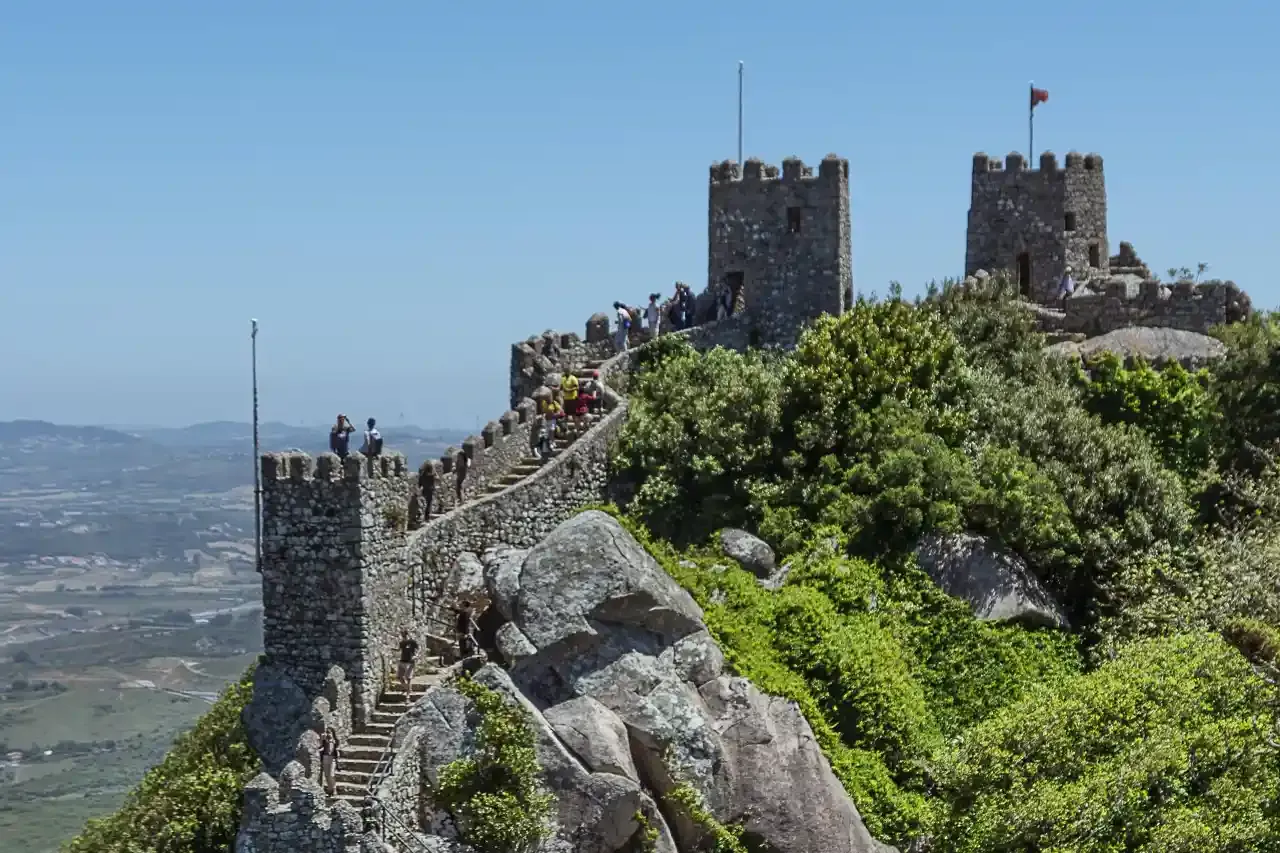
Moorish builders raised this fortress on the ridge above the town, and Christian forces retook Sintra in 1147. Its ramparts snake along the crest in granite blocks fused to the bedrock, running between watchtowers and a keep, with the old town, Pena Palace and the Atlantic laid out below. The parapet walk is stepped and uneven from end to end, so the visit is closer to a hike than a stroll, and the climb up from the centre is steep enough that many take the 434 bus from the station instead.
Heritage: National Monument of Portugal
Location: On the ridge between the historic centre and Pena Palace.
Access: Ticketed · Tickets and tours
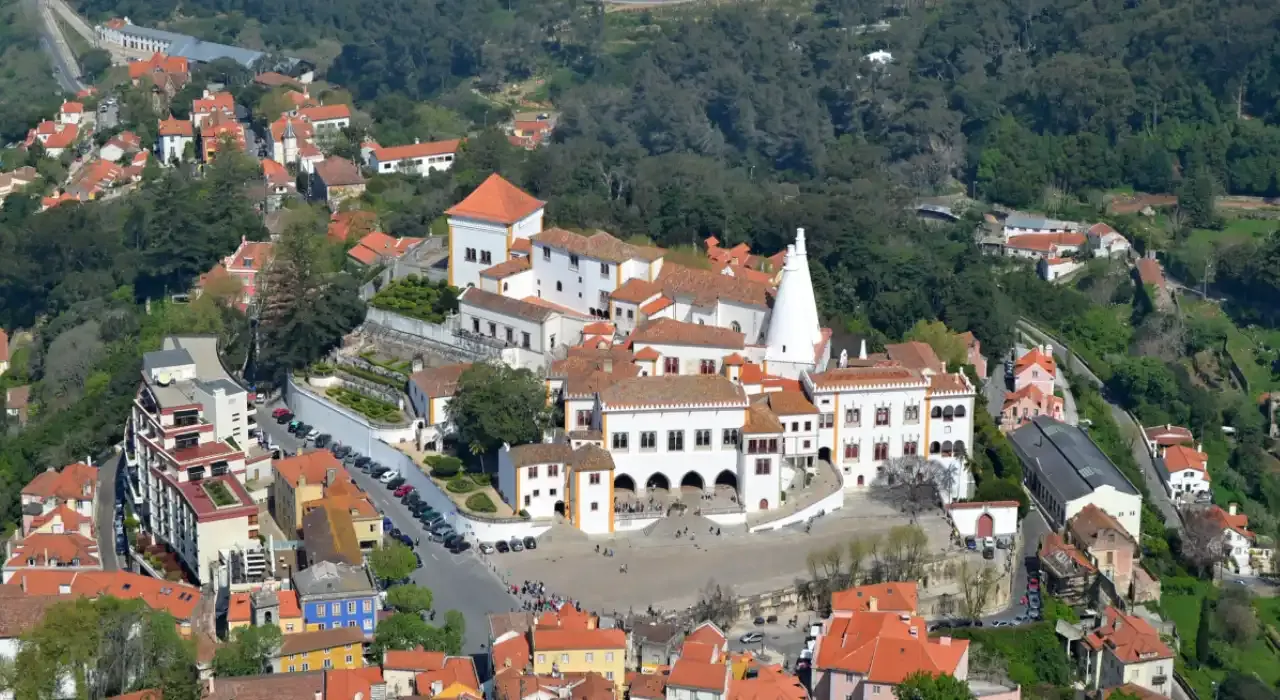
4. Sintra National Palace
Two conical chimneys crowning the royal kitchen give the country's oldest palace its unmistakable silhouette over the rooftops of the old town. Documented from 1281 under King Dinis, it grew for three centuries into a maze of tiled halls, among them the Swan Room and the Room of the Coats of Arms, painted for Manuel I with the arms of 72 noble households. Moorish, Gothic and Manueline work sits side by side, the record of every reign that added a wing.
Style: Moorish, Gothic, Mudejar and Manueline
Location: Largo Rainha Dona Amelia, in the historic centre.
Access: Ticketed.
Sintra attraction tickets and tours
Free things to do in Sintra
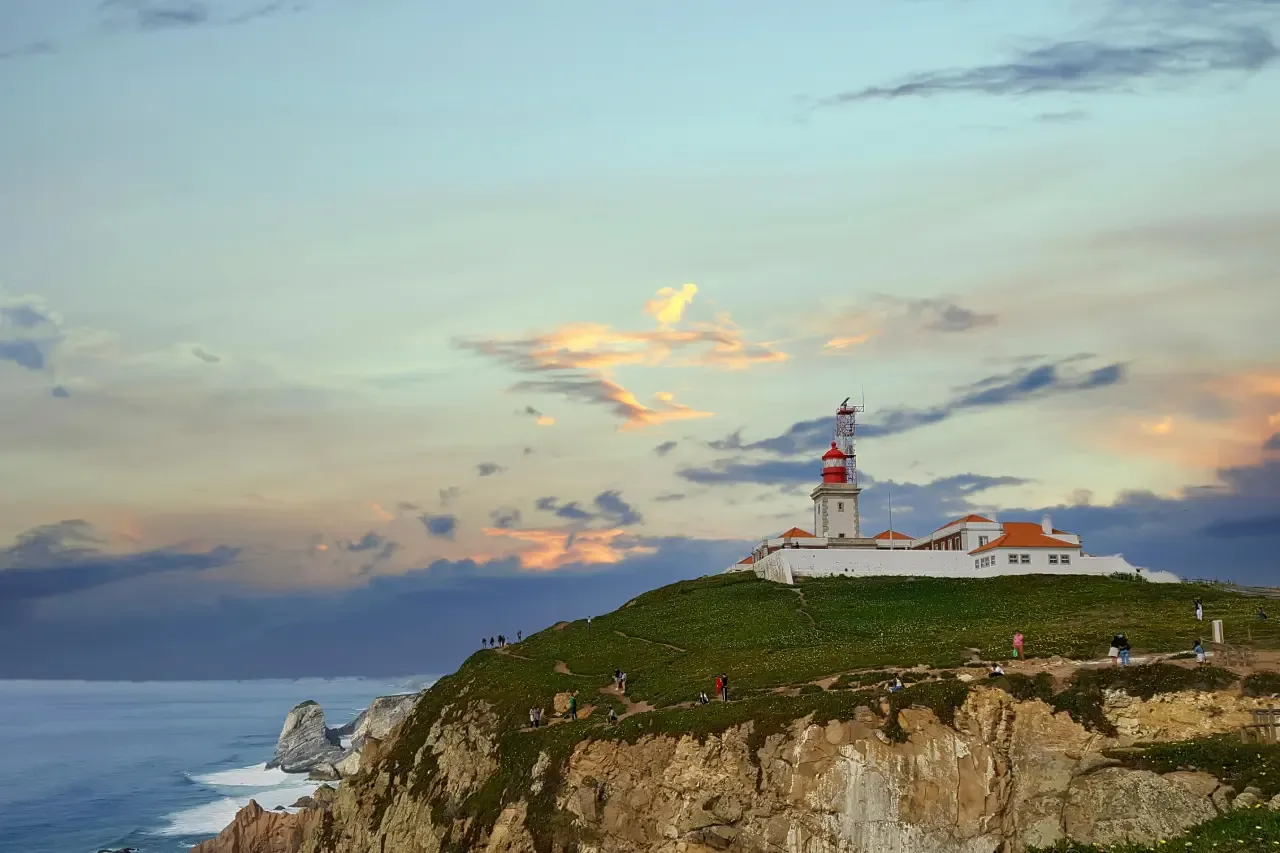
Cabo da Roca
Free to visit at any hour, the clifftop, lighthouse grounds and Camoes inscription cost nothing to see, with just a small shop and cafe nearby.
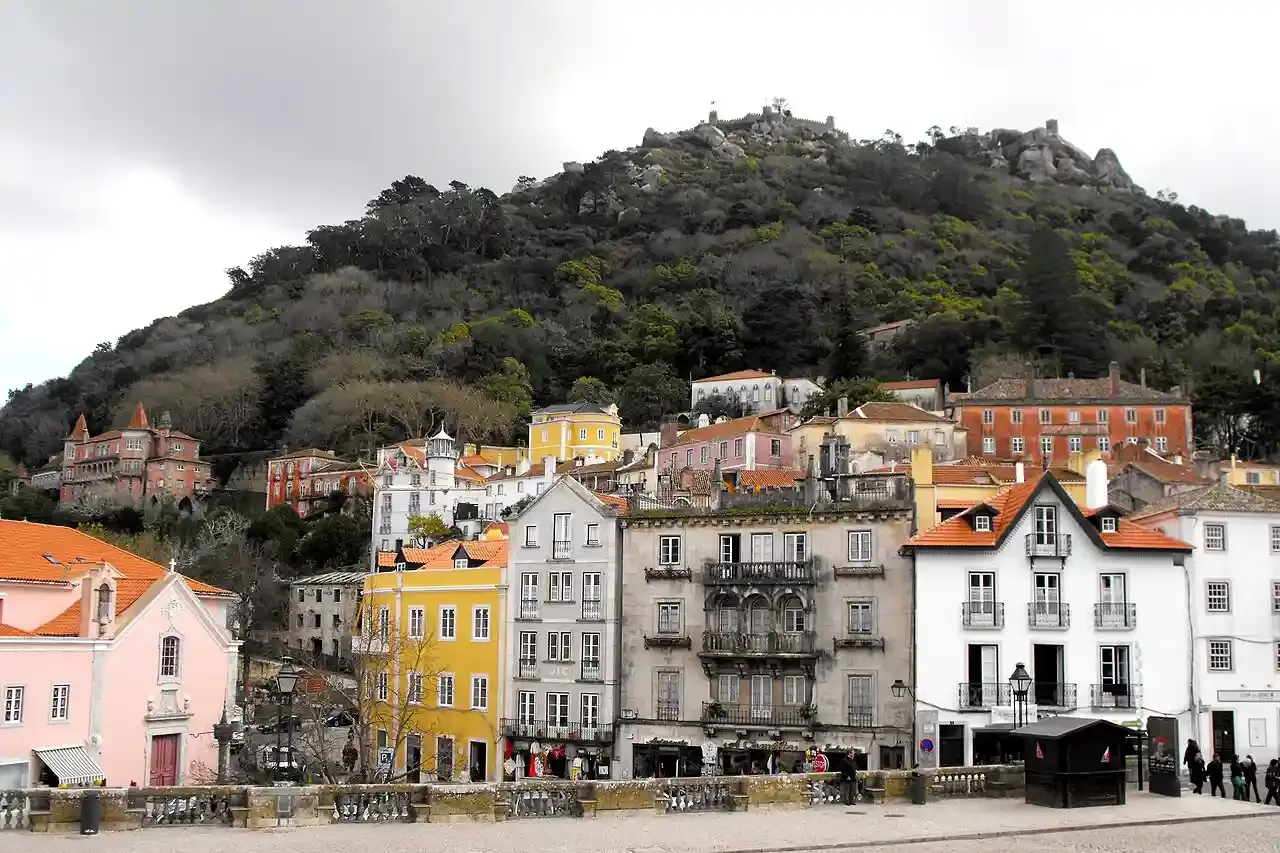
Historic Centre of Sintra
Free to wander any time, the cobbled lanes around Praca da Republica and the National Palace's tiled exterior are the best way to take in the town's fairytale character without a single ticket.
Villa Sassetti
This villa's gardens and hiking trail are free to enter from 10:00 to 18:00, a quiet stretch of mossy granite boulders and winding paths on the way up toward the Moorish Castle.
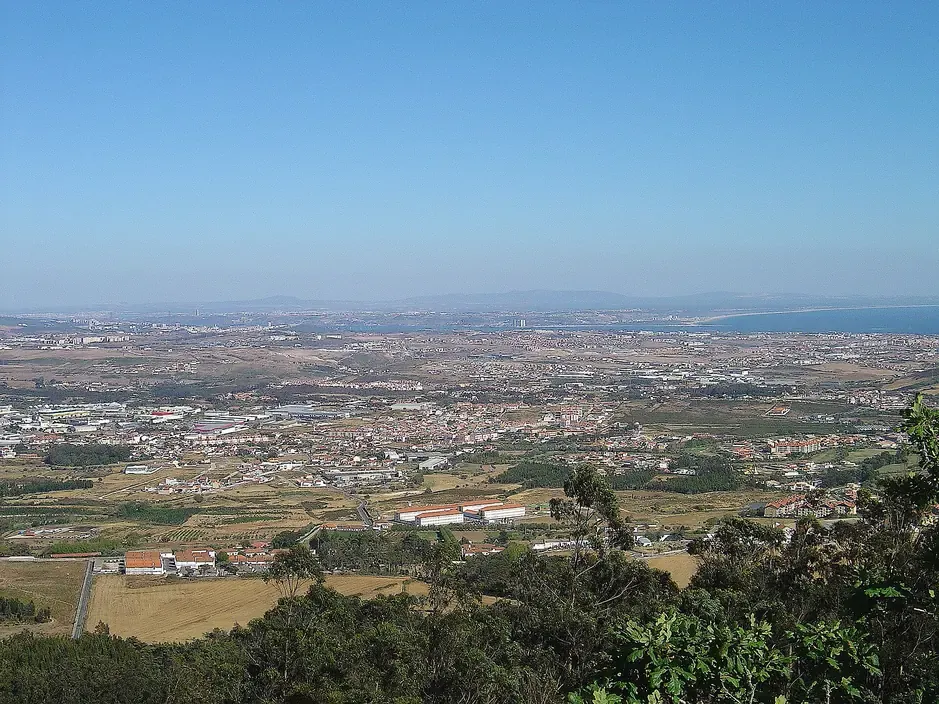
Miradouro de Santa Eufemia
This clifftop viewpoint above town is free to reach, its picnic area and the site of a 13th century chapel taking in a view that stretches from Queluz to the Atlantic.
Photo: "View from the Miradouro de Santa Eufemia" by Vitor Oliveira (CC BY-SA 2.0).
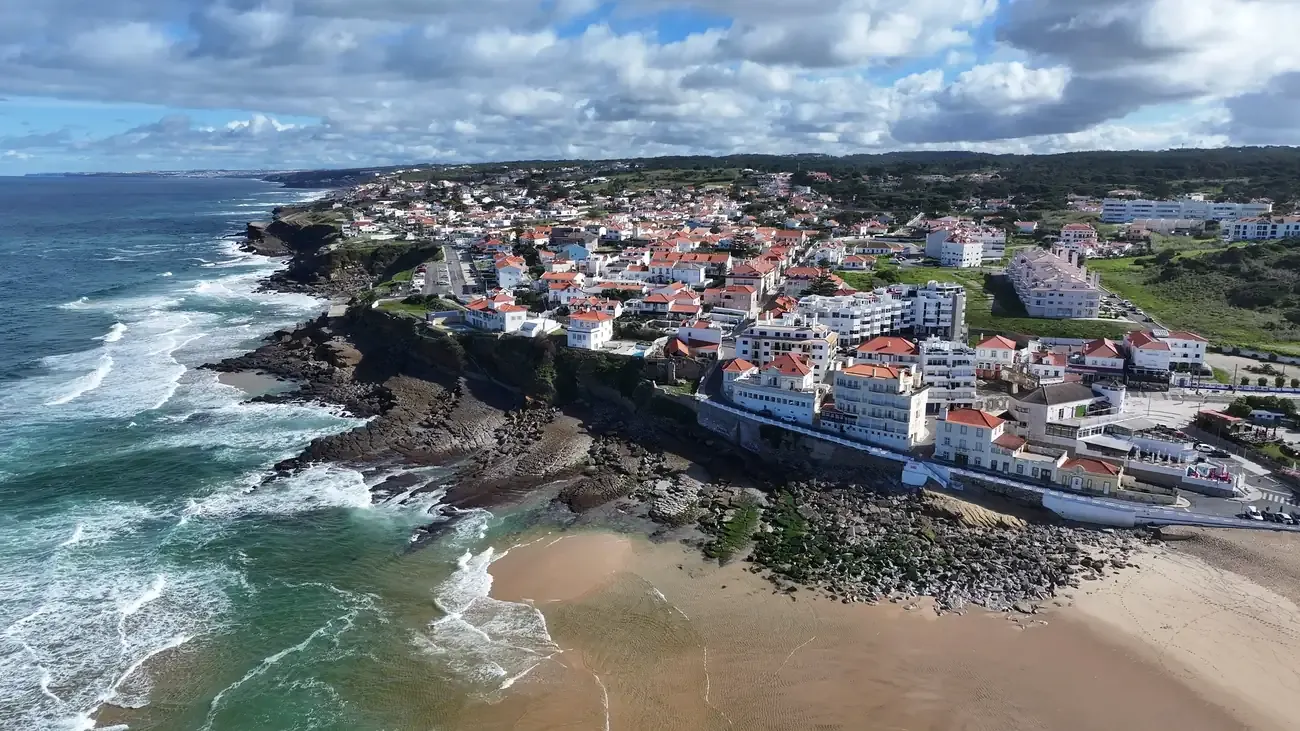
Praia das Macas
This golden-sand beach at the mouth of the Macas river is free public shoreline, with cafes, a saltwater pool and a promenade along the front.
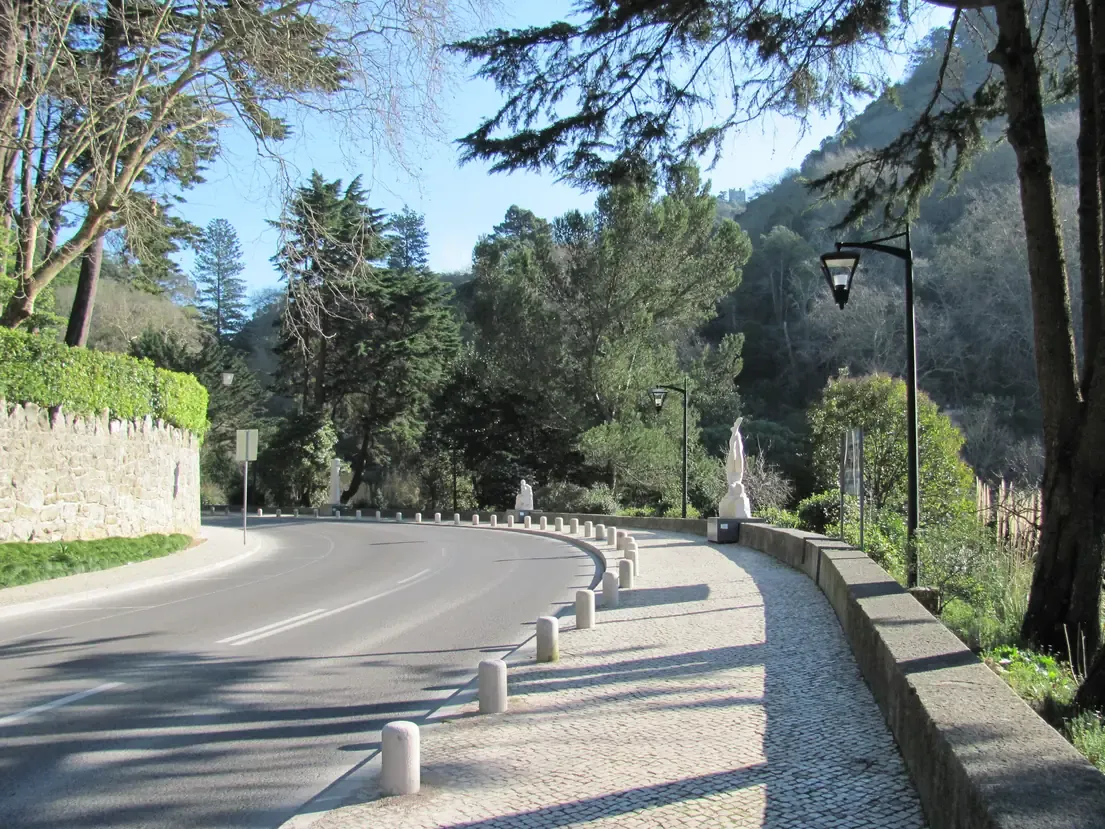
Volta do Duche
This tree-lined promenade linking the station to the old town costs nothing to walk, laid out after the railway arrived in the 19th century on the site of a former public bathhouse.
Photo: "Volta do Duche promenade in Sintra" by Gabriel Perazzo (CC BY 2.0).
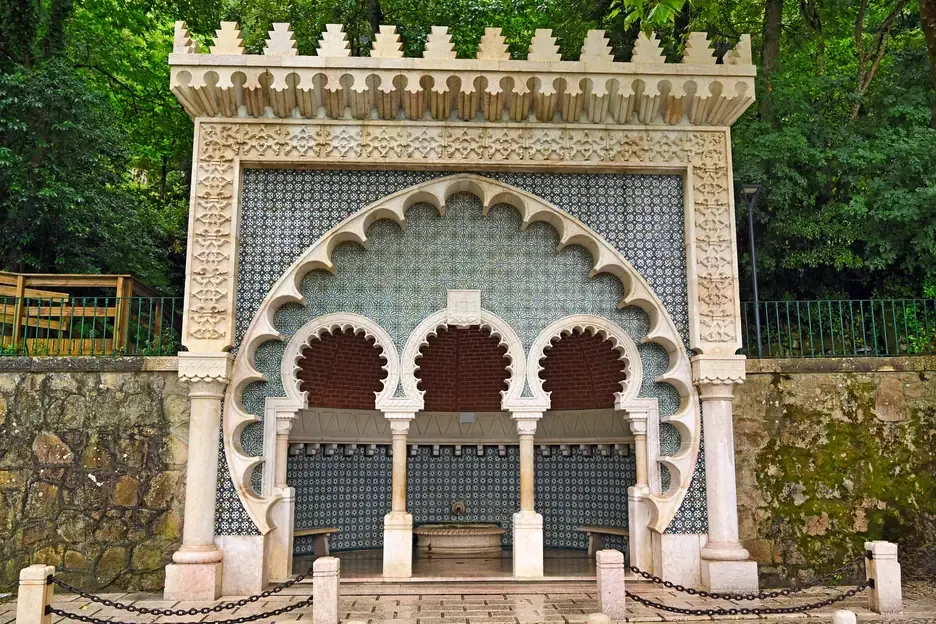
Fonte Mourisca
This Neo-Arabic fountain on the road into town costs nothing to see, its horseshoe arch and Mudejar tilework rebuilt at Volta do Duche after the original 1922 fountain was dismantled for road works.
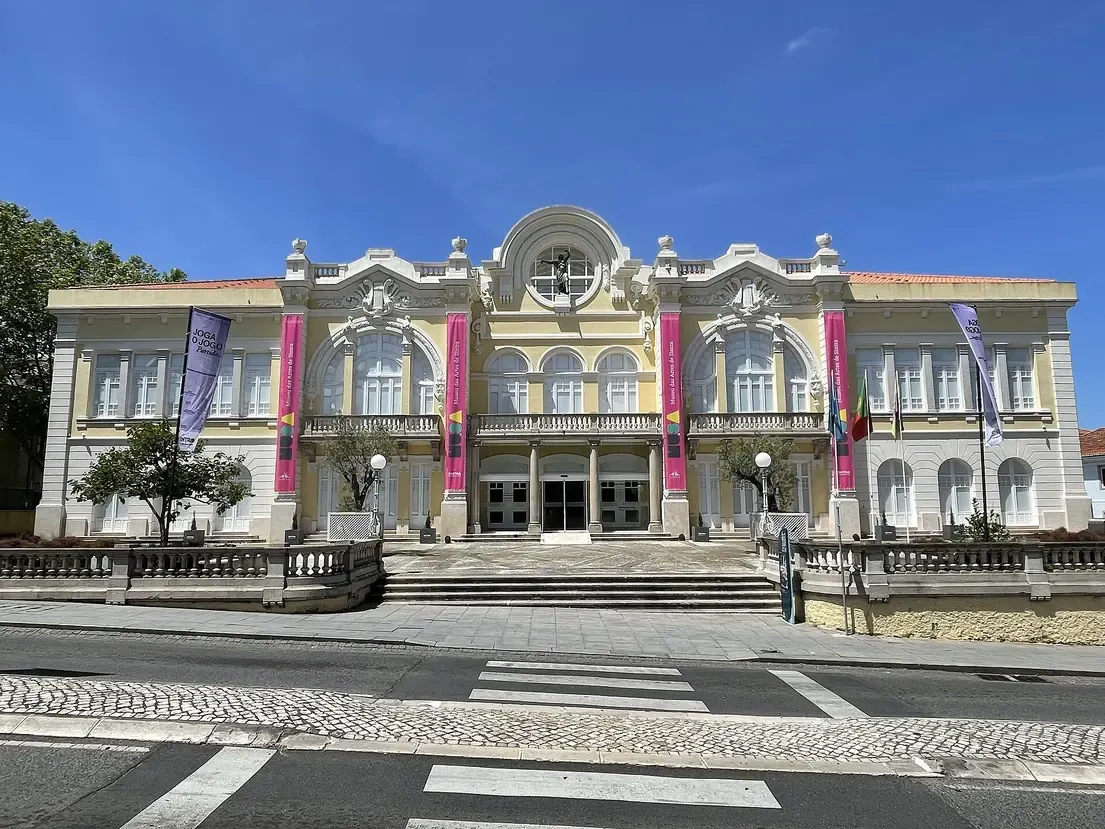
MU.SA - Sintra Museum of the Arts
Free to enter Tuesday to Sunday, this contemporary art museum in a converted casino building is closed on Mondays and most public holidays.
Photo: "Former Sintra Casino, home to MU.SA" by DiogoBaptista (CC BY-SA 4.0).
Palaces and hideaways beyond central Sintra
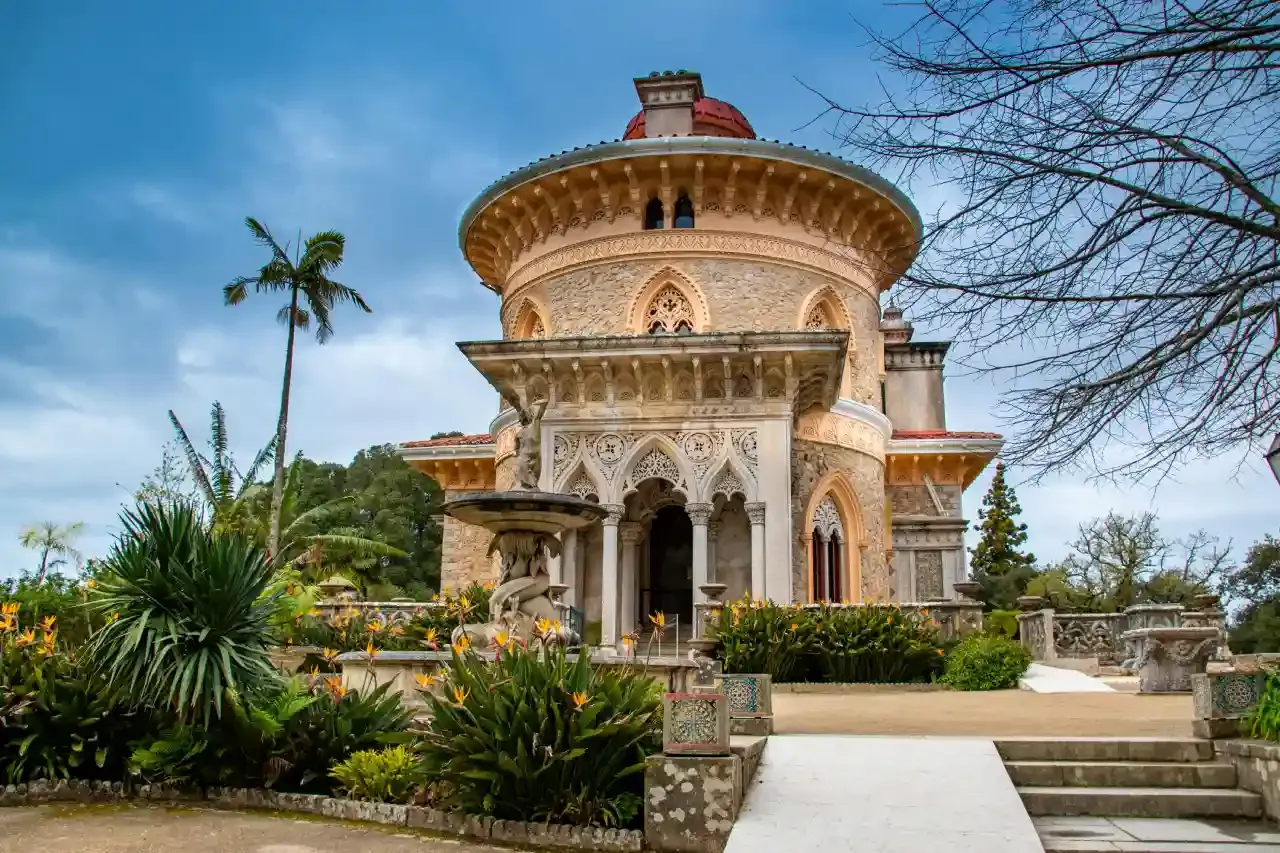
Monserrate Palace
A stucco-laced dome crowns this mix of Moorish, Gothic and Indian detail. Roof works keep the palace scaffolded into 2027.
Location: About 7 kilometres west of the historic centre. Website
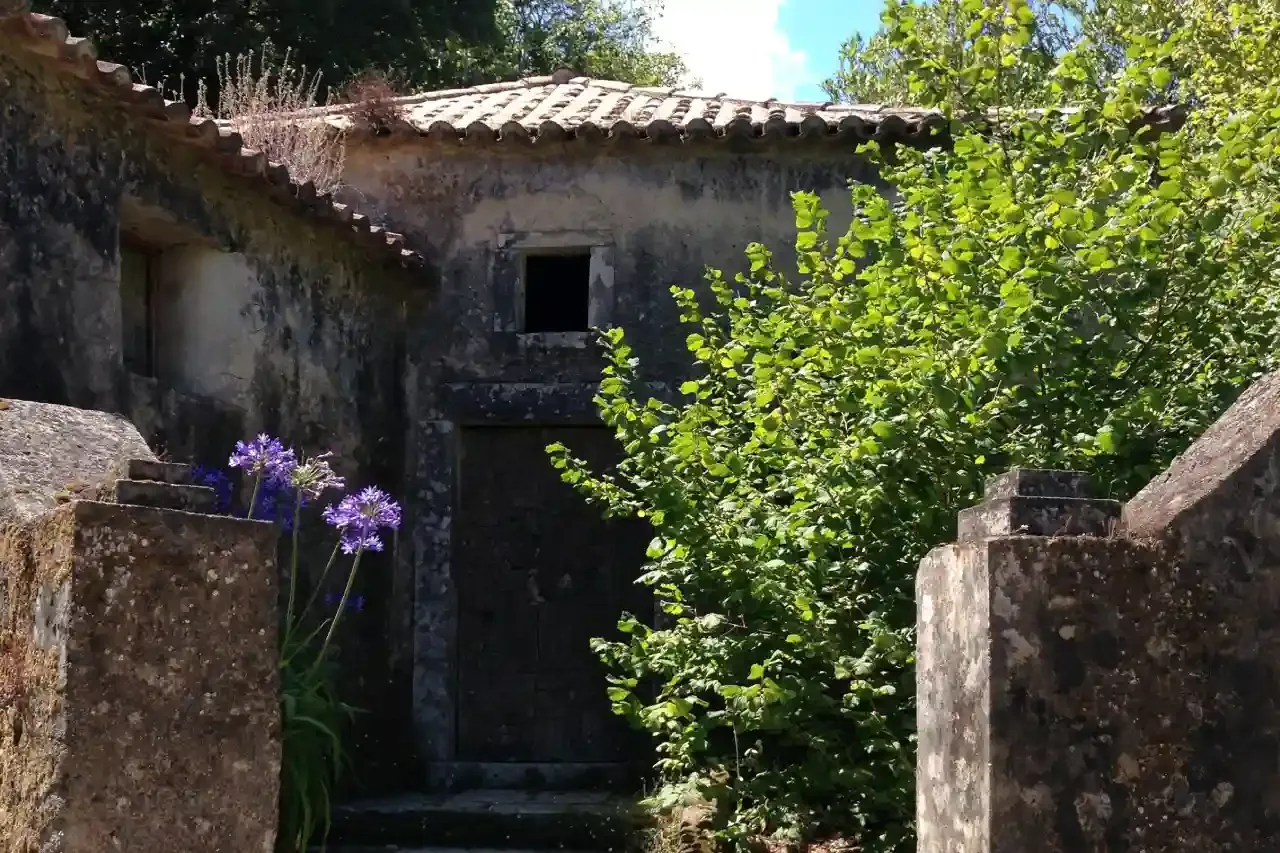
Convento dos Capuchos
Cork-lined cells cut into the granite make this Franciscan hermitage the plainest answer to Sintra's palaces, hidden deep in the forest.
Location: Colares, about 12 kilometres from town. Website
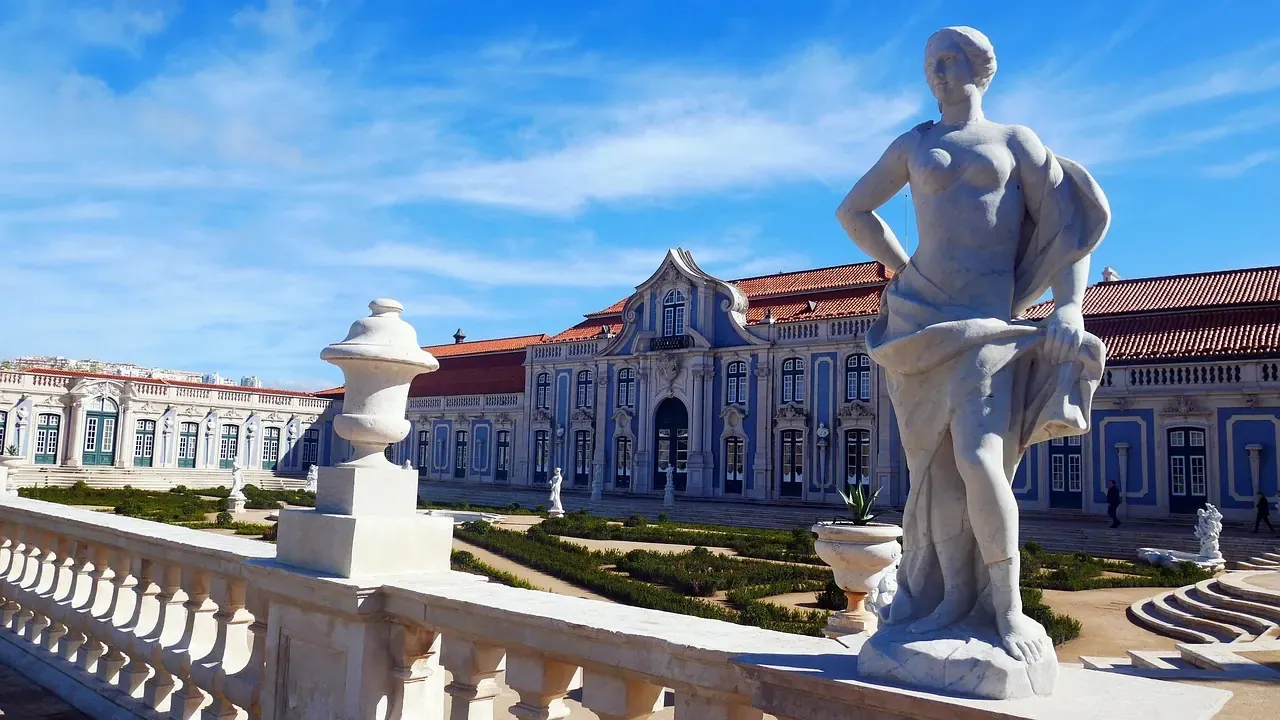
Queluz Palace
Rococo state rooms and formal gardens in pink and blue, built for Prince Pedro and later home to Queen Maria I.
Location: Queluz, about 17 kilometres east toward Lisbon. Website
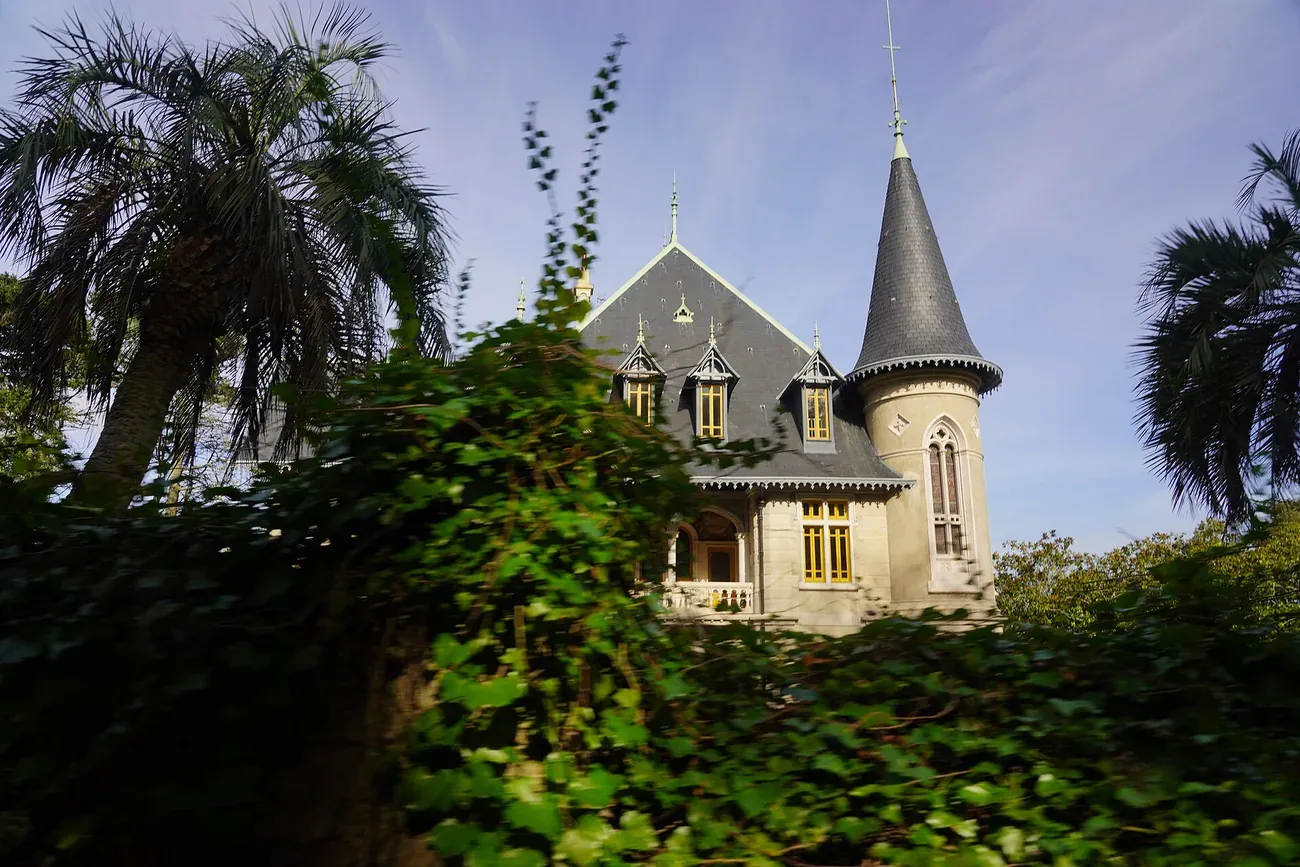
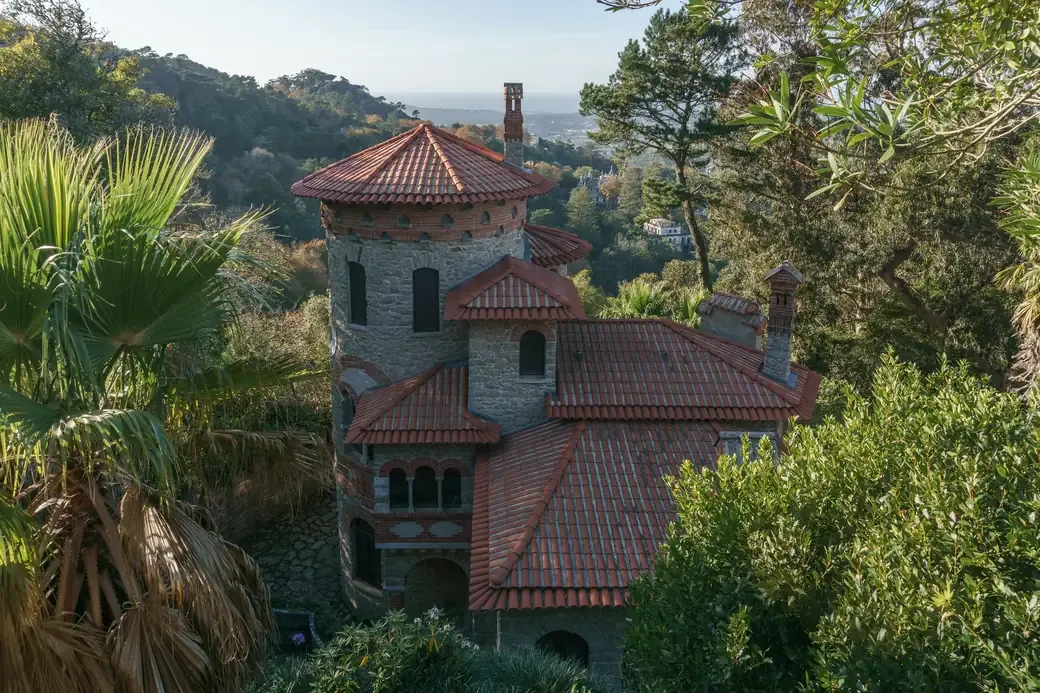
Casa Biester
Luigi Manini and Jose Luis Monteiro designed this Romantic house and its wooded park on the edge of the historic centre.
Location: Avenida Almeida Garrett 1A, Sintra. Website
Photo: "Casa Biester turret among the palms" by Ray Swi-hymn (CC BY-SA 2.0).
Why Sintra is worth visiting
Sintra took its name from a hill worshipped in pre-Roman times, and by the 8th century the Moors had fortified a ridge above the town. Christian forces retook the town in 1147, and Portuguese kings later turned its cooler, forested slopes into a summer retreat. By the 19th century European Romantics were writing home about palaces rising from the mist, and that layered history of Moorish, royal and Romantic building is still what draws visitors up from Lisbon today.
A hillside built on romance
Sintra's palaces trace a single obsession: Portugal's elite competing to build ever more fantastical retreats in the hills. Ferdinand II's Pena Palace started the trend in the 1840s, and Carvalho Monteiro's Quinta da Regaleira and Francis Cook's Monserrate followed, each mixing Moorish, Gothic and Manueline details into its own fairy-tale silhouette. UNESCO listed the whole hillside as a Cultural Landscape in 1995 for this concentration of Romantic architecture and gardens.
Beyond the palace circuit
West of town the hills give way to the Atlantic at Cabo da Roca, the westernmost point of mainland Europe, while forest hides the plain stone cells of the Convento dos Capuchos. East toward Lisbon, the pink and blue Queluz National Palace adds a Rococo counterpoint to Sintra's Romantic piles. Between them, the palaces and the Cabo da Roca headland put the municipality on almost every shortlist of tourist attractions to see in Portugal.
When to go and for how long
A single day covers the historic centre and one or two hilltop palaces at a steady pace; two days let visitors add Monserrate or the Capuchos without rushing between timed tickets. Spring and autumn bring milder weather and thinner queues than the peak summer months, when the palace car parks fill by mid-morning.
Getting around
Trains from Lisbon's Rossio and Oriente stations reach Sintra in well under an hour, and the historic centre itself is compact enough to cover on foot. From the station, paid circular buses climb to the hilltop palaces for those who would rather skip the uphill walk.