
Vienna tourist attractions
Known for
Imperial palaces and coffeehouse culture
Must-see landmarks
Schönbrunn Palace, Hofburg Palace and Belvedere Palace
Best time to visit
April to June and September
Days needed
2 to 3 full days
The 12 tourist attractions to see in Vienna
Here are the tourist attractions in Vienna worth planning around, starting with Hofburg Palace, Schönbrunn Palace and Belvedere Palace. The 12 top sights come first, then 28 hidden gems, free things to do, upcoming events, tickets and visitor FAQs. The 12 sights are numbered on the free Vienna tourist map with a walking route, with the hidden gems.
1. Hofburg Palace
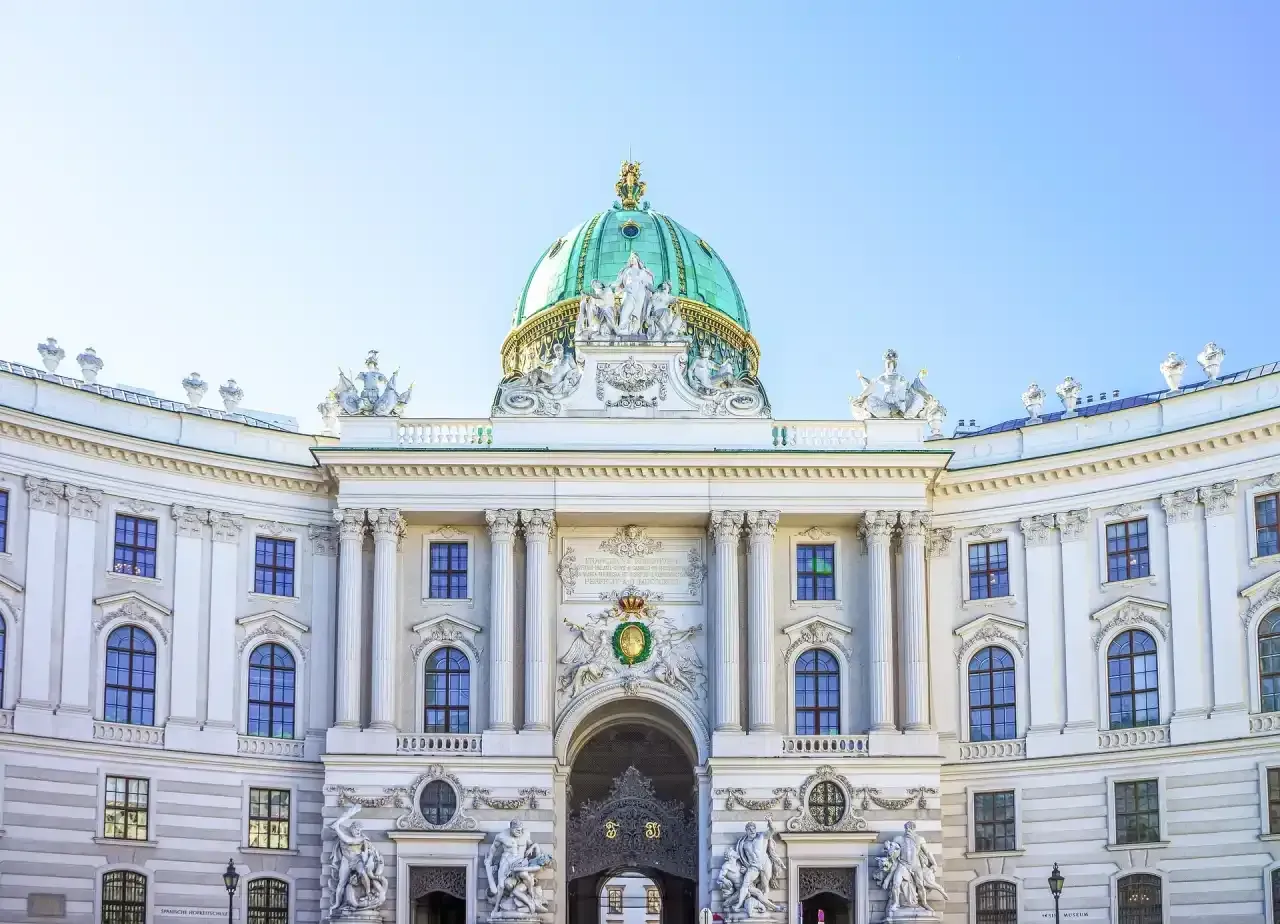
The Habsburgs ruled from this sprawling city palace for more than six centuries, growing a medieval castle into a maze of wings, courtyards and squares that still holds the Austrian president's offices. The visit covers the Imperial Apartments, the Silver Collection and the Sisi Museum, which follows the restless life of Empress Elisabeth through her dresses, her writing desk and her exercise rings. Around it the complex gathers the National Library, the Spanish Riding School and the treasury, so a walk through the courtyards passes several institutions at once.
Location: Michaelerkuppel, Innere Stadt
Access: Ticketed for the Imperial Apartments, Sisi Museum and Silver Collection; the outer courtyards and squares stay open and free · Tickets and tours
2. Schönbrunn Palace
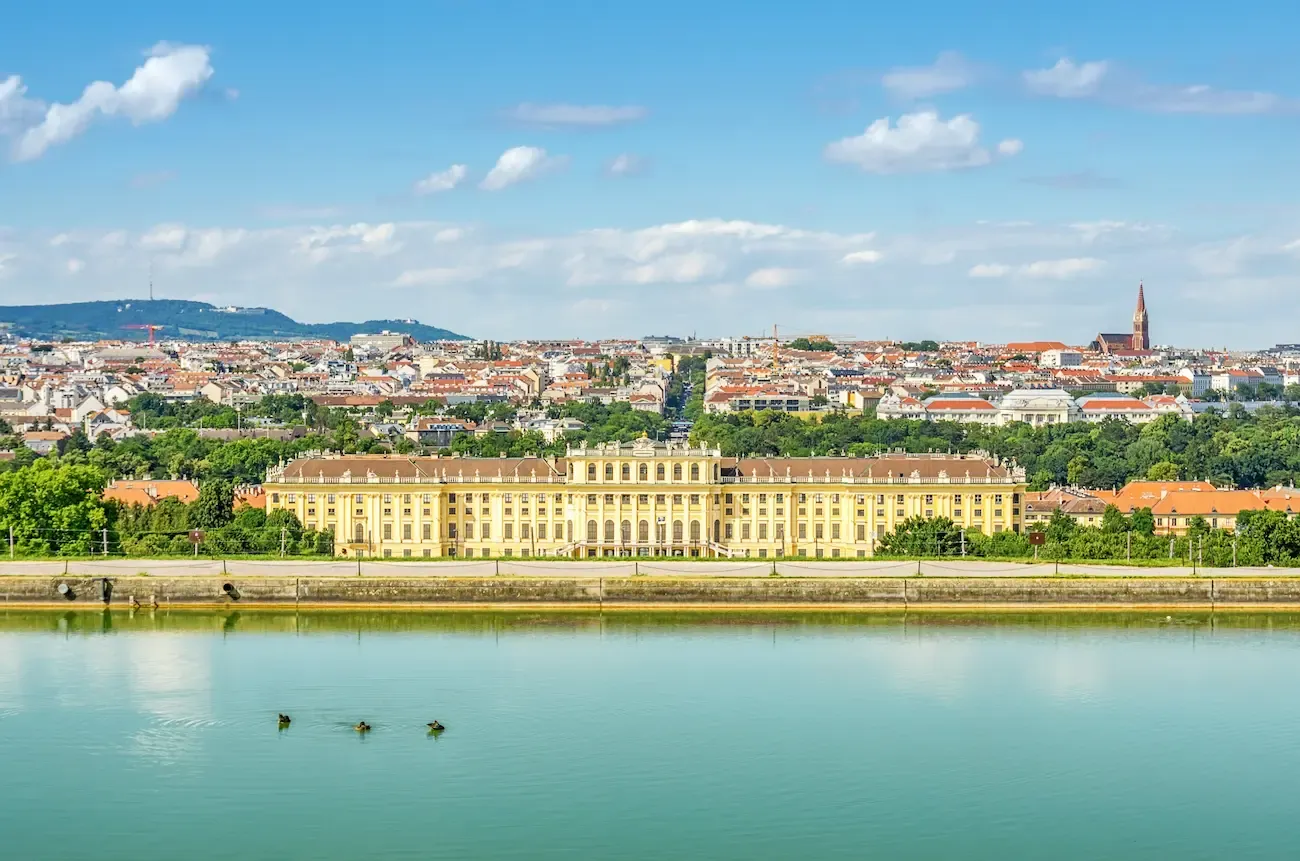
The summer residence of the Habsburgs stands outside the Ring with 1,441 rooms behind a long ochre facade, a UNESCO World Heritage Site since 1996. Guided routes through the staterooms pass the mirrored halls where Maria Theresa held court, while the formal gardens climb past fountains and clipped hedges to the Gloriette on the ridge, with the city spread out below. The park also holds a maze, an orangery, a palm house and the oldest zoo in the world still on its original site.
Architect: Johann Bernhard Fischer von Erlach and Nicolò Pacassi · Style: Baroque
Location: Schönbrunner Schloßstraße 47, Hietzing
Access: Ticketed for the staterooms, Gloriette, maze, Privy Garden, Orangery and zoo; the park itself is free · Tickets and tours
3. Belvedere Palace
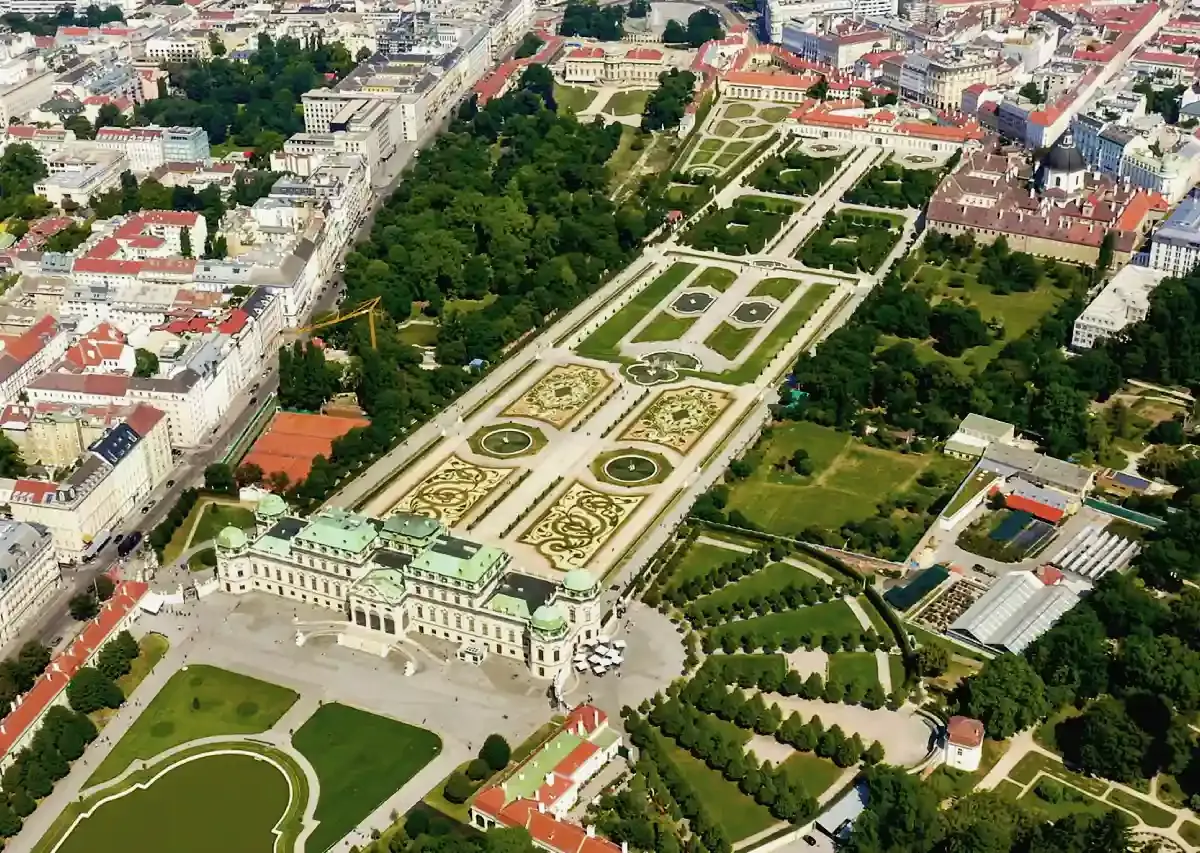
Prince Eugene of Savoy commissioned two baroque palaces on a slope south of the centre, linked by terraced gardens with fountains, sphinxes and a long view back to the spire of the cathedral. Maria Theresa later bought the estate and opened the Upper Belvedere to the public, making it one of the first museums in the world. Today its galleries hold the largest collection of Gustav Klimt paintings anywhere, including The Kiss, while the Lower Belvedere keeps the state rooms and shows temporary exhibitions.
Architect: Johann Lucas von Hildebrandt · Style: Baroque
Location: Prinz-Eugen-Straße 27, Landstraße
Access: Ticketed for the museums; the palace gardens between the two buildings are free · Tickets and tours
4. St. Stephen's Cathedral
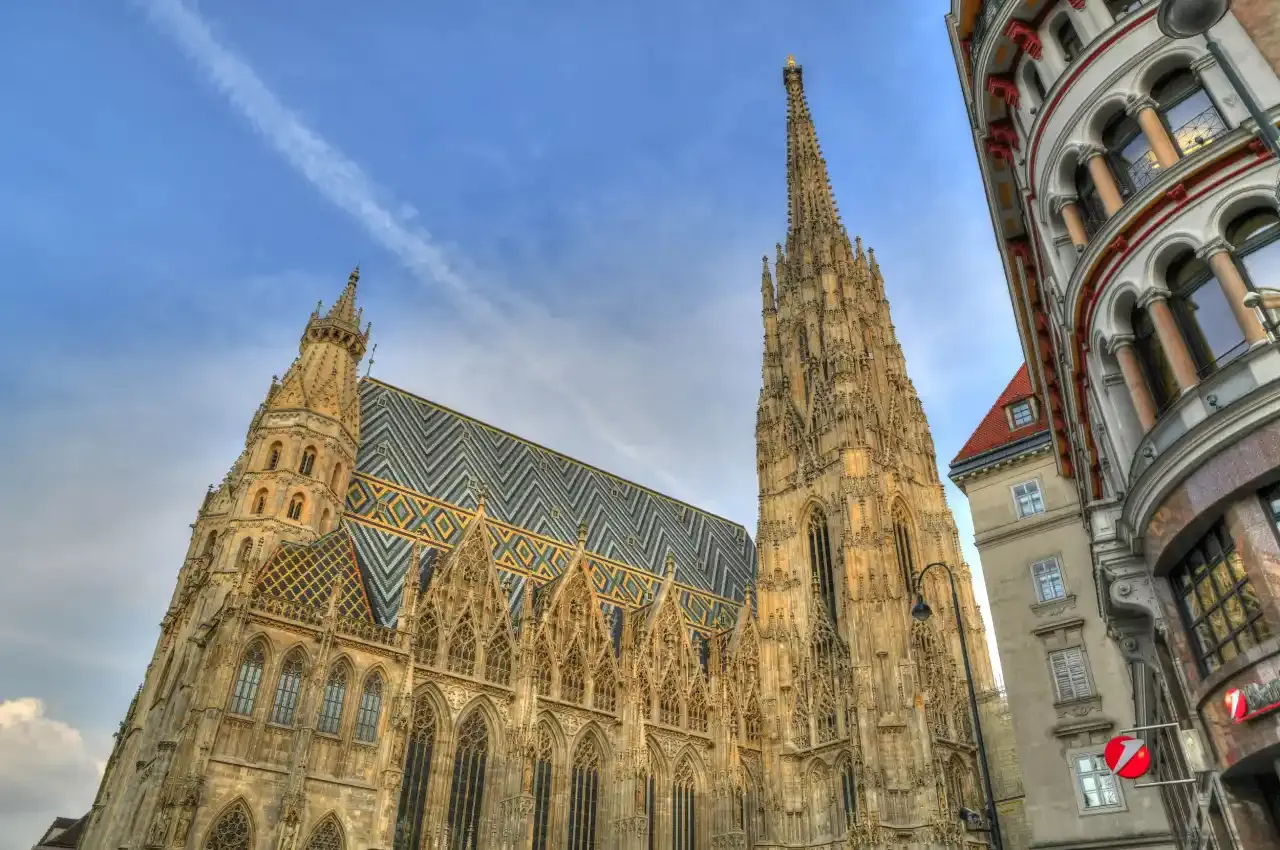
The cathedral anchors the old city with a roof of glazed tiles patterned into eagles and a south tower that rises 136 metres over the rooftops, climbed by a spiral stair of hundreds of steps. A lift in the unfinished north tower reaches the Pummerin, the largest bell in Austria, and below the floor the catacombs hold the bones of thousands of Viennese moved here from the parish graveyards. Mass has been celebrated on the site since the twelfth century.
Style: Romanesque and Gothic
Location: Stephansplatz 3, Innere Stadt
Access: Free to enter the rear of the nave; the main nave, the catacombs and both towers are ticketed
5. Vienna State Opera
The first great building finished on the Ringstrasse opened in 1869 with Don Giovanni and has anchored the city's musical life ever since, staging a different opera or ballet almost every night of a season that runs from September to June. Bombs gutted the auditorium in 1945 and the reopening ten years later became a symbol of the restored republic. The loggia, grand staircase and tea salon survived and are shown on daytime guided tours, while cheap standing places go on sale shortly before each performance and the Opera Ball takes over the house each February.
Architect: August Sicard von Sicardsburg and Eduard van der Nüll · Style: Neo-Renaissance · Opened: 1869
Location: Opernring 2, Innere Stadt
Access: Ticketed performances and daytime guided tours
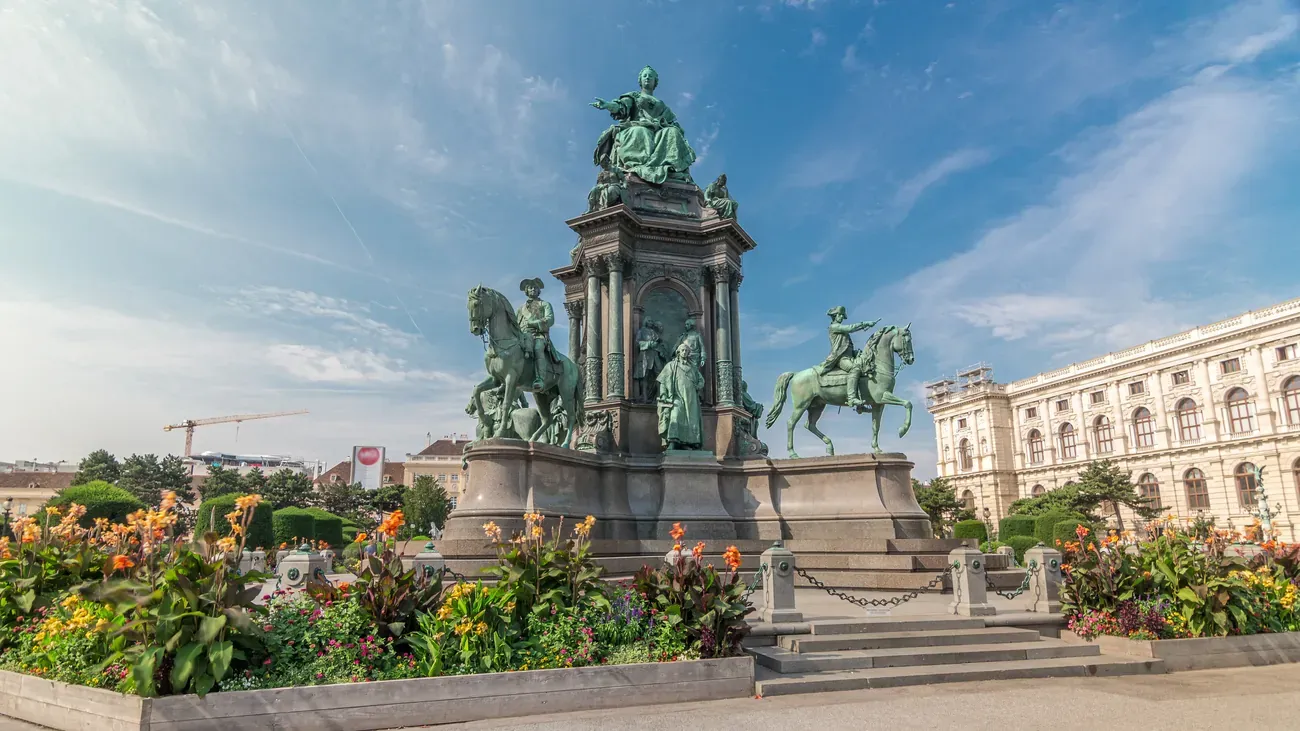
6. Kunsthistorisches Museum
The imperial art collection faces its natural history twin across Maria-Theresien-Platz in a palace built to show it off, with a marble staircase, a painted cupola hall and galleries that still hang pictures the way the Habsburgs bought them. The Picture Gallery holds the largest group of Bruegel paintings anywhere, Vermeer's The Art of Painting, Velázquez's portraits of the infantas and rooms of Titian, Rubens and Raphael. Downstairs the Kunstkammer keeps Cellini's gold salt cellar among thousands of curiosities, beside the Egyptian and Greek and Roman antiquities.
Architect: Gottfried Semper and Karl von Hasenauer · Opened: 1891
Location: Maria-Theresien-Platz, Innere Stadt
Access: Ticketed
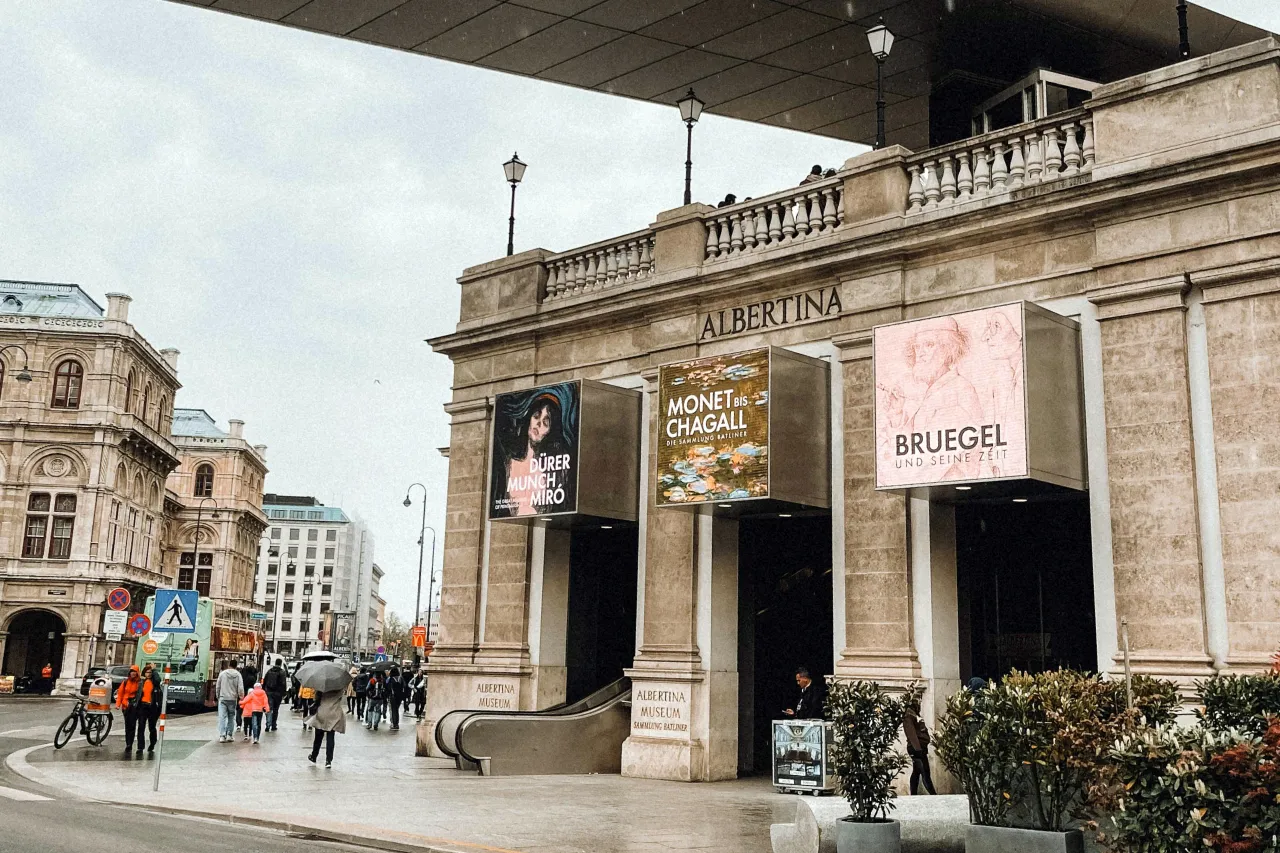
7. Albertina
A Habsburg palace on the last standing bastion of the old city walls holds one of the great collections of prints and drawings, built around Dürer, Michelangelo and Rembrandt and shown in rotation because paper cannot take permanent light. The Batliner Collection upstairs runs from Monet and Degas to Picasso, and the restored state rooms keep the furniture and silk of the archduke who assembled the original holdings. The terrace above the entrance looks straight down Operngasse to the State Opera.
Architect: Joseph Kornhäusel
Location: Albertinaplatz 1, Innere Stadt
Access: Ticketed
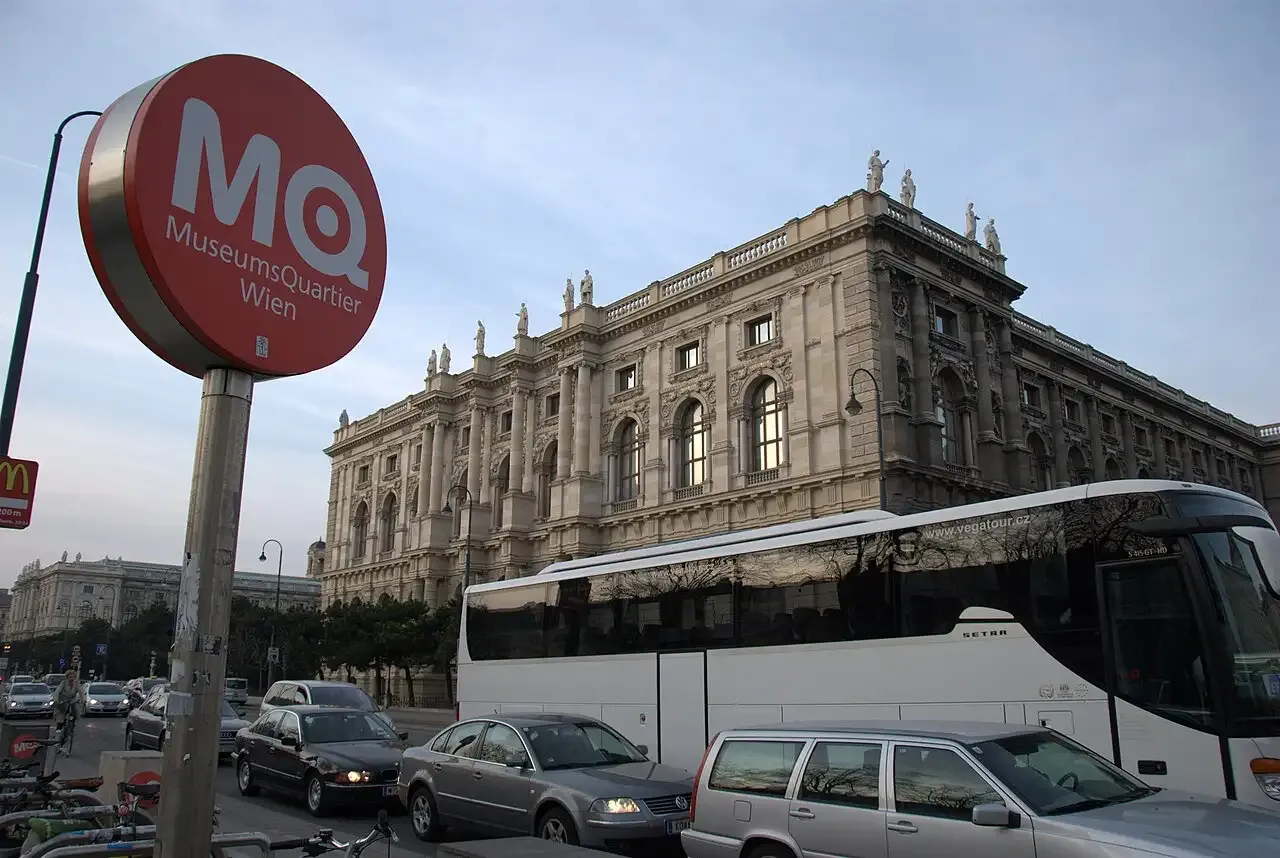
8. MuseumsQuartier Wien
The imperial court stables were rebuilt around the year 2000 into one of the largest cultural quarters in Europe, a set of baroque wings wrapped around courtyards with two modern blocks dropped between them. The Leopold Museum holds the biggest Egon Schiele collection in the world, mumok shows modern and contemporary art behind dark basalt, and the Kunsthalle, the architecture centre and a children's museum fill the rest. In warm months the courtyards fill with people sprawled on the moulded Enzi benches.
Location: Museumsplatz 1, Neubau
Access: The site is open around the clock and free to cross; each museum charges its own admission
9. St. Charles' Church
Emperor Charles VI vowed a church to his name saint if the plague of 1713 lifted, and the result is the strangest facade in Vienna: a Greek temple portico flanked by two hollow columns carved with the life of Charles Borromeo, modelled on Trajan's Column in Rome. Ground was broken in 1716 and the church consecrated in 1737. Inside, an oval dome carries a fresco by Johann Michael Rottmayr showing the saint pleading for the end of the epidemic.
Architect: Johann Bernhard Fischer von Erlach and his son Joseph Emanuel · Style: Baroque
Location: Karlsplatz, Wieden
Access: Ticketed for sightseeing visits, with shorter hours on Sundays and holidays
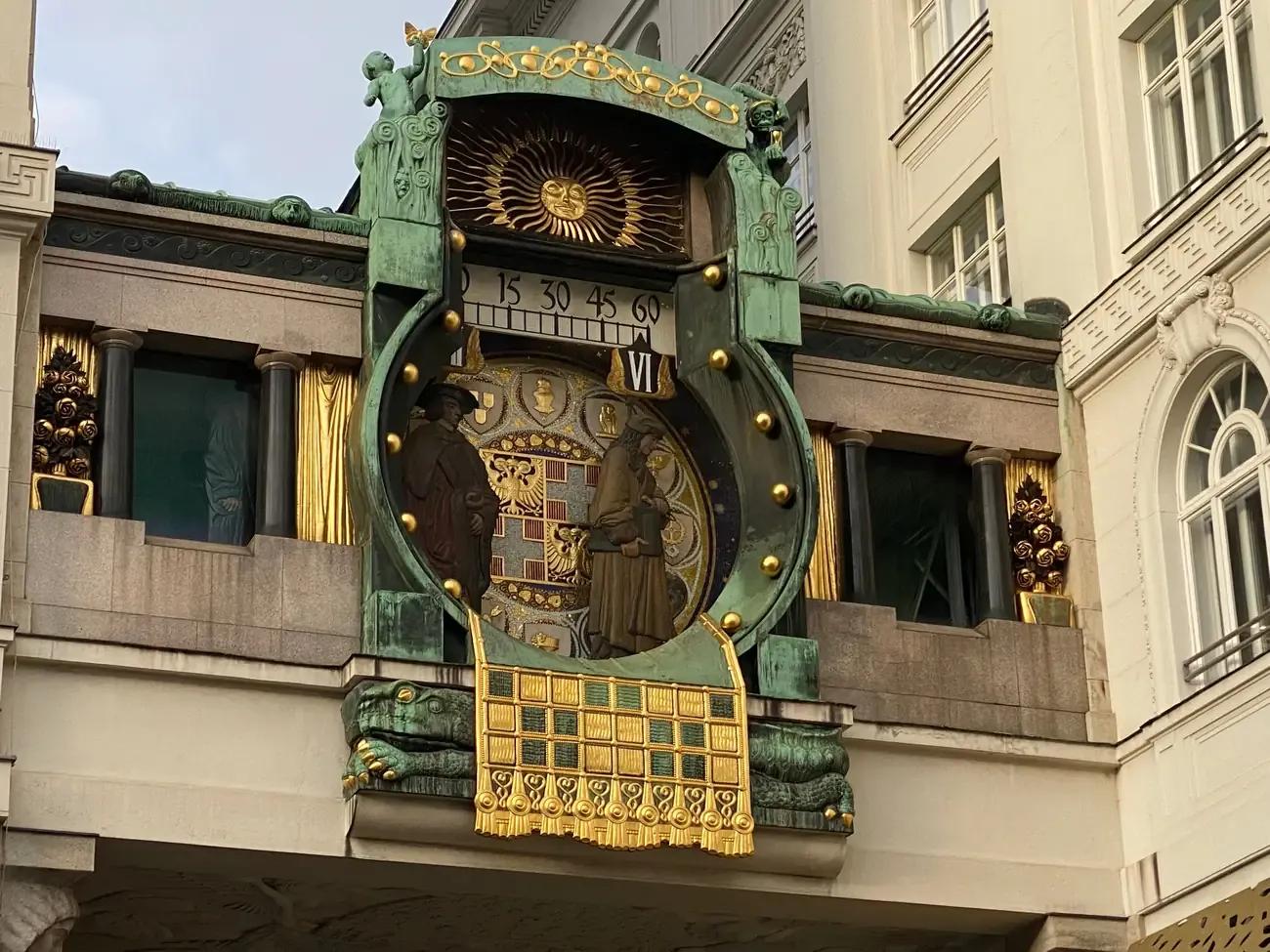
10. Ankeruhr
An Art Nouveau clock bridges the alley between the two wings of the Anker insurance building on Hoher Markt, its face turned into a moving frieze. Over twelve hours a procession of twelve historical figures and pairs crosses the bridge, one per hour, from Marcus Aurelius through Charlemagne and Maria Theresa to Joseph Haydn. At noon the whole company parades in turn, each accompanied by music from its own era, and the small square below fills with people looking up.
Style: Art Nouveau, built 1911 to 1914 by Franz Matsch
Location: Hoher Markt 10, Innere Stadt
Access: Free, seen from the street at any hour
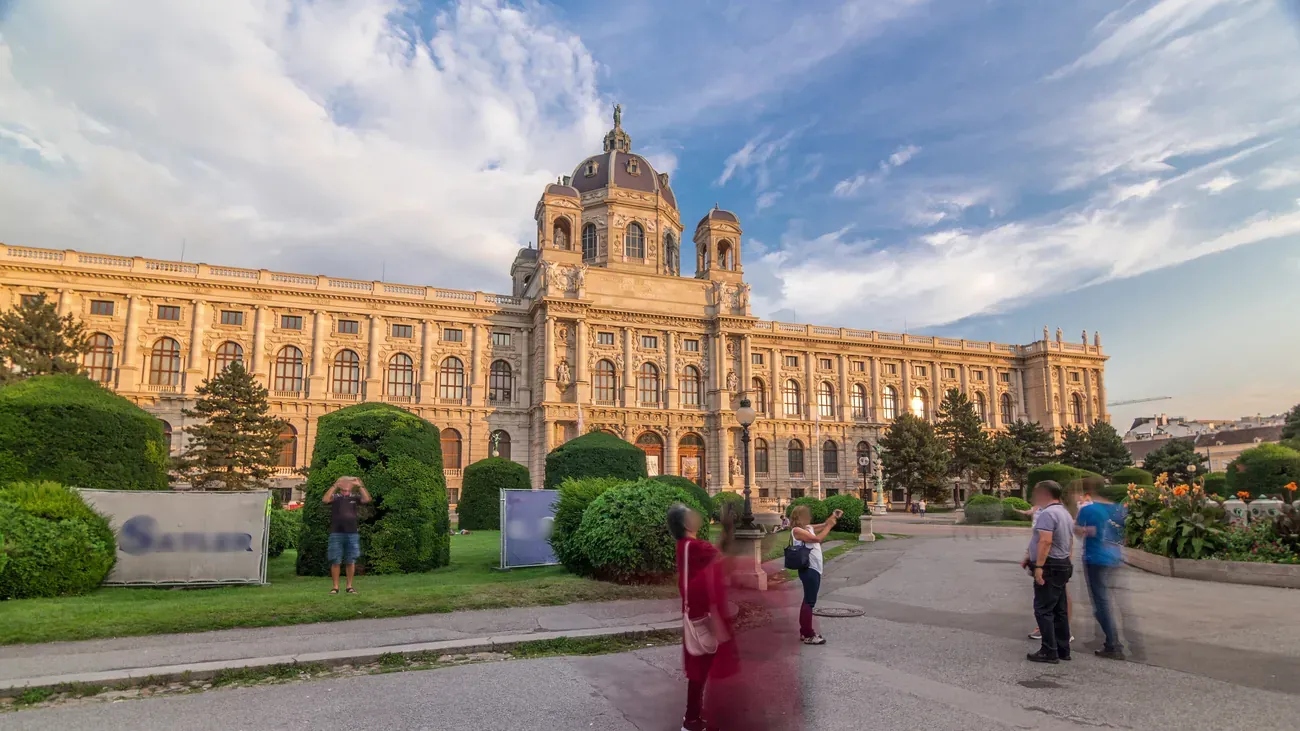
11. Naturhistorisches Museum
One of the twin palaces on Maria-Theresien-Platz was built for the imperial natural history collection and still shows it in carved and painted halls, with dark wood cabinets and creaking parquet that belong to the nineteenth century as much as the specimens do. The Venus of Willendorf, a limestone figurine roughly 29,500 years old, sits in her own room, and the meteorite hall is the largest display of its kind anywhere. Dinosaur skeletons and a digital planetarium fill the upper floors.
Architect: Gottfried Semper and Karl von Hasenauer · Opened: 1889
Location: Burgring 7, Innere Stadt
Access: Ticketed; closed on Tuesdays
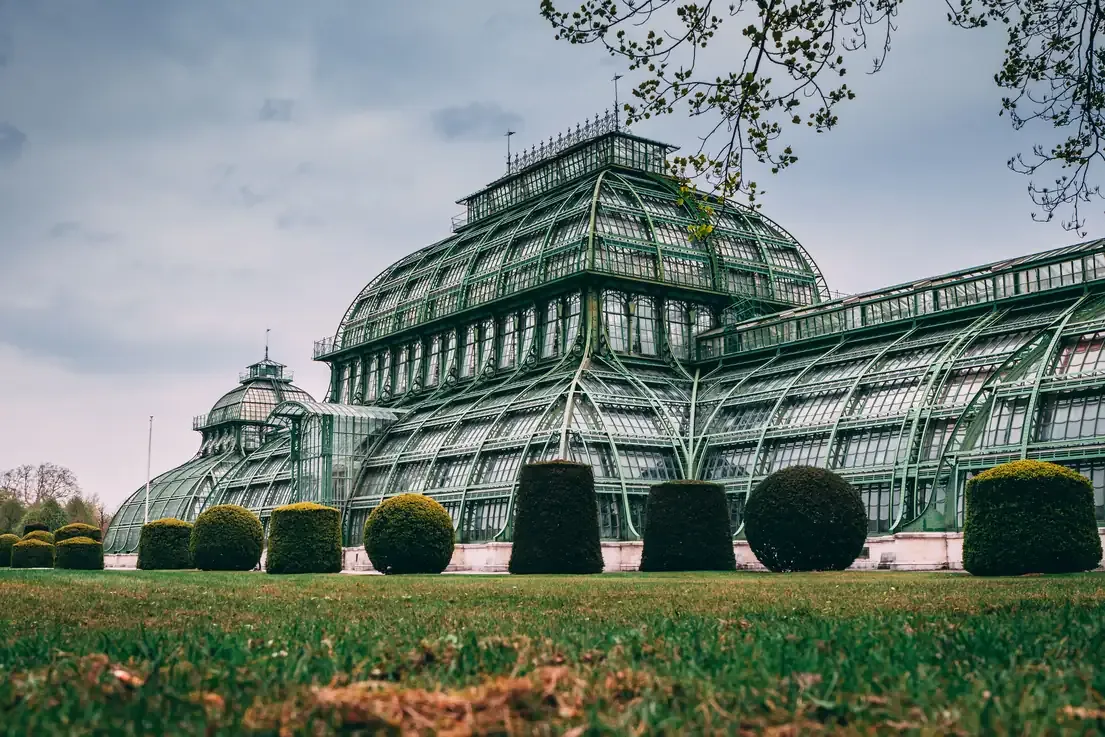
12. Palmenhaus
At the edge of the Burggarten behind the Hofburg stands a long glasshouse of iron and glass, one of the finest Art Nouveau structures in the city and once the emperor's own winter garden for palms. The central hall is now a brasserie and bar under a high glazed roof, where tables sit among tall plants and the garden shows through the panes on both sides. The wing alongside holds the Butterfly House, with around 500 butterflies flying free among tropical plants.
Location: Burggarten 1, Innere Stadt
Access: Free to walk into the Burggarten and the glasshouse; the Butterfly House is ticketed
Vienna attraction tickets and tours
Upcoming events in Vienna
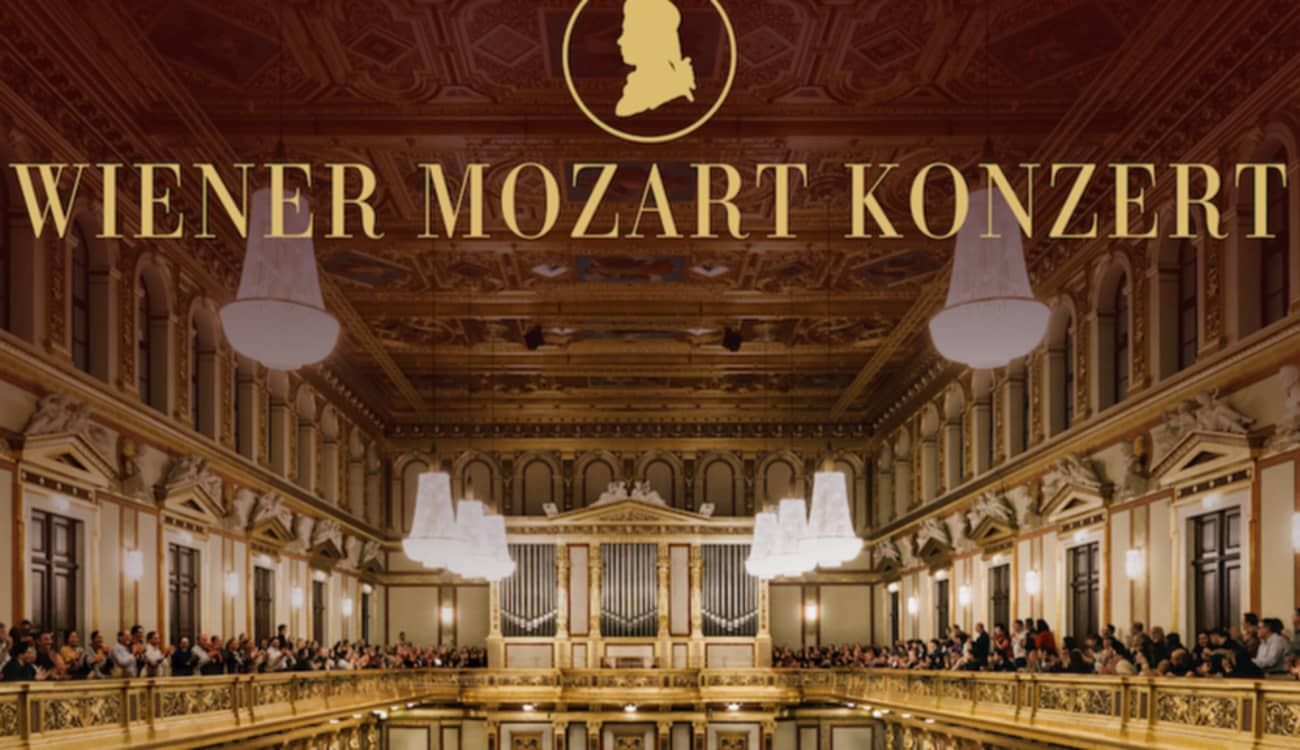
Wiener Mozart Konzert im Goldenen Saal - Musikverein, Wien
Wiener Mozart Konzert im Goldenen Saal - Musikverein, Wien comes to Musikverein Wien on 2 November at 20:15.
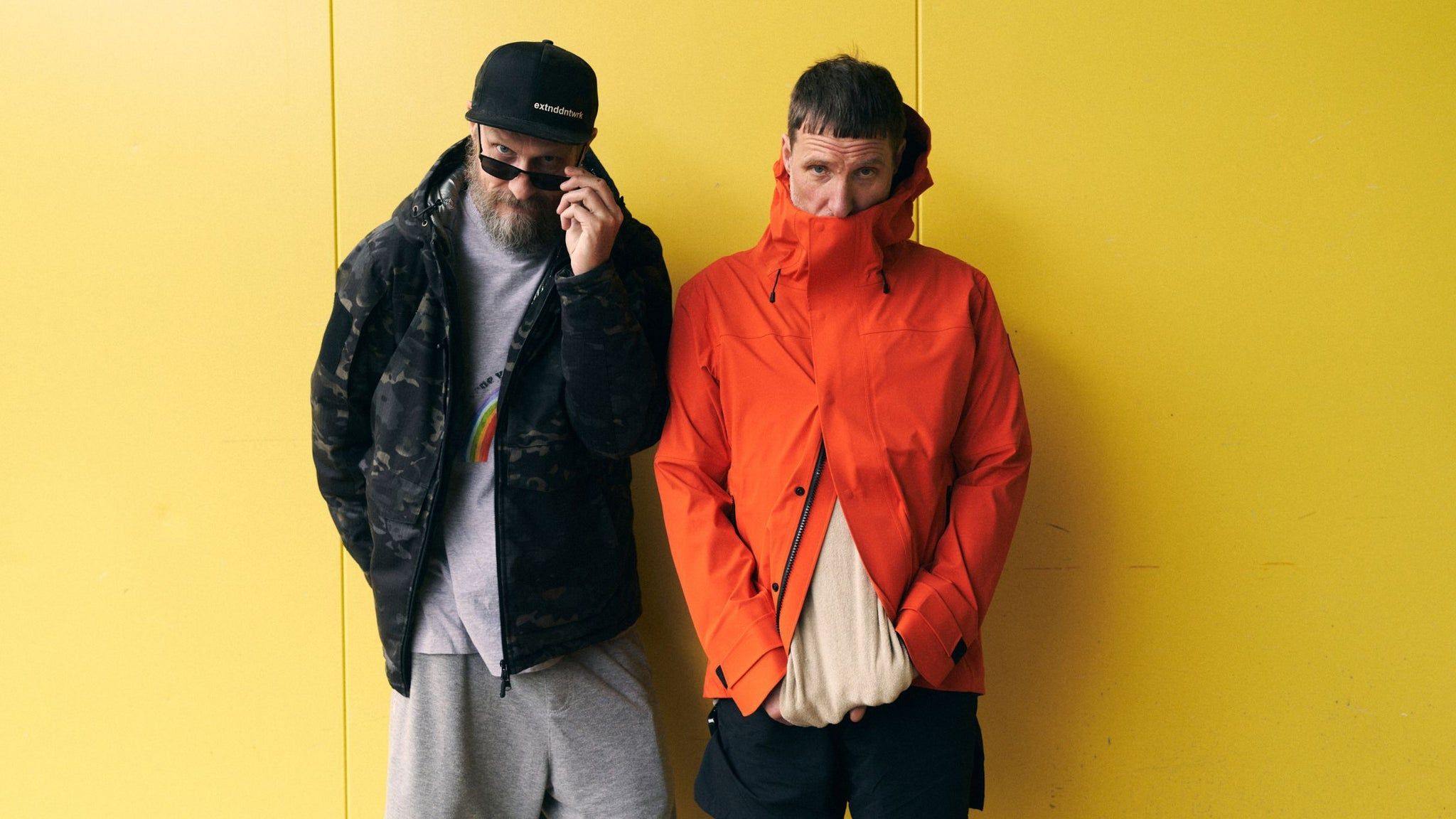
Sleaford Mods - Europe - Part 2
Sleaford Mods - Europe - Part 2 plays Arena Wien on 3 November at 20:00.
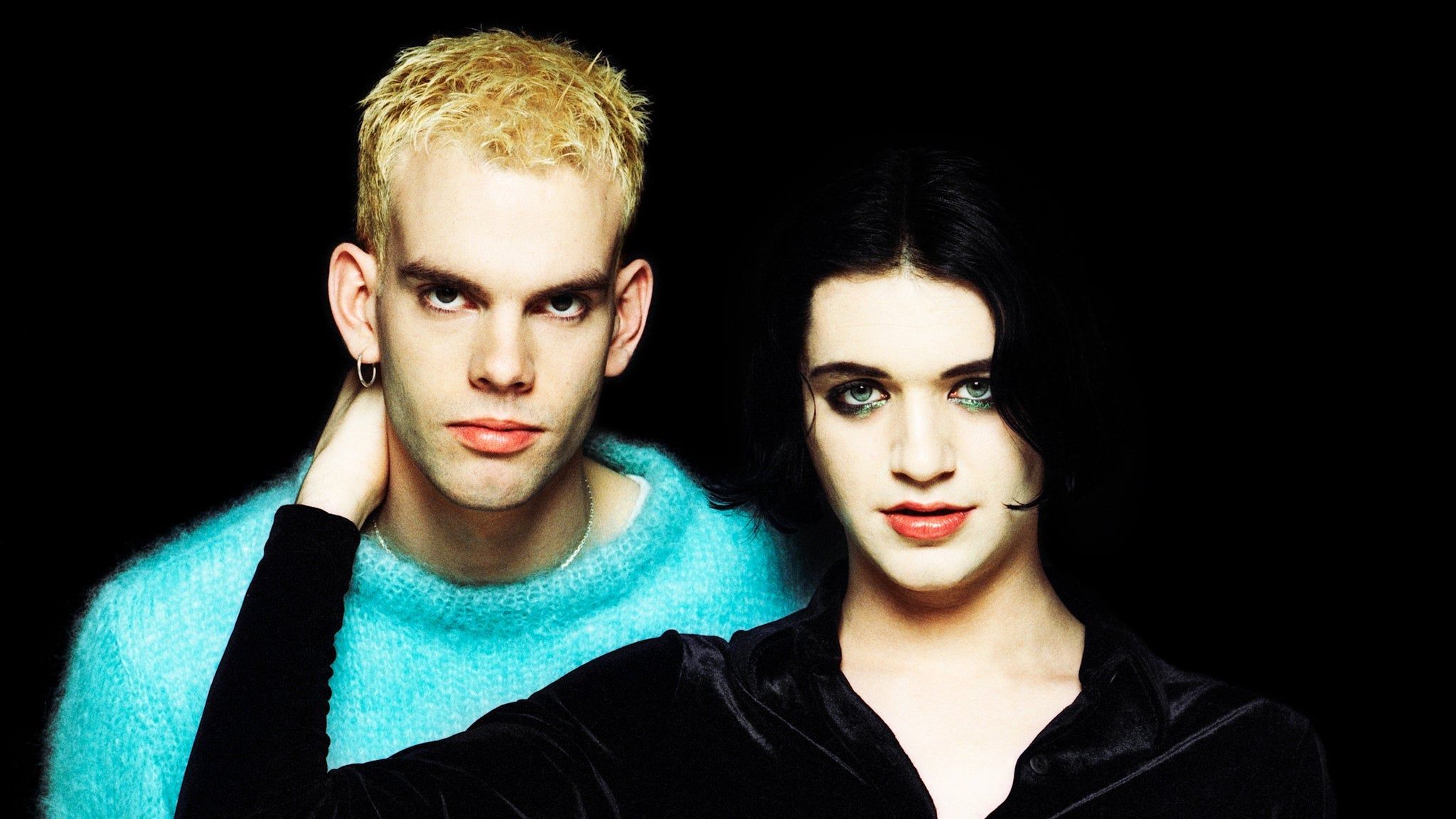
Placebo, 30th Anniversary Tour
Placebo plays the 30th Anniversary Tour at Wiener Stadthalle on 10 November at 19:30, the British rock band marking three decades together.
Gianmarco Soresi: The Misery Loves Tour
Gianmarco Soresi: The Misery Loves Tour plays Raiffeisen Halle im Gasometer on 13 February 2027 at 19:00.
Paula Lambert
Paula Lambert plays Globe on 23 February 2027 at 19:30.
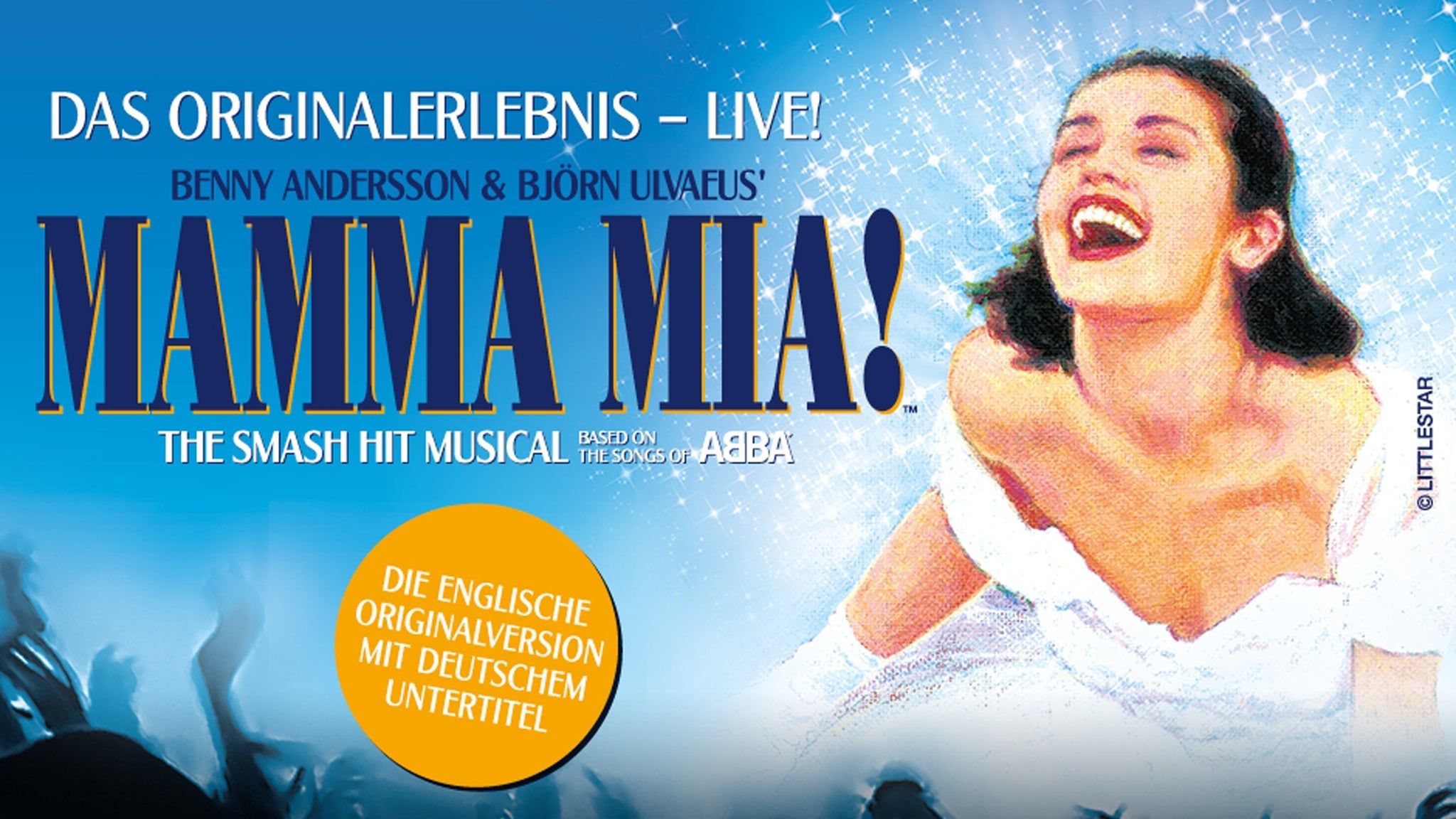
MAMMA MIA! - Das Original-Musical
MAMMA MIA! - Das Original-Musical plays Wiener Stadthalle - Halle F on 3 March 2027 at 20:00.
Free things to do in Vienna
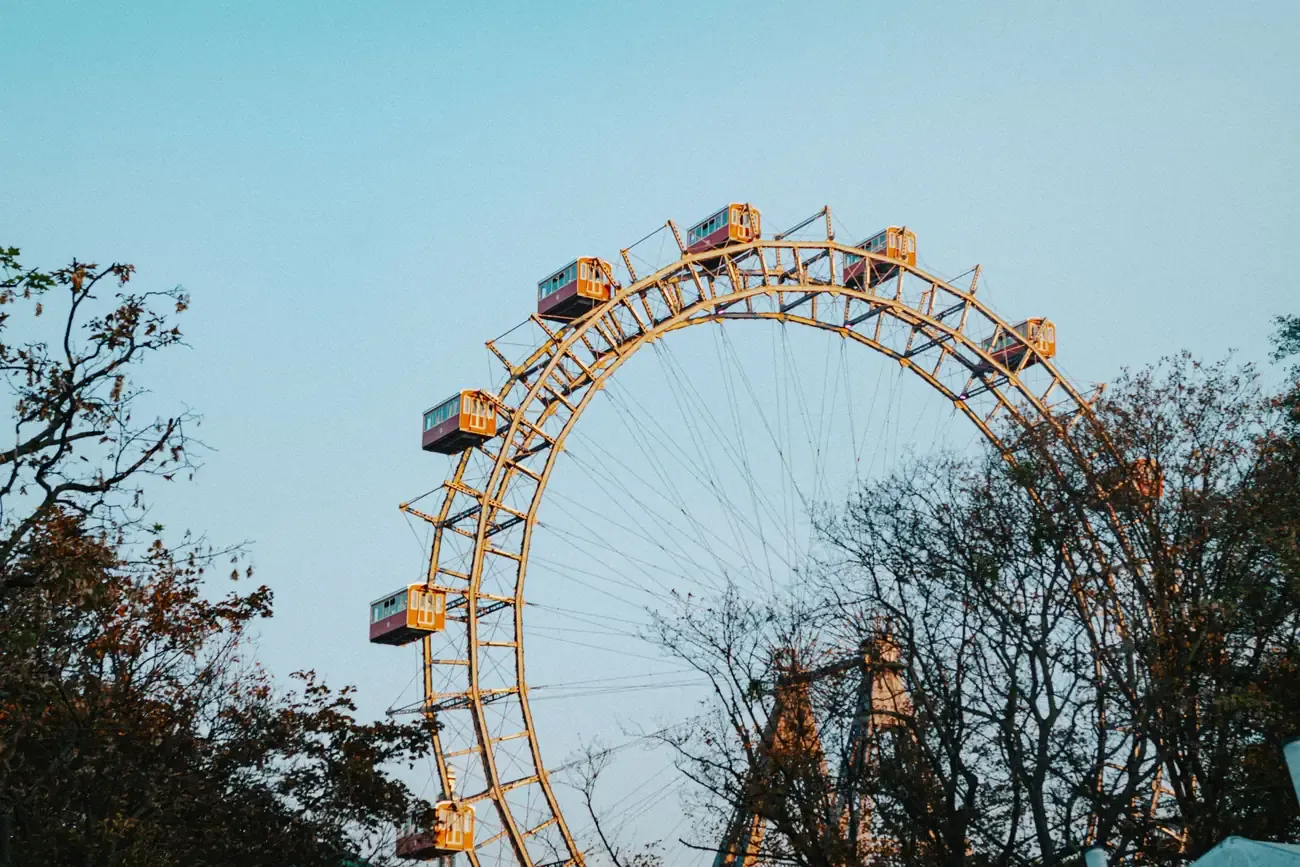
Prater
Walking the length of the Hauptallee or through the surrounding woodland costs nothing at any hour, since the Wurstelprater fairground sits inside a park with no closing time. The rides, including the Riesenrad Ferris wheel, are ticketed one by one.
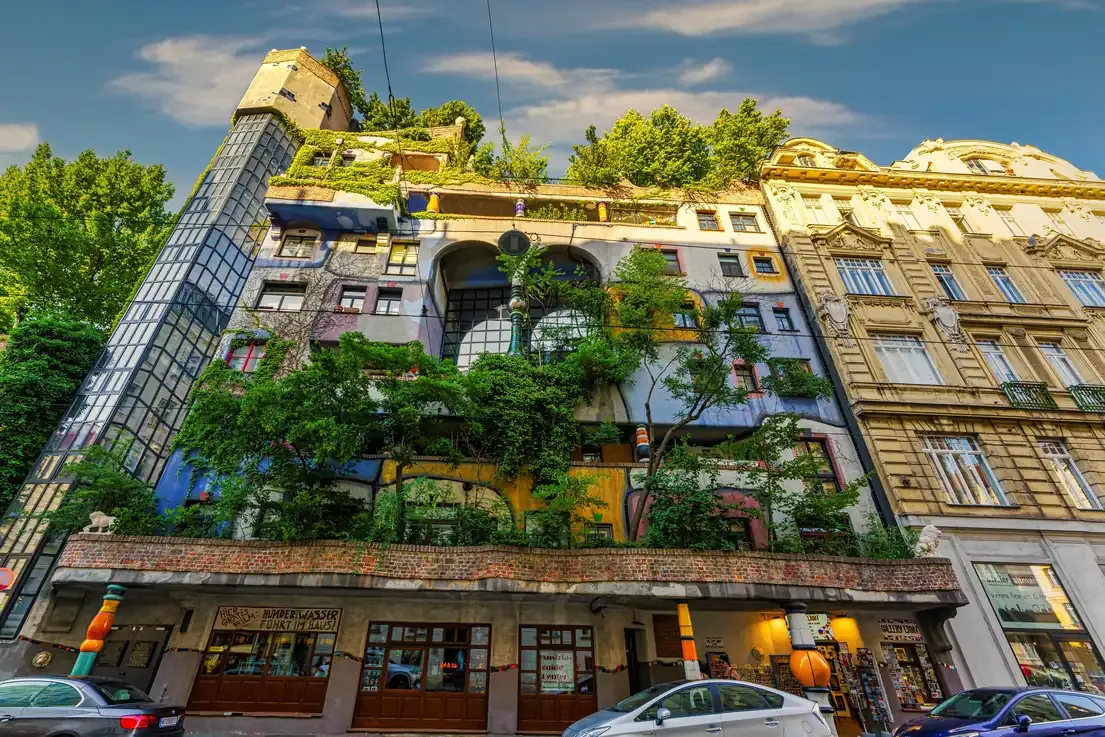
Hundertwasser House
Hundertwasser's uneven, tree-topped apartment block can only be seen from the street since the flats inside remain lived in, so viewing it costs nothing at any hour. The artist's paintings and models are ticketed separately at the KunstHausWien museum nearby.
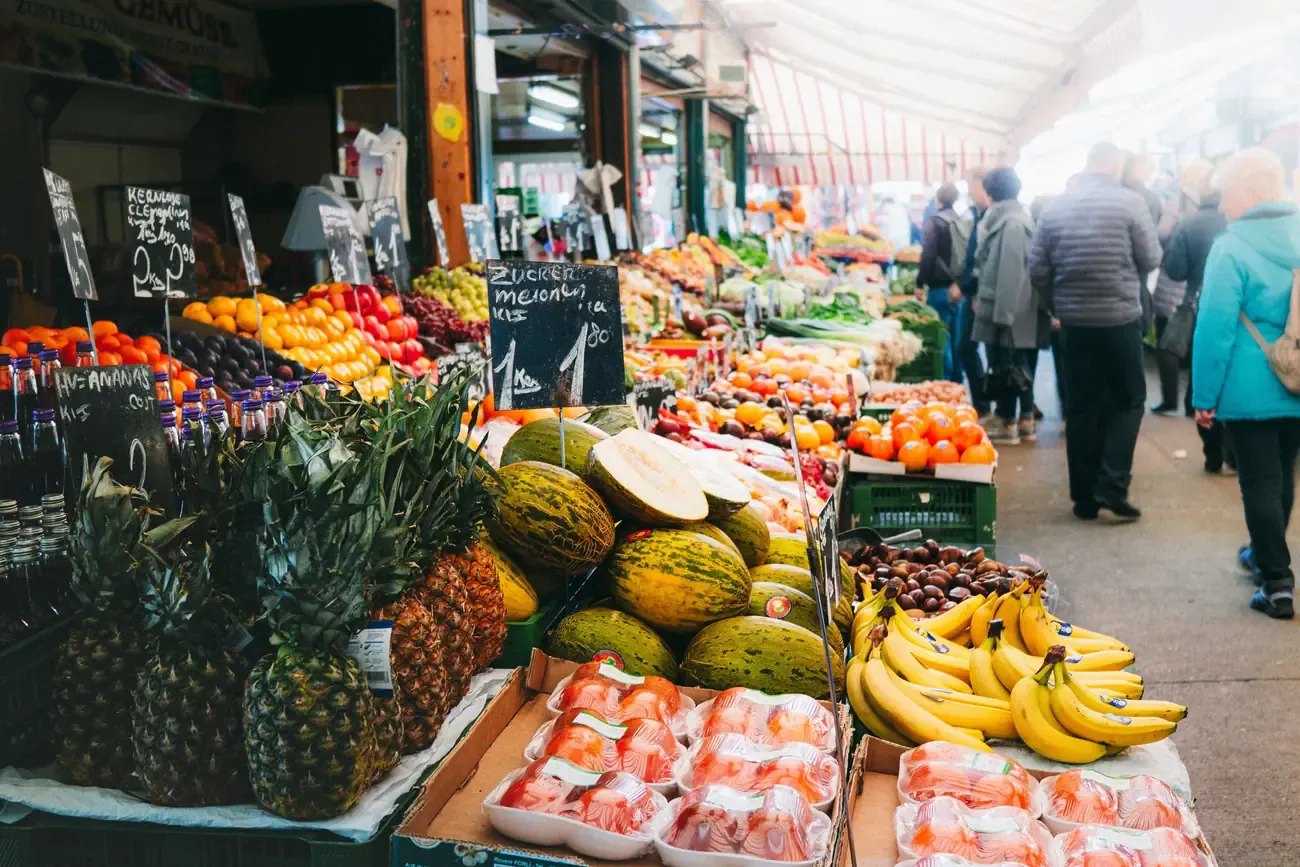
Naschmarkt
Vienna's largest and oldest market costs nothing to enter, its roughly 130 stalls running from produce and spices to weekend cafes since the 18th century. A flea market with no admission charge either takes over the same street on Saturday mornings.
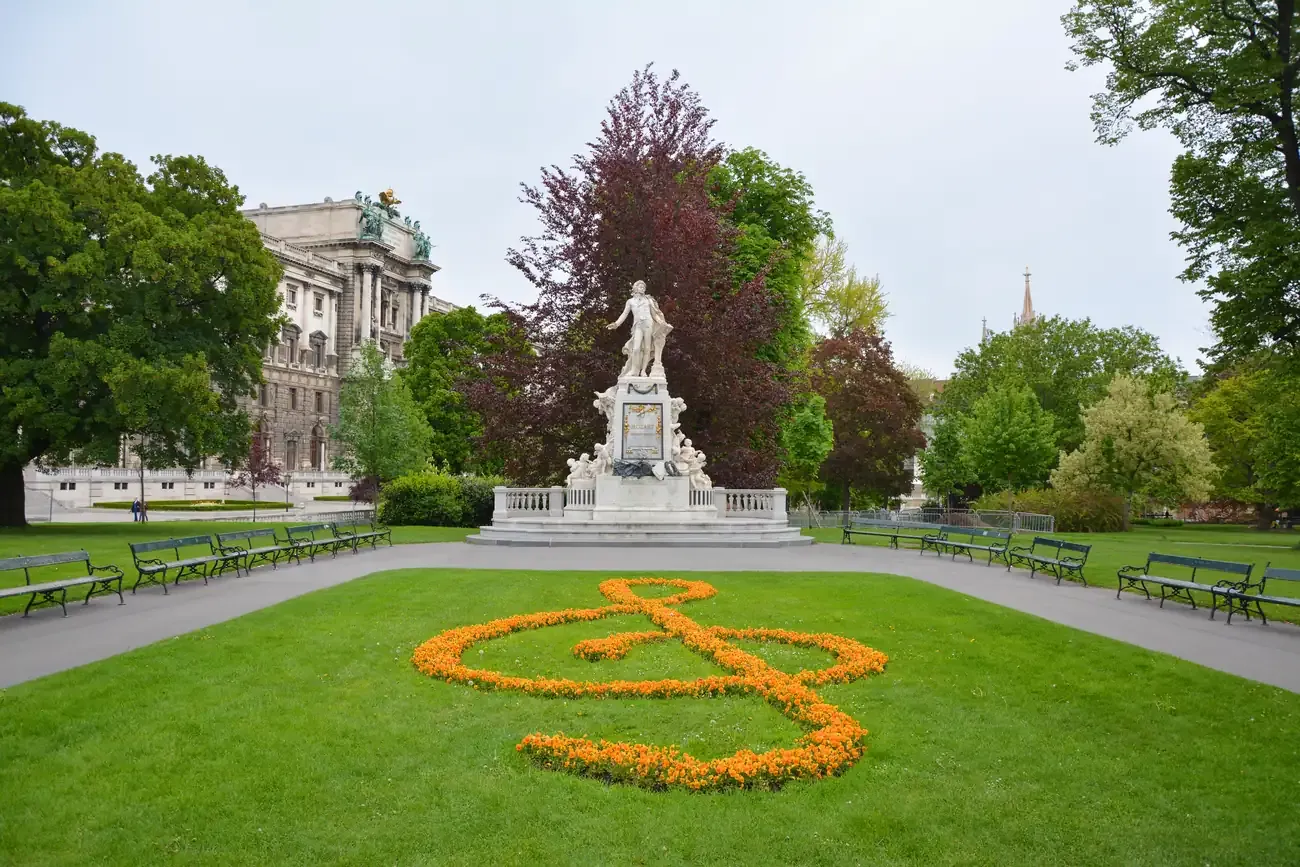
Burggarten
The former imperial garden behind the Hofburg is free to walk, its lawns centred on the Mozart Monument and the Art Nouveau Palmenhaus glasshouse. The Butterfly House inside the Palmenhaus charges its own admission.
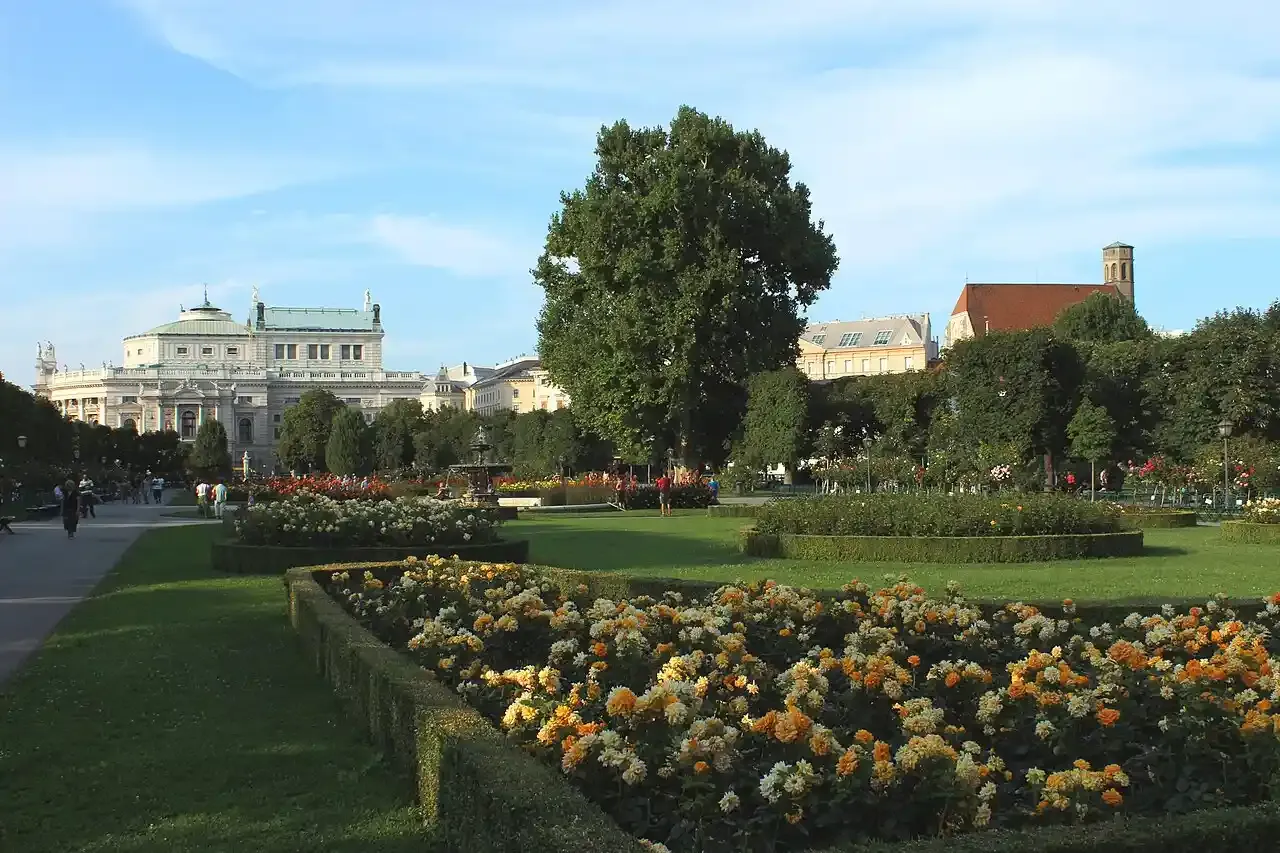
Volksgarten
The rose garden laid out beside the Ring in 1823 is free to enter year round, its 3,000 bushes framing the white Theseus Temple and a quiet memorial to Empress Elisabeth near the Burgtheater.
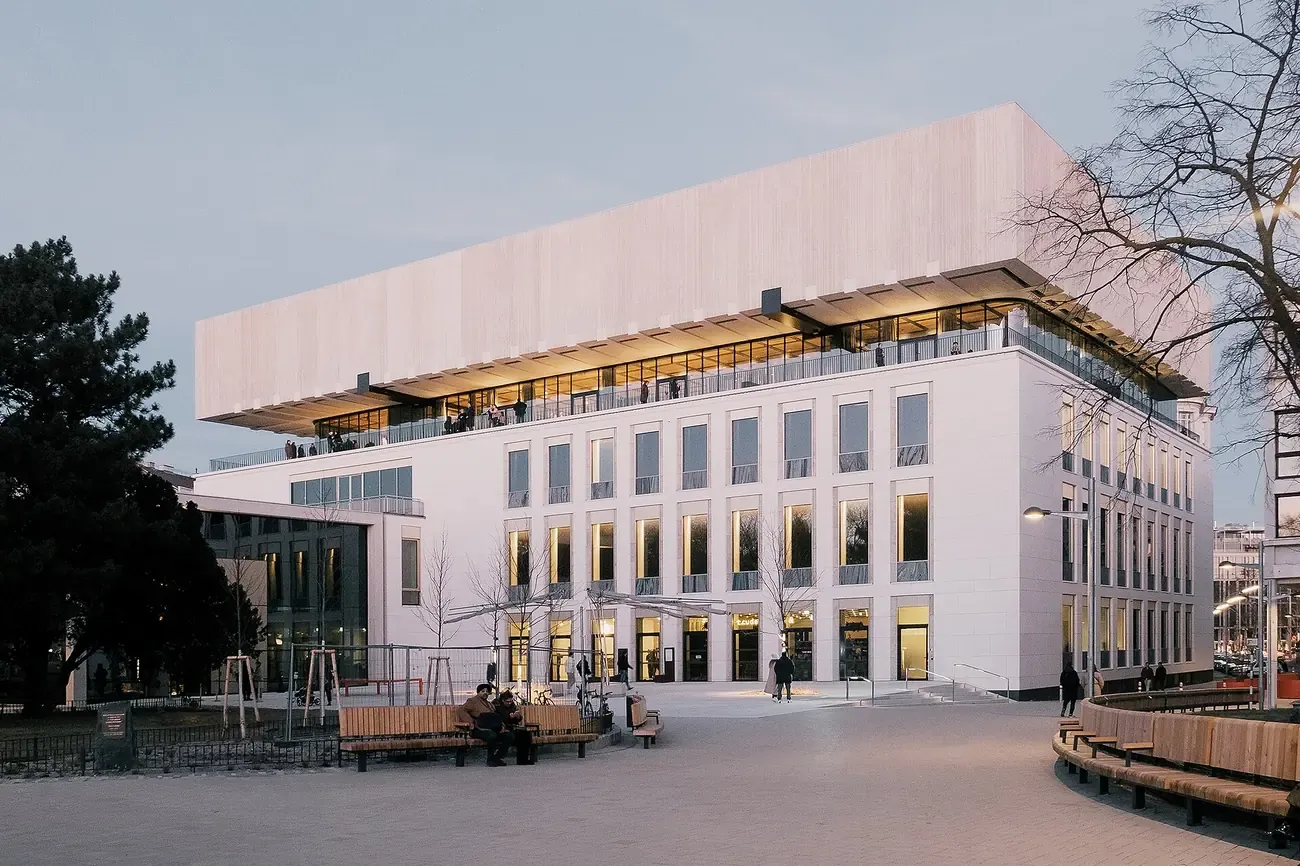
Wien Museum
The city's history museum on Karlsplatz gives free entry to its permanent exhibition, three floors tracing Vienna from prehistory to the present with paintings by Klimt and Schiele among the 1,700 objects on show. Special exhibitions are ticketed separately.
Photo: "Wien Museum" by Lumpej (CC0).
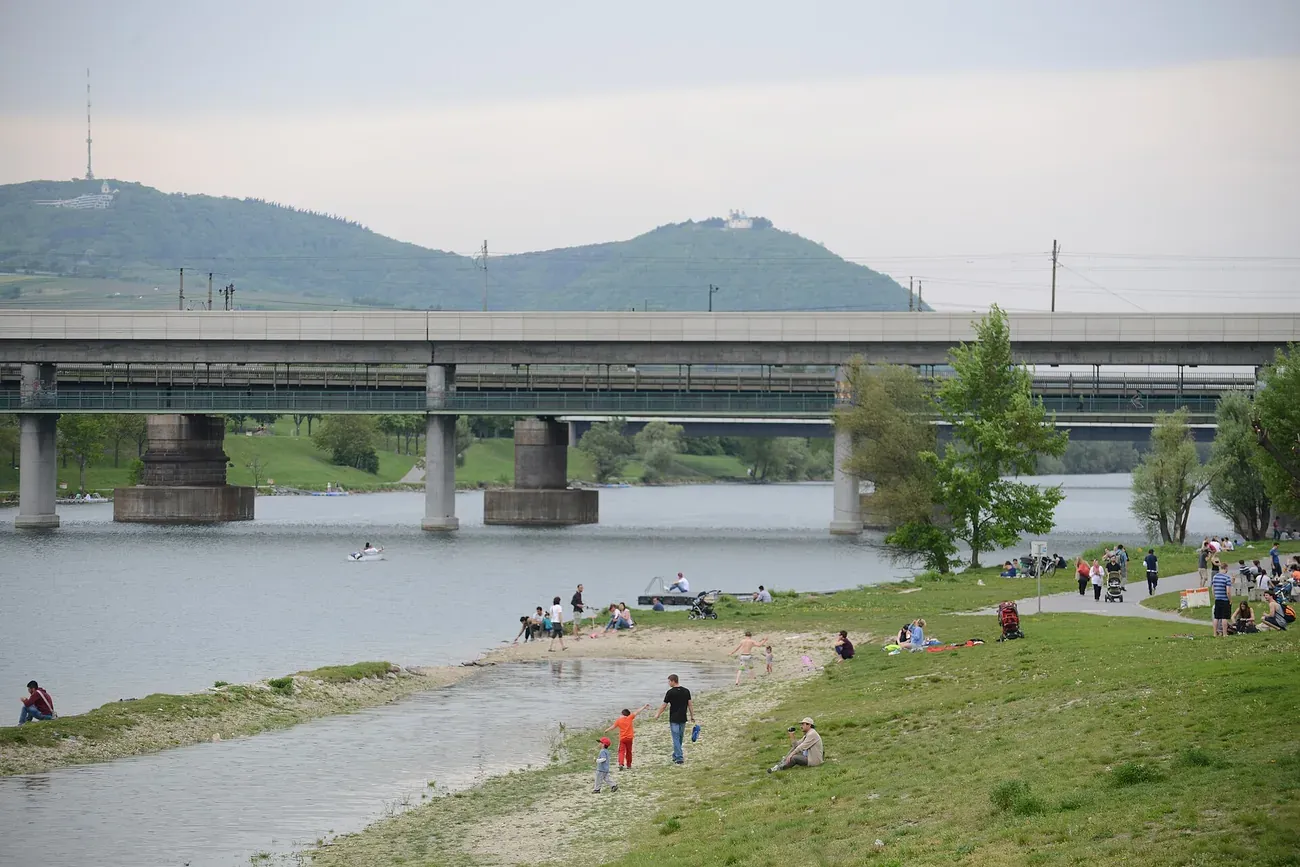
Danube Island
The 21 kilometre island split off the Danube for flood control is a free public park with beaches, cycling paths and bars along the water, reached from the centre in a few stops on the U1 or U6.
Photo: "Danube Island" by spaceman117 (CC BY 3.0).
Offbeat corners and hidden gems in Vienna
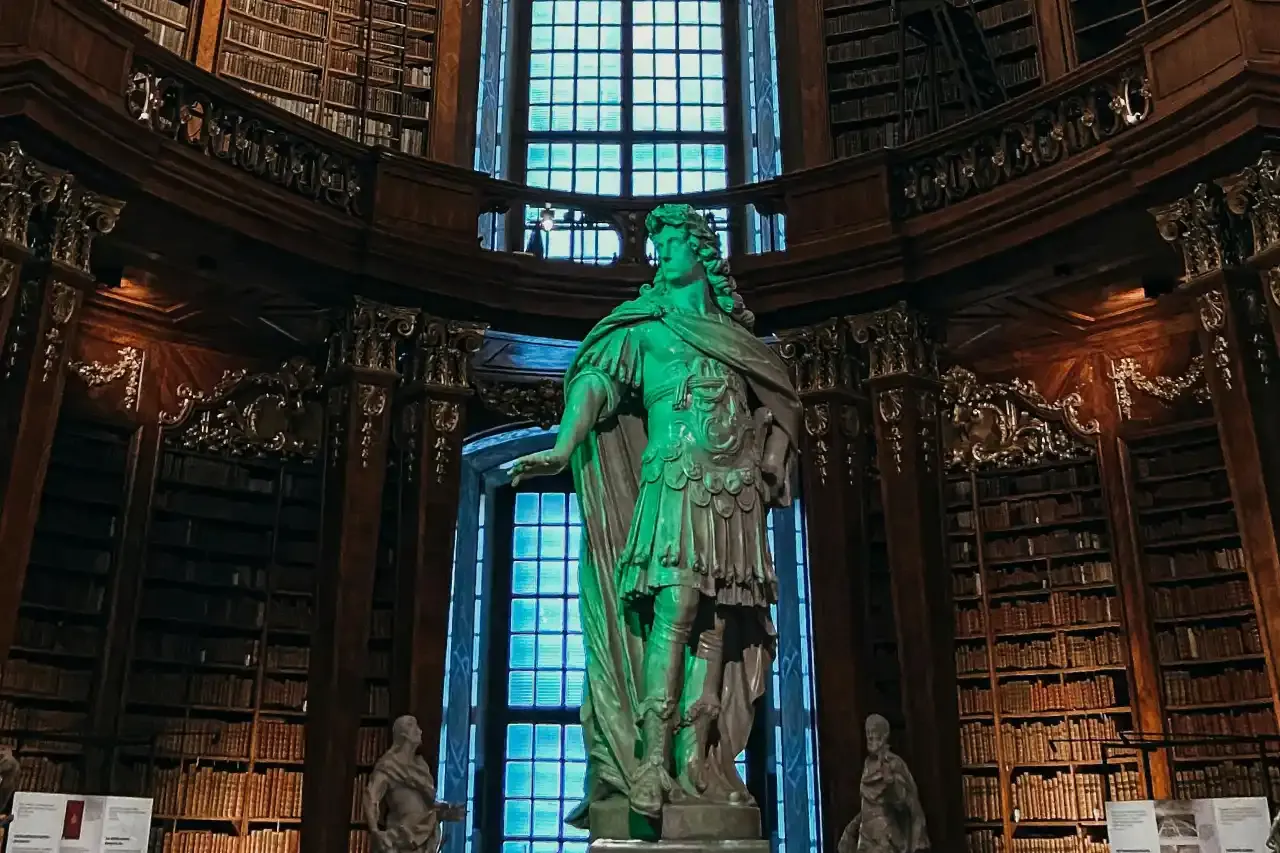
Österreichische Nationalbibliothek
Fischer von Erlach's baroque library hall in the Hofburg runs 77 metres under frescoes by Daniel Gran, lined with shelves of historic volumes.
Location: Josefsplatz 1, Innere Stadt
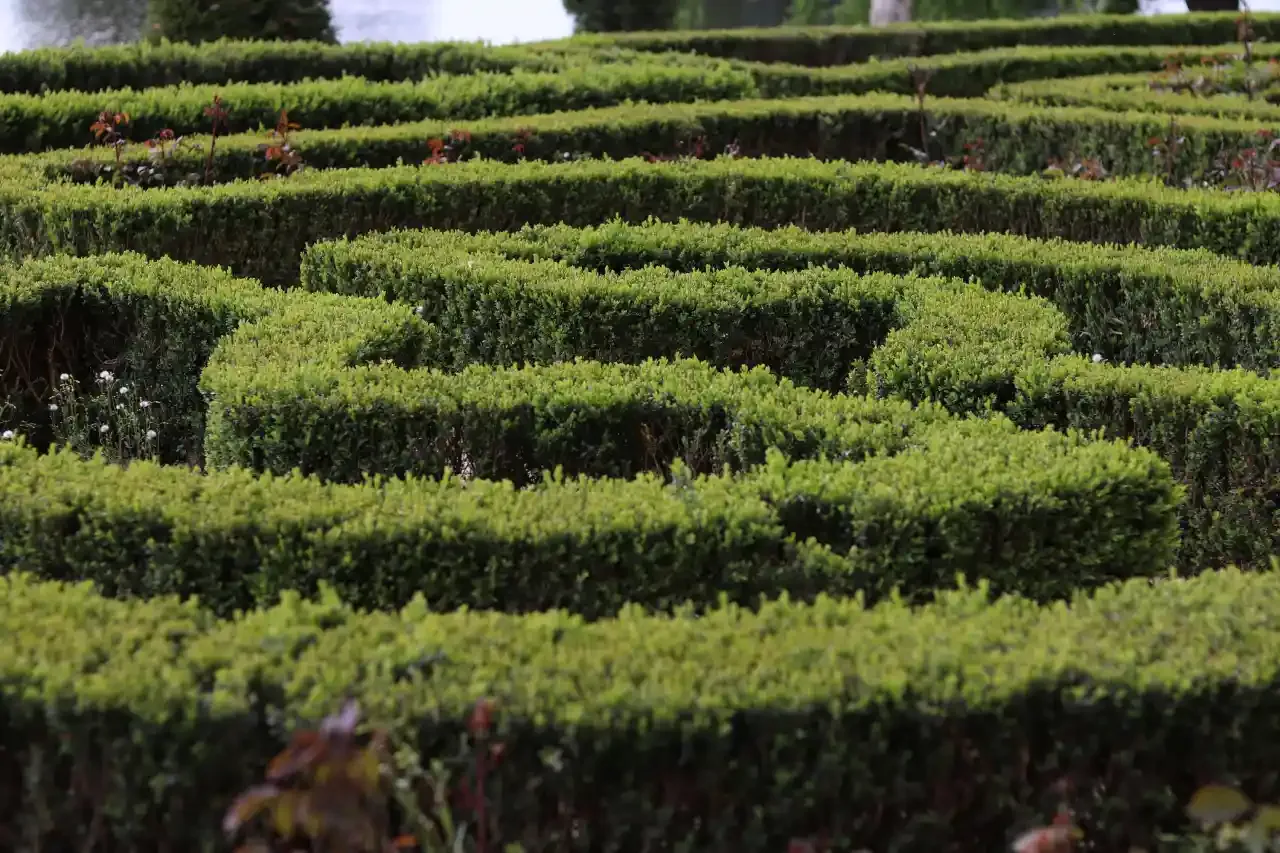
The Lost Garden of Schloss Schönbrunn
The palace maze, pulled up in 1892 after too many private meetings at its centre and replanted in 1999, hides hedged paths and puzzles.
Location: Schönbrunn park, Hietzing
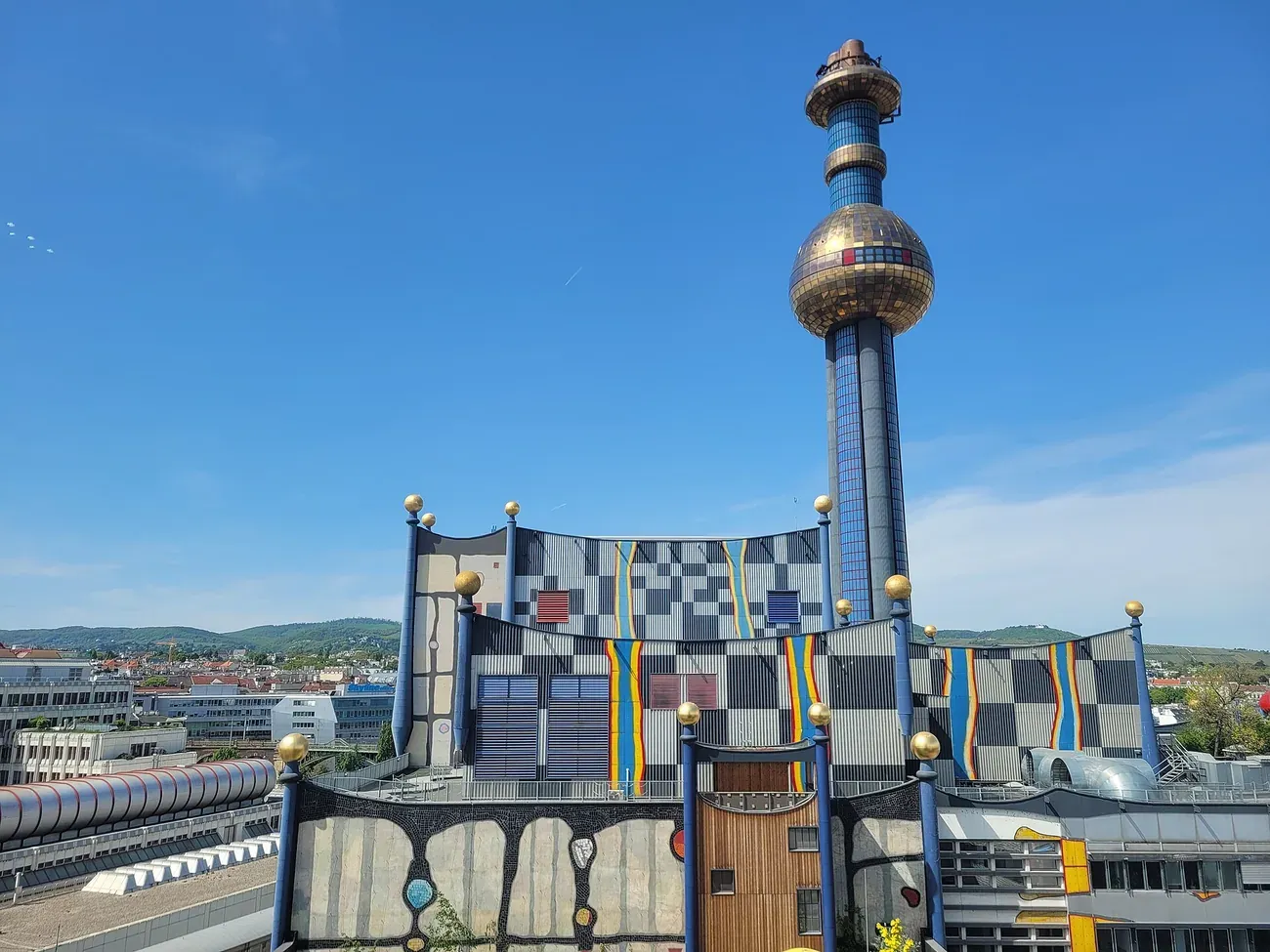
Hundertwasser's Odd Architecture
Friedensreich Hundertwasser left the city three buildings with uneven floors, mismatched windows and rooftop trees, including a district heating plant.
Location: Kegelgasse 36, Landstraße
Photo: "Spittelau waste incineration plant" by Naoag (CC BY-SA 4.0).
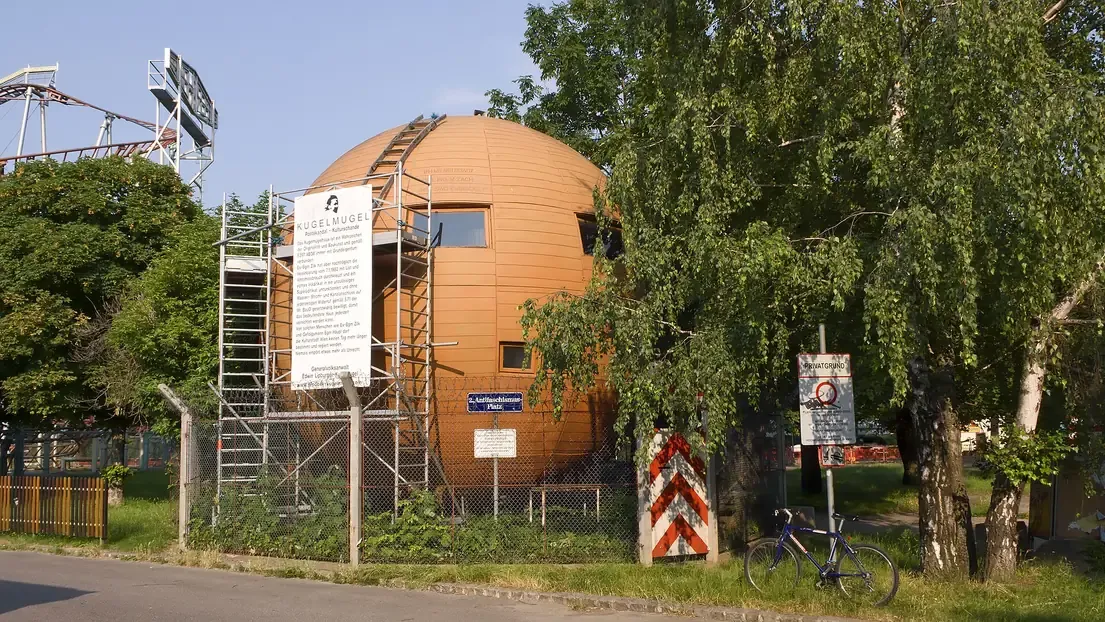
Republic of Kugelmugel
A spherical timber house that its builder declared an independent micronation after a planning dispute, now fenced off in a corner of the Prater.
Location: Antifaschismusplatz 2, Leopoldstadt
Photo: "Republic of Kugelmugel" by Peter Gugerell (Public domain).
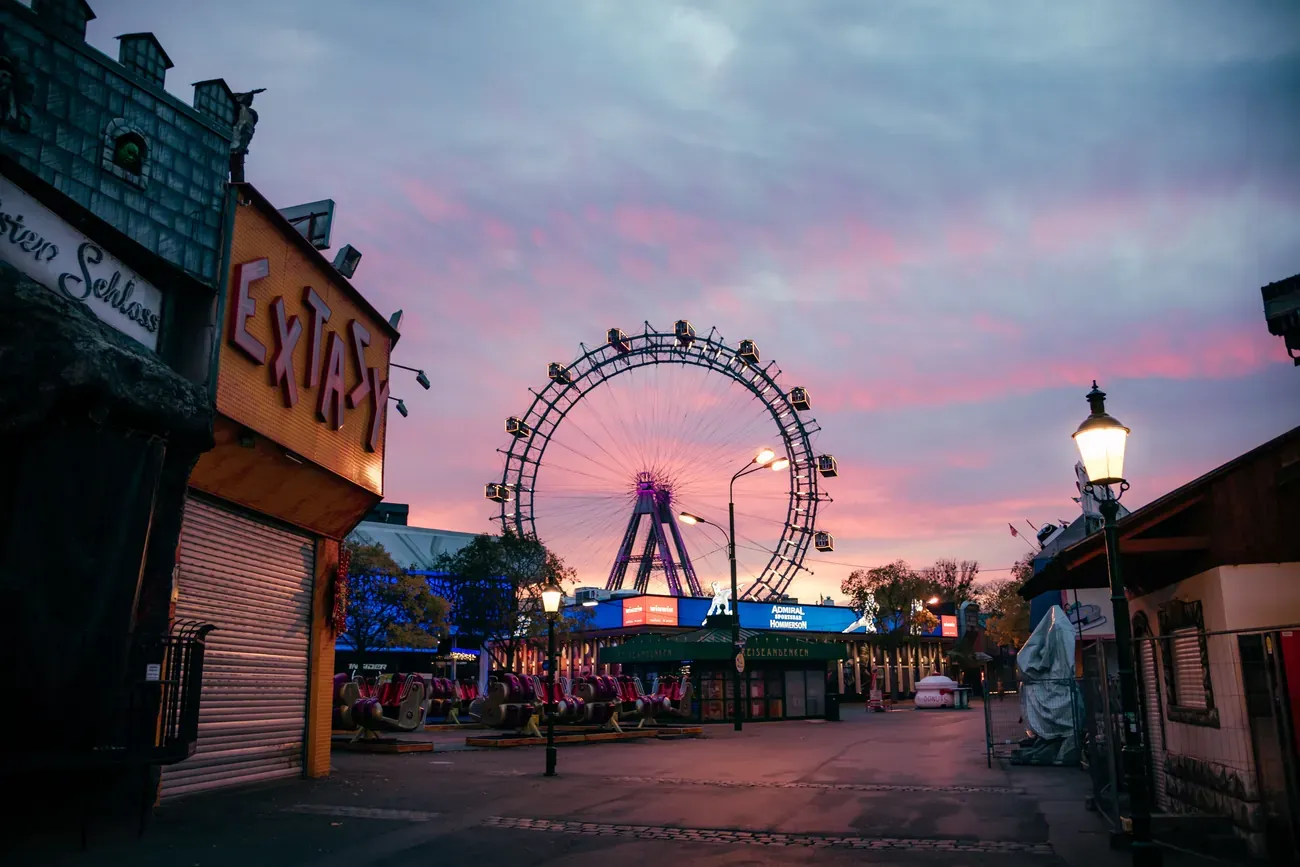
Vienna Grand Ferris Wheel
The Riesenrad has turned over the Prater since 1897, its red wooden cabins tied forever to the meeting of Harry Lime in The Third Man.
Location: Riesenradplatz, Leopoldstadt
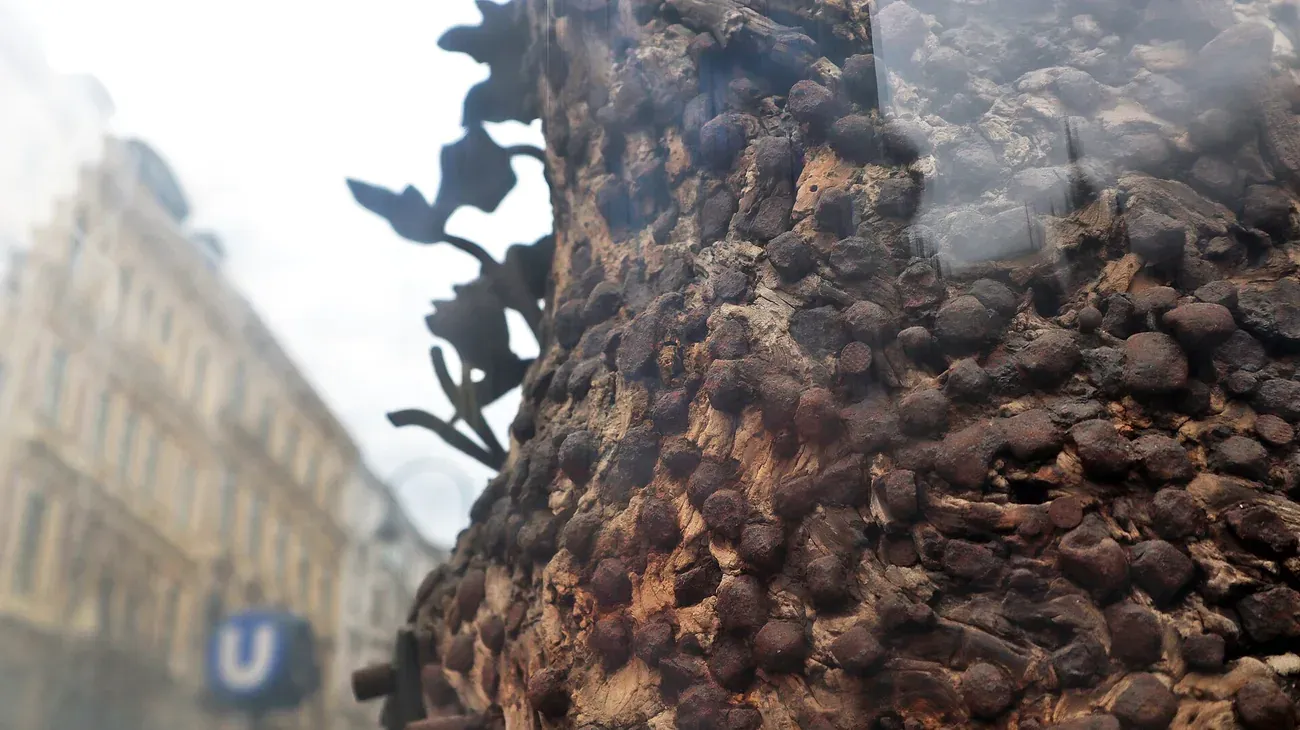
'Stock-im-Eisen' Nail Tree
A medieval trunk studded with hundreds of hammered nails, set behind glass on a building corner beside the cathedral, its purpose still unexplained.
Location: Stock-im-Eisen-Platz, Innere Stadt
Photo: "Stock-im-Eisen nail tree" by Anna Saini (CC BY-SA 4.0).
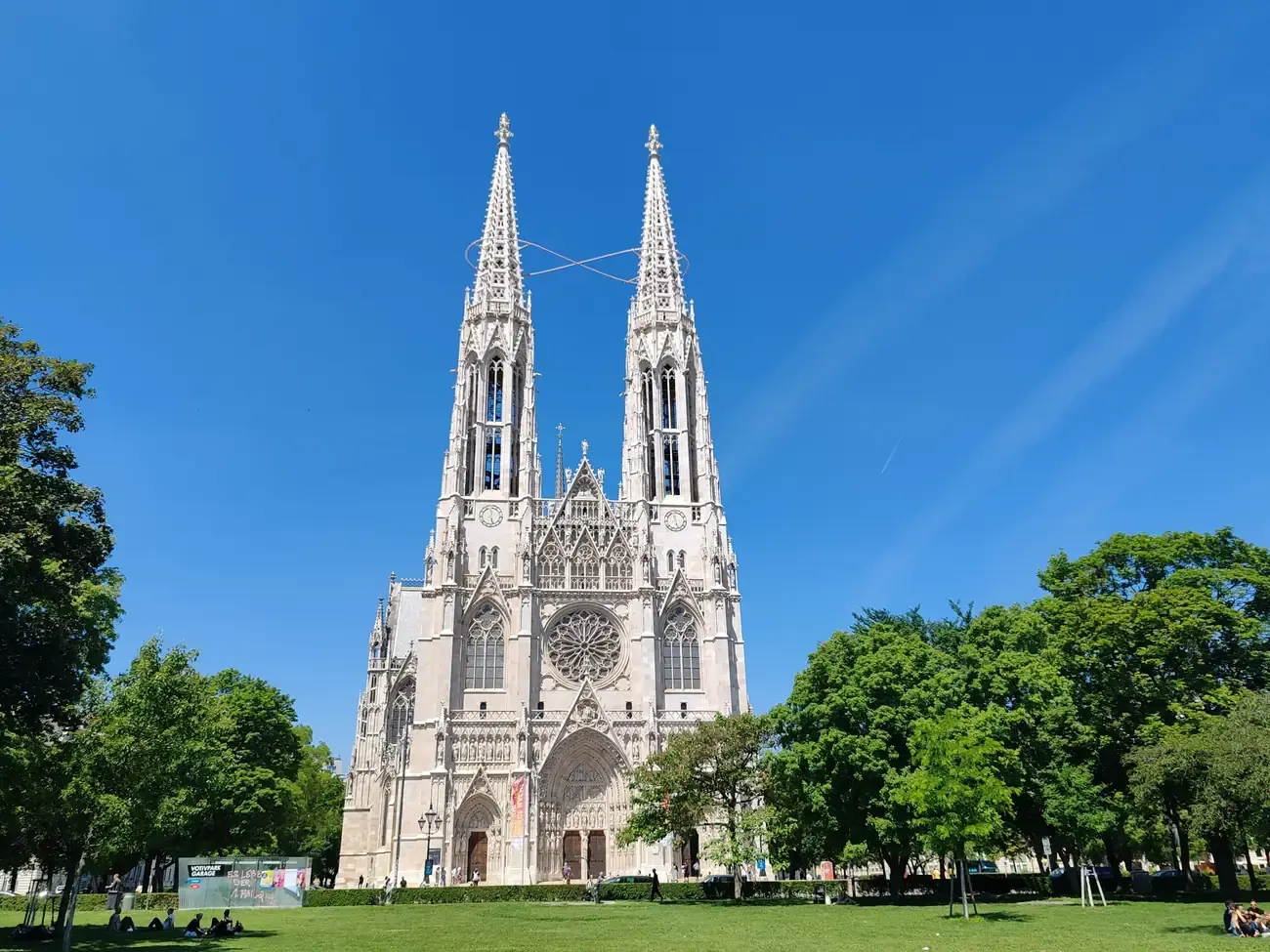
Votivkirche
Neo-Gothic twin spires raised in thanks after Emperor Franz Joseph survived a knife attack while walking the old fortifications in 1853.
Location: Rooseveltplatz, Alsergrund
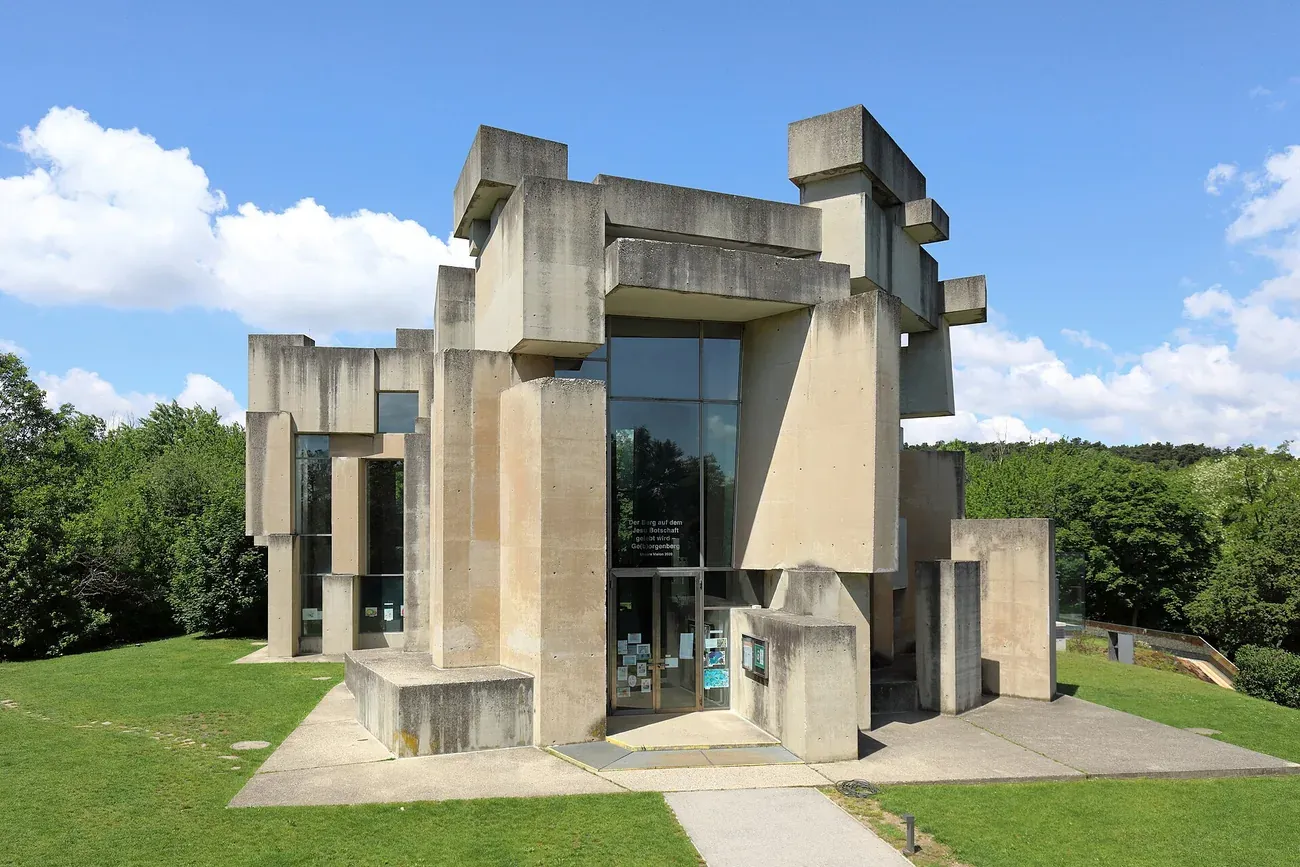
Wotruba Church
Sculptor Fritz Wotruba's church of 1976 stacks raw concrete blocks into an asymmetric heap on a hill at the southern edge of the city.
Location: Ottillingerplatz 1, Liesing
Photo: "Wotruba Church" by C.Stadler/Bwag (CC BY-SA 4.0).
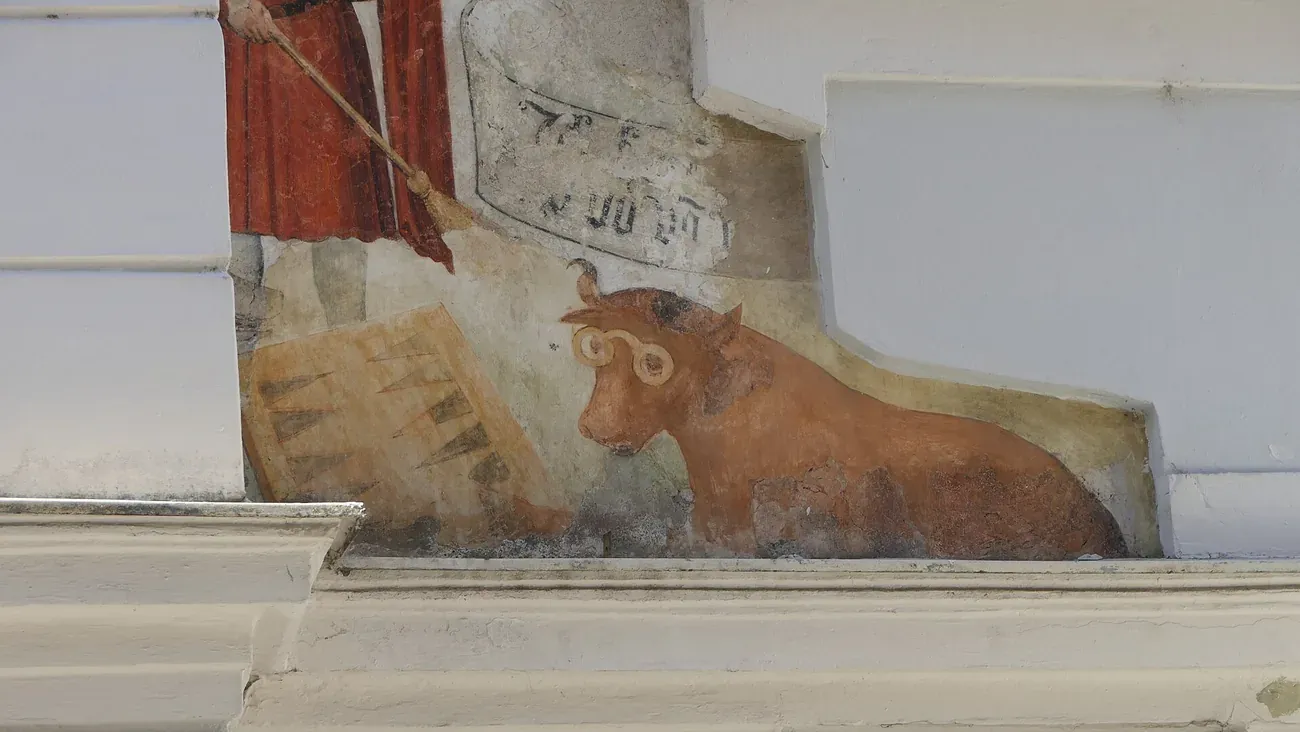
Wolf and Cow Playing Backgammon Mural
A painted house sign of a wolf and a cow at a backgammon board, a survivor of the humorous facades that once covered medieval Vienna.
Location: Bäckerstraße 12, Innere Stadt
Photo: "Wolf and Cow Playing Backgammon mural" by Dr. Bernd Gross (CC BY-SA 3.0 de).
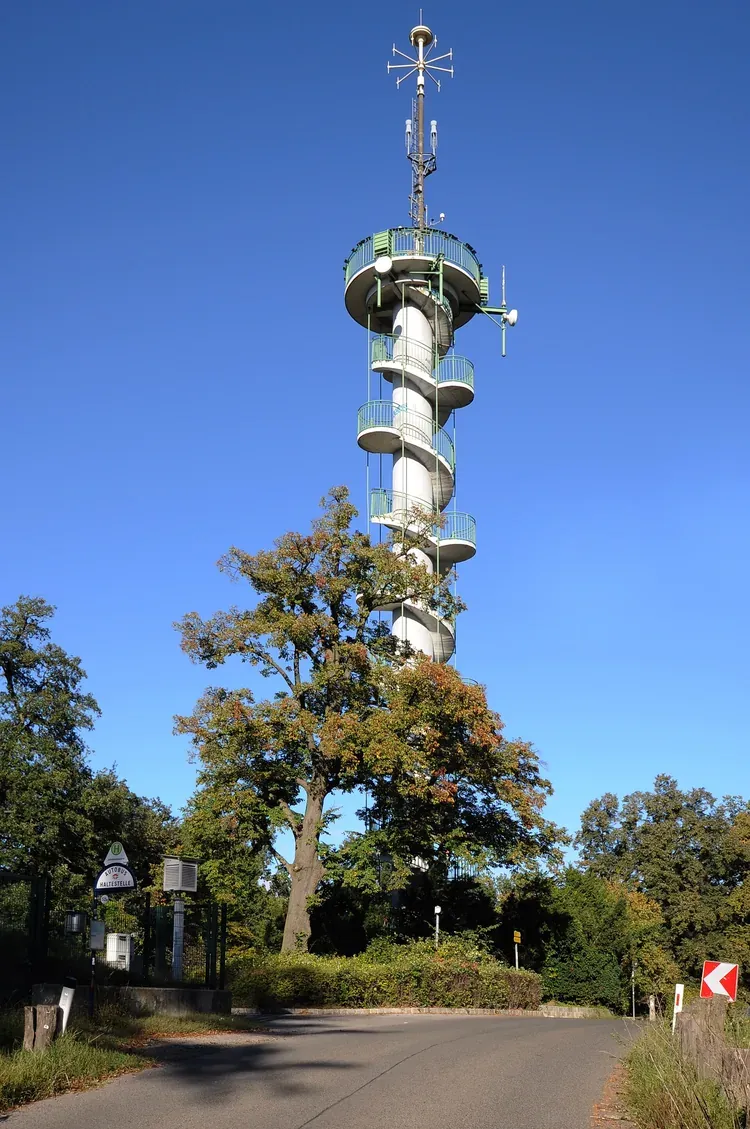
Jubiläumswarte
A lookout tower on the wooded hills above Ottakring, its stair winding to a platform over the forest at the city's western edge.
Location: Johann-Staud-Straße 80, Ottakring
Photo: "Jubilaumswarte" by Linie29 (CC BY-SA 4.0).
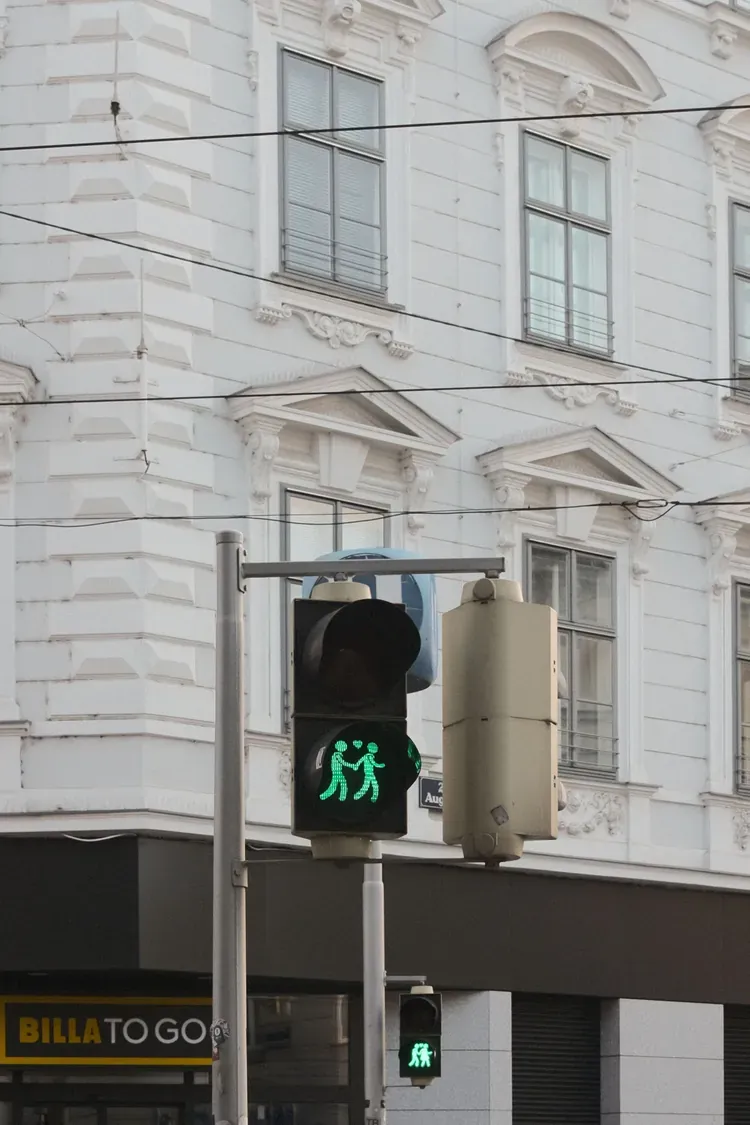
Ampelpärchen
Pedestrian lights in the centre show same sex and mixed couples with hearts, installed for the 2015 Eurovision Song Contest and never removed.
Location: Crossings around the Ring, Innere Stadt
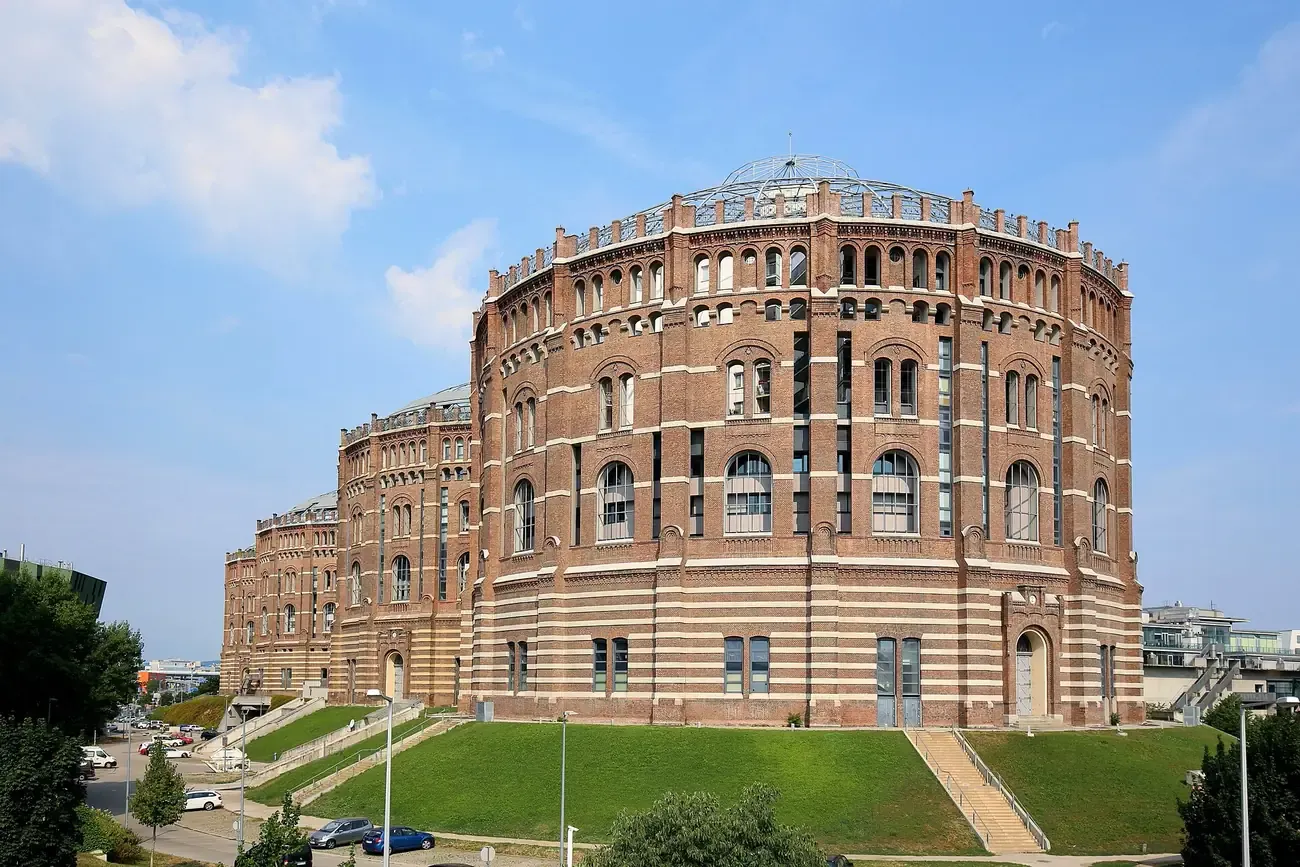
Gasometer Town
Four monumental brick gas holders were hollowed out and rebuilt inside as flats, shops and a concert hall by four different architects.
Location: Guglgasse 8, Simmering
Photo: "Gasometer Town, Simmering" by C.Stadler/Bwag (CC BY-SA 4.0).
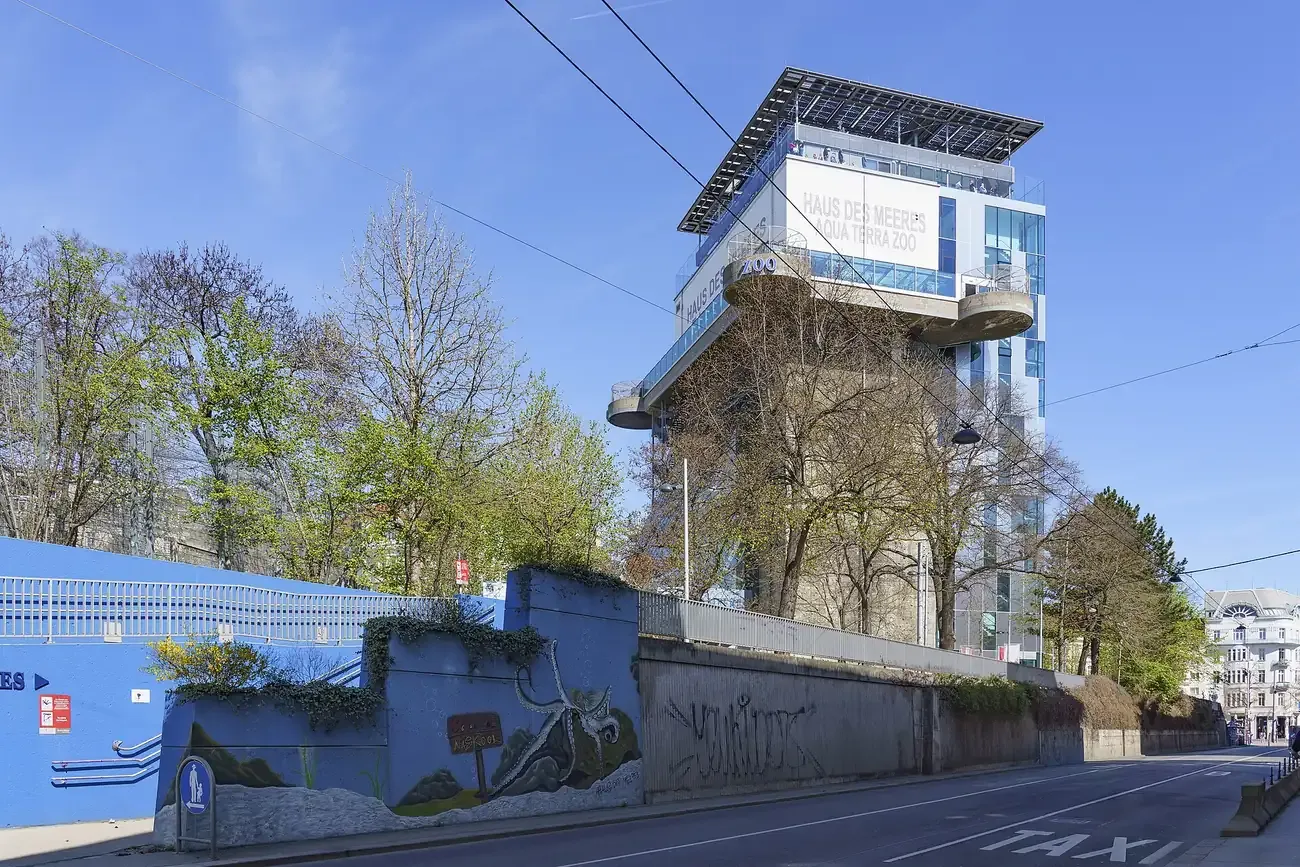
Flak Towers
Six wartime anti-aircraft towers still stand in three pairs across the city, too solid to demolish; one of them now holds an aquarium.
Location: Esterházypark, Augarten and Arenbergpark
Photo: "Flak tower at Haus des Meeres" by Thomas Ledl (CC BY 4.0).
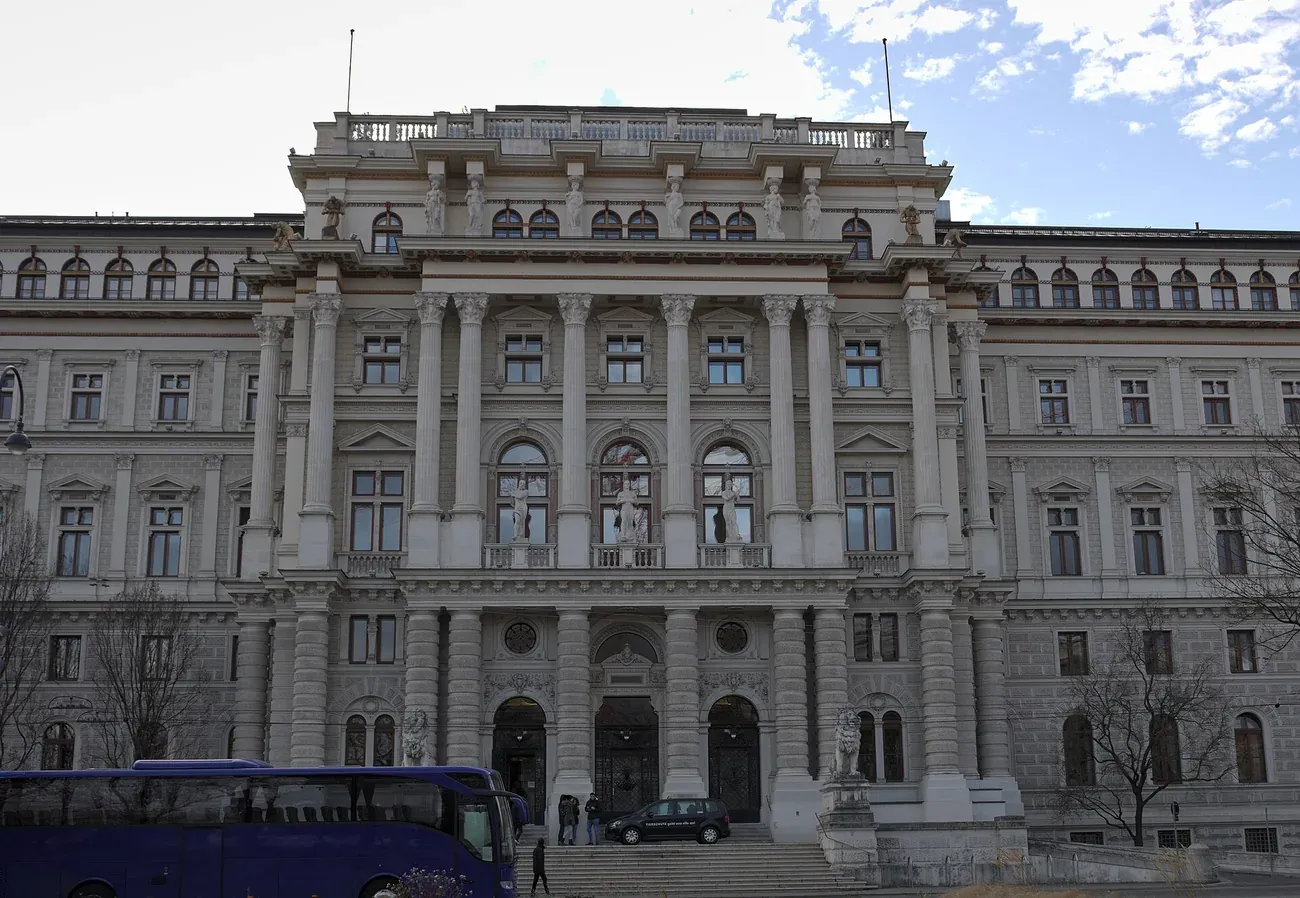
Justizcafe
A staff canteen on the roof of the Palace of Justice, reached past a security check on weekdays, with a wide view over the centre.
Location: Schmerlingplatz 11, Innere Stadt
Photo: "Justizpalast, Vienna" by Alexander Migl (CC BY-SA 4.0).
Crypts, plague memorials and dark history in Vienna
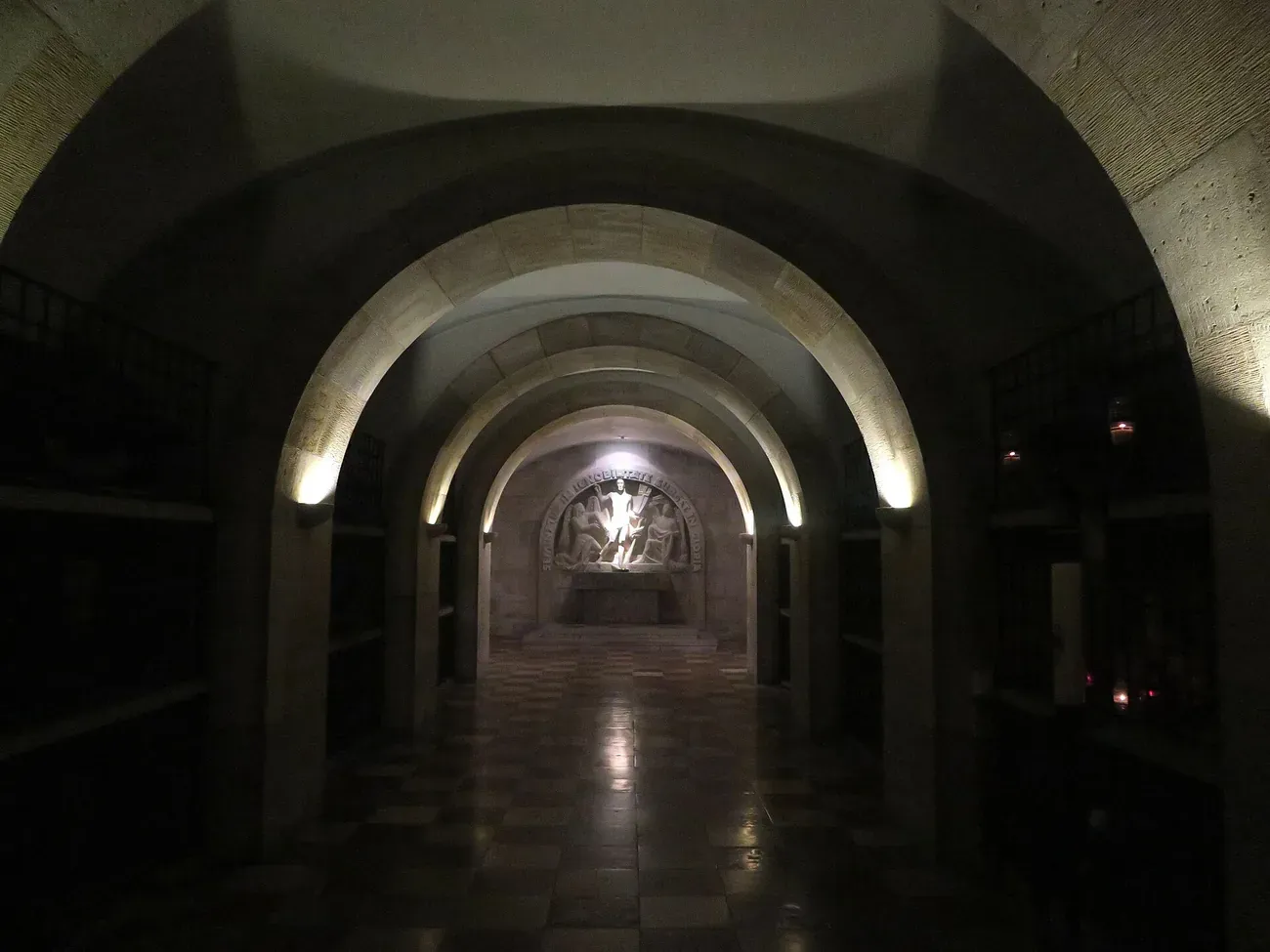
Stephansdom Crypt
The bones of thousands of Viennese fill vaulted chambers under the cathedral, along with ducal tombs and urns holding Habsburg entrails. Guided visits only.
Location: Stephansplatz 3, Innere Stadt
Photo: "Catacombs of St. Stephen's Cathedral" by Burkhard Mücke (CC BY-SA 4.0).
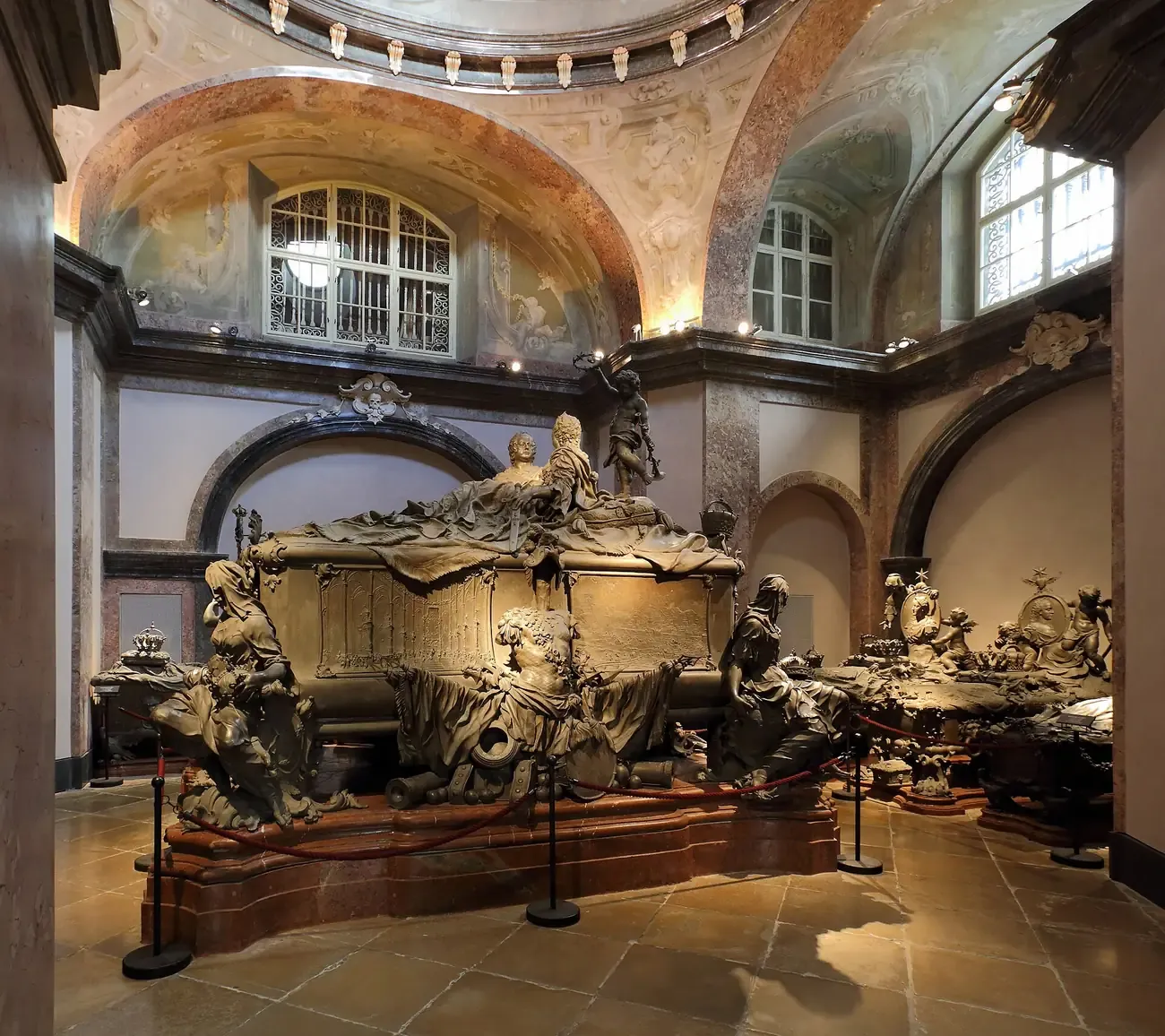
Habsburg Imperial Crypt
Capuchin friars have guarded the Habsburg burial vault since 1633, where 150 members of the dynasty lie in tombs from plain to wildly baroque.
Location: Tegetthoffstraße 2, Neuer Markt
Photo: "Imperial Crypt, Vienna" by C.Stadler/Bwag (CC BY-SA 3.0 at).
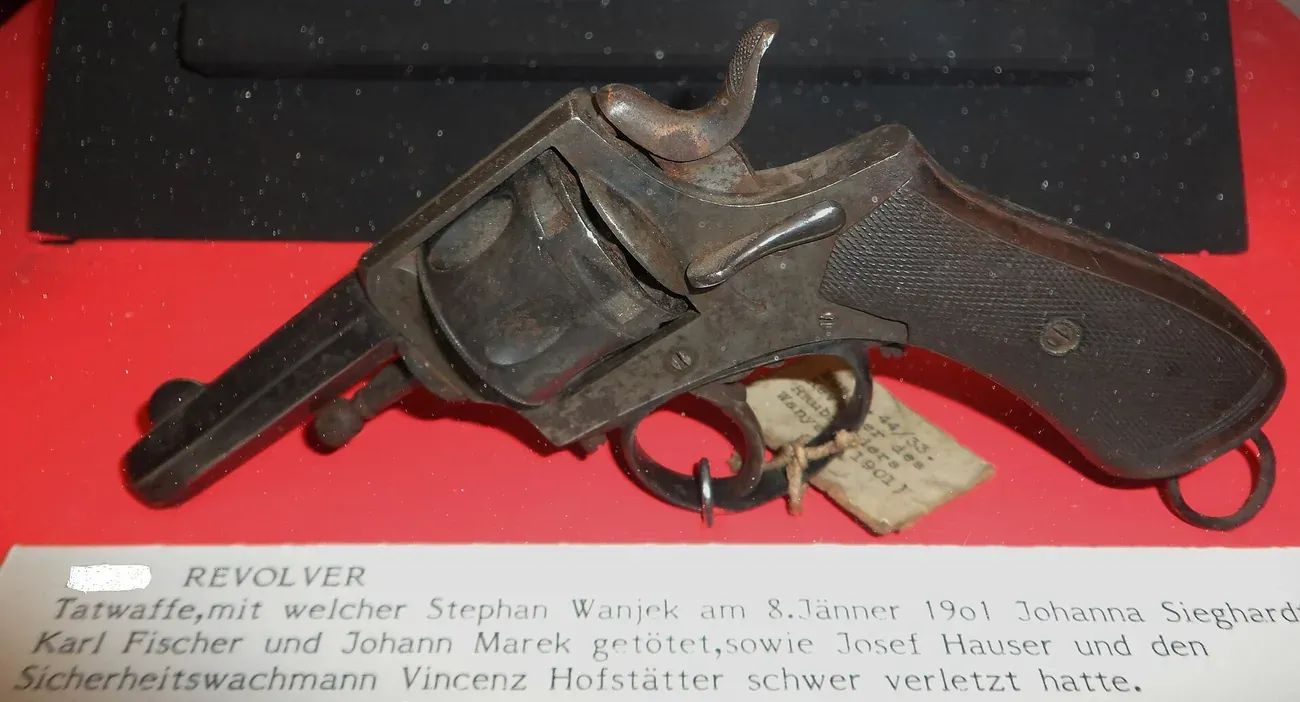
Kriminalmuseum
Twenty rooms of an old soap boiler's house in Leopoldstadt trace Viennese crime and punishment from medieval justice to modern murder cases.
Location: Große Sperlgasse 24, Leopoldstadt
Photo: "The murder weapon from a 1901 triple homicide, Kriminalmuseum Wien" by MoserB (Public domain).
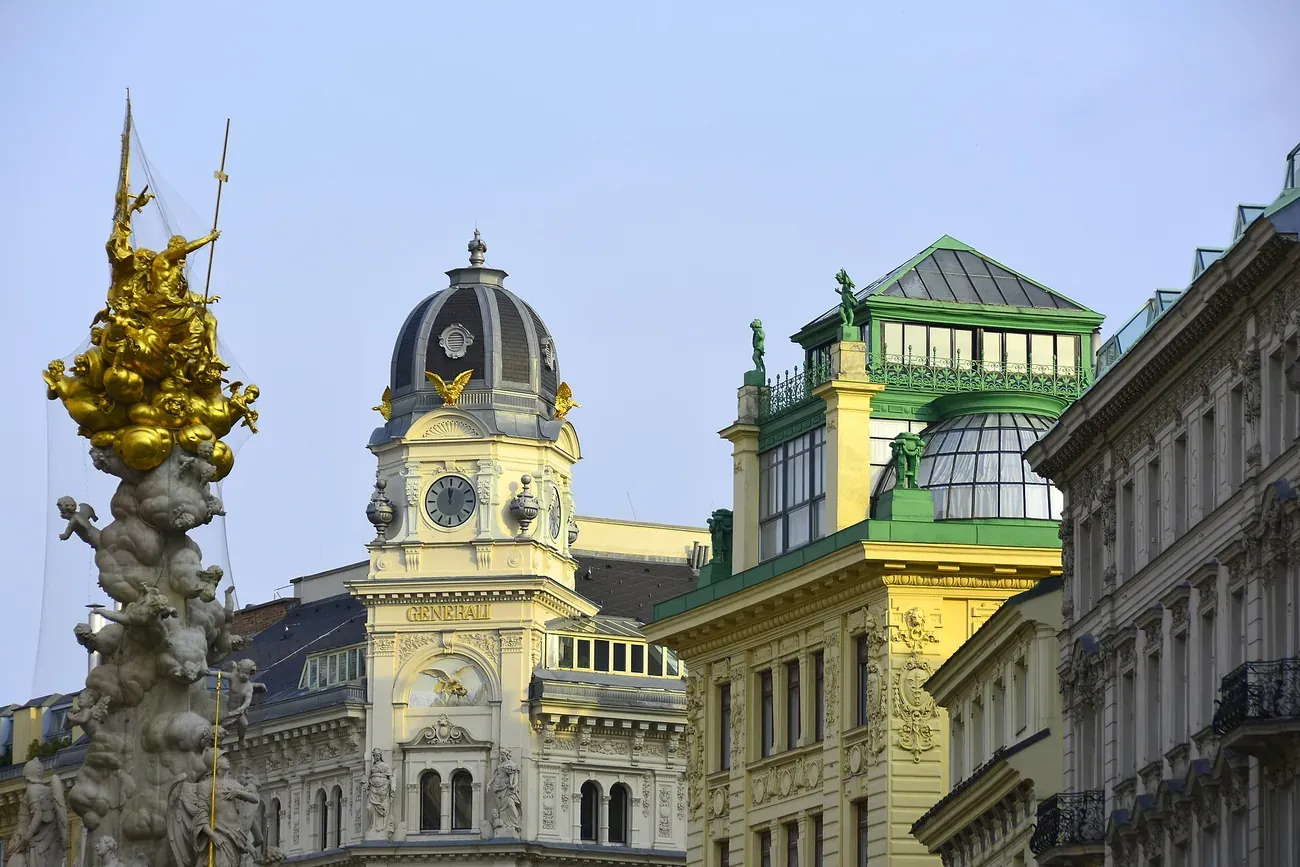
Wiener Pestsäule
A gilded baroque column of clouds and angels rises in the middle of the Graben, raised in thanks after the plague epidemic of 1679.
Location: Graben, Innere Stadt
Photo: "The Vienna Plague Column (Pestsäule) above the Graben" by Fotoalfred (CC BY-SA 4.0).
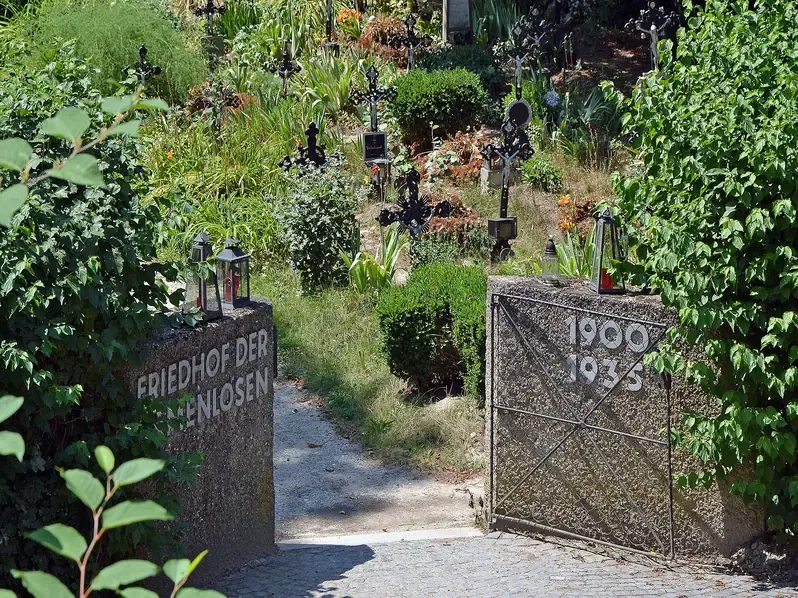
Cemetery of the Nameless
A riverside graveyard for unidentified bodies pulled from the Danube, its iron crosses marked namenlos, hidden behind the harbour at Albern.
Location: Alberner Hafen, Simmering
Photo: "Entrance to the Cemetery of the Nameless in Vienna" by HeinzLW (CC BY-SA 3.0 at).
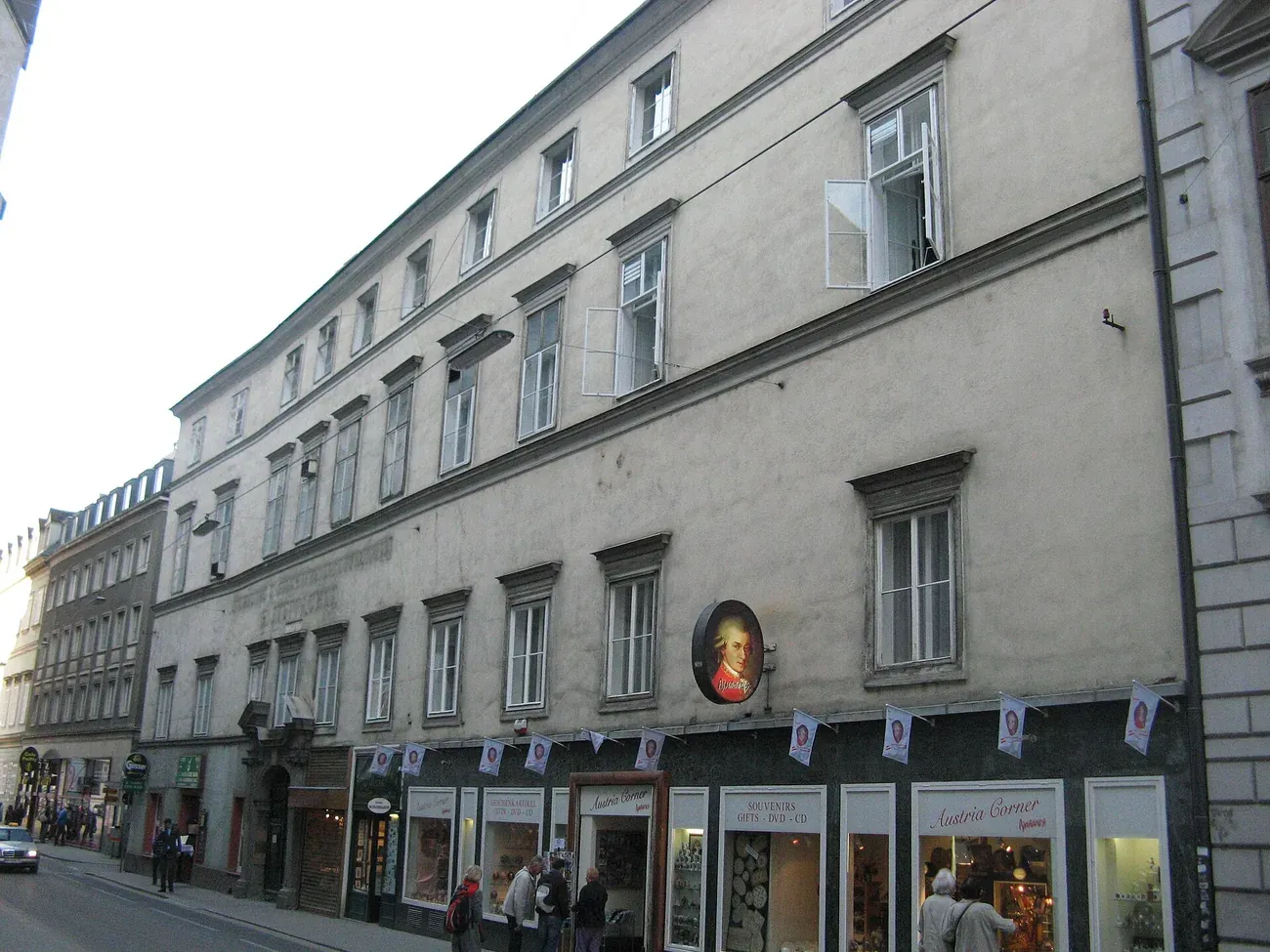
Ungarisches Haus
A plain townhouse near the Hofburg, remembered in Viennese legend as the city residence of Countess Elizabeth Bathory.
Location: Augustinerstraße 12, Innere Stadt
Photo: "Ungarisches Haus (Hungarian House), Augustinerstrasse 12, Vienna" by Buchhändler (CC BY-SA 3.0).
Small and curious museums in Vienna
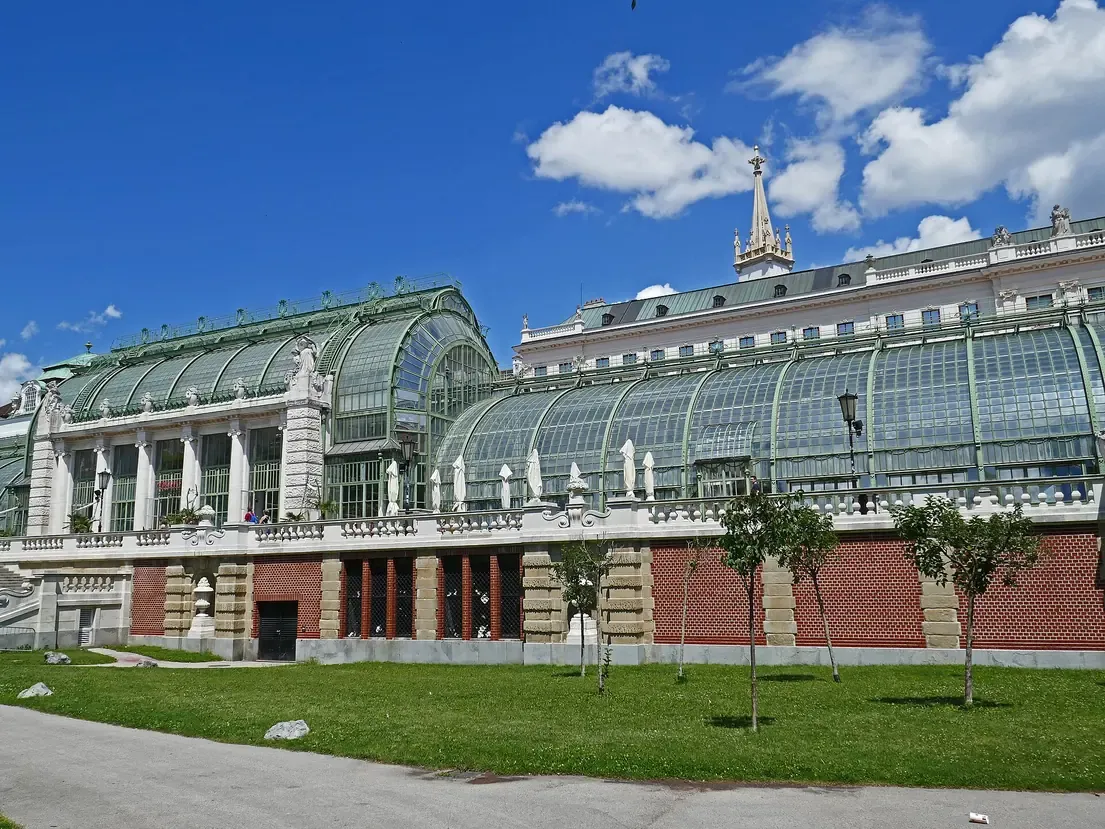
Schmetterlinghaus
Around 500 butterflies fly free among waterfalls and tropical planting inside a wing of the Art Nouveau glasshouse on the Burggarten.
Location: Burggarten, Innere Stadt
Photo: "The Palmenhaus glasshouse in the Burggarten, Vienna" by Geolina163 (CC BY-SA 4.0).
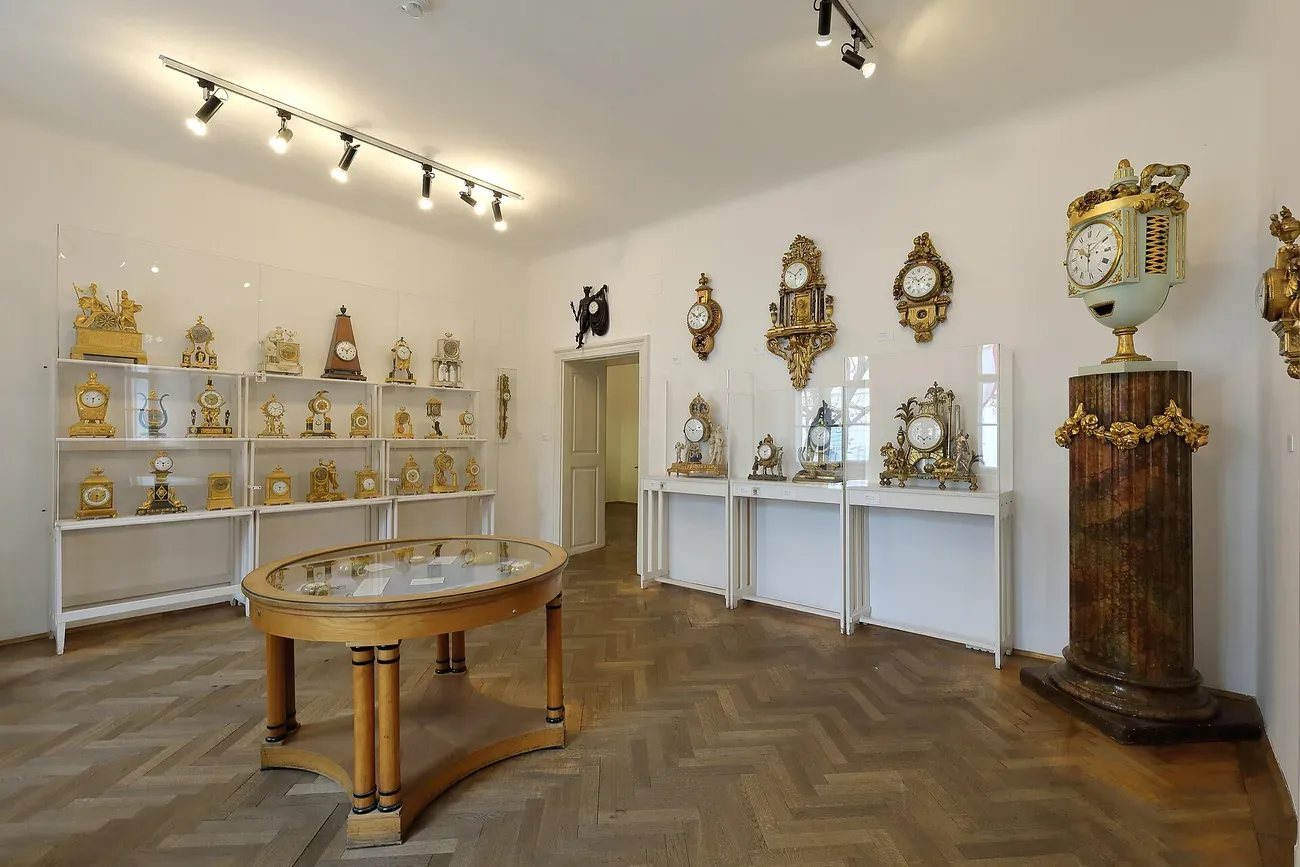
Clock Museum
Around 700 timepieces fill an old townhouse on a quiet square, from painted tower clocks to elaborate astronomical machines and pocket watches.
Location: Schulhof 2, Innere Stadt
Photo: "Uhrenmuseum gallery room, Vienna" by C.Stadler/Bwag (CC BY-SA 4.0).
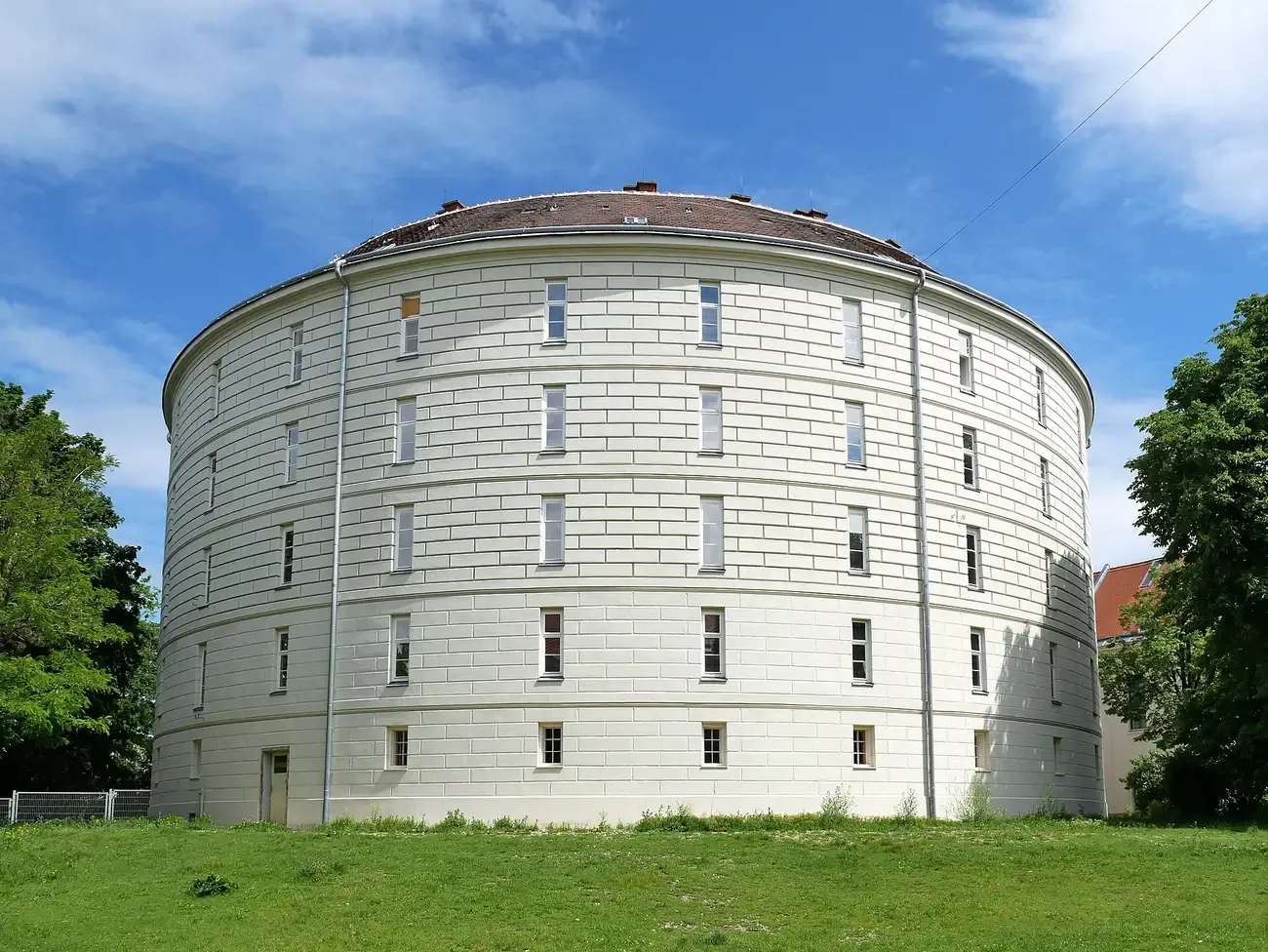
The Narrenturm
A circular eighteenth century asylum, the fools' tower, now holds the pathological anatomy collection of the Natural History Museum in its cells.
Location: Spitalgasse 2, Alsergrund
Photo: "The Narrenturm, Vienna" by Herbert Ortner (CC BY 4.0).
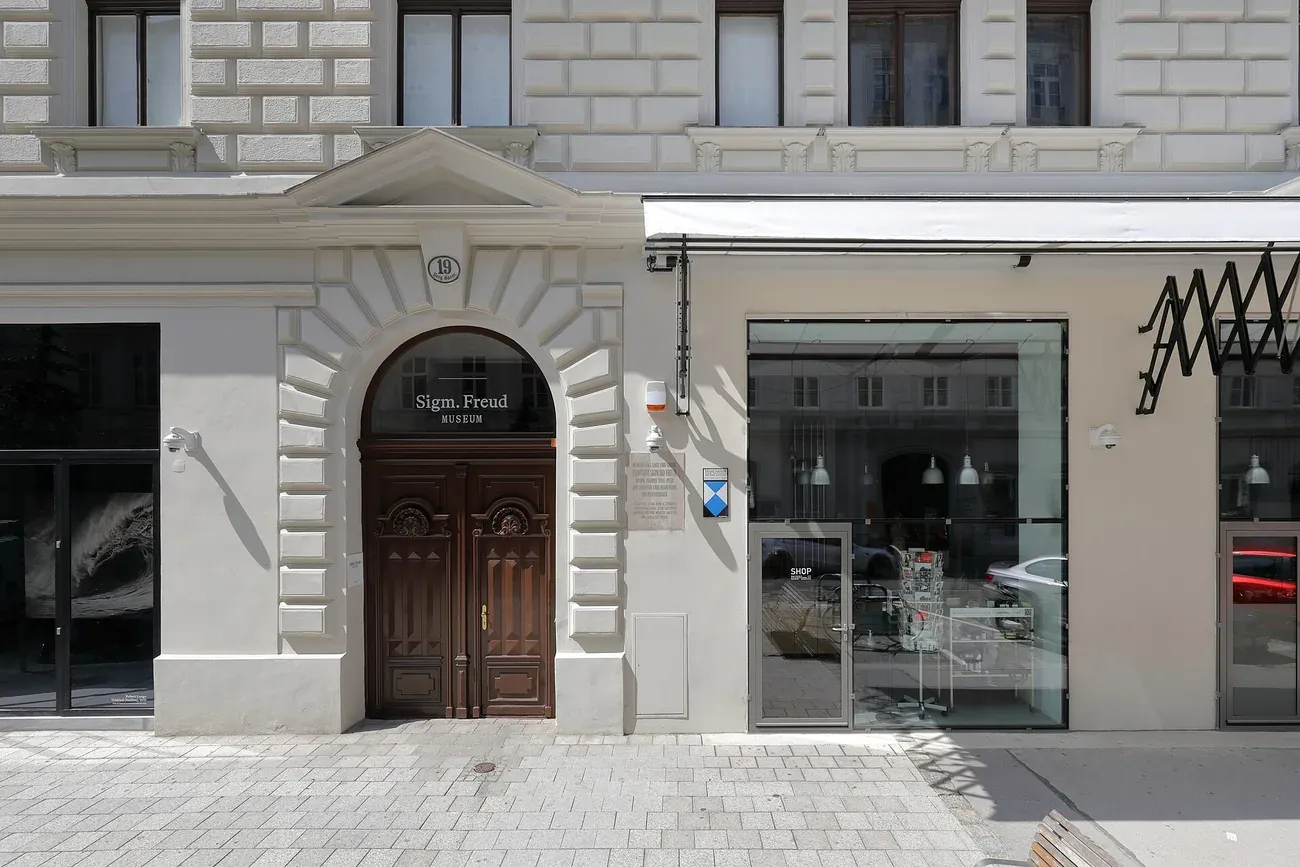
Sigmund Freud Museum
Freud lived and worked at Berggasse 19 for almost half a century; the flat now shows his rooms, his papers and the birth of psychoanalysis.
Location: Berggasse 19, Alsergrund
Photo: "Sigmund Freud Museum entrance, Berggasse 19" by C.Stadler/Bwag (CC BY-SA 4.0).
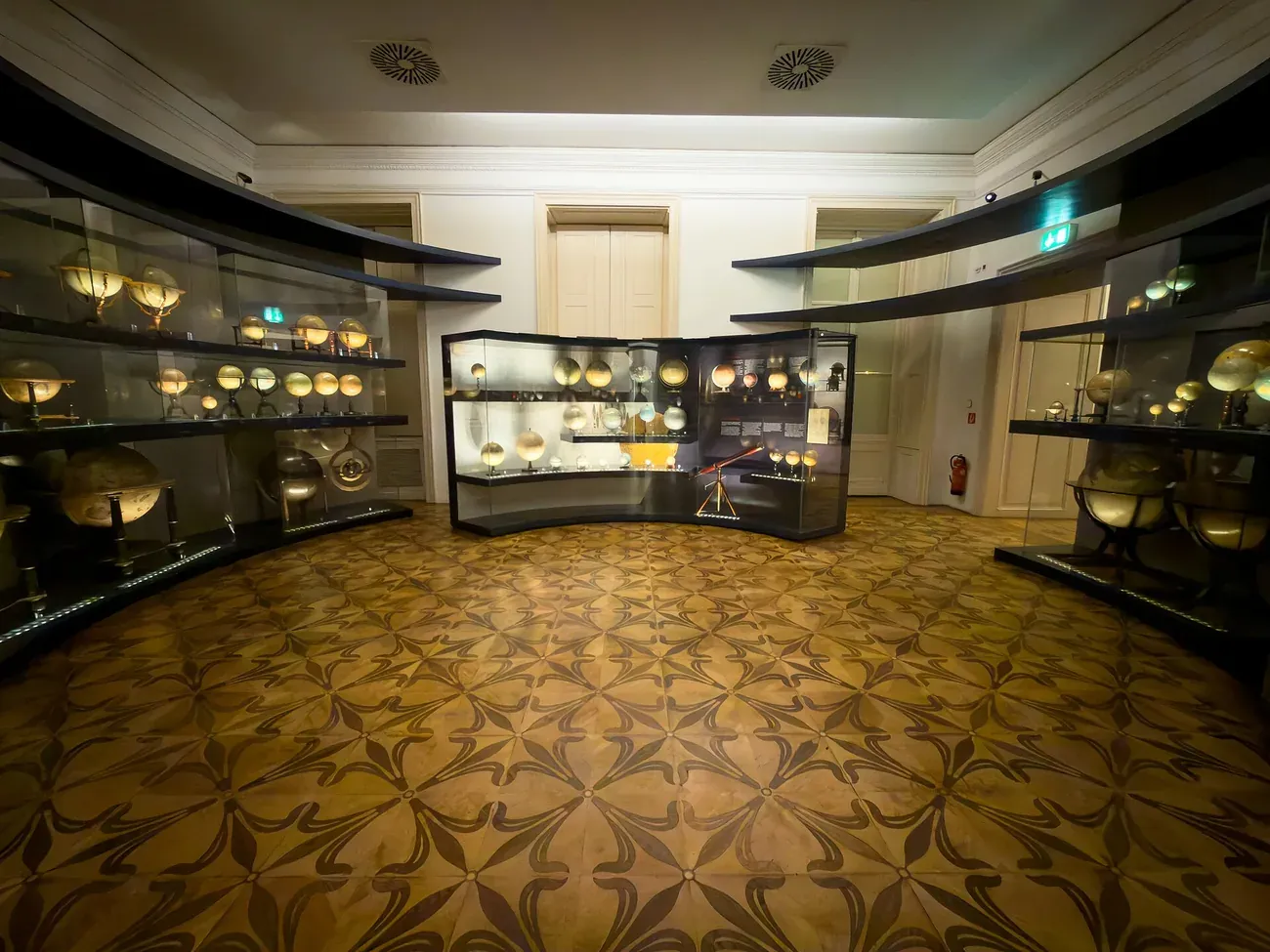
Globe Museum
Over 250 terrestrial, celestial and lunar globes with astronomical instruments fill rooms of Palais Mollard, a collection the national library calls unique.
Location: Herrengasse 9, Innere Stadt
Photo: "Globenmuseum gallery, Vienna" by Mike Peel (CC BY-SA 4.0).
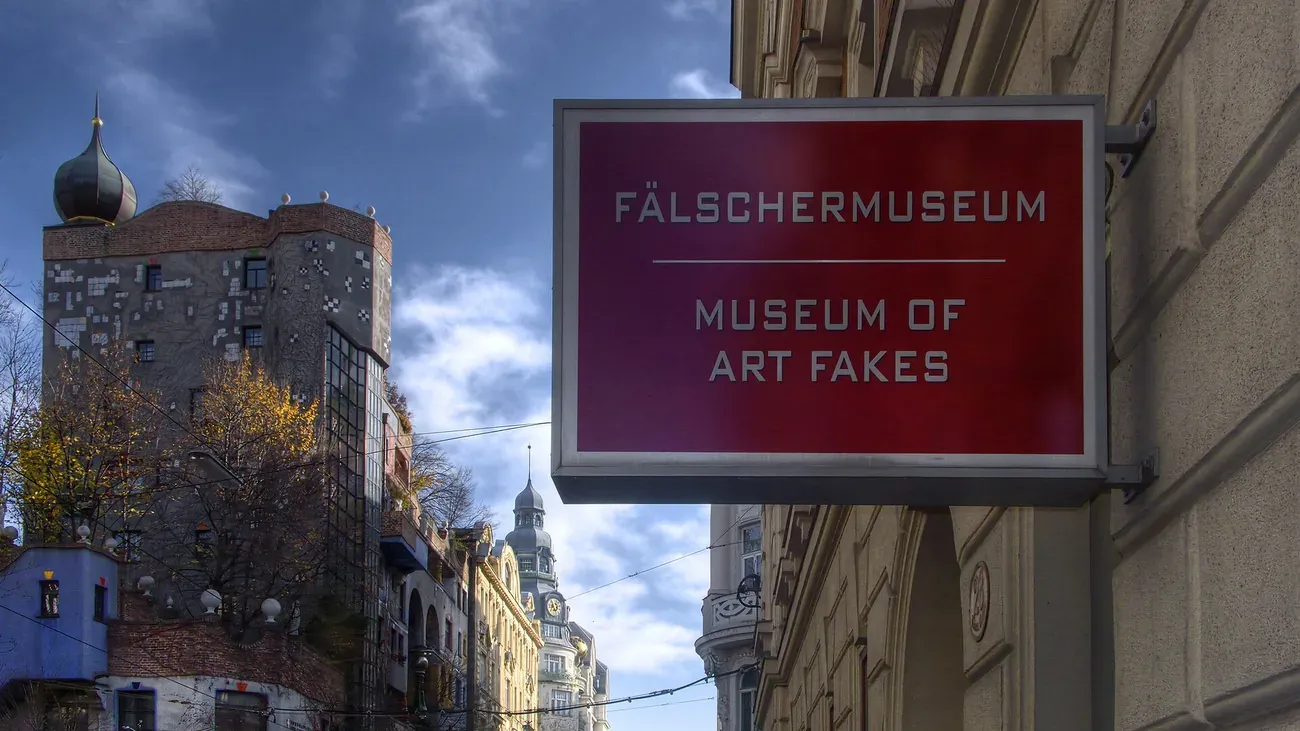
Museum of Art Fakes
A gallery with no original on its walls, hung with forged Klimts, Rembrandts and Matisses and the stories of the forgers behind them.
Location: Löwengasse 28, Landstraße
Photo: "Museum of Art Fakes (Falschermuseum), Vienna" by Peter Gugerell (Public domain).
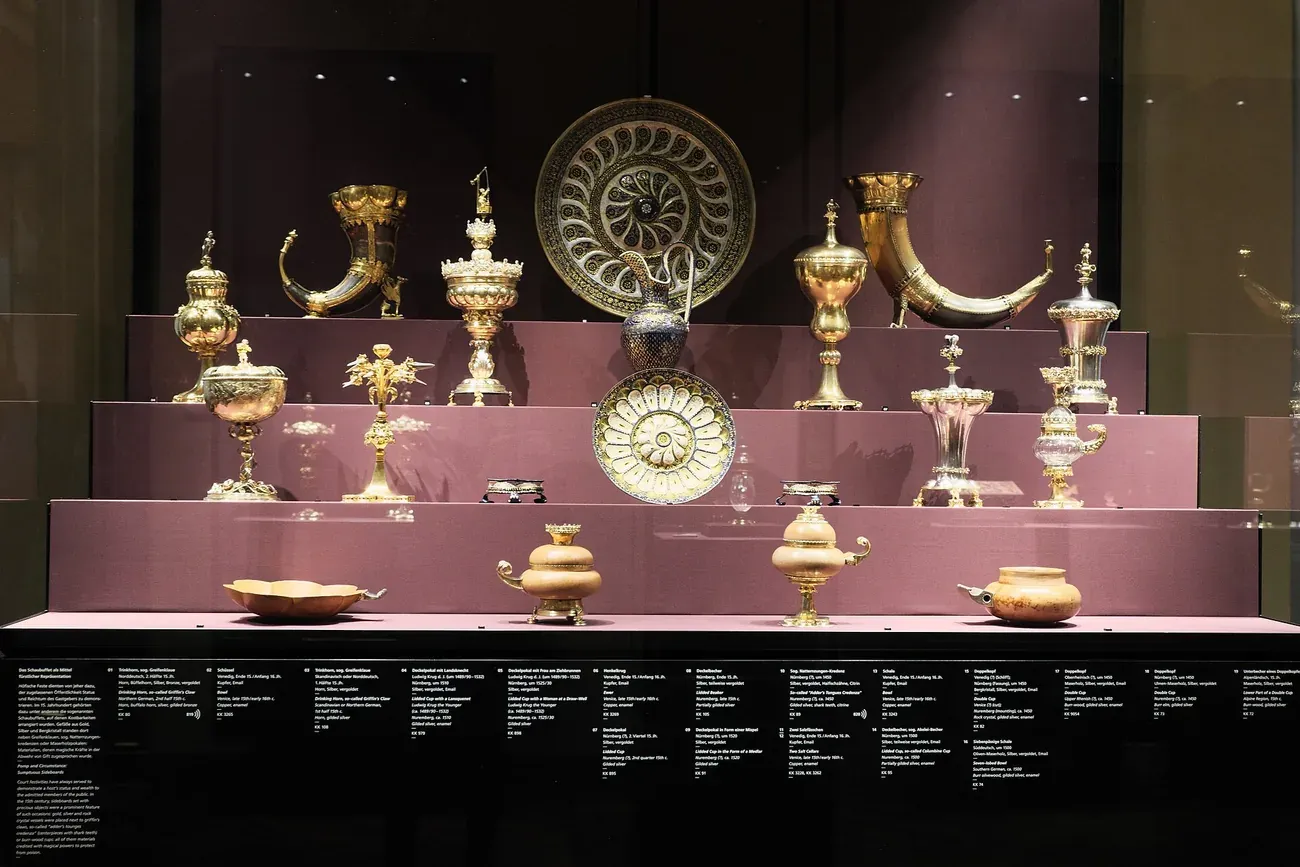
Kunstkammer Wien
The Habsburg chamber of wonders, some 2,000 objects of art and nature gathered by the dynasty, occupies its own wing of the Kunsthistorisches Museum.
Location: Maria-Theresien-Platz, Innere Stadt
Photo: "Kunstkammer display, Kunsthistorisches Museum Vienna" by GFreihalter (CC BY-SA 4.0).
Why Vienna deserves your time
Vienna spent six centuries as the seat of the Habsburg dynasty, and that imperial weight still shapes the city: baroque palaces line the Ringstrasse, court traditions survive in the Spanish Riding School, and composers from Mozart to Mahler built their careers here. The coffeehouse became a Viennese institution in its own right, recognised as intangible cultural heritage since 2011 for its marble tables and hours-long newspaper reading. Regularly named the world's most liveable city, Vienna ranks high on most lists of the top tourist attractions in Europe.
Neighbourhoods to know
The Innere Stadt, encircled by the Ringstrasse, holds the cathedral, the Hofburg and the boulevard's museums and opera house. Just outside the Ring, the MuseumsQuartier and Neubau district gather contemporary galleries and independent shops, while Landstrasse spreads around the Belvedere's gardens. The Naschmarkt and Mariahilf mix the market with cafes and vintage stores, and Leopoldstadt across the Danube Canal holds the Prater.
When to go and for how long
April to June and September bring mild weather and shorter queues than the peak summer months, while the run-up to Christmas fills the squares with markets and mulled wine. Two to three full days cover the historic core and one major palace at a steady pace, and a fourth day suits anyone adding the Belvedere's galleries or a night at the opera.
Getting around
The Innere Stadt is compact enough to cover on foot, and the U-Bahn reaches the outer sights quickly, with trams circling the Ringstrasse itself. A single ticket covers trams, the U-Bahn and city buses, and Schönbrunn Palace is reached directly by the U4 line or by tram.