
Non-touristy things to do in Athens
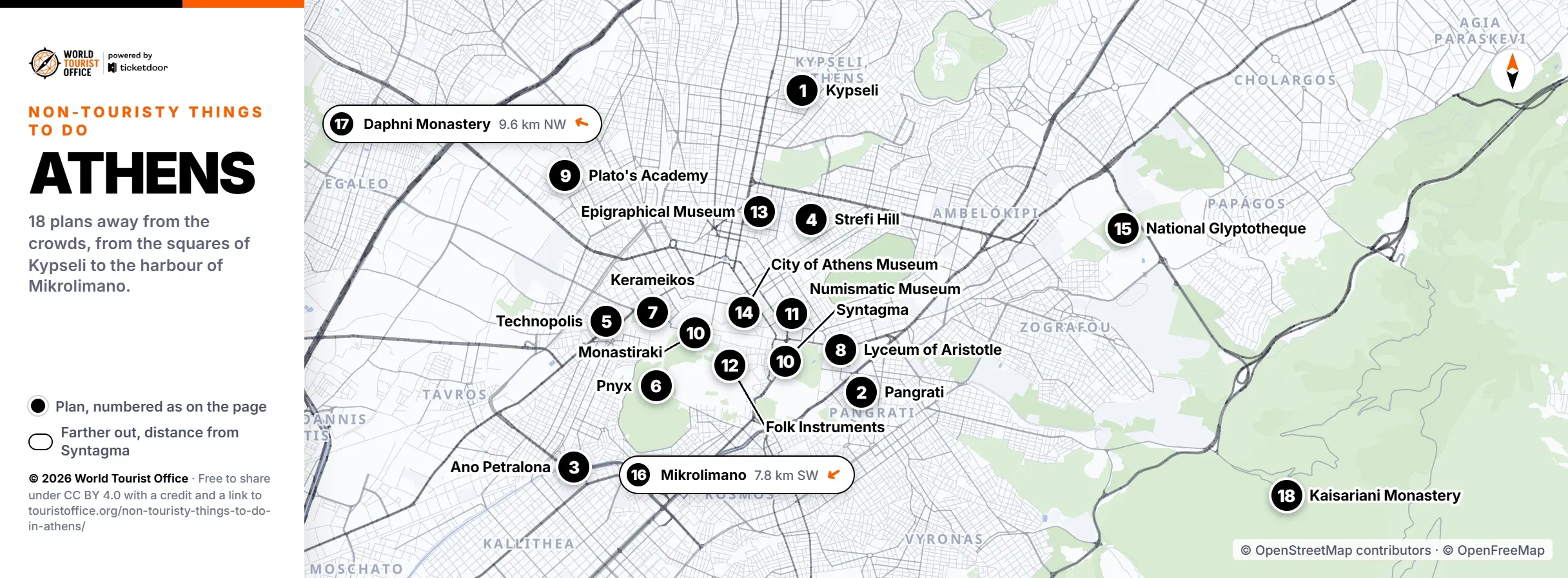
Download the free PDF with the map and a summary of the 18 plans: access, opening times and how to get there, ready to print or keep on the phone.
Non-touristy Athens at a glance
Athens away from the Acropolis is a city of neighbourhood squares, Saturday markets and small museums. These 18 non-touristy things to do in Athens run from Kypseli to the harbour of Mikrolimano, ordered by type of plan: neighbourhoods first, then hills, quiet ancient sites, small museums, the coast and two monasteries outside the centre. The numbers are the same on the map above. The main sights are ranked in the guide to tourism in Athens, and the tourist office in Athens page lists where to ask for directions in person.
| Plan | Access | When |
|---|---|---|
| 1. Walk Fokionos Negri to the Kypseli Municipal Market | Public space | Any day for the promenade; events at the market vary |
| 2. Spend a morning in Pangrati and Mets, from Platia Proskopon to the First Cemetery | Public space | Mornings, for the cafés and a cemetery visit in daylight |
| 3. Eat at a neighbourhood taverna in Ano Petralona | Free with a drink or meal | Lunch or dinner |
| 4. Shop the Saturday farmers' market on Kallidromiou and climb Strefi Hill | Public space | Saturday mornings for the market; the hill at any time of day |
| 5. See the old gasworks at Technopolis in Gazi | Museum ticketed | Wednesday to Sunday for the museum; daytime into the evening in winter |
| 6. Stand on the Pnyx and follow the paths of Philopappos Hill | Free admission | Daytime, any day |
| 7. Walk through the Kerameikos cemetery | Ticketed | Daily, 08:00 to 15:00 from 1 November to 31 March; longer hours in summer |
| 8. Visit the Lyceum of Aristotle | Ticketed | Daily, 08:00 to 15:00 from 1 November to 31 March; longer hours in summer |
| 9. Find Plato's Academy in a neighbourhood park | Public space | Daytime |
| 10. Look at the excavations inside Syntagma and Monastiraki metro stations | Public space inside the stations | Daily, during metro operating hours |
| 11. Have a coffee in the garden of the Numismatic Museum | Free with a drink or meal (cafe); museum ticketed | Cafe daily from morning to late evening; museum closed on Tuesdays |
| 12. Hear the Museum of Greek Folk Musical Instruments in Plaka | Ticketed | Closed Tuesdays; winter mornings to mid-afternoon, summer longer |
| 13. Read the stones at the Epigraphical Museum | Ticketed | Closed on Tuesdays; in winter open from morning to mid-afternoon |
| 14. Step into the Museum of the City of Athens | Ticketed | Closed on Tuesdays; opens at 10:00 at weekends and 09:00 on other days |
| 15. See the sculpture park of the National Glyptotheque in Goudi | Ticketed | Closed on Tuesdays; otherwise open from morning to mid-afternoon |
| 16. Eat fish by the harbour at Mikrolimano | Public space | Hours set by each restaurant |
| 17. See the mosaics of Daphni Monastery | Free admission | Daily except Tuesday, mornings to mid-afternoon in winter |
| 18. Visit Kaisariani Monastery on Mount Hymettus | Ticketed | Closed on Tuesdays; otherwise mornings to mid-afternoon |
1. Walk Fokionos Negri to the Kypseli Municipal Market
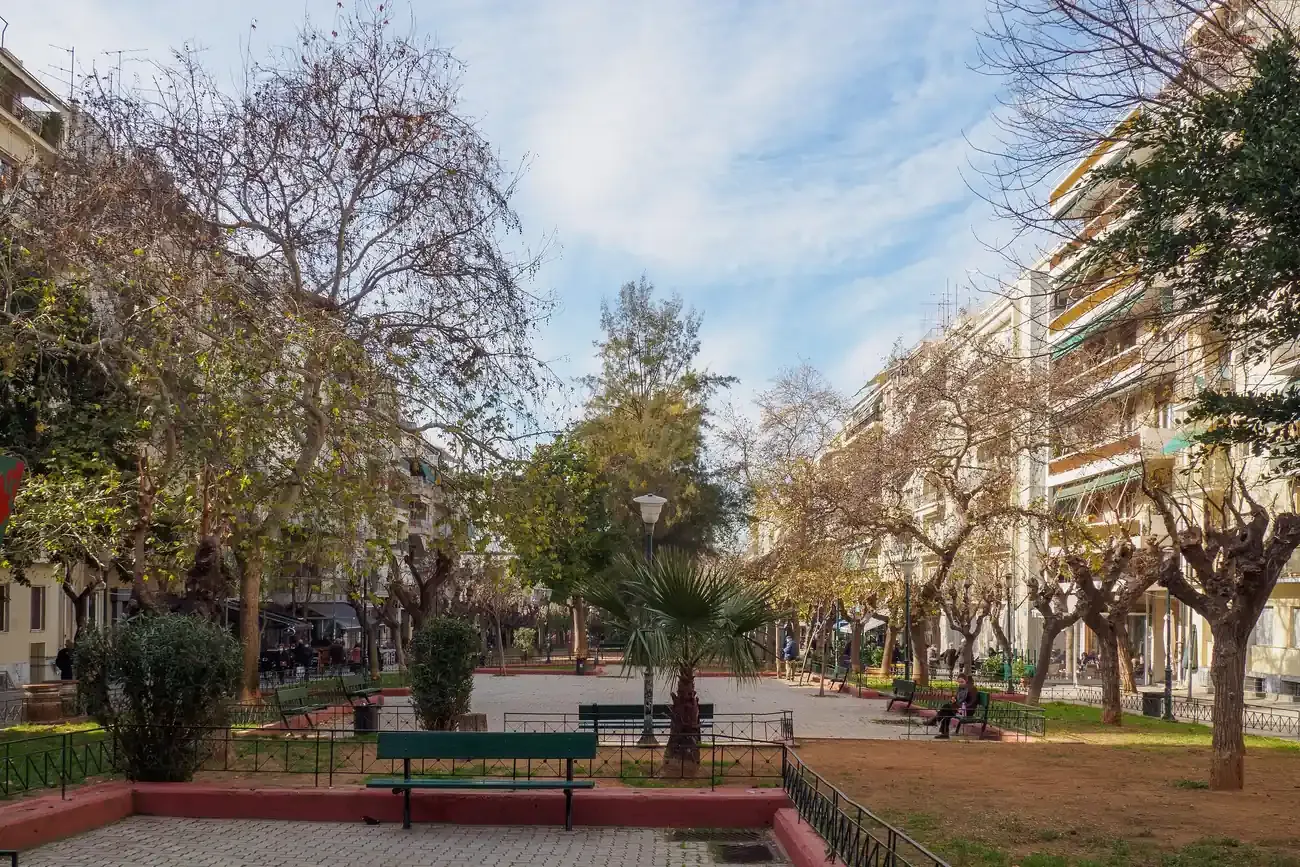
Photo: "The park along Fokionos Negri in Kypseli" by C messier (CC BY-SA 4.0).
Fokionos Negri is a pedestrianised boulevard built over a stream, and visitors can walk its 600-metre promenade end to end. The street is lined with cafés, bars and restaurants, and the lawns along the promenade are popular with dog owners, so the walk follows the daily rhythm of a residential district rather than a sightseeing route.
The Kypseli Municipal Market is a listed building put up in 1935 as a food market, following the principles of modernism. It operated until 2003 and was renovated in stages, the last in 2023. It now works as a hub for social enterprises, start-ups, workshops and bazaars. Victoria is the nearest train station, which makes the market an easy first stop before a bus or trolley back towards Syntagma.
- Access: Public space
- When: Any day for the promenade; events at the market vary
- Getting there: Victoria station, then Kypseli on foot
- More: Kypseli neighbourhood guide
2. Spend a morning in Pangrati and Mets, from Platia Proskopon to the First Cemetery
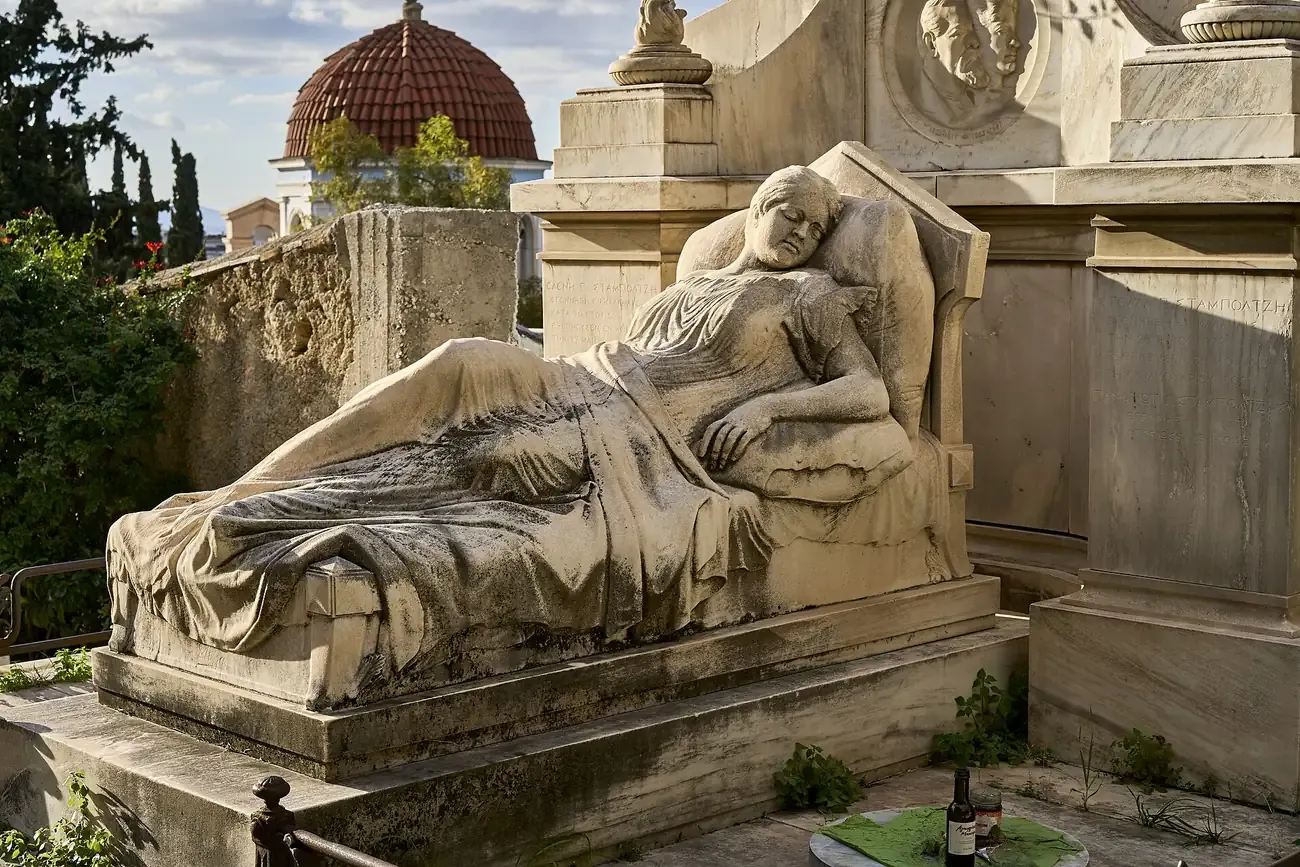
Photo: "Funerary statue of Stella Stampoltzis at the First Cemetery of Athens" by George E. Koronaios (CC BY-SA 4.0).
Pangrati and Mets are residential districts of leafy squares and busy cafés. The walk starts at Platia Proskopon, a pocket-sized square where the cafés spill up Amynta and Archelaou Streets and form one centre of Pangrati's café life. The First Cemetery, at 3 Logginou in Mets, is the next stop.
The cemetery was established in 1837, and key figures of modern Greek history are buried among its 10,000-odd plots, among them the archaeologist Heinrich Schliemann. It doubles as an open-air sculpture museum: Yannoulis Chalepas's Sleeping Maiden stands in a square near the church of Saint Theodore. Visitors with energy left can follow the path through the Ardittos woods for views over the centre of Athens and the Acropolis.
- Access: Public space
- When: Mornings, for the cafés and a cemetery visit in daylight
- Getting there: Pangrati and Mets
- More: Pangrati and Mets neighbourhood guide
3. Eat at a neighbourhood taverna in Ano Petralona

Ano Petralona is a residential area where old-school tavernas share the streets with all-day bars, bistros and an outdoor cinema. The places to look for are the ones with a neighbourhood feel, not the faux-traditional spots that have appeared in recent years.
Oikonomou is the taverna the district is best known for. It has been open for almost a century and keeps to plain Greek cooking. With the bars and the cinema close by, an afternoon meal can run into a long evening without leaving the district.
- Access: Free with a drink or meal
- When: Lunch or dinner
- Getting there: Ano Petralona
- More: Petralona neighbourhood guide
4. Shop the Saturday farmers' market on Kallidromiou and climb Strefi Hill
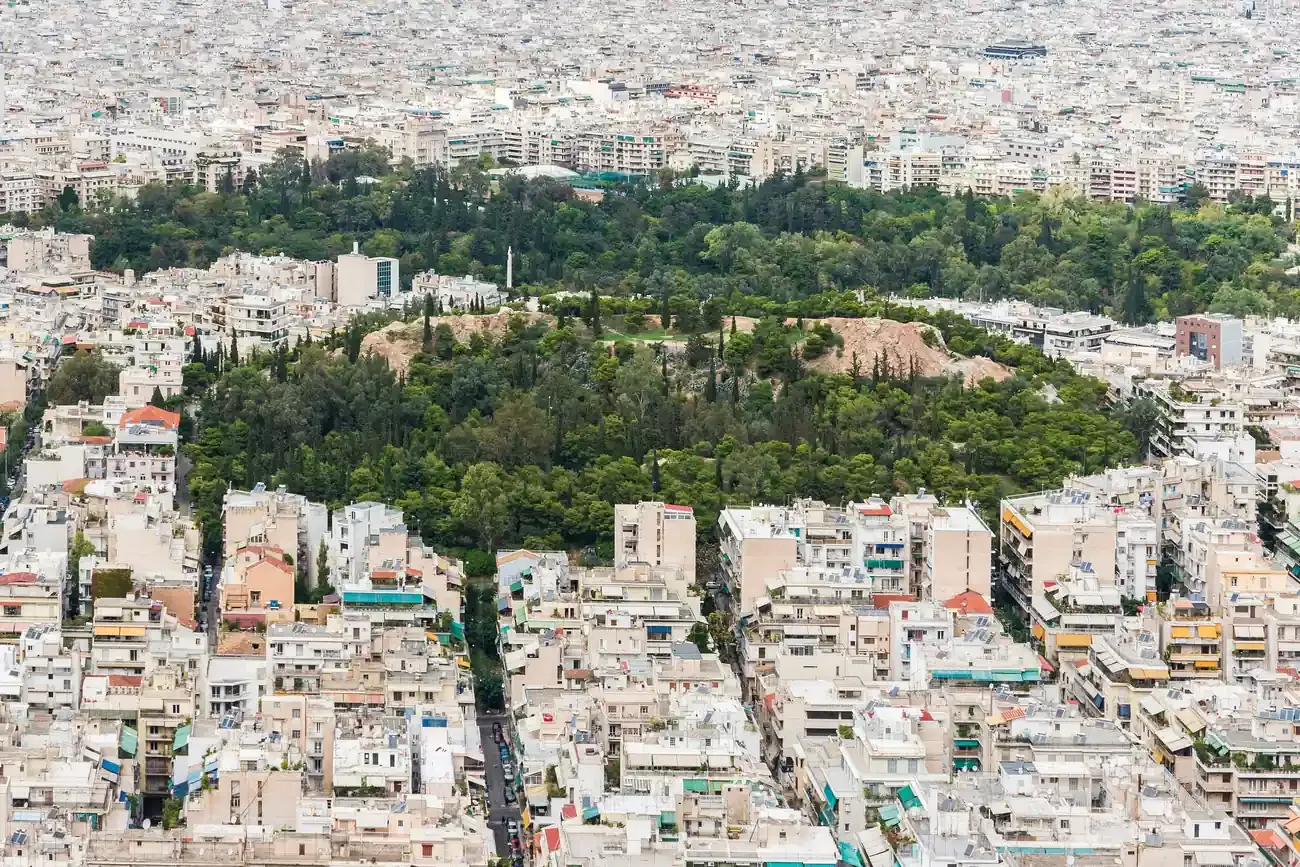
Photo: "Strefi Hill seen from Mount Lycabettus" by Jebulon (CC0).
The Saturday morning farmers' market in Exarchia is one of the largest in Athens. Seasonal fruit and vegetables, fish, herbs, olives and honey are sold all along Kallidromiou Street, under the mulberry trees that shade its pavements. Shopping at the laiki, the weekly street market, is a Saturday habit for the people who live here.
Strefi Hill rises in the same neighbourhood and has a wide view over Athens. Exarchia keeps a strong sense of community, and a morning at the market shows a side of a district that is better known for its political reputation.
- Access: Public space
- When: Saturday mornings for the market; the hill at any time of day
- Getting there: Exarchia
- Audio guide: commentary on Strefi Hill in the Athens audio guide, an app that works offline on the visitor's own phone.
- More: Exarchia farmers' market
5. See the old gasworks at Technopolis in Gazi
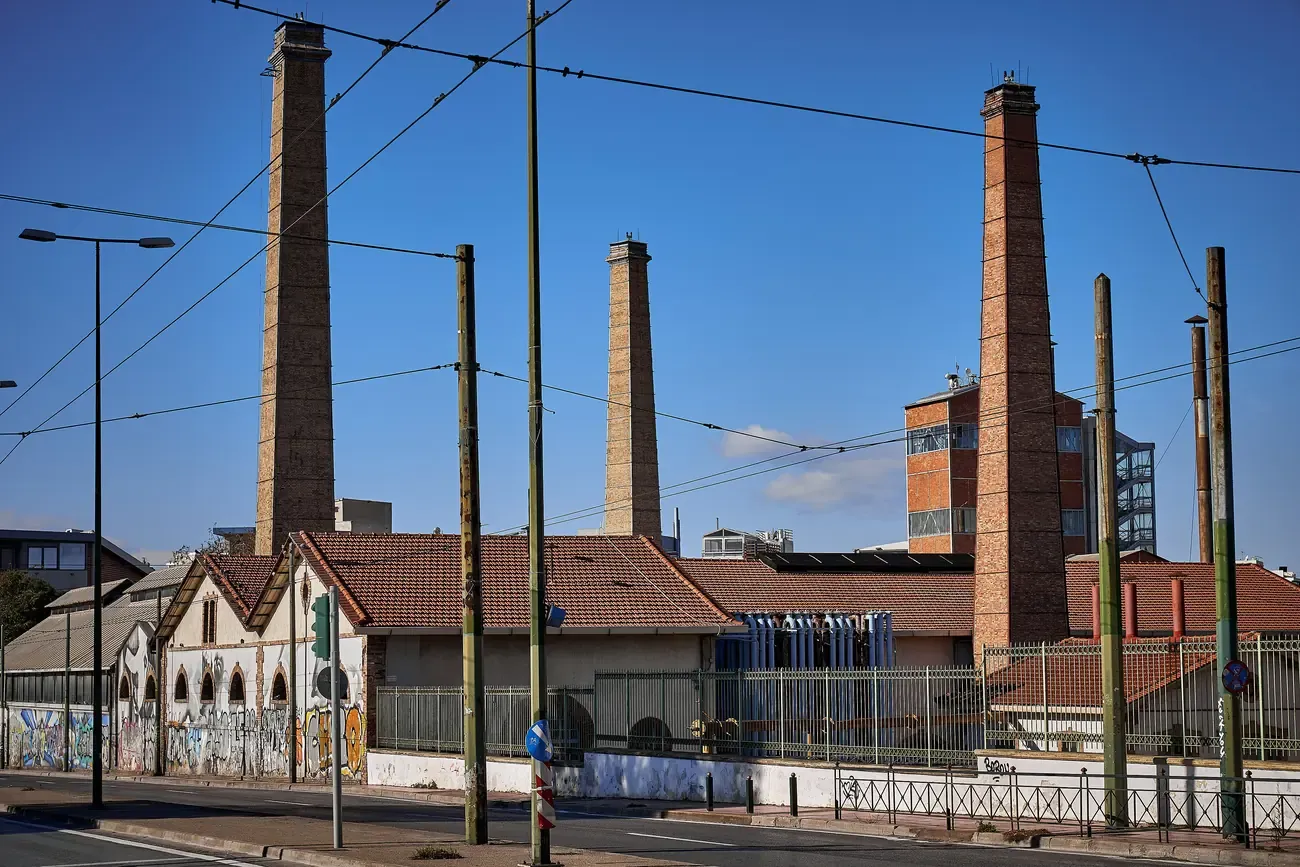
Photo: "The Technopolis in Gazi" by George E. Koronaios (CC BY-SA 4.0).
Technopolis occupies the old Athens gasworks in Gazi. The gasworks ceased operation in the mid-1980s, and the brown-brick smokestacks still dominate life in the district. The site is now a hub for city-sponsored and private events, from art exhibitions and music festivals to food and tech fairs, so what is on varies from week to week.
The grounds include the Industrial Gas Museum, a café and the city's only Skywalk. The museum, at Peiraios 100, is open from Wednesday to Sunday, and in winter its last entrance is at 19:00. Visitors can check the programme of events before going, since exhibitions and fairs change.
- Access: Museum ticketed
- When: Wednesday to Sunday for the museum; daytime into the evening in winter
- Getting there: Gazi, at Peiraios 100
- Audio guide: commentary on Gazi in the Athens audio guide, an app that works offline on the visitor's own phone.
- More: Industrial Gas Museum opening hours
6. Stand on the Pnyx and follow the paths of Philopappos Hill
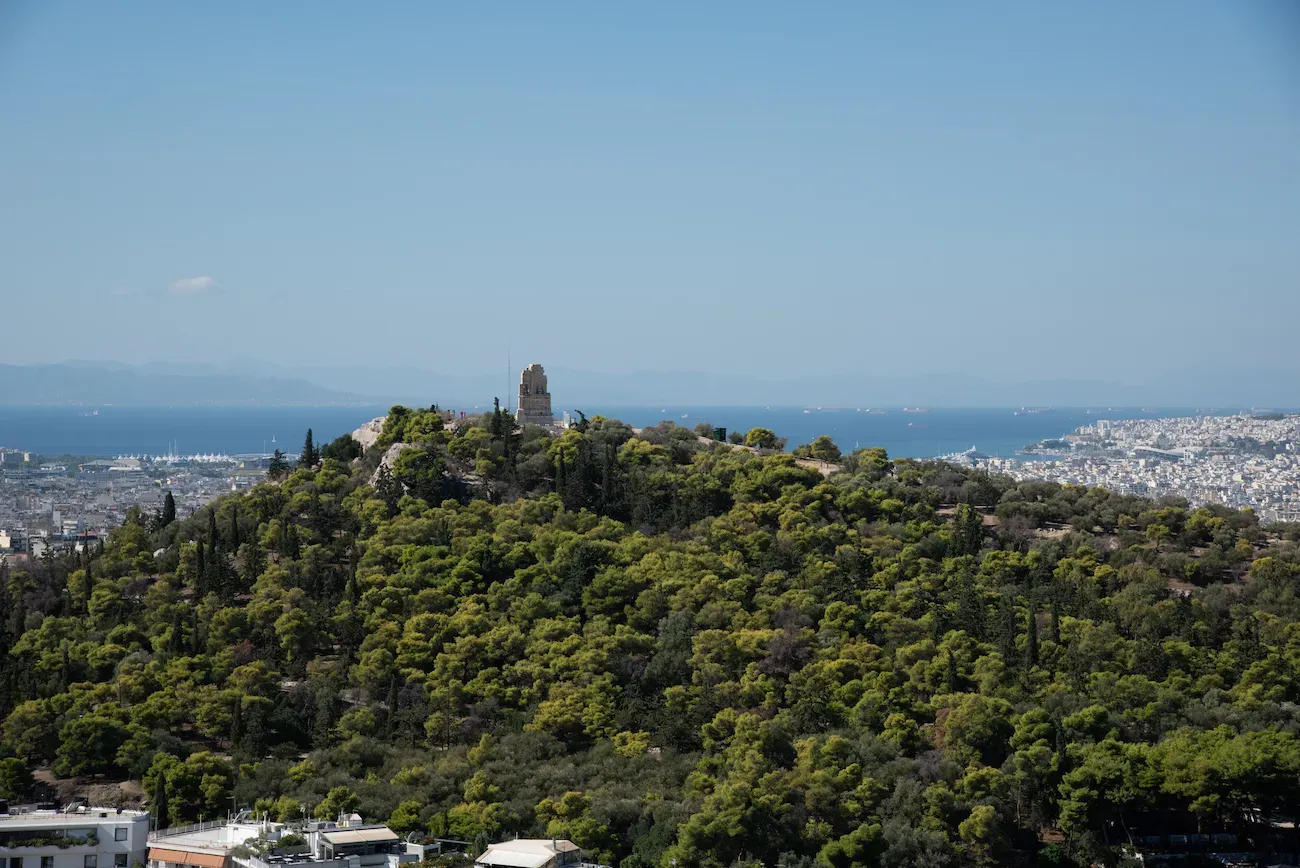
The Pnyx is the forested hilltop clearing where the Athenian assembly gathered in the earliest days of democracy, and where the likes of Pericles and Themistocles spoke in full view of the Parthenon. Entrance is free. The hill is natural ground with rough stone paving, and much of the path is step-free but not all of it, so visitors should expect uneven going.
The Pnyx forms one stretch of hills with Philopappos Hill, also called the Hill of the Muses, and the Hill of the Nymphs. The Church of Agios Dimitrios Loumbardiaris stands on Philopappos Hill, on the Koukaki side. The whole walk is outdoors, so it depends on the weather.
- Access: Free admission
- When: Daytime, any day
- Getting there: Acropole or Koukaki stops, as listed for the church on Philopappou Hill
- Audio guide: commentary on the Pnyx and Philopappos Hill in the Athens audio guide, an app that works offline on the visitor's own phone.
- More: Philopappou Hill and Pnyx route notes
More of Athens, planned by Tourist Office
Tourist attractions in Athens
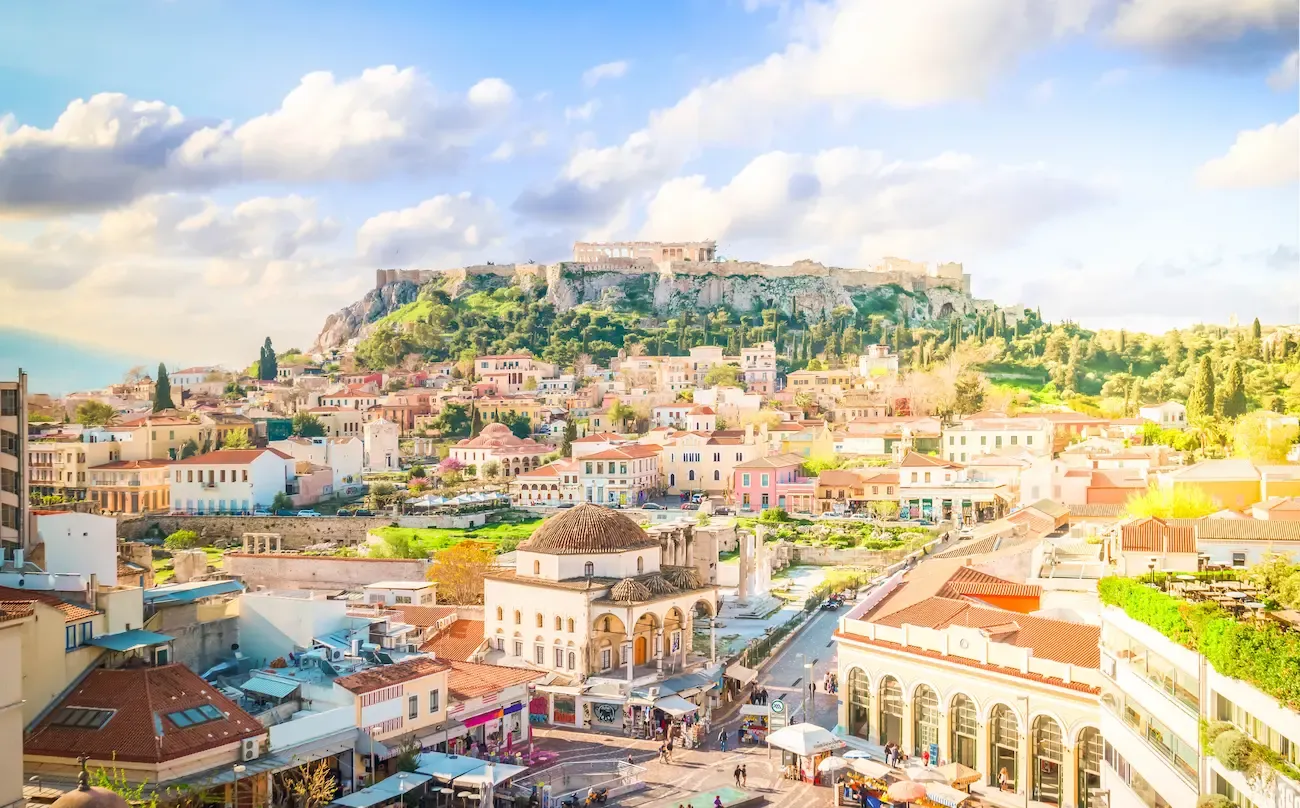
The guide to the tourist attractions in Athens ranks the 11 sights not to miss and adds 29 lesser-known places, with tickets and a map.
Free things to do in Athens
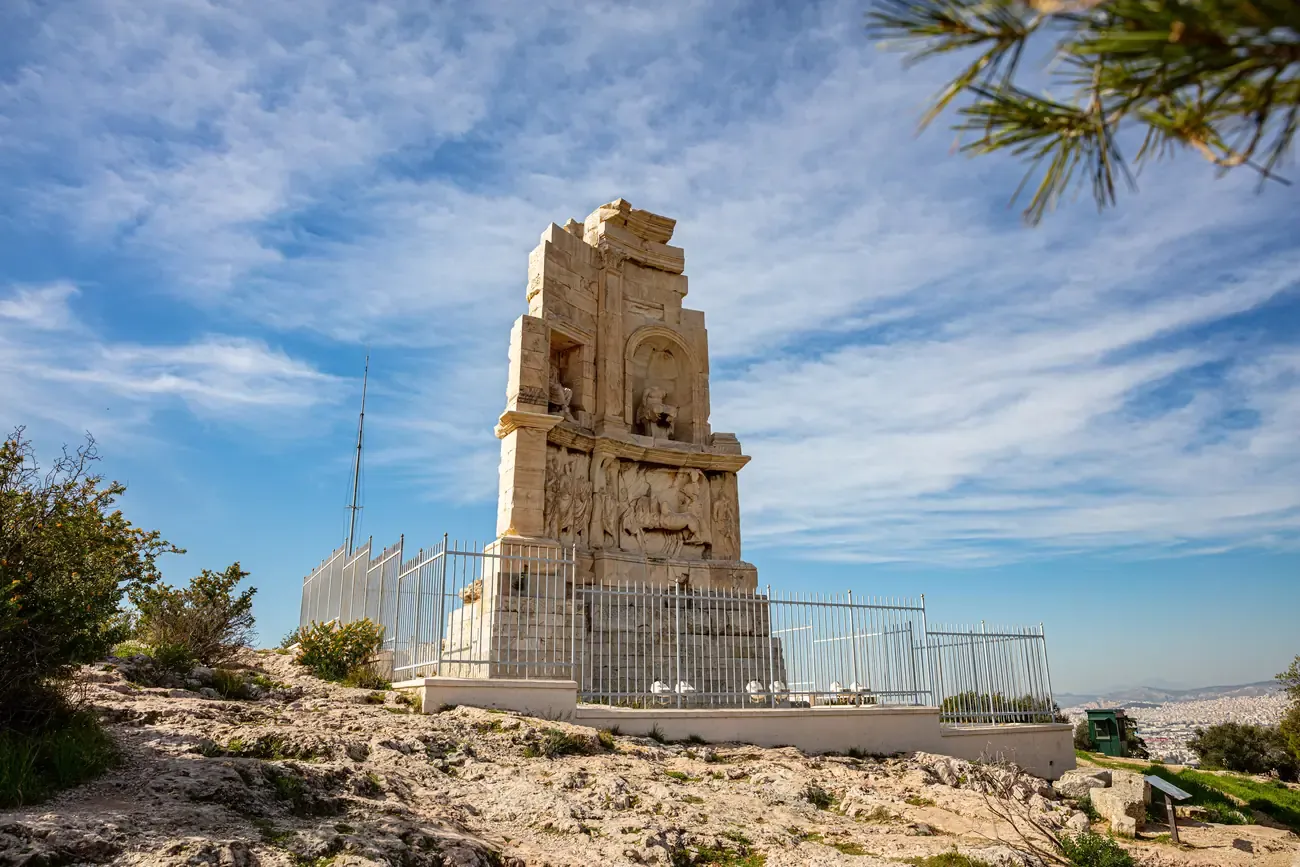
Twelve free things to do in Athens, from the changing of the guard to the hills around the Acropolis.
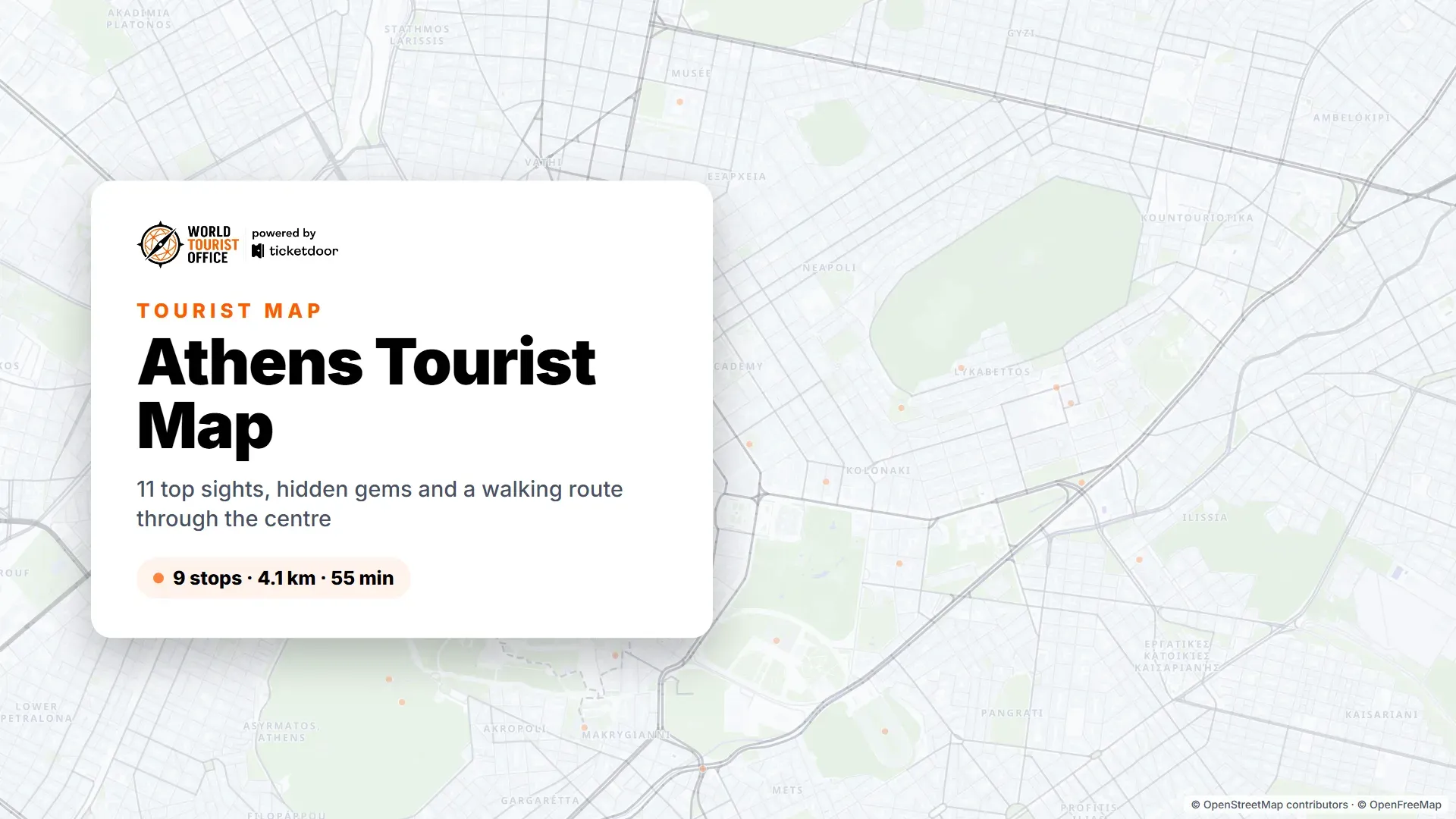
Athens tourist map
The Athens tourist map marks the top sights and a walking route, free to view, print and download.

Is Athens expensive for tourists?
What food, hotels and transport cost, in the guide to prices in Athens.
Is Athens safe?
The guide to safety in Athens covers pickpockets, the areas that need more care at night and the emergency numbers.

Free museum days in Athens
The calendar of free museums in Athens lists the free entry days at state sites and museums.
Tickets and tours in Athens
7. Walk through the Kerameikos cemetery
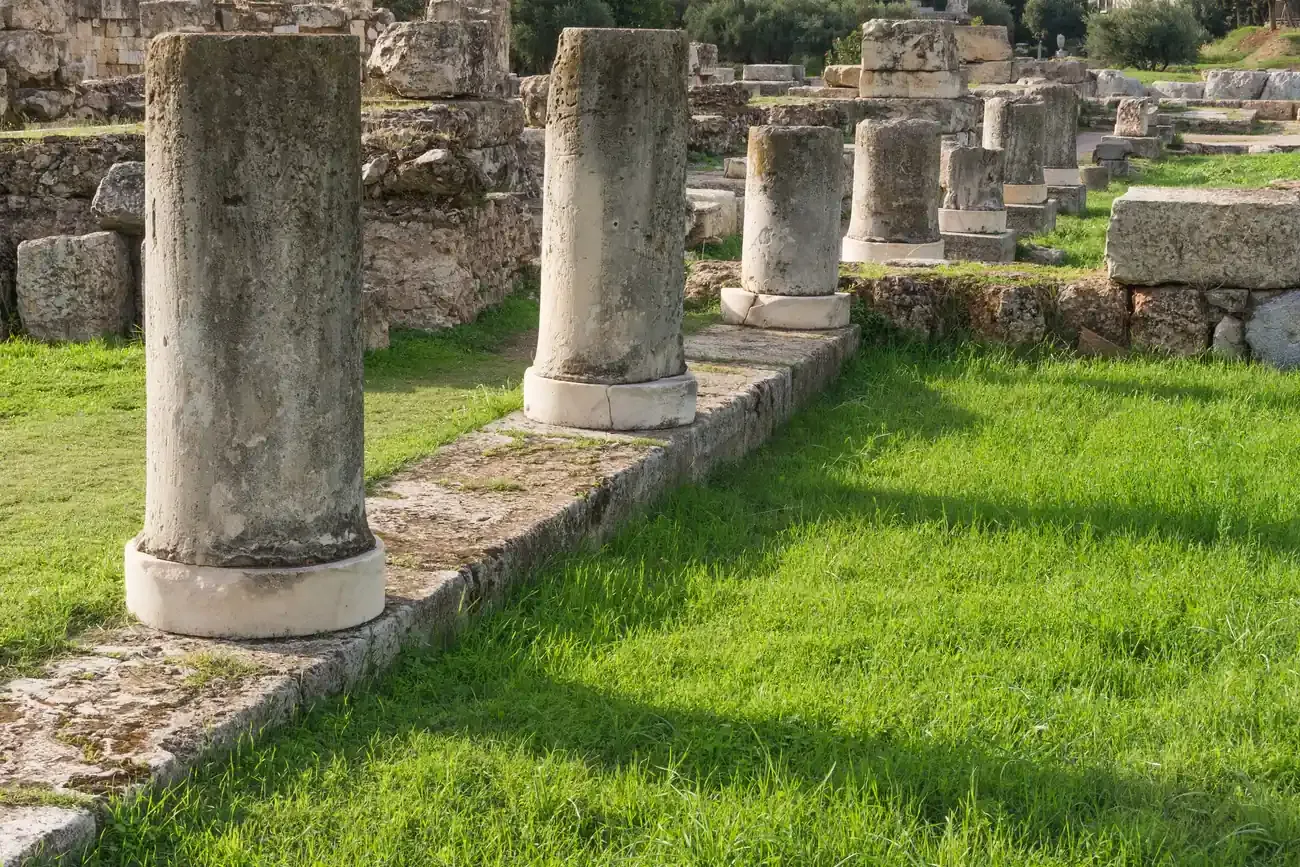
Photo: "Columns of the Pompeion in the Kerameikos" by Jebulon (CC0).
Kerameikos was the main cemetery of ancient Athens and the place where the procession of the Eleusinian Mysteries set out through the Sacred Gate. Visitors walk along the site's funerary stelae and statues, pass the Dipylon, the most imposing gateway to the ancient city, and end in a small museum. The name comes from the potters who worked the clay along the banks of the River Eridanos, which still runs through the site.
Since the upgrade completed in 2026, the visit route is about 4,500 square metres larger and finishes through a new exit on Agion Asomaton Street. In winter the site closes in the mid-afternoon, so a morning visit works best. Thissio metro station is about seven minutes away on foot.
- Access: Ticketed
- When: Daily, 08:00 to 15:00 from 1 November to 31 March; longer hours in summer
- Getting there: Thissio (line 1) or Kerameikos (line 3)
- Audio guide: commentary on Kerameikos in the Athens audio guide, an app that works offline on the visitor's own phone.
- More: opening hours of Kerameikos
8. Visit the Lyceum of Aristotle
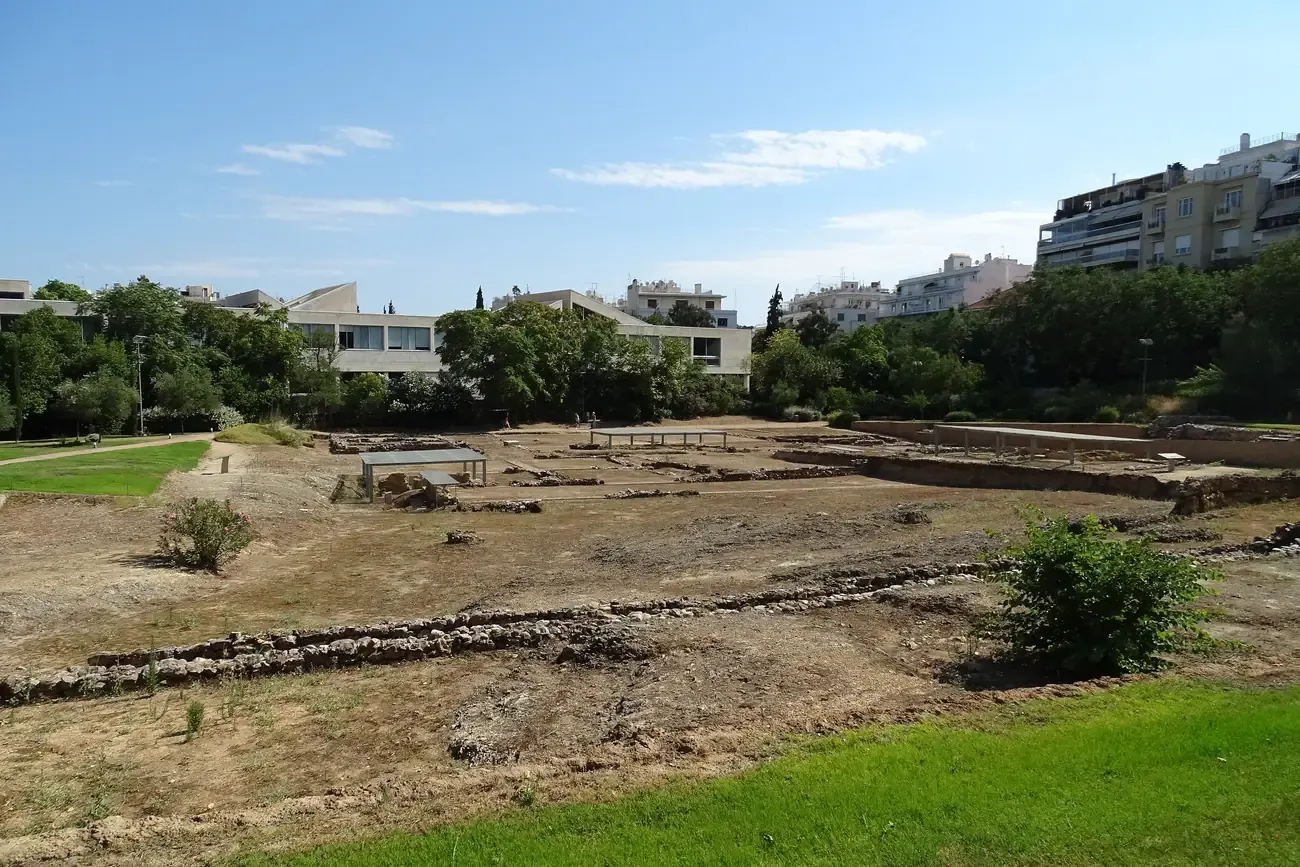
Photo: "Excavations at Aristotle's Lyceum" by Ad Meskens (CC BY-SA 4.0).
The Lyceum was the gymnasium and grove where Aristotle taught for roughly twelve years after returning to Athens in 335 BC, and where the Peripatetic School met. Its palaestra, a space for training in wrestling, boxing and pankration, stayed in use for about seven centuries. The remains came to light in 1996 during excavations for the Basil & Elise Goulandris Foundation Museum of Modern Art.
Visitors follow a circular path shaded by olive trees, cypresses and pomegranate trees, a setting that evokes the philosopher's habit of walking while he taught. The site covers only about 1.15 hectares and borders the garden of the Byzantine and Christian Museum, which makes it an easy addition to a museum walk. Evangelismos metro station is three minutes away on foot.
- Access: Ticketed
- When: Daily, 08:00 to 15:00 from 1 November to 31 March; longer hours in summer
- Getting there: Evangelismos metro station, 3 minutes on foot
- More: opening hours of the Lyceum of Aristotle
9. Find Plato's Academy in a neighbourhood park
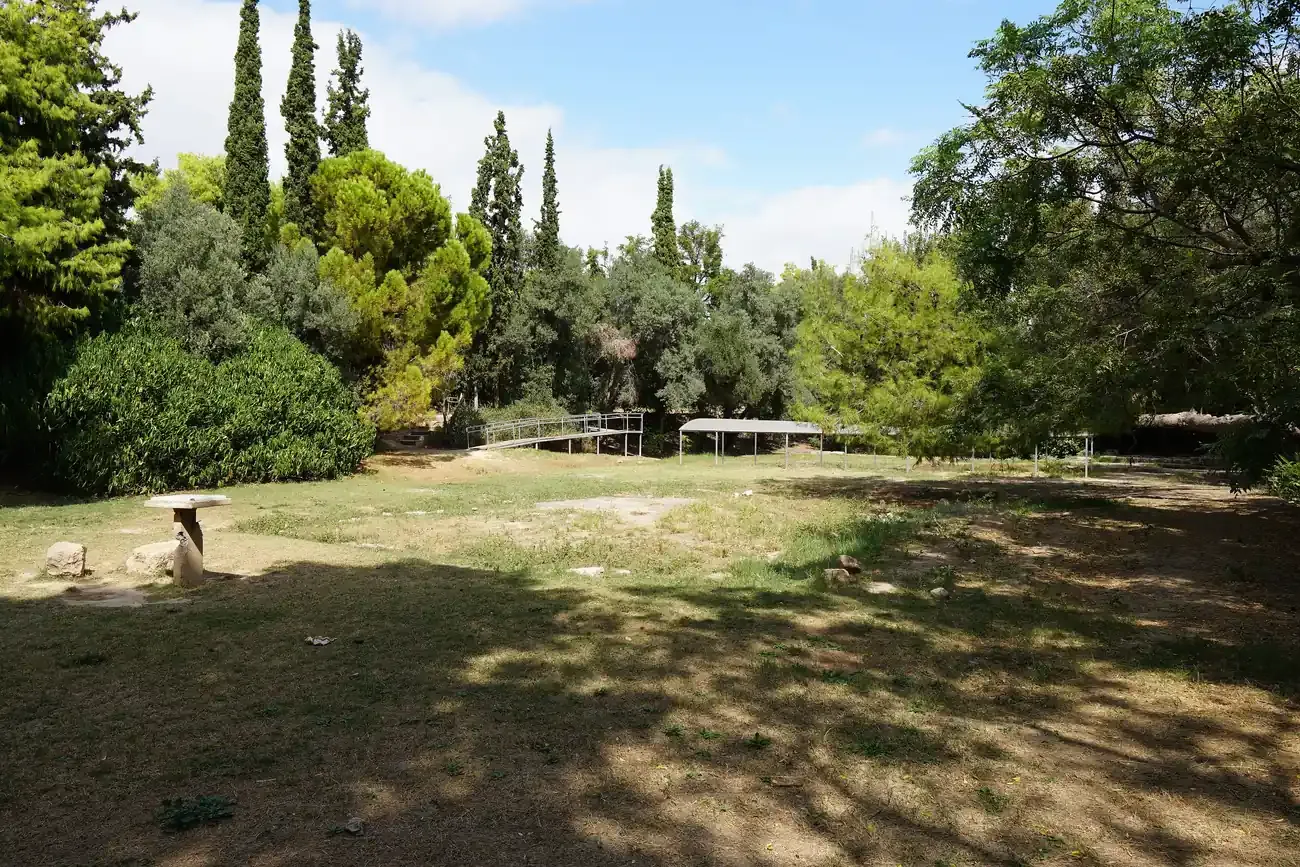
Photo: "Remains of the Gymnasium at the Archaeological Park of Plato's Academy" by George E. Koronaios (CC0).
Plato founded his school of philosophy around 387 BCE, and the Academy kept operating until 529 CE, when Emperor Justinian ordered it shut. Its ruins now lie around the corners of a park in the residential neighbourhood of Akadimia Platonos, among them the Sacred House, the Gymnasium and the Square Peristyle, all a short stroll apart.
No columns stand upright, only traces of the buildings, so the visit is about walking the grounds where Plato, Aristotle and their pupils once walked. The park sits in Kolonos, a residential district a few metro stops from Syntagma Square. Visitors can pair it with the Kolonos Theatre on the green hill of Kolonos, built to resemble the theatres of ancient times, in the same neighbourhood.
- Access: Public space
- When: Daytime
- Getting there: Akadimia Platonos, in Kolonos, a few metro stops from Syntagma Square
- More: Sepolia and Kolonos neighbourhood guide
10. Look at the excavations inside Syntagma and Monastiraki metro stations
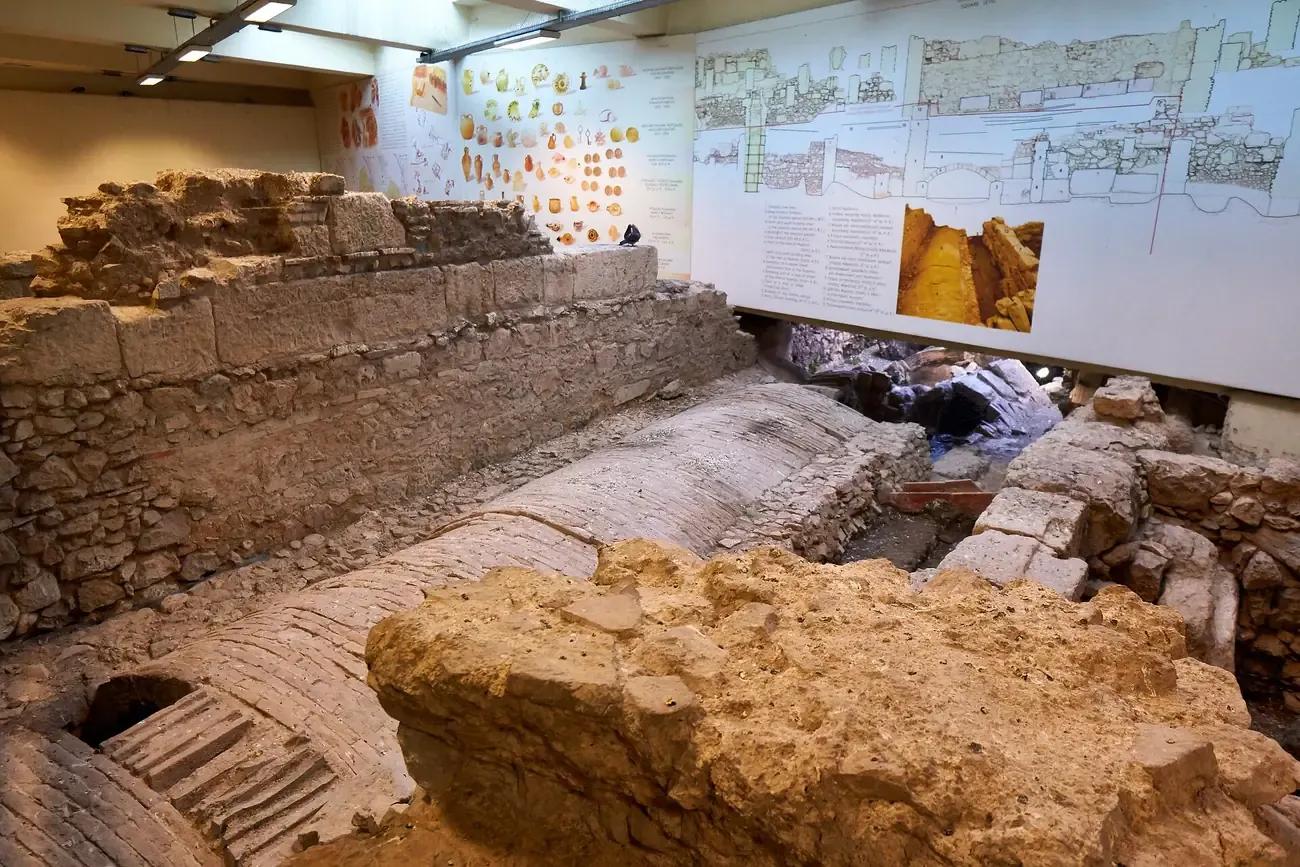
Photo: "The vaulted riverbed of the Eridanos at Monastiraki metro station" by George E. Koronaios (CC0).
Building the metro meant tunnelling under a city 3,000 years old, and the team unearthed over 30,000 artefacts, some of which stayed where they were found. In the main hall of Syntagma station, wine amphorae, clay oil lamps and terracotta water pipes are on display, and one wall is a large section of excavated ground showing city walls, roads and a tomb with a 4th century BC skeleton.
At Monastiraki, visitors can look down at the excavated ruins of a Roman-era channel and vaulted cover over the Eridanos River, which once ran through the heart of Athens. Half of the 61 stations on the network carry works of art, so the displays are seen in passing during a metro trip and fit between other sights without a separate visit.
- Access: Public space inside the stations
- When: Daily, during metro operating hours
- Getting there: Syntagma and Monastiraki stations
- More: underground art in the Athens metro
11. Have a coffee in the garden of the Numismatic Museum
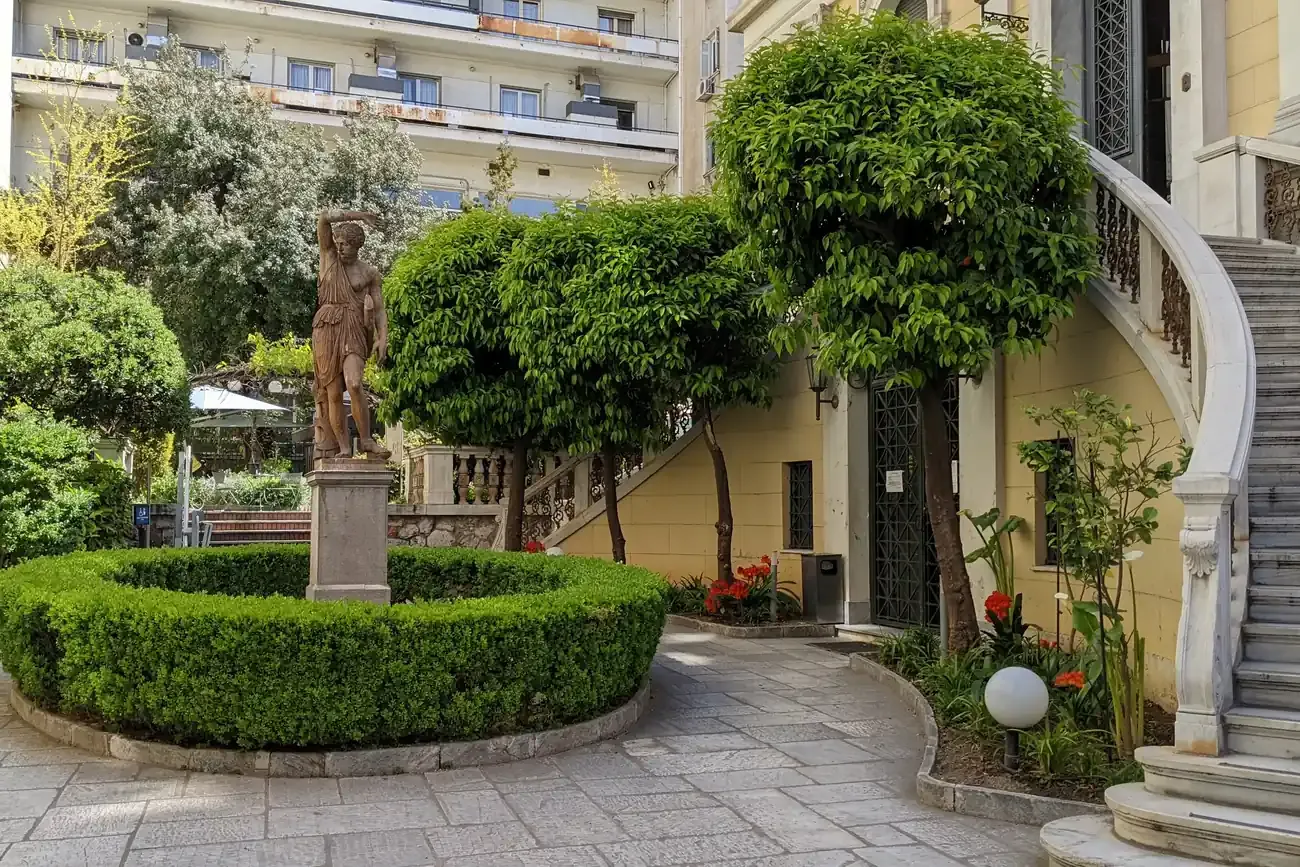
Photo: "Small garden at the entrance to the Numismatic Museum in Athens" by philip.mallis (CC BY-SA 2.0).
Iliou Melathron, the mansion that houses the Numismatic Museum, was designed by Ernst Ziller and built in 1878 and 1879 as the residence of the Schliemann family. Its Refreshment Room operates in the garden behind it, a small green oasis of about 800 square metres with many species of Greek plants and copies of ancient Greek statues.
Museum visitors and people who are simply in the area can stop there for coffee or a light meal in a quiet, cool setting. The cafe keeps longer hours than the museum, which closes in mid-afternoon in winter and all day on Tuesdays. The garden suits a break between walks around Syntagma, the nearest metro stop.
- Access: Free with a drink or meal (cafe); museum ticketed
- When: Cafe daily from morning to late evening; museum closed on Tuesdays
- Getting there: Syntagma metro stop
- More: opening hours of the Numismatic Museum
12. Hear the Museum of Greek Folk Musical Instruments in Plaka
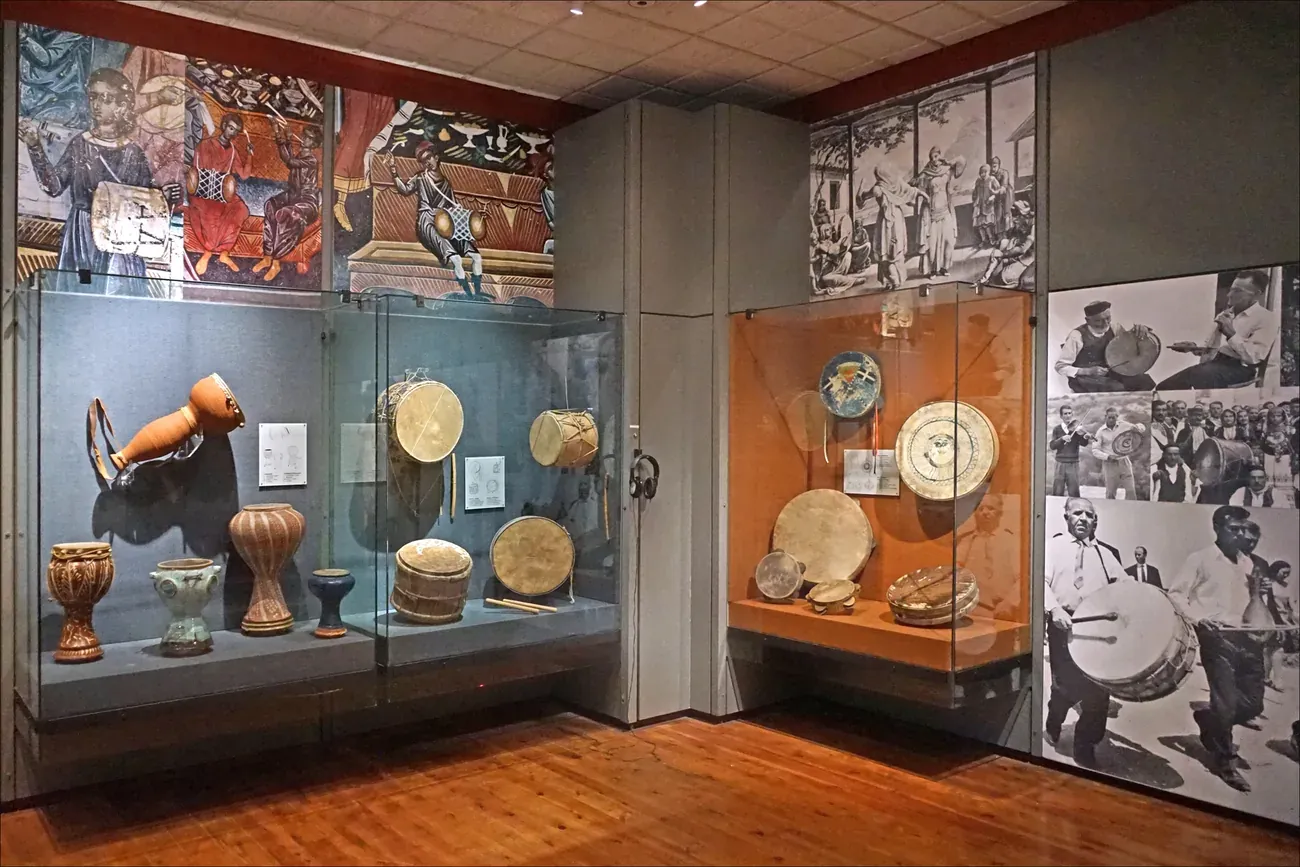
Photo: "The membranophone room of the Museum of Greek Folk Musical Instruments" by Jean-Pierre Dalbéra (CC BY 2.0).
A mansion built in Plaka in 1842 by the chieftain Georgios Lassanis houses the collection of ethnomusicologist Fivos Anoyanakis: 1,200 Greek folk musical instruments from the 18th century to the present, organised in four sections for membranophones, aerophones, chordophones and idiophones. The museum was inaugurated in 1991.
What sets it apart from most museums is sound. Each display case has headphones that visitors can pick up to listen to samples of music played with the instruments in front of them, so the objects can be heard as well as seen. The museum is closed on Tuesdays. Monastiraki station serves it on lines 1 and 3.
- Access: Ticketed
- When: Closed Tuesdays; winter mornings to mid-afternoon, summer longer
- Getting there: Monastiraki (lines 1 and 3)
- Audio guide: commentary on the Museum of Greek Folk Musical Instruments in the Athens audio guide, an app that works offline on the visitor's own phone.
- More: opening hours of the Museum of Greek Folk Musical Instruments
13. Read the stones at the Epigraphical Museum
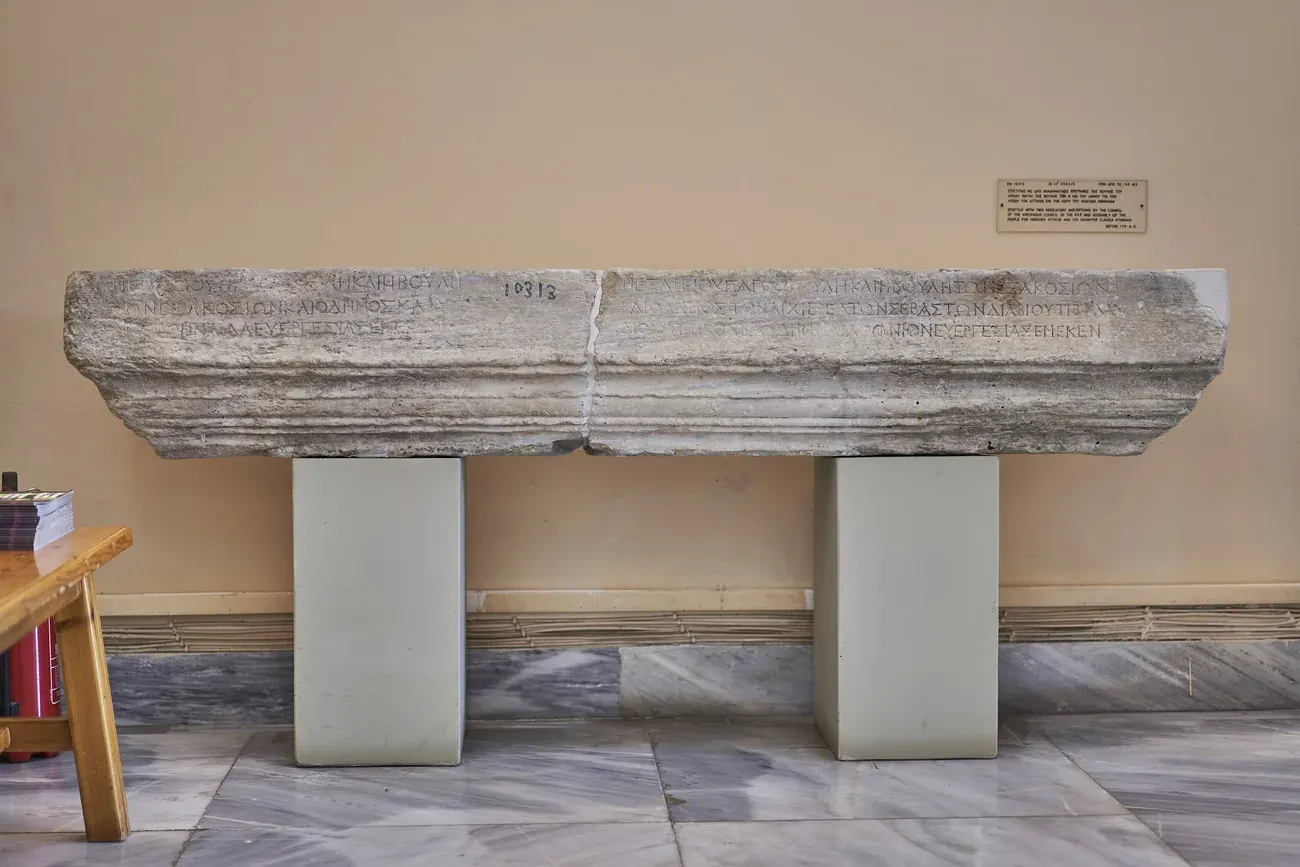
Photo: "Honorary inscriptions to Herodes Atticus and his daughter at the Epigraphical Museum" by George E. Koronaios (CC BY-SA 4.0).
The Epigraphical Museum is a place to read rather than to look at statues. It houses the largest collection of ancient Greek inscriptions in the world, and the objects on display are texts cut into stone by the ancient Greeks themselves. It stands at Tositsa 1, housed alongside the National Archaeological Museum, so the two can be combined in one outing.
Visitors on foot reach it in about eight minutes from Victoria metro station, or about twelve from Omonia. The museum is closed on Tuesdays, and in winter it is open from early morning to mid-afternoon, with last admission twenty minutes before closing. A visit suits people who enjoy history through primary sources, so the larger museum next door is the natural pairing.
- Access: Ticketed
- When: Closed on Tuesdays; in winter open from morning to mid-afternoon
- Getting there: About 8 minutes on foot from Victoria metro station (line 1), or about 12 from Omonia
- Audio guide: commentary on the Epigraphical Museum in the Athens audio guide, an app that works offline on the visitor's own phone.
- More: opening hours of the Epigraphical Museum
14. Step into the Museum of the City of Athens
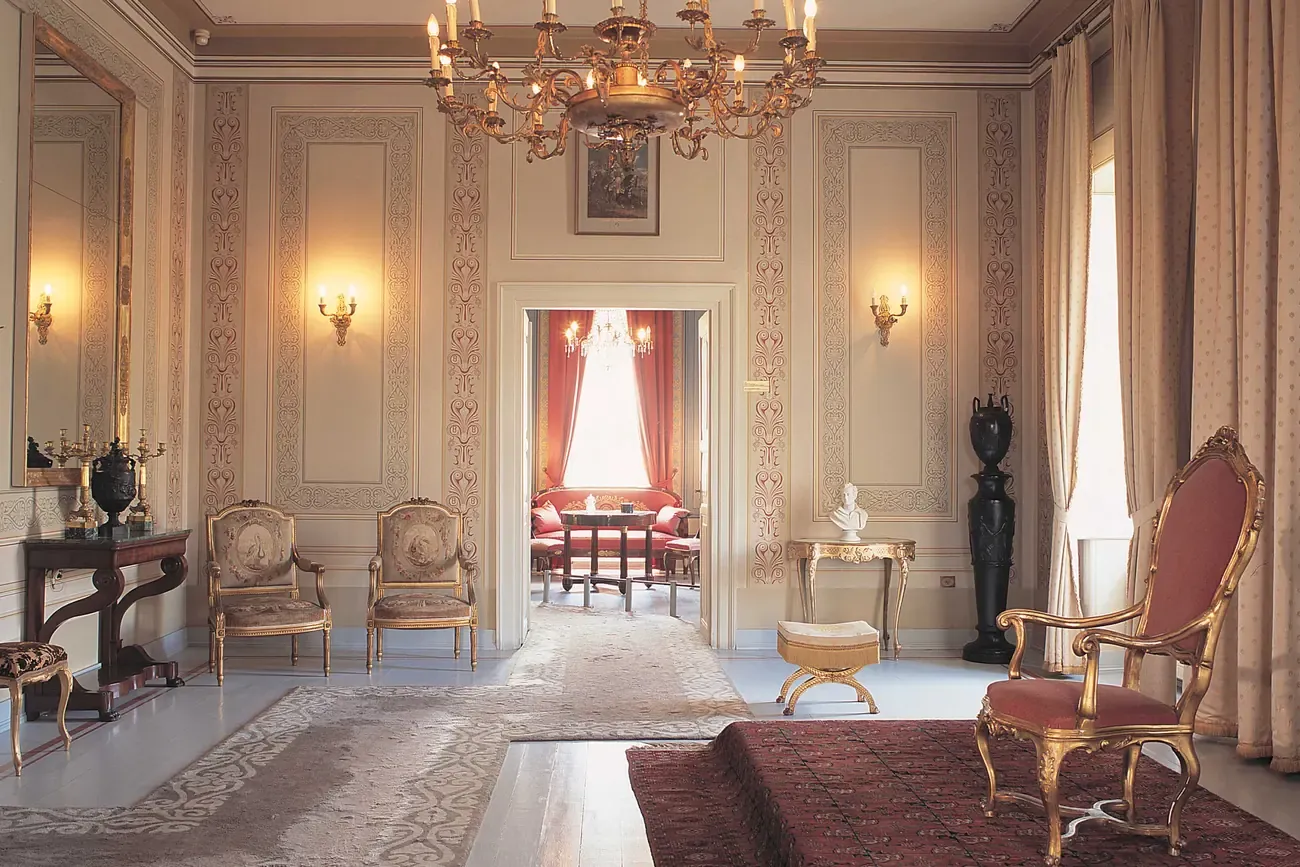
Photo: "A salon in the Museum of the City of Athens" by WF2023 (CC BY-SA 4.0).
The Museum of the City of Athens occupies the neoclassical residence of the Chian banker Stamatios Dekozis Vouros at 7 Paparrigopoulou Street, which Athenians call the Old Palace. King Otto and Queen Amalia used the house as their seat of power for seven years, and a Pleyel-type piano of 1830 is exhibited in Amalia's quarters.
The museum also has an interactive 3D model of Athens. The house faces Klafthmonos Square, an open space turned into a garden by order of Queen Amalia, which makes a convenient place to pause afterwards. The museum is closed on Tuesdays and opens at 09:00 on weekdays and 10:00 at weekends.
- Access: Ticketed
- When: Closed on Tuesdays; opens at 10:00 at weekends and 09:00 on other days
- Getting there: Klafthmonos Square, in the historic centre of Athens
- Audio guide: commentary on the Museum of the City of Athens in the Athens audio guide, an app that works offline on the visitor's own phone.
- More: visiting the Museum of the City of Athens
15. See the sculpture park of the National Glyptotheque in Goudi
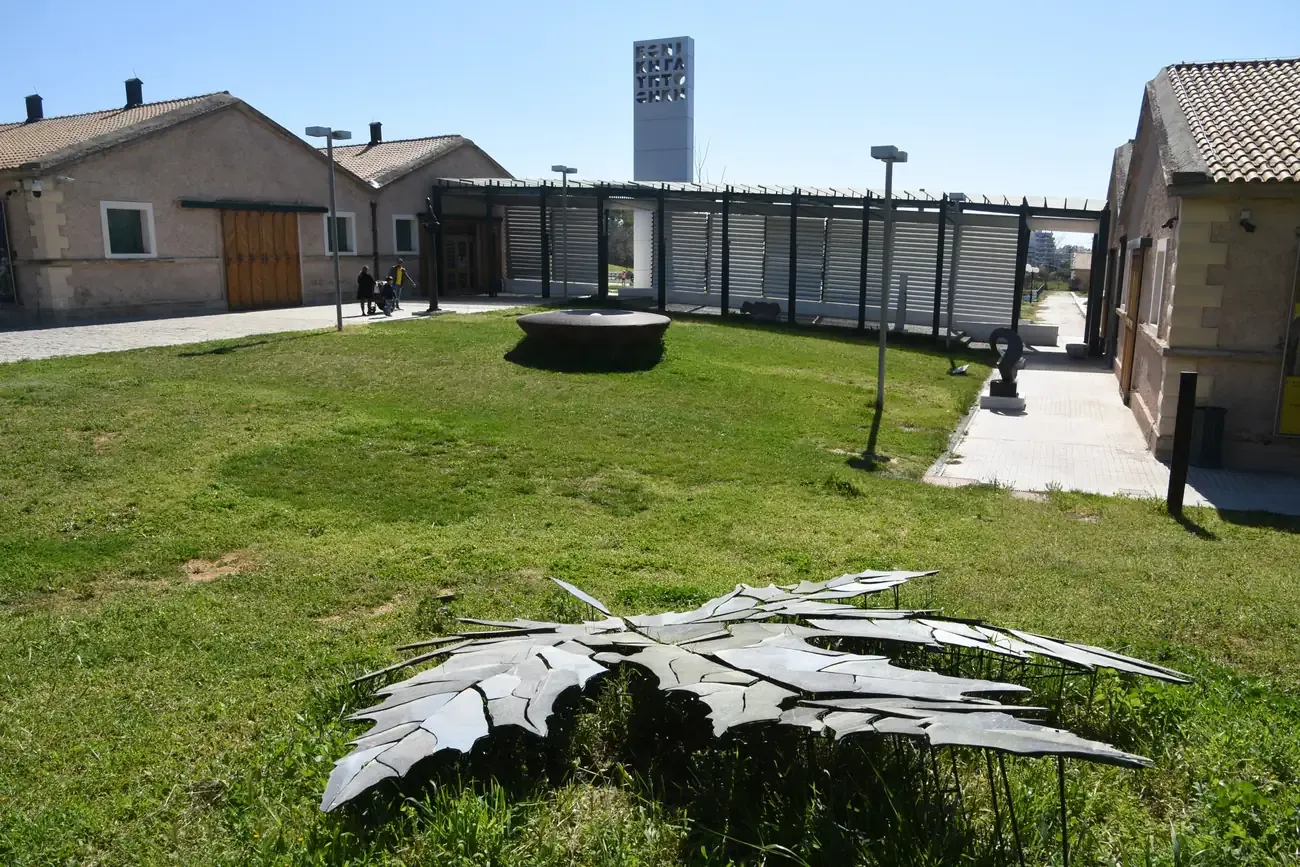
Photo: "The Leaf at the National Glyptotheque" by Georgios Liakopoulos (CC BY-SA 3.0).
The National Glyptotheque is housed in the twin buildings of the former Royal Stables in the Army Park at Goudi. It was inaugurated on 26 July 2004 and holds a permanent display tracing Modern Greek sculpture from its earliest beginnings to the present day. Outside, an area of 6,500 square metres hosts a sculpture park where large-scale works are on display.
The setting is a park rather than a street, with the stable buildings and the open-air works in one compound. Visitors arrive by metro at Katechaki station on line 3. The museum is closed on Tuesdays and otherwise opens from morning to mid-afternoon, so the sculpture park is best planned for daylight hours.
- Access: Ticketed
- When: Closed on Tuesdays; otherwise open from morning to mid-afternoon
- Getting there: Katechaki metro station (line 3)
- Audio guide: commentary on the National Glyptotheque in the Athens audio guide, an app that works offline on the visitor's own phone.
- More: opening hours of the National Glyptotheque
16. Eat fish by the harbour at Mikrolimano
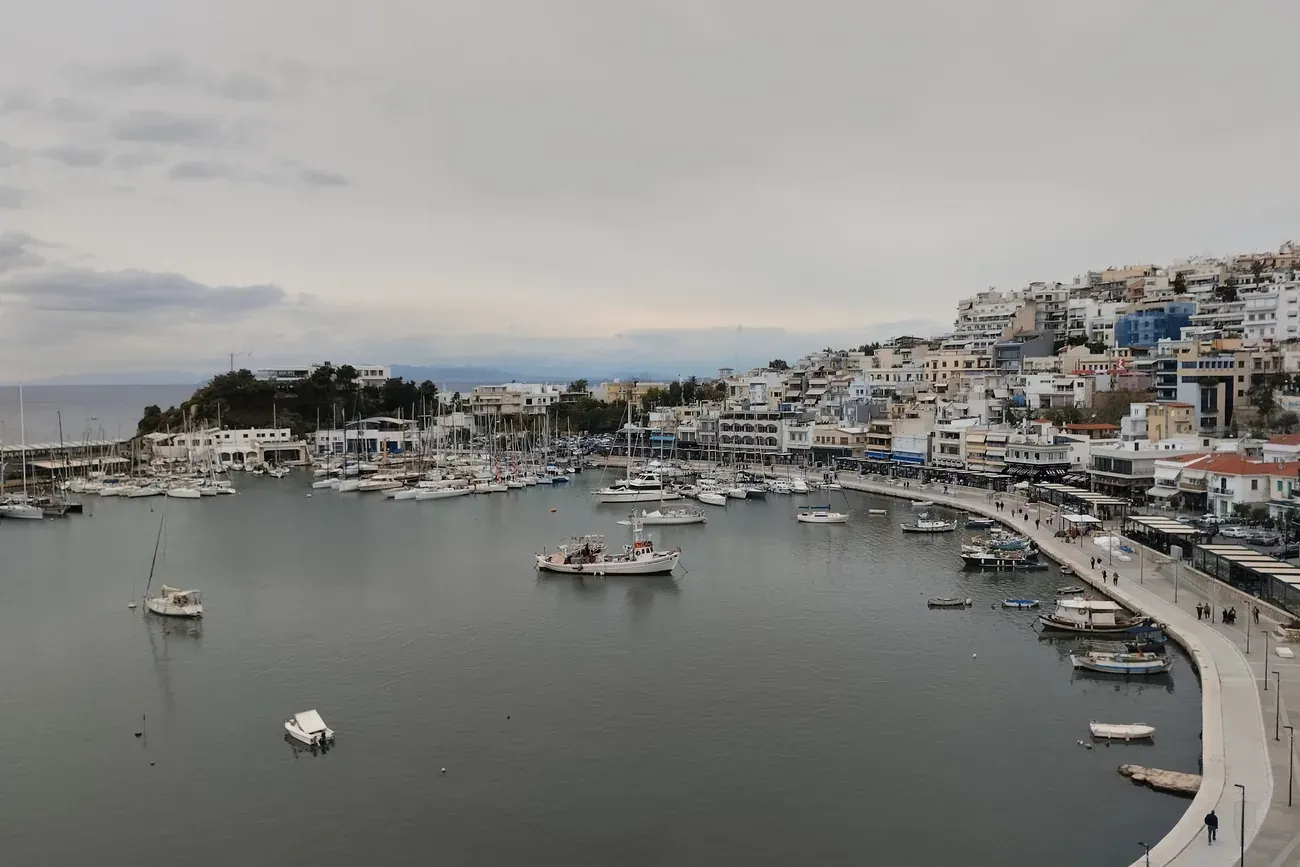
Photo: "View of Mikrolimano" by Pavlos1988 (CC BY-SA 4.0).
Mikrolimano is Greek for little port, and it lies beneath Kastella in Piraeus. Brightly coloured fish tavernas line the harbour, which is dwarfed by its neighbours Marina Zea and Piraeus port. On Akti Koumoundourou, Papaioannou first opened in the backstreets of Mikrolimano and serves crispy mullet fillets and raw cockles among its signature dishes, while Varoulko Seaside, beside the water, holds a Michelin star.
Visitors who want to see the bay from above can go up to Panorama in Kastella, a family-run fish taverna whose balcony seems to be suspended over Mikrolimano bay. The visit is built around a table by the water, so it has no timetable beyond the kitchen's.
- Access: Public space
- When: Hours set by each restaurant
- Getting there: Piraeus, below Kastella
- Audio guide: commentary on Mikrolimano in the Athens audio guide, an app that works offline on the visitor's own phone.
- More: Piraeus neighbourhood guide
17. See the mosaics of Daphni Monastery
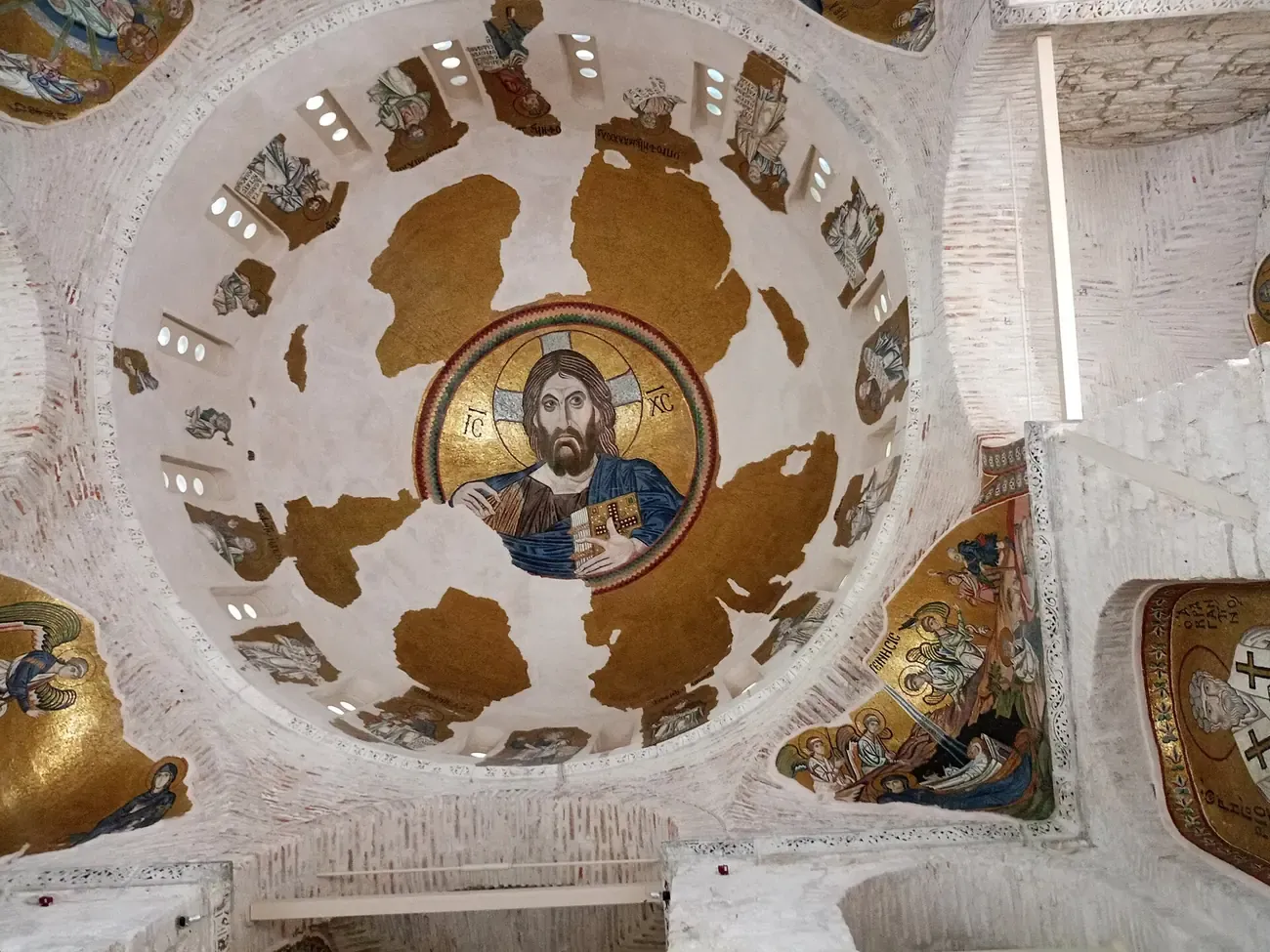
Photo: "Pantokrator mosaic in the church of the Monastery of Daphni" by Giovanni Dall'Orto (CC BY-SA 2.5 it).
Daphni Monastery stands at the end of Iera Odos in Chaidari and is a UNESCO World Heritage Site. It is the most prominent monument of Middle Byzantine Attica, and its best known feature is the wall mosaics of the katholikon, where the Pantocrator dominates the imposing dome. The mosaics around the dome depict the life of Christ, and all of the surviving buildings are from the 11th century.
Admission is free. In winter the site is open from the morning to mid-afternoon every day except Tuesday, with last admission twenty minutes before closing, so a morning visit is the most reliable plan. The monastery is a single focused stop, and the mosaics are the reason to go.
- Access: Free admission
- When: Daily except Tuesday, mornings to mid-afternoon in winter
- Getting there: Chaidari, at the end of Iera Odos
- More: opening hours of Daphni Monastery
18. Visit Kaisariani Monastery on Mount Hymettus
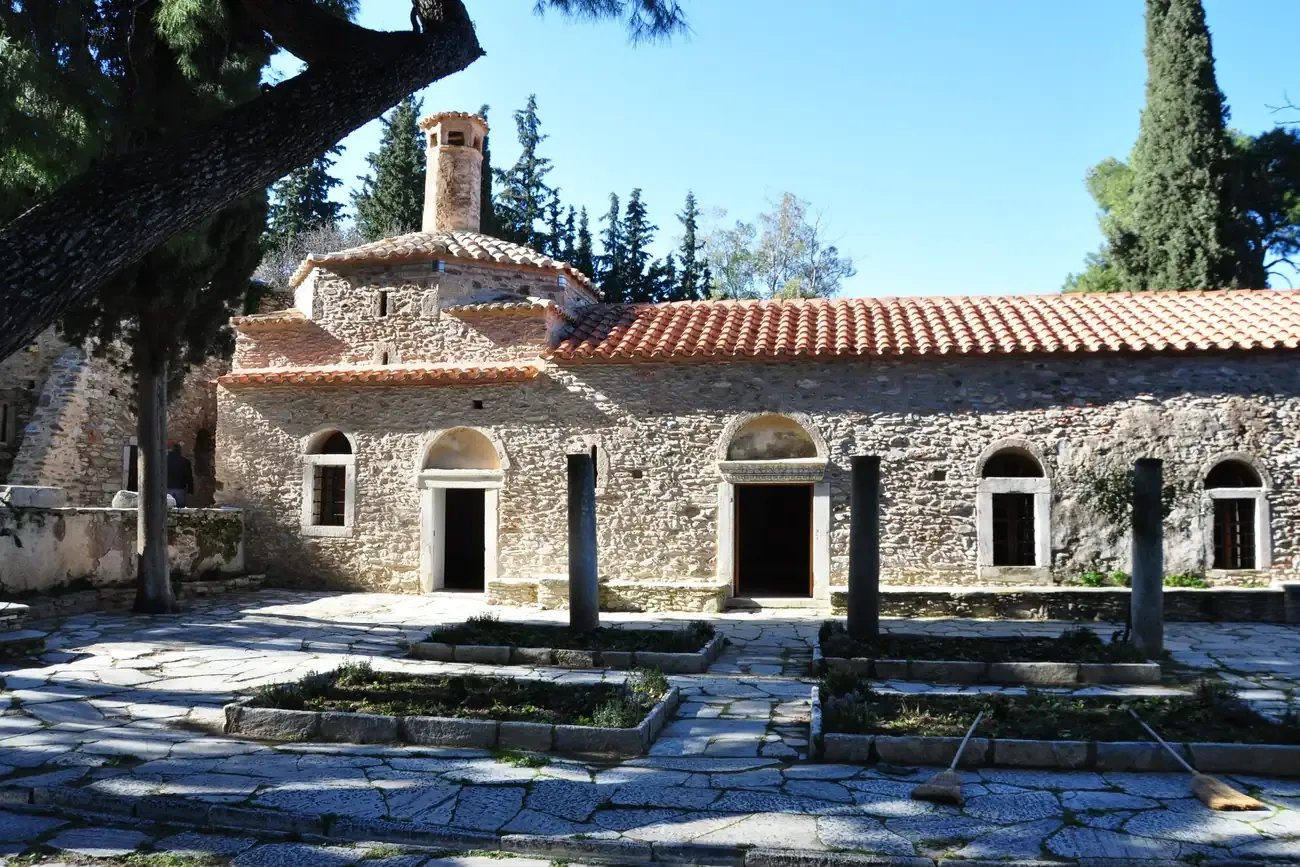
Photo: "Kaisariani Monastery" by Dimkoa (Public domain).
Kaisariani Monastery lies on the wooded western slope of Mount Hymettus. Its main monument is the Byzantine Monastery of the Presentation of the Virgin Mary, founded in the late 11th or early 12th century. The church and the bathhouse date back to its foundation, while the refectory, storerooms and monks' cells are arranged at different levels around a courtyard. The narthex frescoes were funded in 1682 by a noble Athenian household.
The site is about 20 minutes from the centre of Athens by car, and visitors normally arrive by car or taxi. A short walk through the forest leads to other monuments, including the Holy Spring of the Ascension, around 200 metres south of the monastery. The site is closed on Tuesdays, so the visit is best planned for another day of the week.
- Access: Ticketed
- When: Closed on Tuesdays; otherwise mornings to mid-afternoon
- Getting there: Kaisariani Forest, on Mount Hymettus; about 20 minutes from the centre by car
- More: opening hours of Kaisariani Monastery