
Paris tourist information
Paris is easier to enjoy with a few practical facts settled first. One ticket now covers any metro, RER or train ride except to the airports, the big museums each keep their own closing day and hotels add a nightly tax per adult. Transport, the top sights, current exhibitions and a free map follow.
Your Paris trip planner
Paris tourist map and free PDF
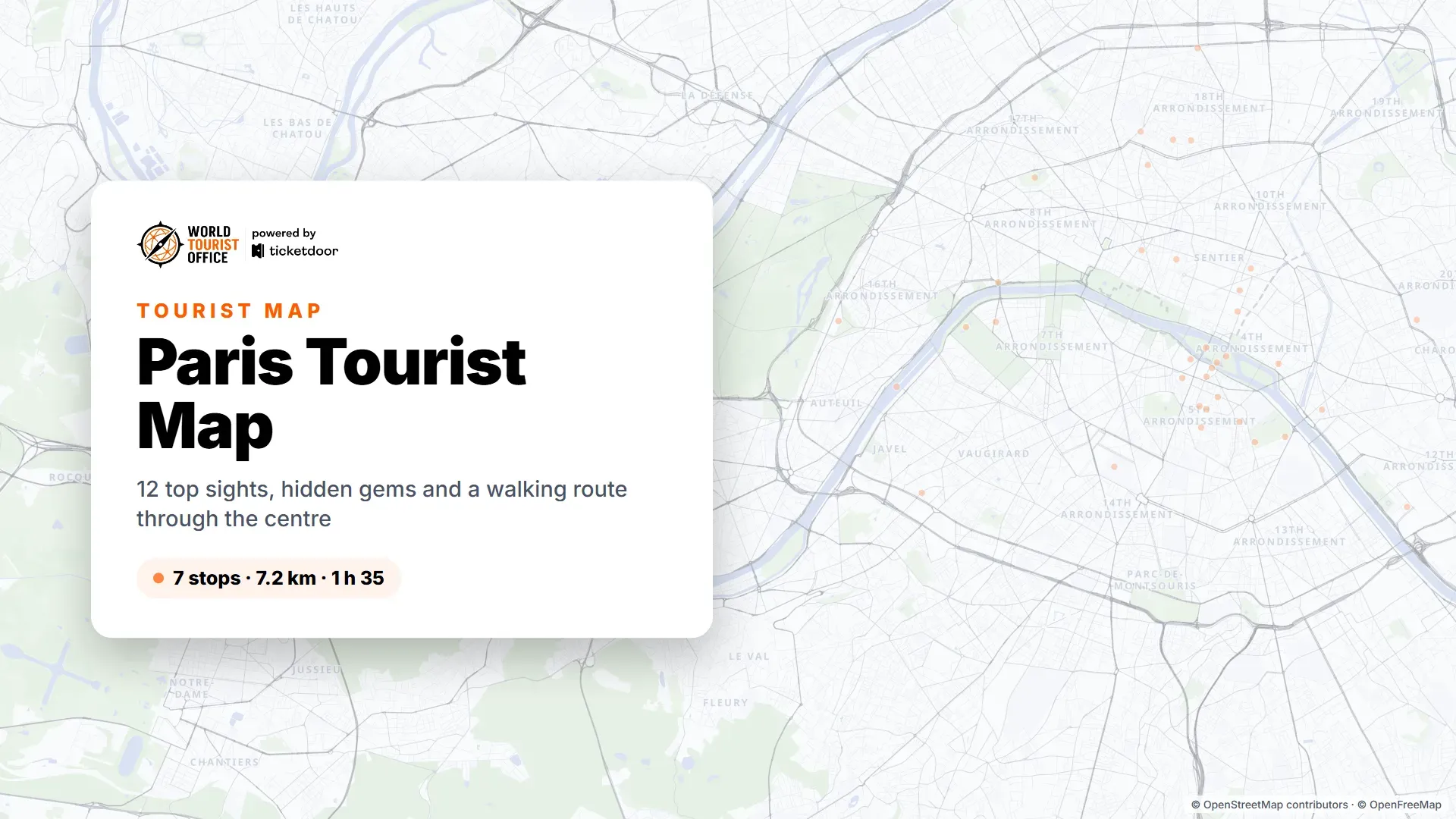
The free Paris tourist map numbers the 12 top sights in walking order and marks 36 hidden gems along a 7.2 km route, ready to print as a PDF.
Things to do in Paris
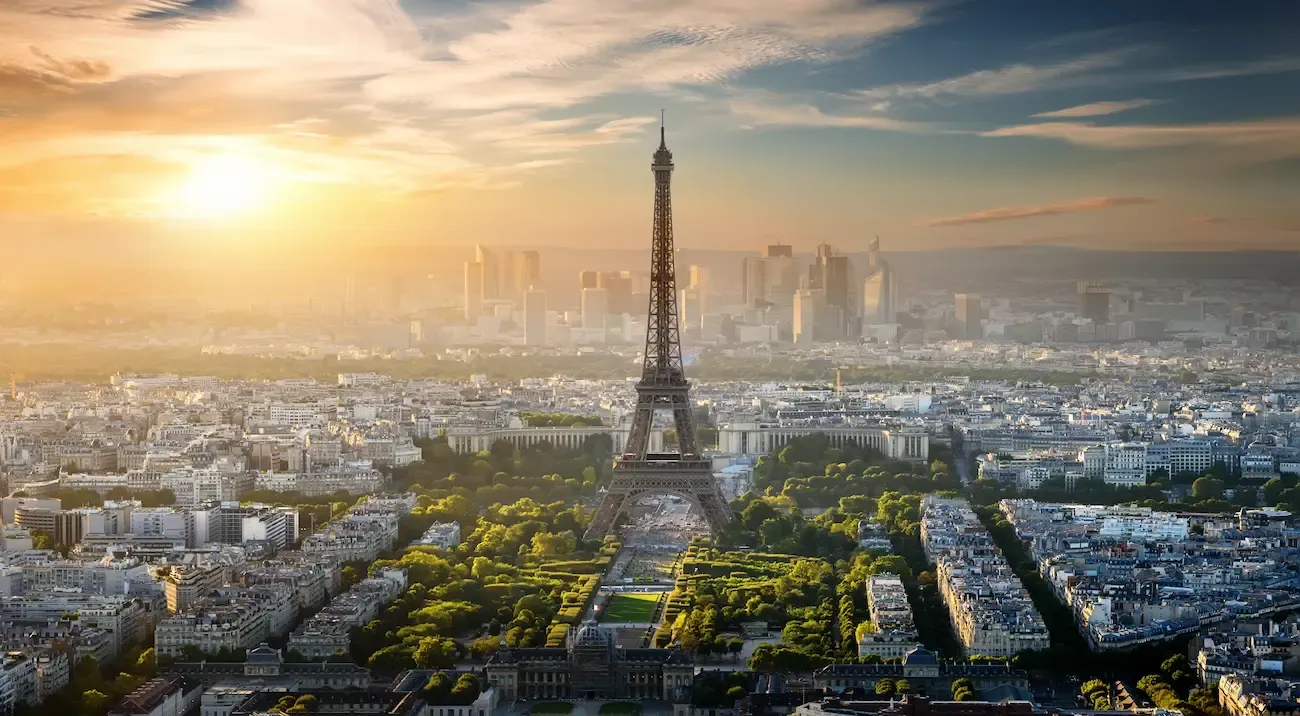
The guide to tourist attractions in Paris ranks the 13 sights not to miss, from the Eiffel Tower to Canal Saint-Martin, with 35 hidden gems and the free landmarks besides.

Paris tourist tax
The guide to the Paris tourist tax sets out the taxe de séjour charged per adult per night, the rates by type of accommodation and who does not pay it.
Paris tourist office
The Paris tourist office guide lists the information kiosks and the airport desks with their opening hours, and the public holidays of the year.
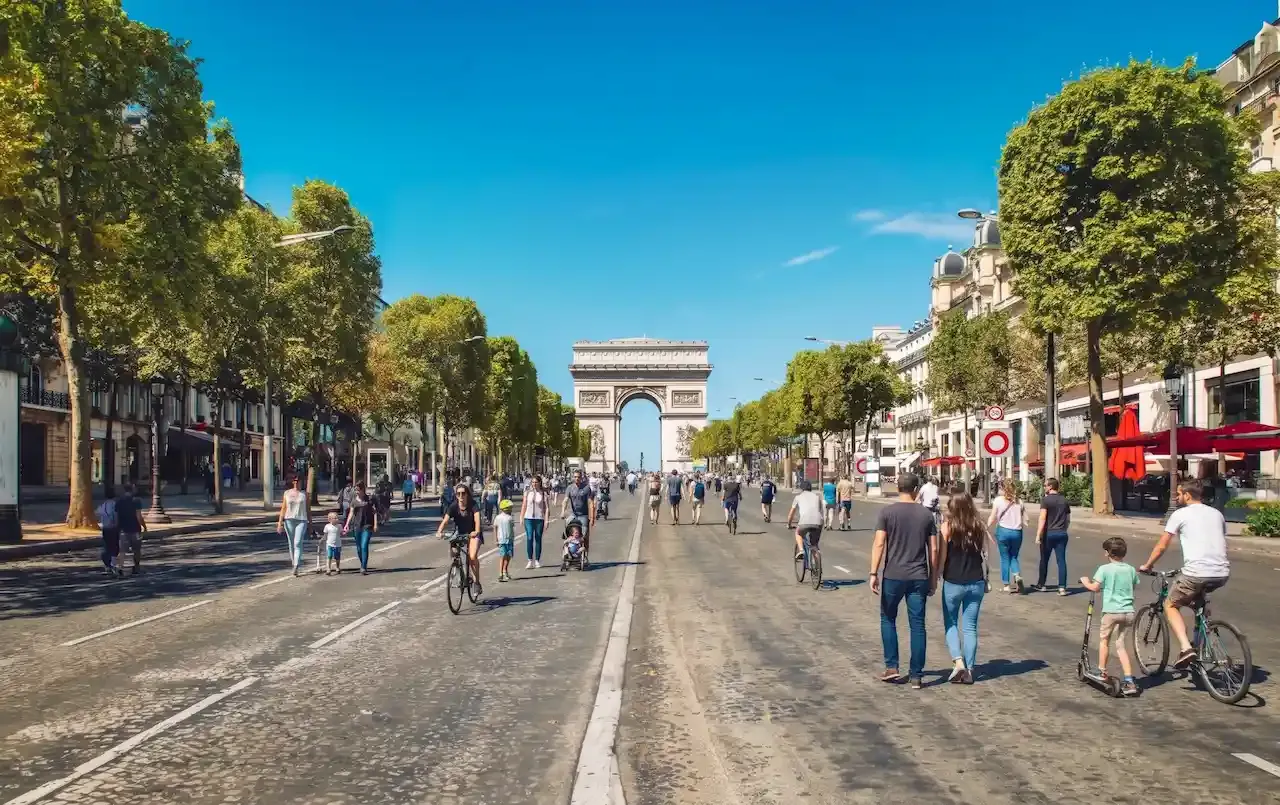
Car-free Sundays in Paris
The guide to Paris Respire maps the streets closed to cars on Sundays and public holidays, and how to reach the Louvre, Sainte-Chapelle and the Arc de Triomphe while they are.
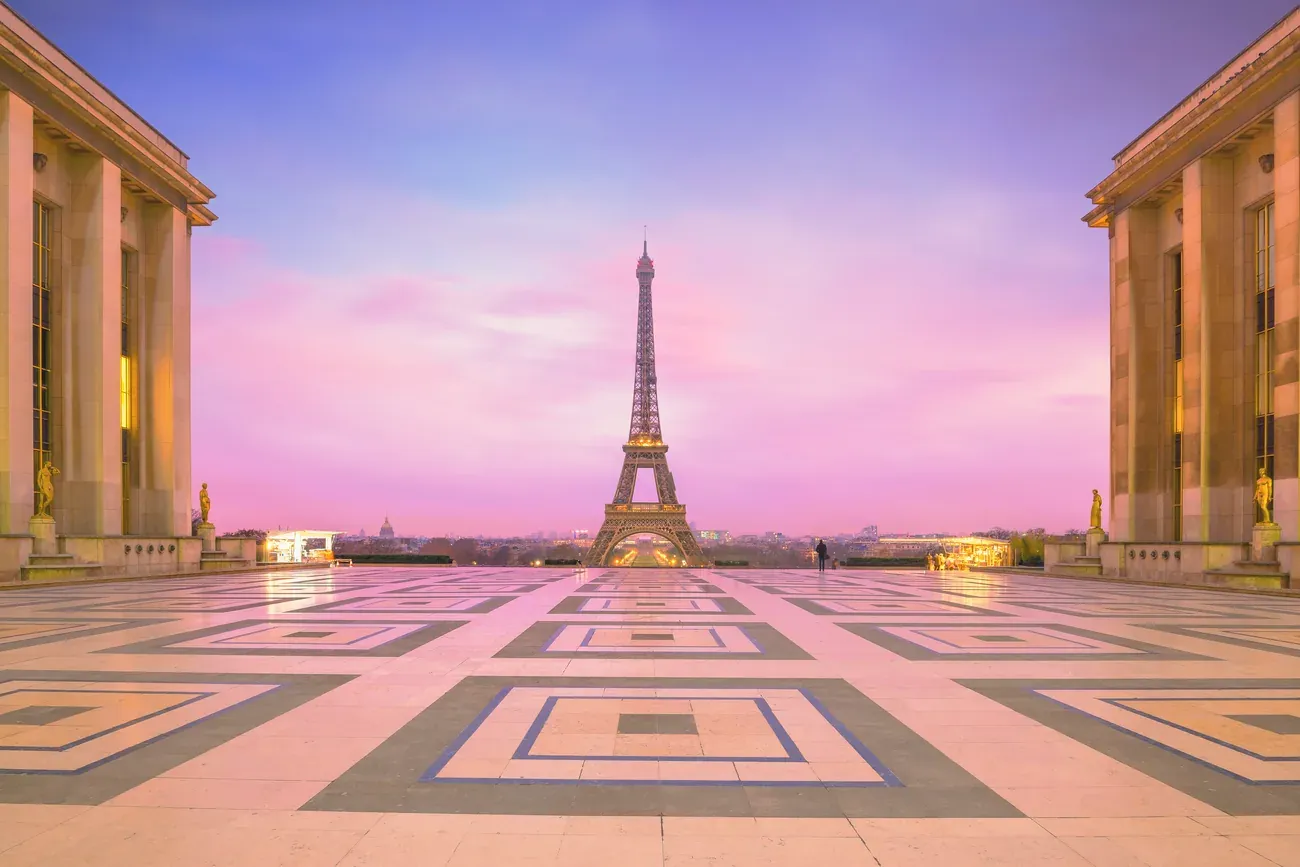
Sunset spots in Paris
The guide to the best places to watch the sunset in Paris pairs free viewpoints such as the Sacré-Cœur steps and the Trocadéro with paid ones, and gives the sunset time for every month.
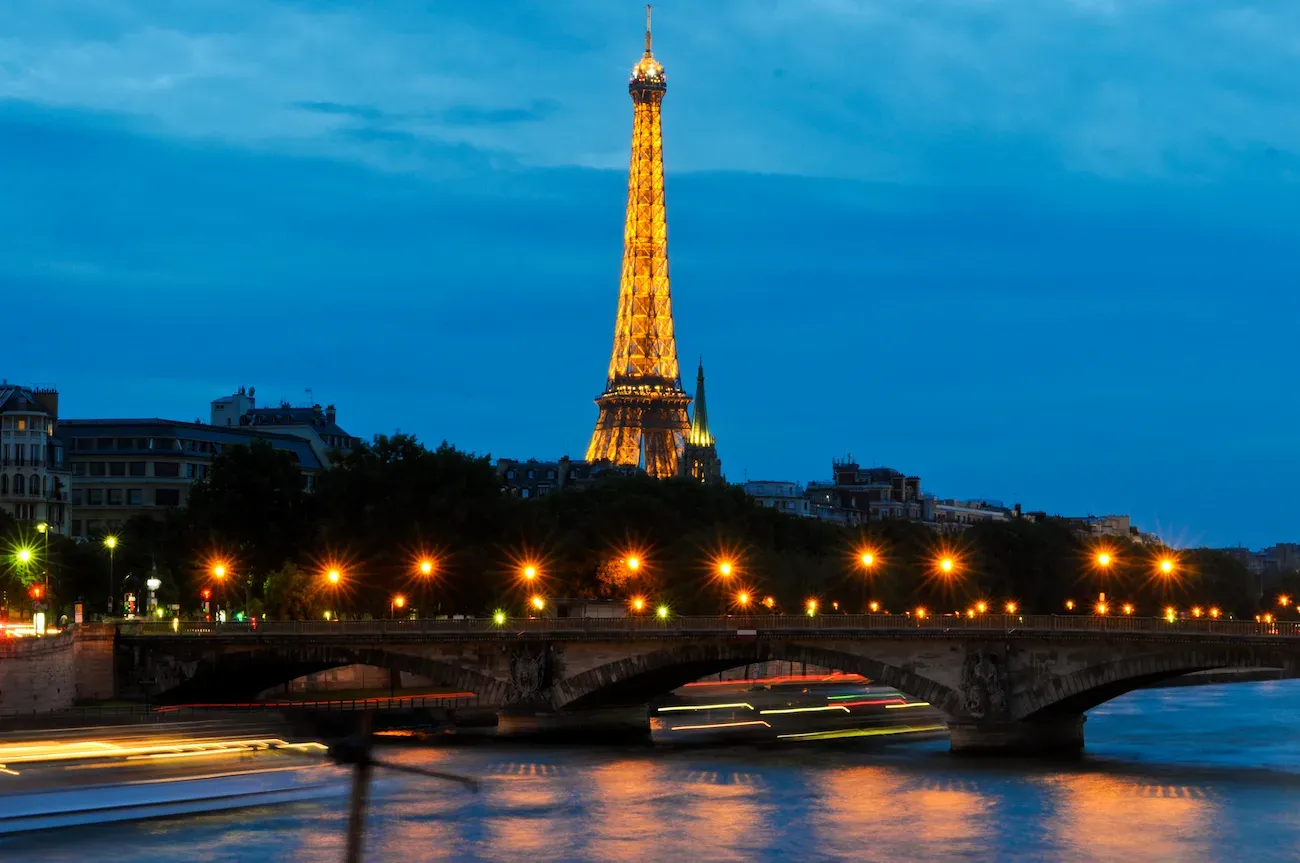
Paris in December
The guide to things to do in Paris in December covers the Christmas lights, the markets and the Grand Palais ice rink, the weather and the closures on 25 December and 1 January.

Paris or Amsterdam
The comparison of Paris or Amsterdam weighs the two cities on size, transport and costs, and shows how a direct train of about 3 hours 20 minutes links them in one trip.
Paris essentials for first-time visitors
A few facts settled before arrival make the first days in Paris run more smoothly.
- Best time to visit: April to June and September to October combine mild weather with manageable queues at the big sights, while July and August bring the hottest days and the longest lines. Winter stays quiet outside the holidays: Météo-France's 1991 to 2020 normals put the average December high at 8°C, with rain on about 11 days of the month.
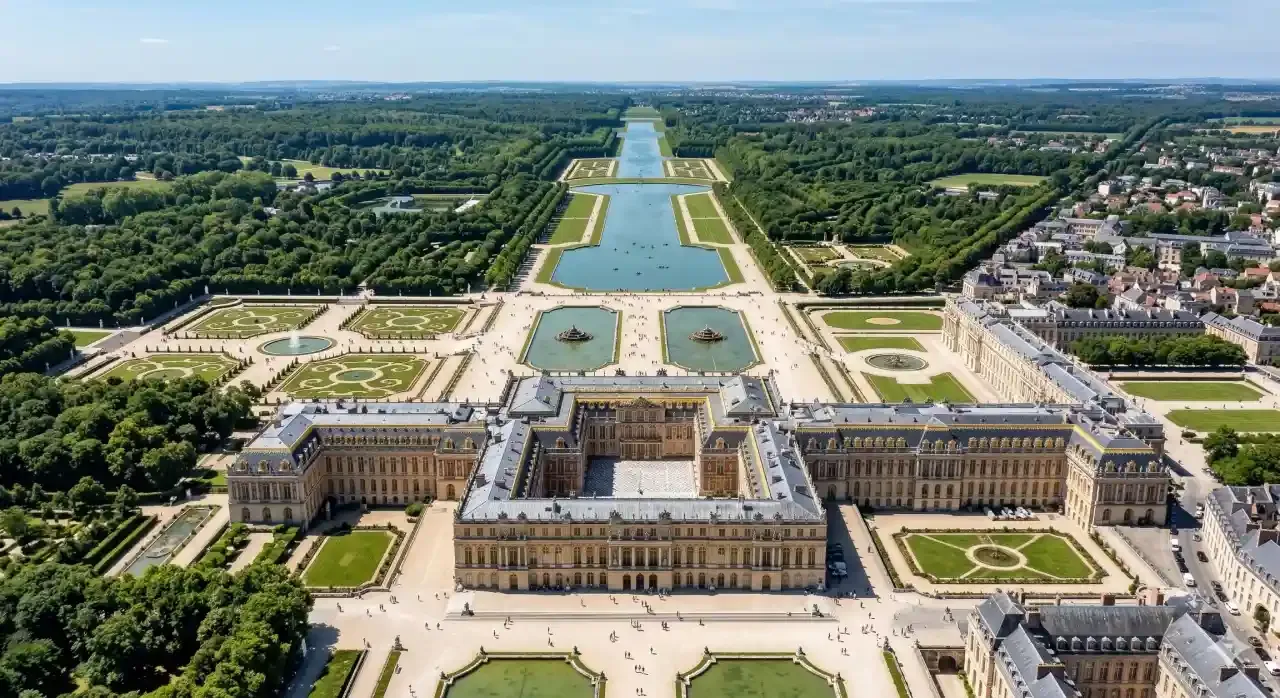
- Days needed: Three full days cover the main sights at a steady pace, and a fourth makes room for Versailles. The Paris Museum Pass covers more than 50 museums and monuments for 2, 4 or 6 consecutive days, counted by the hour from the first visit. Top tourist attractions in Paris
- Money and tipping: France uses the euro, and Paris taxis must take a bank card whatever the fare. Restaurant and café prices must include service, shown on the menu as service compris, so a tip is the diner's choice rather than an obligation.
- Tourist tax: Hotels and rentals add the taxe de séjour per adult per night during the stay. The rate depends on the type of accommodation and includes a regional surcharge that funds public transport; guests under 18 pay nothing, and the city has kept the same rates for 2027. How the Paris tourist tax works
- Getting around: Since 1 January 2025 one Metro-Train-RER ticket covers a trip on any metro, RER or train line in the region, whatever the distance, except to the airports, and a separate Bus-Tram ticket covers buses and trams. Paper tickets are no longer sold, so tickets go on a Navigo Easy card or a phone.
- Sundays and public holidays: Museums, monuments, cafés and the shops in tourist zones such as the Marais and the Champs-Élysées open on Sundays, while many neighbourhood shops close in the afternoon. There is no single closing day for museums: the Louvre shuts on Tuesdays, the Musée d'Orsay and Versailles on Mondays. France has 11 public holidays, and the Paris tourist office guide lists them with the closures they bring.
- Car-free Sundays: Under Paris Respire, the Champs-Élysées closes to motor traffic on the first Sunday of the month, with occasional exceptions, and streets in Montmartre, the Marais and along Canal Saint-Martin go car-free every Sunday, which moves taxi drop-offs away from some sights. Car-free zones and times in Paris
- Safety: Thieves and pickpockets work on the metro, the RER and at the main railway stations, sometimes in pairs where one distracts and the other opens the bag, so valuables are best split up and bags worn across the body. Strikes and demonstrations can start at short notice, and the police can ask visitors to prove their identity, so a passport should be at hand.
- Language: French is the language of the Republic under the Constitution and the everyday language of Paris. A few words such as "bonjour" (hello), "merci" (thank you) and "s'il vous plaît" (please) cover most first exchanges.
- Entry rules: France is in the Schengen area, so visitors from countries such as the UK, the USA, Canada and Australia can stay without a visa for up to 90 days in any 180-day period. The EU Entry/Exit System is being rolled out at Schengen borders and can register fingerprints and a photo, which adds time at passport control.
- Emergency numbers: 112 works free from any phone. In France, 15 calls the medical emergency service (SAMU), 17 the police and 18 the fire brigade, and 114 takes emergency calls by SMS or app from people who are deaf or hard of hearing.
- Plugs and voltage: France uses type E sockets, with a round earth pin, on a 50 Hz supply, so devices from outside continental Europe need a plug adapter, and a transformer if they are not dual-voltage.
- Tap water: Paris tap water is safe to drink: Eau de Paris analyses more than 300,000 parameters a year from source to tap and supplies more than 1,200 public fountains and drinking-water points for refilling a bottle. Where to find drinking water in Paris
- Free map: The free Paris tourist map numbers the 12 top sights, marks 36 hidden gems and draws a 7.2 km walking route from the Louvre to Canal Saint-Martin, and it prints as a PDF.
Top sights in Paris
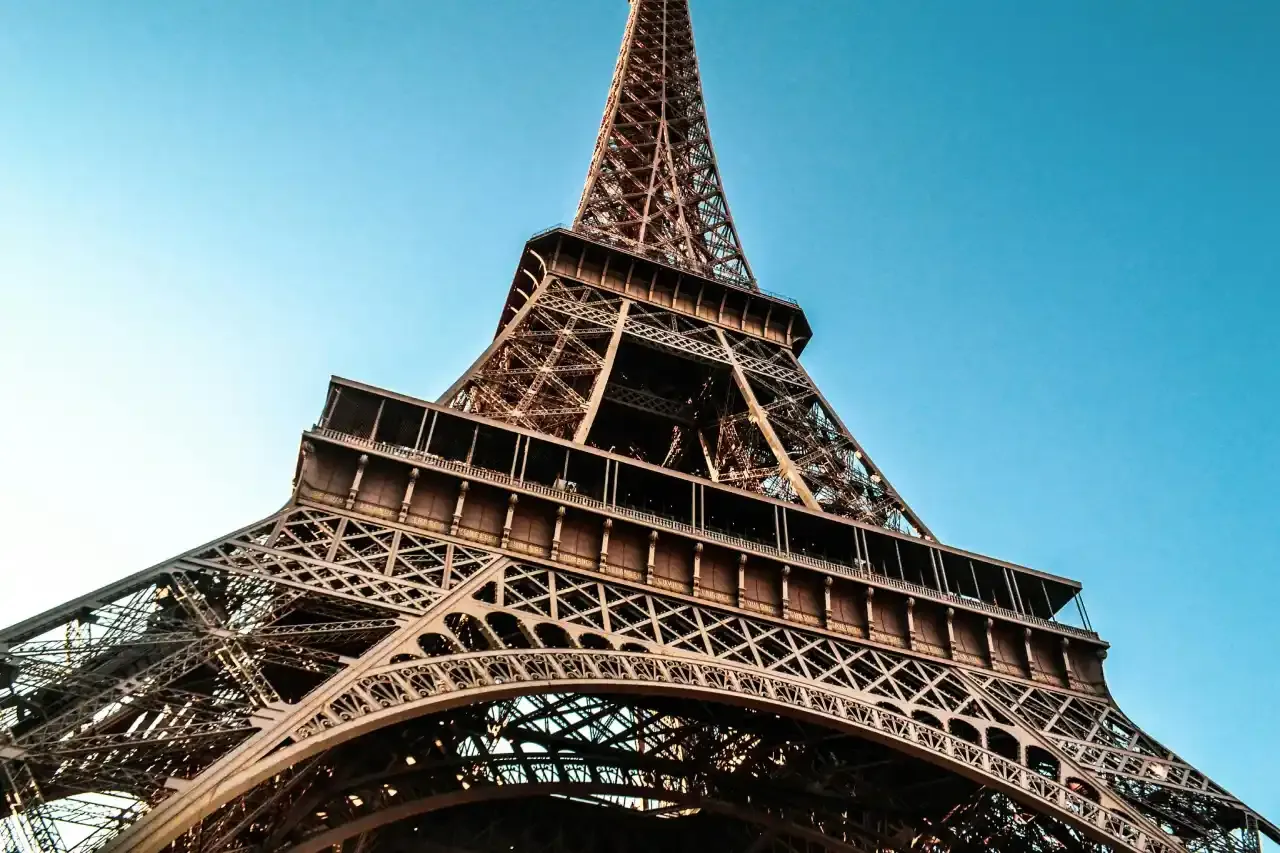


Paris public transport for visitors
Paris is a large city, so most days mix long walks with the metro, and one ticket covers any metro, RER or train ride in the region except to the airports.
From the airport
From Charles de Gaulle, RER B trains reach Gare du Nord and Châtelet in about 35 minutes, and the Roissybus runs to Opéra. From Orly, metro line 14 runs straight into the centre. Rail journeys to and from either airport need the Paris Region-Airports ticket or a Paris Visite pass, because the standard Metro-Train-RER ticket and the Navigo day pass do not cover the airport stations, and the Bus-Tram ticket is not valid on the Roissybus or the Orlybus.
Since 30 June 2026 a contactless bank card can also buy a ticket at the line 14 exit at Orly, at a higher fare. Paris taxis charge a fixed fare in both directions between either airport and the city, with one rate for the Right Bank and another for the Left Bank. On many evenings from 22:45 RER B trains between Châtelet-Les Halles and the airport are suspended for works, so a late arrival should check the RER B works calendar first.
What's on in Paris this month
Five exhibitions on in Paris this November run on into the winter, and the full Paris events calendar adds new dates as they are announced.

Planète Océan, immersion vers les profondeurs
Dates: Until 31 December 2026
Where: Atelier des Lumières
Projections and 3D modelling take visitors on a 50-minute dive from coral gardens to the glowing creatures of the deep sea.
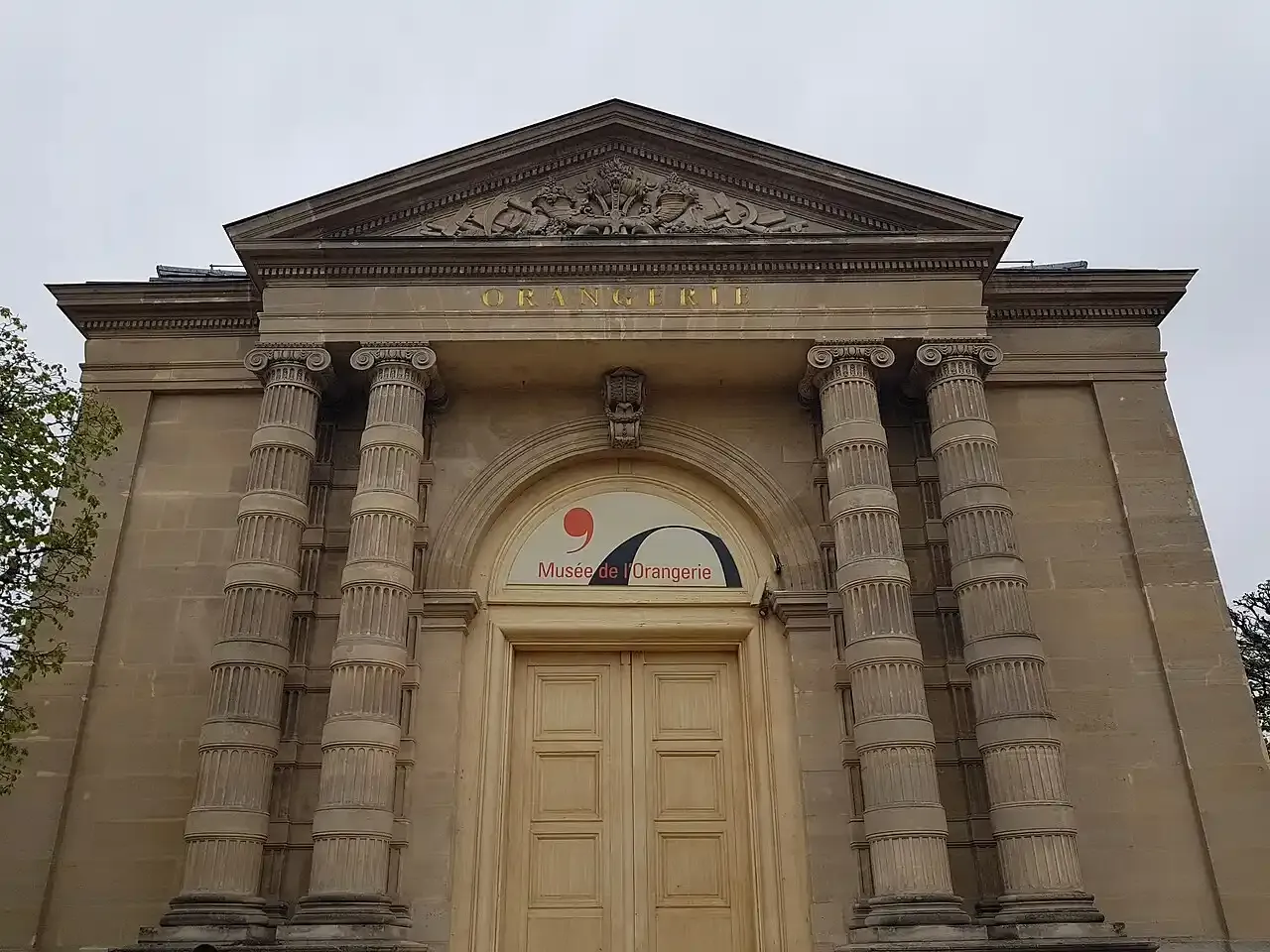
Monet, peindre le temps
Dates: Until 25 January 2027
Where: Musée de l'Orangerie
Around forty paintings follow how Monet worked with time, from his series to the Water Lilies cycle.
Photo: "Musée de l'Orangerie" by Jsamwrites (CC BY-SA 4.0).
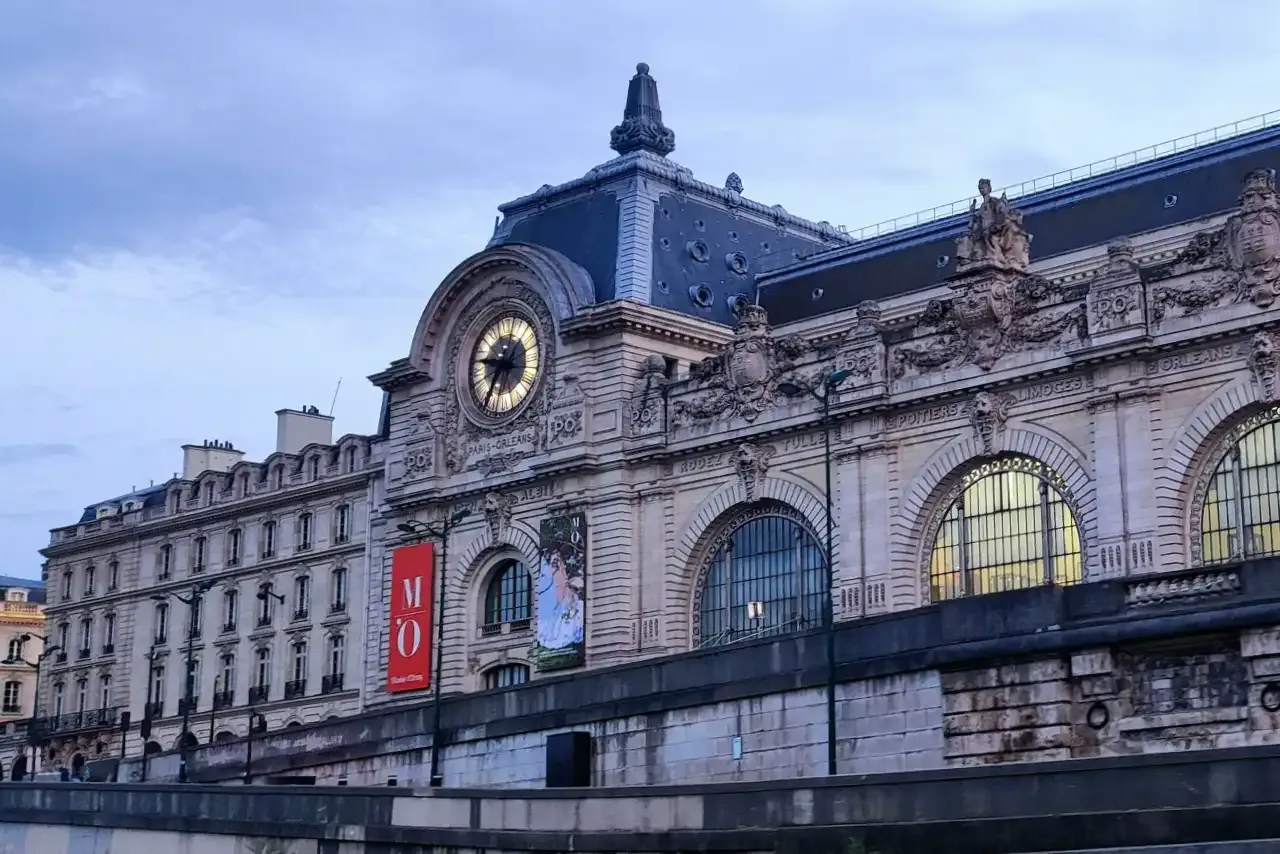
Auguste Bartholdi, Liberty Enlightening the World
Dates: Until 31 January 2027
Where: Musée d'Orsay
Marking 250 years of American independence, the show traces how the French sculptor conceived and built the Statue of Liberty.

Histoires de paysages, de Monet à Hockney
Dates: Until 31 January 2027
Where: Musée Marmottan Monet
Eleven thematic sections trace nearly 150 years of landscape art, from Monet to Hockney, across painting, photography, sculpture and video.

Louvre Photo
Dates: 4 November 2026 to 3 May 2027
Where: Musée du Louvre
More than 300 photographs show the museum as subject and inspiration, from the first photographers to those invited by the Louvre today.